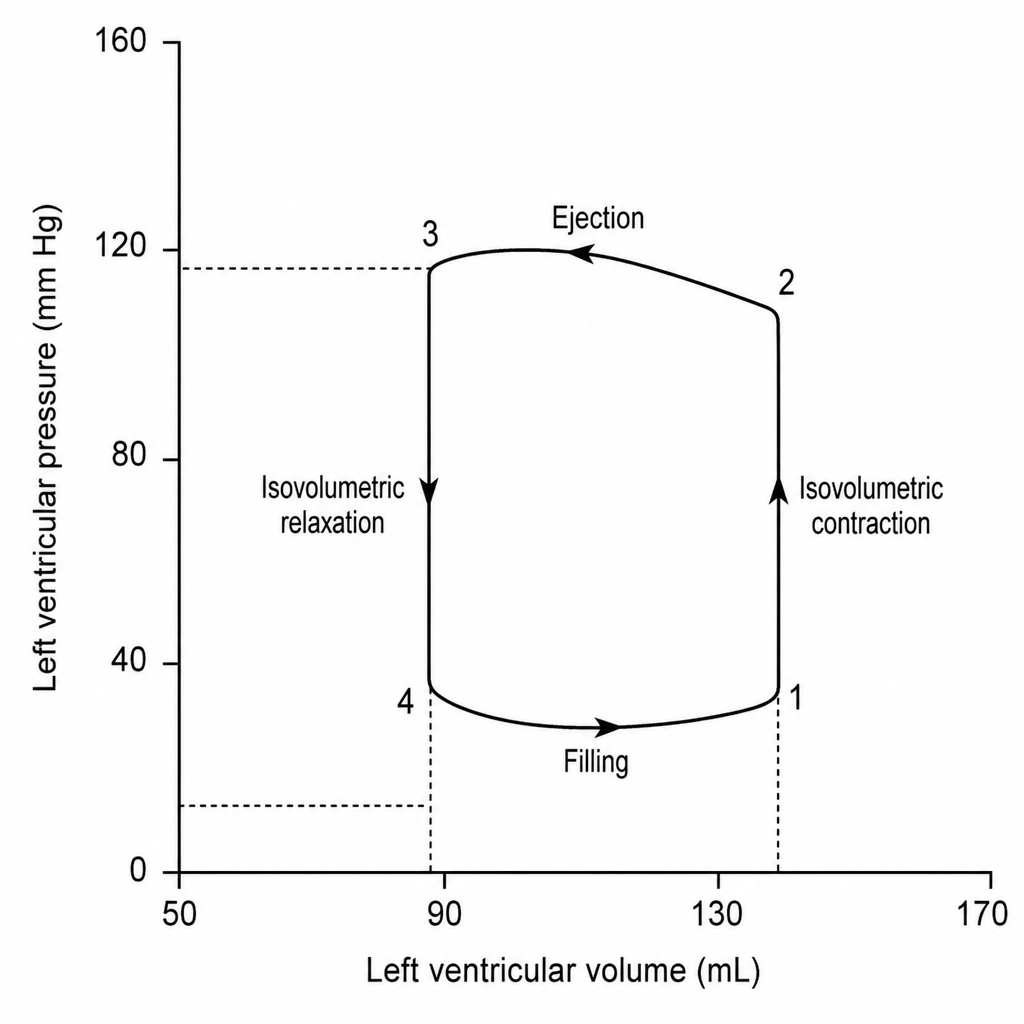
Split first heart sound is heard in which of the following conditions?
Which of the following is a contributing factor in chronic hypertension that, when decreased, is associated with improved outcomes?
Prolongation of the QRS complex in an ECG represents which of the following?
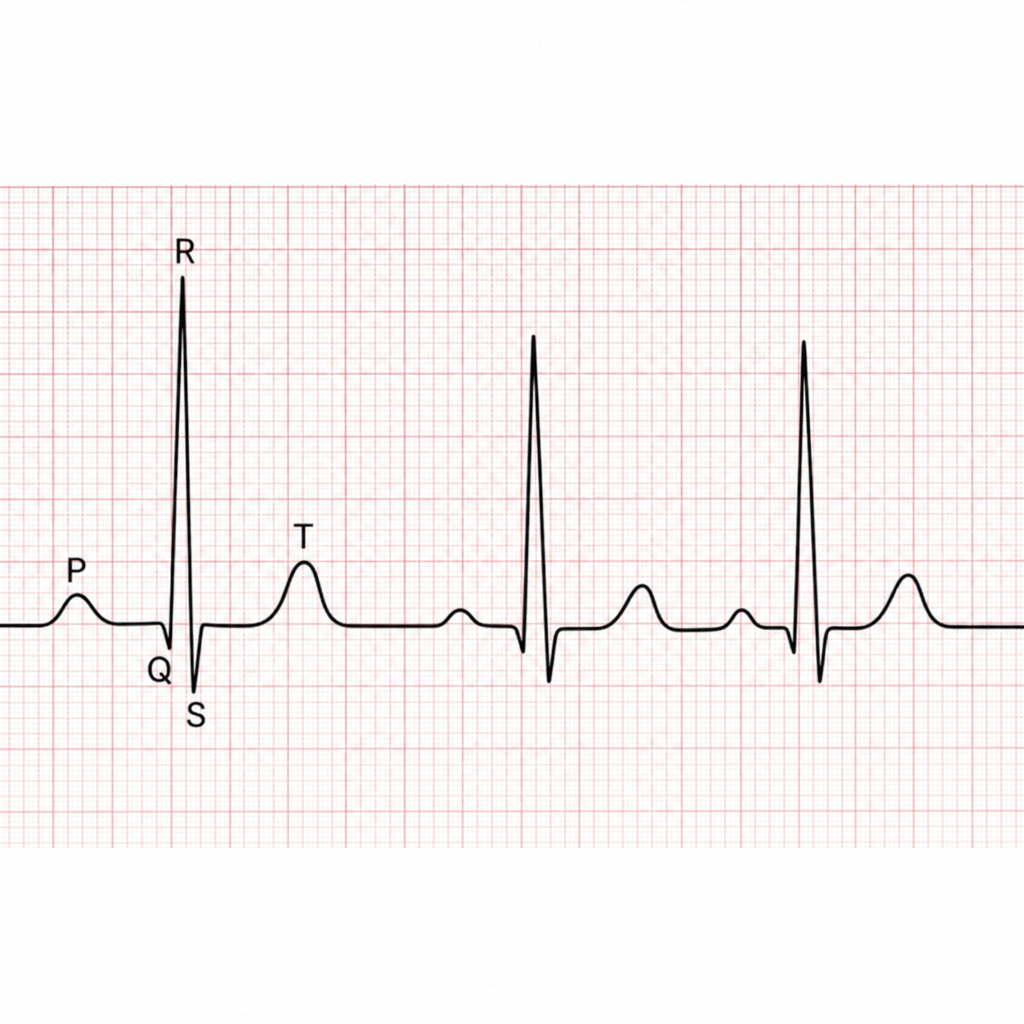
Patients with syncope cannot maintain sufficient cardiac output to meet peripheral perfusion demands. Which of the following BEST describes cardiac output?
Which of the following ECG changes are NOT seen in hyperkalemia?
Poiseuille's law relates to which of the following formulas?
The coronary blood flow is regulated by which of the following?
All of the following can cause tachycardia except?
Carbon dioxide is mainly transported in the blood by which of the following mechanisms?
Impulses from the SA node to the left atrium and AV node pass through which structure?
Explanation: **Explanation:** The **First Heart Sound (S1)** is produced by the closure of the Atrioventricular (AV) valves—the Mitral (M1) and Tricuspid (T1) valves. Normally, M1 occurs slightly before T1 because the left ventricle depolarizes just before the right ventricle. However, this gap is so small that S1 is typically heard as a single sound. **Why Option C is Correct:** In **Complete Right Bundle Branch Block (RBBB)**, there is a delay in the electrical conduction to the right ventricle. This causes delayed depolarization and subsequent delayed contraction of the right ventricle. Consequently, the closure of the Tricuspid valve (T1) is significantly delayed relative to the Mitral valve (M1), resulting in a **wide, audible split of S1**. **Analysis of Incorrect Options:** * **A. Mitral Stenosis:** Characterized by a **loud (accentuated) S1** due to the thickened leaflets being wide apart at the onset of systole, but it does not typically cause a split S1. * **B. Left Bundle Branch Block (LBBB):** This delays the Mitral component (M1). Since M1 normally precedes T1, LBBB often causes M1 to coincide with or follow T1, frequently resulting in a **soft or single S1**, but not a classic split. * **D. Pulmonary Hypertension:** This primarily affects the **Second Heart Sound (S2)**, leading to a loud pulmonary component (P2) and narrow physiological splitting. **High-Yield Clinical Pearls for NEET-PG:** * **S1 Splitting:** Best heard at the tricuspid area (left lower sternal border). * **Reversed Splitting of S1:** Can occur in Mitral Stenosis with rigid valves or occasionally in LBBB (where T1 precedes M1). * **Loud S1:** Seen in Mitral Stenosis, short PR interval (Tachycardia), and hyperdynamic states. * **Soft S1:** Seen in Mitral Regurgitation, long PR interval (First-degree heart block), and obesity/COPD.
Explanation: **Explanation:** The question focuses on the pathophysiology of chronic hypertension and the role of endothelial function. **Why Nitric Oxide (NO) is the correct answer:** Nitric oxide is a potent **vasodilator** produced by the vascular endothelium. In chronic hypertension, there is often "endothelial dysfunction," characterized by a **decrease in the bioavailability of NO**. When NO levels are decreased, the protective vasodilatory, anti-inflammatory, and anti-thrombotic effects are lost, leading to increased peripheral resistance and target organ damage. Therefore, therapeutic strategies or lifestyle changes that reverse this deficit (increasing NO) are associated with improved clinical outcomes. **Why the other options are incorrect:** * **A & B (Aldosterone & Angiotensin II):** These are components of the Renin-Angiotensin-Aldosterone System (RAAS). They are **increased** in many forms of hypertension, causing vasoconstriction and sodium retention. A *decrease* in these factors (via ACE inhibitors or ARBs) improves outcomes, but they are not the factors that, when decreased, represent the *pathological state* mentioned in the context of this specific question's phrasing. * **D (Sympathetic Nerve Activity):** Increased sympathetic drive contributes to hypertension. Similar to RAAS, a *decrease* in sympathetic activity (e.g., via beta-blockers) is beneficial, but it is an excitatory factor, not a protective one like NO. **High-Yield Clinical Pearls for NEET-PG:** * **L-Arginine** is the precursor for Nitric Oxide synthesis via the enzyme **eNOS** (endothelial NO synthase). * **Asymmetric Dimethylarginine (ADMA)** is an endogenous inhibitor of NO synthase; high levels of ADMA are linked to cardiovascular risk. * **Shear stress** on the vessel wall is a physiological stimulus for NO release. * In the kidneys, NO helps maintain glomerular filtration rate (GFR) by dilating the afferent arteriole.
Explanation: **Explanation:** The **QRS complex** represents ventricular depolarization. In a healthy heart, the electrical impulse travels rapidly through the specialized conduction system (Bundle of His and Purkinje fibers), resulting in a narrow QRS (usually <0.10–0.12 seconds). **Why Bundle Branch Block (BBB) is correct:** In a Bundle Branch Block (either Left or Right), the specialized conduction pathway is interrupted. The electrical impulse must travel through the slower, cell-to-cell myocardial conduction rather than the rapid Purkinje system. This slower spread of depolarization significantly increases the time required for the ventricles to depolarize, leading to a **widened or prolonged QRS complex** (>0.12 seconds). **Analysis of Incorrect Options:** * **Acute Cor Pulmonale:** Typically presents with signs of right heart strain, such as the classic **S1Q3T3 pattern** and Right Axis Deviation, rather than a primary prolongation of the QRS. * **Chronic Cor Pulmonale:** Usually leads to Right Ventricular Hypertrophy (RVH). While it may cause a slight increase in QRS duration, the hallmark ECG findings are **Right Axis Deviation** and tall R-waves in V1. * **Left Ventricular Hypertrophy (LVH):** Characterized by **increased voltage (amplitude)** of the QRS complex (e.g., Sokolow-Lyon criteria) due to increased muscle mass, but the conduction velocity remains relatively normal unless a secondary block occurs. **High-Yield Clinical Pearls for NEET-PG:** * **Normal QRS duration:** 0.06 to 0.10 seconds. * **Complete BBB:** QRS duration ≥ 0.12 seconds (3 small squares). * **RBBB:** "M" pattern in V1 (rsR') and "W" in V6 (Marrow). * **LBBB:** "W" pattern in V1 and "M" in V6 (William). *Note: New-onset LBBB in the context of chest pain is considered an MI equivalent.*
Explanation: ### Explanation **Correct Answer: C. Cardiac Output = Heart Rate × Stroke Volume** **1. Why the Correct Answer is Right:** Cardiac Output (CO) is defined as the volume of blood pumped by each ventricle per unit of time (usually measured in liters per minute). It is the product of two primary variables: * **Heart Rate (HR):** The number of beats per minute. * **Stroke Volume (SV):** The volume of blood ejected by the ventricle during a single contraction. Mathematically, **CO = HR × SV**. In a healthy adult at rest, with an average HR of 72 bpm and an SV of 70 mL, the CO is approximately 5 L/min. **2. Why the Incorrect Options are Wrong:** * **Option A:** This formula describes **Stroke Volume (SV)**, not Cardiac Output. SV is the difference between the volume of blood in the ventricle at the end of filling (EDV) and the volume remaining after contraction (ESV). * **Option B & D:** These options incorrectly incorporate **Mean Arterial Pressure (MAP)**. While CO is related to MAP through the formula **MAP = CO × Total Peripheral Resistance (TPR)**, MAP itself is a measure of pressure, not a component used to calculate the volume of flow (CO) directly. **3. High-Yield Clinical Pearls for NEET-PG:** * **Cardiac Index (CI):** This is CO adjusted for body surface area (CO/BSA). Normal range: 2.5–4.2 L/min/m². * **Fick’s Principle:** A gold-standard method to measure CO: $CO = \frac{\text{Oxygen Consumption}}{\text{Arterial } O_2 \text{ content} - \text{Venous } O_2 \text{ content}}$. * **Syncope Mechanism:** Syncope occurs when CO fails to maintain a MAP of at least 50–60 mmHg, leading to transient cerebral hypoperfusion. * **Preload & Afterload:** SV is determined by preload (EDV), afterload (resistance), and myocardial contractility.
Explanation: In hyperkalemia, the serum potassium level is elevated, which significantly affects the resting membrane potential and repolarization phase of cardiac myocytes. **Why "Prominent U waves" is the correct answer:** Prominent U waves are a classic ECG finding in **hypokalemia** (low potassium), not hyperkalemia. In hypokalemia, delayed repolarization of the Purkinje fibers leads to the appearance of a U wave following the T wave. In contrast, hyperkalemia causes the T wave to become narrow and peaked. **Analysis of incorrect options (Changes seen in Hyperkalemia):** * **Peaked T waves:** This is the earliest ECG sign of hyperkalemia (typically at K+ >5.5 mEq/L). It occurs due to accelerated repolarization caused by increased outward potassium conductance. * **Flattened P waves:** As potassium levels rise further (K+ >6.5 mEq/L), atrial excitability decreases, leading to flattening and eventual disappearance of the P wave (atrial standstill). * **Widened QRS complex:** At severe levels (K+ >7.0 mEq/L), the resting membrane potential becomes less negative, slowing the rate of depolarization (Phase 0) and resulting in intraventricular conduction delay, seen as QRS widening. **High-Yield Clinical Pearls for NEET-PG:** 1. **Sequence of Hyperkalemia ECG changes:** Tall peaked T waves → Loss of P waves → Widened QRS → "Sine wave" pattern → Ventricular Fibrillation/Asystole. 2. **Hypokalemia mnemonic:** "ST depression, shallow T, and a prominent U." 3. **Treatment Pearl:** Calcium gluconate is the first-line treatment for hyperkalemia with ECG changes to stabilize the cardiac membrane, though it does not lower the actual potassium level.
Explanation: **Explanation:** Poiseuille’s Law describes the factors that determine the flow rate of a liquid through a cylindrical tube (like a blood vessel). The law is represented by the formula: **$F = \frac{\Delta P \cdot \pi \cdot r^4}{8 \cdot \eta \cdot l}$** **1. Why Option A is Correct:** The fundamental principle of hemodynamics is that flow ($F$) is driven by a **pressure gradient** ($\Delta P$), which is the difference between the pressure at the inlet ($P_A$) and the outlet ($P_B$). Therefore, the term must be **$(P_A - P_B)$**. The formula shows that flow is directly proportional to the fourth power of the radius ($r^4$) and the pressure gradient, and inversely proportional to the viscosity ($\eta$) and length ($l$) of the vessel. **2. Why Other Options are Incorrect:** * **Options B, C, and D:** These suggest that flow is determined by the product, sum, or ratio of pressures. Physically, if $P_A$ and $P_B$ were equal (no gradient), these formulas would still predict flow, which is impossible. Flow only occurs when there is a pressure difference. **3. NEET-PG High-Yield Clinical Pearls:** * **The Power of Radius:** Since flow is proportional to $r^4$, a small change in vessel diameter has a massive impact on blood flow. Doubling the radius increases flow **16-fold**. * **Resistance ($R$):** From the formula, Resistance can be derived as $R = \frac{8 \cdot \eta \cdot l}{\pi \cdot r^4}$. This identifies the **arterioles** as the primary site of peripheral resistance. * **Viscosity ($\eta$):** In clinical conditions like **Polycythemia**, increased viscosity decreases blood flow. Conversely, in **Anemia**, decreased viscosity can lead to increased flow and a hyperdynamic circulation. * **Applicability:** Poiseuille’s Law applies only to **laminar flow** of Newtonian fluids; it does not accurately describe turbulent flow (e.g., at vessel bifurcations or stenotic valves).
Explanation: **Explanation:** The regulation of coronary blood flow is primarily governed by **metabolic autoregulation**. When myocardial oxygen demand increases (e.g., during exercise), the heart muscle produces metabolic byproducts that act as potent local vasodilators to increase blood flow. **Why Adenosine is Correct:** **Adenosine** is the most important local metabolic regulator of coronary blood flow. When myocardial oxygen consumption exceeds supply, ATP is broken down into adenosine. Adenosine diffuses out of the myocytes and binds to **A2 receptors** on vascular smooth muscle, causing vasodilation. This mechanism ensures that coronary blood flow is directly proportional to the metabolic needs of the heart. **Analysis of Incorrect Options:** * **Bradykinin:** While it is a vasodilator, its primary role is in inflammatory responses and kinin-system activation, not the minute-to-minute autoregulation of coronary flow. * **Prostaglandins:** Certain prostaglandins (like Prostacyclin) cause vasodilation, but they are considered secondary modulators rather than the primary regulatory mechanism. * **Increased arterial pCO2:** While hypercapnia can cause systemic vasodilation, the coronary vessels are far more sensitive to **hypoxia** and **adenosine** than to changes in arterial $pCO_2$. **High-Yield NEET-PG Pearls:** * **Phasic Flow:** Coronary blood flow to the **Left Ventricle** is maximum during **diastole** and minimum during systole (due to mechanical compression of subendocardial vessels). * **Oxygen Extraction:** The heart has the highest oxygen extraction ratio in the body (approx. 70–80% at rest); therefore, the only way to provide more oxygen is to increase blood flow. * **Other Regulators:** Other factors contributing to coronary vasodilation include $K^+$, $H^+$, and Nitric Oxide (NO).
Explanation: **Explanation:** Heart rate is primarily regulated by the autonomic nervous system's influence on the **Sinoatrial (SA) node**. Tachycardia (heart rate >100 bpm) occurs when there is an increase in sympathetic tone or a decrease in parasympathetic tone. **Why Option D is Correct:** **Parasympathetic nervous system stimulation** (via the Vagus nerve) releases **Acetylcholine**, which acts on **M2 receptors** in the SA node. This increases K+ conductance (hyperpolarization) and decreases cAMP, leading to a slower rate of diastolic depolarization. The result is **bradycardia**, not tachycardia. **Why the other options are incorrect:** * **Fever (A):** For every 1°F rise in body temperature, the heart rate increases by approximately 10 bpm. This is due to the direct effect of heat on the SA node's permeability to ions, increasing the firing rate. * **Exercise (B):** During exercise, there is a physiological withdrawal of vagal tone and a massive surge in sympathetic activity to meet increased metabolic demands, causing significant tachycardia. * **Sympathetic Stimulation (C):** Sympathetic fibers release **Norepinephrine**, which acts on **β1 receptors**. This increases inward Na+ and Ca2+ currents (funny current and T-type channels), accelerating the prepotential and increasing heart rate. **High-Yield Clinical Pearls for NEET-PG:** * **Bainbridge Reflex:** Atrial stretch (due to increased venous return) triggers tachycardia to prevent blood pooling. * **Cushing’s Triad:** Increased intracranial pressure leads to **Bradycardia**, Hypertension, and irregular respiration. * **Vagal Tone:** At rest, the heart is under dominant parasympathetic (vagal) influence. If all autonomic nerves to the heart are blocked (denervated heart), the intrinsic heart rate is ~100 bpm.
Explanation: **Explanation:** Carbon dioxide (CO₂) is a metabolic waste product that must be transported from the tissues to the lungs. It is transported in the blood in three primary forms, but the distribution is unequal: 1. **Bicarbonate ions (HCO₃⁻) – 70% (Correct Answer):** This is the predominant method of transport. CO₂ enters the Red Blood Cells (RBCs) and reacts with water to form carbonic acid ($H_2CO_3$), a reaction catalyzed by the enzyme **Carbonic Anhydrase**. The carbonic acid then dissociates into $H^+$ and $HCO_3^-$. The bicarbonate ions then diffuse out into the plasma in exchange for Chloride ions (known as the **Chloride Shift or Hamburger Phenomenon**). 2. **Carbamino compounds – 23%:** CO₂ binds directly to the amino groups of hemoglobin (forming carbaminohemoglobin) and plasma proteins. It does *not* bind to the iron moiety (where oxygen binds). 3. **Dissolved form – 7% (Option A):** Only a small fraction is carried physically dissolved in the plasma, as CO₂ has limited solubility. **Why other options are incorrect:** * **Option A:** While CO₂ is more soluble than oxygen, the dissolved form only accounts for ~7% of total transport. * **Option C:** While RBCs are essential for the *conversion* of CO₂ to bicarbonate (due to Carbonic Anhydrase), the majority of the CO₂ is actually carried in the **plasma** as dissolved bicarbonate, not sequestered within the RBC itself. **NEET-PG High-Yield Pearls:** * **Haldane Effect:** Deoxygenation of the blood increases its ability to carry CO₂. (Oxygenated hemoglobin is a stronger acid, which promotes the release of CO₂). * **Carbonic Anhydrase:** It is one of the fastest enzymes known; it is absent in plasma but highly concentrated in RBCs. * **Chloride Shift:** Occurs at the tissue level (Chloride moves into RBCs); **Reverse Chloride Shift** occurs at the lungs (Chloride moves out).
Explanation: **Explanation:** The conduction system of the heart ensures the coordinated contraction of the chambers. The **SA node**, located in the right atrium, acts as the primary pacemaker. To ensure the left atrium contracts simultaneously with the right atrium, the impulse must travel across the interatrial septum. **1. Why Bachmann Bundle is Correct:** The **Bachmann bundle** (also known as the interatrial tract) is a branch of the anterior internodal tract. It is the preferential pathway for electrical impulses traveling from the SA node in the right atrium directly to the **left atrium**. It also contributes to the conduction toward the **AV node** via the internodal pathways (Anterior, Middle/Wenckebach, and Posterior/Thorel). **2. Why the other options are incorrect:** * **Bundle of His:** This structure is part of the ventricular conduction system. It receives impulses from the AV node and transmits them to the right and left bundle branches. It does not conduct impulses to the atria. * **Purkinje fibers:** These are the terminal branches of the conduction system located within the ventricular myocardium. They are responsible for the rapid, synchronized contraction of the ventricles, not atrial conduction. **Clinical Pearls & High-Yield Facts for NEET-PG:** * **Conduction Velocities:** Purkinje fibers have the **fastest** conduction velocity (1.5–4.0 m/s), while the AV node has the **slowest** (0.01–0.05 m/s), causing the "AV nodal delay." * **Internodal Pathways:** There are three: Anterior (gives off Bachmann bundle), Middle (Wenckebach), and Posterior (Thorel). * **Clinical Significance:** Damage or fibrosis of the Bachmann bundle can lead to **interatrial block**, visualized on an ECG as a wide, notched P-wave (P-mitrale), increasing the risk of atrial fibrillation.
Cardiac Electrophysiology
Practice Questions
Cardiac Cycle
Practice Questions
Cardiac Output and Its Regulation
Practice Questions
Hemodynamics and Blood Flow
Practice Questions
Arterial System Physiology
Practice Questions
Microcirculation and Lymphatics
Practice Questions
Venous Return and Central Venous Pressure
Practice Questions
Cardiovascular Reflexes
Practice Questions
Regional Circulations
Practice Questions
Cardiovascular Responses to Exercise and Stress
Practice Questions
Get full access to all questions, explanations, and performance tracking.
Start For Free