
Age-Related Changes in Pharmacodynamics — MCQs

What is the most consistent cardiovascular effect of hypothermia in elderly patients?
Newborns as compared to adults eliminate lidocaine:
Which of the following drug causes postural hypotension commonly?
Which of the following statements about the differences between neonates and adults is true?
All of the following drugs cross the blood-brain barrier, EXCEPT:
Which of the following is not a component of the Goldman Revised Cardiac Risk Index?
A mother reports that her daughter ingested a substance in an unknown dose. The girl presents with hypertension, tachycardia, mydriasis, and hyperthermia. What is the most likely substance?
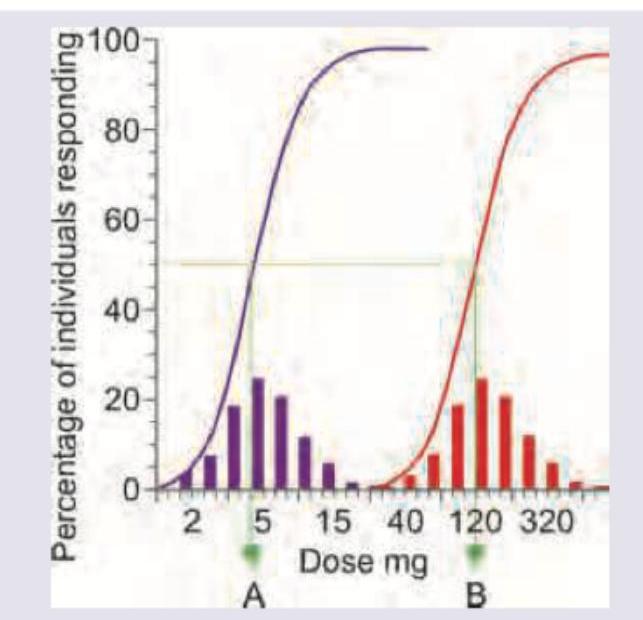
What do A and B represent in the curve shown below?
For the treatment of kala-azar, the daily dose of miltefosine in a 3-year-old child who weighs 15 kg is
Which of the following is a characteristic feature of Werner's syndrome?
Want unlimited practice?
Get full access to all questions, explanations, and performance tracking.
Scan to download app