
Computer Systems for Detecting Drug Interactions — MCQs

CSF examination is most commonly indicated in:
Which of the following is not a criterion suggesting causality in non communicable diseases?
Which of the following is the platinum-based chemotherapeutic agent used as first-line treatment for ovarian carcinoma?
The graph below shows dose-response curves for three drugs A, B, and C. Which of the following drugs has the highest potency?
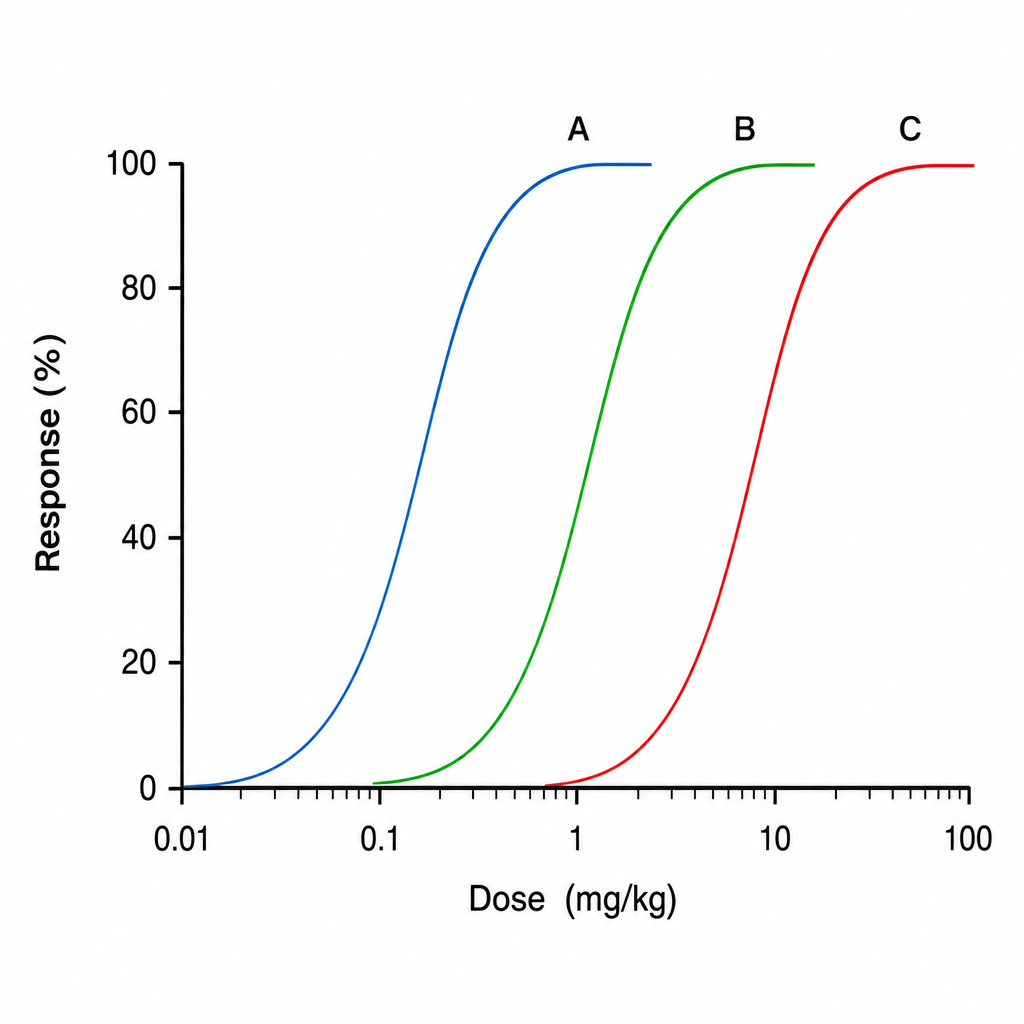
Which of the following drugs shown in the graph below has highest potency?
Which of the following are key strategies for managing acute vector-borne infections?
In triage, which category of patients is classified as green?
Match the following drugs in Column A with their contraindications in Column B. | Column A | Column B | | :-- | :-- | | 1. Morphine | 1. QT prolongation | | 2. Amiodarone | 2. Thromboembolism | | 3. Vigabatrin | 3. Pregnancy | | 4. Estrogen preparations | 4. Head injury |
Volume of distribution of a drug is 500 ml and target concentration of drug in blood is 5 g/L. 20% of administered drug is reached to systemic circulation. What will be the loading dose of that drug -
Which of the following is a true difference between gangliosides and cerebrosides?
Want unlimited practice?
Get full access to all questions, explanations, and performance tracking.
Scan to download app