Which muscarinic receptor subtype is predominantly found on the endothelium of blood vessels?
A 15-year-old boy needs to go for a long distance in a bus. Which of the following drugs would be useful for him to prevent motion sickness?
Which of the following statements about dopamine's actions is incorrect?
Which of the following inhibits the rate-limiting step in the synthesis of epinephrine?
Which of the following is an adverse effect of beta agonists?
What is the short half-life of a drug?
Which anticholinesterase agent has an effect on the CNS?
Which of the following is a selective 1-adrenergic blocker?
Which of the following antiglaucoma medications is unsafe in infants?
Atropine is derived from which of the following plants?
Explanation: ### Explanation **Correct Option: C (M3)** Muscarinic receptors are G-protein coupled receptors (GPCRs). The **M3 receptor** is the predominant subtype found on the **vascular endothelium**. The mechanism is a high-yield concept: although blood vessels lack direct parasympathetic innervation, they express "non-innervated" M3 receptors. When a muscarinic agonist (like Acetylcholine) binds to these M3 receptors, it activates the **Gq pathway**, increasing intracellular calcium. This stimulates the enzyme **Nitric Oxide Synthase (eNOS)** to produce **Nitric Oxide (NO)**. NO diffuses into the underlying vascular smooth muscle, increases cGMP, and causes **vasodilation**. *Note:* If the endothelium is damaged, acetylcholine acts directly on M3 receptors on the smooth muscle itself, causing vasoconstriction. **Why other options are incorrect:** * **A. M1:** These are primarily "Neural" receptors found in the CNS, autonomic ganglia, and gastric parietal cells (increasing HCl secretion). * **B. M2:** These are "Cardiac" receptors found in the SA node, AV node, and atria. They are coupled with Gi proteins and cause a decrease in heart rate and contractility. * **D. Nm:** These are Nicotinic receptors found at the **Neuromuscular Junction (NMJ)**. They are ligand-gated ion channels, not GPCRs, and are responsible for skeletal muscle contraction. **High-Yield Clinical Pearls for NEET-PG:** * **Mnemonic for Receptors:** **M1, M2, M3** follow the rule **"Q-I-Q"** (Gq, Gi, Gq). * **M3 Locations:** "Wet and Constrict" — Exocrine glands (sweat, salivation), Eye (miosis/accommodation), GI/Bladder (contraction), and Bronchi (bronchoconstriction). * **Vascular Paradox:** Acetylcholine causes vasodilation *in vivo* (via NO from M3), but can cause vasoconstriction in isolated strips of blood vessels where the endothelium is removed.
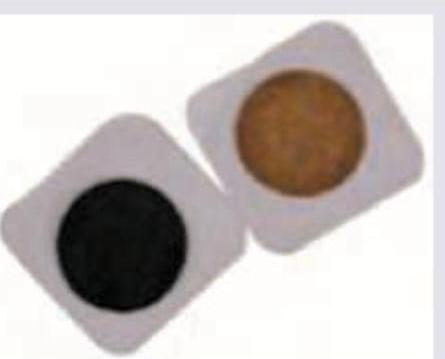
Explanation: ### Explanation **Correct Answer: D. Promethazine** **Mechanism and Rationale:** Motion sickness occurs due to a mismatch between visual and vestibular (inner ear) sensory inputs. The vestibular system sends signals to the **vestibular nuclei** and the **Chemoreceptor Trigger Zone (CTZ)** via histaminergic ($H_1$) and cholinergic ($M_1$) pathways. **Promethazine** is a first-generation antihistamine with potent **anticholinergic (antimuscarinic)** and sedative properties. It is highly effective for motion sickness because it crosses the blood-brain barrier and blocks $H_1$ and $M_1$ receptors in the vestibular apparatus and the vomiting center. It is often preferred for long-distance travel due to its long duration of action (approx. 6–12 hours). **Analysis of Incorrect Options:** * **A & B (Desloratadine & Cetirizine):** These are **second-generation antihistamines**. They are highly polar, do not cross the blood-brain barrier significantly, and lack significant anticholinergic activity. While excellent for allergies, they are **ineffective** in treating motion sickness. * **C (Diphenhydramine):** While this is a first-generation antihistamine that *can* be used for motion sickness, **Promethazine** is clinically more potent and has a longer half-life, making it a more suitable choice for "long-distance" travel as specified in the stem. **High-Yield Clinical Pearls for NEET-PG:** * **Drug of Choice (Prophylaxis):** **Hyoscine (Scopolamine)** is the most effective drug for motion sickness. It is best administered as a **transdermal patch** applied behind the ear (pinna) 4 hours before the journey. * **Timing:** Drugs for motion sickness must be taken **prophylactically** (before the journey starts). They are much less effective once vomiting has commenced. * **Side Effects:** The most common side effects of these drugs are **sedation** and **dry mouth** (due to anticholinergic action). * **Cyclizine and Meclizine** are other first-generation antihistamines frequently used for motion sickness, especially in vertigo (Meniere’s disease).
Explanation: ### Explanation Dopamine is a unique catecholamine that acts in a **dose-dependent manner** on specific receptors. The correct answer is **D (Beta 2 agonist)** because dopamine has negligible to no clinically significant action on $\beta_2$ receptors. Its primary actions are mediated through $D_1$, $\beta_1$, and $\alpha_1$ receptors. #### Why the other options are incorrect: * **A. D1 agonist:** At **low doses** (0.5–2 µg/kg/min), dopamine primarily stimulates $D_1$ receptors in the renal, mesenteric, and coronary vascular beds. This leads to vasodilation and increased renal blood flow (the "renal dose"). * **C. Beta 1 agonist:** At **intermediate doses** (2–10 µg/kg/min), dopamine stimulates $\beta_1$ receptors in the heart. This exerts a positive inotropic effect, increasing cardiac output and systolic blood pressure. * **B. Alpha agonist:** At **high doses** (>10 µg/kg/min), dopamine stimulates $\alpha_1$ receptors, leading to systemic vasoconstriction and an increase in peripheral vascular resistance. #### High-Yield Clinical Pearls for NEET-PG: 1. **Dopamine vs. Dobutamine:** Unlike dopamine, **Dobutamine** has significant $\beta_1$ activity with some $\beta_2$ action (vasodilation), making it preferred in cardiogenic shock without profound hypotension. 2. **Fenoldopam:** A selective $D_1$ agonist used in hypertensive emergencies to maintain renal perfusion. 3. **Extravasation:** If dopamine leaks into tissues during IV infusion, it causes necrosis due to $\alpha_1$-mediated vasoconstriction. The antidote is **Phentolamine** (an alpha-blocker). 4. **Rule of Thumb:** Dopamine follows the alphabetical order of receptor activation as the dose increases: **D** $\rightarrow$ **B**eta $\rightarrow$ **A**lpha.
Explanation: **Explanation:** The synthesis of catecholamines (Dopamine, Norepinephrine, and Epinephrine) follows a specific enzymatic pathway: **Tyrosine → L-Dopa → Dopamine → Norepinephrine → Epinephrine.** 1. **Why Metyrosine is correct:** The conversion of **Tyrosine to L-Dopa** by the enzyme **Tyrosine Hydroxylase** is the **rate-limiting step** in catecholamine synthesis. **Metyrosine (α-methyltyrosine)** competitively inhibits this enzyme, thereby decreasing the production of all subsequent catecholamines. It is clinically used in the preoperative management of **Pheochromocytoma**. 2. **Why other options are incorrect:** * **Guanethidine & Bretylium:** These are adrenergic neuron blockers. They do not inhibit synthesis; instead, they interfere with the **release** of norepinephrine from the presynaptic nerve terminals. * **Reserpine:** This drug inhibits the **Vesicular Monoamine Transporter (VMAT)**. It prevents the storage of neurotransmitters by blocking their transport into synaptic vesicles, leading to their degradation by MAO in the cytoplasm. **High-Yield NEET-PG Pearls:** * **Rate-limiting enzyme:** Tyrosine Hydroxylase (Inhibited by Metyrosine). * **Final step in Epinephrine synthesis:** Occurs in the adrenal medulla where Norepinephrine is converted to Epinephrine by **PNMT** (Phenylethanolamine N-methyltransferase). * **VMAT Inhibition:** Reserpine causes "pharmacological sympathectomy" and can lead to severe depression as a side effect. * **Uptake-1 Inhibition:** Cocaine and Tricyclic Antidepressants (TCAs) inhibit the reuptake of Norepinephrine into the neuron.
Explanation: The correct answer is **Hypokalemia**. **Mechanism of Action:** Beta-2 ($eta_2$) agonists (such as Salbutamol or Terbutaline) stimulate the $eta_2$ receptors located on the cell membranes of skeletal muscles. This stimulation activates the **Na⁺/K⁺-ATPase pump**, which drives potassium ions from the extracellular fluid into the intracellular compartment. This shift results in a decrease in serum potassium levels (Hypokalemia) [1]. This physiological effect is why nebulized salbutamol is used as an emergency treatment for hyperkalemia. **Analysis of Incorrect Options:** * **A. Hypoglycemia:** Incorrect. $\beta_2$ agonists actually cause **Hyperglycemia**. They stimulate glycogenolysis (breakdown of glycogen to glucose) in the liver and skeletal muscle, and promote glucagon release. * **B. Hypomagnesemia & C. Hypophosphatemia:** While high doses of $\beta_2$ agonists can occasionally cause minor shifts in other electrolytes, they are not classic or high-yield adverse effects compared to the profound effect on potassium. **NEET-PG High-Yield Pearls:** 1. **Metabolic Effects of $\beta_2$ Agonists:** Remember the "Hypo-Hyper" rule: **Hypo**kalemia, but **Hyper**glycemia and **Hyper**lactatemia. 2. **Cardiovascular Effects:** $\beta_2$ agonists can cause reflex tachycardia and tremors (due to direct action on skeletal muscle $\beta_2$ receptors). 3. **Clinical Application:** In patients with severe asthma or COPD receiving frequent nebulization, always monitor serum potassium to prevent cardiac arrhythmias. 4. **Uterine Effect:** $\beta_2$ agonists (e.g., Ritodrine, Isoxsuprine) act as tocolytics by relaxing the uterine smooth muscle.
Explanation: **Explanation:** The correct answer is **Acetylcholine (Option B)**. **Why Acetylcholine is correct:** Acetylcholine (ACh) is a naturally occurring quaternary ammonium compound that acts as a neurotransmitter. It has an extremely short half-life (seconds) because it is rapidly hydrolyzed by two enzymes: **Acetylcholinesterase (AChE)**, found at synaptic clefts and neuromuscular junctions, and **Butyrylcholinesterase (Pseudocholinesterase)**, found in the plasma and liver. Due to this rapid degradation, exogenous acetylcholine is clinically impractical for systemic use as it cannot achieve therapeutic concentrations in the blood. **Analysis of Incorrect Options:** * **Metacholine (Option A):** This is a synthetic analog of ACh. It is more resistant to AChE and almost completely resistant to pseudocholinesterase, giving it a longer duration of action than ACh. It is used clinically in the "Metacholine Challenge Test" for diagnosing bronchial hyperreactivity. * **Carbachol (Option C):** This is a carbamic acid ester. It is **completely resistant** to both AChE and pseudocholinesterase. Consequently, it has a much longer half-life and duration of action. * **Bethanechol (Option D):** Similar to carbachol, it is a carbamate derivative resistant to hydrolysis by cholinesterases. It is used to treat post-operative urinary retention and paralytic ileus. **NEET-PG High-Yield Pearls:** * **Mnemonic:** "Carbachol and Bethanechol are **Carb**amates; they resist the **Chop** (hydrolysis)." * Acetylcholine has both Muscarinic and Nicotinic activity, whereas Bethanechol is purely **Muscarinic** (M3 selective). * The only common clinical use for Acetylcholine is for producing miosis during ophthalmic surgery (instilled directly into the anterior chamber). * **Drug of choice for Metacholine toxicity:** Atropine.
Explanation: The primary determinant of whether an anticholinesterase agent can cross the blood-brain barrier (BBB) and exert Central Nervous System (CNS) effects is its chemical structure—specifically, whether it is a **tertiary or quaternary ammonium compound.** **Physostigmine (Correct Answer):** Physostigmine is a **tertiary amine**. Because it is uncharged (non-polar) and lipid-soluble, it easily crosses the blood-brain barrier [1]. This allows it to increase acetylcholine levels within the CNS, making it the drug of choice for treating central anticholinergic toxicity (e.g., Atropine or Datura poisoning) [1]. **Incorrect Options:** * **Neostigmine & Pyridostigmine:** These are **quaternary ammonium compounds**. They carry a positive charge (polar), which makes them lipid-insoluble. Consequently, they cannot cross the BBB and their actions are restricted to peripheral sites (e.g., the Neuromuscular Junction in Myasthenia Gravis) [3]. * **Edrophonium:** This is also a quaternary ammonium compound with a very short duration of action (used in the Tensilon test). Like the others, it lacks CNS penetration. **High-Yield NEET-PG Pearls:** * **Mnemonic:** "**T**ertiary **T**raverses the BBB" (Physostigmine); "**Q**uaternary stays **Q**uiet in the periphery" (Neostigmine). * **Clinical Use:** Physostigmine is the specific antidote for **Atropine poisoning**. * **Organophosphates:** Unlike the reversible carbamates listed above, organophosphates (like Malathion) are highly lipid-soluble and cause severe CNS toxicity [2]. * **Centrally acting reversible AChE inhibitors:** Donepezil, Rivastigmine, and Galantamine are used in **Alzheimer’s disease** due to their high CNS selectivity [1].
Explanation: ### Explanation The correct answer is **C. Tamsulosin**. **Mechanism and Selectivity:** Alpha-1 ($\alpha_1$) receptors are further divided into subtypes: $\alpha_{1A}$, $\alpha_{1B}$, and $\alpha_{1D}$ [1]. * **$\alpha_{1A}$ receptors** are primarily located in the **prostate and bladder neck** [1]. * **$\alpha_{1B}$ receptors** are primarily located in the **vascular smooth muscle** [1]. **Tamsulosin** (and Silodosin) are **selective $\alpha_{1A}$ blockers** [1]. Because they specifically target the receptors in the genitourinary tract rather than the vasculature, they provide "uroselectivity." This allows for the relaxation of prostatic smooth muscle to improve urine flow in Benign Prostatic Hyperplasia (BPH) without causing significant systemic hypotension [1, 2]. **Analysis of Incorrect Options:** * **A. Prazosin:** A non-selective $\alpha_1$ blocker (blocks $\alpha_{1A}$, $\alpha_{1B}$, and $\alpha_{1D}$ equally) [2]. It is used primarily for hypertension and Raynaud's phenomenon but is notorious for the "first-dose effect" (orthostatic hypotension) [2]. * **B. Terazosin:** Like Prazosin, it is a non-selective $\alpha_1$ blocker [2]. It has a longer half-life than Prazosin and is used for both BPH and hypertension. * **D. Indoramin:** Another non-selective $\alpha_1$ blocker used occasionally for hypertension or BPH, but it lacks the subtype selectivity of Tamsulosin [2]. **NEET-PG High-Yield Pearls:** 1. **Drug of Choice:** Tamsulosin is the preferred medical treatment for **BPH** in normotensive patients because it minimizes cardiovascular side effects [1, 2]. 2. **Side Effect:** A unique adverse effect of Tamsulosin is **IFIS (Intraoperative Floppy Iris Syndrome)**; patients scheduled for cataract surgery should discontinue the drug. 3. **Retrograde Ejaculation:** This is a common side effect of highly selective $\alpha_{1A}$ blockers like Silodosin and Tamsulosin [2].
Explanation: **Explanation:** **Brimonidine** is a highly selective **alpha-2 (α2) adrenergic agonist** used to decrease aqueous humor production and increase uveoscleral outflow. It is strictly **contraindicated in infants and children under 2 years of age** because it can cross the blood-brain barrier (BBB). In neonates and infants, the BBB is immature, leading to significant central nervous system (CNS) penetration. This results in severe systemic side effects, including **central apnea, bradycardia, hypotension, and profound sedation (somnolence).** **Analysis of Incorrect Options:** * **A. Timolol:** A non-selective beta-blocker. While it can cause systemic side effects like bradycardia or bronchospasm in children, it does not cause the life-threatening CNS depression/apnea seen with Brimonidine. It is often used with caution in pediatric glaucoma. * **C. Latanoprost:** A prostaglandin analogue. It is generally safe in children, though it is often less effective in pediatric/congenital glaucoma compared to adult open-angle glaucoma. * **D. Dorzolamide:** A topical carbonic anhydrase inhibitor. It is frequently used in pediatric populations and is considered safe, with the most common side effect being local irritation or a bitter taste. **High-Yield Clinical Pearls for NEET-PG:** * **Brimonidine** is the "classic" answer for apnea in infants in pharmacology. * **Apraclonidine** is another α2 agonist but is less lipophilic than Brimonidine; however, both are avoided in very young children. * **Drug of Choice (DOC)** for Primary Congenital Glaucoma is **Surgery** (Goniotomy or Trabeculotomy), not medical management. * **Latanoprost** side effects to remember: Iris pigmentation (permanent), hypertrichosis (eyelash growth), and cystoid macular edema.
Explanation: **Explanation:** **Atropine** is a prototypical competitive muscarinic antagonist. It is a naturally occurring tertiary amine alkaloid. 1. **Why Option A is correct:** Atropine is primarily derived from the plant **_Atropa belladonna_** (also known as Deadly Nightshade). The name "belladonna" (beautiful lady) originates from the historical use of these plant extracts by women to induce mydriasis (pupil dilation) for cosmetic appeal. It is also found in *Datura stramonium*, but *Atropa belladonna* is the classic botanical source associated with the pure alkaloid. 2. **Analysis of Incorrect Options:** * **B. _Hyoscyamus niger_ (Henbane):** This plant is the primary source of **Hyoscine** (Scopolamine), not Atropine. While chemically related, Hyoscine has more potent central nervous system effects (sedation and amnesia). * **C. _Datura stramonium_ (Jimson weed):** While this plant contains a mixture of belladonna alkaloids (including atropine, hyoscine, and hyoscyamine), it is clinically more significant as a common cause of **accidental anticholinergic poisoning** (Datura poisoning). * **D. _Argemone mexicana_ (Prickly Poppy):** This is unrelated to anticholinergics. Its seeds are common adulterants in mustard oil, leading to **Epidemic Dropsy** due to the toxin Sanguinarine. **High-Yield Clinical Pearls for NEET-PG:** * **Mechanism:** Competitive antagonist at all M receptors (M1, M2, M3). * **Drug of Choice (DOC):** For sinus bradycardia and organophosphate (OP) poisoning. * **Contraindications:** Narrow-angle glaucoma and Benign Prostatic Hyperplasia (BPH). * **Atropine Flush:** Cutaneous vasodilation in the blush area (toxic doses) is a compensatory mechanism to dissipate heat since sweating is inhibited.
Cholinergic Agonists
Practice Questions
Cholinergic Antagonists
Practice Questions
Adrenergic Agonists
Practice Questions
Adrenergic Antagonists
Practice Questions
Ganglionic Agents
Practice Questions
Neuromuscular Blocking Agents
Practice Questions
Autonomic Drugs in Ophthalmology
Practice Questions
Autonomic Drugs in Cardiovascular Disease
Practice Questions
Autonomic Drugs in Respiratory Disease
Practice Questions
Autonomic Drugs in Urological Disorders
Practice Questions
Get full access to all questions, explanations, and performance tracking.
Start For Free