Which of the following is the neuromuscular blocking agent with the shortest onset of action?
Which of the following drugs does not act on the neuromuscular junction?
What is the drug of choice for mushroom poisoning?
Idazoxan is a:
D-tubocurarine blocks the neuromuscular transmission by:
The regional aerial resistance of the mesentery and kidney is reduced by:
Which of the following is not a 5-HT receptor antagonist?
Neostigmine antagonizes non-depolarizing blockade by all of the following mechanisms EXCEPT:
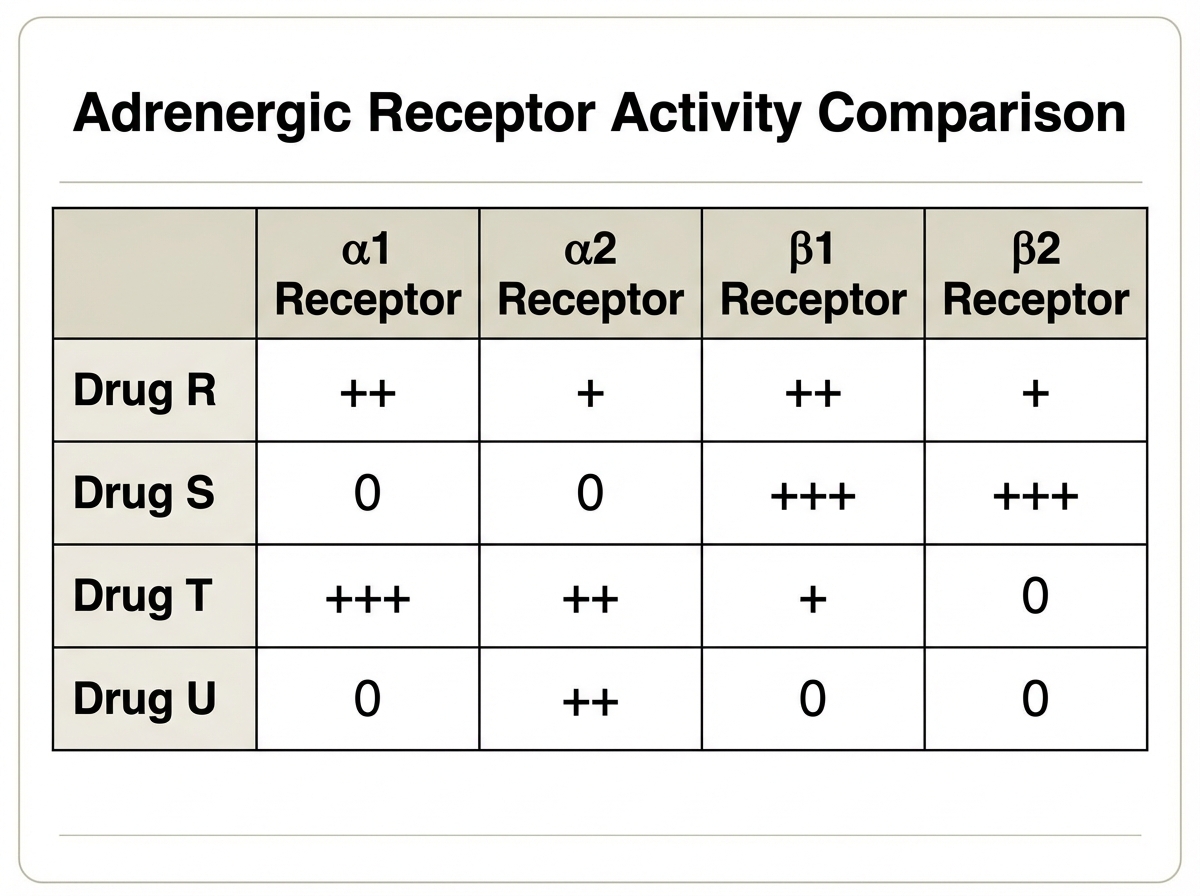
What is the action of alpha 2 and beta 1 receptors on adenyl cyclase?
Which of the following is a true statement regarding depolarizing neuromuscular blocking drugs?
Explanation: **Explanation:** The speed of onset of a neuromuscular blocking agent (NMBA) is primarily determined by its **mechanism of action** and **potency**. **Succinylcholine (Option D)** is the correct answer because it is a **depolarizing NMBA**. It acts as an agonist at the nicotinic acetylcholine receptors (nAChR) at the motor endplate, causing rapid and persistent depolarization. Due to its low potency and high concentration of molecules reaching the motor endplate quickly, it has the fastest onset of action (**30–60 seconds**). This makes it the gold standard for **Rapid Sequence Induction (RSI)** to secure the airway quickly. **Analysis of Incorrect Options:** * **Mivacurium (Option A):** A short-acting non-depolarizing agent, but its onset is relatively slow (2–4 minutes). It is metabolized by plasma cholinesterase. * **Vecuronium (Option B):** An intermediate-acting non-depolarizing agent with an onset of 2–3 minutes. It is noted for its cardiovascular stability. * **Rapacuronium (Option C):** A non-depolarizing agent designed to mimic the rapid onset of succinylcholine. While it was faster than other non-depolarizers, it was withdrawn from the market due to the risk of severe bronchospasm. **High-Yield Clinical Pearls for NEET-PG:** * **Fastest Onset:** Succinylcholine (Depolarizer). * **Fastest Non-depolarizer:** Rocuronium (Onset: 60–90 seconds; often used as an alternative to succinylcholine for RSI). * **Metabolism:** Succinylcholine is metabolized by **Pseudocholinesterase** (Butyrylcholinesterase). Deficiency of this enzyme leads to prolonged apnea. * **Key Side Effects of Succinylcholine:** Hyperkalemia (avoid in burn/trauma patients), muscle fasciculations, and triggering of **Malignant Hyperthermia**.
Explanation: ### Explanation The **Neuromuscular Junction (NMJ)** is the synapse between a motor neuron and a skeletal muscle fiber. Drugs acting here typically interfere with the nicotinic acetylcholine receptors ($N_m$) or the release of acetylcholine. **Why Dantrolene is the correct answer:** Dantrolene is a **direct-acting skeletal muscle relaxant**. Unlike the other options, it does not act at the NMJ (the synapse). Instead, it acts **intracellularly** by binding to the **Ryanodine Receptor (RyR1)** on the sarcoplasmic reticulum. This inhibits the release of calcium ions into the cytosol, thereby preventing excitation-contraction coupling. **Analysis of Incorrect Options:** * **Succinylcholine (Option A):** A **depolarizing neuromuscular blocker**. It acts as an agonist at the $N_m$ receptors at the NMJ, causing persistent depolarization and subsequent paralysis. * **Vecuronium (Option C):** An intermediate-acting **non-depolarizing neuromuscular blocker**. It acts as a competitive antagonist at the $N_m$ receptors at the NMJ. * **Mivacurium (Option D):** A short-acting **non-depolarizing neuromuscular blocker** that also acts as a competitive antagonist at the $N_m$ receptors. **High-Yield Clinical Pearls for NEET-PG:** * **Drug of Choice:** Dantrolene is the life-saving treatment for **Malignant Hyperthermia** (triggered by volatile anesthetics or succinylcholine) and **Neuroleptic Malignant Syndrome (NMS)**. * **Metabolism:** Mivacurium is unique among non-depolarizing blockers because it is metabolized by **plasma cholinesterase** (pseudocholinesterase), similar to succinylcholine. * **Hofmann Elimination:** Remember **Atracurium and Cisatracurium** for their organ-independent elimination, making them safe in liver and kidney failure.
Explanation: Mushroom poisoning, specifically from the *Amanita muscaria* or *Inocybe* species, is characterized by the ingestion of **muscarine** [2]. This toxin acts as a potent agonist at muscarinic receptors, leading to a "SLUDGE" syndrome (Salivation, Lacrimation, Urination, Defecation, GI distress, and Emesis) along with bradycardia and bronchoconstriction [1]. **1. Why Atropine is the Correct Choice:** Atropine is a **competitive muscarinic antagonist**. It crosses the blood-brain barrier and effectively blocks the effects of muscarine at all parasympathetic effector sites [3]. It reverses life-threatening symptoms like severe bradycardia and excessive bronchial secretions, making it the definitive antidote for early-onset mushroom poisoning [3]. **2. Why the Other Options are Incorrect:** * **Physostigmine:** This is an acetylcholinesterase inhibitor. It increases acetylcholine levels, which would worsen the cholinergic crisis in mushroom poisoning. (Note: Physostigmine is actually the antidote for *Atropine* overdose). * **Adrenaline:** While it can increase heart rate and cause bronchodilation, it does not address the underlying muscarinic receptor overstimulation. It is the drug of choice for anaphylactic shock, not muscarine poisoning. * **Carbachol:** This is a cholinergic agonist. Administering it would exacerbate the symptoms of poisoning. **Clinical Pearls for NEET-PG:** * **Early vs. Late Poisoning:** Atropine is effective for *early* symptoms (within 2 hours). Late-onset poisoning (6–24 hours) caused by *Amanita phalloides* involves **amatoxins**, which cause hepatic/renal failure; Atropine is ineffective here. * **Mnemonic for Atropine Overdose:** "Mad as a hatter, red as a beet, dry as a bone, blind as a bat, and hot as a hare." * **Specific Antidote:** For *Amanita phalloides* (late-onset), **Silibinin** or N-acetylcysteine may be used.
Explanation: **Explanation:** **Correct Option: C. Alpha 2 blocker** Idazoxan is a selective **Alpha-2 ($\alpha_2$) adrenergic receptor antagonist**. In pharmacology, it is primarily used as a research tool to study the central and peripheral effects of $\alpha_2$ receptors. By blocking these presynaptic receptors, it prevents the negative feedback inhibition of norepinephrine release, leading to an increase in sympathetic outflow. **Analysis of Incorrect Options:** * **Option A (Alpha 1 agonist):** Examples include **Phenylephrine** and **Methoxamine**. These drugs cause vasoconstriction and are used as nasal decongestants or to treat hypotension. * **Option B (Alpha 1 blocker):** Examples include **Prazosin, Terazosin, and Doxazosin**. These are used in the management of hypertension and Benign Prostatic Hyperplasia (BPH). * **Option D (Alpha 2 agonist):** Examples include **Clonidine** and **$\alpha$-methyldopa**. These drugs stimulate presynaptic $\alpha_2$ receptors, reducing sympathetic outflow, and are used as centrally acting antihypertensives. **High-Yield Clinical Pearls for NEET-PG:** * **Yohimbine** is another classic selective $\alpha_2$ blocker, historically used for erectile dysfunction. * **Mirtazapine**, an antidepressant, also acts as an $\alpha_2$ antagonist, which enhances the release of serotonin and norepinephrine (NASSA). * **Receptor Location:** Remember that $\alpha_2$ receptors are primarily **presynaptic** (inhibitory), while $\alpha_1$ receptors are primarily **postsynaptic** (excitatory). * **Experimental Use:** Idazoxan has been investigated for its potential to treat depression and Parkinson's disease, though it is not currently a first-line clinical agent.
Explanation: **Explanation:** **Mechanism of Action (Why A is correct):** D-tubocurarine is the prototype of **competitive (non-depolarizing) neuromuscular blockers** [1]. It works by acting as a competitive antagonist at the **nicotinic acetylcholine receptors ($N_M$ receptors)** located on the motor endplate of skeletal muscles [1][2]. By binding to these receptors, it prevents acetylcholine (ACh) from attaching, thereby inhibiting endplate potential and preventing muscle contraction [2]. This results in flaccid paralysis. **Analysis of Incorrect Options:** * **Option B:** Drugs like **Botulinum toxin** and **Hemicholinium** prevent the release or synthesis of ACh [3], not D-tubocurarine. * **Option C:** ACh is naturally degraded by the enzyme acetylcholinesterase; no clinical drug works by "destroying" the neurotransmitter directly. * **Option D:** Inactivating acetylcholinesterase is the mechanism of **Anticholinesterases** (e.g., Neostigmine, Physostigmine). These drugs actually increase ACh levels at the synapse and are used as **antidotes** to reverse D-tubocurarine toxicity. **High-Yield NEET-PG Pearls:** 1. **Reversibility:** The blockade produced by D-tubocurarine can be overcome by increasing the concentration of ACh (competitive antagonism), which is why **Neostigmine** is used for reversal. 2. **Order of Paralysis:** Small, rapid-moving muscles (eyes, fingers) are paralyzed first, followed by limbs, trunk, and finally the **diaphragm** [1]. Recovery occurs in the reverse order. 3. **Adverse Effects:** D-tubocurarine is known for causing **histamine release**, leading to bronchospasm, hypotension, and flushing. It also has ganglion-blocking activity. 4. **Modern Alternative:** In modern anesthesia, D-tubocurarine is largely replaced by agents like **Atracurium** (safe in renal failure due to Hofmann elimination) or **Rocuronium** [2].
Explanation: **Explanation:** The correct answer is **Dopamine**. This is due to its unique dose-dependent receptor activity. At low doses (0.5–2 µg/kg/min), dopamine primarily acts on **D1 receptors** located in the renal, mesenteric, coronary, and cerebral vascular beds. Activation of these Gs-protein-coupled receptors increases intracellular cAMP, leading to potent vasodilation. This reduces regional vascular resistance and increases blood flow to the kidneys (promoting diuresis) and the mesentery. **Why the other options are incorrect:** * **Noradrenaline:** It is a potent α1, α2, and β1 agonist with negligible β2 or D1 activity. It causes intense systemic vasoconstriction, which **increases** vascular resistance in the renal and mesenteric beds. * **Adrenaline:** While it has β2-mediated vasodilatory effects in skeletal muscle at low doses, its α1-mediated vasoconstrictive effects predominate in the renal and mesenteric vasculature, typically **increasing** resistance. * **Isoprenaline:** A pure β1 and β2 agonist. While it causes systemic vasodilation (reducing peripheral resistance in skeletal muscles), it does not have specific D1-mediated action on the mesenteric or renal beds to the same extent as dopamine. **High-Yield Clinical Pearls for NEET-PG:** * **Dopamine Dose-Response:** * *Low Dose (D1):* Renal/Mesenteric vasodilation ("Renal dose"). * *Medium Dose (β1):* Positive inotropic effect (increases Cardiac Output). * *High Dose (α1):* Systemic vasoconstriction (increases BP). * **Fenoldopam:** A selective D1 agonist used in hypertensive emergencies to maintain renal perfusion. * **Drug of Choice:** While dopamine increases renal blood flow, it has not been proven to prevent acute renal failure; **Norepinephrine** is currently the preferred vasopressor in septic shock.
Explanation: **Explanation:** The correct answer is **Lanreotide**. To answer this question correctly, one must distinguish between serotonin (5-HT) receptor antagonists and somatostatin analogs. **1. Why Lanreotide is the correct answer:** Lanreotide is a synthetic long-acting **somatostatin analog**, not a 5-HT antagonist. It works by binding to somatostatin receptors (SSTR-2 and SSTR-5) to inhibit the release of various hormones, including growth hormone, insulin, glucagon, and serotonin. It is primarily used in the management of **Acromegaly** and symptomatic relief of **Carcinoid syndrome**. **2. Analysis of incorrect options:** * **Ketanserin (Option A):** A selective **5-HT₂ receptor antagonist** with additional α₁-blocking properties. It is used clinically for its antihypertensive effects and in Raynaud’s phenomenon. * **Methysergide (Option B):** A potent **5-HT₂A/2C receptor antagonist** (and partial agonist at 5-HT₁). Historically used for migraine prophylaxis, though its use is now limited due to the risk of retroperitoneal fibrosis. * **Tropisetron (Option D):** A selective **5-HT₃ receptor antagonist**. Like Ondansetron, it is used as a powerful antiemetic, particularly for chemotherapy-induced nausea and vomiting (CINV). **High-Yield Clinical Pearls for NEET-PG:** * **Carcinoid Syndrome Management:** While 5-HT antagonists (like Cyproheptadine) treat symptoms, **Octreotide and Lanreotide** are the drugs of choice to decrease hormone secretion from the tumor. * **5-HT₃ Antagonists (The "-setrons"):** These are the only 5-HT receptors that are **ionotropic** (ligand-gated ion channels); all other 5-HT receptors are G-protein coupled (metabotropic). * **Methysergide Side Effect:** Always remember the association with **"3F" (Fibrosis):** Retroperitoneal, Pleural, and Endocardial fibrosis.
Explanation: **Explanation:** Neostigmine is a reversible acetylcholinesterase (AChE) inhibitor used clinically to reverse the effects of non-depolarizing neuromuscular blockers (NDNMBs) like vecuronium or rocuronium. Its primary mechanism involves increasing the concentration of acetylcholine (ACh) at the neuromuscular junction to outcompete the blocker. **Why Option B is Correct:** Neostigmine does **not** prevent K+ efflux from the cell. Potassium efflux is a physiological process involved in the repolarization phase of an action potential. Neostigmine’s actions are centered on modulating ACh levels and direct nicotinic receptor stimulation, rather than altering ion channel kinetics related to potassium. **Analysis of Incorrect Options:** * **Option A:** This is the primary mechanism. By inhibiting AChE, neostigmine prevents the hydrolysis of ACh, increasing its availability at the motor end plate to displace the NDNMB. * **Option C:** Neostigmine has a secondary "presynaptic" effect where it promotes the mobilization and release of more ACh vesicles from the motor nerve terminal. * **Option D:** Neostigmine (and other carbamates) possesses a direct agonistic action on nicotinic receptors ($N_m$), causing direct depolarization of the motor end plate. **NEET-PG High-Yield Pearls:** * **Co-administration:** Neostigmine is always given with an antimuscarinic (usually **Glycopyrrolate**) to prevent bradycardia and excessive secretions caused by systemic ACh accumulation. * **Quaternary Ammonium:** Neostigmine is a polar quaternary ammonium compound; it does **not** cross the blood-brain barrier (unlike Physostigmine). * **Ceiling Effect:** Neostigmine has a "ceiling effect" for reversal; if the blockade is too intense, increasing the dose will not provide further antagonism and may lead to a cholinergic crisis.
Explanation: ### Explanation The correct answer is **D. Inhibit; Stimulate**. This question tests your knowledge of G-protein coupled receptors (GPCRs) and their secondary messenger pathways, a high-yield topic for NEET-PG. #### 1. Why Option D is Correct Adrenergic receptors are classified based on the type of G-protein they are coupled to: * **Alpha-2 ($\alpha_2$) receptors** are coupled to **Gi (Inhibitory)** proteins. When activated, the $\alpha_i$ subunit inhibits the enzyme **adenyl cyclase**, leading to a decrease in intracellular cyclic AMP (cAMP) levels. * **Beta-1 ($\beta_1$) receptors** (along with $\beta_2$ and $\beta_3$) are coupled to **Gs (Stimulatory)** proteins. Activation of Gs stimulates **adenyl cyclase**, which converts ATP to cAMP, increasing intracellular cAMP levels. #### 2. Why Other Options are Incorrect * **Option A & B:** These are incorrect because $\alpha_2$ is strictly inhibitory ($G_i$) to adenyl cyclase. It does not stimulate the enzyme. * **Option C:** This is incorrect because all Beta receptors ($\beta_1, \beta_2, \beta_3$) are stimulatory ($G_s$) to adenyl cyclase. They never inhibit it. #### 3. Clinical Pearls & High-Yield Facts To quickly remember receptor signaling for NEET-PG, use the mnemonic **"QISS"** (pronounced 'Kiss'): * **$\alpha_1$**: **Q** ($G_q$ protein) $\rightarrow$ Activates Phospholipase C $\rightarrow$ $\uparrow$ $IP_3/DAG$. * **$\alpha_2$**: **I** ($G_i$ protein) $\rightarrow$ **Inhibits** Adenyl Cyclase $\rightarrow$ $\downarrow$ cAMP. * **$\beta_1, \beta_2, \beta_3$**: **S** ($G_s$ protein) $\rightarrow$ **Stimulates** Adenyl Cyclase $\rightarrow$ $\uparrow$ cAMP. * **$M_1, M_2, M_3$**: Follow the **"QIQ"** pattern ($M_1=G_q, M_2=G_i, M_3=G_q$). **Key Clinical Application:** * **$\alpha_2$ Agonists** (e.g., Clonidine) act as central sympatholytics by inhibiting further norepinephrine release via the $G_i$ pathway. * **$\beta_1$ Agonists** (e.g., Dobutamine) increase cardiac contractility (inotropy) by increasing cAMP in the myocardium.
Explanation: **Explanation:** Depolarizing neuromuscular blockers (DNMBs), such as **Succinylcholine (Suxamethonium)**, act as nicotinic acetylcholine receptor (nAChR) agonists. Their mechanism involves two distinct phases, leading to the characteristics mentioned in the options. 1. **Causes muscular fasciculations (Option B):** Succinylcholine binds to nAChRs at the motor endplate, causing prolonged opening of sodium channels. This initial depolarization triggers disorganized muscle contractions known as fasciculations before paralysis sets in. 2. **Unresponsive to other stimuli (Option A):** After the initial depolarization, the muscle membrane remains depolarized but the sodium channels become inactivated (refractory). This creates a **Phase I block**, where the endplate cannot respond to further nerve impulses or chemical stimuli, leading to flaccid paralysis. 3. **Not reversed by neostigmine (Option C):** Neostigmine is an acetylcholinesterase inhibitor that increases ACh levels. In a Phase I block, more ACh actually worsens the depolarization, potentially deepening the paralysis. Therefore, neostigmine does not reverse, and may even potentiate, a depolarizing block. **High-Yield Clinical Pearls for NEET-PG:** * **Metabolism:** Succinylcholine is rapidly hydrolyzed by **Pseudocholinesterase** (Butyrylcholinesterase). Patients with atypical pseudocholinesterase experience prolonged apnea (Suxamethonium apnea). * **Adverse Effects:** Hyperkalemia (dangerous in burn/trauma patients), muscle soreness, and it is a known trigger for **Malignant Hyperthermia** (treated with Dantrolene). * **Phase II Block:** With prolonged infusion, the block may transition to a Phase II block, which resembles a non-depolarizing block and may be partially reversed by neostigmine.
Cholinergic Agonists
Practice Questions
Cholinergic Antagonists
Practice Questions
Adrenergic Agonists
Practice Questions
Adrenergic Antagonists
Practice Questions
Ganglionic Agents
Practice Questions
Neuromuscular Blocking Agents
Practice Questions
Autonomic Drugs in Ophthalmology
Practice Questions
Autonomic Drugs in Cardiovascular Disease
Practice Questions
Autonomic Drugs in Respiratory Disease
Practice Questions
Autonomic Drugs in Urological Disorders
Practice Questions
Get full access to all questions, explanations, and performance tracking.
Start For Free