Acetylcholine acting on nicotinic receptors produces:
Ocular effects that include mydriasis are characteristic of which of the following drugs?
Which of the following is the most appropriate treatment for severe nicotine poisoning?
Which of the following neurotransmitters is primarily released from the sympathetic nervous system to increase heart rate in response to a DECREASE in blood pressure?
A chronic smoker wants to quit smoking. Which of the following is the MOST appropriate first-line pharmacotherapy for smoking cessation?
Which of the following is not a recognized use of alpha-2-agonists?
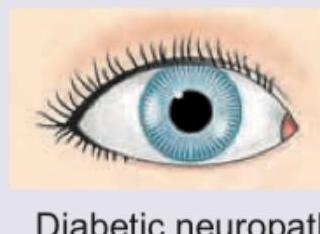
A 20-year-old woman is admitted with the following presentation. 1% pilocarpine is not showing any response on the side of mydriasis. What is the diagnosis? (Recent NEET Pattern 2016-17)
Empirical drug of choice for treatment of meningococcal meningitis is:-
Mechanism of action of atropine in treatment of organophosphate poisoning is?
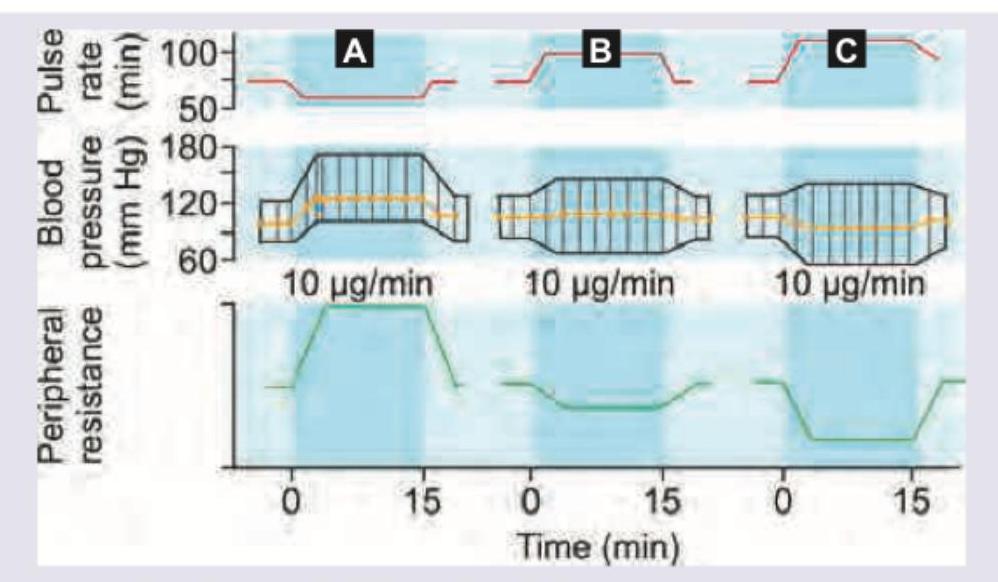
Which of the following statement is correct regarding the graph shown? (AllMS Nov 2016)
Explanation: ***Contraction of skeletal muscle*** - Acetylcholine (ACh) binds to **nicotinic acetylcholine receptors (nAChRs)** at the **neuromuscular junction**, leading to muscle fiber depolarization and contraction [2]. - These receptors are **ligand-gated ion channels** that allow sodium influx, crucial for initiating muscle action potentials [2]. *Secretion of saliva* - Saliva secretion is primarily mediated by **muscarinic acetylcholine receptors (mAChRs)**, not nicotinic receptors, on glandular cells. - Parasympathetic stimulation, leading to ACh release, increases both the volume and enzyme content of saliva. *Bradycardia* - Bradycardia (slowing of heart rate) is mediated by **muscarinic acetylcholine receptors (M2 receptors)** in the heart [1]. - ACh decreases heart rate by increasing potassium efflux and decreasing cAMP levels in cardiac pacemaker cells [1]. *Pupillary constriction* - Pupillary constriction (miosis) is predominantly controlled by **muscarinic acetylcholine receptors (M3 receptors)** on the pupillary constrictor muscle. - Activation of these receptors causes the circular muscle fibers to contract, reducing pupil size.
Explanation: ***phenylephrine (alpha agonist)*** - **Phenylephrine** is a direct-acting **alpha-1 adrenergic agonist** that causes contraction of the **pupillary dilator muscle**, leading to **mydriasis** (pupil dilation). [1] - It is frequently used clinically to dilate pupils for **ophthalmologic examinations** due to its selective action on alpha-1 receptors in the eye. [2] *neostigmine (cholinesterase inhibitor)* - **Neostigmine** inhibits acetylcholinesterase, increasing acetylcholine at the neuromuscular junction and muscarinic receptors. This leads to **miosis** (pupil constriction), not mydriasis. - Its ophthalmic use is primarily for treating **glaucoma** by improving aqueous humor outflow through cholinergic effects on the ciliary muscle. *phentolamine (alpha blocker)* - **Phentolamine** is a **non-selective alpha-adrenergic antagonist** that blocks both alpha-1 and alpha-2 receptors. - Alpha-1 receptor blockade in the eye would relax the pupillary dilator muscle, leading to **miosis** or prevention of mydriasis, not its induction. *mecamylamine (ganglionic blocker)* - **Mecamylamine** is a **ganglionic blocker** that antagonizes nicotinic receptors in both sympathetic and parasympathetic ganglia. - Blocking parasympathetic ganglia can cause some mydriasis, but ganglionic blockers have widespread, non-selective autonomic effects and are not primarily used for isolated mydriasis.
Explanation: ***Atropine*** - **Atropine** is the most appropriate pharmacological treatment among the options for managing the **muscarinic symptoms** of severe nicotine poisoning, as it acts as a **competitive antagonist** at muscarinic acetylcholine receptors [1]. - Nicotine initially stimulates and then paralyzes nicotinic acetylcholine receptors at autonomic ganglia and neuromuscular junctions, leading to a biphasic toxidrome with both muscarinic and nicotinic effects [1]. - Severe cases often present with prominent **cholinergic overdrive** (bradycardia, excessive salivation, bronchorrhea, bronchospasm) that responds to atropine. - **Note:** Overall management of severe nicotine poisoning primarily involves **supportive care** (airway management, mechanical ventilation), with atropine used for symptomatic relief of muscarinic effects. *Neostigmine* - **Neostigmine** is an **acetylcholinesterase inhibitor** that increases acetylcholine levels at the synapse. - This would exacerbate the cholinergic effects of nicotine poisoning and is therefore contraindicated. *Phentolamine* - **Phentolamine** is an **alpha-adrenergic blocker** used to treat hypertensive crises, particularly those caused by catecholamine release. - While nicotine can cause initial sympathetic stimulation and catecholamine release, phentolamine does not address the primary cholinergic toxicity of severe nicotine poisoning. *Trimethaphan* - **Trimethaphan** is a **ganglionic blocker** that can block both sympathetic and parasympathetic ganglia at nicotinic receptors [2]. - While theoretically it might prevent some nicotinic effects, it is obsolete and rarely used due to its non-selective nature and potential for severe hypotension and other side effects, making it unsuitable compared to supportive care and targeted atropine therapy [2].
Explanation: ***Norepinephrine*** - **Norepinephrine** is the primary neurotransmitter released by **postganglionic sympathetic neurons** directly onto the heart to increase heart rate and contractility in response to a drop in blood pressure. - It acts on **beta-1 adrenergic receptors** in the sinoatrial (SA) node, atria, and ventricles, leading to increased chronotropy (heart rate) and inotropy (contractility). *Dopamine* - While **dopamine** can have cardiovascular effects, particularly at high doses, it is not the primary neurotransmitter released by the sympathetic nervous system for direct heart rate regulation. - Dopamine is a precursor to norepinephrine and epinephrine, but its main physiological roles involve **renal blood flow regulation** and central nervous system functions. *Acetylcholine* - **Acetylcholine** is the primary neurotransmitter of the **parasympathetic nervous system**, which generally acts to **decrease heart rate** (bradycardia) through muscarinic receptors. - It is also released by **preganglionic sympathetic fibers**, but these do not directly innervate the heart to produce the desired effect of increasing heart rate. *Epinephrine* - **Epinephrine** (adrenaline) is primarily a **hormone** released from the **adrenal medulla** into the bloodstream, not directly from postganglionic sympathetic nerve terminals to the heart. - Although it has strong effects on beta-1 receptors in the heart, its release is more generalized and slower than the direct neuronal release of norepinephrine.
Explanation: ***Varenicline*** - **Varenicline** is a **partial agonist** at the **α4β2 nicotinic acetylcholine receptor**, the primary receptor involved in nicotine addiction. - It reduces cravings and withdrawal symptoms while blocking the reinforcing effects of nicotine from cigarettes. - Studies show **varenicline has the highest efficacy** among pharmacological agents for smoking cessation, with superior quit rates compared to bupropion and NRT. - **First-line agent** recommended by clinical guidelines for smoking cessation. *Mirtazapine* - Mirtazapine is a **tetracyclic antidepressant** (α2-antagonist, 5-HT2 and 5-HT3 antagonist) used for **major depressive disorder**. - **Not indicated** for smoking cessation and lacks evidence for efficacy in this context. - May cause weight gain and sedation, which are not beneficial for smoking cessation. *Bupropion* - **Bupropion** is an **atypical antidepressant** and **norepinephrine-dopamine reuptake inhibitor (NDRI)** that also antagonizes nicotinic receptors. - Effective **first-line agent** for smoking cessation, reducing cravings and withdrawal symptoms. - However, studies show **lower efficacy compared to varenicline** in head-to-head trials. - Contraindicated in patients with seizure disorders or eating disorders. *Nicotine replacement therapy* - **NRT** (patches, gum, lozenges, inhalers, nasal spray) provides controlled nicotine delivery without harmful tobacco combustion products. - Effective **first-line therapy** that reduces withdrawal symptoms and cravings. - Generally **less effective than varenicline** when used alone, but can be combined with other therapies. - Safest option with minimal contraindications. *Clonidine* - **Clonidine** is a **central α2-agonist** primarily used for hypertension. - Considered a **second-line agent** for smoking cessation, used only when first-line therapies fail or are contraindicated. - Less effective than first-line agents and associated with more adverse effects (sedation, dry mouth, hypotension). - Not routinely recommended for smoking cessation.
Explanation: ***Correct Answer: Benign Hyperplasia of prostate*** - Alpha-2-agonists are **NOT** used to treat **benign prostatic hyperplasia (BPH)**; this condition is typically managed with **alpha-1-blockers** (e.g., tamsulosin, alfuzosin) or 5-alpha-reductase inhibitors. - Alpha-1-blockers relax the smooth muscle in the prostate and bladder neck, improving urine flow, which involves a different receptor mechanism than alpha-2-agonists. - Alpha-2-agonists would not provide therapeutic benefit for BPH. *Incorrect: Glaucoma* - Alpha-2-agonists (e.g., **brimonidine**, **apraclonidine**) **are** used to treat **glaucoma** by reducing aqueous humor production and increasing uveoscleral outflow. - This action helps to **lower intraocular pressure**, a primary goal in glaucoma management. *Incorrect: Hypertension* - Central-acting alpha-2-agonists (e.g., **clonidine**, **methyldopa**) **are** used as **antihypertensive agents**. - They reduce sympathetic outflow from the central nervous system, leading to decreased heart rate, vasodilation, and consequently, **lower blood pressure**. *Incorrect: Sedation* - Alpha-2-agonists like **dexmedetomidine** and **clonidine** **are** commonly used for **sedation** in critically ill patients, especially in intensive care units. - They produce sedation, analgesia, and anxiolysis without causing significant respiratory depression, making them valuable in certain clinical settings.
Explanation: ***Pharmacological block*** - A **dilated pupil** that shows **no response to 1% pilocarpine** is characteristic of **pharmacological mydriasis** caused by anticholinergic agents (atropine, scopolamine, tropicamide, homatropine). - The muscarinic receptors on the iris sphincter muscle are **competitively blocked** by these agents, preventing acetylcholine and even exogenous pilocarpine from causing pupillary constriction. - This is the **key distinguishing feature** from other causes of mydriasis: the pupil remains dilated despite administration of cholinergic agonists. - Common scenarios include **accidental exposure** to belladonna alkaloids, intentional cosmetic use, or contamination from medications. *Adie tonic pupil* - Adie's tonic pupil presents with a **dilated pupil with sluggish or absent light reflex**, but it shows **positive response to dilute pilocarpine (0.125%)** due to **denervation supersensitivity**. - This supersensitivity is the hallmark diagnostic feature distinguishing Adie's from other causes. - Since this patient shows **no response to 1% pilocarpine** (a much higher concentration), Adie's pupil is ruled out. - Typically seen in young women with **vermicular iris movements** on slit-lamp examination. *Diabetic neuropathy* - Diabetic autonomic neuropathy may affect pupillary responses, but typically causes **smaller pupils** with impaired dilation rather than fixed mydriasis. - Would be associated with other signs of diabetic neuropathy: **peripheral neuropathy, gastroparesis, orthostatic hypotension**. - Does not present as isolated, fixed mydriasis unresponsive to pilocarpine. *Uncal herniation* - Results from **compression of CN III (oculomotor nerve)** due to increased intracranial pressure. - Causes a **"blown pupil"** (dilated and fixed) with associated **ptosis and eye positioned "down and out"**. - This is a **neurosurgical emergency** with altered consciousness, not consistent with a stable outpatient presentation in a young woman. - The pupil may show minimal response to strong pilocarpine, but the clinical context is entirely different.
Explanation: ***Ceftriaxone*** - As a **third-generation cephalosporin**, **Ceftriaxone** provides excellent coverage against common bacterial causes of meningitis, including *Neisseria meningitidis*. - It achieves high concentrations in the **cerebrospinal fluid (CSF)**, making it highly effective for CNS infections. *Cefotetan* - **Cefotetan** is a **second-generation cephalosporin** that has limited CSF penetration and less reliable coverage against common meningitis pathogens. - While it has activity against some gram-negative bacteria, it is not considered a first-line agent for empirical treatment of meningitis. *Cefoxitin* - **Cefoxitin** is also a **second-generation cephalosporin** with limited ability to cross the blood-brain barrier, making it unsuitable for treating meningitis. - Its spectrum of activity is more focused on anaerobic bacteria and some gram-negative organisms, not typically the main culprits in meningitis. *Gentamicin* - **Gentamicin** is an **aminoglycoside antibiotic** that has poor penetration into the CSF and is less effective as a monotherapy for meningitis. - It is often used in combination with other antibiotics, but not as an empirical monotherapy for suspected meningococcal meningitis.
Explanation: ***It has antimuscarinic activity*** - **Organophosphate poisoning** leads to **excessive acetylcholine** at muscarinic receptors, causing symptoms like miosis, bradycardia, and increased secretions. - **Atropine** is a **competitive antagonist** at these muscarinic receptors, thereby blocking the effects of excess acetylcholine. *It inhibits secretion of acetylcholine* - Atropine does not directly inhibit the secretion of **acetylcholine** from nerve terminals. - Its action is postsynaptic, specifically at the **receptor level**. *It is reactivator of acetylcholine esterase enzyme* - **Pralidoxime (2-PAM)** and other **oximes** are the drugs that reactivate **acetylcholinesterase**. - Atropine does not reactivate the enzyme; it only blocks the effects of acetylcholine. *It is agonist of acetylcholine receptors* - An **agonist** would mimic the effects of acetylcholine, which would worsen the symptoms of organophosphate poisoning. - Atropine is an **antagonist**, meaning it blocks the receptors.
Explanation: ***Drug acting on graph B is isoproterenol*** - Graph B shows a definite **increase in pulse rate** and a **decrease in peripheral resistance**, while blood pressure remains largely unchanged due to the combined effects. - **Isoproterenol** is a non-selective β-adrenergic agonist that causes increased heart rate (β1 effect) and vasodilation leading to decreased peripheral resistance (β2 effect). - This unique hemodynamic profile is characteristic of isoproterenol and distinguishes it from other catecholamines. *Drug in graph A is epinephrine* - Graph A shows a **decrease in pulse rate**, which is **not characteristic** of epinephrine at the dose shown (10 μg/min). - Epinephrine typically causes **tachycardia** due to β1-adrenergic stimulation, not bradycardia. - The cardiovascular profile in graph A does not match epinephrine's expected effects. *Effect on heart in graph A can be overcome by antimuscarinic* - The decreased pulse rate in graph A suggests **reflex bradycardia** or parasympathetic stimulation. - However, without knowing the actual drug, we cannot definitively state whether antimuscarinic agents would reverse this effect. - This option makes assumptions that cannot be verified from the graph alone. *Drug acting on graph C is nor-epinephrine* - Graph C shows **increased pulse rate** and **decreased peripheral resistance** with slight drop in blood pressure. - **Norepinephrine** primarily acts on α1-receptors, causing **vasoconstriction and increased peripheral resistance**, not decreased. - Norepinephrine would also increase blood pressure significantly, which contradicts the graph. - This cardiovascular profile does not match norepinephrine.
Get full access to all questions, explanations, and performance tracking.
Start For Free