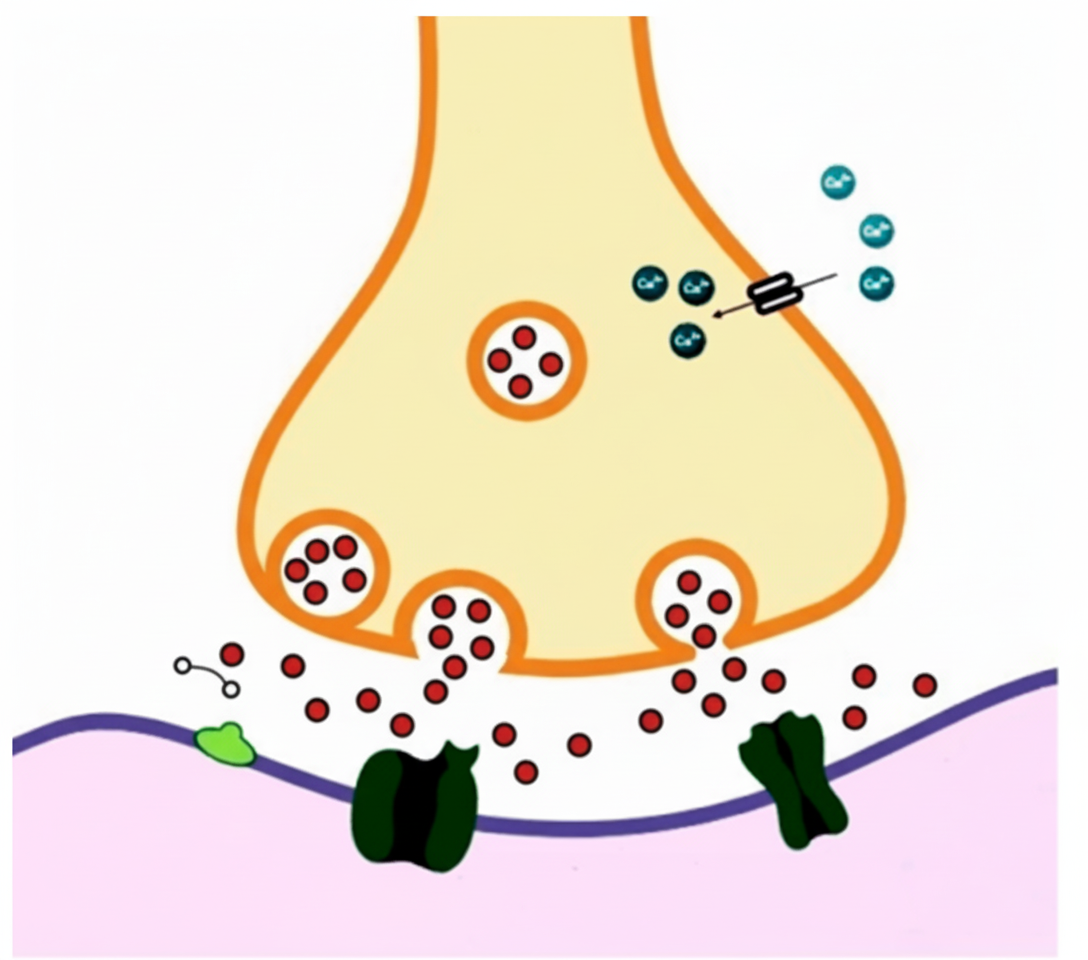
Which of the following drugs does not act on the neuromuscular junction?
D-tubocurarine acts by which of the following mechanisms?
Which of the following drugs binds only with the anionic site of cholinesterase?
Which of the following drugs does not cross the blood-brain barrier?
Ergot alkaloids are used in all of the following conditions EXCEPT?
How would a drug that competes with acetylcholine for receptors at the motor end plate affect skeletal muscle?
All of the following statements about clonidine are true EXCEPT?
Which of the following is NOT an alpha-adrenoceptor agonist?
Anticholinesterases are effective against all of the following conditions, except:
Which of the following is not a tertiary amine?
Explanation: ### Explanation The **Neuromuscular Junction (NMJ)** is the synapse between a motor neuron and a skeletal muscle fiber. Drugs acting here typically interfere with the nicotinic acetylcholine receptors ($N_m$) or the process of depolarization at the motor endplate. **Why Dantrolene is the correct answer:** Unlike the other options, **Dantrolene** does not act at the NMJ. Instead, it acts **peripherally within the muscle fiber**. It works by binding to the **ryanodine receptor (RyR1)** on the sarcoplasmic reticulum, inhibiting the release of calcium ions into the cytosol. This prevents excitation-contraction coupling without affecting the electrical signal at the NMJ. **Analysis of Incorrect Options:** * **Succinylcholine (Option A):** A **depolarizing neuromuscular blocker**. It acts as an agonist at the $N_m$ receptor, causing persistent depolarization of the motor endplate, leading to muscle relaxation [1], [5]. * **Vecuronium (Option C):** An **intermediate-acting non-depolarizing neuromuscular blocker** [4]. It acts as a competitive antagonist at the $N_m$ receptor at the NMJ [2], [3]. * **Mivacurium (Option D):** A **short-acting non-depolarizing neuromuscular blocker**. Like Vecuronium, it competes with acetylcholine at the NMJ. It is notable for being metabolized by plasma pseudocholinesterase. **High-Yield Clinical Pearls for NEET-PG:** * **Dantrolene** is the drug of choice for **Malignant Hyperthermia** (caused by volatile anesthetics/succinylcholine) and **Neuroleptic Malignant Syndrome**. * **Succinylcholine** is associated with side effects like hyperkalemia, muscle fasciculations, and post-operative myalgia [1]. * **Mivacurium** has the shortest duration among non-depolarizing blockers but can cause histamine release (hypotension/flushing). * **Hexamethonium** acts on autonomic ganglia ($N_n$), not the NMJ ($N_m$).
Explanation: **Explanation:** **D-tubocurarine** is the prototype of **competitive (non-depolarizing) neuromuscular blockers** [1]. It acts by reversibly binding to the **nicotinic acetylcholine receptors ($N_M$)** at the motor endplate of the myoneural junction [3]. By competing with acetylcholine (ACh) for these sites, it prevents endplate depolarization, leading to flaccid skeletal muscle paralysis. **Analysis of Options:** * **Option A (Correct):** D-tubocurarine specifically targets $N_M$ receptors at the neuromuscular junction to cause blockade [1]. * **Option B:** While D-tubocurarine can block **ganglionic nicotinic receptors ($N_N$)** at high doses, this is considered a side effect (leading to hypotension) rather than its primary therapeutic mechanism of action. * **Option C:** This describes the mechanism of **Succinylcholine**, which is a depolarizing blocker [2]. D-tubocurarine is a non-depolarizing blocker. * **Option D:** Inhibiting ACh reuptake is not a standard mechanism for muscle relaxants. Drugs like Hemicholinium inhibit choline uptake, but D-tubocurarine acts post-synaptically. **High-Yield Clinical Pearls for NEET-PG:** * **Reversibility:** The block produced by D-tubocurarine can be reversed by **Acetylcholinesterase inhibitors** (e.g., Neostigmine), which increase ACh levels to outcompete the drug. * **Histamine Release:** D-tubocurarine is notorious for causing histamine release, leading to bronchospasm, flushing, and hypotension. * **Sequence of Paralysis:** Small, rapidly moving muscles (eyes, fingers) are affected first; the **diaphragm** is the last to be paralyzed and the first to recover. * **Modern Alternatives:** Due to side effects like histamine release and ganglionic blockade, it has been largely replaced by newer agents like **Atracurium** (safe in renal failure via Hoffmann elimination) and **Rocunorium** [4].
Explanation: ### Explanation The enzyme **Acetylcholinesterase (AChE)** possesses two primary binding domains: the **anionic site** (which attracts the positive quaternary ammonium group of acetylcholine) and the **esteratic site** (where the actual hydrolysis occurs). #### Why Edrophonium is Correct **Edrophonium** is a quaternary ammonium compound that binds **reversibly and non-covalently** only to the **anionic site** of the enzyme via electrostatic attraction. Because it does not form a covalent bond with the esteratic site, its binding is very weak and short-lived. This explains its rapid onset and very short duration of action (5–15 minutes). #### Why Other Options are Incorrect * **Physostigmine, Neostigmine, and Pyridostigmine** are **Carbamates**. These drugs are "substrate substitutes." They bind to **both the anionic and the esteratic sites**. * Unlike Edrophonium, they covalently transfer a carbamoyl group to the esteratic site (carbamoylation). This bond is much more stable than the simple ionic attraction of Edrophonium, leading to a longer duration of action (0.5 to 6 hours). * **Physostigmine** is a tertiary amine (crosses BBB), while **Neostigmine** and **Pyridostigmine** are quaternary amines (do not cross BBB). #### NEET-PG High-Yield Pearls * **Tensilon Test:** Edrophonium was historically used to diagnose Myasthenia Gravis (MG) due to its rapid action. A brief improvement in muscle strength indicates a positive test. * **Differentiation:** It is also used to differentiate between a **Myasthenic crisis** (improvement with Edrophonium) and a **Cholinergic crisis** (worsening with Edrophonium). * **Drug of Choice:** Pyridostigmine is the DOC for the long-term oral treatment of Myasthenia Gravis. * **Antidote:** Physostigmine is the specific antidote for Atropine (anticholinergic) poisoning.
Explanation: **Explanation:** The ability of a drug to cross the blood-brain barrier (BBB) is primarily determined by its chemical structure—specifically, whether it is a **quaternary ammonium compound** or a **tertiary amine**. **1. Why Glycopyrrolate is the correct answer:** Glycopyrrolate is a **quaternary ammonium compound**. These molecules are permanently charged (ionized) at physiological pH and are highly polar. Because the BBB is a lipid-rich membrane, polar/ionized drugs cannot diffuse across it. Therefore, Glycopyrrolate lacks central nervous system (CNS) side effects, making it ideal for reducing secretions pre-operatively without causing sedation or cognitive impairment. **2. Why the other options are incorrect:** * **Atropine & Scopolamine:** These are **tertiary amines**. They are non-ionized and lipid-soluble, allowing them to cross the BBB easily. Scopolamine, in particular, has significant CNS effects (sedation, amnesia) and is used for motion sickness. * **Promethazine:** This is a first-generation H1-antihistamine with strong anticholinergic properties. It is highly lipophilic and crosses the BBB readily, which is why it causes significant sedation. **Clinical Pearls for NEET-PG:** * **Mnemonic:** "Quaternary stays in the Quarters" (does not cross BBB). Examples: Glycopyrrolate, Ipratropium, Tiotropium, Neostigmine. * **Physostigmine vs. Neostigmine:** This is a classic comparison. Physostigmine (Tertiary) crosses the BBB and is used to treat Atropine toxicity. Neostigmine (Quaternary) does not cross the BBB. * **Clinical Choice:** Glycopyrrolate is preferred over Atropine in anesthesia when only peripheral muscarinic blockade is desired (e.g., to prevent bradycardia during reversal of neuromuscular blockade).
Explanation: **Explanation:** The correct answer is **Hypertension**. Ergot alkaloids are generally **contraindicated** in hypertension because they possess potent vasoconstrictive properties. **1. Why Hypertension is the Correct Answer:** Ergot alkaloids (like Ergotamine and Ergonovine) act as partial agonists at **alpha-adrenergic receptors**. This leads to significant peripheral vasoconstriction, which can cause a sharp rise in blood pressure. Using these drugs in a hypertensive patient increases the risk of hypertensive crisis, myocardial infarction, or stroke. **2. Analysis of Other Options:** * **Migraine:** **Ergotamine** and **Dihydroergotamine (DHE)** are used for acute migraine attacks. They work via 5-HT1B/1D receptor agonism, causing vasoconstriction of dilated intracranial blood vessels and inhibiting neurogenic inflammation. * **Acromegaly:** **Bromocriptine** and **Cabergoline** are semi-synthetic ergot derivatives that act as **D2-receptor agonists**. In the pituitary, they inhibit the release of Growth Hormone (GH), making them effective for acromegaly. * **Parkinsonism:** Due to their **D2-agonist** activity in the nigrostriatal pathway, Bromocriptine is used as an adjunct to Levodopa to manage motor fluctuations in Parkinson’s disease. **Clinical Pearls for NEET-PG:** * **Postpartum Hemorrhage (PPH):** **Methylergonovine** is a drug of choice for PPH (after Oxytocin) because it causes tetanic uterine contractions. * **Hyperprolactinemia:** Cabergoline is the preferred ergot derivative due to its higher efficacy and longer half-life. * **Adverse Effect:** Long-term use of ergot derivatives (especially methysergide) is associated with **retroperitoneal, pleural, and cardiac valvular fibrosis**. * **St. Anthony’s Fire:** Chronic ergot poisoning (Ergotism) leads to intense burning pain and dry gangrene due to persistent vasoconstriction.
Explanation: ### Explanation **1. Why Option C is Correct:** The drug described is a **Competitive (Non-depolarizing) Neuromuscular Blocker** (e.g., d-Tubocurarine, Atracurium). These drugs act as antagonists at the **Nicotinic-M (Nm) receptors** located on the motor end plate of skeletal muscles. By competing with Acetylcholine (ACh) and binding to these receptors without activating them, they prevent ACh from triggering an end-plate potential. Since the muscle fiber cannot depolarize, it remains in a state of flaccid paralysis—meaning it is **relaxed and unable to contract**. **2. Why the Other Options are Incorrect:** * **Option A & B:** These describe the effects of **spasmogens** or **depolarizing agents** (like Succinylcholine in its initial phase). Uncontrolled spasms or sustained contraction (tetany) occur when the muscle is overstimulated or persistently depolarized. Competitive blockers do the opposite by preventing any stimulation. * **Option D:** Competitive blockers **decrease excitability** by raising the threshold required for a nerve impulse to trigger a muscle contraction. **3. NEET-PG High-Yield Clinical Pearls:** * **Reversibility:** The blockade caused by competitive inhibitors can be reversed by increasing the concentration of ACh. This is clinically achieved using **Cholinesterase inhibitors** (e.g., **Neostigmine**), often co-administered with Glycopyrrolate to prevent muscarinic side effects. * **Sequence of Paralysis:** Small, rapidly moving muscles (eyes, fingers) are paralyzed first, followed by limbs, trunk, and finally the **diaphragm**. Recovery occurs in the reverse order. * **Drug of Choice:** **Atracurium/Cisatracurium** are preferred in patients with liver or kidney failure because they undergo **Hofmann elimination** (spontaneous molecular degradation).
Explanation: **Explanation:** **Clonidine** is a centrally acting **$\alpha_2$-selective adrenergic agonist**. It works by stimulating $\alpha_2$ receptors in the vasomotor center of the medulla, which increases inhibitory interneuron activity, thereby **inhibiting sympathetic outflow** from the CNS. This leads to a decrease in blood pressure and heart rate. **Why Option C is the correct answer (The False Statement):** Prazosin is a selective **$\alpha_1$-blocker**. Since clonidine exerts its primary effects through **$\alpha_2$ receptors**, prazosin cannot "completely" antagonize its actions. To antagonize clonidine effectively, an $\alpha_2$ antagonist like **yohimbine** or a non-selective alpha-blocker like phentolamine would be required. **Analysis of Incorrect Options:** * **Option A:** True. Clonidine is a prototypical $\alpha_2$ agonist. * **Option B:** True. Dry mouth (xerostomia) and sedation are the most common side effects of clonidine due to its central actions and effect on salivary nuclei. * **Option D:** True. Its primary mechanism of action in treating hypertension is the reduction of central sympathetic discharge. **High-Yield Clinical Pearls for NEET-PG:** * **Rebound Hypertension:** Sudden withdrawal of clonidine can cause a hypertensive crisis due to a massive release of stored catecholamines. This is managed by reintroducing clonidine or using sodium nitroprusside/phentolamine. * **Other Uses:** Clonidine is used in opioid withdrawal, ADHD, Tourette syndrome, and as a prophylaxis for migraines. * **Apraclonidine/Brimonidine:** These are related $\alpha_2$ agonists used topically in glaucoma to decrease aqueous humor production.
Explanation: **Explanation:** The correct answer is **Isoxsuprine** because it is a **selective Beta-2 (β₂) adrenoceptor agonist**, not an alpha-agonist. It also possesses some direct vasodilator properties. **1. Why Isoxsuprine is the correct answer:** Isoxsuprine acts primarily on β₂ receptors in the smooth muscles of blood vessels and the uterus. Historically, it was used as a **tocolytic** (to delay premature labor) and a peripheral vasodilator. Since the question asks for the drug that is *NOT* an alpha-agonist, Isoxsuprine fits the criteria. **2. Analysis of incorrect options (Alpha-agonists):** * **Clonidine:** A prototypical **selective Alpha-2 (α₂) agonist**. It acts centrally to decrease sympathetic outflow, used primarily in hypertension and opioid withdrawal. * **Methyldopa:** A centrally acting **Alpha-2 (α₂) agonist**. It is a prodrug converted to α-methylnorepinephrine, which stimulates central α₂ receptors. It is the drug of choice for hypertension in pregnancy. * **Guanabenz:** Similar to clonidine, it is a **selective Alpha-2 (α₂) agonist** used for antihypertensive therapy. **High-Yield Clinical Pearls for NEET-PG:** * **Central α₂ Agonists:** Clonidine, Methyldopa, Guanfacine, and Guanabenz. They are used to treat hypertension by reducing central sympathetic tone. * **Tocolytics Mnemonic:** "It's Not My Time" (**I**ndomethacin, **N**ifedipine, **M**agnesium sulfate, **T**erbutaline/Ritodrine/Isoxsuprine). * **Isoxsuprine** is now less commonly used as a tocolytic due to the preference for more selective agents like Nifedipine or Atosiban. * **Methyldopa Side Effect:** Positive Coombs test (autoimmune hemolytic anemia).
Explanation: **Explanation:** The correct answer is **Carbamate poisoning**. Anticholinesterases (like Neostigmine or Physostigmine) work by inhibiting the enzyme acetylcholinesterase, leading to an accumulation of acetylcholine (ACh). In **Carbamate poisoning**, the mechanism of toxicity is already the reversible inhibition of acetylcholinesterase. Adding more anticholinesterases would exacerbate the cholinergic crisis (SLUDGE syndrome), worsening the patient's condition. The treatment of choice here is **Atropine** (a muscarinic antagonist). Note: Pralidoxime is generally not used in carbamate poisoning as the enzyme-inhibitor bond is reversible and brief. **Why other options are incorrect:** * **Cobra bite:** Cobra venom contains post-synaptic neurotoxins that block nicotinic receptors (Nm) at the neuromuscular junction. Anticholinesterases (e.g., Neostigmine) increase ACh levels, which can competitively displace the toxin and improve muscle strength. * **Postoperative ileus:** Neostigmine stimulates muscarinic receptors (M3) in the gut, promoting GI motility and relieving non-obstructive paralytic ileus. * **Belladonna poisoning:** Caused by Atropa belladonna (atropine), this involves competitive blockade of muscarinic receptors. Physostigmine (a tertiary amine that crosses the blood-brain barrier) is the specific antidote used to overcome this blockade. **NEET-PG High-Yield Pearls:** 1. **Physostigmine** is the only anticholinesterase that crosses the BBB; it is the drug of choice for central anticholinergic toxicity. 2. **Edrophonium** (very short-acting) is used in the Tensilon test for Myasthenia Gravis. 3. **Organophosphate vs. Carbamate:** Oximes (Pralidoxime) are indicated for Organophosphates but are generally contraindicated or unnecessary for Carbamates.
Explanation: ### Explanation The classification of anticholinergic and anticholinesterase drugs into **Tertiary** and **Quaternary** amines is a high-yield concept in pharmacology, primarily based on their lipid solubility and ability to cross the Blood-Brain Barrier (BBB). **1. Why Glycopyrrolate is the Correct Answer:** Glycopyrrolate is a **Quaternary Ammonium compound**. Chemically, quaternary amines carry a positive charge (ionized), making them **polar and lipid-insoluble**. Consequently, they do not cross the BBB and lack central nervous system (CNS) side effects. They also have poor oral absorption. **2. Analysis of Incorrect Options:** * **Atropine & Hyoscine (Scopolamine):** These are naturally occurring belladonna alkaloids. They are **Tertiary Amines**, meaning they are non-polar and highly lipid-soluble. They easily cross the BBB, which is why Hyoscine is effective for motion sickness but can also cause sedation or delirium. * **Physostigmine:** This is a reversible anticholinesterase. Unlike its counterparts Neostigmine and Pyridostigmine (which are quaternary), Physostigmine is a **Tertiary Amine**. This unique property allows it to enter the CNS, making it the drug of choice for treating Atropine poisoning. **3. NEET-PG Clinical Pearls:** * **Mnemonic:** "Tertiary = Travels (to the brain); Quaternary = Quiet (in the brain)." * **Clinical Use of Glycopyrrolate:** Used as a pre-anesthetic medication to reduce salivary and tracheobronchial secretions without causing the tachycardia or CNS blurring seen with Atropine. * **Quaternary Amines to Remember:** Glycopyrrolate, Ipratropium, Tiotropium, Neostigmine, and Succinylcholine. * **Antidote Rule:** Physostigmine (Tertiary) is used for central anticholinergic toxicity; Neostigmine (Quaternary) is used for peripheral effects (like Myasthenia Gravis or reversing neuromuscular blockade).
Explanation: **Explanation:** The correct answer is **Rise in BP**. Muscarinic receptor stimulation generally leads to a **fall in blood pressure**, not a rise. **1. Why "Rise in BP" is the correct choice (The Exception):** Cholinergic (muscarinic) stimulation causes vasodilation via the release of **Nitric Oxide (EDRF)** from the vascular endothelium (M3 receptors). This leads to a decrease in peripheral vascular resistance and a subsequent fall in blood pressure. Additionally, the negative chronotropic effect (M2 receptors) on the heart further contributes to hypotension. **2. Analysis of Incorrect Options:** * **Sweating:** Although sweat glands are innervated by sympathetic nerves, they are unique because they utilize **acetylcholine** acting on **M3 receptors**. Thus, cholinergic stimulation increases sweating (diaphoresis). * **Bradycardia:** Muscarinic **M2 receptors** are located in the SA and AV nodes of the heart. Stimulation leads to hyperpolarization and a decrease in heart rate (negative chronotropy). * **Urination:** Stimulation of **M3 receptors** causes contraction of the detrusor muscle and relaxation of the internal urethral sphincter, facilitating voiding (micturition). **Clinical Pearls for NEET-PG:** * **Mnemonic "DUMBELS":** To remember cholinergic effects—**D**iaphoresis/Diarrhea, **U**rination, **M**iosis, **B**radycardia/Bronchospasm, **E**mesis, **L**acrimation, **S**alivation. * **Vascular Paradox:** Blood vessels do not have functional cholinergic innervation, but they do possess "uninnervated" M3 receptors that respond to circulating cholinergic agonists by releasing Nitric Oxide. * **Atropine:** As a muscarinic antagonist, it is the drug of choice for treating sinus bradycardia and organophosphate poisoning.
Explanation: **Explanation:** Neuromuscular blockers (NMBs) are classified based on their mechanism of action and duration of effect. Non-depolarizing blockers act as competitive antagonists at the nicotinic receptors ($N_m$) of the neuromuscular junction. **1. Why Doxacurium is correct:** Doxacurium belongs to the **Benzylisoquinolinium** class. It is characterized as a **long-acting** agent with a duration of action typically exceeding 60–90 minutes. It is highly potent and lacks significant cardiovascular side effects (no histamine release), making it suitable for long surgical procedures. **2. Why the other options are incorrect:** * **Rocuronium:** This is an **intermediate-acting** steroid-based NMB. It is notable for its rapid onset of action, making it the preferred alternative to Succinylcholine for Rapid Sequence Induction (RSI). * **Mivacurium:** This is a **short-acting** benzylisoquinolinium. It is unique because it is metabolized by plasma cholinesterase (like Succinylcholine), leading to a brief duration of action (approx. 15–20 mins). * **Atracurium:** This is an **intermediate-acting** agent. It is famous for undergoing **Hofmann Elimination** (spontaneous non-enzymatic degradation), making it safe for patients with liver or kidney failure. **High-Yield Clinical Pearls for NEET-PG:** * **Longest acting NMB:** Pancuronium or Doxacurium. * **Shortest acting Non-depolarizing NMB:** Mivacurium. * **Drug of choice in Renal/Hepatic failure:** Atracurium or Cisatracurium (due to Hofmann elimination). * **Laudanosine Toxicity:** A metabolite of Atracurium that can cross the BBB and cause seizures. * **Reversal Agent:** Sugammadex is specifically used to reverse "onium" drugs (Rocuronium > Vecuronium).
Explanation: ### Explanation **Correct Option: A. Donepezil** Alzheimer’s disease is characterized by a cholinergic deficiency in the brain. **Donepezil** is a reversible, long-acting, and **relatively cerebroselective** (central-acting) acetylcholinesterase (AChE) inhibitor. Its high affinity for AChE in the brain compared to the periphery minimizes systemic side effects. By inhibiting the breakdown of acetylcholine in the synaptic cleft, it enhances cholinergic transmission, providing symptomatic improvement in cognitive function. Other drugs in this class include Rivastigmine and Galantamine. **Analysis of Incorrect Options:** * **B. Pyridostigmine:** This is a quaternary ammonium compound that does not cross the blood-brain barrier (BBB). It is used primarily for **Myasthenia Gravis** to act on the nicotinic receptors at the neuromuscular junction. * **C. Pyritinol:** Also known as Pyrithioxine, it is a semi-synthetic water-soluble analog of Vitamin B6. It is classified as a **nootropic** (cognitive enhancer) but is not an anticholinesterase and is not the first-line treatment for Alzheimer’s. * **D. Gemfibrozil:** This is a **fibrate** used as a hypolipidemic agent. It activates PPAR-α to lower triglyceride levels and has no role in the cholinergic system or Alzheimer’s management. **High-Yield Clinical Pearls for NEET-PG:** * **Rivastigmine:** A "pseudo-irreversible" inhibitor that inhibits both AChE and Butyrylcholinesterase (BuChE). It is available as a **transdermal patch** to reduce GI side effects. * **Galantamine:** Also acts as a **nicotinic receptor modulator**, enhancing the action of acetylcholine. * **Memantine:** An **NMDA receptor antagonist** often used in moderate-to-severe Alzheimer’s, frequently as an adjunct to Donepezil. * **Side Effects:** Common side effects of central AChE inhibitors include "SLUDGE" symptoms (diarrhea, nausea, bradycardia, and insomnia).
Explanation: **Explanation:** The correct answer is **Memantine** because it belongs to a different pharmacological class than the other options. **1. Why Memantine is the Correct Answer:** Memantine is an **NMDA (N-methyl-D-aspartate) receptor antagonist**. It works by blocking the overstimulation of glutamate receptors, which helps prevent excitotoxicity in neurons. It is not a cholinergic drug and does not directly affect acetylcholine levels. It is primarily used in the management of moderate-to-severe Alzheimer’s disease. **2. Why the other options are incorrect:** * **Tacrine, Rivastigmine, and Donepezil** are all **Centrally acting Reversible Acetylcholinesterase Inhibitors (AChEIs)**. * These drugs inhibit the enzyme that breaks down acetylcholine in the synaptic cleft, thereby increasing cholinergic transmission in the brain. * They are classified as **indirect-acting cholinergic agonists** (parasympathomimetics) and are used to treat mild-to-moderate Alzheimer’s disease. **3. Clinical Pearls for NEET-PG:** * **Tacrine:** The first AChEI approved for Alzheimer's, but now rarely used due to significant **hepatotoxicity**. * **Rivastigmine:** Unique because it inhibits both Acetylcholinesterase and Butyrylcholinesterase. It is available as a **transdermal patch**, which reduces GI side effects. * **Donepezil:** Often preferred due to its long half-life (once-daily dosing) and better tolerability. * **Galantamine:** Another common AChEI used in Alzheimer’s (often tested alongside these options). * **Combination Therapy:** Memantine is frequently combined with Donepezil (e.g., Namzaric) for synergistic effects in advanced dementia.
Explanation: ### Explanation **Cholinomimetics** (cholinergic agonists) act by stimulating muscarinic and nicotinic receptors, either directly (e.g., Bethanechol, Pilocarpine) or indirectly by inhibiting acetylcholinesterase (e.g., Neostigmine). **Why Option D is the Correct Answer:** While cholinomimetics are used in **paralytic ileus** (to stimulate GI motility), they are strictly **contraindicated in Heart Block**. Stimulation of $M_2$ receptors in the heart by cholinergic drugs leads to decreased heart rate (negative chronotropy) and slowed conduction through the AV node (negative dromotropy). In a patient with heart block, this can worsen the conduction delay and potentially lead to cardiac arrest. **Analysis of Incorrect Options:** * **A. Glaucoma:** Cholinomimetics like **Pilocarpine** cause contraction of the iris sphincter (miosis) and ciliary muscle. This opens the canal of Schlemm, facilitating the drainage of aqueous humor and reducing intraocular pressure. * **B. Myasthenia Gravis:** Acetylcholinesterase inhibitors like **Pyridostigmine** and **Neostigmine** increase the concentration of acetylcholine at the neuromuscular junction, helping to overcome the nicotinic receptor deficiency characteristic of this disease. * **C. Postoperative atony of the bladder:** **Bethanechol** (a quaternary ammonium compound) is the drug of choice. It selectively stimulates $M_3$ receptors on the detrusor muscle, promoting bladder contraction and voiding. **High-Yield Clinical Pearls for NEET-PG:** * **Bethanechol:** Used for "B"ladder and "B"owel (non-obstructive urinary retention and paralytic ileus). * **Pilocarpine:** Drug of choice for emergency lowering of IOP in acute angle-closure glaucoma. * **Edrophonium:** A short-acting anticholinesterase used in the **Tensilon Test** to diagnose Myasthenia Gravis (though now largely replaced by antibody testing). * **Contraindications:** Always remember the "ABCDS" of cholinergic contraindications: **A**sthma (bronchoconstriction), **B**radycardia/Heart Block, **C**oronary insufficiency, **D**uodenal ulcers (increased gastric acid), and mechanical **S**tenosis/obstruction of the gut or urinary tract.
Explanation: ### Explanation The correct answer is **Physostigmine**. **1. Why Physostigmine is correct:** Physostigmine is an alkaloid obtained from the Calabar bean (*Physostigma venenosum*), making it a **naturally occurring** compound. Chemically, it is a **tertiary amine**, which means it lacks a permanent positive charge. This lack of charge makes it highly **lipid-soluble**, allowing it to readily cross the blood-brain barrier (BBB) and exert both peripheral and central effects. It acts as a reversible anticholinesterase by inhibiting the enzyme acetylcholinesterase. **2. Why the other options are incorrect:** * **Neostigmine & Pyridostigmine:** These are **synthetic** compounds, not naturally occurring. Structurally, they are **quaternary ammonium compounds**. Because they carry a permanent positive charge, they are lipid-insoluble and **cannot cross the blood-brain barrier**. Consequently, they lack central nervous system (CNS) activity and are primarily used for peripheral conditions like Myasthenia Gravis or reversing neuromuscular blockade. **3. NEET-PG High-Yield Clinical Pearls:** * **Drug of Choice:** Physostigmine is the specific antidote for **Atropine poisoning** (belladonna poisoning) because it can enter the CNS to reverse central anticholinergic toxicity. * **Glaucoma:** It was historically used topically to treat miotic glaucoma (though largely replaced by newer agents). * **Mnemonic:** Remember **"P"** for Physostigmine = **P**enetrates the CNS (Tertiary). **"N"** for Neostigmine = **N**o CNS entry (Quaternary). * **Side Effects:** Excessive use can lead to a cholinergic crisis (SLUDGE syndrome: Salivation, Lacrimation, Urination, Defecation, GI distress, Emesis).
Explanation: **Explanation:** **Mechanism of Action:** Atropine is a competitive antagonist of muscarinic acetylcholine receptors [4]. In the heart, it specifically blocks the **M2 receptors** located on the Sinoatrial (SA) node. Under normal physiological conditions, the vagus nerve exerts a continuous inhibitory (parasympathetic) tone on the heart. By blocking these M2 receptors, atropine inhibits vagal influence, leading to an increase in heart rate (**Tachycardia**) [2], [3]. This is the primary reason it is used clinically to treat symptomatic bradycardia. **Analysis of Options:** * **Option A (Bradycardia):** While low doses of atropine can occasionally cause transient "paradoxical bradycardia" due to the blockade of presynaptic inhibitory M1 receptors on vagal nerve endings [1], [2], the **primary and therapeutic effect** is tachycardia. * **Option C (Aggravation of heart block):** Atropine actually **improves** atrioventricular (AV) conduction by blocking vagal tone at the AV node [2]. Therefore, it is used to treat certain types of heart block, not aggravate them. * **Option D (Decreased vasomotor tone):** Vasomotor tone is primarily regulated by the sympathetic nervous system (alpha-1 receptors). Since most blood vessels lack functional parasympathetic innervation, atropine has no significant effect on blood pressure or vasomotor tone at standard doses [3]. **High-Yield NEET-PG Pearls:** * **Drug of Choice:** Atropine is the DOC for **Symptomatic Bradycardia** and **Organophosphate Poisoning**. * **Mnemonic for Toxicity:** "Hot as a hare, red as a beet, dry as a bone, blind as a bat, and mad as a hatter." * **Contraindication:** Strictly contraindicated in patients with **Angle-closure Glaucoma** (due to mydriasis) and **Benign Prostatic Hyperplasia (BPH)** (due to urinary retention).
Explanation: ### Explanation **Clonidine** is a centrally acting **$\alpha_2$-adrenergic agonist**. It works by stimulating presynaptic $\alpha_2$ receptors in the vasomotor center of the medulla, leading to a decrease in sympathetic outflow and a subsequent fall in blood pressure and heart rate. #### Why Option B is Incorrect (The Correct Answer) While clonidine is used in the management of ADHD, it is **not a first-line treatment**. First-line agents for ADHD are **stimulants** (e.g., Methylphenidate, Amphetamines). Clonidine (and Guanfacine) are considered second-line or adjunctive treatments, particularly useful when stimulants are contraindicated, ineffective, or cause intolerable side effects like tics or insomnia. #### Analysis of Other Options * **Option A:** Clonidine is a classic **selective $\alpha_2$ agonist**. It reduces the release of norepinephrine via a negative feedback mechanism. * **Option C:** Sudden cessation of clonidine leads to a massive surge in catecholamines, causing **rebound hypertension** (hypertensive crisis). Patients must be tapered off the drug slowly. * **Option D:** In diabetic neuropathy, autonomic dysfunction can lead to "diabetic diarrhea." Clonidine stimulates $\alpha_2$ receptors on enterocytes, which increases salt and water absorption and inhibits bicarbonate secretion, thereby **controlling loose motions**. #### NEET-PG High-Yield Pearls * **Opioid Withdrawal:** Clonidine is used to suppress the sympathetic overactivity (tachycardia, sweating, hypertension) seen during opioid detoxification. * **Diagnostic Test:** The **Clonidine Suppression Test** is used to diagnose Pheochromocytoma (it fails to suppress catecholamines in affected patients). * **Side Effects:** Most common side effects are **dry mouth (xerostomia)** and **sedation**. * **Other Uses:** Prophylaxis of migraine, menopausal hot flashes, and as a pre-anesthetic medication.
Explanation: **Explanation:** The correct answer is **Epinephrine** because of its potent agonist action on **$\alpha_1$-adrenergic receptors**. While epinephrine acts on $\alpha_1, \alpha_2, \beta_1,$ and $\beta_2$ receptors, its effect on $\alpha_1$ receptors in the vascular smooth muscle leads to significant vasoconstriction, especially in the skin, mucous membranes, and renal vascular beds. At high doses, the $\alpha_1$-mediated vasoconstrictor effect predominates over the $\beta_2$-mediated vasodilation. **Analysis of Incorrect Options:** * **Amphetamines:** These are indirect-acting sympathomimetics that primarily act by releasing stored norepinephrine. While they can increase blood pressure, they are not classified as potent primary vasoconstrictors compared to direct-acting catecholamines like epinephrine. * **Isoprenaline:** This is a **pure $\beta$-agonist** ($\beta_1$ and $\beta_2$). Due to its strong $\beta_2$ action, it causes marked **vasodilation** (decreasing peripheral resistance), making it the opposite of a vasoconstrictor. * **Dobutamine:** This is a relatively selective **$\beta_1$-agonist** used primarily as an inotrope. It has minimal effects on vascular $\alpha_1$ receptors; in fact, it may cause mild vasodilation due to weak $\beta_2$ activity. **NEET-PG High-Yield Pearls:** * **Drug of Choice (DOC):** Epinephrine (1:1000 IM) is the DOC for **Anaphylactic Shock** because it causes vasoconstriction ($\alpha_1$) to relieve mucosal edema/hypotension and bronchodilation ($\beta_2$). * **Vasomotor Reversal of Dale:** If an $\alpha$-blocker (e.g., Phentolamine) is given before Epinephrine, the $\alpha_1$ (vasoconstrictor) effect is blocked, leaving the $\beta_2$ (vasodilator) effect unopposed, leading to a fall in blood pressure. * **Potency:** Norepinephrine is a more "pure" vasoconstrictor than Epinephrine because it lacks significant $\beta_2$ activity.
Explanation: ### Explanation **Correct Answer: A. Vasoconstriction** **Mechanism of Action:** Alpha-adrenergic receptors are divided into $\alpha_1$ and $\alpha_2$ subtypes. The primary effect of **$\alpha_1$ receptor** stimulation is the contraction of smooth muscle. These receptors are Gq-protein coupled, leading to an increase in intracellular calcium via the $IP_3/DAG$ pathway. When $\alpha_1$ receptors located on the vascular smooth muscle of skin, viscera, and mucous membranes are stimulated, they cause potent **vasoconstriction**, which increases peripheral vascular resistance and raises blood pressure. **Analysis of Incorrect Options:** * **B. Vasodilation:** This is primarily mediated by **$\beta_2$ receptors** (via Gs-protein/cAMP pathway) in skeletal muscle blood vessels or by **M3 receptors** (via Nitric Oxide) in vascular endothelium. * **C. Bronchoconstriction:** This is a parasympathetic effect mediated by **$M_3$ muscarinic receptors**. Adrenergic stimulation of the lungs (specifically $\beta_2$ receptors) actually causes bronchodilation. * **D. Alveolar bronchoconstriction:** Similar to option C, this is not an alpha-adrenergic effect. Alpha receptors have negligible clinical effects on airway caliber. **NEET-PG High-Yield Pearls:** * **$\alpha_1$ locations:** Radial muscle of iris (mydriasis), bladder sphincter (contraction/urinary retention), and arterioles (vasoconstriction). * **$\alpha_2$ locations:** Presynaptic nerve terminals (inhibits NE release) and pancreatic beta cells (decreases insulin secretion). * **Clinical Application:** Phenylephrine is a selective $\alpha_1$ agonist used as a nasal decongestant and vasopressor. Conversely, $\alpha$-blockers like Prazosin are used to treat hypertension and Benign Prostatic Hyperplasia (BPH).
Explanation: **Explanation:** The primary goal in treating **detrusor instability** (Overactive Bladder/Urge Incontinence) is to inhibit the involuntary contractions of the detrusor muscle. This muscle is primarily under parasympathetic control via **M3 muscarinic receptors**. **Why Duloxetine is the correct answer:** Duloxetine is a Serotonin-Norepinephrine Reuptake Inhibitor (SNRI). It increases the tone of the **external urethral sphincter** by increasing the activity of Onuf’s nucleus in the sacral spinal cord. Therefore, it is used in the management of **Stress Urinary Incontinence (SUI)**, not detrusor instability (Urge Incontinence). **Why the other options are incorrect:** * **Solifenacin & Tolterodine:** These are competitive muscarinic receptor antagonists with relative selectivity for the bladder (M3 receptors). They reduce detrusor pressure and increase bladder capacity, making them first-line treatments for urge incontinence. * **Oxybutynin:** An older antimuscarinic agent that also possesses direct antispasmodic and local anesthetic properties on the detrusor muscle. It is highly effective but often limited by systemic anticholinergic side effects (e.g., dry mouth). **NEET-PG High-Yield Pearls:** * **Drug of Choice (DOC) for Overactive Bladder:** Antimuscarinics (e.g., Solifenacin, Darifenacin). * **Mirabegron:** A **$\beta_3$-agonist** used for detrusor instability; it works by relaxing the detrusor muscle during the filling phase. * **Flavoxate:** A direct-acting smooth muscle relaxant used for symptomatic relief of bladder spasms. * **Imipramine:** A TCA that can be used for nocturnal enuresis in children due to its combined anticholinergic action and effect on sleep patterns.
Explanation: **Explanation:** **Cyproheptadine** is a first-generation antihistamine known for its broad pharmacological profile. It acts as a potent antagonist at: 1. **H1 Receptors:** Used to treat allergic conditions. 2. **5-HT2 Receptors:** Its anti-serotonergic property makes it unique; it is the drug of choice for **Serotonin Syndrome** and is used to manage dumping syndrome and post-gastrectomy diarrhea. 3. **Muscarinic Receptors:** It exhibits significant anticholinergic activity, leading to side effects like dry mouth and urinary retention. 4. **Hypothalamic Receptors:** By inhibiting serotonin receptors in the appetite center, it acts as an **appetite stimulant**, often used in children and underweight patients. **Analysis of Incorrect Options:** * **Promethazine:** A first-generation antihistamine with strong sedative, antiemetic, and anticholinergic properties, but it lacks significant serotonin antagonism. * **Terfenadine:** A second-generation antihistamine that is highly selective for H1 receptors. It lacks CNS and anticholinergic effects but was withdrawn globally due to its potential to cause **Torsades de Pointes** (QT prolongation) when co-administered with CYP3A4 inhibitors. * **Hydroxyzine:** A first-generation H1 blocker with significant sedative and anxiolytic properties, but it does not possess the characteristic triple-antagonism (H, 5-HT, M) seen with Cyproheptadine. **High-Yield NEET-PG Pearls:** * **Drug of Choice (DOC):** Cyproheptadine is the DOC for **Serotonin Syndrome**. * **Side Effect Profile:** Like most first-generation antihistamines, it causes sedation and "atropine-like" side effects. * **Clinical Use:** Apart from allergies, it is frequently tested for its role in treating **Cushing's disease** (due to ACTH inhibition) and as an appetite stimulant.
Explanation: ### Explanation The key to solving this question lies in understanding the physiological status of a **transplanted heart**, which is **denervated**. In a heart transplant recipient, the autonomic nerve supply (both sympathetic and parasympathetic) is severed. **Why Amphetamine is the Correct Answer:** Amphetamine is an **indirect-acting sympathomimetic**. It works by entering the presynaptic nerve terminal and displacing stored norepinephrine (NE) into the synaptic cleft. In a transplanted heart, the presynaptic sympathetic nerve endings have degenerated due to denervation. Consequently, there are no NE stores for amphetamine to release, making it ineffective at inducing tachycardia in this patient. **Analysis of Incorrect Options:** * **Dobutamine (Option B):** This is a **direct-acting** $\beta_1$ agonist. It acts directly on the postsynaptic receptors of the heart. Since receptors remain functional (and often become hypersensitive) after denervation, dobutamine will cause tachycardia. * **Epinephrine (Option C):** A direct-acting agonist on $\alpha$ and $\beta$ receptors. It will directly stimulate $\beta_1$ receptors on the denervated heart to increase heart rate. * **Norepinephrine (Option D):** Also a direct-acting agonist. In a normal heart, NE might cause reflex bradycardia (via baroreceptors), but in a transplanted heart, the lack of vagal innervation prevents reflex bradycardia, leading to a direct tachycardic effect. **Clinical Pearls for NEET-PG:** 1. **Denervation Supersensitivity:** Post-transplant, the heart often shows an exaggerated response to direct-acting catecholamines due to up-regulation of receptors. 2. **Atropine Paradox:** Atropine will **not** work to treat bradycardia in a transplant patient because its mechanism depends on blocking the vagus nerve, which is no longer connected to the heart. 3. **Reflexes:** Baroreceptor-mediated reflex changes in heart rate (e.g., reflex bradycardia from Phenylephrine) are absent in these patients.
Explanation: **Explanation:** The classification of anticholinergic drugs into **tertiary amines** and **quaternary ammonium compounds** is a high-yield concept in pharmacology, primarily based on their lipid solubility and ability to cross the Blood-Brain Barrier (BBB). **Correct Answer: B. Glycopyrrolate** *(Note: The prompt indicates Atropine as correct, but pharmacologically, Glycopyrrolate is the quaternary amine. Atropine, Scopolamine, and Hyoscine are all tertiary amines.)* 1. **Why Glycopyrrolate is the correct answer (Quaternary Amine):** Glycopyrrolate is a **quaternary ammonium compound**. These molecules are permanently charged (ionized), making them highly polar and lipid-insoluble. Consequently, they **cannot cross the BBB** and have minimal central nervous system (CNS) effects. They also have poor oral absorption. 2. **Why the other options are incorrect (Tertiary Amines):** * **Atropine:** A naturally occurring belladonna alkaloid. It is a tertiary amine, meaning it is non-ionized, lipid-soluble, and **crosses the BBB**, leading to central effects (e.g., restlessness or sedation at high doses). * **Scopolamine (Hyoscine):** These are synonymous. Like atropine, hyoscine is a tertiary amine with excellent CNS penetration. This property is why it is used clinically for motion sickness (acting on the vestibular system). **High-Yield NEET-PG Pearls:** * **Tertiary Amines (Cross BBB):** Atropine, Hyoscine (Scopolamine), Tropicamide, Cyclopentolate, Benztropine, Oxybutynin. * **Quaternary Amines (No BBB penetration):** Glycopyrrolate, Ipratropium, Tiotropium, Propantheline, Methylatropine. * **Clinical Application:** Glycopyrrolate is preferred as a pre-anesthetic medication when the goal is to reduce secretions without causing sedation or postoperative delirium. * **Mnemonic:** "Quaternary stays in the periphery."
Explanation: **Explanation:** Mushroom poisoning, particularly from the *Amanita muscaria* or *Inocybe* species, is characterized by an excess of muscarine. This leads to severe **muscarinic toxicity**, manifesting as the "SLUDGE" syndrome (Salivation, Lacrimation, Urination, Defecation, GI distress, and Emesis) along with bradycardia and bronchoconstriction. **1. Why Atropine is the Correct Answer:** Atropine is a **competitive muscarinic antagonist**. It works by blocking the M1, M2, and M3 receptors, thereby directly reversing the life-threatening parasympathetic overstimulation (bradycardia and bronchorrhea) caused by the mushroom toxins. It is the specific physiological antidote for early-onset mushroom poisoning. **2. Why Incorrect Options are Wrong:** * **Carbachol:** This is a cholinergic agonist (parasympathomimetic). Administering it would worsen the toxicity by further stimulating the already overactive muscarinic receptors. * **Adrenaline:** While it can increase heart rate and cause bronchodilation, it does not address the underlying receptor-level toxidrome. It is the drug of choice for anaphylactic shock, not muscarinic poisoning. * **Physostigmine:** This is an acetylcholinesterase inhibitor that increases acetylcholine levels. It is used to treat *anticholinergic* (atropine) poisoning. Giving it here would exacerbate the cholinergic crisis. **High-Yield Clinical Pearls for NEET-PG:** * **Early vs. Late Poisoning:** Atropine is effective for "early" symptoms (within 2 hours). "Late" poisoning (6–24 hours) caused by *Amanita phalloides* involves **amatoxins**, which cause hepatic/renal failure; atropine is less effective here, and treatment is supportive (e.g., Silibinin). * **Mnemonic for Atropine Overdose:** "Hot as a hare, blind as a bat, dry as a bone, red as a beet, and mad as a hatter." * **Other uses of Atropine:** Drug of choice for Organophosphate poisoning and sinus bradycardia.
Explanation: **Explanation:** The correct answer is **Atenolol**. **1. Why Atenolol is correct:** Beta-blockers are well-known for causing Central Nervous System (CNS) side effects, including **vivid dreams, nightmares, and insomnia**. This occurs because beta-receptors in the brain are involved in the regulation of sleep cycles (specifically REM sleep). While highly lipophilic beta-blockers like **Propranolol** are most commonly associated with these effects due to their ease in crossing the blood-brain barrier, hydrophilic beta-blockers like **Atenolol** can still cause them, albeit more rarely. **2. Why the other options are incorrect:** * **B. Prazosin:** An alpha-1 blocker used for hypertension and BPH. Its primary side effects are "first-dose" orthostatic hypotension and reflex tachycardia, not sleep disturbances. Interestingly, Prazosin is actually used to *treat* nightmares in PTSD. * **C. Nifedipine:** A dihydropyridine Calcium Channel Blocker (CCB). Common side effects include peripheral edema, flushing, and headache due to vasodilation. * **D. Furosemide:** A loop diuretic. Its side effects are related to electrolyte imbalances (hypokalemia, hyperuricemia) and ototoxicity, not CNS/dream disturbances. **3. High-Yield Clinical Pearls for NEET-PG:** * **Lipid Solubility:** Propranolol (High) > Metoprolol (Medium) > Atenolol (Low). The higher the lipid solubility, the higher the incidence of CNS side effects. * **Propranolol** is the drug of choice for performance anxiety and essential tremors but is contraindicated in asthmatics. * **Atenolol** is preferred in patients where CNS side effects or bronchospasm (it is cardioselective) are a concern, though it is not entirely exempt from causing bad dreams. * **Memory Aid:** Beta-blockers "block" the restfulness of sleep, leading to "bad" dreams.
Explanation: **Explanation:** Acute cholinesterase inhibitor intoxication (e.g., Organophosphate or Carbamate poisoning) leads to an accumulation of excessive Acetylcholine (ACh) at both muscarinic and nicotinic receptors. This results in a state of "cholinergic crisis." **1. Why Mydriasis is the correct answer:** Acetylcholine stimulates the **M3 receptors** on the circular muscles (sphincter pupillae) of the iris, leading to pupillary constriction, known as **Miosis** (pinpoint pupils). **Mydriasis** (pupillary dilation) is a sympathetic/anticholinergic effect and is therefore NOT a feature of cholinergic toxicity. **2. Why the other options are incorrect:** The symptoms of organophosphate poisoning are best remembered by the mnemonic **DUMBELS**: * **Salivation and Sweating (Option A):** ACh stimulates M3 receptors in exocrine glands, causing profuse sweating (diaphoresis) and salivation. * **Bronchoconstriction (Option C):** Stimulation of M3 receptors in the bronchial smooth muscle leads to bronchospasm and increased bronchial secretions. * **Vomiting and Diarrhea (Option D):** ACh increases gastrointestinal motility and relaxes sphincters (via M3), leading to nausea, vomiting, abdominal cramps, and diarrhea. **Clinical Pearls for NEET-PG:** * **Management:** The specific antidote is **Atropine** (reverses muscarinic effects). **Pralidoxime (2-PAM)** is used as a cholinesterase regenerator but must be given before "aging" of the enzyme occurs. * **Nicotinic Effects:** While muscarinic effects dominate early, nicotinic stimulation can cause muscle fasciculations followed by paralysis. * **Exception:** In rare cases of severe toxicity, sympathetic ganglia stimulation may cause transient tachycardia or mydriasis, but **Miosis** remains the classic diagnostic hallmark.
Explanation: **Explanation:** **Sialorrhea** (excessive drooling) is commonly managed using **anticholinergic (antimuscarinic) agents**. These drugs block the M3 receptors on salivary glands, thereby reducing salivary secretions. **Why Glycopyrrolate is the Correct Answer:** Glycopyrrolate is considered the first-line and most commonly prescribed medication for sialorrhea (especially in pediatric neurodevelopmental conditions like cerebral palsy). The key pharmacological advantage is that it is a **quaternary ammonium compound**. Unlike tertiary amines, it does not cross the blood-brain barrier. This results in effective peripheral reduction of saliva with **minimal central nervous system (CNS) side effects** (like sedation or confusion), making it safer for long-term use. **Analysis of Incorrect Options:** * **Atropine sulphate:** While it reduces secretions, it is a tertiary amine that crosses the BBB, leading to significant CNS side effects. It is more commonly used for bradycardia or organophosphate poisoning. * **Scopolamine (Hyoscine):** Also a tertiary amine. While available as a transdermal patch for sialorrhea, its high CNS penetration causes significant drowsiness and amnesia, making it a second-line choice. * **Amitriptyline:** A Tricyclic Antidepressant (TCA) with strong anticholinergic side effects. While it can reduce drooling, it is not the primary "prescription medication" for this indication due to its complex side-effect profile (cardiotoxicity, sedation). **High-Yield Clinical Pearls for NEET-PG:** * **Drug of Choice:** Glycopyrrolate is the DOC for sialorrhea and for reducing secretions pre-operatively. * **Non-Pharmacological Gold Standard:** For refractory cases, **Botulinum toxin A** injection into the salivary glands is highly effective. * **Side Effects:** Common side effects of glycopyrrolate include xerostomia (dry mouth), urinary retention, and constipation. * **Contraindication:** Like all anticholinergics, it is contraindicated in narrow-angle glaucoma.
Explanation: **Explanation:** The parasympathetic nervous system is characterized by its **craniosacral outflow**. The cranial component consists of four specific cranial nerves that carry preganglionic parasympathetic fibers to various organs and glands. **1. Why Trochlear (CN IV) is the correct answer:** The **Trochlear nerve (CN IV)** is a purely motor nerve that innervates only one muscle: the Superior Oblique. It does not possess any autonomic (parasympathetic) nuclei or fibers. Therefore, it does not contribute to parasympathetic outflow. **2. Analysis of Incorrect Options:** The cranial nerves carrying parasympathetic fibers are **III, VII, IX, and X**. * **Occulomotor (CN III):** Carries fibers from the **Edinger-Westphal nucleus** to the ciliary ganglion. It controls pupillary constriction (miosis) and accommodation. * **Facial (CN VII):** Carries fibers from the **Superior Salivatory nucleus**. It supplies the lacrimal, submandibular, and sublingual glands. * **Glossopharyngeal (CN IX):** Carries fibers from the **Inferior Salivatory nucleus** to the otic ganglion, providing secretomotor supply to the parotid gland. **High-Yield Clinical Pearls for NEET-PG:** * **Mnemonic:** Remember **"3, 7, 9, 10"** (The "1973" rule) for cranial parasympathetic outflow. * **Sacral Outflow:** Arises from **S2, S3, and S4** spinal segments (Pelvic splanchnic nerves). * **Vagus (CN X):** Provides the most extensive parasympathetic innervation (approx. 75% of all fibers), reaching the thoracic and abdominal viscera up to the splenic flexure of the colon. * **Ganglia Association:** CN III (Ciliary), CN VII (Pterygopalatine & Submandibular), CN IX (Otic).
Explanation: **Explanation:** **1. Why Glaucoma is the Correct Answer:** Atropine is a potent **muscarinic antagonist**. In the eye, it blocks M3 receptors, leading to **mydriasis** (dilation of the pupil) due to the unopposed action of the radial dilator muscle. This causes the iris tissue to bunch up toward the iridocorneal angle, potentially obstructing the drainage of aqueous humor through the Canal of Schlemm. In patients with **Angle-Closure Glaucoma**, this can trigger a sudden, dangerous rise in intraocular pressure (IOP), leading to an acute attack. **2. Analysis of Incorrect Options:** * **B & C (Mydriasis and Cycloplegia):** These are not contraindications; rather, they are the **pharmacological effects** of Atropine. Atropine induces mydriasis (dilation) and cycloplegia (paralysis of the ciliary muscle/loss of accommodation). While these effects are side effects in some contexts, they are therapeutic goals in ophthalmic refractions. * **D (Preanesthetic Medication):** Atropine is frequently used as a preanesthetic agent to **decrease salivary and bronchial secretions** (preventing aspiration) and to prevent intraoperative bradycardia caused by vagal stimulation. **High-Yield Clinical Pearls for NEET-PG:** * **Drug of Choice (DOC):** Atropine is the DOC for **Symptomatic Bradycardia** and **Organophosphate Poisoning** (reverses muscarinic symptoms). * **Other Contraindications:** Benign Prostatic Hyperplasia (BPH) (due to risk of urinary retention) and Pyloric Stenosis. * **Antidote:** The specific antidote for Atropine toxicity (Belladonna poisoning) is **Physostigmine** (a tertiary amine that crosses the BBB). * **Mnemonic for Atropine Toxicity:** "Hot as a hare, red as a beet, dry as a bone, blind as a bat, and mad as a hatter."
Explanation: **Explanation:** **Propranolol** is the drug of choice for essential tremors. Essential tremor is a common movement disorder characterized by a high-frequency postural tremor (appearing when limbs are held against gravity). The underlying mechanism involves overactivity of peripheral **$\beta_2$-receptors** in the skeletal muscles. Propranolol, a non-selective $\beta$-blocker, effectively crosses the blood-brain barrier and blocks these peripheral receptors, thereby reducing tremor amplitude. **Analysis of Options:** * **A. Sotalol:** While it is a non-selective $\beta$-blocker, it is primarily used as a Class III anti-arrhythmic due to its potassium channel-blocking properties. It is not the standard first-line treatment for tremors. * **C. Methylphenidate:** This is a CNS stimulant used in ADHD. It can actually **exacerbate** or induce tremors as a side effect. * **D. Prazosin:** This is an $\alpha_1$-selective blocker used for hypertension and Benign Prostatic Hyperplasia (BPH). It has no clinical role in managing essential tremors. **High-Yield Clinical Pearls for NEET-PG:** * **Alternative Treatment:** If $\beta$-blockers are contraindicated (e.g., in asthma), **Primidone** (an antiepileptic metabolized to phenobarbital) is the second-line drug of choice. * **Specific Beta-Blockers:** While Propranolol is the gold standard, **Atenolol** (selective $\beta_1$) is less effective because the tremors are mediated primarily by $\beta_2$ receptors. * **Performance Anxiety:** Propranolol is also the drug of choice for "stage fright" or performance-related situational anxiety. * **Contraindications:** Avoid Propranolol in patients with bronchial asthma, AV blocks, or severe bradycardia.
Explanation: ### Explanation The ability of a drug to cross the blood-brain barrier (BBB) is primarily determined by its chemical structure, specifically its **ionization state**. **1. Why Pralidoxime is the Correct Answer:** Pralidoxime (2-PAM) is a **quaternary ammonium compound**. Due to its permanent positive charge, it is highly polar and lipid-insoluble. Consequently, it **cannot cross the blood-brain barrier** [1]. In organophosphate (OP) poisoning, Pralidoxime works peripherally to reactivate acetylcholinesterase at the neuromuscular junction but is ineffective against the central nervous system (CNS) effects of the toxin [2]. **2. Analysis of Other Options:** * **Obidoxime:** Like Pralidoxime, it is a quaternary oxime. While it is more potent than Pralidoxime, it also has extremely poor CNS penetration. However, in the context of standard pharmacological teaching and NEET-PG patterns, **Pralidoxime** is the classic prototype for a drug that does not cross the BBB [2]. * **Diacetylmonoxime:** Unlike Pralidoxime, this is a **non-quaternary (tertiary) oxime**. It is lipid-soluble and **can cross the BBB**, making it capable of reactivating acetylcholinesterase within the CNS [2]. * **Physostigmine:** This is a **tertiary amine** anticholinesterase [3]. Its lack of a charge allows it to cross the BBB easily. This is why it is the drug of choice for treating **Atropine poisoning** (central anticholinergic syndrome), whereas its counterpart, Neostigmine (a quaternary amine), cannot cross the BBB [3]. **3. High-Yield Clinical Pearls for NEET-PG:** * **Mnemonic:** "Tertiary Treats the Tummy and the Top (CNS); Quaternary stays in the Queue (outside the CNS)." * **Oxime Limitation:** Oximes must be administered before **"aging"** of the enzyme occurs (the permanent dealkylation of the phosphorylated enzyme) [1], [2]. * **Atropine vs. Oximes:** Atropine treats muscarinic symptoms (miosis, bradycardia, secretions) but does **not** fix muscle paralysis. Oximes are required to treat the nicotinic effects (muscle weakness/paralysis).
Explanation: ### Explanation **Mechanism of Action:** Acetylcholinesterase (AChE) is the enzyme responsible for the hydrolysis of acetylcholine (ACh). It possesses two primary functional domains: the **Anionic site** (which attracts the positive quaternary ammonium group of ACh) and the **Esteratic site** (which contains a serine residue responsible for the actual cleavage of the ester bond). **Organophosphates (OPs)** are irreversible inhibitors that function by phosphorylating the serine hydroxyl group at the **Esteratic site**. This creates an extremely stable covalent bond. Unlike the acetyl-enzyme complex formed during normal ACh metabolism (which hydrolyzes in microseconds), the phosphoryl-enzyme complex is resistant to hydrolysis, leading to the permanent inactivation of the enzyme. **Analysis of Options:** * **Option A (Anionic site):** This site primarily binds the choline moiety of ACh. Drugs like **Edrophonium** (a reversible anticholinesterase) bind non-covalently to the anionic site. * **Option B (Esteratic site):** Correct. OPs form a covalent bond here, leading to enzyme inhibition. * **Option C (Acetylcholine):** This is the substrate for the enzyme, not a binding site on the enzyme itself. **High-Yield Clinical Pearls for NEET-PG:** * **Aging:** Over time, the OP-enzyme bond loses an alkyl group, becoming even more stable. This process is called "Aging." Once aging occurs, the enzyme cannot be reactivated. * **Oximes (Pralidoxime/2-PAM):** These are "Cholinesterase Reactivators." They work by pulling the phosphate group off the esteratic site, but they **must be administered before aging occurs.** * **Atropine:** The drug of choice for OP poisoning; it antagonizes the muscarinic effects but does not reactivate the enzyme.
Explanation: **Explanation:** The correct answer is **Propranolol** because it is a **non-selective beta-blocker** that antagonizes both $\beta_1$ and $\beta_2$ receptors. 1. **Mechanism of Action:** Bronchial smooth muscle contains **$\beta_2$ receptors**, which, when stimulated, cause bronchodilation. Propranolol blocks these receptors, preventing the relaxant effect of endogenous catecholamines. In patients with hyperreactive airways (Asthma or COPD), this blockade leads to unopposed parasympathetic (cholinergic) tone, resulting in severe **bronchoconstriction** and life-threatening bronchospasm. **Analysis of Incorrect Options:** * **Adrenaline (Option A):** A potent agonist at $\alpha$ and $\beta$ receptors. Its $\beta_2$ action causes rapid bronchodilation; it is the drug of choice for anaphylactic shock. * **Atropine (Option C):** An anticholinergic (muscarinic antagonist). It blocks $M_3$ receptors in the lungs, leading to bronchodilation and decreased secretions. * **Salbutamol (Option D):** A short-acting **selective $\beta_2$ agonist (SABA)**. it is a first-line treatment to relieve acute bronchospasm. **NEET-PG High-Yield Pearls:** * **Contraindication:** Non-selective beta-blockers (Propranolol, Nadolol, Timolol) are **absolute contraindications** in bronchial asthma. * **Cardioselectivity:** While $\beta_1$-selective blockers (e.g., Metoprolol, Atenolol) are safer, they can still lose selectivity at high doses and should be used with extreme caution in respiratory patients. * **Timolol Warning:** Even topical Timolol (used for Glaucoma) can be absorbed systemically and precipitate a fatal asthma attack. * **Drug of Choice for Beta-blocker Overdose:** Glucagon (increases cAMP bypassing the beta-receptor).
Explanation: **Explanation:** The correct answer is **Suxamethonium (Succinylcholine)**. **1. Why Suxamethonium is correct:** Suxamethonium is a **depolarizing neuromuscular blocker** [1], [2]. It acts as a nicotinic acetylcholine receptor (nAChR) agonist at the motor endplate [1]. Unlike acetylcholine, it is not metabolized by acetylcholinesterase, leading to prolonged depolarization [1]. This initial stimulation causes repetitive firing of the muscle fibers, which manifests clinically as **fasciculations** (brief, spontaneous muscle contractions) before the onset of flaccid paralysis (Phase I block) [1], [2]. **2. Why the other options are incorrect:** * **Pancuronium, d-Tubocurarine, and Vecuronium:** These are **non-depolarizing neuromuscular blockers** [1], [2]. They act as competitive antagonists at the nAChR [1], [2]. By blocking the receptor without activating it, they prevent depolarization from occurring. Consequently, they cause immediate flaccid paralysis **without** preceding fasciculations. **3. NEET-PG High-Yield Clinical Pearls:** * **Metabolism:** Suxamethonium is rapidly hydrolyzed by **pseudocholinesterase** (plasma cholinesterase) [2]. Patients with a genetic deficiency of this enzyme experience prolonged apnea. * **Adverse Effects:** Fasciculations can lead to postoperative muscle pain (myalgia). Other critical side effects include **hyperkalemia** (dangerous in burn or trauma patients), increased intraocular pressure, and triggering of **malignant hyperthermia** (treated with Dantrolene). * **Phase II Block:** With prolonged infusion or high doses, suxamethonium can produce a block that resembles non-depolarizing agents (fade on Train-of-Four stimulation) [1].
Explanation: **Explanation:** **1. Why Bronchospasm is Correct:** Carcinoid tumors secrete excessive amounts of Serotonin (5-HT). The **5-HT2 receptor** (specifically the 5-HT2A subtype) is coupled to the **Gq protein** pathway, which activates phospholipase C, leading to increased intracellular calcium. In smooth muscle cells, this results in contraction. When 5-HT2 receptors in the bronchial smooth muscle are activated, it leads to significant **bronchoconstriction (bronchospasm)**, a classic clinical feature of Carcinoid Syndrome. **2. Analysis of Incorrect Options:** * **B. Constipation:** Serotonin actually increases gastrointestinal motility by acting on 5-HT3 and 5-HT4 receptors. Therefore, carcinoid syndrome typically presents with **secretory diarrhea**, not constipation. * **C. Skeletal muscle weakness:** 5-HT2 receptors are primarily located on smooth muscle, platelets, and the CNS. They do not mediate neurotransmission at the neuromuscular junction; thus, they do not cause skeletal muscle weakness. * **D. Tachycardia:** While carcinoid syndrome can involve flushing and hypotension, 5-HT2 activation primarily causes vasoconstriction or vasodilation depending on the vascular bed. Tachycardia is not a direct primary effect of 5-HT2 activation; rather, bradycardia can sometimes occur via the **Bezold-Jarisch reflex** (mediated by 5-HT3 receptors). **3. NEET-PG High-Yield Pearls:** * **Carcinoid Triad:** Flushing, Diarrhea, and Bronchospasm (often with right-sided heart valvular lesions). * **Drug of Choice:** **Octreotide** (Somatostatin analog) is used to manage symptoms by inhibiting serotonin release. * **Diagnosis:** Elevated urinary **5-HIAA** (5-Hydroxyindoleacetic acid), a metabolite of serotonin. * **5-HT2 Antagonist:** **Cyproheptadine** can be used to manage the diarrhea and flushing associated with carcinoid syndrome.
Explanation: **Explanation:** The correct answer is **D. ETa receptor**. **1. Why ETa receptor is correct:** Endothelin-1 (ET-1) is one of the most potent endogenous vasoconstrictors known [2]. It acts primarily through two G-protein coupled receptors: **ETa** and **ETb**. * **ETa receptors** are located on vascular smooth muscle cells [3]. Their activation leads to an increase in intracellular calcium, resulting in profound and prolonged **vasoconstriction** [1]. * (Note: ETb receptors on the endothelium actually cause vasodilation via NO release, but ETa is the dominant mediator of constriction). **2. Why the other options are incorrect:** * **Nm receptor (Option A):** These are nicotinic receptors found at the **Neuromuscular Junction**. Their activation leads to skeletal muscle contraction, not vascular smooth muscle action. * **M3 receptor (Option B):** While M3 receptors are present on vascular endothelium, their activation triggers the release of Nitric Oxide (EDRF), which leads to **vasodilation**. (In the absence of endothelium, they can cause constriction, but physiologically they are associated with dilation). * **Nn receptor (Option C):** These are nicotinic receptors found in **Autonomic Ganglia** and the adrenal medulla. While they mediate neurotransmission, they do not directly cause vasoconstriction; any vascular effect would be indirect via sympathetic ganglionic stimulation. **3. Clinical Pearls for NEET-PG:** * **Bosentan:** A dual ETa and ETb receptor antagonist used in the treatment of **Pulmonary Arterial Hypertension (PAH)** [4]. * **Ambrisentan:** A selective ETa receptor antagonist also used for PAH. * **High-Yield Constrictors:** Remember the "Big Three" for exams: **Alpha-1 (α1)**, **Angiotensin II (AT1)**, and **Endothelin (ETa)**. * **M3 Paradox:** M3 activation causes *contraction* of all smooth muscles (gut, bladder, bronchi) **EXCEPT** vascular smooth muscle, where it causes *relaxation* (via NO).
Explanation: **Explanation:** **Mechanism of Action:** Timolol is a **non-selective beta-adrenergic antagonist (beta-blocker)**. It blocks both $\beta_1$ receptors (primarily in the heart) and $\beta_2$ receptors (primarily in the bronchial smooth muscles). In the lungs, $\beta_2$ receptors are responsible for bronchodilation. When Timolol blocks these receptors, it prevents the action of endogenous catecholamines, leading to smooth muscle contraction and **bronchospasm**. This can be life-threatening in patients with pre-existing reactive airway diseases like asthma or COPD. **Analysis of Incorrect Options:** * **A. Bronchodilation:** This is mediated by $\beta_2$ *agonists* (e.g., Salbutamol). Timolol, being an antagonist, does the opposite. * **C & D. Bronchial Secretions:** While the autonomic nervous system influences secretions (muscarinic agonists increase them), the primary and most dangerous effect of non-selective beta-blockers in asthmatics is the mechanical narrowing of the airways (bronchospasm) rather than a change in secretion volume. **NEET-PG High-Yield Pearls:** * **Glaucoma Connection:** Timolol is frequently used topically as eye drops for Glaucoma. Despite topical administration, systemic absorption via the nasolacrimal duct can occur, sufficient to trigger fatal bronchospasm in asthmatics. * **Safe Alternatives:** In patients with asthma requiring a beta-blocker, **cardioselective ($\beta_1$) blockers** (e.g., Betaxolol for glaucoma; Metoprolol or Atenolol systemically) are preferred, though they should still be used with extreme caution. * **Contraindications:** Non-selective beta-blockers are absolute contraindications in patients with symptomatic asthma or severe COPD.
Explanation: **Explanation:** **Edrophonium** is the correct answer because it is a quaternary ammonium compound that acts as a reversible, competitive **short-acting anticholinesterase**. It binds briefly to the anionic site of the acetylcholinesterase enzyme via ionic bonds. Its duration of action is extremely short (**5–15 minutes**), making it ideal for diagnostic purposes rather than long-term treatment. **Analysis of Options:** * **Pyridostigmine:** This is an intermediate-acting carbamate anticholinesterase. It is the drug of choice for the oral maintenance treatment of Myasthenia Gravis due to its longer duration (3–6 hours) and fewer muscarinic side effects compared to Neostigmine. * **Glycopyrrolate:** This is an **antimuscarinic (anticholinergic)** drug, not an anticholinesterase. It is used to reduce secretions and prevent bradycardia during the reversal of neuromuscular blockade. * **Neostigmine:** This is an intermediate-acting anticholinesterase (duration 0.5–2 hours). It is primarily used for the reversal of non-depolarizing muscle relaxants and the treatment of paralytic ileus. **High-Yield Clinical Pearls for NEET-PG:** * **Tensilon Test:** Edrophonium was historically used in the "Tensilon Test" to differentiate between a **Myasthenic crisis** (improvement in strength) and a **Cholinergic crisis** (worsening of strength). * **Chemistry:** Edrophonium lacks a carbamoyl group, which explains its rapid dissociation from the enzyme. * **Side Effects:** Due to its rapid increase in acetylcholine, it can cause significant bradycardia; therefore, **Atropine** should always be available as an antidote during testing.
Explanation: **Explanation:** **Correct Answer: C. Edrophonium** **Why Edrophonium is correct:** Edrophonium is a quaternary ammonium compound that acts as a very short-acting reversible acetylcholinesterase (AChE) inhibitor. When administered intravenously, it rapidly increases the concentration of acetylcholine at the neuromuscular junction. In patients with Myasthenia Gravis (MG), this leads to a dramatic, albeit brief (5–10 minutes), improvement in muscle strength [1]. This diagnostic procedure is known as the **Tensilon Test**. Its rapid onset and short duration of action make it the ideal agent for diagnostic purposes rather than long-term treatment [1]. **Why other options are incorrect:** * **Neostigmine:** While also an AChE inhibitor, it has a much longer duration of action (2–4 hours). It is primarily used for the **long-term management** of MG or the reversal of neuromuscular blockade, rather than initial diagnosis. * **Physostigmine:** This is a tertiary amine that **crosses the blood-brain barrier**. It is primarily used as an antidote for atropine poisoning (central anticholinergic syndrome) and is not used for MG diagnosis due to its significant CNS side effects. * **Atropine:** This is a muscarinic antagonist. It does not improve muscle strength in MG; however, it is often kept ready during a Tensilon test to manage potential cholinergic side effects like bradycardia or excessive salivation. **High-Yield Clinical Pearls for NEET-PG:** * **Tensilon Test:** Used to differentiate between a **Myasthenic Crisis** (improvement with edrophonium) and a **Cholinergic Crisis** (worsening with edrophonium). * **Ice Pack Test:** A non-pharmacological bedside test for MG; cold improves synaptic transmission by inhibiting AChE. * **Drug of Choice for Treatment:** Pyridostigmine (longer acting and better tolerated than Neostigmine). * **Gold Standard Diagnosis:** Detection of Anti-AChR antibodies or Single-fiber EMG.
Explanation: **Explanation:** **1. Why Alpha-1 Antagonists are Correct:** Benign Prostatic Hypertrophy (BPH) involves two components: a **static** component (enlarged prostate tissue) and a **dynamic** component (increased smooth muscle tone). The prostate gland and the bladder neck are rich in **Alpha-1A receptors**. When these receptors are stimulated, they cause smooth muscle contraction, narrowing the urethral lumen and obstructing urine flow. * **Mechanism:** Alpha-1 antagonists (blockers) inhibit these receptors, leading to the relaxation of the smooth muscle in the bladder neck and prostate. This reduces resistance to urine flow and provides rapid symptomatic relief from urinary hesitancy and urgency. **2. Why Other Options are Incorrect:** * **Alpha-1 Agonists:** These would cause contraction of the bladder neck and prostate smooth muscle, worsening the urinary obstruction. (e.g., Phenylephrine). * **Alpha-2 Agonists:** These primarily act on the CNS to decrease sympathetic outflow (e.g., Clonidine) and have no direct therapeutic role in relaxing prostatic smooth muscle. * **Alpha-2 Antagonists:** These (e.g., Yohimbine) increase norepinephrine release and do not target the specific receptors responsible for prostatic urethral resistance. **3. NEET-PG High-Yield Clinical Pearls:** * **Uroselective Blockers:** **Tamsulosin** and **Silodosin** are selective for Alpha-1A receptors. They provide relief with a lower risk of systemic hypotension compared to non-selective blockers. * **Non-selective Blockers:** Prazosin, Terazosin, and Doxazosin block both Alpha-1A and Alpha-1B (vascular) receptors. They are preferred if the patient has **co-existing hypertension**. * **Side Effects:** Watch for **"First-dose effect"** (orthostatic hypotension) and **"Floppy Iris Syndrome"** (important for patients undergoing cataract surgery). * **Combination Therapy:** Often used with **5-alpha reductase inhibitors** (e.g., Finasteride), which reduce the actual size of the prostate (static component).
Explanation: **Explanation:** **Mechanism of Action:** Tubocurarine is the prototype of **Non-depolarizing Neuromuscular Blockers (NDNMBs)**. It acts as a **competitive antagonist** at the nicotinic acetylcholine receptors ($N_M$ receptors) located on the motor endplate. By binding to these receptors, it prevents acetylcholine (ACh) from binding, thereby preventing endplate potential and subsequent muscle contraction. This results in flaccid paralysis. **Analysis of Options:** * **Option A (Cholinesterase inhibitor):** These drugs (e.g., Neostigmine) *increase* ACh levels at the synapse. In fact, Neostigmine is used as an antidote to reverse the blockade caused by Tubocurarine. * **Option B (Causes membrane depolarization):** This describes **Depolarizing Blockers** like **Succinylcholine**, which act as agonists that cause persistent depolarization, leading to muscle relaxation. * **Option D (Inhibits opening of chloride channels):** This is not related to the neuromuscular junction; chloride channel modulation is typically associated with GABAergic drugs like benzodiazepines or barbiturates in the CNS. **High-Yield Clinical Pearls for NEET-PG:** * **Reversibility:** The block produced by Tubocurarine can be reversed by increasing the concentration of ACh (using Acetylcholinesterase inhibitors like Neostigmine). * **Adverse Effects:** Tubocurarine is notorious for **Histamine release**, which can lead to bronchospasm, hypotension, and flushing. * **Ganglionic Blockade:** At high doses, it can also block autonomic ganglia, contributing to hypotension. * **Order of Paralysis:** Small, rapidly moving muscles (eyes, fingers) are affected first; the diaphragm is the last to be paralyzed and the first to recover.
Explanation: **Explanation:** **Correct Answer: D. Dexmedetomidine** Alpha-2 ($\alpha_2$) receptors are divided into three subtypes: 2a, 2b, and 2c. **Dexmedetomidine** is a highly selective $\alpha_{2a}$ agonist. The $\alpha_{2a}$ subtype is primarily located in the locus coeruleus of the brainstem; its stimulation inhibits sympathetic outflow, leading to sedation, analgesia, and anxiolysis without significant respiratory depression. This makes it a preferred agent for ICU sedation and procedural anesthesia. **Analysis of Incorrect Options:** * **A. Tizanidine:** While it is an $\alpha_2$ agonist, it is used primarily as a centrally acting skeletal muscle relaxant. It lacks the high selectivity for the 2a subtype compared to dexmedetomidine and is used for managing spasticity. * **B. Terazosin:** This is a selective **$\alpha_1$ blocker** used in the treatment of Benign Prostatic Hyperplasia (BPH) and hypertension. It works by relaxing smooth muscles in the bladder neck and prostate. * **C. Yohimbine:** This is a selective **$\alpha_2$ antagonist**. It was historically used for erectile dysfunction but is now primarily used in research to study sympathetic activity. **High-Yield Clinical Pearls for NEET-PG:** * **Dexmedetomidine** is often described as producing "conscious sedation" or "cooperative sedation." * **Clonidine** is another $\alpha_2$ agonist but is less selective than dexmedetomidine (selectivity ratio $\alpha_2:\alpha_1$ is 1600:1 for Dexmedetomidine vs. 200:1 for Clonidine). * **Side Effects:** The most common side effects of $\alpha_2$ agonists are bradycardia and hypotension due to decreased central sympathetic tone. * **Apraclonidine/Brimonidine:** These are $\alpha_2$ agonists used topically in glaucoma to decrease aqueous humor production.
Explanation: **Explanation:** The correct answer is **Hypertension**. Ergot alkaloids are generally **contraindicated** in hypertension because they possess potent vasoconstrictive properties. **1. Why Hypertension is the Correct Answer:** Ergot alkaloids (like Ergotamine and Ergonovine) act as partial agonists at **alpha-adrenergic receptors**. This leads to significant peripheral vasoconstriction, which can cause or exacerbate high blood pressure. In fact, ergot toxicity (Ergotism) is characterized by severe ischemia and "St. Anthony’s Fire" due to intense vascular constriction. **2. Analysis of Incorrect Options:** * **Migraine:** Ergotamine and Dihydroergotamine (DHE) are classic treatments for acute migraine attacks. They work via 5-HT$_{1B/1D}$ receptor agonism, causing vasoconstriction of dilated cranial vessels and inhibiting neurogenic inflammation. * **Acromegaly:** Bromocriptine and Cabergoline are ergot derivatives that act as **D2 receptor agonists**. In the pituitary, they inhibit the release of Growth Hormone (GH), making them effective for acromegaly. * **Parkinsonism:** Bromocriptine is used as a dopamine agonist to compensate for the dopamine deficiency in the nigrostriatal pathway. **Clinical Pearls for NEET-PG:** * **Postpartum Hemorrhage (PPH):** Ergometrine (Methylergonovine) is a DOC for PPH because it causes tetanic uterine contractions, but it must be avoided in hypertensive pregnant patients (e.g., Preeclampsia). * **Hyperprolactinemia:** Cabergoline is the preferred ergot derivative due to its higher efficacy and better side-effect profile compared to Bromocriptine. * **Side Effects:** Watch for retroperitoneal, pleural, and cardiac valvular fibrosis with long-term use of certain ergots (e.g., Methysergide).
Explanation: **Explanation:** **Telenzepine** is a selective **M1 muscarinic receptor antagonist**. It is a more potent analogue of Pirenzepine. 1. **Why M1 is correct:** M1 receptors are primarily located in the gastric parietal cells and autonomic ganglia. By selectively blocking M1 receptors, Telenzepine reduces gastric acid secretion. Historically, it was developed for the treatment of peptic ulcer disease, though it has largely been replaced by Proton Pump Inhibitors (PPIs). 2. **Why other options are incorrect:** * **M2:** These receptors are primarily found in the **heart** (SA and AV nodes). Blockade here (by drugs like Atropine) leads to tachycardia. A selective M2 blocker is **Methoctramine**. * **M3:** These are located in **smooth muscles** (bronchi, bladder, GI tract) and **exocrine glands**. Blockade leads to side effects like dry mouth and constipation. Selective M3 blockers include **Darifenacin** and **Solifenacin** (used for overactive bladder). * **Nm:** These are **nicotinic receptors** at the neuromuscular junction. Blockade here results in skeletal muscle relaxation (e.g., d-Tubocurarine, Vecuronium). **High-Yield Clinical Pearls for NEET-PG:** * **Pirenzepine and Telenzepine** are the classic examples of selective M1 blockers. * **Mnemonic for Muscarinic Receptors:** **M1** (Glands/Gastric), **M2** (Heart), **M3** (Smooth Muscle/Secretions). * **Ipratropium/Tiotropium:** Non-selective muscarinic blockers used in COPD/Asthma to prevent bronchoconstriction. * **Oxybutynin:** A non-selective tertiary amine used for urinary urge incontinence, though M3 selective agents are now preferred to reduce side effects.
Explanation: **Explanation:** **Pilocarpine** is a naturally occurring alkaloid that acts as a **direct-acting parasympathomimetic (muscarinic agonist)**. **1. Why Option A is Correct:** Pilocarpine is primarily used in ophthalmology to treat glaucoma. It acts on the **M3 receptors** of the **sphincter pupillae** (causing miosis) and the **ciliary muscle** (causing contraction). Contraction of the ciliary muscle pulls on the scleral spur, opening the trabecular meshwork. This increases the drainage of aqueous humor, thereby **lowering intraocular pressure (IOP)**. It is particularly used as a first-line emergency treatment for acute angle-closure glaucoma. **2. Why Other Options are Incorrect:** * **Option B:** Unlike acetylcholine, Pilocarpine is an alkaloid and is **not a substrate for acetylcholinesterase (AChE)**. This gives it a significantly longer duration of action compared to endogenous acetylcholine. * **Option C:** As a muscarinic agonist, Pilocarpine **stimulates** exocrine glands. It is a potent sialogogue (increases saliva) and diaphoretic (increases sweat). It is clinically used to treat xerostomia (dry mouth) in Sjögren’s syndrome. * **Option D:** Parasympathomimetics typically cause **bradycardia** (via M2 receptors in the heart). While reflex tachycardia can occasionally occur due to systemic vasodilation, the primary direct effect is a decrease in heart rate. **High-Yield Clinical Pearls for NEET-PG:** * **Drug of Choice:** Pilocarpine is the drug of choice for **acute angle-closure glaucoma**. * **Ciliary Muscle Contraction:** This causes "accommodation spasm," which can lead to transient brow ache and myopia. * **Adie’s Tonic Pupil:** Diagnosis is confirmed using **dilute pilocarpine (0.125%)**, which causes constriction in the affected eye due to cholinergic supersensitivity.
Explanation: **Explanation:** The correct answer is **Hyperkalemia** because Beta-2 ($\beta_2$) agonists actually cause **hypokalemia**, not hyperkalemia. **1. Why Option A is Correct (The Mechanism):** $\beta_2$ agonists stimulate the **Na⁺/K⁺-ATPase pump** located on the cell membranes of skeletal muscles. This stimulation causes an influx of potassium from the extracellular fluid into the intracellular compartment. Consequently, serum potassium levels decrease. This effect is clinically utilized in the emergency management of hyperkalemia (e.g., nebulized Salbutamol). **2. Why the other options are Incorrect:** * **B. Hyperglycemia:** $\beta_2$ receptors in the liver mediate **glycogenolysis** (breakdown of glycogen to glucose) and gluconeogenesis. Their activation increases blood glucose levels. * **C. Detrusor relaxation:** While $\beta_3$ receptors are the primary mediators of detrusor relaxation (e.g., Mirabegron), $\beta_2$ receptors also contribute to the relaxation of the bladder wall (detrusor muscle), aiding in urine storage. * **D. Relaxation of gut and bronchial muscles:** $\beta_2$ receptors are Gs-protein coupled; their activation increases cAMP, leading to smooth muscle relaxation. This results in **bronchodilation** (the primary use in asthma) and decreased intestinal motility. **NEET-PG High-Yield Pearls:** * **Metabolic Effects:** $\beta_2$ agonists cause hypokalemia, hyperglycemia, and hypomagnesemia. * **Uterine Effect:** They cause uterine relaxation (**Tocolysis**); Terbutaline and Ritodrine are used to delay premature labor. * **Muscle Tremors:** The most common side effect of $\beta_2$ agonists is skeletal muscle tremors (due to direct action on $\beta_2$ receptors in muscles). * **Drug of Choice:** Salbutamol is the DOC for acute asthma attacks; Salmeterol/Formoterol (LABAs) are used for maintenance.
Explanation: **Explanation:** Tamsulosin is a third-generation selective $\alpha_1$-adrenoceptor antagonist. Unlike older agents like Prazosin (which is non-selective for $\alpha_1$ subtypes), Tamsulosin exhibits high selectivity for the **$\alpha_{1A}$ receptor subtype**. **1. Why $\alpha_{1A}$ is correct:** The $\alpha_{1A}$ receptors are primarily located in the **smooth muscle of the prostate gland, bladder neck, and prostatic urethra**. By blocking these receptors, Tamsulosin causes smooth muscle relaxation, which decreases resistance to urine flow and provides rapid symptomatic relief in patients with **Benign Prostatic Hyperplasia (BPH)**. Because it does not significantly block the $\alpha_{1B}$ receptors (found in blood vessels), it has a minimal effect on blood pressure. **2. Analysis of incorrect options:** * **$\alpha_{1D}$:** While some newer drugs like Silodosin have high affinity for $\alpha_{1A}$, and $\alpha_{1D}$ receptors are found in the bladder detrusor muscle, Tamsulosin’s primary therapeutic profile and "claim to fame" in pharmacological classification is its **$\alpha_{1A}$ selectivity**. * **Both (A) and (B):** While Tamsulosin does have some affinity for $\alpha_{1D}$, it is significantly more potent at $\alpha_{1A}$. In the context of standard medical examinations like NEET-PG, Tamsulosin is classified specifically as an **$\alpha_{1A}$ selective blocker** to differentiate it from non-selective agents. **High-Yield Clinical Pearls for NEET-PG:** * **Uroselectivity:** Tamsulosin is "uroselective," meaning it lacks the "first-dose hypotension" common with Prazosin. * **Side Effect:** A unique and high-yield side effect of Tamsulosin is **Intraoperative Floppy Iris Syndrome (IFIS)**; patients should stop the drug before cataract surgery. * **Silodosin:** This is the most highly selective $\alpha_{1A}$ blocker currently available, even more so than Tamsulosin.
Explanation: ### Explanation The vasodilatory effect of Acetylcholine (ACh) is mediated through two distinct mechanisms: 1. **Direct (Endothelial-dependent):** ACh stimulates **M3 receptors** on vascular endothelial cells, leading to the release of **Nitric Oxide (NO)** (formerly known as Endothelium-Derived Relaxing Factor or EDRF). NO diffuses to adjacent smooth muscle, increasing cGMP and causing relaxation. 2. **Indirect (Neural-dependent):** This is the "main" alternative mechanism. ACh acts on **presynaptic M2 receptors** located on sympathetic (adrenergic) nerve terminals. Stimulation of these inhibitory muscarinic receptors **decreases the release of Norepinephrine (NE)**. Since NE normally maintains vascular tone via $\alpha_1$ receptors, its inhibition leads to vasodilation. #### Analysis of Incorrect Options: * **Option A:** While endothelin is a potent vasoconstrictor, the primary rapid regulation of vascular tone by ACh does not involve the modulation of endothelin levels. * **Option C:** Direct stimulation of muscarinic receptors on **vascular smooth muscle cells** (if endothelium is damaged) actually causes **vasoconstriction**, not dilation. * **Option D:** Autoregulation refers to the intrinsic ability of organs to maintain blood flow despite pressure changes; while ACh affects coronary flow, it is not the primary mechanism of its systemic vasodilatory action. #### NEET-PG High-Yield Pearls: * **The "Furchgott" Observation:** If the endothelium is removed/damaged, IV Acetylcholine causes **vasoconstriction** because it acts directly on M3 receptors on the smooth muscle without the mediating effect of NO. * **M2 Receptors:** Remember that M2 receptors are generally inhibitory (Gi-coupled) and are found in the heart (SA/AV node) and on presynaptic nerve terminals. * **Vascular Innervation:** Most blood vessels lack direct cholinergic innervation; therefore, circulating ACh acts on "non-innervated" muscarinic receptors.
Explanation: ### Explanation **1. Why Dicyclomine is the Correct Answer:** Dicyclomine is a tertiary amine **anticholinergic (antimuscarinic)** drug. It is classified as a **spasmolytic analgesic** because it possesses a dual mechanism of action to relieve smooth muscle spasms: * **Antimuscarinic Action:** It blocks M3 receptors on smooth muscles, reducing parasympathetic-induced contractions. * **Direct Smooth Muscle Relaxant:** It exerts a direct, non-specific relaxant effect on the smooth muscles of the gastrointestinal and urinary tracts (independent of innervation). Clinically, it is the drug of choice for **irritable bowel syndrome (IBS)** and abdominal colic, as it reduces both the spasm and the associated pain. **2. Why the Other Options are Incorrect:** * **Physostigmine:** This is a reversible **anticholinesterase** (cholinomimetic). Instead of relieving spasms, it increases acetylcholine levels, which would actually *increase* intestinal motility and potentially worsen cramping. It is primarily used as an antidote for atropine poisoning. * **Tropicamide:** While this is an anticholinergic, it is a short-acting tertiary amine used exclusively as a **mydriatic and cycloplegic** in ophthalmology. It has no clinical role as a systemic spasmolytic. **3. NEET-PG High-Yield Clinical Pearls:** * **Tertiary vs. Quaternary:** Dicyclomine is a **tertiary amine**, meaning it is well-absorbed orally and can cross the Blood-Brain Barrier (BBB), though central side effects are minimal at standard doses. * **Contraindications:** Like all anticholinergics, avoid dicyclomine in patients with **Glaucoma** (increases intraocular pressure) and **Benign Prostatic Hyperplasia (BPH)** (causes urinary retention). * **Other Spasmolytics:** Other common drugs in this category include **Hyoscine butylbromide** (Buscopan) and **Drotaverine** (a PDE-4 inhibitor).
Explanation: **Explanation:** Histamine is a biogenic amine that acts as a critical mediator in various physiological and pathological processes. The correct answer is **D (All of the above)** because histamine performs diverse functions across different organ systems via specific receptors ($H_1$ to $H_4$). * **Option A (Mast cells):** Histamine is primarily synthesized and stored in the granules of **mast cells** (in connective tissue) and **basophils** (in blood). It is released during Type I hypersensitivity reactions (IgE-mediated). * **Option B (Gastric acid):** Histamine is released by **Enterochromaffin-like (ECL) cells** in the stomach. It acts on **$H_2$ receptors** located on gastric parietal cells, stimulating the proton pump to increase gastric acid secretion. This is the physiological basis for using $H_2$ blockers (e.g., Ranitidine) in peptic ulcer disease. * **Option C (Arousal and BP):** In the CNS, histamine acts as a neurotransmitter via **$H_1$ receptors** to maintain wakefulness and alertness (arousal). This explains why first-generation antihistamines cause sedation. Peripherally, histamine causes significant **vasodilation** (via NO release) and increased capillary permeability, leading to a fall in blood pressure. **High-Yield NEET-PG Pearls:** 1. **Triple Response of Lewis:** Following intradermal histamine injection, three signs appear: Red spot (local vasodilation), Flare (axonal reflex), and Wheal (edema due to permeability). 2. **Receptors:** $H_1$ (Gq) – Allergy/Arousal; $H_2$ (Gs) – Gastric acid; $H_3$ (Gi) – Presynaptic autoreceptors in CNS. 3. **Drug of Choice:** Adrenaline (Epinephrine) is the **physiological antagonist** of histamine and is the DOC for anaphylactic shock.
Explanation: **Explanation:** The correct answer is **Sympathetic cholinergic**. **1. Why it is correct:** In the Autonomic Nervous System (ANS), most sympathetic postganglionic neurons release norepinephrine (adrenergic). However, there is a notable exception: the **eccrine sweat glands**. While these glands are anatomically part of the **sympathetic nervous system** (originating from the thoracolumbar outflow), their postganglionic neurons release **Acetylcholine (ACh)**, which acts on **Muscarinic (M3) receptors**. This is why sweating is described as "sympathetic cholinergic" mediation. **2. Why other options are incorrect:** * **Adrenal hormone:** While the adrenal medulla is part of the sympathetic system, it primarily releases epinephrine/norepinephrine into the blood. It does not directly mediate the localized nerve-to-gland signaling required for thermoregulatory sweating. * **Sympathetic adrenergic:** Most sympathetic functions (like vasoconstriction or pupillary dilation) use norepinephrine. However, using an adrenergic blocker (like a Beta-blocker) does not stop thermoregulatory sweating, proving it is not an adrenergic process. * **Parasympathetic cholinergic:** Although the neurotransmitter (ACh) is the same, the anatomical nerves supplying sweat glands do not originate from the craniosacral (parasympathetic) outflow. **3. NEET-PG Clinical Pearls & High-Yield Facts:** * **Exception Rule:** Remember the "Two Exceptions" to the sympathetic-adrenergic rule: **Sweat glands** and **Skeletal muscle vasodilation** (though the latter is of minor clinical significance in humans). * **Atropine Effect:** Since sweating is mediated by Muscarinic receptors, **Atropine** (an anticholinergic) inhibits sweating, leading to "Atropine fever," especially in children. * **Apocrine vs. Eccrine:** Only **Eccrine** glands (thermoregulation) are cholinergic. **Apocrine** glands (axilla/groin, stress-induced) are actually **adrenergic**. * **Gustatory Sweating:** Occurs after nerve injury (e.g., Frey’s Syndrome), where parasympathetic fibers meant for salivary glands mistakenly regrow to sweat glands.
Explanation: **Explanation:** **Ergometrine** is an ergot alkaloid that acts as a potent **oxytocic** agent. Its primary mechanism involves the stimulation of alpha-adrenergic, serotonergic, and dopaminergic receptors, leading to powerful, sustained (tetanic) contractions of the uterine smooth muscle. 1. **Why Option A is Correct:** In **Postpartum Hemorrhage (PPH)**, the goal is to induce strong uterine contractions to compress the bleeding intramyometrial blood vessels (the "living ligatures"). Ergometrine is highly effective for this purpose, particularly in the third stage of labor or immediately postpartum, to prevent or treat uterine atony. 2. **Why the Other Options are Incorrect:** * **Option B:** Ergometrine is **contraindicated** before the delivery of the baby (first and second stages) because its tetanic contractions can cause fetal hypoxia, uterine rupture, or cervical entrapment. * **Option C:** It is not used for dysmenorrhea; standard treatment involves NSAIDs or hormonal contraceptives. * **Option D:** Ergometrine is strictly **contraindicated in Toxemia of pregnancy (Preeclampsia/Eclampsia)** because it causes significant vasoconstriction and can lead to a dangerous rise in blood pressure (hypertensive crisis). **High-Yield NEET-PG Pearls:** * **Route:** Usually given IM. IV administration is avoided as it can cause sudden, severe hypertension. * **Contraindications:** Hypertension, Preeclampsia, Peripheral Vascular Disease (Raynaud's), and Sepsis. * **Storage:** It is light-sensitive and heat-sensitive; it must be stored in a cool, dark place (refrigerated). * **Methylergometrine:** A semi-synthetic derivative often preferred over ergometrine due to its slightly faster onset and fewer side effects.
Explanation: **Oxybutynin** is a tertiary amine with potent **antimuscarinic** properties [1]. It is primarily used as a bladder spasmolytic to treat overactive bladder and urge incontinence by relaxing the detrusor muscle (via M3 receptor blockade) [1]. A unique pharmacological feature of Oxybutynin is its **local anesthetic activity**, which is attributed to its ability to block sodium channels, similar to lidocaine. This property may contribute to its analgesic effect on the bladder mucosa, though it also accounts for some of its side effects when used topically. **Analysis of Incorrect Options:** * **Tamsulosin:** A selective **α1A-blocker** used in Benign Prostatic Hyperplasia (BPH). It relaxes the smooth muscles of the bladder neck and prostate to improve urine flow but lacks antimuscarinic or local anesthetic properties. * **Terazosin:** A non-selective **α1-blocker** used for both BPH and hypertension. Like tamsulosin, it does not possess local anesthetic effects. * **Yohimbine:** A selective **α2-blocker**. It was historically used for erectile dysfunction and has no role as a bladder spasmolytic. **High-Yield Clinical Pearls for NEET-PG:** * **M3 Selectivity:** While oxybutynin is effective, newer drugs like **Darifenacin** and **Solifenacin** are more M3-selective, offering better bladder specificity with fewer systemic anticholinergic side effects (dry mouth, constipation) [1]. * **Alternative:** **Mirabegron**, a **β3-agonist**, is an alternative for overactive bladder that avoids anticholinergic side effects entirely. * **Contraindication:** Like all antimuscarinics, oxybutynin is contraindicated in patients with **narrow-angle glaucoma** and intestinal obstruction.
Explanation: **Explanation:** The classification of Beta-blockers is a high-yield topic for NEET-PG. Beta-blockers are categorized into three generations based on their receptor selectivity and additional properties. **1. Why Carvedilol is the correct answer:** While Propranolol, Timolol, and Sotalol are **Pure Non-selective Beta-blockers** (blocking both $\beta_1$ and $\beta_2$ receptors), **Carvedilol** belongs to the **Third Generation** of beta-blockers. It is unique because it provides **Non-selective Beta-blockade ($\beta_1 + \beta_2$) PLUS Alpha-1 ($\alpha_1$) blockade**. This dual action leads to peripheral vasodilation, making it a "vasodilatory beta-blocker" rather than just a simple non-selective one. **2. Analysis of Incorrect Options:** * **A. Propranolol:** The prototype 1st generation non-selective beta-blocker. It has no $\alpha$-blocking activity and is highly lipid-soluble (crosses BBB). * **B. Timolol:** A 1st generation non-selective blocker primarily used topically in glaucoma to reduce aqueous humor production. * **C. Sotalol:** A 1st generation non-selective blocker that also possesses **Class III anti-arrhythmic** properties (potassium channel blockade). **3. Clinical Pearls for NEET-PG:** * **Cardioselective ($\beta_1$) Blockers (Mnemonic: New Beta Blockers Are Exclusive):** **N**ebivolol, **B**isoprolol, **B**etaxolol, **A**tenolol, **A**cebutolol, **E**smolol, **M**etoprolol. * **Mixed $\alpha + \beta$ Blockers:** Carvedilol and Labetalol. * **Labetalol** is the drug of choice for hypertension in pregnancy. * **Esmolol** has the shortest half-life (~9 mins) and is given IV for hypertensive emergencies or supraventricular tachycardia. * **Nebivolol** is the most $\beta_1$ selective blocker and also increases Nitric Oxide (NO) release.
Explanation: **Explanation:** The sympathetic nervous system typically utilizes **Norepinephrine (NE)** as its neurotransmitter at postganglionic nerve endings (Adrenergic transmission). However, there are two notable exceptions to this rule where the sympathetic fibers are **Cholinergic** (releasing Acetylcholine): 1. **Sweat glands** (Eccrine) 2. **Blood vessels in skeletal muscles** (Sympathetic Cholinergic Vasodilator system) **Why Option B is Correct:** In most mammals, including humans, the sympathetic innervation to the blood vessels of skeletal muscles involves **cholinergic fibers**. These fibers release Acetylcholine (ACh) which acts on $M_3$ receptors to cause vasodilation, increasing blood flow during the "fight or flight" response. Therefore, these are not adrenergic nerve endings. **Why Other Options are Incorrect:** * **A. Heart:** The sympathetic supply to the SA node, AV node, and myocardium releases **Norepinephrine**, which acts on $\beta_1$ receptors to increase heart rate and contractility. This is a classic adrenergic site. * **C. Eye:** Sympathetic fibers to the iris dilator muscle release **Norepinephrine**, acting on $\alpha_1$ receptors to cause mydriasis (pupillary dilation). This is also a classic adrenergic site. **High-Yield Clinical Pearls for NEET-PG:** * **The "Rule of Two":** Remember the two exceptions for sympathetic cholinergic fibers: **Sweat glands** and **Skeletal muscle blood vessels**. * **Exception to the Exception:** While sweat glands are cholinergic, **Apocrine sweat glands** (axilla/pubic region) are actually adrenergic. * **Adrenal Medulla:** It is technically a modified sympathetic ganglion. It receives preganglionic sympathetic fibers which are **cholinergic** (Nicotinic $N_n$ receptors). * **Vasodilation Mechanism:** While sympathetic cholinergic fibers cause vasodilation, the primary mediator of vasodilation in skeletal muscle during exercise is actually **local metabolic factors** (Lactic acid, $K^+$, Adenosine).
Explanation: **Explanation:** **Brimonidine** is a highly selective **alpha-2 (α2) adrenergic agonist** used to treat glaucoma by decreasing aqueous humor production and increasing uveoscleral outflow. The side effect of **lid retraction** occurs because Brimonidine has a slight cross-reactivity with **alpha-1 (α1) receptors**. Stimulation of α1 receptors on the **superior tarsal muscle (Müller’s muscle)** causes it to contract, leading to an upward displacement of the upper eyelid (lid retraction) and a widened palpebral fissure. **Analysis of Incorrect Options:** * **Latanoprost (Prostalgandin Analog):** Known for causing **Prostalgandin-associated Periorbitopathy (PAP)**, which includes deepening of the eyelid sulcus, eyelash darkening/growth, and iris hyperpigmentation, but not lid retraction. * **Brinzolamide (Carbonic Anhydrase Inhibitor):** Primarily causes local irritation, bitter taste (dysgeusia), and transient blurred vision. It does not affect the sympathetic innervation of the eyelid. * **Pilocarpine (Cholinergic Agonist):** A miotic agent that typically causes **miosis** (pupillary constriction) and **brow ache** due to ciliary muscle contraction. It may cause mild ptosis (drooping) rather than retraction. **NEET-PG High-Yield Pearls:** * **Brimonidine** is contraindicated in infants and children (<2 years) as it can cross the blood-brain barrier and cause **CNS depression and apnea**. * It is frequently associated with **allergic conjunctivitis** (follicular conjunctivitis). * **Apraclonidine**, another alpha-agonist, is also known to cause lid retraction and is sometimes used clinically to temporarily treat ptosis in Horner’s syndrome.
Explanation: **Explanation:** **Scopolamine hydrochloride** (Hyoscine) is the correct answer because it is a potent central nervous system (CNS) depressant with significant **amnestic properties**. In the context of narcoanalysis (often colloquially termed "truth serum"), scopolamine induces a state of "twilight sleep." It inhibits the higher cortical functions required for complex mental processes like lying, making the subject more suggestible and likely to reveal suppressed information. Chemically, it is a tertiary amine belladonna alkaloid that crosses the blood-brain barrier more effectively than atropine. **Analysis of Incorrect Options:** * **Atropine sulfate:** While also a belladonna alkaloid, atropine has minimal CNS effects at standard doses compared to scopolamine. It is primarily used to treat bradycardia or as a pre-anesthetic to reduce secretions. * **Phenobarbitone:** This is a long-acting barbiturate used mainly as an anticonvulsant. While ultra-short-acting barbiturates (like **Thiopental sodium**) are used in narcoanalysis, phenobarbitone is too slow-acting and sedative for this specific purpose. * **Morphine:** An opioid analgesic used for pain management and pulmonary edema. It induces euphoria and sedation but does not facilitate the disinhibited, suggestible state required for narcoanalysis. **High-Yield NEET-PG Pearls:** * **Drug of Choice for Motion Sickness:** Scopolamine (administered via transdermal patch behind the pinna). * **Narcoanalysis Agents:** Besides Scopolamine, **Sodium Thiopental** and **Sodium Amytal** are the most frequently cited "truth serums." * **Mnemonic:** Scopolamine = **S**ecretion reduction, **S**edation, and **S**hort-term memory loss (Amnesia). * **Contraindication:** Avoid in patients with Angle-closure Glaucoma and Benign Prostatic Hyperplasia (BPH).
Explanation: **Explanation:** The ability of a drug to cross biological membranes, such as the blood-brain barrier (BBB) or the placental barrier, depends primarily on its chemical structure and ionization state. **1. Why Glycopyrrolate is correct:** Glycopyrrolate is a **quaternary ammonium compound**. These molecules are permanently charged (ionized) and highly polar. Because they are lipid-insoluble, they cannot easily diffuse across lipid bilayers. Consequently, glycopyrrolate **cannot cross the placenta** or the blood-brain barrier. In clinical practice, it is the preferred anticholinergic for pregnant patients (e.g., during anesthesia) when fetal tachycardia must be avoided. **2. Why the other options are incorrect:** * **Atropine, Hyoscine (Scopolamine), and Physostigmine** are all **tertiary amines**. * Tertiary amines are non-ionized, lipophilic molecules. This allows them to readily cross biological membranes, including the blood-brain barrier and the placenta. * Atropine and Hyoscine can cause fetal tachycardia, and Physostigmine (unlike Neostigmine) is known for its central nervous system effects because it crosses the BBB. **High-Yield Clinical Pearls for NEET-PG:** * **Mnemonic:** "Quaternary stays away, Tertiary goes through." * **Quaternary Amines (Do NOT cross BBB/Placenta):** Glycopyrrolate, Neostigmine, Pyridostigmine, Ipratropium. * **Tertiary Amines (DO cross BBB/Placenta):** Atropine, Hyoscine, Physostigmine, Pilocarpine. * **Clinical Application:** In organophosphate poisoning during pregnancy, Atropine is used for the mother but can cause fetal effects; however, Neostigmine (quaternary) is used to reverse neuromuscular blocks without affecting the fetus significantly.
Explanation: **Explanation:** **1. Why Bethanechol is correct:** Post-operative urinary retention (POUR) often occurs due to a temporary loss of bladder detrusor muscle tone (atonic bladder). **Bethanechol** is a direct-acting quaternary ammonium choline ester that selectively stimulates **M3 receptors** on the detrusor muscle. This causes bladder contraction and relaxation of the internal sphincter, facilitating voiding. It is preferred because it has negligible nicotinic activity and is highly resistant to degradation by acetylcholinesterase, providing a prolonged effect. **2. Why the other options are incorrect:** * **Methacholine (B):** While it is a muscarinic agonist, it acts predominantly on **M2 receptors** in the heart and has significant effects on the respiratory system. It is primarily used in the "Methacholine Challenge Test" to diagnose bronchial hyperreactivity (Asthma). In this patient with **COPD**, it is contraindicated as it would cause bronchoconstriction. * **Terazosin & Tamsulosin (C & D):** These are **Alpha-1 blockers**. While they are used to treat urinary symptoms associated with Benign Prostatic Hyperplasia (BPH) by relaxing the bladder neck, they do not stimulate detrusor contraction. They are not the first-line treatment for acute post-operative atony. **3. High-Yield Clinical Pearls for NEET-PG:** * **Bethanechol** is also used for post-operative paralytic ileus (non-obstructive). * **Contraindications for Bethanechol:** Mechanical obstruction (urinary or GI), Asthma/COPD (due to M3-mediated bronchospasm), and Peptic Ulcer Disease (increases gastric acid). * **Mnemonic:** "Bethany, call (Bethanechol) me if you can't pee or poop." * **Neostigmine** (an AChE inhibitor) is another pharmacological option for POUR, but Bethanechol is the classic direct agonist answer.
Explanation: ### Explanation **1. Why Option B is Correct:** Beta-blockers (especially non-selective ones like Propranolol) exert **negative inotropic** (decreased contractility) and **negative chronotropic** (decreased heart rate) effects by blocking $\beta_1$ receptors in the myocardium [3]. In patients with acutely decompensated heart failure or severe systolic dysfunction, the heart relies on sympathetic drive to maintain cardiac output. Blocking these receptors can lead to a further drop in cardiac output, potentially precipitating or exacerbating **acute heart failure** [2]. *Note:* While specific beta-blockers (Bisoprolol, Carvedilol, Metoprolol succinate) are used in *chronic* stable heart failure to prevent remodeling, they must be started at very low doses and are contraindicated in acute failure. **2. Why the Other Options are Incorrect:** * **Option A:** Bronchoconstriction is a side effect of **beta-blockers** (due to $\beta_2$ blockade in the lungs), not alpha-blockers [1]. Alpha-blockers (like Prazosin) actually cause vasodilation and have no significant effect on bronchial smooth muscle. * **Option C:** Impaired blood sugar response (masking of hypoglycemic tachycardia) is a classic side effect of **beta-blockers** [2]. Alpha-blockers do not typically interfere with the metabolic or symptomatic response to hypoglycemia. * **Option D:** Beta-blockers (e.g., Timolol) **decrease** intraocular pressure by reducing the production of aqueous humor from the ciliary body [2]. They are a mainstay treatment for glaucoma, not a cause of increased pressure. **3. NEET-PG High-Yield Pearls:** * **Masking of Hypoglycemia:** Beta-blockers mask all symptoms of hypoglycemia (tachycardia, palpitations) **except sweating** (which is mediated by cholinergic sympathetic pathways). * **Peripheral Vascular Disease:** Beta-blockers are used with caution in Raynaud’s phenomenon due to unopposed $\alpha$-mediated vasoconstriction. * **First Dose Phenomenon:** Alpha-blockers (Prazosin) are notorious for causing severe orthostatic hypotension with the first dose [4]. * **Lipid Profile:** Non-selective beta-blockers may increase TG and decrease HDL, whereas alpha-blockers have a favorable effect on the lipid profile.
Explanation: **Explanation:** The effect of Adrenaline (Epinephrine) on blood pressure is determined by its non-selective action on **$\alpha_1, \beta_1,$ and $\beta_2$ receptors**. 1. **Systolic BP (SBP):** Adrenaline significantly increases SBP primarily through its **$\beta_1$ agonist** action, which increases myocardial contractility (inotropy) and heart rate (chronotropy). 2. **Pulse Pressure:** Since SBP increases significantly while DBP remains relatively stable (or decreases slightly), the difference between the two—the pulse pressure—increases significantly. 3. **Mean BP:** Mean BP is a weighted average of SBP and DBP. Because the rise in SBP is substantial, the Mean BP generally shows a net increase. 4. **Diastolic BP (DBP):** This is the correct answer because the effect on DBP is **variable and dose-dependent**. At standard therapeutic doses, Adrenaline stimulates both $\alpha_1$ (vasoconstriction) and $\beta_2$ (vasodilation) receptors. The potent $\beta_2$ effect in skeletal muscle beds often offsets the $\alpha_1$ effect, leading to a DBP that may slightly rise, stay the same, or even fall. Therefore, it does not increase "significantly" compared to the other parameters. **High-Yield NEET-PG Pearls:** * **Dale’s Vasomotor Reversal:** If an $\alpha$-blocker (e.g., Phentolamine) is given before Adrenaline, the $\alpha_1$ effect is abolished, leaving the $\beta_2$ effect unopposed. This causes a paradoxical **fall** in BP. * **Drug of Choice:** Adrenaline is the DOC for **Anaphylactic Shock** (1:1000 IM) because it provides bronchodilation ($\beta_2$), increases BP ($\alpha_1, \beta_1$), and inhibits mast cell degranulation. * **Pure $\alpha$ agonist (Phenylephrine):** Increases both SBP and DBP, often leading to reflex bradycardia.
Explanation: **Explanation:** **Neostigmine** is a synthetic quaternary ammonium compound that acts as a reversible anticholinesterase. It increases the concentration of acetylcholine at both nicotinic and muscarinic receptors. **Why Glaucoma is the correct answer (Except):** While Neostigmine is a potent cholinesterase inhibitor, it is **not used in Glaucoma** because it is a quaternary ammonium compound. This means it is highly polar and has **poor lipid solubility**, resulting in inadequate penetration across the cornea. For Glaucoma, tertiary amines like **Physostigmine** or direct-acting miotics like **Pilocarpine** are preferred as they penetrate ocular tissues more effectively. **Analysis of Incorrect Options:** * **Myasthenia Gravis:** Neostigmine is a drug of choice for symptomatic treatment. It inhibits AChE at the neuromuscular junction, increasing ACh levels to compete with antibodies for nicotinic receptors ($N_m$), thereby improving muscle strength. * **Cobra Bite:** Cobra venom contains post-synaptic neurotoxins that block $N_m$ receptors. Neostigmine (administered with Atropine to block muscarinic side effects) increases ACh levels to displace the toxin and reverse respiratory paralysis. * **Atony of Bladder:** Due to its muscarinic action ($M_3$), Neostigmine stimulates the detrusor muscle and relaxes the trigone/sphincter, making it useful for treating post-operative non-obstructive urinary retention. **Clinical Pearls for NEET-PG:** 1. **Reversal of Muscle Relaxants:** Neostigmine is the standard agent used to reverse the skeletal muscle paralysis induced by non-depolarizing neuromuscular blockers (e.g., d-Tubocurarine). 2. **Physostigmine vs. Neostigmine:** Remember that Physostigmine is a tertiary amine (crosses BBB; used for Atropine poisoning), while Neostigmine is a quaternary amine (does not cross BBB). 3. **Post-op Ileus:** Neostigmine is also used in Ogilvie’s syndrome (acute colonic pseudo-obstruction).
Explanation: **Explanation:** **Mechanism of Action (Correct Answer: B):** Botulinum toxin, produced by the bacterium *Clostridium botulinum*, is a potent neurotoxin that causes flaccid paralysis. It acts presynaptically at the neuromuscular junction (NMJ). The toxin is a protease that cleaves **SNARE proteins** (specifically synaptobrevin, SNAP-25, or syntaxin), which are essential for the fusion of synaptic vesicles with the neuronal membrane. By preventing this fusion, it **inhibits the release of Acetylcholine (ACh)** into the synaptic cleft, leading to muscle paralysis. **Analysis of Incorrect Options:** * **Option A:** Botulinum toxin specifically targets cholinergic nerve endings, not adrenergic ones. Enhancing norepinephrine release is a characteristic of drugs like tyramine or amphetamines. * **Option C:** The toxin does not cause structural damage or "death" of the nerve endings. The effect is functional and reversible; recovery occurs when the nerve terminal sprouts new axons and regenerates the SNARE complex. * **Option D:** While some clostridial toxins (like *C. perfringens* alpha-toxin) can cause hemolysis, Botulinum toxin is strictly a neurotoxin and does not affect red blood cells. **High-Yield NEET-PG Pearls:** * **Clinical Uses:** Used for focal dystonias (Blepharospasm, Torticollis), Achalasia cardia, Strabismus, Hyperhidrosis, and cosmetic reduction of wrinkles. * **Black Box Warning:** Potential for distant spread of toxin effect (e.g., respiratory paralysis). * **Antidote:** Botulism Antitoxin (Heptavalent) can neutralize circulating toxin but cannot reverse paralysis already present. * **Contrast with Tetanus Toxin:** Both cleave SNARE proteins, but Tetanus toxin travels retrogradely to the CNS to inhibit GABA/Glycine release, causing *spastic* paralysis, whereas Botulinum acts locally at the NMJ causing *flaccid* paralysis.
Explanation: Alpha-adrenoceptor agonists are classified into $\alpha_1$ and $\alpha_2$ subtypes, each mediating distinct physiological effects. [1] **Why "General Anesthesia" is the correct answer:** Alpha agonists, specifically $\alpha_2$ agonists like **Dexmedetomidine** and **Clonidine**, are used in anesthesia for their sedative, analgesic, and anesthetic-sparing properties. [3] However, they do not produce "General Anesthesia" (loss of consciousness, amnesia, and immobility) on their own. They are used as **pre-anesthetic medications** or adjuncts to reduce the dose of volatile or intravenous anesthetics. **Analysis of Incorrect Options:** * **Hypertension:** This is a classic effect of $\alpha_1$ agonists (e.g., Phenylephrine, Methoxamine). Activation of $\alpha_1$ receptors on vascular smooth muscle leads to potent vasoconstriction and an increase in peripheral vascular resistance. [1] * **Hypotension:** Centrally acting $\alpha_2$ agonists (e.g., Clonidine, $\alpha$-methyldopa) stimulate presynaptic receptors in the vasomotor center of the medulla. [2] This decreases sympathetic outflow, leading to a fall in blood pressure. [2] * **Nasal Decongestant:** Topical $\alpha_1$ agonists (e.g., Oxymetazoline, Xylometazoline) cause vasoconstriction of the dilated arterioles in the nasal mucosa, reducing swelling and congestion. **High-Yield Clinical Pearls for NEET-PG:** * **Dexmedetomidine:** A highly selective $\alpha_2$ agonist used for "conscious sedation" in ICUs; it causes minimal respiratory depression. [3] * **Phenylephrine:** Used to produce **mydriasis without cycloplegia** (unlike atropine). * **Clonidine Withdrawal:** Abrupt cessation can lead to a "rebound hypertension" crisis due to a sudden surge in catecholamines. * **$\alpha$-methyldopa:** The drug of choice for hypertension in pregnancy.
Explanation: ### Explanation **Correct Answer: B. Prazosin** **Mechanism and Concept:** Prazosin is a highly **selective $\alpha_1$-adrenergic antagonist**. It works by competitively blocking $\alpha_1$ receptors on vascular smooth muscle, leading to vasodilation of both arterioles and veins. This reduces peripheral vascular resistance and blood pressure without significant tachycardia, as it spares the presynaptic $\alpha_2$ receptors (which regulate norepinephrine feedback). **Analysis of Incorrect Options:** * **A. Propranolol:** This is a **non-selective $\beta$-blocker** ($\beta_1$ and $\beta_2$). It has no significant antagonist activity at $\alpha$ receptors. * **C. Phentolamine:** This is a **non-selective $\alpha$-antagonist** (blocks both $\alpha_1$ and $\alpha_2$). Because it blocks presynaptic $\alpha_2$ receptors, it causes a significant increase in norepinephrine release, leading to reflex tachycardia. * **D. Clonidine:** This is a **selective $\alpha_2$-agonist** (centrally acting). It reduces sympathetic outflow from the brainstem and is used as an antihypertensive, not an antagonist. **High-Yield Clinical Pearls for NEET-PG:** * **First-Dose Phenomenon:** Prazosin can cause marked orthostatic hypotension and syncope with the initial dose. Patients should be advised to take the first dose at bedtime. * **BPH Management:** Selective $\alpha_1$ blockers (especially **Tamsulosin**, which is $\alpha_{1A}$ selective) are first-line for Benign Prostatic Hyperplasia as they relax the prostatic urethra. * **Pheochromocytoma:** Non-selective $\alpha$-blockers like **Phenoxybenzamine** (irreversible) or Phentolamine (reversible) are used pre-operatively to manage catecholamine crises. * **Mnemonic:** The "-osin" suffix (Prazosin, Terazosin, Doxazosin) typically denotes selective $\alpha_1$ blockers.
Explanation: ### Explanation **1. Why Option B is Correct:** Pyridostigmine is an acetylcholinesterase inhibitor used to treat Myasthenia Gravis. By inhibiting the breakdown of acetylcholine (ACh), it increases ACh levels at the **nicotinic receptors** of the neuromuscular junction (NMJ) to improve muscle strength. However, this increase in ACh is non-selective and also occurs at **muscarinic receptors** throughout the body. This leads to unwanted parasympathetic overstimulation, causing side effects like abdominal cramps, diarrhea, excessive salivation, and bradycardia. Atropine, a muscarinic antagonist, is added to block these peripheral muscarinic effects without interfering with the desired nicotinic action at the NMJ. **2. Why Other Options are Incorrect:** * **Option A:** Pyridostigmine is a quaternary ammonium compound; it does not cross the blood-brain barrier significantly. Therefore, central excitation is generally not a concern requiring atropine. * **Option C:** Atropine does not alter the metabolism or pharmacokinetics of pyridostigmine; it only manages the side-effect profile. * **Option D:** Myasthenia Gravis is an autoimmune disorder. Pyridostigmine and atropine provide symptomatic relief but do not modify the underlying disease progression (which usually requires steroids or immunosuppressants). **3. Clinical Pearls for NEET-PG:** * **Drug of Choice:** Pyridostigmine is the preferred long-term oral treatment for Myasthenia Gravis due to its longer duration of action compared to Neostigmine. * **Edrophonium (Tensilon Test):** Used for diagnosis and to differentiate between a **Myasthenic crisis** (improvement with edrophonium) and a **Cholinergic crisis** (worsening with edrophonium). * **Antidote:** Atropine is the specific antidote for cholinergic crisis/organophosphate poisoning to reverse life-threatening muscarinic effects (DUMBELS).
Explanation: **Explanation:** **Prostaglandin Analogues (PGAs)**, such as Latanoprost, Bimatoprost, and Travoprost, are currently the **first-line drug of choice** for Primary Open-Angle Glaucoma (POAG). **Why Prostaglandin Analogues?** The primary mechanism of PGAs is increasing the **uveoscleral outflow** of aqueous humor. They are preferred because they provide the most potent reduction in intraocular pressure (IOP), have a long duration of action allowing for **once-daily dosing** (improving patient compliance), and lack systemic side effects compared to other classes. **Analysis of Incorrect Options:** * **Beta-blockers (e.g., Timolol):** Formerly the first-line treatment, they work by decreasing aqueous humor production [3]. They are now considered second-line due to systemic contraindications, such as bradycardia, heart block, and bronchospasm (asthma/COPD). * **Carbonic Anhydrase Inhibitors (e.g., Dorzolamide, Acetazolamide):** These reduce aqueous secretion by inhibiting carbonic anhydrase in the ciliary body epithelium but are generally less efficacious than PGAs [3]. * **Miotics (e.g., Pilocarpine):** These increase trabecular outflow but are rarely used for POAG due to side effects like miosis, brow ache, and risk of retinal detachment [1]. They remain the drug of choice for Acute Angle-Closure Glaucoma. **High-Yield Clinical Pearls for NEET-PG:** * **Side Effects of PGAs:** Increased iris pigmentation (permanent), thickening/darkening of eyelashes, and deepening of the sulcus. * **Latanoprostene bunod:** A newer agent that works via both uveoscleral outflow (prostaglandin) and trabecular meshwork (nitric oxide). * **Apraclonidine:** Used specifically to prevent post-laser (iridotomy/trabeculoplasty) IOP spikes [2].
Explanation: **Explanation:** The correct answer is **Atracurium**. The primary mechanism behind the hypotension caused by certain neuromuscular blockers (NMBs) is **histamine release** and, to a lesser extent, autonomic ganglion blockade. **Why Atracurium is correct:** Atracurium belongs to the benzylisoquinolone class of non-depolarizing NMBs. These drugs are notorious for triggering the mast cell release of histamine. Histamine causes systemic vasodilation and increased capillary permeability, leading to a drop in blood pressure (hypotension) and often a compensatory tachycardia and flushing. **Analysis of Incorrect Options:** * **Pancuronium (Option C):** This drug typically causes **hypertension** and tachycardia rather than hypotension. It possesses "vagolytic" properties (blocks muscarinic receptors in the heart) and stimulates the sympathetic nervous system. * **Vecuronium (Option B) and Rocuronium (Option A):** These are amino-steroid compounds. They are designed to be "cardiovascularly stable" because they do not trigger significant histamine release and lack vagolytic effects at clinical doses. **High-Yield Clinical Pearls for NEET-PG:** * **Hofmann Elimination:** Atracurium and Cisatracurium undergo spontaneous non-enzymatic degradation in the plasma. This makes them the **drugs of choice in patients with liver or kidney failure**. * **Laudanosine Toxicity:** A metabolite of atracurium (laudanosine) can cross the blood-brain barrier and may cause **seizures** at high concentrations. * **Cisatracurium:** It is an isomer of atracurium that is more potent and, importantly, **does not cause histamine release**, making it more hemodynamically stable than atracurium. * **Mivacurium:** Another benzylisoquinolone that causes significant histamine release and hypotension, but it is short-acting.
Explanation: Tamsulosin is a selective $\alpha_1$ adrenoceptor antagonist primarily used in the management of Benign Prostatic Hyperplasia (BPH). While it is often broadly categorized as an $\alpha_{1A}$ blocker, current pharmacological evidence and clinical data emphasize its high affinity for both **$\alpha_{1A}$ and $\alpha_{1D}$** subtypes [1]. **Why Option D is Correct:** The $\alpha_1$ receptors are divided into three subtypes: * **$\alpha_{1A}$:** Predominantly found in the prostate and bladder neck. Blocking this relaxes smooth muscle, improving urine flow. * **$\alpha_{1D}$:** Predominantly found in the bladder detrusor muscle and the sacral spinal cord. Blocking this subtype helps relieve **storage symptoms** (irritative symptoms) like urgency and frequency. Tamsulosin exhibits high affinity for both, making it highly effective for the comprehensive symptom profile of BPH [1]. **Analysis of Incorrect Options:** * **Option A ($\alpha_{1A}$):** While Tamsulosin does bind to $\alpha_{1A}$, selecting this alone is incomplete as it ignores the clinically significant $\alpha_{1D}$ affinity. * **Option B ($\alpha_{1D}$):** Similarly, this is only half of the drug's receptor profile. * **Option C:** Incorrect, as Tamsulosin is a well-established $\alpha_1$ antagonist. **NEET-PG High-Yield Pearls:** * **Uroselectivity:** Tamsulosin has less affinity for $\alpha_{1B}$ receptors (found in blood vessels), leading to a lower incidence of orthostatic hypotension compared to Prazosin or Terazosin [1]. * **Side Effect:** A unique and high-yield complication of Tamsulosin is **Intraoperative Floppy Iris Syndrome (IFIS)** during cataract surgery [1]. * **Clinical Use:** It is the drug of choice for BPH and is also used off-label to facilitate the passage of distal ureteral stones (Medical Expulsive Therapy).
Explanation: **Explanation:** The management of Alzheimer’s disease primarily involves **Centrally Acting Reversible Cholinesterase Inhibitors**. These drugs increase acetylcholine levels in the brain, helping to improve cognitive function. **Why Tacrine is the correct answer:** While **Tacrine** was the first centrally acting cholinesterase inhibitor approved for Alzheimer's, it is **no longer used** in clinical practice. Its use was discontinued due to significant **hepatotoxicity** (elevation of serum transaminases) and the requirement for frequent laboratory monitoring. It also has a short half-life, requiring four-times-daily dosing, making it inferior to newer agents. **Analysis of other options:** * **Donepezil:** Currently a first-line treatment. It is preferred due to its long half-life (once-daily dosing) and lack of hepatotoxicity. * **Rivastigmine:** A "pseudo-irreversible" inhibitor of both Acetylcholinesterase (AChE) and Butyrylcholinesterase (BuChE). It is available as a **transdermal patch**, which reduces gastrointestinal side effects. * **Galantamine:** A reversible AChE inhibitor that also acts as a **nicotinic receptor modulator**, enhancing the action of acetylcholine at the nicotinic synapse. **High-Yield Clinical Pearls for NEET-PG:** * **Memantine:** An NMDA receptor antagonist used for moderate-to-severe Alzheimer's; it is often combined with Donepezil. * **Common Side Effects:** Most cholinesterase inhibitors cause "SLUDGE" symptoms, primarily GI upset (nausea, diarrhea) and bradycardia. * **Aducanumab/Donanemab:** Newer monoclonal antibodies targeting amyloid-beta plaques (recently FDA-approved, high-yield for "recent advances").
Explanation: **Explanation:** **1. Why Option A is Correct:** Neostigmine is a synthetic anticholinesterase agent characterized chemically as a **quaternary ammonium compound**. Because it carries a positive charge (polar), it is lipid-insoluble. This structural property is fundamental to its pharmacokinetics: it is poorly absorbed orally and does not cross lipid membranes easily. **2. Why the Other Options are Incorrect:** * **Option B:** Neostigmine is primarily hydrolyzed by **plasma cholinesterases** and excreted unchanged in the urine, rather than undergoing extensive hepatic metabolism. * **Option C:** Due to its quaternary (charged) nature, Neostigmine **cannot cross the blood-brain barrier (BBB)**. Therefore, it lacks central nervous system (CNS) effects. In contrast, tertiary amines like Physostigmine are uncharged and can cross the BBB. * **Option D:** While Neostigmine does affect smooth muscle, its **most prominent effect is on the skeletal muscle (Neuromuscular Junction)**. It not only inhibits acetylcholinesterase but also has a direct agonistic action on nicotinic (Nm) receptors. **High-Yield Clinical Pearls for NEET-PG:** * **Drug of Choice:** Neostigmine is the preferred agent for **Myasthenia Gravis** (symptomatic treatment) and for the **reversal of non-depolarizing neuromuscular blockers** (e.g., Vecuronium). * **Post-operative use:** It is used to treat post-operative paralytic ileus and urinary retention. * **Antidote:** Atropine is always administered alongside Neostigmine to block its unwanted muscarinic side effects (bradycardia, salivation) without interfering with its desired nicotinic effects on skeletal muscle. * **Comparison:** Remember: **P**hysostigmine = **P**enetrates CNS; **N**eostigmine = **N**o CNS penetration.
Explanation: **Explanation:** The core concept behind this question is the mechanism of action of **Anti-cholinesterases (AChEs)**. These drugs work by inhibiting the enzyme acetylcholinesterase, thereby increasing the concentration of endogenous acetylcholine (ACh) at the synapse. **Why Carbamate Poisoning is the Correct Answer:** Carbamates (like Carbaryl or Propoxur) are themselves **reversible inhibitors of acetylcholinesterase**. In carbamate poisoning, the enzyme is already occupied and inhibited by the carbamate molecule. Adding another anti-cholinesterase (like Neostigmine or Physostigmine) would be redundant and potentially harmful, as it would further increase acetylcholine levels, worsening the cholinergic crisis. Therefore, AChEs are ineffective and contraindicated; the treatment of choice is **Atropine**. **Analysis of Incorrect Options:** * **Belladonna Poisoning:** This is caused by Atropine-like alkaloids (muscarinic antagonists). Anti-cholinesterases (specifically **Physostigmine**, which crosses the blood-brain barrier) are the treatment of choice because they increase ACh levels to competitively displace the toxin from receptors. * **Postoperative Ileus:** Neostigmine (an AChE) is used to stimulate intestinal motility by increasing ACh at the muscarinic receptors of the GI tract. * **Cobra Bite:** Cobra venom contains **post-synaptic neurotoxins** that block nicotinic receptors (NMJ). Anti-cholinesterases (Neostigmine) increase ACh levels to outcompete the toxin, helping reverse skeletal muscle paralysis. **High-Yield Clinical Pearls for NEET-PG:** 1. **Oximes (Pralidoxime):** These are used in Organophosphate poisoning but are **not** used in Carbamate poisoning because the carbamylated enzyme does not undergo "aging" and oximes may actually worsen carbamate toxicity. 2. **Physostigmine vs. Neostigmine:** Physostigmine is a tertiary amine (crosses BBB; used for central anticholinergic toxicity), while Neostigmine is a quaternary ammonium (does not cross BBB; used for Myasthenia Gravis and Cobra bite). 3. **Drug of Choice:** Atropine is the physiological antagonist for both Organophosphate and Carbamate poisoning.
Explanation: **Explanation:** Tocolytic agonists, specifically **$\beta_2$-selective agonists** like **Ritodrine** and **Terbutaline**, are used to delay preterm labor by relaxing the uterine smooth muscle. Their adverse effect profile is a direct extension of their pharmacological action on $\beta$-receptors. 1. **Why Option A is Correct:** * **Hypotension:** $\beta_2$ stimulation causes peripheral vasodilation (decreased systemic vascular resistance), leading to a drop in blood pressure and compensatory tachycardia. * **Hypokalemia:** $\beta_2$ agonists stimulate the $Na^+/K^+$ ATPase pump, causing an intracellular shift of potassium. This is a transient but significant metabolic effect. * **Pulmonary Edema:** This is the most serious complication. It occurs due to a combination of $i.v.$ fluid overload, increased cardiac output, and increased capillary permeability. 2. **Why Other Options are Incorrect:** * **Hypertension (Options B & D):** $\beta_2$ agonists cause vasodilation and hypotension, not hypertension. While they increase heart rate, the net effect on mean arterial pressure is usually a decrease. * **Hypoglycemia (Option C):** $\beta_2$ agonists actually cause **Hyperglycemia**. They promote glycogenolysis in the liver and skeletal muscle, increasing blood glucose levels. This is particularly important to monitor in diabetic pregnant patients. **NEET-PG High-Yield Pearls:** * **Drug of Choice:** Currently, **Nifedipine** (Calcium Channel Blocker) or **Atosiban** (Oxytocin antagonist) are preferred over $\beta_2$ agonists due to a better safety profile. * **Mnemonic for $\beta_2$ Agonist Side Effects:** "Tachy-Hypo-Hyper-Hypo" (Tachycardia, Hypotension, Hyperglycemia, Hypokalemia). * **Contraindication:** $\beta_2$ agonists should be avoided in women with cardiac disease or poorly controlled diabetes.
Explanation: **Explanation:** The **Cheese Reaction** is a hypertensive crisis that occurs when individuals taking **MAO inhibitors** (specifically non-selective MAO-A inhibitors) consume foods rich in **Tyramine** (e.g., aged cheese, red wine, pickled fish). Tyramine is a sympathomimetic amine that normally undergoes oxidative deamination by MAO-A in the gut and liver. When MAO-A is inhibited, tyramine enters the systemic circulation and displaces massive amounts of norepinephrine from sympathetic nerve endings, leading to severe vasoconstriction and a dangerous rise in blood pressure. **Why Phentolamine is the Correct Choice:** Phentolamine is a **non-selective, short-acting alpha-blocker**. It is the drug of choice because it rapidly antagonizes the alpha-1 receptors responsible for tyramine-induced vasoconstriction, thereby lowering blood pressure quickly in an emergency setting. **Analysis of Incorrect Options:** * **Prazocin:** While it is an alpha-1 blocker, it is primarily used for chronic hypertension and BPH. It has a slower onset of action compared to intravenous phentolamine, making it less suitable for an acute hypertensive crisis. * **Pentazocine:** This is an opioid agonist-antagonist used for pain relief; it has no role in managing hypertensive emergencies. * **Phenoxybenzamine:** This is an **irreversible** non-selective alpha-blocker. Because its effects are long-lasting and difficult to reverse, it is used for the preoperative management of Pheochromocytoma rather than acute hypertensive episodes. **High-Yield Clinical Pearls for NEET-PG:** * **Drug of Choice for Pheochromocytoma (Pre-op):** Phenoxybenzamine. * **Drug of Choice for Pheochromocytoma (Intra-op crisis):** Phentolamine. * **Clonidine Withdrawal Hypertension:** Also treated with Phentolamine. * **MAO-B Inhibitors (e.g., Selegiline):** These do not typically cause the cheese reaction at low doses because they spare intestinal MAO-A.
Explanation: **Explanation:** The correct answer is **B. Vasoconstrictive disorders**. Ergot alkaloids (like Ergotamine and Ergonovine) act as partial agonists at **alpha-adrenergic receptors** and **5-HT receptors**. Their primary vascular effect is **potent vasoconstriction**. Therefore, they are strictly **contraindicated** in vasoconstrictive disorders (e.g., Raynaud’s phenomenon, Buerger’s disease, or Peripheral Vascular Disease) as they would worsen ischemia and potentially lead to gangrene. **Analysis of other options:** * **A. Uterine contraction:** Ergot derivatives like **Methylergonovine** are used in Postpartum Hemorrhage (PPH) because they cause forceful, tetanic uterine contractions (oxytocic effect) to control bleeding. * **C. Migraine:** **Ergotamine** and **Dihydroergotamine (DHE)** are used in acute migraine attacks. They work by constricting dilated cerebral vessels and inhibiting neurogenic inflammation via 5-HT1B/1D receptors. * **D. Dementia:** **Dihydroergotoxine (Codergocrine)** is a mixture of hydrogenated ergot alkaloids used as a nootropic to improve cognitive function in senile dementia by increasing cerebral blood flow and metabolism. **High-Yield Clinical Pearls for NEET-PG:** * **Drug of Choice for PPH:** Oxytocin is preferred over Ergometrine because Ergometrine can cause hypertension and is contraindicated in pre-eclampsia. * **Ergotism (St. Anthony’s Fire):** Chronic poisoning characterized by intense vasoconstriction leading to dry gangrene and hallucinations. * **Bromocriptine:** A dopamine agonist ergot derivative used in Parkinson’s disease, Prolactinoma, and Type 2 Diabetes. * **Cabergoline:** Preferred over Bromocriptine for hyperprolactinemia due to its longer half-life and better tolerability.
Explanation: **Brimonidine** is a highly selective **alpha-2 (α2) adrenergic agonist** used in the management of open-angle glaucoma [1]. Its mechanism of action is unique because it provides a dual effect: 1. **Decreases aqueous humor production** by causing vasoconstriction of the ciliary body blood vessels [1]. 2. **Increases uveoscleral outflow** (the alternative drainage pathway). Additionally, Brimonidine is noted for its potential **neuroprotective** properties on retinal ganglion cells, making it a high-yield choice for exam questions. **Analysis of Incorrect Options:** * **B. Timolol:** While it is a first-line treatment for glaucoma, it is a **non-selective beta-blocker**, not an alpha-2 agonist [1]. It works solely by reducing aqueous humor production. * **C. Phenylephrine:** This is a selective **alpha-1 agonist**. It is used as a mydriatic (to dilate the pupil) but is generally avoided in glaucoma (especially closed-angle) as it can precipitate an acute attack [1]. * **D. Reserpine:** This is an older antihypertensive that acts as a **vesicular monoamine transporter (VMAT) inhibitor**, depleting catecholamines. It has no role in the topical management of glaucoma. **High-Yield Clinical Pearls for NEET-PG:** * **Apraclonidine** is another α2 agonist used in glaucoma, primarily to prevent post-laser intraocular pressure (IOP) spikes [1]. * **Side Effects:** Brimonidine can cause **follicular conjunctivitis** (allergic reaction) and, in children, it can cross the blood-brain barrier causing **CNS depression and apnea** (Contraindicated in infants). * **Mnemonic:** "Alpha-2 Agonists **A**dd to drainage (**A**praclonidine/**B**rimonidine) and **A**rrest production."
Explanation: **Explanation:** **Correct Option: B. Ritodrine** Tocolytics are drugs used to inhibit uterine contractions to delay premature labor. The uterus contains **$\beta_2$ receptors**, which, when stimulated, lead to smooth muscle relaxation (bronchodilation, vasodilation, and uterine relaxation). **Ritodrine** and **Terbutaline** are selective $\beta_2$ agonists specifically used for their tocolytic effect. By increasing intracellular cAMP, they decrease calcium sensitivity in the myometrium, effectively "quieting" the uterus. **Incorrect Options:** * **A. Prazosin:** This is a selective **$\alpha_1$ blocker** used primarily in the treatment of hypertension and Benign Prostatic Hyperplasia (BPH). It causes vasodilation but has no significant effect on uterine relaxation. * **C. Yohimbine:** This is a selective **$\alpha_2$ blocker**. It was historically used for erectile dysfunction and has no role in managing labor. * **D. Propranolol:** This is a **non-selective $\beta$ blocker**. Since $\beta_2$ stimulation relaxes the uterus, a $\beta$ blocker would theoretically increase uterine tone or interfere with the action of tocolytics, making it contraindicated for this purpose. **High-Yield Clinical Pearls for NEET-PG:** * **Mnemonic for Tocolytics:** *"It’s Not My Time"* (**I**ndomethacin, **N**ifedipine, **M**agnesium sulfate, **T**erbutaline/Ritodrine). * **Side Effects of $\beta_2$ Tocolytics:** Maternal tachycardia, palpitations, hypokalemia, and hyperglycemia (due to cross-stimulation of $\beta_1$ and metabolic $\beta_2$ effects). * **Current Trend:** While Ritodrine is the classic textbook answer, **Nifedipine** (Calcium Channel Blocker) and **Atosiban** (Oxytocin antagonist) are now often preferred clinically due to a better side-effect profile.
Explanation: **Explanation:** The primary concern when using beta-blockers in patients with asthma is **bronchoconstriction**. This occurs due to the blockade of **$\beta_2$ receptors** located in the bronchial smooth muscles. **1. Why Betaxolol is the Correct Answer:** Betaxolol is a **cardioselective ($\beta_1$ selective)** adrenoceptor antagonist [2], [3]. Because it primarily targets $\beta_1$ receptors (found mainly in the heart) and has minimal affinity for $\beta_2$ receptors, it does not significantly induce bronchospasm [2]. Therefore, it is the preferred topical beta-blocker for glaucoma patients with concomitant respiratory diseases like asthma or COPD [3]. **2. Why Other Options are Incorrect:** * **Timolol:** This is a **non-selective** beta-blocker ($\beta_1 + \beta_2$). Even when administered topically as eye drops, systemic absorption via the nasolacrimal duct can lead to significant $\beta_2$ blockade, precipitating a life-threatening asthma attack. * **Propranolol:** This is a prototypical non-selective beta-blocker [2]. While it is not typically used as an anti-glaucoma drop, its systemic use is strictly contraindicated in asthmatics for the same reasons as Timolol. * **All of the above:** Incorrect, as only selective agents are safe. **Clinical Pearls for NEET-PG:** * **Mechanism in Glaucoma:** Beta-blockers reduce intraocular pressure (IOP) by **decreasing the production of aqueous humor** from the ciliary body [1]. * **Side Effect Profile:** While Betaxolol is safer for the lungs, it is slightly **less efficacious** in lowering IOP compared to Timolol. * **Systemic Absorption Tip:** To minimize systemic side effects of any eye drop, advise the patient to perform **nasolacrimal occlusion** (pressing the inner corner of the eye) for 1–2 minutes after instillation.
Explanation: **Explanation:** **Adrenaline (Epinephrine)** is the drug of choice for anaphylactic shock because it acts as a **physiological antagonist** to histamine and other inflammatory mediators. Its efficacy is due to its potent action on multiple receptors: * **$\alpha_1$ receptors:** Causes vasoconstriction, which increases blood pressure and reduces mucosal edema (laryngeal edema). * **$\beta_1$ receptors:** Exerts positive inotropic and chronotropic effects, improving cardiac output. * **$\beta_2$ receptors:** Causes bronchodilation and, crucially, **stabilizes mast cells**, inhibiting further release of histamine. **Why other options are incorrect:** * **Isoprenaline:** A pure $\beta$-agonist ($\beta_1 + \beta_2$). While it causes bronchodilation, it also causes significant peripheral vasodilation (via $\beta_2$), which can further worsen the hypotension seen in shock. * **Noradrenaline:** Primarily an $\alpha$ and $\beta_1$ agonist. It lacks significant $\beta_2$ activity, meaning it cannot reverse bronchospasm or stabilize mast cells effectively. * **Terbutaline:** A selective $\beta_2$ agonist. While it helps with bronchospasm, it lacks the $\alpha_1$ activity required to raise blood pressure and treat laryngeal edema. **High-Yield Clinical Pearls for NEET-PG:** * **Route of Administration:** In anaphylaxis, the preferred route is **Intramuscular (IM)** in the anterolateral thigh (vastus lateralis) for rapid absorption. * **Dose/Concentration:** * **IM:** 0.5 mg (0.5 ml of **1:1000** solution). * **IV (only in cardiac arrest/severe shock):** 1:10,000 solution. * Adrenaline is also the drug of choice for **cardiac arrest** and is added to **local anesthetics** to prolong their duration of action (via $\alpha_1$ vasoconstriction).
Explanation: **Explanation:** The correct answer is **A. Glaucoma**. **Why Glaucoma is the Correct Answer:** Atropine is a potent **muscarinic antagonist**. In the eye, it causes **mydriasis** (dilation of the pupil) by blocking the sphincter pupillae and **cycloplegia** (paralysis of accommodation) by blocking the ciliary muscle. In patients with narrow-angle glaucoma, mydriasis causes the iris tissue to bunch up and block the canal of Schlemm, preventing the drainage of aqueous humor. This leads to a dangerous increase in intraocular pressure (IOP). Therefore, Atropine is strictly **contraindicated** in glaucoma. **Analysis of Incorrect Options:** * **B. Mushroom Poisoning:** Certain mushrooms (e.g., *Amanita muscaria*) contain high levels of muscarine, leading to severe cholinergic crisis. Atropine is the specific physiological antagonist used to block these effects. * **C & D. Malathion and Organophosphorous (OP) Poisoning:** Malathion is a type of OP compound. These substances inhibit acetylcholinesterase, leading to an accumulation of acetylcholine. Atropine is the **drug of choice** to reverse the life-threatening muscarinic effects (bradycardia, bronchospasm, and excessive secretions). **High-Yield Clinical Pearls for NEET-PG:** * **Drug of Choice (DOC):** Atropine is the DOC for symptomatic sinus bradycardia and OP poisoning. * **Monitoring in OP Poisoning:** Atropine is titrated until "Atropinization" occurs (clearing of chest secretions and heart rate >80 bpm), *not* just pupil dilation. * **Mnemonic for Atropine Toxicity:** "Mad as a hatter (delirium), Red as a beet (flushing), Blind as a bat (mydriasis), Hot as a hare (hyperthermia), and Dry as a bone (decreased secretions)." * **Alternative in Glaucoma:** If a fundus examination is needed in a glaucoma patient, short-acting sympathomimetics like Phenylephrine are preferred over Atropine.
Explanation: **Explanation:** The core concept in this question is the ability of a drug to cross the **blood-brain barrier (BBB)**. To counter central anticholinergic effects (such as delirium, hallucinations, or seizures caused by atropine overdose), a drug must be able to enter the Central Nervous System (CNS). **1. Why Physostigmine is Correct:** Physostigmine is a reversible acetylcholinesterase inhibitor. Chemically, it is a **tertiary amine**, which makes it lipid-soluble. This property allows it to cross the BBB and increase acetylcholine levels in the brain, effectively reversing both peripheral and central symptoms of anticholinergic toxicity (the "Antidote of choice"). **2. Why the other options are incorrect:** * **Neostigmine:** Unlike physostigmine, neostigmine is a **quaternary ammonium compound**. It is polar/ionized and cannot cross the BBB. Therefore, it can only reverse peripheral effects (like myasthenia gravis or neuromuscular blockade) but has no effect on central toxicity. * **Atropine:** This is a muscarinic antagonist. Giving atropine would worsen anticholinergic toxicity rather than counter it. * **Hyoscine (Scopolamine):** Like atropine, this is a belladonna alkaloid with potent central anticholinergic properties. It is used to treat motion sickness but would exacerbate toxicity in this context. **High-Yield Clinical Pearls for NEET-PG:** * **Mnemonic:** "Tertiary (Physostigmine) goes to the Top (Brain); Quaternary (Neostigmine) stays in the Quarters (Peripheral)." * **Specific Indication:** Physostigmine is specifically used for **Datura poisoning** and **Atropine poisoning**. * **Caution:** Rapid IV administration of physostigmine can cause bradycardia or seizures; it should be administered slowly. * **Other Tertiary Amines:** Rivastigmine and Donepezil (used in Alzheimer’s) also cross the BBB.
Explanation: **Explanation:** The question tests the fundamental classification of receptors into **ionotropic** (ligand-gated ion channels) and **metabotropic** (G-protein coupled receptors). **Ionotropic receptors** are membrane-bound protein complexes that form an ion-conducting pore. When a ligand binds, the channel opens immediately, allowing the flux of ions (like $Na^+$, $K^+$, or $Cl^-$) across the membrane, resulting in rapid excitatory or inhibitory effects. 1. **GABA$_A$:** This is a ligand-gated **chloride ($Cl^-$) channel**. Binding of GABA leads to chloride influx, causing hyperpolarization and rapid neuronal inhibition. (Note: GABA$_B$ is metabotropic/GPCR). 2. **N$_m$ (Muscle-type Nicotinic):** Located at the neuromuscular junction. It is a pentameric ligand-gated **cation channel**. Activation leads to $Na^+$ influx, causing depolarization and skeletal muscle contraction. 3. **N$_n$ (Neuronal-type Nicotinic):** Located in autonomic ganglia and the adrenal medulla. Like N$_m$, it is a ligand-gated **cation channel** that mediates rapid synaptic transmission. Since all three options function via direct ion channel gating, **Option D (All of the above)** is correct. **High-Yield Clinical Pearls for NEET-PG:** * **Speed of Action:** Ionotropic receptors act within milliseconds, whereas metabotropic receptors (GPCRs) take seconds to minutes. * **Other Ionotropic Receptors:** 5-HT$_3$ (the only ionotropic serotonin receptor) and NMDA/AMPA/Kainate (Glutamate receptors). * **Mnemonic:** Remember "**N**icotinic, **G**ABA$_A$, **G**lutamate, and **S**erotonin (5-HT$_3$)" as the primary ionotropic families (**N-G-G-S**). * **GABA$_A$ Pharmacology:** Benzodiazepines and Barbiturates act on the GABA$_A$ receptor to increase the frequency and duration of channel opening, respectively.
Explanation: Explanation: Anticholinergics (Muscarinic antagonists) like Atropine, Tropicamide [1], and Cyclopentolate are generally **contraindicated in Glaucoma**, particularly Angle-Closure Glaucoma [1], [2]. **1. Why Glaucoma is the Correct Answer:** Anticholinergics cause **Mydriasis** (dilation of the pupil) by blocking the M3 receptors on the sphincter pupillae muscle. In individuals with narrow anterior chamber angles, the iris tissue bunches up toward the periphery during dilation, further obstructing the trabecular meshwork. This prevents the drainage of aqueous humor, leading to a dangerous increase in Intraocular Pressure (IOP) [1], [2]. Additionally, they cause **Cycloplegia** (paralysis of the ciliary muscle), which reduces the tension on the trabecular meshwork, further decreasing drainage. **2. Analysis of Incorrect Options:** * **Uveitis:** Anticholinergics (e.g., Atropine) are used to provide rest to the inflamed ciliary body and to prevent the formation of **synechiae** (adhesions between the iris and lens) by keeping the pupil dilated. * **Fundus Examination:** Short-acting mydriatics like **Tropicamide** [1] are routinely used to dilate the pupil to allow a clear view of the retina and optic disc. * **Organophosphate (OP) Poisoning:** Atropine is the **specific antidote** [1] for the muscarinic effects of OP poisoning (salivation, lacrimation, bradycardia, bronchoconstriction). It is life-saving in this context. **Clinical Pearls for NEET-PG:** * **Drug of choice for Fundus exam:** Tropicamide (fastest onset, shortest duration). * **Drug of choice for Iridocyclitis:** Atropine (long-acting, prevents synechiae). * **Miotics (e.g., Pilocarpine)** are used in Glaucoma, while **Mydriatics** are contraindicated. * **Atropine Flush:** Cutaneous vasodilation seen in atropine overdose (Red as a beet).
Explanation: **Explanation:** The correct answer is **Tamsulosin**. **1. Why Tamsulosin is correct:** Alpha-1 receptors are further divided into subtypes: **$\alpha_{1A}$**, $\alpha_{1B}$, and $\alpha_{1D}$. The $\alpha_{1A}$ subtype is predominantly located in the **smooth muscles of the bladder neck and prostate** [1]. Tamsulosin (and Silodosin) are highly selective $\alpha_{1A}$ blockers [2]. By targeting these specific receptors, they cause relaxation of the prostatic urethra without significantly affecting the $\alpha_{1B}$ receptors found in vascular smooth muscle [1]. This makes them "uroselective," providing relief in **Benign Prostatic Hyperplasia (BPH)** with a minimal risk of orthostatic hypotension [2]. **2. Why the other options are incorrect:** * **Prazosin:** It is a **non-selective $\alpha_1$ blocker** (blocks $\alpha_{1A}$, $\alpha_{1B}$, and $\alpha_{1D}$ equally) [3]. While it can be used for BPH, its primary side effect is the "first-dose phenomenon" (severe postural hypotension) due to its effect on vascular $\alpha_{1B}$ receptors [2]. * **Yohimbine:** It is a selective **$\alpha_2$ blocker** [3]. It was historically used for erectile dysfunction but is rarely used clinically today. * **Idazoxan:** It is also a selective **$\alpha_2$ blocker** primarily used in research settings to study adrenergic neurotransmission. **3. NEET-PG High-Yield Pearls:** * **Silodosin** is even more $\alpha_{1A}$ selective than Tamsulosin but is associated with a higher incidence of **retrograde ejaculation** [2]. * **Floppy Iris Syndrome:** A critical surgical complication during cataract surgery associated with Tamsulosin use; surgeons must be informed if a patient is on this drug. * **Drug of choice for BPH:** Selective $\alpha_{1A}$ blockers are preferred for rapid symptom relief, whereas **5-alpha reductase inhibitors** (e.g., Finasteride) are used to reduce the actual size of the prostate over months.
Explanation: ### Explanation **Correct Option: C. Primary pulmonary hypertension** **Why it is the correct answer:** Prostaglandin E1 (PGE1), also known as **Alprostadil**, is not the drug of choice for Primary Pulmonary Hypertension (PPH). The prostaglandin used for PPH is **Prostacyclin (PGI2)** or its analogs like **Epoprostenol, Iloprost, or Treprostinil**. These agents act as potent pulmonary vasodilators and inhibitors of platelet aggregation, whereas PGE1 is primarily utilized for its effects on smooth muscles in the ductus arteriosus and the corpus cavernosum. **Analysis of Incorrect Options:** * **A. Medical termination of pregnancy (MTP):** **Misoprostol** is a synthetic PGE1 analog. It is used in combination with Mifepristone for MTP because it causes cervical ripening and uterine contractions. * **B. Erectile dysfunction:** **Alprostadil (PGE1)** can be administered via intracavernosal injection or intraurethral suppository. It induces vasodilation and relaxation of the trabecular smooth muscle of the corpus cavernosum, facilitating an erection. * **D. Maintenance of patent ductus arteriosus (PDA):** In neonates with cyanotic heart disease (e.g., Transposition of Great Arteries), **Alprostadil** is used to keep the ductus arteriosus open to maintain systemic or pulmonary blood flow until surgery. **High-Yield Clinical Pearls for NEET-PG:** * **PGE1 (Alprostadil):** Used for PDA maintenance and ED. **Misoprostol** (PGE1 analog) is used for NSAID-induced peptic ulcers and MTP. * **PGE2 (Dinoprostone):** Primarily used for cervical ripening and induction of labor. * **PGF2α (Latanoprost/Carboprost):** Latanoprost is used in Glaucoma; Carboprost is used for Postpartum Hemorrhage (PPH). * **PGI2 (Epoprostenol):** Used in Pulmonary Hypertension and during hemodialysis to prevent clotting.
Explanation: ### Explanation The key to understanding this question lies in the receptor selectivity of **Norepinephrine (NE)** versus **Epinephrine (Epi)** and the resulting physiological reflexes. **1. Why Option A is Correct:** * **Cardiac Output (CO):** Norepinephrine is a potent agonist at **$\alpha_1$, $\alpha_2$, and $\beta_1$ receptors**, but it lacks significant $\beta_2$ activity. By stimulating $\beta_1$ receptors in the myocardium, it increases myocardial contractility (inotropy), which leads to an **increase in cardiac output** [3]. * **Heart Rate (HR):** Simultaneously, NE causes intense peripheral vasoconstriction via $\alpha_1$ receptors, leading to a sharp rise in Total Peripheral Resistance (TPR) and Mean Arterial Pressure. This rise in blood pressure triggers a **baroreceptor reflex** [2], which increases vagal tone to the heart. This reflex-mediated slowing of the heart outweighs the direct $\beta_1$ stimulatory effect, resulting in **reflex bradycardia** [1]. **2. Why Other Options are Incorrect:** * **Option B & D:** These are incorrect because NE typically causes a decrease in heart rate (bradycardia) due to the baroreceptor reflex, unlike Epinephrine, which often causes tachycardia (due to $\beta_1$ stimulation and less intense $\alpha_1$ effect) [1]. * **Option C:** This is incorrect because NE increases contractility via $\beta_1$ receptors; it does not decrease cardiac output in a healthy heart. **3. NEET-PG High-Yield Pearls:** * **Epinephrine:** At low doses, it stimulates $\beta_2$ (vasodilation), decreasing TPR. At high doses, $\alpha_1$ effects dominate [1]. * **Isoprenaline:** A pure $\beta$ agonist ($\beta_1 + \beta_2$). It increases CO and HR but significantly decreases TPR and BP [3]. * **Clinical Use:** Norepinephrine is the **drug of choice for Septic Shock** because it increases BP via vasoconstriction while maintaining cardiac output. * **Atropine Pre-treatment:** If a patient is pre-treated with Atropine (blocking the vagus nerve), Norepinephrine will cause **tachycardia** instead of bradycardia because the baroreceptor reflex is inhibited.
Explanation: **Explanation:** The action of catecholamines (like Norepinephrine and Epinephrine) on **$\alpha_1$-adrenergic receptors** primarily results in the contraction of smooth muscles. In the gastrointestinal tract, $\alpha_1$ receptors are located on the **sphincters** (e.g., pyloric, ileocecal, and internal anal sphincters). Activation leads to sphincter contraction, which slows the transit of luminal contents—a classic "fight or flight" response where digestion is deprioritized. **Analysis of Options:** * **A & B (Increased atrial contraction/Heart rate):** These are mediated by **$\beta_1$-receptors**. $\beta_1$ stimulation increases heart rate (positive chronotropy) and force of contraction (positive inotropy). While $\alpha_1$ receptors exist in the heart, their clinical contribution to rate and rhythm is negligible compared to $\beta_1$. * **C (Detrusor relaxation):** This is mediated by **$\beta_3$-receptors**. Conversely, $\alpha_1$ receptors are located on the **bladder neck and internal urethral sphincter**, where their activation causes contraction (leading to urinary retention). * **D (GI sphincter contraction):** This is the correct $\alpha_1$ mediated effect. **High-Yield NEET-PG Pearls:** * **$\alpha_1$ Mnemonic:** "Constriction" (Vasoconstriction, Mydriasis/Dilator pupillae contraction, Sphincter contraction). * **$\alpha_2$ Mnemonic:** "Inhibition" (Presynaptic inhibition of NE release, decreased insulin secretion). * **Clinical Correlation:** $\alpha_1$ antagonists (e.g., Prazosin, Tamsulosin) are used in Benign Prostatic Hyperplasia (BPH) to relax the bladder neck and improve urine flow. * **GI Motility:** While $\alpha_1$ contracts sphincters, $\alpha_2$ and $\beta_2$ receptors actually contribute to the relaxation of the GI *wall* smooth muscle.
Explanation: The core concept of this question lies in distinguishing between the two types of cholinergic receptors: Nicotinic (Ionotropic) and Muscarinic (G-protein coupled) [1]. ### 1. Why Bronchial Muscle is the Correct Answer Ion channel receptors (Nicotinic receptors) are ligand-gated ion channels that allow the rapid influx of $Na^+$ and $Ca^{2+}$. **Bronchial smooth muscle**, however, contains **Muscarinic ($M_3$) receptors**, which are G-protein coupled receptors (GPCRs) [1]. Activation of $M_3$ receptors leads to the $G_q$ pathway (IP3/DAG), resulting in bronchoconstriction. Since it utilizes a GPCR rather than an ion channel, it is the correct "NOT" site. ### 2. Analysis of Incorrect Options (Sites of Ion Channels) * **Skeletal Muscle (Option C):** These contain **$N_M$ receptors** [2]. When Acetylcholine binds, the ion channel opens, causing depolarization of the motor endplate and muscle contraction. * **Ganglia (Option D):** Both sympathetic and parasympathetic ganglia contain **$N_N$ receptors** [2]. These are ion channels that mediate fast excitatory postsynaptic potentials (EPSP). * **Adrenal Medulla (Option A):** The adrenal medulla is embryologically a modified sympathetic ganglion. It contains **$N_N$ receptors** (ion channels) that, when stimulated, trigger the release of Adrenaline and Noradrenaline. ### 3. NEET-PG High-Yield Pearls * **Nicotinic Receptors ($N_N, N_M$):** Always excitatory; always ionotropic (ion channels) [1]. * **Muscarinic Receptors ($M_1-M_5$):** Can be excitatory or inhibitory; always metabotropic (GPCRs) [1]. * **Mnemonic for GPCRs:** $M_1, M_3, M_5$ are **$G_q$** (Stimulatory); $M_2, M_4$ are **$G_i$** (Inhibitory). * **Clinical Link:** Succinylcholine acts on $N_M$ ion channels, while Ipratropium bromide blocks $M_3$ GPCRs in the bronchi.
Explanation: **Explanation:** **Brimonidine** is a highly selective **alpha-2 (α2) adrenergic agonist**. In infants and young children (typically under 2 years of age), the blood-brain barrier is immature and more permeable. Brimonidine can cross this barrier and stimulate central α2 receptors, leading to severe **central nervous system (CNS) depression**. This manifests as life-threatening apnea, bradycardia, hypotension, and somnolence (lethargy). Consequently, it is strictly **contraindicated** in this age group. **Analysis of Incorrect Options:** * **Timolol (Option A):** A non-selective beta-blocker. While it must be used with caution in infants due to risks of bradycardia or bronchospasm, it is not absolutely contraindicated like Brimonidine. * **Latanoprost (Option C):** A prostaglandin analogue. It is generally considered safe in children, though it is often less effective in pediatric glaucoma compared to adult open-angle glaucoma. * **Dorzolamide (Option D):** A topical carbonic anhydrase inhibitor. It is frequently used in pediatric practice and is considered safe, with the primary side effect being local ocular irritation. **High-Yield Clinical Pearls for NEET-PG:** * **Mechanism of Brimonidine:** Decreases aqueous humor production and increases uveoscleral outflow. * **Drug of Choice (DOC):** For Primary Congenital Glaucoma, the definitive treatment is **surgery** (Goniotomy or Trabeculotomy), not medication. * **Apraclonidine:** Another α2 agonist used post-laser surgery; like Brimonidine, it is avoided in infants due to CNS side effects. * **Memory Aid:** "Brimonidine is **Bad** for **Babies**" (causes CNS depression).
Explanation: ### Explanation **1. Why Haloperidol is Correct:** Dopamine exerts its effect on the kidney primarily through **D1 receptors** located on the renal vasculature. Activation of these receptors leads to vasodilation, increasing renal blood flow and the glomerular filtration rate (GFR). **Haloperidol** is a potent dopamine receptor antagonist (primarily D2, but also blocks D1 at relevant doses). By blocking these receptors, haloperidol antagonizes the vasodilatory effects of dopamine in the renal vascular bed. **2. Why the Other Options are Incorrect:** * **Pindolol (Option A):** This is a non-selective beta-blocker with intrinsic sympathomimetic activity (ISA). It acts on $\beta1$ and $\beta2$ receptors, not dopamine receptors. * **Phentolamine (Option B):** This is a non-selective **alpha-adrenergic blocker** ($\alpha1$ and $\alpha2$). While dopamine at high doses can stimulate alpha receptors to cause vasoconstriction, its specific "dopaminergic" renal effect is mediated by D1 receptors, which phentolamine does not block. * **Propranolol (Option C):** This is a pure non-selective **beta-blocker**. It blocks $\beta1$ and $\beta2$ receptors and has no inhibitory effect on dopamine receptors. **3. Clinical Pearls & High-Yield Facts:** * **Dose-Dependent Effects of Dopamine:** * **Low Dose (0.5–2 µg/kg/min):** Acts on **D1 receptors** (Renal vasodilation). * **Medium Dose (2–10 µg/kg/min):** Acts on **$\beta1$ receptors** (Positive inotropy). * **High Dose (>10 µg/kg/min):** Acts on **$\alpha1$ receptors** (Vasoconstriction). * **Fenoldopam:** A selective D1 agonist used in hypertensive emergencies to maintain renal perfusion. * **Antipsychotics as Antidotes:** Since most typical antipsychotics (like Haloperidol or Chlorpromazine) are dopamine antagonists, they can interfere with the therapeutic effects of dopamine infusions.
Explanation: **Explanation:** The correct answer is **Neostigmine**. **1. Why Neostigmine is the correct answer:** Neostigmine is an **acetylcholinesterase inhibitor** (indirect-acting cholinomimetic). By inhibiting the enzyme that breaks down acetylcholine, it increases the concentration of acetylcholine at the muscarinic receptors in the gastrointestinal tract. This leads to increased intestinal motility and peristalsis. Therefore, Neostigmine is used to treat paralytic ileus and pseudo-obstruction (Ogilvie’s syndrome); it causes **diarrhea/increased bowel movements**, not constipation. **2. Why the other options are incorrect:** * **Atropine:** This is a classic **muscarinic antagonist** (anticholinergic). It blocks M3 receptors in the gut, leading to decreased smooth muscle contraction and delayed gastric emptying, which results in constipation. * **Morphine & Fentanyl:** These are **Opioids**. Opioids cause constipation by acting on $\mu$-receptors in the myenteric plexus. They decrease intestinal secretions and inhibit longitudinal muscle contractions (segmental contractions increase, but propulsive peristalsis decreases), leading to "Opioid-Induced Constipation" (OIC). **3. NEET-PG High-Yield Pearls:** * **Drug of choice for Post-operative Paralytic Ileus:** Neostigmine. * **Antidote for Atropine poisoning:** Physostigmine (crosses BBB). * **Opioid-induced constipation** is unique because tolerance **never** develops to this side effect (along with miosis). * **Treatment for Opioid-induced constipation:** Methylnaltrexone or Alvimopan (peripheral $\mu$-antagonists that do not affect analgesia).
Explanation: ### Explanation **1. Why Option D is Correct:** The thermoregulatory sweat glands (eccrine glands) represent a unique "anatomical exception" in the Autonomic Nervous System. While they are part of the **Sympathetic Nervous System** (thoracolumbar outflow), the postganglionic neurons that innervate them are **cholinergic** (release Acetylcholine) rather than adrenergic. These neurons act on **Muscarinic (M3) receptors** to stimulate sweating. This is why Atropine (an anti-muscarinic) can cause hyperthermia by inhibiting sweat production. **2. Why the Other Options are Incorrect:** * **Option A & C:** Most sympathetic postganglionic neurons release Norepinephrine to act on Adrenergic receptors ($\alpha$ or $\beta$). However, thermoregulatory sweat glands do not follow this rule. Note: **Apocrine** sweat glands (found in axilla/groin, active during stress) *are* adrenergic, but they are not responsible for thermoregulation. * **Option B:** While the preganglionic synapse in all autonomic ganglia uses Acetylcholine and Nicotinic receptors, the *effector* organ (sweat gland) specifically utilizes Muscarinic receptors. **3. High-Yield Clinical Pearls for NEET-PG:** * **The Exceptions Rule:** There are two main sympathetic sites that are Cholinergic: **Thermoregulatory sweat glands** and the **Adrenal Medulla** (though the medulla is technically a modified ganglion). * **Atropine Poisoning:** A classic sign is "Hot as a Hare" due to the blockade of M3 receptors on sweat glands, leading to suppressed evaporative cooling. * **Hyperhidrosis Treatment:** Botulinum toxin can be used to treat excessive sweating because it inhibits the release of Acetylcholine from these sympathetic cholinergic terminals. * **Pilocarpine:** A muscarinic agonist used in the "Sweat Test" for diagnosing Cystic Fibrosis.
Explanation: **Explanation** **Clonidine** is a centrally acting sympatholytic agent that primarily acts as a **selective $\alpha_2$ adrenergic receptor agonist**. **Why Option B is the Correct Answer (Incorrect Statement):** While clonidine is used in the management of ADHD, it is **not a first-line treatment**. First-line agents for ADHD are **psychostimulants** (e.g., Methylphenidate, Amphetamines). Clonidine is typically reserved as a second-line agent or as an adjunct for patients who do not respond to stimulants or have comorbid conditions like tics or sleep disturbances. **Analysis of Other Options:** * **Option A:** Clonidine stimulates $\alpha_2$ receptors in the vasomotor center of the medulla, reducing sympathetic outflow and lowering blood pressure. * **Option C:** Sudden cessation of clonidine leads to a massive surge in catecholamines, causing **rebound hypertension** (hypertensive crisis). This is managed by restarting clonidine or using Phentolamine ($\alpha$-blocker). * **Option D:** In diabetic neuropathy, autonomic dysfunction can lead to secretory diarrhea. Clonidine acts on $\alpha_2$ receptors in the gut enterocytes to increase water/electrolyte absorption and decrease secretion, thereby controlling loose motions. **High-Yield Clinical Pearls for NEET-PG:** * **Opioid Withdrawal:** Clonidine is used to suppress autonomic overactivity (lacrimation, rhinorrhea, sweating) during opioid detoxification. * **Diagnosis of Pheochromocytoma:** The **Clonidine Suppression Test** is used; it fails to lower plasma catecholamine levels in patients with pheochromocytoma. * **Side Effects:** Sedation, dry mouth (xerostomia), and bradycardia are common. * **Other $\alpha_2$ Agonists:** **Methyldopa** (preferred in pregnancy hypertension) and **Dexmedetomidine** (used for ICU sedation).
Explanation: **Explanation:** Cholinergic effects are mediated by the parasympathetic nervous system through the action of acetylcholine (ACh) on muscarinic receptors. To remember these effects, use the mnemonic **DUMBBELLS** (Diarrhea, Urination, Miosis, Bradycardia, Bronchoconstriction, Excitation, Lacrimation, Lethargy, Salivation). **1. Why Tachycardia is the Correct Answer:** Tachycardia (increased heart rate) is a **sympathetic** effect. Cholinergic stimulation of **M2 receptors** in the SA node leads to hyperpolarization and a decrease in the firing rate, resulting in **bradycardia**. Therefore, tachycardia is the "exception" as it is not a cholinergic effect. **2. Analysis of Other Options:** * **Salivation:** Cholinergic stimulation of **M3 receptors** on salivary glands increases secretions. (Incorrect as it is a cholinergic effect). * **Miosis:** ACh acts on **M3 receptors** of the sphincter pupillae muscle of the iris, causing it to contract, which results in pupillary constriction (miosis). (Incorrect as it is a cholinergic effect). * **Bronchoconstriction:** Stimulation of **M3 receptors** in the bronchial smooth muscle causes contraction and increased airway resistance. (Incorrect as it is a cholinergic effect). **High-Yield Clinical Pearls for NEET-PG:** * **Mnemonic for Cholinergic Overdose:** **SLUDGE** (Salivation, Lacrimation, Urination, Defecation, Gastric upset, Emesis). * **Atropine:** The drug of choice to reverse cholinergic effects (like bradycardia) as it is a competitive muscarinic antagonist. * **Exception to the Rule:** While most sweat glands are innervated by the sympathetic nervous system, they use **acetylcholine** as the neurotransmitter (Sympathetic Cholinergic), meaning sweating is technically a cholinergic effect.
Explanation: **Explanation:** Acetylcholine (ACh) is the primary neurotransmitter of the parasympathetic nervous system, but it lacks clinical utility due to its pharmacokinetic profile. **1. Why Option C is Correct:** Acetylcholine is **rapidly hydrolyzed** [1] by two enzymes in the body: **Acetylcholinesterase (AChE)** found at synaptic junctions and **Pseudocholinesterase (Butyrylcholinesterase)** found in the plasma and liver [2]. Because of this high enzymatic activity, the half-life of ACh is measured in fractions of a second [1]. Even when administered intravenously, it is destroyed before it can reach target organs in therapeutic concentrations [1]. Furthermore, it lacks **receptor selectivity**, acting on both Muscarinic and Nicotinic receptors, leading to widespread, uncoordinated side effects [2]. **2. Analysis of Incorrect Options:** * **Option A:** Incorrect. ACh has an extremely **short** duration of action [1]. * **Option B:** Incorrect. ACh is a simple molecule and is not expensive to synthesize; the issue is its instability, not its cost. * **Option C:** Incorrect. ACh is a **quaternary ammonium compound**, making it highly polar/lipid-insoluble. Therefore, it **does not cross the blood-brain barrier** (BBB) or enter the CNS. **3. NEET-PG High-Yield Pearls:** * **Synthetic Derivatives:** To overcome the limitations of ACh, synthetic esters like **Bethanechol** and **Carbachol** were developed. These are resistant to hydrolysis by cholinesterases and have a longer duration of action. * **Miotics:** The only limited clinical use of ACh is intraocular (Miochol-E) during ophthalmic surgery to produce rapid miosis, where it is applied directly to the iris. * **Drug of Choice:** For post-operative urinary retention, **Bethanechol** is preferred because it is muscarinic-selective and not destroyed by cholinesterase.
Explanation: **Explanation:** The correct answer is **Tamsulosin**. This distinction is based on the subtype selectivity of alpha-1 ($\alpha_1$) adrenergic receptors. **1. Why Tamsulosin is correct:** Alpha-1 receptors are divided into three subtypes: $\alpha_{1A}$, $\alpha_{1B}$, and $\alpha_{1D}$. * **$\alpha_{1A}$ receptors** are primarily located in the **prostate and bladder neck**. * **$\alpha_{1B}$ receptors** are primarily located in the **vascular smooth muscle**. Tamsulosin (and Silodosin) are **uroselective** because they have a high affinity for **$\alpha_{1A}$** receptors. By selectively relaxing the smooth muscle of the prostate and bladder neck without significantly affecting the $\alpha_{1B}$ receptors in the blood vessels, Tamsulosin improves urine flow in Benign Prostatic Hyperplasia (BPH) with minimal impact on systemic blood pressure. **2. Why the other options are incorrect:** * **Prazosin, Doxazosin, and Terazosin:** These are **non-selective $\alpha_1$ blockers**. They block both $\alpha_{1A}$ and $\alpha_{1B}$ subtypes. Because they block $\alpha_{1B}$ receptors in the peripheral vasculature, they cause significant vasodilation and are used clinically to treat hypertension. Consequently, they are associated with side effects like orthostatic hypotension and syncope. **3. High-Yield NEET-PG Pearls:** * **First-Dose Phenomenon:** Prazosin is notorious for causing severe orthostatic hypotension after the very first dose; patients are advised to take it at bedtime. * **Silodosin:** Even more $\alpha_{1A}$ selective than Tamsulosin but frequently causes **retrograde ejaculation**. * **Drug of Choice:** Tamsulosin is the preferred medical management for BPH in normotensive patients. * **Floppy Iris Syndrome:** Tamsulosin is associated with Intraoperative Floppy Iris Syndrome (IFIS) during cataract surgery. Always screen patients for alpha-blocker use before ocular surgery.
Explanation: **Explanation:** **Tensilon (Edrophonium)** is the drug of choice for the diagnosis of Myasthenia Gravis (MG) via the **Tensilon Test** [1]. MG is an autoimmune disorder characterized by antibodies against nicotinic acetylcholine receptors (nAChR) at the neuromuscular junction, leading to muscle weakness [1], [2]. Edrophonium is a very short-acting acetylcholinesterase inhibitor. When administered intravenously, it rapidly increases the concentration of acetylcholine at the motor endplate. In a patient with MG, this results in a dramatic, albeit transient, improvement in muscle strength (positive test) [1]. **Analysis of Incorrect Options:** * **Succinylcholine:** This is a depolarizing neuromuscular blocker used for induction of anesthesia. In MG patients, it can have unpredictable effects (often resistance), but it is never used for diagnosis as it causes paralysis. * **Neostigmine:** While Neostigmine is a carbamate cholinesterase inhibitor used for the **long-term treatment** of MG [2], its longer duration of action makes it less ideal for a rapid diagnostic test compared to Edrophonium. * **Atropine:** This is a muscarinic antagonist. It does not aid in diagnosis but is kept bedside during a Tensilon test to reverse potential cholinergic side effects (like bradycardia or salivation) [2]. **High-Yield Clinical Pearls for NEET-PG:** * **Tensilon Test:** Used to differentiate between a **Myasthenic Crisis** (improvement with Tensilon) and a **Cholinergic Crisis** (worsening with Tensilon). * **Ice Pack Test:** A non-pharmacological bedside test; cold improves neuromuscular transmission in MG. * **Antibody Testing:** Detection of **Anti-AChR antibodies** is the most specific gold standard for diagnosis [2]. * **Treatment:** Oral **Pyridostigmine** is the first-line drug for maintenance therapy [2].
Explanation: **Dexmedetomidine** is a highly selective **alpha-2 ($\alpha_2$) adrenergic agonist** [1]. Its primary site of action is the **Locus Coeruleus** in the brainstem (pons) [1]. By stimulating central $\alpha_2$ receptors, it inhibits the release of norepinephrine, leading to a decrease in sympathetic outflow. This results in its characteristic sedative, analgesic, and sympatholytic effects [1].**Why the other options are incorrect:** * **Option B & D:** Dexmedetomidine is an **agonist**, not an antagonist. $\alpha_2$ antagonists (like Yohimbine or Atipamezole) would increase sympathetic activity and are not used for sedation.* **Option C:** While $\alpha_2$ receptors exist peripherally (causing transient initial vasoconstriction), the therapeutic effects of Dexmedetomidine—specifically sedation and "conscious anesthesia"—are mediated through its **central** action in the CNS.**High-Yield Clinical Pearls for NEET-PG:** * **Selectivity:** It is 8 times more selective for $\alpha_2$ receptors than Clonidine ($\alpha_2:\alpha_1$ ratio is 1600:1).* **Unique Property:** It produces **"Conscious Sedation"** (the patient remains easily arousable) without significant respiratory depression, making it ideal for ICU sedation and awake intubation.* **Side Effects:** The most common side effects are **bradycardia** and **hypotension** due to decreased sympathetic tone [1, 2].* **Clinical Use:** Used for short-term ICU sedation, premedication, and as an adjunct in spinal/epidural anesthesia to prolong the block duration.
Explanation: **Explanation:** The correct answer is **Lanreotide** because it is a **Somatostatin analogue**, not a 5-HT (Serotonin) receptor antagonist. **1. Why Lanreotide is the correct answer:** Lanreotide (along with Octreotide) acts as a long-acting analogue of somatostatin. It binds to somatostatin receptors (SSTR-2 and SSTR-5) to inhibit the release of various hormones, including growth hormone, insulin, glucagon, and gastrin. It is primarily used in the management of **Acromegaly** and symptomatic relief of **Carcinoid syndrome**. While it treats symptoms caused by serotonin-secreting tumors, its mechanism is hormonal inhibition, not direct receptor antagonism. **2. Analysis of Incorrect Options:** * **Ketanserin:** A selective **5-HT₂ receptor antagonist** [4]. It also possesses alpha-1 blocking properties and is occasionally used as an antihypertensive and to treat Raynaud’s phenomenon [4]. * **Methysergide:** A potent **5-HT₂A/2C receptor antagonist**. It was historically used for migraine prophylaxis but is now rarely used due to the risk of retroperitoneal and pleuropulmonary fibrosis [1]. * **Tropisetron:** A selective **5-HT₃ receptor antagonist** [2]. Like Ondansetron, it is highly effective in controlling chemotherapy-induced nausea and vomiting (CINV) by acting on the chemoreceptor trigger zone (CTZ) [2]. **Clinical Pearls for NEET-PG:** * **5-HT₃ Antagonists (The "-setrons"):** These are the only 5-HT receptors that are **ionotropic** (ligand-gated ion channels); all other 5-HT receptors are G-protein coupled. * **Carcinoid Syndrome:** While Lanreotide/Octreotide are first-line for symptoms, **Cyproheptadine** (a 5-HT₂ antagonist) is specifically used to manage the diarrhea associated with the syndrome [4]. * **Drug of Choice (DOC):** Sumatriptan (5-HT₁B/1D agonist) is the DOC for acute migraine attacks [3], whereas Methysergide (antagonist) was used for prophylaxis.
Explanation: **Explanation:** **Mechanism of Action (The Correct Answer):** Botulinum toxin, produced by the bacterium *Clostridium botulinum*, is a potent neurotoxin that causes flaccid paralysis. It acts presynaptically at the neuromuscular junction (NMJ) and cholinergic nerve endings. The toxin is a protease that cleaves **SNARE proteins** (specifically Synaptosomal-Associated Protein 25 or SNAP-25). These proteins are essential for the docking and fusion of acetylcholine (ACh) vesicles with the neuronal membrane. By preventing this fusion, the toxin **inhibits the release of acetylcholine** into the synaptic cleft, leading to chemical denervation and muscle paralysis. **Analysis of Incorrect Options:** * **Option A:** Botulinum toxin specifically targets cholinergic neurons, not adrenergic ones. Enhancing norepinephrine release is a characteristic of drugs like tyramine or amphetamines. * **Option C:** The toxin does not cause structural damage or "death" of the nerve endings; it causes a functional blockade. Recovery occurs through the sprouting of new nerve terminals, which takes several months. * **Option D:** While some clostridial species (like *C. perfringens*) produce hemolysins (alpha-toxin), Botulinum toxin is strictly a neurotoxin and does not cause hemolysis. **High-Yield NEET-PG Pearls:** * **Clinical Uses:** Used for focal dystonias (Blepharospasm, Torticollis), Achalasia cardia, Strabismus, Hyperhidrosis, and cosmetic reduction of wrinkles. * **Black Box Warning:** Potential for "distant spread of toxin effect," which can cause life-threatening swallowing and breathing difficulties. * **Antidote:** Guanidine hydrochloride can sometimes be used to enhance ACh release, but treatment is primarily supportive and antitoxin-based. * **Comparison:** **Tetanus toxin** also cleaves SNARE proteins (Synaptobrevin) but acts on inhibitory Renshaw cells in the spinal cord, leading to spastic paralysis (the opposite of Botulinum).
Explanation: ### Explanation **Correct Answer: C. It is rapidly destroyed in the body.** Acetylcholine (ACh) is the primary neurotransmitter of the parasympathetic nervous system. However, it lacks clinical utility as a drug primarily due to its **extreme pharmacokinetic instability**. Once administered, it is almost instantaneously hydrolyzed by two enzymes: 1. **Pseudocholinesterase (Butyrylcholinesterase):** Found in the plasma. 2. **Acetylcholinesterase (True cholinesterase):** Found at synaptic clefts and RBCs. Because of this rapid degradation, ACh has a half-life measured in fractions of a second, making it impossible to maintain therapeutic blood levels. Furthermore, it lacks **receptor selectivity**, acting on both muscarinic and nicotinic receptors throughout the body, leading to widespread, unpredictable side effects. **Analysis of Incorrect Options:** * **A. It has a long duration of action:** Incorrect. As explained above, its action is extremely transient (seconds) due to rapid enzymatic breakdown. * **B. It is costly to produce:** Incorrect. Acetylcholine is a simple quaternary ammonium compound that is relatively inexpensive to synthesize in a laboratory setting. * **D. It crosses the blood-brain barrier:** Incorrect. Acetylcholine is a **quaternary ammonium compound**, meaning it is permanently charged (ionized). Highly ionized molecules are lipid-insoluble and cannot cross the blood-brain barrier. **NEET-PG High-Yield Pearls:** * **Drug of Choice for Miosis:** Because systemic ACh is useless, synthetic derivatives like **Pilocarpine** or **Carbachol** are used clinically. * **Miochol-E:** This is a specialized intraocular preparation of ACh used *topically* during ophthalmic surgery (e.g., cataract surgery) to produce rapid miosis. This is its only niche clinical application. * **Rule of Quaternary Amines:** Remember that drugs like ACh, Neostigmine, and Edrophonium are quaternary amines; they do **not** enter the CNS. In contrast, tertiary amines like **Physostigmine** cross the BBB.
Explanation: ### Explanation **Correct Answer: C. Dopamine** **Mechanism and Concept:** Dopamine is a unique catecholamine that exhibits **dose-dependent receptor selectivity**. At different infusion rates, it acts on specific receptors: 1. **Low dose (<2 µg/kg/min):** Acts primarily on **D1 and D2** receptors (causing renal and mesenteric vasodilation). 2. **Medium dose (2–10 µg/kg/min):** Acts on **Beta-1 ($\beta_1$)** receptors (increasing heart rate and contractility). 3. **High dose (>10 µg/kg/min):** Acts on **Alpha-1 ($\alpha_1$)** receptors (causing vasoconstriction). Crucially, Dopamine has **no significant action on Beta-2 ($\beta_2$)** receptors, which distinguishes it from other inotropes like dobutamine or dopexamine. **Why other options are incorrect:** * **Dobutamine:** Primarily a $\beta_1$ agonist with some $\beta_2$ and $\alpha_1$ activity. It lacks dopaminergic (D1/D2) activity. * **Dopexamine:** A synthetic analog that acts on **D1, D2, and $\beta_2$** receptors. It lacks significant $\beta_1$ and $\alpha_1$ activity. * **Isoprenaline:** A pure, non-selective Beta agonist ($\beta_1 + \beta_2$). It has no effect on Alpha or Dopamine receptors. **High-Yield Clinical Pearls for NEET-PG:** * **Fenoldopam:** A selective **D1 agonist** used in hypertensive emergencies to maintain renal perfusion. * **Drug of Choice:** Dopamine was historically used for cardiogenic shock with oliguria, though Norepinephrine is now preferred in many protocols. * **Renal Dose Myth:** While low-dose dopamine increases renal blood flow via D1 receptors, clinical trials (like the SOAP II trial) have shown it does not prevent acute renal failure. * **Adverse Effect:** Can cause tachycardia and arrhythmias due to $\beta_1$ stimulation.
Explanation: **Explanation:** Atropine is a competitive antagonist of muscarinic acetylcholine receptors. The correct answer is **Hypothermia** because atropine poisoning actually causes **Hyperthermia** [1]. **1. Why Hypothermia is the Correct Answer (The Exception):** Atropine blocks $M_3$ receptors on sweat glands, leading to **anhidrosis** (suppression of sweating). Since sweating is the body's primary mechanism for heat dissipation, blockade results in a rise in body temperature [1]. This is especially dangerous in children and is often referred to as "Atropine fever." **2. Analysis of Incorrect Options:** * **Mydriasis (Option A):** Atropine blocks $M_3$ receptors on the pupillary sphincter muscle, leading to passive mydriasis (dilated pupils) and cycloplegia (loss of accommodation). * **Hallucination (Option B):** Atropine is a tertiary amine that crosses the blood-brain barrier. Toxic doses cause central anticholinergic effects, including restlessness, disorientation, and vivid visual hallucinations. * **Coma (Option C):** In severe poisoning, the initial central nervous system stimulation is followed by depression, leading to circulatory collapse, respiratory failure, and coma. **Clinical Pearls for NEET-PG:** To remember the clinical features of atropine poisoning, use the classic mnemonic: * **Red as a beet:** Cutaneous vasodilation (Atropine flush). * **Dry as a bone:** Anhidrosis and dry mouth [1]. * **Hot as a hare:** Hyperthermia [1]. * **Blind as a bat:** Mydriasis and cycloplegia. * **Mad as a hatter:** Delirium and hallucinations. * **Full as a flask:** Urinary retention [1]. **High-Yield Fact:** The specific antidote for atropine poisoning is **Physostigmine** (a tertiary carbamate) because it crosses the blood-brain barrier to reverse both peripheral and central symptoms.
Explanation: **Explanation:** Prazosin is a prototype **selective alpha-1 (α₁)** adrenergic receptor antagonist. Understanding its selectivity is crucial for NEET-PG pharmacology. **1. Why Option A is Incorrect (The Correct Answer):** Prazosin is highly selective for **postsynaptic α₁ receptors** and has negligible affinity for α₂ receptors. By sparing the presynaptic α₂ receptors, it does not interfere with the negative feedback loop of norepinephrine release. In contrast, non-selective blockers like Phenoxybenzamine block α₂ receptors, leading to increased norepinephrine release and significant reflex tachycardia—a side effect that is much less prominent with Prazosin. **2. Analysis of Other Options:** * **Option B (Orally effective):** Prazosin is well-absorbed from the gastrointestinal tract and is administered orally, typically 2–3 times daily due to its relatively short half-life. * **Option C (Metabolized in the liver):** It undergoes extensive hepatic metabolism (primarily via demethylation and conjugation). Dosage adjustment may be necessary in patients with severe liver dysfunction. * **Option D (First-dose effect):** This is a classic side effect of Prazosin. Patients may experience sudden, severe orthostatic hypotension and syncope shortly after the initial dose. To mitigate this, the "start low, go slow" approach is used, often administering the first dose at bedtime. **High-Yield Clinical Pearls for NEET-PG:** * **Indications:** Hypertension, Raynaud’s phenomenon, and Benign Prostatic Hyperplasia (BPH) (though tamsulosin is more uro-selective). * **Specific Use:** It is the drug of choice for treating **scorpion sting** (Mesobuthus tamulus) induced hypertension and pulmonary edema. * **Comparison:** Unlike non-selective blockers, Prazosin improves the lipid profile by decreasing LDL and triglycerides while increasing HDL.
Explanation: **Explanation:** The correct answer is **Ketanserin (Option C)**. **Why Ketanserin is the correct answer:** Ketanserin is a selective **5-HT₂ receptor antagonist** with additional $\alpha_1$-blocking properties. Unlike the other options, it is a synthetic quinazoline derivative, not an ergot alkaloid. It is primarily used clinically as an antihypertensive agent (though rarely now) and to treat vasospastic conditions like Raynaud’s phenomenon. **Analysis of Incorrect Options:** * **Bromocriptine (Option A):** A semisynthetic ergot alkaloid that acts as a potent **D2 receptor agonist**. It is high-yield for its use in Hyperprolactinemia, Acromegaly, and Parkinson’s disease. * **Lysergic acid diethylamide (LSD) (Option B):** A potent semisynthetic ergot derivative known for its hallucinogenic properties. It acts primarily as an agonist at 5-HT$_{2A}$ receptors in the CNS. * **Methysergide (Option D):** A semisynthetic ergot alkaloid used historically for migraine prophylaxis. It is a 5-HT$_{2A/2C}$ antagonist. **High-Yield Clinical Pearls for NEET-PG:** 1. **Ergot Alkaloids Source:** Derived from the fungus *Claviceps purpurea*. 2. **The "Ergot" Side Effect:** Methysergide is notorious for causing **retroperitoneal, pleural, and endocardial fibrosis** with prolonged use. 3. **Specific Ergot Uses:** * **Ergotamine:** Acute migraine attack (vasoconstrictor). * **Ergonovine (Ergometrine):** Postpartum hemorrhage (PPH) due to its strong oxytocic effect (contraindicated in pregnancy before delivery). 4. **Ergotism (St. Anthony’s Fire):** Poisoning characterized by severe peripheral vasoconstriction leading to gangrene and CNS hallucinations.
Explanation: **Explanation:** **Phenylephrine** is a potent, selective **$\alpha_1$-adrenergic agonist**. Its primary mechanism for nasal decongestion involves the stimulation of $\alpha_1$ receptors on the vascular smooth muscle of the nasal mucosa. This leads to **vasoconstriction**, which reduces edema, decreases mucus secretion, and shrinks swollen turbinates, thereby opening the airway. Phenylephrine is unique among common decongestants because it is effective through two routes: * **Topical:** Administered as nasal drops or sprays for rapid, localized action. * **Oral:** Found in many over-the-counter "cold and flu" formulations (though it has low systemic bioavailability due to first-pass metabolism). **Analysis of Incorrect Options:** * **Histamine (B):** Histamine is a mediator of inflammation and allergy. It causes vasodilation and increased capillary permeability, which actually **worsens** nasal congestion and rhinorrhea. * **Methoxamine (C):** While it is a selective $\alpha_1$ agonist, it is primarily used parenterally to treat paroxysmal supraventricular tachycardia (PSVT) or hypotension during anesthesia. It is not used as a nasal decongestant. * **Dopamine (D):** This is a precursor to norepinephrine that acts on D1, $\beta_1$, and $\alpha_1$ receptors (dose-dependent). It is used intravenously for hemodynamic support in shock, not for localized mucosal effects. **High-Yield NEET-PG Pearls:** * **Rhinitis Medicamentosa:** Prolonged use of topical decongestants (usually >3–5 days) like Phenylephrine or Oxymetazoline can lead to **rebound congestion** due to down-regulation of alpha receptors. * **Systemic Effects:** Even when used topically, Phenylephrine can cause systemic vasoconstriction; it should be used with caution in patients with **hypertension** or **BPH** (can cause urinary retention). * **Comparison:** **Pseudoephedrine** is another oral decongestant, but unlike Phenylephrine, it is not used topically.
Explanation: **Explanation:** **Scopolamine (Hyoscine)** is the correct answer because it is a highly lipid-soluble belladonna alkaloid that can be effectively absorbed through the skin. The **transdermal scopolamine patch** (applied behind the ear in the post-auricular area) is the gold standard for the prevention of **motion sickness**. It works by blocking muscarinic receptors in the vestibular apparatus and the vomiting center. The patch formulation provides a sustained release of the drug over 72 hours, minimizing the systemic side effects (like sedation and dry mouth) associated with oral administration. **Analysis of Incorrect Options:** * **Dexmedetomidine (Option A):** This is a highly selective $\alpha_2$-adrenergic agonist used primarily for sedation in intensive care settings or procedural sedation. It is administered via **intravenous infusion**, not as a patch. * **Atropine (Option B):** While it is the prototype antimuscarinic, it is typically administered IV, IM, or as ophthalmic drops. It lacks the specific pharmacokinetic profile required for effective transdermal delivery in routine clinical practice. * **Homatropine (Option D):** This is a semi-synthetic derivative of atropine used almost exclusively as **mydriatic and cycloplegic eye drops**. It has a shorter duration of action than atropine but is not available as a patch. **High-Yield Clinical Pearls for NEET-PG:** * **Application Timing:** For motion sickness, the scopolamine patch should be applied **4 hours before** the journey begins. * **Other Transdermal Drugs in Pharmacology:** Remember the mnemonic **"FENTANYL"** or simply list: Fentanyl, Nitroglycerin, Nicotine, Testosterone, Estrogen, Clonidine, and Rivastigmine. * **Drug of Choice:** While Scopolamine is the DOC for *prophylaxis* of motion sickness, **Promethazine** or **Dimenhydrinate** are often used for treatment.
Explanation: **Explanation:** **Methacholine** is a synthetic choline ester and a non-selective muscarinic agonist. While it acts on all muscarinic receptors, it exhibits a relative selectivity for **M2 receptors**, particularly those located in the heart. 1. **Why M2 is correct:** Methacholine is chemically derived from acetylcholine by adding a methyl group at the beta-carbon. This modification makes it more resistant to acetylcholinesterase and significantly increases its potency at muscarinic receptors compared to nicotinic receptors. Among the muscarinic subtypes, its most prominent clinical and physiological effect is observed on the **M2 receptors** of the heart, leading to bradycardia and decreased conduction velocity. 2. **Why other options are incorrect:** * **M1 & M3:** While methacholine does stimulate these receptors (leading to bronchoconstriction via M3), its primary pharmacological "claim to fame" in comparative potency studies and standardized medical literature is its predominant action on M2 receptors. * **M4:** These are primarily located in the CNS. Methacholine, being a quaternary ammonium compound, has poor CNS penetration and does not show maximal action here. **Clinical Pearls for NEET-PG:** * **Methacholine Challenge Test:** This is the most high-yield clinical application. It is used to diagnose **Bronchial Hyperreactivity** (Asthma) in patients with normal baseline spirometry. A positive test is defined by a $\text{PC}_{20}$ (a 20% fall in $\text{FEV}_1$). * **Structure-Activity Relationship:** The beta-methyl group in Methacholine confers **muscarinic selectivity** and resistance to cholinesterase, unlike Carbachol, which retains significant nicotinic activity. * **Contraindications:** Avoid in patients with recent myocardial infarction, stroke, or severe airflow obstruction.
Explanation: **Explanation:** The correct answer is **Prazosin**. **Mechanism and Rationale:** Benign Prostatic Hyperplasia (BPH) causes urinary obstruction due to the enlargement of the prostate and increased tone of the smooth muscles in the bladder neck and prostatic urethra. These muscles are primarily controlled by **$\alpha_1$-adrenergic receptors**. **Prazosin** is a highly selective **$\alpha_1$-blocker**. By blocking these receptors, it relaxes the smooth muscle of the bladder neck and prostate, thereby reducing resistance to urine flow and relieving symptoms of BPH. While newer uroselective agents (like Tamsulosin) are now preferred, Prazosin remains a classic example of an $\alpha_1$-blocker used for this indication, especially in patients who also have comorbid hypertension. **Analysis of Incorrect Options:** * **Phentolamine (A) and Tolazoline (C):** These are **non-selective, competitive $\alpha$-blockers** (block both $\alpha_1$ and $\alpha_2$). Blocking $\alpha_2$ receptors leads to increased norepinephrine release, causing significant tachycardia and cardiac side effects, making them unsuitable for BPH. * **Phenoxybenzamine (D):** This is a **non-selective, non-competitive (irreversible) $\alpha$-blocker**. It is primarily used in the preoperative management of Pheochromocytoma. Its long duration of action and side effect profile (orthostatic hypotension, reflex tachycardia) make it inappropriate for BPH. **High-Yield NEET-PG Pearls:** * **Uroselectivity:** **Tamsulosin** and **Silodosin** are selective for **$\alpha_{1A}$** receptors (predominant in the prostate), causing less hypotension than Prazosin. * **First-Dose Phenomenon:** Prazosin can cause sudden severe orthostatic hypotension; patients should be advised to take the first dose at bedtime. * **Other Uses:** $\alpha_1$-blockers are also used in Raynaud’s phenomenon and as antihypertensives.
Explanation: ### Explanation **1. Why Option A is Correct:** Neostigmine is a reversible **acetylcholinesterase (AChE) inhibitor**. By inhibiting the enzyme that breaks down acetylcholine (ACh) at the neuromuscular junction, it increases the concentration of ACh in the synaptic cleft. This excess ACh competes with and displaces **nondepolarizing neuromuscular blockers** (like vecuronium or rocuronium) from the nicotinic receptors ($N_m$), thereby restoring muscle contraction. This is the standard clinical method for reversing "curare-like" muscle paralysis post-surgery. **2. Why the Other Options are Incorrect:** * **Option B (Depolarizing blockers):** Neostigmine is generally **contraindicated** for reversing Phase I block caused by Succinylcholine (a depolarizing blocker). Since Neostigmine inhibits pseudocholinesterase (the enzyme that degrades Succinylcholine), it can actually prolong the paralysis. * **Option C (Alcuronium only):** While Neostigmine does reverse Alcuronium (a nondepolarizing blocker), it is not limited to this drug alone. It works for the entire class of nondepolarizing agents. * **Option D (Ketamine):** Ketamine is a dissociative anesthetic that acts primarily on NMDA receptors. Neostigmine has no pharmacological role in reversing its effects or complications (like emergence delirium). **3. Clinical Pearls for NEET-PG:** * **Co-administration:** Neostigmine increases ACh at both nicotinic and **muscarinic** sites. To prevent bradycardia and excessive secretions (muscarinic effects), it must always be administered with an antimuscarinic agent like **Glycopyrrolate** (preferred due to less tachycardia) or **Atropine**. * **Phase II Block:** In rare cases of prolonged Succinylcholine exposure (Phase II block), the block behaves like a nondepolarizing one, and Neostigmine *may* then be used for reversal. * **Alternative:** **Sugammadex** is a newer agent that reverses rocuronium/vecuronium by direct encapsulation, bypassing the AChE mechanism entirely.
Explanation: **Explanation:** **Mechanism of Action:** Botulinum toxin (produced by *Clostridium botulinum*) acts by proteolytically cleaving **SNARE proteins** (specifically synaptobrevin). This prevents the fusion of acetylcholine (ACh) vesicles with the presynaptic membrane, thereby **inhibiting the release of ACh** [1] at all cholinergic nerve terminals, including the neuromuscular junction (NMJ) and parasympathetic postganglionic terminals. **Why Cycloplegia is Correct:** Accommodation of the eye is a parasympathetic process mediated by ACh acting on M3 receptors of the ciliary muscle. By blocking ACh release, botulinum toxin causes paralysis of the ciliary muscle, leading to **cycloplegia** (loss of accommodation) and blurred vision. It also causes mydriasis (dilated pupils) due to the loss of sphincter pupillae tone. (Note: Stimulation of muscarinic receptors typically has the opposite effect, facilitating accommodation [2]). **Analysis of Incorrect Options:** * **A & C (Bronchospasm and Diarrhea):** These are symptoms of **cholinergic excess** (parasympathomimetic effects). Since botulinum toxin prevents ACh release, it results in the opposite: bronchodilation and constipation (paralytic ileus). * **D (Skeletal muscle spasms):** Botulinum toxin causes **flaccid paralysis**, not spasms. By blocking ACh release at the NMJ, it prevents muscle contraction [1]. (Note: Tetanus toxin also cleaves SNARE proteins but acts on inhibitory neurons in the CNS, leading to spastic paralysis). **NEET-PG High-Yield Pearls:** * **Clinical Triad:** Symmetric descending flaccid paralysis, autonomic dysfunction (dry mouth, fixed pupils), and intact sensorium. * **Therapeutic Uses:** Used for focal dystonias, blehavrospasm, achalasia cardia, hyperhidrosis, and cosmetic reduction of wrinkles (Botox). * **Infant Botulism:** Associated with honey ingestion ("Floppy Baby Syndrome"). * **Key Distinction:** Botulinum toxin = Flaccid paralysis (blocks ACh); Tetanus toxin = Spastic paralysis (blocks GABA/Glycine).
Explanation: **Explanation:** **1. Why Edrophonium is the Correct Answer:** The diagnosis of Myasthenia Gravis (MG) is traditionally performed using the **Tensilon Test** (Edrophonium test). Edrophonium is a very short-acting acetylcholinesterase inhibitor. In MG, there is a deficiency of functional nicotinic receptors at the neuromuscular junction due to autoantibodies. By inhibiting the enzyme that breaks down acetylcholine, Edrophonium rapidly increases the concentration of acetylcholine in the synaptic cleft. This leads to a **transient improvement in muscle strength** (within 30–60 seconds), confirming the diagnosis. Its short duration of action (5–10 minutes) makes it ideal for diagnostic purposes rather than treatment. **2. Analysis of Incorrect Options:** * **Neostigmine test:** While Neostigmine is used for the *treatment* of MG, it is rarely used for diagnosis because it has a much longer duration of action. If a cholinergic crisis occurs during the test, the side effects would persist much longer than with Edrophonium. * **Succinylcholine administration:** This is a depolarizing neuromuscular blocker. Patients with MG are actually **resistant** to succinylcholine, but its administration is not a standard diagnostic tool and could be dangerous. * **Atropine challenge:** Atropine is a muscarinic antagonist. It does not aid in diagnosing MG, though it is kept ready during an Edrophonium test to reverse potential bradycardia or excessive salivation (muscarinic side effects). **3. High-Yield NEET-PG Pearls:** * **Ice Pack Test:** A non-pharmacological diagnostic alternative; cooling improves neuromuscular transmission in MG. * **Myasthenic vs. Cholinergic Crisis:** Edrophonium helps differentiate the two. If symptoms improve, it is a Myasthenic crisis (needs more drug); if symptoms worsen, it is a Cholinergic crisis (overdose). * **Gold Standard Diagnosis:** While Edrophonium is the classic "test" question, the most specific diagnostic tool is the **Anti-AChR antibody titer**, and the most sensitive electrophysiological test is **Single-fiber EMG**.
Explanation: **Explanation:** **Phentolamine** is a competitive, non-selective alpha-adrenergic blocker ($\alpha_1$ and $\alpha_2$). Understanding its mechanism is key to identifying its clinical utility. **1. Why Option A is the correct answer:** Phentolamine is of little value in **essential hypertension** because it causes **reflex tachycardia** and a significant increase in cardiac output. This occurs because blocking presynaptic $\alpha_2$ receptors removes the "negative feedback" on norepinephrine release. The resulting excess norepinephrine stimulates $\beta_1$ receptors in the heart, leading to palpitations and potential arrhythmias. Additionally, its short duration of action and the risk of severe orthostatic hypotension make it impractical for chronic management compared to selective $\alpha_1$ blockers (like Prazosin) or other antihypertensives. **2. Analysis of Incorrect Options:** * **B. Pheochromocytoma:** Phentolamine is highly effective here to manage catecholamine surges during surgery. It provides rapid, reversible blockade of $\alpha$-receptors to prevent hypertensive crises during tumor manipulation. * **C. Male Sexual Dysfunction:** Phentolamine (often injected intracavernosally with papaverine) causes vasodilation of the penile arteries, facilitating erection. * **D. Clonidine Withdrawal:** Sudden cessation of clonidine leads to a massive sympathetic "rebound" with high circulating catecholamines. Phentolamine is the drug of choice to rapidly counteract this $\alpha$-mediated vasoconstriction. **High-Yield Clinical Pearls for NEET-PG:** * **Drug of Choice (DOC):** For hypertensive crises due to **Cheese Reaction** (MAOIs + Tyramine) and **Cocaine toxicity** is Phentolamine. * **Diagnosis:** Historically, the "Phentolamine Test" was used for pheochromocytoma (a drop in BP >35/25 mmHg), though it is now replaced by biochemical assays. * **Extravasation:** It is used locally to prevent tissue necrosis following the extravasation of alpha-agonists like Norepinephrine.
Explanation: **Explanation:** **Sibutramine** is a centrally acting drug primarily used in the management of **Obesity**. **Mechanism of Action:** It acts as a **Serotonin-Norepinephrine Reuptake Inhibitor (SNRI)**. By inhibiting the reuptake of these neurotransmitters in the hypothalamus, it enhances satiety (feeling of fullness) and increases basal metabolic rate (thermogenesis), leading to significant weight reduction. **Analysis of Options:** * **B. Obesity (Correct):** It is indicated as an adjunct to diet and exercise for patients with a high Body Mass Index (BMI). While it causes "weight loss," the clinical indication is specifically the medical condition of **Obesity**. * **A. Smoking cessation:** Drugs like **Varenicline** (partial nicotinic agonist) and **Bupropion** (NDRI) are used for this purpose, not Sibutramine. * **C. Weight loss:** While Sibutramine causes weight loss, "Obesity" is the formal medical diagnosis/indication. In competitive exams like NEET-PG, the clinical condition (Obesity) is preferred over the symptom/outcome (Weight loss). * **D. Mania:** Sibutramine can actually precipitate mania or anxiety due to increased catecholamine levels; it is never used to treat it. Lithium or Valproate are standard treatments for mania. **High-Yield Clinical Pearls for NEET-PG:** * **Cardiovascular Risks:** Sibutramine was withdrawn from many markets (including India and the US) because it increases heart rate and blood pressure, leading to a higher risk of **myocardial infarction and stroke**. * **Contraindications:** It is strictly contraindicated in patients with a history of coronary artery disease, congestive heart failure, or arrhythmias. * **Other Anti-obesity Drugs:** Compare with **Orlistat** (inhibits gastric/pancreatic lipases) and **Lorcaserin** (5-HT2C agonist).
Explanation: ### Explanation **Concept:** Cholinergic drugs (parasympathomimetics) are classified into two main categories based on their mechanism of action: **Directly acting** agonists and **Indirectly acting** agents (Anticholinesterases) [2]. Directly acting drugs bind to and activate muscarinic or nicotinic receptors directly, mimicking the effects of acetylcholine [2]. **Analysis of Options:** * **Pilocarpine:** A natural alkaloid that acts directly on muscarinic receptors [1]. It is primarily used in ophthalmology to treat glaucoma (miotic) and to treat xerostomia (Sjogren’s syndrome) [4]. * **Bethanechol:** A synthetic choline ester that is highly resistant to acetylcholinesterase [1]. It acts selectively on muscarinic receptors (M3) and is used clinically to treat post-operative urinary retention and paralytic ileus [3]. * **Methacholine:** A synthetic analog of acetylcholine. It is primarily used in the "Methacholine Challenge Test" to diagnose bronchial hyperreactivity in suspected asthma cases [4]. Since all three drugs interact directly with cholinergic receptors rather than inhibiting the enzyme acetylcholinesterase, **Option D (All of the above)** is the correct answer. **High-Yield Clinical Pearls for NEET-PG:** * **Mnemonic for Choline Esters:** **A**cetylcholine, **C**arbachol, **M**ethacholine, **B**ethanechol (**A**ll **C**holine **M**ust **B**ind). * **Bethanechol** is "purely muscarinic" and has negligible nicotinic activity, making it safe for bowel/bladder stimulation [3]. * **Pilocarpine** is the drug of choice for acute angle-closure glaucoma to rapidly induce miosis. * **Cevimeline** is another directly acting drug specifically used for Sjogren’s syndrome due to its M3 selectivity [5].
Explanation: **Explanation:** The correct answer is **Mivacurium (Option C)**. **Why Mivacurium is the correct answer:** Mivacurium is a short-acting, non-depolarizing neuromuscular blocker (NMB). Its unique pharmacokinetic profile is defined by its rapid metabolism by **plasma pseudocholinesterase** (butyrylcholinesterase), similar to succinylcholine. Because it is inactivated so quickly by enzymes naturally present in the blood, its effects wear off spontaneously within 15–20 minutes. Therefore, pharmacological reversal with an acetylcholinesterase inhibitor like **Neostigmine** is often unnecessary, as the natural recovery is rapid. **Analysis of Incorrect Options:** * **Pipecuronium (A) & Doxacurium (D):** These are **long-acting** benzylisoquinolinium/aminosteroid compounds. They have a slow onset and a very long duration of action (often >60–90 minutes). They require active reversal with neostigmine to ensure adequate respiratory function post-surgery. * **d-Tubocurarine (B):** This is the prototype **long-acting** non-depolarizing NMB. It is rarely used today due to its side effect profile (histamine release and ganglion blockade) and always requires reversal due to its prolonged duration. **High-Yield Clinical Pearls for NEET-PG:** * **Shortest acting non-depolarizing NMB:** Mivacurium. * **Shortest acting NMB overall:** Succinylcholine (Depolarizing). * **Hoffman Elimination:** Remember that **Atracurium** and **Cisatracurium** undergo spontaneous degradation (Hoffman elimination) and are the drugs of choice in patients with liver or kidney failure. * **Neostigmine Mechanism:** It works by inhibiting acetylcholinesterase, increasing ACh levels at the NMJ to outcompete the non-depolarizing blocker. It is always co-administered with **Glycopyrrolate** or Atropine to prevent muscarinic side effects (bradycardia).
Explanation: **Explanation:** The management of glaucoma focuses on reducing intraocular pressure (IOP) by either decreasing the production of aqueous humor or increasing its drainage. Drainage occurs via two pathways: the **trabecular meshwork** (conventional) and the **uveoscleral pathway** (unconventional). **Why Miotics are correct:** Miotics (e.g., **Pilocarpine**) are direct-acting cholinergic agonists. They cause contraction of the **ciliary muscle**, which pulls on the scleral spur. This mechanical action opens up the spaces in the **trabecular meshwork**, thereby directly increasing the trabecular outflow of aqueous humor. **Analysis of Incorrect Options:** * **Beta-blockers (e.g., Timolol):** These drugs work by blocking $\beta_2$ receptors on the ciliary epithelium, thereby **decreasing the production** of aqueous humor. They do not affect outflow. * **Carbonic Anhydrase Inhibitors (e.g., Acetazolamide, Dorzolamide):** These agents inhibit the enzyme carbonic anhydrase in the ciliary body, leading to a **reduction in the secretion** of aqueous humor. * **Prostaglandin Analogues (e.g., Latanoprost):** While these are first-line drugs for glaucoma, they primarily increase **uveoscleral outflow**, not trabecular outflow. **High-Yield NEET-PG Pearls:** * **Miotics** are the drug of choice for **Acute Angle Closure Glaucoma** (after initial pressure reduction) because they cause miosis, pulling the iris away from the angle. * **Prostaglandin analogues** are the first-line treatment for **Primary Open Angle Glaucoma (POAG)**. * **Apraclonidine** (Alpha-2 agonist) is frequently used to prevent IOP spikes after laser trabeculoplasty. * **Mnemonic for Outflow:** **M**iotics = **M**eshwork (Trabecular); **P**rostaglandins = **P**assage via Uveoscleral.
Explanation: ### Explanation The classification of sympathomimetics into catecholamines and non-catecholamines is based on their chemical structure and pharmacological properties. **1. Why Ephedrine is the Correct Answer:** Sympathomimetics are categorized based on the presence of a **catechol nucleus** (a benzene ring with hydroxyl groups at the 3rd and 4th positions). **Ephedrine** lacks these hydroxyl groups, making it a **non-catecholamine**. * **Key Properties of Non-catecholamines:** They are resistant to degradation by the enzyme COMT (Catechol-O-methyltransferase), leading to a longer duration of action. They are also more lipid-soluble, allowing them to cross the blood-brain barrier (BBB) and exert CNS effects. **2. Analysis of Incorrect Options:** * **Adrenaline (Option A):** A naturally occurring endogenous catecholamine acting on $\alpha$ and $\beta$ receptors. * **Dopamine (Option C):** An endogenous catecholamine and a precursor to norepinephrine. * **Isoprenaline (Option D):** A synthetic catecholamine that acts as a potent, non-selective $\beta$-receptor agonist. * *Note:* All three (A, C, and D) contain the catechol nucleus, are metabolized by COMT, and have poor CNS penetration. **3. High-Yield Clinical Pearls for NEET-PG:** * **Mechanism of Ephedrine:** It is a **mixed-acting sympathomimetic**; it acts directly on receptors and indirectly by displacing norepinephrine from storage vesicles. * **Clinical Use:** Historically used for bronchial asthma and spinal anesthesia-induced hypotension. * **Tachyphylaxis:** Ephedrine is notorious for causing tachyphylaxis (rapidly diminishing response to repeated doses) due to the depletion of norepinephrine stores. * **Rule of Thumb:** If the drug name ends in "-ine" but lacks "hydroxy" groups at the 3,4 positions (e.g., Ephedrine, Amphetamine, Phenylephrine), it is generally a non-catecholamine.
Explanation: ### Explanation **1. Why COMT is the Correct Answer:** Adrenaline (Epinephrine) is a catecholamine. The metabolism of catecholamines occurs primarily via two enzymes: **Catechol-O-methyltransferase (COMT)** and **Monoamine Oxidase (MAO)**. * **COMT** is responsible for the metabolism of circulating (exogenous) catecholamines, primarily in the liver and kidneys. It transfers a methyl group to the hydroxyl group of the catechol ring. * **MAO** is primarily involved in the metabolism of endogenous catecholamines stored within nerve terminals. Since the question specifies **exogenous** adrenaline, COMT plays the dominant role in its initial breakdown in the systemic circulation. The final end-product of this metabolism excreted in the urine is **Vanillylmandellic acid (VMA)**. **2. Why the Other Options are Incorrect:** * **Option A: Acetylcholinesterase (AchE):** This enzyme is specific to the cholinergic system. It rapidly degrades **Acetylcholine** into choline and acetate at the synaptic cleft. * **Option C: Decarboxylase:** Enzymes like DOPA decarboxylase are involved in the **synthesis** of catecholamines (converting L-DOPA to Dopamine), not their degradation. * **Option D: Acetyl transferase:** This enzyme is involved in the Phase II metabolism (acetylation) of drugs like Isoniazid, Hydralazine, and Procainamide (remembered by the mnemonic **SHIP**). It has no role in adrenaline metabolism. **3. NEET-PG High-Yield Pearls:** * **VMA (Vanillylmandellic acid):** Elevated 24-hour urinary VMA levels are a diagnostic marker for **Pheochromocytoma**. * **Metanephrines:** These are intermediate metabolites of adrenaline/noradrenaline and are considered more sensitive markers than VMA for diagnosing catecholamine-secreting tumors. * **Termination of Action:** Note that the primary mechanism for terminating the action of *synaptic* (endogenous) noradrenaline is **Neuronal Reuptake (Uptake-1)**, not enzymatic degradation.
Explanation: The distinction between endogenous and synthetic catecholamines is a high-yield concept in autonomic pharmacology. [3] **Why Dobutamine is the correct answer:** Catecholamines are compounds containing a catechol nucleus and an amine side chain. [3] **Endogenous catecholamines** are naturally synthesized in the body (specifically in the adrenal medulla and sympathetic postganglionic neurons) from the amino acid **Tyrosine**. [1], [5] **Dobutamine**, while structurally a catecholamine, is a **synthetic derivative** of dopamine. [4] It is manufactured pharmacologically and is not produced naturally within the human body. **Analysis of Incorrect Options:** * **A. Epinephrine (Adrenaline):** The primary hormone secreted by the adrenal medulla. It acts on $\alpha_1, \alpha_2, \beta_1,$ and $\beta_2$ receptors. [1], [5] * **B. Norepinephrine (Noradrenaline):** The primary neurotransmitter of most sympathetic postganglionic fibers. [2] It acts mainly on $\alpha_1, \alpha_2,$ and $\beta_1$ receptors (minimal $\beta_2$ activity). * **C. Dopamine:** The immediate metabolic precursor to norepinephrine. [1] It acts on $D_1, $D_2, $B_1,$ and $\alpha_1$ receptors in a dose-dependent manner. **NEET-PG High-Yield Pearls:** 1. **Biosynthesis Pathway:** Tyrosine $\rightarrow$ L-Dopa $\rightarrow$ Dopamine $\rightarrow$ Norepinephrine $\rightarrow$ Epinephrine. [1], [5] 2. **Rate-limiting step:** Conversion of Tyrosine to L-Dopa by the enzyme **Tyrosine Hydroxylase**. [2] 3. **Dobutamine Clinical Use:** It is a relatively selective **$\beta_1$ agonist** used primarily as an inotropic agent in cardiogenic shock and for stress echocardiography. [4] 4. **Isoproterenol** is another common example of a **synthetic** catecholamine (potent non-selective $\beta$ agonist). [3]
Explanation: The core difference between these two drugs lies in their **mechanism of action** and **site of specificity**. **1. Why Neuromuscular Junction (NMJ) is the correct answer:** * **Physostigmine** is an **indirect-acting** cholinomimetic (acetylcholinesterase inhibitor). By inhibiting the enzyme that breaks down acetylcholine (ACh), it increases the concentration of endogenous ACh at **both** muscarinic and **nicotinic receptors**. Since the NMJ is mediated by nicotinic ($N_m$) receptors, physostigmine has a significant effect there. * **Bethanechol** is a **direct-acting** choline ester that is highly **selective for muscarinic receptors**. It has virtually no effect on nicotinic receptors. Therefore, at small doses, bethanechol will not affect the NMJ, whereas physostigmine will. **2. Why other options are incorrect:** * **Gastric secretion, Sweat glands, and Ureteral tone:** These are all mediated primarily by **muscarinic receptors** ($M_1/M_3$). Both physostigmine (via increased ACh) and bethanechol (via direct stimulation) will affect these organs similarly, causing increased secretions, sweating, and bladder/ureteral contraction. Thus, they do not show a "significant difference" in these areas. **High-Yield NEET-PG Pearls:** * **Physostigmine:** A tertiary amine; it **crosses the blood-brain barrier (BBB)**. It is the drug of choice for **Atropine poisoning**. * **Bethanechol:** Used clinically for **postoperative urinary retention** and paralytic ileus (it "activates the Bowel and Bladder"). * **Neostigmine:** Unlike physostigmine, this is a quaternary ammonium (does not cross BBB) and is used to reverse NMJ blockade.
Explanation: **Explanation:** **Scopolamine (Hyoscine)** is a belladonna alkaloid that acts as a competitive antagonist at muscarinic receptors (M1). It is the drug of choice for **Motion Sickness** because of its potent effect on the vestibular system. 1. **Mechanism for Motion Sickness:** Motion sickness is triggered by vestibular overstimulation, which sends signals to the vomiting center via cholinergic pathways. Scopolamine crosses the blood-brain barrier and blocks M1 receptors in the vestibular apparatus and the nucleus tractus solitarius, thereby inhibiting the transmission of these emetic impulses. It is most effective when used prophylactically. 2. **Analysis of Incorrect Options:** * **Hyperemesis Gravidarum:** This severe nausea in pregnancy is generally managed with Pyridoxine (Vitamin B6) and Doxylamine. Scopolamine is avoided due to potential fetal effects and lack of primary indication. * **Vomiting (General):** For general or chemotherapy-induced vomiting, 5-HT3 antagonists (Ondansetron) or Dopamine antagonists (Metoclopramide) are preferred. Scopolamine is specifically effective for *vestibular* (motion-related) nausea, not general gastric irritation. * **Constipation:** Scopolamine is an anticholinergic; these drugs *cause* constipation by decreasing intestinal motility (antispasmodic effect). **High-Yield Clinical Pearls for NEET-PG:** * **Route of Choice:** The **Transdermal patch** is the preferred delivery method for motion sickness. It is applied behind the ear (pinna) 4 hours before the journey to ensure sustained absorption. * **Side Effects:** Typical anticholinergic profile—dry mouth (xerostomia), blurring of vision (mydriasis), and sedation. * **Contraindication:** Like all anticholinergics, it is contraindicated in patients with **Angle-closure Glaucoma** and Benign Prostatic Hyperplasia (BPH).
Explanation: ### Explanation **1. Why Dopamine is Correct:** Dopamine is a unique catecholamine that exhibits **dose-dependent receptor activation**. Its pharmacological profile perfectly matches the question: * **Low dose (0.5–2 µg/kg/min):** Primarily acts on **D1 and D2 receptors** in the renal and mesenteric vasculature, causing vasodilation. * **Medium dose (2–10 µg/kg/min):** Stimulates **β1 receptors** in the heart, increasing contractility and cardiac output. * **High dose (>10 µg/kg/min):** Activates **α1 receptors**, leading to systemic vasoconstriction. Crucially, Dopamine has **no significant action on β2 receptors**, which distinguishes it from Epinephrine. **2. Why Other Options are Incorrect:** * **Dobutamine:** It is a relatively selective **β1 agonist** with minor β2 and α1 activity. It lacks dopaminergic (D1/D2) activity. It is primarily used as an inotrope in cardiogenic shock. * **Methoxamine:** This is a selective **α1 agonist**. It has no action on β or dopamine receptors. It is rarely used clinically today but was historically used to treat paroxysmal supraventricular tachycardia (PSVT) via reflex bradycardia. * **Phenylephrine:** A selective **α1 agonist**. Like methoxamine, it lacks β and dopamine receptor activity. It is commonly used as a nasal decongestant and to maintain blood pressure during spinal anesthesia. **3. High-Yield Clinical Pearls for NEET-PG:** * **Fenoldopam:** A selective **D1 agonist** used in hypertensive emergencies; it maintains renal perfusion while lowering BP. * **Dopamine in Shock:** While historically popular, it is now often second-line to Norepinephrine in septic shock due to a higher risk of arrhythmias. * **Renal Dose Myth:** Low-dose dopamine increases urine output but has **not** been proven to improve survival or prevent acute renal failure in clinical trials. * **Receptor Mnemonic:** Remember the order of activation as **D → β → α** as the dose increases.
Explanation: **Explanation:** The sensitivity of different organs to atropine follows a predictable, dose-dependent hierarchy. This is a classic high-yield concept in pharmacology known as the **"Order of Atropine Sensitivity."** **1. Why Respiratory Mucosa is Correct:** Atropine is highly potent at inhibiting secretions. The **salivary, sweat, and bronchial (respiratory) glands** are the most sensitive to muscarinic blockade. Even at very low doses (0.5 mg), atropine effectively causes dryness of the mouth and suppression of respiratory tract secretions. This is why it is used as a pre-anesthetic medication to prevent laryngospasm and aspiration. **2. Analysis of Incorrect Options:** * **Heart (B):** The heart is moderately sensitive. Low doses may cause paradoxical bradycardia (due to presynaptic M1 blockade), while higher doses are required to produce the characteristic tachycardia (M2 blockade). * **Pupil (C):** The eye (causing mydriasis and cycloplegia) requires higher doses than those needed to suppress secretions. * **Gastrointestinal Motility (D):** The GI tract and urinary bladder are the **least sensitive** to atropine. Significant inhibition of gastric acid secretion and intestinal motility requires very high doses, which often lead to intolerable side effects (like severe dry mouth and blurred vision). **3. NEET-PG High-Yield Pearls:** * **Order of Sensitivity (Highest to Lowest):** Salivary/Sweat/Bronchial Glands > Eye/Heart > GI tract/Bladder > Gastric Parietal cells. * **Mnemonic:** "Secretions first, Stomach last." * **Clinical Application:** Atropine is the drug of choice for **Organophosphate poisoning** (to reverse muscarinic effects) and **Early Mushroom poisoning**. * **Contraindication:** Avoid in patients with **Glaucoma** (increases intraocular pressure) and **Prostatic Hyperplasia** (causes urinary retention).
Explanation: **Explanation:** The autonomic nervous system (ANS) and somatic nervous system utilize specific neurotransmitters to relay signals. In the ANS, **Acetylcholine (ACh)** is the universal neurotransmitter for all preganglionic fibers, whether they are sympathetic or parasympathetic. Therefore, any fiber that releases acetylcholine is termed **Cholinergic**. 1. **Why the correct answer is right:** Preganglionic parasympathetic fibers originate in the brainstem or sacral spinal cord and travel to ganglia located near or within the effector organs. These fibers release Acetylcholine to stimulate nicotinic receptors ($N_n$) on the postganglionic neuron. Because they utilize ACh, they are classified as cholinergic. 2. **Why other options are wrong:** * **Somatic:** This refers to the system controlling voluntary skeletal muscles. While somatic motor neurons are also cholinergic, "Somatic" describes a functional division of the nervous system, not a neurotransmitter type. * **Parasympathetic/Sympathetic:** These are divisions of the ANS. The question asks for the *characterization* of the fiber based on its neurotransmitter; "Parasympathetic" is the identity of the fiber itself, not its chemical property. **High-Yield Clinical Pearls for NEET-PG:** * **The "All-Preganglionic" Rule:** All preganglionic neurons (Sympathetic and Parasympathetic) and all Somatic motor neurons are **Cholinergic**. * **The Exception:** Most postganglionic sympathetic fibers are **Adrenergic** (release Norepinephrine), except for those supplying **sweat glands** and certain blood vessels in skeletal muscle, which are cholinergic. * **Adrenal Medulla:** It is considered a modified sympathetic ganglion; its preganglionic fibers are also cholinergic.
Explanation: **Explanation:** Cholinesterase inhibitors (e.g., Neostigmine, Physostigmine) work by inhibiting the enzyme acetylcholinesterase, leading to an accumulation of **Acetylcholine (ACh)** at the synaptic cleft. This results in generalized stimulation of the parasympathetic nervous system (muscarinic effects). **Why Bronchodilation is the Correct Answer:** ACh acts on **M3 receptors** located in the bronchial smooth muscle. Stimulation of these receptors causes **bronchoconstriction** and increased tracheobronchial secretions. Therefore, cholinesterase inhibitors cause bronchospasm, not bronchodilation. Bronchodilation is a sympathetic (adrenergic) response or a result of anticholinergic drugs (like Ipratropium). **Analysis of Incorrect Options:** * **A. Increased salivation:** ACh stimulates M3 receptors on salivary glands, leading to profuse watery secretions (Sialorrhea). * **C. Constricted pupils:** ACh acts on the sphincter pupillae muscle of the iris (M3 receptors), causing **miosis** (constriction). * **D. Increased peristalsis:** ACh increases the tone and motility of the GI tract smooth muscles and relaxes sphincters, promoting defecation and peristalsis. **High-Yield Clinical Pearls for NEET-PG:** * **Mnemonic for Cholinergic Excess:** **DUMBELS** (Diarrhea, Urination, Miosis, Bronchospasm/Bradycardia, Emesis, Lacrimation, Salivation). * **Clinical Contraindication:** Cholinesterase inhibitors should be avoided in patients with **Bronchial Asthma** or COPD due to the risk of severe bronchoconstriction. * **Drug of Choice:** Atropine (an antimuscarinic) is the physiological antagonist used to reverse these muscarinic effects in organophosphate poisoning.
Explanation: **Explanation:** In the management of **Pheochromocytoma**, the sequence of adrenergic blockade is critical. The correct approach is to initiate **Alpha-blockade first** (typically with Phenoxybenzamine), followed by **Beta-blockade** (e.g., Propranolol). **Why Propranolol is the correct answer:** Pheochromocytomas secrete large amounts of catecholamines (epinephrine and norepinephrine). If a beta-blocker like Propranolol is given alone or before alpha-blockade, it inhibits $\beta_2$-mediated vasodilation in the skeletal muscle vasculature. This leaves the $\alpha_1$ receptors unopposed to the massive circulating catecholamines, leading to severe, paradoxical vasoconstriction and a life-threatening **hypertensive crisis**. Once alpha-blockade is established (usually after 7–10 days), Propranolol is added to control tachycardia and arrhythmias. **Analysis of Incorrect Options:** * **A, C, & D (Amlodipine, Nifedipine, Diltiazem):** These are Calcium Channel Blockers (CCBs). While CCBs can be used as add-on therapy or in patients who cannot tolerate alpha-blockers, they are not the standard "next step" in the classic pharmacological preparation sequence for surgery. Propranolol is specifically required to counteract the reflex tachycardia caused by Phenoxybenzamine. **NEET-PG High-Yield Pearls:** * **Rule of 10s:** 10% bilateral, 10% malignant, 10% extra-adrenal (Paraganglioma), 10% pediatric, 10% familial. * **Drug of Choice:** **Phenoxybenzamine** (Irreversible, non-selective alpha-blocker) is the preferred preoperative drug. * **Sequence:** Always **Alpha before Beta** to prevent hypertensive crisis. * **Metyrosine:** Can be used in malignant or inoperable cases to inhibit tyrosine hydroxylase (the rate-limiting enzyme in catecholamine synthesis).
Explanation: **Explanation:** **1. Why Tamsulosin is Correct:** Tamsulosin is a selective **$\alpha_{1A}$ receptor antagonist**. In the human prostate and bladder neck, the predominant subtype is $\alpha_{1A}$. By specifically blocking these receptors, Tamsulosin relaxes the smooth muscles of the prostatic urethra and bladder neck, thereby improving urine flow in patients with Benign Prostatic Hyperplasia (BPH). Its high selectivity for the 1A subtype means it has minimal effect on the $\alpha_{1B}$ receptors found in blood vessels, resulting in a lower incidence of orthostatic hypotension compared to non-selective blockers. **2. Why Other Options are Incorrect:** * **Prazosin:** This is a non-selective $\alpha_1$ blocker ($\alpha_{1A} = \alpha_{1B}$). While it can be used for BPH, it is primarily used as an antihypertensive. It carries a high risk of "first-dose phenomenon" (severe postural hypotension). * **Oxazosin (Doxazosin):** Similar to Prazosin, it is a non-selective $\alpha_1$ blocker. Although FDA-approved for BPH, it is less preferred than Tamsulosin because it requires dose titration and significantly affects blood pressure. * **Tolazoline (misspelled as Dolazoline):** This is a non-selective $\alpha$ blocker (blocks both $\alpha_1$ and $\alpha_2$) with some histamine-like actions. It is primarily used in persistent pulmonary hypertension of the newborn, not BPH. **3. High-Yield Clinical Pearls for NEET-PG:** * **Uroselectivity:** Tamsulosin and Silodosin (most selective) are "uroselective" $\alpha_{1A}$ blockers. * **Side Effect:** A unique side effect of Tamsulosin is **Floppy Iris Syndrome**, which is critical to note before cataract surgery. * **Retrograde Ejaculation:** This is a common side effect of highly selective $\alpha_{1A}$ blockers like Silodosin and Tamsulosin. * **Timing:** Unlike non-selective blockers, Tamsulosin does not require bedtime dosing as it has minimal effects on blood pressure.
Explanation: **Explanation:** The management of **Overactive Bladder (OAB)**, characterized by urgency and frequency, primarily targets the **M3 muscarinic receptors** on the detrusor muscle to prevent involuntary contractions. **Why Duloxetine is the correct answer:** Duloxetine is a Serotonin-Norepinephrine Reuptake Inhibitor (SNRI). It increases the tone of the external urethral sphincter by increasing the activity of the pudendal nerve (Onuf’s nucleus). Therefore, it is used in the management of **Stress Urinary Incontinence (SUI)**—leakage during coughing or sneezing—rather than OAB. It is considered "least useful" here because it does not address detrusor overactivity. **Why the other options are incorrect:** * **Oxybutynin (Option A):** A classic non-selective antimuscarinic. It is effective for OAB but limited by systemic side effects like dry mouth and constipation. * **Tolterodine (Option B):** A potent antimuscarinic with relative selectivity for the bladder over salivary glands, making it better tolerated than oxybutynin for OAB. * **Darifenacin (Option C):** A highly **M3-selective** antagonist. By specifically targeting the M3 receptors on the detrusor, it minimizes M1/M2-related side effects (like cognitive impairment or tachycardia). **High-Yield Clinical Pearls for NEET-PG:** * **First-line for OAB:** Behavioral therapy followed by Antimuscarinics (M3 blockers). * **Mirabegron:** A **β3-agonist** used for OAB; it relaxes the detrusor during the filling phase. It is a preferred alternative if antimuscarinics are contraindicated (e.g., in narrow-angle glaucoma). * **Trospium:** A quaternary ammonium antimuscarinic that does not cross the blood-brain barrier, making it ideal for OAB patients with pre-existing dementia. * **Drug of choice for Nocturnal Enuresis:** Desmopressin (oral/nasal).
Explanation: ### Explanation The sympathetic nervous system typically utilizes **norepinephrine** as its primary neurotransmitter at postganglionic nerve endings (Adrenergic transmission). However, there are specific exceptions where the sympathetic fibers are **cholinergic** (releasing Acetylcholine). **Why Option B is Correct:** In most mammals, the sympathetic innervation to the **blood vessels of skeletal muscles** consists of **Sympathetic Cholinergic Vasodilator (SCV)** fibers. These fibers release Acetylcholine (ACh) which acts on M3 receptors to cause vasodilation, increasing blood flow during the "fight or flight" response. Note: While circulating adrenaline also causes vasodilation via $\beta_2$ receptors, the actual nerve endings in this specific site are cholinergic, not adrenergic. **Analysis of Incorrect Options:** * **A. Heart:** Postganglionic sympathetic fibers release norepinephrine, which acts on $\beta_1$ receptors to increase heart rate (chronotropy) and force of contraction (inotropy). * **C. Eye:** Sympathetic fibers release norepinephrine to act on $\alpha_1$ receptors of the radial pupillary dilator muscle, causing mydriasis (dilation). **High-Yield Clinical Pearls for NEET-PG:** 1. **The Two Exceptions:** There are two main sites where the sympathetic system is **Cholinergic**: * **Sweat glands** (Eccrine glands for thermoregulation). * **Blood vessels of skeletal muscles** (in certain physiological states). 2. **Adrenal Medulla:** It is technically a modified sympathetic ganglion. The preganglionic fibers reaching it are cholinergic (releasing ACh). 3. **Dopaminergic Exception:** Sympathetic supply to **renal mesenteric blood vessels** involves Dopamine (D1 receptors) at certain nerve endings. 4. **Memory Aid:** "Sympathetic = Adrenergic" EXCEPT for **S**weat and **S**keletal muscle vessels (The "Double S" exception).
Explanation: **Explanation:** **1. Why Bronchial Asthma is Correct:** $\beta_2$ adrenergic receptors are primarily located in the smooth muscles of the bronchi. Stimulation of these receptors activates the Gs-protein-adenylyl cyclase-cAMP pathway, leading to **bronchodilation**. In bronchial asthma, where there is reversible airway obstruction, $\beta_2$ agonists (like Salbutamol or Salmeterol) are the mainstay of treatment to relieve bronchospasm and improve airflow. **2. Why the Other Options are Incorrect:** * **Cardiac Asthma:** This is not true asthma; it is wheezing caused by pulmonary edema due to **Left Ventricular Failure (LVF)**. Treatment focuses on diuretics (Furosemide) and vasodilators, not $\beta_2$ stimulants, which could worsen the condition by increasing heart rate. * **Hypertension:** $\beta_2$ stimulants are not used here. In fact, $\beta$ **blockers** (like Atenolol) or $\alpha$ blockers are used to lower blood pressure. * **Angina Pectoris:** $\beta_2$ stimulation can cause reflex tachycardia, which increases myocardial oxygen demand and worsens angina. Treatment involves $\beta$ **blockers** (to reduce heart rate/demand) or Nitrates. **3. NEET-PG High-Yield Pearls:** * **SABA vs. LABA:** Short-Acting $\beta_2$ Agonists (Salbutamol, Terbutaline) are used for acute attacks. Long-Acting $\beta_2$ Agonists (Salmeterol, Formoterol) are used for maintenance/prophylaxis. * **Uterine Effect:** $\beta_2$ receptors are also present in the uterus. $\beta_2$ agonists (e.g., **Ritodrine, Isoxsuprine**) act as tocolytics to delay premature labor. * **Metabolic Side Effect:** A common side effect of $\beta_2$ agonists is **hypokalemia** (due to stimulation of Na+/K+ ATPase, driving potassium into cells) and muscle tremors.
Explanation: ### Explanation The correct answer is **A. Edrophonium**. **1. Why Edrophonium is correct:** Edrophonium is a quaternary ammonium compound that acts as a reversible anticholinesterase. Its mechanism involves simple electrostatic binding to the anionic site of the acetylcholinesterase (AChE) enzyme, without forming a covalent bond. This results in an **extremely short duration of action (5–15 minutes)**. **2. Why the other options are incorrect:** * **Demecarium (B):** This is a carbamate derivative. Unlike edrophonium, carbamates form a covalent bond (carbamoylation) with the enzyme, leading to a much longer duration of action (4–8 hours). * **Dyflos (C) and Echothiophate (D):** These are **Organophosphates**. They form a very stable covalent bond (phosphorylation) with the esteratic site of the enzyme. This binding is virtually irreversible, especially after "aging" occurs, leading to effects that last for days or weeks. **3. NEET-PG High-Yield Pearls:** * **Tensilon Test:** Edrophonium is the drug used in the Tensilon test to diagnose **Myasthenia Gravis**. A rapid, transient improvement in muscle strength confirms the diagnosis. * **Differential Diagnosis:** It is used to differentiate between a **Myasthenic crisis** (improvement seen) and a **Cholinergic crisis** (symptoms worsen). * **Pharmacokinetics:** Because it is a quaternary ammonium, it does not cross the blood-brain barrier (no CNS effects). * **Antidote:** Atropine should always be kept ready during an Edrophonium test to manage potential bradycardia or excessive salivation.
Explanation: **Explanation:** **Variant Angina (Prinzmetal Angina)** is the correct answer because Propranolol, a non-selective beta-blocker, is **contraindicated** in this condition. Variant angina is caused by coronary artery vasospasm rather than atherosclerosis. By blocking $eta_2$ receptors (which mediate vasodilation), Propranolol leaves $\alpha_1$ receptors unopposed. This leads to exaggerated vasoconstriction, potentially worsening the spasm and causing myocardial ischemia [5]. **Why other options are incorrect:** * **Thyrotoxicosis:** Propranolol is the drug of choice to control symptomatic tachycardia and tremors. It also uniquely inhibits the peripheral conversion of $T_4$ to the more active $T_3$ [1]. * **Migraine:** Propranolol is a first-line agent for the **prophylaxis** of migraine (not acute attacks) due to its lipophilic nature and ability to cross the blood-brain barrier [1]. * **Hypertension:** While no longer first-line for uncomplicated hypertension, beta-blockers remain effective, especially in patients with co-existing conditions like stable angina or post-myocardial infarction [2]. **High-Yield Clinical Pearls for NEET-PG:** 1. **Drug of Choice for Variant Angina:** Calcium Channel Blockers (CCBs) like Diltiazem or Nitrates. 2. **Lipophilicity:** Propranolol is highly lipid-soluble, explaining its CNS side effects (vivid dreams/nightmares) and its efficacy in migraine and essential tremors [3]. 3. **Contraindications:** Avoid Propranolol in **Asthma/COPD** (due to $eta_2$ blockade causing bronchospasm), **Decompensated Heart Failure**, and **Diabetes Mellitus** (masks hypoglycemic tachycardia) [4].
Explanation: **Explanation:** The distinction between endogenous and synthetic catecholamines is a high-yield concept in autonomic pharmacology. **Catecholamines** are chemical compounds consisting of a catechol nucleus (a benzene ring with two adjacent hydroxyl groups) and an amine side chain. **Why Isoprenaline is the correct answer:** **Isoprenaline (Isoproterenol)** is a **synthetic** catecholamine. While it possesses the catechol nucleus, it is not produced naturally within the human body. It is a potent, non-selective $\beta$-receptor agonist ($\beta_1$ and $\beta_2$) with negligible $\alpha$-receptor activity, used clinically for bradyarrhythmias and heart block. **Why the other options are incorrect:** The body synthesizes three primary endogenous catecholamines via the tyrosine-phenylalanine pathway: * **Dopamine:** The immediate precursor to Noradrenaline; acts as a neurotransmitter in the CNS and renal vasculature. * **Noradrenaline (Norepinephrine):** The primary neurotransmitter of postganglionic sympathetic nerves. * **Adrenaline (Epinephrine):** The primary hormone secreted by the adrenal medulla. **NEET-PG High-Yield Pearls:** 1. **Biosynthesis Sequence:** Tyrosine $\rightarrow$ L-Dopa $\rightarrow$ Dopamine $\rightarrow$ Noradrenaline $\rightarrow$ Adrenaline. 2. **Rate-limiting enzyme:** Tyrosine hydroxylase. 3. **Metabolism:** Endogenous catecholamines are metabolized by **MAO** (Intracellular) and **COMT** (Extracellular). The major end-metabolite excreted in urine is **VMA (Vanillylmandelic acid)**; elevated levels are diagnostic for Pheochromocytoma. 4. **Synthetic Non-catecholamines:** Drugs like Ephedrine and Amphetamine lack the catechol hydroxyl groups, making them resistant to COMT, orally active, and able to cross the blood-brain barrier.
Explanation: To answer this question, we must distinguish between the two main types of membrane receptors: **Ionotropic** (ligand-gated ion channels) and **Metabotropic** (G-protein coupled receptors or GPCRs) [2]. ### **Explanation of the Correct Answer** The question as presented contains a technical error in its marking. **Option A (GABA-A receptor)** is the classic example of an **ionotropic** receptor (a chloride channel) [4]. However, based on the provided key marking **Option B** as correct, there is a likely confusion between receptor subtypes. In standard pharmacology: * **Metabotropic Receptors:** All Adrenoceptors ($\alpha$ and $\beta$), Muscarinic receptors ($M_1-M_5$), and GABA-B receptors. They act via second messengers (cAMP, $IP_3/DAG$) [1, 2, 4]. * **Ionotropic Receptors:** Nicotinic (ACh) receptors, GABA-A receptors, and NMDA receptors. They act by directly opening ion channels [2, 3, 4]. If the question implies "Which of these is *primarily* ionotropic?", **GABA-A** and **Nicotinic ACh** receptors are the correct answers. If the key insists on Beta receptors, it contradicts standard medical teaching, as all $\beta$-receptors are Gs-coupled metabotropic receptors. ### **Analysis of Options** * **GABA Receptor:** GABA-A is **ionotropic** (fast Cl⁻ influx); GABA-B is **metabotropic** (Gi-coupled) [1, 4]. * **Beta Receptor ($\beta$):** Exclusively **metabotropic**. They use the Gs-adenylyl cyclase-cAMP pathway [2]. * **Acetylcholine Receptor:** Can be either. **Nicotinic (nACHR)** is **ionotropic** (Na⁺/K⁺ channel), while **Muscarinic (mAChR)** is **metabotropic** [3]. * **Alpha Receptor ($\alpha$):** Exclusively **metabotropic**. $\alpha_1$ is Gq-coupled; $\alpha_2$ is Gi-coupled. ### **NEET-PG High-Yield Pearls** 1. **Fastest Receptors:** Ionotropic (milliseconds) vs. Metabotropic (seconds) [2]. 2. **G-Protein Mnemonics:** * **QISS:** $\alpha_1$ (Gq), $\alpha_2$ (Gi), $\beta_1$ (Gs), $\beta_2$ (Gs). * **HAV 1 M&M:** $H_1, \alpha_1, V_1, M_1, M_3$ are all **Gq** (stimulate Phospholipase C). 3. **GABA-A** is the target for Benzodiazepines and Barbiturates, increasing chloride conductance to cause CNS depression [4].
Explanation: **Explanation:** The release of renin from the **Juxtaglomerular (JG) cells** of the kidney is primarily mediated by the sympathetic nervous system through **Beta-1 ($\beta_1$) receptors**. When these receptors are stimulated, they activate the Gs-protein-adenylyl cyclase pathway, increasing intracellular cAMP, which triggers the exocytosis of renin into the circulation. This is a critical step in the activation of the Renin-Angiotensin-Aldosterone System (RAAS). **Analysis of Options:** * **Beta-1 (Correct):** Predominantly located in the heart and the JG apparatus of the kidney. Stimulation increases heart rate, contractility, and renin release. * **Alpha-1:** These receptors are primarily involved in smooth muscle contraction (vasoconstriction, pupillary dilation, and bladder sphincter contraction). They do not mediate renin release. * **Alpha-2:** These are generally presynaptic inhibitory receptors that decrease sympathetic outflow. In the pancreas, they inhibit insulin release. * **Beta-2:** These receptors are mainly responsible for smooth muscle relaxation (bronchodilation, vasodilation) and metabolic effects like glycogenolysis. While they have minor effects on various systems, they are not the primary mediators of renin secretion. **High-Yield Clinical Pearls for NEET-PG:** 1. **Beta-Blockers and RAAS:** Non-selective and $\beta_1$-selective blockers (e.g., Propranolol, Atenolol) reduce blood pressure partly by inhibiting $\beta_1$-mediated renin release. 2. **Triple Stimuli for Renin:** Renin release is triggered by: * Decreased perfusion pressure (detected by renal baroreceptors). * Decreased NaCl delivery to the Macula Densa. * **Sympathetic stimulation via $\beta_1$ receptors.** 3. **Mnemonic:** Remember **"1 heart, 2 lungs"** for $\beta_1$ vs $\beta_2$ distribution, and add **"Kidney is #1"** to remember $\beta_1$ for renin.
Explanation: **Explanation:** **Mechanism of Action:** Ipratropium bromide is a non-selective **muscarinic antagonist** (anticholinergic). It works by blocking M3 receptors on smooth muscles. In the bladder, M3 receptors are responsible for the contraction of the detrusor muscle, which facilitates voiding. **Why Urinary Retention is the Correct Answer:** By blocking M3 receptors, Ipratropium causes **relaxation of the detrusor muscle** and increases the tone of the internal urethral sphincter. In patients already suffering from urinary retention (often due to Benign Prostatic Hyperplasia), this drug can lead to acute urinary obstruction, making it a contraindication. While Ipratropium is delivered via inhalation, systemic absorption—though minimal—can still exacerbate pre-existing obstructive uropathy. **Analysis of Incorrect Options:** * **A. Asthma:** This is an **indication**, not a contraindication. Ipratropium is used as an adjunctive bronchodilator in acute asthma exacerbations. * **C. Peptic Ulcer:** Anticholinergics generally decrease gastric acid secretion. While not the primary treatment for ulcers today, they are certainly not contraindicated. **NEET-PG High-Yield Pearls:** * **Chemistry:** Ipratropium is a **quaternary ammonium compound**. It is highly ionized, does not cross the blood-brain barrier, and has poor systemic absorption, leading to fewer CNS side effects compared to Atropine. * **Clinical Use:** It is the **drug of choice for COPD** (often superior to beta-agonists in COPD patients). * **Tiotropium:** A similar long-acting muscarinic antagonist (LAMA) with a longer half-life, allowing for once-daily dosing. * **Precaution:** Always use with caution in patients with **narrow-angle glaucoma** and **prostatic hypertrophy**.
Explanation: **Explanation:** **Dorzolamide** is a potent, highly specific inhibitor of the enzyme **Carbonic Anhydrase (Type II)**. In the eye, carbonic anhydrase is essential for the production of aqueous humor by the ciliary body epithelium. By inhibiting this enzyme, Dorzolamide reduces the secretion of aqueous humor, thereby lowering intraocular pressure (IOP). It is specifically designed for **topical application** as an ophthalmic solution to avoid the systemic side effects (like metabolic acidosis or electrolyte imbalance) associated with oral carbonic anhydrase inhibitors like Acetazolamide. **Analysis of Incorrect Options:** * **Option A:** Second-generation sulfonylureas (e.g., Glibenclamide, Glipizide) are used for Type 2 Diabetes. While Dorzolamide shares a sulfonamide structure, it has no hypoglycemic activity. * **Option B:** Although Dorzolamide is a sulfonamide derivative, it lacks clinically significant antimicrobial activity. Topical sulfonamide antibacterials include drugs like Sulfacetamide. * **Option C:** Luminal amoebicides (e.g., Diloxanide furoate, Iodoquinol) act within the bowel lumen to treat intestinal amoebiasis; they are unrelated to carbonic anhydrase inhibition. **High-Yield Clinical Pearls for NEET-PG:** * **Indications:** Primarily used in Open-Angle Glaucoma and Ocular Hypertension. * **Side Effects:** The most common side effect is a **bitter taste (dysgeusia)** following application due to drainage through the nasolacrimal duct. It can also cause local stinging and superficial punctate keratitis. * **Contraindication:** Avoid in patients with known **sulfonamide hypersensitivity**. * **Brinzolamide** is another topical carbonic anhydrase inhibitor; it is often preferred over Dorzolamide as it causes less ocular stinging.
Explanation: ### Explanation **Correct Answer: D. Celiprolol** **Understanding the Concept: Intrinsic Sympathomimetic Activity (ISA)** Beta-blockers with ISA are **partial agonists**. While they bind to beta-receptors and block the effects of endogenous catecholamines (like epinephrine), they also cause low-level activation of the receptor. This results in less resting bradycardia and less peripheral vasoconstriction compared to pure antagonists. **Celiprolol** is a unique third-generation cardioselective ($\beta_1$) blocker that also possesses **$\beta_2$ agonist activity** (ISA) and weak $\alpha_2$ blocking properties. This makes it particularly useful in patients with reactive airway disease or peripheral vascular disease where pure beta-blockade might be contraindicated. **Analysis of Incorrect Options:** * **A. Propranolol:** A prototype non-selective beta-blocker ($\beta_1 + \beta_2$). It is a **pure antagonist** and lacks ISA. It is highly lipid-soluble and frequently used for migraine prophylaxis and portal hypertension. * **B. Atenolol:** A second-generation **cardioselective ($\beta_1$) blocker**. It is hydrophilic, has no ISA, and is primarily excreted by the kidneys. * **C. Bisoprolol:** A highly **$\beta_1$-selective blocker** without ISA. It is a mainstay in the management of chronic heart failure (along with Carvedilol and Metoprolol succinate). **High-Yield Clinical Pearls for NEET-PG:** * **Mnemonic for ISA:** "**P**in **P**ale **C**ats" → **P**indolol (strongest ISA), **P**enbutolol, **C**eliprolol, **A**cebutolol, **L**abetalol, **E**panolol. * **Clinical Advantage:** Beta-blockers with ISA are preferred in patients prone to **bradycardia**, as they maintain a higher resting heart rate. * **Celiprolol Speciality:** It is often highlighted in exams for its "vasodilatory" beta-blocker status due to its $\beta_2$ agonism.
Explanation: **Explanation:** **Mechanism of Action:** Botulinum toxin, produced by *Clostridium botulinum*, acts by interfering with the release of Acetylcholine (ACh) from cholinergic nerve terminals. Specifically, it acts as a protease that cleaves **SNARE proteins** (such as SNAP-25, Synaptobrevin, and Syntaxin). These proteins are essential for the docking and fusion of synaptic vesicles with the presynaptic membrane. By preventing this fusion, the toxin effectively **inhibits the release (exocytosis)** of ACh into the synaptic cleft, leading to flaccid paralysis. *Note: While the question phrasing suggests "synthesis" is inhibited, in pharmacological competitive exams, "inhibition of release" is the precise mechanism. In this specific MCQ context, Option A is the intended answer as it represents the failure of the neurotransmitter to become available for action.* **Analysis of Incorrect Options:** * **B: Reuptake of ACh:** ACh is not reuptaken; it is degraded by Acetylcholinesterase in the synapse. * **C: Blocks Nicotinic Receptors:** This is the mechanism of Neuromuscular Blockers (e.g., d-Tubocurarine). Botulinum acts presynaptically, not on the receptor. * **D: Blocks Muscarinic Receptors:** This is the mechanism of Atropine and related anticholinergics. **High-Yield Clinical Pearls for NEET-PG:** * **Clinical Presentation:** Causes **"Floppy Infant Syndrome"** (infant botulism via honey) and symmetric descending paralysis. * **Therapeutic Uses:** Focal dystonias (Blepharospasm, Torticollis), Achalasia cardia, Hyperhidrosis, and cosmetic reduction of wrinkles. * **Antidote:** Guanidine hydrochloride can sometimes be used to facilitate ACh release, but treatment is primarily supportive with antitoxin.
Explanation: **Explanation:** The correct answer is **Parkinsonian tremor** because Propranolol, a non-selective beta-blocker, has no therapeutic role in treating the tremors associated with Parkinson’s disease. Parkinsonian tremors are "resting tremors" caused by a dopamine-acetylcholine imbalance in the basal ganglia. In contrast, Propranolol is the drug of choice for **Essential tremors** (action tremors), which are mediated by peripheral $\beta_2$ receptors. **Analysis of Options:** * **Migraine (A):** Propranolol is a first-line agent for the **prophylaxis** of migraine. It works by preventing vasodilation and modulating cortical excitability, though it is not used for acute attacks. * **Thyrotoxicosis (B):** It is used to control symptoms like tachycardia, palpitations, and tremors. Additionally, it inhibits the peripheral conversion of $T_4$ to the more active $T_3$. * **Esophageal Varices (D):** Propranolol is used for primary and secondary prophylaxis of variceal bleeding. It reduces portal pressure by causing splanchnic vasoconstriction (via $\beta_2$ blockade) and reducing cardiac output (via $\beta_1$ blockade). **NEET-PG High-Yield Pearls:** * **Drug of Choice (DOC):** Propranolol is the DOC for **Essential Tremor**, **Performance Anxiety** (Stage fright), and **Infantile Hemangioma**. * **Contraindications:** Avoid in Bronchial Asthma (causes bronchospasm), Insulin-dependent Diabetes (masks hypoglycemic tachycardia), and Prinzmetal Angina. * **Membrane Stabilizing Activity (MSA):** Propranolol possesses significant local anesthetic activity, making it unsuitable for topical ophthalmic use (risk of corneal anesthesia).
Explanation: ### Explanation **Diagnosis: Organophosphate (OP) Poisoning** The clinical presentation of a farmer (occupational exposure) with excessive salivation (muscarinic), constricted pupils (miosis), and muscle fasciculations (nicotinic) is classic for **Organophosphate poisoning**. These agents irreversibly inhibit Acetylcholinesterase (AChE), leading to an "acetylcholine storm" at both muscarinic and nicotinic receptors. **1. Why Atropine is the Correct Answer:** Atropine is the **specific physiological antidote** and the initial drug of choice. It is a competitive muscarinic antagonist that blocks the effects of excess acetylcholine at parasympathetic sites. It effectively reverses life-threatening "wet" symptoms (bronchoconstriction and excessive secretions) and bradycardia. In OP poisoning, it is titrated until "atropinization" (clearing of lung secretions and heart rate >80 bpm) is achieved. **2. Why Other Options are Incorrect:** * **Neostigmine & Physostigmine:** These are AChE inhibitors themselves. Administering them would worsen the condition by further increasing acetylcholine levels, potentially leading to a fatal cholinergic crisis. * **Adrenaline:** While it can increase heart rate, it does not address the underlying cholinergic excess or the life-threatening respiratory secretions. It is used for anaphylaxis or cardiac arrest, not OP poisoning. **3. NEET-PG High-Yield Clinical Pearls:** * **Management Priority:** The first step is always ABC (Airway, Breathing, Circulation) and decontamination, but the **initial pharmacological treatment** is Atropine. * **Nicotinic Reversal:** Atropine does *not* reverse muscle fasciculations (nicotinic effects). For this, **Pralidoxime (2-PAM)**, a cholinesterase reactivator, must be given before "enzyme aging" occurs. * **Mnemonic for Muscarinic Symptoms:** **DUMBELS** (Diarrhea, Urination, Miosis, Bradycardia/Bronchospasm, Emesis, Lacrimation, Salivation). * **Atropine vs. Oximes:** Atropine saves the heart and lungs; Oximes save the muscles.
Explanation: **Explanation:** **Tizanidine** is a centrally acting skeletal muscle relaxant. Its primary mechanism of action is as a **selective alpha-2 ($\alpha_2$) adrenergic agonist**. It acts predominantly in the spinal cord, where it stimulates presynaptic $\alpha_2$ receptors. This stimulation inhibits the release of excitatory amino acids (like glutamate and aspartate) from spinal interneurons, thereby reducing the excitability of alpha motor neurons and decreasing muscle spasticity. **Analysis of Options:** * **Option A (Correct):** Tizanidine is a congener of clonidine. It binds to **alpha-2 adrenergic receptors**, making "Alpha adrenergic receptors" the correct categorical choice. * **Option B (Incorrect):** GABA-A receptors are the target for Benzodiazepines (like Diazepam), which also act as muscle relaxants but via a different pathway. * **Option C (Incorrect):** GABA-B receptors are the target for **Baclofen**, another common centrally acting spasmolytic. This is a frequent point of confusion in exams. * **Option D (Incorrect):** Beta-adrenergic receptors are involved in cardiac and pulmonary functions; beta-agonists (like Salbutamol) or blockers (like Propranolol) do not have a primary role in treating spasticity. **High-Yield Clinical Pearls for NEET-PG:** * **Clinical Use:** Used primarily for spasticity associated with Multiple Sclerosis, stroke, or spinal cord injury. * **Side Effects:** Compared to clonidine, Tizanidine has much less effect on blood pressure, but it can still cause **hypotension, xerostomia (dry mouth), and drowsiness**. * **Key Distinction:** Unlike Baclofen (which causes significant muscle weakness), Tizanidine reduces spasticity with **minimal effect on muscle strength**, making it preferable for patients who need to maintain motor power for ambulation.
Explanation: **Explanation:** **1. Why Tamsulosin is the Correct Answer:** The prostate gland and bladder neck contain predominantly **$\alpha_{1A}$** adrenoceptor subtypes. Stimulation of these receptors leads to smooth muscle contraction, causing urinary obstruction in Benign Prostatic Hyperplasia (BPH). **Tamsulosin** is a uroselective $\alpha_{1A}$ blocker [1]. Because it specifically targets the receptors in the genitourinary tract rather than the $\alpha_{1B}$ receptors found in blood vessels, it effectively relieves urinary symptoms (increases urine flow) with minimal effect on systemic blood pressure [1], [3]. **2. Why the Other Options are Incorrect:** * **Prazosin, Terazosin, and Doxazosin:** These are **non-subtype selective** $\alpha_1$ blockers [3]. They block both $\alpha_{1A}$ (prostate) and $\alpha_{1B}$ (blood vessels). While they can be used for BPH, their primary side effect is significant peripheral vasodilation, leading to postural hypotension and syncope [2]. Therefore, they are generally preferred only if the patient has comorbid hypertension [3]. **3. High-Yield Clinical Pearls for NEET-PG:** * **Uroselectivity:** Tamsulosin and Silodosin are the most uroselective agents ($\alpha_{1A} > \alpha_{1B}$) [2]. * **First-Dose Phenomenon:** Non-selective $\alpha_1$ blockers (like Prazosin) cause marked hypotension with the first dose; patients should be advised to take the initial dose at bedtime [2]. * **Side Effects:** Tamsulosin is uniquely associated with **Intraoperative Floppy Iris Syndrome (IFIS)**; patients undergoing cataract surgery must inform their surgeon if they are on this drug [3]. It can also cause retrograde ejaculation [2]. * **Longest Acting:** Doxazosin has the longest half-life among the $\alpha_1$ blockers.
Explanation: The parasympathetic nervous system is characterized by a **craniosacral outflow**. The cranial component originates from specific nuclei in the brainstem and travels via four specific cranial nerves: **III, VII, IX, and X**. ### Why Trochlear (CN IV) is the Correct Answer: The **Trochlear nerve (CN IV)** is a purely motor nerve that innervates only one muscle: the Superior Oblique. It does not possess any autonomic (parasympathetic) nuclei or fibers. Therefore, it does not contribute to parasympathetic outflow. ### Why the other options are incorrect: * **Oculomotor (CN III):** Carries preganglionic fibers from the **Edinger-Westphal nucleus** to the ciliary ganglion. It controls pupillary constriction (miosis) and accommodation. * **Facial (CN VII):** Carries fibers from the **Superior Salivatory nucleus**. It regulates lacrimation (via the pterygopalatine ganglion) and salivation from submandibular/sublingual glands (via the submandibular ganglion). * **Glossopharyngeal (CN IX):** Carries fibers from the **Inferior Salivatory nucleus** to the otic ganglion, providing secretomotor supply to the parotid gland. ### High-Yield NEET-PG Pearls: * **Mnemonic:** Remember the numbers **1973** (CN 10, 9, 7, 3) to recall the parasympathetic cranial nerves. * **Vagus (CN X):** Provides the most extensive parasympathetic innervation (75-80% of total outflow), reaching the heart, lungs, and GI tract up to the splenic flexure. * **Sacral Outflow:** Arises from segments **S2, S3, and S4** (Pelvic splanchnic nerves). * **Purely Motor Cranial Nerves:** IV, VI, XI, and XII (none carry parasympathetic fibers).
Explanation: **Explanation:** The correct answer is **C. Reactivating cholinesterase enzyme.** **Mechanism of Action:** Pralidoxime (2-PAM) belongs to a class of drugs known as **Oximes**. In organophosphate (OP) poisoning, the OP compound binds to the esteratic site of the Acetylcholinesterase (AChE) enzyme, phosphorylating it and rendering it inactive. This leads to an accumulation of acetylcholine and a "cholinergic crisis." Pralidoxime has a high affinity for the phosphorus atom; it binds to the anionic site of the enzyme and pulls the phosphate group away from the esteratic site, thereby **reactivating the enzyme** and restoring its ability to hydrolyze acetylcholine. **Analysis of Incorrect Options:** * **Option A & B:** Pralidoxime does not influence the genetic or cellular machinery responsible for the *synthesis* of enzymes or neurotransmitters. Its role is purely functional on existing molecules. * **Option D:** Pralidoxime does not bind to nicotinic or muscarinic receptors. Its clinical utility is strictly limited to reversing the enzyme inhibition caused by organophosphates. **High-Yield NEET-PG Pearls:** 1. **The "Aging" Phenomenon:** Pralidoxime must be administered early. If the enzyme-phosphate bond undergoes "aging" (dealkylation), the bond becomes permanent, and oximes can no longer reactivate the enzyme. 2. **Site of Action:** Pralidoxime works primarily at the **Neuromuscular Junction (NMJ)**, reversing skeletal muscle paralysis. It does **not** cross the Blood-Brain Barrier (BBB) effectively. 3. **Contraindication:** Oximes are generally avoided in **Carbamate poisoning** (e.g., Neostigmine, Physostigmine) because the enzyme-carbamate bond is reversible and oximes may actually worsen the inhibition. 4. **Atropine vs. Pralidoxime:** Atropine treats muscarinic symptoms (secretions, bradycardia) but does *not* reverse muscle weakness; Pralidoxime is required for the nicotinic effects.
Explanation: **Explanation:** Atropine is a classic **competitive muscarinic antagonist**. It works by blocking the M1, M2, and M3 receptors of the parasympathetic nervous system. To identify the signs of intoxication, one must remember that atropine "turns off" the parasympathetic "rest and digest" functions. **Why "Increased bowel sounds" is the correct answer:** Atropine blocks **M3 receptors** on the smooth muscles of the gastrointestinal tract. This leads to decreased peristalsis and delayed gastric emptying. Therefore, atropine intoxication causes **decreased or absent bowel sounds** (paralytic ileus), not increased sounds. Increased bowel sounds are characteristic of cholinergic excess (e.g., Organophosphate poisoning). **Analysis of Incorrect Options:** * **Decreased bowel sounds:** This is a direct result of reduced GI motility via M3 blockade. * **Dry skin:** Atropine blocks M3 receptors on eccrine sweat glands (which are sympathetic but cholinergic). This leads to "Dry as a bone" skin and hyperthermia. * **Scarlet flushing:** Known as "Atropine flush," this occurs due to cutaneous vasodilation in the blush area to dissipate heat, as sweating is inhibited. **NEET-PG High-Yield Pearls:** * **Mnemonic for Atropine Poisoning:** "Red as a beet (flush), Dry as a bone (anhidrosis), Blind as a bat (mydriasis/cycloplegia), Mad as a hatter (delirium), and Hot as a hare (hyperthermia)." * **Drug of Choice:** The specific antidote for central and peripheral anticholinergic toxicity is **Physostigmine** (a tertiary amine that crosses the blood-brain barrier). * **Early Sign:** The earliest sign of atropine action is often **tachycardia** (M2 blockade) or **dry mouth** (M3 blockade).
Explanation: **Tolterodine** is a competitive muscarinic receptor antagonist specifically used in the management of **overactive bladder (OAB)** and urge incontinence. [1] 1. **Why M3 is correct:** The detrusor muscle of the urinary bladder contains both M2 and M3 receptors. However, the **M3 receptor** is the primary subtype responsible for bladder contraction. By blocking M3 receptors, Tolterodine prevents acetylcholine-induced contraction of the detrusor muscle, thereby increasing bladder capacity and reducing the frequency of involuntary contractions. [2] While Tolterodine is technically a non-selective antagonist, its clinical efficacy in the bladder is attributed to its action at the M3 site. [1] 2. **Why other options are incorrect:** * **M1:** These receptors are primarily located in the CNS and gastric glands. Blocking them leads to cognitive impairment or decreased gastric acid secretion. * **M2:** These are predominantly found in the heart (SA and AV nodes). Blocking M2 receptors would cause tachycardia. * **M4:** These are mainly located in the CNS and are not involved in bladder smooth muscle contraction. **Clinical Pearls for NEET-PG:** * **Selectivity:** While Tolterodine is non-selective, newer agents like **Darifenacin** and **Solifenacin** are highly M3-selective, theoretically offering fewer systemic side effects. [1] * **Advantage:** Tolterodine is preferred over older drugs like Oxybutynin because it has a lower incidence of **xerostomia (dry mouth)** due to its relative functional selectivity for the bladder over salivary glands. [1] * **Contraindications:** Like all anticholinergics, it should be avoided in patients with angle-closure glaucoma and benign prostatic hyperplasia (BPH) with urinary retention.
Explanation: **Explanation:** **Correct Option: C. Butoxamine** Butoxamine is a specific, competitive **selective Beta-2 ($eta_2$) antagonist**. Unlike non-selective blockers (like Propranolol), it specifically blocks $eta_2$ receptors found in bronchial smooth muscle, skeletal muscle, and the liver. While it has no significant clinical therapeutic use, it is a vital **pharmacological tool** used in research to differentiate between $eta_1$ and $eta_2$ mediated effects. **Analysis of Incorrect Options:** * **A. Esmolol:** An ultra-short-acting **selective $eta_1$ blocker** (cardioselective). It is administered intravenously and is the drug of choice for intraoperative tachycardia and aortic dissection due to its rapid metabolism by RBC esterases (half-life ~9 minutes) [1]. * **B. Betaxolol:** A **selective $eta_1$ blocker** [1]. It is commonly used topically in glaucoma because it reduces aqueous humor production and has a long duration of action. * **C. Celiprolol:** A unique **third-generation $eta$ blocker**. It is a selective $eta_1$ antagonist but also possesses **$eta_2$ agonist** activity (Intrinsic Sympathomimetic Activity) and weak $oldsymbol{\alpha}_2$ blocking properties, making it useful in hypertensive patients with asthma [1]. **High-Yield Clinical Pearls for NEET-PG:** * **Mnemonic for $\beta_1$ Selectives (Cardioselective):** *"**A**ll **N**ew **B**eta **B**lockers **E**xert **M**ainly **C**ardioselective **A**ctions"* (**A**tenolol, **N**ebivolol, **B**isoprolol, **B**etaxolol, **E**smolol, **M**etoprolol, **C**eliprolol, **A**cebutolol). * **Butoxamine** can provoke bronchospasm and inhibit glycogenolysis; hence, it is contraindicated in clinical practice. * **Nebivolol** is the most highly selective $\beta_1$ blocker and also produces vasodilation via Nitric Oxide (NO) release.
Explanation: ### Explanation The vasodilatory effect of Acetylcholine (ACh) is mediated through two primary mechanisms: 1. **Endothelium-Dependent (Major):** ACh stimulates **M3 receptors** on vascular endothelial cells, leading to the release of **Endothelium-Derived Relaxing Factor (EDRF)**, now known as **Nitric Oxide (NO)**. NO diffuses into the underlying smooth muscle, increasing cGMP and causing relaxation. 2. **Presynaptic Inhibition (Minor but Significant):** ACh acts on **presynaptic M2 receptors** located on sympathetic (adrenergic) nerve terminals. This activation inhibits the release of **Norepinephrine (NE)** [1]. Since NE normally maintains vascular tone via alpha-1 receptors, its inhibition results in indirect vasodilation. #### Analysis of Options: * **Option A (Incorrect):** ACh does **not** have a direct relaxant effect on vascular smooth muscle. In fact, if the endothelium is damaged (denuded), ACh acts directly on M3 receptors on the smooth muscle itself, causing **vasoconstriction**. * **Option C (Incorrect):** ACh does not stimulate platelet aggregation; NO (released by ACh) actually inhibits platelet aggregation. * **Option D (Incorrect):** ACh acts on Muscarinic receptors, not Beta-2 receptors. Beta-2 receptors are stimulated by Adrenaline or specific agonists (e.g., Salbutamol). #### NEET-PG High-Yield Pearls: * **Furchgott’s Phenomenon:** The observation that ACh causes relaxation only when the endothelium is intact; otherwise, it causes contraction. * **M3 Receptors:** Located on both endothelium (vasodilation via NO) and smooth muscle (vasoconstriction). The vasodilatory effect usually predominates in vivo. * **Atropine:** Blocks the vasodilatory effect of IV-injected ACh but has no effect on resting blood pressure because most blood vessels lack cholinergic innervation (though they possess cholinergic receptors).
Explanation: **Phenoxybenzamine** is a non-selective, irreversible alpha-adrenergic blocker. It forms a covalent bond with both $\alpha_1$ and $\alpha_2$ receptors, leading to a long-lasting blockade that can only be overcome by the synthesis of new receptors. **Explanation of Options:** * **Pheochromocytoma (Option B):** This is the **classic primary indication**. Phenoxybenzamine is used pre-operatively to control hypertension and prevent "hypertensive crises" during surgical manipulation of the tumor. It ensures a stable blood pressure by blocking the effects of massive catecholamine release. * **Hypertension (Option A):** While not a first-line agent for essential hypertension due to reflex tachycardia, it is specifically indicated for hypertensive emergencies associated with **excess catecholamines**, such as those seen in pheochromocytoma or clonidine withdrawal. * **Angiography (Option C):** Phenoxybenzamine is sometimes used to prevent or treat **vasospasm** during diagnostic procedures like angiography or in peripheral vascular diseases (e.g., Raynaud’s phenomenon), as it promotes vasodilation by blocking $\alpha_1$-mediated vasoconstriction. **Why "All the above" is correct:** Although pheochromocytoma is the most common clinical association, the drug’s pharmacological profile allows for its use in any condition where potent, long-term alpha-blockade is required to manage high blood pressure or vasospasm. **High-Yield Clinical Pearls for NEET-PG:** 1. **Irreversible Blockade:** It is the only clinically used irreversible alpha-blocker (non-competitive). 2. **Side Effects:** Postural hypotension and **reflex tachycardia** (due to $\alpha_2$ blockade increasing NE release) are common. 3. **Epinephrine Reversal:** Administration of epinephrine after phenoxybenzamine leads to a **fall** in blood pressure (Dale’s Vasomotor Reversal) because the $\alpha$-constrictor effect is blocked, leaving the $\beta_2$-dilator effect unopposed. 4. **Preparation Rule:** In pheochromocytoma, always start the **Alpha-blocker before the Beta-blocker** to avoid a hypertensive crisis from unopposed alpha-stimulation.
Explanation: ### Explanation The phenomenon described is known as **Dale’s Vasomotor Reversal**. It occurs when the pressor effect (rise in BP) of a drug is converted into a depressor effect (fall in BP) following the administration of an alpha-adrenergic blocker. **Why Adrenaline is the Correct Answer:** Adrenaline (Epinephrine) acts on $\alpha_1$, $\alpha_2$, $\beta_1$, and $\beta_2$ receptors. 1. **Before Alpha-blockade:** Adrenaline causes a rise in BP because its potent $\alpha_1$-mediated vasoconstriction overrides its $\beta_2$-mediated vasodilation. 2. **After Alpha-blockade:** When $\alpha_1$ receptors are blocked (e.g., by Phentolamine or Phenoxybenzamine), the vasoconstrictor effect is abolished. However, the **$\beta_2$ receptors remain unopposed**, leading to peripheral vasodilation and a subsequent fall in blood pressure. **Why Other Options are Incorrect:** * **Noradrenaline:** It acts primarily on $\alpha_1$, $\alpha_2$, and $\beta_1$ receptors with **negligible action on $\beta_2$**. After an alpha-blocker, its pressor effect is simply neutralized (blocked), but it does not cause a "reversal" (fall in BP) because there is no $\beta_2$ activity to unmask. * **Isoprenaline:** It is a pure $\beta$-agonist ($\beta_1 + \beta_2$). It causes a fall in BP even without an alpha-blocker. Since it has no alpha activity to begin with, there is no "reversal" of effect. **High-Yield NEET-PG Pearls:** * **Dale’s Phenomenon** specifically demonstrates the dual nature ($\alpha + \beta$) of Adrenaline. * **Clinical Scenario:** If a patient on non-selective alpha-blockers (like Phenoxybenzamine for Pheochromocytoma) is given Adrenaline, they may experience severe hypotension. * **Reflex Tachycardia:** Alpha-blockers often cause reflex tachycardia due to the fall in BP and the blockade of presynaptic $\alpha_2$ receptors (increasing NE release).
Explanation: **Explanation:** **Pilocarpine** is the correct answer because it is a **direct-acting** cholinomimetic alkaloid. Chemically, it is a tertiary amine, which makes it **lipid-soluble**. This property allows it to penetrate the cornea effectively when applied topically. In the eye, it acts on $M_3$ receptors to cause contraction of the sphincter pupillae (miosis) and the ciliary muscle. This action opens the trabecular meshwork, facilitating the drainage of aqueous humor and reducing intraocular pressure, making it a classic treatment for both open-angle and acute angle-closure glaucoma. **Analysis of Incorrect Options:** * **Acetylcholine (A):** While it is a direct-acting agonist, it is a quaternary ammonium compound (polar) with very poor lipid solubility. It is also rapidly degraded by pseudocholinesterase, giving it a duration of action too short for clinical glaucoma management. * **Physostigmine (B):** Although it is lipid-soluble and used in glaucoma, it is an **indirect-acting** cholinomimetic (acetylcholinesterase inhibitor), not direct-acting. * **Neostigmine (D):** This is an indirect-acting agent and a quaternary ammonium compound, meaning it is **lipid-insoluble** and does not penetrate biological membranes (like the cornea or Blood-Brain Barrier) effectively. **NEET-PG High-Yield Pearls:** * **Drug of Choice:** Pilocarpine is the drug of choice for the emergency management of **Acute Angle Closure Glaucoma**. * **Side Effects:** A common side effect is "brow ache" due to ciliary muscle spasm. * **Tertiary vs. Quaternary:** Remember that **Tertiary amines** (Pilocarpine, Physostigmine) are lipid-soluble and cross the BBB, while **Quaternary amines** (Neostigmine, Pyridostigmine, Edrophonium) are polar and do not.
Explanation: **Explanation:** The correct answer is **Propranolol**. **1. Why Propranolol is correct:** Propranolol is a prototype **non-selective beta-adrenergic antagonist** (beta-blocker). It competitively binds to both $\beta_1$ and $\beta_2$ receptors, preventing the action of endogenous catecholamines like epinephrine and norepinephrine. By blocking these receptors, it decreases heart rate and contractility (via $\beta_1$) and can cause bronchoconstriction (via $\beta_2$). **2. Why the other options are incorrect:** * **Salbutamol (Option A) and Albuterol (Option D):** These are the same drug (Albuterol is the US name). They are **Short-Acting Beta-2 Agonists (SABA)** used as rescue inhalers in asthma to cause bronchodilation. * **Salmeterol (Option C):** This is a **Long-Acting Beta-2 Agonist (LABA)** used for the maintenance treatment of asthma and COPD. It is not used for acute attacks due to its slow onset of action. **3. High-Yield Clinical Pearls for NEET-PG:** * **Classification:** Propranolol is a **1st generation** (non-selective) beta-blocker. It lacks Intrinsic Sympathomimetic Activity (ISA). * **Lipid Solubility:** It is highly lipid-soluble, allowing it to cross the blood-brain barrier. This makes it effective for **prophylaxis of migraine** and controlling the physical symptoms of **performance anxiety**. * **Contraindications:** Due to $\beta_2$ blockade, it is strictly contraindicated in patients with **Bronchial Asthma** and **COPD** as it can precipitate fatal bronchospasm. * **Other Uses:** Essential tremors, portal hypertension (to prevent variceal bleeding), and thyrotoxicosis (to control symptoms and inhibit peripheral conversion of T4 to T3).
Explanation: The **Membrane Stabilizing Activity (MSA)**, also known as a local anesthetic effect, refers to the ability of certain beta-blockers to inhibit the initiation and propagation of action potentials by blocking voltage-gated sodium channels [1]. This property is independent of beta-adrenoceptor blockade. **Why Timolol is the Correct Answer:** **Timolol** is a potent, non-selective beta-blocker that **lacks MSA**. Because it does not have a local anesthetic effect, it does not cause corneal anesthesia when applied topically. This makes it the drug of choice for the chronic treatment of **Glaucoma**, as it preserves the protective corneal reflex. **Analysis of Incorrect Options:** * **Propranolol:** This is the prototype non-selective beta-blocker and possesses the **highest degree of MSA** [1]. While this contributes to its anti-arrhythmic properties, it makes it unsuitable for ophthalmic use as it would numb the cornea. * **Pindolol:** A non-selective beta-blocker that possesses both MSA and **Intrinsic Sympathomimetic Activity (ISA)** [1]. * **Metoprolol:** A cardioselective ($\beta_1$) blocker that possesses **weak but present MSA** [1]. **NEET-PG High-Yield Pearls:** * **Beta-blockers with MSA:** Propranolol (Max), Acebutolol, Metoprolol, Pindolol, Labetalol. (Mnemonic: **P**alms **A**re **M**ostly **P**ink **L**ately). * **Beta-blockers without MSA:** Timolol, Atenolol, Sotalol, Nadolol. * **Clinical Significance:** Drugs with MSA are generally avoided in patients with cardiac conduction defects but are useful in preventing certain arrhythmias. * **Glaucoma Tip:** Timolol is preferred over Propranolol for the eye specifically because it lacks MSA.
Explanation: **Explanation:** Muscarinic cholinergic receptors (M1–M5) are G-protein coupled receptors (GPCRs). To understand the correct answer, we must categorize these receptors based on their signaling pathways: * **M1, M3, M5:** Coupled with **Gq** proteins. They activate Phospholipase C (PLC), leading to increased IP3/DAG and increased intracellular calcium. * **M2, M4:** Coupled with **Gi** (inhibitory) proteins. **Why Option B is Correct:** Muscarinic agonists (like Acetylcholine, Pilocarpine, or Bethanechol) act on M2 receptors (primarily in the heart) and M4 receptors. Activation of the **Gi protein** inhibits Adenylyl Cyclase, leading to a decrease in cAMP levels. In the heart, this results in the opening of K+ channels and hyperpolarization, causing bradycardia. Since "muscarinic agonists" encompass effects on all subtypes, activating Gi is a primary mechanism for the M2/M4 subset. **Why Other Options are Incorrect:** * **Options A, C, and D:** These describe the *inhibition* of the Gq pathway. In reality, muscarinic agonists (acting via M1, M3, M5) **increase** the activity of Phospholipase C, **increase** the production of IP3, and **increase** the release of intracellular calcium (leading to smooth muscle contraction and gland secretion). **High-Yield NEET-PG Pearls:** * **M2 Receptors:** Located in the SA and AV nodes; activation causes negative chronotropy and dromotropy. * **M3 Receptors:** Located in smooth muscles (bronchoconstriction, bladder contraction) and glands (sweating, salivation). They also cause vasodilation via **Nitric Oxide (NO)** release from vascular endothelium. * **Mnemonic:** "Q-I-Q-I-Q" for M1 through M5 (Gq, Gi, Gq, Gi, Gq).
Explanation: **Explanation:** **Clonidine** is a centrally acting sympatholytic drug. Its primary mechanism of action is the **selective stimulation of presynaptic Alpha-2 ($\alpha_2$) receptors** in the nucleus tractus solitarius (NTS) of the medulla. 1. **Why Alpha-2 is correct:** $\alpha_2$ receptors are primarily inhibitory G-protein coupled receptors ($G_i$). When clonidine stimulates these receptors in the vasomotor center of the brain, it inhibits the release of norepinephrine. This leads to a decrease in sympathetic outflow from the CNS to the peripheral tissues, resulting in a reduction in blood pressure and heart rate. 2. **Why other options are incorrect:** * **Alpha-1 ($\alpha_1$):** These are excitatory receptors found on vascular smooth muscle. Stimulation causes vasoconstriction and increases blood pressure (e.g., Phenylephrine). * **Beta-1 ($\beta_1$):** Located mainly in the heart; stimulation increases heart rate and contractility (e.g., Dobutamine). * **Beta-2 ($\beta_2$):** Located in bronchial and vascular smooth muscle; stimulation causes bronchodilation and vasodilation (e.g., Salbutamol). **High-Yield Clinical Pearls for NEET-PG:** * **Clinical Uses:** Hypertension (not first-line), opioid withdrawal, ADHD, and prophylaxis for migraine. * **Adverse Effects:** Sedation, mental depression, and significant **dry mouth (xerostomia)**. * **Rebound Hypertension:** Sudden withdrawal of clonidine can cause a hypertensive crisis due to a massive surge in catecholamines. * **Diagnostic Test:** The **Clonidine Suppression Test** is used to differentiate between essential hypertension and Pheochromocytoma (norepinephrine levels fail to drop in Pheochromocytoma).
Explanation: **Explanation:** Organophosphorus (OP) compounds inhibit the enzyme acetylcholinesterase, leading to an accumulation of acetylcholine (ACh) at both **muscarinic** and **nicotinic** receptors. **Why Muscle Weakness is the Correct Answer:** Muscle weakness and paralysis in OP poisoning are mediated by **nicotinic (N$_M$) receptors** at the neuromuscular junction [2]. Atropine is a competitive **muscarinic antagonist**; it has no effect on nicotinic receptors [2]. Therefore, while atropine can reverse life-threatening respiratory secretions, it cannot reverse skeletal muscle weakness or fasciculations. To treat nicotinic effects, oximes (like Pralidoxime) are required to reactivate the enzyme [1], [4]. **Why the other options are incorrect:** * **Lacrimation (A), Diaphoresis (B), and Diarrhea (C):** These are all classic **muscarinic (M$_3$) effects** of ACh excess [3]. Atropine effectively blocks muscarinic receptors in the lacrimal glands, sweat glands, and gastrointestinal smooth muscle, thereby reversing these symptoms [3]. Note: While sweat glands are innervated by sympathetic nerves, they utilize muscarinic receptors, making diaphoresis an atropine-reversible sign. **High-Yield Clinical Pearls for NEET-PG:** * **Mnemonic for OP Poisoning:** **DUMBELS** (Diarrhea, Urination, Miosis, Bradycardia/Bronchospasm, Emesis, Lacrimation, Salivation/Sweating). * **Atropine's Role:** It reverses all "DUMBELS" but does **not** treat muscle weakness or respiratory muscle paralysis [2]. * **Therapeutic Endpoint:** In OP poisoning, atropine is titrated until **"Atropinization"** occurs, characterized by the clearing of lung secretions (most important) and a heart rate >80 bpm. Mydriasis is a sign but not the primary endpoint. * **Oximes:** Must be given early (before "aging" of the enzyme occurs) to reverse nicotinic effects [1], [4].
Explanation: ### Explanation The ability of a drug to cross the Blood-Brain Barrier (BBB) is primarily determined by its chemical structure—specifically its **charge and lipid solubility**. **1. Why Pralidoxime is the Correct Answer:** Pralidoxime (2-PAM) is a **quaternary ammonium compound**. Due to its permanent positive charge, it is highly polar and lipid-insoluble. Consequently, it **cannot cross the BBB** and is ineffective in reversing the central nervous system (CNS) effects of organophosphate poisoning (e.g., respiratory depression or convulsions). It acts only peripherally to reactivate acetylcholinesterase at the neuromuscular junction. **2. Analysis of Incorrect Options:** * **Obidoxime:** Similar to Pralidoxime, it is a quaternary oxime. However, in the context of standard NEET-PG questions, Pralidoxime is the classic prototype for a drug that lacks CNS penetration. (Note: While Obidoxime's CNS entry is also poor, Pralidoxime is the most frequently tested "non-crosser"). * **Diacetyl-monoxime (DAM):** Unlike Pralidoxime, DAM is a **non-quaternary (tertiary)** structure. It is lipid-soluble and **can cross the BBB**, making it capable of reactivating cholinesterase in the brain. * **Physostigmine:** This is a **tertiary amine** anticholinesterase. Its lack of a charge allows it to cross the BBB easily. This is why it is the drug of choice for treating **Atropine poisoning** (which has significant CNS symptoms). **High-Yield Clinical Pearls for NEET-PG:** * **Mnemonic:** "Tertiary crosses the Tight barrier; Quaternary stays in the Quarters (periphery)." * **Physostigmine vs. Neostigmine:** Physostigmine (Tertiary) crosses the BBB; Neostigmine (Quaternary) does not. * **Oxime Limitation:** Oximes must be administered early, before "**aging**" of the enzyme-toxin bond occurs. * **Atropine:** Always crosses the BBB (Tertiary amine) and is the first-line treatment for the muscarinic effects of OP poisoning.
Explanation: ### Explanation The correct answer is **A. Bronchial smooth muscle**. **1. Why Bronchial Smooth Muscle is the Correct Answer:** Nicotinic receptors (N) are **ligand-gated ion channels**. In contrast, bronchial smooth muscle is innervated by the parasympathetic nervous system via the vagus nerve, which releases acetylcholine to act on **Muscarinic (M₃) receptors**. Activation of M₃ receptors leads to bronchoconstriction through the Gq-protein pathway (IP₃/DAG). Nicotinic receptors are not found on bronchial smooth muscle. **2. Analysis of Incorrect Options:** * **Adrenal Medulla (Option B):** The adrenal medulla is embryologically a modified sympathetic ganglion. It contains **Nₙ (neuronal type)** nicotinic receptors. Stimulation by preganglionic sympathetic fibers causes the release of adrenaline and noradrenaline into the blood. * **Skeletal Muscle (Option C):** The neuromuscular junction (NMJ) contains **Nₘ (muscle type)** nicotinic receptors. Binding of acetylcholine here causes depolarization of the endplate, leading to muscle contraction. * **Sympathetic Ganglia (Option D):** All autonomic ganglia (both sympathetic and parasympathetic) utilize **Nₙ receptors** for fast excitatory postsynaptic potentials (EPSP). **3. NEET-PG Clinical Pearls & High-Yield Facts:** * **Nicotinic Receptor Types:** Remember **Nₙ** (Nodes/Neurons - Ganglia, Adrenal Medulla, CNS) and **Nₘ** (Muscle - NMJ). * **Mechanism:** Nicotinic receptors are **ionotropic** (fast), while Muscarinic receptors are **metabotropic** (G-protein coupled, slower). * **Drug Specificity:** Hexamethonium is a ganglion blocker (Nₙ), whereas d-Tubocurarine is a neuromuscular blocker (Nₘ). * **Mnemonic:** "Muscles and Medulla are Nicotinic." Most other smooth muscles and glands are Muscarinic.
Explanation: **Explanation:** **1. Why Edrophonium is the Correct Answer:** The **Edrophonium (Tensilon) test** is the classic pharmacological diagnostic test for Myasthenia Gravis (MG). Edrophonium is a very short-acting acetylcholinesterase inhibitor (onset: 30 seconds; duration: 5–10 minutes). In patients with MG, there is a deficiency of functional nicotinic receptors at the neuromuscular junction. By inhibiting the breakdown of acetylcholine, Edrophonium rapidly increases the concentration of neurotransmitters in the synaptic cleft, leading to a **transient improvement in muscle strength** (especially ptosis). Its rapid onset and brief duration make it ideal for diagnostic testing without prolonged side effects. **2. Analysis of Incorrect Options:** * **B. Neostigmine test:** While Neostigmine is used for the *treatment* of MG, it is generally not preferred for diagnosis because it has a much longer duration of action (2–4 hours). If a patient experiences a cholinergic crisis during the test, the side effects would persist dangerously long. * **C. Succinylcholine challenge:** Succinylcholine is a depolarizing neuromuscular blocker. Patients with MG are actually *resistant* to it, but using it as a diagnostic tool is dangerous and clinically inappropriate. * **D. Atropine administration:** Atropine is a muscarinic antagonist. It does not aid in diagnosis but is kept ready during an Edrophonium test to manage potential bradycardia or excessive salivation (cholinergic side effects). **3. NEET-PG High-Yield Pearls:** * **Ice Pack Test:** A non-pharmacological bedside test for MG; cold improves neuromuscular transmission. * **Ambenonium/Pyridostigmine:** Preferred drugs for long-term oral maintenance in MG. * **Differentiation:** The Edrophonium test is also used to differentiate **Myasthenic Crisis** (improvement with drug) from **Cholinergic Crisis** (worsening with drug). * **Gold Standard:** While the Edrophonium test is high-yield, the most specific diagnostic test is the detection of **Anti-AChR antibodies**, and the most sensitive electrophysiological test is **Single-fiber EMG**.
Explanation: **Explanation:** Atropine is a competitive antagonist of **muscarinic acetylcholine receptors**. The clinical signs of atropine intoxication (Anticholinergic Syndrome) result from the blockade of the parasympathetic nervous system, which normally governs "rest and digest" functions. **Why "Increased bowel sounds" is the correct answer:** Atropine blocks M3 receptors in the gastrointestinal tract, leading to decreased smooth muscle motility and relaxation. This results in **decreased or absent bowel sounds** (paralytic ileus) and constipation. Therefore, "Increased bowel sounds" is the physiological opposite of what occurs in atropine toxicity. **Analysis of incorrect options:** * **Decreased bowel sounds:** This is a classic sign of anticholinergic toxicity due to reduced peristalsis. * **Dry skin:** Atropine blocks M3 receptors on eccrine sweat glands (which are innervated by sympathetic cholinergic fibers). This leads to anhidrosis (suppression of sweating) and hyperthermia. * **Scarlet flushing of face:** Known as "Atropine flush," this occurs due to compensatory cutaneous vasodilation in the blush area to dissipate heat, as the body cannot sweat. **High-Yield Clinical Pearls for NEET-PG:** To remember the signs of Atropine poisoning, use the classic mnemonic: * **Red as a beet:** Cutaneous vasodilation/flushing. * **Dry as a bone:** Anhidrosis (dry skin) and dry mouth (xerostomia). * **Blind as a bat:** Mydriasis and cycloplegia (loss of accommodation). * **Mad as a hatter:** Delirium, hallucinations, and agitation. * **Hot as a hare:** Hyperthermia. * **Full as a flask:** Urinary retention. **Antidote of choice:** **Physostigmine** (a tertiary amine acetylcholinesterase inhibitor that crosses the blood-brain barrier).
Explanation: ### Explanation **1. Why Diphenhydramine is Correct:** Motion sickness occurs due to overstimulation of the vestibular apparatus in the inner ear. The vestibular nuclei send signals to the vomiting center via pathways rich in **H1 (Histaminergic)** and **M1 (Muscarinic)** receptors. [1] **Diphenhydramine** is a **first-generation H1 antihistamine**. Unlike newer drugs, first-generation antihistamines are highly lipid-soluble and cross the **blood-brain barrier (BBB)**. [1], [3] They possess significant **anticholinergic (antimuscarinic) properties**, which are essential for suppressing the vestibular-cerebellar pathways. [1] This dual action (central H1 blockade + anticholinergic effect) makes it effective for preventing and treating motion sickness. **2. Why the Other Options are Incorrect:** * **Cetirizine (A) and Fexofenadine (D):** These are **second-generation antihistamines**. They are designed to be non-sedating because they have poor CNS penetration (do not cross the BBB) and lack significant anticholinergic activity. [1] Therefore, they are ineffective for motion sickness. * **Meclizine (B):** While Meclizine is indeed used for motion sickness (especially for its long duration of action), in the context of standard medical examinations, **Diphenhydramine** (or Dimenhydrinate) is often the classic prototype cited for acute management. [1], [2] *Note: If this were a "multiple correct" scenario, Meclizine would also be right, but Diphenhydramine remains a primary pharmacological representative of the class.* **3. NEET-PG High-Yield Pearls:** * **Drug of Choice (DOC) for Motion Sickness (Prophylaxis):** Hyoscine (Scopolamine) administered via a transdermal patch behind the ear. [2] * **Timing:** Antihistamines/Anticholinergics must be taken **30–60 minutes before** the journey to be effective. [1], [2] * **Common Side Effects:** Sedation (most common), dry mouth, blurred vision, and urinary retention (due to anticholinergic effects). [1], [3] * **Dimenhydrinate:** This is simply the chlorotheophylline salt of diphenhydramine, commonly used for the same indication. [1]
Explanation: ### Explanation **Correct Option: A. Atropine** The clinical presentation—unconsciousness, excessive salivation (muscarinic), constricted pupils (miosis), and muscle fasciculations (nicotinic)—is a classic description of **Organophosphate (OP) poisoning**. Farmers are frequently exposed to these via pesticides. OPs irreversibly inhibit Acetylcholinesterase, leading to a "cholinergic crisis" due to the accumulation of Acetylcholine (ACh). **Atropine** is the initial drug of choice because it is a competitive muscarinic antagonist. It crosses the blood-brain barrier and reverses life-threatening symptoms like bradycardia, bronchospasm, and excessive secretions ("Killer B’s"). Note that while Atropine treats muscarinic symptoms, it does **not** reverse muscle fasciculations (nicotinic effects); for that, Oximes (like Pralidoxime) are required. **Why other options are incorrect:** * **B & C (Neostigmine & Physostigmine):** These are Acetylcholinesterase inhibitors. Giving them would further increase ACh levels, worsening the toxicity and potentially leading to death. * **D (Adrenaline):** While used in anaphylaxis or cardiac arrest, it does not address the underlying cholinergic excess in OP poisoning. **NEET-PG High-Yield Pearls:** * **Endpoint of Atropinization:** The goal is not miosis reversal, but rather the **clearing of lung secretions** and a heart rate >80 bpm. * **Oximes (Pralidoxime):** Must be given early before "enzyme aging" occurs. They regenerate the enzyme but are ineffective against Carbamate poisoning. * **Mnemonic for OP Poisoning:** **DUMBELS** (Diarrhea, Urination, Miosis, Bradycardia/Bronchospasm, Emesis, Lacrimation, Salivation).
Explanation: **Explanation:** **Pirenzepine** is a selective **Muscarinic (M1) receptor antagonist**. It belongs to the class of anticholinergic drugs. 1. **Why Muscarinic is correct:** Muscarinic receptors (M1–M5) are G-protein coupled receptors that mediate the parasympathetic effects of acetylcholine. Pirenzepine specifically targets **M1 receptors** located on gastric parietal cells and autonomic ganglia. By blocking these receptors, it reduces gastric acid secretion, which is why it was historically used in the treatment of peptic ulcers. 2. **Why other options are incorrect:** * **Nicotinic:** These are ligand-gated ion channels found at the neuromuscular junction (Nm) and autonomic ganglia (Nn). Drugs acting here include Succinylcholine or Hexamethonium, not Pirenzepine. * **Alpha & Beta:** These are adrenergic receptors that respond to adrenaline and noradrenaline. Drugs acting here (e.g., Prazosin or Propranolol) affect the sympathetic nervous system, not the parasympathetic system where Pirenzepine acts. **High-Yield Clinical Pearls for NEET-PG:** * **Selectivity:** While Pirenzepine is M1-selective, **Telenzepine** is another more potent M1 blocker. * **Clinical Use:** Its use has largely been superseded by Proton Pump Inhibitors (PPIs) and H2 blockers due to better efficacy and fewer side effects. * **M3 Antagonists:** For exams, remember **Darifenacin and Solifenacin** are selective M3 blockers used for overactive bladder (OAB). * **M2 Antagonists:** **Methoctramine** is a selective M2 blocker (primarily experimental). * **Rule of Odds:** M1, M3, and M5 are excitatory (Gq), while M2 and M4 are inhibitory (Gi).
Explanation: **Explanation:** The question asks for the statement that is **NOT** true. However, based on pharmacological principles, **Option A is actually a true statement**, making the question likely flawed or intended to identify a false statement among others. In standard pharmacology, Alpha-1 receptors are indeed primarily located on the **postsynaptic** effector membrane. **1. Analysis of Options:** * **Option A (Alpha-1 receptors are postsynaptic):** This is **TRUE**. Alpha-1 receptors are Gq-protein coupled receptors located postsynaptically on vascular smooth muscle, radial muscle of the iris, and sphincters. Their stimulation leads to IP3/DAG production and contraction. * **Option B (Beta-1 in the heart):** This is **TRUE**. Beta-1 receptors are predominantly located in the myocardium and SA node. Stimulation increases heart rate (chronotropy) and force of contraction (inotropy). * **Option C (Noradrenaline stimulates Beta-1):** This is **TRUE**. Noradrenaline is a potent agonist at Alpha-1, Alpha-2, and Beta-1 receptors. Notably, it has **negligible action on Beta-2 receptors**. * **Option D (Alpha-2 inhibits transmitter release):** This is **TRUE**. Alpha-2 receptors are primarily **presynaptic autoreceptors**. Their stimulation provides negative feedback, inhibiting further release of Norepinephrine. **2. NEET-PG High-Yield Pearls:** * **Receptor Coupling:** Remember **QISS** (Alpha-1: Gq; Alpha-2: Gi; Beta-1: Gs; Beta-2: Gs). * **Noradrenaline vs. Adrenaline:** Noradrenaline lacks Beta-2 activity (no vasodilation), whereas Adrenaline acts on all Alpha and Beta receptors. * **Exceptions:** While Alpha-2 is usually presynaptic, it is found postsynaptically in the CNS and on pancreatic beta cells (inhibiting insulin). Alpha-1 is almost exclusively postsynaptic. *Note: If this question appeared in an exam, it might be a "recall error" in the question stem or options, as all four statements are technically correct in standard textbooks.*
Explanation: **Latanoprost** is the correct answer. It is a **Prostaglandin F2α (PGF2α) analog**, which is currently the first-line treatment for Open-Angle Glaucoma. **Mechanism of Side Effect:**Latanoprost causes **heterochromia iridis** (specifically, increased brown pigmentation of the iris) by stimulating the proliferation and activity of melanocytes in the iris stroma [1]. This leads to increased melanin content. This change is often permanent. Other characteristic side effects of prostaglandin analogs include **hypertrichosis** (increased eyelash growth/thickness) and **periorbital fat atrophy).**Analysis of Incorrect Options:** * **A. Timolol:** A non-selective beta-blocker. It reduces aqueous humor production. Its primary side effects are local (stinging) and systemic (bradycardia, bronchospasm in asthmatics), but it does not affect iris color. * **C. Apraclonidine:** An alpha-2 agonist. It reduces aqueous production and increases uveoscleral outflow. Common side effects include lid retraction and local allergic reactions (blepharoconjunctivitis). * **D. Acetazolamide:** A carbonic anhydrase inhibitor. It reduces aqueous humor formation. Systemic side effects include paresthesia, metabolic acidosis, and hypokalemia. **High-Yield NEET-PG Pearls:** * **Mechanism of Action:** Prostaglandin analogs (Latanoprost, Bimatoprost, Travoprost) lower IOP by increasing **uveoscleral outflow**. * **Bimatoprost** is specifically FDA-approved for the treatment of eyelash hypotrichosis. * **Contraindication:** Prostaglandin analogs should be avoided in **uveitic glaucoma** as they may exacerbate intraocular inflammation (cystoid macular edema).
Explanation: **Explanation:** **1. Why the correct answer is right:** Myasthenia Gravis (MG) is an autoimmune disorder characterized by the production of antibodies against nicotinic acetylcholine receptors (Nm) at the neuromuscular junction (NMJ). This leads to a reduction in available receptors, causing muscle weakness. **Neostigmine** is a reversible anticholinesterase agent. Its primary mechanism of action is the **inhibition of the enzyme acetylcholinesterase (AChE)**. This enzyme is responsible for the degradation of acetylcholine (ACh) into choline and acetate. By inhibiting this enzyme, neostigmine prevents the breakdown of ACh, thereby increasing the concentration and prolonging the residence time of ACh at the synaptic cleft. This allows the available ACh to repeatedly stimulate the remaining functional receptors, improving neuromuscular transmission and muscle strength. **2. Why the incorrect options are wrong:** * **Option A:** Neostigmine does not stimulate the synthesis or release of "more" acetylcholine; it simply prevents the destruction of what is already released. * **Option C:** Neostigmine has no effect on the synthesis or density of acetylcholine receptors. The number of receptors remains reduced in MG; the drug simply optimizes the use of existing ones. * **Option D:** Increasing the action of cholinesterase would accelerate ACh breakdown, worsening the symptoms of Myasthenia Gravis. **3. NEET-PG High-Yield Pearls:** * **Neostigmine vs. Physostigmine:** Neostigmine is a quaternary ammonium compound (polar), so it **does not cross the Blood-Brain Barrier (BBB)**. Physostigmine is a tertiary amine and does cross the BBB. * **Edrophonium (Tensilon Test):** Historically used for diagnosis due to its ultra-short duration of action. * **Treatment Choice:** While Neostigmine is used, **Pyridostigmine** is often the preferred oral drug for maintenance therapy in MG due to its longer duration of action and fewer side effects. * **Direct Action:** Neostigmine also has a small, additional direct agonist effect on Nm receptors, which contributes to its efficacy in MG.
Explanation: **Explanation:** Anticholinergics (Muscarinic antagonists like Atropine) work by competitively blocking the action of acetylcholine at muscarinic receptors ($M_1$ to $M_5$). To understand their side effects, one must remember that they "block" the Parasympathetic Nervous System (Rest and Digest), leading to a "Sympathetic-like" dominance. **Why Bronchoconstriction is the Correct Answer:** In the lungs, acetylcholine acts on **$M_3$ receptors** to cause bronchoconstriction and increased secretions. Therefore, an anticholinergic drug will cause **bronchodilation** and decreased secretions. This is why drugs like Ipratropium and Tiotropium are used therapeutically in Asthma and COPD. Bronchoconstriction is a cholinergic effect, not an anticholinergic side effect. **Analysis of Incorrect Options:** * **Tachycardia:** Blocking **$M_2$ receptors** in the SA node removes the vagal "brake" on the heart, leading to an increased heart rate. * **Mydriasis:** Blocking **$M_3$ receptors** on the circular muscles of the iris (sphincter pupillae) prevents pupillary constriction, resulting in passive dilation (mydriasis) and photophobia. * **Constipation:** Anticholinergics reduce intestinal motility and secretions by blocking **$M_3$ receptors** in the GI tract, leading to delayed gastric emptying and constipation. **NEET-PG High-Yield Pearls:** * **Mnemonic for Anticholinergic Toxicity:** "Red as a beet (flushing), Dry as a bone (anhidrosis), Blind as a bat (cycloplegia/mydriasis), Mad as a hatter (delirium), and Hot as a hare (hyperthermia)." * **Contraindication:** Anticholinergics are strictly contraindicated in **Angle-closure Glaucoma** (due to mydriasis) and **Benign Prostatic Hyperplasia (BPH)** (due to urinary retention). * **Drug of Choice:** Atropine is the DOC for early mushroom poisoning and organophosphate poisoning.
Explanation: ### Explanation The release of Acetylcholine (ACh) from the presynaptic nerve terminal involves a complex sequence of events. The correct answer is **Botulinum toxin**. **1. Why Botulinum Toxin is Correct:** Botulinum toxin (produced by *Clostridium botulinum*) is a protease that cleaves **SNARE proteins** (such as synaptobrevin, SNAP-25, and syntaxin). These proteins are essential for the docking and fusion of synaptic vesicles with the presynaptic membrane. By destroying these proteins, the toxin prevents the **exocytic release** of ACh into the synaptic cleft, leading to flaccid paralysis. **2. Why the Other Options are Incorrect:** * **Hemicholinium (A):** This drug blocks the **rate-limiting step** of ACh synthesis by inhibiting the high-affinity **choline transporter (CHT)**. It prevents the reuptake of choline from the synaptic cleft into the neuron, not the release of stored ACh. * **Alpha-bungarotoxin (C):** This is a snake venom toxin that acts post-synaptically. It binds irreversibly to **nicotinic acetylcholine receptors (Nm)** at the neuromuscular junction, blocking transmission. It does not affect the release of the neurotransmitter. * **Vesamicol (D):** This agent inhibits the **vesicular acetylcholine transporter (VAChT)**. It prevents the storage of ACh into synaptic vesicles, but it does not directly block the exocytosis process itself. **3. High-Yield Clinical Pearls for NEET-PG:** * **Black Widow Spider Venom (Alpha-latrotoxin):** Acts opposite to Botulinum; it causes massive, explosive release of ACh. * **Lambert-Eaton Syndrome:** An autoimmune condition where antibodies attack P/Q-type voltage-gated calcium channels, also inhibiting ACh release. * **Therapeutic uses of Botulinum (Botox):** Used clinically for focal dystonias, achalasia cardia, strabismus, hyperhidrosis, and cosmetic reduction of wrinkles.
Explanation: **Explanation:** **1. Why Aminoglycosides are the Correct Answer:** Aminoglycosides (e.g., Gentamicin, Amikacin, Neomycin) are strictly contraindicated in Myasthenia Gravis (MG) because they possess **neuromuscular blocking activity**. They interfere with the release of Acetylcholine (ACh) from the pre-synaptic nerve terminal and decrease the sensitivity of the post-synaptic nicotinic receptors. In a patient with MG, who already has a functional deficit of ACh receptors, this can precipitate a **myasthenic crisis** or cause severe muscle weakness and respiratory paralysis. **2. Why Other Options are Incorrect:** * **Sulphonamides and Penicillin:** These are common antibiotics that do not interfere with the neuromuscular junction or ACh release. They are generally considered safe for use in patients with Myasthenia Gravis unless the patient has a specific allergy to them. **3. High-Yield Clinical Pearls for NEET-PG:** * **Other Drugs to Avoid in MG:** * **Antibiotics:** Fluoroquinolones (Ciprofloxacin), Tetracyclines, and Macrolides (Erythromycin, Azithromycin). * **Cardiovascular Drugs:** Beta-blockers, Quinidine, Procainamide, and Calcium Channel Blockers. * **Others:** Magnesium salts (antagonize Calcium-mediated ACh release) and D-penicillamine (can actually induce MG). * **Reversal of Aminoglycoside Blockade:** If respiratory depression occurs due to aminoglycosides, **Intravenous Calcium Gluconate** is the treatment of choice as it antagonizes the blocking effect by promoting ACh release. * **Drug of Choice for MG:** Pyridostigmine (Long-acting Acetylcholinesterase inhibitor). * **Diagnostic Test:** Edrophonium (Tensilon) test (though now largely replaced by Ice pack test and antibody titers).
Explanation: **Explanation:** Cholinergic actions are mediated by the parasympathetic nervous system (PNS) through the neurotransmitter Acetylcholine (ACh) acting on Muscarinic (M) receptors. To remember these actions, use the mnemonic **DUMBBELLS** (Diarrhea, Urination, Miosis, Bradycardia, Bronchoconstriction, Emesis, Lacrimation, Lethargy, Salivation/Sweating). **Why Mydriasis is the Correct Answer:** **Mydriasis** refers to the dilation of the pupil, which is a **Sympathetic (Adrenergic)** action mediated by $\alpha_1$ receptors on the radial dilator pupillae muscle. In contrast, cholinergic stimulation causes **Miosis** (pupillary constriction) by acting on the $M_3$ receptors of the circular sphincter pupillae muscle. **Analysis of Incorrect Options:** * **Salivation:** Cholinergic stimulation of $M_3$ receptors in the salivary glands increases secretions. * **Sweating:** Although mediated by the sympathetic nervous system anatomically, the postganglionic fibers to eccrine sweat glands are **cholinergic** (releasing ACh onto $M_3$ receptors). Thus, sweating is a cholinergic effect. * **Bradycardia:** ACh acts on $M_2$ receptors in the SA node of the heart to decrease the heart rate (negative chronotropy). **High-Yield Clinical Pearls for NEET-PG:** 1. **Accommodation:** Cholinergic drugs cause contraction of the ciliary muscle ($M_3$), leading to "spasm of accommodation" and a decrease in intraocular pressure (useful in Glaucoma). 2. **Sweat Glands Exception:** Remember that sweat glands are the "exception to the rule"—they are sympathetic in origin but **cholinergic** in transmission. 3. **Atropine:** As a muscarinic antagonist, Atropine will cause the opposite effects: Mydriasis, dry mouth, and tachycardia.
Explanation: **Explanation:** The primary difference between **Atropine** and **Hyoscine (Scopolamine)** lies in their central nervous system (CNS) effects. While both are tertiary amines that cross the blood-brain barrier, they exhibit different pharmacodynamic profiles at therapeutic doses. **1. Why Option A is Correct:** At therapeutic doses, **Hyoscine acts as a CNS depressant**, leading to drowsiness, sedation, amnesia, and fatigue. In contrast, Atropine at therapeutic doses has minimal CNS effects and only becomes a stimulant (causing restlessness and delirium) at toxic doses. This makes Hyoscine particularly useful for pre-anesthetic medication and motion sickness. **2. Why the Other Options are Incorrect:** * **Option B:** Hyoscine is actually **more potent** in its effects on the **eye** (mydriasis/cycloplegia) and **secretions** (salivary/sweat) than Atropine, but Atropine is more potent in its effects on the **heart** and bronchial smooth muscles. * **Option C:** Hyoscine has a **shorter duration of action** compared to Atropine. Atropine’s effects on the eye, for instance, can last up to 7–10 days, whereas Hyoscine’s effects typically last 3–5 days. * **Option D:** Hyoscine has **stronger antimotion sickness activity** than Atropine. It effectively suppresses the vestibular nuclei and is the drug of choice for motion sickness (often administered via a transdermal patch). **High-Yield Clinical Pearls for NEET-PG:** * **Drug of Choice (DOC) for Motion Sickness:** Hyoscine (Scopolamine). * **Belladonna Poisoning Antidote:** Physostigmine (a tertiary carbamate that crosses the BBB). * **Mnemonic for Atropine Poisoning:** "Hot as a hare, red as a beet, dry as a bone, blind as a bat, and mad as a hatter." * **Hyoscine Hydrobromide:** Used for its sedative and anti-emetic properties in palliative care and pre-medication.
Explanation: **Explanation:** In the management of anaphylactic shock, **Adrenaline (Epinephrine)** is the drug of choice because it acts as a physiological antagonist to the mediators of anaphylaxis (like histamine). Its therapeutic efficacy is derived from its action on **$\alpha_1$, $\beta_1$, and $\beta_2$ receptors**, while $\alpha_2$ stimulation plays no significant role in treating the acute crisis. * **Why $\alpha_2$ is the correct answer:** $\alpha_2$ receptors are primarily located presynaptically and function to inhibit the release of norepinephrine (negative feedback). Stimulation of $\alpha_2$ receptors does not contribute to the reversal of shock; in fact, it could theoretically decrease sympathetic outflow, which is counterproductive in a circulatory collapse. **Role of other receptors (Incorrect Options):** * **$\alpha_1$ (Option A):** Stimulation causes **vasoconstriction**, which increases peripheral vascular resistance and blood pressure, effectively reversing the hypotension and reducing mucosal edema (e.g., laryngeal edema). * **$\beta_1$ (Option C):** Stimulation increases **myocardial contractility (inotropy) and heart rate (chronotropy)**, improving cardiac output to combat shock. * **$\beta_2$ (Option D):** This is a life-saving action that causes **bronchodilation** to relieve bronchospasm and **stabilizes mast cells**, preventing further release of inflammatory mediators. **NEET-PG High-Yield Pearls:** * **Drug of Choice:** Adrenaline is the DOC for Anaphylactic Shock. * **Route of Administration:** **Intramuscular (IM)** in the anterolateral thigh (vastus lateralis) is preferred over SC or IV in the initial setting due to faster absorption and safety. * **Concentration:** 1:1000 (1 mg/ml) for IM; 1:10,000 (0.1 mg/ml) for IV. * **Standard Dose:** 0.5 mg IM for adults; 0.01 mg/kg for children.
Explanation: **Explanation:** Muscarinic antagonists (like Atropine) work by blocking M1, M2, and M3 receptors. To answer this question, one must understand the physiological role of the Parasympathetic Nervous System (PNS) and how blocking it alters organ function. **Why "Prolonged AV conduction" is the correct answer:** Parasympathetic stimulation (via the Vagus nerve acting on **M2 receptors**) normally slows the heart rate and **prolongs** AV conduction (increases the PR interval). Therefore, a muscarinic **antagonist** will block this inhibitory effect, leading to **shortened AV conduction** (increased conduction velocity) and tachycardia. It is used clinically to treat bradycardia and AV blocks. **Analysis of Incorrect Options:** * **A. Decreased gastric secretion:** M1 receptors on gastric parietal cells mediate acid secretion. Antagonists (e.g., Pirenzepine) block these, leading to reduced secretions. * **C. Decreased tracheobronchial secretion:** M3 receptors mediate glandular secretions. Antagonists significantly dry up secretions, which is why they are used as pre-anesthetic medications. * **D. Contraction of radial muscle of iris:** This is a **trick option**. Muscarinic antagonists cause **Mydriasis** (dilation). While they do this by paralyzing the sphincter pupillae (passive dilation), the sympathetic system's unopposed action on the **radial muscles** (alpha-1) remains. However, in many competitive exams, "Mydriasis" is the focus. *Note: If the question implies the direct action of the drug, antagonists cause relaxation of the circular muscle, not contraction of the radial muscle; however, B is the most definitively "opposite" physiological action.* **NEET-PG High-Yield Pearls:** * **Drug of choice (DOC)** for Organophosphate poisoning: **Atropine** (reverses muscarinic effects). * **Ipratropium/Tiotropium:** M3 antagonists used in COPD/Asthma because they cause bronchodilation and decrease secretions. * **Contraindication:** Avoid muscarinic antagonists in patients with **Angle-closure Glaucoma** (due to mydriasis) and **Benign Prostatic Hyperplasia (BPH)** (due to urinary retention).
Explanation: **Explanation:** The correct answer is **Noradrenaline (Norepinephrine)**. **1. Why Noradrenaline is Correct:** Noradrenaline is a potent agonist at **$\alpha_1$, $\alpha_2$, and $\beta_1$** receptors. Crucially, it has **negligible or no action on $\beta_2$ receptors**. Recent pharmacological studies also confirm its agonistic activity on **$\beta_3$** receptors (involved in thermogenesis and lipolysis). Because it lacks $\beta_2$ activity (which mediates vasodilation), Noradrenaline causes intense peripheral vasoconstriction, leading to a significant rise in both systolic and diastolic blood pressure. **2. Why the Other Options are Incorrect:** * **Phenylephrine (Option A):** This is a selective **$\alpha_1$ agonist**. It lacks significant action on $\beta$ receptors. * **Isoprenaline (Option B):** This is a non-selective **$\beta$ agonist** ($\beta_1$, $\beta_2$, and $\beta_3$). It has virtually no action on $\alpha$ receptors. * **Adrenaline (Option C):** Adrenaline is a potent agonist at **all** adrenoceptors: $\alpha_1$, $\alpha_2$, $\beta_1$, **and $\beta_2$**. The presence of $\beta_2$ activity distinguishes it from Noradrenaline and allows it to cause bronchodilation and vasodilation in skeletal muscle beds. **3. NEET-PG High-Yield Pearls:** * **Drug of Choice:** Noradrenaline is the first-line vasopressor for **Septic Shock**. * **Reflex Bradycardia:** Unlike Adrenaline, Noradrenaline often causes a "reflex bradycardia" because the intense $\alpha_1$-mediated vasoconstriction triggers the baroreceptor reflex, which overrides its direct $\beta_1$ stimulatory effect on the heart rate. * **Metabolism:** Both Adrenaline and Noradrenaline are metabolized by **COMT** and **MAO**; the end product measured in urine is **Vanillylmandellic acid (VMA)**. * **Rule of Thumb:** If a question mentions "no $\beta_2$ action" among catecholamines, always think of Noradrenaline.
Explanation: **Explanation:** Datura poisoning is characterized by **anticholinergic toxicity** (the "central anticholinergic syndrome"), caused by tropane alkaloids like scopolamine and hyoscyamine. These substances cross the blood-brain barrier (BBB), leading to both peripheral symptoms (tachycardia, dry mouth, dilated pupils) and central symptoms (delirium, hallucinations, seizures). **Why Physostigmine is the Correct Answer:** Physostigmine is a **tertiary amine** acetylcholinesterase inhibitor. Unlike other carbamates, its uncharged structure allows it to **cross the blood-brain barrier**. By inhibiting the breakdown of acetylcholine, it increases synaptic concentrations of the neurotransmitter, effectively reversing both the peripheral and, crucially, the **central neurotoxic effects** of Datura. **Analysis of Incorrect Options:** * **Neostigmine & Pyridostigmine:** These are **quaternary ammonium** compounds. They are polar/charged and **cannot cross the blood-brain barrier**. While they might reverse peripheral symptoms, they are ineffective against the life-threatening CNS manifestations of Datura poisoning. * **Atropine:** Atropine is a competitive muscarinic antagonist. Since Datura poisoning is already a state of atropine-like toxicity, administering more atropine would worsen the condition. (Note: Atropine is the antidote for organophosphate poisoning, not Datura). **High-Yield Clinical Pearls for NEET-PG:** * **Mnemonic for Datura/Atropine Toxicity:** "Mad as a hatter (delirium), Red as a beet (flushing), Dry as a bone (anhidrosis), Blind as a bat (mydriasis), and Hot as a hare (hyperthermia)." * **Physostigmine Precaution:** It should be administered via slow IV injection. Rapid administration can cause bradycardia or seizures. It is contraindicated in patients with TCA (Tricyclic Antidepressant) overdose due to increased cardiotoxicity. * **DOC:** Physostigmine is also the drug of choice for Belladonna poisoning.
Explanation: **Explanation:** The speed of onset of a neuromuscular blocking agent (NMBA) is primarily determined by its **mechanism of action** and **potency**. **Succinylcholine (Option D)** is the correct answer because it is a **depolarizing NMBA**. It acts as an agonist at the nicotinic acetylcholine receptors (nAChR) at the motor endplate, causing rapid and persistent depolarization. Due to its low potency and high concentration of molecules reaching the motor endplate quickly, it has the fastest onset of action (**30–60 seconds**). This makes it the gold standard for **Rapid Sequence Induction (RSI)** to secure the airway quickly. **Analysis of Incorrect Options:** * **Mivacurium (Option A):** A short-acting non-depolarizing agent, but its onset is relatively slow (2–4 minutes). It is metabolized by plasma cholinesterase. * **Vecuronium (Option B):** An intermediate-acting non-depolarizing agent with an onset of 2–3 minutes. It is noted for its cardiovascular stability. * **Rapacuronium (Option C):** A non-depolarizing agent designed to mimic the rapid onset of succinylcholine. While it was faster than other non-depolarizers, it was withdrawn from the market due to the risk of severe bronchospasm. **High-Yield Clinical Pearls for NEET-PG:** * **Fastest Onset:** Succinylcholine (Depolarizer). * **Fastest Non-depolarizer:** Rocuronium (Onset: 60–90 seconds; often used as an alternative to succinylcholine for RSI). * **Metabolism:** Succinylcholine is metabolized by **Pseudocholinesterase** (Butyrylcholinesterase). Deficiency of this enzyme leads to prolonged apnea. * **Key Side Effects of Succinylcholine:** Hyperkalemia (avoid in burn/trauma patients), muscle fasciculations, and triggering of **Malignant Hyperthermia**.
Explanation: ### Explanation The **Neuromuscular Junction (NMJ)** is the synapse between a motor neuron and a skeletal muscle fiber. Drugs acting here typically interfere with the nicotinic acetylcholine receptors ($N_m$) or the release of acetylcholine. **Why Dantrolene is the correct answer:** Dantrolene is a **direct-acting skeletal muscle relaxant**. Unlike the other options, it does not act at the NMJ (the synapse). Instead, it acts **intracellularly** by binding to the **Ryanodine Receptor (RyR1)** on the sarcoplasmic reticulum. This inhibits the release of calcium ions into the cytosol, thereby preventing excitation-contraction coupling. **Analysis of Incorrect Options:** * **Succinylcholine (Option A):** A **depolarizing neuromuscular blocker**. It acts as an agonist at the $N_m$ receptors at the NMJ, causing persistent depolarization and subsequent paralysis. * **Vecuronium (Option C):** An intermediate-acting **non-depolarizing neuromuscular blocker**. It acts as a competitive antagonist at the $N_m$ receptors at the NMJ. * **Mivacurium (Option D):** A short-acting **non-depolarizing neuromuscular blocker** that also acts as a competitive antagonist at the $N_m$ receptors. **High-Yield Clinical Pearls for NEET-PG:** * **Drug of Choice:** Dantrolene is the life-saving treatment for **Malignant Hyperthermia** (triggered by volatile anesthetics or succinylcholine) and **Neuroleptic Malignant Syndrome (NMS)**. * **Metabolism:** Mivacurium is unique among non-depolarizing blockers because it is metabolized by **plasma cholinesterase** (pseudocholinesterase), similar to succinylcholine. * **Hofmann Elimination:** Remember **Atracurium and Cisatracurium** for their organ-independent elimination, making them safe in liver and kidney failure.
Explanation: Mushroom poisoning, specifically from the *Amanita muscaria* or *Inocybe* species, is characterized by the ingestion of **muscarine** [2]. This toxin acts as a potent agonist at muscarinic receptors, leading to a "SLUDGE" syndrome (Salivation, Lacrimation, Urination, Defecation, GI distress, and Emesis) along with bradycardia and bronchoconstriction [1]. **1. Why Atropine is the Correct Choice:** Atropine is a **competitive muscarinic antagonist**. It crosses the blood-brain barrier and effectively blocks the effects of muscarine at all parasympathetic effector sites [3]. It reverses life-threatening symptoms like severe bradycardia and excessive bronchial secretions, making it the definitive antidote for early-onset mushroom poisoning [3]. **2. Why the Other Options are Incorrect:** * **Physostigmine:** This is an acetylcholinesterase inhibitor. It increases acetylcholine levels, which would worsen the cholinergic crisis in mushroom poisoning. (Note: Physostigmine is actually the antidote for *Atropine* overdose). * **Adrenaline:** While it can increase heart rate and cause bronchodilation, it does not address the underlying muscarinic receptor overstimulation. It is the drug of choice for anaphylactic shock, not muscarine poisoning. * **Carbachol:** This is a cholinergic agonist. Administering it would exacerbate the symptoms of poisoning. **Clinical Pearls for NEET-PG:** * **Early vs. Late Poisoning:** Atropine is effective for *early* symptoms (within 2 hours). Late-onset poisoning (6–24 hours) caused by *Amanita phalloides* involves **amatoxins**, which cause hepatic/renal failure; Atropine is ineffective here. * **Mnemonic for Atropine Overdose:** "Mad as a hatter, red as a beet, dry as a bone, blind as a bat, and hot as a hare." * **Specific Antidote:** For *Amanita phalloides* (late-onset), **Silibinin** or N-acetylcysteine may be used.
Explanation: **Explanation:** Neostigmine is a reversible acetylcholinesterase (AChE) inhibitor used clinically to reverse the effects of non-depolarizing neuromuscular blockers (NDNMBs) like vecuronium or pancuronium. **Why Option B is the Correct Answer:** Neostigmine works primarily by modulating acetylcholine (ACh) levels and directly affecting the nicotinic receptors at the neuromuscular junction (NMJ). It **does not** directly interfere with potassium (K+) channels or prevent K+ efflux. In the context of an action potential, K+ efflux is responsible for repolarization; blocking this is not a mechanism by which neostigmine reverses a blockade. **Analysis of Incorrect Options:** * **Option A:** By inhibiting the enzyme acetylcholinesterase, neostigmine prevents the hydrolysis of ACh. This increases the concentration of ACh at the motor end plate, allowing it to outcompete the NDNMB for receptor binding. * **Option C:** Neostigmine has a direct agonist effect on pre-junctional nicotinic receptors, which triggers the further release of ACh from the nerve terminal. * **Option D:** At higher doses, neostigmine exerts a direct agonist (cholinomimetic) action on the motor end plate, causing depolarization independently of AChE inhibition. **NEET-PG High-Yield Pearls:** * **Co-administration:** Neostigmine must be given with an antimuscarinic (usually **Glycopyrrolate** or Atropine) to prevent bradycardia and excessive secretions caused by systemic muscarinic stimulation. * **Ceiling Effect:** Neostigmine has a "ceiling effect"; once AChE is fully inhibited, giving more drug will not further antagonize the block. * **Quaternary Ammonium:** Neostigmine is a quaternary ammonium compound, meaning it is polar and **does not cross the blood-brain barrier** (unlike Physostigmine).
Explanation: **Explanation:** **Correct Option: C. Alpha 2 blocker** Idazoxan is a selective **Alpha-2 ($\alpha_2$) adrenergic receptor antagonist**. In pharmacology, it is primarily used as a research tool to study the central and peripheral effects of $\alpha_2$ receptors. By blocking these presynaptic receptors, it prevents the negative feedback inhibition of norepinephrine release, leading to an increase in sympathetic outflow. **Analysis of Incorrect Options:** * **Option A (Alpha 1 agonist):** Examples include **Phenylephrine** and **Methoxamine**. These drugs cause vasoconstriction and are used as nasal decongestants or to treat hypotension. * **Option B (Alpha 1 blocker):** Examples include **Prazosin, Terazosin, and Doxazosin**. These are used in the management of hypertension and Benign Prostatic Hyperplasia (BPH). * **Option D (Alpha 2 agonist):** Examples include **Clonidine** and **$\alpha$-methyldopa**. These drugs stimulate presynaptic $\alpha_2$ receptors, reducing sympathetic outflow, and are used as centrally acting antihypertensives. **High-Yield Clinical Pearls for NEET-PG:** * **Yohimbine** is another classic selective $\alpha_2$ blocker, historically used for erectile dysfunction. * **Mirtazapine**, an antidepressant, also acts as an $\alpha_2$ antagonist, which enhances the release of serotonin and norepinephrine (NASSA). * **Receptor Location:** Remember that $\alpha_2$ receptors are primarily **presynaptic** (inhibitory), while $\alpha_1$ receptors are primarily **postsynaptic** (excitatory). * **Experimental Use:** Idazoxan has been investigated for its potential to treat depression and Parkinson's disease, though it is not currently a first-line clinical agent.
Explanation: The correct answer is **Edrophonium**. Anticholinesterases (AChEs) are classified based on their duration of action and the nature of their binding to the acetylcholinesterase enzyme. **1. Why Edrophonium is correct:** Edrophonium is a quaternary ammonium compound that binds only to the **anionic site** of the enzyme via ionic bonds. Because these bonds are weak and reversible, it has a very rapid onset and a very short duration of action (**5–15 minutes**) [1]. This makes it the drug of choice for the **Tensilon Test** (used to differentiate between a myasthenic crisis and a cholinergic crisis) [2]. **2. Why the other options are incorrect:** * **Tacrine & Donepezil:** These are centrally acting reversible anticholinesterases used in Alzheimer’s disease. They have a much longer duration of action (hours) compared to edrophonium [1]. * **Pyridostigmine:** This is a carbamate that binds to both the anionic and esteratic sites of the enzyme. It is an intermediate-acting agent (duration: 3–6 hours) and is the preferred drug for the long-term oral treatment of Myasthenia Gravis [2]. **High-Yield NEET-PG Pearls:** * **Tensilon Test:** If symptoms improve after Edrophonium, it is a **Myasthenic crisis** (under-dosage). If symptoms worsen or do not improve, it is a **Cholinergic crisis** (over-dosage). * **Drug of Choice (DOC):** Pyridostigmine is the DOC for Myasthenia Gravis; Neostigmine is the DOC for reversing post-operative paralytic ileus and neuromuscular blockade. * **Organophosphates:** These are "irreversible" anticholinesterases because they form a strong covalent bond and undergo "aging."
Explanation: **Explanation:** **Mechanism of Action (Why A is correct):** D-tubocurarine is the prototype of **competitive (non-depolarizing) neuromuscular blockers** [1]. It works by acting as a competitive antagonist at the **nicotinic acetylcholine receptors ($N_M$ receptors)** located on the motor endplate of skeletal muscles [1][2]. By binding to these receptors, it prevents acetylcholine (ACh) from attaching, thereby inhibiting endplate potential and preventing muscle contraction [2]. This results in flaccid paralysis. **Analysis of Incorrect Options:** * **Option B:** Drugs like **Botulinum toxin** and **Hemicholinium** prevent the release or synthesis of ACh [3], not D-tubocurarine. * **Option C:** ACh is naturally degraded by the enzyme acetylcholinesterase; no clinical drug works by "destroying" the neurotransmitter directly. * **Option D:** Inactivating acetylcholinesterase is the mechanism of **Anticholinesterases** (e.g., Neostigmine, Physostigmine). These drugs actually increase ACh levels at the synapse and are used as **antidotes** to reverse D-tubocurarine toxicity. **High-Yield NEET-PG Pearls:** 1. **Reversibility:** The blockade produced by D-tubocurarine can be overcome by increasing the concentration of ACh (competitive antagonism), which is why **Neostigmine** is used for reversal. 2. **Order of Paralysis:** Small, rapid-moving muscles (eyes, fingers) are paralyzed first, followed by limbs, trunk, and finally the **diaphragm** [1]. Recovery occurs in the reverse order. 3. **Adverse Effects:** D-tubocurarine is known for causing **histamine release**, leading to bronchospasm, hypotension, and flushing. It also has ganglion-blocking activity. 4. **Modern Alternative:** In modern anesthesia, D-tubocurarine is largely replaced by agents like **Atracurium** (safe in renal failure due to Hofmann elimination) or **Rocuronium** [2].
Explanation: **Explanation:** The correct answer is **Dopamine**. This is due to its unique dose-dependent receptor activity. At low doses (0.5–2 µg/kg/min), dopamine primarily acts on **D1 receptors** located in the renal, mesenteric, coronary, and cerebral vascular beds. Activation of these Gs-protein-coupled receptors increases intracellular cAMP, leading to potent vasodilation. This reduces regional vascular resistance and increases blood flow to the kidneys (promoting diuresis) and the mesentery. **Why the other options are incorrect:** * **Noradrenaline:** It is a potent α1, α2, and β1 agonist with negligible β2 or D1 activity. It causes intense systemic vasoconstriction, which **increases** vascular resistance in the renal and mesenteric beds. * **Adrenaline:** While it has β2-mediated vasodilatory effects in skeletal muscle at low doses, its α1-mediated vasoconstrictive effects predominate in the renal and mesenteric vasculature, typically **increasing** resistance. * **Isoprenaline:** A pure β1 and β2 agonist. While it causes systemic vasodilation (reducing peripheral resistance in skeletal muscles), it does not have specific D1-mediated action on the mesenteric or renal beds to the same extent as dopamine. **High-Yield Clinical Pearls for NEET-PG:** * **Dopamine Dose-Response:** * *Low Dose (D1):* Renal/Mesenteric vasodilation ("Renal dose"). * *Medium Dose (β1):* Positive inotropic effect (increases Cardiac Output). * *High Dose (α1):* Systemic vasoconstriction (increases BP). * **Fenoldopam:** A selective D1 agonist used in hypertensive emergencies to maintain renal perfusion. * **Drug of Choice:** While dopamine increases renal blood flow, it has not been proven to prevent acute renal failure; **Norepinephrine** is currently the preferred vasopressor in septic shock.
Explanation: **Explanation:** The correct answer is **Lanreotide**. To answer this question correctly, one must distinguish between serotonin (5-HT) receptor antagonists and somatostatin analogs. **1. Why Lanreotide is the correct answer:** Lanreotide is a synthetic long-acting **somatostatin analog**, not a 5-HT antagonist. It works by binding to somatostatin receptors (SSTR-2 and SSTR-5) to inhibit the release of various hormones, including growth hormone, insulin, glucagon, and serotonin. It is primarily used in the management of **Acromegaly** and symptomatic relief of **Carcinoid syndrome**. **2. Analysis of incorrect options:** * **Ketanserin (Option A):** A selective **5-HT₂ receptor antagonist** with additional α₁-blocking properties. It is used clinically for its antihypertensive effects and in Raynaud’s phenomenon. * **Methysergide (Option B):** A potent **5-HT₂A/2C receptor antagonist** (and partial agonist at 5-HT₁). Historically used for migraine prophylaxis, though its use is now limited due to the risk of retroperitoneal fibrosis. * **Tropisetron (Option D):** A selective **5-HT₃ receptor antagonist**. Like Ondansetron, it is used as a powerful antiemetic, particularly for chemotherapy-induced nausea and vomiting (CINV). **High-Yield Clinical Pearls for NEET-PG:** * **Carcinoid Syndrome Management:** While 5-HT antagonists (like Cyproheptadine) treat symptoms, **Octreotide and Lanreotide** are the drugs of choice to decrease hormone secretion from the tumor. * **5-HT₃ Antagonists (The "-setrons"):** These are the only 5-HT receptors that are **ionotropic** (ligand-gated ion channels); all other 5-HT receptors are G-protein coupled (metabotropic). * **Methysergide Side Effect:** Always remember the association with **"3F" (Fibrosis):** Retroperitoneal, Pleural, and Endocardial fibrosis.
Explanation: **Explanation:** **Prazosin** is a highly selective **alpha-1 ($\alpha_1$) adrenergic blocker**. It causes vasodilation by inhibiting $\alpha_1$ receptors on vascular smooth muscle, leading to a decrease in peripheral vascular resistance. **Why Lupus Erythematosus is the Correct Answer:** Lupus Erythematosus (Systemic or Discoid) is an autoimmune connective tissue disorder. Prazosin has no role in its pathophysiology or treatment. In fact, certain drugs (like hydralazine or procainamide) can cause drug-induced lupus, but prazosin is neither a cause nor a treatment for this condition. **Analysis of Incorrect Options (Therapeutic Uses):** * **Peripheral Vascular Disease (PVD):** Prazosin is used in Raynaud’s phenomenon and other vasospastic PVDs because it blocks $\alpha_1$-mediated vasoconstriction, improving distal blood flow. * **Phaeochromocytoma:** While non-selective blockers like phenoxybenzamine are preferred pre-operatively, prazosin can be used to control hypertension in these patients, especially if a shorter duration of action is desired. * **Scorpion Sting:** In India (specifically *Mesobuthus tamulus* stings), there is a massive release of catecholamines ("autonomic storm"). Prazosin is the **drug of choice** here as it counteracts the $\alpha_1$-mediated pulmonary edema and severe hypertension. **Clinical Pearls for NEET-PG:** 1. **First Dose Phenomenon:** Prazosin can cause marked orthostatic hypotension and syncope with the initial dose. Advise patients to take the first dose at bedtime. 2. **BPH:** Prazosin (and its longer-acting cousins Tamsulosin/Alfuzosin) is used in Benign Prostatic Hyperplasia to relax the prostatic urethra. 3. **PTSD:** Prazosin is uniquely used to reduce trauma-related nightmares in Post-Traumatic Stress Disorder. 4. **Comparison:** Unlike non-selective blockers, prazosin does **not** cause significant reflex tachycardia because it does not block $\alpha_2$ receptors (preserving the feedback inhibition of norepinephrine).
Explanation: **Explanation:** Neostigmine is a reversible acetylcholinesterase (AChE) inhibitor used clinically to reverse the effects of non-depolarizing neuromuscular blockers (NDNMBs) like vecuronium or rocuronium. Its primary mechanism involves increasing the concentration of acetylcholine (ACh) at the neuromuscular junction to outcompete the blocker. **Why Option B is Correct:** Neostigmine does **not** prevent K+ efflux from the cell. Potassium efflux is a physiological process involved in the repolarization phase of an action potential. Neostigmine’s actions are centered on modulating ACh levels and direct nicotinic receptor stimulation, rather than altering ion channel kinetics related to potassium. **Analysis of Incorrect Options:** * **Option A:** This is the primary mechanism. By inhibiting AChE, neostigmine prevents the hydrolysis of ACh, increasing its availability at the motor end plate to displace the NDNMB. * **Option C:** Neostigmine has a secondary "presynaptic" effect where it promotes the mobilization and release of more ACh vesicles from the motor nerve terminal. * **Option D:** Neostigmine (and other carbamates) possesses a direct agonistic action on nicotinic receptors ($N_m$), causing direct depolarization of the motor end plate. **NEET-PG High-Yield Pearls:** * **Co-administration:** Neostigmine is always given with an antimuscarinic (usually **Glycopyrrolate**) to prevent bradycardia and excessive secretions caused by systemic ACh accumulation. * **Quaternary Ammonium:** Neostigmine is a polar quaternary ammonium compound; it does **not** cross the blood-brain barrier (unlike Physostigmine). * **Ceiling Effect:** Neostigmine has a "ceiling effect" for reversal; if the blockade is too intense, increasing the dose will not provide further antagonism and may lead to a cholinergic crisis.
Explanation: ### Explanation The correct answer is **D. Inhibit; Stimulate**. This question tests your knowledge of G-protein coupled receptors (GPCRs) and their secondary messenger pathways, a high-yield topic for NEET-PG. #### 1. Why Option D is Correct Adrenergic receptors are classified based on the type of G-protein they are coupled to: * **Alpha-2 ($\alpha_2$) receptors** are coupled to **Gi (Inhibitory)** proteins. When activated, the $\alpha_i$ subunit inhibits the enzyme **adenyl cyclase**, leading to a decrease in intracellular cyclic AMP (cAMP) levels. * **Beta-1 ($\beta_1$) receptors** (along with $\beta_2$ and $\beta_3$) are coupled to **Gs (Stimulatory)** proteins. Activation of Gs stimulates **adenyl cyclase**, which converts ATP to cAMP, increasing intracellular cAMP levels. #### 2. Why Other Options are Incorrect * **Option A & B:** These are incorrect because $\alpha_2$ is strictly inhibitory ($G_i$) to adenyl cyclase. It does not stimulate the enzyme. * **Option C:** This is incorrect because all Beta receptors ($\beta_1, \beta_2, \beta_3$) are stimulatory ($G_s$) to adenyl cyclase. They never inhibit it. #### 3. Clinical Pearls & High-Yield Facts To quickly remember receptor signaling for NEET-PG, use the mnemonic **"QISS"** (pronounced 'Kiss'): * **$\alpha_1$**: **Q** ($G_q$ protein) $\rightarrow$ Activates Phospholipase C $\rightarrow$ $\uparrow$ $IP_3/DAG$. * **$\alpha_2$**: **I** ($G_i$ protein) $\rightarrow$ **Inhibits** Adenyl Cyclase $\rightarrow$ $\downarrow$ cAMP. * **$\beta_1, \beta_2, \beta_3$**: **S** ($G_s$ protein) $\rightarrow$ **Stimulates** Adenyl Cyclase $\rightarrow$ $\uparrow$ cAMP. * **$M_1, M_2, M_3$**: Follow the **"QIQ"** pattern ($M_1=G_q, M_2=G_i, M_3=G_q$). **Key Clinical Application:** * **$\alpha_2$ Agonists** (e.g., Clonidine) act as central sympatholytics by inhibiting further norepinephrine release via the $G_i$ pathway. * **$\beta_1$ Agonists** (e.g., Dobutamine) increase cardiac contractility (inotropy) by increasing cAMP in the myocardium.
Explanation: **Explanation:** Depolarizing neuromuscular blockers (DNMBs), such as **Succinylcholine (Suxamethonium)**, act as nicotinic acetylcholine receptor (nAChR) agonists. Their mechanism involves two distinct phases, leading to the characteristics mentioned in the options. 1. **Causes muscular fasciculations (Option B):** Succinylcholine binds to nAChRs at the motor endplate, causing prolonged opening of sodium channels. This initial depolarization triggers disorganized muscle contractions known as fasciculations before paralysis sets in. 2. **Unresponsive to other stimuli (Option A):** After the initial depolarization, the muscle membrane remains depolarized but the sodium channels become inactivated (refractory). This creates a **Phase I block**, where the endplate cannot respond to further nerve impulses or chemical stimuli, leading to flaccid paralysis. 3. **Not reversed by neostigmine (Option C):** Neostigmine is an acetylcholinesterase inhibitor that increases ACh levels. In a Phase I block, more ACh actually worsens the depolarization, potentially deepening the paralysis. Therefore, neostigmine does not reverse, and may even potentiate, a depolarizing block. **High-Yield Clinical Pearls for NEET-PG:** * **Metabolism:** Succinylcholine is rapidly hydrolyzed by **Pseudocholinesterase** (Butyrylcholinesterase). Patients with atypical pseudocholinesterase experience prolonged apnea (Suxamethonium apnea). * **Adverse Effects:** Hyperkalemia (dangerous in burn/trauma patients), muscle soreness, and it is a known trigger for **Malignant Hyperthermia** (treated with Dantrolene). * **Phase II Block:** With prolonged infusion, the block may transition to a Phase II block, which resembles a non-depolarizing block and may be partially reversed by neostigmine.
Explanation: **Explanation:** The core concept behind the contraindications of **Succinylcholine (SCh)**, a depolarizing neuromuscular blocker, is its tendency to cause **hyperkalemia** and increase **intracranial pressure (ICP)**. **Why Hepatic Failure is the Correct Answer:** Succinylcholine is metabolized by **pseudocholinesterase** (plasma cholinesterase), which is synthesized in the liver. In hepatic failure, levels of this enzyme may be low, leading to a **prolonged duration of action** (apnea). However, this is a *precaution* rather than an absolute contraindication. SCh does not worsen the underlying liver disease, nor does liver disease trigger the life-threatening hyperkalemic response seen in the other options. **Why the other options are Incorrect:** * **Tetanus & Cerebral Stroke (C):** These conditions involve upper motor neuron lesions or prolonged immobilization. This leads to the **upregulation of extrajunctional nicotinic receptors**. When SCh acts on these receptors, it causes massive potassium release from muscles, leading to severe, potentially fatal **hyperkalemia** and cardiac arrest. * **Closed Head Injury (B):** SCh causes fasciculations that can increase **intracranial pressure (ICP)** and intraocular pressure. In a head injury where ICP is already compromised, SCh is generally avoided to prevent secondary brain injury. **NEET-PG High-Yield Pearls:** 1. **Drug of Choice:** SCh is the drug of choice for **Rapid Sequence Induction (RSI)** due to its fastest onset (30-60s) and shortest duration (5-10 mins). 2. **Malignant Hyperthermia:** SCh is a notorious trigger; the antidote is **Dantrolene**. 3. **Phase II Block:** Occurs with high doses or continuous infusion, where the block behaves like a non-depolarizing one. 4. **Genetic Variation:** Patients with atypical pseudocholinesterase (detected by **Dibucaine number**) experience prolonged paralysis after SCh administration.
Explanation: **Explanation:** Acetylcholine (ACh) is the primary neurotransmitter of the parasympathetic nervous system, but it has **no clinical therapeutic utility** primarily because it is **rapidly degraded**. **1. Why "Rapidly Degraded" is correct:** ACh is a substrate for two major enzymes: **Acetylcholinesterase (AChE)**, found at synaptic clefts, and **Butyrylcholinesterase (Pseudocholinesterase)**, found in the plasma and liver. These enzymes hydrolyze ACh within milliseconds of administration. Consequently, even when given intravenously, it cannot reach target receptors in sufficient concentrations or for a long enough duration to produce a meaningful clinical effect. Furthermore, it lacks receptor selectivity, acting on both Muscarinic and Nicotinic receptors throughout the body. **2. Why other options are incorrect:** * **Highly protein bound:** ACh is a small, polar quaternary ammonium compound; it does not show significant plasma protein binding. * **Rapidly excreted:** While it is cleared quickly, the rate-limiting step for its inactivity is metabolic hydrolysis, not renal excretion. * **Orally ineffective:** While true (it is destroyed by gastric acid and esterases in the gut), this is not the primary reason it isn't used. Even if given parenterally, its rapid degradation in the blood renders it useless. **High-Yield Clinical Pearls for NEET-PG:** * **Synthetic Analogs:** To overcome rapid degradation, synthetic choline esters like **Bethanechol** and **Carbachol** were developed. They are resistant to AChE and have a longer duration of action. * **Miochol-E:** A stabilized form of ACh is used intraocularly *only* during ophthalmic surgery (e.g., cataract surgery) for immediate miosis, as it can be applied directly to the site of action. * **Structure:** ACh is a quaternary ammonium compound, meaning it is permanently charged and **cannot cross the Blood-Brain Barrier (BBB)**.
Explanation: **Explanation:** **Propranolol** is considered the **first-line drug of choice** for the continuous prophylaxis of migraine. It is a non-selective beta-blocker that works by stabilizing vascular tone, reducing central catecholaminergic hyperactivity, and inhibiting the cortical spreading depression (CSD) associated with migraine pathophysiology. It is particularly effective in patients with co-existing hypertension or anxiety. **Analysis of Options:** * **A. Sumatriptan:** This is a 5-HT$_{1B/1D}$ receptor agonist used for the **acute treatment** of migraine attacks to abort the headache. It is never used for prophylaxis because frequent use can lead to "medication overuse headache." * **C. Valproate:** While sodium valproate is an effective prophylactic agent (especially for patients with comorbid epilepsy), it is generally considered a second-line option due to its side-effect profile (weight gain, hair loss, and teratogenicity). * **D. Flunarizine:** This is a calcium channel blocker used for prophylaxis, particularly in Europe and India. However, due to its side effects (sedation and weight gain) and slower onset of action, it is usually not the first choice over beta-blockers. **High-Yield Clinical Pearls for NEET-PG:** * **Prophylaxis Criteria:** Indicated if attacks occur $>2-3$ times per month or are severely disabling. * **Contraindications for Propranolol:** Avoid in patients with bronchial asthma, heart block, or peripheral vascular disease (Raynaud’s). * **Other Prophylactic Agents:** Amitriptyline (DOC if comorbid depression/insomnia), Topiramate (DOC if the patient is obese, as it causes weight loss), and CGRP antagonists (e.g., Erenumab) for refractory cases. * **DOC in Pregnancy:** Magnesium or low-dose Propranolol (though lifestyle changes are preferred). Avoid Valproate (Category X for migraine).
Explanation: **Explanation:** Neuromuscular blocking agents (NMBAs) are classified based on their chemical structure and, more clinically relevant for the NEET-PG, their **duration of action**. **1. Why Pancuronium is Correct:** **Pancuronium** is a long-acting, non-depolarizing steroid-based NMBA. It typically has a duration of action exceeding **60–90 minutes**. It is primarily excreted by the kidneys, meaning its action is significantly prolonged in patients with renal failure. **2. Analysis of Incorrect Options:** * **Rocuronium (Option A):** An intermediate-acting steroid derivative. It is highly high-yield because it has the **fastest onset of action** (60–90 seconds) among non-depolarizing blockers, making it an alternative to Succinylcholine for Rapid Sequence Induction (RSI). * **Vecuronium (Option B):** An intermediate-acting steroid derivative (duration ~30–40 minutes). It is noted for its cardiovascular stability. * **Atracurium (Option D):** An intermediate-acting benzylisoquinoline. It is unique because it undergoes **Hofmann elimination** (spontaneous degradation in plasma), making it the drug of choice in patients with liver or kidney failure. **3. High-Yield Clinical Pearls for NEET-PG:** * **Mnemonic for Long-acting:** "Pipe and Pan" (**Pipecuronium** and **Pancuronium**). * **Vagolytic Effect:** Pancuronium causes tachycardia by blocking muscarinic receptors in the heart; avoid in patients where tachycardia is detrimental. * **Drug of Choice in Renal/Hepatic Failure:** Atracurium or **Cisatracurium** (Cisatracurium is more potent and produces less histamine). * **Shortest Acting NMBA:** **Succinylcholine** (Depolarizing) or **Gantacurium** (Non-depolarizing, ultra-short). * **Reversal Agent:** Sugammadex is specifically used to reverse steroid-based NMBAs (Rocuronium > Vecuronium > Pancuronium).
Explanation: ### Explanation **Vasomotor Reversal of Dale** is a classic pharmacological phenomenon that demonstrates the dual action of Adrenaline on alpha ($\alpha$) and beta ($\beta$) receptors. #### Why the Correct Answer is Right Adrenaline is a non-selective adrenergic agonist. Under normal conditions, its effect on **$\alpha_1$ receptors** (vasoconstriction) is more potent than its effect on **$\beta_2$ receptors** (vasodilation), leading to a net **rise** in blood pressure. When a patient is pretreated with an $\alpha$-blocker like **Phentolamine**, the $\alpha_1$-mediated vasoconstriction is abolished. This "unmasks" the $\beta_2$ receptors. Subsequent administration of Adrenaline then acts only on $\beta_2$ receptors, causing peripheral vasodilation and a paradoxical **fall** in blood pressure. This reversal from a pressor to a depressor response is Dale's phenomenon. #### Why Other Options are Wrong * **Option A:** Acetylcholine naturally causes a fall in BP via M3 receptors (NO release). This is its standard action, not a "reversal." * **Option B:** Propranolol is a $\beta$-blocker. While it may cause a slight rise in BP due to unopposed $\alpha$-action if catecholamines are present, it does not demonstrate Dale's reversal. * **Option C:** Ganglionic blockers (e.g., Hexamethonium) reduce BP by blocking sympathetic tone, which is their primary expected mechanism. #### High-Yield Clinical Pearls for NEET-PG * **Specific to Adrenaline:** This reversal is **not** seen with Noradrenaline (lacks significant $\beta_2$ action) or Phenylephrine (pure $\alpha$ agonist). * **Clinical Significance:** If a patient with Pheochromocytoma is given a $\beta$-blocker before an $\alpha$-blocker, it can lead to a hypertensive crisis (the opposite of Dale's phenomenon) due to unopposed $\alpha$-vasoconstriction. * **Key Receptors:** Remember: $\alpha_1$ = Constriction; $\beta_2$ = Dilation. Dale's reversal = $\alpha$ blocked, $\beta_2$ unmasked.
Explanation: **Explanation:** **Clonidine (Option A)** is the correct answer. It is a selective **alpha-2 ($\alpha_2$) adrenergic agonist**. These receptors are primarily located presynaptically in the central nervous system (vasomotor center). Stimulation of $\alpha_2$ receptors inhibits the release of norepinephrine via a negative feedback mechanism, leading to a decrease in sympathetic outflow. This results in peripheral vasodilation and a reduction in blood pressure and heart rate. **Analysis of Incorrect Options:** * **Prazosin (Option B):** It is a selective **alpha-1 ($\alpha_1$) antagonist**. It is used primarily in the treatment of hypertension and Benign Prostatic Hyperplasia (BPH) by causing vasodilation and relaxing prostatic smooth muscle. * **Adrenaline (Option C):** It is a **non-selective adrenergic agonist** acting on $\alpha_1, \alpha_2, \beta_1,$ and $\beta_2$ receptors. Its effects are dose-dependent and widespread across the sympathetic nervous system. * **Propranolol (Option D):** It is a **non-selective beta-blocker** ($\beta_1$ and $\beta_2$ antagonist). It is used for hypertension, prophylaxis of migraine, and performance anxiety. **High-Yield Clinical Pearls for NEET-PG:** * **Other $\alpha_2$ Agonists:** Methyldopa (drug of choice for hypertension in pregnancy), Dexmedetomidine (used for ICU sedation), and Tizanidine (centrally acting muscle relaxant). * **Clonidine Withdrawal:** Sudden cessation can cause **rebound hypertension** due to a massive surge in catecholamines. * **Diagnostic Use:** The Clonidine Suppression Test is used to diagnose **Pheochromocytoma** (levels of catecholamines will not drop in affected patients). * **Apraclonidine/Brimonidine:** Selective $\alpha_2$ agonists used topically to treat glaucoma by reducing aqueous humor production.
Explanation: **Explanation:** **Detrusor instability** (Overactive Bladder) is characterized by involuntary contractions of the detrusor muscle during the filling phase, leading to urge incontinence. The physiological basis for treatment involves blocking **M3 muscarinic receptors** on the detrusor muscle to promote relaxation and increase bladder capacity. **Why Duloxetine is the Correct Answer:** **Duloxetine** is a Serotonin-Norepinephrine Reuptake Inhibitor (SNRI). While it is used in urology, its primary indication is **Stress Urinary Incontinence (SUI)**, not detrusor instability. It works by increasing the tone of the external urethral sphincter (via Onuf’s nucleus in the spinal cord), helping prevent leakage during physical exertion. It does not directly relax the detrusor muscle. **Analysis of Other Options:** * **Solifenacin & Tolterodine:** These are competitive **M3-selective muscarinic antagonists**. They are the first-line pharmacological treatments for overactive bladder/detrusor instability as they reduce involuntary bladder contractions. * **Flavoxate:** This is a direct-acting smooth muscle relaxant with weak anticholinergic properties. It is used to relieve vesical spasms and dysuria associated with detrusor instability. **High-Yield NEET-PG Pearls:** * **Drug of Choice (DOC) for Overactive Bladder:** Traditionally **Oxybutynin**, but **Solifenacin/Darifenacin** are preferred due to higher M3 selectivity and fewer systemic side effects (like dry mouth). * **Mirabegron:** A **β3-agonist** used for detrusor instability; it relaxes the detrusor by stimulating sympathetic receptors. * **Duloxetine** is also FDA-approved for diabetic peripheral neuropathy, GAD, and fibromyalgia.
Explanation: **Explanation:** Pilocarpine is a **direct-acting cholinergic agonist** (parasympathomimetic) that primarily acts on **muscarinic (M) receptors**. To answer this question, one must distinguish between drugs that stimulate the parasympathetic system versus those that block it. **Why Cycloplegia is the Correct Answer:** Cycloplegia refers to the **paralysis of the ciliary muscle**, resulting in the loss of accommodation. This is caused by **anticholinergic** drugs (like Atropine or Tropicamide) which block M3 receptors. In contrast, Pilocarpine **contracts** the ciliary muscle (causing spasm of accommodation, not paralysis). This contraction pulls the scleral spur and opens the trabecular meshwork, making it a treatment for glaucoma. **Analysis of Incorrect Options:** * **Salivation (A):** Pilocarpine is a potent sialagogue. It stimulates M3 receptors on salivary glands. It is clinically used to treat xerostomia (dry mouth) in Sjögren’s syndrome. * **Miosis (B):** Pilocarpine causes contraction of the **sphincter pupillae** muscle of the iris, leading to pupillary constriction (miosis). * **Sweating (C):** Although sweat glands are innervated by sympathetic nerves, they utilize **acetylcholine** and muscarinic receptors. Pilocarpine is a powerful diaphoretic (induces sweating). **High-Yield Clinical Pearls for NEET-PG:** * **Drug of Choice:** Pilocarpine is the DOC for **Acute Angle Closure Glaucoma** to rapidly lower intraocular pressure. * **Sweat Test:** Pilocarpine iontophoresis is the gold standard for diagnosing **Cystic Fibrosis**. * **Adie’s Tonic Pupil:** Diagnosed using 0.1% (dilute) Pilocarpine; the denervated pupil shows supersensitivity and constricts, while a normal pupil does not. * **Mnemonic:** Parasympathetic actions are "SLUDGE" (Salivation, Lacrimation, Urination, Defecation, GI distress, Emesis). Pilocarpine promotes all of these.
Explanation: **Explanation** Alpha-adrenoceptor blockers act by antagonizing the effects of catecholamines at alpha receptors. The correct answer is **Anxiety** because alpha-blockers have no established role in its management. Anxiety is primarily managed with drugs acting on the CNS (Benzodiazepines, SSRIs) or **Beta-blockers** (e.g., Propranolol), which control the peripheral sympathetic symptoms like palpitations and tremors. **Analysis of Options:** * **Hypertension:** Non-selective alpha-blockers (Phentolamine, Phenoxybenzamine) are used in Pheochromocytoma. Selective alpha-1 blockers (Prazosin, Doxazosin) are used as add-on therapy in resistant hypertension. * **Peripheral Vascular Disease (PVD):** Conditions like Raynaud’s phenomenon involve vasospasm. Alpha-blockers promote vasodilation by inhibiting alpha-1 mediated vasoconstriction, thereby improving peripheral blood flow. * **Benign Prostatic Hypertrophy (BPH):** Alpha-1A receptors are concentrated in the bladder neck and prostate. Blockers like **Tamsulosin** and **Silodosin** relax the smooth muscle, reducing urinary outflow obstruction. **High-Yield Clinical Pearls for NEET-PG:** * **First-Dose Phenomenon:** Prazosin can cause sudden orthostatic hypotension and syncope; it should be started at a low dose at bedtime. * **Pheochromocytoma:** Always give an alpha-blocker *before* a beta-blocker to prevent a hypertensive crisis caused by unopposed alpha-mediated vasoconstriction. * **Intraoperative Floppy Iris Syndrome (IFIS):** A known complication during cataract surgery in patients taking Tamsulosin. * **Ureteric Calculi:** Tamsulosin is also used for the medical expulsion of small distal ureteric stones.
Explanation: **Explanation:** The duration of action of neuromuscular blocking agents (NMBAs) is primarily determined by their chemical structure and metabolism. NMBAs are classified into short, intermediate, and long-acting agents. **Why Pancuronium is correct:** Pancuronium is a long-acting, non-depolarizing neuromuscular blocker of the aminosteroid group. It has a duration of action typically ranging from **60 to 120 minutes**. Its long half-life is due to its reliance on renal excretion (approx. 80%) and minimal hepatic metabolism. In the context of the options provided, it has the longest duration. **Analysis of incorrect options:** * **Atracurium:** This is an intermediate-acting benzylisoquinolone. It has a duration of **30–45 minutes**. It is unique because it undergoes **Hofmann elimination** (spontaneous non-enzymatic degradation), making it safe in renal or hepatic failure. * **Rocuronium:** This is an intermediate-acting aminosteroid with a duration of **30–40 minutes**. It is favored for its rapid onset of action, making it an alternative to Succinylcholine for rapid sequence intubation. * **Rapcuronium:** This was a short-acting agent (duration **15–20 minutes**) but was withdrawn from the market due to the high risk of severe bronchospasm. **High-Yield Clinical Pearls for NEET-PG:** * **Longest acting NMBA:** Doxacurium (Pipecuronium and Pancuronium are also in the long-acting category). * **Shortest acting non-depolarizing NMBA:** Mivacurium (metabolized by plasma cholinesterase). * **Drug of choice in Renal Failure:** Atracurium or Cisatracurium (due to Hofmann elimination). * **Vagolytic effect:** Pancuronium can cause tachycardia by blocking muscarinic receptors in the heart. * **Specific Reversal Agent:** Sugammadex is used specifically for aminosteroids (Rocuronium > Vecuronium > Pancuronium).
Explanation: The primary concern when using beta-blockers in patients with asthma is the risk of **bronchospasm**. This occurs due to the blockade of **β$_2$ receptors** in the bronchial smooth muscle, which normally mediate bronchodilation. **1. Why Betaxolol is the correct answer:** Betaxolol is a **cardioselective (β$_1$ selective)** adrenoceptor antagonist [1, 2]. Because it primarily targets β$_1$ receptors (found mainly in the heart) and has minimal affinity for β$_2$ receptors, it is significantly safer for the respiratory system [1]. While no beta-blocker is 100% safe in severe asthma, betaxolol is the preferred topical beta-blocker when such therapy is necessary for a patient with reactive airway disease [1]. **2. Why the other options are incorrect:** * **Timolol:** This is a **non-selective** beta-blocker (β$_1$ + β$_2$) [1]. Even when administered topically as eye drops, systemic absorption via the nasolacrimal duct can cause life-threatening bronchospasm in asthmatic patients. It is the most common antiglaucoma drug associated with this side effect [1]. * **Propranolol:** This is a prototypical non-selective beta-blocker [1]. It is not used topically for glaucoma and is strictly contraindicated in asthma due to its potent β$_2$ blocking effects [1]. **Clinical Pearls for NEET-PG:** * **Mechanism in Glaucoma:** Beta-blockers reduce intraocular pressure (IOP) by **decreasing the production of aqueous humor** from the ciliary body [1]. * **Systemic Absorption:** To minimize systemic side effects of eye drops, advise patients to perform **nasolacrimal occlusion** (pressing the inner corner of the eye) for 1-2 minutes after instillation. * **Other Safe Alternatives:** In asthmatics, if beta-blockers are risky, consider **Prostaglandin analogues** (Latanoprost) or **Carbonic anhydrase inhibitors** (Dorzolamide).
Explanation: **Explanation:** The question asks for a drug that **antagonizes** (blocks) the interaction of catecholamines with adrenergic receptors. **1. Why Yohimbine is Correct:** Yohimbine is a selective **$\alpha_2$-adrenergic receptor antagonist**. By binding to these receptors, it prevents catecholamines (like norepinephrine) from interacting with them. While it was historically used for erectile dysfunction, its clinical use is now limited. In pharmacology, it serves as the classic prototype for $\alpha_2$ blockade. **2. Why the Other Options are Incorrect:** * **Methyldopa:** This is a centrally acting **sympatholytic**, but it does not act as a receptor antagonist. It is a prodrug converted to $\alpha$-methylnorepinephrine, which acts as an **agonist** at central $\alpha_2$ receptors to decrease sympathetic outflow. * **Clonidine:** This is a selective **$\alpha_2$-receptor agonist**. It stimulates presynaptic receptors in the brainstem, leading to a reduction in peripheral sympathetic tone. It is used in hypertension and opioid withdrawal. * **Phenylephrine:** This is a selective **$\alpha_1$-receptor agonist**. It mimics the action of catecholamines to cause vasoconstriction and mydriasis; it does not antagonize them. **High-Yield Clinical Pearls for NEET-PG:** * **$\alpha$-Blocker Classification:** Remember **Phentolamine** (Non-selective), **Prazosin** (Selective $\alpha_1$), and **Yohimbine** (Selective $\alpha_2$). * **Reversal of Action:** $\alpha$-blockers can cause "Dale’s Vasomotor Reversal," where the pressor effect of adrenaline is converted to a depressor effect. * **Drug of Choice:** Methyldopa remains a preferred drug for **hypertension in pregnancy** (along with Labetalol and Hydralazine). * **Clonidine Side Effect:** Sudden withdrawal can lead to **rebound hypertension** due to a sympathetic surge.
Explanation: The correct answer is **Tamsulosin**. The underlying medical concept is **receptor subtype selectivity**. Alpha-1 ($\\alpha_1$) receptors are divided into three subtypes: * **$\\alpha_{1A}$:** Predominantly located in the **prostate** and bladder neck. * **$\\alpha_{1B}$:** Predominantly located in the **vascular smooth muscle** (responsible for vasoconstriction). * **$\\alpha_{1D}$:** Located in the bladder detrusor and spine. **Tamsulosin** and **Silodosin** are uro-selective $\\alpha_{1A}$ blockers. Because they specifically target the receptors in the prostate rather than the vasculature, they relieve the dynamic component of urinary obstruction in **Benign Prostatic Hyperplasia (BPH)** without causing significant peripheral vasodilation or a drop in blood pressure [1, 2]. **Why the other options are incorrect:** * **Prazosin, Terazosin, and Doxazosin:** These are **non-selective $\\alpha_1$ blockers**. They block both $\\alpha_{1A}$ and $\\alpha_{1B}$ receptors. While they are effective for BPH, they also cause significant vasodilation, leading to a decrease in blood pressure. They are often associated with the "first-dose phenomenon" (orthostatic hypotension) [2]. **High-Yield Clinical Pearls for NEET-PG:** * **Drug of Choice for BPH:** Tamsulosin is the preferred medical management for BPH in normotensive patients. * **First-dose effect:** Most common with Prazosin; patients should be advised to take the first dose at bedtime. * **Intraoperative Floppy Iris Syndrome (IFIS):** A specific side effect of Tamsulosin; surgeons must be informed if a patient is on this drug before cataract surgery. * **Silodosin:** The most highly selective $\\alpha_{1A}$ blocker, but frequently causes retrograde ejaculation [2].
Explanation: ### Explanation **Correct Answer: B. Yohimbine** **Mechanism and Concept:** Alpha-adrenergic blockers are categorized based on their receptor selectivity. **Yohimbine** is a selective **alpha-2 ($\alpha_2$) blocker**. By blocking presynaptic $\alpha_2$ receptors, it increases the release of norepinephrine from sympathetic nerve endings. Historically used for erectile dysfunction, its clinical utility is now limited, but it remains a classic pharmacological prototype for $\alpha_2$ antagonism. **Analysis of Incorrect Options:** * **A. Prazosin:** This is a highly selective **alpha-1 ($\alpha_1$) blocker**. It is primarily used in the treatment of hypertension and Benign Prostatic Hyperplasia (BPH). It is known for the "first-dose effect" (orthostatic hypotension). * **C. Tamsulosin:** This is a selective **alpha-1A ($\alpha_{1A}$)** blocker. Since $\alpha_{1A}$ receptors are predominantly located in the bladder neck and prostate, it provides "uroselectivity," treating BPH with minimal impact on systemic blood pressure. * **D. Phentolamine:** This is a **non-selective alpha blocker** (blocks both $\alpha_1$ and $\alpha_2$). It is used clinically in the management of pheochromocytoma and hypertensive crises (e.g., cheese reaction or clonidine withdrawal). **High-Yield Clinical Pearls for NEET-PG:** * **Mnemonic for Alpha Blockers:** **P**razosin (**P**rimary $\alpha_1$), **Y**ohimbine (**Y**econdary/$\alpha_2$), **P**hentolamine (**P**an-alpha/Non-selective). * **Idazoxan** is another selective $\alpha_2$ antagonist often mentioned in research contexts. * **Reversal of Epinephrine:** Alpha-blockers cause "Dale’s Vasomotor Reversal," where the pressor effect of adrenaline is converted to a depressor effect due to unopposed $\beta_2$ action. * **Phenoxybenzamine** is the only **irreversible** non-selective alpha blocker (covalent bonding), used pre-operatively in pheochromocytoma.
Explanation: **Explanation:** **Cinnarizine** is a piperazine derivative that primarily acts as a **sedating H1 receptor antagonist**. Its efficacy in motion sickness is attributed to its ability to inhibit the vestibular system. It suppresses the stimulation of the labyrinth by blocking H1 receptors in the vestibular nuclei and the chemoreceptor trigger zone (CTZ), thereby preventing nausea, vomiting, and vertigo. **Analysis of Options:** * **Option B (H1 antagonist):** This is the most specific pharmacological classification. Cinnarizine blocks H1 receptors and also possesses weak anticholinergic and calcium channel blocking properties, which contribute to its anti-vertigo effects. * **Option A (5HT4 antagonist):** 5HT4 receptors are primarily involved in gastrointestinal motility (prokinetics). Drugs like Prucalopride act here; Cinnarizine has no significant activity at this receptor. * **Option C (Antihistamine):** While Cinnarizine is an antihistamine, in competitive exams like NEET-PG, if both "Antihistamine" and "H1 antagonist" are provided, **H1 antagonist** is the more precise pharmacological description of its mechanism. * **Option D (NK1 antagonist):** Neurokinin-1 (NK1) antagonists, such as **Aprepitant**, are used for chemotherapy-induced nausea and vomiting (CINV), not typically for motion sickness. **High-Yield Clinical Pearls for NEET-PG:** * **Drug of Choice (DOC) for Motion Sickness (Prophylaxis):** Hyoscine (Scopolamine) is the most effective, usually administered as a transdermal patch. * **Cinnarizine’s Unique Property:** It is also a **T-type calcium channel blocker**, which helps in improving peripheral circulation and is used in Meniere’s disease. * **Side Effects:** Significant sedation and, with chronic use in the elderly, **drug-induced parkinsonism** (due to weak D2 blocking activity).
Explanation: **Explanation:** The correct answer is **Yohimbine**. **1. Why Yohimbine is correct:** Yohimbine is a selective **α2-adrenergic antagonist**. It works by blocking presynaptic α2 receptors, which normally provide negative feedback to inhibit norepinephrine release. By blocking these receptors, yohimbine increases central sympathetic outflow and peripheral norepinephrine release. Historically, it was used for erectile dysfunction and orthostatic hypotension, though its clinical use is now limited. **2. Analysis of Incorrect Options:** * **A. Prazosin:** This is a highly selective **α1-antagonist**. It is used clinically for hypertension and Benign Prostatic Hyperplasia (BPH) because it causes vasodilation and relaxes prostatic smooth muscle without causing significant reflex tachycardia (as it spares α2 receptors). * **B. Labetalol:** This is a **mixed antagonist** that blocks β1, β2, and α1 receptors. It is a first-line agent for hypertensive emergencies and pregnancy-induced hypertension (preeclampsia). * **C. Butoxamine:** This is a selective **β2-antagonist**. It has no significant clinical utility but is used in research settings to distinguish between β-receptor subtypes. **3. NEET-PG High-Yield Pearls:** * **Non-selective α-blockers:** Phenoxybenzamine (Irreversible, used in Pheochromocytoma) and Phentolamine (Reversible). * **Selective α1-blockers:** Prazosin, Terazosin, Doxazosin, and **Tamsulosin** (α1A selective, specific for BPH). * **Mnemonic for α2-blockers:** Remember **"Yohimbine & Idazoxan"** as the primary α2-selective antagonists. * **Clinical Note:** α2-agonists (like Clonidine) *decrease* sympathetic flow, while α2-antagonists (like Yohimbine) *increase* it.
Explanation: **Explanation:** **Mechanism of Action (Why C is correct):** Neostigmine is a **reversible anticholinesterase** agent. In Myasthenia Gravis (MG), there is a functional deficiency of nicotinic acetylcholine receptors (Nm) at the neuromuscular junction due to autoantibodies. Neostigmine acts by inhibiting the enzyme **Acetylcholinesterase (AChE)**, which is responsible for the hydrolysis of acetylcholine (ACh). By blocking this enzyme, Neostigmine prevents the breakdown of ACh, leading to an increased concentration and prolonged persistence of ACh in the synaptic cleft. This allows the available ACh to compete more effectively for the remaining functional receptors, thereby improving muscle strength. **Analysis of Incorrect Options:** * **Option A:** Neostigmine does not increase the number of receptors; it maximizes the utility of existing ones. * **Option B:** It has no direct effect on the choline acetyltransferase enzyme or the rate of ACh synthesis. * **Option D:** This is the opposite of its pharmacological effect; increasing degradation would worsen myasthenic symptoms. **High-Yield Clinical Pearls for NEET-PG:** * **Quaternary Ammonium Structure:** Neostigmine is a polar compound; it **does not cross the Blood-Brain Barrier (BBB)**, making it ideal for peripheral action without CNS side effects. * **Direct Action:** Unlike physostigmine, neostigmine also has a small **direct agonist effect** on nicotinic receptors. * **Drug of Choice:** It is commonly used for the symptomatic treatment of MG and for reversing the effect of non-depolarizing muscle relaxants (e.g., d-Tubocurarine). * **Side Effects:** Muscarinic effects (miosis, bradycardia, salivation) are common and can be managed with **Atropine**.
Explanation: **Explanation:** Non-competitive (depolarizing) muscle relaxants, such as **Succinylcholine**, act by mimicking acetylcholine at the nicotinic receptors, causing persistent depolarization of the motor endplate. **Why Hypocalcemia is the correct answer:** Calcium plays a critical role in neuromuscular transmission. Low extracellular calcium (**Hypocalcemia**) reduces the release of Acetylcholine (ACh) from the pre-synaptic nerve terminal. Since there is less endogenous ACh to compete for receptors or initiate normal contraction, the muscle becomes more sensitive to the effects of neuromuscular blockers. Clinically, hypocalcemia **potentiates** the blockade, leading to prolonged muscle relaxation and potential respiratory delay. **Analysis of Incorrect Options:** * **Hyponatremia:** While sodium is essential for action potential propagation, minor fluctuations in serum sodium levels do not significantly alter the clinical efficacy or duration of neuromuscular blockers compared to divalent cations like calcium and magnesium. * **Hyperthermia:** Generally, **hypothermia** (not hyperthermia) prolongs the duration of muscle blockers by slowing metabolism (e.g., pseudocholinesterase activity) and delaying organ excretion. Hyperthermia may actually shorten the duration of action for some agents. **High-Yield Clinical Pearls for NEET-PG:** * **Magnesium Interaction:** Hypermagnesemia (often seen in pre-eclampsia treatment) also potentiates neuromuscular blockers by inhibiting ACh release and decreasing post-junctional sensitivity. * **Hypokalemia:** Potentiates **non-depolarizing** blockers (e.g., Vecuronium) but can antagonize/resist **depolarizing** blockers (Succinylcholine). * **Phase II Block:** Succinylcholine can transition from a depolarizing to a non-depolarizing-like block (Phase II) with prolonged infusion or high doses.
Explanation: ### Explanation The primary difference between **Hyoscine (Scopolamine)** and **Atropine** lies in their central nervous system (CNS) effects and potency on specific end-organs. Both are tertiary ammonium belladonna alkaloids that act as competitive antagonists at muscarinic receptors. **1. Why Option A is Correct:** At therapeutic doses, **Atropine** is a mild CNS stimulant, primarily affecting the medullary centers. In contrast, **Hyoscine** produces prominent **CNS depression** even at low doses, leading to drowsiness, euphoria, amnesia, and sedation. Therefore, hyoscine causes *more* (not less) depression than atropine. *(Note: There appears to be a typographical error in the provided key/option text. In standard pharmacology, Hyoscine causes **more** CNS depression than Atropine. If Option A is the intended answer, it usually reads "Causes more depression of the CNS.")* **2. Analysis of Incorrect Options:** * **Option B:** Hyoscine is actually **more potent** on the eye (mydriasis/cycloplegia) and secretory glands (salivary/sweat), whereas Atropine has a more significant effect on the **heart** (tachycardia). * **Option C:** Hyoscine has a **shorter duration of action** compared to Atropine. * **Option D:** While Hyoscine *does* have anti-motion sickness activity, this is a **similarity** (both cross the BBB, though Hyoscine is the drug of choice), not the primary pharmacological "difference" usually tested regarding their CNS profiles. **High-Yield NEET-PG Pearls:** * **Drug of Choice (DOC):** Hyoscine is the DOC for **Motion Sickness** (administered as a transdermal patch behind the ear). * **Amnesia:** Hyoscine is used in pre-anesthetic medication for its **vestibulocochlear suppression** and **anterograde amnesia**. * **Atropine Flush:** High doses of atropine cause cutaneous vasodilation (Atropine fever). * **Mnemonic for Atropine Poisoning:** "Hot as a hare, blind as a bat, dry as a bone, red as a beet, and mad as a hatter."
Explanation: ### Explanation **Dobutamine** is a synthetic catecholamine primarily used as an inotropic agent in the management of acute heart failure and cardiogenic shock. **1. Why Option A is the correct answer (The "Not True" statement):** Unlike its parent compound dopamine, **dobutamine does not act on dopaminergic (D1 and D2) receptors.** It does not cause renal vasodilation or affect dopamine-mediated neurotransmission. This is a high-yield distinction often tested in exams to differentiate it from dopamine. **2. Analysis of Incorrect Options:** * **Option B (Derivative of dopamine):** This is true. Dobutamine is a synthetic analogue developed by structural modification of dopamine to enhance cardiac contractility while minimizing peripheral vascular effects. * **Option C (Selective beta-agonistic action):** This is true. It acts predominantly on **$\beta_1$ receptors** in the heart (increasing contractility/inotropy) with relatively minor effects on $\beta_2$ and $\alpha_1$ receptors. * **Option D (Reduced chances of arrhythmia):** This is true. At equivalent inotropic doses, dobutamine is less likely to cause significant tachycardia or arrhythmias compared to adrenaline or isoproterenom because it increases force of contraction more than the heart rate (greater inotropic than chronotropic effect). **3. NEET-PG High-Yield Pearls:** * **Mechanism:** It is a racemic mixture; the (+) isomer is a $\beta$-agonist, while the (-) isomer is an $\alpha_1$-agonist. The net clinical effect is potent $\beta_1$ stimulation. * **Clinical Use:** Drug of choice for **Cardiogenic Shock** and used in **Dobutamine Stress Echocardiography (DSE)** to diagnose ischemic heart disease in patients unable to exercise. * **Half-life:** Very short (~2 minutes), requiring continuous intravenous infusion. * **Key Difference:** Unlike Dopamine, Dobutamine **decreases** peripheral resistance (afterload) due to mild $\beta_2$ activity.
Explanation: **Explanation:** **Tropicamide** is the drug of choice for diagnostic fundoscopic examinations because it is the **shortest-acting** antimuscarinic agent. It produces rapid-onset mydriasis (dilation) and cycloplegia (paralysis of accommodation). Its effect peaks within 20–40 minutes and lasts only 4–6 hours, allowing the patient to return to normal visual activities much faster than with other agents. **Analysis of Options:** * **Homatropine (Option A):** A semi-synthetic derivative of atropine with a duration of 1–3 days. It is primarily used in the treatment of anterior uveitis to prevent synechiae, but it is too long-acting for routine fundoscopy. * **Phenylephrine (Option B):** An alpha-1 agonist that causes mydriasis without cycloplegia. While often used as an adjunct to Tropicamide to enhance dilation, it is not the primary agent of choice because it does not provide the necessary cycloplegia for a thorough refractive exam in all patients. * **Atropine (Option C):** The most potent antimuscarinic with the longest duration of action (7–10 days). It is contraindicated for routine fundoscopy due to the prolonged "blurring of vision" and risk of systemic toxicity in children. **High-Yield NEET-PG Pearls:** * **Mnemonic for Duration:** **A**tropine (7 days) > **S**copolamine (3-5 days) > **H**omatropine (1-3 days) > **C**yclopentolate (24 hours) > **T**ropicamide (6 hours). (**A S**hip **H**as **C**ome **T**onight). * **Drug of Choice for Cycloplegic Refraction in Children:** Atropine (ointment preferred) or Cyclopentolate. * **Contraindication:** All mydriatics are contraindicated in patients with a narrow iridocorneal angle (risk of Acute Angle Closure Glaucoma).
Explanation: This question tests your understanding of the **Pilocarpine Test**, used to differentiate between neurogenic and pharmacological causes of a dilated pupil (mydriasis). ### **Explanation of the Correct Answer** **Pharmacological block** occurs when the muscarinic receptors on the iris sphincter muscle are occupied by an antagonist (e.g., Atropine, Tropicamide). * **Mechanism:** Pilocarpine is a direct-acting muscarinic agonist. If the receptors are physically blocked by an anticholinergic drug, even a high concentration (1%) of pilocarpine cannot bind to the receptors to cause miosis. * **Clinical Rule:** A pupil that fails to constrict with 1% pilocarpine is diagnostic of pharmacological blockade. ### **Why the Other Options are Incorrect** * **A. Diabetic 3rd nerve palsy:** This is a "pupil-sparing" palsy because the parasympathetic fibers are located peripherally on the nerve and are usually spared from ischemic damage. Even if the pupil were involved, it would still respond to 1% pilocarpine because the receptors themselves are functional. * **B. Adie’s tonic pupil:** This is due to post-ganglionic denervation. It exhibits **denervation supersensitivity**, meaning the pupil will constrict even with very dilute (0.125%) pilocarpine, which would not affect a normal pupil. * **C. Uncal herniation:** This causes a 3rd nerve compression (pre-ganglionic lesion). Since the iris sphincter receptors are intact and healthy, the pupil will constrict promptly when 1% pilocarpine is instilled. ### **NEET-PG High-Yield Pearls** 1. **0.125% Pilocarpine:** Used to diagnose **Adie’s Tonic Pupil** (constricts due to supersensitivity). 2. **1% Pilocarpine:** Used to differentiate **3rd Nerve Palsy** (constricts) from **Pharmacological Block** (no constriction). 3. **Aneurysm vs. Diabetes:** A 3rd nerve palsy with pupil involvement (mydriasis) is a surgical emergency, often suggesting a **Posterior Communicating Artery aneurysm** compressing the nerve.
Explanation: **Explanation:** The core concept of this question lies in distinguishing between **direct-acting** and **indirect-acting** autonomic drugs. **1. Why Epinephrine is Correct:** * **Pilocarpine** is a **direct-acting** cholinergic agonist. It acts directly on the muscarinic receptors of the **sphincter pupillae** muscle to cause miosis. * The question asks for a drug that acts on the **dilator pupillae** in an "analogous" (similar) manner. * **Epinephrine** is a **direct-acting** adrenergic agonist. It acts directly on the alpha-1 receptors of the **dilator pupillae** muscle to cause mydriasis. Both drugs bypass the nerve terminal and act directly on the effector muscle receptors. **2. Why the Other Options are Incorrect:** * **Hydroxyamphetamine (Option B):** This is an **indirect-acting** sympathomimetic. It works by displacing stored norepinephrine from the presynaptic nerve endings. It does not act directly on the muscle receptors. * **Cocaine (Option C):** This is an **indirect-acting** sympathomimetic. It works by inhibiting the reuptake (Uptake-1) of norepinephrine at the synaptic cleft. * **Timolol (Option D):** This is a non-selective **beta-blocker** used to decrease aqueous humor production in glaucoma; it has no significant effect on the pupillary size as the iris muscles are primarily controlled by alpha and muscarinic receptors. **Clinical Pearls for NEET-PG:** * **Direct vs. Indirect:** In Horner’s Syndrome, a direct-acting agonist (like Phenylephrine) will cause pupillary dilation regardless of the lesion site, whereas an indirect-acting agent (like Cocaine or Hydroxyamphetamine) requires an intact post-ganglionic neuron to function. * **Pilocarpine** is the drug of choice for the emergency treatment of Acute Angle Closure Glaucoma. * **Mydriasis without Cycloplegia:** Direct alpha-agonists (Phenylephrine/Epinephrine) cause mydriasis but spare the ciliary muscle (no loss of accommodation), unlike anticholinergics (Atropine).
Explanation: **Explanation:** **Methysergide** is a semi-synthetic ergot alkaloid that acts as a potent **5-HT2A/2C receptor antagonist**. Historically, it was used for the prophylaxis of migraine. However, its clinical use is now severely restricted due to a unique and serious adverse effect: **proliferative fibrotic complications**. The most characteristic of these is **retroperitoneal fibrosis** (Ormond’s disease), which can lead to ureteral obstruction and hydronephrosis. It can also cause pleuropulmonary fibrosis and endocardial fibrosis (valvular heart disease). The mechanism is thought to involve the agonist activity of its metabolite (methylergometrine) at 5-HT2B receptors, which triggers fibroblast proliferation. **Analysis of Incorrect Options:** * **Ketanserin:** A selective 5-HT2 receptor antagonist that also possesses alpha-1 blocking properties. It is primarily used as an antihypertensive and does not cause fibrotic complications. * **Cyproheptadine:** A combined 5-HT2 antagonist and H1-antihistamine. It is commonly used for allergic rhinitis, appetite stimulation, and managing Serotonin Syndrome. It is not associated with fibrosis. **High-Yield Clinical Pearls for NEET-PG:** * **Drug-Induced Fibrosis:** Methysergide is the "classic" drug associated with retroperitoneal fibrosis. Other drugs include **Bromocriptine** and **Ergotamine**. * **Drug Holiday:** To minimize the risk of fibrosis, Methysergide requires a "drug holiday" (stopping the drug for 3–4 weeks every 6 months). * **5-HT2B Connection:** Drugs that stimulate **5-HT2B receptors** (like Fenfluramine or Methysergide metabolites) are notorious for causing valvular and peritoneal fibrosis.
Explanation: **Explanation:** The correct answer is **Black widow spider toxin (α-latrotoxin)**. **1. Mechanism of the Correct Answer:** α-latrotoxin acts by binding to presynaptic receptors (neurexins and latrophilins), which triggers a massive, uncontrolled influx of calcium into the nerve terminal. This leads to the **explosive exocytosis** of acetylcholine (ACh) vesicles into the neuromuscular junction. Clinically, this results in severe muscle spasms, abdominal rigidity, and pain (latrodectism). **2. Why the Other Options are Incorrect:** * **Botulinum toxin:** This toxin **inhibits** ACh release. It proteolytically cleaves SNARE proteins (like synaptobrevin or SNAP-25), preventing the fusion of vesicles with the presynaptic membrane. This leads to flaccid paralysis. * **Tetrodotoxin (Pufferfish toxin):** This is a potent **sodium channel blocker**. It prevents the initiation and conduction of action potentials along the axon, thereby stopping neurotransmitter release indirectly, but it does not affect the exocytosis mechanism itself. * **Saxitoxin (Red tide/Shellfish toxin):** Similar to tetrodotoxin, it blocks **voltage-gated sodium channels**, preventing neuronal conduction. **3. High-Yield Clinical Pearls for NEET-PG:** * **Vesicle Release:** Remember "B" for **B**otulinum **B**locks release; "Black widow" **B**lows out (increases) release. * **SNARE Proteins:** Targeted by Botulinum and Tetanus toxins. Botulinum affects peripheral cholinergic neurons (flaccid paralysis); Tetanus affects central inhibitory neurons (GABA/Glycine), leading to spastic paralysis. * **Lambert-Eaton Syndrome:** An autoimmune condition where antibodies attack P/Q-type calcium channels, also resulting in decreased ACh release (differentiated from Myasthenia Gravis by the "incremental response" on EMG).
Explanation: **Explanation:** **Adrenaline (Epinephrine)** is the drug of choice for anaphylactic shock because it acts as a **physiological antagonist** to histamine and other inflammatory mediators. Its efficacy lies in its potent action on multiple adrenergic receptors: * **$\alpha_1$ action:** Causes vasoconstriction, which increases peripheral vascular resistance to combat hypotension and reduces mucosal edema (laryngeal edema). * **$\beta_1$ action:** Exerts positive inotropic and chronotropic effects, improving cardiac output. * **$\beta_2$ action:** Causes bronchodilation and, crucially, **stabilizes mast cells**, preventing further release of histamine and leukotrienes. **Why other options are incorrect:** * **Isoprenaline:** A pure $\beta$-agonist ($\beta_1 + \beta_2$). While it causes bronchodilation, its potent $\beta_2$ vasodilatory effect can worsen hypotension, making it dangerous in shock. * **Noradrenaline:** Primarily an $\alpha$-agonist with some $\beta_1$ action. It lacks the $\beta_2$ activity required for bronchodilation and mast cell stabilization. * **Terbutaline:** A selective $\beta_2$ agonist. While it helps with bronchospasm, it does not provide the necessary $\alpha_1$ vasoconstriction to treat systemic hypotension or laryngeal edema. **High-Yield Clinical Pearls for NEET-PG:** * **Route of Choice:** **Intramuscular (IM)** in the anterolateral thigh (vastus lateralis) is preferred over SC or IV in an emergency due to faster and more reliable absorption. * **Concentration:** Use **1:1000** for IM and **1:10,000** for IV (reserved for cardiac arrest or severe refractory shock). * **Standard Adult Dose:** 0.5 mg (0.5 ml of 1:1000 solution). * **Drug of Choice for other conditions:** Adrenaline is also the DOC for Cardiac Arrest and Glaucoma (Dipivefrine prodrug).
Explanation: ### Explanation The core difference between **Physostigmine** and **Bethanechol** lies in their mechanism of action and the types of receptors they can ultimately stimulate. **1. Why Neuromuscular Junction (NMJ) is correct:** * **Physostigmine** is an **indirect-acting** cholinomimetic (acetylcholinesterase inhibitor). By inhibiting the enzyme that breaks down acetylcholine (ACh), it increases ACh levels at **both** muscarinic and **nicotinic** receptors. Since the NMJ contains nicotinic receptors ($N_M$), physostigmine has a significant effect there (potentially causing fasciculations or increasing muscle strength). * **Bethanechol** is a **direct-acting** cholinomimetic that is highly selective for **muscarinic receptors**. It has virtually **no effect** on nicotinic receptors at the NMJ. Therefore, the difference in their effect on skeletal muscle is profound. **2. Why other options are incorrect:** * **Gastric secretion, Sweat glands, and Ureteral tone:** These functions are all mediated by **muscarinic receptors** ($M_1$, $M_3$). Both drugs—physostigmine (via increased endogenous ACh) and bethanechol (via direct stimulation)—will activate these receptors. Consequently, both drugs will increase gastric acid, sweating, and ureteral contraction in a similar manner. **3. NEET-PG High-Yield Pearls:** * **Bethanechol:** Used clinically for post-operative urinary retention and paralytic ileus ("**B**ethanechol for the **B**ladder and **B**owel"). * **Physostigmine:** A tertiary amine that **crosses the Blood-Brain Barrier (BBB)**. It is the drug of choice for **Atropine poisoning**. * **Neostigmine:** Unlike physostigmine, it is a quaternary ammonium compound (does not cross BBB) and is used for Myasthenia Gravis and reversing NMJ blockade. * **Mnemonic:** **P**hysostigmine **P**enetrates the CNS; **N**eostigmine **N**o CNS entry.
Explanation: ### Explanation Neuromuscular blockers (NMBs) are classified based on their mechanism of action (Depolarizing vs. Non-depolarizing) and their **duration of action**. **1. Why Mivacurium is correct:** Mivacurium is a benzylisoquinolone derivative and the only **short-acting** non-depolarizing NMB currently in clinical use. Its short duration (approx. 12–20 minutes) is due to its rapid metabolism by **plasma cholinesterase** (pseudocholinesterase), the same enzyme that degrades succinylcholine. **2. Analysis of Incorrect Options:** * **Rocuronium (Option A):** This is an **intermediate-acting** steroid-based non-depolarizing NMB. It is notable for its rapid onset of action, making it an alternative to succinylcholine for rapid sequence intubation. * **Suxamethonium (Option B):** Also known as Succinylcholine, this is a **depolarizing** NMB. While it is short-acting, the question specifically asks for a *non-depolarizing* agent. * **Pancuronium (Option D):** This is a **long-acting** steroid-based non-depolarizing NMB. It is known for causing vagolytic effects (tachycardia). **3. High-Yield NEET-PG Pearls:** * **Metabolism:** Like Succinylcholine, Mivacurium can have a prolonged effect in patients with **genetic atypical plasma cholinesterase** deficiency. * **Histamine Release:** Mivacurium can trigger histamine release, potentially causing hypotension and flushing. * **Hoffman Elimination:** Remember that **Atracurium** and **Cisatracurium** (intermediate-acting) undergo spontaneous degradation (Hoffman elimination), making them safe in liver and kidney failure. * **Longest Acting:** Doxacurium and Pipecuronium are among the longest-acting agents.
Explanation: ### Explanation: Vasomotor Reversal of Dale **The Concept:** The "Vasomotor Reversal of Dale" is a classic pharmacological phenomenon observed with **Adrenaline (Epinephrine)**. Adrenaline is a non-selective agonist acting on both **α-receptors** (causing vasoconstriction and rise in BP) and **β₂-receptors** (causing vasodilation and fall in BP). In a normal state, the α-response (vasoconstriction) is more potent and masks the β₂-response, leading to a net increase in blood pressure. However, when an **Alpha blocker** (Option A) is administered beforehand, the α-receptors are occupied. If Adrenaline is then injected, it can only act on the available β₂-receptors in the skeletal muscle blood vessels. This results in pure vasodilation and a paradoxical **fall in blood pressure**, effectively "reversing" the usual pressor response. **Why other options are incorrect:** * **Beta blockers (Option B):** If a β-blocker is given, the vasodilatory effect is blocked. Adrenaline would then cause an exaggerated rise in BP (exaggerated pressor response) because the α-mediated vasoconstriction is unopposed. * **Alpha and Beta blockers (Option C):** If both receptors are blocked, Adrenaline will produce little to no significant change in blood pressure as its primary sites of action are inaccessible. **NEET-PG High-Yield Pearls:** * **The Drug:** This phenomenon is specifically associated with **Adrenaline**, not Noradrenaline (as Noradrenaline has negligible action on β₂ receptors). * **The Blocker:** Ergot alkaloids (like Ergotamine) or Phenoxybenzamine are commonly used in experimental setups to demonstrate this. * **Clinical Significance:** This explains why α-blockers must be administered *before* β-blockers in patients with **Pheochromocytoma** to prevent a hypertensive crisis from unopposed α-stimulation.
Explanation: **Explanation:** Beta-blockers (e.g., Metoprolol, Atenolol) are a cornerstone in the management of stable angina. Their primary mechanism involves reducing myocardial oxygen demand by decreasing heart rate, blood pressure, and myocardial contractility. **Why Option B is correct:** The coronary arteries primarily perfuse the myocardium during **diastole**. By blocking $\beta_1$ receptors in the SA node, beta-blockers cause bradycardia (decreased heart rate). A slower heart rate significantly prolongs the duration of diastole. This **increase in diastolic perfusion time** allows more blood to flow through the coronary arteries to the subendocardial layers, thereby improving oxygen supply to the ischemic myocardium. **Why the other options are incorrect:** * **A. Increased heart rate:** This would increase myocardial oxygen demand and shorten diastole, worsening angina. * **C. Decreased end-diastolic ventricular volume:** Beta-blockers actually **increase** end-diastolic volume (EDV) because the prolonged filling time and reduced contractility allow the ventricles to fill more. While this slightly increases oxygen demand (a negative effect), it is far outweighed by the benefits of bradycardia. * **D. Increase in ejection time:** Beta-blockers typically increase systolic ejection time. However, an increase in ejection time (systole) is generally unfavorable as it can increase oxygen consumption; it is not the mechanism behind the antianginal benefit. **High-Yield Clinical Pearls for NEET-PG:** * **DOC:** Beta-blockers are the first-line drugs for chronic stable angina. * **Contraindication:** They are contraindicated in **Prinzmetal (variant) angina** because blocking $\beta_2$ receptors leaves $\alpha_1$-mediated vasoconstriction unopposed, potentially worsening coronary vasospasm. * **Abrupt Withdrawal:** Never stop beta-blockers suddenly; it can precipitate rebound hypertension, tachycardia, or myocardial infarction due to receptor up-regulation.
Explanation: The primary mechanism of action for vasodilators depends on whether they act on the arterial side, the venous side, or both. **Why Glyceryl Trinitrate (GTN) is the correct answer:** Glyceryl trinitrate (Nitroglycerin) is a **predominant venodilator** [1]. At therapeutic doses, it acts mainly on the capacitance vessels (veins), leading to peripheral pooling of blood, decreased venous return, and a reduction in **preload** [2]. While it can cause arteriolar dilatation at very high doses, its primary clinical effect and classification distinguish it from pure arteriolar dilators [2]. **Analysis of Incorrect Options:** * **Hydralazine:** A direct-acting **arteriolar dilator** [3]. It acts by increasing cGMP levels and interfering with calcium release from the sarcoplasmic reticulum in smooth muscle. It has minimal effect on veins [1], [3]. * **Diazoxide:** A potent **arteriolar dilator** that works by opening ATP-sensitive potassium channels ($K_{ATP}$), leading to hyperpolarization of smooth muscle cells [3]. It is used in hypertensive emergencies and insulinomas. * **Nifedipine:** A Calcium Channel Blocker (Dihydropyridine class) that specifically targets L-type calcium channels in the **arteriolar smooth muscle**, causing significant vasodilation and a reduction in afterload [3]. **NEET-PG High-Yield Pearls:** 1. **Pure Arteriolar Dilators:** Hydralazine, Minoxidil, Diazoxide, and Fenoldopam [3]. 2. **Mixed (Arterial + Venous) Dilators:** Sodium Nitroprusside (SNP), Alpha-blockers, and ACE inhibitors. 3. **Drug of Choice (DOC):** Hydralazine is the DOC for hypertension in pregnancy (though Labetalol is often preferred first-line now). 4. **Side Effect:** Pure arteriolar dilators often cause **reflex tachycardia** and fluid retention; therefore, they are frequently co-administered with Beta-blockers and diuretics [1], [3].
Explanation: **Explanation:** The correct answer is **None of the above** because the current first-line treatment for Primary Open-Angle Glaucoma (POAG) consists of **Prostaglandin analogues** (e.g., Latanoprost) or **Beta-blockers** (e.g., Timolol). None of the drugs listed in the options represent the modern "most commonly used" or first-line standard of care. **Analysis of Options:** * **Pilocarpine (Option A):** A direct-acting miotic. While historically significant, it is now rarely used for long-term management of POAG due to side effects like accommodative spasms, brow ache, and the need for frequent dosing (4 times daily). Its primary use today is in acute angle-closure glaucoma. * **Physostigmine (Option B):** An anticholinesterase. It is not used clinically for glaucoma due to significant local irritation and systemic toxicity. * **Epinephrine (Option C):** A sympathomimetic that increases uveoscleral outflow. It is largely obsolete in glaucoma therapy because it can cause pupillary dilation (risky in narrow angles) and local side effects like adrenochrome deposits and cystoid macular edema. **NEET-PG High-Yield Pearls:** * **Drug of Choice (DOC) for POAG:** Prostaglandin analogues (Latanoprost, Bimatoprost) are preferred because they are highly efficacious, require only once-daily dosing, and have fewer systemic side effects. * **Mechanism of Latanoprost:** Increases **uveoscleral outflow**. * **Mechanism of Timolol:** Decreases **aqueous humor production** by blocking $\beta_2$ receptors on the ciliary body. * **Side Effect Note:** Prostaglandin analogues can cause permanent darkening of the iris and thickening/lengthening of eyelashes.
Explanation: **Explanation:** The correct answer is **Trospium**. The key pharmacological concept here is the chemical structure of the drug and its ability to cross the blood-brain barrier (BBB). **1. Why Trospium is correct:** Trospium chloride is a **quaternary ammonium compound**. Unlike other drugs in this class, quaternary amines are permanently charged (ionized) and highly hydrophilic. This physical property prevents them from crossing the lipid-rich blood-brain barrier. Consequently, Trospium has minimal CNS penetration, making it the drug of choice for overactive bladder (OAB) in elderly patients or those at risk of cognitive impairment/dementia. **2. Why the other options are incorrect:** * **Oxybutynin:** This is a tertiary amine with high lipid solubility and a small molecular size. It easily crosses the BBB and is notorious for causing significant CNS side effects like sedation, confusion, and cognitive decline. * **Tolterodine & Solifenacin:** These are also tertiary amines. While Solifenacin is more M3-selective and Tolterodine has slightly less CNS impact than Oxybutynin, they are still lipophilic enough to enter the brain and can cause anticholinergic CNS effects. **High-Yield Clinical Pearls for NEET-PG:** * **Mnemonic:** "Quaternary stays out of the Brain." (Trospium, Ipratropium, Tiotropium). * **Drug of choice for OAB in elderly:** Trospium (due to lack of CNS side effects) or Mirabegron (a $\beta_3$ agonist). * **M3 Selectivity:** Solifenacin and Darifenacin are highly selective for M3 receptors, reducing systemic side effects like xerostomia (dry mouth). * **Metabolism:** Trospium is primarily excreted unchanged in the urine, making it less prone to CYP450 drug interactions compared to Tolterodine or Solifenacin.
Explanation: **Explanation:** **Alpha-1 ($\alpha_1$) adrenergic receptors** are Gq-protein coupled receptors primarily located on the **vascular smooth muscle** of blood vessels (skin, splanchnic circulation, and mucosa). Activation of these receptors leads to an increase in intracellular calcium, resulting in **vasoconstriction** and increased peripheral resistance, which subsequently raises blood pressure. **Analysis of Options:** * **A. Blood vessels (Correct):** This is the primary site. $\alpha_1$ stimulation causes contraction of smooth muscle in arterioles and veins. * **B. Bronchi:** Bronchial smooth muscle is dominated by **$\beta_2$ receptors**, which cause bronchodilation. There is negligible $\alpha_1$ innervation in the human airway. * **C. Sweat glands:** Most sweat glands (eccrine) are regulated by **muscarinic (M3) receptors** via sympathetic cholinergic fibers. Only localized (apocrine) stress-related sweating involves $\alpha$ receptors. * **D. Heart:** The heart is primarily dominated by **$\beta_1$ receptors**, which increase heart rate and contractility. While some $\alpha_1$ receptors exist in the myocardium, their functional significance is minimal compared to $\beta_1$. **High-Yield NEET-PG Pearls:** 1. **Other $\alpha_1$ locations:** Radial muscle of the iris (causes **mydriasis**), internal sphincter of the bladder (causes **urinary retention**), and the prostate. 2. **Clinical Correlation:** $\alpha_1$ blockers like **Tamsulosin** are used in Benign Prostatic Hyperplasia (BPH) to relax the bladder neck, while **Prazosin** is used for hypertension. 3. **Mnemonic:** $\alpha_1$ = "Constriction" (Vessels, Sphincters, Pupils); $\beta_2$ = "Dilation" (Bronchi, Vessels in skeletal muscle).
Explanation: **Explanation:** The question asks to identify the drug that is **not** a substitute for atropine. Atropine is a non-selective muscarinic antagonist (anticholinergic). Its substitutes are synthetic or semi-synthetic derivatives designed to have more specific actions or fewer side effects. **Why Drotaverine is the Correct Answer:** Drotaverine is a **phosphodiesterase-4 (PDE4) inhibitor**, not an anticholinergic. It acts as a direct-acting smooth muscle relaxant by increasing intracellular cAMP levels. Unlike atropine substitutes, it does not block muscarinic receptors and therefore does not cause typical anticholinergic side effects like dry mouth or blurred vision. It is primarily used as an antispasmodic for biliary, renal, and gastrointestinal colic. **Analysis of Incorrect Options (Atropine Substitutes):** * **Procyclidine:** An **Antimuscarinic** used in Parkinsonism and drug-induced extrapyramidal symptoms. It crosses the blood-brain barrier to reduce cholinergic overactivity in the basal ganglia. * **Propantheline:** A **Quaternary ammonium compound** used as a gastrointestinal antispasmodic. Due to its polar nature, it has poor CNS penetration and acts primarily on peripheral muscarinic receptors. * **Tiotropium:** A **Long-acting muscarinic antagonist (LAMA)** used via inhalation for COPD and asthma. It provides bronchodilation by blocking M3 receptors in the bronchial smooth muscle. **High-Yield Clinical Pearls for NEET-PG:** * **Mydriatic substitutes:** Cyclopentolate, Tropicamide (shorter duration than atropine). * **Antispasmodic substitutes:** Dicyclomine, Oxybutynin (used for overactive bladder). * **Pre-anesthetic substitute:** Glycopyrrolate (Quaternary ammonium; does not cross BBB, less tachycardia than atropine). * **Ipratropium/Tiotropium** are preferred in COPD because they do not inhibit mucociliary clearance, unlike atropine.
Explanation: ### Explanation **Correct Option: B (Neostigmine)** d-tubocurarine is a **competitive (non-depolarizing) neuromuscular blocking agent** that acts by blocking nicotinic receptors ($N_m$) at the neuromuscular junction. To reverse its effect, we need to increase the concentration of Acetylcholine (ACh) in the synaptic cleft to outcompete the drug. **Neostigmine** is a quaternary ammonium anticholinesterase. It inhibits the enzyme acetylcholinesterase, leading to an accumulation of endogenous ACh, which displaces d-tubocurarine and restores muscle contraction. It is the drug of choice for reversing neuromuscular blockade because it does not cross the blood-brain barrier. **Analysis of Incorrect Options:** * **A. Atropine:** This is a muscarinic antagonist. It does not reverse skeletal muscle paralysis. However, it is co-administered with Neostigmine to prevent the unwanted parasympathetic side effects (bradycardia, salivation) caused by excess ACh at muscarinic sites. * **C. Physostigmine:** While it is an anticholinesterase, it is a tertiary amine that crosses the blood-brain barrier. It is primarily used to treat central anticholinergic toxicity (e.g., Atropine overdose) rather than reversing peripheral neuromuscular blockade. * **D. Organophosphorus:** These are irreversible anticholinesterases. While they would increase ACh, they are highly toxic and produce a "cholinergic crisis," making them clinically unsuitable for reversal. **NEET-PG High-Yield Pearls:** * **Sugammadex:** A newer agent used specifically for the rapid reversal of Rocuronium and Vecuronium by direct chelation (encapsulation). * **Edrophonium:** A very short-acting anticholinesterase used in the **Tensilon Test** for Myasthenia Gravis diagnosis, not typically for reversal of long-acting blockers. * **Dual Action:** Neostigmine also has a direct agonist effect on $N_m$ receptors, further aiding reversal.
Explanation: **Explanation:** **Glucagon** is considered the specific antidote of choice for beta-blocker overdose. The underlying medical concept is its ability to bypass the blocked beta-adrenergic receptors. Beta-blockers inhibit the production of **cAMP** by blocking the Gs-protein coupled receptors. Glucagon acts on independent **glucagon receptors** that are also coupled to Gs-proteins. This stimulates adenylate cyclase, increasing intracellular cAMP levels, which leads to positive inotropic (contractility) and chronotropic (heart rate) effects, effectively reversing the cardiotoxicity. **Analysis of Incorrect Options:** * **Atropine (A):** While it can be used to treat symptomatic bradycardia, it is often ineffective in severe beta-blocker toxicity because it only addresses the vagal tone and does not improve myocardial contractility. * **Norepinephrine (B):** This is a vasopressor used to manage hypotension. However, in the presence of high-dose beta-blockade, the receptors are occupied, making catecholamines less effective. * **Calcium chloride (D):** Calcium is primarily the antidote for **Calcium Channel Blocker (CCB)** overdose. While it can be used as adjunctive therapy in beta-blocker toxicity to improve contractility, it is not the primary treatment of choice. **High-Yield Clinical Pearls for NEET-PG:** * **Mechanism of Glucagon:** Increases cAMP via non-adrenergic pathways. * **First-line management:** Fluid resuscitation and Atropine; if refractory, move to **Glucagon**. * **Other treatments:** High-dose Insulin-Euglycemia Therapy (HIET) and Lipid Emulsion Therapy are used in severe, refractory cases. * **Key Distinction:** If the question asks for the antidote for CCB overdose, prioritize **Calcium** and **Insulin**. For Beta-blockers, prioritize **Glucagon**.
Explanation: ### Explanation **Correct Option: B. Propantheline** Propantheline is a **synthetic quaternary ammonium anticholinergic** drug. It acts as a competitive antagonist at muscarinic receptors ($M_3$ subtype) on smooth muscles. By blocking parasympathetic (cholinergic) stimulation, it reduces the tone and motility of the gastrointestinal, biliary, and urinary tracts. This relaxation of smooth muscle is known as an **antispasmodic effect**. Because it is a quaternary ammonium compound, it has poor CNS penetration and is primarily used for peptic ulcers, gastritis, and irritable bowel syndrome (IBS). **Analysis of Incorrect Options:** * **A. Neostigmine:** This is a reversible **acetylcholinesterase inhibitor**. It increases the concentration of acetylcholine at the neuromuscular junction and muscarinic sites. Instead of being an antispasmodic, it *increases* GI motility and is used to treat paralytic ileus and myasthenia gravis. * **C. Nikethamide:** This is a **CNS and respiratory stimulant** (analeptic). It acts on the brainstem to increase the rate and depth of respiration. It has no significant effect on smooth muscle spasms. * **D. Ambenonium:** Similar to Neostigmine, this is a long-acting **cholinesterase inhibitor** used primarily in the management of myasthenia gravis. It enhances cholinergic activity, which would promote rather than inhibit muscle contraction. **NEET-PG High-Yield Pearls:** * **Quaternary Anticholinergics:** Propantheline, Oxyphenonium, and Clidinium are used as "gastric antispasmodics." * **Dicyclomine:** A tertiary amine anticholinergic often preferred for IBS due to its additional direct smooth muscle relaxant action. * **Hyoscine (Scopolamine) butylbromide:** A potent antispasmodic used for acute biliary or renal colic. * **Key Distinction:** Anticholinergics *decrease* secretions and motility (antispasmodic), while Cholinergics *increase* them (prokinetic).
Explanation: **Explanation:** Vasoconstrictors, primarily sympathomimetic amines like **Adrenaline (Epinephrine)** and **Noradrenaline**, act on alpha and beta-adrenergic receptors. Their primary effects include peripheral vasoconstriction (increasing blood pressure) and cardiac stimulation (increasing heart rate and oxygen demand). **Why "All of the above" is correct:** The underlying medical concept is the risk of **exacerbating cardiovascular strain** or triggering life-threatening events in patients with pre-existing sympathetic overactivity or cardiac compromise. * **Thyrotoxicosis:** In hyperthyroidism, there is an upregulation of beta-adrenergic receptors. Administering vasoconstrictors can trigger a "thyroid storm," leading to severe tachycardia, arrhythmias, and heart failure. * **Hypertension:** Vasoconstrictors (via $\alpha_1$ receptors) further increase peripheral vascular resistance, which can lead to a hypertensive crisis or cerebrovascular accidents (stroke). * **Myocardial Infarction (MI):** These drugs increase the heart rate and force of contraction (via $\beta_1$ receptors), significantly raising myocardial oxygen demand. In an infarcted heart, this can extend the area of ischemia or trigger fatal ventricular arrhythmias. **Clinical Pearls for NEET-PG:** * **Local Anesthesia (LA):** Vasoconstrictors are often added to LA to prolong duration and reduce toxicity. However, they are strictly contraindicated in **"end-artery" areas** (fingers, toes, nose, earlobes, and penis) due to the risk of gangrene. * **Drug Interaction:** Use caution in patients on **Non-selective Beta-blockers** (e.g., Propranolol); adding Adrenaline can cause an unopposed alpha-effect, leading to severe hypertension and reflex bradycardia. * **Tricyclic Antidepressants (TCAs):** They potentiate the effects of direct-acting vasoconstrictors by inhibiting reuptake.
Explanation: **Explanation:** Nicotinic receptors (N) are **ligand-gated ion channels** (ionotropic receptors), whereas Muscarinic receptors (M) are **G-protein coupled receptors** (metabotropic receptors). **1. Why Bronchial Smooth Muscle is the Correct Answer:** Bronchial smooth muscle contains **Muscarinic (M3) receptors**, not nicotinic receptors. Activation of M3 receptors by acetylcholine leads to bronchoconstriction and increased secretions. Therefore, it is the "except" in this list. **2. Analysis of Incorrect Options (Nicotinic Sites):** Nicotinic receptors are divided into two main subtypes: * **NM (Muscle type):** Located at the **Skeletal muscle** neuromuscular junction (Option C). Stimulation leads to muscle contraction. * **NN (Neuronal type):** Located in: * **Autonomic Ganglia:** Both **Sympathetic ganglia** (Option D) and Parasympathetic ganglia. * **Adrenal Medulla:** (Option B) It is embryologically a modified sympathetic ganglion; stimulation triggers the release of Adrenaline and Noradrenaline into the blood. * **CNS:** Various sites in the brain. **High-Yield Clinical Pearls for NEET-PG:** * **Mnemonic for Nicotinic Sites:** "**GAMS**" – **G**anglia, **A**drenal Medulla, **M**uscle (Skeletal), **S**pinal Cord/CNS. * **NM Blockers:** Used as muscle relaxants (e.g., Succinylcholine, Vecuronium). * **NN Blockers:** Ganglionic blockers (e.g., Hexamethonium, Mecamylamine), rarely used now due to lack of selectivity. * **Varenicline:** A partial agonist at $\alpha4\beta2$ nicotinic receptors used for smoking cessation. * **Myasthenia Gravis:** Autoantibodies are directed specifically against the **NM receptors** at the motor endplate.
Explanation: **Explanation:** Atropine is a competitive antagonist of muscarinic acetylcholine receptors. The correct answer is **Bradycardia** because the primary cardiovascular effect of atropine at therapeutic and high doses is **tachycardia**. 1. **Why Bradycardia is the correct answer (The Exception):** Atropine blocks the inhibitory M2 receptors on the SA node, removing the "vagal brake" and leading to an increase in heart rate (tachycardia). While very low doses of atropine can occasionally cause transient initial bradycardia (due to blockade of presynaptic inhibitory M1 receptors on vagal nerve endings), its definitive pharmacological effect is tachycardia. Therefore, bradycardia is NOT a characteristic effect of atropine. 2. **Analysis of Incorrect Options:** * **Rise of body temperature:** Atropine inhibits eccrine sweat glands (M3 blockade). Inability to sweat leads to "Atropine fever," especially in children. * **Decreased salivary secretion:** Atropine is a potent antisialogogue. It blocks M3 receptors on salivary glands, causing a dry mouth (xerostomia). * **Increased A–V conduction:** By blocking vagal influence on the AV node, atropine shortens the refractory period and speeds up conduction. This is why it is used clinically in Mobitz Type I heart block. **NEET-PG High-Yield Pearls:** * **Mnemonic for Atropine Poisoning:** "Hot as a hare, red as a beet, dry as a bone, blind as a bat, and mad as a hatter." * **Drug of Choice:** Atropine is the DOC for **symptomatic sinus bradycardia** and **organophosphate poisoning**. * **Contraindication:** Strictly contraindicated in patients with **narrow-angle glaucoma** (causes mydriasis) and **benign prostatic hyperplasia** (causes urinary retention).
Explanation: **Explanation:** **Oxybutynin** is a competitive **muscarinic receptor antagonist** (anticholinergic). Its primary mechanism involves blocking **M3 receptors** on the detrusor muscle of the bladder. By inhibiting the action of acetylcholine, it reduces detrusor contractions, increases bladder capacity, and delays the initial desire to void. * **Why Option B is Correct:** Oxybutynin belongs to the class of tertiary amine anticholinergics. It provides symptomatic relief in overactive bladder (OAB) by exerting both antimuscarinic and direct papaverine-like relaxant effects on smooth muscles. * **Why Option A is Incorrect:** Cholinergic drugs (like Bethanechol) stimulate bladder contraction and are used for urinary retention, the opposite of Oxybutynin’s clinical use. * **Why Option C is Incorrect:** Adrenergic drugs act on alpha or beta receptors. While $\beta_3$ agonists (e.g., Mirabegron) are also used for OAB, Oxybutynin does not act on the adrenergic system. * **Why Option D is Incorrect:** Oxybutynin is a **non-selective** muscarinic antagonist (blocking M1, M2, and M3), though its therapeutic effect in the bladder is mediated via **M3 receptors**. It does not selectively inhibit M2. **High-Yield Clinical Pearls for NEET-PG:** * **Indications:** Drug of choice for **Overactive Bladder (OAB)** and Urge Incontinence. * **Side Effects:** Typical anticholinergic profile—dry mouth (xerostomia), blurred vision, constipation, and confusion (especially in the elderly due to CNS penetration). * **Alternative:** **Darifenacin and Solifenacin** are preferred by some because they are more **M3-selective**, potentially causing fewer systemic side effects.
Explanation: ### Explanation The enzyme **Acetylcholinesterase (AChE)** has two primary binding sites: the **anionic site** (which attracts the positive quaternary ammonium group of acetylcholine) and the **esteratic site** (where the actual hydrolysis of acetylcholine occurs). #### Why Edrophonium is Correct **Edrophonium** is a quaternary ammonium compound that binds **reversibly and non-covalently only to the anionic site** of the enzyme via electrostatic attraction. Because it does not form a covalent bond with the esteratic site, its binding is very weak and transient. This accounts for its **ultra-short duration of action** (5–15 minutes), making it ideal for the Tensilon test. #### Why the Other Options are Incorrect * **Physostigmine, Neostigmine, and Pyridostigmine** are **Carbamates**. These drugs serve as "alternative substrates" for the enzyme. They bind to **both the anionic and the esteratic sites**. * Unlike Edrophonium, they undergo a chemical reaction that leaves the enzyme **carbamoylated** at the esteratic site. This covalent bond is much stronger and takes longer to hydrolyze, resulting in a "reversible" but much longer duration of action (0.5 to 6 hours). #### NEET-PG High-Yield Pearls * **Edrophonium:** Used in the **Tensilon Test** to differentiate between Myasthenic crisis (improvement) and Cholinergic crisis (worsening). * **Physostigmine:** A tertiary amine (lipid-soluble); it is the only one in this list that **crosses the Blood-Brain Barrier**. It is the drug of choice for **Atropine poisoning**. * **Neostigmine:** A quaternary ammonium (polar); it does not cross the BBB. It is the drug of choice for **Myasthenia Gravis** and reversing neuromuscular blockade (Post-operative decurarization). * **Organophosphates:** Unlike the drugs above, these bind only to the esteratic site and form an extremely stable covalent bond (irreversible inhibition).
Explanation: **Explanation:** The ability of a drug to cross the blood-brain barrier (BBB) depends primarily on its lipid solubility. The BBB consists of tight junctions that prevent the passage of ionized or highly polar molecules. **1. Why the Correct Answer is Right:** **Neostigmine** is a **quaternary ammonium compound**. In pharmacology, quaternary amines possess a permanent positive charge regardless of the pH of the medium. This permanent ionization makes the molecule highly polar and **lipid-insoluble**. Because it cannot dissolve in the lipid bilayer of the endothelial cells forming the BBB, Neostigmine remains restricted to the peripheral circulation. **2. Why Incorrect Options are Wrong:** * **A & B (Charge/Polarity):** While these are technically true (the molecule is charged and polar), they are *consequences* of the chemical structure. In competitive exams like NEET-PG, the **structural classification** (quaternary vs. tertiary) is the most specific and preferred answer. * **C (Molecular Size):** Neostigmine is a relatively small molecule. Its failure to cross the BBB is due to its electrochemical properties, not its physical dimensions. **3. Clinical Pearls & High-Yield Facts:** * **Tertiary vs. Quaternary:** **Physostigmine** is a tertiary amine; it is uncharged, lipid-soluble, and **can cross the BBB**. It is the drug of choice for central anticholinergic toxicity (e.g., Atropine poisoning). * **Clinical Use:** Because Neostigmine does not enter the CNS, it is ideal for treating **Myasthenia Gravis** and reversing neuromuscular blockade (Post-operative decurarization) without causing central side effects. * **Mnemonic:** **"T"**ertiary goes **"T"**hrough the brain (Physostigmine); **"Q"**uaternary stays **"Q"**uietly outside (Neostigmine, Pyridostigmine, Edrophonium).
Explanation: **Explanation:** Ergot derivatives (e.g., Ergotamine, Ergonovine) act as partial agonists at **α-adrenergic receptors** and 5-HT receptors. Their primary pharmacological effect is **potent and prolonged vasoconstriction**. **1. Why "Obstructive Vascular Disease" is the Correct Answer:** Because ergot alkaloids cause significant peripheral vasoconstriction, they can severely compromise blood flow in patients with pre-existing vascular compromise. In conditions like Buerger’s disease, Raynaud’s phenomenon, or Coronary Artery Disease (CAD), ergot use can precipitate **gangrene or myocardial infarction**. Therefore, obstructive vascular disease is a strict contraindication. **2. Why the Other Options are Incorrect:** * **Migraine:** Ergotamine and Dihydroergotamine (DHE) are actually *indicated* for the treatment of acute migraine attacks due to their ability to constrict dilated cerebral vessels. * **Hyperprolactinemia:** Bromocriptine and Cabergoline (ergot derivatives) are the *drugs of choice* here, as they act as D2-receptor agonists to inhibit prolactin release. * **Postpartum Hemorrhage (PPH):** Methylergometrine is a standard treatment for PPH because it induces powerful uterine contractions (oxytocic effect) to control bleeding. **High-Yield NEET-PG Pearls:** * **Ergotism (St. Anthony’s Fire):** Chronic poisoning characterized by intense burning pain and dry gangrene due to persistent vasoconstriction. * **Drug Interaction:** Avoid using ergots with **Triptans** within 24 hours (risk of additive vasospasm). * **Specific Contraindications:** Pregnancy (due to fetal distress/abortion), Sepsis, and Severe Hypertension. * **Bromocriptine** is also used in Parkinson’s disease and Type 2 Diabetes (Cycloset).
Explanation: **Explanation:** The correct answer is **Acute asthmatic attack**. **1. Mechanism of Action:** Propranolol is a **non-selective beta-blocker**, meaning it antagonizes both $\beta_1$ (cardiac) and $\beta_2$ (bronchial, vascular) receptors. In the lungs, $\beta_2$ receptors are responsible for bronchodilation. By blocking these receptors, propranolol prevents the smooth muscle relaxation mediated by endogenous catecholamines. In patients with reactive airway diseases like COPD or Asthma, this leads to unopposed bronchoconstriction, potentially triggering a life-threatening acute asthmatic attack or severe bronchospasm. **2. Analysis of Incorrect Options:** * **A. Respiratory failure:** While severe bronchospasm can lead to respiratory failure, it is a secondary consequence rather than the immediate, predictive side effect triggered by the drug’s pharmacological action. * **C. Glaucoma:** Propranolol (and other beta-blockers like Timolol) actually *reduces* intraocular pressure by decreasing aqueous humor production; therefore, it is used to treat glaucoma, not a side effect of it. * **D. Pleural effusion:** This is an accumulation of fluid in the pleural space, typically caused by heart failure, infection, or malignancy. It is not a recognized side effect of beta-blocker therapy. **Clinical Pearls for NEET-PG:** * **Cardioselectivity:** In patients with respiratory comorbidities, "cardioselective" $\beta_1$ blockers (e.g., **Metoprolol, Atenolol, Bisoprolol**) are preferred, though they should still be used with extreme caution at low doses. * **Mnemonic for Cardioselective Blockers:** **"New Beta Blockers Act Mainly On Heart"** (Nebivolol, Betaxolol, Bisoprolol, Acebutolol, Metoprolol, Atenolol). * **Absolute Contraindication:** Non-selective beta-blockers are absolutely contraindicated in patients with active bronchial asthma.
Explanation: **Explanation:** The enzyme **Acetylcholinesterase (AChE)** has two primary binding domains: the **anionic site** (which attracts the quaternary ammonium group of acetylcholine) and the **esteratic site** (where the actual hydrolysis occurs). **Why Edrophonium is Correct:** Edrophonium is a quaternary ammonium compound that binds **non-covalently** (via hydrogen bonding and electrostatic attraction) specifically to the **anionic site** of the enzyme. Because it does not form a covalent bond and does not involve the esteratic site, its action is very brief (5–15 minutes). This makes it ideal for the "Tensilon Test." **Analysis of Incorrect Options:** * **Physostigmine & Neostigmine:** These are carbamates. They bind to **both the anionic and esteratic sites**. They form a carbamoylated enzyme complex at the esteratic site, which is more resistant to hydrolysis than the acetylated enzyme, leading to a longer duration of action (0.5–6 hours). * **Echothiophate:** This is an organophosphate. It binds covalently only to the **esteratic site**, forming a stable phosphorylated enzyme complex. This bond is extremely strong and can become irreversible through a process called "aging." **NEET-PG High-Yield Pearls:** * **Edrophonium:** Used in the **Tensilon Test** to differentiate between Myasthenic crisis (improvement) and Cholinergic crisis (worsening). * **Physostigmine:** The only clinically used tertiary amine anticholinesterase; it **crosses the blood-brain barrier** and is the drug of choice for Atropine poisoning. * **Neostigmine:** A quaternary amine (no CNS entry); used for Myasthenia Gravis and reversing neuromuscular blockade (curare poisoning). * **Mechanism Summary:** * *Simple competitive (Anionic only):* Edrophonium. * *Acid-transferring (Both sites):* Carbamates. * *Irreversible (Esteratic only):* Organophosphates.
Explanation: **Explanation:** Carbachol is a **direct-acting cholinergic agonist** (choline ester) that stimulates both muscarinic (M) and nicotinic (N) receptors. The adverse effect profile of such drugs is a direct extension of their parasympathomimetic actions, often summarized by the mnemonic **DUMBELS** (Diarrhea, Urination, Miosis, Bradycardia/Bronchospasm, Emesis, Lacrimation, Salivation). **Why Salivation is Correct:** Cholinergic drugs stimulate **M3 receptors** located on exocrine glands. Activation of these receptors on salivary glands leads to increased secretions (sialorrhea). This is a classic "SLUDGE" (Salivation, Lacrimation, Urination, Defecation, GI distress, Emesis) sign of cholinergic excess. **Analysis of Incorrect Options:** * **A. Delirium:** This is a feature of **Atropine poisoning** (anticholinergic toxicity), often described as "Mad as a hatter." Choline esters like carbachol are quaternary ammonium compounds; they are highly polar and do not easily cross the blood-brain barrier to cause CNS effects like delirium. * **B. Anhydrosis:** Cholinergic drugs cause **diaphoresis** (excessive sweating) via M3 receptors on eccrine sweat glands. Anhydrosis (dry skin) is a side effect of anticholinergics (e.g., Atropine). * **C. Tachycardia:** Parasympathetic stimulation typically causes **bradycardia** (via M2 receptors in the SA node). Tachycardia is a sympathetic response or a result of muscarinic blockade. **High-Yield Clinical Pearls for NEET-PG:** * **Carbachol vs. Bethanechol:** Carbachol has both Muscarinic and Nicotinic activity, whereas Bethanechol is purely Muscarinic. * **Resistance:** Unlike Acetylcholine, Carbachol is resistant to hydrolysis by both acetylcholinesterase and pseudocholinesterase, leading to a prolonged duration of action. * **Clinical Use:** Carbachol is primarily used topically in the eye to produce miosis and reduce intraocular pressure in glaucoma.
Explanation: **Explanation:** The parasympathetic nervous system (craniosacral outflow) originates from specific nuclei in the brainstem and the sacral spinal cord (S2-S4). The cranial component consists of four specific cranial nerves that carry **General Visceral Efferent (GVE)** fibers to various ganglia. **1. Why Option B (VI) is correct:** The **Abducens nerve (CN VI)** is a purely somatic motor nerve. Its only function is to provide motor innervation to the Lateral Rectus muscle of the eye. It does **not** carry any autonomic (parasympathetic) fibers. **2. Why the other options are incorrect:** * **CN III (Oculomotor):** Carries parasympathetic fibers from the **Edinger-Westphal nucleus** to the ciliary ganglion. These fibers control the sphincter pupillae (miosis) and ciliary muscles (accommodation). * **CN IX (Glossopharyngeal):** Carries fibers from the **Inferior Salivatory nucleus** via the lesser petrosal nerve to the otic ganglion, providing secretomotor supply to the **parotid gland**. * **CN X (Vagus):** Carries the bulk of the body's parasympathetic outflow from the **Dorsal Motor Nucleus** and Nucleus Ambiguus to the thoracic and abdominal viscera (heart, lungs, and GI tract up to the splenic flexure). **High-Yield Clinical Pearls for NEET-PG:** * **Mnemonic "1973":** Remember the numbers **10, 9, 7, and 3** to recall the cranial nerves with parasympathetic outflow. * **CN VII (Facial):** Not listed here, but it carries fibers from the **Superior Salivatory nucleus** to the submandibular and pterygopalatine ganglia (supplying submandibular, sublingual, and lacrimal glands). * **Ciliary Ganglion** is associated with CN III; **Pterygopalatine/Submandibular** with CN VII; **Otic** with CN IX.
Explanation: **Explanation:** **Mechanism of Action:** Botulinum toxin, produced by the bacterium *Clostridium botulinum*, is a potent neurotoxin that acts at the presynaptic nerve terminal of cholinergic neurons. Its primary mechanism is the **inhibition of acetylcholine (ACh) release** into the synaptic cleft. The toxin works by cleaving **SNARE proteins** (specifically SNAP-25, synaptobrevin, or syntaxin). These proteins are essential for the docking and fusion of ACh-containing vesicles with the presynaptic membrane. By preventing this fusion, the toxin causes a chemical denervation, leading to flaccid paralysis of the muscle. **Analysis of Incorrect Options:** * **Options A & B (Increased cAMP/cGMP):** These are common second messengers for G-protein coupled receptors (e.g., Beta-receptors or Nitric Oxide pathways). Botulinum toxin does not interact with intracellular cyclic nucleotides. * **Option D (Inhibition of noradrenaline release):** This is the mechanism of drugs like **Guanethidine** or **Bretylium**. Botulinum toxin is specific to cholinergic fibers (parasympathetic and somatic motor nerves), not adrenergic fibers. **High-Yield Clinical Pearls for NEET-PG:** * **Clinical Uses:** Used for focal dystonias (Blepharospasm, Torticollis), Achalasia cardia, Hyperhidrosis, Strabismus, and cosmetic reduction of wrinkles. * **Botulism:** Foodborne botulism (ingestion of preformed toxin) or Infant botulism ("Floppy Baby Syndrome" from honey spores) presents with descending paralysis and diplopia. * **Antidote:** Treatment involves the administration of antitoxin; however, it only neutralizes unbound toxin and cannot reverse existing paralysis.
Explanation: **Explanation:** **Mechanism of Action:** Sildenafil is a selective inhibitor of **Phosphodiesterase 5 (PDE 5)**. In the corpus cavernosum of the penis, sexual stimulation leads to the release of Nitric Oxide (NO), which activates guanylyl cyclase to produce **cyclic GMP (cGMP)**. cGMP causes smooth muscle relaxation and increased blood flow, resulting in an erection. Under normal physiological conditions, PDE 5 breaks down cGMP. By inhibiting PDE 5, Sildenafil prevents the degradation of cGMP, thereby enhancing and prolonging the vasodilatory effect. **Analysis of Incorrect Options:** * **PDE 2:** This enzyme is primarily involved in the regulation of cAMP and cGMP in the brain and adrenal glands; it is not the target for erectile dysfunction drugs. * **Adenyl Cyclase:** This enzyme converts ATP to cAMP (the second messenger for beta-adrenergic receptors). Sildenafil acts on the cGMP pathway, not the cAMP pathway. * **Guanylyl Cyclase:** This is the enzyme that *produces* cGMP. Sildenafil does not inhibit it; rather, it works downstream by preventing the breakdown of the product (cGMP) formed by this enzyme. **High-Yield NEET-PG Pearls:** * **Clinical Uses:** Erectile dysfunction and Pulmonary Arterial Hypertension (PAH). * **Drug Interaction:** Strictly contraindicated with **Nitrates** (e.g., Nitroglycerin) as it can lead to severe, life-threatening hypotension due to synergistic increases in cGMP. * **Side Effects:** Headache, flushing, and **Cyanopsia** (blue-tinted vision) due to cross-inhibition of PDE 6 in the retina. * **Tadalafil vs. Sildenafil:** Tadalafil has a longer half-life (approx. 18 hours), often referred to as the "weekend pill."
Explanation: ### Explanation **1. Why Option A is Correct:** Cocaine acts as an indirect-acting sympathomimetic. Its primary mechanism is the **inhibition of the Reuptake-1 transporter (NET)** at the presynaptic nerve terminal. This prevents the reabsorption of norepinephrine (NE) from the synaptic cleft, leading to a significant increase in NE concentration. This excess NE stimulates **$\alpha_1$-adrenergic receptors** on the vascular smooth muscle, resulting in potent **vasoconstriction**. **2. Why Other Options are Incorrect:** * **Option B (Vasodilator):** Cocaine does not stimulate $\beta_2$ receptors or release nitric oxide to a degree that would cause vasodilation. Its dominant effect is $\alpha$-mediated constriction. * **Option C (Vasoineffective):** Cocaine has profound cardiovascular effects, including hypertension and tachycardia; it is never hemodynamically neutral. * **Option D (First constricts then dilates):** This describes a "biphasic response" (like low-dose epinephrine). Cocaine’s effect is consistently vasoconstrictive due to the sustained presence of NE in the synapse. **3. High-Yield Clinical Pearls for NEET-PG:** * **Local Anesthetic Exception:** Cocaine is the **only** local anesthetic that is a vasoconstrictor. All other local anesthetics (e.g., Lidocaine) are vasodilators. * **Clinical Use:** Due to its vasoconstrictive and anesthetic properties, it is used topically in ENT surgeries (e.g., rhinoplasty) to reduce bleeding. * **Contraindication:** Never use **$\beta$-blockers** (like Propranolol) in cocaine toxicity. Blocking $\beta_2$ (vasodilation) leaves $\alpha_1$ stimulation unopposed, leading to a hypertensive crisis and coronary vasospasm (Prinzmetal angina). * **Organ Damage:** Chronic use causes midline destructive lesions (septal perforation) due to ischemic necrosis from prolonged vasoconstriction.
Explanation: **Explanation:** The management of **detrusor instability** (Overactive Bladder/Urge Incontinence) focuses on inhibiting the parasympathetic-mediated contraction of the detrusor muscle. **1. Why Duloxetine is the Correct Answer:** Duloxetine is a **Serotonin-Norepinephrine Reuptake Inhibitor (SNRI)**. It is used in the management of **Stress Urinary Incontinence (SUI)**, not detrusor instability. It works by increasing the tone of the external urethral sphincter via stimulation of Onuf’s nucleus in the spinal cord. It is also used for depression and neuropathic pain. **2. Analysis of Incorrect Options:** * **Solifenacin & Tolterodine:** These are **competitive M3-selective muscarinic antagonists**. By blocking M3 receptors on the detrusor muscle, they reduce bladder contractions and increase bladder capacity, making them first-line treatments for urge incontinence. * **Flavoxate:** This is a direct-acting **smooth muscle relaxant** with weak anticholinergic properties. It is used to relieve vesical spasms and dysuria associated with detrusor instability. **3. High-Yield Clinical Pearls for NEET-PG:** * **M3 Receptors:** Responsible for detrusor contraction (emptying). * **Beta-3 Receptors:** Responsible for detrusor relaxation (filling). **Mirabegron** is a Beta-3 agonist used for overactive bladder. * **Alpha-1 Receptors:** Located at the bladder neck/internal sphincter. Antagonists (e.g., Tamsulosin) are used in BPH to facilitate voiding. * **Oxybutynin:** Another common M3 antagonist, but it has higher CNS side effects compared to Solifenacin. * **Drug of Choice for Nocturnal Enuresis:** Desmopressin (Non-pharmacological: Enuresis alarms).
Explanation: The primary ingredient in most nasal decongestants (e.g., Oxymetazoline, Xylometazoline, or Phenylephrine) is a **selective alpha-1 (α1) adrenoceptor agonist** [1]. **1. Why Mydriasis is the Correct Answer:** The iris contains the **radial muscle (dilator pupillae)**, which is predominantly supplied by **α1 receptors**. Activation of these receptors causes the muscle to contract, leading to **mydriasis** (pupillary dilation). In cases of systemic absorption or overdose, this is a classic sign of alpha-adrenergic stimulation [3]. **2. Analysis of Incorrect Options:** * **Vasoconstriction (Option C):** While α1 agonists do cause peripheral vasoconstriction, this is a **mechanism of action**, not a clinical **sign** easily observable on physical examination in the same way as mydriasis. Furthermore, in the context of this specific board-style question, the examiner is testing the distinction between direct receptor effects and reflex systemic responses. * **Tachycardia (Option A):** This is incorrect because α1 agonists typically cause **reflex bradycardia**. When these drugs cause systemic vasoconstriction, the resulting rise in blood pressure triggers the baroreceptor reflex, which increases vagal tone and slows the heart rate [2]. * **All of the above (Option D):** Since tachycardia is not expected, this option is ruled out. **Clinical Pearls for NEET-PG:** * **Reflex Bradycardia:** Pure alpha-agonists (like Phenylephrine) increase BP but decrease HR. * **Clonidine-like effect:** In children, an overdose of imidazoline decongestants (Oxymetazoline) can paradoxically cause CNS depression, hypotension, and bradycardia due to central α2-receptor stimulation. * **Mnemonic:** "Alpha-1: Constricts everything (vessels, sphincters, radial muscle)."
Explanation: ### Explanation: Dale’s Vasomotor Reversal **Concept Overview:** Dale’s vasomotor reversal (or the "Dale Phenomenon") describes the paradoxical fall in blood pressure observed when **Adrenaline** is administered after an **Alpha-blocker** (e.g., Ergotoxine or Phentolamine) [1]. Normally, Adrenaline stimulates both Alpha (α) and Beta (β) receptors. Since α-receptors (vasoconstriction) are more potent than β-receptors (vasodilation), the net effect is a rise in blood pressure. However, when α-receptors are blocked, the vasoconstrictor effect is abolished. This "unmasks" the latent vasodilatory action of Adrenaline mediated by **Beta-2 (β2) receptors** in the skeletal muscle vasculature, leading to a significant drop in blood pressure [1]. **Analysis of Options:** * **D. Beta-2 receptors (Correct):** These receptors are responsible for vasodilation. In the presence of an α-blocker, Adrenaline acts exclusively on these receptors to lower peripheral resistance [1, 2]. * **A. Alpha-1 receptors:** These mediate vasoconstriction. Their blockade is the *prerequisite* for Dale’s reversal, but their stimulation causes the initial rise in BP, not the reversal [1, 2]. * **B. Alpha-2 receptors:** While these can influence BP via central mechanisms or presynaptic inhibition, they are not the primary mediators of the peripheral vasodilatory "reversal" effect. * **C. Beta-1 receptors:** These primarily affect the heart (increasing heart rate and contractility). While they contribute to cardiac output, they do not cause the peripheral vasodilation seen in this phenomenon. **NEET-PG High-Yield Pearls:** 1. **Drug of Choice:** Dale’s reversal is classically demonstrated using **Adrenaline**. It cannot be demonstrated with **Noradrenaline** because Noradrenaline lacks significant β2 activity. 2. **Clinical Relevance:** This explains why non-selective α-blockers can cause profound hypotension if Adrenaline is subsequently administered. 3. **Key Receptors:** Remember: **α1 = Constriction; β2 = Dilation.** Reversal = "Unmasking" of β2 [1, 2].
Explanation: **Explanation:** **Dale’s Vasomotor Reversal** (also known as the Dale’s Phenomenon) refers to the paradoxical fall in blood pressure when Adrenaline is administered after an alpha-blocker (like Phentolamine or Ergotoxine). **1. Why Adrenaline is correct:** Adrenaline acts on both **α-receptors** (vasoconstriction) and **β2-receptors** (vasodilation). Under normal conditions, the α-response predominates, leading to a rise in blood pressure. However, if an α-blocker is given first, the α-receptors are occupied. When Adrenaline is subsequently administered, it can only act on the "unmasked" β2-receptors in the skeletal muscle blood vessels, leading to profound vasodilation and a **fall in blood pressure** (reversal of the usual pressor effect). **2. Why other options are incorrect:** * **Noradrenaline:** It acts primarily on α1, α2, and β1 receptors with **negligible action on β2 receptors**. Therefore, even after α-blockade, there is no significant β2-mediated vasodilation to cause a fall in BP. * **Dopamine:** While Dopamine has complex dose-dependent effects, it does not typically exhibit the classic "vasomotor reversal" described by Dale, which specifically characterizes the dual α and β2 nature of Adrenaline. **High-Yield Clinical Pearls for NEET-PG:** * **The "Rule of Adrenaline":** Small dose = β effect (Vasodilation); Large dose = α effect (Vasoconstriction). * **Vasomotor Reversal of Sir Henry Dale** is the classic pharmacological demonstration of the dual nature of Adrenaline. * **Clinical Application:** In patients with Pheochromocytoma, always give an **α-blocker before a β-blocker** to prevent a hypertensive crisis caused by unopposed α-stimulation.
Explanation: ### Explanation The core of this question lies in understanding the difference between **direct-acting** and **indirect-acting** cholinomimetics regarding vascular innervation. **1. Why Vascular Endothelium is the Correct Answer:** * **Bethanechol** is a direct-acting muscarinic agonist. It acts on **M3 receptors** located on the vascular endothelium [1]. These receptors, when stimulated, trigger the release of **Nitric Oxide (EDRF)**, leading to vasodilation and a decrease in blood pressure [4]. * **Neostigmine** is an indirect-acting agent (Acetylcholinesterase inhibitor). It works by increasing the concentration of endogenous Acetylcholine (ACh). However, **blood vessels lack cholinergic innervation** (they have receptors but no nerves) [4]. Since neostigmine only enhances ACh where it is naturally released from nerve endings, it has **no significant effect** on vascular resistance or blood pressure at moderate doses [3]. **2. Why Other Options are Incorrect:** * **B, C, and D (Salivary glands, Ureteral tone, Gastric secretory cells):** These organs are all **directly innervated** by postganglionic parasympathetic fibers. Therefore, both bethanechol (direct action) [2] and neostigmine (by preserving endogenous ACh at the synapse) will produce similar excitatory effects: increased salivation, increased ureteral contraction, and increased gastric acid secretion. **3. NEET-PG High-Yield Pearls:** * **Bethanechol:** The drug of choice for post-operative/post-partum non-obstructive urinary retention [2]. It is "bowel and bladder" selective and has negligible nicotinic activity [1]. * **Vascular M3 Receptors:** These are often called "non-innervated" or "orphan" receptors. They respond to exogenous agonists (like Bethanechol or Pilocarpine) but not to physiological nerve stimulation [4]. * **Neostigmine vs. Physostigmine:** Remember that Neostigmine is a quaternary ammonium (does not cross BBB), while Physostigmine is a tertiary amine (crosses BBB; used for Atropine poisoning).
Explanation: **Explanation:** The correct answer is **A. Increase heart rate.** **Mechanism:** Norepinephrine (NE) is a potent agonist at $\alpha_1$, $\alpha_2$, and $\beta_1$ receptors. When administered alone, NE causes intense vasoconstriction ($\alpha_1$), leading to a significant rise in mean arterial pressure. This triggers a **compensatory baroreceptor reflex**, which increases vagal (parasympathetic) tone to the heart, resulting in **reflex bradycardia**. However, **Atropine** is a muscarinic antagonist that blocks the effects of the vagus nerve on the heart. By "pre-treating" with atropine, the baroreceptor-mediated reflex bradycardia is abolished. Consequently, the direct stimulatory effect of NE on cardiac **$\beta_1$ receptors** is unmasked, leading to an increase in heart rate (tachycardia). **Analysis of Incorrect Options:** * **B. Decrease total peripheral resistance:** Incorrect. NE causes profound vasoconstriction via $\alpha_1$ receptors, which significantly *increases* total peripheral resistance. * **C. Decrease pupil size:** Incorrect. NE acts on $\alpha_1$ receptors in the radial muscle of the iris to cause mydriasis (dilation), not miosis (contraction). * **D. Have no effect:** Incorrect. NE is a potent sympathomimetic with significant hemodynamic effects. **NEET-PG High-Yield Pearls:** * **Vagal Escape:** Atropine "unmasks" the direct $\beta_1$ effect of drugs that otherwise cause reflex bradycardia (like NE or Phenylephrine). * **Norepinephrine vs. Epinephrine:** NE lacks significant $\beta_2$ activity; therefore, it does not cause vasodilation or a drop in diastolic blood pressure, unlike Epinephrine. * **Drug of Choice:** NE is the first-line vasopressor for **septic shock**.
Explanation: ### Explanation **Concept Overview:** Catecholamines are compounds containing a catechol nucleus (a benzene ring with two adjacent hydroxyl groups) and an amine side chain [1]. They are classified into two types: **Endogenous** (naturally synthesized in the body) and **Synthetic** (man-made). **Why Dobutamine is the Correct Answer:** **Dobutamine** is a **synthetic catecholamine**. It is chemically derived from dopamine but is not produced naturally within the human body. Clinically, it acts as a relatively selective $\beta_1$-agonist and is used primarily as an inotropic agent in cardiogenic shock and for stress echocardiography. **Analysis of Incorrect Options:** * **A. Epinephrine (Adrenaline):** An endogenous catecholamine synthesized in the **adrenal medulla** [3]. It acts on $\alpha$ and $\beta$ receptors and is the drug of choice for anaphylactic shock [2]. * **B. Norepinephrine (Noradrenaline):** An endogenous catecholamine synthesized at **postganglionic sympathetic nerve endings** [3]. It is a potent $\alpha_1$ and $\alpha_2$ agonist with $\beta_1$ activity, used as a first-line vasopressor in septic shock. * **C. Dopamine:** An endogenous catecholamine that serves as a precursor to norepinephrine [4]. It acts on $D_1$, $\beta_1$, and $\alpha_1$ receptors in a dose-dependent manner. **High-Yield NEET-PG Pearls:** 1. **Biosynthetic Pathway:** Tyrosine $\rightarrow$ L-Dopa $\rightarrow$ Dopamine $\rightarrow$ Norepinephrine $\rightarrow$ Epinephrine [4]. 2. **Rate-limiting step:** Conversion of Tyrosine to L-Dopa by the enzyme **Tyrosine Hydroxylase** [3]. 3. **Synthetic Non-Catecholamines:** Ephedrine, Amphetamine, and Phenylephrine (these lack the catechol nucleus and are resistant to COMT degradation, leading to a longer duration of action). 4. **Metabolism:** Endogenous catecholamines are metabolized by **MAO** (Monoamine Oxidase) and **COMT** (Catechol-O-Methyltransferase) [2]. Since Dobutamine is a catecholamine, it is also inactivated by COMT and cannot be given orally [5].
Explanation: **Explanation:** The core concept here is the distinction between **endogenous catecholamines** (naturally synthesized in the body) and **synthetic catecholamines** (man-made pharmacological agents). **Why Dobutamine is the correct answer:** Dobutamine is a **synthetic** catecholamine. It is a derivative of dopamine but is not produced within the human body. It is used clinically as a potent $\beta_1$-selective agonist to increase cardiac output in acute heart failure and cardiogenic shock. Because it is not synthesized by the adrenal medulla or sympathetic neurons, it is not an endogenous compound. **Why the other options are incorrect:** * **Epinephrine (Adrenaline):** An endogenous hormone synthesized primarily in the **adrenal medulla** (80%). It acts on $\alpha$ and $\beta$ receptors and is the primary hormone for the "fight-or-flight" response. * **Norepinephrine (Noradrenaline):** An endogenous neurotransmitter synthesized in **postganglionic sympathetic neurons** and the adrenal medulla (20%). It is the immediate precursor to epinephrine. * **Dopamine:** An endogenous catecholamine synthesized in the brain (basal ganglia) and the adrenal medulla. It serves as the immediate precursor to norepinephrine in the biosynthetic pathway. **NEET-PG High-Yield Pearls:** 1. **Biosynthetic Pathway:** Tyrosine $\rightarrow$ L-Dopa $\rightarrow$ Dopamine $\rightarrow$ Norepinephrine $\rightarrow$ Epinephrine. 2. **Rate-limiting enzyme:** Tyrosine hydroxylase. 3. **Synthetic Catecholamines:** Include **Dobutamine** and **Isoprenaline** (Isoproterenol). 4. **Metabolism:** All catecholamines (endogenous and synthetic) are metabolized by **MAO** (Monoamine Oxidase) and **COMT** (Catechol-O-methyltransferase), which is why they cannot be given orally.
Explanation: **Explanation:** The correct answer is **D. Bronchial muscle relaxation.** **Mechanism of Action:** Beta-2 ($\beta_2$) receptors are G-protein coupled receptors (Gs) primarily located in smooth muscles. When a $\beta_2$ agonist binds to these receptors, it stimulates adenylyl cyclase, increasing intracellular cAMP levels. This leads to the activation of Protein Kinase A, which causes sequestration of calcium and inhibits myosin light chain kinase, resulting in **smooth muscle relaxation**. This effect is most prominent in the bronchioles, making $\beta_2$ agonists (like Salbutamol) the mainstay for treating asthma and COPD. **Analysis of Incorrect Options:** * **A. Mydriasis:** This is caused by the contraction of the radial muscle of the iris, mediated by **Alpha-1 ($\alpha_1$)** receptors. * **B. Contraction of urinary sphincters:** This is an excitatory response mediated by **Alpha-1 ($\alpha_1$)** receptors. $\beta_2$ stimulation actually causes relaxation of the detrusor muscle (though $\beta_3$ is the primary receptor for detrusor relaxation). * **C. Vasoconstriction:** This is mediated by **Alpha-1 ($\alpha_1$)** receptors. In contrast, $\beta_2$ stimulation causes **vasodilation** in skeletal muscle blood vessels, which can lead to a decrease in peripheral resistance. **High-Yield Clinical Pearls for NEET-PG:** * **Tocolysis:** $\beta_2$ agonists (e.g., Ritodrine, Isoxsuprine) are used to relax the uterus and delay premature labor. * **Metabolic effects:** $\beta_2$ stimulation increases glycogenolysis in the liver and promotes the uptake of potassium into skeletal muscles (hence, they are used to treat **Hyperkalemia**). * **Side Effects:** Muscle tremors (most common), tachycardia (due to $\beta_1$ cross-reactivity and reflex response), and hypokalemia.
Explanation: ### Explanation **Core Concept:** Carvedilol belongs to a unique class of **third-generation non-selective beta-blockers**. Unlike Propranolol (a first-generation non-selective beta-blocker), Carvedilol possesses additional **$\alpha_1$-receptor blocking activity**. This dual action results in peripheral vasodilation (via $\alpha_1$ blockade) alongside decreased heart rate and contractility (via $\beta$ blockade), making it highly effective in treating hypertension and chronic heart failure. **Analysis of Options:** * **Option D (Correct):** Carvedilol provides a "balanced" hemodynamic effect. While $\beta$-blockade prevents reflex tachycardia, the $\alpha_1$-blockade reduces peripheral vascular resistance. * **Option A (Incorrect):** Carvedilol is primarily administered **orally**. It is not used as eye drops; Timolol and Betaxolol are the standard beta-blockers used topically for glaucoma. * **Option B (Incorrect):** Carvedilol does **not** have Intrinsic Sympathomimetic Activity (ISA). Drugs with ISA (like Pindolol or Acebutolol) act as partial agonists. * **Option C (Incorrect):** Carvedilol is **non-selective**, blocking $\beta_1$, $\beta_2$, and $\alpha_1$ receptors. Selective $\beta_1$ blockers (cardioselective) include Metoprolol, Atenolol, and Bisoprolol. **High-Yield NEET-PG Pearls:** 1. **Antioxidant Properties:** Carvedilol has unique antioxidant and anti-proliferative properties, which contribute to its mortality benefit in **Congestive Heart Failure (CHF)**. 2. **Labetalol vs. Carvedilol:** Both block $\alpha$ and $\beta$ receptors. However, Labetalol is the drug of choice for **hypertensive emergencies in pregnancy**, while Carvedilol is a cornerstone for **chronic heart failure** management. 3. **Membrane Stabilizing Activity:** Like Propranolol, Carvedilol possesses local anesthetic (membrane stabilizing) activity. 4. **Metabolism:** It is highly lipophilic and undergoes extensive hepatic metabolism.
Explanation: **Explanation:** Tubocurarine is a prototype **non-depolarizing neuromuscular blocker** that acts as a competitive antagonist at the nicotinic acetylcholine receptors ($N_m$) of the neuromuscular junction. **Why Head and Neck Muscles are correct:** Neuromuscular blockers do not affect all muscles simultaneously. There is a characteristic sequence of paralysis based on the muscle's size, vascularity, and metabolic activity. Small, rapidly moving, and highly perfused muscles are affected first. Therefore, the sequence begins with the **extrinsic eye muscles** (causing diplopia), followed by the **small muscles of the face, head, and neck**. **Analysis of Incorrect Options:** * **Limbs (B) and Abdominal muscles (D):** These are larger muscle groups. After the head and neck, paralysis spreads to the muscles of the fingers, then the limbs, and finally the trunk/abdominal muscles. * **Respiratory muscles (C):** These are the **last** to be paralyzed. The diaphragm is the most resistant muscle to non-depolarizing blockers. This is clinically significant as it provides a safety margin during anesthesia; however, it also means the diaphragm is the **first to recover** when the drug wears off. **High-Yield NEET-PG Pearls:** * **Sequence of Paralysis:** Small muscles (Eyes/Face) → Fingers → Limbs → Trunk → Diaphragm. * **Sequence of Recovery:** Exactly the reverse (Diaphragm recovers first). * **Antidote:** Neostigmine (acetylcholinesterase inhibitor) is used to reverse the blockade by increasing ACh levels at the synapse. * **Clinical Sign:** "Train-of-Four" (TOF) monitoring is used in practice to assess the depth of the blockade.
Explanation: **Explanation:** **Correct Answer: C. Neostigmine** Neostigmine is a reversible **acetylcholinesterase (AChE) inhibitor**. By inhibiting the enzyme that breaks down acetylcholine, it increases the concentration of endogenous acetylcholine at the muscarinic receptors ($M_3$) in the gastrointestinal tract. This stimulation enhances smooth muscle contraction and increases peristalsis, thereby increasing GI motility. Clinically, it is used to treat paralytic ileus and Ogilvie’s syndrome (acute colonic pseudo-obstruction). **Why the other options are incorrect:** * **A. Glycopyrrolate:** This is a quaternary ammonium **antimuscarinic** agent. It blocks $M_3$ receptors in the gut, leading to decreased secretions and reduced GI motility (antispasmodic effect). * **B. Atropine:** A classic **antimuscarinic** (belladonna alkaloid) that inhibits parasympathetic activity. It relaxes the smooth muscles of the GI tract and slows down motility, often causing constipation as a side effect. * **C. Fentanyl:** An **opioid analgesic** that acts on $\mu$-opioid receptors in the myenteric plexus. Opioids inhibit the release of excitatory neurotransmitters, leading to decreased GI motility and are a common cause of postoperative constipation. **High-Yield NEET-PG Pearls:** * **Neostigmine** does not cross the Blood-Braine Barrier (BBB) because it is a quaternary ammonium compound, unlike Physostigmine (tertiary amine). * **Drug of choice** for Post-operative paralytic ileus: Neostigmine. * **Side effects of Neostigmine:** Bradycardia (requires Atropine co-administration in anesthesia reversal), salivation, and miosis. * **Prokinetic agents** like Metoclopramide and Domperidone also increase GI motility but via $D_2$ receptor antagonism.
Explanation: **Explanation:** The primary ingredient in most nasal decongestants (e.g., Oxymetazoline, Xylometazoline) is a **direct-acting alpha-adrenergic agonist**. **1. Why Mydriasis is the correct answer:** Alpha-1 ($\alpha_1$) receptors are located on the **radial (dilator) muscle of the iris**. Activation of these receptors causes contraction of the radial muscle, leading to pupil dilation, known as **mydriasis**. Since this is a direct effect of alpha activation on the effector organ, it is a consistent sign of systemic alpha-agonist toxicity. **2. Why other options are incorrect:** * **Vasoconstriction (Option C):** While $\alpha_1$ activation does cause peripheral vasoconstriction, this leads to a significant rise in blood pressure. In response to this acute hypertension, the body triggers a **baroreceptor reflex**, which results in **reflex bradycardia** and a subsequent decrease in sympathetic outflow. Therefore, while vasoconstriction occurs, it is often clinically masked or outweighed by the systemic reflex responses in a toxicity scenario. * **Tachycardia (Option A):** This is incorrect because alpha-agonists typically cause **reflex bradycardia** (due to the baroreceptor reflex responding to increased peripheral resistance). Tachycardia is a feature of beta-agonist or anticholinergic overdose, not pure alpha-agonist overdose. * **All of the above (Option D):** Since tachycardia is not a feature, this option is eliminated. **High-Yield Clinical Pearls for NEET-PG:** * **Imidazoline Derivatives:** Drugs like Oxymetazoline can cross the BBB and stimulate central $\alpha_2$ receptors (like Clonidine), leading to CNS depression, hypotension, and bradycardia in children. * **Mydriasis vs. Miosis:** Remember, $\alpha_1$ agonists cause mydriasis *without* cycloplegia (unlike anticholinergics which cause both). * **Reflex Bradycardia:** Always associate pure $\alpha_1$ agonists (e.g., Phenylephrine) with a decrease in heart rate.
Explanation: **Explanation:** **Correct Answer: C. Yohimbine** **Mechanism and Rationale:** Yohimbine is a classic, selective **alpha-2 adrenergic receptor antagonist (blocker)** [1]. Alpha-2 receptors are primarily located presynaptically; their stimulation normally inhibits the release of norepinephrine (negative feedback) [3]. By blocking these receptors, Yohimbine increases sympathetic outflow and norepinephrine release [1]. Clinically, it was historically used for erectile dysfunction, though it is now largely obsolete due to more effective agents like PDE-5 inhibitors. **Analysis of Incorrect Options:** * **A. Tizanidine:** This is a centrally acting **alpha-2 agonist**. It is used as a skeletal muscle relaxant (spasticity) by inhibiting motor neurons in the spinal cord. * **B. Terazosin:** This is a selective **alpha-1 blocker** [2]. It is primarily used in the management of Benign Prostatic Hyperplasia (BPH) and hypertension by causing vasodilation and relaxing prostatic smooth muscle [2]. * **D. Dexmedetomidine:** This is a highly selective **alpha-2 agonist**. It is used in clinical settings (ICU/Operation Theatre) for sedation and analgesia without causing significant respiratory depression. **High-Yield NEET-PG Pearls:** * **Alpha-2 Blockers:** Other examples include **Idazoxan** and **Rauwolscine**. * **Mirtazapine:** An important antidepressant that acts as an alpha-2 blocker, increasing serotonin and norepinephrine levels. * **Non-selective Alpha Blockers:** Remember **Phenoxybenzamine** (Irreversible) and **Phentolamine** (Reversible) [4]. * **Clinical Caution:** Alpha-2 blockers can cause tachycardia and hypertension due to the unchecked release of norepinephrine.
Explanation: ### Explanation **Correct Option: A. Acetylcholine is the neurotransmitter at both the pre- and post-synaptic junctions.** In the Parasympathetic Nervous System (PSNS), **Acetylcholine (ACh)** is the universal neurotransmitter [2]. It is released by all pre-ganglionic neurons (acting on nicotinic receptors) and all post-ganglionic neurons (acting on muscarinic receptors) [1]. This "cholinergic" nature at both junctions is a defining characteristic of the PSNS. **Analysis of Incorrect Options:** * **B. It causes dilation of skeletal muscles:** The PSNS has no direct innervation to skeletal muscle blood vessels. Vasodilation in skeletal muscles is primarily mediated by the Sympathetic Nervous System (via $\beta_2$ receptors or sympathetic cholinergic fibers). * **C. Post-ganglionic fibers are longer than pre-ganglionic fibers:** In the PSNS, ganglia are located very close to or within the wall of the effector organ (e.g., Auerbach’s plexus) [1]. Therefore, **pre-ganglionic fibers are long**, and **post-ganglionic fibers are short**. (The opposite is true for the Sympathetic Nervous System). * **D. Noradrenaline is the neurotransmitter at the post-ganglionic junction:** This describes the **Sympathetic Nervous System** (except for sweat glands and some blood vessels). **High-Yield Clinical Pearls for NEET-PG:** * **Anatomical Origin:** The PSNS is also known as the **Craniosacral outflow** (Cranial nerves III, VII, IX, X and Sacral nerves S2-S4) [1]. * **Exception to the Rule:** While most sympathetic post-ganglionic neurons release Noradrenaline, the **sweat glands** are an exception—they are innervated by sympathetic fibers that release **Acetylcholine** (Sympathetic Cholinergic). * **Mnemonic:** "P-L-S" — **P**arasympathetic = **L**ong pre-ganglionic, **S**hort post-ganglionic.
Explanation: ### Explanation The correct answer is **Phenylephrine**. This question tests your understanding of **baroreceptor reflexes** and the physiological state of a **denervated heart**. #### 1. Why Phenylephrine is correct: Phenylephrine is a selective **$\alpha_1$-agonist**. It causes potent vasoconstriction, leading to a significant increase in peripheral vascular resistance and blood pressure. * **In a normal individual:** The rise in blood pressure triggers the baroreceptor reflex, resulting in increased vagal (parasympathetic) tone to the heart, which causes **reflex bradycardia**. * **In a cardiac transplant recipient:** The heart is **surgically denervated**. Since the autonomic nerve supply (vagus nerve) is severed, the baroreceptor reflex arc is broken. Therefore, the drug-induced rise in blood pressure cannot trigger a reflex decrease in heart rate. Since Phenylephrine has no significant direct $\beta_1$ activity, the heart rate remains unchanged. #### 2. Why the other options are incorrect: * **Adrenaline:** Acts on $\beta_1$ receptors directly. It would increase heart rate in both normal and transplant patients due to direct stimulation. * **Noradrenaline:** Has both $\alpha_1$ and $\beta_1$ effects. In a normal person, reflex bradycardia often masks its direct $\beta_1$ effect. However, in a transplant patient, the direct $\beta_1$ effect would predominate, likely **increasing** the heart rate. * **Isoproterenol:** A pure $\beta$-agonist ($\beta_1 + \beta_2$). It increases heart rate directly via $\beta_1$ receptors in both scenarios. #### 3. High-Yield Clinical Pearls for NEET-PG: * **Cardiac Transplant Physiology:** The resting heart rate in transplant patients is typically higher (90–100 bpm) because the inhibitory influence of the vagus nerve is lost. * **Atropine Paradox:** Atropine will **not** increase the heart rate in a cardiac transplant patient because its mechanism (blocking vagal tone) requires an intact nerve supply. * **Drug of Choice:** For distributive shock in a transplant patient, Phenylephrine is useful as it increases BP without direct cardiac stimulation.
Explanation: Apraclonidine is a selective alpha-2 (α2) adrenergic agonist primarily used to control or prevent post-surgical elevations in intraocular pressure (IOP) after laser procedures [1]. The question asks for a drug that causes a specific adverse reaction (implied by the context of the options provided). Apraclonidine is notorious for causing local allergic reactions, specifically blepharoconjunctivitis (itching, hyperemia, and lid edema). Because of this high incidence of follicular conjunctivitis and tachyphylaxis (loss of efficacy over time), it is restricted to short-term use rather than chronic glaucoma management. Analysis of Options: * A. Pilocarpine: A miotic (cholinergic agonist). Its classic side effects include miosis, brow ache (ciliary muscle contraction), and retinal detachment [2]. It does not typically cause the allergic blepharoconjunctivitis associated with alpha-agonists. * C. Brimonidine: Also an α2 agonist, but it is more selective and lipid-soluble than Apraclonidine. While it can cause similar reactions, it has a lower incidence of ocular allergy, making it suitable for long-term therapy [1]. * D. Latanoprost: A Prostaglandin analog. Its signature side effects are increased iris pigmentation (permanent), eyelash thickening, and hypertrichosis. NEET-PG High-Yield Pearls: * Mechanism: Apraclonidine reduces IOP by decreasing aqueous humor production [3]. * Clinical Use: Prophylaxis against IOP spikes after Argon Laser Trabeculoplasty (ALT) or Iridotomy [1]. * Lid Retraction: Unlike other glaucoma drugs, Apraclonidine can cause eyelid retraction due to its weak α1 activity on Müller’s muscle. * Horner’s Syndrome: Apraclonidine is used as a diagnostic test; it reverses ptosis in a Horner’s eye due to denervation supersensitivity of α1 receptors [4].
Explanation: **Explanation:** **Correct Option: A. Tizanidine** Tizanidine is a **selective alpha-2 ($\alpha_2$) adrenergic agonist**. It acts primarily in the central nervous system (spinal cord and supraspinal levels) to increase presynaptic inhibition of motor neurons. By reducing the release of excitatory amino acids, it effectively reduces muscle spasticity. It is clinically used to manage spasticity associated with conditions like multiple sclerosis or spinal cord injury. **Analysis of Incorrect Options:** * **B. Prazosin:** This is a selective **alpha-1 ($\alpha_1$) blocker**. It is primarily used in the treatment of hypertension and Benign Prostatic Hyperplasia (BPH) because it causes vasodilation and relaxes prostatic smooth muscle. * **C. Adrenaline:** This is a **non-selective adrenergic agonist**. It acts on $\alpha_1, \alpha_2, \beta_1,$ and $\beta_2$ receptors. It is the drug of choice for anaphylactic shock. * **D. Propranolol:** This is a **non-selective beta-blocker** ($\beta_1$ and $\beta_2$). It is used for hypertension, prophylaxis of migraine, and performance anxiety, but has no agonist activity at alpha receptors. **High-Yield Clinical Pearls for NEET-PG:** * **Other Alpha-2 Agonists:** Clonidine (antihypertensive), Methyldopa (drug of choice for hypertension in pregnancy), Dexmedetomidine (sedative used in ICUs), and Brimonidine/Apraclonidine (used in glaucoma). * **Mechanism:** $\alpha_2$ receptors are G-protein coupled receptors ($G_i$) that inhibit adenylyl cyclase, leading to decreased cAMP and decreased neurotransmitter release. * **Side Effects of Tizanidine:** Hypotension (due to its structural similarity to clonidine), sedation, and xerostomia (dry mouth).
Explanation: **Explanation:** Beta-2 selective agonists (e.g., Salbutamol, Terbutaline, Salmeterol) act primarily on $\beta_2$ receptors located in the smooth muscles of the bronchi, uterus, and blood vessels. **1. Why Asthma is Correct:** The primary therapeutic use of $\beta_2$ agonists is the treatment of bronchial asthma and COPD. Activation of $\beta_2$ receptors increases intracellular cAMP, leading to **bronchodilation**. Short-acting $\beta_2$ agonists (SABA) are the drugs of choice for acute asthma exacerbations due to their rapid onset of action. **2. Why Other Options are Incorrect:** * **Angina:** $\beta_2$ agonists are contraindicated in angina because they can cause reflex tachycardia and peripheral vasodilation, increasing myocardial oxygen demand. Instead, **$\beta$-blockers** (e.g., Metoprolol) are used to reduce the heart's workload. * **Delayed Labor:** $\beta_2$ agonists (like Ritodrine or Isoxsuprine) are **tocolytics**, meaning they relax the uterus to *delay* premature labor. They would worsen a case of "delayed labor" (where contractions are needed). Oxytocin is the drug of choice to induce labor. **High-Yield Clinical Pearls for NEET-PG:** * **Mechanism:** Gs-protein coupled receptor $\rightarrow$ Adenylyl cyclase activation $\rightarrow$ $\uparrow$ cAMP $\rightarrow$ Bronchodilation. * **Side Effects:** Muscle tremors (most common, due to $\beta_2$ receptors in skeletal muscles), tachycardia (due to minor $\beta_1$ cross-reactivity), and **hypokalemia** (due to stimulation of Na+/K+ ATPase pump). * **Drug of Choice:** Salbutamol is the DOC for acute asthma; Salmeterol/Formoterol (LABA) are used for maintenance but never as monotherapy (always with inhaled corticosteroids).
Explanation: **Explanation:**The correct answer is **Butoxamine**.**Why Butoxamine is correct:**Butoxamine is a selective **β2-adrenoceptor antagonist**. Unlike most clinically used beta-blockers which target β1 receptors (to treat hypertension or arrhythmias), Butoxamine is primarily used as a research tool to identify and characterize β2-mediated responses. It has no significant clinical application because blocking β2 receptors can cause harmful bronchoconstriction and impair glucose metabolism.**Analysis of Incorrect Options:** * **A. Esmolol:** An ultra-short-acting **selective β1 antagonist** (cardioselective). It is administered intravenously and is the drug of choice for acute situations like aortic dissection or supraventricular tachycardia due to its rapid metabolism by RBC esterases (half-life ~9 minutes) [1].* **B. Betaxolol:** A **selective β1 antagonist**. It is commonly used topically in the treatment of glaucoma because it reduces aqueous humor production with a lower risk of pulmonary side effects compared to non-selective blockers.* **C. Celiprolol:** A unique **third-generation beta-blocker**. It acts as a selective β1 antagonist but also possesses **partial β2-agonist** activity and weak α2-blocking properties. This makes it useful in patients with asthma or peripheral vascular disease where pure beta-blockade is contraindicated.**High-Yield NEET-PG Pearls:** * **Mnemonic for β1 Selective Blockers:** "New Beta Blockers Are Exclusive to My Heart" (**N**ebivolol, **B**isoprolol, **B**etaxolol, **A**tenolol, **E**smolol, **M**etoprolol, **H**acebutolol).* **Butoxamine** is the "odd one out" as it is the only specific β2 blocker usually tested.* **Propranolol** is the prototype non-selective (β1 + β2) blocker [1].* **Carvedilol and Labetalol** are non-selective beta-blockers that also provide **alpha-1 (α1) blockade**, leading to vasodilation.
Explanation: **Explanation:** The differentiation between a **myasthenic crisis** (under-dosage of anticholinesterases) and a **cholinergic crisis** (over-dosage) is critical because their treatments are diametrically opposed. This is clinically achieved using the **Tensilon Test** (Edrophonium test). **Why Option A is Correct:** Edrophonium is a quaternary ammonium compound that binds reversibly to the anionic site of acetylcholinesterase via ionic bonds. It has an **extremely rapid onset (30–60 seconds)** and a **very short duration of action (5–10 minutes)**. * If the patient has a **myasthenic crisis**, their muscle strength will briefly improve. * If the patient has a **cholinergic crisis**, their muscle weakness will briefly worsen. The short duration ensures that if the patient’s condition worsens (cholinergic crisis), the life-threatening respiratory depression or bradycardia will be transient and subside quickly. **Why Other Options are Incorrect:** * **Option B:** A longer duration of action (like Neostigmine or Pyridostigmine) would be dangerous; if the patient were in a cholinergic crisis, the prolonged worsening of symptoms could lead to fatal respiratory failure. * **Option C:** While some agents like Neostigmine have a minor direct agonist effect on nicotinic receptors, this is not the primary reason for choosing Edrophonium for diagnosis. * **Option D:** Edrophonium is a non-selective inhibitor of acetylcholinesterase; selectivity for "true" vs. "pseudo" cholinesterase is not the clinical basis for this test. **High-Yield NEET-PG Pearls:** * **Antidote:** Atropine should always be kept ready during a Tensilon test to manage potential bradycardia or excessive salivation. * **Other uses of Edrophonium:** Diagnosis of Myasthenia Gravis and assessment of the adequacy of oral anticholinesterase therapy. * **Treatment of MG:** Pyridostigmine is the drug of choice for long-term maintenance due to its longer duration of action.
Explanation: **Explanation:** The correct answer is **Laqueur (Option A)**. In 1877, Ludwig Laqueur, a German ophthalmologist, was the first to therapeutically apply physostigmine (eserine) for the treatment of glaucoma. Physostigmine is a reversible anticholinesterase that increases acetylcholine levels at the iris sphincter and ciliary muscle, leading to miosis and contraction of the ciliary muscle. This action facilitates the drainage of aqueous humor through the canal of Schlemm, thereby reducing intraocular pressure. **Analysis of Incorrect Options:** * **Posselt and Reiman (B):** They are credited with the first isolation of nicotine from tobacco leaves in 1828. * **Ahlquist (C):** Raymond Ahlquist is famous for his 1948 landmark paper that classified adrenoceptors into alpha ($\alpha$) and beta ($\beta$) subtypes based on their responses to various catecholamines. * **Sir James Black (D):** He was a Nobel laureate who developed the first clinically significant beta-blocker (Propranolol) and the first $H_2$ receptor antagonist (Cimetidine). **High-Yield Clinical Pearls for NEET-PG:** * **Physostigmine:** It is a tertiary amine, meaning it is lipid-soluble and **crosses the blood-brain barrier (BBB)**. This makes it the drug of choice for treating **Atropine (anticholinergic) poisoning**. * **Glaucoma Management:** While physostigmine was historically significant, modern management typically utilizes prostaglandin analogs (Latanoprost), beta-blockers (Timolol), or alpha-2 agonists (Brimonidine). * **Source:** Physostigmine is naturally derived from the **Calabar bean** (*Physostigma venenosum*).
Explanation: ### Explanation **Correct Answer: D. Neostigmine** **Mechanism of Action:** To reverse the effects of non-depolarizing neuromuscular blockers (like Vecuronium or Rocuronium), we must increase the concentration of Acetylcholine (ACh) at the neuromuscular junction (NMJ) to outcompete the blocker. **Neostigmine** is a quaternary ammonium **reversible acetylcholinesterase inhibitor**. By inhibiting the enzyme that breaks down ACh, it increases ACh levels at the nicotinic receptors of the NMJ, thereby restoring muscle contraction. **Analysis of Options:** * **A. Edrophonium:** It is a very short-acting cholinesterase inhibitor. While it can be used for reversal, its duration is often shorter than the muscle relaxant itself, leading to "recurarization" (re-paralysis). It is primarily used for the **Tensilon test** in Myasthenia Gravis. * **B. Physostigmine:** This is a tertiary amine that **crosses the blood-brain barrier (BBB)**. Because it enters the CNS, it is not preferred for peripheral NMJ reversal; its primary clinical use is as an antidote for **Atropine poisoning**. * **C. Pyridostigmine:** While it is a quaternary ammonium compound similar to Neostigmine, it has a slower onset and longer duration. It is the **drug of choice for the oral maintenance treatment of Myasthenia Gravis**, rather than acute anesthetic reversal. **High-Yield Clinical Pearls for NEET-PG:** * **Co-administration:** Neostigmine increases ACh at both nicotinic and muscarinic sites. To prevent unwanted muscarinic side effects (bradycardia, salivation), it is always administered with an antimuscarinic agent like **Glycopyrrolate** (preferred due to similar onset) or **Atropine**. * **Ceiling Effect:** Cholinesterase inhibitors have a "ceiling effect"; they cannot reverse a profound "dense" block. * **Sugammadex:** A newer agent that reverses Rocuronium/Vecuronium by direct encapsulation (chelation), bypassing the ACh system entirely.
Explanation: **Explanation:** **Glycopyrrolate** is a synthetic quaternary ammonium anticholinergic drug. It is the preferred agent for pre-anesthetic medication and intraoperative use for two primary reasons: 1. **Antisialagogue effect:** It effectively reduces salivary and tracheobronchial secretions, ensuring a clear airway during anesthesia. 2. **Prevention of Vagal Bradycardia:** It blocks muscarinic receptors in the heart, preventing reflex bradycardia caused by surgical manipulation or the administration of succinylcholine and neostigmine (used during reversal of neuromuscular blockade). **Why the other options are incorrect:** * **Pipenzolate methyl bromide & Isopropamide:** These are primarily used as **antispasmodics** in gastrointestinal disorders (like peptic ulcers or irritable bowel syndrome) due to their long duration of action on gut motility, but they are not standard in anesthesia. * **Dicyclomine:** This is a direct smooth muscle relaxant and anticholinergic used specifically for **intestinal colic** and irritable bowel syndrome. It lacks the potent antisialagogue properties required for anesthesia. **High-Yield NEET-PG Pearls:** * **Quaternary vs. Tertiary:** Glycopyrrolate is a **quaternary ammonium** compound, meaning it is highly ionized and **does not cross the blood-brain barrier**. Unlike Atropine (a tertiary amine), it does not cause central side effects like sedation or postoperative delirium. * **Potency:** It is roughly twice as potent as Atropine in reducing secretions. * **Reversal:** It is commonly co-administered with **Neostigmine** during the reversal of non-depolarizing muscle relaxants to counteract the muscarinic side effects of Neostigmine.
Explanation: **Explanation:** The correct answer is **Yohimbine**. **1. Why Yohimbine is correct:** Adrenoceptors are divided into alpha (α) and beta (β) types. Alpha-2 (α₂) receptors are primarily located on presynaptic nerve terminals where they provide negative feedback to inhibit further norepinephrine release. **Yohimbine** is a selective competitive **α₂-blocker**. By blocking these receptors, it increases sympathetic outflow. Historically, it was used for erectile dysfunction, though it is rarely used clinically today due to side effects like tachycardia and hypertension. **2. Why the other options are incorrect:** * **Prazosin:** This is a highly selective **α₁-blocker**. It is used clinically for the treatment of hypertension and Benign Prostatic Hyperplasia (BPH) because it causes vasodilation and relaxes prostatic smooth muscle. * **Labetalol:** This is a **non-selective beta-blocker with additional α₁-blocking properties** (Ratio of β:α blockade is 3:1 for oral and 7:1 for IV). It is a drug of choice in hypertensive emergencies and pregnancy-induced hypertension (preeclampsia). * **Butoxamine:** This is a selective **β₂-antagonist**. It has no significant clinical utility but is used in research to distinguish between β-receptor subtypes. **High-Yield Clinical Pearls for NEET-PG:** * **Rauwolscine** is another selective α₂-blocker (similar to Yohimbine). * **Mirtazapine**, an antidepressant, also acts as an α₂-antagonist, which enhances the release of serotonin and norepinephrine. * **Phenoxybenzamine** is a non-selective, *irreversible* alpha-blocker used in the preoperative management of Pheochromocytoma. * **Phentolamine** is a non-selective, *reversible* alpha-blocker used to manage hypertensive crises associated with clonidine withdrawal or cheese reactions.
Explanation: **Explanation:** **Acute Angle-Closure Glaucoma (AACG)** is a medical emergency characterized by a rapid increase in intraocular pressure (IOP) due to the obstruction of aqueous humor outflow. The management goal is to induce **miosis** (pupillary constriction) to pull the peripheral iris away from the trabecular meshwork, thereby opening the drainage angle. **Why Pilocarpine is the Correct Answer:** Pilocarpine is a **direct-acting cholinergic agonist** (miotic). It stimulates the $M_3$ receptors on the sphincter pupillae muscle, causing miosis. This action physically opens the iridocorneal angle, facilitating the drainage of aqueous humor and lowering IOP. It is a **first-line treatment** for AACG, not a contraindication. **Why the Other Options are Wrong (Contraindicated):** The other options possess **anticholinergic (parasympatholytic) properties**, which cause **mydriasis** (pupillary dilation). Mydriasis leads to iris thickening and crowding of the angle, which can precipitate or worsen an attack of AACG. * **Clozapine:** An atypical antipsychotic with significant muscarinic antagonist activity. * **Fluphenazine:** A typical antipsychotic (Phenothiazine) known for its potent anticholinergic side effects. * **Paroxetine:** An SSRI that exhibits the highest anticholinergic activity among its class, frequently implicated in triggering narrow-angle glaucoma. **High-Yield NEET-PG Pearls:** * **Miotics (Pilocarpine):** Open the angle (Good for AACG). * **Mydriatics (Atropine, TCAs, Antipsychotics):** Close the angle (Dangerous in AACG). * **Drug of Choice for AACG:** IV Acetazolamide (to rapidly decrease production) followed by topical Pilocarpine (to open drainage). * **Definitive Treatment:** Laser Peripheral Iridotomy.
Explanation: **Explanation:** The parasympathetic nervous system (craniosacral outflow) originates from specific nuclei in the brainstem and the sacral spinal cord (S2-S4). The cranial component consists of four specific cranial nerves that carry preganglionic parasympathetic fibers to various visceral effectors. **Why Option B (IV) is correct:** The **Trochlear nerve (CN IV)** is a purely somatic motor nerve. Its sole function is to provide motor innervation to the Superior Oblique muscle of the eye. It does not possess an autonomic (parasympathetic) nucleus or carry any autonomic fibers. **Why the other options are incorrect:** The mnemonic **3, 7, 9, and 10** is essential for remembering the parasympathetic cranial nerves: * **CN III (Oculomotor):** Carries fibers from the **Edinger-Westphal nucleus** to the ciliary ganglion for pupillary constriction (miosis) and accommodation. * **CN IX (Glossopharyngeal):** Carries fibers from the **Inferior Salivatory nucleus** to the otic ganglion, providing secretomotor supply to the parotid gland. * **CN X (Vagus):** Carries fibers from the **Dorsal Motor Nucleus** and Nucleus Ambiguus to the thoracic and abdominal viscera (heart, lungs, and GI tract up to the splenic flexure). * *(Note: CN VII, though not listed, carries fibers from the Superior Salivatory nucleus for lacrimation and salivation).* **High-Yield Clinical Pearls for NEET-PG:** * **Ciliary Ganglion:** Associated with CN III (Miosis). * **Pterygopalatine & Submandibular Ganglia:** Associated with CN VII (Lacrimation/Salivation). * **Otic Ganglion:** Associated with CN IX (Parotid secretion). * **Longest Parasympathetic Nerve:** CN X (Vagus) accounts for approximately 75-90% of all parasympathetic outflow in the body.
Explanation: ### Explanation **Core Concept: Muscarinic Antagonists (Anticholinergics)** Muscarinic antagonists (e.g., Atropine) work by blocking M1, M2, and M3 receptors [1]. To solve this, remember that parasympathetic activity "leaks" and "slows," while antagonists do the opposite. **Why Option C is Correct:** * **Radial muscles of the iris** are controlled by **$\alpha_1$ adrenergic receptors** (Sympathetic). Contraction of these muscles causes mydriasis (dilation). * Muscarinic antagonists act on the **circular muscles (sphincter pupillae)** of the iris (M3 receptors). Blocking these causes the circular muscles to relax, leading to passive mydriasis [2, 5]. They do **not** act on the radial muscles. **Analysis of Incorrect Options:** * **A. Decrease gastric secretions:** M1 and M3 receptors mediate gastric acid and mucus secretion. Antagonists (like Pirenzepine) block these, reducing secretions [4]. * **B. Decrease respiratory secretions:** M3 receptors in the bronchial glands control secretions [4]. Antagonists (like Glycopyrrolate) are used pre-operatively to dry up secretions and prevent aspiration. * **D. Facilitate AV conduction:** M2 receptors in the heart (specifically the SA and AV nodes) normally slow the heart rate and conduction [3]. Blocking M2 receptors (by Atropine) increases the heart rate and speeds up AV conduction, making them useful in heart block [4]. **NEET-PG High-Yield Pearls:** * **Mydriasis vs. Cycloplegia:** Anticholinergics cause both mydriasis (dilated pupil) and cycloplegia (paralysis of accommodation) by blocking the M3 receptors on the sphincter pupillae and ciliary muscle, respectively [2]. * **Drug of Choice (DOC):** Atropine is the DOC for sinus bradycardia and organophosphate poisoning. * **Contraindication:** Avoid muscarinic antagonists in patients with **Angle-closure Glaucoma** (due to mydriasis narrowing the filtration angle) and **Benign Prostatic Hyperplasia (BPH)** (due to urinary retention) [2].
Explanation: **Explanation:** Dobutamine is a synthetic catecholamine and a relatively selective **$\beta_1$-adrenergic agonist**. Its primary mechanism of action involves the stimulation of $\beta_1$ receptors in the myocardium, which increases intracellular cAMP levels. This leads to a potent **positive inotropic effect** (increased contractility) with a comparatively lesser effect on heart rate (chronotropy) and peripheral vascular resistance. **Analysis of Options:** * **Option A (Correct):** Dobutamine’s affinity for $\beta_1$ receptors is significantly higher than its affinity for other adrenergic receptors. This makes it the drug of choice for cardiogenic shock and acute heart failure. * **Option B ($\beta_2$):** While dobutamine has minor $\beta_2$ agonist activity (leading to mild vasodilation), this is not its primary site of action. * **Option C ($\alpha_1$):** Dobutamine exists as a racemic mixture; the (-) isomer is an $\alpha_1$ agonist, but the (+) isomer is an $\alpha_1$ antagonist. These effects largely cancel each other out, resulting in minimal net change in peripheral vascular resistance. * **Option D ($\alpha_2$):** Dobutamine has negligible activity at $\alpha_2$ receptors. **High-Yield Clinical Pearls for NEET-PG:** * **Drug of Choice:** Dobutamine is the preferred inotrope in **Cardiogenic Shock** because it increases cardiac output without significantly increasing myocardial oxygen demand compared to other pressors. * **Dobutamine Stress Echocardiography (DSE):** Used to diagnose ischemic heart disease in patients unable to perform exercise stress tests. * **Side Effect:** Can cause tachyarrhythmias (due to increased AV conduction). * **Comparison:** Unlike Dopamine, Dobutamine does not act on Dopaminergic ($D_1$) receptors and does not cause renal vasodilation.
Explanation: **Explanation:** **Correct Answer: A. Butoxamine** **1. Why Butoxamine is correct:** Butoxamine is a **selective Beta-2 (β2) receptor antagonist**. Unlike most clinically used beta-blockers which target β1 receptors to treat cardiovascular conditions, Butoxamine specifically blocks β2 receptors. In medical research, it is primarily used as a pharmacological tool to identify the presence and function of β2 receptors in various tissues. It has no significant clinical application because blocking β2 receptors can lead to harmful bronchoconstriction and inhibition of glycogenolysis. **2. Why the other options are incorrect:** * **B. Betaxolol:** This is a **selective Beta-1 (β1) blocker** (cardioselective). It is commonly used in the treatment of glaucoma (topical) and hypertension. * **C. Esmolol:** This is an **ultra-short-acting selective Beta-1 (β1) blocker**. It is administered intravenously and is the drug of choice for emergency situations like aortic dissection or supraventricular tachycardia due to its rapid onset and very short half-life (approx. 9 minutes). * **D. Bisoprolol:** This is a highly **selective Beta-1 (β1) blocker**. It is a mainstay in the long-term management of chronic heart failure and hypertension. **3. High-Yield NEET-PG Pearls:** * **Mnemonic for Cardioselective (β1) Blockers:** *"New Beta Blockers Are Exclusive To Man's Alive Heart"* (Nebivolol, Betaxolol, Bisoprolol, Atenolol, Esmolol, Talinolol, Metoprolol, Acebutolol). * **Butoxamine** is the "odd one out" as it is the only specific β2 blocker usually tested. * **Clinical Caution:** Non-selective beta-blockers (like Propranolol) are contraindicated in asthmatics because they block β2 receptors, leading to life-threatening bronchospasm. Butoxamine would theoretically carry the same risk.
Explanation: **Explanation:** **Detrusor instability** (Overactive Bladder) is characterized by involuntary contractions of the detrusor muscle during the filling phase. Since the detrusor is primarily under parasympathetic control via **M3 muscarinic receptors**, the mainstay of treatment is **Antimuscarinics**. **Why Duloxetine is the Correct Answer:** **Duloxetine** is a Serotonin-Norepinephrine Reuptake Inhibitor (SNRI). It is used in the management of **Stress Urinary Incontinence (SUI)**, not detrusor instability. It works by increasing the tone of the external urethral sphincter (striated muscle) via stimulation of Onuf’s nucleus in the sacral spinal cord. It does not relax the detrusor muscle. **Analysis of Other Options:** * **Solifenacin & Tolterodine:** These are competitive **M3-selective antagonists**. They are the first-line pharmacological treatments for overactive bladder as they decrease detrusor pressure and increase bladder capacity. * **Flavoxate:** This is a tertiary amine with direct **antispasmodic** action on the smooth muscle of the bladder. It also possesses weak anticholinergic and local anesthetic properties, making it useful for symptomatic relief of bladder spasms. **NEET-PG High-Yield Pearls:** * **Mirabegron:** A **$\beta_3$-agonist** used for detrusor instability; it relaxes the detrusor by mimicking sympathetic activity. * **Oxybutynin:** Often considered the "gold standard" antimuscarinic but has high side effects (dry mouth, constipation) due to lack of M3 selectivity. * **Drug of choice for Nocturnal Enuresis:** Desmopressin (DOC); Imipramine (alternative). * **Drug of choice for BPH with OAB:** $\alpha_1$-blocker + Antimuscarinic (e.g., Tamsulosin + Solifenacin).
Explanation: **Explanation:** **1. Why Atropine is the Correct Answer:** A **parasympatholytic** agent (also known as a muscarinic antagonist or anticholinergic) is a drug that reduces the activity of the parasympathetic nervous system. **Atropine** is the prototype competitive antagonist of muscarinic acetylcholine receptors. By blocking these receptors, it inhibits parasympathetic effects, leading to clinical outcomes such as mydriasis, tachycardia, decreased secretions (dry mouth), and reduced gastrointestinal motility. **2. Why the Other Options are Incorrect:** * **Acetylcholine (D):** This is the primary neurotransmitter of the parasympathetic nervous system. It is a **parasympathomimetic** (agonist), not a lytic agent. * **Neostigmine (B) and Pyridostigmine (C):** These are **Anticholinesterases** (Indirect-acting parasympathomimetics). They inhibit the enzyme acetylcholinesterase, preventing the breakdown of acetylcholine. This increases the concentration of acetylcholine at the synapse, thereby *enhancing* parasympathetic activity. They are commonly used in Myasthenia Gravis. **3. High-Yield Clinical Pearls for NEET-PG:** * **Atropine Poisoning:** Characterized by the mnemonic: *"Red as a beet (flushing), Dry as a bone (anhidrosis), Hot as a hare (hyperthermia), Blind as a bat (mydriasis), Mad as a hatter (delirium)."* * **Drug of Choice (DOC):** Atropine is the DOC for **symptomatic bradycardia** and **Organophosphate poisoning** (where it antagonizes muscarinic effects). * **Contraindication:** Parasympatholytics like Atropine are strictly contraindicated in patients with **Angle-closure Glaucoma** as they can precipitate an acute attack by increasing intraocular pressure.
Explanation: **Explanation:** **Mechanism of Action (Why Neostigmine is correct):** d-Tubocurarine is a **competitive (non-depolarizing) neuromuscular blocking agent**. It works by competing with Acetylcholine (ACh) for nicotinic receptors ($N_m$) at the motor endplate. To reverse its effects, we must increase the concentration of ACh at the synaptic cleft. **Neostigmine** is an Acetylcholinesterase (AChE) inhibitor; it prevents the breakdown of ACh, allowing the neurotransmitter to accumulate and "out-compete" the d-tubocurarine molecules, thereby restoring muscle contraction. **Analysis of Incorrect Options:** * **Atropine:** This is a muscarinic antagonist. While it does not reverse neuromuscular blockade, it is often co-administered with Neostigmine to prevent the unwanted parasympathetic side effects (bradycardia, salivation) caused by excess ACh at muscarinic sites. * **Succinylcholine:** This is a depolarizing neuromuscular blocker. Adding it to a non-depolarizing block can lead to a complex, unpredictable phase II block and does not serve as a reversal agent. * **Barbiturates:** These are CNS depressants used for induction of anesthesia. They have no specific action at the nicotinic receptor and may actually prolong respiratory depression. **NEET-PG High-Yield Pearls:** * **Sugammadex:** A newer, specific reversal agent for Aminosteroid NMBs (Rocuronium > Vecuronium) that works by chelation (encapsulation), not AChE inhibition. * **Edrophonium:** A rapid-acting AChE inhibitor used in the **Tensilon Test** for Myasthenia Gravis, but less commonly used for NMB reversal due to its short duration. * **Hoffman Elimination:** Remember that **Atracurium** and **Cisatracurium** do not require pharmacological reversal for metabolism as they undergo spontaneous degradation in the plasma.
Explanation: **Explanation:** **Vecuronium** is a non-depolarizing neuromuscular blocking agent (NMBA) belonging to the aminosteroid group. 1. **Why Option B is Correct:** Vecuronium acts as a competitive antagonist at the **nicotinic acetylcholine receptors ($N_m$)** located on the post-synaptic membrane of the **myoneural (neuromuscular) junction**. By binding to these receptors, it prevents acetylcholine from triggering depolarization, thereby leading to flaccid skeletal muscle paralysis. 2. **Why Other Options are Incorrect:** * **Option A (Cerebral Cortex) & D (Spinal Cord):** Vecuronium is a quaternary ammonium compound, making it highly polar and lipid-insoluble. Consequently, it **does not cross the blood-brain barrier** and has no effect on the Central Nervous System (CNS). It does not provide sedation or analgesia. * **Option C (Muscle Fibres):** The drug acts at the synapse (receptor level) rather than directly on the actin-myosin filaments or the sarcoplasmic reticulum of the muscle fiber itself (unlike Dantrolene, which acts directly on the muscle). **High-Yield Clinical Pearls for NEET-PG:** * **Metabolism:** Vecuronium is primarily excreted via **bile** (60-80%) and partly by the kidneys. It is often preferred in cardiac patients due to its minimal cardiovascular side effects (no histamine release or vagolytic effect). * **Reversal:** Its effects can be reversed using Acetylcholinesterase inhibitors like **Neostigmine** (combined with Glycopyrrolate) or the specific chelating agent **Sugammadex**. * **Comparison:** Unlike Atracurium, Vecuronium does not undergo Hoffman elimination; however, it is safer than Pancuronium in terms of tachycardia.
Explanation: **Explanation** The correct answer is **Atropine** because it is a potent **muscarinic antagonist (mydriatic-cycloplegic)**. In the eye, Atropine causes mydriasis (dilation of the pupil) by paralyzing the sphincter pupillae muscle. This leads to the crowding of the iris tissue into the iridocorneal angle, which can obstruct the drainage of aqueous humor through the trabecular meshwork. Consequently, Atropine can precipitate or worsen **acute angle-closure glaucoma** and is strictly contraindicated in such patients. **Analysis of Incorrect Options:** * **Timolol:** A non-selective **beta-blocker** and the first-line treatment for open-angle glaucoma. It works by decreasing the production of aqueous humor from the ciliary body. * **Pilocarpine:** A **miotic (direct cholinergic agonist)**. It causes contraction of the sphincter pupillae and ciliary muscle, which pulls the iris away from the angle and opens the trabecular meshwork, facilitating aqueous drainage. * **Physostigmine:** An **anticholinesterase (indirect cholinergic agonist)**. Like pilocarpine, it induces miosis and improves aqueous outflow; though less commonly used today than prostaglandins or beta-blockers, it remains a valid pharmacological option for glaucoma. **High-Yield Clinical Pearls for NEET-PG:** * **Drug of Choice (DOC)** for Acute Angle-Closure Glaucoma: **Acetazolamide** (IV) and **Mannitol** (to rapidly lower IOP), followed by Pilocarpine. * **DOC** for Chronic Open-Angle Glaucoma: **Latanoprost** (PGF2α analog). * **Apraclonidine** is used to prevent IOP spikes after laser trabeculoplasty. * **Atropine Flush:** A side effect of systemic atropine toxicity, characterized by dry, red skin and hyperthermia.
Explanation: **Explanation:** **Tensilon (Edrophonium)** is the correct answer because it is a classic diagnostic tool used in the **Tensilon Test** for **Myasthenia Gravis (MG)**. Edrophonium is a very short-acting reversible acetylcholinesterase inhibitor. By inhibiting the breakdown of acetylcholine at the neuromuscular junction, it temporarily increases the concentration of the neurotransmitter. In patients with MG, this leads to a rapid, transient improvement in muscle strength (especially ptosis), confirming the diagnosis. **Analysis of Incorrect Options:** * **Cevimeline (A):** This is a synthetic muscarinic agonist (M1 and M3 selective) used primarily for the **treatment** of xerostomia (dry mouth) in Sjögren’s syndrome, not for diagnosis. * **Vedolizumab (B):** This is a monoclonal antibody that binds to α4β7 integrin. It is used as a **therapeutic** agent in the management of inflammatory bowel diseases like Crohn’s disease and Ulcerative Colitis. * **Sacubitril (D):** This is a neprilysin inhibitor used in **combination with Valsartan (ARNI)** for the treatment of chronic heart failure with reduced ejection fraction. **High-Yield Clinical Pearls for NEET-PG:** * **Tensilon Test:** Due to the risk of bradycardia or bronchospasm during the test, **Atropine** should always be kept ready as an antidote. * **Differentiation:** Edrophonium is also used to differentiate between a **Myasthenic Crisis** (improvement with Tensilon) and a **Cholinergic Crisis** (worsening with Tensilon). * **Current Trend:** While historically high-yield, the Tensilon test is being replaced in modern practice by Ice Pack tests and MuSK/AChR antibody titers due to the risk of cardiac side effects.
Explanation: ### Explanation Neuromuscular blocking agents (NMBAs) are classified into two main categories based on their mechanism of action at the nicotinic acetylcholine receptors ($N_m$) of the motor endplate: **Depolarizing** and **Non-depolarizing** blockers [1], [2]. **1. Why Pancuronium is Correct:** **Pancuronium** is a long-acting **non-depolarizing neuromuscular blocker** belonging to the aminosteroid group [3]. It acts as a competitive antagonist; it binds to $N_m$ receptors without activating them, thereby preventing acetylcholine from triggering muscle contraction. This results in flaccid paralysis [2]. **2. Analysis of Incorrect Options:** * **Suxamethonium (Succinylcholine):** This is the prototype **depolarizing** blocker [1]. It acts as an agonist at $N_m$ receptors, causing persistent depolarization (often seen as initial fasciculations) followed by paralysis [2]. It is the drug of choice for rapid sequence intubation due to its short duration of action. * **Decamethonium:** Another **depolarizing** agent. It is rarely used clinically today but is historically significant in pharmacology. * **Baclofen (Beclofen):** This is a **centrally acting muscle relaxant**. It is a $GABA_B$ agonist used to treat spasticity (e.g., in multiple sclerosis). It does not act at the neuromuscular junction and is not a "blocking agent" in the context of anesthesia. **3. NEET-PG High-Yield Pearls:** * **Antidote:** Non-depolarizing blocks can be reversed with Acetylcholinesterase inhibitors (e.g., **Neostigmine**) or **Sugammadex** (specifically for Rocuronium/Vecuronium). * **Side Effects:** Pancuronium can cause **tachycardia** due to its vagolytic effect by blocking cardiac mAChRs [3]. * **Hoffman Elimination:** Remember **Atracurium** and **Cisatracurium** undergo spontaneous degradation (Hoffman elimination), making them safe in renal or hepatic failure. * **Mnemonic:** Non-depolarizing agents often end in **"-curium"** or **"-curonium"**.
Explanation: **Explanation:** The correct answer is **Mivacurium**. **1. Why Mivacurium is correct:** Mivacurium is a benzylisoquinoline derivative and holds the distinction of being the **shortest-acting non-depolarizing neuromuscular blocker (NMBA)**. Its duration of action is approximately **15–20 minutes**. This short duration is due to its rapid metabolism by **plasma cholinesterase (pseudocholinesterase)**, similar to succinylcholine, rather than relying on organ-based elimination. **2. Why the other options are incorrect:** * **Pancuronium:** This is a **long-acting** steroid-based NMBA with a duration of 60–120 minutes. It is primarily excreted by the kidneys and is known for its vagolytic effect (causing tachycardia). * **Succinylcholine:** While this is the shortest-acting NMBA overall (5–10 minutes), it is a **depolarizing** blocker. The question specifically asks for a *non-depolarizing* agent. * **Rapacurium:** This was developed as a rapid-onset, short-acting non-depolarizing agent, but it was withdrawn from the market worldwide due to a high incidence of severe bronchospasm. **3. NEET-PG High-Yield Pearls:** * **Metabolism:** Mivacurium is the only non-depolarizing NMBA metabolized by plasma cholinesterase. Patients with atypical plasma cholinesterase will experience prolonged paralysis. * **Side Effect:** It can cause **histamine release**, leading to flushing, hypotension, and bronchospasm if injected rapidly. * **Comparison:** * Shortest acting (Non-depolarizing): **Mivacurium** * Shortest acting (Depolarizing): **Succinylcholine** * Drug of choice in Renal/Hepatic failure: **Atracurium/Cisatracurium** (due to Hoffman elimination).
Explanation: **Explanation:** The overall effect of caffeine on heart rate is a classic example of the interplay between direct and indirect pharmacological actions. While caffeine is a methylxanthine that acts as a **phosphodiesterase (PDE) inhibitor** and an **adenosine receptor antagonist**, its net effect on heart rate in a healthy individual is a **decrease (bradycardia)**. **Why the correct answer is "Decreases":** Caffeine has two opposing actions: 1. **Direct Action:** It stimulates the myocardium directly by increasing cAMP levels (via PDE inhibition), which should theoretically increase the heart rate. 2. **Indirect Action (Dominant):** Caffeine stimulates the **vagal nuclei** in the medulla. This centrally mediated increase in vagal (parasympathetic) tone overrides the direct cardiac stimulant effect, leading to a net decrease in heart rate (reflex/vagal bradycardia). **Analysis of Incorrect Options:** * **A. Increases:** While caffeine increases force of contraction (inotropy) and can cause tachycardia in toxic doses or in sensitive individuals, the physiological "overall" response at standard doses is vagally mediated bradycardia. * **C. No effect:** Caffeine is pharmacologically active on the cardiovascular system; it significantly alters autonomic outflow. * **D. First increases then decreases:** This pattern is not characteristic of caffeine's pharmacodynamics. The vagal stimulation is the primary immediate response. **High-Yield Clinical Pearls for NEET-PG:** * **Mechanism of Action:** Caffeine is a non-selective adenosine receptor antagonist ($A_1$ and $A_2$) and inhibits PDE, leading to increased cAMP. * **Therapeutic Use:** Caffeine citrate is the drug of choice for **Apnea of Prematurity** because it stimulates the respiratory center and increases its sensitivity to $CO_2$. * **Toxicity:** In high doses (toxic levels), the direct stimulant effect and catecholamine release overcome the vagal tone, resulting in **tachycardia and arrhythmias**.
Explanation: **Explanation:** **Tiotropium** is a long-acting muscarinic antagonist (LAMA) that works by blocking M3 receptors. In the bladder, M3 receptors are responsible for the contraction of the detrusor muscle, which facilitates urination. By blocking these receptors, tiotropium causes detrusor relaxation and increases the tone of the internal urethral sphincter. 1. **Why Urinary Retention is Correct:** In patients already suffering from urinary retention (often due to Benign Prostatic Hyperplasia), anticholinergics like tiotropium further decrease bladder contractility. This can precipitate acute urinary retention, making it a significant contraindication. 2. **Why Other Options are Incorrect:** * **Bronchial Asthma:** Tiotropium is actually used as an add-on maintenance therapy in severe asthma to provide prolonged bronchodilation. * **Hypertension:** Anticholinergics do not significantly impact blood pressure management; beta-blockers or calcium channel blockers are the primary concerns here. * **Peptic Ulcer Disease:** While anticholinergics reduce gastric acid secretion (M1/M3 blockade), they are not contraindicated; in fact, older anticholinergics (like pirenzepine) were once used to treat ulcers. **High-Yield Clinical Pearls for NEET-PG:** * **Mechanism:** Tiotropium is "kinetic selective"—it dissociates very slowly from M3 receptors, allowing for once-daily dosing. * **Comparison:** Unlike Ipratropium (SAMA), which is short-acting, Tiotropium is a LAMA. * **Other Contraindications:** Use with caution in patients with **narrow-angle glaucoma** (can increase intraocular pressure). * **Side Effects:** The most common side effect of inhaled tiotropium is **dry mouth** (xerostomia).
Explanation: **Explanation:** Botulinum toxin, produced by *Clostridium botulinum*, acts by cleaving **SNARE proteins** (specifically Synaptobrevin, SNAP-25, and Syntaxin). This prevents the fusion of synaptic vesicles with the presynaptic membrane, thereby inhibiting the release of **Acetylcholine (ACh)** at all cholinergic nerve terminals. **Why the Central Nervous System (CNS) is the correct answer:** Botulinum toxin is a large protein molecule that **cannot cross the blood-brain barrier (BBB)**. Therefore, when administered systemically or locally, it does not affect the CNS. Its effects are strictly limited to the peripheral nervous system. **Analysis of Incorrect Options:** * **Neuromuscular Junction (NMJ):** This is the primary site of action. By blocking ACh release at the NMJ, the toxin causes flaccid paralysis (the hallmark of botulism). * **Preganglionic Junctions:** All preganglionic fibers (both sympathetic and parasympathetic) are cholinergic. The toxin effectively blocks transmission at these autonomic ganglia. * **Post-ganglionic Nerves:** All parasympathetic post-ganglionic nerves and sympathetic post-ganglionic nerves supplying sweat glands are cholinergic. These are susceptible to the toxin, leading to autonomic symptoms like dry mouth and anhidrosis. **NEET-PG High-Yield Pearls:** * **Mechanism:** Proteolysis of SNARE proteins (Irreversible inhibition). * **Clinical Uses:** Strabismus, blepharospasm, achalasia cardia, spasticity, and cosmetic reduction of wrinkles. * **Antidote:** Toxin effects are permanent at the specific nerve terminal; recovery requires the sprouting of new nerve terminals (axonal regrowth). * **Contrast:** Unlike Botulinum (which blocks release), **Tetanus toxin** undergoes retrograde axonal transport to the CNS, where it inhibits GABA/Glycine release, causing spastic paralysis.
Explanation: ### Explanation The primary goal in treating **Myasthenia Gravis (MG)** is to enhance neuromuscular transmission [3]. While both Neostigmine and Physostigmine are acetylcholinesterase (AChE) inhibitors, Neostigmine is the drug of choice due to its unique pharmacological profile. Inhibiting AChE improves transmission by giving the ACh molecules a greater chance of finding a vacant receptor before being destroyed, and thus increase the endplate potential [1]. **1. Why Option C is Correct:** Neostigmine is a quaternary ammonium compound. Beyond inhibiting the enzyme AChE (which prevents the breakdown of acetylcholine), it exerts a **direct agonistic action on nicotinic (N$_M$) receptors** at the motor end plate. This dual mechanism—increasing the availability of endogenous acetylcholine while simultaneously stimulating the receptors directly—makes it significantly more effective at improving muscle strength in MG patients. **2. Why Other Options are Incorrect:** * **Option A:** Neostigmine is a polar quaternary amine and is actually **poorly absorbed orally** compared to Physostigmine (a tertiary amine) [2]. * **Option B:** Both drugs have a relatively short duration of action (approx. 2–4 hours). Long-acting agents like Pyridostigmine are often preferred for maintenance, but Neostigmine’s preference over Physostigmine is not based on duration. * **Option D:** Neostigmine **does not cross the blood-brain barrier (BBB)** because it is ionized [2]. This is an advantage in MG, as it avoids central nervous system side effects. Physostigmine crosses the BBB, which is why it is used for Atropine poisoning but avoided in MG [2]. ### High-Yield NEET-PG Pearls: * **Drug of Choice for MG Diagnosis:** Edrophonium (Tensilon Test) – due to its rapid onset and very short duration [1]. * **Drug of Choice for MG Treatment:** Pyridostigmine (longer acting and better tolerated than Neostigmine). * **Physostigmine:** The specific antidote for Belladonna/Atropine poisoning (crosses BBB). * **Neostigmine:** Also used to reverse the action of non-depolarizing neuromuscular blockers (e.g., d-Tubocurarine) post-surgery.
Explanation: **Explanation:** The question asks to identify the drug **not** used for detrusor instability (Overactive Bladder). **1. Why Duloxetine is the Correct Answer:** Detrusor instability is characterized by involuntary contractions of the detrusor muscle, leading to urge incontinence. **Duloxetine** is a Serotonin-Norepinephrine Reuptake Inhibitor (SNRI). It works by increasing the tone of the external urethral sphincter via Pudendal nerve stimulation (Onuf’s nucleus). Therefore, it is used in the management of **Stress Urinary Incontinence (SUI)**, not detrusor instability. **2. Analysis of Incorrect Options:** * **Solifenacin & Tolterodine:** These are competitive **M3-selective muscarinic antagonists**. Since bladder contraction is mediated by M3 receptors, these drugs relax the detrusor muscle, making them the first-line gold standard for Overactive Bladder (OAB)/Detrusor instability. * **Flavoxate:** This is a direct-acting smooth muscle relaxant with weak anticholinergic properties. It is used to relieve urinary spasms and symptoms of detrusor instability. **3. NEET-PG High-Yield Pearls:** * **M3 Antagonists for OAB:** Oxybutynin (non-selective), Darifenacin, Solifenacin (M3 selective - fewer side effects like dry mouth). * **Mirabegron:** A **$\beta_3$-agonist** that relaxes the detrusor; it is a high-yield alternative for patients who cannot tolerate anticholinergics. * **Stress Incontinence:** Primarily managed with pelvic floor exercises (Kegel's) and Duloxetine. * **Bethanechol:** A muscarinic agonist used for urinary retention (Atonic bladder).
Explanation: **Explanation:** Muscarinic antagonists (like Atropine) work by competitively blocking the action of acetylcholine at muscarinic receptors (M1–M5). **Why Option B is the correct answer (The Exception):** Muscarinic antagonists **shorten** A–V conduction time (they do not prolong it). Under normal physiological conditions, the Vagus nerve (parasympathetic) exerts an inhibitory influence on the heart, slowing the heart rate and prolonging A–V conduction via M2 receptors. By blocking these receptors, muscarinic antagonists abolish vagal tone, leading to **tachycardia** and **facilitated (shortened) A–V conduction**. This property makes Atropine the drug of choice for symptomatic sinus bradycardia and certain types of A–V block. **Analysis of Incorrect Options:** * **A. Decreases gastric secretion:** Correct action. M1 receptors on gastric parietal cells and M3 receptors on secretory glands mediate acid and pepsin secretion. Antagonists reduce these secretions. * **C. Decreases tracheobronchial secretions:** Correct action. M3 receptors mediate glandular secretions. Antagonists cause drying of the respiratory mucosa (useful as pre-anesthetic medication). * **D. Causes contraction of sphincter pupillae:** **Incorrect action.** Muscarinic antagonists cause **relaxation** of the sphincter pupillae (leading to passive Mydriasis) and relaxation of the ciliary muscle (leading to Cycloplegia/loss of accommodation). **NEET-PG High-Yield Pearls:** * **Drug of Choice:** Atropine is the DOC for **A-V block** and **Organophosphate poisoning**. * **Ipratropium/Tiotropium:** M3 antagonists used in COPD/Asthma because they decrease secretions and cause bronchodilation. * **Oxybutynin/Darifenacin:** M3 selective antagonists used for **Overactive Bladder (Urge incontinence)**. * **Contraindication:** Avoid muscarinic antagonists in patients with **Angle-closure Glaucoma** and **Benign Prostatic Hyperplasia (BPH)**.
Explanation: **Explanation:** Acute Angle-Closure Glaucoma (AACG) is an ophthalmic emergency characterized by a sudden rise in intraocular pressure (IOP) due to the blockage of aqueous humor outflow. **Why Acetazolamide is the Correct Answer:** Acetazolamide, a potent **Carbonic Anhydrase Inhibitor (CAI)**, is the first-line systemic treatment for the immediate management of AACG. It works by inhibiting the enzyme carbonic anhydrase in the ciliary body, which rapidly decreases the production of aqueous humor. In an emergency, it is typically administered intravenously (or orally) to lower IOP quickly before definitive surgical or laser treatment (like peripheral iridotomy) can be performed. **Analysis of Incorrect Options:** * **Physostigmine:** While miotics (like Pilocarpine) are used in glaucoma to pull the iris away from the angle, Physostigmine is a reversible anticholinesterase not typically used as a first-line agent for acute closure. Furthermore, miotics are often ineffective until the IOP is first lowered by CAIs. * **Brimonidine:** This is an alpha-2 agonist used primarily in chronic open-angle glaucoma or as an adjunctive therapy. It is not the primary drug for an acute emergency. * **Atropine:** This is **contraindicated**. As a mydriatic (dilator), it causes the iris to bunch up in the drainage angle, further obstructing outflow and potentially precipitating or worsening an attack of angle-closure glaucoma. **Clinical Pearls for NEET-PG:** * **Definitive Treatment:** The definitive treatment for AACG is **Laser Peripheral Iridotomy**. * **Hyperosmotics:** Intravenous **Mannitol** is another emergency agent used if IOP does not respond to Acetazolamide. * **Side Effects:** Watch for hypokalemia, metabolic acidosis, and paresthesia with Acetazolamide use. * **Avoid Mydriatics:** Always remember that drugs with anticholinergic properties (like Atropine or TCAs) can trigger AACG in predisposed individuals with narrow angles.
Explanation: ### Explanation **Correct Answer: B. Is a depolarizing muscle relaxant** **Mechanism of Action:** Suxamethonium (also known as Succinylcholine) is the only clinically used **depolarizing neuromuscular blocker (dNMB)**. It consists of two acetylcholine (ACh) molecules joined together. It acts as an agonist at the nicotinic acetylcholine receptors (Nm) at the neuromuscular junction. Unlike ACh, it is not metabolized by acetylcholinesterase, leading to persistent depolarization of the motor endplate. This results in initial muscle twitching (**fasciculations**) followed by flaccid paralysis because the sodium channels remain in an inactivated state, preventing further action potentials. **Why other options are incorrect:** * **Option A:** Non-depolarizing muscle relaxants (e.g., Vecuronium, Atracurium) act as **competitive antagonists**. They block ACh from binding to the receptor without causing initial depolarization or fasciculations. * **Option C:** Direct-acting muscle relaxants (e.g., **Dantrolene**) work inside the muscle fiber by inhibiting calcium release from the sarcoplasmic reticulum, rather than acting on the neuromuscular junction receptors. **NEET-PG High-Yield Pearls:** * **Metabolism:** It is rapidly hydrolyzed by **Pseudocholinesterase** (Plasma cholinesterase). Patients with atypical pseudocholinesterase experience prolonged apnea (Suxamethonium apnea). * **Side Effects:** Hyperkalemia (critical in burn or trauma patients), muscle soreness, and increased intraocular/intragastric pressure. * **Malignant Hyperthermia:** Suxamethonium is a known trigger; the antidote is **Dantrolene**. * **Phase II Block:** With prolonged infusion or high doses, the block may transition from depolarizing to a pattern resembling non-depolarizing blockade.
Explanation: ### Explanation **Mechanism of Action:** Botulinum toxin, produced by *Clostridium botulinum*, is a potent neurotoxin that causes flaccid paralysis. Its primary mechanism involves the cleavage of **SNARE proteins** (such as SNAP-25, synaptobrevin, and syntaxin) within the presynaptic nerve terminal. These proteins are essential for the docking and fusion of acetylcholine (ACh) vesicles with the presynaptic membrane. By disrupting this process, the toxin effectively prevents the **Ca++-dependent exocytosis** of acetylcholine. In the context of this question, the toxin inhibits the functional response typically triggered by calcium influx, effectively acting as if the **presynaptic Ca++ channels** are closed or non-functional, thereby blocking neurotransmitter release. **Analysis of Incorrect Options:** * **Option B:** Na+ channels at the postsynaptic membrane (NM receptors) are targets for non-depolarizing neuromuscular blockers (like Atracurium) or are inactivated by depolarizing blockers (Succinylcholine), but not by Botulinum. * **Option C:** Opening presynaptic K+ channels would cause hyperpolarization, but this is not the mechanism of Botulinum toxin. * **Option D:** Opening postsynaptic Cl- channels is the mechanism of inhibitory neurotransmitters like GABA or Glycine (and drugs like Benzodiazepines), not toxins acting at the neuromuscular junction. **NEET-PG High-Yield Pearls:** * **Clinical Uses:** Used for focal dystonias (Blepharospasm, Torticollis), Achalasia cardia, Hyperhidrosis, and cosmetic reduction of wrinkles. * **Antidote:** Guanidine hydrochloride can sometimes be used to facilitate ACh release, though treatment is primarily supportive. * **Contrast with Tetanus Toxin:** While both cleave SNARE proteins, Tetanus toxin travels retrogradely to the CNS to inhibit GABA/Glycine release (causing spastic paralysis), whereas Botulinum acts locally at the peripheral cholinergic synapse (causing flaccid paralysis).
Explanation: **Explanation:** **Cevimeline** is the preferred drug for treating xerostomia (dry mouth) associated with Sjögren’s syndrome or radiation/chemotherapy-induced salivary gland dysfunction. It is a **selective M3 muscarinic agonist**. Since M3 receptors are primarily responsible for stimulating salivary and lacrimal secretions, Cevimeline effectively increases saliva production. Compared to other cholinergic drugs, it has a longer duration of action and a better side-effect profile due to its relative selectivity. **Analysis of Incorrect Options:** * **Oxotremorine (A):** This is a potent muscarinic agonist but is primarily used as a research tool to induce parkinsonian-like tremors in animal models. It has no clinical application in treating xerostomia. * **Methacholine (B):** This is a non-selective muscarinic agonist. Its clinical use is restricted to the **Methacholine Challenge Test** for diagnosing bronchial hyperreactivity (Asthma). It is not used for xerostomia due to its significant cardiovascular and pulmonary side effects. * **Pilocarpine (D):** While Pilocarpine *is* used to treat xerostomia, it is a non-selective muscarinic agonist (M1, M2, M3). It has a shorter half-life than Cevimeline and more frequent side effects (sweating, flushing, and urinary urgency). In many clinical scenarios, Cevimeline is favored for its M3 selectivity. **NEET-PG High-Yield Pearls:** * **M3 Receptors:** Located on exocrine glands (sweat, salivary, lacrimal) and smooth muscles (bronchi, bladder, gut). * **Drug of Choice:** Cevimeline is often cited as the drug of choice for Sjögren’s syndrome-related dry mouth. * **Contraindications:** Muscarinic agonists should be avoided in patients with uncontrolled asthma, COPD, or acute iritis. * **Pilocarpine** remains the drug of choice for **Acute Angle Closure Glaucoma** (miotic agent).
Explanation: ### Explanation **1. Why Organophosphate Poisoning is Correct:** The clinical presentation follows the classic **SLUDGE** (Salivation, Lacrimation, Urination, Defecation, GI distress, Emesis) and **DUMBELS** (Diarrhea, Urination, Miosis, Bradycardia, Emesis, Lacrimation, Salivation) mnemonics. * **Mechanism:** Organophosphates (OP) irreversibly inhibit **Acetylcholinesterase (AChE)**, leading to an accumulation of Acetylcholine at muscarinic and nicotinic receptors. * **Key Signs:** Pinpoint pupils (miosis) and excessive secretions are hallmark muscarinic effects. **"Red tears" (Chromodacryorrhea)** occur due to porphyrin secretion from the Harderian gland, a specific sign of cholinergic overstimulation. * **Confirmatory Lab:** A reduction in **plasma cholinesterase (pseudocholinesterase)** or RBC cholinesterase levels (below 75% of normal) confirms the diagnosis. **2. Why Other Options are Incorrect:** * **B. Dhatura Poisoning:** This is an anticholinergic (atropine-like) toxidrome. It presents with the "opposite" symptoms: dilated pupils (mydriasis), dry mouth, and decreased secretions ("Dry as a bone, Blind as a bat"). * **C. Opioid Poisoning:** While opioids cause pinpoint pupils (miosis) and respiratory depression, they **do not** cause increased secretions (salivation/lacrimation) or tremors. * **D. Pontine Hemorrhage:** This presents with pinpoint pupils and hyperpyrexia, but it lacks the systemic cholinergic signs (salivation/lacrimation) and would not show low plasma cholinesterase levels. **3. NEET-PG High-Yield Pearls:** * **Management:** The specific antidote is **Atropine** (reverses muscarinic effects) and **Oximes (Pralidoxime)**, which reactivate the enzyme if given before "aging" occurs. * **Atropinization Goal:** Titrate atropine until secretions dry up and tachycardia occurs; pupil dilation is *not* the primary endpoint. * **Intermediate Syndrome:** Occurs 24–96 hours after OP poisoning, characterized by proximal muscle weakness and respiratory failure.
Explanation: The correct answer is **Halothane**, though it is important to clarify its pharmacological classification versus its clinical effect. ### **Explanation** **1. Why Halothane is correct:** While Halothane is primarily an inhalational anesthetic, it possesses significant **ganglion-blocking properties**. It interferes with the transmission of impulses through both sympathetic and parasympathetic ganglia. This action, combined with its direct myocardial depressant effect and sensitization of the heart to catecholamines, contributes to the hypotension often seen during halothane anesthesia. In the context of this specific question, it is the agent among the choices that exerts a functional blockade at the autonomic ganglia. **2. Analysis of Incorrect Options:** * **A. Pancuronium:** This is a long-acting non-depolarizing neuromuscular blocker. Instead of blocking ganglia, it has **vagolytic (antimuscarinic)** activity and stimulates the sympathetic nervous system, often causing tachycardia rather than hypotension [3]. * **B. Trimethaphan:** While Trimethaphan is a potent, ultra-short-acting **ganglion blocker** [1], it is classified as a vasodilator/antihypertensive agent, not a "muscle relaxant." * **C. Curare (d-Tubocurarine):** This is a classic non-depolarizing muscle relaxant. While it *can* cause histamine release and some ganglionic blockade leading to hypotension [3], modern pharmacology emphasizes Halothane's potent ganglionic interference in this specific MCQ context. ### **High-Yield Clinical Pearls for NEET-PG** * **Ganglion Blockers:** Mecamylamine and Trimethaphan are the prototypes [1]. They abolish autonomic reflexes (e.g., the baroreceptor reflex). * **Halothane "Triple Threat":** It causes hypotension via (1) Ganglionic blockade, (2) Direct myocardial depression, and (3) Reduced baroreceptor reflex. * **Muscle Relaxant Side Effects:** * **Pancuronium:** Tachycardia (Vagolytic) [3]. * **Succinylcholine:** Hyperkalemia, Malignant Hyperthermia [2]. * **Atracurium:** Histamine release and Laudanosine toxicity (seizures).
Explanation: **Explanation:** **Methysergide** is an ergot derivative that acts as a potent 5-HT₂ receptor antagonist. While historically used for the prophylaxis of migraine and cluster headaches, its clinical utility is severely limited by a unique and serious adverse effect profile. **Why Retroperitoneal Fibrosis is Correct:** The hallmark toxicity of long-term methysergide therapy is **proliferative connective tissue reactions**. The most characteristic of these is **retroperitoneal fibrosis**, which can lead to ureteral obstruction and hydronephrosis. It can also cause pleuropulmonary fibrosis and subendocardial fibrosis (valvular heart disease). The mechanism is thought to involve chronic stimulation of 5-HT₂B receptors, which promotes fibroblast proliferation. **Analysis of Incorrect Options:** * **A. Pulmonary hypertension:** While some ergot alkaloids and serotonergic drugs (like fenfluramine) are linked to pulmonary hypertension, methysergide is specifically associated with *pleuropulmonary fibrosis* rather than isolated vascular hypertension. * **C. Hepatotoxicity:** Methysergide is not known for causing significant liver injury; its primary toxicities are fibrotic and vascular. * **D. Ischemic heart disease:** Although methysergide can cause vasoconstriction (ergotism), it is not the *characteristic* adverse effect tested in this context. Retroperitoneal fibrosis is the "classic" board-exam association. **High-Yield Clinical Pearls for NEET-PG:** * **Drug Holiday:** To prevent fibrosis, methysergide requires a "drug holiday" of 3–4 weeks every 6 months of treatment. * **5-HT₂B Connection:** Drugs that activate 5-HT₂B receptors (e.g., Methysergide, Pergolide, Fenfluramine) are notorious for causing valvular and fibrotic lesions. * **Carcinoid Syndrome:** Methysergide is also used to manage diarrhea and malabsorption in patients with carcinoid syndrome.
Explanation: **Explanation:** Anticholinergics (Muscarinic antagonists like Atropine) work by competitively blocking the action of acetylcholine at muscarinic receptors ($M_1$ to $M_5$) [2]. To identify the correct answer, one must understand the "Dry and Fast" physiological profile of these drugs. **1. Why Bronchoconstriction is the Correct Answer:** Bronchoconstriction is mediated by the **Parasympathetic** nervous system via **$M_3$ receptors** on bronchial smooth muscle. Anticholinergics block these receptors, leading to **Bronchodilation** and a reduction in secretions [1]. Therefore, bronchoconstriction is an effect of cholinergic agonists (like Methacholine), not anticholinergics. This is why Ipratropium and Tiotropium are used in treating Asthma and COPD. **2. Analysis of Incorrect Options:** * **Tachycardia (A):** Anticholinergics block **$M_2$ receptors** at the SA node, removing the vagal "brake" on the heart, which increases the heart rate [3]. * **Mydriasis (B):** Blockade of **$M_3$ receptors** on the pupillary sphincter muscle leads to passive dilation (mydriasis) and paralysis of accommodation (cycloplegia) [1]. * **Constipation (D):** Anticholinergics decrease gastrointestinal motility and secretions by blocking **$M_3$ receptors** in the gut, leading to constipation. **High-Yield Clinical Pearls for NEET-PG:** * **Mnemonic for Atropine Toxicity:** "Hot as a hare, Red as a beet, Dry as a bone, Blind as a bat, Mad as a hatter." * **Drug of Choice:** Atropine is the DOC for **Symptomatic Bradycardia** and **Organophosphate Poisoning**. * **Contraindication:** Anticholinergics are strictly contraindicated in patients with **Angle-closure Glaucoma** and **Benign Prostatic Hyperplasia (BPH)**.
Explanation: **Explanation:** The size of the pupil is controlled by two muscles in the iris: the **Sphincter pupillae** (parasympathetic control via M3 receptors) and the **Dilator pupillae** (sympathetic control via α1 receptors). **Why Cholinergic Agonists are the correct answer:** Cholinergic agonists (e.g., Pilocarpine, Physostigmine) stimulate the **M3 receptors** on the Sphincter pupillae. This causes the muscle to contract, resulting in **Miosis** (pupillary constriction), not mydriasis. These drugs also cause contraction of the ciliary muscle, leading to accommodation for near vision and decreased intraocular pressure. **Analysis of Incorrect Options:** * **Anticholinergics (e.g., Atropine, Tropicamide):** These block M3 receptors on the sphincter muscle. By inhibiting the constrictor mechanism, the dilator muscle acts unopposed, resulting in **passive mydriasis**. * **Alpha-adrenergic agonists (e.g., Phenylephrine):** These directly stimulate **α1 receptors** on the Dilator pupillae, causing **active mydriasis** without affecting the ciliary muscle (no cycloplegia). * **Mydriatics:** This is a functional class of drugs specifically defined by their ability to induce pupillary dilation (mydriasis). **NEET-PG High-Yield Pearls:** 1. **Mydriasis + Cycloplegia:** Caused by Anticholinergics (Atropine is the longest-acting; Tropicamide is the shortest-acting). 2. **Mydriasis without Cycloplegia:** Caused by Phenylephrine (α1 agonist). 3. **Drug of choice for Acute Angle Closure Glaucoma:** Pilocarpine (Cholinergic agonist) to induce miosis and open the canal of Schlemm. 4. **Adrenaline in Glaucoma:** It causes mydriasis but *decreases* IOP by increasing uveoscleral outflow (via β receptors) and decreasing aqueous production (via α receptors).
Explanation: **Explanation:** The correct answer is **A. Stimulation of lipolysis**, as this process is primarily mediated by **Beta-3 ($\beta_3$) receptors** (and to a lesser extent $\beta_1$), rather than $\beta_2$ receptors. **1. Why "Stimulation of Lipolysis" is the correct answer:** Lipolysis involves the breakdown of triglycerides in adipose tissue. This metabolic process is the hallmark function of **$\beta_3$ receptors**, which are coupled to $G_s$ proteins, increasing cAMP and activating hormone-sensitive lipase. While $\beta_1$ receptors also contribute, $\beta_2$ receptors have a negligible role in human lipolysis. **2. Analysis of Incorrect Options:** * **B & C (Hepatic and Muscle Gluconeogenesis/Glycogenolysis):** $\beta_2$ receptors are the primary mediators of glycemic control in the liver and skeletal muscles. Stimulation leads to increased glucose production (gluconeogenesis) and breakdown of glycogen (glycogenolysis), which can lead to hyperglycemia as a side effect of $\beta_2$ agonists. * **D (Smooth Muscle Relaxation):** This is the classic function of $\beta_2$ receptors. They cause relaxation of vascular smooth muscle (vasodilation), bronchial smooth muscle (bronchodilation), and uterine smooth muscle (tocolysis) via the $G_s$-cAMP-PKA pathway. **High-Yield NEET-PG Pearls:** * **$\beta_1$ Location:** Heart (Inotropy/Chronotropy) and Juxtaglomerular cells (Renin release). Remember: **1** Heart. * **$\beta_2$ Location:** Lungs, Blood vessels, Uterus, and Liver. Remember: **2** Lungs. * **$\beta_3$ Location:** Adipose tissue (Lipolysis) and Detrusor muscle (Relaxation). **Mirabegron** is a $\beta_3$ agonist used for overactive bladder. * **Metabolic Side Effect:** Non-selective beta-blockers (like Propranolol) can mask hypoglycemic symptoms in diabetics by inhibiting $\beta_2$-mediated glucose release.
Explanation: **Explanation:** The addition of **Adrenaline (Epinephrine)** to local anesthetics like Lignocaine is a standard clinical practice based on the principle of **local vasoconstriction**. **1. Why 1:200,000 is correct:** The standard concentration used for infiltration anesthesia is **1:200,000** (which equals 5 micrograms/mL). This concentration is high enough to stimulate alpha-1 receptors, causing localized vasoconstriction. This results in: * **Prolonged duration of action:** Reduced blood flow keeps the lignocaine at the nerve site longer. * **Reduced systemic toxicity:** Slower absorption into the bloodstream lowers the risk of systemic side effects. * **Bloodless field:** Useful for minor surgical procedures. **2. Analysis of Incorrect Options:** * **0.5% (A):** This is a massive dose (5 mg/mL). Adrenaline is never used in percentage concentrations for clinical procedures; it would cause severe tissue necrosis and cardiac arrhythmias. * **1:10,000 (B):** This is the concentration used in **Cardiac Arrest** (IV/Intracardiac). It is far too potent for local infiltration and would cause localized ischemia. * **1:20,000 (C):** This concentration is sometimes used in dental cartridges (1:80,000 to 1:100,000), but 1:20,000 is still excessively high for routine surgical lignocaine mixtures. **High-Yield Clinical Pearls for NEET-PG:** * **Maximum Dose:** The maximum dose of Lignocaine increases from **3 mg/kg** (plain) to **7 mg/kg** when combined with Adrenaline. * **Contraindications:** Never use Adrenaline with local anesthetics in **end-artery areas** (fingers, toes, nose, ear lobes, and penis) due to the risk of gangrene. * **pH Factor:** Adrenaline is acidic; adding it to lignocaine can make the injection more painful. Sodium bicarbonate is sometimes added to neutralize the pH.
Explanation: **Explanation:** The correct answer is **Mecamylamine**. This drug is a **ganglionic blocker** (Nn receptor antagonist) [1]. **1. Why Mecamylamine is correct:** Ganglionic blockers inhibit both sympathetic and parasympathetic transmission at the autonomic ganglia [4]. The resulting effect on an organ depends on which division of the ANS provides the **predominant basal tone** [1]. * **Ciliary Muscle:** The predominant tone is parasympathetic (constriction for near vision). Blocking this leads to relaxation of the ciliary muscle, causing **cycloplegia** (loss of accommodation) and **fixed far vision** [5]. * **Iris Sphincter:** The predominant tone is parasympathetic (miosis). Blocking this leads to passive **mydriasis** (dilation). The combination of mydriasis and fixed far vision is a hallmark of ganglionic blockade [3]. **2. Why other options are incorrect:** * **Neostigmine:** An acetylcholinesterase inhibitor that increases ACh levels, leading to **miosis** and spasm of accommodation (near vision), the opposite of the question's description. * **Phentolamine:** An alpha-blocker. While it can cause mild miosis (by blocking alpha-1 receptors on the dilator pupillae), it has **no effect on the ciliary muscle** or accommodation [2]. * **Phenylephrine:** An alpha-1 agonist. It causes **active mydriasis** but does not affect the ciliary muscle (no cycloplegia); therefore, accommodation remains intact [2]. **Clinical Pearls for NEET-PG:** * **Predominant Tone Rule:** Most organs are dominated by the Parasympathetic system (Heart, GI, Bladder, Eye). The exceptions dominated by the **Sympathetic** system are **Blood Vessels** (vasodilation occurs with blockers) and **Sweat Glands** [1]. * Mecamylamine is one of the few ganglionic blockers that crosses the blood-brain barrier. * **High-Yield Distinction:** Atropine (Antimuscarinic) also causes mydriasis and cycloplegia, but Mecamylamine is the classic ganglionic blocker example used to test the "predominant tone" concept [3].
Explanation: **Explanation:** The correct answer is **C. Induction of puberty**. Prostaglandins (PGs) are lipid-derived autacoids that play diverse roles in smooth muscle contraction, vascular tone, and cytoprotection, but they have no physiological or clinical role in the hormonal regulation of puberty. Puberty is initiated by the activation of the Hypothalamic-Pituitary-Gonadal (HPG) axis and the pulsatile release of GnRH. **Analysis of Options:** * **A. Erectile dysfunction:** **Alprostadil (PGE1)** is used as a second-line treatment. It can be administered via intracavernosal injection or intraurethral suppository. It works by increasing cAMP, leading to smooth muscle relaxation and vasodilation of the corpora cavernosa. * **B. Induction of labor:** **Dinoprostone (PGE2)** is a potent oxytocic agent used for cervical ripening and induction of labor. It softens the cervix and stimulates uterine contractions. Additionally, **Misoprostol (PGE1 analog)** is frequently used for medical abortion and labor induction. * **D. Patent ductus arteriosus (PDA):** In neonates with cyanotic heart disease (e.g., Transposition of Great Arteries), **Alprostadil (PGE1)** infusion is used to **maintain patency** of the ductus arteriosus until surgery can be performed. (Conversely, NSAIDs like Indomethacin are used to *close* a PDA). **High-Yield Clinical Pearls for NEET-PG:** * **PGE1 (Alprostadil):** Used for PDA maintenance and ED. * **PGE1 (Misoprostol):** Used for NSAID-induced peptic ulcers and medical abortion (combined with Mifepristone). * **PGE2 (Dinoprostone):** Primary agent for cervical ripening. * **PGF2α (Latanoprost):** First-line for Glaucoma (increases uveoscleral outflow). * **PGF2α (Carboprost):** Used for Postpartum Hemorrhage (PPH). * **PGI2 (Epoprostenol):** Used in Pulmonary Arterial Hypertension.
Explanation: **Explanation:** Nicotinic receptors (N) are **ligand-gated ion channels** (ionotropic receptors) that mediate fast synaptic transmission. They are primarily located in the skeletal muscle, autonomic ganglia, and the central nervous system. **Why Bronchial Smooth Muscle is the correct answer:** Bronchial smooth muscle is innervated by the parasympathetic nervous system via the vagus nerve, but the receptors located directly on the smooth muscle are **Muscarinic (M3)** receptors, not nicotinic. Activation of M3 receptors leads to bronchoconstriction, while nicotinic receptors are absent in this tissue. **Analysis of Incorrect Options:** * **Neuromuscular Junction (NMJ):** These contain **$N_M$** receptors. Stimulation by Acetylcholine (ACh) leads to end-plate potential and skeletal muscle contraction. * **Autonomic Ganglia:** Both sympathetic and parasympathetic ganglia contain **$N_N$** receptors. They serve as the primary site for signal transmission from preganglionic to postganglionic neurons. * **Brain:** The CNS contains various subtypes of **$N_N$** receptors involved in cognitive functions, memory, and reward pathways (notably in the hippocampus and cortex). **High-Yield Clinical Pearls for NEET-PG:** * **Receptor Types:** Remember **$N_M$** (Muscle type) and **$N_N$** (Neuronal type). * **Mechanism:** Nicotinic receptors work via **sodium/potassium influx**, leading to rapid depolarization. * **Antagonists:** $N_M$ receptors are blocked by **d-Tubocurarine** (skeletal muscle relaxants), while $N_N$ receptors are blocked by **Trimethaphan** or **Hexamethonium** (ganglionic blockers). * **Adrenal Medulla:** It is essentially a modified sympathetic ganglion and also contains **$N_N$** receptors for catecholamine release.
Explanation: ### Explanation **Correct Option: C. Indirect acting sympathomimetics** Sympathomimetics are drugs that mimic the effects of the sympathetic nervous system. They are classified based on their mechanism of action: * **Indirect acting sympathomimetics** do not act directly on the adrenergic receptors ($\alpha$ or $\beta$). Instead, they increase the concentration of endogenous norepinephrine (NE) in the synaptic cleft. * **Mechanism:** **Amphetamine** and **Tyramine** enter the presynaptic nerve terminal via the reuptake transporter (NET) and displace NE from storage vesicles into the synapse. **Ephedrine** is often classified as a **mixed-acting** agent because it both displaces NE (indirect) and directly stimulates receptors. However, in the context of this classification, it is grouped with indirect agents due to its significant NE-releasing effect. --- ### Why the other options are incorrect: * **A. Anticholinesterases:** These drugs (e.g., Neostigmine, Physostigmine) inhibit the enzyme acetylcholinesterase, leading to increased levels of acetylcholine. They affect the parasympathetic system, not the sympathetic system. * **B. Alpha-adrenergic blocking agents:** These drugs (e.g., Phentolamine, Prazosin) antagonize $\alpha$-receptors, leading to vasodilation and a decrease in blood pressure, which is the opposite effect of sympathomimetics. * **D. Direct acting sympathomimetics:** These drugs (e.g., Epinephrine, Norepinephrine, Phenylephrine) bind directly to and activate $\alpha$ and/or $\beta$ adrenoceptors. --- ### NEET-PG High-Yield Pearls: 1. **Tachyphylaxis:** Indirect acting sympathomimetics (especially Ephedrine and Amphetamine) show tachyphylaxis (rapidly diminishing response) because they deplete the stores of endogenous NE. 2. **The "Cheese Reaction":** Tyramine is found in fermented foods (aged cheese, red wine). Normally metabolized by MAO-A, it can cause a hypertensive crisis in patients taking MAO inhibitors. 3. **Amphetamine Clinical Use:** It is a CNS stimulant used in ADHD and Narcolepsy. 4. **Cocaine:** Unlike amphetamine, cocaine is an indirect sympathomimetic that works by **inhibiting the reuptake** of NE (NET inhibition) rather than displacing it.
Explanation: ### Explanation The key to distinguishing between a muscarinic blocker (like Atropine) and a ganglionic blocker (like Hexamethonium or Mecamylamine) lies in their site of action. **1. Why Postural Hypotension is the Correct Answer:** * **Ganglionic Blockers:** These drugs inhibit nicotinic ($N_N$) receptors at both sympathetic and parasympathetic ganglia. By blocking the sympathetic ganglia, they prevent the compensatory vasoconstriction required when a person stands up. This leads to a profound drop in blood pressure, known as **postural (orthostatic) hypotension**. * **Muscarinic Blockers:** These drugs only block muscarinic receptors at postganglionic parasympathetic neuroeffector sites. They do **not** affect the sympathetic control of blood vessels (which is mediated by alpha-receptors). Therefore, they do not cause postural hypotension. **2. Why Other Options are Incorrect:** * **A, B, and C (Blurred vision, Dry mouth, Constipation, Mydriasis):** These are signs of **parasympathetic blockade**. Since both muscarinic blockers and ganglionic blockers inhibit parasympathetic outflow (the former at the effector organ and the latter at the ganglion), both classes of drugs will produce these symptoms. They cannot be used to differentiate between the two. **3. NEET-PG High-Yield Pearls:** * **Dominant Tone:** To predict the effect of a ganglionic blocker, remember the "dominant tone" of the organ. * **Arterioles:** Sympathetic (Blockade $\rightarrow$ Vasodilation/Hypotension). * **Heart/Pupil/Gut:** Parasympathetic (Blockade $\rightarrow$ Tachycardia, Mydriasis, Constipation). * **Sweating:** Ganglionic blockers inhibit sweating (sympathetic cholinergic), whereas muscarinic blockers also inhibit sweating. * **Clinical Note:** Ganglionic blockers are rarely used today due to their lack of selectivity, but they remain a classic "concept" topic for exams regarding autonomic integration.
Explanation: **Explanation:** Atropine is a classic **competitive muscarinic antagonist**. It works by blocking the action of acetylcholine at muscarinic receptors throughout the body. To remember the clinical features of atropine poisoning, students often use the mnemonic: *"Dry as a bone, Red as a beet, Hot as a hare, Blind as a bat, and Mad as a hatter."* **Why "Excessive Salivation" is the correct answer:** Muscarinic receptors (specifically $M_3$) are responsible for stimulating exocrine gland secretions. Atropine blocks these receptors, leading to a **marked decrease** in secretions. This results in a **dry mouth (xerostomia)** and difficulty swallowing, rather than excessive salivation. Therefore, excessive salivation is the "except" in this list. **Analysis of Incorrect Options:** * **Dilated pupil (Mydriasis):** Atropine blocks $M_3$ receptors on the pupillary sphincter muscle, leading to unopposed alpha-adrenergic action. This causes passive mydriasis and cycloplegia (loss of accommodation). * **Excitement:** Atropine crosses the blood-brain barrier. In toxic doses, it causes CNS stimulation, leading to restlessness, disorientation, hallucinations, and "atropine psychosis." * **Hot skin:** Atropine inhibits sweat gland activity (sympathetic cholinergic fibers). This impairs thermoregulation, leading to hyperthermia and dry, flushed skin. **NEET-PG High-Yield Pearls:** * **Drug of Choice for Atropine Poisoning:** **Physostigmine** (a tertiary amine anticholinesterase that crosses the BBB). * **Early Sign:** Dryness of the mouth is often the earliest sign of atropine action. * **Contraindication:** Atropine is strictly contraindicated in patients with **Angle-closure Glaucoma** and **Prostatic Hypertrophy**.
Explanation: **Explanation:** Histamine exerts its effects through four types of G-protein coupled receptors (H1-H4). Understanding the dual mechanism of histamine-induced vasodilation is crucial for NEET-PG. **1. Why Option B is the Correct Answer:** Vasodilation caused by histamine involves two distinct mechanisms: * **Indirect (H1-mediated):** Histamine acts on H1 receptors on the **vascular endothelium**, triggering the release of Nitric Oxide (Endothelium-Derived Relaxing Factor - EDRF), which then relaxes the underlying smooth muscle. * **Direct (H2-mediated):** Histamine acts **directly on the vascular smooth muscle** via **H2 receptors** (using the cAMP pathway) to cause vasodilation. This effect is slower in onset but more sustained. Therefore, direct action on smooth muscle is an H2 effect, not H1. **2. Analysis of Incorrect Options:** * **Option A:** As explained above, H1 receptors on the endothelium are responsible for EDRF/Nitric Oxide release. * **Option C:** Bronchoconstriction is a classic H1-mediated effect (via the Gq/PLC/IP3-DAG pathway), leading to smooth muscle contraction in the airways. * **Option D:** Histamine triggers the release of catecholamines (Adrenaline/Noradrenaline) from the adrenal medulla specifically through H1 receptors. **High-Yield Clinical Pearls for NEET-PG:** * **Triple Response of Lewis:** Includes Red spot (H1/H2), Flare (H1 axon reflex), and Wheal (H1 capillary permeability). * **H1 Receptors:** Gq-coupled; responsible for allergy, inflammation, and wakefulness. * **H2 Receptors:** Gs-coupled; primarily responsible for gastric acid secretion and direct vasodilation. * **Drug of Choice:** Epinephrine is the physiological antagonist of histamine and the first-line treatment for anaphylaxis.
Explanation: **Explanation:** The correct answer is **Butoxamine**. **1. Why Butoxamine is correct:** Butoxamine is a selective **Beta-2 adrenergic receptor antagonist**. Unlike most clinically used beta-blockers which target Beta-1 receptors to manage cardiovascular conditions, Butoxamine specifically blocks Beta-2 receptors. It has no significant clinical therapeutic use but is extensively used in **pharmacological research** to identify and characterize beta-receptor subtypes. **2. Why the other options are incorrect:** * **Betaxolol, Esmolol, and Bisoprolol** are all **Cardioselective (Beta-1) blockers**. * **Esmolol:** Known for its ultra-short duration of action (half-life ~9 minutes) due to metabolism by RBC esterases; used in hypertensive emergencies and arrhythmias. * **Bisoprolol:** A highly selective Beta-1 blocker commonly used in the long-term management of heart failure and hypertension. * **Betaxolol:** A selective Beta-1 blocker often used topically in glaucoma to reduce intraocular pressure. **3. High-Yield NEET-PG Pearls:** * **Mnemonic for Beta-1 Selectives:** "New Beta Blockers Act Exclusively At My Heart" (**N**ebivolol, **B**etaxolol, **B**isoprolol, **A**tenolol, **E**smolol, **A**cebutolol, **M**etoprolol). * **Butoxamine Warning:** Because it blocks Beta-2 receptors, it can cause bronchoconstriction and inhibit glycogenolysis; therefore, it is contraindicated in patients with asthma or diabetes (though it is not used clinically). * **Non-selective Beta blockers:** Propranolol, Nadolol, Timolol, Pindolol. * **Mixed Alpha/Beta blockers:** Labetalol, Carvedilol.
Explanation: ### Explanation The correct answer is **D. More than 80% - 90%**. **1. Underlying Medical Concept: The Margin of Safety** Neuromuscular transmission possesses a significant **"Margin of Safety."** At the neuromuscular junction (NMJ), the amount of Acetylcholine (ACh) released per nerve impulse and the density of postsynaptic nicotinic receptors ($N_m$) far exceed what is minimally required to trigger a muscle action potential. For non-depolarizing neuromuscular blockers (like Atracurium or Vecuronium) to cause a failure in transmission (muscle paralysis), they must compete with ACh and occupy a vast majority of these receptors. Clinical relaxation only begins when approximately **70-80%** of receptors are blocked, and complete surgical paralysis (neuromuscular blockade) requires **more than 80-90%** receptor occupancy. **2. Analysis of Incorrect Options** * **Options A, B, and C:** These percentages are insufficient to overcome the physiological margin of safety. At these levels of blockade, the remaining free receptors (10-70%) are still more than enough to bind ACh and generate an end-plate potential strong enough to reach the threshold for muscle contraction. **3. Clinical Pearls & High-Yield Facts for NEET-PG** * **The "All-or-None" Threshold:** Transmission only fails when the end-plate potential falls below the threshold level. * **Fade Phenomenon:** Non-depolarizing blockers also block **pre-junctional nicotinic receptors**, which normally facilitate ACh release during high-frequency stimulation. This leads to the characteristic "fade" seen in the Train-of-Four (TOF) monitoring. * **Reversibility:** Because these are competitive antagonists, the blockade can be reversed by increasing the concentration of ACh using Acetylcholinesterase inhibitors like **Neostigmine**. * **Critical Level for Recovery:** A patient is generally considered safe for extubation when the TOF ratio is **>0.9**, indicating that less than 70% of receptors remain occupied.
Explanation: **Explanation:** **Urge incontinence** is characterized by detrusor overactivity, primarily mediated by **M3 muscarinic receptors**. The goal of pharmacological therapy is to antagonize these receptors to relax the bladder wall and increase capacity. **Why Darifenacin is the Correct Answer:** While all options are anticholinergics used for overactive bladder, **Darifenacin** (and Solifenacin) is highly **M3-selective**. This selectivity is the "gold standard" for NEET-PG questions because it minimizes systemic side effects. By specifically targeting the M3 receptors in the bladder, it reduces the risk of M1-mediated cognitive impairment (confusion/dementia) and M2-mediated cardiac effects, making it the "best" choice among the listed options. **Analysis of Incorrect Options:** * **Oxybutynin (A):** It is a non-selective muscarinic antagonist. While effective, it has a high incidence of side effects like dry mouth and constipation. It also crosses the blood-brain barrier, causing significant sedation and cognitive dysfunction in the elderly. * **Flavoxate (C):** It is a tertiary amine with weak anticholinergic and direct spasmolytic activity. It is generally considered less effective than the newer M3-selective agents for urge incontinence. * **Tolterodine (D):** A non-selective antagonist that is better tolerated than oxybutynin but lacks the high M3-selectivity of Darifenacin. **High-Yield NEET-PG Pearls:** * **Mirabegron:** A **β3-agonist** used for urge incontinence; it is the drug of choice for patients who cannot tolerate anticholinergics (e.g., those with glaucoma). * **Contraindication:** Anticholinergics are strictly contraindicated in **Narrow-Angle Glaucoma** and **Benign Prostatic Hyperplasia (BPH)** with significant retention. * **Duloxetine:** Sometimes used for *stress* incontinence (increases urethral sphincter tone).
Explanation: **Explanation:** The correct answer is **M3**. While blood vessels lack direct parasympathetic innervation, they express "non-innervated" muscarinic receptors on the vascular endothelium [3]. **Why M3 is correct:** When a muscarinic agonist (like Acetylcholine) binds to **M3 receptors** on endothelial cells, it activates the Gq-phospholipase C pathway. This leads to an increase in intracellular calcium, which activates the enzyme **Nitric Oxide Synthase (NOS)**. NOS converts L-arginine into **Nitric Oxide (NO)**, also known as Endothelium-Derived Relaxing Factor (EDRF) [1]. NO diffuses into the underlying vascular smooth muscle, stimulates guanylyl cyclase to increase cGMP, and causes **vasodilation** [1]. **Why other options are incorrect:** * **M1:** Primarily located in the CNS and gastric parietal cells (mediating HCl secretion). * **M2:** Primarily located in the heart (SA and AV nodes). Activation leads to decreased heart rate (negative chronotropy) and decreased conduction velocity [2]. * **M4:** Primarily located in the CNS (striatum) and acts via Gi proteins to inhibit adenylate cyclase; it is not involved in systemic vascular tone. **High-Yield Clinical Pearls for NEET-PG:** * **The Paradox:** Acetylcholine causes vasodilation *in vivo* (via M3-induced NO release). However, if the endothelium is damaged (e.g., atherosclerosis), ACh acts directly on M3 receptors on smooth muscle, causing **vasoconstriction** [1]. * **Mnemonic for M receptors:** "QIQ" (M1-Gq, M2-Gi, M3-Gq). * **M3 Locations:** Remember "SLUDGE" (Salivation, Lacrimation, Urination, Defecation, Gastric emptying) + Miosis + Bronchoconstriction + Vasodilation.
Explanation: **Explanation:** **Phenylephrine** is a potent, selective **$\alpha_1$-adrenergic agonist** with negligible effects on $\beta$-receptors [1]. **1. Why Option C is Correct:** Phenylephrine acts directly on $\alpha_1$ receptors located in the vascular smooth muscle [2]. Activation of these receptors leads to significant **vasoconstriction** of both arterioles and venules [1]. This results in a marked **increase in Total Peripheral Resistance (TPR)** and a subsequent rise in both systolic and diastolic blood pressure [1]. **2. Why Other Options are Incorrect:** * **Option A:** Phenylephrine causes **hypertension**, not hypotension, due to its vasoconstrictive properties. It is often used clinically to treat distributive shock (e.g., neurogenic shock). * **Option B:** While it doesn't directly depress the myocardium, the rapid rise in blood pressure triggers a **reflex bradycardia** (via the baroreceptor reflex). This decrease in heart rate is a compensatory mechanism, not direct cardiac depression. * **Option D:** Phenylephrine causes **mydriasis** (dilation of the pupil) by contracting the radial dilator pupillae muscle ($\alpha_1$) [2]. Unlike atropine, it does not cause cycloplegia [3]. Importantly, it **decreases intraocular pressure** in some cases by constricting ciliary body blood vessels, which reduces aqueous humor production. **Clinical Pearls for NEET-PG:** * **Drug of Choice:** Phenylephrine is the preferred agent for producing mydialsis when cycloplegia (paralysis of accommodation) is not desired [3]. * **Reflex Bradycardia:** This is a classic "catch" in exams; remember that $\alpha_1$ agonists increase BP but *decrease* HR via the vagal reflex. * **Nasal Decongestant:** Used topically for relief, but chronic use can lead to **rhinitis medicamentosa** (rebound congestion).
Explanation: **Explanation:** The correct answer is **Tropicamide** because it is a **muscarinic antagonist**, not a ganglion blocker. **1. Why Tropicamide is the correct answer:** Tropicamide is a tertiary amine anticholinergic drug that specifically blocks **M3 receptors** in the eye. It is used topically to induce **mydriasis** (dilation of the pupil) and **cycloplegia** (paralysis of accommodation). Unlike ganglion blockers, which act on nicotinic-neuronal ($N_N$) receptors at the autonomic ganglia, Tropicamide acts on the effector organ (parasympathetic neuroeffector junction). **2. Analysis of Incorrect Options (Ganglion Blockers):** * **Hexamethonium:** The prototype $N_N$ receptor antagonist. It was historically used for hypertension but is now obsolete due to a lack of selectivity (blocking both sympathetic and parasympathetic ganglia). * **Trimethaphan:** A short-acting, competitive ganglion blocker administered intravenously. It is primarily used for controlled hypotension during surgery or in hypertensive emergencies like aortic dissection. * **Mecamylamine:** A secondary amine ganglion blocker that, unlike others, can cross the blood-brain barrier. It is occasionally used in research and has been investigated for smoking cessation. **3. NEET-PG High-Yield Pearls:** * **Mechanism:** Ganglion blockers inhibit the **$N_N$ receptors**, effectively "disconnecting" the CNS from the autonomic nervous system. * **Clinical Effect:** The effect of a ganglion blocker depends on which division of the ANS is **dominant** at that organ (e.g., at the heart, the parasympathetic system dominates, so blockers cause tachycardia; in blood vessels, the sympathetic system dominates, so they cause vasodilation/hypotension). * **Tropicamide Fact:** It has the **shortest duration of action** among mydriatics (approx. 4–6 hours), making it the drug of choice for diagnostic ophthalmoscopy.
Explanation: **Explanation:** The correct answer is **Botulinum toxin**. The release of Acetylcholine (ACh) from the presynaptic nerve terminal occurs via exocytosis, a process mediated by **SNARE proteins** (e.g., synaptobrevin, syntaxin, and SNAP-25). Botulinum toxin acts as a protease that cleaves these SNARE proteins, preventing the fusion of synaptic vesicles with the presynaptic membrane, thereby blocking the exocytic release of ACh. This leads to flaccid paralysis. **Analysis of Incorrect Options:** * **A. Hemicholinium:** This drug blocks the **rate-limiting step** of ACh synthesis by inhibiting the high-affinity sodium-dependent **choline transporter (CHT)**, preventing the uptake of choline into the nerve terminal. * **C. Alpha-bungarotoxin:** This is a snake venom toxin that acts **postsynaptically**. It binds irreversibly to nicotinic acetylcholine receptors (Nm) at the neuromuscular junction, blocking neurotransmission. * **D. Vesamicol:** This agent inhibits the **VAT (Vesicle-Associated Transporter)**, preventing the storage of ACh into synaptic vesicles. **NEET-PG High-Yield Pearls:** * **Black Widow Spider Venom (Alpha-latrotoxin):** Causes massive, explosive release of ACh (opposite of Botulinum). * **Lambert-Eaton Syndrome:** Antibodies against P/Q-type voltage-gated calcium channels also inhibit ACh release. * **Clinical use of Botulinum (Botox):** Used for focal dystonias, achalasia cardia, hyperhidrosis, and cosmetic reduction of wrinkles. * **Mnemonic for Synthesis/Storage/Release:** **H**emicholinium (Uptake), **V**esamicol (Storage), **B**otulinum (Release).
Explanation: **Mechanism of Action: Botulinum Toxin** **Explanation of the Correct Answer:** Botulinum toxin, produced by the bacterium *Clostridium botulinum*, is a potent neurotoxin that causes flaccid paralysis. It acts by **inhibiting the release of Acetylcholine (ACh)** from the presynaptic nerve terminals at the neuromuscular junction and autonomic ganglia. The molecular mechanism involves the cleavage of **SNARE proteins** (specifically SNAP-25, synaptobrevin, or syntaxin). These proteins are essential for the docking and fusion of ACh-containing vesicles with the presynaptic membrane. By destroying these proteins, the toxin prevents exocytosis of ACh into the synaptic cleft, leading to chemical denervation. **Analysis of Incorrect Options:** * **A & B (Secretion/Synthesis):** Botulinum toxin does not interfere with the metabolic machinery that synthesizes ACh (Choline acetyltransferase) or the initial secretion process; it specifically targets the physical release mechanism (vesicle fusion). * **D (Blocking neuromuscular transmission):** While the *ultimate result* is a block in transmission, this is a broad physiological outcome rather than the specific pharmacological mechanism. In pharmacology exams, the "mechanism of action" refers to the specific molecular target (ACh release inhibition). **High-Yield Clinical Pearls for NEET-PG:** * **Clinical Uses:** Used for focal dystonias (Blepharospasm, Torticollis), Achalasia cardia, Hyperhidrosis, Strabismus, and cosmetic reduction of wrinkles. * **Antidote:** Botulinum antitoxin (only neutralizes toxin not yet bound to nerve terminals). * **Contrast with Tetanus Toxin:** While both cleave SNARE proteins, Tetanus toxin undergoes retrograde axonal transport to the spinal cord and inhibits **GABA/Glycine** (inhibitory neurotransmitters), leading to spastic paralysis. * **Black Widow Spider Venom (Alpha-latrotoxin):** Acts opposite to Botulinum by causing massive, explosive release of ACh.
Explanation: ### Explanation **1. Why Noradrenaline is Correct:** The sympathetic nervous system (SNS) follows a two-neuron chain. While the preganglionic neurons release Acetylcholine (ACh), the **postganglionic neurons** that terminate on end-organ effectors primarily release **Noradrenaline (Norepinephrine)**. This neurotransmitter acts on alpha ($\alpha$) and beta ($\beta$) receptors to mediate the "fight or flight" response. **2. Analysis of Incorrect Options:** * **Adrenaline (Epinephrine):** While it is a major sympathetic hormone, it is primarily released by the **adrenal medulla** into the bloodstream (endocrine action) rather than at nerve endings (synaptic action). * **Dopamine:** This is a precursor to noradrenaline. While it acts as a neurotransmitter in specific areas (like the basal ganglia or renal vascular smooth muscle), it is not the "major" transmitter for the general sympathetic outflow. * **Acetylcholine (ACh):** This is the neurotransmitter for the entire Parasympathetic nervous system and all autonomic preganglionic neurons. In the SNS, it is only released at **sweat glands** (thermoregulatory) and some skeletal muscle vasodilator fibers. **3. NEET-PG High-Yield Clinical Pearls:** * **The Exception Rule:** Remember that sympathetic supply to **sweat glands** is "Sympathetic Cholinergic" (uses ACh). * **Rate-Limiting Step:** The conversion of Tyrosine to DOPA by **Tyrosine Hydroxylase** is the rate-limiting step in noradrenaline synthesis. * **Termination of Action:** The primary mechanism for terminating the action of noradrenaline at the synapse is **uptake-1 (reuptake)** into the presynaptic terminal, not enzymatic degradation by MAO or COMT. * **Adrenal Medulla:** Often called a "modified sympathetic ganglion," it releases roughly 80% Adrenaline and 20% Noradrenaline.
Explanation: **Explanation:** The autonomic nervous system (ANS) is divided into the sympathetic and parasympathetic divisions [1]. The **parasympathetic nervous system (PNS)** is characterized by a "rest and digest" response. In this division, **Acetylcholine (ACh)** serves as the neurotransmitter at both the ganglionic level (pre-ganglionic nerve endings) and the **neuroeffector junction** (post-ganglionic nerve endings acting on target organs via muscarinic receptors) [4]. **Analysis of Options:** * **A. Acetylcholine (Correct):** It is the primary neurotransmitter for all parasympathetic post-ganglionic fibers [4]. It is also the transmitter for all autonomic pre-ganglionic fibers (both sympathetic and parasympathetic) and somatic motor nerves [3]. * **B & C. Adrenaline and Noradrenaline:** These are the primary neurotransmitters of the **sympathetic nervous system** [4]. Noradrenaline is released at most sympathetic neuroeffector junctions, while Adrenaline is primarily released by the adrenal medulla [2]. * **D. Dopamine:** While a precursor to noradrenaline, it acts as a neurotransmitter in specific central nervous system pathways and certain peripheral sites (like renal vasodilation), but not at general parasympathetic neuroeffector junctions. **High-Yield Clinical Pearls for NEET-PG:** * **Exception to the Rule:** In the sympathetic system, **sweet glands** are an exception; they are innervated by sympathetic fibers but use **Acetylcholine** as the neurotransmitter (Sympathetic Cholinergic). * **Termination of Action:** ACh action is terminated rapidly by the enzyme **Acetylcholinesterase** [3], whereas Noradrenaline action is primarily terminated by **reuptake (Uptake-1)**. * **Receptor Types:** Parasympathetic neuroeffector junctions utilize **Muscarinic receptors** (M1-M5), while ganglionic transmission utilizes **Nicotinic (Nn) receptors** [4].
Explanation: **Explanation:** The differentiation between a **Myasthenic Crisis** (worsening of the disease) and a **Cholinergic Crisis** (overdose of anticholinesterase drugs) is critical, as both present with profound muscle weakness. This is clinically achieved using the **Tensilon Test**. **1. Why Edrophonium is the Correct Answer:** Edrophonium is a quaternary ammonium compound that acts as a very short-acting acetylcholinesterase (AChE) inhibitor. * **Mechanism:** It rapidly increases the concentration of acetylcholine at the neuromuscular junction. * **Result:** In a **Myasthenic Crisis**, the patient’s muscle strength **improves** significantly (positive test). In a **Cholinergic Crisis**, the excess acetylcholine further depolarizes the receptors, causing the patient’s condition to **worsen** or remain unchanged. Its ultra-short duration of action (5–10 minutes) makes it ideal for this diagnostic purpose, as any adverse worsening is brief. **2. Why Other Options are Incorrect:** * **Neostigmine:** While also an AChE inhibitor, it has a much longer duration of action (2–4 hours). If a patient is in a cholinergic crisis, Neostigmine would cause prolonged and potentially fatal respiratory distress. * **Atropine:** This is a muscarinic antagonist. It is used to *treat* the muscarinic side effects of a cholinergic crisis (like bradycardia or salivation) but does not help in differentiating the two types of crises. * **Acetylcholine:** It is rapidly degraded by pseudocholinesterase in the blood and has no clinical utility in diagnosing neuromuscular junction disorders. **High-Yield NEET-PG Pearls:** * **Tensilon Test:** Another name for the Edrophonium test. * **Antidote:** Always keep **Atropine** ready during a Tensilon test to manage potential bradycardia or bronchospasm. * **Ice Pack Test:** A non-pharmacological alternative for diagnosing Myasthenia Gravis (cold improves ptosis). * **DOC for Treatment:** Pyridostigmine is the drug of choice for the long-term management of Myasthenia Gravis.
Explanation: **Explanation:** **1. Why Option C is Correct:** Children, especially infants, exhibit a heightened sensitivity to the central nervous system (CNS) and thermoregulatory effects of atropine. This is primarily due to an **immature blood-brain barrier** and a highly sensitive hypothalamic thermoregulatory center. Atropine causes "Atropine Fever" by two mechanisms: * **Central Effect:** Stimulation of the higher centers leading to restlessness, confusion, and delirium (Central Excitant). * **Peripheral Effect:** Suppression of sweat gland activity (eccrine glands), which prevents evaporative cooling. In children, even modest doses can lead to a dangerous rise in body temperature (Hyperthermia). **2. Why Other Options are Incorrect:** * **A & B (Cycloplegic and Gastric effects):** While atropine does cause pupillary dilation and reduced gastric secretions in children, their sensitivity to these effects is comparable to adults. They are not "more susceptible" to these specific pharmacological actions relative to the life-threatening hyperthermic response. * **D (Tachycardia):** Interestingly, in very young infants, the tachycardic response to atropine may actually be *less* pronounced because their resting vagal tone is lower than that of adults. **3. High-Yield Clinical Pearls for NEET-PG:** * **Atropine Poisoning Mnemonic:** "Hot as a hare (hyperthermia), Red as a beet (flushing), Dry as a bone (anhidrosis), Blind as a bat (cycloplegia), Mad as a hatter (delirium)." * **Antidote:** **Physostigmine** (a tertiary amine that crosses the BBB) is the drug of choice for central anticholinergic toxicity. * **Contraindication:** Atropine is strictly contraindicated in children with high fever, as it can exacerbate hyperpyrexia to fatal levels.
Explanation: **Explanation:** The primary reason **Glycopyrrolate** is preferred over Atropine in many clinical scenarios (especially as a pre-anesthetic medication) is its chemical structure. Glycopyrrolate is a **quaternary ammonium compound**, whereas Atropine is a **tertiary amine**. 1. **Why Option B is Correct:** Because it is a quaternary ammonium compound, Glycopyrrolate is highly ionized and lipid-insoluble. This prevents it from crossing the **blood-brain barrier (BBB)**. Consequently, it lacks the central nervous system (CNS) side effects associated with Atropine, such as restlessness, confusion, or "atropine flush." 2. **Why Option A and C are Incorrect:** Since Glycopyrrolate does not cross the BBB, it cannot cause sedation or other central effects. In contrast, Atropine and Scopolamine (tertiary amines) cross the BBB and can cause significant sedation or delirium, particularly in elderly patients. 3. **Why Option D is Incorrect:** While Glycopyrrolate *is* a potent antisialagogue (it reduces salivary secretions), this is not the reason it is *preferred* over Atropine. Atropine also possesses antisialagogue properties; the preference for Glycopyrrolate lies specifically in its superior safety profile regarding the CNS. **High-Yield Clinical Pearls for NEET-PG:** * **Antisialagogue Potency:** Glycopyrrolate is roughly 2–5 times more potent than Atropine in reducing salivary secretions. * **Tachycardia:** Glycopyrrolate causes less initial tachycardia compared to Atropine, making it safer for patients with cardiac concerns. * **Placental Barrier:** Like the BBB, Glycopyrrolate does **not** cross the placental barrier, making it safer for use in obstetric anesthesia. * **Mnemonic:** **Q**uaternary = **Q**uiet CNS (doesn't enter); **T**ertiary = **T**raverses (crosses) the BBB.
Explanation: **Explanation:** Clonidine is a centrally acting **$\alpha_2$-selective adrenergic agonist**. By stimulating presynaptic $\alpha_2$ receptors in the brainstem, it decreases sympathetic outflow, leading to a variety of clinical applications beyond its traditional role as an antihypertensive. **Breakdown of Indications:** * **Opioid Withdrawal Syndrome:** This is a high-yield indication. Opioid withdrawal causes a "sympathetic storm" (tachycardia, hypertension, tremors). Clonidine suppresses this autonomic overactivity by reducing norepinephrine release from the locus coeruleus. * **Diabetic Diarrhea:** In diabetic autonomic neuropathy, loss of $\alpha_2$ adrenergic control in the gut leads to secretomotor instability. Clonidine stimulates $\alpha_2$ receptors on enterocytes, increasing water and electrolyte absorption and decreasing intestinal secretion. * **Migraine Prophylaxis:** Clonidine is used as a prophylactic agent (though not first-line) because it reduces vascular reactivity and prevents the excessive fluctuations in cranial vessel diameter associated with migraine attacks. **Why "All of the Above" is Correct:** Since Clonidine effectively modulates the sympathetic nervous system and peripheral secretomotor functions, it is clinically utilized in all three scenarios mentioned. **NEET-PG High-Yield Pearls:** * **Mechanism:** $\alpha_2$ agonist $\rightarrow$ $\downarrow$ cAMP $\rightarrow$ $\downarrow$ Sympathetic outflow. * **Other Uses:** ADHD (non-stimulant), Tourette syndrome, and as an adjuvant in spinal anesthesia to prolong analgesia. * **Side Effects:** Sedation, xerostomia (dry mouth), and **Rebound Hypertension** (if stopped abruptly due to up-regulation of receptors). * **Diagnostic Test:** The "Clonidine Suppression Test" is used to diagnose Pheochromocytoma (fails to suppress catecholamines in positive cases).
Explanation: ### Explanation The correct answer is **Silodosin**. **1. Why Silodosin is correct:** The primary goal in treating Benign Prostatic Hyperplasia (BPH) is to relax the smooth muscles of the prostate and bladder neck. This is mediated by **$\alpha_{1A}$-adrenergic receptors**. However, blood pressure regulation is primarily mediated by **$\alpha_{1B}$-adrenergic receptors** located in the vascular smooth muscle. Silodosin (along with Tamsulosin) is a **highly selective $\alpha_{1A}$ blocker** [2]. Because it has minimal affinity for $\alpha_{1B}$ receptors, it does not cause significant peripheral vasodilation [1]. Consequently, it effectively relieves urinary symptoms with a **negligible risk of postural (orthostatic) hypotension**, making it safer for elderly patients or those already on antihypertensives [1], [2]. **2. Why the other options are incorrect:** * **Prazosin, Terazosin, and Doxazosin:** These are **non-selective $\alpha_1$ blockers**. They block both $\alpha_{1A}$ (prostate) and $\alpha_{1B}$ (blood vessels) receptors. While effective for BPH, their potent vasodilatory effect frequently leads to "first-dose phenomenon," syncope, and significant postural hypotension [1]. **3. Clinical Pearls for NEET-PG:** * **Uro-selectivity:** Silodosin > Tamsulosin > Alfuzosin. * **Side Effect Profile:** While Silodosin has the least cardiovascular risk, it has the highest incidence of **retrograde ejaculation** (due to $\alpha_{1A}$ blockade in the vas deferens) [1]. * **IFIS:** All $\alpha_1$ blockers are associated with **Intraoperative Floppy Iris Syndrome (IFIS)** during cataract surgery; the drug should be stopped prior to the procedure. * **Long-acting agents:** Doxazosin and Terazosin have longer half-lives compared to Prazosin and are also used in the management of hypertension.
Explanation: ### Explanation The **dilator pupillae** (radial muscle of the iris) is responsible for **mydriasis** (pupillary dilation). This muscle is under the control of the **sympathetic nervous system**. **Why Option B is Correct:** The sympathetic pathway for the eye follows a three-neuron arc: 1. **First-order neurons** originate in the hypothalamus and descend to the **ciliospinal center of Budge** (C8–T2). 2. **Second-order (preganglionic) neurons** exit the spinal cord and ascend to the **superior cervical ganglion**. 3. **Third-order (postganglionic) neurons** originate in the superior cervical ganglion, travel along the internal carotid artery, and reach the dilator pupillae via the long ciliary nerves. **Analysis of Incorrect Options:** * **Option A & C:** The **Edinger-Westphal nucleus** is the parasympathetic nucleus of the **third cranial nerve (Oculomotor)**. It supplies the **sphincter pupillae** (causing miosis) and the ciliary muscle (causing accommodation), not the dilator pupillae. * **Option D:** While sympathetic fibers do travel "hitchhiking" with branches of the trigeminal nerve (specifically the ophthalmic division/V1) to reach the eye, they originate from the **cervical sympathetic chain**, not a "fronto-orbital branch." **Clinical Pearls for NEET-PG:** * **Horner’s Syndrome:** Caused by a lesion anywhere along the sympathetic pathway described above. Clinical triad: **Ptosis** (superior tarsal muscle), **Miosis** (paralysis of dilator pupillae), and **Anhidrosis**. * **Pharmacology Link:** Mydriasis without cycloplegia (paralysis of accommodation) is produced by **alpha-1 agonists** (e.g., Phenylephrine) because they act directly on the dilator pupillae without affecting the ciliary muscle. * **Mnemonic:** **S**ympathetic = **S**uperior Cervical Ganglion = **S**ize increases (Mydriasis).
Explanation: **Explanation:** **Rivastigmine** is the correct answer because it is a centrally acting, reversible acetylcholinesterase inhibitor (AChEI) that effectively crosses the blood-brain barrier. In Alzheimer’s disease, there is a progressive loss of cholinergic neurons in the nucleus basalis of Meynert. By inhibiting the breakdown of acetylcholine in the synaptic cleft, Rivastigmine enhances cholinergic neurotransmission, thereby improving cognitive function and slowing the progression of symptoms. **Analysis of Options:** * **Tacrine (A):** Although it was the first AChEI approved for Alzheimer’s, it is no longer used clinically due to significant **hepatotoxicity** and the requirement for frequent dosing. * **Pyridostigmine (C):** This is a quaternary ammonium compound that does not cross the blood-brain barrier. It is primarily used in the management of **Myasthenia Gravis** due to its longer duration of action compared to Neostigmine. * **Neostigmine (D):** Like Pyridostigmine, it is a polar quaternary amine with poor CNS penetration. It is used for reversing neuromuscular blockade (post-surgery), Myasthenia Gravis, and paralytic ileus. **Clinical Pearls for NEET-PG:** * **Rivastigmine Unique Feature:** It is the only AChEI available as a **transdermal patch**, which reduces gastrointestinal side effects (nausea/vomiting) and improves patient compliance. * **Other Alzheimer’s Drugs:** Donepezil and Galantamine are other AChEIs used. **Memantine** (an NMDA receptor antagonist) is used for moderate-to-severe cases. * **Side Effects:** Common side effects of these drugs are cholinergic in nature: diarrhea, urination, miosis, bradycardia, and salivation (DUMBELS).
Explanation: ### Explanation **Correct Answer: B. Yohimbine** **Mechanism and Concept:** Alpha-adrenergic blockers are classified based on their selectivity for $\alpha_1$ or $\alpha_2$ receptors. **Yohimbine** is a selective **$\alpha_2$ antagonist**. By blocking presynaptic $\alpha_2$ receptors, it prevents the negative feedback inhibition of norepinephrine release. This leads to increased sympathetic outflow. Historically, it was used for erectile dysfunction and orthostatic hypotension, though its clinical use is now limited. **Analysis of Incorrect Options:** * **A. Prazosin:** This is a highly selective **$\alpha_1$ blocker**. It is primarily used in the treatment of hypertension and Raynaud's phenomenon. It is notorious for the "first-dose effect" (marked orthostatic hypotension). * **C. Tamsulosin:** This is a selective **$\alpha_{1A}$ blocker**. Since $\alpha_{1A}$ receptors are predominantly located in the bladder neck and prostate, it is the drug of choice for Benign Prostatic Hyperplasia (BPH) as it causes minimal changes in systemic blood pressure. * **D. Phentolamine:** This is a **non-selective $\alpha$ blocker** (blocks both $\alpha_1$ and $\alpha_2$). It is used clinically in the management of pheochromocytoma (pre-operatively) and hypertensive crises associated with clonidine withdrawal or cheese reaction. **High-Yield Clinical Pearls for NEET-PG:** * **Mnemonic for $\alpha_2$ Antagonists:** **Y**ohimbine, **I**daroxan, **M**irtazapine (**YIM**). * **Mirtazapine** is an atypical antidepressant that acts as an $\alpha_2$ antagonist, increasing both serotonin and norepinephrine levels. * **Phenoxybenzamine** is an *irreversible* non-selective $\alpha$ blocker, whereas Phentolamine is *reversible*. * **Specific Indication:** Tamsulosin is preferred in BPH patients who are normotensive because of its uro-selectivity.
Explanation: ### Explanation **Correct Answer: D. Myoneural junction** **Mechanism of Action:** Vecuronium is a **non-depolarizing neuromuscular blocking agent (NMBA)** belonging to the aminosteroid group. Its primary site of action is the **myoneural junction** (also known as the neuromuscular junction or NMJ). It acts as a competitive antagonist at the **nicotinic acetylcholine receptors ($N_m$)** located on the post-junctional motor endplate. By binding to these receptors, vecuronium prevents acetylcholine from triggering depolarization, thereby leading to flaccid skeletal muscle paralysis. **Analysis of Incorrect Options:** * **A. Cerebrum & B. Reticular formation:** These are components of the Central Nervous System (CNS). Vecuronium is a quaternary ammonium compound, meaning it is highly ionized and lipid-insoluble. Consequently, it **cannot cross the blood-brain barrier** and has no effect on the brain or consciousness. * **C. Motor neuron:** Vecuronium does not inhibit the electrical conduction along the motor nerve axon nor does it prevent the release of acetylcholine from the pre-synaptic nerve terminal. Its action is strictly post-synaptic at the muscle endplate. **High-Yield Clinical Pearls for NEET-PG:** * **Metabolism:** Vecuronium is primarily excreted via **bile** (60-80%) and partially by the kidneys. It is often preferred in patients with compensated renal failure compared to pancuronium. * **Cardiovascular Stability:** Unlike pancuronium (which causes tachycardia) or d-tubocurarine (which causes histamine release), vecuronium is known for its **cardiovascular stability** (minimal effect on heart rate or blood pressure). * **Reversal:** Its effects can be reversed using acetylcholinesterase inhibitors like **Neostigmine** (combined with glycopyrrolate) or the specific chelating agent **Sugammadex**.
Explanation: **Explanation:** **Alpha-bungarotoxin** is a potent neurotoxin derived from the venom of the many-banded krait (*Bungarus multicinctus*). Its primary mechanism of action is the **irreversible competitive blockade of nicotinic acetylcholine receptors (nAChR)** at the motor endplate of the neuromuscular junction. By binding with high affinity to the alpha subunits of these receptors, it prevents acetylcholine (ACh) from binding, leading to flaccid paralysis and respiratory failure. **Analysis of Options:** * **Option B (Correct):** Alpha-bungarotoxin acts directly on the **postsynaptic receptors**. It is widely used in research to quantify and localize nicotinic receptors due to its nearly irreversible binding. * **Option A (Incorrect):** ACh synthesis is primarily inhibited by drugs like **Hemicholinium** (which blocks choline uptake). * **Option C & D (Incorrect):** Inhibition of ACh release/secretion from the presynaptic terminal is the mechanism of **Botulinum toxin** (which cleaves SNARE proteins) and **Beta-bungarotoxin** (which has phospholipase A2 activity). **High-Yield Clinical Pearls for NEET-PG:** * **Alpha-bungarotoxin:** Postsynaptic blocker (similar to d-tubocurarine but irreversible). * **Beta-bungarotoxin:** Presynaptic blocker (inhibits ACh release). * **Snake Venom Correlation:** The paralysis caused by krait venom is often poorly reversed by neostigmine because alpha-bungarotoxin binds so tightly to the receptor. * **Diagnostic Use:** Radioactive iodine-labeled alpha-bungarotoxin is used in the diagnosis and study of **Myasthenia Gravis** to measure the number of functional nicotinic receptors.
Explanation: **Explanation:** Pilocarpine is a **direct-acting cholinergic agonist** (parasympathomimetic) that primarily acts on muscarinic receptors ($M_1, M_2, M_3$). To answer this question, one must distinguish between drugs that stimulate the parasympathetic nervous system versus those that block it. **Why Cycloplegia is the Correct Answer:** Cycloplegia refers to the **paralysis of the ciliary muscle**, resulting in the loss of accommodation. This is a characteristic effect of **anticholinergic** drugs (like Atropine) which block $M_3$ receptors. In contrast, Pilocarpine causes **contraction** of the ciliary muscle (spasm of accommodation), which leads to "cyclospasm" and blurring of distant vision, not cycloplegia. **Analysis of Incorrect Options:** * **Sweating (A):** Pilocarpine is a potent diaphoretic. Although sweat glands are part of the sympathetic system anatomically, they are mediated by **cholinergic ($M_3$) receptors**. Thus, pilocarpine significantly increases sweating. * **Salivation (B):** As a parasympathomimetic, pilocarpine stimulates exocrine glands. It is clinically used to treat xerostomia (dry mouth) in Sjogren’s syndrome. * **Miosis (C):** Pilocarpine causes contraction of the **sphincter pupillae** muscle of the iris, leading to pupillary constriction (miosis). This action helps open the trabecular meshwork, making it useful in treating glaucoma. **NEET-PG High-Yield Pearls:** * **Drug of Choice:** Pilocarpine is the DOC for **Acute Angle Closure Glaucoma** (to rapidly induce miosis). * **Ciliary Muscle:** Contraction (Pilocarpine) = Accommodation for near vision; Relaxation (Atropine) = Cycloplegia (loss of accommodation). * **Side Effect:** The most common side effect of ophthalmic pilocarpine is brow ache due to ciliary muscle spasm.
Explanation: ### Explanation **Concept: Dale’s Vasomotor Reversal** Dale’s vasomotor reversal occurs when **Adrenaline (Epinephrine)** is administered after an **alpha-blocker**. Normally, Adrenaline causes a rise in blood pressure (BP) due to its potent $\alpha_1$ (vasoconstriction) and $\beta_1$ (cardiac stimulation) effects. However, if $\alpha$-receptors are blocked, only the $\beta_2$ (vasodilation) effect remains, causing the BP to fall instead of rise [1]. **Why Atenolol is the Correct Answer:** To "block" or prevent this reversal phenomenon, one must block the receptor responsible for the fall in BP—the **$\beta$-receptor**. * **Atenolol** is a cardioselective $\beta_1$ blocker. While it primarily acts on the heart, at higher doses or in clinical scenarios involving $\beta$-blockade, it prevents the $\beta$-mediated vasodilation/hypotension that characterizes the reversal phenomenon [1]. * *Note:* In many textbooks, non-selective $\beta$-blockers like **Propranolol** are the classic examples used to "block the reversal," but among the given options, Atenolol is the only $\beta$-blocker. **Analysis of Incorrect Options:** * **B. Noradrenaline:** It lacks significant $\beta_2$ activity. Therefore, it does not show the vasomotor reversal phenomenon in the first place (it causes a rise in BP even after $\alpha$-blockade). * **C. Dopamine:** It acts on $D_1$, $\beta_1$, and $\alpha_1$ receptors. While it can cause vasodilation via $D_1$, it is not the classic drug used to demonstrate or block Dale's reversal. * **D. Epinephrine:** This is the drug used to *demonstrate* the phenomenon, not block it. **High-Yield Clinical Pearls for NEET-PG:** * **Dale’s Reversal:** Adrenaline + Alpha-blocker (e.g., Phentolamine) = Fall in BP [1]. * **Blocking the Reversal:** Adrenaline + Alpha-blocker + Beta-blocker = No fall in BP (BP may rise slightly or stay neutral) [1]. * **Vasomotor Phenomenon of Sir Henry Dale** is a classic experiment on dogs using ergot alkaloids (the first known $\alpha$-blockers) [1].
Explanation: **Explanation:** Muscarinic receptors are G-protein coupled receptors (GPCRs) categorized based on their signaling pathways. To answer this question, remember the high-yield mnemonic: **"QIQ"** for receptors M1, M2, and M3. * **M1:** Gq-coupled (Stimulatory) * **M2:** Gi-coupled (Inhibitory) * **M3:** Gq-coupled (Stimulatory) **Why M2 is correct:** M2 receptors are coupled with **Gi (inhibitory) proteins**. Activation of the Gi protein leads to the **inhibition of Adenyl Cyclase**, which subsequently decreases the levels of intracellular cyclic AMP (cAMP). In the heart (SA and AV nodes), this leads to the opening of K+ channels and hyperpolarization, resulting in decreased heart rate (negative chronotropy) and conduction velocity. **Why other options are incorrect:** * **M1 & M3:** These are coupled to **Gq proteins**. Their activation stimulates **Phospholipase C (PLC)**, which cleaves PIP2 into IP3 and DAG, leading to increased intracellular calcium. They do not inhibit adenyl cyclase. * **M4:** While M4 is also Gi-coupled and inhibits adenyl cyclase (similar to M2), it is primarily located in the CNS (striatum). In the context of standard pharmacology exams like NEET-PG, when a single best answer is required regarding the primary "inhibitory" muscarinic receptor, **M2** is the classic clinical representative due to its profound effects on the heart. **High-Yield Clinical Pearls for NEET-PG:** * **M1 Location:** "Nerves" (CNS, Gastric parietal cells). * **M2 Location:** "Heart" (Atria, SA/AV nodes). * **M3 Location:** "Everything else" (Smooth muscle contraction, Glandular secretion, Miosis/Ciliary muscle contraction). * **Drug Link:** Atropine is a non-selective muscarinic antagonist; it blocks M2 receptors in the heart to treat symptomatic bradycardia.
Explanation: **Explanation:** Alpha-2 ($\alpha_2$) agonists (e.g., **Clonidine, Dexmedetomidine**) act primarily by stimulating presynaptic $\alpha_2$ receptors in the central nervous system [2]. This leads to the inhibition of adenylyl cyclase, a decrease in cAMP, and a subsequent reduction in the release of excitatory neurotransmitters like norepinephrine [1]. **Why Hyperalgesia is the Correct Answer:** Hyperalgesia refers to an increased sensitivity to pain. $\alpha_2$ agonists actually produce the opposite effect—**Antinociception (Analgesia)**. They achieve this by stimulating receptors in the dorsal horn of the spinal cord, inhibiting the release of Substance P and modulating pain signaling pathways [2]. Therefore, they are used as adjuncts in anesthesia to reduce pain, not cause it. **Analysis of Incorrect Options:** * **Anxiolysis:** By reducing sympathetic outflow from the locus coeruleus (the brain's primary noradrenergic nucleus), $\alpha_2$ agonists effectively lower anxiety levels. * **Sedation:** Activation of $\alpha_2$ receptors in the locus coeruleus interferes with arousal pathways, leading to a "natural-like" sleep state where patients remain easily arousable (a hallmark of Dexmedetomidine) [2]. * **Analgesia:** As noted, these drugs provide significant pain relief via spinal and supraspinal mechanisms [2]. **High-Yield Clinical Pearls for NEET-PG:** * **Dexmedetomidine:** Highly selective $\alpha_2$ agonist used for ICU sedation; it causes minimal respiratory depression [2]. * **Clonidine:** Used in hypertension, opioid withdrawal, and ADHD [3]. * **Side Effects:** The most common side effects are **bradycardia** and **hypotension** (due to decreased sympathetic tone) [1]. * **Apraclonidine/Brimonidine:** Topical $\alpha_2$ agonists used to reduce intraocular pressure in glaucoma by decreasing aqueous humor production [4].
Explanation: ### Explanation The clinical presentation described—**hyperthermia, bronchodilatation, constipation, and palpitations**—is a classic manifestation of **Anticholinergic Syndrome**, caused by the blockade of muscarinic receptors. **1. Why Atropine is Correct:** Atropine is a competitive antagonist of muscarinic acetylcholine receptors. Its effects can be remembered by the physiological blockade of the parasympathetic nervous system: * **Hyperthermia:** Blockade of M3 receptors on sweat glands leads to "anhydrosis" (suppression of sweating), causing a rise in body temperature (**"Hot as a hare"**). * **Bronchodilatation:** Blockade of M3 receptors in the bronchial smooth muscle. * **Constipation:** Decreased gastrointestinal motility due to M3 blockade. * **Palpitations:** Blockade of M2 receptors in the SA node leads to tachycardia. **2. Why Other Options are Incorrect:** * **Organophosphorus (OP) Compounds:** These inhibit acetylcholinesterase, leading to cholinergic overstimulation (DUMBELS: Diarrhea, Urination, Miosis, Bradycardia, Emesis, Lacrimation, Salivation). This is the exact opposite of the symptoms described. * **Oximes (e.g., Pralidoxime):** These are cholinesterase reactivators used to treat OP poisoning; they do not cause this toxidrome. * **Mushroom:** Most poisonous mushrooms (like *Amanita muscaria*) contain muscarine, which causes **cholinergic** symptoms (miosis, bradycardia, sweating). *Note: Only specific rare species containing ibotenic acid mimic atropine.* **3. NEET-PG High-Yield Pearls:** * **Mnemonic for Atropine Poisoning:** "Red as a beet (flushing), Dry as a bone (no sweat/saliva), Blind as a bat (mydriasis/cycloplegia), Hot as a hare (hyperthermia), and Mad as a hatter (delirium)." * **Drug of Choice for Atropine Poisoning:** **Physostigmine** (a tertiary amine carbamate that crosses the blood-brain barrier). * **Contraindication:** Atropine is strictly contraindicated in patients with **Glaucoma** (due to mydriasis) and **Benign Prostatic Hyperplasia** (due to urinary retention).
Explanation: ### Explanation **1. Why Ephedrine is the Correct Answer:** Sympathomimetic drugs are classified into **Catecholamines** and **Non-catecholamines** based on their chemical structure. Catecholamines contain a catechol nucleus (a benzene ring with -OH groups at the 3rd and 4th positions). **Ephedrine** lacks these hydroxyl groups on the benzene ring, making it a non-catecholamine. Because it is a non-catecholamine, Ephedrine possesses distinct pharmacological properties: * **Oral Bioavailability:** It is not destroyed by COMT (Catechol-O-methyltransferase) in the gut or liver. * **CNS Penetration:** It is more lipid-soluble and can cross the blood-brain barrier. * **Duration of Action:** It has a significantly longer half-life than catecholamines. **2. Why the Other Options are Incorrect:** * **B. Dopamine:** A naturally occurring endogenous catecholamine. It is a precursor to norepinephrine. * **C. Isoproterenol:** A synthetic catecholamine that acts as a potent non-selective beta-agonist. * **D. Dobutamine:** A synthetic catecholamine primarily used as a $\beta_1$-selective inotrope. **3. High-Yield Clinical Pearls for NEET-PG:** * **Mechanism of Action:** Ephedrine is a **mixed-acting sympathomimetic**. It acts directly on $\alpha$ and $\beta$ receptors and indirectly by displacing norepinephrine from storage vesicles. * **Tachyphylaxis:** Repeated doses of ephedrine lead to a rapidly diminishing response (tachyphylaxis) due to the depletion of norepinephrine stores. * **Clinical Use:** It is frequently used to manage hypotension during **spinal anesthesia** because it maintains uterine blood flow better than pure alpha-agonists. * **Mnemonic:** Endogenous catecholamines are **"DEN"** (Dopamine, Epinephrine, Norepinephrine). Common non-catecholamines include **Ephedrine, Amphetamine, and Phenylephrine.**
Explanation: ### Explanation **Correct Option: A. Physostigmine** Physostigmine is a naturally occurring alkaloid obtained from the dried seeds of the **Calabar bean** (*Physostigma venenosum*). Chemically, it is a tertiary amine, which makes it lipid-soluble. This property allows it to cross the blood-brain barrier (BBB) and exert both peripheral and central effects. It is primarily used as an antidote for atropine poisoning. **Analysis of Incorrect Options:** * **B. Neostigmine:** This is a **synthetic** quaternary ammonium compound. Unlike physostigmine, it is polar and does not cross the BBB. It is commonly used for Myasthenia Gravis and reversing neuromuscular blockade. * **C. Pyridostigmine:** This is also a **synthetic** quaternary ammonium analog of neostigmine. It has a longer duration of action and is the preferred maintenance drug for Myasthenia Gravis. * **D. Tacrine:** This is a **synthetic** centrally acting reversible anticholinesterase. It was the first drug approved for Alzheimer’s disease but is now rarely used due to hepatotoxicity. **High-Yield Clinical Pearls for NEET-PG:** * **Lipid Solubility:** Physostigmine is the **only** clinically used carbamate anticholinesterase that crosses the BBB (Tertiary amine). * **Drug of Choice (DOC):** Physostigmine is the DOC for **Atropine/Belladonna poisoning**. * **Ocular Use:** It can be used topically in the eye to produce miosis and treat glaucoma, though pilocarpine is generally preferred. * **Mnemonic:** Remember "**P**hysostigmine = **P**lant derived" and "**N**eostigmine = **N**ew (Synthetic)."
Explanation: ### Explanation **Correct Answer: C. Edrophonium** **Mechanism of Action:** The enzyme Acetylcholinesterase (AChE) has two main binding sites: the **anionic site** and the **esteratic site**. * **Edrophonium** is a simple quaternary ammonium compound. It binds **only to the anionic site** via reversible ionic/hydrogen bonding [1]. * Because it does not form a covalent bond with the esteratic site, its action is extremely short-lived (5–15 minutes) [1]. This makes it a "reversible" competitive inhibitor. **Analysis of Incorrect Options:** * **A, B, and D (Physostigmine, Neostigmine, Pyridostigmine):** These drugs are **Carbamates**. Unlike Edrophonium, carbamates bind to **both the anionic and the esteratic sites** [1]. They transfer a carbamoyl group to the esteratic site, forming a covalent bond that is much more stable than the ionic bond of Edrophonium [1]. This results in a longer duration of action (0.5 to 6 hours) [2]. **High-Yield Clinical Pearls for NEET-PG:** 1. **Tensilon Test:** Edrophonium was historically used for the diagnosis of **Myasthenia Gravis (MG)** due to its rapid onset and short duration [1]. A brief improvement in muscle strength indicates a positive test. 2. **Differentiation:** It is used to differentiate between a **Myasthenic crisis** (improvement with Edrophonium) and a **Cholinergic crisis** (worsening with Edrophonium). 3. **Physostigmine** is the only clinically used carbamate that is a tertiary amine (lipophilic), meaning it **crosses the blood-brain barrier** and is the drug of choice for Atropine poisoning [2]. 4. **Neostigmine/Pyridostigmine** are quaternary amines (polar) and do not cross the BBB; they are preferred for the long-term management of MG [2].
Explanation: **Explanation:** **Mechanism of Action:** Tolterodine is a competitive **muscarinic receptor antagonist** specifically used for the treatment of overactive bladder (OAB). The detrusor muscle of the urinary bladder is primarily under the control of the parasympathetic nervous system. While both M2 and M3 receptors are present in the bladder, the **M3 receptor** is the subtype responsible for **bladder contraction**. By blocking M3 receptors, Tolterodine reduces detrusor pressure and decreases the frequency of involuntary bladder contractions, thereby alleviating symptoms of urgency and incontinence. **Analysis of Options:** * **M1 (Option A):** These are primarily located in the CNS and gastric glands. Blocking M1 is associated with cognitive impairment (e.g., Pirenzepine is an M1 blocker used for peptic ulcers). * **M2 (Option B):** These are predominantly found in the heart (SA and AV nodes). Blocking M2 leads to tachycardia. While M2 receptors exist in the bladder, they do not directly mediate contraction as significantly as M3. * **M4 (Option D):** These are mainly located in the CNS and are involved in modulating dopamine release; they have no clinical role in bladder dynamics. **High-Yield Clinical Pearls for NEET-PG:** * **Selectivity:** Unlike older drugs like Oxybutynin, Tolterodine is more "uroselective" in its functional effect, leading to a lower incidence of **xerostomia (dry mouth)**. * **Other M3 Blockers for OAB:** Darifenacin and Solifenacin are even more highly selective for the M3 subtype. * **Contraindication:** Like all anticholinergics, Tolterodine is contraindicated in patients with **Narrow-Angle Glaucoma** and **Prostatic Hyperplasia** (due to risk of acute urinary retention). * **Mirabegron:** A newer alternative for OAB that acts as a **β3-agonist**, avoiding anticholinergic side effects.
Explanation: **Explanation:** **Mechanism of Hypokalemia:** $eta_2$ agonists (e.g., Salbutamol, Terbutaline) stimulate $eta_2$ receptors located on the skeletal muscle membrane. This stimulation activates the **Na⁺/K⁺-ATPase pump**, which drives potassium ions from the extracellular fluid into the intracellular compartment. This shift results in a decrease in serum potassium levels (**Hypokalemia**). This effect is exploited clinically in the emergency management of hyperkalemia [1]. **Analysis of Incorrect Options:** * **A. Hypoglycemia:** Incorrect. $eta_2$ stimulation promotes glycogenolysis in the liver and skeletal muscle, leading to **Hyperglycemia**, not hypoglycemia. * **B. Hypomagnesemia:** While $eta_2$ agonists can occasionally cause a mild decrease in magnesium, it is not the classic or most frequently tested electrolyte abnormality compared to potassium. * **C. Hypophosphatemia:** Similar to magnesium, while minor shifts can occur, it is not the primary adverse effect associated with $eta_2$ agonists in the context of NEET-PG. **High-Yield Clinical Pearls for NEET-PG:** * **Metabolic Effects:** $eta_2$ agonists cause **Hypokalemia**, **Hyperglycemia**, and **Hyperlactatemia**. * **Cardiovascular Effects:** They often cause **tachycardia** (via direct $eta_2$ stimulation on the heart and reflex tachycardia due to peripheral vasodilation) and **muscle tremors** (the most common side effect, due to $eta_2$ receptors in skeletal muscles). * **Tocolysis:** $eta_2$ agonists like Ritodrine are used to delay premature labor but require monitoring for maternal pulmonary edema and tachycardia.
Explanation: **Explanation:** **1. Why Glaucoma is the Correct Answer (Contraindication):** Atropine is a potent **muscarinic antagonist**. In the eye, it causes **mydriasis** (dilation of the pupil) by blocking the M3 receptors on the sphincter pupillae muscle. This causes the iris tissue to fold back into the iridocorneal angle, potentially obstructing the trabecular meshwork. In patients with narrow-angle glaucoma, this can trigger an acute attack of congestive glaucoma by preventing the drainage of aqueous humor, leading to a dangerous rise in intraocular pressure (IOP). Therefore, Atropine is strictly **contraindicated** in glaucoma. **2. Analysis of Other Options:** * **Mydriatic:** Atropine is used to dilate the pupil (mydriasis) to facilitate fundus examination, though shorter-acting agents like Tropicamide are now preferred. * **Cycloplegic:** By blocking M3 receptors on the ciliary muscle, Atropine causes paralysis of accommodation (cycloplegia). This is essential for accurate refraction testing, especially in children with high accommodative tone. * **Preanaesthetic Medication:** Atropine is used before surgery to decrease salivary and bronchial secretions (preventing aspiration) and to prevent vagally-mediated bradycardia during intubation or surgery. **3. High-Yield Clinical Pearls for NEET-PG:** * **Drug of Choice (DOC):** Atropine is the DOC for **Symptomatic Bradycardia** and **Organophosphate Poisoning** (to reverse muscarinic effects). * **Antidote:** The specific antidote for Atropine poisoning is **Physostigmine** (a tertiary amine that crosses the blood-brain barrier). * **Duration:** Atropine is the longest-acting mydriatic (effects can last 7–10 days). * **Memory Aid:** "Dry as a bone, Red as a beet, Hot as a hare, Blind as a bat, Mad as a hatter" (Symptoms of Atropine toxicity).
Explanation: Pralidoxime (2-PAM) is a **cholinesterase reactivator** used in the management of organophosphate (OP) poisoning [1, 2]. **Why Option D is Correct:** The primary goal of pralidoxime therapy is to restore the activity of the enzyme acetylcholinesterase (AChE) [1, 2]. Therefore, the most objective way to monitor the efficacy of treatment and decide on the duration of therapy is by measuring **erythrocyte (RBC) cholinesterase levels**. A rise in these levels indicates successful enzyme reactivation [1]. **Analysis of Incorrect Options:** * **Option A:** Pralidoxime works synergistically with atropine. By reactivating the enzyme, it reduces the total amount of acetylcholine at the synapse, which actually **accelerates** the appearance of signs of atropinization (e.g., clearance of secretions, pupillary dilation). * **Option B:** Pralidoxime is specific for **Organophosphates**. It is ineffective against chlorinated pesticides (like DDT) because they do not inhibit cholinesterase; they act primarily on sodium channels. * **Option C:** Pralidoxime (and newer oximes like Obidoxime) are the **standard treatment** for nerve gases (e.g., Sarin, Soman, Tabun), which are potent organophosphates used in chemical warfare. **High-Yield Clinical Pearls for NEET-PG:** 1. **The "Aging" Phenomenon:** Pralidoxime must be administered early (ideally within 24–48 hours). Once the enzyme-toxin bond "ages" (dealkylation), oximes can no longer reactivate the enzyme [1, 2]. 2. **Carbamate Poisoning:** Pralidoxime is generally **not recommended** for carbamate poisoning (like Neostigmine or Sevin) because the carbamylation of AChE is spontaneously reversible and oximes may even worsen the toxicity (especially with Carbaryl). 3. **Blood-Brain Barrier:** Pralidoxime is a quaternary ammonium compound; it does **not** cross the BBB and thus cannot reverse central respiratory depression (Atropine is required for CNS effects).
Explanation: **Explanation:** The correct answer is **C. Management of acute heart failure.** **1. Why Option C is correct (The Concept):** In acute heart failure (AHF), the primary goal is to improve cardiac output while reducing the workload on a failing heart. Epinephrine is a potent agonist at $\alpha_1$, $\beta_1$, and $\beta_2$ receptors. While its $\beta_1$ effect increases contractility, its $\alpha_1$ effect causes significant peripheral vasoconstriction, which **increases afterload**. This increased resistance makes it harder for the failing heart to pump blood, potentially worsening the failure and increasing myocardial oxygen demand, which can trigger arrhythmias or ischemia. For AHF, inotropes like **Dobutamine** (selective $\beta_1$) or **Milrinone** are preferred as they do not cause significant vasoconstriction. **2. Analysis of Incorrect Options:** * **A. Prolong action of local anaesthetics:** Epinephrine causes local vasoconstriction ($\alpha_1$), which reduces the systemic absorption of the anaesthetic. This increases the duration of action and reduces systemic toxicity. * **B. Topical haemostatic agent:** Due to its potent $\alpha_1$-mediated vasoconstriction, it is used topically to control bleeding from accessible mucous membranes (e.g., epistaxis) or during tooth extractions. * **D. Management of cardiac arrest:** Epinephrine is the **drug of choice** in ACLS protocols for cardiac arrest (VF/VT, Asystole, PEA). Its $\alpha_1$ effect increases diastolic blood pressure, improving coronary and cerebral perfusion pressure during CPR. **Clinical Pearls for NEET-PG:** * **Drug of Choice (DOC):** Epinephrine is the DOC for **Anaphylactic Shock** (1:1000 IM). * **Contraindication:** Never inject Epinephrine with local anaesthetics into "end-artery" areas (fingers, toes, nose, penis, ear lobes) due to the risk of gangrene. * **Metabolism:** It is rapidly metabolized by **COMT** and **MAO**; hence, it is not effective orally.
Explanation: **Explanation:** **Prazosin** is a highly selective **Alpha-1 ($\alpha_1$) adrenergic blocker**. The "First Dose Effect" is a classic pharmacological phenomenon associated with this drug class. 1. **Why Prazosin is correct:** $\alpha_1$ receptors are primarily responsible for maintaining vascular tone through vasoconstriction. By blocking these receptors, Prazosin causes sudden peripheral vasodilation and a decrease in venous return. When a patient takes the first dose (or a significantly increased dose), the body cannot compensate quickly enough, leading to **severe orthostatic hypotension** and occasionally syncope (fainting). 2. **Why other options are incorrect:** * **Yohimbine:** This is a selective **$\alpha_2$ blocker**. It increases sympathetic outflow and can actually cause an *increase* in blood pressure and heart rate, rather than hypotension. * **Atenolol:** A selective **$\beta_1$ blocker**. While it lowers blood pressure, it does not typically cause the dramatic, sudden first-dose postural hypotension seen with alpha-blockers. * **Methyldopa:** A centrally acting **$\alpha_2$ agonist**. It lowers blood pressure gradually by reducing sympathetic outflow from the brain; it is not associated with the acute first-dose phenomenon. **High-Yield Clinical Pearls for NEET-PG:** * **Prevention:** To minimize the risk, the first dose of Prazosin should be **low (1 mg)** and administered **at bedtime** ("Bedtime dose"). * **Other Drugs:** Similar effects can be seen with other selective $\alpha_1$ blockers like **Terazosin** and **Doxazosin**. * **Clinical Use:** Prazosin is used for hypertension and Raynaud's phenomenon, while Tamsulosin (another $\alpha_1$ blocker) is more uroselective for Benign Prostatic Hyperplasia (BPH). * **Reflex Tachycardia:** Unlike non-selective alpha-blockers (e.g., Phenoxybenzamine), Prazosin causes less reflex tachycardia because it spares the $\alpha_2$ receptors (which regulate norepinephrine feedback).
Explanation: **Explanation:** The correct answer is **M3**. **Mechanism of Vasodilation:** Muscarinic receptors are not typically found on the smooth muscle of blood vessels in a way that receives direct parasympathetic innervation. However, **M3 receptors** are present on the **vascular endothelium**. When these receptors are stimulated by a muscarinic agonist (like Acetylcholine), they activate the Gq-phospholipase C pathway, leading to an increase in intracellular calcium. This triggers the enzyme **Nitric Oxide Synthase (NOS)** to produce **Nitric Oxide (NO)**, also known as Endothelium-Derived Relaxing Factor (EDRF). NO diffuses into the adjacent vascular smooth muscle, increases cGMP, and causes relaxation (vasodilation). *Note: If the endothelium is damaged, M3 stimulation directly on smooth muscle causes vasoconstriction.* **Why other options are incorrect:** * **M1:** These are primarily "Neural" receptors located in the CNS and gastric parietal cells (increasing HCl secretion). They are not involved in systemic vasodilation. * **M2:** These are "Cardiac" receptors located in the SA and AV nodes. Their stimulation leads to a decrease in heart rate (negative chronotropy) and conduction velocity via Gi protein (decreasing cAMP). * **M4:** These are primarily located in the CNS and act via Gi proteins to inhibit adenylate cyclase; they do not play a role in peripheral vascular tone. **High-Yield Clinical Pearls for NEET-PG:** * **Mnemonic for Receptors:** M1, M3, M5 are **Gq** coupled (Stimulatory); M2, M4 are **Gi** coupled (Inhibitory). * **The "Rule of 1, 2, 3":** M1 = Brain/Glands; M2 = Heart; M3 = Smooth Muscle/Exocrine Glands/Endothelium. * **Atropine** is a competitive antagonist for all these receptors; it can block the vasodilatory effect of injected choline esters.
Explanation: **Explanation:** **1. Why Partial Heart Block is the Correct Answer:** Cholinomimetic drugs (like Bethanechol, Neostigmine, or Pilocarpine) stimulate **M2 receptors** located in the heart. Activation of these receptors leads to a decrease in heart rate (negative chronotropy) and, more critically, a **decrease in conduction velocity** through the AV node (negative dromotropy). In patients with a pre-existing partial heart block, these drugs can further delay conduction, potentially converting a partial block into a **complete (third-degree) heart block**, leading to cardiac arrest. **2. Why the Other Options are Incorrect:** * **Glaucoma (A):** Cholinomimetics (e.g., Pilocarpine) are actually a **treatment** for glaucoma. They cause miosis (contraction of the sphincter pupillae) and contraction of the ciliary muscle, which opens the trabecular meshwork and facilitates the drainage of aqueous humor, reducing intraocular pressure. * **Myasthenia Gravis (B):** Acetylcholinesterase inhibitors (e.g., Neostigmine, Pyridostigmine) are the **first-line treatment**. They increase the concentration of ACh at the neuromuscular junction to overcome the nicotinic receptor deficiency. * **Postoperative Ileus (C):** Cholinomimetics (e.g., Bethanechol) are used to **treat** non-obstructive ileus and urinary retention by stimulating M3 receptors, which increases GI motility and bladder contraction. **3. NEET-PG High-Yield Facts:** * **Absolute Contraindications for Cholinomimetics:** Bronchial asthma (causes bronchoconstriction), Peptic ulcer disease (increases gastric acid), Hyperthyroidism (may precipitate atrial fibrillation), and Mechanical obstruction of the gut or urinary tract. * **Mnemonic for Cholinergic Crisis:** **DUMBELS** (Diarrhea, Urination, Miosis, Bradycardia/Bronchospasm, Emesis, Lacrimation, Salivation). * **Drug of Choice:** Neostigmine is the DOC for Postoperative paralytic ileus and Myasthenia Gravis.
Explanation: ### Explanation **Mechanism of Action (The Correct Answer):** d-Tubocurarine (d-TC) is the prototype of **competitive (non-depolarizing) neuromuscular blockers**. It acts by binding to the **nicotinic acetylcholine receptors ($N_m$)** at the motor endplate of the myoneural junction. By competing with acetylcholine (ACh) for these sites, it prevents endplate depolarization, leading to flaccid muscle paralysis. This blockade can be reversed by increasing the concentration of ACh using acetylcholinesterase inhibitors like Neostigmine. **Analysis of Incorrect Options:** * **Option B:** While d-TC can block nicotinic receptors at autonomic ganglia ($N_n$ receptors) in high doses, its primary therapeutic and characteristic action is at the **neuromuscular junction**. Ganglionic blockade is considered a side effect, leading to hypotension. * **Option C:** Depolarizing blocks are produced by drugs like **Succinylcholine**. These agents act as agonists that cause persistent depolarization, making the membrane unresponsive to subsequent impulses. d-TC is a non-depolarizing blocker. * **Option D:** Inhibiting the reuptake of acetylcholine is not a standard mechanism for muscle relaxants. Hemicholinium is a research drug that inhibits choline uptake, but it is not d-TC's mechanism. **High-Yield Clinical Pearls for NEET-PG:** * **Histamine Release:** d-TC is notorious for causing histamine release, which can lead to bronchospasm, skin flushing, and hypotension. * **Order of Paralysis:** Small, rapidly moving muscles (eyes, fingers) are affected first; the **diaphragm** is the last to be paralyzed and the first to recover. * **Antidote:** Neostigmine (usually co-administered with Atropine to prevent muscarinic side effects). * **Hoffman’s Elimination:** Remember that **Atracurium and Cisatracurium** are preferred in patients with renal/hepatic failure because they undergo spontaneous degradation (Hoffman's elimination), unlike d-TC.
Explanation: ### Explanation **Why Option D is the Correct Answer (The False Statement):** Atropine is a potent **competitive antagonist at muscarinic receptors**. In the eye, it blocks the $M_3$ receptors on the circular muscles (sphincter pupillae) of the iris. This leads to relaxation of the sphincter muscle, resulting in **Mydriasis** (dilation of the pupil), not miosis. Therefore, Atropine is a **long-acting Mydriatic** (and cycloplegic), with effects lasting up to 7–10 days. **Analysis of Incorrect Options (True Statements):** * **Option A:** In inflammatory conditions like iridocyclitis, atropine is used to prevent **synechiae** (adhesions between the iris and lens). By keeping the pupil dilated and the ciliary muscle paralyzed, it reduces pain and prevents the iris from sticking to the lens. * **Option B:** The standard clinical concentration of Atropine sulfate used in ophthalmic practice for adults is **1%** (drops or ointment). * **Option C:** Atropine is the **drug of choice for symptomatic sinus bradycardia**. It blocks the vagal (parasympathetic) input to the SA node, thereby increasing the heart rate. **High-Yield Clinical Pearls for NEET-PG:** 1. **Cycloplegia:** Atropine causes paralysis of the ciliary muscle, leading to loss of accommodation. It is the most potent cycloplegic available. 2. **Contraindication:** Atropine is strictly contraindicated in patients with **Angle-Closure Glaucoma**, as mydriasis can further obstruct the aqueous outflow. 3. **Antidote:** Physostigmine (a tertiary amine) is the preferred antidote for atropine poisoning because it can cross the blood-brain barrier. 4. **Duration:** Atropine has the longest duration of action among mydriatics; for shorter procedures, Tropicamide (6 hours) or Cyclopentolate (24 hours) are preferred.
Explanation: **Explanation:** The release of renin from the **Juxtaglomerular (JG) cells** of the kidney is primarily mediated by the sympathetic nervous system through **Beta-1 ($\beta_1$) receptors**. When these receptors are stimulated, they activate the Gs-protein-adenylyl cyclase pathway, increasing intracellular cAMP, which triggers the exocytosis of renin into the bloodstream. This is the rate-limiting step of the Renin-Angiotensin-Aldosterone System (RAAS). **Analysis of Options:** * **Beta-1 (Correct):** Predominantly located in the heart (increasing heart rate and contractility) and the JG cells of the kidney (stimulating renin release). * **Alpha-1 ($\alpha_1$):** Found mainly in vascular smooth muscle; stimulation causes vasoconstriction and pupillary dilation (mydriasis), but does not directly trigger renin release. * **Alpha-2 ($\alpha_2$):** These are primarily presynaptic inhibitory receptors. Stimulation in the CNS decreases sympathetic outflow, which would actually lead to a *decrease* in renin release. * **Beta-2 ($\beta_2$):** Primarily located in the bronchioles (bronchodilation) and skeletal muscle blood vessels (vasodilation). While they have metabolic effects, they are not the primary mediators of renin secretion. **High-Yield Clinical Pearls for NEET-PG:** 1. **Beta-Blockers and RAAS:** Non-selective and $\beta_1$-selective blockers (e.g., Propranolol, Atenolol) reduce blood pressure partly by inhibiting $\beta_1$-mediated renin release. 2. **Other Stimuli for Renin:** Apart from $\beta_1$ stimulation, renin is released in response to **decreased renal perfusion pressure** (baroreceptors in afferent arterioles) and **decreased sodium delivery** to the macula densa. 3. **Rule of 1:** Remember $\beta_1$ for **1** Heart and **1** Kidney (JG cells).
Explanation: The sympathetic nervous system (SNS) is the "fight or flight" system, designed to redirect blood flow to vital organs and prepare the body for physical exertion. ### **Explanation of the Correct Answer** **D. Vasoconstriction of skin and mucus membranes:** This occurs via the stimulation of **$\alpha_1$-adrenergic receptors**. During sympathetic activation, the body shunts blood away from non-essential peripheral areas (like the skin and mucosa) toward the skeletal muscles, heart, and brain. This is why a person may appear pale during a "fight or flight" response. ### **Analysis of Incorrect Options** * **A. Pupillary constriction:** This is a **parasympathetic** effect (miosis) mediated by $M_3$ receptors. Sympathetic stimulation causes **pupillary dilation (mydriasis)** via $\alpha_1$ receptors on the radial dilator pupillae muscle. * **B. Contraction of bladder detrusor:** This is a **parasympathetic** effect ($M_3$) to facilitate voiding. Sympathetic stimulation causes **relaxation** of the detrusor ($\beta_2/\beta_3$) and **contraction** of the internal sphincter ($\alpha_1$) to promote urinary retention. * **C. Bronchial smooth muscle contraction:** This is a **parasympathetic** effect ($M_3$). Sympathetic stimulation causes **bronchodilation** via **$\beta_2$ receptors** to increase airflow for oxygenation. ### **High-Yield NEET-PG Pearls** * **Dual Supply Exception:** Most blood vessels only have sympathetic innervation. Vasoconstriction is $\alpha_1$ mediated, while vasodilation in skeletal muscle is $\beta_2$ mediated. * **Sweat Glands:** Anatomically sympathetic but **cholinergic** (mediated by Acetylcholine acting on $M$ receptors). * **Mnemonic for SNS:** "Dilation" (Pupils, Bronchioles) and "Constriction" (Sphincters, Peripheral Vessels).
Explanation: **Explanation:** The correct answer is **albuterol**. This question tests your understanding of the baroreceptor reflex and the vascular effects of adrenergic agonists. **1. Why Albuterol is Correct:** Albuterol is a selective **$\beta_2$-adrenergic agonist**. While primarily used for bronchodilation, systemic administration causes stimulation of $\beta_2$ receptors in the peripheral vasculature, leading to **vasodilation** and a decrease in peripheral vascular resistance (PVR). This drop in blood pressure triggers the **baroreceptor reflex**, resulting in a compensatory increase in sympathetic outflow to the heart (reflex tachycardia). Additionally, at higher doses, albuterol may lose selectivity and directly stimulate $\beta_1$ receptors in the heart, further increasing the heart rate. **2. Why the Other Options are Incorrect:** * **Methoxamine & Phenylephrine:** Both are selective **$\alpha_1$-adrenergic agonists**. They cause potent vasoconstriction, which increases peripheral vascular resistance and blood pressure. This rise in pressure triggers the baroreceptor reflex to increase vagal (parasympathetic) tone, leading to **reflex bradycardia**, not tachycardia. * **Propranolol:** This is a non-selective **$\beta$-blocker**. It blocks $\beta_1$ receptors in the heart, directly causing a decrease in heart rate (**bradycardia**). It would actually inhibit a reflex tachycardic response. **Clinical Pearls for NEET-PG:** * **Rule of Thumb:** Drugs that cause significant vasodilation (e.g., Hydralazine, Nitrates, $\alpha$-blockers, $\beta_2$-agonists) typically cause reflex tachycardia. * **Vasoconstrictors** that increase mean arterial pressure (e.g., Phenylephrine, Norepinephrine) typically cause reflex bradycardia. * **Isoproterenol** ($\beta_1 + \beta_2$) causes the most profound tachycardia because it combines direct cardiac stimulation ($\beta_1$) with reflex tachycardia due to vasodilation ($\beta_2$).
Explanation: **Explanation:** The question asks for an alpha-1 blocker, and while options A, B, and C are all technically alpha-1 antagonists, **Tamsulosin** is the most specific answer in many clinical contexts due to its subtype selectivity. **1. Why Tamsulosin is the Correct Answer:** Tamsulosin is a **selective alpha-1A blocker**. Alpha-1A receptors are primarily located in the smooth muscle of the bladder neck and prostate. By blocking these, Tamsulosin causes muscle relaxation, improving urine flow in patients with **Benign Prostatic Hyperplasia (BPH)**. Unlike non-selective alpha-1 blockers, it has minimal effect on alpha-1B receptors (found in blood vessels), resulting in less orthostatic hypotension. **2. Analysis of Other Options:** * **Prazosin & Terazosin:** These are **non-selective alpha-1 blockers** (blocking 1A, 1B, and 1D subtypes). While they are used for BPH, they are also potent antihypertensives. In many MCQ formats, if a "uroselective" drug like Tamsulosin is present, it is highlighted for its specific clinical utility in BPH. * **Clonidine:** This is an **alpha-2 agonist** (central acting). It stimulates alpha-2 receptors in the medulla, decreasing sympathetic outflow, and is used as an antihypertensive. **3. NEET-PG High-Yield Pearls:** * **First-Dose Phenomenon:** Prazosin is notorious for causing marked orthostatic hypotension and syncope after the first dose. * **Uroselectivity:** Tamsulosin and Silodosin are the preferred "uroselective" agents for BPH because they do not require dose titration and have minimal cardiovascular side effects. * **IFIS:** Tamsulosin is associated with **Intraoperative Floppy Iris Syndrome (IFIS)** during cataract surgery; patients should inform their ophthalmologist if they are on this medication.
Explanation: The core concept in this question is the distinction between a **direct-acting agonist** and a **prodrug**. **Explanation of the Correct Answer:** **Methyldopa (Option B)** is the correct answer because it is not an alpha-adrenoceptor agonist itself. Instead, it is a **prodrug**. Once it crosses the blood-brain barrier, it is converted by the enzyme DOPA decarboxylase into **alpha-methylnorepinephrine**. It is this active metabolite that stimulates central $\alpha_2$ receptors to decrease sympathetic outflow. Therefore, Methyldopa is classified as a centrally acting sympatholytic prodrug, not a direct agonist. **Analysis of Incorrect Options:** * **Clonidine (Option A):** A direct-acting partial $\alpha_2$ agonist. It acts directly on the receptors in the nucleus tractus solitarius to reduce blood pressure. * **Guanabenz (Option C) & Guanfacine (Option D):** Both are direct-acting $\alpha_2$ selective agonists. They share a similar mechanism to clonidine but have slightly different half-lives and side-effect profiles. **High-Yield Clinical Pearls for NEET-PG:** * **Drug of Choice:** Methyldopa remains the drug of choice for **Pregnancy-Induced Hypertension (PIH)** due to its long-term safety record. * **Coombs Test:** A classic side effect of Methyldopa is a **Positive Direct Coombs Test**, which can rarely lead to hemolytic anemia. * **Rebound Hypertension:** Abrupt withdrawal of Clonidine can lead to a hypertensive crisis due to a sudden surge in catecholamines. * **Mechanism:** All four drugs listed decrease sympathetic tone, leading to bradycardia and hypotension, but only Methyldopa requires metabolic activation.
Explanation: Adrenaline (Epinephrine) is the **drug of choice** for anaphylactic shock due to its rapid onset and multi-receptor action ($\alpha_1, \alpha_2, \beta_1, \beta_2$). ### **Explanation of Options** * **Option A (Correct):** The standard adult dose for anaphylaxis is **0.5 mg (range 0.3–0.5 mg)** of a **1:1000** solution administered via the **Intramuscular (IM)** route in the anterolateral thigh. IM is preferred over subcutaneous (SC) because it achieves higher and faster peak plasma concentrations. * **Option B (Incorrect):** While rare if dosed correctly, **cerebral hemorrhage** and cardiac arrhythmias are known life-threatening adverse effects of adrenaline, usually occurring due to rapid spikes in blood pressure if administered too quickly or in excessive doses. * **Option C (Incorrect):** Adrenaline has a very short half-life. In anaphylaxis, if the patient does not improve, the dose should be repeated every **5–15 minutes**, not every 2–4 hours. * **Option D (Incorrect):** The concentrations differ significantly. The **1:1000 (1 mg/ml)** solution is used for IM/SC routes. However, for **Intravenous (IV)** use, it must be diluted to **1:10,000 (0.1 mg/ml)** or even 1:100,000 to prevent fatal arrhythmias and severe hypertension. ### **High-Yield NEET-PG Pearls** * **Mechanism in Anaphylaxis:** $\alpha_1$ (vasoconstriction to treat hypotension/edema), $\beta_1$ (positive inotropy), and $\beta_2$ (bronchodilation and stabilization of mast cells). * **Route of Choice:** IM (Anterolateral thigh/Vastus lateralis) is the gold standard. * **Concentration Ratios:** * **1:1,000** = 1 mg in 1 ml (IM use) * **1:10,000** = 1 mg in 10 ml (IV use in Cardiac Arrest) * **Pediatric Dose:** 0.01 mg/kg (max 0.3 mg).
Explanation: ### Explanation **Correct Option: C. COMT (Catechol-O-methyltransferase)** The metabolism of catecholamines (Adrenaline, Noradrenaline, and Dopamine) involves two primary enzymes: **Monoamine oxidase (MAO)** and **Catechol-O-methyltransferase (COMT)**. * **Endogenous Adrenaline:** Primarily terminated by **Reuptake-1** (neuronal uptake) into the presynaptic terminals [2]. * **Exogenous Adrenaline:** When adrenaline is administered intravenously or subcutaneously, it does not reach the synaptic cleft efficiently for reuptake. Instead, it is primarily metabolized in the **liver and kidneys** by **COMT** and **MAO** [1]. COMT is responsible for the O-methylation of catecholamines, converting adrenaline into metanephrine, which is then excreted in the urine [3]. --- ### Why Other Options are Incorrect: * **A. Acetyltransferase:** This enzyme is involved in the synthesis of Acetylcholine (Choline Acetyltransferase) or the metabolism of drugs like Isoniazid and Hydralazine (N-acetyltransferase), not catecholamines. * **B. Reuptake:** While Reuptake-1 is the major mechanism for terminating the action of **endogenous** (locally released) norepinephrine at the synapse, it plays a minimal role in the clearance of **exogenous** circulating adrenaline [1], [4]. * **D. AchE (Acetylcholinesterase):** This enzyme is specific for the rapid degradation of Acetylcholine at cholinergic synapses and neuromuscular junctions [1]. --- ### High-Yield Clinical Pearls for NEET-PG: 1. **Metabolic End-product:** The final urinary metabolite of both adrenaline and noradrenaline is **VMA (Vanillylmandellic acid)** [3]. Elevated levels are diagnostic for **Pheochromocytoma**. 2. **COMT Inhibitors:** Drugs like **Entacapone** and **Tolcapone** are used in Parkinson’s disease to prevent the peripheral breakdown of Levodopa. 3. **MAO-A vs. MAO-B:** MAO-A preferentially degrades Serotonin and NE; MAO-B preferentially degrades Dopamine (Targeted by Selegiline). 4. **Uptake-1 vs. Uptake-2:** Uptake-1 (Neuronal) is inhibited by **Cocaine** and **Tricyclic Antidepressants (TCAs)**, leading to increased sympathetic activity [2], [4].
Explanation: ### Explanation **Correct Option: A. Physostigmine** Physostigmine is a naturally occurring alkaloid obtained from the dried seeds of the **Calabar bean** (*Physostigma venenosum*). Chemically, it is a tertiary amine, which makes it lipid-soluble. This property allows it to cross the blood-brain barrier (BBB) and exert both peripheral and central effects. It is primarily used as an antidote for atropine poisoning. **Analysis of Incorrect Options:** * **B. Neostigmine:** This is a **synthetic** quaternary ammonium compound. Unlike physostigmine, it is polar and does not cross the BBB. It is commonly used for Myasthenia Gravis and reversing neuromuscular blockade. * **C. Pyridostigmine:** This is also a **synthetic** quaternary ammonium analog of neostigmine. It has a longer duration of action and is the preferred maintenance drug for Myasthenia Gravis. * **D. Tacrine:** This is a **synthetic** centrally acting reversible anticholinesterase. It was the first drug approved for Alzheimer’s disease but is now rarely used due to significant hepatotoxicity. **High-Yield Clinical Pearls for NEET-PG:** * **Lipid Solubility Rule:** Tertiary amines (Physostigmine, Rivastigmine, Donepezil) cross the BBB; Quaternary amines (Neostigmine, Pyridostigmine, Edrophonium) do not. * **Drug of Choice (DOC):** Physostigmine is the DOC for **Atropine/Belladonna poisoning**. * **Glaucoma:** Physostigmine was historically used topically to treat glaucoma (miotic), though it has largely been replaced by newer agents. * **Organophosphate Poisoning:** Remember that anticholinesterases like Physostigmine are *reversible*, whereas organophosphates are *irreversible* inhibitors.
Explanation: **Explanation:** **Clonidine** is the correct answer because it is a prototype **selective α2-adrenergic agonist**. It acts primarily on presynaptic α2 receptors in the brainstem (vasomotor center), leading to a decrease in sympathetic outflow. This reduction in norepinephrine release results in decreased peripheral vascular resistance and blood pressure. **Analysis of Incorrect Options:** * **Prazosin:** This is a selective **α1-blocker** (antagonist). It is primarily used in the treatment of hypertension and Benign Prostatic Hyperplasia (BPH) by causing vasodilation and relaxing prostatic smooth muscle. * **Adrenaline (Epinephrine):** This is a **non-selective adrenergic agonist** that acts on α1, α2, β1, and β2 receptors. Its effects are dose-dependent and widespread across the sympathetic nervous system. * **Propranolol:** This is a **non-selective β-blocker** (antagonist) that blocks both β1 and β2 receptors. It is used for hypertension, prophylaxis of migraine, and performance anxiety. **High-Yield Clinical Pearls for NEET-PG:** * **Other α2 Agonists:** Methyldopa (drug of choice for hypertension in pregnancy), Dexmedetomidine (used for sedation in ICU), and Tizanidine (centrally acting muscle relaxant). * **Side Effects of Clonidine:** Dry mouth (xerostomia), sedation, and most importantly, **rebound hypertension** if the drug is stopped abruptly. * **Diagnostic Use:** The Clonidine Suppression Test is used in the diagnosis of Pheochromocytoma (failure to suppress plasma catecholamines).
Explanation: **Explanation:** **Tamsulosin** is the correct answer because it is a **selective alpha-1A (α1A) adrenergic blocker**. The α1A subtype is predominantly located in the smooth muscle of the prostate gland and the bladder neck. By blocking these receptors, Tamsulosin causes smooth muscle relaxation, which reduces resistance to urine flow and provides rapid symptomatic relief in Benign Prostatic Hyperplasia (BPH) without significantly affecting systemic blood pressure. **Analysis of Incorrect Options:** * **Prazosin:** While it is a selective α1 blocker, it is non-subtype specific (blocks α1A, α1B, and α1D). It is primarily used as an antihypertensive. Its use in BPH is limited by the "first-dose effect" (marked orthostatic hypotension). * **Oxazocin:** This appears to be a distractor or a misspelling of Doxazosin. While Doxazosin is used for BPH, it is also non-subtype specific and has a higher incidence of cardiovascular side effects compared to Tamsulosin. * **Tolazoline (likely intended for Dolazoline):** This is a non-selective alpha blocker (α1 and α2) with histamine-like actions, primarily used in persistent pulmonary hypertension of the newborn, not BPH. **High-Yield Clinical Pearls for NEET-PG:** * **Uro-selectivity:** Tamsulosin and Silodosin are highly selective for α1A, making them the preferred choice for normotensive BPH patients. * **Side Effects:** A unique side effect of Tamsulosin is **Floppy Iris Syndrome**, which must be communicated to ophthalmologists before cataract surgery. * **Retrograde Ejaculation:** This is a common side effect of highly selective α1A blockers like Silodosin and Tamsulosin. * **Comparison:** Unlike 5-alpha reductase inhibitors (e.g., Finasteride), alpha-blockers do not reduce the size of the prostate; they only provide symptomatic relief by relaxing smooth muscle.
Explanation: **Explanation:** The question tests your knowledge of the receptor selectivity of direct-acting cholinomimetics (choline esters and alkaloids). **Why Carbachol is Correct:** Carbachol is a choline ester that lacks selectivity; it is a potent agonist at **both muscarinic (M) and nicotinic (N) receptors**. Structurally, it is a carbamic acid ester of choline, making it resistant to hydrolysis by acetylcholinesterase (AChE). Because it stimulates nicotinic receptors at the autonomic ganglia, it can cause complex cardiovascular effects, though its primary clinical use today is topical (miotic) for glaucoma. **Analysis of Incorrect Options:** * **Methacholine (A):** This is a modified analog of acetylcholine with a methyl group on the beta-carbon. This modification makes it **highly selective for muscarinic receptors** with almost negligible nicotinic activity. It is primarily used in the "Methacholine Challenge Test" for diagnosing bronchial hyperreactivity. * **Bethanechol (B):** Like methacholine, it has a beta-methyl group which confers **pure muscarinic selectivity**. It also has a carbamate group, making it resistant to AChE. It is used clinically to treat postoperative urinary retention and paralytic ileus. * **Pilocarpine (C):** This is a natural alkaloid. It is a **selective muscarinic agonist** and lacks nicotinic activity. It is a tertiary amine (can cross the BBB) and is a potent diaphoretic and miotic. **High-Yield NEET-PG Pearls:** * **Mnemonic for Selectivity:** **B**ethanechol and **M**ethacholine are **M**uscarinic only. * **Resistance to AChE:** Carbachol and Bethanechol are resistant to AChE due to the carbamate group, giving them a longer duration of action than Acetylcholine or Methacholine. * **Clinical Use:** Carbachol is used in the treatment of glaucoma and to produce miosis during ocular surgery.
Explanation: ### Explanation **1. Why Hypoglycemic Unawareness is Correct:** In diabetic patients, hypoglycemia (often caused by insulin or sulfonylureas) triggers a sympathetic "fight-or-flight" response. This results in warning signs like **tachycardia, palpitations, and tremors**, mediated by $\beta_1$ and $\beta_2$ receptors. Non-selective beta-blockers (e.g., Propranolol) block these receptors, masking these vital warning signs. Consequently, the patient may slide into a life-threatening hypoglycemic coma without realizing their blood glucose has dropped. This phenomenon is known as **hypoglycemic unawareness**. **2. Analysis of Incorrect Options:** * **A. Hyperglycemia:** Beta-blockers actually carry a risk of **hypoglycemia** (not hyperglycemia) because $\beta_2$ receptors are responsible for hepatic glycogenolysis and gluconeogenesis. Blocking them prevents the liver from releasing glucose during a crisis. * **C. Tachycardia:** While beta-blockers cause bradycardia, this is the *mechanism* of masking, not the *reason* for contraindication. The danger lies in the patient not feeling the tachycardia that should signal low blood sugar. * **D. Hypotension:** While beta-blockers can lower blood pressure, this is a therapeutic effect or a general side effect, not the specific reason they are contraindicated in diabetes. **3. High-Yield NEET-PG Pearls:** * **Sweating:** This is the only sympathetic symptom of hypoglycemia **not blocked** by beta-blockers, as it is mediated by **cholinergic** fibers (muscarinic receptors). * **Selective Beta-blockers:** Cardioselective ($\beta_1$) blockers like **Atenolol or Metoprolol** are preferred in diabetics if a beta-blocker is mandatory, as they have less effect on glucose metabolism and $\beta_2$-mediated symptoms. * **Delayed Recovery:** Non-selective blockers also delay recovery from hypoglycemia by inhibiting $\beta_2$-mediated compensatory glucose release.
Explanation: ### Explanation In Organophosphorus (OP) poisoning, death typically occurs due to **respiratory failure** caused by excessive bronchial secretions (bronchorrhea) and bronchoconstriction. Atropine is a competitive muscarinic antagonist used to reverse these life-threatening cholinergic effects [3]. **Why "Absence of pulmonary secretions" is the correct answer:** The primary goal of atropinization is to ensure a clear airway. **Drying of pulmonary secretions** (clear breath sounds on auscultation) is the most reliable and critical clinical endpoint because it directly correlates with the reversal of the most lethal complication of OP poisoning [3]. Once the lungs are clear, the dose of atropine can be titrated to a maintenance level. **Analysis of Incorrect Options:** * **A. Pupillary dilation (Mydriasis):** While atropine causes mydriasis, it is an unreliable indicator. Pupils may remain constricted due to local OP exposure in the eyes or may dilate before the lungs are clear. * **B. Control of diarrhea:** Gastrointestinal motility is one of the last symptoms to resolve and is not life-threatening [2]; relying on this would lead to over-atropinization. * **C. Heart rate $\geq$ 100 bpm:** Tachycardia is a sign of atropine action, but it can be misleading. In some OP poisoning cases, nicotinic effects can cause initial tachycardia, making it an inconsistent marker for muscarinic blockade. **Clinical Pearls for NEET-PG:** * **Atropinization Targets:** The "Big Three" signs are **Clear breath sounds** (most important), **Heart rate >80-100 bpm**, and **Systolic BP >80 mmHg**. * **Atropine does NOT** reverse nicotinic effects (muscle fasciculations or paralysis); for this, **Oximes** (e.g., Pralidoxime) are required [1], [4]. * **Atropine Flush:** High doses may cause cutaneous vasodilation, hyperpyrexia, and delirium ("Mad as a hatter, Red as a beet, Dry as a bone").
Explanation: **Explanation:** The conversion of **Norepinephrine (NE) to Epinephrine (Epi)** occurs primarily in the adrenal medulla through the process of **Methylation**. 1. **Why Methylation is Correct:** The specific enzyme responsible for this step is **Phenylethanolamine N-methyltransferase (PNMT)**. This enzyme transfers a methyl group from S-adenosylmethionine (SAMe) to the nitrogen atom of norepinephrine. This reaction is highly dependent on high concentrations of **cortisol**, which reaches the adrenal medulla via the intra-adrenal portal system to induce the expression of PNMT. 2. **Why Other Options are Incorrect:** * **Decarboxylation:** This occurs earlier in the catecholamine synthesis pathway when **L-Dopa** is converted to **Dopamine** by the enzyme Dopa-decarboxylase. * **Oxidation:** This is a degradative process. **Monoamine Oxidase (MAO)** oxidizes catecholamines into their respective metabolites (like VMA). * **Sulphation:** This is a Phase II conjugation reaction involved in the metabolism and excretion of various drugs and hormones, but not in the synthesis of epinephrine. **High-Yield Clinical Pearls for NEET-PG:** * **Rate-limiting step:** The conversion of Tyrosine to L-Dopa by **Tyrosine Hydroxylase** is the rate-limiting step in catecholamine synthesis. * **Storage:** Norepinephrine is stored in vesicles, but the conversion to Epinephrine happens in the **cytosol**; Epinephrine then re-enters vesicles for storage. * **Pheochromocytoma:** Tumors arising outside the adrenal gland (paragangliomas) often lack PNMT and thus secrete primarily Norepinephrine, whereas adrenal tumors secrete both.
Explanation: **Explanation:** The core concept tested here is the difference between a **direct agonist** and a **prodrug**. **Why Methyldopa is the correct answer:** Methyldopa is not an alpha-adrenoceptor agonist itself. Instead, it is a **prodrug**. Once it crosses the blood-brain barrier, it is converted into **$\alpha$-methylnorepinephrine** by the enzymes DOPA decarboxylase and Dopamine $\beta$-hydroxylase. It is this active metabolite, not Methyldopa, that acts as a potent agonist at central $\alpha_2$ receptors to decrease sympathetic outflow. **Analysis of Incorrect Options:** * **Clonidine:** A direct-acting, selective $\alpha_2$-adrenoceptor agonist. It acts on the imidazoline receptors and $\alpha_2$ receptors in the nucleus tractus solitarius to reduce blood pressure. * **Guanabenz and Guanfacine:** These are also direct-acting central $\alpha_2$-adrenoceptor agonists. They share a similar mechanism of action to clonidine but are used less frequently in clinical practice. **High-Yield NEET-PG Clinical Pearls:** 1. **Drug of Choice:** Methyldopa remains the drug of choice for **Pregnancy-Induced Hypertension (PIH)** due to its long-term safety profile for the fetus. 2. **Side Effects:** A classic side effect of Methyldopa is a **positive Coombs test**, which may rarely lead to hemolytic anemia. 3. **Rebound Hypertension:** Abrupt withdrawal of direct $\alpha_2$ agonists like Clonidine can lead to a hypertensive crisis due to a sudden surge in catecholamines. 4. **Mechanism:** All four drugs listed decrease sympathetic tone, but only Methyldopa requires metabolic conversion to do so.
Explanation: **Explanation:** The correct answer is **Bradycardia** because cholinergic drugs (parasympathomimetics) stimulate the M2 receptors in the heart, leading to a decrease in heart rate (negative chronotropy). Therefore, they are **contraindicated** in bradycardia. Instead, anticholinergic drugs like Atropine are the treatment of choice for symptomatic bradycardia. **Analysis of Options:** * **Cobra Bite:** Cobra venom contains post-synaptic neurotoxins that block Nicotinic receptors (Nm) at the neuromuscular junction, causing paralysis. Cholinesterase inhibitors like **Neostigmine** are used to increase Acetylcholine levels, which compete with the toxin to reverse muscle weakness. * **Postoperative paralytic ileus:** Cholinergic agonists (e.g., **Bethanechol**) or cholinesterase inhibitors (e.g., **Neostigmine**) stimulate M3 receptors on the gastrointestinal smooth muscle, promoting motility and helping resolve non-obstructive ileus or urinary retention. * **Glaucoma:** Miotics like **Pilocarpine** cause contraction of the iris sphincter (miosis) and the ciliary muscle. This opens the trabecular meshwork, facilitating the drainage of aqueous humor and reducing intraocular pressure. **High-Yield Clinical Pearls for NEET-PG:** * **Drug of Choice (DOC):** Atropine is the DOC for sinus bradycardia and organophosphate poisoning. * **Bethanechol** is the preferred cholinergic for bladder atony because it has negligible effects on the heart (M2) but high selectivity for the gut and bladder (M3). * **Neostigmine** is always co-administered with Glycopyrrolate or Atropine to prevent unwanted muscarinic side effects (like bradycardia) when reversing neuromuscular blockade.
Explanation: The correct answer is **Ergotamine**. **1. Why Ergotamine is the correct answer:** Ergotamine is a non-selective alpha-adrenergic blocker, but it is unique because it acts as a **partial agonist** at alpha-receptors and 5-HT receptors [1]. While it can block the effects of stronger agonists (like norepinephrine), its intrinsic activity at these receptors causes significant **direct smooth muscle contraction** [1]. This results in peripheral vasoconstriction, which is the "paradoxical" effect referred to in the question [3]. This property is clinically utilized to treat acute migraine attacks by constricting dilated cerebral vessels [4]. **2. Analysis of Incorrect Options:** * **Phenoxybenzamine (A):** An irreversible, non-selective alpha-blocker [3]. It causes profound vasodilation and is used in the management of pheochromocytoma [2]. It does not possess vasoconstrictive properties. * **Prazosin (C):** A highly selective alpha-1 blocker. It causes vasodilation and is used for hypertension and BPH. It is notorious for the "first-dose phenomenon" (postural hypotension). * **Tolazoline (D):** An imidazoline derivative with competitive alpha-blocking activity. While it has some histamine-like effects, it primarily acts as a vasodilator and was historically used in persistent pulmonary hypertension of the newborn. **3. High-Yield Clinical Pearls for NEET-PG:** * **Ergotism (St. Anthony’s Fire):** Overdosage or chronic use of ergotamine leads to severe, persistent vasoconstriction resulting in gangrene of the extremities. * **Contraindication:** Ergotamine is strictly contraindicated in patients with Peripheral Vascular Disease (PVD) and Coronary Artery Disease (CAD) due to its vasoconstrictive nature [4]. * **Drug Interaction:** Avoid combining ergotamine with Triptans (5-HT 1B/1D agonists) within 24 hours, as this can lead to additive vasospasm.
Explanation: **Mechanism of Action** Succinylcholine (Suxamethonium) is the only **depolarizing neuromuscular blocker** used clinically. It acts as a nicotinic acetylcholine receptor (nAChR) agonist. Because it is not metabolized by acetylcholinesterase at the synapse, it persists longer than acetylcholine, causing persistent stimulation of the motor end plate. This leads to initial muscle fasciculations followed by a flaccid paralysis because the sodium channels remain in an inactivated state, preventing further action potentials (Phase I block). **Analysis of Options** * **Option A (Inhibiting cholinesterase):** This is the mechanism of drugs like Neostigmine or Organophosphates. Inhibiting cholinesterase actually *increases* acetylcholine levels, which would worsen a Phase I block caused by succinylcholine. * **Option B (Inhibiting the CNS):** Succinylcholine is a highly polar quaternary ammonium compound; it does not cross the blood-brain barrier and has no central effect. * **Option D (Blocking ACh release):** This is the mechanism of **Botulinum toxin** or aminoglycosides (at high doses). Succinylcholine acts postsynaptically, not presynaptically. **NEET-PG High-Yield Pearls** * **Metabolism:** Rapidly hydrolyzed by **Pseudocholinesterase** (Butyrylcholinesterase) in the plasma. * **Genetic Variation:** Patients with atypical pseudocholinesterase experience prolonged apnea (diagnosed via **Dibucaine Number**). * **Adverse Effects:** Hyperkalemia (dangerous in burn/trauma patients), Malignant Hyperthermia (treated with **Dantrolene**), and postoperative myalgia. * **Phase II Block:** With prolonged infusion, the membrane repolarizes but becomes desensitized to ACh, resembling a non-depolarizing block.
Explanation: ### Explanation **1. Why Option C is Correct:** The question describes the mechanism of **Competitive (Non-depolarizing) Neuromuscular Blockers** (e.g., d-Tubocurarine, Vecuronium). These drugs act as reversible antagonists at the **Nicotinic-M ($N_m$) receptors** located on the motor end plate of skeletal muscles. By competing with Acetylcholine (ACh) and binding to these receptors without activating them, they prevent ACh from triggering depolarization. Since the end plate cannot reach the threshold potential, no action potential is generated, leading to **flaccid paralysis**—where the muscle relaxes and is unable to contract even if the nerve is stimulated. **2. Why the Other Options are Incorrect:** * **Option A:** These drugs are used to *treat* spasms (as muscle relaxants), not to "produce and control" them. Producing spasms would require receptor activation or excessive ACh. * **Option B:** This describes the effect of **Depolarizing Blockers** (e.g., Succinylcholine) during their initial phase (Phase I), where persistent depolarization prevents relaxation. It also describes the effect of Acetylcholinesterase inhibitors in toxic doses. * **Option C:** Competitive blockers *decrease* excitability by raising the threshold required for an end-plate potential to trigger a contraction. **3. NEET-PG High-Yield Pearls:** * **Reversibility:** The block produced by competitive antagonists can be reversed by increasing the concentration of ACh, typically by administering an Acetylcholinesterase inhibitor like **Neostigmine** (usually combined with Glycopyrrolate to prevent muscarinic side effects). * **Order of Paralysis:** Small, rapidly moving muscles (eyes, fingers) are paralyzed first, followed by limbs, trunk, and finally the **diaphragm**. Recovery occurs in the reverse order. * **Hoffman’s Elimination:** **Atracurium and Cisatracurium** undergo spontaneous non-enzymatic degradation, making them the drugs of choice in patients with liver or kidney failure.
Explanation: ### Explanation **Correct Answer: A. Atropine** **Mechanism and Concept:** A **parasympatholytic** agent (also known as an anticholinergic or muscarinic antagonist) is a drug that reduces the activity of the parasympathetic nervous system. **Atropine** is the prototype competitive antagonist at muscarinic receptors. It blocks the action of acetylcholine (ACh) at these sites, leading to effects such as mydriasis (pupil dilation), tachycardia, decreased secretions (dry mouth), and reduced gastrointestinal motility. **Analysis of Incorrect Options:** * **B. Neostigmine:** This is a **parasympathomimetic** agent. Specifically, it is a reversible acetylcholinesterase inhibitor. By preventing the breakdown of ACh, it increases cholinergic activity. It is commonly used in Myasthenia Gravis and to reverse neuromuscular blockade. * **C. Pyridostigmine:** Similar to Neostigmine, this is an acetylcholinesterase inhibitor. It has a longer duration of action and is the preferred maintenance therapy for Myasthenia Gravis. * **D. Acetylcholine:** This is the primary neurotransmitter of the parasympathetic nervous system. It is a **parasympathomimetic** that acts directly on both muscarinic and nicotinic receptors. **NEET-PG High-Yield Clinical Pearls:** * **Atropine Flush:** High doses of Atropine can cause cutaneous vasodilation (redness), especially in children. * **Antidote Use:** Atropine is the drug of choice for **Organophosphate poisoning** (to counter muscarinic effects) and **Early Mushroom poisoning** (*Amanita muscaria*). * **Contraindication:** Parasympatholytics like Atropine are strictly contraindicated in patients with **Angle-closure Glaucoma** as they can precipitate an acute attack by increasing intraocular pressure. * **Mnemonic for Atropine Toxicity:** "Hot as a hare, red as a beet, dry as a bone, blind as a bat, and mad as a hatter."
Explanation: **Explanation:** **Mechanism of Action:** Botulinum toxin (produced by *Clostridium botulinum*) acts by inhibiting the release of **Acetylcholine (ACh)** from the presynaptic nerve terminals at the neuromuscular junction and autonomic ganglia. It achieves this by enzymatically cleaving **SNARE proteins** (specifically Synaptobrevin, SNAP-25, and Syntaxin). These proteins are essential for the docking and fusion of ACh-containing vesicles with the presynaptic membrane; without them, exocytosis cannot occur, leading to flaccid paralysis. **Analysis of Incorrect Options:** * **Option A:** Drugs that act on Acetylcholine esterase are known as anticholinesterases (e.g., Neostigmine, Organophosphates). They inhibit the breakdown of ACh rather than preventing its release. * **Option B:** Prevention of choline uptake is the mechanism of **Hemicholinium**, which blocks the CHT1 transporter, leading to depletion of ACh synthesis. * **Option C:** Direct action on muscarinic receptors is characteristic of cholinergic agonists (e.g., Pilocarpine, Bethanechol) or antagonists (e.g., Atropine). **NEET-PG High-Yield Pearls:** * **Clinical Uses:** Used for focal dystonias (Blepharospasm, Spasmodic torticollis), Achalasia cardia, Hyperhidrosis, and cosmetic reduction of wrinkles. * **Black Box Warning:** Potential for systemic spread of toxin causing botulism-like symptoms (respiratory paralysis). * **Contrast with Tetanus Toxin:** While both cleave SNARE proteins, Tetanus toxin undergoes retrograde axonal transport to the spinal cord and inhibits **GABA/Glycine** release (inhibitory neurotransmitters), leading to spastic paralysis (Lockjaw).
Explanation: ### Explanation **Correct Option: B. Prazosin** The therapeutic goal in Benign Prostatic Hyperplasia (BPH) is to relax the smooth muscles of the prostatic urethra and bladder neck to improve urine flow. This is mediated by **$\alpha_1$-adrenergic receptors**. Prazosin is a **selective $\alpha_1$-blocker** [1]. By blocking these receptors, it decreases the dynamic component of urinary obstruction without significantly affecting $\alpha_2$ receptors (which would otherwise cause tachycardia) [4]. While newer uroselective agents like Tamsulosin ($\alpha_{1A}$ specific) are now preferred [3], Prazosin remains a classic prototype used for this indication. **Analysis of Incorrect Options:** * **A. Phentolamine:** This is a **non-selective, competitive $\alpha$-blocker**. Because it blocks $\alpha_2$ receptors (leading to increased norepinephrine release), it causes significant reflex tachycardia, making it unsuitable for chronic conditions like BPH. It is primarily used in hypertensive crises (e.g., Pheochromocytoma) [5]. * **C. Tolazoline:** Similar to Phentolamine, it is a **non-selective $\alpha$-blocker** with histamine-like effects. It was historically used for persistent pulmonary hypertension in neonates but is not used for BPH. * **D. Phenoxybenzamine:** This is a **non-selective, irreversible $\alpha$-blocker**. Its long duration of action and significant side effect profile (orthostatic hypotension and reflex tachycardia) make it inappropriate for BPH management. It is the drug of choice for the preoperative management of Pheochromocytoma [2]. **NEET-PG High-Yield Pearls:** * **Uroselectivity:** Tamsulosin and Silodosin are selective for **$\alpha_{1A}$ receptors** (found in the prostate), causing less hypotension than Prazosin [3]. * **First-Dose Phenomenon:** Prazosin can cause sudden severe orthostatic hypotension; patients should take the first dose at bedtime [1]. * **Dual Benefit:** Prazosin is an excellent choice for a patient suffering from both **Hypertension and BPH**. * **Side Effect:** Watch for "Floppy Iris Syndrome" during cataract surgery in patients taking $\alpha_1$-blockers.
Explanation: **Explanation:** The correct answer is **Cocaine**. **1. Why Cocaine is correct:** Most local anesthetics (LAs) are vasodilators and can cause hypotension by relaxing vascular smooth muscle and depressing myocardial contractility. Cocaine is the unique exception. It acts as a **sympathomimetic** by blocking the reuptake of norepinephrine (NE) at sympathetic nerve endings (NET inhibition). This leads to an accumulation of NE in the synaptic cleft, causing potent vasoconstriction, tachycardia, and a significant **increase in blood pressure**. **2. Why the other options are incorrect:** * **Lignocaine (Lidocaine):** The most widely used LA; it causes vasodilation and can lead to hypotension if absorbed systemically in large doses. * **Procaine:** An ester-linked LA with significant vasodilatory properties and a short duration of action. * **Dibucaine:** A potent, long-acting amide LA (often used in spinal anesthesia) that, like others, typically causes a fall in BP due to sympathetic blockade. **3. NEET-PG High-Yield Pearls:** * **Vasoconstriction:** Cocaine is the only naturally occurring local anesthetic and the only one that causes vasoconstriction. * **Clinical Use:** Due to its vasoconstrictive property, it is used topically in ENT surgeries to reduce bleeding (e.g., nasal packing). * **Cardiotoxicity:** While most LAs cause bradycardia, cocaine causes tachycardia and arrhythmias. * **Adrenaline Interaction:** Never co-administer adrenaline with cocaine, as it can lead to a hypertensive crisis or fatal arrhythmias. * **Metabolism:** Unlike other esters (metabolized by plasma pseudocholinesterase), cocaine is primarily metabolized in the liver.
Explanation: ### Explanation **Correct Option: D (Beta-3)** The **Beta-3 ($\beta_3$) receptor** is the primary adrenergic receptor subtype located in adipose tissue (both white and brown fat) [1], [3]. Activation of these receptors by norepinephrine or selective agonists stimulates the enzyme **adenylyl cyclase**, increasing intracellular cAMP. This activates **hormone-sensitive lipase**, which catalyzes the breakdown of triglycerides into free fatty acids and glycerol—a process known as **lipolysis** [1], [3]. In brown adipose tissue, $\beta_3$ stimulation also mediates **thermogenesis** [3]. **Analysis of Incorrect Options:** * **Alpha-1 ($\alpha_1$):** These are primarily Gq-coupled receptors found in vascular smooth muscle, causing vasoconstriction and pupillary dilation (mydriasis). They do not play a significant role in lipid metabolism. * **Alpha-2 ($\alpha_2$):** These are inhibitory (Gi-coupled) receptors. While they are present on fat cells, their activation actually **inhibits lipolysis** by decreasing cAMP levels [2]. * **Beta-1 ($\beta_1$):** These are predominantly found in the **heart** (increasing heart rate and contractility) and the **juxtaglomerular apparatus** of the kidney (increasing renin release) [1]. While they have a minor metabolic role, $\beta_3$ is the specific and primary mediator for lipolysis [3]. **High-Yield NEET-PG Pearls:** * **Mirabegron:** A selective $\beta_3$ agonist used clinically for the treatment of **overactive bladder** (it relaxes the detrusor muscle). * **Location Summary:** * $\beta_1$: Heart (1 heart) * $\beta_2$: Lungs/Bronchi (2 lungs) and Uterus (Tocolysis) * $\beta_3$: Adipose tissue (Lipolysis) and Detrusor muscle (Relaxation) [3] * **Metabolic effects of Catecholamines:** Generally, $\beta$-receptors increase blood glucose (glycogenolysis/gluconeogenesis) and free fatty acids (lipolysis) to provide energy during "fight or flight" responses.
Explanation: **Explanation:** **Why Glucagon is the Correct Answer:** Glucagon is considered the specific antidote for beta-blocker overdose. Beta-blockers cause bradycardia and hypotension by blocking $\beta_1$ receptors, which normally use the Gs-protein pathway to activate adenyl cyclase and increase intracellular cAMP. Glucagon bypasses these blocked $\beta$-receptors by binding to its own specific **glucagon receptors** on the myocardium. This binding independently activates adenyl cyclase, leading to an increase in **cAMP**, which exerts positive inotropic (contractility) and chronotropic (heart rate) effects. Essentially, it restores cardiac function through an alternative pathway. **Analysis of Incorrect Options:** * **A. Calcium gluconate:** While intravenous calcium can be used to improve contractility, it is primarily the first-line antidote for **Calcium Channel Blocker (CCB)** poisoning, not beta-blockers. * **C. Sodium phosphate:** This has no role in treating beta-blocker toxicity; it is typically used for electrolyte replacement in hypophosphatemia. * **D. Chloride salts:** These are not used as antidotes here. Sodium chloride (Normal Saline) is used for volume resuscitation, but it does not reverse the pharmacological blockade. **High-Yield Clinical Pearls for NEET-PG:** * **Mechanism of Glucagon:** Increases cAMP via non-adrenergic pathways. * **Other treatments for Beta-blocker toxicity:** High-dose Insulin-Euglycemia Therapy (HIET) is another critical management strategy if glucagon fails. * **Atropine:** Often the first drug tried for bradycardia, but frequently ineffective in severe beta-blocker overdose. * **Membrane Stabilizing Activity (MSA):** Beta-blockers like Propranolol can cause QRS widening; in such cases, **Sodium Bicarbonate** is indicated.
Explanation: **Explanation:** The correct answer is **Passive Mydriasis**. To understand this, we must look at the autonomic control of the iris muscles: 1. **Mechanism of Action:** Atropine is a competitive muscarinic antagonist. In the eye, it blocks the **M3 receptors** on the **Sphincter Pupillae** (circular muscle). Normally, Parasympathetic stimulation causes this muscle to contract, leading to miosis. By blocking this action, atropine causes the muscle to relax. The pupil dilates because the opposing muscle (Dilator Pupillae) is now unopposed. This is termed **"Passive"** because the dilation results from relaxation of the constrictor, not active contraction of the dilator. **Analysis of Options:** * **Active Mydriasis (Option A):** This occurs when **Alpha-1 agonists** (like Phenylephrine) directly stimulate the **Dilator Pupillae** (radial muscle) to contract. * **Miosis (Option C):** This is pupillary constriction caused by parasympathomimetics (like Pilocarpine) or opioid toxicity. * **Pinpoint Pupil (Option D):** This is extreme miosis, typically seen in Organophosphate poisoning or Pontine hemorrhage. **High-Yield NEET-PG Pearls:** * **Cycloplegia:** Atropine also blocks M3 receptors on the **Ciliary Muscle**, leading to loss of accommodation (paralysis of near vision). * **Duration:** Atropine has the longest duration of action among mydriatics (7–10 days). For refraction testing in adults, shorter-acting agents like **Tropicamide** are preferred. * **Contraindication:** Atropine is strictly contraindicated in **Narrow-Angle Glaucoma**, as mydriasis can further obstruct the aqueous outflow facility.
Explanation: **Explanation:** The correct answer is **Carbachol**. **1. Why Carbachol is correct:** Cholinergic agonists (Parasympathomimetics) are classified into two main groups: **Choline Esters** and **Alkaloids**. Choline esters are synthetic or semi-synthetic analogs of Acetylcholine. Carbachol is a synthetic choline ester that possesses both muscarinic and nicotinic activity. Unlike Acetylcholine, it is resistant to hydrolysis by acetylcholinesterase (AChE) due to its carbamate group, resulting in a longer duration of action. Other examples in this category include Bethanechol and Methacholine. **2. Why the other options are incorrect:** * **Nicotine (A):** This is a naturally occurring **alkaloid** derived from the tobacco plant (*Nicotiana tabacum*). It acts primarily on nicotinic receptors. * **Pilocarpine (B):** This is a natural **alkaloid** obtained from the leaves of *Pilocarpus microphyllus*. It is a tertiary amine and is primarily used in the treatment of glaucoma and xerostomia. * **Arecoline (C):** This is a natural **alkaloid** found in the betel nut (*Areca catechu*). Like pilocarpine, it is not a choline ester. **3. NEET-PG High-Yield Pearls:** * **Bethanechol:** The only choline ester that is purely muscarinic (M-selective) and has negligible nicotinic action. It is used for post-operative urinary retention. * **Methacholine:** Used in the "Methacholine Challenge Test" to diagnose bronchial hyperreactivity (Asthma). * **Resistance to AChE:** Choline esters with a carbamate group (Carbachol, Bethanechol) are resistant to AChE, whereas those with a methyl group (Methacholine) are only partially resistant. * **Pilocarpine** is the drug of choice for emergency lowering of intraocular pressure in acute angle-closure glaucoma.
Explanation: ### Explanation The core concept of neurohumoral transmission in the Autonomic Nervous System (ANS) depends on the specific neurotransmitter released at the nerve terminal. **Why Option C is Correct:** The **adrenal medulla** is essentially a modified sympathetic ganglion. It is innervated by preganglionic sympathetic fibers; however, the chromaffin cells within the medulla act as postganglionic neurons. These cells synthesize, store, and release **Catecholamines** (80% Epinephrine/Adrenaline and 20% Norepinephrine) directly into the bloodstream. Therefore, the transmission within the adrenal medulla is fundamentally **adrenergic** in nature. **Analysis of Incorrect Options:** * **Option A (Parasympathetic preganglionic fibers):** All preganglionic fibers (both sympathetic and parasympathetic) are **cholinergic**, meaning they release Acetylcholine (ACh) to act on nicotinic receptors ($N_m$). * **Option B (Sympathetic postganglionic fibers):** While *most* sympathetic postganglionic fibers are adrenergic (releasing Norepinephrine), the question asks for a specific site. Option C is a more definitive representation of adrenergic transmission involving the release of Adrenaline. * **Option D (Sympathetic fibers in eccrine glands):** This is a classic "exception" in pharmacology. Although these are sympathetic postganglionic fibers, they are **cholinergic**. They release ACh to stimulate sweat production via muscarinic ($M_3$) receptors. **High-Yield NEET-PG Pearls:** * **The Exceptions:** All sympathetic postganglionic fibers are adrenergic **EXCEPT** those to sweat glands (eccrine) and some blood vessels in skeletal muscle (vasodilator fibers), which are cholinergic. * **Neurotransmitter Synthesis:** The rate-limiting step in the synthesis of catecholamines (Adrenaline/Noradrenaline) is the conversion of Tyrosine to DOPA by the enzyme **Tyrosine Hydroxylase**. * **Adrenal Medulla:** It is the only site that can convert Norepinephrine to Epinephrine due to the presence of the enzyme **PNMT** (Phenylethanolamine N-methyltransferase), which is induced by cortisol.
Explanation: **Explanation:** Alpha-2 ($\alpha_2$) agonists (such as **Clonidine** and **Dexmedetomidine**) act primarily by stimulating presynaptic $\alpha_2$ receptors in the central nervous system. This leads to a decrease in the release of norepinephrine, resulting in a reduction of sympathetic outflow. **Why Hyperalgesia is the Correct Answer:** Hyperalgesia refers to an increased sensitivity to pain. $\alpha_2$ agonists are known for their **antinociceptive** properties, meaning they inhibit pain transmission. Therefore, they cause **analgesia**, not hyperalgesia. Hyperalgesia is often a side effect of chronic opioid use (Opioid-Induced Hyperalgesia) or certain inflammatory states, but it is physiologically opposite to the effects of $\alpha_2$ stimulation. **Analysis of Incorrect Options:** * **Analgesia:** $\alpha_2$ receptors are located in the dorsal horn of the spinal cord. Their activation inhibits the release of substance P and glutamate, effectively blocking pain signals. * **Sedation:** Stimulation of $\alpha_2$ receptors in the **locus coeruleus** (the brain's primary noradrenergic nucleus) reduces wakefulness, leading to a "natural-like" non-REM sleep state. * **Anxiolysis:** By reducing central sympathetic activity and norepinephrine levels, these drugs effectively lower states of arousal and anxiety. **High-Yield Clinical Pearls for NEET-PG:** * **Dexmedetomidine:** Highly selective $\alpha_2$ agonist used for ICU sedation; it is unique because it causes sedation without significant respiratory depression. * **Clonidine:** Used in hypertensive emergencies, opioid withdrawal, and ADHD. * **Side Effects:** The most common side effects are **bradycardia** and **hypotension** (due to decreased sympathetic tone) and xerostomia (dry mouth). * **Apraclonidine/Brimonidine:** Topical $\alpha_2$ agonists used to reduce intraocular pressure in glaucoma by decreasing aqueous humor production.
Explanation: The ability of a drug to cross the blood-brain barrier (BBB) is primarily determined by its chemical structure—specifically its charge and lipid solubility. **1. Why Neostigmine is the correct answer:** Neostigmine is a **quaternary ammonium compound**. Because it carries a permanent positive charge (ionized), it is lipid-insoluble. This prevents it from crossing the lipid-rich BBB [1, 2]. Consequently, Neostigmine acts only on peripheral cholinesterases and lacks central nervous system (CNS) effects. **2. Analysis of incorrect options:** * **Physostigmine:** Unlike Neostigmine, this is a **tertiary amine**. It is uncharged and lipid-soluble, allowing it to cross the BBB easily [1]. This makes it the drug of choice for treating central anticholinergic toxicity (e.g., Atropine poisoning) [1]. * **Obidoxime:** This is a quaternary oxime used as a cholinesterase reactivator in organophosphate poisoning. While it is polar, it is generally grouped with Pralidoxime (PAM) as having poor CNS penetration; however, in the context of this specific question, Neostigmine is the classic textbook example of a drug excluded from the CNS. * **Diacetyl monoxime:** Unlike Pralidoxime or Obidoxime, this is a **non-quaternary oxime**. It is lipid-soluble and **can cross the BBB**, making it effective in reactivating acetylcholinesterase in the brain. **Clinical Pearls for NEET-PG:** * **Mnemonic:** **T**ertiary amines go **T**hrough the BBB (e.g., Physostigmine, Rivastigmine) [1]. **Q**uaternary amines stay **Q**uietly outside (e.g., Neostigmine, Pyridostigmine, Edrophonium) [1, 2]. * **Drug of Choice:** Neostigmine is used for Myasthenia Gravis and reversing neuromuscular blockade because it lacks CNS side effects. * **Atropine Poisoning:** Always use Physostigmine because it can counteract the central effects of Atropine.
Explanation: **Explanation:** Atropine is a competitive antagonist of muscarinic acetylcholine receptors. To identify the correct answer, one must understand that atropine intoxication results in a **"parasympatholytic"** effect—essentially blocking the "rest and digest" functions of the body. **Why "Increased bowel sounds" is the correct answer:** Atropine blocks M3 receptors in the gastrointestinal tract, leading to decreased smooth muscle motility and relaxation. This results in **decreased or absent bowel sounds** (paralytic ileus) and constipation. Therefore, *increased* bowel sounds is not a sign of intoxication; it is actually the opposite of what occurs. **Analysis of Incorrect Options:** * **Flushing of the face:** Atropine causes cutaneous vasodilation, especially in the blush area (Atropine flush). While the exact mechanism is debated, it is a hallmark sign of toxicity. * **Dry skin:** Atropine inhibits eccrine sweat glands (mediated by M3 receptors), leading to a complete cessation of sweating (anhidrosis). This causes the skin to become hot and dry. **NEET-PG High-Yield Clinical Pearls:** To remember the signs of Atropine/Anticholinergic toxicity, use the classic mnemonic: 1. **Red as a beet:** Flushing due to vasodilation. 2. **Dry as a bone:** Anhidrosis (dry skin) and dry mouth (xerostomia). 3. **Blind as a bat:** Mydriasis (dilated pupils) and cycloplegia (loss of accommodation). 4. **Mad as a hatter:** Delirium, hallucinations, and agitation. 5. **Hot as a hare:** Hyperthermia (due to inability to sweat). **Drug of Choice:** The specific antidote for severe atropine poisoning is **Physostigmine**, a tertiary amine acetylcholinesterase inhibitor that can cross the blood-brain barrier to reverse both central and peripheral symptoms.
Explanation: **Explanation:** **Tamsulosin** is a selective **Alpha-1A ($\alpha_{1A}$)** adrenergic receptor antagonist. The $\alpha_{1A}$ subtype is predominantly located in the smooth muscles of the **prostate gland and the bladder neck**. By blocking these receptors, Tamsulosin causes smooth muscle relaxation, which reduces resistance to urine flow and improves symptoms of Benign Prostatic Hyperplasia (BPH). **Why the other options are incorrect:** * **Alpha 2 ($\alpha_2$):** These are primarily presynaptic receptors involved in the inhibition of norepinephrine release. Drugs like Yohimbine block $\alpha_2$, while Tamsulosin has negligible affinity for them. * **Beta 1 ($\beta_1$):** These receptors are located mainly in the heart and kidneys. Blocking them (e.g., Atenolol) affects heart rate and blood pressure, not prostatic smooth muscle. * **Beta 2 ($\beta_2$):** These receptors are found in bronchial and vascular smooth muscle. Agonists (like Salbutamol) cause bronchodilation; Tamsulosin does not interact with these receptors. **High-Yield Clinical Pearls for NEET-PG:** * **Uroselectivity:** Unlike older alpha-blockers (Prazosin, Terazosin), Tamsulosin is "uroselective" because it targets $\alpha_{1A}$ rather than the $\alpha_{1B}$ receptors found in blood vessels. This results in **minimal orthostatic hypotension**. * **Floppy Iris Syndrome:** A critical side effect to remember is **Intraoperative Floppy Iris Syndrome (IFIS)**. Patients taking Tamsulosin must inform their ophthalmologist before undergoing cataract surgery. * **Medical Expulsive Therapy (MET):** Tamsulosin is also used off-label to facilitate the passage of distal ureteral stones. * **Ejaculatory Dysfunction:** Retrograde ejaculation is a common side effect due to the relaxation of the bladder neck.
Explanation: ### Explanation **Concept Overview:** Neostigmine is a reversible anticholinesterase agent that inhibits the enzyme acetylcholinesterase, thereby increasing the concentration of acetylcholine at both nicotinic and muscarinic receptors. **Why Option B is the "Except" (Correct Answer):** The question asks for the **false** statement. Option B is incorrect because Neostigmine **potentiates** (increases) the effect of **depolarizing muscle relaxants** like Succinylcholine. Since Neostigmine inhibits pseudocholinesterase (the enzyme that degrades Succinylcholine), it prolongs the neuromuscular block. Conversely, Neostigmine is used to **reverse** the effects of **non-depolarizing** muscle relaxants (e.g., Vecuronium). **Analysis of Other Options:** * **Option A (True):** Neostigmine is a **quaternary ammonium compound**. This makes it lipid-insoluble; it does not cross the blood-brain barrier (no CNS effects) and has poor oral absorption. * **Option C (True):** By increasing acetylcholine at muscarinic receptors in the GI tract, it enhances peristalsis, making it effective for **post-operative paralytic ileus** (provided there is no mechanical obstruction). * **Option D (True):** It stimulates the detrusor muscle and relaxes the trigone/sphincter, aiding in the treatment of **post-operative urinary retention**. **NEET-PG High-Yield Pearls:** * **Drug of Choice:** Neostigmine is the drug of choice for **Myasthenia Gravis** (symptomatic treatment) and **Ogilvie’s Syndrome** (acute colonic pseudo-obstruction). * **Antidote:** Atropine must always be administered alongside Neostigmine when reversing neuromuscular blocks to prevent bradycardia and excessive secretions (muscarinic side effects). * **Physostigmine vs. Neostigmine:** Physostigmine is a tertiary amine (crosses BBB), whereas Neostigmine is quaternary (no CNS action).
Explanation: **Explanation:** **Mechanism of Action:** Nasal decongestants (such as Oxymetazoline or Xylometazoline) are primarily **direct-acting alpha-adrenergic agonists**. When ingested in large quantities, they exert systemic effects. The earliest sign observed is **Pupil Dilation (Mydriasis)** because alpha-1 receptors are located on the radial (dilator) muscle of the iris. Stimulation of these receptors causes the muscle to contract, leading to active mydriasis without affecting cycloplegia (accommodation). **Analysis of Options:** * **A. Tachycardia:** This is incorrect. While alpha-agonists cause systemic vasoconstriction, this leads to a rise in blood pressure. The body compensates via the baroreceptor reflex, which typically results in **reflex bradycardia**, not tachycardia. * **C. Vasodilation:** This is incorrect. Alpha-1 stimulation causes potent **vasoconstriction** of the peripheral blood vessels, which is the mechanism used to reduce nasal congestion. * **D. All of the above:** Incorrect, as options A and C are physiological opposites of the drug's effect. **High-Yield Clinical Pearls for NEET-PG:** * **Rebound Congestion (Rhinitis Medicamentosa):** Prolonged use of topical alpha-agonists (>3-5 days) leads to down-regulation of receptors, causing worsening congestion upon withdrawal. * **Clonidine-like effect:** In children, ingestion of imidazoline decongestants can cause central alpha-2 stimulation, leading to CNS depression, hypotension, and bradycardia. * **Mydriasis Comparison:** Alpha-agonists cause mydriasis (dilated pupils) **without** loss of near vision, whereas Anticholinergics (like Atropine) cause mydriasis **with** cycloplegia (loss of accommodation).
Explanation: **Explanation:** The **Tensilon test** is a diagnostic procedure traditionally used to differentiate between a **Myasthenic crisis** and a **Cholinergic crisis** in patients with Myasthenia Gravis (MG). **1. Why Edrophonium is correct:** Edrophonium is a very short-acting quaternary ammonium compound that acts as a reversible **acetylcholinesterase (AChE) inhibitor**. When administered intravenously, it rapidly increases the concentration of acetylcholine at the neuromuscular junction. Because it has a very rapid onset (30–60 seconds) and a brief duration of action (5–10 minutes), it is ideal for diagnostic testing. In a patient with MG, a brief improvement in muscle strength following injection constitutes a positive test. **2. Why the other options are incorrect:** * **Methacholine:** A synthetic choline ester used primarily in the "Methacholine Challenge Test" to diagnose bronchial hyperreactivity (Asthma). * **Bethanechol:** A muscarinic agonist resistant to AChE. It is used to treat postoperative urinary retention and paralytic ileus, not for diagnosing MG. * **Tacrine:** A centrally acting reversible AChE inhibitor. It was historically used in the management of Alzheimer’s disease but is now largely obsolete due to hepatotoxicity. **3. NEET-PG High-Yield Pearls:** * **Antidote:** Always keep **Atropine** ready during a Tensilon test to manage potential bradycardia or excessive cholinergic side effects. * **Current Status:** The Tensilon test is being replaced by the **Ice Pack Test** (non-invasive) and **Anti-AChR antibody titers** (more specific). * **Differential Diagnosis:** If Edrophonium *improves* strength, it is a Myasthenic crisis (needs more drug); if it *worsens* strength/fasciculations, it is a Cholinergic crisis (needs less drug).
Explanation: **Explanation:** **Atropine** is a prototypical competitive antagonist of muscarinic acetylcholine receptors. Its effects are best understood by its ability to block parasympathetic "rest and digest" activities, leading to sympathetic-like dominance in various organ systems. **Why Mydriasis is Correct:** Atropine blocks the **M3 receptors** on the circular muscles (sphincter pupillae) of the iris. This prevents pupillary constriction, leading to passive dilation of the pupil, known as **mydriasis**. Additionally, it blocks M3 receptors on the ciliary muscle, causing paralysis of accommodation (**cycloplegia**). **Analysis of Incorrect Options:** * **A & B (Decreased Cardiac Output / Heart Block):** Atropine blocks M2 receptors in the SA and AV nodes. This inhibits vagal tone, leading to **tachycardia** (increased heart rate) and **improved AV conduction**. Therefore, it is used clinically to *treat* bradycardia and certain types of heart block, rather than causing them. * **C (Hypertension):** While Atropine increases heart rate, it has no significant effect on systemic blood pressure because most vascular smooth muscles lack functional parasympathetic innervation (though they possess uninnervated M3 receptors). It does not typically cause hypertension. **High-Yield Clinical Pearls for NEET-PG:** * **Drug of Choice:** Atropine is the DOC for **symptomatic bradycardia** and **Organophosphate poisoning** (where it antagonizes muscarinic effects like salivation and bronchoconstriction). * **Contraindications:** Strictly contraindicated in **Narrow-angle Glaucoma** (due to mydriasis obstructing aqueous outflow) and **Benign Prostatic Hyperplasia (BPH)** (due to risk of urinary retention). * **Atropine Flush:** In toxic doses, it causes cutaneous vasodilation (especially in the face/neck), known as "Atropine Flush."
Explanation: **Explanation:** **Hay fever (Allergic Rhinitis)** is a Type I hypersensitivity reaction characterized by nasal congestion, rhinorrhea, and sneezing. **Why Corticosteroids are the Correct Answer:** Intranasal corticosteroids (e.g., Fluticasone, Budesonide, Mometasone) are considered the **most effective single maintenance therapy** and the **drug of choice (DOC)** for moderate-to-severe allergic rhinitis. Unlike antihistamines, which only block the effects of released histamine, corticosteroids have a broad anti-inflammatory action. They inhibit the recruitment of inflammatory cells (mast cells, eosinophils) and suppress the production of cytokines and arachidonic acid metabolites, effectively treating both the immediate and late-phase allergic responses, including nasal congestion. **Analysis of Incorrect Options:** * **B. First-generation antihistamines (e.g., Diphenhydramine):** While effective for sneezing and itching, they are not the DOC due to significant side effects like sedation and anticholinergic activity (dry mouth, urinary retention). * **C. Flibanserin:** This is a 5-HT1A agonist/5-HT2A antagonist used for Hypoactive Sexual Desire Disorder (HSDD) in premenopausal women; it has no role in treating allergic rhinitis. * **D. Second-generation antihistamines (e.g., Cetirizine, Loratadine):** These are preferred over first-generation drugs due to their non-sedating profile and are often used for mild/intermittent symptoms. However, they are less effective than corticosteroids for nasal congestion. **High-Yield Clinical Pearls for NEET-PG:** * **Onset of Action:** Intranasal steroids take **3–12 hours** to start working, with peak effects often seen after several days of consistent use. * **Drug of Choice for Acute Anaphylaxis:** Epinephrine (Adrenaline) 1:1000 IM. * **Drug of Choice for Seasonal Allergic Rhinitis (Mild):** Second-generation antihistamines. * **Mast Cell Stabilizer:** Cromolyn sodium is used for prophylaxis but is less effective than steroids.
Explanation: **Explanation:** **Correct Option: A. Atenolol** Erectile dysfunction (ED) is a well-documented side effect of **Beta-blockers**, particularly non-selective ones and older cardioselective agents like Atenolol. The mechanism is multifactorial: 1. **Reduced Penile Perfusion:** Beta-blockers decrease cardiac output and systemic blood pressure, reducing the pressure required for cavernous filling. 2. **Unopposed Alpha-1 Vasoconstriction:** By blocking Beta-2 receptors (even partially with cardioselective drugs at higher doses), Alpha-1 mediated vasoconstriction in the penile vasculature goes unopposed, hindering tumescence. 3. **CNS Effects:** They may also decrease libido through central sympathetic inhibition. **Analysis of Incorrect Options:** * **B. Prazosin:** This is an Alpha-1 blocker. Unlike Beta-blockers, Alpha-blockers are generally **not** associated with ED; in fact, they may improve erectile function by causing vasodilation. However, they are notorious for causing **retrograde ejaculation**. * **C. Nifedipine:** Calcium Channel Blockers (CCBs) are considered "sexually neutral" and are rarely associated with erectile dysfunction. * **D. Furosemide:** While loop diuretics can occasionally cause ED, the association is significantly weaker than with Thiazide diuretics (which are a common cause of ED) or Beta-blockers. **High-Yield Clinical Pearls for NEET-PG:** * **Most common antihypertensives causing ED:** Thiazide diuretics (e.g., Hydrochlorothiazide) and Beta-blockers (e.g., Atenolol, Propranolol). * **Exception among Beta-blockers:** **Nebivolol** is a unique Beta-blocker that increases Nitric Oxide (NO) release, often improving or having a neutral effect on erectile function. * **Preferred drugs in hypertensive patients with ED:** ACE inhibitors, ARBs (e.g., Losartan), and CCBs are generally preferred as they do not impair sexual function.
Explanation: ### Explanation **Correct Option: A. α1-Adrenoceptors** Epinephrine is a potent stimulator of both alpha (α) and beta (β) adrenoceptors. Its effect on vascular smooth muscle is dose-dependent. At the high doses typically used in septic shock to manage hypotension, its **α1-agonist** activity predominates. Stimulation of α1-receptors (coupled with Gq proteins) leads to an increase in intracellular calcium, resulting in **vasoconstriction** of the arterioles in the skin, viscera, and mucous membranes, thereby increasing systemic vascular resistance (SVR) and blood pressure. **Why the other options are incorrect:** * **B. α2-Adrenoceptors:** While α2-receptors are present post-synaptically on some blood vessels and can cause constriction, their primary pharmacological role is as presynaptic autoreceptors in the CNS that *inhibit* norepinephrine release, leading to a decrease in sympathetic outflow (e.g., Clonidine). * **C. β1-Adrenoceptors:** These are primarily located in the **heart**. Stimulation increases heart rate (chronotropy), contractility (inotropy), and conduction velocity (dromotropy). They do not directly cause vascular smooth muscle constriction. * **D. β2-Adrenoceptors:** Stimulation of these receptors leads to **vasodilation** (via Gs protein/cAMP pathway) in skeletal muscle vascular beds and bronchodilation. At low doses, epinephrine’s β2 effect may actually decrease peripheral resistance. **NEET-PG High-Yield Pearls:** * **Epinephrine Dose-Response:** Low dose = β2 effect (Vasodilation); High dose = α1 effect (Vasoconstriction). * **Drug of Choice:** Epinephrine is the drug of choice for **Anaphylactic Shock** (IM route). * **Vasomotor Reversal of Dale:** If an α-blocker (like phentolamine) is given before epinephrine, the α1-mediated vasoconstriction is blocked, leaving the β2-mediated vasodilation unopposed, causing a paradoxical fall in blood pressure. * **Septic Shock:** While norepinephrine is generally the first-line vasopressor for septic shock, epinephrine is added when blood pressure remains unresponsive.
Explanation: ### Explanation **Correct Option: D (It interferes with the action of acetylcholine esterase)** Neostigmine is a **reversible anticholinesterase** agent. In conditions like Myasthenia Gravis or post-operative neuromuscular blockade, muscle weakness occurs due to a functional deficiency of Acetylcholine (ACh) at the nicotinic receptors ($N_m$) of the neuromuscular junction. Neostigmine works by binding to and inhibiting the enzyme **Acetylcholinesterase (AChE)**. This enzyme is responsible for the rapid hydrolysis of ACh into choline and acetic acid. By inhibiting AChE, neostigmine prevents the breakdown of endogenous ACh, leading to its accumulation in the synaptic cleft. This increased concentration of ACh outcompetes any blockers or compensates for reduced receptors, thereby restoring muscle strength. --- ### Why the other options are incorrect: * **Option A:** Blocking the action of ACh (anticholinergic effect) would worsen muscle weakness and potentially lead to paralysis (e.g., Atropine or Curare). * **Option B:** Monoamine oxidase (MAO) is involved in the metabolism of catecholamines (Norepinephrine, Dopamine, Serotonin), not Acetylcholine. MAO inhibitors are used in depression and Parkinson’s disease. * **Option C:** Carbonic anhydrase is an enzyme involved in acid-base balance and aqueous humor production. Its inhibitors (e.g., Acetazolamide) are used in glaucoma and altitude sickness, having no direct effect on the neuromuscular junction. --- ### NEET-PG High-Yield Pearls: * **Quaternary Ammonium Structure:** Neostigmine is a quaternary ammonium compound, meaning it is polar and **does not cross the Blood-Brain Barrier (BBB)**. * **Clinical Use:** It is the drug of choice for **Myasthenia Gravis** and for reversing the effect of non-depolarizing muscle relaxants (e.g., Vecuronium). * **Co-administration:** It is often given with **Atropine** or Glycopyrrolate to block the unwanted muscarinic side effects (bradycardia, salivation) caused by excess ACh. * **Edrophonium (Tensilon Test):** A very short-acting AChE inhibitor used for the diagnosis of Myasthenia Gravis.
Explanation: **Explanation:** The duration of action of Atropine varies significantly across different organ systems due to differences in tissue binding and metabolic clearance. **Why the Eye is correct:** Atropine is a non-selective muscarinic antagonist. When applied to the eye (either topically or through systemic absorption), it binds strongly to the muscarinic receptors ($M_3$) in the **ciliary muscle** and the **sphincter pupillae**. While its systemic half-life is relatively short (approx. 2–4 hours), its local effect on the eye is remarkably prolonged. It causes mydriasis (dilation) and cycloplegia (paralysis of accommodation) that can persist for **7 to 10 days**. This is due to the slow dissociation of the drug from the ocular receptors and its sequestration in the uveal pigment. **Why the other options are incorrect:** * **Heart ($M_2$):** Atropine increases heart rate (tachycardia) by blocking vagal tone. This effect is transient, typically lasting only a few hours, making it useful for acute management of bradycardia. * **Salivary Glands ($M_3$):** Atropine causes xerostomia (dry mouth). While the glands are very sensitive to atropine, the effect wears off within hours as the drug is cleared from the systemic circulation. * **Urinary Bladder ($M_3$):** Atropine causes urinary retention by relaxing the detrusor muscle. Similar to the heart and glands, this effect lasts only for the duration of the drug’s systemic presence (a few hours). **High-Yield NEET-PG Pearls:** * **Order of Sensitivity to Atropine:** Salivary/Sweat/Bronchial glands > Eye > Heart > GI/Urinary tract. (Note: While glands are the most *sensitive*, the eye has the longest *duration*). * **Drug of Choice:** Atropine is the DOC for **Amnita muscaria** poisoning and **Organophosphate** poisoning. * **Contraindication:** Absolutely contraindicated in **Narrow-angle glaucoma** due to the risk of precipitating an acute attack.
Explanation: ### Explanation **Correct Option: D. Pralidoxime** Parathion is an **organophosphate (OP) compound** that acts by irreversibly binding to the active site of the enzyme acetylcholinesterase (AChE) via phosphorylation. This leads to an accumulation of acetylcholine and a cholinergic crisis. **Pralidoxime (2-PAM)** is a **cholinesterase reactivator**. It contains an oxime group with a high affinity for the phosphorus atom; it pulls the phosphate group away from the enzyme, thereby restoring its activity. *Note:* This must be administered before **"aging"** occurs (the chemical strengthening of the enzyme-toxin bond), typically within the first 24–48 hours. **Incorrect Options:** * **A. Atropine:** While Atropine is the first-line treatment for OP poisoning, it is a **muscarinic antagonist**. It blocks the *effects* of excess acetylcholine at the receptor level but does **not** reactivate the inhibited enzyme. * **B. Dimercaprol:** This is a chelating agent used in the treatment of heavy metal poisoning (e.g., arsenic, mercury, lead), not organophosphate toxicity. * **C. Physostigmine:** This is a reversible anticholinesterase. Giving it in OP poisoning would further inhibit the enzyme and worsen the cholinergic crisis. It is primarily used to treat atropine (anticholinergic) toxicity. **High-Yield Clinical Pearls for NEET-PG:** * **Atropinization:** The goal of treatment is to achieve "atropinization" (tachycardia, dilated pupils, and dry mouth/skin). * **Oximes in Carbamates:** Oximes are generally **not** indicated in carbamate poisoning (e.g., carbaryl) because the enzyme-carbamate bond is spontaneously reversible and oximes may even worsen the toxicity. * **Aging:** Once the enzyme-OP complex "ages," oximes are no longer effective. * **PAM vs. DAM:** Pralidoxime (PAM) does not cross the BBB well; **Diacetylmonoxime (DAM)** can cross the BBB and may help with central respiratory depression.
Explanation: The synthesis, storage, and release of Acetylcholine (ACh) occur in distinct stages, each of which can be targeted by specific pharmacological agents. **1. Why Botulinum Toxin is Correct:** Botulinum toxin (produced by *Clostridium botulinum*) is a potent neurotoxin that acts at the presynaptic nerve terminal [2], [3]. It cleaves **SNARE proteins** (such as synaptobrevin or SNAP-25), which are essential for the docking and fusion of synaptic vesicles with the presynaptic membrane [2], [3]. By preventing this fusion, it **blocks the exocytotic release of Acetylcholine** into the synaptic cleft, leading to flaccid paralysis [3]. **2. Analysis of Incorrect Options:** * **A. Hemicholinium:** This drug blocks the **rate-limiting step** of ACh synthesis by inhibiting the high-affinity sodium-dependent **choline transporter (CHT)**, preventing the uptake of choline into the neuron [1]. * **B. Vesamicol:** This agent interferes with the **storage** of ACh [1]. It inhibits the **vesicle-associated transporter (VAT)**, preventing the transport of synthesized ACh into the synaptic vesicles [1]. * **C. Metyrosine:** This drug is unrelated to the cholinergic system. It inhibits **tyrosine hydroxylase**, the rate-limiting enzyme in **catecholamine (Dopamine/NE) synthesis**, and is used clinically in the management of pheochromocytoma. **High-Yield Clinical Pearls for NEET-PG:** * **Black Widow Spider Venom (Latrotoxin):** Acts opposite to Botulinum; it causes massive, explosive release of ACh. * **Therapeutic uses of Botox:** Strabismus, blephalospasm, achalasia cardia, spasticity, and cosmetic reduction of wrinkles. * **Lambert-Eaton Syndrome:** A paraneoplastic condition where antibodies attack P/Q-type voltage-gated calcium channels, also resulting in impaired ACh release.
Explanation: **Explanation:** **1. Understanding Indirect Sympathomimetics:** Indirect sympathomimetics (e.g., Amphetamines, Tyramine, Cocaine) do not act directly on adrenergic receptors. Instead, they increase the concentration of endogenous catecholamines (Norepinephrine and Dopamine) in the synaptic cleft by either displacing them from storage vesicles or inhibiting their reuptake. **2. Why Option C is Correct:** * **Blood-Brain Barrier (BBB) Penetration:** Unlike direct-acting catecholamines (like Epinephrine or Norepinephrine), which are polar and do not cross the BBB, indirect agents like **Amphetamines** are non-polar and highly lipid-soluble. This allows them to readily cross the BBB. * **Euphoria:** Once in the CNS, these drugs trigger a massive release of **Dopamine** in the mesolimbic "reward" pathway (nucleus accumbens). This surge in dopamine is the primary mechanism behind the intense euphoria, increased alertness, and high addiction potential associated with these drugs. **3. Analysis of Incorrect Options:** * **Option A & B:** While both are individually true, they are incomplete. Since indirect sympathomimetics possess both pharmacokinetic (BBB penetration) and pharmacodynamic (euphoria) properties, "Both of the above" is the most accurate choice. **High-Yield Clinical Pearls for NEET-PG:** * **Drug of Choice:** Amphetamines are used clinically for ADHD and Narcolepsy because of their CNS effects. * **The "Cheese Reaction":** Patients on MAO inhibitors who consume Tyramine (an indirect sympathomimetic found in aged cheese) can experience a hypertensive crisis due to massive norepinephrine release. * **Tachyphylaxis:** Indirect sympathomimetics often show "tachyphylaxis" (rapidly diminishing response) because they deplete the finite stores of norepinephrine in the nerve terminals.
Explanation: ### Explanation **Correct Answer: A. Suxamethonium (Succinylcholine)** **Mechanism of Action:** Suxamethonium is the only clinically used **depolarizing neuromuscular blocker (dNMB)**. It acts as a nicotinic acetylcholine receptor (nAChR) agonist at the motor endplate. Unlike acetylcholine, it is not metabolized by acetylcholinesterase, leading to persistent depolarization. This results in initial muscle twitching (**fasciculations**) followed by flaccid paralysis because the sodium channels remain in an inactivated state, preventing further action potentials (Phase I block). **Analysis of Incorrect Options:** * **B, C, and D (Mivacurium, Pancuronium, Vecuronium):** These are all **Non-depolarizing neuromuscular blockers (ndNMBs)**. They act as competitive antagonists at the nAChR, preventing acetylcholine from binding. They do not cause initial depolarization or fasciculations. * **Mivacurium:** Short-acting benzylisoquinolinium. * **Vecuronium:** Intermediate-acting aminosteroid. * **Pancuronium:** Long-acting aminosteroid. **High-Yield Clinical Pearls for NEET-PG:** * **Metabolism:** Suxamethonium is rapidly hydrolyzed by **Pseudocholinesterase** (Butyrylcholinesterase). Patients with atypical pseudocholinesterase experience prolonged apnea. * **Side Effects:** Hyperkalemia (caution in burn/trauma patients), muscle soreness, and increased intraocular/intragastric pressure. * **Malignant Hyperthermia:** Suxamethonium is a potent trigger (Treatment: **Dantrolene**). * **Reversal:** Phase I block is *potentiated* by anticholinesterases (like Neostigmine), whereas Phase II block (seen with high doses) can be reversed by them.
Explanation: The correct answer is **Glycopyrrolate**. [3] ### **1. Why Glycopyrrolate is Correct** The primary pharmacological concept here is the **chemical structure and ionization** of the drug. Glycopyrrolate is a **quaternary ammonium compound**. Because it is permanently charged (ionized) at physiological pH, it is highly polar and lipid-insoluble [1]. Consequently, it cannot easily cross lipid membranes, including the **blood-brain barrier (BBB)** and the **placental barrier** [1]. This makes it the drug of choice in obstetric anesthesia when an anticholinergic is needed without affecting the fetal heart rate. ### **2. Why the Other Options are Incorrect** * **Atropine & Hyoscine (Scopolamine):** These are **tertiary amines** [2]. Unlike quaternary compounds, tertiary amines are non-ionized and lipid-soluble. They easily cross the placenta and the BBB, which is why they can cause fetal tachycardia and central anticholinergic syndrome (confusion/sedation) in the mother. * **Physostigmine:** This is also a **tertiary amine** acetylcholinesterase inhibitor. It is specifically known for its ability to cross the BBB (used to treat atropine poisoning). Similarly, it crosses the placental barrier. In contrast, other carbamates like Neostigmine and Pyridostigmine are quaternary amines and do not cross. ### **3. High-Yield Clinical Pearls for NEET-PG** * **Mnemonic:** "Quaternary stays away" (from the brain and placenta). * **Clinical Use:** Glycopyrrolate is preferred over Atropine for premedication in pregnant patients to avoid **fetal tachycardia**. * **Reversal of Neuromuscular Blockade:** In anesthesia, Glycopyrrolate is paired with Neostigmine (both are quaternary) because their onset of action matches, and neither crosses the BBB, minimizing central side effects. * **Physostigmine vs. Neostigmine:** Always remember: **P**hysostigmine **P**enetrates the CNS; **N**eostigmine **N**o (does not).
Explanation: **Explanation:** **Succinylcholine (Suxamethonium)** is a depolarizing neuromuscular blocker that acts as an agonist at nicotinic receptors. However, it also possesses significant structural similarity to acetylcholine, allowing it to stimulate **muscarinic (M2) receptors** in the sinoatrial (SA) node. This stimulation leads to parasympathetic effects, most notably **bradycardia**. This effect is particularly pronounced in children and when a second dose is administered shortly after the first in adults. **Analysis of Incorrect Options:** * **Midazolam (A):** A benzodiazepine used for induction and sedation. It typically causes minimal cardiovascular changes, though it may cause a slight decrease in systemic vascular resistance; it does not characteristically cause bradycardia. * **Dopamine (C):** At moderate to high doses, dopamine stimulates $\beta_1$-adrenergic receptors and triggers the release of norepinephrine, leading to **tachycardia** and increased contractility. * **Isoprenaline (D):** A potent non-selective $\beta$-agonist ($\beta_1$ and $\beta_2$). It causes significant **tachycardia** due to direct stimulation of the heart’s pacemaker cells. **High-Yield Clinical Pearls for NEET-PG:** * **Pre-treatment:** To prevent succinylcholine-induced bradycardia, **Atropine** (an anticholinergic) is often administered, especially in pediatric anesthesia. * **Hyperkalemia:** Succinylcholine causes a transient rise in serum potassium (approx. 0.5 mEq/L). It is contraindicated in patients with burns, crush injuries, or upper motor neuron lesions due to the risk of life-threatening hyperkalemia. * **Phase II Block:** Prolonged exposure to succinylcholine can lead to a "Phase II block," where the membrane repolarizes but becomes desensitized, resembling a non-depolarizing block.
Explanation: **Explanation:** The most striking difference between epinephrine (Epi) and norepinephrine (NE) lies in their effect on **Cardiac Output (CO)**. This difference is primarily due to their varying affinities for the **$\beta_2$ receptor**. 1. **Why Cardiac Output is the Correct Answer:** * **Epinephrine:** Acts on $\alpha_1, \beta_1,$ and $\beta_2$ receptors. At therapeutic doses, $\beta_2$-mediated vasodilation in skeletal muscle reduces Total Peripheral Resistance (TPR). This decrease in afterload, combined with $\beta_1$ stimulation (increased heart rate and contractility), leads to a **significant increase** in Cardiac Output. * **Norepinephrine:** Acts primarily on $\alpha_1$ and $\beta_1$ with negligible $\beta_2$ activity. It causes intense systemic vasoconstriction ($\alpha_1$), which significantly increases TPR and Mean Arterial Pressure. This high pressure triggers a potent **baroreceptor reflex** that overcomes the direct $\beta_1$ effect, resulting in bradycardia. Consequently, the CO remains **unchanged or slightly decreases**. 2. **Analysis of Incorrect Options:** * **Heart Rate:** While NE causes reflex bradycardia and Epi causes tachycardia, the net change in CO is more clinically significant and "striking" because it represents the total hemodynamic outcome. * **Stroke Volume:** Both drugs increase myocardial contractility via $\beta_1$ receptors, leading to an increase in stroke volume; thus, it is not the most distinguishing factor. * **Arrhythmias:** Both catecholamines are arrhythmogenic due to their $\beta_1$ agonist properties; there is no fundamental qualitative difference here. **High-Yield Clinical Pearls for NEET-PG:** * **Vasomotor Reversal of Dale:** If an $\alpha$-blocker (e.g., Phentolamine) is given before Epinephrine, the $\alpha$-mediated vasoconstriction is blocked, leaving only $\beta_2$-mediated vasodilation, causing a fall in BP. This does **not** occur with NE because it lacks significant $\beta_2$ action. * **Drug of Choice:** Epi is the DOC for **Anaphylactic Shock**; NE is the DOC for **Septic Shock**.
Explanation: **Explanation:** The correct answer is **C (It is a tertiary amine in structure)** because Glycopyrrolate is actually a **quaternary ammonium compound**. **1. Why Option C is the correct (false) statement:** In pharmacology, the chemical structure of an anticholinergic drug determines its pharmacokinetics. Tertiary amines (like Atropine or Scopolamine) are lipid-soluble and easily cross the blood-brain barrier (BBB), leading to central nervous system (CNS) side effects. In contrast, **Glycopyrrolate is a quaternary amine**, meaning it is polar/ionized at physiological pH. Consequently, it **does not cross the BBB** and lacks central effects like sedation or delirium. **2. Analysis of other options:** * **Option A:** Glycopyrrolate is a potent **muscarinic receptor antagonist** (anticholinergic) that blocks M1, M2, and M3 receptors. * **Option B:** It significantly **decreases oropharyngeal and tracheobronchial secretions**. It is more potent and longer-acting than atropine in this regard. * **Option D:** It is widely used as a **preanesthetic medication** to prevent intraoperative bradycardia and to minimize secretions, reducing the risk of aspiration during intubation. **Clinical Pearls for NEET-PG:** * **Drug of Choice:** Glycopyrrolate is preferred over Atropine when reversing neuromuscular blockade (with Neostigmine) because its onset matches Neostigmine better and it causes less initial tachycardia. * **CNS Safety:** Because it doesn't cross the BBB, it is the preferred anticholinergic for elderly patients to avoid postoperative cognitive dysfunction. * **Other Quaternary Amines:** Remember the mnemonic **"B-I-G"** (Ipratropium, Glycopyrrolate, Benztropine is tertiary but *Butylscopolamine* is quaternary) for drugs with minimal CNS penetration.
Explanation: **Explanation:** The patient is experiencing **bronchospasm** (acute asthma) as a side effect of topical glaucoma therapy. This occurs due to the systemic absorption of non-selective beta-blockers through the nasolacrimal duct. **1. Why Timolol is correct:** Timolol is a **non-selective beta-adrenergic antagonist** ($\beta_1 + \beta_2$). While it reduces intraocular pressure by decreasing aqueous humor production, its $\beta_2$-blocking action on the bronchial smooth muscles causes bronchoconstriction. In patients with pre-existing asthma or COPD, even small amounts absorbed systemically can trigger a life-threatening asthma attack. **2. Analysis of Incorrect Options:** * **Betaxolol:** This is a **cardioselective ($\beta_1$) blocker**. Because it lacks significant $\beta_2$ antagonism, it is the preferred beta-blocker for glaucoma patients who also have respiratory issues (though it is still used with caution). * **Latanoprost:** A Prostaglandin $F_{2\alpha}$ analogue. Its common side effects include increased iris pigmentation and eyelash growth, but it does not cause bronchospasm. * **Anticholinesterases:** Drugs like Echothiophate (miotics) can cause systemic cholinergic side effects (SLUDGE), but they are not the classic triggers for acute asthma in the context of standard glaucoma therapy compared to beta-blockers. **Clinical Pearls for NEET-PG:** * **Drug of Choice (DOC) for Glaucoma:** Latanoprost (Prostaglandin analogues) is now the first-line treatment. * **Systemic Absorption Tip:** Patients are advised to perform **punctal occlusion** (pressing the inner corner of the eye) after instilling drops to minimize systemic absorption and side effects. * **Contraindications for Timolol:** Asthma, COPD, 2nd or 3rd-degree heart block, and severe bradycardia.
Explanation: **Explanation:** Prazosin is a highly selective **Alpha-1 ($\alpha_1$) adrenergic blocker**. It acts by inhibiting post-synaptic $\alpha_1$ receptors, leading to potent vasodilation of both arterioles and veins. **Why Lupus Erythematosus is the Correct Answer:** Lupus Erythematosus (SLE) is an autoimmune connective tissue disorder. Prazosin has no role in its management. In fact, certain drugs like Hydralazine, Procainamide, and Isoniazid are known to *cause* Drug-Induced Lupus, but Prazosin is neither a treatment nor a common cause. **Analysis of Incorrect Options (Therapeutic Uses):** * **Peripheral Vascular Disease (PVD):** By blocking $\alpha_1$ receptors, Prazosin causes vasodilation, which helps improve blood flow in conditions like Raynaud’s phenomenon. * **Phaeochromocytoma:** While Phenoxybenzamine (non-selective) is the drug of choice for preoperative management, selective $\alpha_1$ blockers like Prazosin are used to control hypertension and prevent hypertensive crises during surgery. * **Scorpion Sting:** In India (specifically *Mesobuthus tamulus* stings), Prazosin is the **drug of choice**. It counteracts the massive release of catecholamines ("autonomic storm") that leads to pulmonary edema and hypertension. **NEET-PG High-Yield Pearls:** 1. **First Dose Phenomenon:** Prazosin can cause marked postural hypotension and syncope with the initial dose. Advise patients to take the first dose at bedtime. 2. **BPH:** Prazosin (and Tamsulosin) relaxes the smooth muscles of the bladder neck and prostate, improving urine flow in Benign Prostatic Hyperplasia. 3. **PTSD:** Prazosin is uniquely used to reduce trauma-related nightmares in Post-Traumatic Stress Disorder.
Explanation: **Explanation:** The toxin produced by the Black Widow spider is known as **$\alpha$-latrotoxin**. This potent neurotoxin acts by binding to specific receptors (neurexins and latrophilins) on the presynaptic nerve terminal. This binding triggers a massive, uncontrolled influx of $Ca^{2+}$ and creates pores in the membrane, leading to the **excessive release (exocytosis) of Acetylcholine (ACh)** and other neurotransmitters. **Why the correct answer is right:** * **Option A:** $\alpha$-latrotoxin causes the depletion of synaptic vesicles by forcing their fusion with the presynaptic membrane. This results in a "cholinergic storm," leading to clinical symptoms like severe muscle cramps, abdominal rigidity, and autonomic instability. **Why the incorrect options are wrong:** * **Option B:** Decreased release is characteristic of **Botulinum toxin**, which cleaves SNARE proteins, preventing vesicle fusion. * **Option C:** Inhibition of ACh synthesis is the mechanism of **Hemicholinium**, which blocks the rate-limiting step (choline uptake). * **Option D:** Blocking transport into vesicles is the mechanism of **Vesamicol**, which inhibits the VAT (Vesicle Associated Transporter). **High-Yield Clinical Pearls for NEET-PG:** * **Latrotoxin vs. Botulinum:** They are physiological opposites. Latrotoxin causes *spastic* paralysis/cramps (excess ACh), while Botulinum causes *flaccid* paralysis (deficient ACh). * **Clinical Presentation:** The syndrome is called **Latrodectism**. A classic sign is "facies latrodectismica" (facial grimacing and edema). * **Management:** Treatment is supportive (analgesics and benzodiazepines for muscle spasms); specific antivenom is reserved for severe cases.
Explanation: **Explanation:** Beta-adrenergic blockers (Beta-blockers) act by antagonizing $\beta_1$ and $\beta_2$ receptors. Understanding their side-effect profile requires mapping these receptors to their physiological locations. **Why "Nasal Blockage" is the Correct Answer:** Nasal patency is maintained by sympathetic stimulation of **$\alpha_1$ receptors**, which causes vasoconstriction of the nasal mucosa. Nasal blockage (congestion) is a classic side effect of **$\alpha$-blockers** (e.g., Prazosin) or Reserpine, not beta-blockers. Beta-blockers do not have a significant effect on the vasculature of the nasal mucosa. **Analysis of Incorrect Options:** * **Exacerbation of heart block (A):** $\beta_1$ receptors are responsible for conduction through the AV node. Blocking them (negative dromotropy) slows conduction, which can worsen pre-existing partial heart block or lead to complete heart block [1]. * **Precipitation of heart failure (B):** By blocking $\beta_1$ receptors in the myocardium, these drugs exert a negative inotropic effect (reduced contractility). In patients with compensated heart failure or borderline cardiac reserve, this sudden drop in contractility can precipitate acute decompensated heart failure [1]. * **Cold extremities (D):** This occurs due to two mechanisms: 1) Blockade of vascular $\beta_2$ receptors leads to unopposed $\alpha$-mediated vasoconstriction in peripheral vessels, and 2) Reduced cardiac output leads to reflex peripheral vasoconstriction. **NEET-PG High-Yield Pearls:** * **Propranolol** is the prototype non-selective beta-blocker. * **Contraindications:** Always remember the "ABCDE" of Beta-blocker contraindications: **A**sthma/COPD (due to $\beta_2$ blockade) [2], **B**lock (Heart block), **C**onstrictive peripheral vascular disease (Raynaud's), **D**ecompensated heart failure [1], and **E**lderly with Diabetes (masks hypoglycemic tachycardia) [1]. * **Lipid Profile:** Non-selective beta-blockers can increase TGs and decrease HDL.
Explanation: **Explanation:** The correct answer is **Atropine**. **Mechanism of Action:** Vagal stimulation (parasympathetic activity) leads to the release of **Acetylcholine (ACh)** at the sinoatrial (SA) node. ACh binds to **Muscarinic M2 receptors**, which are G-protein coupled receptors (Gi). This action decreases cAMP, opens potassium channels (hyperpolarization), and decreases the firing rate of the SA node, resulting in **bradycardia**. **Atropine** is a competitive antagonist of muscarinic receptors. By blocking the M2 receptors in the heart, it prevents ACh from binding, thereby inhibiting the vagal effect and increasing the heart rate (tachycardia). **Analysis of Incorrect Options:** * **A. Atenolol:** A selective $\beta_1$-blocker. It decreases heart rate by blocking sympathetic input. It would exacerbate bradycardia rather than block the vagal effect. * **C. Doxazosin:** A selective $\alpha_1$-blocker used primarily for hypertension and BPH. It acts on vascular smooth muscle and has no significant effect on vagal-mediated heart rate changes. * **D. Phenylephrine:** A selective $\alpha_1$-agonist. It causes vasoconstriction, which actually triggers a **reflex bradycardia** via the baroreceptor reflex (increased vagal tone). **NEET-PG High-Yield Pearls:** * **Drug of Choice:** Atropine is the first-line treatment for hemodynamically unstable sinus bradycardia. * **Paradoxical Effect:** Low doses of atropine can cause transient "paradoxical bradycardia" due to the blockade of presynaptic inhibitory M1 receptors on vagal nerve endings. * **Vagal Escape:** If the ventricles start beating at their own intrinsic rhythm during prolonged vagal stimulation, it is termed "vagal escape."
Explanation: **Explanation:** **Mechanism of Action (Why A is correct):** Nondepolarizing neuromuscular blockers (e.g., Vecuronium, Rocuronium) act as competitive antagonists at the nicotinic acetylcholine receptors ($N_m$) on the motor endplate. To reverse their effect, the concentration of endogenous acetylcholine (ACh) must be increased at the neuromuscular junction to outcompete the blocker. **Cholinesterase inhibitors** (specifically reversible ones like **Neostigmine**) achieve this by inhibiting the enzyme acetylcholinesterase, preventing the breakdown of ACh. This surge in ACh restores normal muscle contraction. **Analysis of Incorrect Options:** * **B & C (Parasympatholytics / Muscarinic antagonists):** These terms are often used interchangeably (e.g., Atropine). They block muscarinic receptors, not nicotinic receptors. While they are administered *alongside* Neostigmine to prevent unwanted bradycardia and salivation, they do not reverse muscle paralysis themselves. * **D (Sympatholytics):** These drugs (e.g., Beta-blockers) inhibit the sympathetic nervous system. They have no direct effect on the neuromuscular junction or the reversal of skeletal muscle relaxation. **High-Yield Clinical Pearls for NEET-PG:** * **The "Atropine Rule":** Neostigmine must always be co-administered with a muscarinic antagonist (Atropine or Glycopyrrolate) to counteract the systemic parasympathetic side effects (bradycardia, bronchospasm, increased secretions) caused by excess ACh. * **Edrophonium:** A rapid-acting cholinesterase inhibitor used in the **Tensilon test** for Myasthenia Gravis, but less commonly used for surgical reversal due to its short duration. * **Sugammadex:** A newer, non-cholinesterase inhibitor agent that reverses Rocuronium/Vecuronium by direct encapsulation (chelation).
Explanation: **Explanation:** **1. Why Timolol is Correct:** Timolol is a **non-selective beta-blocker** ($\beta_1$ and $\beta_2$ antagonist) commonly used as first-line topical therapy for open-angle glaucoma to decrease aqueous humor production. Even when administered as eye drops, systemic absorption via the nasolacrimal duct can occur. In patients with reactive airway disease, the blockade of **$\beta_2$ receptors** in the bronchial smooth muscle leads to bronchoconstriction, which can precipitate a life-threatening acute asthma attack. **2. Why the Other Options are Incorrect:** * **Betaxolol:** This is a **cardioselective ($\beta_1$) blocker**. While no beta-blocker is 100% selective, Betaxolol is significantly safer for the lungs than Timolol and is the preferred beta-blocker for glaucoma patients with co-existing respiratory issues. * **Latanoprost:** A Prostaglandin $F_{2\alpha}$ analog. Its primary side effects are local (increased iris pigmentation, eyelash growth, and conjunctival hyperemia). It does not cause bronchospasm. * **Anticholinesterases:** (e.g., Physostigmine, Echothiophate) These are miotics. While they can cause systemic cholinergic side effects (SLUDGE), they are rarely used today and are not the classic "culprit" for sudden asthma exacerbations in glaucoma therapy compared to beta-blockers. **3. High-Yield Clinical Pearls for NEET-PG:** * **Systemic Absorption:** To minimize systemic side effects of glaucoma drops, patients should be taught **nasolacrimal occlusion** (pressing the inner corner of the eye) for 1–2 minutes after instillation. * **Contraindications for Timolol:** Asthma, COPD, Bradycardia, and $2^{nd}$ or $3^{rd}$-degree Heart Block. * **Drug of Choice:** Latanoprost is currently the overall DOC for Open Angle Glaucoma, but Timolol remains a high-yield topic for its side-effect profile.
Explanation: **Explanation:** **Why Option A is Correct:** Atropine is a non-selective muscarinic antagonist. In the eye, it blocks M3 receptors on the **sphincter pupillae** muscle, leading to passive mydriasis (dilation). In patients with narrow-angle glaucoma, this dilation causes the iris tissue to bunch up and block the trabecular meshwork (the drainage angle). This severely impedes the outflow of aqueous humor, leading to a rapid and dangerous rise in **intraocular pressure (IOP)**. Since the elderly have a higher prevalence of undiagnosed narrow-angle glaucoma, Atropine is particularly hazardous. **Analysis of Incorrect Options:** * **Option B:** Atropine typically causes **sinus tachycardia** (by blocking M2 receptors at the SA node). While it can cause arrhythmias in toxic doses, it does not "frequently" cause ventricular tachycardia in standard clinical use. * **Option C:** Urinary retention is a classic side effect, but it is primarily a risk in **elderly men** with Benign Prostatic Hyperplasia (BPH). In women, the risk is significantly lower as they lack a prostate to cause mechanical obstruction. * **Option D:** While Atropine causes hyperthermia (by blocking M3 receptors on sweat glands), this "Atropine fever" is most dangerous in **children and infants**, not the elderly, due to their higher surface-area-to-volume ratio and less developed thermoregulatory centers. **High-Yield Clinical Pearls for NEET-PG:** * **Mnemonic for Atropine Poisoning:** "Hot as a hare, Red as a beet, Dry as a bone, Blind as a bat, and Mad as a hatter." * **Drug of Choice (DOC):** Atropine is the DOC for **Symptomatic Bradycardia** and **Organophosphate Poisoning**. * **Contraindications:** Always screen elderly patients for **Glaucoma** and **BPH** before prescribing antimuscarinics. * **Ocular effect:** Atropine causes both **Mydriasis** (dilation) and **Cycloplegia** (loss of accommodation).
Explanation: **Explanation:** Acetylcholine (ACh) is the primary neurotransmitter of the parasympathetic nervous system, acting on **muscarinic (M) receptors** in the heart and vasculature. **Why "Increase in heart contraction" is the correct answer:** Acetylcholine exerts a **negative inotropic effect** (decreased force of contraction). In the heart, ACh binds to **M2 receptors** (G_i coupled), which leads to a decrease in cAMP levels. This results in a decrease in the force of contraction, particularly in the atria. It does **not** increase heart contraction; that is a sympathetic effect mediated by Beta-1 receptors. **Analysis of incorrect options:** * **A. Decrease in blood pressure:** ACh causes vasodilation by acting on **M3 receptors** on vascular endothelial cells. This triggers the release of **Nitric Oxide (EDRF)**, which relaxes vascular smooth muscle, leading to a fall in BP. * **C. Decrease in heart rate:** ACh acts on M2 receptors at the SA node to increase K+ conductance and decrease cAMP, leading to hyperpolarization. This results in a **negative chronotropic effect** (bradycardia). * **D. Decrease in conduction velocity:** ACh slows conduction through the AV node (a **negative dromotropic effect**), which increases the PR interval on an ECG. **NEET-PG High-Yield Pearls:** 1. **Vascular Paradox:** Blood vessels lack parasympathetic innervation, but they *do* possess M3 receptors. Therefore, exogenous ACh causes vasodilation, but vagal stimulation does not significantly affect BP. 2. **M2 Receptors:** Located in the heart (Atria > Ventricles). They are G_i protein-coupled. 3. **Atropine:** The drug of choice to reverse the bradycardia and AV block caused by excessive cholinergic activity.
Explanation: **Explanation:** **1. Why Atropine is the Correct Answer:** Organophosphate (OP) compounds inhibit the enzyme **Acetylcholinesterase (AChE)**, leading to a massive accumulation of Acetylcholine (ACh) at muscarinic and nicotinic receptors. This results in a "cholinergic crisis" (SLUDGE syndrome). **Atropine** is a competitive muscarinic antagonist. It crosses the blood-brain barrier and effectively reverses the life-threatening muscarinic effects, such as **bradycardia** and **excessive bronchial secretions**. In OP poisoning, Atropine is titrated until "Atropinization" (clearing of lung secretions and a heart rate >80 bpm) is achieved. **2. Why the Other Options are Incorrect:** * **Hyoscine (Scopolamine):** While it is an anticholinergic, it has prominent central sedative effects and is primarily used for motion sickness or as a pre-anesthetic medication, not for acute poisoning. * **Propantheline:** This is a quaternary ammonium compound. It does not cross the blood-brain barrier and has poor systemic absorption, making it ineffective for the central and severe systemic effects of OP poisoning. * **Physostigmine:** This is a tertiary amine AChE inhibitor. Giving it would worsen OP poisoning by further increasing ACh levels. It is actually the antidote for *Atropine* poisoning. **3. High-Yield Clinical Pearls for NEET-PG:** * **Specific Antidote:** While Atropine treats muscarinic symptoms, **Pralidoxime (2-PAM)** is used as a "Cholinesterase Reactivator" to treat nicotinic symptoms (muscle fasciculations), provided it is given before "enzyme aging" occurs. * **Atropine does NOT reverse muscle paralysis:** It only acts on muscarinic receptors; it has no effect on nicotinic receptors at the neuromuscular junction. * **Mnemonic for OP Poisoning:** **DUMBELS** (Diarrhea, Urination, Miosis, Bradycardia/Bronchospasm, Emesis, Lacrimation, Salivation).
Explanation: ### Explanation **1. Why Option A is Correct:** The heart primarily expresses **$\beta_1$ adrenergic receptors**. These are Gs-protein coupled receptors. When stimulated by catecholamines (like norepinephrine or epinephrine), they increase intracellular cAMP, leading to increased calcium influx. This results in **positive inotropy** (increased force of contraction), **positive chronotropy** (increased heart rate), and **positive dromotropy** (increased conduction velocity). **2. Why the Other Options are Incorrect:** * **Option B:** While some $\beta_2$ receptors exist in the human heart, they are significantly less numerous than $\beta_1$. The primary and dominant stimulatory effect on cardiac contraction is mediated by **$\beta_1$**. * **Option C:** This statement is technically true in a physiological sense (as $\beta_2$ receptors are found in bronchial, vascular, and uterine smooth muscle), but in the context of this specific single-best-answer question, Option A is the classic, definitive pharmacological fact regarding receptor-organ primary function. (Note: In some exams, this might be a multiple-choice "select all," but $\beta_1$ is the "most" correct textbook answer for cardiac stimulation). * **Option D:** $\alpha_1$ receptors are **postsynaptic** receptors located on effector organs (like vascular smooth muscle, causing vasoconstriction). **$\alpha_2$** receptors are typically the ones involved in **presynaptic** inhibition (decreasing neurotransmitter release), not preganglionic stimulation. **3. NEET-PG High-Yield Pearls:** * **$\beta_1$ Location:** Heart and Juxtaglomerular cells (increases Renin release). * **$\beta_2$ Location:** Lungs (bronchodilation), Blood vessels (vasodilation), Uterus (relaxation/tocolysis), and Liver (glycogenolysis). * **$\beta_3$ Location:** Adipose tissue (lipolysis) and Detrusor muscle (relaxation—target for Mirabegron). * **Mnemonic:** You have **1** Heart ($\beta_1$) and **2** Lungs ($\beta_2$).
Explanation: **Explanation:**The duration of action of competitive (non-depolarizing) neuromuscular blockers is primarily determined by their metabolism and elimination pathways. **Why Mivacurium is correct:**Mivacurium is a benzylisoquinolinium derivative and is the **shortest-acting** competitive neuromuscular blocker [2]. Its rapid onset and short duration (approximately 15–20 minutes) are due to its metabolism by **plasma pseudocholinesterase** (butyrylcholinesterase) [3]. This is the same enzyme that metabolizes Succinylcholine. Because it is rapidly degraded in the blood, it does not rely on hepatic or renal excretion for its primary termination of action [3]. **Analysis of Incorrect Options:** * **Pancuronium (A):** A long-acting steroid derivative (duration >60 mins). It is primarily excreted by the kidneys [1] and is known for causing tachycardia due to its vagolytic effect [2, 4]. * **Doxacurium (B):** One of the longest-acting neuromuscular blockers available [2, 3]. It is highly potent but has a slow onset and very long duration of action, making it unsuitable for short procedures. * **Vecuronium (D):** An intermediate-acting steroid derivative (duration 30–40 mins). It is mainly excreted through bile and urine [1]. **High-Yield NEET-PG Pearls:** * **Metabolism:** Mivacurium is the only non-depolarizing blocker metabolized by plasma cholinesterase [3]. Patients with **pseudocholinesterase deficiency** will experience prolonged paralysis with Mivacurium, similar to Succinylcholine. * **Histamine Release:** Mivacurium can cause significant histamine release, potentially leading to hypotension and bronchospasm [2, 4]. * **Hoffman Elimination:** Remember that **Atracurium** and **Cisatracurium** undergo spontaneous degradation (Hoffman elimination) [3], making them the drugs of choice in liver or kidney failure. * **Shortest Acting Overall:** While Mivacurium is the shortest *competitive* blocker, **Succinylcholine** remains the shortest-acting *depolarizing* blocker.
Explanation: ### Explanation **Concept of Autoreceptors** Autoreceptors are presynaptic receptors located on the nerve terminal that respond to the specific neurotransmitter released by that same neuron. Their primary function is to provide **negative feedback**, inhibiting further release of the neurotransmitter once a sufficient concentration is reached in the synaptic cleft. **Why Alpha-2 ($\alpha_2$) is Correct:** $\alpha_2$ receptors are the classic example of inhibitory presynaptic autoreceptors. In the CNS (and periphery), when norepinephrine (NE) is released, it binds to presynaptic $\alpha_2$ receptors. This leads to the inhibition of adenylyl cyclase and the closing of calcium channels, which effectively **decreases further NE release**. This mechanism is the basis for the action of drugs like Clonidine and Dexmedetomidine. **Analysis of Incorrect Options:** * **NMDA Receptors:** These are ionotropic glutamate receptors located **postsynaptically**. They are involved in excitatory neurotransmission and synaptic plasticity, not autoregulation. * **Nicotinic Receptors:** These are ligand-gated ion channels. While they can be found presynaptically (acting as *heteroreceptors* to modulate other transmitters), they are primarily known as postsynaptic receptors at the neuromuscular junction and autonomic ganglia. * **GABA-C Receptors:** These are ionotropic receptors (now often classified under GABA-A-rho) primarily found in the retina. They are **postsynaptic** inhibitory receptors, not autoreceptors. **High-Yield Clinical Pearls for NEET-PG:** * **Heteroreceptors:** Receptors on a nerve terminal that respond to a *different* neurotransmitter than the one released by that neuron (e.g., $\alpha_2$ receptors on cholinergic terminals). * **Mnemonic:** $\alpha_2$ and $M_2$ are the "Auto-inhibitors" (Presynaptic). * **Clinical Application:** $\alpha_2$ agonists (Clonidine) are used in hypertension and opioid withdrawal because they reduce sympathetic outflow by stimulating these inhibitory autoreceptors.
Explanation: ### Explanation **Correct Answer: C. Tamsulosin** **Mechanism and Concept:** Alpha-1 ($\alpha_1$) receptors are divided into subtypes: $\alpha_{1A}$, $\alpha_{1B}$, and $\alpha_{1D}$. * **$\alpha_{1A}$ receptors** are primarily located in the **prostate, bladder neck, and urethra**. * **$\alpha_{1B}$ receptors** are found predominantly in the **vascular smooth muscle**. **Tamsulosin** is a **uroselective** $\alpha_{1A}$ blocker. Because it specifically targets the receptors in the genitourinary tract rather than the vasculature, it relaxes the smooth muscle of the prostate and bladder neck to improve urine flow in Benign Prostatic Hyperplasia (BPH) without causing significant drops in blood pressure. **Analysis of Incorrect Options:** * **A. Prazosin:** A non-selective, short-acting $\alpha_1$ blocker. It affects both $\alpha_{1A}$ and $\alpha_{1B}$, making it more likely to cause significant hypotension. It is rarely used for BPH today. * **B. Urapidil:** An $\alpha_1$ blocker that also has 5-HT$_{1A}$ agonist activity and weak $\beta$-blocking properties. It is primarily used as an antihypertensive (especially in hypertensive emergencies), not for uroselectivity. * **D. Terazosin:** A long-acting, non-selective $\alpha_1$ blocker. While used for BPH, it lacks subtype selectivity and requires dose titration to avoid the "first-dose effect" (orthostatic hypotension). **NEET-PG High-Yield Pearls:** 1. **Silodosin** is another highly uroselective $\alpha_{1A}$ blocker (even more selective than Tamsulosin). 2. **Side Effect:** Tamsulosin is associated with **Intraoperative Floppy Iris Syndrome (IFIS)**; patients undergoing cataract surgery must inform their surgeon if they are on this drug. 3. **Retrograde Ejaculation:** This is a common side effect of uroselective blockers due to the relaxation of the bladder neck. 4. **Non-selective $\alpha_1$ blockers** (Terazosin, Doxazosin) are preferred if the patient has **both BPH and Hypertension**.
Explanation: ### Explanation **1. Why Dicyclomine is the Correct Answer:** Dicyclomine is a **synthetic quaternary ammonium anticholinergic** drug. It acts as a direct smooth muscle relaxant and a competitive antagonist at muscarinic (M3) receptors. In the gastrointestinal tract, it reduces spasms of the smooth muscles, which effectively relieves the pain associated with intestinal colic or irritable bowel syndrome (IBS). Because it treats the cause of the pain (spasm) while providing relief, it is categorized as a **spasmolytic analgesic**. **2. Why the Other Options are Incorrect:** * **Physostigmine (Option B):** This is a tertiary amine **anticholinesterase** (parasympathomimetic). It increases acetylcholine levels at the synapse. Instead of relieving spasms, it would actually increase GI motility and potentially cause cramping. It is primarily used as an antidote for atropine poisoning. * **Tropicamide (Option C):** This is a short-acting **antimuscarinic** used exclusively in ophthalmology. It is applied topically to induce mydriasis (dilation of the pupil) and cycloplegia for fundus examination. It has no role as a systemic spasmolytic. **3. NEET-PG High-Yield Clinical Pearls:** * **Mechanism:** Dicyclomine has dual action—anticholinergic activity + direct non-specific smooth muscle relaxant activity. * **Clinical Use:** It is the drug of choice for **smooth muscle biliary, renal, or intestinal colic** and is frequently used in dysmenorrhea. * **Contraindications:** Like all anticholinergics, avoid in patients with **Glaucoma** (increases intraocular pressure) and **Prostatic Hypertrophy** (causes urinary retention). * **Other Spasmolytics:** Other drugs in this category include **Hyoscine (Scopolamine)** and **Drotaverine** (a PDE-4 inhibitor).
Explanation: **Explanation:** The core concept tested here is the **receptor selectivity** of adrenergic agonists and antagonists. Adrenaline (Epinephrine) is a non-selective agonist acting on $\alpha_1, \alpha_2, \beta_1,$ and $\beta_2$ receptors. To identify an effect reversed by **Prazosin** but not **Propranolol**, we must look for a physiological response mediated specifically by **$\alpha_1$-receptors**. 1. **Why Option C is Correct:** In the bladder neck and prostate, $\alpha_1$-receptors (specifically $\alpha_{1A}$) mediate smooth muscle contraction, which worsens urinary obstruction in BPH. Adrenaline would cause contraction here. **Prazosin** is a selective $\alpha_1$-blocker; it relaxes these muscles, relieving symptoms. **Propranolol** is a non-selective $\beta$-blocker ($\beta_1 + \beta_2$) and has no effect on $\alpha_1$-mediated prostatic contraction. 2. **Analysis of Incorrect Options:** * **A. Tachycardia:** This is primarily mediated by **$\beta_1$-receptors** in the heart. It is reversed/blocked by Propranolol, not Prazosin. * **B. Bronchial dilatation:** This is mediated by **$\beta_2$-receptors**. Propranolol blocks this effect (potentially causing bronchospasm), while Prazosin has no significant effect on the airways. * **D. Migraine:** While Propranolol is used for migraine *prophylaxis* (mechanism involving $\beta$-blockade and vascular stability), Prazosin is not a standard treatment for migraine and does not reverse adrenaline's acute vascular effects in a way that treats the condition. **High-Yield Clinical Pearls for NEET-PG:** * **Dale’s Vasomotor Reversal:** This phenomenon occurs when adrenaline is given after an $\alpha$-blocker (like Prazosin). The $\alpha$-mediated vasoconstriction is blocked, leaving the $\beta_2$-mediated vasodilation unopposed, leading to a fall in blood pressure instead of a rise. * **Prazosin Side Effect:** Watch for the **"First Dose Phenomenon"** (marked postural hypotension). * **BPH Specificity:** Tamsulosin is preferred over Prazosin for BPH because it is more selective for the $\alpha_{1A}$ subtype found in the prostate, causing less systemic hypotension.
Explanation: ### Explanation **Correct Option: B. Prazosin** Benign Prostatic Hypertrophy (BPH) causes urinary obstruction through two components: **Static** (increased prostate size) and **Dynamic** (increased smooth muscle tone in the bladder neck and prostatic urethra). Prazosin is a selective **$\alpha_1$-adrenergic blocker**. It works by relaxing the smooth muscles of the bladder neck and prostatic capsule (dynamic component). This reduces resistance to urine flow and improves symptoms rapidly. Crucially, $\alpha$-blockers **do not affect the size of the prostate gland** or serum PSA levels; they only address the functional obstruction. **Analysis of Incorrect Options:** * **A. Finasteride:** This is a **5-$\alpha$ reductase inhibitor**. It prevents the conversion of testosterone to dihydrotestosterone (DHT). Unlike Prazosin, it acts on the **static component** by actually **reducing the size of the prostate** over 6–12 months. * **C. Goserelin:** A **GnRH agonist** used primarily in prostate cancer. It causes medical castration by suppressing testosterone. While it can reduce prostate size, it is not a standard treatment for BPH due to its severe side effect profile (e.g., impotence, hot flashes). * **D. Amphetamine:** An indirect-acting sympathomimetic that increases norepinephrine release. This would stimulate $\alpha_1$ receptors, causing contraction of the bladder neck and potentially worsening urinary retention in a BPH patient. **High-Yield Clinical Pearls for NEET-PG:** * **First-line for BPH:** $\alpha_1$ blockers (e.g., Tamsulosin, Alfuzosin) are preferred because they provide **immediate** symptomatic relief. * **Uroselectivity:** **Tamsulosin** is an $\alpha_{1A}$ subtype selective blocker; it has less effect on systemic blood pressure compared to Prazosin (which can cause "first-dose hypotension"). * **Combination Therapy:** Finasteride + Doxazosin is often used to both improve flow (dynamic) and reduce size (static) to prevent disease progression. * **Side Effect:** Watch for **"Floppy Iris Syndrome"** during cataract surgery in patients taking Tamsulosin.
Explanation: **Explanation:** **Esmolol** is a unique, ultra-short-acting **beta-1 selective (cardioselective) blocker**. **Why Option D is Correct:** While beta-blockers are generally contraindicated in acute heart failure, Esmolol is specifically indicated for the management of **supraventricular tachyarrhythmias** or hypertension in patients with **left ventricular decompensation** (acute heart failure) or perioperative settings. Its "safety net" lies in its ultra-short duration of action; if the patient’s cardiac output drops further, the drug effect disappears within minutes of stopping the infusion, allowing for precise titration. **Analysis of Incorrect Options:** * **Option A:** Esmolol is a **Beta-blocker**, not an alpha-blocker. * **Option B:** It has an **extremely short half-life** (approximately 9 minutes). This is because it is rapidly hydrolyzed by **red blood cell esterases** (not by liver or kidney enzymes). * **Option C:** It is highly **cardioselective** (Beta-1 selective), making it safer for patients with reactive airway disease compared to non-selective blockers like Propranolol. **High-Yield Clinical Pearls for NEET-PG:** * **Route of Administration:** Always given **Intravenously (IV)**; never orally. * **Metabolism:** Hydrolysis by RBC esterases (Unique feature). * **Indications:** Aortic dissection (to reduce shear stress), Thyroid storm, and perioperative tachycardia/hypertension. * **Mnemonic:** Remember **"Esmolol is Easy-off"** due to its rapid offset of action.
Explanation: The ability of a drug to cross the blood-brain barrier (BBB) depends primarily on its lipid solubility and ionization state [2]. **Why Quaternary Structure is correct:** Neostigmine is a **quaternary ammonium compound**. In pharmacology, "quaternary" refers to a nitrogen atom bonded to four organic groups, resulting in a permanent positive charge. Because it is **permanently ionized (polar)**, it is lipid-insoluble. The BBB consists of tight junctions and a lipid bilayer that prevents the passage of polar or charged molecules [2]. Therefore, Neostigmine cannot enter the Central Nervous System (CNS) and lacks central side effects. **Why other options are incorrect:** * **Primary, Secondary, and Tertiary Structures (A, B, C):** These terms typically refer to the levels of protein folding (amino acid sequences, alpha-helices, etc.). Neostigmine is a small molecule drug, not a protein. However, in the context of alkaloids, a **Tertiary amine** (like Physostigmine) is uncharged at physiological pH, making it lipid-soluble and capable of crossing the BBB. **High-Yield NEET-PG Pearls:** * **Physostigmine vs. Neostigmine:** Physostigmine is a tertiary amine (crosses BBB; used for Atropine poisoning). Neostigmine is a quaternary amine (does not cross BBB; used for Myasthenia Gravis and reversal of neuromuscular blockade). * **Other Quaternary Amines:** Pyridostigmine, Edrophonium, and Glycopyrrolate (none cross the BBB) [1]. * **Clinical Use:** Because Neostigmine does not cross the BBB, it is preferred for peripheral conditions to avoid central cholinergic toxicity (e.g., seizures or confusion).
Explanation: Histamine exerts its physiological effects through four distinct G-protein coupled receptors (H1–H4). Understanding the dual mechanism of histamine-induced vasodilation is crucial for NEET-PG. **1. Why Option B is the Correct Answer:** Vasodilation caused by histamine involves two distinct pathways: * **Indirect (H1-mediated):** Histamine acts on H1 receptors on **vascular endothelial cells**, triggering the release of **Endothelium-Derived Relaxing Factor (EDRF/Nitric Oxide)**. This is rapid and short-lived. * **Direct (H2-mediated):** Histamine acts directly on **vascular smooth muscle** via **H2 receptors** (using the cAMP pathway). This effect is slower in onset but more sustained. Therefore, direct action on smooth muscle is an H2 effect, not H1. **2. Analysis of Incorrect Options:** * **Option A:** As noted above, H1 receptors on the endothelium are responsible for EDRF release. * **Option C:** H1 receptors are located on bronchial smooth muscle. Their activation leads to Gq-mediated phospholipase C activation, causing potent **bronchoconstriction** (clinically significant in asthma). * **Option D:** In the adrenal medulla, histamine triggers the release of catecholamines (Adrenaline/Noradrenaline) specifically through **H1 receptors**. **High-Yield Clinical Pearls for NEET-PG:** * **Triple Response of Lewis:** Consists of Red spot (H1/H2), Flare (H1), and Wheal (H1). * **Gastric Acid:** Mediated purely by **H2 receptors** on parietal cells. * **Triple Vaccine (DPT):** Can act as a histamine liberator. * **H3 Receptors:** Primarily presynaptic autoreceptors in the CNS that inhibit neurotransmitter release (e.g., Pitolisant used for narcolepsy).
Explanation: **Explanation** **Dobutamine** is a synthetic catecholamine primarily used as an inotropic agent in the management of acute heart failure and cardiogenic shock. **1. Why Option A is the Correct Answer (The False Statement):** Unlike its parent compound Dopamine, **Dobutamine does not act on Dopaminergic (D1 and D2) receptors.** It lacks the specific structural components required to stimulate renal or mesenteric vasodilation via D1 receptors. Therefore, it does not directly increase renal blood flow through dopaminergic pathways. **2. Analysis of Other Options:** * **Option B (Derivative of Dopamine):** This is true. Dobutamine is a structural analogue of dopamine, synthesized by substituting a large chemical group on the amino nitrogen. * **Option C (Selective Beta-agonistic action):** This is true. It acts predominantly on **$\beta_1$ receptors** in the heart to increase contractility (inotropy) with a relatively lesser effect on heart rate (chronotropy). It has minor $\beta_2$ and $\alpha_1$ activity, but the net effect is potent inotropy. * **Option D (Reduced chances of arrhythmia):** This is true. Compared to Adrenaline or Isoprenaline, Dobutamine is less likely to cause significant tachycardia or provoke life-threatening arrhythmias at therapeutic doses, making it safer for cardiac patients. **Clinical Pearls for NEET-PG:** * **Drug of Choice:** Dobutamine is the preferred inotrope for **Cardiogenic Shock** (where BP is relatively stable) and **Stress Echocardiography** (to identify hibernating myocardium). * **Isomerism:** It is a racemic mixture; the (+) isomer is a $\beta$-agonist, while the (-) isomer is an $\alpha_1$-agonist. * **Half-life:** It has a very short half-life (~2 minutes), requiring continuous IV infusion. * **Tolerance:** Tachyphylaxis (diminished response) can occur with prolonged use (more than 72 hours) due to receptor down-regulation.
Explanation: **Explanation:** The correct answer is **Succinylcholine**. **Why Succinylcholine is correct:** Succinylcholine is a depolarizing neuromuscular blocker known for its **ultra-short duration of action** (typically 5–10 minutes). Its action is rapidly terminated because it is hydrolyzed by **Pseudocholinesterase (Butyrylcholinesterase)** found in the plasma. Unlike other neuromuscular blockers, it does not rely on hepatic metabolism or renal excretion for the termination of its primary effect, making it the drug of choice for rapid sequence intubation. **Why the other options are incorrect:** * **Atracurium:** This is an intermediate-acting non-depolarizing blocker (20–35 minutes). While it undergoes a unique "Hofmann elimination" (spontaneous non-enzymatic degradation), it is not as rapid as Succinylcholine. * **Pancuronium:** This is a long-acting steroid-based non-depolarizing blocker (duration >60 minutes). It is primarily eliminated by the kidneys and has a slow onset and offset. * **D-tubocurarine:** This is the prototype long-acting non-depolarizing blocker. It has a slow onset and a prolonged duration of action, largely due to its slow redistribution and renal excretion. **High-Yield Clinical Pearls for NEET-PG:** * **Succinylcholine Apnea:** Occurs in patients with a genetic deficiency of pseudocholinesterase, leading to prolonged paralysis. * **Phase II Block:** Occurs with high doses or continuous infusion of Succinylcholine, where the block changes from depolarizing to resembling a non-depolarizing block. * **Side Effects:** Watch for hyperkalemia (contraindicated in burn/trauma patients), malignant hyperthermia (treated with Dantrolene), and muscle fasciculations. * **Mnemonic:** Succinylcholine is "Succ-inct" (brief/short-acting).
Explanation: ### Explanation **Mechanism of Action:** Neostigmine and pyridostigmine are **reversible anticholinesterase inhibitors**. They inhibit the enzyme acetylcholinesterase, leading to an accumulation of acetylcholine (ACh) at both nicotinic and muscarinic receptors. While their therapeutic goal in Myasthenia Gravis is to improve neuromuscular transmission at nicotinic receptors, they simultaneously cause excessive stimulation of **muscarinic (M) receptors** throughout the body. **Why Diarrhea is Correct:** Excessive ACh stimulates **M3 receptors** in the gastrointestinal tract. This increases intestinal motility (peristalsis) and relaxes sphincters, leading to abdominal cramps and **diarrhea**. This is a classic "SLUDGE" symptom (Salivation, Lacrimation, Urination, Defecation, Gastric upset, Emesis). **Analysis of Incorrect Options:** * **A. Bronchodilation:** Incorrect. Muscarinic stimulation (M3) causes **bronchoconstriction** and increased bronchial secretions. * **C. Cycloplegia:** Incorrect. Cycloplegia (paralysis of accommodation) is caused by anticholinergic drugs (e.g., Atropine). Cholinesterase inhibitors cause **miosis** (pupillary constriction) and spasm of accommodation. * **D. Irreversible inhibition:** Incorrect. Neostigmine and pyridostigmine are **reversible** carbamates. Irreversible inhibition is characteristic of Organophosphates (e.g., Malathion, Sarin). **High-Yield NEET-PG Pearls:** * **Drug of Choice:** Pyridostigmine is preferred over neostigmine for Myasthenia Gravis maintenance due to its longer duration of action and fewer GI side effects. * **Management of Side Effects:** Muscarinic side effects (like diarrhea) can be managed by adding a selective antimuscarinic like **Glycopyrrolate** (which does not cross the BBB). * **Edrophonium (Tensilon Test):** A very short-acting anticholinesterase used historically to diagnose Myasthenia Gravis (now largely replaced by antibody testing).
Explanation: ### Explanation Neuromuscular blocking agents (NMBAs) are classified into two main categories based on their mechanism of action at the nicotinic acetylcholine receptor (Nm) of the motor endplate: **Depolarizing** and **Non-depolarizing** blockers [1]. **1. Why Suxamethonium is Correct:** **Suxamethonium (Succinylcholine)** is the only clinically used **Depolarizing Neuromuscular Blocker** [2]. It acts as a **Phase I blocker** by mimicking acetylcholine; it binds to Nm receptors and causes persistent depolarization [2]. Because it is not metabolized by acetylcholinesterase (it is degraded by plasma pseudocholinesterase), the membrane remains depolarized and unresponsive to subsequent impulses, leading to flaccid paralysis preceded by fasciculations [3]. **2. Why the Other Options are Incorrect:** * **Atracurium, Gallamine, and D-Tubocurare:** These are all **Non-depolarizing Blockers** (Competitive Antagonists) [1]. They work by competing with acetylcholine for the Nm receptor without activating it. They do not cause initial depolarization or fasciculations and are often referred to as "pachycurares." **3. High-Yield Clinical Pearls for NEET-PG:** * **Phase II Block:** With prolonged or continuous infusion of Suxamethonium, the membrane repolarizes but becomes desensitized to acetylcholine [4]. This is known as a Phase II block, which clinically resembles a non-depolarizing block [4]. * **Metabolism:** Suxamethonium is metabolized by **Pseudocholinesterase** (Butyrylcholinesterase). Patients with an inherited deficiency of this enzyme experience **Succinylcholine Apnea**. * **Side Effects:** Important adverse effects include hyperkalemia (avoid in burn/trauma patients), muscle soreness, and it is a known trigger for **Malignant Hyperthermia** (Treated with Dantrolene). * **Atracurium:** Notable for undergoing **Hofmann Elimination** (spontaneous non-enzymatic degradation), making it safe in renal and hepatic failure.
Explanation: **Explanation:** The correct answer is **D. Phenoxybenzamine binding to alpha adrenergic receptor.** **1. Why it is correct:** Most drug-receptor interactions are reversible and involve weak bonds (ionic, hydrogen, or Van der Waals). However, **Phenoxybenzamine** is a classic example of an **irreversible, non-competitive antagonist**. It undergoes a chemical transformation to form a highly reactive ethyleniminium intermediate, which then forms a **strong covalent bond** with the alpha-adrenergic receptor. Because covalent bonds are stable and difficult to break, the blockade is long-lasting (24–48 hours) and cannot be overcome by increasing the concentration of the agonist. **2. Why the other options are incorrect:** * **A & B (Noradrenaline and Acetylcholine):** These are endogenous neurotransmitters. Physiological signaling requires rapid onset and termination; therefore, they bind via **reversible, non-covalent bonds** to allow for quick dissociation and signal termination. * **C (Prazosin):** Unlike phenoxybenzamine, Prazosin is a **selective, competitive alpha-1 blocker**. It binds reversibly to the receptor, meaning its inhibitory effect can be overcome by increasing the concentration of an agonist (like Noradrenaline). **3. High-Yield Clinical Pearls for NEET-PG:** * **Clinical Use:** Phenoxybenzamine is primarily used in the preoperative management of **Pheochromocytoma** to prevent hypertensive crises. * **The "Epinephrine Reversal" (Dale’s Vasomotor Reversal):** If Epinephrine is given after Phenoxybenzamine, the alpha-mediated vasoconstriction is blocked, leaving the beta-2 mediated vasodilation unopposed, resulting in a **fall** in blood pressure. * **Other Covalent Inhibitors:** Other high-yield examples of covalent/irreversible binding include **Aspirin** (COX enzymes), **Omeprazole** (H+/K+ ATPase), and **Organophosphates** (Acetylcholinesterase).
Explanation: **Explanation:** Atropine is a classic **competitive muscarinic antagonist**. To understand its adverse effects, one must remember that it blocks the "Rest and Digest" (parasympathetic) system, leading to "Sympathetic-like" effects. **Why Bronchoconstriction is the Correct Answer:** In the lungs, parasympathetic stimulation via **M3 receptors** causes bronchoconstriction and increased secretions. By blocking these receptors, Atropine actually causes **bronchodilation** and decreased secretions. Therefore, bronchoconstriction is not an adverse effect; rather, its opposite (bronchodilation) is a therapeutic effect used in conditions like COPD or during anesthesia. **Analysis of Incorrect Options:** * **Tachycardia:** Atropine blocks **M2 receptors** at the SA node, removing the vagal "brake" on the heart, which leads to an increased heart rate. * **Dry Mouth (Xerostomia):** Salivary glands are highly sensitive to muscarinic blockade. Atropine inhibits **M3-mediated** salivary secretion, making dry mouth one of the most common side effects. * **Mydriasis:** By blocking **M3 receptors** on the pupillary sphincter muscle, Atropine causes passive dilation of the pupil (mydriasis) and paralysis of accommodation (cycloplegia). **NEET-PG High-Yield Pearls:** * **Mnemonic for Atropine Toxicity:** "Hot as a hare (fever), Red as a beet (flushing), Dry as a bone (no sweat/saliva), Blind as a bat (cycloplegia), Mad as a hatter (delirium)." * **Drug of Choice:** Atropine is the DOC for **symptomatic bradycardia** and **organophosphate poisoning**. * **Contraindication:** It is strictly contraindicated in patients with **narrow-angle glaucoma** (due to mydriasis) and **Benign Prostatic Hyperplasia (BPH)** (due to urinary retention).
Explanation: The degradation of catecholamines (Epinephrine, Norepinephrine, and Dopamine) is primarily mediated by two key enzymes: **Catechol-O-methyltransferase (COMT)** and **Monoamine Oxidase (MAO)** [1]. * **Why COMT is correct:** COMT is located extraneuronally (in the liver, kidneys, and smooth muscles) [1]. It transfers a methyl group from S-adenosylmethionine to the hydroxyl group of the catechol ring. Epinephrine is metabolized by COMT into **Metanephrine**, which is then further converted into **Vanillylmandelic acid (VMA)**, the primary urinary metabolite used to diagnose pheochromocytoma. * **Why other options are incorrect:** * **Cholinesterase:** This enzyme (specifically Acetylcholinesterase) is responsible for the rapid hydrolysis of **Acetylcholine** at cholinergic synapses [1]. It has no role in catecholamine metabolism. * **Anticholinesterases:** These are drugs (e.g., Neostigmine, Physostigmine) that *inhibit* cholinesterase; they are not enzymes involved in degradation. * **Oxidases:** While Monoamine Oxidase (MAO) is involved in epinephrine degradation, the term "Oxidases" is too broad and non-specific in a pharmacological context compared to the definitive action of COMT. **High-Yield NEET-PG Pearls:** 1. **Metabolic End-product:** The final common metabolite of both Epinephrine and Norepinephrine is **VMA**. High urinary VMA levels are a hallmark of **Pheochromocytoma**. 2. **Location:** MAO is found in the outer mitochondrial membrane (intraneuronal), while COMT is primarily extraneuronal [1]. 3. **Clinical Correlation:** COMT inhibitors like **Entacapone** and **Tolcapone** are used in Parkinson’s disease to prevent the peripheral degradation of Levodopa.
Explanation: ### Explanation **Correct Option: B. Selective M2 antagonist** Muscarinic receptors are G-protein coupled receptors (GPCRs) categorized into five subtypes ($M_1$ to $M_5$). **Methoctramine** is a polymethylene tetraamine derivative that acts as a potent and highly **selective competitive antagonist at $M_2$ receptors**. $M_2$ receptors are primarily located in the heart (SA node, AV node, and atria), where they mediate bradycardia and decreased conduction velocity via $G_i$ proteins. By blocking these receptors, Methoctramine prevents the inhibitory effects of acetylcholine on the heart. **Analysis of Incorrect Options:** * **A. Selective $M_1$ antagonist:** The prototypical selective $M_1$ antagonist is **Pirenzepine** (or Telenzepine). These are primarily found in gastric glands and autonomic ganglia. * **C. Selective $M_3$ antagonist:** Examples include **Darifenacin** and **Solifenacin**, used clinically for overactive bladder. $M_3$ receptors are located in smooth muscles, exocrine glands, and vascular endothelium. * **D. Nonselective agonist:** Nonselective muscarinic agonists include **Acetylcholine, Carbachol, and Bethanechol**. Methoctramine is strictly an antagonist, not an agonist. **High-Yield Clinical Pearls for NEET-PG:** * **Mnemonic for Muscarinic Antagonists:** * **$M_1$:** **P**irenzepine (**P**rimary/First) * **$M_2$:** **M**ethoctramine (**M**iddle/Second) * **$M_3$:** **D**arifenacin (**D**ownstream/Third) * **Gallamine**, a neuromuscular blocker, also possesses significant $M_2$ antagonist properties, leading to tachycardia. * **Tripitramine** is another highly potent and selective $M_2$ blocker often mentioned in advanced pharmacology texts alongside Methoctramine.
Explanation: ### Explanation The question focuses on the substrate specificity and binding characteristics of anticholinesterase drugs. There are two main types of cholinesterases in the body: **Acetylcholinesterase (AChE)**, found at neuromuscular junctions and synapses, and **Butyrylcholinesterase (BuChE)**, also known as **Plasma Cholinesterase** or Pseudocholinesterase. **Why Edrophonium is the correct answer:** Edrophonium is a short-acting quaternary ammonium compound that binds only to the **anionic site** of the enzyme via ionic bonding. It is highly selective for Acetylcholinesterase (AChE) and has **negligible effect on plasma cholinesterase**. Because its binding is reversible and non-covalent, its duration of action is very short (5–15 minutes), making it ideal for the Tensilon test. **Why the other options are incorrect:** * **Neostigmine & Pyridostigmine:** These are carbamates. Unlike edrophonium, they bind to both the **anionic and esteratic sites** of the enzyme, forming a carbamoylated complex. Carbamates are non-selective and inhibit **both** Acetylcholinesterase and Plasma Cholinesterase. Therefore, they do affect plasma cholinesterase activity. **NEET-PG High-Yield Pearls:** 1. **Tensilon Test:** Edrophonium is used to differentiate a Myasthenic crisis (improvement) from a Cholinergic crisis (worsening). 2. **Plasma Cholinesterase Clinical Significance:** This enzyme is responsible for the metabolism of **Succinylcholine**, Mivacurium, and Procaine. 3. **Drug of Choice:** Neostigmine is the drug of choice for reversing neuromuscular blockade (post-surgery) and paralytic ileus, while Pyridostigmine is the preferred maintenance drug for Myasthenia Gravis due to its longer duration of action. 4. **Organophosphates:** Unlike carbamates, these irreversibly inhibit both types of cholinesterases by phosphorylating the esteratic site.
Explanation: **Explanation:** The correct answer is **Beta-2 blockers**. In diabetic patients, the primary concern with beta-blockers is their effect on glucose metabolism and the masking of hypoglycemic symptoms. **Why Beta-2 Blockers are avoided:** 1. **Inhibition of Glycogenolysis:** Beta-2 receptors in the liver and skeletal muscles mediate glycogenolysis (the breakdown of glycogen into glucose). Blocking these receptors prevents the body from raising blood glucose levels during a hypoglycemic episode, leading to **prolonged hypoglycemia**. 2. **Masking Symptoms:** Hypoglycemia triggers a sympathetic "warning" surge (tachycardia, tremors, palpitations). While these are primarily Beta-1 mediated, non-selective beta-blockers mask these vital warning signs, leading to **hypoglycemia unawareness**. (Note: Sweating is mediated by cholinergic fibers and is *not* masked). **Analysis of Incorrect Options:** * **Alpha-1 blockers (e.g., Prazosin):** These are actually safe and sometimes preferred in diabetics with hypertension as they are metabolically neutral and may slightly improve insulin sensitivity. * **Alpha-2 blockers (e.g., Yohimbine):** These do not significantly impact glucose homeostasis in a clinically detrimental way for diabetics. * **Beta-1 blockers (e.g., Metoprolol, Atenolol):** These are "cardioselective." While they still mask tachycardia, they do not interfere with Beta-2 mediated glycogenolysis. They are safer than non-selective blockers but should still be used with caution. **NEET-PG High-Yield Pearls:** * **Drug of Choice:** ACE inhibitors or ARBs are the first-line antihypertensives for diabetics due to their **renoprotective** effects. * **Sweating Exception:** Sweating is the only sympathetic symptom of hypoglycemia **not masked** by beta-blockers. * **Non-selective Beta-blockers (e.g., Propranolol):** These are strictly contraindicated in diabetics prone to hypoglycemia.
Explanation: The autonomic nervous system (ANS) is divided into the sympathetic and parasympathetic divisions. The **parasympathetic nervous system (PNS)**, often referred to as the "rest and digest" system, utilizes **Acetylcholine (ACh)** as its primary neurotransmitter at both the preganglionic and postganglionic levels [1]. Therefore, the outflow is termed **Cholinergic**. * **Why Option A is correct:** In the parasympathetic system, long preganglionic fibers release ACh onto nicotinic receptors in the ganglia, and short postganglionic fibers release ACh onto muscarinic receptors at the effector organs [1]. * **Why Options B & C are incorrect:** Adrenergic and Noradrenergic refer to **Norepinephrine (Noradrenaline)** and Epinephrine [2]. These are the primary neurotransmitters for the **sympathetic nervous system** postganglionic neurons (except for sweat glands). * **Why Option D is incorrect:** Histaminergic neurons use Histamine as a neurotransmitter; while important in the CNS (wakefulness) and inflammatory responses, they do not mediate the primary outflow of the ANS. **High-Yield Clinical Pearls for NEET-PG:** 1. **Exceptions to the Rule:** All preganglionic fibers (both sympathetic and parasympathetic) are cholinergic [3]. However, sympathetic postganglionic fibers to **sweat glands** are also cholinergic (thermoregulatory sweating). 2. **The Adrenal Medulla:** This is essentially a modified sympathetic ganglion that releases Epinephrine (80%) and Norepinephrine (20%) directly into the blood. 3. **Mnemonic:** Remember **"P"** for **P**arasympathetic = **P**re- and **P**ost-ganglionic fibers are both cholinergic.
Explanation: **Explanation:** The primary mechanism behind postural (orthostatic) hypotension with alpha-blockers is the blockade of **$\alpha_1$-receptors** on vascular smooth muscle, leading to vasodilation and a failure of the compensatory baroreceptor reflex upon standing. **Why Tamsulosin is the correct answer:** Tamsulosin is a **selective $\alpha_{1A}$ subtype blocker**. The $\alpha_{1A}$ receptors are predominantly located in the prostate and bladder neck, whereas $\alpha_{1B}$ receptors are found in the vascular smooth muscle. Because Tamsulosin specifically targets the prostate and has minimal affinity for the vascular $\alpha_{1B}$ receptors, it causes significantly less peripheral vasodilation. Consequently, it is "uroselective" and carries a much lower risk of postural hypotension compared to non-selective $\alpha_1$ blockers. **Analysis of Incorrect Options:** * **Prazosin:** A short-acting, non-selective $\alpha_1$ blocker. It is notorious for the **"First Dose Phenomenon,"** where the initial dose causes severe orthostatic hypotension and syncope. * **Terazosin & Doxazosin:** These are long-acting, non-selective $\alpha_1$ blockers. While they are used for both Hypertension and Benign Prostatic Hyperplasia (BPH), they block vascular $\alpha_1$ receptors, frequently causing postural hypotension as a side effect. **NEET-PG High-Yield Pearls:** * **First-line for BPH:** Tamsulosin is preferred in normotensive elderly patients because it doesn't affect blood pressure. * **Silodosin:** Another highly selective $\alpha_{1A}$ blocker (even more selective than Tamsulosin); its unique side effect is **retrograde ejaculation**. * **Clinical Tip:** To minimize the "First Dose Phenomenon" with Prazosin, advise patients to take the starting dose at bedtime.
Explanation: **Explanation:** The Muscarinic M2 receptor is a **G-protein coupled receptor (GPCR)** primarily located in the heart (SA node, AV node, and atria). It is coupled with the **Gi/o (inhibitory)** protein. **1. Why Option B is the Correct Answer:** When Acetylcholine binds to M2 receptors, the G-protein dissociates into its subunits. The **Gβγ subunit** directly interacts with and opens **G-protein-coupled Inwardly Rectifying Potassium (GIRK) channels**. This leads to an efflux of K+ ions, causing **hyperpolarization** of the nodal cells. This hyperpolarization slows the rate of spontaneous depolarization (Phase 4), resulting in a decreased heart rate (negative chronotropy) and slowed conduction velocity (negative dromotropy). **2. Why the other options are incorrect:** * **Option A & C:** M2 receptors are coupled to **Gi**, which **inhibits** adenylyl cyclase. Therefore, it leads to a *decrease* in cAMP formation, not an activation of the enzyme. While cAMP does decrease (Option C), the *primary* and most immediate mechanism for the cardiac inhibitory effects (especially hyperpolarization) is the opening of K+ channels. In many standard medical examinations, the direct ion channel effect is prioritized as the hallmark of M2 activation. * **Option D:** Increase in IP3 and DAG is the signaling pathway for **Gq-coupled** receptors (**M1, M3, and M5**). **NEET-PG High-Yield Pearls:** * **M1, M3, M5:** Gq-coupled (IP3/DAG pathway). * **M2, M4:** Gi-coupled (Inhibits Adenylyl Cyclase/Opens K+ channels). * **Vagal Stimulation:** Acts via M2 receptors to cause bradycardia. * **Atropine:** A muscarinic antagonist used to treat sinus bradycardia by blocking these M2 receptors.
Explanation: **Explanation:** The correct answer is **Curare (d-Tubocurarine)**. **1. Why Curare is correct:** Curare (specifically d-tubocurarine) is a non-depolarizing neuromuscular blocking agent. Its primary mechanism is the competitive blockade of nicotinic receptors at the motor endplate ($N_m$ receptors). However, it lacks absolute selectivity and also blocks nicotinic receptors at the autonomic ganglia ($N_n$ receptors). This **ganglion-blocking action** leads to a fall in blood pressure and tachycardia, which is further exacerbated by its ability to trigger **histamine release**. **2. Why the other options are incorrect:** * **Pancuronium:** This is a long-acting non-depolarizing blocker. Unlike curare, it does not cause ganglion blockade or histamine release. Instead, it has **vagolytic (antimuscarinic)** properties, which typically cause tachycardia and hypertension. * **Trimethoprim:** This is an antimicrobial agent (dihydrofolate reductase inhibitor) used in treating infections. It has no muscle relaxant or ganglion-blocking properties. * **Halothane:** This is an inhaled general anesthetic. While it causes muscle relaxation (by potentiating GABA and inhibiting glutamate), it does so via CNS depression and does not act as a nicotinic ganglion blocker. **High-Yield Clinical Pearls for NEET-PG:** * **d-Tubocurarine** is rarely used today due to its side effects: **Hypotension** (due to ganglion blockade + histamine release) and **Bronchospasm** (due to histamine). * **Atracurium/Cisatracurium:** Preferred in patients with liver/kidney failure as they undergo **Hofmann elimination** (spontaneous degradation). * **Mivacurium:** The shortest-acting non-depolarizing blocker, metabolized by plasma cholinesterase. * **Succinylcholine:** The only depolarizing blocker used clinically; known for causing hyperkalemia and malignant hyperthermia.
Explanation: ### Explanation The ability of a drug to cross the Blood-Brain Barrier (BBB) is primarily determined by its chemical structure, specifically its lipid solubility and ionization state. **1. Why Physostigmine is Correct:** Physostigmine is a **tertiary amine**. Unlike many other cholinesterase inhibitors, tertiary amines are non-polar and highly lipid-soluble. This allows them to easily penetrate the BBB and exert central nervous system (CNS) effects. Clinically, this property makes Physostigmine the drug of choice for treating **Atropine poisoning**, as it can reverse both peripheral and central anticholinergic symptoms. **2. Why the Other Options are Incorrect:** * **Neostigmine:** This is a **quaternary ammonium compound**. Quaternary amines are permanently charged (ionized) and polar, which makes them lipid-insoluble. Consequently, Neostigmine cannot cross the BBB and acts only on peripheral tissues (e.g., the neuromuscular junction in Myasthenia Gravis). * **Acarbose:** This is an alpha-glucosidase inhibitor used in the management of Type 2 Diabetes Mellitus. It is a complex oligosaccharide that acts locally within the gastrointestinal tract to delay carbohydrate absorption; it is poorly absorbed systemically and does not cross the BBB. **3. High-Yield Clinical Pearls for NEET-PG:** * **Mnemonic:** **P**hysostigmine **P**enetrates the CNS; **N**eostigmine **N**o (does not). * **Organophosphate Poisoning:** While Physostigmine is a carbamate, it is generally avoided in OP poisoning; Atropine and Pralidoxime (2-PAM) are the mainstays. * **Quaternary Amines (No CNS entry):** Neostigmine, Pyridostigmine, Edrophonium, and Ipratropium. * **Tertiary Amines (CNS entry):** Physostigmine, Rivastigmine, Donepezil, and Galantamine (the latter three are used in Alzheimer’s disease for their central action).
Explanation: **Explanation:** Clonidine is a centrally acting **$\alpha_2$-adrenergic agonist** used primarily as an antihypertensive. The correct answer is **C** because Clonidine is a potent **CNS depressant**, not a stimulant. **1. Why Option C is correct:** Clonidine stimulates $\alpha_{2A}$ receptors in the nucleus tractus solitarius (NTS) of the medulla. This decreases sympathetic outflow from the vasomotor center, leading to sedation, drowsiness, and reduced mental alertness. It is never associated with CNS stimulation. **2. Analysis of Incorrect Options:** * **Option A:** Clonidine is a selective partial agonist of **presynaptic $\alpha_2$ receptors**. Stimulation of these receptors inhibits the release of norepinephrine (negative feedback), leading to a fall in blood pressure. * **Option B:** Abrupt withdrawal of Clonidine causes a "rebound" phenomenon. This occurs due to the sudden surge of catecholamines and up-regulation of receptors during treatment, leading to severe hypertension, tachycardia, and anxiety. * **Option D:** Dry mouth (xerostomia) is a common side effect. It occurs because $\alpha_2$ stimulation in the CNS and locally on salivary glands inhibits parasympathetic-mediated salivation. **Clinical Pearls for NEET-PG:** * **Imidazoline Receptors:** Clonidine also acts on $I_1$ imidazoline receptors in the medulla, contributing to its antihypertensive effect. * **Other Uses:** Apart from hypertension, it is used in opioid withdrawal, ADHD, nicotine de-addiction, and prophylaxis of migraine. * **Diagnostic Test:** The **Clonidine Suppression Test** is used to diagnose Pheochromocytoma (it fails to suppress catecholamines in affected patients).
Explanation: ### Explanation The clinical presentation describes a classic case of **Anticholinergic Syndrome**, most likely due to **Belladonna alkaloid poisoning** (found in plants like *Datura stramonium* or *Atropa belladonna*). These alkaloids (Atropine, Scopolamine, Hyoscyamine) competitively inhibit muscarinic acetylcholine receptors. **Why Option C is Correct:** The boy exhibits the hallmark signs of atropine-like toxicity: * **"Hot as a hare":** Hyperpyrexia (40°C) due to inhibition of sweat glands. * **"Dry as a bone":** Hot, dry skin and mucous membranes. * **"Blind as a bat":** Mydriasis (dilated pupils) and cycloplegia (unresponsive to light). * **"Mad as a hatter":** Delirium, hallucinations, and erratic behavior. * **"Red as a beet":** Cutaneous vasodilation (Atropine flush). * **Tachycardia (150/min) and Hypertension:** Due to loss of vagal parasympathetic tone. **Why Other Options are Incorrect:** * **A. Digoxin toxicity:** Typically presents with GI distress (nausea/vomiting), visual disturbances (xanthopsia/yellow halos), and various arrhythmias (e.g., PVCs, heart block), not hyperpyrexia or mydriasis. * **B. Phencyclidine (PCP) intoxication:** While it causes agitation and hypertension, it is classically associated with **nystagmus** (horizontal or vertical) and aggressive behavior, rather than the "dry" anticholinergic profile. * **D. Cannabis intoxication:** Usually presents with conjunctival injection (red eyes), increased appetite, and tachycardia, but not severe hyperpyrexia or non-reactive mydriasis. **Clinical Pearls for NEET-PG:** * **Antidote of Choice:** **Physostigmine** (a tertiary amine carbamate that crosses the blood-brain barrier to reverse both central and peripheral symptoms). * **Contraindication:** Do not use Physostigmine in TCA (Tricyclic Antidepressant) overdose as it may worsen cardiac conduction. * **Mnemonic:** "Hot as a hare, dry as a bone, blind as a bat, red as a beet, mad as a hatter."
Explanation: **Explanation:** **1. Why Parathion is Correct:** Parathion is an **Organophosphate (OP)** compound. OP compounds inhibit the enzyme acetylcholinesterase (AChE) by phosphorylating its esteratic site, leading to a "cholinergic crisis." **Cholinesterase activators (Oximes, e.g., Pralidoxime/2-PAM)** work by dephosphorylating the enzyme, thereby regenerating active AChE. They are most effective if administered before "aging" occurs (the permanent chemical bonding of the phosphate group to the enzyme). **2. Why the Other Options are Incorrect:** * **Carbamates (e.g., Neostigmine, Carbaryl):** Unlike OPs, carbamates cause reversible carbamylation of AChE. The bond dissociates spontaneously and rapidly. Oximes are generally **not indicated** and may even be contraindicated (especially in Carbaryl poisoning) because they have weak AChE inhibitory activity themselves and can worsen the block. * **Paraquat:** This is a non-selective herbicide that causes severe pulmonary fibrosis via free radical generation. Treatment involves immunosuppression (steroids/cyclophosphamide) and Fuller’s earth; oximes have no role. * **Organochlorocompounds (e.g., DDT):** These are CNS stimulants that act on sodium channels. Treatment is symptomatic (anticonvulsants); they do not involve the AChE enzyme. **3. Clinical Pearls for NEET-PG:** * **The "Aging" Phenomenon:** Once an OP-enzyme complex "ages," oximes become ineffective. This is why early administration is crucial. * **Atropine vs. Oximes:** Atropine is the physiological antidote (blocks muscarinic receptors) but does **not** regenerate the enzyme. Oximes are the specific chemical antidotes. * **Pralidoxime** does not cross the Blood-Brain Barrier (BBB); **Diacetylmonoxime (DAM)** is an oxime that can cross the BBB. * **Rule of Thumb:** OPs = Oximes indicated; Carbamates = Oximes avoided.
Explanation: **Explanation:** **Mechanism of Action (Why Neostigmine is correct):** d-Tubocurarine (d-TC) is a **competitive (non-depolarizing) neuromuscular blocking agent** that works by antagonizing nicotinic receptors ($N_m$) at the motor endplate. To reverse its effects, we must increase the concentration of Acetylcholine (ACh) at the synaptic cleft to outcompete the drug. **Neostigmine** is an acetylcholinesterase (AChE) inhibitor; by preventing the breakdown of ACh, it restores neuromuscular transmission. It is preferred over other carbamates because it has a quaternary ammonium structure (does not cross the BBB) and possesses additional direct agonist activity on $N_m$ receptors. **Analysis of Incorrect Options:** * **Physostigmine:** While also an AChE inhibitor, it is a tertiary amine that crosses the Blood-Brain Barrier. It is primarily used for central anticholinergic toxicity (e.g., Atropine overdose) rather than reversing peripheral muscle relaxants. * **Dantrolene:** This is a direct-acting muscle relaxant that inhibits calcium release from the sarcoplasmic reticulum. It is the drug of choice for **Malignant Hyperthermia**, not a reversal agent for d-TC. * **Scoline (Succinylcholine):** This is a **depolarizing** neuromuscular blocker. Administering it with d-TC would worsen respiratory paralysis rather than reverse it. **High-Yield Clinical Pearls for NEET-PG:** * **The "Atropine Rule":** Neostigmine increases ACh at both nicotinic and muscarinic sites. To prevent bradycardia and excessive secretions caused by muscarinic stimulation, it must always be co-administered with an antimuscarinic agent like **Glycopyrrolate** or Atropine. * **Sugammadex:** A newer, faster reversal agent specifically for steroidal non-depolarizing blockers (Rocuronium > Vecuronium) that works by chelation. * **Edrophonium:** Used in the **Tensilon Test** for Myasthenia Gravis due to its very short duration of action.
Explanation: ### Explanation The management of glaucoma focuses on reducing intraocular pressure (IOP) by either decreasing the production of aqueous humor or increasing its drainage. Drainage occurs via two pathways: the **trabecular (conventional) outflow** and the **uveoscleral (unconventional) outflow**. **Why Pilocarpine is Correct:** Pilocarpine is a direct-acting miotic (cholinergic agonist). It acts on **M3 receptors** in the ciliary muscle, causing it to contract. This contraction pulls on the **scleral spur**, which in turn opens up the spaces in the **trabecular meshwork**. This mechanical change directly increases the **trabecular outflow** of aqueous humor, thereby lowering IOP. **Analysis of Incorrect Options:** * **Timolol (Beta-blocker):** Primarily acts by **decreasing the production** of aqueous humor from the ciliary epithelium. It has no significant effect on outflow. * **Acetazolamide (Carbonic Anhydrase Inhibitor):** Reduces IOP by **decreasing the secretion** of aqueous humor. Carbonic anhydrase is essential for the formation of bicarbonate ions required for aqueous production. * **Brimonidine (Alpha-2 Agonist):** Has a dual mechanism; it primarily **decreases aqueous production** and secondarily increases **uveoscleral outflow** (not trabecular). **High-Yield Clinical Pearls for NEET-PG:** * **Drug of Choice (DOC):** Prostaglandin analogs (e.g., Latanoprost) are the first-line treatment for Open-Angle Glaucoma; they act by increasing **uveoscleral outflow**. * **Pilocarpine** is the DOC for the initial management of **Acute Angle-Closure Glaucoma** (after initial pressure reduction). * **Side Effects:** Pilocarpine can cause "brow ache" due to ciliary muscle spasm and retinal detachment in predisposed individuals. * **Mnemonic for Outflow:** **P**ilocarpine = **P**ulls the meshwork (**T**rabecular); **L**atanoprost = **L**eaks through the back (**U**veoscleral).
Explanation: ### Explanation **Correct Option: A. Organophosphate poisoning** The clinical presentation describes a classic **cholinergic crisis**. Organophosphates (OP) irreversibly inhibit the enzyme **Acetylcholinesterase (AChE)**, leading to an accumulation of Acetylcholine (ACh) at muscarinic and nicotinic receptors. * **Muscarinic effects:** Pinpoint pupils (miosis), excessive secretions (salivation, lacrimation, sweating), and "red tears" (chromodacryorrhea due to porphyrin secretion from Harderian glands). * **Nicotinic effects:** Muscle fasciculations and tremors. * **Biochemical marker:** A reduction in **plasma cholinesterase (pseudocholinesterase)** or RBC cholinesterase levels (below 75% of normal) is a definitive diagnostic marker for OP poisoning. **Why incorrect options are wrong:** * **B. Datura poisoning:** This causes an **anti-cholinergic** syndrome characterized by the "Dry as a bone, Blind as a bat, Mad as a hatter" triad (mydriasis, dry mouth, and delirium), which is the opposite of this patient's symptoms. * **C. Opioid poisoning:** While opioids cause pinpoint pupils (miosis) and CNS depression, they **do not** cause increased secretions (salivation/lacrimation) or tremors. * **D. Pontine hemorrhage:** This presents with "pinpoint pupils" and hyperpyrexia, but it lacks the systemic cholinergic signs (salivation, lacrimation) and would not show a decrease in plasma cholinesterase levels. **NEET-PG High-Yield Pearls:** 1. **Management:** The specific antidote is **Pralidoxime (PAM)**, which regenerates AChE if given before "enzyme aging" occurs. **Atropine** is the drug of choice to reverse muscarinic symptoms. 2. **Red Tears:** Specifically associated with OP poisoning in clinical vignettes. 3. **Differentiating OP from Carbamates:** In Carbamate poisoning, the enzyme inhibition is reversible, and Oximes (PAM) are generally not required (and may be contraindicated in Sevin/Carbaryl poisoning).
Explanation: **Explanation:** Anticholinergics (Muscarinic antagonists) work by blocking the action of acetylcholine at muscarinic receptors. To understand their adverse effects, one must remember that the parasympathetic nervous system (PSNS) normally promotes "Rest and Digest" activities. **1. Why Diarrhoea is the Correct Answer:** Anticholinergics **decrease** gastrointestinal motility and secretions. By inhibiting the parasympathetic stimulation of the gut, these drugs lead to **constipation**, not diarrhoea. Diarrhoea is typically a side effect of *cholinergic* drugs (like pilocarpine or neostigmine) which increase peristalsis. **2. Analysis of Incorrect Options:** * **Dry Mouth (Xerostomia):** This is the most common ADR. Anticholinergics block M3 receptors on salivary glands, leading to decreased secretions. * **Constipation:** As mentioned, blocking muscarinic receptors in the GI tract reduces intestinal smooth muscle contraction and slows transit time. * **Sedation:** Many anticholinergics (especially first-generation antihistamines and tricyclic antidepressants with anticholinergic properties) cross the blood-brain barrier. Blocking central H1 and muscarinic receptors leads to CNS depression and sedation. **NEET-PG High-Yield Pearls:** * **Mnemonic for Anticholinergic Toxicity:** "Hot as a hare (hyperthermia), Red as a beet (flushing), Dry as a bone (anhidrosis), Blind as a bat (mydriasis/cycloplegia), and Mad as a hatter (delirium)." * **Contraindications:** Always avoid anticholinergics in patients with **Angle-closure Glaucoma** (due to mydriasis) and **Benign Prostatic Hyperplasia (BPH)** (due to urinary retention). * **Drug of Choice:** Atropine is the DOC for early mushroom poisoning and organophosphate poisoning.
Explanation: ### Explanation **Correct Option: C (Cocaine)** **Mechanism of Action:** Cocaine is a unique sympathomimetic drug with a dual mechanism of action that makes it a high-yield topic for NEET-PG: 1. **Uptake Blockade (NET/DAT):** It inhibits the reuptake of catecholamines (Norepinephrine and Dopamine) into the presynaptic nerve terminals by blocking the transporters (NET and DAT) [1], [2]. This increases the concentration of these neurotransmitters in the synaptic cleft, leading to potent sympathomimetic effects and euphoria [2]. 2. **Sodium Channel Blockade:** Unlike other sympathomimetics, cocaine acts as a **local anesthetic** by blocking voltage-gated sodium ($Na^+$) channels in the axonal membrane [1]. This prevents nerve impulse conduction, which is why it is used topically in ENT surgeries for its combined anesthetic and vasoconstrictive properties. **Why other options are incorrect:** * **A. Epinephrine:** This is a direct-acting catecholamine that stimulates $\alpha$ and $\beta$ adrenoceptors. It does not block reuptake transporters or sodium channels. * **B. Ephedrine:** This is a mixed-acting sympathomimetic. It works by directly stimulating receptors and indirectly by displacing norepinephrine from storage vesicles. It does not possess local anesthetic (sodium channel blocking) properties. **High-Yield Clinical Pearls for NEET-PG:** * **Drug of Choice for Cocaine Toxicity:** Benzodiazepines (to control CNS excitation and hypertension). * **Contraindication:** **$\beta$-blockers** are strictly contraindicated in cocaine toxicity as they lead to "unopposed $\alpha$-stimulation," causing lethal hypertensive crises or coronary vasospasm. * **Cardiovascular Effect:** Cocaine is the only local anesthetic that causes **vasoconstriction** (due to NET blockade); all others (except ropivacaine/levobupivacaine) are vasodilators [1].
Explanation: **Explanation:** The core pharmacological difference between Salbutamol and Adrenaline lies in their **receptor selectivity**. **1. Why Option B is Correct:** Adrenaline is a non-selective adrenergic agonist acting on $\alpha_1, \alpha_2, \beta_1,$ and $\beta_2$ receptors. While its $\beta_2$ action causes bronchodilation, its $\alpha_1$ and $\beta_1$ actions lead to significant adverse effects, including **tachycardia, palpitations, hypertension, and arrhythmias**. In contrast, Salbutamol is a **selective $\beta_2$ agonist**. By targeting receptors primarily located in the bronchial smooth muscle, it provides effective bronchodilation with significantly fewer systemic cardiovascular side effects, making it the preferred choice for asthma. **2. Analysis of Incorrect Options:** * **Option A:** This is incorrect because Salbutamol actually has a **longer** duration of action (4–6 hours) compared to Adrenaline, which is rapidly metabolized by COMT and MAO, lasting only minutes to an hour. * **Option C:** While Salbutamol is "safer," this is a vague clinical observation rather than the underlying pharmacological reason. Option B provides the specific medical justification (the profile of adverse effects) required for a competitive exam like NEET-PG. **Clinical Pearls for NEET-PG:** * **Drug of Choice (DOC):** Salbutamol (SABA) is the DOC for acute asthma attacks. * **Adrenaline’s Role:** It remains the **Drug of Choice for Anaphylactic Shock** (given IM 1:1000) because its $\alpha_1$ action treats hypotension and laryngeal edema, which Salbutamol cannot do. * **Side Effects of $\beta_2$ Agonists:** Even selective drugs like Salbutamol can cause **muscle tremors** (most common) and **hypokalemia** at high doses.
Explanation: **Explanation:** The correct answer is **Adipose Tissue**. Adipose tissue primarily contains **Beta-3 ($\beta_3$) receptors**, which are responsible for lipolysis and thermogenesis. While some $\beta_1$ receptors are present, $\beta_2$ receptors are not functionally significant in human adipocytes. **Analysis of Options:** * **Arterioles (Incorrect):** $\beta_2$ receptors are found on the smooth muscles of blood vessels supplying skeletal muscles and the liver. Stimulation leads to **vasodilation**, decreasing peripheral resistance. * **Veins (Incorrect):** $\beta_2$ receptors are present on venous smooth muscle. Their activation causes **venodilation**, which increases venous capacitance and reduces preload. * **Uterus (Incorrect):** The myometrium contains a high density of $\beta_2$ receptors. Stimulation causes **uterine relaxation** (tocolysis). This is the clinical basis for using $\beta_2$ agonists like Ritodrine or Terbutaline to delay premature labor. **High-Yield NEET-PG Pearls:** 1. **$\beta_1$ Location:** Primarily Heart (Inotropy/Chronotropy) and Juxtaglomerular cells (Renin release). Remember: *"1 Heart."* 2. **$\beta_2$ Location:** Lungs (Bronchodilation), GI tract (Relaxation), Bladder (Detrusor relaxation), and Liver (Glycogenolysis). Remember: *"2 Lungs."* 3. **$\beta_3$ Location:** Adipose tissue (Lipolysis) and the Urinary Bladder (Detrusor relaxation—target for Mirabegron in overactive bladder). 4. **Metabolic Effect:** $\beta_2$ stimulation in the liver increases blood glucose levels via glycogenolysis and gluconeogenesis. This is why non-selective beta-blockers (like Propranolol) must be used cautiously in diabetics.
Explanation: ### Explanation **Correct Answer: C. Presynaptic blockade** **Mechanism of Action:** Botulinum toxin (produced by *Clostridium botulinum*) acts by inhibiting the release of the neurotransmitter **Acetylcholine (ACh)** from the **presynaptic nerve terminal**. It achieves this by enzymatically cleaving **SNARE proteins** (specifically Synaptobrevin, SNAP-25, and Syntaxin), which are essential for the fusion of synaptic vesicles with the neuronal membrane. Since the blockade occurs before the neurotransmitter reaches the synaptic cleft, it is classified as a **presynaptic blockade**. **Why other options are incorrect:** * **A. Depolarizing blockade:** This is caused by drugs like **Succinylcholine**, which act as agonists at the nicotinic receptors (Nm), causing persistent depolarization of the motor endplate. * **B. Competitive blockade:** This refers to **Non-depolarizing blockers** (e.g., d-Tubocurarine, Vecuronium) that compete with ACh for the binding site on the postsynaptic nicotinic receptors. * **D. Postsynaptic blockade:** This involves drugs that act directly on the receptors located on the muscle membrane (e.g., Curare alkaloids). Botulinum toxin does not affect the postsynaptic receptors; the muscle remains responsive to exogenous ACh. **High-Yield Clinical Pearls for NEET-PG:** * **Clinical Uses:** Used for focal dystonias (Blepharospasm, Spasmodic torticollis), Achalasia cardia, Hyperhidrosis, and cosmetic reduction of wrinkles. * **Botulism:** Characterized by symmetric **descending paralysis**, diplopia, and dysphagia. * **Contrast with Tetanus Toxin:** While both cleave SNARE proteins, Tetanus toxin undergoes retrograde axonal transport and inhibits **GABA/Glycine** release in the spinal cord, leading to spastic paralysis (Botulinum causes flaccid paralysis).
Explanation: **Explanation:** Guanethidine is an **adrenergic neuron blocking agent** that was historically used as an antihypertensive. Understanding its mechanism and side effect profile is crucial for NEET-PG. **Why Option B is the Correct (False) Statement:** Guanethidine actually **causes sexual dysfunction**, specifically failure of ejaculation (retrograde ejaculation), rather than treating erectile dysfunction. By blocking the sympathetic nerves responsible for the contraction of the vas deferens and prostatic capsule, it impairs the ejaculatory process. Drugs like Sildenafil (PDE-5 inhibitors) are used for erectile dysfunction, not guanethidine. **Analysis of Other Options:** * **Option A (True):** Guanethidine is transported into the presynaptic nerve terminal via the Norepinephrine Transporter (NET). Once inside, it concentrates in synaptic vesicles and **prevents the exocytosis** (release) of norepinephrine in response to an action potential. * **Option C (True):** By inhibiting the sympathetic nervous system, the parasympathetic system becomes dominant. This leads to increased gastrointestinal motility, resulting in **diarrhea** as a common side effect. * **Option D (True):** Guanethidine is highly polar and poorly lipid-soluble. Consequently, it **does not cross the blood-brain barrier**, meaning it lacks central nervous system (CNS) side effects like sedation or depression (unlike reserpine). **High-Yield Clinical Pearls for NEET-PG:** 1. **Tricyclic Antidepressant (TCA) Interaction:** TCAs block NET, preventing guanethidine from entering the neuron, thereby **abolishing its antihypertensive effect**. 2. **Denervation Supersensitivity:** Chronic use leads to up-regulation of postsynaptic receptors; thus, patients become hypersensitive to direct-acting sympathomimetics. 3. **Postural Hypotension:** This is the most significant dose-limiting side effect due to the loss of sympathetic vasoconstrictor tone.
Explanation: **Explanation:** The ability of a drug to cross the Blood-Brain Barrier (BBB) is primarily determined by its lipid solubility and ionization state. **Why Quaternary Structure is Correct:** Neostigmine is a **quaternary ammonium compound**. In pharmacology, "quaternary" refers to a nitrogen atom bonded to four organic groups, resulting in a permanent positive charge (cationic state). Because it is **permanently ionized** and highly polar, it is lipid-insoluble. The BBB consists of tight junctions and a lipid bilayer that prevents the passage of charged, water-soluble molecules. Therefore, Neostigmine acts only peripherally and lacks central nervous system (CNS) effects. **Why Other Options are Incorrect:** * **Primary, Secondary, and Tertiary Structures (A, B, C):** These terms typically refer to the levels of protein folding (amino acid sequences, alpha-helices, etc.). Neostigmine is a small molecule drug, not a protein. * **Tertiary Amines (Contrast):** In the context of anticholinesterases, a **tertiary structure** (like in **Physostigmine**) means the nitrogen is bonded to three groups, allowing it to remain uncharged at physiological pH. This makes it lipid-soluble and capable of crossing the BBB. **High-Yield Clinical Pearls for NEET-PG:** * **Physostigmine vs. Neostigmine:** Physostigmine (Tertiary amine) crosses the BBB and is used to treat central anticholinergic toxicity (Atropine poisoning). Neostigmine (Quaternary amine) does not cross the BBB and is used for Myasthenia Gravis and reversing neuromuscular blockade. * **Mnemonic:** **P**hysostigmine **P**enetrates the CNS; **N**eostigmine **N**o (does not). * Other quaternary compounds that do not cross the BBB include Pyridostigmine, Edrophonium, and Glycopyrrolate.
Explanation: **Explanation:** **Glycopyrrolate** is the correct answer because it is a potent quaternary ammonium anticholinergic drug specifically preferred in anesthesia. Its primary roles in the perioperative period include: 1. **Preanesthetic medication:** It reduces salivary and tracheobronchial secretions (antisialagogue effect), ensuring a clear airway during intubation. 2. **During surgery:** It is co-administered with Neostigmine during the reversal of neuromuscular blockade to counteract the muscarinic side effects (like bradycardia and excessive secretions) of the anticholinesterase. Unlike Atropine, Glycopyrrolate is a **quaternary ammonium compound**, meaning it is highly polar, does not cross the blood-brain barrier, and is devoid of central nervous system side effects (like postoperative delirium). **Analysis of Incorrect Options:** * **Pipenzolate methyl bromide:** Primarily used as an antispasmodic for gastrointestinal disorders (e.g., peptic ulcers or functional GI disorders), not in anesthesia. * **Isopropamide:** A long-acting anticholinergic used mainly to reduce gastric acid secretion and GI motility; it has no standard role in preanesthetic medication. * **Dicyclomine:** A tertiary amine with direct smooth muscle relaxant activity, used specifically for irritable bowel syndrome and intestinal colic. **High-Yield NEET-PG Pearls:** * **Drug of Choice:** Glycopyrrolate is preferred over Atropine in cardiac patients because it causes less initial tachycardia. * **Placental Barrier:** Being quaternary, Glycopyrrolate does not cross the placenta, making it safer for use during cesarean sections. * **Mnemonic:** Quaternary amines (Glycopyrrolate, Ipratropium, Tiotropium) stay "outside" the brain; Tertiary amines (Atropine, Scopolamine) go "inside" the brain.
Explanation: **Explanation:** The correct answer is **Anxiety**. Alpha-adrenoreceptor blockers primarily act on the peripheral vasculature and smooth muscles, having no established role in the management of anxiety disorders. Anxiety is typically managed with **Benzodiazepines** (GABA-A modulators) or **SSRIs**. While **Beta-blockers** (like Propranolol) are used to treat the *physical symptoms* of performance anxiety (tachycardia, tremors), alpha-blockers do not cross the blood-brain barrier effectively or target the relevant receptors for anxiolysis. **Analysis of other options:** * **Hypertension:** Selective $\alpha_1$-blockers (e.g., **Prazosin, Terazosin**) cause vasodilation by inhibiting postsynaptic $\alpha_1$ receptors on vascular smooth muscle, thereby reducing peripheral resistance. * **Peripheral Vascular Disease (PVD):** Non-selective alpha-blockers (e.g., **Phenoxybenzamine, Phentolamine**) or $\alpha_1$-blockers can be used to treat Raynaud’s phenomenon or frostbite by relieving vasospasm and improving cutaneous blood flow. * **Benign Prostatic Hypertrophy (BPH):** $\alpha_{1A}$-selective blockers (e.g., **Tamsulosin, Silodosin**) relax the smooth muscles of the bladder neck and prostatic urethra, improving urine flow with minimal effect on systemic blood pressure. **High-Yield Clinical Pearls for NEET-PG:** 1. **Pheochromocytoma:** Phenoxybenzamine (irreversible) is the drug of choice for preoperative management to prevent hypertensive crises. 2. **First-Dose Phenomenon:** Prazosin can cause sudden orthostatic hypotension; it should be started at a low dose at bedtime. 3. **Intraoperative Floppy Iris Syndrome (IFIS):** A known complication of Tamsulosin during cataract surgery. 4. **Cheese Reaction:** Phentolamine is the drug of choice for hypertensive crises associated with MAO inhibitors and tyramine-rich foods.
Explanation: ### Explanation **Correct Answer: D. Pirenzepine** **1. Why Pirenzepine is Correct:** Muscarinic receptors are classified into five subtypes ($M_1$ to $M_5$). **Pirenzepine** (and its analog Telenzepine) is a selective **$M_1$ receptor antagonist**. $M_1$ receptors are primarily located in the gastric glands (oxyntic cells) and autonomic ganglia. By blocking these receptors, Pirenzepine reduces gastric acid secretion. While historically used for peptic ulcer disease, it has largely been replaced by $H_2$ blockers and Proton Pump Inhibitors (PPIs). **2. Analysis of Incorrect Options:** * **A. Methacholine:** This is a non-selective **muscarinic agonist** (cholinomimetic). It is primarily used in the "Methacholine Challenge Test" to diagnose bronchial hyperreactivity in suspected asthma. * **B. Bethanechol:** This is a selective **muscarinic agonist** with significant action on the bladder and GI tract. It is used clinically to treat post-operative urinary retention and paralytic ileus. * **C. Methoctramine:** This is a selective **$M_2$ receptor antagonist**. $M_2$ receptors are predominantly found in the heart; blocking them leads to tachycardia. **3. High-Yield NEET-PG Pearls:** * **M1 Selective Antagonists:** Pirenzepine, Telenzepine (used for Peptic Ulcers). * **M2 Selective Antagonist:** Methoctramine, Gallamine. * **M3 Selective Antagonist:** Darifenacin, Solifenacin (used for Overactive Bladder/Urge Incontinence). * **M3 Selective Agonist:** Cevimeline (used for Sjögren’s syndrome to increase salivation). * **Ipratropium/Tiotropium:** Non-selective muscarinic antagonists used via inhalation for COPD/Asthma to cause bronchodilation.
Explanation: **Explanation:** **1. Why Option A is Correct:** d-Tubocurarine (d-TC) is the prototype of **competitive (non-depolarizing) neuromuscular blockers**. It acts by binding to the **nicotinic acetylcholine receptors ($N_M$)** at the motor endplate of the neuromuscular junction. It competes with acetylcholine (ACh) for these binding sites but does not activate the receptor. By occupying the receptor, it prevents ACh from inducing depolarization, leading to flaccid muscle paralysis. **2. Why Other Options are Incorrect:** * **Option B:** While d-TC can cause some ganglionic blockade at high doses (leading to hypotension), its primary therapeutic and characteristic action is at the **myoneural junction**. Ganglionic blockers (like Hexamethonium) target $N_N$ receptors. * **Option C:** d-Tubocurarine produces a **non-depolarizing (competitive) block**. Depolarizing blocks are produced by drugs like **Succinylcholine**, which act as agonists that cause persistent depolarization. * **Option D:** Inhibiting the reuptake of acetylcholine is not a standard mechanism for muscle relaxants. Hemicholinium is a drug that inhibits the *uptake of choline*, but it is used only in research. **3. NEET-PG High-Yield Pearls:** * **Reversibility:** The block produced by d-TC can be reversed by **Acetylcholinesterase inhibitors** (e.g., Neostigmine), which increase the concentration of ACh to outcompete the drug. * **Adverse Effects:** d-TC is notorious for **Histamine release**, which can cause bronchospasm, skin flushing, and hypotension. * **Order of Paralysis:** Small, rapidly moving muscles (eyes, fingers) are paralyzed first; the **diaphragm** is the last to be paralyzed and the first to recover. * **Modern Alternative:** In clinical practice, d-TC has been largely replaced by newer agents like **Atracurium** (safe in renal failure due to Hofmann elimination) or **Rocuronium**.
Explanation: **Explanation:** **Pralidoxime (2-PAM)** is a member of the chemical class known as **Oximes**. Its primary mechanism of action is the **reactivation of the enzyme Acetylcholinesterase (AChE)** that has been inactivated by organophosphate (OP) compounds. 1. **Why Option A is Correct:** In organophosphate poisoning, the OP compound binds to the esteratic site of AChE, forming a stable phosphorylated enzyme complex. This prevents the breakdown of Acetylcholine (ACh), leading to a "cholinergic crisis." Pralidoxime has a higher affinity for the phosphate group than the enzyme does. It binds to the OP-enzyme complex, pulls the phosphate group away, and releases the **regenerated (active) enzyme**, allowing it to resume the hydrolysis of ACh. 2. **Why Other Options are Incorrect:** * **Options B & C:** Pralidoxime does not influence the genetic expression or protein synthesis of enzymes or neurotransmitters. It only acts on existing molecules. * **Option D:** Pralidoxime does not bind to nicotinic or muscarinic receptors directly; its effects are mediated solely through the restoration of endogenous enzyme activity. **High-Yield Clinical Pearls for NEET-PG:** * **The "Aging" Phenomenon:** Pralidoxime must be administered early. If the OP-enzyme bond undergoes "aging" (loss of an alkyl group), the bond becomes permanent, and oximes can no longer reactivate the enzyme. * **Site of Action:** Pralidoxime is effective at the **Neuromuscular Junction (NMJ)**, reversing skeletal muscle paralysis. It does **not** cross the Blood-Brain Barrier (BBB) effectively, so it has minimal effect on Central Nervous System (CNS) symptoms. * **Specific Use:** It is used for Organophosphate poisoning but is **contraindicated in Carbamate poisoning** (as the carbamate-enzyme bond is reversible and oximes may worsen the condition). * **Atropine vs. Pralidoxime:** Atropine treats the symptoms (antagonizes receptors), while Pralidoxime treats the cause (reactivates the enzyme).
Explanation: **Explanation:** **Tachyphylaxis** is a phenomenon characterized by a rapid decrease in response to a drug after repeated administration over a short period. **Why Option D is correct:** Tachyphylaxis is most commonly associated with **indirect-acting sympathomimetics** (e.g., Ephedrine, Tyramine, Amphetamine). These drugs work by displacing stored norepinephrine (NE) from the presynaptic nerve terminals into the synaptic cleft. With repeated, frequent dosing, the available stores of NE become depleted faster than they can be replenished. Once the stores are exhausted, further administration of the drug produces no effect, leading to tachyphylaxis. **Analysis of Incorrect Options:** * **Option A:** Direct sympathomimetics (e.g., Epinephrine, Phenylephrine) act directly on receptors. While they can undergo "downregulation" or "desensitization" over long periods, they do not typically cause the rapid tachyphylaxis seen with indirect agents because they do not rely on neurotransmitter stores. * **Option B:** While the depletion of neurotransmitter stores is a primary mechanism, the process can also involve receptor internalization or phosphorylation. However, the statement that it is "clearly understood" is often debated in pharmacology as multiple cellular mechanisms may coexist. * **Option C:** Tachyphylaxis of ephedrine is not reversed by dopamine. It is typically reversed by allowing time for the nerve endings to re-synthesize and restock norepinephrine stores. **NEET-PG High-Yield Pearls:** * **Classic Examples:** Ephedrine (nasal decongestants), Tyramine, Nicotine, and Nitroglycerin (though via a different mechanism involving free radical formation). * **Distinction:** Unlike **tolerance**, which develops slowly (days/weeks), **tachyphylaxis** occurs acutely (minutes/hours). * **Clinical Note:** This is why patients are advised not to use topical nasal decongestants for more than 3–5 days to avoid "rebound congestion" and diminishing efficacy.
Explanation: **Explanation:** To understand why **Phenylephrine** is the correct answer, we must distinguish between the two different muscle groups in the eye responsible for pupillary changes: 1. **Dilator Pupillae (Radial muscle):** Controlled by the **Sympathetic** nervous system ($\alpha_1$ receptors). Stimulation causes mydriasis (dilation) without affecting the lens. 2. **Sphincter Pupillae & Ciliary Muscle:** Controlled by the **Parasympathetic** nervous system (M$_3$ receptors). Blocking these causes both mydriasis and **cycloplegia** (paralysis of accommodation). **Why Phenylephrine is correct:** Phenylephrine is a selective **$\alpha_1$-adrenergic agonist**. It acts directly on the dilator pupillae muscle to produce mydriasis. Since it has no effect on the cholinergic receptors of the ciliary muscle, it **does not cause cycloplegia**. This makes it ideal for routine fundus examinations where the patient needs to maintain the ability to focus on near objects. **Why the other options are incorrect:** * **Atropine, Tropicamide, and Homatropine** are all **Antimuscarinic (Anticholinergic) agents**. They block M$_3$ receptors on both the sphincter pupillae (causing mydriasis) and the ciliary muscle (causing cycloplegia). Therefore, they are "cycloplegic mydriatics." **High-Yield Clinical Pearls for NEET-PG:** * **Drug of choice for Fundoscopy:** Tropicamide (fastest onset, shortest duration among antimuscarinics). * **Drug of choice for Iridocyclitis:** Atropine (prevents synechiae and provides rest to the ciliary muscle, reducing pain). * **Phenylephrine Caution:** It can cause a transient rise in blood pressure and should be used cautiously in hypertensive patients. It is also used to differentiate between scleritis and episcleritis (it blanches episcleral vessels). * **Mnemonic:** **S**ympathetic = **S**pares the ciliary muscle (No cycloplegia).
Explanation: **Explanation:** The correct answer is **Amphetamine** because it is a **sympathomimetic** drug, not an anticholinergic. **1. Why Amphetamine is the correct answer:** Amphetamine acts by increasing the release of endogenous catecholamines (Norepinephrine and Dopamine) from storage vesicles into the synaptic cleft. It also inhibits their reuptake. Therefore, it stimulates the sympathetic nervous system. While it may produce "atropine-like" side effects (such as mydriasis or tachycardia) due to sympathetic overactivity, its primary mechanism is adrenergic, not the blockade of muscarinic receptors. **2. Why the other options are incorrect:** * **Atropine:** The prototype **muscarinic antagonist** (anticholinergic). It competitively blocks ACh at M1, M2, and M3 receptors. * **Ipratropium bromide:** A quaternary ammonium compound used as an **inhaled anticholinergic**. It blocks M3 receptors in the bronchial smooth muscle, leading to bronchodilation (used in COPD/Asthma). * **Dicyclomine:** A synthetic tertiary amine with **antispasmodic** properties. It acts as a direct smooth muscle relaxant and an anticholinergic, commonly used in Irritable Bowel Syndrome (IBS). **High-Yield Clinical Pearls for NEET-PG:** * **Anticholinergic Toxidrome Mnemonic:** "Hot as a hare (hyperthermia), Red as a beet (flushing), Dry as a bone (anhidrosis), Blind as a bat (mydriasis), Mad as a hatter (delirium)." * **Drug of Choice (DOC):** Ipratropium is the DOC for bronchospasm induced by beta-blockers. * **Contraindication:** All anticholinergics are strictly contraindicated in patients with **Angle-closure Glaucoma** and should be used with caution in **Benign Prostatic Hyperplasia (BPH)**.
Explanation: **Explanation:** **Beta-2 (β2) agonists** primarily act on β2 receptors located in the smooth muscles of the bronchi, uterus, and blood vessels. Their activation leads to an increase in intracellular cAMP, resulting in **smooth muscle relaxation**. 1. **Why Asthma is Correct:** In asthma, β2 agonists (e.g., Salbutamol, Salmeterol) cause **bronchodilation** by relaxing the bronchial smooth muscle. This relieves airflow obstruction, making them the mainstay for both acute rescue (SABA) and long-term control (LABA) of asthma. 2. **Why Option C (Delayed Labor) is Incorrect:** β2 agonists (specifically **Ritodrine** and **Terbutaline**) are used as **tocolytics** to *suppress* premature uterine contractions. Therefore, they are used to **delay labor**, not to treat "delayed labor." Using them in delayed labor would be counterproductive as it would further inhibit uterine activity. 3. **Why Option A (Angina) is Incorrect:** β2 agonists are generally avoided in cardiac patients because they can cause reflex tachycardia and some cross-reactivity with β1 receptors, increasing myocardial oxygen demand. **Beta-blockers**, not agonists, are used in the management of stable angina. **High-Yield Clinical Pearls for NEET-PG:** * **Tocolysis:** Ritodrine and Terbutaline are the classic β2 agonists used to delay preterm labor. * **Metabolic Effects:** β2 agonists can cause **hypokalemia** (by driving K+ into cells), which is why they are sometimes used in the emergency management of hyperkalemia. * **Side Effects:** Common side effects include muscle tremors (most common), tachycardia, and palpitations. * **DOC for Acute Asthma:** Short-acting β2 agonists (SABA) like Salbutamol (Albuterol) remain the drug of choice for acute exacerbations.
Explanation: **Explanation:** **Mechanism of Action (The Correct Answer):** Tubocurarine is a **competitive (non-depolarizing) neuromuscular blocking agent** that acts by binding to nicotinic receptors ($N_m$) at the neuromuscular junction, preventing acetylcholine (ACh) from binding. This blockade can be overcome by increasing the concentration of ACh in the synaptic cleft. **Neostigmine** is an acetylcholinesterase inhibitor; it prevents the breakdown of ACh, thereby increasing its levels. The excess ACh competes with and displaces Tubocurarine from the receptors, effectively reversing the muscle paralysis. **Analysis of Incorrect Options:** * **Atropine (A):** This is a muscarinic antagonist. While it is often co-administered with Neostigmine to prevent bradycardia and excessive secretions (muscarinic side effects), it has no effect on the $N_m$ receptors and cannot reverse muscle paralysis. * **Edrophonium (C):** Although it is an anticholinesterase, it is very short-acting. It is primarily used for the diagnosis of Myasthenia Gravis (Tensilon test) rather than the clinical reversal of long-acting neuromuscular blockers like Tubocurarine. * **Gallamine (D):** This is another non-depolarizing neuromuscular blocker. It would potentiate the action of Tubocurarine rather than reverse it. **NEET-PG High-Yield Pearls:** * **Reversal Cocktail:** In clinical practice, Neostigmine is always given with an antimuscarinic (Atropine or Glycopyrrolate) to block unwanted parasympathetic effects. * **Sugammadex:** A newer agent used specifically for the rapid reversal of Aminosteroid NMBs (Rocuronium > Vecuronium) by chelation, not by enzyme inhibition. * **Hoffman Elimination:** Remember that Atracurium and Cisatracurium do not require hepatic/renal metabolism but undergo spontaneous degradation.
Explanation: ### Explanation **Correct Answer: C. Cholinergic** **Mechanism and Concept:** In the Autonomic Nervous System (ANS), the primary neurotransmitter released by all preganglionic neurons—both sympathetic and parasympathetic—is **Acetylcholine (ACh)**. These neurons synapse within the autonomic ganglia, where ACh binds to **Nicotinic (N$_N$) receptors** on the postganglionic cell body. This binding triggers rapid depolarization and an action potential. Therefore, synaptic transmission at the ganglionic level is fundamentally **cholinergic**. **Analysis of Incorrect Options:** * **A. Adrenergic:** While most sympathetic postganglionic neurons release Norepinephrine (Adrenergic), the transmission *within* the ganglion itself is always cholinergic. * **B. Peptidergic:** Neuropeptides (like VIP or NPY) often act as co-transmitters in the ANS to modulate responses, but they are not the primary mediators of fast synaptic transmission in the ganglia. * **D. Mediated by substance P:** Substance P is a sensory neurotransmitter primarily involved in pain signaling (nociception) and is not the primary transmitter for autonomic ganglionic transmission. **High-Yield Clinical Pearls for NEET-PG:** * **Exception to the Rule:** All postganglionic sympathetic fibers are adrenergic **EXCEPT** those supplying sweat glands (which are cholinergic/muscarinic) and some vasodilator fibers in skeletal muscle. * **Ganglionic Blockers:** Drugs like **Hexamethonium** and **Mecamylamine** block N$_N$ receptors at the ganglia, affecting both sympathetic and parasympathetic systems. * **Adrenal Medulla:** This gland is considered a "modified sympathetic ganglion." Its preganglionic supply is also **cholinergic**, acting on nicotinic receptors to release Epinephrine into the blood.
Explanation: ### Explanation **Correct Option: C. Pilocarpine** Pilocarpine is a **direct-acting cholinomimetic** alkaloid that acts primarily on Muscarinic ($M_3$) receptors [2]. It is a tertiary amine, making it **lipid-soluble** and capable of penetrating the cornea effectively [2]. In glaucoma, it causes contraction of the ciliary muscle (increasing aqueous outflow through the trabecular meshwork) and the sphincter pupillae (causing miosis) [1]. This makes it a classic drug for treating both open-angle and acute angle-closure glaucoma [1]. **Analysis of Incorrect Options:** * **A. Acetylcholine:** While it is a direct-acting agonist, it is a quaternary ammonium compound (polar/water-soluble) with an extremely short half-life due to rapid degradation by pseudocholinesterase. It is not used clinically for glaucoma. * **B. Physostigmine:** Although it is lipid-soluble and used in glaucoma, it is an **indirect-acting** cholinomimetic (acetylcholinesterase inhibitor), not a direct-acting one. * **D. Neostigmine:** This is an indirect-acting cholinomimetic and a quaternary ammonium compound. Being **water-soluble (polar)**, it does not penetrate the cornea or the blood-brain barrier effectively. **High-Yield NEET-PG Pearls:** * **Drug of Choice (DOC):** Pilocarpine is the DOC for the emergency management of **Acute Angle-Closure Glaucoma** (to break the pupillary block) [1]. * **Side Effects:** A common side effect is "brow ache" due to ciliary muscle spasm and fixed small pupils (difficulty seeing in the dark). * **Adie’s Tonic Pupil:** Diagnosis is confirmed using **dilute pilocarpine (0.125%)**, which causes constriction in the affected eye due to cholinergic supersensitivity. * **Sjögren’s Syndrome:** Oral pilocarpine is used to treat xerostomia (dry mouth) [2].
Explanation: ### Explanation The classification of sympathomimetic drugs into **catecholamines** and **non-catecholamines** is based on their chemical structure and pharmacological properties [1]. **1. Why Ephedrine is the Correct Answer:** Catecholamines are compounds containing a **catechol nucleus** (a benzene ring with hydroxyl groups at the 3 and 4 positions) and an amine side chain [1]. **Ephedrine** lacks these hydroxyl groups on the phenyl ring, making it a **non-catecholamine**. * **Consequences of this structure:** Because it lacks the catechol nucleus, ephedrine is not metabolized by COMT (Catechol-O-methyltransferase) [2]. This results in a longer duration of action, effective oral bioavailability, and the ability to cross the blood-brain barrier (CNS stimulation). **2. Why the Other Options are Incorrect:** * **Adrenaline (A):** A naturally occurring endogenous catecholamine (secreted by the adrenal medulla) [1]. * **Dopamine (C):** An endogenous catecholamine and a precursor to norepinephrine [1]. * **Isoprenaline (D):** A synthetic catecholamine that acts as a potent non-selective beta-agonist [1]. * *Note:* All three are rapidly degraded by COMT and MAO, have a short half-life, and are ineffective when given orally [2]. **3. NEET-PG High-Yield Pearls:** * **Mechanism of Ephedrine:** It is a **mixed-acting** sympathomimetic. It acts directly on $\alpha$ and $\beta$ receptors and indirectly by displacing norepinephrine from storage vesicles [2]. * **Clinical Use:** Historically used for asthma; currently used to manage hypotension during spinal anesthesia. * **Tachyphylaxis:** Repeated doses of ephedrine lead to a rapid decrease in response (tachyphylaxis) due to the depletion of norepinephrine stores. * **Rule of Thumb:** If the drug name ends in "-ine" but doesn't have "catechol" hydroxyls (like Ephedrine, Amphetamine, Phenylephrine), it is generally a non-catecholamine [1].
Explanation: ### Explanation **Mechanism of Action: Curare (d-Tubocurarine)** Curare is a prototype **non-depolarizing neuromuscular blocking agent**. It acts as a competitive antagonist at the nicotinic acetylcholine receptors ($N_M$) located on the motor end-plate of the neuromuscular junction. 1. **Why Option A is Correct:** By competitively binding to $N_M$ receptors, curare prevents Acetylcholine (ACh) from binding. This prevents the opening of cation channels, leading to a **reduction in the magnitude of the End-Plate Potential (EPP)**. When the EPP fails to reach the threshold required to trigger an action potential in the muscle fiber, muscle contraction is inhibited, resulting in flaccid paralysis. 2. **Why Other Options are Incorrect:** * **B. Reducing presynaptic potential:** Curare acts post-synaptically at the motor end-plate. Drugs affecting presynaptic potentials or release include Botulinum toxin or Hemicholinium. * **C & D. Inhibiting channels:** While curare prevents channel opening indirectly by blocking the receptor site, it is not classified as a direct channel blocker (like certain toxins or local anesthetics). Specifically, **Option D** refers to the mechanism of Local Anesthetics or Tetrodotoxin, which block voltage-gated $Na^+$ channels, not the ligand-gated channels at the end-plate. ### NEET-PG High-Yield Pearls * **Reversibility:** The blockade produced by curare can be reversed by increasing the concentration of ACh using **Acetylcholinesterase inhibitors** (e.g., Neostigmine). * **Order of Paralysis:** Small, rapidly moving muscles (eyes, fingers) are paralyzed first; the **diaphragm** is the last to be paralyzed and the first to recover. * **Adverse Effects:** d-Tubocurarine is known for causing **histamine release**, leading to bronchospasm and hypotension. * **Antidote:** Neostigmine (usually co-administered with Glycopyrrolate to prevent muscarinic side effects) or Sugammadex (specifically for Rocuronium/Vecuronium).
Explanation: **Explanation:** **1. Why Hypertension is the Correct Answer:** Anti-muscarinic drugs (like Atropine) block M2 receptors in the heart and M3 receptors in the vasculature. Blocking M2 receptors leads to **tachycardia** (increased heart rate), which can actually increase cardiac output and blood pressure. Furthermore, anti-muscarinics have no role in lowering peripheral resistance. Therefore, they are **contraindicated** or ineffective in hypertension. In fact, they are used to treat *bradycardia* and *hypotension* (e.g., Atropine in ACLS). **2. Why the Other Options are Incorrect (Indications for Use):** * **Motion Sickness:** Centrally acting anti-muscarinics like **Scopolamine (Hyoscine)** block M1 receptors in the vestibular apparatus and vomiting center, making them the drug of choice for prophylaxis. * **Parkinson’s Disease:** Centrally acting agents like **Trihexyphenidyl (Benzhexol)** and **Benztropine** are used to correct the cholinergic-dopaminergic imbalance, specifically helping with tremors and rigidity. * **Mydriasis and Cycloplegia:** Drugs like **Atropine, Homatropine, and Cyclopentolate** block M3 receptors on the sphincter pupillae (causing mydriasis) and the ciliary muscle (causing cycloplegia/paralysis of accommodation). This is essential for accurate refractive testing and fundus examination. **Clinical Pearls for NEET-PG:** * **Drug of choice for Mushroom poisoning (Mycetism):** Atropine. * **Ipratropium/Tiotropium:** M3 blockers used as bronchodilators in COPD and Asthma. * **Oxybutynin/Darifenacin:** M3 selective blockers used for Overactive Bladder (Urge incontinence). * **Contraindication:** Anti-muscarinics must be avoided in patients with **Angle-closure Glaucoma** and **Benign Prostatic Hyperplasia (BPH)**.
Explanation: **Explanation:** **Tyramine** is a classic example of an **indirectly acting sympathomimetic**. It does not act directly on adrenergic receptors. Instead, it is taken up into the presynaptic nerve terminal via the Norepinephrine Transporter (NET). Once inside, it enters the storage vesicles through the Vesicular Monoamine Transporter (VMAT), displacing **Norepinephrine (NE)** into the cytoplasm. This high concentration of cytoplasmic NE causes the NET to work in reverse, pumping NE into the synaptic cleft, where it activates post-synaptic receptors. **Analysis of Options:** * **A. Inhibiting acetylcholinesterase:** This is the mechanism of action for parasympathomimetics like Neostigmine or Organophosphates, which increase acetylcholine levels. * **B. Stimulating co-receptors:** Tyramine specifically targets the displacement of primary neurotransmitters (NE) rather than modulating co-receptors (like NPY or ATP). * **D. Stimulating beta-3 receptors:** Direct stimulation of $\beta_3$ receptors is seen with drugs like Mirabegron (used for overactive bladder). **High-Yield Clinical Pearls for NEET-PG:** * **The Cheese Reaction:** Tyramine is found in fermented foods (aged cheese, red wine, pickled fish). It is normally metabolized by **MAO-A** in the gut. In patients taking **MAO inhibitors**, tyramine reaches the systemic circulation in high amounts, leading to a massive release of NE and a life-threatening **Hypertensive Crisis**. * **Tachyphylaxis:** Tyramine shows the phenomenon of tachyphylaxis (rapidly diminishing response to repeated doses) because it depletes the available stores of NE. * **Drug Interaction:** The effects of Tyramine are blocked by **Reserpine** (which inhibits VMAT) and **Cocaine/TCAs** (which inhibit NET).
Explanation: **Explanation:** The correct answer is **Dobutamine** because its primary mechanism of action involves adrenergic receptors, not dopaminergic receptors. **1. Why Dobutamine is the correct answer:** Dobutamine is a synthetic catecholamine that acts as a **selective $\beta_1$-agonist**. While it has minor effects on $\beta_2$ and $\alpha_1$ receptors, it has **no significant activity at dopamine (D) receptors**. It is primarily used as an inotropic agent in cardiogenic shock and acute heart failure to increase cardiac output without significantly increasing heart rate. **2. Analysis of other options:** * **Domperidone:** This is a peripheral **$D_2$ receptor antagonist**. It is used as an antiemetic and prokinetic. Unlike metoclopramide, it does not cross the blood-brain barrier easily, resulting in fewer extrapyramidal side effects. * **Fenoldopam:** This is a selective **$D_1$ receptor agonist**. It causes systemic vasodilation, particularly in the renal and mesenteric beds. It is used clinically in the management of hypertensive emergencies. * **Metoclopramide:** This is a central and peripheral **$D_2$ receptor antagonist**. It also possesses $5-HT_4$ agonist properties. It is a potent antiemetic and prokinetic agent but can cause extrapyramidal symptoms (EPS) due to central dopamine blockade. **Clinical Pearls for NEET-PG:** * **Dopamine (The Drug):** Unlike Dobutamine, Dopamine acts on $D_1$ receptors (low dose), $\beta_1$ receptors (medium dose), and $\alpha_1$ receptors (high dose). * **Renal Dose Myth:** Low-dose dopamine was historically thought to protect the kidneys via $D_1$ vasodilation, but clinical trials (SOAP II) have shown no mortality benefit in acute renal failure. * **Drug of Choice:** Fenoldopam is unique as it is the only parenteral dopamine agonist used for hypertensive crisis, especially when renal perfusion is a concern.
Explanation: In **Pheochromocytoma**, there is a massive release of catecholamines (Epinephrine and Norepinephrine). These act on both **$\alpha$-receptors** (causing vasoconstriction and hypertension) and **$\beta$-receptors** (causing tachycardia and vasodilation in skeletal muscle). ### **Why Atenolol (Option A) is the Correct Answer** Atenolol is a selective $\beta_1$-blocker. If a $\beta$-blocker is given alone, it inhibits $\beta_2$-mediated vasodilation while leaving $\alpha_1$-mediated vasoconstriction unopposed. This leads to a **paradoxical rise in blood pressure** (hypertensive crisis). * **Rule:** In pheochromocytoma, **always give an $\alpha$-blocker first**, followed by a $\beta$-blocker. ### **Why Other Options are Incorrect** * **B. Prazosin:** This is a selective $\alpha_1$-blocker. It is safe and often used to control hypertension in these patients by reducing peripheral vascular resistance. * **C. Nitroprusside:** This is a potent vasodilator used intravenously to manage **hypertensive emergencies** during surgery for pheochromocytoma. * **D. Metyrosine:** This drug inhibits **Tyrosine Hydroxylase** (the rate-limiting enzyme in catecholamine synthesis). It is used to decrease the total catecholamine pool before surgery. ### **Clinical Pearls for NEET-PG** 1. **Drug of Choice (Pre-op):** Phenoxybenzamine (a non-selective, irreversible $\alpha$-blocker). 2. **The "7-10 Day Rule":** Start $\alpha$-blockade at least 7–10 days before surgery; add $\beta$-blockers only after adequate $\alpha$-blockade is achieved. 3. **Diagnosis:** Best initial screening test is **Urinary/Plasma Metanephrines**. 4. **Rule of 10s:** 10% are bilateral, 10% are malignant, 10% are extra-adrenal (Paraganglioma), and 10% are familial.
Explanation: **Explanation:** **Correct Option: A. Dobutamine** Dobutamine is a synthetic catecholamine that acts as a **selective $\beta_1$ receptor agonist**. While it has minor effects on $\beta_2$ and $\alpha_1$ receptors, its primary clinical action is increasing myocardial contractility (positive inotropy) with a relatively lesser effect on heart rate (chronotropy). This makes it the drug of choice for **cardiogenic shock** and acute heart failure, as it increases cardiac output without significantly increasing myocardial oxygen demand. **Incorrect Options:** * **B. Dopamine:** This is a non-selective catecholamine. Its effects are dose-dependent: low doses act on $D_1$ receptors (renal vasodilation), medium doses on $\beta_1$ (cardiac stimulation), and high doses on $\alpha_1$ (vasoconstriction). * **C. Atenolol:** This is a **selective $\beta_1$ receptor antagonist** (beta-blocker), not an agonist. It is used to treat hypertension and angina by reducing heart rate and contractility. * **D. Salbutamol:** This is a **selective $\beta_2$ receptor agonist**. It acts primarily on the smooth muscles of the bronchi to cause bronchodilation and is used in the management of asthma and COPD. **High-Yield Clinical Pearls for NEET-PG:** * **Dobutamine Stress Echocardiography:** Used to diagnose ischemic heart disease in patients unable to perform exercise. * **Receptor Selectivity Mnemonic:** **"B1 before B2"** (1 Heart, 2 Lungs). * **Dopamine vs. Dobutamine:** In cardiogenic shock with systemic hypotension, Dopamine is often preferred; if BP is stable but cardiac output is low, Dobutamine is preferred.
Explanation: **Explanation:** The distinction between catecholamines lies in their origin: **Endogenous** (naturally produced in the body) versus **Synthetic** (man-made for pharmacological use). **Why Dobutamine is the correct answer:** Dobutamine is a **synthetic** catecholamine. It is a structural analogue of dopamine developed specifically to act as a relatively selective **$\beta_1$-agonist**. Unlike endogenous catecholamines, it is used clinically to increase cardiac output in acute heart failure and cardiogenic shock without significantly affecting blood pressure or heart rate compared to other vasopressors. **Analysis of Incorrect Options:** * **A, B, and C (Epinephrine, Norepinephrine, Dopamine):** These are the three primary **endogenous** catecholamines. They are synthesized in the body from the amino acid **Tyrosine**. * **Dopamine** is the precursor to Norepinephrine. * **Norepinephrine** is the primary neurotransmitter of postganglionic sympathetic nerves. * **Epinephrine** is the main hormone secreted by the adrenal medulla. **High-Yield Clinical Pearls for NEET-PG:** * **Chemical Structure:** Catecholamines consist of a catechol nucleus (benzene ring with two hydroxyl groups) and an amine side chain. * **Metabolism:** All catecholamines (endogenous and synthetic) are rapidly metabolized by **COMT** (Catechol-O-methyltransferase) and **MAO** (Monoamine oxidase), which is why they have a short half-life and cannot be given orally. * **Isoprenaline** is another common example of a **synthetic** catecholamine often tested in exams. * **Dobutamine Clinical Note:** It is the drug of choice for **Stress Echocardiography** to provoke ischemia in patients unable to exercise.
Explanation: To understand mydriasis (pupillary dilation), one must remember that it is mediated by the **Alpha-1 ($\alpha_1$) receptors** located on the radial (dilator) muscle of the iris. ### **1. Why Phentolamine is the Correct Answer** **Phentolamine** is a non-selective **alpha-adrenergic blocker** (blocks both $\alpha_1$ and $\alpha_2$). By blocking $\alpha_1$ receptors on the iris dilator muscle, it prevents contraction, thereby inhibiting mydriasis. In fact, alpha-blockers can lead to miosis (pupillary constriction) due to unopposed parasympathetic action. ### **2. Why the Other Options are Incorrect** * **Phenylephrine (Option C):** A selective **$\alpha_1$ agonist**. It directly stimulates the radial muscle, causing "active mydriasis" without affecting accommodation (no cycloplegia). * **Ephedrine (Option B):** A **mixed-acting sympathomimetic**. It acts directly on $\alpha$ and $\beta$ receptors and indirectly by releasing stored norepinephrine, leading to pupillary dilation. * **Cocaine (Option D):** An **indirect sympathomimetic**. It blocks the reuptake of norepinephrine at the synaptic cleft. The increased concentration of norepinephrine in the neuro-effector junction of the iris results in mydriasis. ### **3. High-Yield Clinical Pearls for NEET-PG** * **Active vs. Passive Mydriasis:** Sympathomimetics cause *active* mydriasis (contraction of dilator). Anticholinergics (like Atropine) cause *passive* mydriasis (relaxation of sphincter) accompanied by **cycloplegia** (loss of accommodation). * **Diagnostic Use:** Phenylephrine is preferred for routine fundus examination when cycloplegia is not required. * **Cocaine Test:** Historically used to diagnose **Horner’s Syndrome**. A normal eye dilates with cocaine, but a Horner's eye (sympathetic denervation) does not. * **Phentolamine Use:** Clinically used in the management of pheochromocytoma and extravasation of catecholamines.
Explanation: **Explanation:** The gastrointestinal (GI) tract is primarily regulated by the parasympathetic nervous system via **muscarinic (M3) receptors**. Activation of these receptors increases intestinal tone and peristalsis while relaxing sphincters, thereby promoting GI motility. **Why Neostigmine is Correct:** Neostigmine is an **indirect-acting cholinergic agonist** (Anticholinesterase). It inhibits the enzyme acetylcholinesterase, leading to an accumulation of endogenous acetylcholine at the neuromuscular junction and neuroeffector sites. By increasing acetylcholine levels at M3 receptors, it stimulates intestinal smooth muscle contraction. Clinically, it is used to treat paralytic ileus and Ogilvie’s syndrome (acute colonic pseudo-obstruction). **Why Other Options are Incorrect:** * **Glycopyrrolate & Atropine:** These are **muscarinic antagonists** (Anticholinergics). They block M3 receptors in the gut, leading to decreased secretions and reduced motility (antispasmodic effect). They are often used pre-operatively to reduce secretions or to treat bradycardia. * **Fentanyl:** This is a potent **opioid analgesic**. Opioids act on $\mu$-receptors in the myenteric plexus to inhibit acetylcholine release, significantly *decreasing* GI motility and causing constipation. **High-Yield Clinical Pearls for NEET-PG:** * **Neostigmine Side Effects:** Being a quaternary ammonium compound, it does not cross the Blood-Brain Barrier (BBB), but it can cause systemic "DUMBELS" effects (Diarrhea, Urination, Miosis, Bradycardia, etc.). * **Prokinetic of Choice:** While Neostigmine increases motility, **Metoclopramide** (D2 antagonist) is more commonly used as a prokinetic for GERD and gastroparesis. * **Atropine vs. Glycopyrrolate:** Glycopyrrolate is preferred in anesthesia because it is polar, does not cross the BBB, and causes less tachycardia than atropine.
Explanation: **Explanation:** The core concept here is the distinction between **endogenous catecholamines** (naturally produced in the body) and **synthetic catecholamines** (man-made pharmacological agents). **Why Dobutamine is the correct answer:** **Dobutamine** is a **synthetic** catecholamine. It is a derivative of dopamine but is not produced naturally within the human body. Clinically, it acts primarily as a selective **$\beta_1$-agonist** with mild $\beta_2$ and $\alpha_1$ activity, making it a "positive inotrope" used in the management of acute heart failure and cardiogenic shock. **Why the other options are incorrect:** * **Dopamine (A):** An endogenous catecholamine and a precursor to Noradrenaline. It acts on D1, D2, $\beta_1$, and $\alpha_1$ receptors depending on the dose. * **Adrenaline/Epinephrine (C):** The primary hormone secreted by the **adrenal medulla**. It acts on all $\alpha$ and $\beta$ receptors. * **Noradrenaline/Norepinephrine (D):** The primary neurotransmitter of the **postganglionic sympathetic nerves**. It acts mainly on $\alpha_1$, $\alpha_2$, and $\beta_1$ receptors (with negligible effect on $\beta_2$). **High-Yield NEET-PG Pearls:** 1. **Chemical Structure:** Catecholamines consist of a catechol nucleus (benzene ring with two adjacent hydroxyl groups) and an amine side chain. 2. **Biosynthesis Pathway:** Tyrosine $\rightarrow$ L-Dopa $\rightarrow$ **Dopamine** $\rightarrow$ **Noradrenaline** $\rightarrow$ **Adrenaline**. 3. **Metabolism:** Endogenous catecholamines are rapidly metabolized by **MAO** (Monoamine oxidase) and **COMT** (Catechol-O-methyltransferase), which is why they have a very short half-life and are ineffective orally. 4. **Other Synthetic Catecholamines:** Isoprenaline (Isoproterenol) is another common synthetic catecholamine frequently tested alongside Dobutamine.
Explanation: **Explanation:** The correct answer is **Propranolol**. **1. Why Propranolol is correct:** Propranolol is a prototype **non-selective beta-adrenergic antagonist** (beta-blocker). It works by competitively blocking both $\beta_1$ and $\beta_2$ receptors. By inhibiting these receptors, it decreases heart rate and contractility ($\beta_1$ effect) and can cause bronchoconstriction ($\beta_2$ effect). It is lipid-soluble, allowing it to cross the blood-brain barrier, which explains its use in prophylaxis for migraines and performance anxiety. **2. Why the other options are incorrect:** * **Salbutamol (Option A) & Albuterol (Option D):** These are the same drug (Albuterol is the US name). They are **Short-Acting Beta-2 Agonists (SABA)**. They stimulate $\beta_2$ receptors in the bronchial smooth muscle to cause bronchodilation, making them first-line treatments for acute asthma attacks. * **Salmeterol (Option C):** This is a **Long-Acting Beta-2 Agonist (LABA)**. It is used for the maintenance treatment of asthma and COPD but is not suitable for acute relief due to its slow onset of action. **3. High-Yield Clinical Pearls for NEET-PG:** * **Classification:** Beta-blockers ending in **-olol** are generally antagonists. * **Cardioselectivity:** Remember the mnemonic **"A to M"** (e.g., Atenolol, Metoprolol) for $\beta_1$ selective blockers, which are safer in patients with asthma. * **ISA:** Pindolol and Acebutolol possess **Intrinsic Sympathomimetic Activity**, meaning they cause less bradycardia at rest. * **Vasodilatory Beta-blockers:** Carvedilol and Labetalol block both $\alpha$ and $\beta$ receptors, while Nebivolol increases Nitric Oxide (NO) release. * **Contraindication:** Non-selective beta-blockers like Propranolol are strictly contraindicated in patients with **Asthma or COPD** due to the risk of life-threatening bronchospasm.
Explanation: ### Explanation **Correct Answer: A. Atropine** **Mechanism and Concept:** A **parasympatholytic** agent (also known as an anticholinergic or muscarinic antagonist) is a drug that reduces the activity of the parasympathetic nervous system. **Atropine** is the prototype competitive antagonist at muscarinic receptors. It blocks the action of acetylcholine (ACh) at effector organs, leading to effects such as tachycardia, mydriasis, decreased secretions, and bronchodilation. **Analysis of Incorrect Options:** * **B. Neostigmine & C. Pyridostigmine:** These are **parasympathomimetics**. Specifically, they are reversible acetylcholinesterase (AChE) inhibitors. By preventing the breakdown of endogenous ACh, they increase cholinergic activity. They are used in treating Myasthenia Gravis and reversing neuromuscular blockade. * **D. Acetylcholine:** This is the primary neurotransmitter of the parasympathetic nervous system. It is a direct-acting **parasympathomimetic** that stimulates both muscarinic and nicotinic receptors. **High-Yield Clinical Pearls for NEET-PG:** * **Atropine Flush:** High doses of atropine can cause cutaneous vasodilation (redness), especially in children. * **Drug of Choice (DOC):** Atropine is the DOC for **symptomatic sinus bradycardia** and **organophosphate poisoning** (where it antagonizes muscarinic effects). * **Contraindication:** Parasympatholytics like atropine are strictly contraindicated in patients with **narrow-angle glaucoma** (as they can precipitate an acute attack) and **Benign Prostatic Hyperplasia (BPH)** (due to risk of urinary retention). * **Mnemonic for Atropine Toxicity:** "Hot as a hare, red as a beet, dry as a bone, blind as a bat, and mad as a hatter."
Explanation: **Explanation:** The correct answer is **Carbaryl poisoning** because of the specific chemical interaction between oximes and carbamates. **1. Why Carbaryl is the correct answer:** Carbaryl is a **carbamate** insecticide. Carbamates inhibit the enzyme acetylcholinesterase (AChE) by "carbamylating" its esteratic site. Unlike organophosphates (OP), this bond is **spontaneously reversible** and relatively short-lived. Pralidoxime (2-PAM) is a cholinesterase reactivator designed to break the phosphorus-enzyme bond. In carbamate poisoning, pralidoxime is not only unnecessary but is actually **contraindicated**. It has weak anticholinesterase activity itself and can compete with the carbamate for the enzyme site, potentially worsening the toxicity (especially with Carbaryl). **2. Why other options are incorrect:** * **Option A (Organophosphorous poisoning):** OPs cause "phosphorylation" of AChE, which can become permanent ("aging"). Pralidoxime is the drug of choice here as it pulls the phosphate group off the enzyme before aging occurs, reactivating it. * **Option C & D:** These are incorrect based on the distinct pharmacological management of OPs versus carbamates. **Clinical Pearls for NEET-PG:** * **The "Aging" Concept:** Pralidoxime must be given early in OP poisoning. Once the enzyme-phosphate complex "ages," oximes can no longer reactivate the enzyme. * **Atropine is Universal:** Atropine is the physiological antagonist used in **both** OP and Carbamate poisoning to manage muscarinic symptoms (SLUDGE). * **Oxime Contraindication:** Remember the mnemonic: **"Oximes are for OPs, not for Carbamates."** Specifically, avoid oximes in Carbaryl poisoning. * **Neostigmine/Physostigmine:** These are also carbamates; therefore, oximes are ineffective against their toxicity as well.
Explanation: **Explanation:** Cholinomimetics (Parasympathomimetics) are drugs that mimic the action of acetylcholine (ACh) by either directly stimulating cholinergic receptors or indirectly inhibiting the enzyme acetylcholinesterase. **Why "All of the above" is correct:** 1. **Glaucoma (Option A):** Direct agonists like **Pilocarpine** and anticholinesterases like **Physostigmine** are used. They cause miosis (contraction of the iris sphincter) and contraction of the ciliary muscle. This opens the canal of Schlemm and improves the drainage of aqueous humor, thereby reducing intraocular pressure. 2. **Myasthenia Gravis (Option B):** This is an autoimmune disorder characterized by a deficiency of functional nicotinic receptors (Nm) at the neuromuscular junction. Reversible anticholinesterases like **Pyridostigmine** (drug of choice) and **Neostigmine** increase the concentration of ACh at the synapse, improving muscle strength. 3. **Postoperative Atony (Option C):** Postoperative urinary retention and paralytic ileus are treated with drugs like **Bethanechol** (a choline ester) or **Neostigmine**. These agents stimulate muscarinic (M3) receptors in the bladder and GI tract, promoting detrusor contraction and increased intestinal motility. **High-Yield Clinical Pearls for NEET-PG:** * **Edrophonium:** A very short-acting anticholinesterase used in the **Tensilon Test** to diagnose Myasthenia Gravis (though now largely replaced by antibody testing). * **Pilocarpine:** Drug of choice for the emergency treatment of **Acute Angle Closure Glaucoma**. * **Cevimeline:** A specific M3 agonist used for **Sjögren’s syndrome** to increase salivation. * **Contraindications:** Cholinomimetics should be avoided in patients with **Asthma** (causes bronchoconstriction) and **Peptic Ulcer Disease** (increases gastric acid secretion).
Explanation: **Explanation:** The correct answer is **B. Rise in blood pressure**. Muscarinic receptor (M1-M5) stimulation primarily activates the parasympathetic nervous system. Stimulation of **M3 receptors** on vascular endothelial cells triggers the release of **Nitric Oxide (NO)**, which leads to vasodilation and a **fall in blood pressure**, not a rise. While high doses of acetylcholine can cause a rise in BP via nicotinic receptors in sympathetic ganglia (the "Nicotinic effect of ACh"), pure muscarinic stimulation results in hypotension. **Analysis of other options:** * **A. Sweating:** Although sweat glands are part of the sympathetic nervous system anatomically, they are unique because they are **cholinergic** (mediated by **M3 receptors**). Thus, muscarinic agonists increase sweating (diaphoresis). * **C. Bradycardia:** Stimulation of **M2 receptors** in the SA node of the heart leads to hyperpolarization and a decrease in heart rate (negative chronotropic effect). * **D. Urination:** Muscarinic stimulation (**M3 receptors**) causes contraction of the detrusor muscle and relaxation of the trigone/sphincter, facilitating voiding of urine. **NEET-PG High-Yield Pearls:** * **Mnemonic for Cholinergic effects:** **DUMBELS** (Diarrhea, Urination, Miosis, Bradycardia/Bronchospasm, Emesis, Lacrimation, Salivation/Sweating). * **M1:** Gastric glands (CNS); **M2:** Heart; **M3:** Smooth muscles, Exocrine glands, and Eye (Ciliary muscle/Sphincter pupillae). * **Vascular Paradox:** Blood vessels have M3 receptors but no parasympathetic innervation. They respond only to exogenous muscarinic agonists or circulating ACh.
Explanation: **Explanation:** The correct answer is **Phenylephrine** because it is a potent **$\alpha_1$-selective adrenergic agonist**. [4] In the context of erectile physiology, sympathetic stimulation (via $\alpha_1$ receptors) causes vasoconstriction of the penile arteries and contraction of the trabecular smooth muscle, leading to detumescence (loss of erection). [1] Therefore, Phenylephrine is actually used to **treat priapism** (a prolonged, painful erection), not erectile dysfunction (ED). **Analysis of Incorrect Options:** * **Apomorphine (Option A):** A dopamine (D2) receptor agonist that acts centrally on the hypothalamus to initiate the erectile response. [3] It is used as a sublingual treatment for ED. * **Vardenafil (Option B):** A potent **PDE-5 inhibitor** (similar to Sildenafil). [2] It prevents the breakdown of cGMP in the corpus cavernosum, maintaining smooth muscle relaxation and enhancing blood flow. * **Alprostadil (Option D):** A synthetic **Prostaglandin E1 (PGE1)** analogue. It increases cAMP levels, leading to smooth muscle relaxation. It is administered via intracavernosal injection or intraurethral pellets. **Clinical Pearls for NEET-PG:** * **First-line treatment for ED:** Oral PDE-5 inhibitors (Sildenafil, Tadalafil, Vardenafil). * **Priapism Management:** Phenylephrine is the drug of choice (administered via intracavernosal injection). * **Contraindication:** PDE-5 inhibitors must never be used with **Nitrates**, as they can cause synergistic peripheral vasodilation leading to severe, life-threatening hypotension. [2] * **Alprostadil** is also used to maintain the patency of the **Ductus Arteriosus** in neonates with cyanotic heart disease.
Explanation: ### Explanation **1. Why the Correct Answer is Right:** Suxamethonium (Succinylcholine) is a depolarizing neuromuscular blocking agent. Its rapid onset and ultra-short duration of action (usually 5–10 minutes) are primarily due to its **enzymatic degradation by pseudocholinesterase** (also known as butyrylcholinesterase or plasma cholinesterase). Unlike acetylcholine, which is hydrolyzed by acetylcholinesterase at the motor endplate, suxamethonium is metabolized in the plasma before it even reaches the synapse and as it diffuses away from it. This rapid hydrolysis ensures that only a small fraction of the injected dose actually reaches the neuromuscular junction. **2. Why the Incorrect Options are Wrong:** * **A. Rapid renal elimination:** While metabolites are excreted by the kidneys, the termination of the drug's clinical effect is not dependent on renal clearance. * **C. Metabolism by the liver:** Suxamethonium is not metabolized to Acetyl CoA. It is hydrolyzed into succinylmonocholine and then into succinic acid and choline. * **D. Redistribution:** While redistribution terminates the action of drugs like Thiopentone, it plays a negligible role in the termination of suxamethonium compared to enzymatic hydrolysis. **3. Clinical Pearls & High-Yield Facts for NEET-PG:** * **Suxamethonium Apnea:** This occurs in patients with a genetic deficiency or structural abnormality of pseudocholinesterase (atypical enzyme), leading to prolonged paralysis and respiratory failure. * **Dibucaine Number:** A diagnostic test for atypical pseudocholinesterase. A **low** dibucaine number (e.g., 20) indicates an atypical enzyme (sensitive to suxamethonium), while a **high** number (e.g., 80) is normal. * **Contraindications:** Avoid in patients with burns, massive trauma, or upper motor neuron lesions due to the risk of **hyperkalemia**. * **Phase II Block:** Occurs with prolonged infusion or high doses, where the block changes from depolarizing to resembling a non-depolarizing block.
Explanation: **Explanation:** Modafinil is a non-amphetamine wake-promoting agent (eugeroic) that acts primarily by inhibiting the reuptake of dopamine and modulating hypothalamic neuropeptides like **orexin/hypocretin**. **1. Why Option A is Correct:** While modafinil is frequently used **off-label** as an augmenting agent in treatment-resistant Major Depressive Disorder (MDD) to combat fatigue and "brain fog," it is **not FDA-approved** for this indication. Clinical trials have shown mixed results regarding its efficacy as a primary adjunct for depression compared to standard stimulants or antidepressants. **2. Analysis of Incorrect Options (FDA-Approved Indications):** * **Narcolepsy (Option B):** Modafinil is the first-line pharmacological treatment for excessive daytime sleepiness (EDS) associated with narcolepsy. * **Obstructive Sleep Apnea (Option C):** It is approved as an adjunct to CPAP therapy for patients who continue to experience significant daytime sleepiness despite effective airway pressure treatment. * **Shift Work Sleep Disorder (Option D):** It is approved for improving wakefulness in patients with excessive sleepiness due to non-traditional work schedules. **High-Yield Clinical Pearls for NEET-PG:** * **Mechanism:** Increases synaptic dopamine by blocking the Dopamine Transporter (DAT). It also increases histamine levels in the hypothalamus. * **Side Effects:** Headache (most common), nausea, and nervousness. Rarely, it can cause life-threatening rashes like **Stevens-Johnson Syndrome (SJS)**. * **Advantage over Amphetamines:** Lower abuse potential (Schedule IV drug), less peripheral sympathomimetic stimulation (less tachycardia/hypertension), and no rebound hypersomnolence. * **Armodafinil:** The R-enantiomer of modafinil with a longer half-life, also FDA-approved for the same three indications.
Explanation: **Explanation:** **Scopolamine (Hyoscine)** is a belladonna alkaloid that acts as a competitive antagonist at muscarinic receptors (M1). Its primary clinical utility in **Motion Sickness** stems from its ability to cross the blood-brain barrier and block cholinergic transmission in the vestibular apparatus and the vomiting center in the medulla. By inhibiting the vestibular-to-cerebellar pathways, it prevents the nausea and vertigo triggered by motion. **Analysis of Options:** * **Motion Sickness (Correct):** It is the drug of choice for prophylaxis. For maximum efficacy, it is administered as a **transdermal patch** applied to the post-auricular (behind the ear) area 4 hours before the journey. * **Hyperemesis Gravidarum:** Scopolamine is generally avoided in pregnancy due to potential fetal effects. First-line management typically involves Doxylamine and Pyridoxine. * **General Vomiting:** While it has anti-emetic properties, it is not used for chemotherapy-induced or post-operative vomiting, where 5-HT3 antagonists (Ondansetron) or D2 antagonists are more effective. * **Constipation:** Scopolamine is an anticholinergic; it decreases GI motility and would actually *cause* or worsen constipation as a side effect. **High-Yield Clinical Pearls for NEET-PG:** * **Mechanism:** M1 receptor blockade in the vestibular nuclei. * **Route:** Transdermal patches provide steady delivery for up to 72 hours. * **Side Effects:** Classic anticholinergic effects—dry mouth (xerostomia), blurring of vision (cycloplegia), and sedation. * **Contraindication:** Narrow-angle glaucoma and prostatic hypertrophy (BPH).
Explanation: ### Explanation **Correct Answer: C. Tamsulosin** **1. Why Tamsulosin is Correct:** The prostate gland and the bladder neck contain predominantly **$\alpha_{1A}$** receptor subtypes, which mediate smooth muscle contraction [2]. Tamsulosin is a **selective $\alpha_{1A}$ blocker** [2]. Because it specifically targets the receptors in the genitourinary tract rather than the $\alpha_{1B}$ receptors found in vascular smooth muscle, it effectively relaxes the prostatic urethra to improve urine flow in Benign Prostatic Hypertrophy (BPH) without causing significant peripheral vasodilation [2]. Consequently, it has **minimal or no cardiac side effects** (like orthostatic hypotension or reflex tachycardia) [1], [2]. **2. Why Other Options are Incorrect:** * **Prazosin, Terazosin, and Doxazosin:** These are **non-selective $\alpha_1$ blockers**. They block both $\alpha_{1A}$ (prostate) and $\alpha_{1B}$ (blood vessels) subtypes. While effective for BPH, they cause significant vasodilation, leading to the "first-dose phenomenon" (severe hypotension) and require careful dose titration [1]. They are often preferred only if the patient has comorbid hypertension [3]. **3. High-Yield Clinical Pearls for NEET-PG:** * **Silodosin:** Another highly selective $\alpha_{1A}$ blocker (even more selective than Tamsulosin) used for BPH [1]. * **Side Effect Profile:** While Tamsulosin spares the heart, it is uniquely associated with **Intraoperative Floppy Iris Syndrome (IFIS)**. Patients scheduled for cataract surgery should discontinue the drug. * **Retrograde Ejaculation:** This is a common side effect of selective $\alpha_{1A}$ blockers due to the relaxation of the bladder neck [1]. * **Dosing:** Unlike non-selective blockers, Tamsulosin does not require bedtime administration or slow titration because of its minimal effect on blood pressure [2].
Explanation: ### Explanation **Core Concept: Mechanism of Neostigmine** Neostigmine is an acetylcholinesterase (AChE) inhibitor. By inhibiting the enzyme that breaks down acetylcholine (ACh), it increases the concentration of ACh at the neuromuscular junction (NMJ). This excess ACh competes with muscle relaxants for nicotinic receptors. **Why Option B is Correct (The Exception)** In a **Phase 1 Block** (caused by depolarizing agents like Succinylcholine), the muscle membrane is already persistently depolarized. Succinylcholine acts as an agonist that keeps the sodium channels in an inactivated state. If you give Neostigmine, the resulting increase in ACh further depolarizes the membrane, **potentiating (worsening)** the block rather than reversing it. Additionally, Neostigmine inhibits plasma cholinesterase, which actually slows the metabolism of Succinylcholine. **Why Other Options are Incorrect** * **Option A:** In a **Non-depolarizing block** (e.g., Vecuronium), the drug is a competitive antagonist. Increasing ACh levels via Neostigmine effectively "outcompetes" the drug from the receptor, reversing the paralysis. * **Option C:** A **Phase 2 Block** occurs with prolonged or high-dose exposure to Succinylcholine. The membrane repolarizes, but the receptor becomes desensitized, behaving similarly to a non-depolarizing block. At this specific stage, AChE inhibitors like Neostigmine can help reverse the block. **NEET-PG High-Yield Pearls** * **Succinylcholine + Neostigmine:** Always remember that Neostigmine **prolongs** the action of Succinylcholine in Phase 1. * **Dual Block:** Another name for Phase 2 block. * **Coadministration:** Neostigmine is always given with an antimuscarinic (Atropine or Glycopyrrolate) to prevent bradycardia and excessive secretions caused by increased ACh at muscarinic sites. * **Edrophonium:** A rapid-acting AChE inhibitor used in the Tensilon test for Myasthenia Gravis, but less commonly used for reversal compared to Neostigmine.
Explanation: **Explanation:** **Dobutamine** is the correct answer because it is a synthetic catecholamine that acts as a relatively selective **$\beta_1$-adrenergic agonist**. While it possesses some activity at $\beta_2$ and $\alpha_1$ receptors, its primary clinical effect is mediated through $\beta_1$ receptors in the myocardium. This increases intracellular cAMP, leading to potent **positive inotropic** effects (increased contractility) with a comparatively lesser effect on heart rate (chronotropy). **Analysis of Incorrect Options:** * **Terbutaline & Albuterol (Options A & B):** These are **Short-Acting $\beta_2$ Agonists (SABA)**. They are used primarily as bronchodilators in the management of asthma and COPD. Terbutaline is also used as a tocolytic to delay preterm labor. * **Isoetharine (Option D):** This is an older sympathomimetic drug that is also selective for **$\beta_2$ receptors**. It was historically used for inhalation therapy in bronchospasm but has largely been replaced by more selective agents like Albuterol. **High-Yield Clinical Pearls for NEET-PG:** * **Clinical Use:** Dobutamine is the drug of choice for **Cardiogenic Shock** and severe heart failure because it increases cardiac output without significantly increasing myocardial oxygen demand compared to other pressors. * **Diagnostic Use:** It is used in **Dobutamine Stress Echocardiography** to identify areas of viable myocardium or ischemia in patients unable to perform exercise stress tests. * **Isoproterenol vs. Dobutamine:** Remember that Isoproterenol is a *non-selective* $\beta$ agonist ($\beta_1 = \beta_2$), whereas Dobutamine is *selective* for $\beta_1$. * **Side Effect:** Despite its selectivity, at higher doses, it can cause tachycardia and arrhythmias.
Explanation: The management of Alzheimer’s disease primarily focuses on enhancing cholinergic transmission in the brain using **Centrally Acting Reversible Cholinesterase Inhibitors**. ### **Why Tacrine is the Correct Answer** While **Tacrine** was the first centrally acting cholinesterase inhibitor approved for Alzheimer’s disease, it is **no longer used** in clinical practice. Its use was discontinued due to significant **hepatotoxicity** (elevation of ALT/AST levels) and the requirement for frequent dosing (four times a day). In the context of NEET-PG, if a question asks which drug is "not used," it refers to drugs that have been obsolete or withdrawn from standard treatment protocols. ### **Explanation of Incorrect Options** The following drugs are currently the **standard of care** for mild-to-moderate Alzheimer’s: * **Donepezil (Option C):** A long-acting, selective reversible inhibitor. It is the most commonly used drug due to its once-daily dosing and better tolerability. * **Rivastigmine (Option D):** A "pseudo-irreversible" inhibitor that also inhibits butyrylcholinesterase. It is available as a **transdermal patch**, which reduces GI side effects. * **Galantamine (Option B):** A competitive inhibitor that also acts as a **nicotinic receptor modulator**, potentially enhancing the release of acetylcholine. ### **High-Yield Clinical Pearls for NEET-PG** * **Mechanism:** These drugs increase acetylcholine levels in the synaptic cleft to improve cognitive function. * **Side Effects:** Common side effects are cholinergic in nature: nausea, vomiting, diarrhea, and bradycardia. * **Memantine:** For moderate-to-severe Alzheimer’s, **Memantine** (an NMDA receptor antagonist) is used, often in combination with Donepezil. * **Mnemonic:** Remember the used drugs as **"Don Riva Gala"** (Donepezil, Rivastigmine, Galantamine).
Explanation: ### Explanation **Mechanism of Action:** Botulinum toxin, produced by *Clostridium botulinum*, acts by interfering with the cholinergic transmission at the presynaptic nerve terminal. Specifically, it acts as a protease that cleaves **SNARE proteins** (e.g., synaptobrevin, SNAP-25). These proteins are essential for the docking and fusion of acetylcholine (ACh) vesicles with the presynaptic membrane. By preventing this fusion, the toxin **inhibits the release of acetylcholine** into the synaptic cleft, leading to flaccid paralysis. *Note: While the question phrasing suggests "inhibition of synthesis," in the context of many competitive exams like NEET-PG, this option is often used to represent the overall failure of the presynaptic cholinergic mechanism. Strictly speaking, it inhibits **release**, but it is categorized under presynaptic inhibitors.* **Analysis of Incorrect Options:** * **Option B:** Inhibiting nicotinic receptors is the mechanism of **Neuromuscular Blocking Agents** (like d-Tubocurarine or Succinylcholine), which act postsynaptically. * **Option C:** No clinical toxin is primarily used to increase ACh synthesis; drugs like Pyridostigmine increase ACh levels by inhibiting its breakdown (AChE inhibitors). * **Option D:** Acetylcholine is not primarily regulated by reuptake (unlike Norepinephrine); it is rapidly degraded by the enzyme **Acetylcholinesterase** in the synaptic cleft. **High-Yield Clinical Pearls for NEET-PG:** * **Clinical Uses:** Used for focal dystonias (Blepharospasm, Spasmodic torticollis), Achalasia cardia, Hyperhidrosis, and cosmetic reduction of wrinkles. * **Botulism:** Characterized by "Diplopia, Dysphagia, Dysarthria" and descending flaccid paralysis. * **Antidote:** Guanidine can sometimes be used to enhance ACh release, but treatment is primarily supportive with antitoxin.
Explanation: ### Explanation: Vasomotor Reversal of Dale **The Concept:** The **Vasomotor Reversal of Dale** refers to the phenomenon where the typical pressor (blood pressure raising) effect of Adrenaline is converted into a depressor (blood pressure lowering) effect in the presence of an **alpha-blocker**. Adrenaline acts on $\alpha_1, \alpha_2, \beta_1,$ and $\beta_2$ receptors. Normally, the potent $\alpha_1$-mediated vasoconstriction overrides the $\beta_2$-mediated vasodilation, resulting in a net rise in blood pressure. When an alpha-blocker (like **Phentolamine**) is administered first, the $\alpha$-receptors are occupied. Subsequent administration of Adrenaline can only act on the available $\beta$-receptors. The stimulation of $\beta_2$ receptors in the skeletal muscle blood vessels causes vasodilation, leading to a fall in blood pressure (the "reversal"). **Analysis of Options:** * **Option A (Correct):** Phentolamine blocks $\alpha$-receptors. Adrenaline then acts on $\beta_2$ receptors, causing vasodilation and a fall in BP. * **Option B:** Propranolol is a $\beta$-blocker. If followed by Adrenaline, the $\beta_2$ (vasodilatory) effect is blocked, leaving $\alpha_1$ (vasoconstriction) unopposed. This leads to an exaggerated rise in BP (**Exaggerated Pressor Response**). * **Option C:** Noradrenaline acts primarily on $\alpha_1, \alpha_2,$ and $\beta_1$ receptors with **negligible action on $\beta_2$**. Therefore, even if $\alpha$-receptors are blocked by Phentolamine, there is no $\beta_2$ stimulation to cause a fall in BP. The BP simply remains near baseline. * **Option D:** Propranolol blocks $\beta$ receptors; Noradrenaline acts on $\alpha$ receptors. This results in a standard or slightly enhanced pressor response, not a reversal. **High-Yield Clinical Pearls for NEET-PG:** 1. **Prerequisite for Dale’s Reversal:** The drug must have both $\alpha$ and $\beta_2$ agonist properties (e.g., Adrenaline). 2. **Noradrenaline** does NOT show Dale’s reversal because it lacks significant $\beta_2$ activity. 3. **Clinical Relevance:** This explains why non-selective $\beta$-blockers are contraindicated in **Pheochromocytoma** before $\alpha$-blockade is established; blocking $\beta_2$ first leads to "unopposed $\alpha$ action," causing a hypertensive crisis.
Explanation: **Explanation:** **1. Why Terazosin is correct:** Benign Prostatic Hypertrophy (BPH) involves two components: a **static** component (enlarged prostate gland) and a **dynamic** component (increased smooth muscle tone in the bladder neck and prostatic urethra). **Terazosin** is a long-acting, selective **$\alpha_1$-adrenergic blocker**. By blocking $\alpha_1$ receptors, it causes rapid relaxation of the smooth muscles in the bladder neck and prostate. This reduces urethral resistance and provides **immediate symptomatic relief** (within days) of obstructive symptoms like hesitancy and weak stream. **2. Why the other options are incorrect:** * **Finasteride:** This is a **5-$\alpha$ reductase inhibitor** that prevents the conversion of testosterone to dihydrotestosterone (DHT). While it treats the "static" component by shrinking the prostate over time, it takes **6–12 months** to show clinical benefit. It is not used for fast relief. * **Desmopressin:** An ADH analogue used primarily for central diabetes insipidus or nocturnal enuresis in children. It does not address the underlying pathophysiology of BPH. * **Sildenafil:** A PDE-5 inhibitor used for erectile dysfunction. While Tadalafil (another PDE-5 inhibitor) is FDA-approved for BPH, Sildenafil is not the standard first-line choice for rapid symptomatic relief compared to alpha-blockers. **3. Clinical Pearls for NEET-PG:** * **First-Dose Phenomenon:** Alpha-blockers like Terazosin and Doxazosin can cause **orthostatic hypotension**. Patients should be advised to take the first dose at bedtime. * **Uro-selectivity:** **Tamsulosin** is a selective $\alpha_{1A}$ blocker. It is "uro-selective," meaning it has less effect on systemic blood pressure compared to Terazosin. * **Combination Therapy:** For patients with very large prostates, a combination of an $\alpha$-blocker (for fast relief) and a 5-$\alpha$ reductase inhibitor (for long-term size reduction) is often used.
Explanation: ### Explanation The synthesis of norepinephrine (catecholamine synthesis) follows a specific enzymatic pathway. Understanding the regulatory steps is crucial for NEET-PG pharmacology. **Why Option B is Correct:** The conversion of **Tyrosine to DOPA** (Dihydroxyphenylalanine) is the **rate-limiting step**. This reaction is catalyzed by the enzyme **Tyrosine Hydroxylase**. It is considered the "bottleneck" of the pathway because it is the slowest step and is subject to feedback inhibition by the end-products (norepinephrine and dopamine). In clinical practice, the drug **Metyrosine** inhibits this enzyme and is used in the management of pheochromocytoma. **Analysis of Incorrect Options:** * **Option A:** Conversion of phenylalanine to tyrosine occurs primarily in the liver via *phenylalanine hydroxylase*. While it provides the precursor, it is not the regulatory step for catecholamine synthesis in nerve terminals. * **Option C:** Conversion of DOPA to dopamine is catalyzed by *DOPA decarboxylase*. This step is very rapid and is the target of the drug **Carbidopa** (used in Parkinson’s disease to prevent peripheral conversion of Levodopa). * **Option D:** Conversion of dopamine to norepinephrine occurs inside the synaptic vesicles via *Dopamine β-hydroxylase*. While essential, it is not the primary rate-limiting point. **High-Yield Clinical Pearls for NEET-PG:** 1. **VMAT (Vesicular Monoamine Transporter):** Transports dopamine into vesicles; inhibited by **Reserpine**. 2. **Final Step:** In the adrenal medulla, norepinephrine is converted to epinephrine by **PNMT** (Phenylethanolamine N-methyltransferase), an enzyme induced by cortisol. 3. **Storage:** Norepinephrine is stored in vesicles complexed with **ATP and Chromogranin A** in a 4:1 ratio. 4. **Termination:** The primary mechanism for terminating norepinephrine action is **uptake-1 (reuptake)** into the presynaptic terminal, not enzymatic degradation.
Explanation: ### Explanation The core of this question lies in distinguishing between **receptor-level blockade** and **pre-synaptic inhibition**. **1. Why Option D is Correct:** Drug X acts as a **pre-synaptic inhibitor** (e.g., Botulinum toxin) [1, 3]. * **In vivo:** It prevents the release of endogenous Acetylcholine (ACh) from parasympathetic nerve terminals [1, 3]. Since no neurotransmitter reaches the receptors, parasympathetic actions are reversed. * **In vitro:** When exogenous ACh is added directly to the tissue, the receptors (which are not blocked by Drug X) are free to bind with the added ACh, resulting in a response. Therefore, Drug X cannot reverse the effects of externally administered ACh. **2. Why the Other Options are Incorrect:** * **Option B (Muscarinic Antagonists):** Drugs like Atropine block the receptor itself. They would reverse the actions of *both* endogenous parasympathetic activity and exogenously administered ACh. * **Option C (Muscarinic Agonists):** These drugs (e.g., Pilocarpine) mimic the parasympathetic system rather than reversing it. * **Option A (AChE Inhibitors):** These drugs (e.g., Neostigmine) increase ACh levels at the synapse, thereby enhancing parasympathetic activity rather than reversing it. **3. High-Yield Clinical Pearls for NEET-PG:** * **Botulinum Toxin:** Cleaves SNARE proteins (Synaptobrevin/SNAP-25), preventing vesicle fusion. It is used clinically for achalasia cardia, blepharospasm, and spasticity [3]. * **Vesamicol:** Inhibits the transport of ACh into vesicles (VAT) [1, 2]. * **Hemicholinium:** Inhibits the rate-limiting step of ACh synthesis by blocking choline uptake [1, 2]. * **Rule of Thumb:** If a drug's effect is bypassed by exogenous agonists, the site of action is **pre-synaptic**. If the drug still blocks the exogenous agonist, the site of action is **post-synaptic (receptor level)**.
Explanation: **Explanation:** The core of this question lies in distinguishing between drugs that **cause** neuromuscular blockade and those used to **reverse** it. **1. Why Neostigmine is the correct answer:** Neostigmine is an **Acetylcholinesterase (AChE) inhibitor**. It works by preventing the breakdown of acetylcholine (ACh) at the neuromuscular junction. This increases the concentration of ACh, which competes with non-depolarizing blockers to restore muscle function. Therefore, Neostigmine is a **reversal agent**, not a neuromuscular blocking agent (NMBA). **2. Analysis of incorrect options:** * **Pipecuronium:** A long-acting, non-depolarizing NMBA belonging to the aminosteroid group. It is chemically related to Pancuronium but lacks significant cardiovascular side effects. * **Gantacurium:** A newer, ultra-short-acting non-depolarizing NMBA (asymmetric α-chlorofumarate). It was developed to provide a rapid onset and short duration of action, similar to Succinylcholine but without the side effects of depolarization. * **d-TC (d-Tubocurarine):** The prototype non-depolarizing NMBA (isoquinoline derivative). It acts by competitively blocking nicotinic receptors ($N_m$) at the motor endplate. **3. NEET-PG High-Yield Pearls:** * **Classification:** NMBAs are divided into **Depolarizing** (Succinylcholine) and **Non-depolarizing** (Isoquinolines like d-TC, Atracurium; Aminosteroids like Vecuronium, Rocuronium). * **Reversal:** Neostigmine is always co-administered with an antimuscarinic (usually **Glycopyrrolate** or Atropine) to prevent bradycardia and excessive secretions caused by systemic ACh accumulation. * **Drug of Choice:** **Rocuronium** is often preferred for rapid sequence intubation when Succinylcholine is contraindicated. * **Sugammadex:** A novel reversal agent specifically for Rocuronium and Vecuronium; it works by chelation rather than AChE inhibition.
Explanation: ### Explanation The autonomic nervous system (ANS) is divided into the sympathetic and parasympathetic divisions. The correct answer is **Noradrenaline** (Norepinephrine) because it is the primary neurotransmitter released by **postganglionic sympathetic nerve endings** to act on alpha ($\alpha$) and beta ($\beta$) receptors at end-organ effectors. **Analysis of Options:** * **Noradrenaline (Correct):** Synthesized from tyrosine, it is stored in vesicles at the nerve terminal and released upon depolarization. It mediates the "fight or flight" response in most organs (e.g., heart, blood vessels). * **Adrenaline:** While it is a major sympathetic hormone, it is primarily released by the **adrenal medulla** into the bloodstream (endocrine action) rather than at nerve endings (neurotransmission). * **Dopamine:** Acts as a precursor to noradrenaline and serves as a neurotransmitter in specific CNS pathways and renal vascular beds, but it is not the "major" neurotransmitter for the general sympathetic system. * **Acetylcholine:** This is the neurotransmitter for **all preganglionic fibers** (both sympathetic and parasympathetic) and postganglionic parasympathetic fibers. **High-Yield Clinical Pearls for NEET-PG:** 1. **The Exception Rule:** Although the sympathetic system is primarily adrenergic, **sweat glands** (eccrine) and some blood vessels in skeletal muscle use **Acetylcholine** at their postganglionic sympathetic endings (Sympathetic Cholinergic). 2. **Rate-limiting step:** The conversion of Tyrosine to DOPA by **Tyrosine Hydroxylase** is the rate-limiting step in noradrenaline synthesis. 3. **Termination of Action:** The primary mechanism for terminating the action of noradrenaline at the synapse is **uptake-1 (reuptake)** into the presynaptic terminal, not enzymatic degradation.
Explanation: ### Explanation **Correct Option: D. Activation of presynaptic Gi (C) coupled receptors** The regulation of norepinephrine (NE) release is governed by a **negative feedback mechanism**. When NE concentrations increase in the synaptic cleft, the excess NE binds to **presynaptic Alpha-2 ($\alpha_2$) receptors**. These receptors are **Gi-protein coupled**. Activation of the Gi pathway inhibits the enzyme adenylyl cyclase, leading to decreased levels of cAMP and closure of calcium channels. This effectively inhibits further exocytosis of NE, acting as an "autoinhibitory" brake. **Analysis of Incorrect Options:** * **A & B (Activation of Tyrosine Hydroxylase/Dopa Decarboxylase):** Tyrosine hydroxylase is the rate-limiting enzyme in catecholamine synthesis. High levels of NE actually cause **feedback inhibition** of tyrosine hydroxylase (not activation) to prevent overproduction of the neurotransmitter. * **C (Increased release of NE):** Increasing the concentration of NE triggers the negative feedback loop mentioned above. Therefore, it leads to a **decrease** in further release, not an increase. **NEET-PG High-Yield Pearls:** * **Presynaptic Receptors:** While $\alpha_2$ is the primary inhibitory receptor (Gi), **Presynaptic Beta-2 ($\beta_2$) receptors** exist and actually *increase* NE release (Gs coupled). * **Mnemonic for G-Proteins:** **QISS** ($\alpha_1$=Gq, $\alpha_2$=Gi, $\beta_1$=Gs, $\beta_2$=Gs). * **Clinical Correlation:** Drugs like **Clonidine** and **Methyldopa** are $\alpha_2$ agonists; they mimic this high-NE state to decrease sympathetic outflow, making them useful in treating hypertension. * **Reserpine:** Inhibits VMAT (vesicular monoamine transporter), preventing NE storage and leading to depletion.
Explanation: ### Explanation **Correct Option: D. Quaternary structure** The ability of a drug to cross the blood-brain barrier (BBB) depends primarily on its lipid solubility and ionization state. **Neostigmine** is a **quaternary ammonium compound**. This means it possesses a permanently charged (ionized) nitrogen atom. Because it is highly polar and water-soluble, it cannot diffuse across the lipid-rich endothelial cells of the BBB. Consequently, Neostigmine acts only on peripheral cholinesterase and lacks central nervous system (CNS) effects. **Why other options are incorrect:** * **A, B, and C (Primary, Secondary, Tertiary structures):** These terms usually refer to the structural hierarchy of proteins. In the context of anticholinesterases, **Tertiary amines** (like Physostigmine) are uncharged at physiological pH, making them lipid-soluble. This allows them to cross the BBB and exert CNS effects. Neostigmine lacks this tertiary structure, which is why it is restricted to the periphery. --- ### High-Yield Clinical Pearls for NEET-PG * **Physostigmine vs. Neostigmine:** * **Physostigmine:** Tertiary amine $\rightarrow$ Crosses BBB $\rightarrow$ Used for Atropine poisoning (central + peripheral symptoms). * **Neostigmine:** Quaternary amine $\rightarrow$ No BBB crossing $\rightarrow$ Used for Myasthenia Gravis and reversal of neuromuscular blockade. * **Other Quaternary Amines:** Edrophonium, Pyridostigmine, and Glycopyrrolate (unlike Atropine, Glycopyrrolate does not cause sedation/tachycardia via CNS). * **Mnemonic:** **"T"**ertiary enters the **"T"**op (Brain), **"Q"**uaternary stays **"Q"**uietly outside. * **Clinical Use:** Neostigmine is preferred in Myasthenia Gravis because it lacks CNS side effects and has a direct agonist action on nicotinic receptors at the NMJ.
Explanation: **Explanation:** The key to answering this question lies in understanding the chemical structure and lipid solubility of anticholinesterases. **1. Why Physostigmine is Correct:** Physostigmine is a **tertiary amine**. Unlike quaternary compounds, tertiary amines are uncharged and highly lipid-soluble. This property allows Physostigmine to cross the **blood-brain barrier (BBB)** and exert significant effects on the Central Nervous System (CNS). Clinically, it is the drug of choice for treating **Atropine poisoning** because it can reverse both peripheral and central anticholinergic symptoms (like delirium and hallucinations). **2. Why the Other Options are Incorrect:** * **Neostigmine, Pyridostigmine, and Edrophonium** are all **quaternary ammonium compounds**. * These molecules carry a positive charge, making them polar and lipid-insoluble. * Because they are polar, they **cannot cross the blood-brain barrier** in therapeutic doses. Their actions are restricted to peripheral sites, such as the neuromuscular junction (NMJ) and visceral effector organs. **3. NEET-PG High-Yield Pearls:** * **Physostigmine:** Derived from the Calabar bean (*Physostigma venenosum*). It is also used topically in the eye for miotic effects (though rarely now). * **Neostigmine:** Preferred for Myasthenia Gravis and reversing post-operative skeletal muscle relaxation because it has an additional direct agonistic action on nicotinic receptors ($N_m$). * **Edrophonium:** A very short-acting anticholinesterase used in the **Tensilon Test** to diagnose Myasthenia Gravis (though largely replaced by ice pack tests and antibody titers). * **Mnemonic:** **"P"** for **P**hysostigmine = **P**enetrates the CNS. **"N"** for **N**eostigmine = **N**o CNS entry.
Explanation: **Explanation:** To understand mydriasis (pupillary dilation), one must distinguish between the two muscles of the iris: the **Dilator Pupillae** (Sympathetic control via $\alpha_1$ receptors) and the **Sphincter Pupillae** (Parasympathetic control via $M_3$ receptors). **Why Pilocarpine is the correct answer:** Pilocarpine is a **direct-acting cholinergic agonist**. It stimulates the $M_3$ muscarinic receptors on the Sphincter Pupillae, causing it to contract. This results in **miosis** (pupillary constriction), not mydriasis. It also causes contraction of the ciliary muscle, leading to accommodation for near vision and decreased intraocular pressure, making it useful in glaucoma. **Analysis of incorrect options:** * **Phenylephrine:** A selective $\alpha_1$ agonist. It stimulates the Dilator Pupillae directly, causing **active mydriasis** without affecting accommodation (no cycloplegia). * **Epinephrine:** A non-selective adrenergic agonist. It acts on $\alpha_1$ receptors to cause mydriasis. It is often used in intraocular surgeries to maintain pupillary dilation. * **Atropine:** An anticholinergic (muscarinic antagonist). By blocking $M_3$ receptors on the Sphincter Pupillae, it allows the dilator muscle to dominate, resulting in **passive mydriasis**. It also causes **cycloplegia** (paralysis of accommodation). **High-Yield Clinical Pearls for NEET-PG:** 1. **Active vs. Passive Mydriasis:** Sympathomimetics (Phenylephrine) cause active mydriasis; Parasympatholytics (Atropine) cause passive mydriasis. 2. **Drug of choice for Fundus examination:** Tropicamide (fastest onset, shortest duration). 3. **Phenylephrine** is preferred when you want to dilate the pupil without blurring the patient's vision (as it spares the ciliary muscle). 4. **Miosis Mnemonic:** "Point" (Parasympathetic/Pilocarpine = Pinpoint/Miosis); "Dilation" (Sympathetic = Dilation).
Explanation: ### Explanation The question asks to identify the drug that is **not** a typical selective $\beta_1$-blocker among the given options. **1. Why Celiprolol is the Correct Answer:** While Celiprolol is often classified as a "cardioselective" $\beta_1$-blocker, it possesses a unique pharmacological profile that distinguishes it from pure selective blockers like Atenolol. Celiprolol is a **selective $\beta_1$-antagonist** but also acts as a **partial $\beta_2$-agonist** (Intrinsic Sympathomimetic Activity). Because it stimulates $\beta_2$ receptors while blocking $\beta_1$, it causes bronchodilation and vasodilation. In the context of NEET-PG, it is frequently grouped with "third-generation" or "atypical" beta-blockers due to this dual mechanism. **2. Analysis of Incorrect Options:** * **Atenolol:** A classic second-generation, highly polar, **selective $\beta_1$-blocker**. It is water-soluble and has low lipid solubility, leading to minimal CNS side effects. * **Esmolol:** An **ultra-short-acting selective $\beta_1$-blocker**. It is metabolized by RBC esterases (half-life ~9 minutes) and is used intravenously for emergency hypertensive crises or supraventricular tachycardia. * **Bisoprolol:** A potent, **highly selective $\beta_1$-blocker** used primarily in the management of chronic heart failure and hypertension. **3. High-Yield Clinical Pearls for NEET-PG:** * **Mnemonic for $\beta_1$ Selectivity (Cardioselective):** *"**A**ll **N**ew **B**eta **B**lockers **E**xert **M**ainly **C**ardioselective **A**ctions"* (**A**tenolol, **N**ebivolol, **B**isoprolol, **B**etaxolol, **E**smolol, **M**etoprolol, **C**eliprolol, **A**cebutolol). * **Celiprolol Unique Fact:** It is safer in patients with mild asthma compared to other beta-blockers because of its $\beta_2$-agonist activity. * **Nebivolol:** The most highly selective $\beta_1$-blocker which also produces vasodilation via Nitric Oxide (NO) release. * **Esmolol:** Best choice for intraoperative tachycardia due to its rapid onset and offset.
Explanation: **Explanation:** **D-tubocurarine** is the prototype of **non-depolarizing (competitive) neuromuscular blockers**. It acts by competitively binding to the **nicotinic acetylcholine receptors ($N_M$)** located at the motor endplate of the myoneural (neuromuscular) junction. By occupying these receptors, it prevents acetylcholine (ACh) from binding, thereby inhibiting muscle contraction and causing flaccid paralysis. **Analysis of Options:** * **Option A (Correct):** It specifically targets $N_M$ receptors at the skeletal muscle endplate, blocking neuromuscular transmission. * **Option B (Incorrect):** While high doses of D-tubocurarine can cause some blockade of nicotinic receptors at autonomic ganglia ($N_N$), its primary therapeutic and characteristic action is at the myoneural junction. * **Option C (Incorrect):** D-tubocurarine is a **non-depolarizing** agent. Depolarizing blocks are produced by drugs like **Succinylcholine**, which act as agonists that cause persistent depolarization. * **Option D (Incorrect):** Drugs that inhibit ACh reuptake (like Hemicholinium) or release (like Botulinum toxin) exist, but D-tubocurarine acts post-synaptically at the receptor level. **High-Yield Clinical Pearls for NEET-PG:** 1. **Reversibility:** The block produced by D-tubocurarine can be reversed by **Acetylcholinesterase inhibitors** (e.g., Neostigmine), which increase ACh levels to outcompete the drug. 2. **Histamine Release:** D-tubocurarine is notorious for causing histamine release, leading to **bronchospasm, hypotension, and flushing**. 3. **Order of Paralysis:** Small, rapidly moving muscles (eyes, fingers) are paralyzed first; the **diaphragm** is the last to be affected and the first to recover. 4. **Modern Status:** It is rarely used clinically today, having been replaced by agents with fewer side effects like Vecuronium or Rocuronium.
Explanation: **Explanation:** The correct answer is **Banthine (Methantheline bromide)**. **1. Why Banthine is correct:** Banthine is a synthetic **antimuscarinic (anticholinergic)** agent. In dentistry and orthodontics, it is used as an **antisialogogue**—a drug that reduces the flow of saliva. During orthodontic bonding, maintaining a dry field is critical for the bond strength of resins. Banthine works by competitively inhibiting M3 muscarinic receptors on salivary glands, thereby blocking parasympathetic stimulation and significantly decreasing salivary secretions. **2. Analysis of Incorrect Options:** * **A. Epinephrine:** A sympathomimetic (alpha and beta agonist). While it causes vasoconstriction (often used with local anesthetics to reduce bleeding), it does not effectively suppress salivary gland secretion for bonding procedures. * **B. Betamethasone dipropionate:** A potent topical corticosteroid used for inflammatory skin conditions or oral mucosal lesions (like lichen planus). It has no effect on salivary flow. * **C. Paracetamol:** A non-opioid analgesic and antipyretic. It inhibits prostaglandin synthesis in the CNS but lacks anticholinergic properties. **3. NEET-PG High-Yield Pearls:** * **Propantheline (Pro-Banthine)** is a related quaternary ammonium compound often used similarly to Methantheline. * **Contraindications:** Antisialogogues (anticholinergics) should be avoided in patients with **Glaucoma** (may increase intraocular pressure) and **Prostatic Hypertrophy** (may cause urinary retention). * **Other Antisialogogues:** Atropine and Glycopyrrolate are also used pre-operatively to reduce secretions, with Glycopyrrolate being preferred as it does not cross the blood-brain barrier (less CNS side effects).
Explanation: **Explanation:** Anticholinesterases (Cholinesterase inhibitors) are classified based on the nature of their binding to the acetylcholinesterase (AChE) enzyme, which determines their duration of action. **Why Edrophonium is correct:** Edrophonium is a quaternary ammonium compound that binds only to the **anionic site** of the enzyme via weak ionic/hydrogen bonds. Because it does not form a covalent bond, the binding is rapidly reversible. It has the shortest duration of action among clinical anticholinesterases, lasting only **5–15 minutes**. **Analysis of Incorrect Options:** * **Neostigmine:** This is a carbamate that binds to both the anionic and esteratic sites, forming a covalent carbamoyl-enzyme complex. It is classified as a **medium-acting** drug (duration: 0.5–4 hours). * **Dyflos (DFP) & Echothiophate:** These are **Organophosphates**. They form extremely stable covalent bonds with the esteratic site of the enzyme. These are **long-acting (irreversible)** drugs, as the enzyme recovery requires the synthesis of new protein or the use of an oxime "reactivator" before "aging" occurs. **High-Yield Clinical Pearls for NEET-PG:** * **Tensilon Test:** Edrophonium is the drug of choice for the Tensilon test used to diagnose Myasthenia Gravis (MG) and to differentiate between a **Myasthenic crisis** (improvement with edrophonium) and a **Cholinergic crisis** (worsening with edrophonium). * **Drug of Choice (DOC):** While Edrophonium is used for diagnosis, **Pyridostigmine** is the DOC for the long-term treatment of Myasthenia Gravis due to its longer duration of action. * **Echothiophate** is the only organophosphate used clinically (topically for glaucoma); others are primarily used as insecticides or nerve gases.
Explanation: **Explanation:** The release of Acetylcholine (ACh) from the presynaptic nerve terminal involves a complex process of vesicle docking and fusion. **1. Why Botulinum Toxin is Correct:** Botulinum toxin (produced by *Clostridium botulinum*) acts by proteolytically cleaving **SNARE proteins** (specifically SNAP-25, synaptobrevin, and syntaxin). These proteins are essential for the fusion of ACh-containing vesicles with the presynaptic membrane. By preventing this fusion, the toxin effectively **inhibits the release of ACh** into the synaptic cleft, leading to flaccid paralysis. **2. Why the Other Options are Incorrect:** * **Hemicholinium (B):** Inhibits the **uptake of choline** into the nerve terminal. This is the rate-limiting step in ACh synthesis, but it does not directly block the release of pre-formed ACh. * **Atropine (C):** A competitive **muscarinic receptor antagonist**. It blocks the action of ACh at the post-junctional receptor site (primarily parasympathetic effector organs), not its release. It has no significant effect at the nicotinic receptors of the neuromuscular junction (NMJ). * **Vesamicol (D):** Inhibits the **storage of ACh** into vesicles by blocking the VAT (Vesicle Associated Transporter). **Clinical Pearls for NEET-PG:** * **Black Widow Spider Venom (α-latrotoxin):** Acts opposite to Botulinum; it causes **massive release** of ACh, leading to spastic paralysis. * **Lambert-Eaton Syndrome:** An autoimmune condition where antibodies attack P/Q-type voltage-gated calcium channels, also resulting in decreased ACh release. * **Therapeutic uses of Botulinum (Botox):** Used in focal dystonias, blepharospasm, achalasia cardia, spasticity, and cosmetic procedures.
Explanation: **Explanation:** **1. Why Alzheimer’s Disease is Correct:** Alzheimer’s disease is characterized by a deficiency of cholinergic transmission in the brain (specifically in the hippocampus and cortex). **Anticholinesterase drugs** (specifically reversible, centrally acting ones) inhibit the enzyme acetylcholinesterase, thereby increasing the concentration and duration of action of acetylcholine in the synaptic cleft. This helps improve cognitive function and delay symptomatic progression. * **Key Drugs:** Donepezil, Rivastigmine, and Galantamine. **2. Why the Other Options are Incorrect:** * **Multiple Sclerosis (MS):** This is an autoimmune demyelinating disorder of the CNS. Treatment involves disease-modifying therapies (e.g., Interferon-beta, Ocrelizumab) and steroids for acute relapses, not cholinergic enhancement. * **Guillain-Barré Syndrome (GBS):** This is an acute inflammatory demyelinating polyneuropathy (AIDP). Management focuses on supportive care, IVIG, or plasmapheresis. Anticholinesterases have no role here. * **To produce Mydriasis:** Mydriasis (dilation of the pupil) is produced by **Anticholinergics** (e.g., Atropine, Tropicamide) or Sympathomimetics (e.g., Phenylephrine). Anticholinesterases increase acetylcholine, which causes **Miosis** (constriction) by stimulating the sphincter pupillae. **3. High-Yield Clinical Pearls for NEET-PG:** * **Myasthenia Gravis:** The most common clinical use of peripheral anticholinesterases (Pyridostigmine is the drug of choice). * **Edrophonium:** Used in the **Tensilon Test** to differentiate between Myasthenic crisis (improvement) and Cholinergic crisis (worsening). * **Rivastigmine:** Unique among Alzheimer’s drugs as it is available as a **transdermal patch**, reducing GI side effects. * **Glaucoma:** Physostigmine or Echothiophate can be used to reduce intraocular pressure (though rarely first-line today).
Explanation: The **Central Anticholinergic Syndrome (CAS)** is caused by the blockade of muscarinic receptors in the brain, leading to symptoms such as confusion, agitation, hallucinations, and delirium. The primary factor determining whether an anticholinergic drug causes these symptoms is its ability to cross the **blood-brain barrier (BBB)**. [1] **Why Glycopyrrolate is the correct answer:** Glycopyrrolate is a **quaternary ammonium compound**. Due to its permanent positive charge (ionization), it is highly polar and lipid-insoluble. This prevents it from crossing the BBB in significant amounts. Consequently, it lacks central nervous system (CNS) effects and does not produce CAS. It is preferred in anesthesia when peripheral muscarinic blockade is needed without sedation or cognitive impairment. **Analysis of incorrect options:** * **Atropine sulphate:** This is a **tertiary amine**. Unlike quaternary compounds, tertiary amines are non-ionized and lipid-soluble, allowing them to easily cross the BBB and trigger CAS, especially in elderly patients or at high doses. [1] * **Antihistaminics:** First-generation H1-blockers (e.g., Diphenhydramine, Promethazine) are lipophilic tertiary amines with significant central anticholinergic activity, often leading to sedation and delirium. * **Tricyclic Antidepressants (TCAs):** Drugs like Amitriptyline have potent muscarinic antagonist properties. In overdose, they are classic causes of central anticholinergic toxicity. **High-Yield Clinical Pearls for NEET-PG:** * **Mnemonic:** Quaternary amines (Glycopyrrolate, Ipratropium, Tiotropium) stay **"Quartered"** outside the brain; Tertiary amines (Atropine, Scopolamine) **"Trespass"** into the brain. [1] * **Treatment of CAS:** The drug of choice is **Physostigmine** (a tertiary amine acetylcholinesterase inhibitor) because it can cross the BBB to reverse central symptoms. Neostigmine (quaternary) cannot. * **Scopolamine (Hyoscine):** More potent CNS depressant than atropine; often used for motion sickness but frequently causes sedation. [1]
Explanation: **Explanation:** Neuromuscular blockers (NMBs) are classified based on their mechanism of action (Depolarizing vs. Non-depolarizing) and their duration of action. **Why Mivacurium is correct:** **Mivacurium** is the only **short-acting** non-depolarizing NMB (duration: 15–20 minutes). Like Suxamethonium, it is metabolized by **plasma pseudocholinesterase**, which accounts for its rapid clearance. It is often used for short procedures where rapid recovery of muscle function is required. **Analysis of Incorrect Options:** * **Rocuronium (Option A):** This is an **intermediate-acting** non-depolarizing NMB (duration: 30–40 minutes). It is notable for having the fastest onset of action among non-depolarizing agents, making it an alternative for rapid sequence intubation. * **Suxamethonium (Option B):** While it is short-acting, it is a **depolarizing** NMB. The question specifically asks for a *non-depolarizing* agent. * **Pancuronium (Option C):** This is a **long-acting** non-depolarizing NMB (duration: >60 minutes). It is known for its vagolytic effect, which can cause tachycardia. **High-Yield NEET-PG Pearls:** 1. **Classification by Duration:** * **Short-acting:** Mivacurium. * **Intermediate-acting:** Vecuronium, Atracurium, Cisatracurium, Rocuronium. * **Long-acting:** Pancuronium, Doxacurium, Pipecuronium. 2. **Hoffman Elimination:** Atracurium and Cisatracurium undergo spontaneous degradation in the plasma (independent of renal/hepatic function), making them the drugs of choice in **liver or kidney failure**. 3. **Adverse Effect:** Mivacurium can cause **histamine release**, leading to hypotension and flushing if injected rapidly. 4. **Reversal:** Non-depolarizing blockers are reversed by Neostigmine (acetylcholinesterase inhibitor) or Sugammadex (specifically for Rocuronium/Vecuronium).
Explanation: ### Explanation The classification of sympathomimetic drugs is based on their chemical structure, specifically the presence or absence of a **catechol nucleus** (a benzene ring with hydroxyl groups at the 3 and 4 positions). **1. Why Ephedrine is the Correct Answer:** **Ephedrine** is a **non-catecholamine**. It lacks the hydroxyl groups on the benzene ring. This structural difference has three major clinical implications: * **Oral Bioavailability:** It is not destroyed by COMT (Catechol-O-methyltransferase), making it effective when taken orally. * **CNS Penetration:** Being more lipid-soluble, it crosses the blood-brain barrier. * **Duration of Action:** It has a significantly longer half-life than catecholamines. Additionally, Ephedrine acts via a **mixed mechanism** (directly stimulating $\alpha$ and $\beta$ receptors and indirectly by displacing norepinephrine from storage vesicles). **2. Why the Other Options are Incorrect:** * **Adrenaline (Epinephrine):** A naturally occurring endogenous catecholamine. It is the drug of choice for anaphylactic shock. * **Dopamine:** An endogenous catecholamine and a precursor to norepinephrine. It acts on D1, $\beta$1, and $\alpha$ receptors in a dose-dependent manner. * **Isoprenaline:** A synthetic catecholamine that acts as a pure $\beta$-agonist ($\beta$1 and $\beta$2). **3. High-Yield NEET-PG Pearls:** * **Tachyphylaxis:** Ephedrine is notorious for causing tachyphylaxis (rapidly diminishing response) with repeated doses due to the depletion of norepinephrine stores. * **Clinical Use:** Ephedrine is frequently used to manage hypotension during spinal anesthesia. * **Mnemonic:** Catecholamines (**D**opamine, **E**pinephrine, **N**orepinephrine, **I**soprenaline, **D**obutamine) = **DENID**. If it’s not on this list, it’s likely a non-catecholamine (e.g., Amphetamine, Phenylephrine, Salbutamol).
Explanation: The correct answer is **A. Vasoconstriction**.The effects of adrenergic drugs are determined by the specific receptor subtype they stimulate. Adrenoreceptors are broadly divided into $\alpha$ and $\beta$ receptors.1. Why Vasoconstriction is Correct:$\alpha_1$-adrenoreceptors are primarily located on the **vascular smooth muscle** of resistance vessels (arterioles) in the skin, mucous membranes, and splanchnic area. Stimulation of these receptors leads to an increase in intracellular calcium via the $G_q$ protein-phospholipase C pathway, resulting in contraction of the smooth muscle, which manifests as **vasoconstriction** [1, 2]. This increases peripheral vascular resistance and raises blood pressure [2].2. Why Incorrect Options are Wrong:* **B. Vasodilation:** This is primarily mediated by **$\beta_2$-receptors** (found in skeletal muscle blood vessels) [2] or through the release of Nitric Oxide via M3 muscarinic receptors.* **C. Bronchoconstriction:** This is a parasympathetic effect mediated by **M3 receptors**. $\alpha$-stimulation has no significant effect on bronchial smooth muscle tone [2].* **D. Bronchodilation:** This is a classic **$\beta_2$-receptor** mediated effect [2]. Drugs like Salbutamol act on these receptors to relax bronchial smooth muscle.High-Yield Clinical Pearls for NEET-PG:* **$\alpha_1$ Receptors:** Think "Constriction" (Vasoconstriction, Mydriasis via dilator pupillae, and contraction of the bladder internal sphincter) [1, 2].* **$\alpha_2$ Receptors:** Primarily **presynaptic**; their stimulation inhibits the release of Norepinephrine (Negative feedback) [1, 2].* **Clinical Application:** Phenylephrine is a selective $\alpha_1$ agonist used as a nasal decongestant (due to vasoconstriction) and a mydriatic.* **Reversal of Action:** The "Dale’s Vasomotor Reversal" phenomenon occurs when $\alpha$-blockers are given before Adrenaline, leaving the $\beta_2$-mediated vasodilation unopposed, causing a fall in blood pressure.
Explanation: **Explanation:** Beta-2 agonists (e.g., Salbutamol, Terbutaline) act on $\beta_2$ receptors located throughout the body. The correct answer is **Hypoglycemia** because $\beta_2$ stimulation actually causes **Hyperglycemia**. **1. Why Hypoglycemia is the correct answer (The Exception):** Stimulation of $\beta_2$ receptors in the liver and skeletal muscle promotes **glycogenolysis** (breakdown of glycogen to glucose) and **gluconeogenesis**. Additionally, $\beta_2$ receptors on pancreatic islet cells increase insulin secretion, but the overall metabolic effect is an increase in blood glucose levels. Therefore, hypoglycemia is not a side effect; hyperglycemia is. **2. Analysis of Incorrect Options:** * **Tremors (Option A):** This is the **most common side effect**. It occurs due to the direct stimulation of $\beta_2$ receptors in the skeletal muscles. * **Hypokalemia (Option B):** $\beta_2$ agonists stimulate the $Na^+/K^+$ ATPase pump, causing an intracellular shift of potassium. This leads to decreased serum potassium levels. (Clinical Note: Salbutamol is sometimes used as an emergency treatment for hyperkalemia). * **Bronchodilation (Option D):** This is the primary therapeutic effect. $\beta_2$ receptors in the bronchial smooth muscle increase cAMP, leading to muscle relaxation and airway opening. **High-Yield Clinical Pearls for NEET-PG:** * **Muscle Tremors** are the dose-limiting side effect of oral $\beta_2$ agonists. * **Tachycardia** can occur due to direct $\beta_1$ stimulation (at high doses) or reflex tachycardia via $\beta_2$ mediated vasodilation. * **Tolerance (Tachyphylaxis):** Prolonged use leads to down-regulation of $\beta_2$ receptors. * **Drug of Choice:** Inhaled Short-Acting Beta Agonists (SABA) are the DOC for acute asthma exacerbations.
Explanation: **Explanation:** The core concept here is the mechanism of action of **Acetylcholinesterase (AChE) inhibitors**. These drugs work by inhibiting the enzyme that breaks down acetylcholine, thereby increasing the concentration of acetylcholine at the synapse [1]. **Why Carbamate Poisoning is the Correct Answer:** Carbamates (like Carbaryl or Propoxur) are themselves **reversible inhibitors of AChE**. In carbamate poisoning, the enzyme is already inhibited, leading to a cholinergic crisis (SLUDGE symptoms). Administering another AChE inhibitor (like Neostigmine or Physostigmine) would further inhibit any remaining enzyme, worsening the toxicity and exacerbating the cholinergic crisis. Therefore, they are strictly contraindicated. The treatment of choice is Atropine. **Analysis of Incorrect Options:** * **Anticholinergic Poisoning:** Physostigmine (a tertiary amine AChE inhibitor) is the specific antidote for Atropa belladonna or Datura poisoning because it crosses the blood-brain barrier to reverse both central and peripheral anticholinergic effects. * **Cobra Bite:** Cobra venom contains post-synaptic neurotoxins that block nicotinic receptors (Nm) at the neuromuscular junction. AChE inhibitors like Neostigmine increase acetylcholine levels to outcompete the toxin, helping reverse paralysis [2]. * **Glaucoma:** Topical AChE inhibitors (e.g., Echothiophate, though rarely used now) cause miosis and contraction of the ciliary muscle, facilitating the drainage of aqueous humor and reducing intraocular pressure. **High-Yield Clinical Pearls for NEET-PG:** 1. **Oximes (Pralidoxime):** These are used in Organophosphate poisoning but are **not** used in Carbamate poisoning because the carbamylated enzyme does not undergo "aging" and oximes may actually worsen carbamate toxicity [3]. 2. **Physostigmine vs. Neostigmine:** Physostigmine crosses the BBB (Tertiary amine); Neostigmine does not (Quaternary ammonium). 3. **Edrophonium:** A very short-acting AChE inhibitor used in the **Tensilon test** for Myasthenia Gravis diagnosis [2].
Explanation: **Explanation:**Beta-2 ($eta_2$) agonists act on G-protein coupled receptors to stimulate various physiological responses. The correct answer is **Hyperkalemia** because $eta_2$ agonists actually cause **hypokalemia**.**1. Why Hyperkalemia is the correct choice (The "NOT" factor):**$eta_2$ receptors stimulate the **Na+/K+ ATPase pump** in skeletal muscles. This causes an influx of potassium from the extracellular fluid into the cells. Consequently, serum potassium levels decrease (**Hypokalemia**). This effect is clinically utilized to treat emergency hyperkalemia (e.g., nebulized Salbutamol) [2].**2. Analysis of Incorrect Options:*** **B. Hyperglycemia:** $eta_2$ stimulation in the liver promotes **glycogenolysis** and **gluconeogenesis**. It also increases glucagon release from the pancreas, leading to elevated blood glucose levels [2].* **C. Detrusor relaxation:** While $eta_3$ receptors are the primary mediators of detrusor relaxation (e.g., Mirabegron), $eta_2$ receptors also contribute to the relaxation of the bladder wall (detrusor muscle), aiding in urine storage.* **D. Relaxation of gut and bronchial muscles:** $eta_2$ agonists cause smooth muscle relaxation via increased cAMP. This leads to **bronchodilation** (the primary use in asthma/COPD) and decreased gastrointestinal motility [1].**High-Yield Clinical Pearls for NEET-PG:** * **Tocolysis:** $eta_2$ agonists like **Ritodrine** and **Terbutaline** are used to relax the uterus and delay premature labor.* **Tremors:** The most common side effect of $eta_2$ agonists is muscle tremors, caused by direct action on $eta_2$ receptors in skeletal muscles.* **Tachycardia:** Even "selective" $eta_2$ agonists can cause tachycardia due to reflex sympathetic stimulation (vasodilation) and minor cross-reactivity with cardiac $eta_1$ receptors.
Explanation: **Explanation:** Atropine is a competitive antagonist of muscarinic acetylcholine receptors. The clinical signs of atropine intoxication (anticholinergic toxicity) result from the blockade of the parasympathetic nervous system, leading to a "systemic drying" and "slowing" effect. **Why "Increased bowel sounds" is the correct answer:** The parasympathetic nervous system (via the Vagus nerve) normally increases gastrointestinal motility. Atropine blocks these M3 receptors in the gut, leading to **decreased intestinal motility** and constipation. Therefore, **decreased or absent bowel sounds** are expected; "Increased bowel sounds" is physiologically inconsistent with anticholinergic action. **Analysis of Incorrect Options:** * **Decreased bowel sounds:** This is a classic sign of atropine toxicity due to smooth muscle relaxation in the GI tract. * **Dry skin:** Atropine blocks M3 receptors on eccrine sweat glands (which are innervated by sympathetic cholinergic fibers). This leads to anhidrosis (suppression of sweating) and dry, hot skin. * **Scarlet flushing of face:** Known as "Atropine flush," this occurs due to compensatory cutaneous vasodilation in the blush area to dissipate heat, as the body cannot sweat. **NEET-PG High-Yield Pearls:** To remember atropine poisoning, use the classic mnemonic: * **Red as a beet:** Flushing due to vasodilation. * **Dry as a bone:** Dry skin and mouth (decreased secretions). * **Blind as a bat:** Mydriasis (dilated pupils) and cycloplegia (loss of accommodation). * **Mad as a hatter:** Delirium, hallucinations, and agitation. * **Hot as a hare:** Hyperpyrexia (especially in children). **Drug of Choice for Atropine Poisoning:** **Physostigmine** (a tertiary amine acetylcholinesterase inhibitor that crosses the blood-brain barrier).
Explanation: **Explanation:** The core concept in managing **Acute Angle-Closure Glaucoma (AACG)** is to avoid drugs with **anticholinergic (mydriatic)** properties. Mydriasis (dilation of the pupil) causes the iris to bunch up in the iridocorneal angle, further obstructing the outflow of aqueous humor and acutely raising intraocular pressure [1], [3]. **Why Clozapine is the Correct Answer:** Clozapine is an atypical antipsychotic known for its **potent anticholinergic activity** [4]. It blocks muscarinic receptors ($M_1, M_2, M_3, M_5$), leading to pupillary dilation. In a patient predisposed to or suffering from AACG, this can precipitate a medical emergency [1]. Among the options provided, Clozapine carries the highest risk of anticholinergic side effects. **Analysis of Other Options:** * **Pilocarpine:** This is a direct-acting cholinergic agonist. It causes **miosis** (pupillary constriction), which pulls the iris away from the angle, opening the drainage pathway. It is actually a first-line treatment for AACG. * **Fluphenazine:** This is a typical antipsychotic (high potency). While it has some side effects, its anticholinergic profile is significantly weaker than that of Clozapine or low-potency antipsychotics like Chlorpromazine. * **Paroxetine:** Although SSRIs can rarely trigger glaucoma via complex serotonergic mechanisms, Clozapine’s direct and powerful muscarinic antagonism makes it the more definitive contraindication in this clinical context. **NEET-PG High-Yield Pearls:** 1. **Mydriatics (BAD for AACG):** Atropine, TCAs, Clozapine, First-generation Antihistamines, and Ipratropium [1]. 2. **Miotics (GOOD for AACG):** Pilocarpine, Physostigmine. 3. **Clozapine Side Effects:** Remember the "5 As": **A**granulocytosis (most serious), **A**nticholinergic effects, **A**dweight gain, **A**spiration (due to sialorrhea), and **A**ctivity of seizures (lowers threshold) [2], [4].
Explanation: **Explanation:** The core concept behind this question is **Myocardial Sensitization to Catecholamines**. Certain volatile anesthetics sensitize the myocardium to the arrhythmogenic effects of adrenaline (epinephrine), increasing the risk of ventricular arrhythmias. **1. Why Ether is the Correct Answer:** Ether is a **non-sensitizing** anesthetic. Unlike halogenated agents, ether does not sensitize the heart to adrenaline. In fact, ether causes a reflex increase in sympathetic activity, which actually supports blood pressure and heart rate without making the myocardium hyper-reactive to exogenous adrenaline. Therefore, the action of adrenaline is not potentiated (in terms of arrhythmia risk) by ether. **2. Analysis of Incorrect Options:** * **Halothane:** This is the "classic" sensitizer. It is highly potent in sensitizing the heart to catecholamines. Using adrenaline with halothane is strictly limited to avoid fatal ventricular fibrillation. * **Ethyl chloride:** This is an older, halogenated hydrocarbon that, like halothane, significantly sensitizes the myocardium to adrenaline. * **Cyclopropane:** Although not a halogenated gas, cyclopropane is notorious for its high potential to sensitize the heart to adrenaline, often leading to serious arrhythmias. **3. NEET-PG High-Yield Pearls:** * **Order of Sensitization:** Halothane > Cyclopropane > Trichloroethylene > Ethyl chloride. * **Modern Agents:** Isoflurane, Desflurane, and Sevoflurane have much lower sensitization potential compared to Halothane, making them safer for use when adrenaline is needed (e.g., for local hemostasis). * **Clinical Rule:** If adrenaline must be used with Halothane, the dose should not exceed **1 µg/kg**. * **Thiopentone:** It is also considered non-sensitizing to the myocardium.
Explanation: **Explanation:** The question tests your knowledge of the selectivity and pharmacokinetics of **Overactive Bladder (OAB)** drugs. **1. Why Oxybutynin is the Correct Answer:** Oxybutynin is a non-selective muscarinic antagonist. Its high incidence of dry mouth (xerostomia) is due to two main factors: * **Lack of Receptor Selectivity:** It blocks $M_1$, $M_2$, and $M_3$ receptors. The blockade of $M_3$ receptors in the salivary glands leads to decreased secretions. * **Active Metabolite:** It is extensively metabolized in the liver and gut wall to **N-desethyloxybutynin**, which has a very high affinity for parotid gland receptors. This metabolite reaches much higher systemic levels than the parent drug, significantly increasing the side-effect profile. **2. Why Other Options are Incorrect:** * **Trospium:** It is a **quaternary ammonium compound**. Because it is polar, it has poor systemic absorption and does not cross the blood-brain barrier easily. It generally has a lower side-effect profile compared to oxybutynin. * **Solifenacin:** This is a **long-acting, $M_3$-selective antagonist**. Because it is more specific for the bladder $M_3$ receptors over the salivary $M_3$ receptors, it causes significantly less dry mouth. * **Flavoxate:** It acts primarily as a direct smooth muscle relaxant (PDE inhibition and Calcium channel blockade) rather than a pure anticholinergic. It is clinically less effective for OAB but also has a lower incidence of classical anticholinergic side effects. **3. NEET-PG High-Yield Pearls:** * **M3 Selectivity:** Solifenacin and Darifenacin are the most $M_3$-selective agents (Lower dry mouth risk). * **Lipophilicity:** Oxybutynin is highly lipophilic and crosses the BBB, frequently causing **cognitive impairment/confusion** in the elderly. * **Alternative:** **Mirabegron** (a $\beta_3$ agonist) is now preferred for OAB in patients who cannot tolerate anticholinergic side effects like dry mouth or constipation.
Explanation: **Explanation:** **1. Why Parathion is Correct:** Parathion is an **Organophosphate (OP)** compound. OPs work by irreversibly binding to the enzyme Acetylcholinesterase (AChE) via phosphorylation, leading to a "cholinergic crisis." **Cholinesterase activators**, such as **Pralidoxime (2-PAM)**, are oximes designed to break this phosphorus-enzyme bond and regenerate the active enzyme. They are effective only if administered before "aging" (the permanent chemical strengthening of the bond) occurs. **2. Why the other options are incorrect:** * **Carbamates (e.g., Carbaryl, Neostigmine):** Unlike OPs, carbamates cause *reversible* carbamylation of AChE. The bond dissociates spontaneously within hours. Oximes are generally **not indicated** and may even be contraindicated (especially in Carbaryl poisoning) because they do not effectively displace the carbamoyl group and may inhibit the enzyme further. * **Paraquat:** This is a non-selective herbicide that causes severe pulmonary fibrosis through the generation of free radicals (oxidative stress). Treatment involves immunosuppression and antioxidants; oximes have no role here. * **Organochlorocompounds (e.g., DDT):** These are CNS stimulants that interfere with sodium channels. They do not inhibit cholinesterase; therefore, activators are useless. **Clinical Pearls for NEET-PG:** * **The "Aging" Phenomenon:** Once an OP-enzyme complex "ages," oximes can no longer regenerate the enzyme. This is why early administration is critical. * **Atropine vs. Oximes:** Atropine is the drug of choice for symptomatic relief (muscarinic symptoms), but it does **not** regenerate the enzyme or treat muscle paralysis. Oximes are required to reverse **nicotinic effects** (muscle weakness/paralysis). * **Rule of Thumb:** Oximes = Organophosphates; Atropine = Both OPs and Carbamates.
Explanation: **Explanation:** The correct answer is **Yohimbine**. **1. Why Yohimbine is correct:** Yohimbine is a selective **alpha-2 ($\alpha_2$) adrenergic antagonist**. It works by blocking presynaptic $\alpha_2$ receptors, which normally provide negative feedback to inhibit norepinephrine release. By blocking these receptors, yohimbine increases sympathetic outflow. Historically, it was used for erectile dysfunction and orthostatic hypotension, though it is rarely used clinically today due to its side effect profile (tachycardia and hypertension). **2. Analysis of Incorrect Options:** * **A. Prazosin:** This is a highly selective **alpha-1 ($\alpha_1$) antagonist**. It is used clinically for the treatment of hypertension and Benign Prostatic Hyperplasia (BPH). It is notorious for the "first-dose phenomenon" (severe orthostatic hypotension). * **B. Labetalol:** This is a **mixed antagonist** that blocks $\beta_1$, $\beta_2$, and $\alpha_1$ receptors. It is a first-line agent for hypertensive emergencies and pregnancy-induced hypertension (preeclampsia). * **C. Butoxamine:** This is a selective **beta-2 ($\beta_2$) antagonist**. It has no significant clinical utility but is used frequently in pharmacological research to identify $\beta_2$ receptor-mediated effects. **3. NEET-PG High-Yield Pearls:** * **Mnemonic for Alpha Blockers:** **P**razosin (**P**rimary $\alpha_1$), **Y**ohimbine (**Y**ields $\alpha_2$ blockade). * **Non-selective Alpha Blockers:** **Phenoxybenzamine** (Irreversible, used in Pheochromocytoma) and **Phentolamine** (Reversible). * **Specific $\alpha_{1A}$ blocker:** **Tamsulosin** is uroselective, used for BPH with minimal effect on blood pressure. * **Idazoxan** is another selective $\alpha_2$ antagonist often mentioned in research contexts alongside Yohimbine.
Explanation: ### Explanation **Correct Option: B (M3)** Muscarinic receptors are G-protein coupled receptors (GPCRs). The **M3 receptor** is the primary subtype responsible for the contraction of **smooth muscle** throughout the body (bronchi, bladder, gut) and the stimulation of **exocrine glands** (salivary, lacrimal, sweat). It acts via the **Gq pathway**, which activates phospholipase C, leading to increased intracellular calcium and subsequent muscle contraction. **Analysis of Incorrect Options:** * **A. M2:** These are primarily located in the **heart** (SA node, AV node, and atria). They are coupled with **Gi proteins**, which inhibit adenylate cyclase, leading to a decrease in heart rate (negative chronotopy) and conduction velocity. * **C. M1:** Known as "Neural" receptors, these are found in the **CNS**, autonomic ganglia, and **gastric parietal cells** (where they mediate gastric acid secretion). * **D. M4:** These are primarily located in the **Central Nervous System** (striatum) and act via Gi proteins to inhibit neurotransmitter release. **NEET-PG High-Yield Pearls:** 1. **Mnemonic for G-protein coupling:** **Q-I-Q-I-I** (M1=Gq, M2=Gi, M3=Gq, M4=Gi, M5=Gq). 2. **Odd numbers (M1, M3, M5)** are excitatory (Gq); **Even numbers (M2, M4)** are inhibitory (Gi). 3. **Clinical Correlation:** M3 antagonists like **Oxybutynin** and **Darifenacin** are used to treat overactive bladder (detrusor muscle relaxation), while **Tiotropium** is used in COPD to prevent bronchoconstriction. 4. **Exception:** While M3 causes most smooth muscle contraction, it causes **vasodilation** in blood vessels by releasing Nitric Oxide (NO) from the endothelium.
Explanation: ### Explanation **Concept:** Anticholinesterases (AChE inhibitors) prevent the breakdown of acetylcholine by binding to the acetylcholinesterase enzyme. The enzyme has two primary binding sites: the **anionic site** (which attracts the quaternary ammonium group) and the **esteratic site** (where the actual hydrolysis occurs). **Why Edrophonium is Correct:** **Edrophonium** is a quaternary ammonium compound that binds **only to the anionic site** via weak ionic/hydrogen bonds. Because it does not form a covalent bond with the esteratic site, its action is extremely short-lived (5–15 minutes). This makes it ideal for the **Tensilon Test** (used to diagnose Myasthenia Gravis). **Why Other Options are Incorrect:** * **Physostigmine & Neostigmine:** These are carbamates. They bind to **both the anionic and esteratic sites**. They form a carbamoylated enzyme complex that is more resistant to hydrolysis than the natural acetyl-enzyme complex, leading to a medium duration of action (0.5–6 hours). * **Echothiophate:** This is an organophosphate. It binds covalently to the **esteratic site** only. This bond is extremely stable and can become irreversible through a process called "aging," leading to a very long duration of action. **High-Yield Clinical Pearls for NEET-PG:** * **Tensilon Test:** Edrophonium is the drug of choice. Improvement in muscle strength indicates Myasthenia Gravis; worsening indicates a Cholinergic Crisis. * **Physostigmine:** The only clinically used anticholinesterase that crosses the Blood-Brain Barrier (tertiary amine); it is the antidote for **Atropine poisoning**. * **Neostigmine:** Preferred for reversing neuromuscular blockade (Post-operative) and treating paralytic ileus. * **Organophosphates:** Toxicity is treated with **Atropine** (pharmacological antagonist) and **Pralidoxime** (enzyme reactivator, if given before aging).
Explanation: **Explanation** **1. Why Neostigmine is the Correct Answer:** Cobra venom contains **post-synaptic neurotoxins** (such as alpha-bungarotoxin) that bind to and block Nicotinic Acetylcholine Receptors (Nm) at the neuromuscular junction. This leads to progressive muscle paralysis and respiratory failure. **Neostigmine**, a quaternary ammonium anticholinesterase, inhibits the enzyme acetylcholinesterase. This increases the concentration of endogenous acetylcholine at the synaptic cleft, which competes with the venom toxins for the receptor sites, thereby reversing the neuromuscular blockade. **2. Why Other Options are Incorrect:** * **Atropine:** While often given *alongside* neostigmine to block unwanted muscarinic side effects (like bradycardia and salivation), it does not reverse the skeletal muscle paralysis caused by the venom. * **Adrenaline:** This is the drug of choice for anaphylactic shock and cardiac arrest, but it has no role in reversing neurotoxic venom. * **Physostigmine:** Unlike neostigmine, physostigmine is a tertiary amine that crosses the blood-brain barrier. It is primarily used for central anticholinergic toxicity (e.g., Atropine poisoning) and is not the preferred agent for peripheral neuromuscular junction reversal. **3. High-Yield Clinical Pearls for NEET-PG:** * **The "Rule of Three" in Cobra Bite:** Anti-snake venom (ASV), Neostigmine, and Atropine. * **Diagnosis:** The "Atropine-Neostigmine Test" is used clinically to look for improvement in ptosis or respiratory effort. * **Viper vs. Cobra:** Remember that neurotoxicity is characteristic of Elapids (Cobra, Krait), whereas Vipers (Viperidae) are primarily vasculotoxic. * **Neostigmine vs. Edrophonium:** Neostigmine is preferred for cobra bites due to its longer duration of action compared to the very short-acting edrophonium.
Explanation: **Explanation:** The correct answer is **C. Masks the hypoglycemic symptoms.** **Why it is correct:** In patients with diabetes mellitus, hypoglycemia triggers a sympathetic "fight-or-flight" response, leading to warning signs like tachycardia, palpitations, and tremors. These symptoms are mediated by **$\beta_1$ and $\beta_2$ receptors**. Propranolol, a non-selective beta-blocker, inhibits these receptors, thereby masking these crucial warning signs. Consequently, a diabetic patient may slip into a severe hypoglycemic coma without realizing their blood glucose has dropped. Furthermore, propranolol inhibits **$\beta_2$-mediated glycogenolysis** in the liver, which normally helps restore blood glucose levels, thus prolonging the hypoglycemic episode. **Why the other options are wrong:** * **A. Causes hyperglycemia:** While some beta-blockers can slightly impair insulin release, the primary clinical concern with propranolol in diabetes is the worsening and masking of *hypoglycemia*, not the induction of hyperglycemia. * **B. Causes seizures:** Propranolol does not typically cause seizures at therapeutic doses. While severe hypoglycemia can lead to seizures, the drug itself is not the direct cause. * **D. Causes hypotension:** While propranolol is an antihypertensive, hypotension is a side effect of the drug class in general and not the specific reason it is contraindicated in diabetes. **High-Yield Clinical Pearls for NEET-PG:** * **Sweating:** This is the only sympathetic symptom of hypoglycemia **not masked** by propranolol, as it is mediated by cholinergic (muscarinic) receptors. * **Selective Beta-blockers:** Cardioselective ($\beta_1$) blockers like **Atenolol or Metoprolol** are preferred if a beta-blocker is absolutely necessary in a diabetic patient, as they have less effect on $\beta_2$-mediated glycogenolysis. * **Glucagon:** Propranolol can interfere with the hyperglycemic response to glucagon.
Explanation: **Explanation:** The correct answer is **Beta-2 blockers**. **Why Beta-2 blockers are avoided in Diabetics:** The primary concern with beta-blockers in diabetic patients involves two critical physiological mechanisms: 1. **Inhibition of Glycogenolysis:** Beta-2 receptors in the liver and skeletal muscle mediate glycogenolysis (the breakdown of glycogen into glucose). Blocking these receptors prevents the body from raising blood glucose levels during a hypoglycemic episode, leading to **prolonged and severe hypoglycemia**. 2. **Masking Hypoglycemic Symptoms:** Hypoglycemia triggers a sympathetic "warning" surge (tachycardia, tremors, palpitations). While these are primarily mediated by Beta-1 receptors, non-selective beta-blockers mask these vital warning signs, leading to **hypoglycemia unawareness**. Note: Sweating (cholinergic) is the only symptom not masked. **Analysis of Incorrect Options:** * **Alpha-1 blockers (e.g., Prazosin):** These are actually beneficial in diabetics with hypertension as they are metabolically neutral and may slightly improve insulin sensitivity and lipid profiles. * **Alpha-2 blockers (e.g., Yohimbine):** These do not significantly impact glucose metabolism and are not contraindicated in diabetes. * **Beta-1 blockers (Cardioselective):** While safer than non-selective blockers because they spare Beta-2 mediated glycogenolysis, they are still used with caution as they can still mask tachycardia. However, they are not strictly "avoided" like Beta-2 antagonists. **NEET-PG High-Yield Pearls:** * **Drug of Choice:** ACE inhibitors or ARBs are the first-line antihypertensives for diabetics due to their **renoprotective** effects. * **The "Sweat" Exception:** In a patient on beta-blockers, **diaphoresis (sweating)** is the most reliable sign of hypoglycemia because it is mediated by sympathetic cholinergic fibers (muscarinic receptors), not beta receptors. * **Metabolic Syndrome:** Beta-blockers (especially older generations) can decrease insulin sensitivity and may increase the risk of developing New-Onset Diabetes Mellitus (NODM).
Explanation: ### Explanation **Correct Answer: D. Partial Heart Block** **Why it is the correct answer:** Cholinomimetic agents (like Pilocarpine, Neostigmine, or Physostigmine) mimic the action of acetylcholine. Acetylcholine acts on **M2 receptors** located in the heart (specifically at the SA and AV nodes), leading to decreased heart rate (negative chronotropy) and slowed conduction velocity (negative dromotropy) [1]. In a patient with **partial heart block**, administering a cholinomimetic would further depress AV nodal conduction, potentially converting a partial block into a **complete heart block** or causing severe bradycardia. Therefore, heart block and bradycardia are absolute contraindications for these drugs. **Why the other options are incorrect:** * **A. Glaucoma:** Cholinomimetics (e.g., Pilocarpine) are used to treat glaucoma. They cause contraction of the ciliary muscle (improving aqueous outflow) and the sphincter pupillae (miosis), which opens the iridocorneal angle. * **B. Post-surgical ileus/atony:** Drugs like **Bethanechol** or **Neostigmine** are used to stimulate M3 receptors in the GI tract and bladder, promoting peristalsis and voiding in non-obstructive conditions [2]. * **C. Myasthenia gravis:** Acetylcholinesterase inhibitors (e.g., **Pyridostigmine**) are the mainstay of treatment [3]. They increase the concentration of acetylcholine at the neuromuscular junction to overcome the deficiency of functional nicotinic receptors [1]. **High-Yield Clinical Pearls for NEET-PG:** * **Contraindications of Cholinomimetics:** Remember the mnemonic **"ABC"** — **A**sthma (causes bronchoconstriction), **B**radycardia/Block, and **C**olic (mechanical obstruction of GI/Urinary tract). * **Drug of Choice:** **Pyridostigmine** is the DOC for maintenance in Myasthenia Gravis; **Edrophonium** (Tensilon test) was historically used for diagnosis but is now replaced by ice pack tests and antibody titers [3]. * **Specific Receptors:** M2 = Heart; M3 = Smooth muscle contraction (Bladder/Gut) and Miosis [2].
Explanation: ### Explanation The correct answer is **A. Decrease in heart rate.** **Underlying Concept:** Norepinephrine (NE) is a potent agonist at $\alpha_1$, $\alpha_2$, and $\beta_1$ receptors. When administered intravenously, its powerful $\alpha_1$-mediated vasoconstriction causes a significant rise in Mean Arterial Pressure (MAP). This triggers the **baroreceptor reflex**, which sends signals to the vagus nerve to increase parasympathetic outflow to the heart, resulting in **reflex bradycardia**. While NE has a direct stimulatory effect on the heart ($\beta_1$ receptors) which would normally increase heart rate, the reflex vagal (parasympathetic) response is usually strong enough to overcome this, leading to a net decrease in heart rate. **Why Atropine matters:** Atropine is a muscarinic antagonist that blocks the vagus nerve. However, in the context of this specific pharmacological "trap" often tested in exams, the question focuses on the **predominant physiological outcome** of NE administration. Even in the presence of atropine, the massive rise in blood pressure from NE still triggers compensatory mechanisms. (Note: In a strictly experimental setting, total vagal blockade might prevent reflex bradycardia, but for NEET-PG purposes, the reflex response to NE's pressor effect is the high-yield takeaway). **Analysis of Incorrect Options:** * **B. Increase in heart rate:** While NE stimulates $\beta_1$ receptors, the reflex bradycardia triggered by the $\alpha_1$-mediated rise in BP typically dominates. * **C. Decrease in pupil size:** NE causes mydriasis (dilation) via $\alpha_1$ receptors on the radial muscle of the iris, not miosis. * **D. Decrease in peripheral resistance:** NE is a potent vasoconstrictor ($\alpha_1$); it significantly **increases** Total Peripheral Resistance (TPR). **High-Yield Clinical Pearls for NEET-PG:** * **Vasomotor Reversal of Dale:** This phenomenon is associated with **Adrenaline**, not Norepinephrine. * **Norepinephrine vs. Isoprenaline:** NE increases BP and decreases HR (reflexly); Isoprenaline increases HR and decreases BP (via $\beta_2$ vasodilation). * **Drug of Choice:** NE is the first-line vasopressor for **Septic Shock**.
Explanation: ### Explanation The correct answer is **Atropine**. To understand this, one must grasp the concept of **Reflex Bradycardia**. **1. Why Atropine is Correct:** Phenylephrine is a selective **$\alpha_1$-agonist**. When administered via slow IV infusion, it causes potent vasoconstriction, leading to a significant rise in Total Peripheral Resistance (TPR) and Mean Arterial Pressure (MAP). This rise in blood pressure stimulates the **baroreceptors** in the carotid sinus and aortic arch. The baroreceptor reflex responds by increasing **vagal (parasympathetic) tone** to the heart to lower the heart rate. This is known as reflex bradycardia. Since this slowing of the heart is mediated by the Vagus nerve releasing acetylcholine onto **M$_2$ receptors**, a muscarinic antagonist like **Atropine** will block this vagal effect, preventing the decrease in heart rate. **2. Why Other Options are Incorrect:** * **Atenolol & Propranolol (A & D):** These are $\beta$-blockers. Phenylephrine does not act on $\beta_1$ receptors to increase heart rate; the bradycardia is a reflex response, not a direct drug effect. Blocking $\beta$ receptors would not prevent a vagally-mediated reflex; in fact, $\beta$-blockers might worsen bradycardia. * **Prazosin (B):** This is an $\alpha_1$-blocker. While Prazosin would block the initial vasoconstriction (and thus prevent the reflex from starting), the question asks what blocks the *heart rate effect* (the bradycardia) specifically. Atropine is the classic pharmacological tool used to demonstrate that this bradycardia is vagally mediated. **3. NEET-PG High-Yield Pearls:** * **Pure $\alpha$-agonists** (Phenylephrine, Methoxamine) cause a rise in BP and a **decrease** in HR (Reflex). * **Pure $\beta$-agonists** (Isoproterenol) cause a fall in BP and an **increase** in HR (Direct + Reflex). * **Norepinephrine** (acts on $\alpha_1, \alpha_2, \beta_1$) causes vasoconstriction and reflex bradycardia. The reflex vagal effect often overrides the direct $\beta_1$ stimulatory effect on the SA node. * **Rule of Thumb:** If a drug increases MAP significantly, the baroreceptor reflex will always attempt to decrease the HR via the Vagus nerve.
Explanation: ### **Explanation** **Correct Answer: C. Atropine** **Reasoning:** The patient presents with classic signs of **Cholinergic Crisis** (likely due to Organophosphate or Carbamate poisoning, common in farmers). The symptoms—**sweating** (diaphoresis), **hypothermia**, and **bradycardia** (pulse <50/min)—indicate overstimulation of muscarinic receptors by excess Acetylcholine (ACh). **Atropine** is the drug of choice because it is a **competitive muscarinic antagonist**. It crosses the blood-brain barrier and blocks the effects of excess ACh at the heart (reversing bradycardia), exocrine glands (stopping sweating/secretions), and smooth muscles. In organophosphate poisoning, Atropine is titrated until "Atropinization" (clearing of lung secretions and heart rate >80 bpm) is achieved. **Why other options are incorrect:** * **Physostigmine & Neostigmine (Options A & B):** These are Acetylcholinesterase (AChE) inhibitors. They prevent the breakdown of ACh, which would **worsen** the cholinergic crisis and potentially lead to fatal respiratory failure or cardiac arrest. * **Pilocarpine (Option D):** This is a direct-acting muscarinic agonist. Administering it would further stimulate the receptors, exacerbating the bradycardia and secretions. --- ### **NEET-PG High-Yield Pearls** * **Farmer + Pinpoint Pupil + Secretions =** Think Organophosphate Poisoning (OPP). * **Atropine** reverses muscarinic symptoms but **NOT** nicotinic symptoms (like muscle fasciculations). * **Pralidoxime (PAM)** is used to "reactivate" the AChE enzyme but must be given before "enzyme aging" occurs. * **Physostigmine** is the specific antidote for **Atropine poisoning** (Anticholinergic toxicity) because it crosses the BBB, unlike Neostigmine. * **Hypothermia** in OPP is often due to excessive sweating and depression of the central thermoregulatory center.
Explanation: **Explanation:** The clinical presentation of **bilateral constricted pupils (miosis), bradycardia, excessive sweating (diaphoresis), and increased secretions** (salivation, lacrimation) points toward a state of **cholinergic excess**. **1. Why Organophosphorus (OP) Poisoning is correct:** OP compounds irreversibly inhibit the enzyme **Acetylcholinesterase (AChE)**. This leads to the accumulation of Acetylcholine (ACh) at both muscarinic and nicotinic receptors. The symptoms described are classic muscarinic effects (DUMBELS: Diarrhea, Urination, Miosis, Bradycardia, Emesis, Lacrimation, Salivation/Sweating). Excessive secretions and miosis are hallmark signs that differentiate OP poisoning from other causes of unconsciousness. **2. Why other options are incorrect:** * **Opium Poisoning:** While it causes "pinpoint pupils" and respiratory depression, it typically causes **dry skin and decreased secretions**, unlike the "wet" presentation of OP poisoning. * **Acute Alcohol Intoxication:** Usually presents with **dilated pupils** (in severe cases), ataxia, and slurred speech, but not excessive cholinergic secretions or bradycardia. * **Pontine Haemorrhage:** This also presents with **pinpoint pupils** (due to sympathetic pathway disruption) and coma, but it lacks the systemic cholinergic signs like excessive sweating, salivation, and bradycardia. **3. High-Yield Clinical Pearls for NEET-PG:** * **Management:** The specific antidote is **Atropine** (reverses muscarinic signs; titrated until secretions dry up) and **Pralidoxime (2-PAM)** (cholinesterase regenerator; effective only if given before "aging" of the enzyme). * **Diagnosis:** Confirmed by measuring **low levels of Plasma/Erythrocyte Cholinesterase**. * **Death in OP Poisoning:** Usually occurs due to **respiratory failure** (bronchoconstriction + excessive secretions + neuromuscular blockade).
Explanation: **Explanation:** The correct answer is **Ketanserin**. **1. Why Ketanserin is the correct answer:** Ketanserin is **not** an ergot alkaloid. It is a selective **5-HT₂ receptor antagonist** that also possesses α₁-adrenoceptor blocking properties. Clinically, it is primarily used as an antihypertensive agent and to control vasospasm. Unlike ergot derivatives, it does not share the tetracyclic ergoline ring structure. **2. Why the other options are incorrect:** * **Ergometrine (Ergonovine):** A natural ergot alkaloid obtained from *Claviceps purpurea*. It is an amino alkaloid primarily used in obstetrics (PPH) due to its strong oxytocic action. * **Ergotoxine:** A natural ergot alkaloid consisting of a mixture of three alkaloids (ergocristine, ergocryptine, and ergocornine). It is a potent α-blocker and vasoconstrictor. * **Methysergide:** A semi-synthetic derivative of lysergic acid (an ergot). It is a potent 5-HT₂ antagonist previously used for the prophylaxis of migraine. **3. High-Yield Clinical Pearls for NEET-PG:** * **Ergotism (St. Anthony’s Fire):** Poisoning caused by ergot alkaloids, characterized by severe peripheral vasoconstriction leading to gangrene and CNS effects (hallucinations). * **Drug of Choice:** Ergometrine is used for the **prophylaxis and treatment of Postpartum Hemorrhage (PPH)** but is contraindicated in patients with hypertension or toxemia of pregnancy. * **Methysergide Side Effect:** Long-term use is associated with **retroperitoneal, pleural, and endocardial fibrosis**. * **Bromocriptine:** Another semi-synthetic ergot alkaloid used as a **D2 agonist** in Parkinson’s disease and Hyperprolactinemia.
Explanation: ### Explanation **Correct Option: C. Butoxamine** Butoxamine is a selective **Beta-2 ($\beta_2$) adrenergic antagonist**. In clinical practice, $\beta_2$ blockers are rarely used because blocking $\beta_2$ receptors leads to bronchoconstriction and peripheral vasoconstriction. However, Butoxamine is a significant pharmacological tool used in research to differentiate between $\beta_1$ and $\beta_2$ mediated effects. **Analysis of Incorrect Options:** * **A. Esmolol:** This is a **cardioselective ($\beta_1$) antagonist**. It is unique due to its ultra-short duration of action ($t_{1/2} \approx 9$ minutes) because it is metabolized by RBC esterases. It is the drug of choice for aortic dissection and intraoperative arrhythmias. * **B. Betaxolol:** This is a **selective $\beta_1$ blocker**. It is commonly used topically in glaucoma because it reduces aqueous humor production and has a lower risk of inducing bronchospasm compared to non-selective blockers like Timolol. * **C. Celiprolol:** This is a unique **third-generation $\beta$-blocker**. It acts as a selective $\beta_1$ antagonist but also possesses **$\beta_2$ agonist activity** (Intrinsic Sympathomimetic Activity). This makes it safer for patients with mild asthma or peripheral vascular disease. **High-Yield NEET-PG Pearls:** 1. **Mnemonic for $\beta_1$ Selectivity (A to M):** **A**tenolol, **A**cebutolol, **B**isoprolol, **B**etaxolol, **E**smolol, **M**etoprolol, **N**ebivolol (most selective). 2. **$\alpha + \beta$ Blockers:** Labetalol and Carvedilol. 3. **Membrane Stabilizing Activity (Local Anesthetic effect):** Propranolol (highest), Acebutolol, and Pindolol. 4. **Lipid Solubility:** Propranolol is highly lipid-soluble, allowing it to cross the BBB (used for prophylaxis of migraine and essential tremors) but also causing more CNS side effects like vivid dreams.
Explanation: **Explanation:** Atropine is a **competitive muscarinic antagonist** (anticholinergic) that blocks the action of acetylcholine at M1, M2, and M3 receptors. It is used as a pre-medication primarily to reduce secretions and prevent vagal-mediated bradycardia during surgery. **Why Option B is the Correct Answer:** Atropine causes **bronchodilation**, not bronchoconstriction. By blocking M3 receptors on the bronchial smooth muscle, it inhibits the parasympathetic-mediated constriction of the airways. Therefore, bronchoconstriction is the "except" symptom. **Analysis of Incorrect Options:** * **A. Skin Flush:** At high doses, atropine causes cutaneous vasodilation, particularly in the "blush area" (face/neck). This is known as **Atropine Flush**, likely a compensatory mechanism to dissipate heat since sweating is inhibited. * **C. Prevents Bradycardia:** Atropine blocks M2 receptors in the SA node, inhibiting the vagus nerve's slowing effect on the heart. This results in tachycardia, making it useful for preventing intraoperative bradycardia. * **D. Dryness of Mouth:** Atropine blocks M3 receptors on salivary glands, leading to decreased secretions (xerostomia). This is a desired pre-medication effect to prevent aspiration. **High-Yield Clinical Pearls for NEET-PG:** * **Mnemonic for Atropine Toxicity:** "Red as a beet (flush), Dry as a bone (no sweat/saliva), Blind as a bat (mydriasis/cycloplegia), Mad as a hatter (delirium), Hot as a hare (hyperthermia)." * **Drug of Choice:** Atropine is the DOC for **symptomatic bradycardia** and **organophosphate poisoning**. * **Contraindication:** Avoid in patients with **narrow-angle glaucoma** (causes mydriasis, increasing intraocular pressure) and **Benign Prostatic Hyperplasia (BPH)** (causes urinary retention).
Explanation: **Explanation:** Alpha-2 ($\alpha_2$) adrenergic agonists (such as **Clonidine** and **Dexmedetomidine**) act primarily by stimulating presynaptic $\alpha_2$ receptors in the Central Nervous System (CNS), leading to a decrease in sympathetic outflow and the inhibition of norepinephrine release. **Why Hyperalgesia is the Correct Answer:** Hyperalgesia refers to an increased sensitivity to pain. $\alpha_2$ agonists are actually potent **analgesics**, not hyperalgesics. They exert antinociceptive effects by inhibiting the release of substance P and glutamate in the dorsal horn of the spinal cord and by activating descending inhibitory pain pathways. Therefore, hyperalgesia is the physiological opposite of what these drugs produce. **Analysis of Incorrect Options:** * **Analgesia:** $\alpha_2$ agonists provide significant pain relief and are often used as adjuncts in regional anesthesia and chronic pain management. * **Sedation:** By acting on the **Locus Coeruleus** (the brain's primary noradrenergic nucleus), these drugs decrease arousal, producing a "natural-like" sleep state where the patient remains easily arousable. * **Anxiolysis:** The reduction of central sympathetic activity effectively lowers anxiety levels, making these drugs useful for preoperative medication. **High-Yield Clinical Pearls for NEET-PG:** * **Dexmedetomidine:** A highly selective $\alpha_2$ agonist used for ICU sedation because it causes minimal respiratory depression. * **Clonidine:** Used in hypertension, opioid withdrawal, and ADHD. * **Side Effects:** The most common side effects are **hypotension** and **bradycardia** (due to decreased sympathetic tone) and **xerostomia** (dry mouth). * **Apraclonidine/Brimonidine:** Topical $\alpha_2$ agonists used to reduce intraocular pressure in glaucoma by decreasing aqueous humor production.
Explanation: ### Explanation **Correct Option: C (Pancuronium, Rocuronium)** Neuromuscular blocking agents (NMBAs) act at the **nicotinic acetylcholine receptors ($N_M$)** of the motor endplate to induce skeletal muscle relaxation [1], [3]. They are classified into: 1. **Non-depolarizing (Competitive):** These include the "curonium" and "curium" groups (e.g., Pancuronium, Rocuronium, Vecuronium, Atracurium) [3], [4]. They act as competitive antagonists to acetylcholine [5]. 2. **Depolarizing:** Succinylcholine (Suxamethonium) [1], [5]. **Analysis of Incorrect Options:** * **Option A:** **Choline** is a precursor for acetylcholine; **Adrenaline** is a catecholamine acting on $\alpha$ and $\beta$ receptors; **Amphetamine** is an indirect-acting sympathomimetic that releases stored norepinephrine. * **Option B:** **Neostigmine** and **Physostigmine** are anticholinesterases (AChE inhibitors) [2]. They increase acetylcholine levels and are actually used to *reverse* the blockade caused by non-depolarizing NMBAs like pancuronium [2]. * **Option D:** **Pirenzepine** and **Propantheline** are antimuscarinic drugs ($M_1$ selective and non-selective respectively). **Propranolol** is a non-selective $\beta$-blocker. **High-Yield NEET-PG Pearls:** * **Rocuronium:** Has the fastest onset of action among non-depolarizing agents, making it an alternative for rapid sequence intubation [3], [4]. * **Pancuronium:** Known for causing tachycardia due to its vagolytic effect [4]. * **Atracurium/Cisatracurium:** Undergo **Hofmann elimination** (spontaneous molecular degradation), making them the drugs of choice in patients with liver or kidney failure. * **Sugammadex:** A specific reversal agent for Rocuronium and Vecuronium that works by chelation.
Explanation: **Explanation:** The ability of a drug to cross the blood-brain barrier (BBB) depends primarily on its chemical structure, specifically its ionization state. **1. Why Pralidoxime (2-PAM) is the correct answer:** Pralidoxime is a **quaternary ammonium compound**. Due to the presence of a permanently charged nitrogen atom, it is highly polar and lipid-insoluble. Consequently, it **cannot cross the blood-brain barrier** and is ineffective in reversing the central nervous system (CNS) effects of organophosphate poisoning (such as respiratory depression or convulsions). It acts only peripherally to regenerate acetylcholinesterase at the neuromuscular junction. **2. Analysis of Incorrect Options:** * **Obidoxime:** Like pralidoxime, it is a quaternary oxime. However, in the context of standard NEET-PG questions, Pralidoxime is the classic prototype for a drug that does not cross the BBB. (Note: While obidoxime has poor CNS penetration, Pralidoxime is the most definitive answer regarding lack of CNS entry). * **Diacetyl-monoxime (DAM):** Unlike pralidoxime, DAM is a **tertiary amine** (non-quaternary). It is lipid-soluble and **can cross the BBB**, making it capable of regenerating cholinesterase in the CNS. * **Physostigmine:** This is a **tertiary amine** anticholinesterase. It is lipid-soluble and readily crosses the BBB. This is why it is the drug of choice for treating central anticholinergic toxicity (e.g., Atropine poisoning). **High-Yield Clinical Pearls for NEET-PG:** * **Quaternary Amine = Polar = No CNS entry** (e.g., Pralidoxime, Neostigmine, Edrophonium). * **Tertiary Amine = Non-polar = CNS entry** (e.g., Physostigmine, Atropine, DAM). * **Oxime Rule:** Oximes must be administered before "aging" of the enzyme occurs (the permanent dealkylation of the phosphorylated enzyme). * **Atropine vs. Oximes:** Atropine treats muscarinic symptoms (miosis, bradycardia) but does *not* fix muscle paralysis; Oximes treat nicotinic symptoms (muscle weakness) by regenerating the enzyme.
Explanation: ### Explanation **Correct Answer: A. Atropine** The clinical presentation—excessive salivation (secretions), constricted pupils (miosis), and muscle fasciculations—is a classic triad of **Organophosphate (OP) poisoning**, commonly seen in farmers exposed to insecticides [1], [3]. These symptoms result from the inhibition of acetylcholinesterase, leading to an "acetylcholine storm." **Atropine** is the initial drug of choice because it is a competitive muscarinic antagonist [2]. It crosses the blood-brain barrier and reverses life-threatening parasympathetic overactivity (the "Killer Bs": Bradycardia, Bronchorrhea, and Bronchospasm). While it does not reverse muscle fasciculations (a nicotinic effect), it stabilizes the patient by drying secretions and maintaining heart rate [1]. **Why other options are incorrect:** * **Neostigmine & Physostigmine:** These are acetylcholinesterase inhibitors [3]. Administering them would worsen the condition by further increasing acetylcholine levels, potentially leading to fatal respiratory failure. * **Adrenaline:** While used in anaphylaxis or cardiac arrest, it has no role in reversing the cholinergic crisis caused by OP poisoning. **NEET-PG High-Yield Pearls:** * **Endpoint of Atropinization:** The goal is not "normal" pupils, but rather the **clearing of lung crepitations** (resolution of bronchorrhea) and a heart rate >80 bpm [2]. * **Pralidoxime (2-PAM):** This is a "cholinesterase regenerator" used to treat nicotinic symptoms (like fasciculations) [4]. It must be given early, before "enzyme aging" occurs. * **Mnemonic for Muscarinic symptoms:** **DUMBELS** (Defecation, Urination, Miosis, Bronchospasm/Bradycardia, Emesis, Lacrimation, Salivation) [1].
Explanation: **Explanation:** **1. Why Glaucoma is the Correct Answer:** Anticholinergics (like Atropine) cause **mydriasis** (dilation of the pupil) by blocking the M3 receptors on the sphincter pupillae. In patients with narrow-angle glaucoma, this causes the iris tissue to bunch up and block the canal of Schlemm, preventing the drainage of aqueous humor. This leads to a dangerous rise in intraocular pressure (IOP). Therefore, anticholinergics are strictly **contraindicated** in glaucoma. **2. Why the other options are incorrect (Indications):** * **Parkinsonism:** Centrally acting anticholinergics (e.g., **Benztropine, Trihexyphenidyl**) are used to restore the balance between dopamine and acetylcholine in the basal ganglia, specifically to treat drug-induced extrapyramidal symptoms. * **Refraction testing:** Anticholinergics cause **cycloplegia** (paralysis of the ciliary muscle), which is essential for accurate refraction testing in children to prevent accommodation from interfering with the measurement. * **Organophosphorus (OP) poisoning:** Atropine is the **specific antidote** for the muscarinic effects of OP poisoning. It competes with excess acetylcholine at the receptor sites to reverse life-threatening bradycardia and bronchosecretion. **High-Yield Clinical Pearls for NEET-PG:** * **Drug of choice for OP poisoning:** Atropine (titrated until "Atropinization" – drying of secretions and tachycardia). * **Shortest acting mydriatic:** Tropicamide (preferred for fundoscopy). * **Longest acting mydriatic:** Atropine (can last up to 7–10 days). * **Ipratropium/Tiotropium:** M3 blockers used via inhalation for COPD and Asthma. * **Glycopyrrolate:** Used pre-operatively to reduce salivary and tracheobronchial secretions.
Explanation: **Explanation:** The correct answer is **B. Inhibition of sweating.** **Mechanism of Action:** Atropine is a competitive antagonist of muscarinic receptors. In the Autonomic Nervous System, sweat glands are innervated by **sympathetic cholinergic fibers** (an exception where sympathetic nerves release Acetylcholine onto M3 receptors). Atropine blocks these M3 receptors, leading to **anhidrosis** (suppression of sweat). Since evaporation of sweat is the primary physiological mechanism for heat loss in humans, its inhibition leads to a rapid rise in body temperature, known as **Atropine Fever**. **Analysis of Incorrect Options:** * **A. Vasodilation:** Atropine actually causes cutaneous vasodilation (Atropine flush) as a compensatory mechanism to dissipate heat when sweating fails, but this would theoretically lower temperature, not cause hyperpyrexia. * **C. Through central actions:** While atropine crosses the blood-brain barrier and can cause CNS excitation/delirium at high doses, the primary cause of hyperpyrexia is the peripheral failure of the thermoregulatory sweating mechanism. * **D. Increase in basal metabolic rate:** Atropine does not significantly alter the BMR; the temperature rise is due to decreased heat dissipation, not increased heat production. **Clinical Pearls for NEET-PG:** * **Atropine Poisoning Mnemonic:** "Hot as a hare (hyperpyrexia), Red as a beet (flushing), Dry as a bone (anhidrosis), Blind as a bat (mydriasis), Mad as a hatter (delirium)." * **Vulnerability:** Children are particularly susceptible to atropine-induced hyperpyrexia ("Atropine Fever"), even with small doses or ophthalmic drops. * **Antidote:** **Physostigmine** (a tertiary amine carbamate) is used for poisoning because it crosses the blood-brain barrier to reverse both central and peripheral effects.
Explanation: **Explanation:** **Mechanism of the Correct Answer (Atrophic Rhinitis):** Nasal decongestants (e.g., Oxymetazoline, Xylometazoline) are **α-adrenergic agonists** that cause potent vasoconstriction of the nasal mucosal blood vessels. While this provides immediate relief from congestion, prolonged use (typically >5–7 days) leads to chronic ischemia of the nasal mucosa. This persistent lack of blood supply results in the atrophy of the ciliated epithelium and mucous glands, eventually leading to **Atrophic Rhinitis**. Clinically, this is often preceded by **Rhinitis Medicamentosa**, a condition characterized by "rebound congestion" where the nasal mucosa becomes more congested as the drug effect wears off, leading to a vicious cycle of overuse. **Analysis of Incorrect Options:** * **B. Naso-pharyngeal moniliasis:** This is a fungal infection (Candidiasis) typically associated with prolonged use of **inhaled or nasal corticosteroids** or immunosuppression, not sympathomimetic decongestants. * **C. Hypertrophy of nasal mucosa:** While acute rebound congestion involves swelling, long-term vascular compromise leads to **atrophy** (wasting) rather than true hypertrophy of the mucosal layers. * **D. Blockage of eustachian tubes:** Nasal decongestants are actually used therapeutically to *relieve* eustachian tube edema; they do not cause blockage as a primary complication of prolonged use. **High-Yield Clinical Pearls for NEET-PG:** * **Rhinitis Medicamentosa:** The immediate precursor to atrophy; it is treated by withdrawing the topical decongestant and starting topical nasal steroids. * **Limit of Use:** Patients should be advised not to use topical decongestants for more than **3 to 5 days**. * **Systemic Absorption:** Excessive use can lead to systemic α-effects, including hypertension and arrhythmias, especially in the elderly.
Explanation: **Explanation:** Organophosphates (OPs) are potent inhibitors of acetylcholinesterase (AChE). The mechanism involves the phosphorylation of the serine hydroxyl group at the enzyme's active site. **1. Why Option B is Correct:** Organophosphates are **irreversible** inhibitors because they form a strong covalent bond with the enzyme. Over time, this bond undergoes a process called **"aging"** (loss of an alkyl group), making the enzyme-inhibitor complex extremely stable and impossible to break with standard reactivators like Oximes. They are considered **non-competitive** in a functional sense because they do not simply compete for the active site; they permanently disable the enzyme molecule, effectively reducing the total $V_{max}$ regardless of substrate concentration. **2. Why Other Options are Incorrect:** * **Options A & C:** These are incorrect because OPs do not dissociate from the enzyme. Reversible inhibitors (like Edrophonium or Neostigmine) bind via non-covalent interactions or carbamylation, which eventually reverses. * **Option D:** While OPs are irreversible, "competitive irreversible" is a contradictory term in classical kinetics. Once a covalent bond is formed (irreversible), the inhibition is no longer surmountable by adding more substrate (ACh), shifting the classification away from pure competition. **Clinical Pearls for NEET-PG:** * **Antidote:** **Atropine** is the drug of choice (physiological antagonist) to manage muscarinic symptoms. * **Enzyme Reactivators:** **Pralidoxime (2-PAM)** can reactivate the enzyme *only if* administered before "aging" occurs. * **Diagnosis:** Suspect OP poisoning in a patient with miosis, bradycardia, and "wet" lungs (DUMBELS mnemonic). Diagnosis is confirmed by measuring **low RBC cholinesterase levels**.
Explanation: **Explanation:** **Hyperhidrosis** (excessive sweating) is mediated by the sympathetic nervous system; however, the postganglionic neurotransmitter involved is **Acetylcholine (ACh)** acting on **Muscarinic (M3) receptors** on eccrine sweat glands. Therefore, anticholinergic drugs are used for management. **Why Darifenacin is the correct answer:** Darifenacin is a **selective M3 receptor antagonist**. Since M3 receptors are the primary mediators of sweat gland secretion, Darifenacin effectively reduces perspiration. While traditionally used for overactive bladder, its high affinity for M3 receptors makes it a potent option for systemic control of hyperhidrosis compared to non-selective agents. **Analysis of Incorrect Options:** * **A. Phenylephrine:** This is an $\alpha_1$-adrenergic agonist. It causes vasoconstriction and mydriasis but has no inhibitory effect on sweat glands (which are cholinergic). * **B. Atropine:** While Atropine is a potent antimuscarinic that reduces sweating, it is **non-selective** (M1-M5). Its use is limited by significant side effects like tachycardia, blurred vision, and dry mouth, making it less ideal than M3-selective agents. * **D. Trospium:** This is a quaternary ammonium antimuscarinic used for overactive bladder. While it can reduce sweating, it does not cross the blood-brain barrier. However, in the context of standard MCQ patterns for M3-mediated sweat inhibition, Darifenacin is the more specific choice. **High-Yield Clinical Pearls for NEET-PG:** * **First-line Topical:** Aluminum chloride hexahydrate (20%). * **First-line Oral:** Glycopyrrolate or Oxybutynin (often preferred over Darifenacin in clinical practice due to cost/availability, but Darifenacin is pharmacologically more M3-selective). * **Procedural Choice:** Botulinum Toxin A (inhibits ACh release at the neuromuscular junction and sympathetic cholinergic fibers). * **Surgical Choice:** Endoscopic Thoracic Sympathectomy (for severe palmar hyperhidrosis).
Explanation: **Explanation:** **Mechanism of Action (The Correct Answer):** Botulinum toxin, produced by the bacterium *Clostridium botulinum*, is a potent neurotoxin that causes flaccid paralysis. It acts presynaptically at the neuromuscular junction (NMJ). The toxin is a protease that cleaves **SNARE proteins** (specifically SNAP-25, synaptobrevin, or syntaxin), which are essential for the docking and fusion of synaptic vesicles with the neuronal membrane. By preventing this fusion, it **inhibits the release of Acetylcholine (ACh)** into the synaptic cleft, leading to a chemical denervation of the muscle. **Analysis of Incorrect Options:** * **Option A:** Botulinum toxin specifically targets cholinergic nerve endings (ACh), not adrenergic ones (Norepinephrine). Drugs like Bretylium or Guanethidine affect norepinephrine release. * **Option C:** The toxin does not cause structural damage or "death" of the nerve endings; it causes a functional blockade. Recovery occurs through the sprouting of new axonal terminals, which takes several months. * **Option D:** Hemolysis is not a mechanism of Botulinum toxin. This is more characteristic of toxins like Alpha-toxin from *Clostridium perfringens*. **High-Yield Clinical Pearls for NEET-PG:** * **Clinical Uses:** Used for focal dystonias (Blepharospasm, Torticollis), Achalasia cardia, Hyperhidrosis, Strabismus, and cosmetic reduction of wrinkles (Botox). * **Infant Botulism:** Associated with the ingestion of **honey** containing spores; presents as "Floppy Baby Syndrome." * **Antidote:** Guanidine or 4-Aminopyridine can sometimes be used to enhance ACh release, but treatment is primarily supportive (antitoxin). * **Comparison:** Contrast this with **Tetanus toxin**, which also cleaves SNARE proteins but travels retrogradely to the CNS to inhibit GABA/Glycine release, causing spastic paralysis.
Explanation: **Explanation:** Anticholinesterases are drugs that inhibit the enzyme acetylcholinesterase (AChE), preventing the breakdown of acetylcholine. They are broadly classified into **Reversible** and **Irreversible** inhibitors based on the nature of their binding to the enzyme. **Why Carbaryl is the correct answer:** Carbaryl belongs to the **Carbamate** group of insecticides. While most carbamates used in clinical practice (like Neostigmine) are considered reversible, Carbaryl is specifically categorized as a **quasi-reversible or irreversible** inhibitor in the context of toxicology. However, the key reason it is the odd one out here is that it is a **pesticide/insecticide**, not a therapeutic drug used in clinical practice. In many standard pharmacological classifications (like Goodman & Gilman), carbamate insecticides are grouped separately from reversible clinical agents due to their high toxicity and prolonged binding. **Analysis of Incorrect Options:** * **A. Edrophonium:** A very short-acting reversible alcohol (quaternary ammonium). It binds only to the anionic site of AChE. It is classically used in the **Tensilon test** for Myasthenia Gravis. * **B. Demecarium:** A reversible carbamate derivative (essentially two neostigmine molecules linked). It is used topically in the management of glaucoma. * **D. Physostigmine (likely intended by 'Twine'):** Assuming the option refers to a clinical reversible carbamate like Physostigmine or Neostigmine, these are standard reversible inhibitors that form a carbamylated enzyme complex which dissociates over minutes to hours. **NEET-PG High-Yield Pearls:** 1. **Edrophonium:** Shortest acting (5-15 mins); used to differentiate Myasthenic crisis from Cholinergic crisis. 2. **Organophosphates:** Truly irreversible inhibitors (e.g., Malathion, Parathion, Nerve gases) that lead to "aging" of the enzyme. 3. **Pralidoxime (2-PAM):** The enzyme reactivator used in organophosphate poisoning, but it is ineffective against carbamate (like Carbaryl) poisoning. 4. **Donepezil/Rivastigmine:** Centrally acting reversible anticholinesterases used in Alzheimer’s disease.
Explanation: **Explanation:** The question tests the classification of skeletal muscle relaxants based on their site of action. **1. Why Dantrolene is Correct:** Dantrolene is the only **directly acting** skeletal muscle relaxant among the options. Unlike others that act at the neuromuscular junction (NMJ), Dantrolene acts intracellularly within the muscle fiber. It binds to the **Ryanodine Receptor (RyR1)** on the sarcoplasmic reticulum, inhibiting the release of calcium ions into the sarcoplasm. Since calcium is essential for excitation-contraction coupling, its blockade leads to muscle relaxation. **2. Why Other Options are Incorrect:** * **Suxamethonium (Succinylcholine):** It is a **depolarizing neuromuscular blocker**. It acts on the nicotinic receptors ($N_m$) at the NMJ, causing persistent depolarization of the motor endplate. * **Pancuronium & Atracurium:** These are **non-depolarizing (competitive) neuromuscular blockers**. They act by competing with Acetylcholine for the $N_m$ receptors at the NMJ, preventing muscle contraction. **3. NEET-PG High-Yield Pearls:** * **Drug of Choice (DOC):** Dantrolene is the life-saving drug of choice for **Malignant Hyperthermia** (often triggered by Halothane or Suxamethonium) and **Neuroleptic Malignant Syndrome (NMS)**. * **Atracurium:** Notable for undergoing **Hofmann Elimination** (spontaneous non-enzymatic degradation), making it safe in patients with liver or kidney failure. * **Suxamethonium:** Associated with muscle fasciculations, hyperkalemia, and post-operative myalgia. It is metabolized by **pseudocholinesterase**.
Explanation: The primary mechanism of **Oximes** (e.g., Pralidoxime/PAM) is to reactivate the enzyme **Acetylcholinesterase (AChE)** that has been inactivated by phosphorylation [1]. **Why Carbamates are the correct answer:** In **Carbamate poisoning** (e.g., Carbaryl, Neostigmine), the enzyme AChE undergoes "carbamylation" rather than phosphorylation [2]. This carbamylation is **spontaneously reversible** and occurs rapidly [2]. Oximes are not useful here because: 1. The carbamylated enzyme does not respond to oximes. 2. Oximes themselves have weak anticholinesterase activity; adding them can potentially worsen the clinical blockade. *Note: An exception is Propanil/Carbaryl where oximes are strictly contraindicated, though in clinical practice, they are generally avoided for all carbamates.* **Why the other options are incorrect:** * **Options A, C, and D (Parathion, Malathion, Phosmet):** These are all **Organophosphates (OPs)** [3]. OPs cause irreversible inhibition of AChE by phosphorylation [1, 2]. Oximes work by dephosphorylating the enzyme, provided they are administered before "aging" (the permanent chemical bond formation) occurs [1]. Therefore, oximes are a standard part of the treatment protocol for these agents. **High-Yield Clinical Pearls for NEET-PG:** * **Atropine** is the drug of choice for both OP and Carbamate poisoning (it treats the muscarinic symptoms). * **Oximes** are specific for OP poisoning but must be given early (within 24–48 hours) before **"Aging"** of the enzyme occurs [1]. * **Soman** is an OP nerve gas that "ages" extremely rapidly (within minutes), making oximes clinically ineffective [2]. * **Signs of Atropinization:** Mydriasis, tachycardia, and cessation of secretions (dry skin/mouth).
Explanation: **Explanation:** **Ipratropium bromide** is a short-acting muscarinic antagonist (SAMA). It works by blocking M3 receptors on smooth muscles, leading to bronchodilation and decreased secretions [3]. **Why Urinary Retention is the Correct Answer:** Muscarinic antagonists exert systemic anticholinergic effects. In the bladder, M3 receptors are responsible for the contraction of the **detrusor muscle** and relaxation of the sphincter to facilitate voiding. By blocking these receptors, Ipratropium can cause detrusor relaxation and increased sphincter tone, significantly worsening pre-existing **urinary retention** (especially in patients with Benign Prostatic Hyperplasia) [2], [4]. While Ipratropium is administered via inhalation to limit systemic absorption, enough can be absorbed to trigger these adverse effects in susceptible individuals. **Analysis of Incorrect Options:** * **A. Asthma:** This is a primary **indication**, not a contraindication [1]. Ipratropium is used as an adjunctive bronchodilator in acute asthma exacerbations. * **C. Hypertension:** Anticholinergics generally do not have a significant impact on blood pressure; they are more likely to cause tachycardia. It is not a contraindication. * **D. Peptic Ulcer:** Anticholinergics actually reduce gastric acid secretion (M1 blockade). While not a primary treatment for PUD today, they are certainly not contraindicated. **NEET-PG High-Yield Pearls:** * **Chemistry:** Ipratropium is a **quaternary ammonium compound**, meaning it is highly polar, does not cross the blood-brain barrier, and has poor systemic absorption compared to atropine [4]. * **Glaucoma Warning:** Use with caution in **narrow-angle glaucoma**, as it can increase intraocular pressure if the drug accidentally sprays into the eyes [2]. * **Drug of Choice:** Ipratropium/Tiotropium are the drugs of choice for **COPD** (more effective than beta-2 agonists in these patients) [1].
Explanation: **Explanation:** **Silodosin** is a highly selective **alpha-1A (α1A) adrenergic receptor antagonist**. These receptors are primarily located in the smooth muscles of the prostate, bladder neck, and prostatic urethra. By blocking these receptors, Silodosin induces smooth muscle relaxation, which reduces resistance to urine flow and alleviates the dynamic component of urinary obstruction in patients with **Benign Prostatic Hyperplasia (BPH)**. **Analysis of Options:** * **Option A (Correct):** Silodosin belongs to the class of uroselective alpha-blockers. Unlike older agents like Doxazosin, Silodosin is highly specific for the α1A subtype, minimizing systemic side effects like hypotension. * **Option B:** Beta-antagonists (Beta-blockers) are used for hypertension, arrhythmias, and heart failure; they have no role in relaxing prostatic smooth muscle. * **Option C:** Anticholinergics (e.g., Oxybutynin) are used for overactive bladder. In BPH, they are generally avoided as monotherapy because they can decrease detrusor contraction and precipitate acute urinary retention. * **Option D:** PDE5 inhibitors (e.g., Tadalafil) can be used for BPH, but their mechanism involves increasing cGMP levels to relax smooth muscle, not alpha-receptor blockade. **NEET-PG High-Yield Pearls:** 1. **Uroselectivity:** Silodosin is more selective for α1A than Tamsulosin, leading to the lowest incidence of orthostatic hypotension among alpha-blockers. 2. **Side Effect:** The most characteristic side effect of Silodosin is **retrograde ejaculation** (due to relaxation of the vas deferens and ejaculatory duct). 3. **IFIS:** Like Tamsulosin, Silodosin is associated with **Intraoperative Floppy Iris Syndrome (IFIS)** during cataract surgery. Patients should be screened before surgery.
Explanation: **Explanation:** **Pilocarpine** is a naturally occurring alkaloid derived from the leaves of *Pilocarpus microphyllus*. It acts as a **direct-acting cholinomimetic** that primarily stimulates **muscarinic (M1, M2, M3) receptors**. 1. **Why Option A is Correct:** Pilocarpine has a dominant effect on muscarinic receptors, particularly the **M3 receptors** found in exocrine glands and smooth muscles. When applied to the eye, it causes contraction of the sphincter pupillae (miosis) and the ciliary muscle (accommodation), which facilitates the drainage of aqueous humor. 2. **Why Other Options are Incorrect:** * **Option B:** While some cholinergic drugs (like Nicotine or Varenicline) target nicotinic receptors at the ganglia or neuromuscular junction, Pilocarpine has negligible action on nicotinic receptors at therapeutic doses. * **Options C & D:** Alpha and Beta-adrenergic drugs belong to the Sympathetic Nervous System (e.g., Adrenaline, Phenylephrine). Pilocarpine belongs to the Parasympathetic (Cholinergic) system and does not interact with adrenergic receptors. **High-Yield Clinical Pearls for NEET-PG:** * **Drug of Choice (DOC):** Pilocarpine is the DOC for **Acute Angle-Closure Glaucoma** (administered as 0.5%–4% drops) to rapidly lower intraocular pressure. * **Sjögren’s Syndrome/Xerostomia:** Oral pilocarpine is used to increase salivation and lacrimation. * **Ciliary Muscle Contraction:** Unlike sympathomimetics, pilocarpine causes "spasm of accommodation" (false myopia) because it contracts the ciliary muscle. * **Sweat Test:** It is used via iontophoresis to induce sweating for the diagnosis of **Cystic Fibrosis**.
Explanation: **Explanation:** **Dicyclomine** is a synthetic tertiary amine compound that acts as a **competitive antagonist at muscarinic (M3) receptors**. By blocking these receptors, it inhibits the action of acetylcholine on smooth muscles, leading to its classification as an **Anticholinergic drug** (specifically an antispasmodic). * **Why Option C is Correct:** Dicyclomine exerts direct relaxant effects on the smooth muscles of the gastrointestinal tract. It reduces GI motility and secretions, making it a first-line agent for treating functional bowel disorders like **Irritable Bowel Syndrome (IBS)**. * **Why Option A is Incorrect:** Cholinergic drugs (parasympathomimetics) mimic acetylcholine. These would increase GI motility and cramping, which is the opposite of dicyclomine’s effect. * **Why Options B & D are Incorrect:** Adrenergic and anti-adrenergic drugs act on the sympathetic nervous system (alpha and beta receptors). Dicyclomine has no significant affinity for these receptors. **High-Yield Clinical Pearls for NEET-PG:** 1. **Mechanism:** It possesses dual action—antimuscarinic activity and direct non-specific smooth muscle relaxation (musculotropic action). 2. **Clinical Use:** Primarily used in **IBS** and **spastic colon**. 3. **Contraindications:** Like all anticholinergics, it is contraindicated in patients with **Glaucoma** (increases intraocular pressure), **Prostatic Hypertrophy** (causes urinary retention), and **Myasthenia Gravis**. 4. **Side Effects:** Common "atropine-like" effects include dry mouth, blurred vision, and tachycardia.
Explanation: **Explanation:** **Dale’s Vasomotor Reversal** (or the Dale Phenomenon) is a classic pharmacological observation involving the biphasic response of blood pressure to Adrenaline (Epinephrine). 1. **Mechanism of the Correct Answer (Alpha Blocker):** Adrenaline acts on both **α-receptors** (causing vasoconstriction and rise in BP) and **β2-receptors** (causing vasodilation and fall in BP). Normally, the α-effect is dominant, leading to a net rise in blood pressure. However, if an **α-blocker** (e.g., Phentolamine or Ergot alkaloids) is administered beforehand, the α-mediated vasoconstriction is abolished. This "unmasks" the pure β2-mediated vasodilation, causing the blood pressure to fall instead of rise. This reversal of the pressor response to a depressor response is Dale's Vasomotor Reversal. 2. **Why Other Options are Incorrect:** * **Beta blockers:** If a β-blocker is given, the β2-mediated vasodilation is blocked. This leads to an "exaggerated" pressor response (higher rise in BP) because the α-effect is now unopposed. * **Acetylcholine inhibitor:** Dale’s phenomenon is specific to adrenergic receptors and the sympathetic nervous system; it does not involve the cholinergic system or Acetylcholine. **High-Yield Clinical Pearls for NEET-PG:** * **Drug of Choice:** Dale’s reversal is most commonly demonstrated using **Phentolamine** (non-selective α-blocker). * **Selective α1-blockers:** Drugs like Prazosin also produce this effect. * **Noradrenaline:** Does **not** show Dale’s reversal because it has negligible action on β2 receptors; it only causes a rise in BP or a return to baseline. * **Clinical Significance:** This explains why α-blockers are used first in Pheochromocytoma to prevent a hypertensive crisis from unopposed α-stimulation.
Explanation: ### Explanation **1. Why the Correct Answer is Right:** The drug described is a **competitive (non-depolarizing) neuromuscular blocker**, such as **d-Tubocurarine** or **Vecuronium** [1]. These drugs act as antagonists at the **Nicotinic-M ($N_M$) receptors** located on the motor end plate of skeletal muscles [2]. By competing with Acetylcholine (ACh) for these receptor sites, they prevent ACh from binding. Since ACh cannot bind, the sodium channels do not open, the end-plate potential is not generated, and the muscle remains in a state of **flaccid paralysis** (relaxed and unable to contract) [3]. **2. Why the Incorrect Options are Wrong:** * **Option A & B:** These describe the effects of excessive cholinergic stimulation or **depolarizing blockers** (like Succinylcholine) in their initial phase [5]. If a drug were an *agonist* or an *Acetylcholinesterase inhibitor* (like Neostigmine), it would cause persistent depolarization, leading to spasms or "spastic" paralysis [1]. * **Option D:** A competitive antagonist *decreases* excitability by raising the threshold required for a nerve impulse to trigger a contraction. **3. NEET-PG Clinical Pearls & High-Yield Facts:** * **Reversibility:** The blockade caused by competitive blockers can be reversed by increasing the concentration of ACh. This is clinically achieved using **Acetylcholinesterase inhibitors** (e.g., **Neostigmine**) [1]. * **Sequence of Paralysis:** Small, rapidly moving muscles (eyes, fingers) are paralyzed first, followed by limbs, trunk, and finally the **diaphragm**. Recovery occurs in the reverse order. * **Drug of Choice:** **Rocuronium** is often preferred for rapid sequence intubation when Succinylcholine is contraindicated [4]. * **Sugammadex:** A novel reversal agent specifically for Rocuronium and Vecuronium that encapsulates the drug molecules, rendering them inactive.
Explanation: ### Explanation **Correct Answer: D. Sumatriptan's action is mediated by agonistic 5-HT 1B/1D receptor activity** **1. Why Option D is Correct:** Sumatriptan is the prototype of the "Triptan" class used for acute migraine attacks. Its mechanism involves selective agonism at **5-HT 1B** and **5-HT 1D** receptors. * **5-HT 1B activation** causes vasoconstriction of dilated cranial extracerebral blood vessels. * **5-HT 1D activation** acts presynaptically on trigeminal nerve terminals to inhibit the release of pro-inflammatory neuropeptides (like CGRP and Substance P), thereby suppressing neurogenic inflammation. **2. Why Other Options are Incorrect:** * **Option A:** **Cisapride** is a 5-HT4 **agonist**, not an antagonist. It acts as a prokinetic agent by increasing acetylcholine release in the myenteric plexus. (Note: It is largely restricted due to QT interval prolongation). * **Option B:** **Ondansetron** is a potent 5-HT3 **antagonist**. It is used as a first-line antiemetic, especially for chemotherapy-induced nausea and vomiting (CINV), by blocking receptors in the Chemoreceptor Trigger Zone (CTZ) and the gut. * **Option C:** **Cyproheptadine** is a 5-HT2A **antagonist** (with additional H1 blocking and anticholinergic properties). It is used in the management of Serotonin Syndrome and as an appetite stimulant. **3. NEET-PG High-Yield Pearls:** * **Drug of Choice (DOC) for Acute Migraine:** Triptans (Sumatriptan). * **DOC for Serotonin Syndrome:** Cyproheptadine. * **5-HT3 Antagonists (Setrons):** Only class of 5-HT ligands that act on **ionotropic receptors** (ligand-gated ion channels); all other 5-HT receptors are G-protein coupled (GPCRs). * **Tegaserod/Prucalopride:** 5-HT4 agonists used for chronic constipation/IBS-C.
Explanation: ### Explanation **Concept Overview** Glycogenolysis (the breakdown of glycogen into glucose) is a critical metabolic response to sympathetic stimulation, ensuring the body has adequate energy during "fight or flight" situations. In the liver, this process is unique because it is mediated by **both Alpha-1 ($\alpha_1$) and Beta-2 ($\beta_2$) receptors** [1]. **Why Option B is Correct** * **Beta-2 ($\beta_2$) Receptors:** These are the primary mediators of glycogenolysis in humans [1], [2]. Activation of $\beta_2$ receptors increases intracellular **cAMP**, which activates protein kinase A, leading to the activation of phosphorylase (the enzyme that breaks down glycogen). * **Alpha-1 ($\alpha_1$) Receptors:** In the liver, $\alpha_1$ stimulation increases intracellular **Calcium ($Ca^{2+}$)** and Inositol triphosphate ($IP_3$). This rise in calcium also activates phosphorylase kinase, contributing significantly to glycogenolysis. * While $\beta_2$ is often emphasized, the synergistic action of both receptors is the physiologically accurate mechanism for hepatic glucose release. Adrenaline-induced hyperglycaemia in humans is blocked completely by a combination of $\alpha$ and $\beta$ antagonists but not by either on its own [1]. **Analysis of Incorrect Options** * **Option A ($\alpha_1$ only):** While $\alpha_1$ contributes via the $IP_3/DAG$ pathway, it is not the sole mediator; the $\beta_2$ pathway is equally, if not more, significant. * **Option C ($\beta_2$ only):** This is a common distractor. While $\beta_2$ mediates glycogenolysis in both **liver and skeletal muscle**, the liver specifically utilizes both $\alpha_1$ and $\beta_2$. * **Option D ($\alpha_2$ and $\beta_1$):** $\alpha_2$ receptors generally inhibit insulin release (pancreas) [1], and $\beta_1$ receptors primarily affect the heart (inotropy/chronotropy) and renin release (kidney). **NEET-PG High-Yield Pearls** 1. **Muscle vs. Liver:** In **skeletal muscle**, glycogenolysis is mediated **only by $\beta_2$ receptors** [1]. $\alpha_1$ receptors do not play a role in muscle glycogenolysis. 2. **Hyperglycemia:** Adrenaline causes hyperglycemia via hepatic glycogenolysis ($\alpha_1 + \beta_2$) and by inhibiting insulin release ($\alpha_2$) [1]. 3. **Beta-blockers:** Non-selective beta-blockers (like Propranolol) can mask hypoglycemic symptoms and delay recovery from hypoglycemia in diabetics by blocking $\beta_2$-mediated glycogenolysis.
Explanation: **Explanation:** **1. Why Aminoglycosides are Contraindicated:** Myasthenia Gravis (MG) is an autoimmune disorder characterized by antibodies against nicotinic acetylcholine receptors (nAChR) at the neuromuscular junction (NMJ), leading to muscle weakness. **Aminoglycosides** (e.g., Gentamicin, Neomycin, Streptomycin) are known to exacerbate MG because they interfere with neuromuscular transmission via two mechanisms: * **Presynaptic inhibition:** They inhibit the release of Acetylcholine (ACh) from the motor nerve terminal by competing with Calcium ions at the voltage-gated calcium channels. * **Postsynaptic blockade:** They decrease the sensitivity of the postsynaptic membrane to ACh. In a patient already lacking functional receptors, this further reduction in ACh release can precipitate a life-threatening **Myasthenic Crisis**. **2. Why other options are incorrect:** * **Sulfonamides and Penicillins:** These classes of antibiotics do not interfere with the neuromuscular junction or calcium signaling. They are generally considered safe for use in patients with Myasthenia Gravis. **3. Clinical Pearls & High-Yield Facts for NEET-PG:** * **Other Drugs to Avoid in MG:** * **Antibiotics:** Fluoroquinolones (Ciprofloxacin), Macrolides (Erythromycin), and Telithromycin. * **Cardiovascular Drugs:** Beta-blockers, Quinidine, Procainamide, and Calcium Channel Blockers. * **Neuromuscular Blockers:** Both depolarizing (Succinylcholine) and non-depolarizing (Vecuronium) agents must be used with extreme caution. * **Magnesium salts:** High magnesium levels inhibit ACh release. * **Management Tip:** If a patient on aminoglycosides develops respiratory distress, **Intravenous Calcium Gluconate** can partially reverse the neuromuscular blockade by antagonizing the inhibitory effect on calcium channels.
Explanation: **Explanation:** **Myasthenia Gravis (MG)** is an autoimmune disorder characterized by antibodies against nicotinic acetylcholine receptors (nAChR) at the neuromuscular junction, leading to muscle weakness and fatigue. **Edrophonium** is a very short-acting acetylcholinesterase inhibitor. When administered intravenously, it prevents the breakdown of acetylcholine, increasing its concentration at the synaptic cleft. This temporarily overcomes the competitive blockade of receptors, leading to a rapid, transient improvement in muscle strength (e.g., resolution of ptosis). This is known as the **Tensilon Test**. **Analysis of Incorrect Options:** * **Marcus Gunn jaw winking ptosis:** This is a congenital synkinetic ptosis caused by misdirected innervation of the trigeminal nerve to the levator muscle. It is a structural/neurological miswiring, not a neurotransmission defect, so it does not respond to Edrophonium. * **Blepharophimosis syndrome:** This is a rare genetic developmental disorder affecting the eyelids (ptosis, epicanthus inversus). As a structural/genetic deformity, it lacks the biochemical basis for response to anticholinesterases. * **Parkinson’s disease:** This is a neurodegenerative disorder involving dopamine deficiency in the basal ganglia. Treatment involves dopaminergic agents (Levodopa), not peripheral cholinergic enhancement. **High-Yield Clinical Pearls for NEET-PG:** * **Duration of Action:** Edrophonium has a very short half-life (approx. 10 minutes), making it ideal for diagnostic testing but unsuitable for therapy. * **Cholinergic Crisis vs. Myasthenic Crisis:** Edrophonium is used to differentiate these. If strength improves, it is a Myasthenic crisis (needs more drug); if strength worsens, it is a Cholinergic crisis (overdose). * **Antidote:** Always keep **Atropine** ready during the test to counteract potential bradycardia or excessive salivation. * **Current Status:** The Edrophonium test is largely replaced by the **Ice Pack Test** (highly sensitive for ptosis) and **Anti-AChR antibody titers** due to the risk of cardiac side effects.
Explanation: **Explanation:** **Hyoscine (Scopolamine)** is a naturally occurring alkaloid derived from the Belladonna plant. It belongs to the class of **Anticholinergic drugs**, specifically acting as a **competitive Muscarinic antagonist**. 1. **Why Option A is Correct:** Hyoscine works by competitively blocking the action of acetylcholine at muscarinic receptors ($M_1$ to $M_5$). Unlike atropine, hyoscine has more potent central effects because it crosses the blood-brain barrier more readily. Its primary clinical utility stems from its action on $M_1$ receptors in the vestibular apparatus and the vomiting center. 2. **Why Other Options are Incorrect:** * **Option B & C:** Nicotinic antagonists (like Hexamethonium or Atracurium) target nicotinic receptors at autonomic ganglia ($N_n$) or the neuromuscular junction ($N_m$). Hyoscine has negligible affinity for these receptors at therapeutic doses; therefore, it does not cause significant ganglionic or neuromuscular blockade. **High-Yield Clinical Pearls for NEET-PG:** * **Drug of Choice for Motion Sickness:** Hyoscine is the most effective agent for preventing motion sickness. It is typically administered as a **transdermal patch** applied behind the ear (pinna) to ensure slow, sustained absorption. * **Amnesic Effect:** It produces significant sedation and **anterograde amnesia**, making it useful as a pre-anesthetic medication. * **Mydriatic & Cycloplegic:** Like atropine, it causes pupillary dilation and paralysis of accommodation, but its duration of action is shorter (3–7 days) compared to atropine (7–10 days). * **Contraindication:** Like all muscarinic antagonists, it is strictly contraindicated in patients with **Angle-closure Glaucoma** and **Benign Prostatic Hyperplasia (BPH)**.
Explanation: **Explanation:** The correct answer is **D-tubocurare**. **1. Why D-tubocurare is correct:** D-tubocurare is a natural alkaloid derived from South American arrow poisons (Curare). It was the first neuromuscular blocking agent (NMBA) to be used clinically, introduced by **Griffith and Johnson in 1942** to provide muscle relaxation during anesthesia. It acts as a competitive (non-depolarizing) antagonist at the nicotinic acetylcholine receptors ($N_m$) of the motor endplate. **2. Why the other options are incorrect:** * **Succinylcholine:** This is a depolarizing NMBA. While it is the gold standard for rapid sequence induction due to its fast onset and short duration, it was introduced into clinical practice later (around 1951). * **Doxacurium:** This is a long-acting synthetic non-depolarizing NMBA belonging to the benzylisoquinolinium class. It was developed much later to provide cardiovascular stability without the histamine release seen with D-tubocurare. * **Mivacurium:** This is a short-acting benzylisoquinolinium NMBA. It is a modern drug metabolized by plasma cholinesterase, developed decades after D-tubocurare. **3. NEET-PG High-Yield Pearls:** * **Mechanism:** D-tubocurare causes histamine release (leading to hypotension and bronchospasm) and ganglion blockade. * **Reversal:** Its effects are reversed by acetylcholinesterase inhibitors like **Neostigmine**. * **Hoffman Elimination:** Remember that **Atracurium** and **Cisatracurium** are the NMBAs of choice in liver or kidney failure due to organ-independent metabolism (Hoffman elimination). * **Historical Note:** Claude Bernard (1850) first demonstrated that curare acts at the neuromuscular junction, not the nerve or muscle itself.
Explanation: ### Explanation **Correct Answer: C. Succinylcholine** **Mechanism and Classification:** Muscle relaxants are broadly classified into two categories: **Peripherally acting** and **Centrally acting**. * **Peripherally acting relaxants** (Neuromuscular Blockers) act directly at the **Nicotinic-M (Nm) receptors** of the motor endplate in the neuromuscular junction (NMJ). * **Succinylcholine** is a depolarizing neuromuscular blocker. It mimics acetylcholine, causing persistent depolarization of the motor endplate, which leads to transient fasciculations followed by flaccid paralysis. Because its site of action is the NMJ (outside the CNS), it is a peripheral relaxant. **Analysis of Incorrect Options:** * **A. Chlorzoxazone:** This is a **centrally acting** muscle relaxant. It works by inhibiting polysynaptic reflex arcs at the level of the spinal cord and subcortical areas of the brain. * **B. Methocarbamol:** Another **centrally acting** agent used for acute musculoskeletal spasms. It causes general CNS depression rather than direct action on the muscle fiber or NMJ. * **D. Carisoprodol (misspelled as Cortisopradol):** This is a **centrally acting** sedative-relaxant. It is metabolized into meprobamate and acts primarily by modulating GABA-A receptors in the CNS. **High-Yield NEET-PG Pearls:** 1. **Succinylcholine** is the drug of choice for **Rapid Sequence Induction (RSI)** due to its fastest onset (30–60s) and shortest duration (5–10 mins). 2. It is metabolized by **Pseudocholinesterase** (Plasma cholinesterase). Patients with "Atypical Pseudocholinesterase" may experience prolonged apnea. 3. **Key Side Effects:** Hyperkalemia (avoid in burn/trauma patients), Malignant Hyperthermia (treated with **Dantrolene**), and muscle soreness. 4. **Dantrolene** is a unique peripheral relaxant that acts by blocking **Ryanodine receptors (RyR1)**, preventing calcium release from the sarcoplasmic reticulum.
Explanation: **Explanation:** The correct answer is **C. Decrease gastric acid secretion.** While classical anticholinergics (like Atropine) block M1 receptors on gastric parietal cells, they are **not clinically effective** for decreasing gastric acid secretion at standard doses. To achieve significant acid suppression, doses would need to be so high that they would cause intolerable side effects (dry mouth, blurred vision, tachycardia). Modern medicine uses Proton Pump Inhibitors (PPIs) or H2 blockers for this purpose. Note: While Pirenzepine is a selective M1 blocker that can reduce acid, it is rarely used clinically compared to superior alternatives. **Analysis of Other Options:** * **A. Antipruritic:** Anticholinergics (specifically older H1-antihistamines with strong anticholinergic properties like Diphenhydramine) are used to relieve itching due to their sedative and central effects. * **B. Sedation:** Many anticholinergics cross the blood-brain barrier and cause CNS depression, leading to drowsiness and sedation (e.g., Hyoscine/Scopolamine). * **C. Antivertiginous:** Anticholinergics are a mainstay in treating motion sickness and vertigo. They act on the vestibular apparatus and the vomiting center in the brain (e.g., Hyoscine patches). **NEET-PG High-Yield Pearls:** * **Mydriasis vs. Miosis:** Anticholinergics cause Mydriasis (dilation) and Cycloplegia (paralysis of accommodation). * **Drug of Choice:** Hyoscine (Scopolamine) is the DOC for motion sickness prophylaxis. * **Contraindication:** Always avoid anticholinergics in patients with **Angle-closure Glaucoma** and **Benign Prostatic Hyperplasia (BPH)**. * **Antidote:** Physostigmine is used to treat central anticholinergic toxicity as it crosses the BBB.
Explanation: **Explanation:** **1. Why Glaucoma is the Correct Answer:** Anti-muscarinic drugs (like Atropine) are strictly contraindicated in **Angle-closure Glaucoma**. These drugs cause **mydriasis** (dilation of the pupil) by blocking the $M_3$ receptors on the iris sphincter muscle. When the iris dilates, the iris tissue folds and crowds the anterior chamber angle, obstructing the drainage of aqueous humor through the Canal of Schlemm. This leads to a rapid increase in intraocular pressure (IOP), which can precipitate an acute attack of glaucoma and lead to permanent vision loss. **2. Why the Other Options are Incorrect:** * **Asthma:** While anti-muscarinics (e.g., Ipratropium, Tiotropium) are not the first-line treatment for acute asthma, they are actually **used as bronchodilators** in COPD and refractory asthma. They are not contraindicated. * **Peptic Ulcer:** Anti-muscarinics (e.g., Pirenzepine) reduce gastric acid secretion by blocking $M_1$ receptors. While rarely used today due to the superiority of PPIs, they were historically a treatment modality, not a contraindication. * **Stress Incontinence:** Anti-muscarinics (e.g., Oxybutynin, Solifenacin) are the **treatment of choice for Urge Incontinence** (Overactive Bladder). While they don't treat stress incontinence (which is anatomical), they are not specifically contraindicated unless the patient has urinary retention. **3. NEET-PG High-Yield Pearls:** * **Mnemonic for Anti-cholinergic Contraindications:** "**ABCDEFG**" — **A**ngle-closure glaucoma, **B**enign Prostatic Hyperplasia (BPH), **C**onstipation/Chronic Atony, **D**ementia (worsens confusion), **E**lderly (high risk of delirium), **F**ever, **G**astric outlet obstruction. * **Drug of Choice for Mushroom Poisoning:** Atropine. * **Belladonna Poisoning Antidote:** Physostigmine (crosses BBB).
Explanation: ### Explanation **Correct Answer: A. Tamsulosin** **Mechanism and Rationale:** The key to this question lies in **receptor selectivity**. Alpha-1 ($\alpha_1$) receptors are divided into three subtypes: $\alpha_{1A}$, $\alpha_{1B}$, and $\alpha_{1D}$. * **$\alpha_{1A}$ receptors** are primarily located in the **prostate** and bladder neck. * **$\alpha_{1B}$ receptors** are primarily located in the **vascular smooth muscle**. **Tamsulosin** (and Silodosin) are **uroselective** blockers because they have a high affinity for the **$\alpha_{1A}$ subtype**. By selectively relaxing the smooth muscles of the prostate and bladder neck, they improve urine flow in Benign Prostatic Hyperplasia (BPH) with **minimal effect on systemic blood pressure**, as they do not significantly block the $\alpha_{1B}$ receptors in the blood vessels. **Analysis of Incorrect Options:** * **B, C, and D (Prazosin, Doxazosin, Terazosin):** These are **non-selective $\alpha_1$ blockers**. They block both $\alpha_{1A}$ and $\alpha_{1B}$ receptors equally. While they are effective for BPH, they also cause significant vasodilation, leading to a decrease in blood pressure. Consequently, they are often used to treat comorbid hypertension but carry a higher risk of orthostatic hypotension. **High-Yield Clinical Pearls for NEET-PG:** 1. **First-Dose Phenomenon:** Non-selective $\alpha_1$ blockers (especially Prazosin) can cause severe orthostatic hypotension and syncope with the initial dose. Patients should be advised to take the first dose at bedtime. 2. **Intraoperative Floppy Iris Syndrome (IFIS):** Tamsulosin is strongly associated with this complication during cataract surgery. Surgeons must be informed if a patient is on this medication. 3. **Silodosin:** This is the most $\alpha_{1A}$ selective drug currently available, even more so than Tamsulosin, but it is frequently associated with retrograde ejaculation.
Explanation: ### Explanation The correct answer is **Phenylephrine**. **1. Why Phenylephrine is correct:** To understand this, we must distinguish between **Mydriasis** (pupillary dilation) and **Cycloplegia** (paralysis of the ciliary muscle/loss of accommodation) [2]. * **Mechanism:** Phenylephrine is a selective **$\alpha_1$-adrenergic agonist**. It acts on the radial dilator pupillae muscle of the iris to cause contraction, resulting in mydriasis [1], [4]. * **The Key Concept:** Because the ciliary muscle (responsible for accommodation) is controlled by **muscarinic ($M_3$) receptors** and not alpha receptors, Phenylephrine does not affect the ciliary muscle [3], [4]. Therefore, it produces **mydriasis without cycloplegia** [4]. **2. Why the other options are incorrect:** * **Atropine, Cyclopentolate, and Tropicamide** are all **Muscarinic Antagonists (Anticholinergics)**. * They block $M_3$ receptors on both the sphincter pupillae (causing mydriasis) and the ciliary muscle (causing cycloplegia) [2], [4]. * Using these drugs would result in a temporary loss of near vision, which the question specifically asks to avoid. **3. NEET-PG High-Yield Pearls:** * **Drug of Choice for Fundus Examination:** **Tropicamide** is often preferred clinically because it has the shortest duration of action among anticholinergics (~6 hours), whereas Atropine can last 7–10 days. * **Phenylephrine Caution:** It should be avoided or used cautiously in patients with narrow-angle glaucoma and hypertension. * **Diagnostic Use:** Phenylephrine is also used to differentiate between scleritis and episcleritis (it blanches episcleral vessels). * **Mnemonic:** "A"nticholinergics cause "**A**"ccommodation loss; Sympathomimetics (like Phenylephrine) do not.
Explanation: **Explanation:** Cholinomimetic agents (cholinergic agonists) mimic the action of acetylcholine (ACh) by stimulating muscarinic and nicotinic receptors. To answer this question, one must understand the physiological effects of Parasympathetic Nervous System (PNS) activation. **1. Why Bradycardia is the Correct Answer:** Stimulation of **M2 receptors** in the heart (specifically at the SA node) leads to a decrease in heart rate (negative chronotropy). Therefore, cholinomimetics would **worsen** bradycardia. In clinical practice, **anticholinergics** (like Atropine) are used to treat bradycardia, not cholinomimetics. **2. Why the other options are incorrect (Uses of Cholinomimetics):** * **Glaucoma:** Direct agonists like **Pilocarpine** cause miosis and contraction of the ciliary muscle, which opens the trabecular meshwork and facilitates the drainage of aqueous humor, reducing intraocular pressure. * **Myasthenia Gravis:** This condition involves autoantibodies against NMJ nicotinic receptors. Indirect cholinomimetics (AChE inhibitors) like **Pyridostigmine** or **Neostigmine** increase the concentration of ACh at the synaptic cleft, improving muscle strength. * **Post-surgical Atony/Ileus:** Drugs like **Bethanechol** (a muscarinic agonist) stimulate **M3 receptors** in the GI tract and bladder, promoting peristalsis and bladder emptying in non-obstructive conditions. **High-Yield NEET-PG Pearls:** * **Bethanechol:** "B" for Bowel and Bladder (used for postoperative ileus/urinary retention). * **Pilocarpine:** Drug of choice for acute angle-closure glaucoma. * **Edrophonium:** A short-acting AChE inhibitor used in the **Tensilon Test** for diagnosing Myasthenia Gravis (though largely replaced by antibody testing). * **Contraindications:** Cholinomimetics should be avoided in patients with **Asthma** (causes bronchoconstriction) and **Peptic Ulcer Disease** (increases gastric acid secretion).
Explanation: The parasympathetic nervous system is characterized by its **craniosacral outflow**. The cranial component consists of four specific cranial nerves that carry preganglionic parasympathetic fibers to various visceral effectors. ### Why Trochlear Nerve (CN IV) is the Correct Answer: The **Trochlear nerve (CN IV)** is a purely motor nerve. Its sole function is to provide somatic motor innervation to the Superior Oblique muscle of the eye. It does not possess any autonomic (parasympathetic) nuclei or fibers. ### Explanation of Incorrect Options: The four cranial nerves that carry parasympathetic fibers are **III, VII, IX, and X**. * **Oculomotor (CN III):** Carries fibers from the **Edinger-Westphal nucleus** to the ciliary ganglion. These fibers control the sphincter pupillae (miosis) and ciliary muscles (accommodation). * **Facial (CN VII):** Carries fibers from the **Superior Salivatory nucleus**. These fibers supply the lacrimal, submandibular, and sublingual glands. * **Glossopharyngeal (CN IX):** Carries fibers from the **Inferior Salivatory nucleus** via the lesser petrosal nerve to the otic ganglion, providing secretomotor supply to the parotid gland. ### High-Yield NEET-PG Pearls: * **Mnemonic:** Remember **3, 7, 9, 10** (The "Parasympathetic Four"). * **Sacral Outflow:** The sacral component of the parasympathetic system arises from **S2, S3, and S4** spinal segments (pelvic splanchnic nerves). * **Vagus (CN X):** Provides the most extensive parasympathetic innervation, supplying the heart, lungs, and the GI tract up to the proximal two-thirds of the transverse colon. * **Ganglion Match:** CN III → Ciliary; CN VII → Pterygopalatine/Submandibular; CN IX → Otic.
Explanation: The correct answer is **C (Decrease gastric acid secretion)** because this function is mediated by **H2 receptors**, not H1 receptors [2]. Histamine acts on different receptor subtypes: * **H1 Receptors:** Located in smooth muscles, endothelium, and the CNS. They mediate allergic inflammation, pruritus, and wakefulness [1], [3]. * **H2 Receptors:** Located primarily on the **gastric parietal cells**. Activation increases cAMP, leading to gastric acid secretion. Therefore, H2 antagonists (e.g., Ranitidine, Famotidine) are used to decrease acid, while H1 antagonists have no effect on this process [2]. **Analysis of other options:** * **A. Antipruritic:** H1 receptors mediate the "itch" sensation in sensory nerve endings. H1 blockers are the mainstay for treating urticaria and allergic pruritus [2], [3]. * **B. Sedation:** First-generation H1 blockers (e.g., Diphenhydramine, Chlorpheniramine) are highly lipophilic and cross the blood-brain barrier. By blocking central H1 receptors involved in arousal, they cause significant sedation [4]. * **D. Antivertigo:** Certain H1 antagonists (e.g., Cinnarizine, Meclizine, Promethazine) have significant anticholinergic and central effects that suppress the vestibular apparatus, making them effective for motion sickness and vertigo. **NEET-PG High-Yield Pearls:** 1. **Second-generation H1 blockers** (e.g., Cetirizine, Loratadine, Fexofenadine) are non-sedating because they have poor CNS penetration and are substrates for the P-glycoprotein efflux pump [1], [4]. 2. **Fexofenadine** is the active metabolite of Terfenadine and is considered the least sedating [1]. 3. **Astemizole and Terfenadine** were withdrawn due to the risk of **Torsades de Pointes** (QT prolongation) when co-administered with CYP3A4 inhibitors (e.g., Ketoconazole, Erythromycin).
Explanation: ### Explanation **Correct Answer: A. Atropine** The clinical presentation described—**tachycardia, hyperthermia, bronchial dilation, and constipation**—is a classic manifestation of **Anticholinergic Syndrome**. Atropine is a competitive antagonist at muscarinic receptors. By blocking the parasympathetic nervous system (the "rest and digest" system), it leads to: * **Tachycardia:** Blockade of M2 receptors in the SA node. * **Hyperthermia:** Inhibition of sweat glands (M3), leading to "Atropine fever." * **Bronchial dilation:** Blockade of M3 receptors in the airway smooth muscle. * **Constipation:** Decreased gastrointestinal motility (M3). --- ### Why the other options are incorrect: * **B. Organophosphorus (OP) compounds:** These inhibit acetylcholinesterase, leading to a cholinergic crisis (excess ACh). This presents with the **DUMBELS** mnemonic: Diarrhea, Urination, Miosis, Bradycardia, Emesis, Lacrimation, and Salivation—the exact opposite of the question's symptoms. * **C. Mushroom:** Most poisonous mushrooms (like *Amanita muscaria*) contain muscarine, which triggers a cholinergic response (bradycardia, salivation, diarrhea), similar to OP poisoning. * **D. Paracetamol:** Overdose typically presents with nausea, vomiting, and delayed **hepatotoxicity** (jaundice, elevated liver enzymes), not autonomic nervous system symptoms. --- ### High-Yield Clinical Pearls for NEET-PG: * **Classic Mnemonic for Atropine Poisoning:** * *Red as a beet* (Flushing) * *Dry as a bone* (Anhidrosis/Dry skin) * *Blind as a bat* (Mydriasis/Cycloplegia) * *Mad as a hatter* (Delirium/Hallucinations) * *Hot as a hare* (Hyperthermia) * **Antidote of choice:** **Physostigmine** (a tertiary amine that crosses the blood-brain barrier) is used to treat severe central anticholinergic toxicity. * **Contraindication:** Atropine is strictly contraindicated in patients with **Angle-closure Glaucoma** and **Benign Prostatic Hyperplasia (BPH)**.
Explanation: **Explanation:** The correct answer is **Dobutamine** because it is a synthetic catecholamine that acts primarily as a **selective $\beta_1$-adrenergic agonist**. While it has minor activity at $\beta_2$ and $\alpha_1$ receptors, it possesses **no significant affinity for dopamine (D) receptors**. It is clinically used as an inotrope in cardiogenic shock and for stress echocardiography. **Analysis of Options:** * **Dopamine:** An endogenous catecholamine that acts in a dose-dependent manner [2]. At low doses, it stimulates **$D_1$ receptors** (renal vasodilation); at medium doses, $\beta_1$ receptors (inotropy); and at high doses, $\alpha_1$ receptors (vasoconstriction) [1]. * **Fenoldopam:** A selective **$D_1$ receptor agonist**. It causes systemic vasodilation and is specifically used in the management of hypertensive emergencies, particularly when renal perfusion needs to be maintained. * **Haloperidol:** A typical antipsychotic that functions as a potent **$D_2$ receptor antagonist** in the mesolimbic and nigrostriatal pathways. **High-Yield Clinical Pearls for NEET-PG:** * **Dobutamine vs. Dopamine:** Dobutamine is preferred in acute heart failure because it increases cardiac output with less increase in heart rate and lower risk of arrhythmias compared to dopamine. * **Fenoldopam:** It is the only intravenous antihypertensive that improves renal perfusion (natriuretic and diuretic properties). * **D1 Receptors:** Gs-protein coupled; they increase cAMP and cause smooth muscle relaxation (vasodilation) [2]. * **D2 Receptors:** Gi-protein coupled; they inhibit adenylyl cyclase and are the primary targets for most antipsychotic drugs.
Explanation: ### Explanation **Correct Option: C (M3)** The primary goal in treating urinary incontinence (specifically urge incontinence or overactive bladder) is to reduce the involuntary contractions of the **detrusor muscle**. * **Mechanism:** The detrusor muscle contains both M2 and M3 receptors. However, the **M3 receptor** is the functionally dominant subtype responsible for bladder contraction [1]. * **Action:** Activation of M3 receptors (via Gq protein) leads to increased intracellular calcium, causing detrusor contraction and bladder emptying. Therefore, **M3 antagonists** (e.g., Oxybutynin, Darifenacin, Solifenacin) are used to promote bladder relaxation and increase storage capacity [1], [2]. **Incorrect Options:** * **A (M1):** These receptors are primarily located in the CNS and gastric parietal cells [3]. They are involved in memory and gastric acid secretion, not bladder contraction. * **B (M2):** While M2 receptors are numerically more abundant in the bladder than M3, they primarily function by inhibiting adenylate cyclase (Gi). Their role in direct contraction is secondary to M3; they mainly counteract sympathetically mediated relaxation [1]. * **D (M4):** These are primarily found in the CNS (striatum) and are involved in modulating locomotor activity and dopamine release, with no significant role in bladder dynamics. **Clinical Pearls for NEET-PG:** * **Drug of Choice:** **Oxybutynin** is a classic non-selective muscarinic antagonist, while **Darifenacin** and **Solifenacin** are M3-selective, offering fewer systemic side effects (like dry mouth/xerostomia) [1], [2]. * **Mirabegron:** A newer alternative for overactive bladder that acts as a **β3-agonist**, promoting bladder relaxation. * **Contraindication:** Antimuscarinics should be avoided in patients with **narrow-angle glaucoma** and **benign prostatic hyperplasia (BPH)** due to the risk of acute urinary retention.
Explanation: **Explanation:** **Darifenacin** is the correct answer because it is a highly selective **M3 receptor antagonist**. The M3 muscarinic receptors are primarily responsible for bladder detrusor muscle contraction. By selectively blocking these receptors, Darifenacin reduces bladder overactivity with a lower incidence of systemic side effects (like dry mouth or blurred vision) compared to non-selective agents like Oxybutynin. It is specifically indicated for Overactive Bladder (OAB). **Analysis of Incorrect Options:** * **Tolbutamide:** This is a **First-generation Sulfonylurea** used in the management of Type 2 Diabetes Mellitus. It acts by stimulating insulin release from pancreatic beta cells and has no anticholinergic properties. * **Duloxetine:** This is a **Serotonin-Norepinephrine Reuptake Inhibitor (SNRI)**. While it is used in the treatment of Stress Urinary Incontinence (SUI) by increasing the tone of the external urethral sphincter via Onuf’s nucleus, it is not an anticholinergic. * **Tamsulosin:** This is a **selective Alpha-1A blocker**. It is used in Benign Prostatic Hyperplasia (BPH) to relax the smooth muscles of the bladder neck and prostate. It is "uroselective" for alpha receptors, but it is not an anticholinergic drug. **High-Yield Clinical Pearls for NEET-PG:** * **M3 Selective Anticholinergics:** Darifenacin and Solifenacin (Mnemonic: **D**ari-**S**oli are **M3** holy). * **Non-selective Anticholinergics for OAB:** Oxybutynin, Tolterodine, Trospium, and Fesoterodine. * **Mirabegron:** A Beta-3 agonist used for OAB; it is a preferred alternative if anticholinergics are contraindicated (e.g., in narrow-angle glaucoma). * **Drug of choice for Enuresis:** Desmopressin (Non-pharmacological: Bed-wetting alarms).
Explanation: ### Explanation **Mechanism of Action:** Acetylcholinesterase (AChE) is the enzyme responsible for the hydrolysis of acetylcholine (ACh). It possesses two primary functional domains: the **Anionic site** (which attracts the positive quaternary ammonium group of ACh) and the **Esteratic site** (which contains a serine residue responsible for the actual cleavage of the ester bond). **Organophosphates (OPs)** are irreversible inhibitors that function by phosphorylating the serine hydroxyl group at the **Esteratic site**. This creates a stable covalent bond that prevents the enzyme from breaking down acetylcholine, leading to a "cholinergic crisis." **Analysis of Options:** * **Option A (Anionic site):** This site primarily binds the choline moiety of ACh. Drugs like **Edrophonium** (a reversible anticholinesterase) bind non-covalently to the anionic site. OPs do not bind here. * **Option B (Esteratic site):** Correct. OPs form a covalent phosphate-enzyme complex at this site. * **Option C (Acetylcholine):** This is the endogenous substrate, not a binding site on the enzyme itself. **Clinical Pearls for NEET-PG:** 1. **Aging:** Over time, the OP-enzyme bond strengthens (loss of an alkyl group), making it irreversible. This process is called "Aging." 2. **Pralidoxime (2-PAM):** Known as a "Cholinesterase Reactivator," it can break the OP-enzyme bond, but **only before aging occurs**. It works by displacing the phosphate group from the esteratic site. 3. **Atropine:** The specific antidote for the muscarinic effects of OP poisoning; it does not reactivate the enzyme but blocks the excess ACh at the receptor level. 4. **Carbamates vs. OPs:** Carbamates (like Neostigmine) also bind to the esteratic site but are reversible and do not undergo "aging."
Explanation: **Explanation:** **Vecuronium** is a non-depolarizing skeletal muscle relaxant belonging to the aminosteroid group. Its primary site of action is the **Neuromuscular Junction (NMJ)**. 1. **Why Option D is Correct:** Vecuronium acts as a competitive antagonist at the **nicotinic acetylcholine receptors (Nm)** located on the motor endplate of the NMJ. By binding to these receptors, it prevents acetylcholine (ACh) from binding, thereby inhibiting endplate potential and preventing muscle contraction. This results in flaccid paralysis of skeletal muscles. 2. **Why Other Options are Incorrect:** * **Options A & B (Cerebrum & Reticular Formation):** Vecuronium is a quaternary ammonium compound, making it highly polar and lipid-insoluble. Consequently, it **cannot cross the blood-brain barrier (BBB)** and has no effect on the Central Nervous System (CNS). It does not cause sedation or anesthesia. * **Option C (Motor Neuron):** Vecuronium does not interfere with the conduction of the action potential along the motor nerve or the release of ACh from the pre-synaptic terminal; its action is strictly post-synaptic at the receptor level. **High-Yield Clinical Pearls for NEET-PG:** * **Metabolism:** Vecuronium is primarily excreted via **bile** (60-80%) and secondarily by the kidneys. It is often preferred in patients with compensated renal failure compared to pancuronium. * **Cardiovascular Stability:** Unlike tubocurarine (histamine release) or pancuronium (tachycardia), vecuronium is known for its **cardiovascular stability**, making it ideal for cardiac surgeries. * **Reversal:** Its effects can be reversed using acetylcholinesterase inhibitors like **Neostigmine** (co-administered with glycopyrrolate) or the specific chelating agent **Sugammadex**.
Explanation: **Explanation:** **Correct Option: B. Heart failure exacerbation from beta blockers** Beta-blockers (especially non-selective ones like Propranolol) exert a **negative inotropic** effect by blocking $\beta_1$ receptors in the myocardium. In patients with compensated heart failure or acute decompensation, this reduction in contractility can precipitate or worsen heart failure [1]. While specific beta-blockers (Bisoprolol, Carvedilol, Metoprolol succinate) are used in chronic heart failure management, they must be started at very low doses during stable phases; otherwise, their cardiac depressant effect remains a major clinical limitation [1]. **Analysis of Incorrect Options:** * **A. Bronchoconstriction from alpha blocking agents:** Bronchoconstriction is a side effect of **non-selective beta-blockers** (due to $\beta_2$ blockade in the lungs) [2, 3], not alpha-blockers. Alpha-blockers primarily cause orthostatic hypotension and reflex tachycardia. * **C. Impaired blood sugar response with alpha blockers:** It is **beta-blockers** that mask the tachycardic warning signs of hypoglycemia and delay recovery from it by inhibiting $\beta_2$-mediated glycogenolysis. Alpha-blockers do not typically interfere with glucose metabolism in this manner. * **D. Increased intraocular pressure with beta blockers:** Beta-blockers (e.g., Timolol) actually **decrease** intraocular pressure by reducing aqueous humor production from the ciliary body. They are a mainstay in the treatment of glaucoma. **High-Yield Clinical Pearls for NEET-PG:** * **Beta-blocker Contraindications:** Remember the mnemonic **ABCDE** (Asthma/COPD, Block [Heart block], Carvedilol/Beta-blocker in acute HF, Diabetes [masking hypoglycemia], Extremities [Raynaud's]). * **Alpha-blocker "First Dose Effect":** Prazosin can cause severe postural hypotension; it should be administered at bedtime. * **Beta-blocker of choice in HF:** Only Bisoprolol, Carvedilol, and Metoprolol Succinate are proven to reduce mortality in chronic heart failure.
Explanation: **Explanation:** **Alpha-1 ($\alpha_1$) adrenergic receptors** are G-protein coupled receptors (linked to the $G_q$ pathway) primarily located on **vascular smooth muscle**. When stimulated by norepinephrine or epinephrine, they increase intracellular calcium, leading to smooth muscle contraction. This results in **vasoconstriction**, which increases peripheral vascular resistance and raises blood pressure. **Analysis of Options:** * **A. Blood vessels (Correct):** This is the predominant site. $\alpha_1$ receptors are found in the skin, splanchnic circulation, and mucous membranes. * **B. Bronchi:** The primary receptors in the bronchial smooth muscle are **$\beta_2$ receptors**, which mediate bronchodilation. $\alpha_1$ receptors have a negligible effect on airway caliber. * **C. Sweat glands:** Most sweat glands (eccrine) are regulated by **muscarinic (M) receptors** via sympathetic cholinergic fibers. Only localized "stress" sweating (apocrine) involves $\alpha$ receptors. * **D. Heart:** The heart is dominated by **$\beta_1$ receptors**, which increase heart rate and contractility. While some $\alpha_1$ receptors exist in the myocardium, their clinical significance is minimal compared to $\beta_1$. **High-Yield Clinical Pearls for NEET-PG:** 1. **Mydriasis:** $\alpha_1$ receptors are also located on the **radial muscle of the iris**; stimulation causes pupillary dilation (mydriasis) without cycloplegia. 2. **Sphincters:** $\alpha_1$ stimulation causes contraction of the internal urethral sphincter and prostate, which is why $\alpha_1$-blockers (e.g., Tamsulosin) are used in **Benign Prostatic Hyperplasia (BPH)**. 3. **Signal Transduction:** Remember the mnemonic **"QISS"** for $\alpha_1, \alpha_2, \beta_1, \beta_2$ ($\alpha_1$ is $G_q$ $\rightarrow$ IP3/DAG pathway).
Explanation: ### Explanation **Correct Answer: D. Amphetamine** **1. Why Amphetamine is the Correct Answer:** Amphetamine is a **sympathomimetic** (indirect-acting adrenergic agonist), not an anticholinergic. It works by stimulating the release of norepinephrine and dopamine from presynaptic nerve terminals and inhibiting their reuptake. Its effects mimic the activation of the sympathetic nervous system (tachycardia, hypertension, mydriasis), which can sometimes be confused with anticholinergic effects, but its mechanism of action is entirely different. **2. Why the Other Options are Incorrect:** * **A. Ipratropium bromide:** A synthetic quaternary ammonium compound that acts as a **muscarinic antagonist**. It is used via inhalation for COPD and asthma to cause bronchodilation. * **B. Dicyclomine:** A tertiary amine with **antimuscarinic** properties. It is primarily used as an antispasmodic in Irritable Bowel Syndrome (IBS) to reduce GI motility. * **C. Atropine:** The **prototype anticholinergic** drug. It is a naturally occurring belladonna alkaloid that competitively blocks muscarinic receptors ($M_1, M_2, M_3$). **3. Clinical Pearls & High-Yield Facts for NEET-PG:** * **Anticholinergic Toxidrome Mnemonic:** "Hot as a hare (hyperthermia), Red as a beet (flushing), Dry as a bone (anhidrosis), Blind as a bat (mydriasis/cycloplegia), Mad as a hatter (delirium)." * **Quaternary vs. Tertiary Amines:** Ipratropium and Tiotropium are quaternary (highly polar), meaning they do not cross the blood-brain barrier (BBB) and have minimal systemic side effects. Atropine and Dicyclomine are tertiary amines and can cross the BBB. * **Drug of Choice (DOC):** Atropine is the DOC for **symptomatic bradycardia** and **organophosphate poisoning**. * **Amphetamine Use:** Clinically used for ADHD and Narcolepsy, but carries a high risk of abuse and "pounding" cardiovascular side effects.
Explanation: **Explanation:** **Dexmedetomidine** is a highly selective **alpha-2 ($\alpha_2$) adrenergic agonist**. Its primary site of action is the **Locus Coeruleus** in the brainstem (pons). By stimulating central $\alpha_2$ receptors, it inhibits the release of norepinephrine, leading to a state of "conscious sedation" and analgesia. * **Why Option A is Correct:** Dexmedetomidine acts **centrally** on $\alpha_2$ receptors. Unlike Clonidine, it is 8 to 10 times more selective for the $\alpha_2$ receptor, making it a potent sedative and anesthetic adjuvant. It produces sedation that mimics natural sleep, where patients remain easily arousable. * **Why Options B & D are Incorrect:** While $\alpha_2$ receptors exist peripherally (causing transient initial vasoconstriction), the therapeutic effects of Dexmedetomidine (sedation, sympatholysis, and bradycardia) are mediated through the **Central Nervous System (CNS)**. It is not an antagonist; an example of an $\alpha_2$ antagonist is Yohimbine. * **Why Option C is Incorrect:** Dexmedetomidine is an **agonist**, not an antagonist. Antagonists would block the receptor and typically increase sympathetic outflow. **High-Yield Clinical Pearls for NEET-PG:** 1. **Unique Property:** It causes **"Conscious Sedation"**—the patient is sedated but can be easily awakened to follow commands. 2. **Respiratory Safety:** Unlike opioids or benzodiazepines, it causes **minimal respiratory depression**, making it ideal for ICU sedation and awake intubation. 3. **Side Effects:** The most common side effects are **bradycardia** and **hypotension** due to decreased central sympathetic outflow. 4. **Clinical Use:** Used for short-term ICU sedation, premedication, and as an adjunct in spinal/epidural anesthesia to prolong the block duration.
Explanation: **Explanation:** **Mechanism of Action:** Oximes (such as **Pralidoxime/2-PAM** and Obidoxime) are known as **cholinesterase reactivators** [1], [3]. In organophosphate (OP) poisoning, the organophosphate compound binds to the esteratic site of the acetylcholinesterase (AChE) enzyme, phosphorylating it and rendering it inactive. This leads to an accumulation of acetylcholine. Oximes have a high affinity for the phosphorus atom; they bind to the OP-enzyme complex, nucleophilically attack the phosphate bond, and pull the phosphate group away, thereby freeing and **reactivating the cholinesterase enzyme** [1], [3]. **Analysis of Options:** * **Option A & D:** Oximes do not act directly on cholinergic receptors (nicotinic or muscarinic). Their primary target is the enzyme itself. * **Option C:** Inhibiting cholinesterase is the mechanism of the poison (Organophosphates/Carbamates), not the antidote. **High-Yield Clinical Pearls for NEET-PG:** 1. **The "Aging" Phenomenon:** Oximes must be administered early. If the OP-enzyme bond "ages" (dealkylation), the bond becomes permanent, and oximes can no longer reactivate the enzyme [2], [3]. 2. **Blood-Brain Barrier:** Pralidoxime is a quaternary ammonium compound and **does not cross the BBB**. Therefore, it does not reverse central CNS symptoms (Atropine is required for this). 3. **Specific Contraindication:** Oximes are generally **not recommended in Carbamate poisoning** (e.g., Neostigmine, Physostigmine) because the carbamoyl-enzyme complex dissociates quickly on its own, and oximes may actually worsen the inhibition. 4. **Clinical Use:** They are specifically effective against the **nicotinic effects** (muscle fasciculations and paralysis) of OP poisoning, whereas Atropine handles the muscarinic effects.
Explanation: ### Explanation **Correct Answer: C. Acetylcholine** **Why it is correct:** Acetylcholine (ACh) is the primary neurotransmitter that bridges both divisions of the Autonomic Nervous System (ANS). It acts at three key sites across both systems: 1. **Preganglionic Neurons:** ACh is the neurotransmitter for all preganglionic fibers in both the sympathetic and parasympathetic nervous systems, acting on **Nicotinic (Nn)** receptors in the ganglia. 2. **Parasympathetic Postganglionic Neurons:** It acts on **Muscarinic** receptors at the effector organs. 3. **Sympathetic Exceptions:** ACh is also the neurotransmitter for sympathetic postganglionic fibers supplying **sweat glands** (thermoregulatory) and some blood vessels in skeletal muscles. **Why the other options are incorrect:** * **A. Atropine:** This is not a neurotransmitter; it is a competitive **muscarinic antagonist** (drug) used to block parasympathetic effects. * **B. Pilocarpine:** This is a **muscarinic agonist** (cholinomimetic drug), not an endogenous neurotransmitter. It is primarily used in the treatment of glaucoma and xerostomia. * **D. Adrenaline (Epinephrine):** While it is a neurotransmitter/hormone, it acts almost exclusively on the **sympathetic** division (Adrenergic receptors). It has no physiological role in the parasympathetic ganglia or postganglionic terminals. **NEET-PG High-Yield Pearls:** * **The "All-Preganglionic" Rule:** Remember that *all* autonomic preganglionic fibers (Sympathetic + Parasympathetic) and the fibers to the **Adrenal Medulla** are cholinergic. * **Somatic Nervous System:** ACh is also the neurotransmitter at the Neuromuscular Junction (NMJ), acting on **Nm** receptors. * **Sweat Glands Exception:** This is a favorite "catch" in exams—sweat glands are anatomically sympathetic but pharmacologically cholinergic.
Explanation: Explanation: **Mechanism of Action:** Botulinum toxin, produced by the bacterium *Clostridium botulinum*, is a potent neurotoxin that causes flaccid paralysis [2]. It acts presynaptically at the neuromuscular junction [4]. The toxin is a protease that cleaves **SNARE proteins** (specifically SNAP-25, synaptobrevin, or syntaxin), which are essential for the fusion of acetylcholine (ACh) vesicles with the neuronal membrane. By preventing this fusion, the toxin effectively **inhibits the release of acetylcholine** into the synaptic cleft [2], [4]. **Analysis of Options:** * **Option A (Incorrect):** The synthesis of ACh (mediated by Choline Acetyltransferase) is not affected by Botulinum toxin. Hemicholinium is a drug that interferes with synthesis by blocking choline uptake [1], [3]. * **Option C (Incorrect):** The toxin prevents secretion/release rather than promoting it. Drugs like Black Widow Spider Venom (alpha-latrotoxin) cause the massive *release* of ACh. * **Option D (Incorrect):** Option B is the established mechanism. **High-Yield Clinical Pearls for NEET-PG:** * **Clinical Uses:** Used for focal dystonias (Blepharospasm, Torticollis), Achalasia cardia, Hyperhidrosis (excessive sweating), and cosmetic reduction of wrinkles. * **Botulism:** Food-borne botulism (ingestion of preformed toxin) or Infant botulism (ingestion of spores from honey, known as "Floppy Baby Syndrome"). * **Antidote:** Guanidine or 4-Aminopyridine can sometimes be used to increase ACh release, but treatment is primarily supportive with antitoxin. * **Contrast:** Unlike Botulinum, **Tetanus toxin** (which also cleaves SNARE proteins) travels retrogradely to the CNS to inhibit GABA/Glycine release, leading to spastic paralysis [2].
Explanation: **Explanation:** The drug of choice for *Amanita muscaria* poisoning is **Diazepam**. Contrary to popular belief, *Amanita muscaria* (Fly Agaric) does not primarily cause a "muscarinic" syndrome. Its main toxins are **ibotenic acid** and **muscimol**, which act on the Central Nervous System (CNS). Ibotenic acid acts as an NMDA agonist (excitatory), while muscimol is a potent GABA-A agonist. This leads to a "pantherina syndrome" characterized by delirium, hallucinations, muscle jerks, and seizures. **Diazepam** is the treatment of choice to manage these CNS excitations, seizures, and agitation [1]. **Analysis of Incorrect Options:** * **Atropine:** While the mushroom is named *Amanita muscaria*, it contains negligible amounts of muscarine. Atropine is generally **contraindicated** because it can worsen the delirium and central anticholinergic-like symptoms often seen in these patients [2]. * **Physostigmine:** This is used for anticholinergic poisoning (e.g., *Datura*). In *Amanita muscaria* poisoning, it would exacerbate the condition and increase the risk of seizures. * **Penicillin:** High-dose Penicillin G is used in the treatment of ***Amanita phalloides*** (Death Cap) poisoning to inhibit the uptake of amatoxins by hepatocytes, but it has no role in *Amanita muscaria* toxicity. **Clinical Pearls for NEET-PG:** 1. **Amanita muscaria:** Think CNS symptoms (Delirium/Seizures) → Treat with **Benzodiazepines (Diazepam)** [1]. 2. **Inocybe/Clitocybe species:** These contain high muscarine levels → Treat with **Atropine** [2]. 3. **Amanita phalloides:** Causes hepatic failure (Amatoxins) → Treat with **Silibinin** or **Penicillin G**. 4. Avoid Atropine in *A. muscaria* unless clear, life-threatening cholinergic signs (bradycardia, SLUDGE) are present, which is rare [2].
Explanation: **Explanation:** **1. Why Atropine is the Correct Answer:** Neostigmine is an acetylcholinesterase inhibitor used to reverse the neuromuscular blockade caused by non-depolarizing agents like d-tubocurarine. By inhibiting the breakdown of acetylcholine (ACh), it increases ACh levels at both **nicotinic** and **muscarinic** receptors. While the action at nicotinic receptors (NMJ) restores muscle power, the action at muscarinic receptors causes unwanted **visceral side effects** (parasympathetic overactivity) such as bradycardia, excessive salivation, bronchospasm, and increased GI motility. **Atropine**, a muscarinic antagonist, is co-administered to selectively block these visceral effects without interfering with the desired nicotinic action at the skeletal muscles. **2. Why Other Options are Incorrect:** * **Nicotine:** This is a nicotinic agonist. It would not antagonize the muscarinic side effects and could potentially worsen autonomic instability. * **Pilocarpine:** This is a muscarinic agonist. It would exacerbate the side effects of neostigmine (e.g., further increasing secretions and bradycardia). * **Pyridostigmine:** This is another acetylcholinesterase inhibitor (similar to neostigmine). It would worsen the cholinergic crisis rather than antagonizing the side effects. **3. High-Yield Clinical Pearls for NEET-PG:** * **Glycopyrrolate** is often preferred over Atropine in clinical practice because it is polar (does not cross the blood-brain barrier) and has a heart rate matching profile closer to neostigmine. * **Neostigmine** is preferred over Physostigmine for reversal because it has a stronger action on the NMJ and does not cross the BBB. * **Rule of Thumb:** Always pair an anticholinesterase (Neostigmine) with an anticholinergic (Atropine/Glycopyrrolate) to prevent "vagal arrest" during anesthesia reversal.
Explanation: **Explanation:** d-Tubocurarine (d-TC) is a prototype non-depolarizing neuromuscular blocker that causes a significant fall in blood pressure through three primary mechanisms: 1. **Ganglionic Blockade:** d-TC has a high affinity for nicotinic receptors ($N_n$) at the autonomic ganglia. By blocking these receptors, it inhibits sympathetic outflow to the blood vessels, leading to vasodilation and a subsequent drop in blood pressure. 2. **Histamine Release:** d-TC is a potent inducer of mast cell degranulation. The sudden release of histamine causes systemic vasodilation and increased capillary permeability, further contributing to hypotension and potentially causing bronchospasm. 3. **Reduced Venous Return:** The drug causes profound skeletal muscle relaxation. The loss of the "skeletal muscle pump" (which normally aids in pushing blood back to the heart) results in peripheral pooling of blood and decreased venous return, leading to a fall in cardiac output and blood pressure. **Why "All of the above" is correct:** Since d-TC simultaneously triggers ganglionic blockade, histamine release, and a reduction in venous return, all three physiological factors synergistically contribute to the observed hypotension. **High-Yield Clinical Pearls for NEET-PG:** * **Drug of Choice (DOC) for intubation:** Succinylcholine (fastest onset) or Rocuronium (best safety profile). * **Hofmann Elimination:** Atracurium and Cisatracurium undergo spontaneous non-enzymatic degradation, making them safe in liver and kidney failure. * **Mivacurium:** The shortest-acting non-depolarizing blocker, metabolized by plasma cholinesterase. * **Reversal:** Neostigmine (with Glycopyrrolate) or Sugammadex (specifically for Rocuronium/Vecuronium).
Explanation: ### Explanation **Correct Answer: D. Partial heart block** **Mechanism & Rationale:** Cholinomimetics (cholinergic agonists) mimic the action of acetylcholine. In the heart, acetylcholine acts on **M2 receptors** located primarily in the SA and AV nodes. Activation of these receptors leads to: 1. **Negative chronotropy:** Decreased heart rate. 2. **Negative dromotropy:** Decreased conduction velocity through the AV node. In a patient with **partial heart block**, the conduction through the AV node is already impaired. Administering a cholinomimetic would further depress AV conduction, potentially converting a partial block into a **complete (third-degree) heart block** or causing cardiac arrest. Therefore, cholinomimetics are strictly contraindicated in conduction abnormalities. **Analysis of Incorrect Options:** * **A. Glaucoma:** Cholinomimetics (e.g., Pilocarpine) cause contraction of the ciliary muscle and sphincter pupillae (miosis). This opens the trabecular meshwork and the canal of Schlemm, facilitating the drainage of aqueous humor and reducing intraocular pressure. * **B. Myasthenia gravis:** Acetylcholinesterase inhibitors (e.g., Neostigmine, Pyridostigmine) prevent the breakdown of endogenous acetylcholine at the neuromuscular junction, increasing its availability to stimulate the remaining nicotinic receptors, thereby improving muscle strength. * **C. Postoperative atony of bladder:** Cholinomimetics (e.g., Bethanechol) stimulate **M3 receptors** on the detrusor muscle, causing it to contract and promoting voiding in non-obstructive urinary retention. **High-Yield Clinical Pearls for NEET-PG:** * **Contraindications of Cholinomimetics:** Bronchial asthma (causes bronchoconstriction), Peptic ulcer (increases gastric acid), and Mechanical obstruction of the gut/bladder. * **Drug of Choice (DOC):** Pyridostigmine is the DOC for long-term management of Myasthenia Gravis. * **Bethanechol** is the preferred agent for postoperative urinary retention because it has negligible nicotinic and cardiovascular effects.
Explanation: **Explanation:** The correct answer is **Edrophonium**. Anticholinesterases are classified based on the nature of their binding to the acetylcholinesterase (AChE) enzyme. 1. **Why Edrophonium is correct:** Edrophonium is a quaternary ammonium compound that binds only to the **anionic site** of the enzyme via weak hydrogen bonds [1]. Because it does not form a covalent bond, it is rapidly eliminated by the kidneys [1]. It has an extremely short duration of action (**5–15 minutes**), making it the drug of choice for the **Tensilon Test** (used to differentiate between a myasthenic crisis and a cholinergic crisis). 2. **Why the other options are incorrect:** * **Physostigmine & Neostigmine:** These are carbamates that form a covalent bond at the **esteratic site** of the enzyme [1]. They are classified as **intermediate-acting** anticholinesterases, with a duration of action typically ranging from 30 minutes to 6 hours [2]. * **Rivastigmine:** This is a lipid-soluble carbamate used primarily in Alzheimer’s disease. It is also intermediate-acting but has a relatively long "pseudo-irreversible" effect on the CNS. **High-Yield Clinical Pearls for NEET-PG:** * **Tensilon Test:** If symptoms improve after Edrophonium, it is a **Myasthenic crisis** (under-dosage). If symptoms worsen, it is a **Cholinergic crisis** (over-dosage). * **Physostigmine** is the only clinically used tertiary amine (crosses BBB) and is the antidote for **Atropine poisoning** [2]. * **Neostigmine** is the preferred agent for reversing neuromuscular blockade (non-depolarizing muscle relaxants) and treating Myasthenia Gravis.
Explanation: ### Explanation **1. Why Option C is the Correct Answer (The False Statement):** Clonidine is a selective **$\alpha_2$-adrenergic agonist**. Its primary mechanism of action involves stimulating presynaptic $\alpha_2$ receptors in the nucleus tractus solitarius (NTS), which reduces sympathetic outflow. **Prazosin**, on the other hand, is a selective **$\alpha_1$-blocker**. Since they act on different receptor subtypes ($\alpha_2$ vs. $\alpha_1$), Prazosin does not antagonize the central antihypertensive effects of clonidine. The drug that can antagonize clonidine is **Yohimbine** (a selective $\alpha_2$-blocker). **2. Analysis of Incorrect Options (True Statements):** * **Option A:** Clonidine is indeed an **$\alpha$-adrenergic agonist**, specifically selective for the $\alpha_2$ subtype. * **Option B:** **Dry mouth (xerostomia)** and sedation are the two most common side effects of clonidine due to its central action and reduction of salivary secretions. * **Option D:** By stimulating central $\alpha_2$ receptors, clonidine **inhibits sympathetic outflow** from the vasomotor center in the medulla, leading to a decrease in blood pressure and heart rate. **3. High-Yield Clinical Pearls for NEET-PG:** * **Rebound Hypertension:** Sudden withdrawal of clonidine can cause a hypertensive crisis due to a massive surge in catecholamines. This is managed by restarting clonidine or using **Phentolamine** (non-selective $\alpha$-blocker). * **Other Uses:** Apart from hypertension, clonidine is used in opioid withdrawal, ADHD, Tourette syndrome, and prophylaxis of migraine. * **Diagnostic Test:** The **Clonidine Suppression Test** is used to diagnose Pheochromocytoma (clonidine fails to suppress plasma catecholamines in these patients).
Explanation: **Explanation:** **Neostigmine** and **Pyridostigmine** are quaternary ammonium compounds that act as reversible acetylcholinesterase (AChE) inhibitors. By inhibiting the enzyme responsible for breaking down acetylcholine (ACh), they increase the concentration of ACh at both nicotinic and muscarinic receptors. **Why Diarrhea is Correct:** The gastrointestinal tract is rich in muscarinic ($M_3$) receptors. Increased ACh levels lead to increased intestinal motility and secretions. This parasympathetic overstimulation results in **diarrhea**, abdominal cramps, and nausea. This is a classic "SLUDGE" (Salivation, Lacrimation, Urination, Defecation, GI distress, Emesis) side effect. **Analysis of Incorrect Options:** * **A. Bronchodilation:** ACh causes **bronchoconstriction** via $M_3$ receptors. Bronchodilation is a sympathetic effect (mediated by $\beta_2$ receptors). * **C. Cycloplegia:** Cycloplegia (paralysis of accommodation) is caused by anticholinergic drugs (e.g., Atropine). AChE inhibitors cause the opposite: **contraction of the ciliary muscle** (miosis and spasm of accommodation). * **D. Irreversible inhibition:** Neostigmine and Pyridostigmine are **reversible** carbamates. Irreversible inhibition is characteristic of Organophosphates (e.g., Malathion, Sarin). **NEET-PG High-Yield Pearls:** * **Drug of Choice:** Pyridostigmine is the preferred long-term treatment for Myasthenia Gravis due to its longer duration of action and fewer GI side effects compared to Neostigmine. * **Management of Side Effects:** Muscarinic side effects (like diarrhea) can be managed by adding a small dose of **Atropine** or **Glycopyrrolate**. * **Edrophonium (Tensilon Test):** Used for diagnosis and to differentiate between Myasthenic crisis (improvement) and Cholinergic crisis (worsening).
Explanation: **Explanation:** The treatment of dry mouth (xerostomia) in Sjögren syndrome focuses on stimulating salivary secretions through the activation of **muscarinic receptors** (specifically M3) on salivary glands [1]. **Why the correct answer is "Both":** * **Pilocarpine:** A non-selective muscarinic agonist. It is a tertiary amine alkaloid that effectively stimulates secretions (salivary, sweat, and lacrimal) [1]. It is FDA-approved for xerostomia following head and neck radiation and for Sjögren syndrome. * **Cevimeline:** A synthetic muscarinic agonist with a higher affinity for **M3 receptors**. It has a longer duration of action and potentially fewer side effects (like sweating or cardiovascular effects) compared to pilocarpine. It is specifically indicated for the treatment of dry mouth in Sjögren syndrome. **Analysis of Options:** * **Option A & B:** Both are correct individually; however, since both are clinically used and FDA-approved for this condition, "Both" is the most accurate choice. * **Option D:** Incorrect, as these drugs are the mainstay of pharmacological management for sicca symptoms. **High-Yield Clinical Pearls for NEET-PG:** 1. **Contraindications:** Both drugs should be avoided in patients with uncontrolled asthma or COPD (due to bronchoconstriction) and acute iritis. 2. **Side Effects:** The most common side effect is **sweating (diaphoresis)**. 3. **Mnemonic:** Remember **"S-L-U-D-G-E"** (Salivation, Lacrimation, Urination, Defecation, GI distress, Emesis) for cholinergic excess. 4. **Sjögren Syndrome Triad:** Dry eyes (xerophthalmia), dry mouth (xerostomia), and an associated autoimmune disease (like Rheumatoid Arthritis).
Explanation: **Explanation:** The correct answer is **Apraclonidine**. **Mechanism of Action:** Apraclonidine is a relatively selective **Alpha-2 (α2) adrenergic agonist** with weak **Alpha-1 (α1)** activity. While its primary use is to reduce intraocular pressure (IOP) by decreasing aqueous humor production, its α1-agonist activity stimulates the **superior tarsal muscle (Müller’s muscle)**. This smooth muscle is responsible for maintaining the elevation of the upper eyelid; its contraction results in **lid retraction** (widening of the palpebral fissure). This side effect is clinically significant and is sometimes used off-label to temporarily treat ptosis. **Analysis of Incorrect Options:** * **A & B (Bimatoprost and Latanoprost):** These are **Prostaglandin F2α analogues**. Their common ocular side effects include increased iris pigmentation, thickening/darkening of eyelashes, and **Prostaglandin-associated periorbitopathy (PAP)**, which typically causes a "sunken eye" appearance rather than lid retraction. * **C (Brimonidine):** While also an α2-agonist, Brimonidine is highly selective for α2 receptors and lacks the significant α1-stimulatory effect on Müller’s muscle required to cause lid retraction. **High-Yield Clinical Pearls for NEET-PG:** 1. **Apraclonidine Test:** Used in the diagnosis of **Horner’s Syndrome**. In a Horner’s eye (denervation supersensitivity), apraclonidine causes pupillary dilation and lid elevation, whereas it has little effect on a normal pupil. 2. **Tachyphylaxis:** Apraclonidine is generally used for short-term IOP control (e.g., post-laser surgery) because it frequently leads to loss of efficacy (tachyphylaxis) and high rates of local allergic reactions with chronic use. 3. **Mnemonic:** **A**praclonidine **A**cts on the eyelid (Retraction).
Explanation: ### Explanation **Mechanism of Initial Bradycardia** Atropine is a competitive muscarinic antagonist. While its primary clinical effect is tachycardia (by blocking $M_2$ receptors on the SA node), low doses or the initial phase of an intramuscular injection often cause **paradoxical bradycardia**. The correct mechanism is the **blockade of presynaptic muscarinic autoreceptors ($M_1$ subtype)** located on the postganglionic parasympathetic (vagal) nerve endings. Under normal conditions, these autoreceptors provide negative feedback, inhibiting further Acetylcholine (ACh) release. When atropine blocks these receptors, this "brake" is removed, leading to an increased release of ACh into the synaptic cleft, which then acts on the $M_2$ receptors of the SA node to slow the heart rate. **Analysis of Incorrect Options:** * **Option A & B:** While older textbooks suggested central stimulation of the vagal nucleus, current pharmacological evidence points toward the peripheral presynaptic mechanism as the primary cause. * **Option C:** Blockade of $M_2$ receptors on the SA node is the mechanism for **tachycardia**, which occurs once the drug concentration reaches a sufficient level to overcome the increased ACh at the synapse. **NEET-PG High-Yield Pearls:** * **Biphasic Effect:** Atropine shows a dose-dependent response: **Low dose = Bradycardia**; **High dose = Tachycardia**. * **Contraindication:** Atropine should be avoided in patients with **Glaucoma** (causes mydriasis/cycloplegia) and **Benign Prostatic Hyperplasia** (causes urinary retention). * **Drug of Choice:** Atropine remains the DOC for **symptomatic sinus bradycardia** and **Organophosphate poisoning**. * **Memory Aid:** Atropine "blocks the block" (the autoreceptor) to cause the initial drop in heart rate.
Explanation: **Explanation:** **1. Why Option C is Correct:** Atropine is a competitive antagonist of acetylcholine at **muscarinic receptors**. In organophosphate (OP) poisoning, there is an accumulation of acetylcholine due to the inhibition of acetylcholinesterase. Atropine is a tertiary amine, which means it is lipid-soluble and can cross the **blood-brain barrier**. Therefore, it antagonizes the effects of excess acetylcholine at both **peripheral** muscarinic sites (reducing secretions, bradycardia, and bronchoconstriction) and **central** muscarinic sites (reducing coma and convulsions). **2. Why Other Options are Incorrect:** * **Option A:** Reactivation of cholinesterase is the mechanism of **Oximes** (e.g., Pralidoxime), not Atropine. Oximes work by removing the phosphate group from the enzyme, provided "aging" has not occurred. * **Option B:** While Atropine acts on post-ganglionic receptors, this option is incomplete as it ignores the central nervous system effects which are vital in OP poisoning management. * **Option D:** This is incorrect because Atropine’s ability to cross the blood-brain barrier is a key clinical feature. If it only acted peripherally (like Ipratropium), it would not be effective against the CNS toxicity of OP compounds. **3. High-Yield Clinical Pearls for NEET-PG:** * **Atropinization Goal:** The endpoint of atropine therapy is "Atropinization," characterized by **drying of pulmonary secretions** and a heart rate >80 bpm. Mydriasis (dilated pupils) is a sign but *not* the primary therapeutic endpoint. * **Muscarinic vs. Nicotinic:** Atropine only reverses **muscarinic** effects. It has **no effect** on nicotinic receptors; therefore, it does not treat the muscle paralysis or weakness seen in OP poisoning (Oximes are needed for this). * **Rule of Thumb:** "Dry as a bone, Red as a beet, Blind as a bat, Hot as a hare, Mad as a hatter."
Explanation: **Explanation:** The correct answer is **Adipose Tissue**. In the autonomic nervous system, adrenergic receptors are distributed specifically based on the physiological needs of the organ system. **1. Why Adipose Tissue is the correct answer:** Adipose tissue primarily contains **Beta-3 ($\beta_3$) receptors**, which are responsible for lipolysis and thermogenesis. While some $\beta_1$ receptors may be present, **$\beta_2$ receptors are notably absent** from adipocytes. Therefore, drugs targeting $\beta_2$ receptors do not directly influence fat metabolism. **2. Why the other options are incorrect:** * **Arterioles:** $\beta_2$ receptors are located on the smooth muscles of blood vessels supplying skeletal muscles and the liver. Stimulation leads to **vasodilation**, decreasing peripheral resistance. * **Veins:** Similar to arterioles, $\beta_2$ receptors are present on venous smooth muscle, where they mediate relaxation/venodilation. * **Uterus:** The myometrium contains a high density of $\beta_2$ receptors. Stimulation causes **uterine relaxation** (tocolysis). This is the clinical basis for using $\beta_2$ agonists like Ritodrine or Terbutaline to delay premature labor. **Clinical Pearls for NEET-PG:** * **$\beta_1$ Location:** Primarily Heart (Inotropy/Chronotropy) and Juxtaglomerular cells (Renin release). Remember: "1 Heart, 2 Lungs." * **$\beta_2$ Effects:** Bronchodilation, Vasodilation, Uterine relaxation, and Glycogenolysis (in the liver). * **Metabolic Note:** $\beta_2$ stimulation in the liver increases blood glucose, whereas $\beta_3$ in fat cells increases free fatty acids. * **Potassium Shift:** $\beta_2$ stimulation promotes the entry of $K^+$ into cells (via $Na^+/K^+$ ATPase), which can lead to **hypokalemia**—a common side effect of Salbutamol.
Explanation: **Explanation:** The correct answer is **Succinylcholine**. **Mechanism of Action:** Succinylcholine is a depolarizing neuromuscular blocker (dNMB). It acts as a nicotinic acetylcholine receptor (nAChR) agonist, causing prolonged depolarization of the motor endplate. Its action occurs in two distinct phases: 1. **Phase I Block (Depolarizing):** Initial depolarization leads to transient fasciculations followed by flaccid paralysis. This block is typically augmented by acetylcholinesterase (AChE) inhibitors. 2. **Phase II Block (Desensitizing):** With prolonged exposure or high doses, the membrane repolarizes but becomes desensitized to acetylcholine. The receptor behaves as if it is being blocked by a non-depolarizing agent. Unlike Phase I, a Phase II block **can be reversed** by AChE inhibitors (e.g., Neostigmine). **Analysis of Incorrect Options:** * **Atracurium & Dexacurium:** These are **Non-depolarizing** neuromuscular blockers (competitive antagonists). They produce a competitive block by preventing acetylcholine from binding to the receptor. They do not cause initial depolarization or a Phase II block; they produce a consistent blockade that is reversible by AChE inhibitors from the onset. **High-Yield Clinical Pearls for NEET-PG:** * **Metabolism:** Succinylcholine is rapidly hydrolyzed by **Pseudocholinesterase** (Butyrylcholinesterase). Patients with atypical pseudocholinesterase experience prolonged apnea. * **Side Effects:** Hyperkalemia (critical in burn/trauma patients), muscle soreness, and it is a potent trigger for **Malignant Hyperthermia** (Treatment: Dantrolene). * **Atracurium:** Notable for undergoing **Hofmann elimination** (spontaneous degradation), making it the drug of choice in patients with liver or kidney failure.
Explanation: **Explanation:** The sequence of skeletal muscle relaxation by competitive (non-depolarizing) neuromuscular blockers like **d-Tubocurarine** follows a specific, predictable order based on the muscle's size, metabolic activity, and blood flow. **1. Why Fingers are correct:** Tubocurarine acts by blocking nicotinic receptors ($N_m$) at the neuromuscular junction. Small, rapidly moving, and highly innervated muscles are affected first. The sequence typically begins with the **extrinsic eye muscles**, followed by the small muscles of the **fingers**, toes, and ears. These muscles have a higher density of receptors and a smaller margin of safety compared to larger muscle groups. **2. Why other options are incorrect:** * **Head and Neck:** These are affected shortly after the small muscles of the extremities but before the larger limb muscles. * **Limbs:** Large muscles of the trunk and limbs (proximal muscles) are more resistant than the small distal muscles and are paralyzed later in the sequence. * **Respiratory:** The **Diaphragm** is the most resistant muscle to non-depolarizing blockers and is the **last** to be paralyzed. This is a protective physiological mechanism, though it also means the diaphragm is the first to recover when the drug wears off. **High-Yield Clinical Pearls for NEET-PG:** * **Order of Paralysis:** Small distal muscles (Eyes/Fingers) $\rightarrow$ Face/Neck $\rightarrow$ Limbs $\rightarrow$ Trunk $\rightarrow$ Intercostal muscles $\rightarrow$ Diaphragm. * **Order of Recovery:** Exactly the reverse (Diaphragm recovers first; Eyes/Fingers recover last). * **Mechanism:** Competitive antagonism of ACh at $N_m$ receptors. * **Antidote:** Neostigmine (AChE inhibitor) is used to reverse the blockade by increasing synaptic ACh levels.
Explanation: Anticholinergic drugs (muscarinic antagonists) are classified based on their chemical structure into **Tertiary Amines** and **Quaternary Ammonium compounds** [2]. This distinction is critical for predicting their pharmacokinetic behavior. **1. Why Valethamate is correct:** **Valethamate** is a tertiary amine. Tertiary amines are uncharged, lipid-soluble molecules. This allows them to be well-absorbed from the gut [3] and, most importantly, to cross the Blood-Brain Barrier (BBB), potentially causing central nervous system (CNS) effects [1, 3]. Valethamate is clinically used as a musculotropic antispasmodic, often to facilitate cervical dilatation during labor. **2. Why the other options are incorrect:** * **Clidinium & Glycopyrrolate (Options B & C):** These are **Quaternary Ammonium compounds** [2]. They are permanently charged (ionized) and lipid-insoluble [2]. Consequently, they have poor oral absorption, do not cross the BBB (no CNS side effects) [1], and often possess additional ganglionic blocking activity [1]. Glycopyrrolate is frequently used pre-operatively to reduce secretions without causing sedation. * **Hyoscine (Option D):** While Hyoscine (Scopolamine) is naturally a tertiary amine [1, 3], in the context of many pharmacology exams and clinical formulations (like Hyoscine butylbromide), it is often categorized by its derivative status. However, in this specific question's competitive framework, **Valethamate** is the definitive tertiary amine listed among quaternary counterparts. **High-Yield Clinical Pearls for NEET-PG:** * **Mnemonic for Quaternary Amines:** "I See (Ipratropium) Great (Glycopyrrolate) Clouds (Clidinium) Propping (Propantheline) Up." * **CNS Effects:** Only tertiary amines (Atropine, Hyoscine, Valethamate, Biperiden) cause the "Atropine flush" or central excitement/delirium [1]. * **Drug of Choice:** Glycopyrrolate is preferred over Atropine in pre-anesthetic medication when CNS stimulation is undesirable [1].
Explanation: **Explanation:** The clinical management of **detrusor instability** (Overactive Bladder - OAB) focuses on inhibiting the parasympathetic-mediated contraction of the detrusor muscle. **Why Duloxetine is the Correct Answer:** Duloxetine is a **Serotonin-Norepinephrine Reuptake Inhibitor (SNRI)**. Its primary role in urology is the treatment of **Stress Urinary Incontinence (SUI)**, not detrusor instability. It works by increasing the tone of the external urethral sphincter via stimulation of Onuf’s nucleus in the sacral spinal cord. It does not relax the detrusor muscle; therefore, it is ineffective for OAB. **Analysis of Other Options:** * **Solifenacin & Tolterodine:** These are **competitive M3-selective muscarinic antagonists**. Since M3 receptors mediate detrusor contraction, blocking them promotes bladder relaxation and increases functional capacity. They are first-line treatments for OAB. * **Flavoxate:** This is a tertiary amine with **direct papaverine-like spasmolytic effects** on the urinary tract smooth muscle. It also possesses weak anticholinergic properties, making it useful for symptomatic relief of bladder spasms. **High-Yield Clinical Pearls for NEET-PG:** * **Drug of Choice for OAB:** Traditionally **Oxybutynin**, but newer M3-selective agents like **Darifenacin** and **Solifenacin** are preferred due to fewer xerostomia (dry mouth) side effects. * **Mirabegron:** A **$\beta_3$-agonist** used for OAB; it relaxes the detrusor by mimicking sympathetic activity. * **Nocturnal Enuresis:** **Desmopressin** is the drug of choice; **Imipramine** (TCA) is an alternative. * **Stress Incontinence:** Non-pharmacological (Kegel exercises) is first-line; Duloxetine is the pharmacological option.
Explanation: ### Explanation **1. Why the Correct Answer is Right:** The primary neurotransmitter at **all autonomic ganglia** (both sympathetic and parasympathetic) is **Acetylcholine (ACh)**. When a preganglionic neuron is stimulated, it releases ACh into the synaptic cleft, which then binds to **Nicotinic neuronal (Nₙ) receptors** on the postganglionic cell body. This binding opens ligand-gated ion channels, leading to rapid depolarization and the generation of an action potential. Therefore, ganglionic transmission is fundamentally **cholinergic**. **2. Why the Incorrect Options are Wrong:** * **Option A (Adrenergic):** While the majority of *postganglionic sympathetic* neurons release Norepinephrine (Adrenergic), the transmission at the *ganglion* itself is always cholinergic. * **Option B (Mediated by NO):** Nitric Oxide (NO) acts as a retrograde neurotransmitter or a vasodilator in specific tissues (e.g., NANC neurons), but it does not mediate primary synaptic transmission in autonomic ganglia. **3. High-Yield Clinical Pearls for NEET-PG:** * **Receptor Type:** The specific receptor at the ganglia is the **Nₙ receptor** (a pentameric ligand-gated ion channel). * **Exceptions to Postganglionic Rules:** While most sympathetic postganglionic neurons are adrenergic, those supplying **sweat glands** and some blood vessels in skeletal muscle are **cholinergic** (Muscarinic receptors). * **Ganglionic Blockers:** Drugs like **Hexamethonium** and **Mecamylamine** block Nₙ receptors. They are rarely used now because they block both sympathetic and parasympathetic systems, leading to widespread side effects (e.g., postural hypotension + dry mouth). * **Adrenal Medulla:** Consider the adrenal medulla as a "modified sympathetic ganglion." The preganglionic fiber releases ACh onto Nₙ receptors on chromaffin cells to trigger the release of Epinephrine.
Explanation: ### Explanation The correct answer is **D**, as cardiac muscarinic receptors are predominantly **M2 type**, not M3. **1. Why Option D is the Correct Answer (The False Statement):** Muscarinic receptors are classified into five subtypes (M1–M5). While M3 receptors are widely distributed in smooth muscles and glands, the heart is the primary site for **M2 receptors**. These are G-protein coupled receptors (Gi type) that decrease cAMP, leading to negative chronotropic (rate), dromotropic (conduction), and inotropic (contractility) effects. **2. Analysis of Other Options:** * **Option A (Miosis):** True. Muscarinic stimulation (M3) of the circular muscles (sphincter pupillae) of the iris causes contraction, leading to pupillary constriction (miosis). * **Option B (Detrusor contraction):** True. The bladder contains M3 receptors. Their activation causes the detrusor muscle to contract and the trigone/sphincter to relax, facilitating micturition. * **Option C (Dicyclomine):** True. Dicyclomine is a tertiary amine antimuscarinic agent. It acts as a direct smooth muscle relaxant and is frequently used as an antispasmodic in Irritable Bowel Syndrome (IBS). **3. NEET-PG High-Yield Pearls:** * **M1:** "Neural" (Gastric glands, CNS). * **M2:** "Cardiac" (SA node, AV node, Atria). * **M3:** "Glandular/Smooth Muscle" (Exocrine glands, Bronchi, Bladder, Eye). * **Mnemonic:** Remember **Q-I-Q** for G-protein linkage: M1 (Gq), M2 (Gi), M3 (Gq). * **Clinical Note:** Pilocarpine (M3 agonist) is used in glaucoma, while Atropine (Non-selective antagonist) is used to treat bradycardia by blocking M2 receptors.
Explanation: The question tests your knowledge of the clinical applications of **Muscarinic Antagonists (Anticholinergics)**. **1. Why Tiotropium is the Correct Answer:** Tiotropium is a long-acting muscarinic antagonist (LAMA) specifically designed for **inhalation** [1]. It has high affinity for M3 receptors in the bronchial smooth muscle, leading to bronchodilation. Because it is administered via inhalation and has poor systemic absorption, it is used exclusively for **COPD and Asthma** [1]. It has no clinical role in treating urinary spasms. **2. Analysis of Incorrect Options (Drugs used for Urinary Spasms):** The bladder detrusor muscle is primarily contracted by **M3 receptors** [2]. To relieve urinary spasms or Overactive Bladder (OAB), we use M3-selective or non-selective muscarinic antagonists [2]: * **Oxybutynin:** A non-selective antagonist that also has direct spasmolytic effects [2]. It is a classic choice for post-surgical bladder spasms but has significant side effects (dry mouth, constipation). * **Tolterodine:** A potent antimuscarinic with relative functional selectivity for the bladder over salivary glands, making it better tolerated than oxybutynin [2]. * **Darifenacin:** A **highly selective M3 antagonist** [2]. By specifically targeting M3 receptors, it reduces detrusor contractions while minimizing M1/M2-mediated side effects (like tachycardia or cognitive impairment). **3. NEET-PG High-Yield Pearls:** * **M3 Selectivity:** Darifenacin and Solifenacin are the most M3-selective agents [2]. * **Mirabegron:** A **Beta-3 ($\beta_3$) agonist** is a newer alternative for OAB/urinary urgency, used when anticholinergics are contraindicated (e.g., in Glaucoma). * **Contraindication:** Avoid all these drugs in patients with **Narrow-Angle Glaucoma** and **Benign Prostatic Hyperplasia (BPH)** with significant obstruction.
Explanation: **Explanation:** Sympathomimetics exert significant metabolic effects primarily through the activation of **beta-adrenergic receptors ($\beta_1, \beta_2,$ and $\beta_3$)**. While $\alpha$-receptors play a minor role (e.g., $\alpha_1$ can stimulate glycogenolysis), the predominant metabolic surge is mediated by the Beta-family via the Gs-protein/cAMP pathway. * **$\beta_1$ Receptors:** Primarily responsible for **renin release** from juxtaglomerular cells and contributing to lipolysis. * **$\beta_2$ Receptors:** Mediate **glycogenolysis** (liver and muscle) and **gluconeogenesis**, leading to increased blood glucose levels. They also stimulate insulin secretion and promote the uptake of potassium into skeletal muscles (hypokalemia). * **$\beta_3$ Receptors:** Located in adipose tissue, these are the chief mediators of **lipolysis** and thermogenesis. **Analysis of Incorrect Options:** * **Option B (Dopaminergic):** These receptors (D1-D5) are mainly involved in renal vasodilation and CNS modulation, not systemic metabolic regulation. * **Option C (Beta 2):** While $\beta_2$ is crucial for hyperglycemia, it is an incomplete answer because $\beta_1$ and $\beta_3$ are equally essential for the total metabolic profile (lipolysis and renin release). * **Option D (Opioid):** These are involved in analgesia and sedation, having no direct role in sympathomimetic metabolic pathways. **High-Yield NEET-PG Pearls:** * **Hypokalemia:** A classic side effect of $\beta_2$ agonists (like Salbutamol) due to the activation of the Na+/K+ ATPase pump. * **Diabetes Caution:** Non-selective beta-blockers (like Propranolol) can mask the tachycardia of hypoglycemia and delay recovery by inhibiting $\beta_2$-mediated glycogenolysis. * **$\beta_3$ Agonist:** **Mirabegron** is a clinical example used for overactive bladder, but it also stimulates lipolysis.
Explanation: **Explanation:** **Alprostadil** is a synthetic analogue of **Prostaglandin E1 (PGE1)**. It acts as a potent vasodilator by increasing intracellular cAMP levels, leading to smooth muscle relaxation. **Why Option A is Correct:** In **Erectile Dysfunction (ED)**, Alprostadil is used as a second-line treatment (often when PDE-5 inhibitors like Sildenafil fail). It is administered via **intracavernosal injection** (Caverject) or **intraurethral suppository** (MUSE). It causes direct relaxation of the trabecular smooth muscle and dilation of cavernosal arteries, leading to an erection. **Analysis of Incorrect Options:** * **B. Pulmonary Hypertension:** While Prostaglandins are used here, the drug of choice is **Epoprostenol (PGI2)** or its analogues like Iloprost and Treprostinil, not Alprostadil. * **C. Patent Ductus Arteriosus (PDA):** This is a common distractor. Alprostadil is used to **maintain patency** of the ductus arteriosus in neonates with cyanotic heart disease (to keep it open). It is *not* used to treat/close a PDA; closure is achieved using NSAIDs like **Indomethacin** or Ibuprofen. * **D. Critical Limb Ischemia:** Although PGE1 has been trialed for peripheral vascular disease due to its vasodilatory properties, it is not the primary or standard FDA-approved indication compared to ED. **High-Yield Clinical Pearls for NEET-PG:** 1. **Misoprostol** is another PGE1 analogue used for peptic ulcer prevention (NSAID-induced) and medical abortion (combined with Mifepristone). 2. **Latanoprost** (PGF2α) is the drug of choice for Open-Angle Glaucoma. 3. **Dinoprostone** (PGE2) is used for cervical ripening and induction of labor. 4. **Side Effect:** The most common side effect of intracavernosal Alprostadil is penile pain and a risk of **priapism**.
Explanation: **Explanation:** **D-tubocurarine** is the prototype of non-depolarizing (competitive) neuromuscular blockers. Its mechanism involves blocking nicotinic receptors at the motor endplate ($N_m$). However, it lacks absolute selectivity and also blocks nicotinic receptors at the autonomic ganglia ($N_n$). This **ganglionic blockade**, combined with significant **histamine release**, often leads to clinical hypotension and reflex tachycardia. **Analysis of Incorrect Options:** * **Atracurium:** Known for undergoing spontaneous degradation (**Hofmann elimination**). Its primary side effect is histamine release, but it does not cause significant ganglionic blockade. * **Pancuronium:** An aminosteroid compound that lacks ganglionic blocking activity. Instead, it exhibits **vagolytic** properties (blocks $M_2$ receptors in the heart), leading to tachycardia and hypertension. * **Gallamine:** Similar to pancuronium, it is primarily known for its strong **vagolytic effect** rather than ganglionic blockade. **High-Yield Clinical Pearls for NEET-PG:** * **Mivacurium:** The non-depolarizing blocker with the shortest duration of action; metabolized by plasma cholinesterase. * **Rocuranium:** The non-depolarizing agent with the fastest onset, making it an alternative for Rapid Sequence Induction (RSI). * **Sugammadex:** A specific reversal agent for aminosteroid blockers (Rocuranium > Vecuronium). * **Cisatracurium:** The isomer of atracurium that produces less laudanosine (a metabolite that can cause seizures), making it safer for prolonged infusions in the ICU.
Explanation: **Explanation:** The autonomic nervous system (ANS) is divided into the sympathetic and parasympathetic divisions. The sympathetic nervous system typically follows a "two-neuron" chain: a short preganglionic fiber and a long postganglionic fiber. **Why Noradrenaline is correct:** In the sympathetic nervous system, **Noradrenaline (Norepinephrine)** is the primary neurotransmitter released by **postganglionic sympathetic nerve endings** onto end-organ effectors (alpha and beta receptors). It is synthesized from dopamine within the nerve terminals and is responsible for the "fight or flight" response in most organs, such as the heart and blood vessels. **Why the other options are incorrect:** * **Adrenaline:** While it is a major sympathetic hormone, it is primarily released into the bloodstream by the **adrenal medulla** (80% adrenaline, 20% noradrenaline) rather than at the direct nerve-effector junction. * **Dopamine:** This serves as a precursor to noradrenaline and acts as a neurotransmitter in specific areas like the basal ganglia and renal vasculature, but it is not the "major" neurotransmitter for general sympathetic effectors. * **Acetylcholine:** This is the neurotransmitter for **all preganglionic fibers** (both sympathetic and parasympathetic) and all postganglionic parasympathetic fibers. **High-Yield NEET-PG Pearls:** 1. **The Exception Rule:** Sweat glands are innervated by sympathetic nerves, but they release **Acetylcholine** (Sympathetic Cholinergic) instead of noradrenaline. 2. **Rate-limiting step:** The conversion of Tyrosine to DOPA by **Tyrosine Hydroxylase** is the rate-limiting step in noradrenaline synthesis. 3. **Termination of Action:** The primary mechanism for terminating the action of noradrenaline at the synapse is **uptake-1 (reuptake)** into the presynaptic terminal, not enzymatic degradation.
Explanation: ### Explanation **Correct Answer: D. Reactivation of AChE enzyme** **Mechanism of Action:** Pralidoxime (2-PAM) belongs to a class of drugs known as **Cholinesterase Reactivators**. In Organophosphate (OP) poisoning, the phosphate group of the insecticide binds to the esteratic site of the Acetylcholinesterase (AChE) enzyme, phosphorylating and inactivating it. This leads to a "cholinergic crisis" due to the accumulation of Acetylcholine (ACh). Pralidoxime has a high affinity for the phosphorus atom; it binds to the anionic site of the enzyme, pulls the phosphate group away from the esteratic site, and restores the enzyme's ability to hydrolyze ACh. **Why other options are incorrect:** * **Option A:** Pralidoxime does not stimulate receptors; it restores the enzyme that regulates the neurotransmitter. * **Option B:** This describes the action of Organophosphates or Physostigmine (AChE inhibitors), which is the pathology Pralidoxime aims to reverse. * **Option C:** This describes the mechanism of **Atropine**, which competes with ACh at muscarinic receptors but does not fix the underlying enzyme inactivation. **High-Yield Clinical Pearls for NEET-PG:** * **The "Aging" Phenomenon:** Pralidoxime must be administered early. Once the enzyme-phosphate bond undergoes "aging" (dealkylation), the bond becomes permanent, and oximes can no longer reactivate the enzyme. * **Site of Action:** Pralidoxime is effective at the **Neuromuscular Junction (NMJ)**, reversing skeletal muscle paralysis (nicotinic effects), whereas Atropine only handles muscarinic symptoms. * **BBB Permeability:** Pralidoxime is a quaternary ammonium compound and **does not cross the blood-brain barrier** effectively. * **Contraindication:** Oximes are generally avoided in **Carbamate poisoning** because the carbamylated enzyme dissociates quickly on its own, and oximes may even inhibit the enzyme further in these cases.
Explanation: **Explanation:** The correct answer is **Cyproheptadine**. **Why Cyproheptadine is correct:** Cyproheptadine is a first-generation antihistamine with a unique pharmacological profile. It acts as a potent antagonist at both **H1 receptors** and **5-HT2 receptors**. Additionally, it possesses significant anticholinergic (muscarinic) and sedative properties. Because of its 5-HT2 blocking action, it is clinically used to manage **Serotonin Syndrome** and to stimulate appetite in children and cachectic patients. **Analysis of Incorrect Options:** * **Phenoxybenzamine:** This is primarily an irreversible, non-selective **alpha-blocker** (α1 and α2). While it does have some H1 and 5-HT blocking activity, it is clinically categorized and primarily tested as an alpha-adrenergic antagonist used in Pheochromocytoma. * **Ritanserin:** This is a selective **5-HT2 receptor antagonist**. It does not have significant H1 blocking activity. It has been studied for anxiety and sleep disorders but is not a dual H1/5-HT2 blocker like Cyproheptadine. * **Ondansetron:** This is a highly selective **5-HT3 receptor antagonist** used primarily as an anti-emetic (especially for chemotherapy-induced nausea). It has no action on H1 or 5-HT2 receptors. **High-Yield NEET-PG Pearls:** * **Drug of Choice (DOC):** Cyproheptadine is the DOC for **Serotonin Syndrome** (though supportive care is first-line). * **Off-label use:** It is used to treat sexual dysfunction induced by SSRIs. * **Appetite Stimulation:** It causes weight gain by inhibiting the satiety center in the hypothalamus via 5-HT2 blockade. * **Dumping Syndrome:** It is also used in the management of post-gastrectomy dumping syndrome due to its anti-serotonergic effects.
Explanation: **Explanation:** **1. Why Option A is Correct:** D-tubocurarine is the prototype **competitive (non-depolarizing) neuromuscular blocker**. It acts by binding to the **nicotinic acetylcholine receptors ($N_M$ receptors)** located at the motor endplate of the myoneural (neuromuscular) junction. By acting as a competitive antagonist, it prevents acetylcholine from binding to these receptors, thereby preventing endplate potential and subsequent muscle contraction, leading to flaccid paralysis. **2. Why the Other Options are Incorrect:** * **Option B:** While D-tubocurarine can block nicotinic receptors at autonomic ganglia ($N_N$ receptors) at high doses (leading to hypotension), its primary therapeutic action and classification are based on its effect at the **myoneural junction**. * **Option C:** D-tubocurarine produces a **non-depolarizing block**. Depolarizing blocks are characteristic of drugs like **Succinylcholine**, which act as agonists that cause persistent depolarization. * **Option D:** Inhibiting the reuptake of acetylcholine is not a mechanism of muscle relaxants. Acetylcholine is primarily inactivated by enzymatic degradation (Acetylcholinesterase), not reuptake. **3. NEET-PG High-Yield Pearls:** * **Reversibility:** The block produced by D-tubocurarine can be reversed by **Acetylcholinesterase inhibitors** (e.g., Neostigmine), which increase ACh levels to outcompete the drug. * **Side Effects:** A classic side effect of D-tubocurarine is **histamine release**, which can cause bronchospasm and hypotension. * **Order of Paralysis:** Small, rapidly moving muscles (eyes, fingers) are paralyzed first; the **diaphragm** is the last to be paralyzed and the first to recover. * **Modern Alternative:** In clinical practice, D-tubocurarine is largely replaced by agents like **Atracurium** (safe in renal failure due to Hofmann elimination) or **Rocuranium**.
Explanation: **Explanation:** **Cevimeline** is a synthetic muscarinic agonist with a high affinity for **M3 receptors** located on salivary and lacrimal glands. By stimulating these receptors, it increases secretions, making it a first-line treatment for **xerostomia** (dry mouth), particularly in patients with **Sjögren’s syndrome** or those undergoing head and neck radiation. **Analysis of Options:** * **Bethanechol (A):** While it is a choline ester, it acts preferentially on **M3 receptors in the bladder and GI tract**. It is clinically used to treat post-operative urinary retention and paralytic ileus, not xerostomia. * **Tolterodine (C):** This is a **muscarinic antagonist** (anticholinergic) used to treat overactive bladder. A common side effect of this drug is actually causing xerostomia, not treating it. * **Pirenzepine (D):** This is a selective **M1 receptor antagonist** formerly used to reduce gastric acid secretion in peptic ulcer disease. Being an antagonist, it would decrease rather than increase secretions. **High-Yield NEET-PG Pearls:** * **Pilocarpine** is the other major sialagogue (saliva inducer) used for xerostomia and is also used topically for glaucoma (miotic). * **Sjögren’s Syndrome Triad:** Dry eyes (xerophthalmia), dry mouth (xerostomia), and rheumatoid arthritis. * **Contraindications:** Parasympathomimetics like Cevimeline should be used cautiously in patients with **asthma or COPD** (due to bronchoconstriction) and **acute iritis**.
Explanation: **Explanation:** The correct answer is **Tamsulosin**. **Why Tamsulosin is correct:** Alpha-1 ($\alpha_1$) receptors are divided into three subtypes: $\alpha_{1A}$, $\alpha_{1B}$, and $\alpha_{1D}$. * **$\alpha_{1A}$ receptors** are primarily located in the **prostate and bladder neck**, where they mediate smooth muscle contraction. * **$\alpha_{1B}$ receptors** are primarily located in the **vascular smooth muscle**, where they mediate vasoconstriction and regulate blood pressure. **Tamsulosin** (and Silodosin) is a **selective $\alpha_{1A}$ blocker**. Because it specifically targets the receptors in the prostate rather than the vasculature, it relieves the dynamic component of urinary obstruction in Benign Prostatic Hyperplasia (BPH) without causing significant peripheral vasodilation or hypotension. **Why the other options are incorrect:** * **Prazosin, Terazosin, and Doxazosin:** These are **non-subtype selective $\alpha_1$ blockers**. They block both $\alpha_{1A}$ and $\alpha_{1B}$ receptors. While they are effective for BPH, they also cause significant vasodilation. Therefore, they are often used in patients who have both BPH and Hypertension, but they carry a high risk of **orthostatic hypotension** and "first-dose syncope." **High-Yield Clinical Pearls for NEET-PG:** 1. **Silodosin** is even more $\alpha_{1A}$ selective than Tamsulosin but is highly associated with **retrograde ejaculation**. 2. **Intraoperative Floppy Iris Syndrome (IFIS):** A critical side effect of Tamsulosin; patients must inform their ophthalmologist before cataract surgery. 3. **First-dose phenomenon:** Most common with Prazosin; patients should be advised to take the first dose at bedtime to avoid fainting. 4. **Finasteride vs. Tamsulosin:** Tamsulosin provides rapid symptomatic relief (days), whereas 5-alpha reductase inhibitors like Finasteride take months to reduce prostate size.
Explanation: **Explanation:** Neuromuscular blocking agents (NMBAs) are classified based on their duration of action into long, intermediate, and short-acting agents. **Why Mivacurium is correct:** **Mivacurium** is a benzylisoquinolinium derivative and is the only non-depolarizing NMBA classified as **short-acting** (duration of action: 15–20 minutes). Its short duration is due to its rapid metabolism by **plasma cholinesterase (pseudocholinesterase)**, similar to succinylcholine. It is an ideal choice for short surgical procedures where rapid recovery of muscle function is required. **Analysis of Incorrect Options:** * **Pancuronium (A):** A **long-acting** steroid-based NMBA (duration >60 minutes). It is known for its vagolytic effect, which can cause tachycardia. * **Atracurium (B):** An **intermediate-acting** agent (duration 30–40 minutes). It is unique because it undergoes **Hofmann elimination** (spontaneous non-enzymatic degradation), making it safe in renal and hepatic failure. * **Vecuronium (D):** An **intermediate-acting** steroid-based agent. It is more potent than atracurium and lacks significant cardiovascular side effects. **NEET-PG High-Yield Pearls:** 1. **Shortest acting NMBA:** Succinylcholine (Depolarizing) is the shortest overall, but **Mivacurium** is the shortest among non-depolarizing agents. 2. **Hofmann Elimination:** Characteristic of Atracurium and Cisatracurium; independent of organ function. 3. **Laudanosine Toxicity:** A metabolite of atracurium that can cross the BBB and potentially cause seizures. 4. **Reversal:** Sugammadex is a specific reversal agent for the "curonium" group (Rocu > Vecu > Pancu), but it does **not** work for Mivacurium or Atracurium.
Explanation: **Explanation:** To distinguish between a muscarinic blocker (e.g., Atropine) and a ganglionic blocker (e.g., Hexamethonium or Mecamylamine), one must identify the site of action. Muscarinic blockers only affect the parasympathetic neuroeffector junction, while ganglionic blockers interrupt **both** sympathetic and parasympathetic transmission at the autonomic ganglia. **1. Why Postural Hypotension is the Correct Answer:** Blood pressure is primarily maintained by the sympathetic nervous system's control over vascular tone (via $\alpha_1$ receptors). * **Muscarinic blockers** have no effect on blood vessels (as most vessels lack parasympathetic innervation) and thus do not cause significant postural hypotension. * **Ganglionic blockers** inhibit the sympathetic outflow to the vasculature, leading to profound vasodilation and a failure of the baroreceptor reflex. This results in severe **postural (orthostatic) hypotension**, making it the hallmark distinguishing feature. **2. Why Other Options are Incorrect:** * **A, B, and C (Blurred vision, Dry mouth, Mydriasis):** These are signs of **parasympathetic blockade**. Since the parasympathetic system is the "dominant tone" for the eye (pupil and ciliary muscle), salivary glands, and GI tract, both muscarinic blockers and ganglionic blockers will produce these symptoms. Therefore, they cannot be used to differentiate between the two. **NEET-PG High-Yield Pearls:** * **Dominant Tone Rule:** To predict ganglionic blocker effects, remember the dominant tone of the organ. If the dominant tone is parasympathetic (Heart, Eye, GI, Bladder), blocking the ganglion looks like an atropine-like effect. If the dominant tone is sympathetic (Arterioles, Veins, Sweat glands), it looks like a sympathetic blockade. * **Exception:** Sweat glands are anatomically sympathetic but neurochemically cholinergic. Ganglionic blockers decrease sweating, whereas muscarinic blockers also decrease sweating (except for stress-induced sweating).
Explanation: ### Explanation **Correct Option: C (M3)** Muscarinic receptors are G-protein coupled receptors (GPCRs). The **M3 receptor** is the predominant subtype found on the **vascular endothelium**. The mechanism is a high-yield concept: although blood vessels lack direct parasympathetic innervation, they express "non-innervated" M3 receptors. When a muscarinic agonist (like Acetylcholine) binds to these M3 receptors, it activates the **Gq pathway**, increasing intracellular calcium. This stimulates the enzyme **Nitric Oxide Synthase (eNOS)** to produce **Nitric Oxide (NO)**. NO diffuses into the underlying vascular smooth muscle, increases cGMP, and causes **vasodilation**. *Note:* If the endothelium is damaged, acetylcholine acts directly on M3 receptors on the smooth muscle itself, causing vasoconstriction. **Why other options are incorrect:** * **A. M1:** These are primarily "Neural" receptors found in the CNS, autonomic ganglia, and gastric parietal cells (increasing HCl secretion). * **B. M2:** These are "Cardiac" receptors found in the SA node, AV node, and atria. They are coupled with Gi proteins and cause a decrease in heart rate and contractility. * **D. Nm:** These are Nicotinic receptors found at the **Neuromuscular Junction (NMJ)**. They are ligand-gated ion channels, not GPCRs, and are responsible for skeletal muscle contraction. **High-Yield Clinical Pearls for NEET-PG:** * **Mnemonic for Receptors:** **M1, M2, M3** follow the rule **"Q-I-Q"** (Gq, Gi, Gq). * **M3 Locations:** "Wet and Constrict" — Exocrine glands (sweat, salivation), Eye (miosis/accommodation), GI/Bladder (contraction), and Bronchi (bronchoconstriction). * **Vascular Paradox:** Acetylcholine causes vasodilation *in vivo* (via NO from M3), but can cause vasoconstriction in isolated strips of blood vessels where the endothelium is removed.
Explanation: ### Explanation **Correct Answer: D. Promethazine** **Mechanism and Rationale:** Motion sickness occurs due to a mismatch between visual and vestibular (inner ear) sensory inputs. The vestibular system sends signals to the **vestibular nuclei** and the **Chemoreceptor Trigger Zone (CTZ)** via histaminergic ($H_1$) and cholinergic ($M_1$) pathways. **Promethazine** is a first-generation antihistamine with potent **anticholinergic (antimuscarinic)** and sedative properties. It is highly effective for motion sickness because it crosses the blood-brain barrier and blocks $H_1$ and $M_1$ receptors in the vestibular apparatus and the vomiting center. It is often preferred for long-distance travel due to its long duration of action (approx. 6–12 hours). **Analysis of Incorrect Options:** * **A & B (Desloratadine & Cetirizine):** These are **second-generation antihistamines**. They are highly polar, do not cross the blood-brain barrier significantly, and lack significant anticholinergic activity. While excellent for allergies, they are **ineffective** in treating motion sickness. * **C (Diphenhydramine):** While this is a first-generation antihistamine that *can* be used for motion sickness, **Promethazine** is clinically more potent and has a longer half-life, making it a more suitable choice for "long-distance" travel as specified in the stem. **High-Yield Clinical Pearls for NEET-PG:** * **Drug of Choice (Prophylaxis):** **Hyoscine (Scopolamine)** is the most effective drug for motion sickness. It is best administered as a **transdermal patch** applied behind the ear (pinna) 4 hours before the journey. * **Timing:** Drugs for motion sickness must be taken **prophylactically** (before the journey starts). They are much less effective once vomiting has commenced. * **Side Effects:** The most common side effects of these drugs are **sedation** and **dry mouth** (due to anticholinergic action). * **Cyclizine and Meclizine** are other first-generation antihistamines frequently used for motion sickness, especially in vertigo (Meniere’s disease).
Explanation: ### Explanation Dopamine is a unique catecholamine that acts in a **dose-dependent manner** on specific receptors. The correct answer is **D (Beta 2 agonist)** because dopamine has negligible to no clinically significant action on $\beta_2$ receptors. Its primary actions are mediated through $D_1$, $\beta_1$, and $\alpha_1$ receptors. #### Why the other options are incorrect: * **A. D1 agonist:** At **low doses** (0.5–2 µg/kg/min), dopamine primarily stimulates $D_1$ receptors in the renal, mesenteric, and coronary vascular beds. This leads to vasodilation and increased renal blood flow (the "renal dose"). * **C. Beta 1 agonist:** At **intermediate doses** (2–10 µg/kg/min), dopamine stimulates $\beta_1$ receptors in the heart. This exerts a positive inotropic effect, increasing cardiac output and systolic blood pressure. * **B. Alpha agonist:** At **high doses** (>10 µg/kg/min), dopamine stimulates $\alpha_1$ receptors, leading to systemic vasoconstriction and an increase in peripheral vascular resistance. #### High-Yield Clinical Pearls for NEET-PG: 1. **Dopamine vs. Dobutamine:** Unlike dopamine, **Dobutamine** has significant $\beta_1$ activity with some $\beta_2$ action (vasodilation), making it preferred in cardiogenic shock without profound hypotension. 2. **Fenoldopam:** A selective $D_1$ agonist used in hypertensive emergencies to maintain renal perfusion. 3. **Extravasation:** If dopamine leaks into tissues during IV infusion, it causes necrosis due to $\alpha_1$-mediated vasoconstriction. The antidote is **Phentolamine** (an alpha-blocker). 4. **Rule of Thumb:** Dopamine follows the alphabetical order of receptor activation as the dose increases: **D** $\rightarrow$ **B**eta $\rightarrow$ **A**lpha.
Explanation: ### Explanation **1. Why Mydriasis is Correct:** Nasal decongestants (e.g., Oxymetazoline, Xylometazoline, Phenylephrine) are primarily **$\alpha_1$-adrenoceptor agonists**. The radial muscle (dilator pupillae) of the iris contains $\alpha_1$ receptors. Activation of these receptors causes contraction of the radial muscle, leading to **mydriasis** (pupil dilatation). This is a classic sign of sympathetic/alpha-adrenergic overstimulation. **2. Analysis of Incorrect Options:** * **Tachycardia:** While $\beta_1$ activation causes tachycardia, pure $\alpha_1$ agonists typically cause **reflex bradycardia**. The intense vasoconstriction leads to a rise in blood pressure, which triggers the baroreceptor reflex, resulting in a compensatory decrease in heart rate. * **Vasodilation:** $\alpha_1$ receptors are located on vascular smooth muscle. Their activation leads to **vasoconstriction** (which is how they reduce nasal mucosal edema). Vasodilation is typically mediated by $\beta_2$ receptors or M3 muscarinic receptors. * **All of the above:** Incorrect because only mydriasis is a direct result of alpha-adrenoceptor activation in this clinical context. **3. NEET-PG High-Yield Clinical Pearls:** * **Imidazoline Toxicity:** In children, accidental ingestion of topical decongestants (imidazoline derivatives) can lead to paradoxical CNS depression, coma, and bradycardia due to stimulation of central $\alpha_2$ receptors (similar to Clonidine). * **Rebound Congestion:** Chronic use (>3–5 days) of these drugs leads to **Rhinitis Medicamentosa** due to down-regulation of receptors. * **Rule of Thumb:** $\alpha_1$ = Constriction (Vessels, Sphincters, Radial muscle of eye); $\beta_2$ = Dilatation (Bronchioles, Vessels in skeletal muscle).
Explanation: **Explanation:** The synthesis of catecholamines (Dopamine, Norepinephrine, and Epinephrine) follows a specific enzymatic pathway: **Tyrosine → L-Dopa → Dopamine → Norepinephrine → Epinephrine.** 1. **Why Metyrosine is correct:** The conversion of **Tyrosine to L-Dopa** by the enzyme **Tyrosine Hydroxylase** is the **rate-limiting step** in catecholamine synthesis. **Metyrosine (α-methyltyrosine)** competitively inhibits this enzyme, thereby decreasing the production of all subsequent catecholamines. It is clinically used in the preoperative management of **Pheochromocytoma**. 2. **Why other options are incorrect:** * **Guanethidine & Bretylium:** These are adrenergic neuron blockers. They do not inhibit synthesis; instead, they interfere with the **release** of norepinephrine from the presynaptic nerve terminals. * **Reserpine:** This drug inhibits the **Vesicular Monoamine Transporter (VMAT)**. It prevents the storage of neurotransmitters by blocking their transport into synaptic vesicles, leading to their degradation by MAO in the cytoplasm. **High-Yield NEET-PG Pearls:** * **Rate-limiting enzyme:** Tyrosine Hydroxylase (Inhibited by Metyrosine). * **Final step in Epinephrine synthesis:** Occurs in the adrenal medulla where Norepinephrine is converted to Epinephrine by **PNMT** (Phenylethanolamine N-methyltransferase). * **VMAT Inhibition:** Reserpine causes "pharmacological sympathectomy" and can lead to severe depression as a side effect. * **Uptake-1 Inhibition:** Cocaine and Tricyclic Antidepressants (TCAs) inhibit the reuptake of Norepinephrine into the neuron.
Explanation: The correct answer is **Hypokalemia**. **Mechanism of Action:** Beta-2 ($eta_2$) agonists (such as Salbutamol or Terbutaline) stimulate the $eta_2$ receptors located on the cell membranes of skeletal muscles. This stimulation activates the **Na⁺/K⁺-ATPase pump**, which drives potassium ions from the extracellular fluid into the intracellular compartment. This shift results in a decrease in serum potassium levels (Hypokalemia) [1]. This physiological effect is why nebulized salbutamol is used as an emergency treatment for hyperkalemia. **Analysis of Incorrect Options:** * **A. Hypoglycemia:** Incorrect. $\beta_2$ agonists actually cause **Hyperglycemia**. They stimulate glycogenolysis (breakdown of glycogen to glucose) in the liver and skeletal muscle, and promote glucagon release. * **B. Hypomagnesemia & C. Hypophosphatemia:** While high doses of $\beta_2$ agonists can occasionally cause minor shifts in other electrolytes, they are not classic or high-yield adverse effects compared to the profound effect on potassium. **NEET-PG High-Yield Pearls:** 1. **Metabolic Effects of $\beta_2$ Agonists:** Remember the "Hypo-Hyper" rule: **Hypo**kalemia, but **Hyper**glycemia and **Hyper**lactatemia. 2. **Cardiovascular Effects:** $\beta_2$ agonists can cause reflex tachycardia and tremors (due to direct action on skeletal muscle $\beta_2$ receptors). 3. **Clinical Application:** In patients with severe asthma or COPD receiving frequent nebulization, always monitor serum potassium to prevent cardiac arrhythmias. 4. **Uterine Effect:** $\beta_2$ agonists (e.g., Ritodrine, Isoxsuprine) act as tocolytics by relaxing the uterine smooth muscle.
Explanation: **Explanation:** The correct answer is **Acetylcholine (Option B)**. **Why Acetylcholine is correct:** Acetylcholine (ACh) is a naturally occurring quaternary ammonium compound that acts as a neurotransmitter. It has an extremely short half-life (seconds) because it is rapidly hydrolyzed by two enzymes: **Acetylcholinesterase (AChE)**, found at synaptic clefts and neuromuscular junctions, and **Butyrylcholinesterase (Pseudocholinesterase)**, found in the plasma and liver. Due to this rapid degradation, exogenous acetylcholine is clinically impractical for systemic use as it cannot achieve therapeutic concentrations in the blood. **Analysis of Incorrect Options:** * **Metacholine (Option A):** This is a synthetic analog of ACh. It is more resistant to AChE and almost completely resistant to pseudocholinesterase, giving it a longer duration of action than ACh. It is used clinically in the "Metacholine Challenge Test" for diagnosing bronchial hyperreactivity. * **Carbachol (Option C):** This is a carbamic acid ester. It is **completely resistant** to both AChE and pseudocholinesterase. Consequently, it has a much longer half-life and duration of action. * **Bethanechol (Option D):** Similar to carbachol, it is a carbamate derivative resistant to hydrolysis by cholinesterases. It is used to treat post-operative urinary retention and paralytic ileus. **NEET-PG High-Yield Pearls:** * **Mnemonic:** "Carbachol and Bethanechol are **Carb**amates; they resist the **Chop** (hydrolysis)." * Acetylcholine has both Muscarinic and Nicotinic activity, whereas Bethanechol is purely **Muscarinic** (M3 selective). * The only common clinical use for Acetylcholine is for producing miosis during ophthalmic surgery (instilled directly into the anterior chamber). * **Drug of choice for Metacholine toxicity:** Atropine.
Explanation: The primary determinant of whether an anticholinesterase agent can cross the blood-brain barrier (BBB) and exert Central Nervous System (CNS) effects is its chemical structure—specifically, whether it is a **tertiary or quaternary ammonium compound.** **Physostigmine (Correct Answer):** Physostigmine is a **tertiary amine**. Because it is uncharged (non-polar) and lipid-soluble, it easily crosses the blood-brain barrier [1]. This allows it to increase acetylcholine levels within the CNS, making it the drug of choice for treating central anticholinergic toxicity (e.g., Atropine or Datura poisoning) [1]. **Incorrect Options:** * **Neostigmine & Pyridostigmine:** These are **quaternary ammonium compounds**. They carry a positive charge (polar), which makes them lipid-insoluble. Consequently, they cannot cross the BBB and their actions are restricted to peripheral sites (e.g., the Neuromuscular Junction in Myasthenia Gravis) [3]. * **Edrophonium:** This is also a quaternary ammonium compound with a very short duration of action (used in the Tensilon test). Like the others, it lacks CNS penetration. **High-Yield NEET-PG Pearls:** * **Mnemonic:** "**T**ertiary **T**raverses the BBB" (Physostigmine); "**Q**uaternary stays **Q**uiet in the periphery" (Neostigmine). * **Clinical Use:** Physostigmine is the specific antidote for **Atropine poisoning**. * **Organophosphates:** Unlike the reversible carbamates listed above, organophosphates (like Malathion) are highly lipid-soluble and cause severe CNS toxicity [2]. * **Centrally acting reversible AChE inhibitors:** Donepezil, Rivastigmine, and Galantamine are used in **Alzheimer’s disease** due to their high CNS selectivity [1].
Explanation: ### Explanation The correct answer is **C. Tamsulosin**. **Mechanism and Selectivity:** Alpha-1 ($\alpha_1$) receptors are further divided into subtypes: $\alpha_{1A}$, $\alpha_{1B}$, and $\alpha_{1D}$ [1]. * **$\alpha_{1A}$ receptors** are primarily located in the **prostate and bladder neck** [1]. * **$\alpha_{1B}$ receptors** are primarily located in the **vascular smooth muscle** [1]. **Tamsulosin** (and Silodosin) are **selective $\alpha_{1A}$ blockers** [1]. Because they specifically target the receptors in the genitourinary tract rather than the vasculature, they provide "uroselectivity." This allows for the relaxation of prostatic smooth muscle to improve urine flow in Benign Prostatic Hyperplasia (BPH) without causing significant systemic hypotension [1, 2]. **Analysis of Incorrect Options:** * **A. Prazosin:** A non-selective $\alpha_1$ blocker (blocks $\alpha_{1A}$, $\alpha_{1B}$, and $\alpha_{1D}$ equally) [2]. It is used primarily for hypertension and Raynaud's phenomenon but is notorious for the "first-dose effect" (orthostatic hypotension) [2]. * **B. Terazosin:** Like Prazosin, it is a non-selective $\alpha_1$ blocker [2]. It has a longer half-life than Prazosin and is used for both BPH and hypertension. * **D. Indoramin:** Another non-selective $\alpha_1$ blocker used occasionally for hypertension or BPH, but it lacks the subtype selectivity of Tamsulosin [2]. **NEET-PG High-Yield Pearls:** 1. **Drug of Choice:** Tamsulosin is the preferred medical treatment for **BPH** in normotensive patients because it minimizes cardiovascular side effects [1, 2]. 2. **Side Effect:** A unique adverse effect of Tamsulosin is **IFIS (Intraoperative Floppy Iris Syndrome)**; patients scheduled for cataract surgery should discontinue the drug. 3. **Retrograde Ejaculation:** This is a common side effect of highly selective $\alpha_{1A}$ blockers like Silodosin and Tamsulosin [2].
Explanation: **Explanation:** **Brimonidine** is a highly selective **alpha-2 (α2) adrenergic agonist** used to decrease aqueous humor production and increase uveoscleral outflow. It is strictly **contraindicated in infants and children under 2 years of age** because it can cross the blood-brain barrier (BBB). In neonates and infants, the BBB is immature, leading to significant central nervous system (CNS) penetration. This results in severe systemic side effects, including **central apnea, bradycardia, hypotension, and profound sedation (somnolence).** **Analysis of Incorrect Options:** * **A. Timolol:** A non-selective beta-blocker. While it can cause systemic side effects like bradycardia or bronchospasm in children, it does not cause the life-threatening CNS depression/apnea seen with Brimonidine. It is often used with caution in pediatric glaucoma. * **C. Latanoprost:** A prostaglandin analogue. It is generally safe in children, though it is often less effective in pediatric/congenital glaucoma compared to adult open-angle glaucoma. * **D. Dorzolamide:** A topical carbonic anhydrase inhibitor. It is frequently used in pediatric populations and is considered safe, with the most common side effect being local irritation or a bitter taste. **High-Yield Clinical Pearls for NEET-PG:** * **Brimonidine** is the "classic" answer for apnea in infants in pharmacology. * **Apraclonidine** is another α2 agonist but is less lipophilic than Brimonidine; however, both are avoided in very young children. * **Drug of Choice (DOC)** for Primary Congenital Glaucoma is **Surgery** (Goniotomy or Trabeculotomy), not medical management. * **Latanoprost** side effects to remember: Iris pigmentation (permanent), hypertrichosis (eyelash growth), and cystoid macular edema.
Explanation: **Explanation:** **Atropine** is a prototypical competitive muscarinic antagonist. It is a naturally occurring tertiary amine alkaloid. 1. **Why Option A is correct:** Atropine is primarily derived from the plant **_Atropa belladonna_** (also known as Deadly Nightshade). The name "belladonna" (beautiful lady) originates from the historical use of these plant extracts by women to induce mydriasis (pupil dilation) for cosmetic appeal. It is also found in *Datura stramonium*, but *Atropa belladonna* is the classic botanical source associated with the pure alkaloid. 2. **Analysis of Incorrect Options:** * **B. _Hyoscyamus niger_ (Henbane):** This plant is the primary source of **Hyoscine** (Scopolamine), not Atropine. While chemically related, Hyoscine has more potent central nervous system effects (sedation and amnesia). * **C. _Datura stramonium_ (Jimson weed):** While this plant contains a mixture of belladonna alkaloids (including atropine, hyoscine, and hyoscyamine), it is clinically more significant as a common cause of **accidental anticholinergic poisoning** (Datura poisoning). * **D. _Argemone mexicana_ (Prickly Poppy):** This is unrelated to anticholinergics. Its seeds are common adulterants in mustard oil, leading to **Epidemic Dropsy** due to the toxin Sanguinarine. **High-Yield Clinical Pearls for NEET-PG:** * **Mechanism:** Competitive antagonist at all M receptors (M1, M2, M3). * **Drug of Choice (DOC):** For sinus bradycardia and organophosphate (OP) poisoning. * **Contraindications:** Narrow-angle glaucoma and Benign Prostatic Hyperplasia (BPH). * **Atropine Flush:** Cutaneous vasodilation in the blush area (toxic doses) is a compensatory mechanism to dissipate heat since sweating is inhibited.
Explanation: **Explanation:** The correct answer is **Succinylcholine**. While Succinylcholine is typically a short-acting depolarizing neuromuscular blocker (duration 5–10 minutes), it can cause **prolonged muscle paralysis** (apnea) in individuals with a **pseudocholinesterase deficiency** (atypical plasma cholinesterase). Since Succinylcholine is metabolized exclusively by this enzyme, a genetic deficiency or functional impairment leads to an inability to degrade the drug, resulting in extended neuromuscular blockade. **Analysis of Options:** * **d-Tubocurarine:** A prototype non-depolarizing blocker. It has a long duration of action (80–120 mins) but does not typically cause "unexpected" prolonged paralysis in healthy individuals unless there is renal failure. * **Cisatracurium:** An isomer of atracurium that undergoes **Hofmann elimination** (spontaneous degradation in plasma). Its metabolism is independent of renal or hepatic function, making its duration highly predictable and unlikely to be abnormally prolonged. * **Pancuronium:** A long-acting non-depolarizing agent. While it has a slow onset and long recovery time, it does not carry the specific risk of "prolonged apnea" associated with enzyme deficiencies seen with Succinylcholine. **NEET-PG High-Yield Pearls:** * **Dibucaine Number:** Used to diagnose pseudocholinesterase deficiency. A **low** dibucaine number (e.g., 20) indicates atypical enzyme (sensitive to Succinylcholine), while a **high** number (e.g., 80) is normal. * **Management:** If prolonged paralysis occurs, the patient must be kept on **mechanical ventilation** until the drug wears off naturally. * **Phase II Block:** Occurs with high doses or continuous infusion of Succinylcholine, where the membrane repolarizes but remains insensitive to Acetylcholine (resembling a non-depolarizing block).
Explanation: **Explanation:** Curare (specifically **d-Tubocurarine**) is a prototype non-depolarizing neuromuscular blocking agent. The primary reason for **Hypotension** in curare poisoning is twofold: 1. **Histamine Release:** d-Tubocurarine is a potent stimulator of mast cells, leading to significant histamine release. Histamine causes peripheral vasodilation and increased capillary permeability, resulting in a drop in blood pressure. 2. **Ganglionic Blockade:** In high doses, curare blocks nicotinic receptors ($N_n$) at the autonomic ganglia, reducing sympathetic tone to the blood vessels and further contributing to hypotension. **Analysis of Incorrect Options:** * **A. Hypertension:** This is incorrect because curare lacks sympathomimetic activity; its ganglionic blocking and histamine-releasing properties lead to a decrease, not an increase, in blood pressure. * **C. Does not release histamine:** This is incorrect. d-Tubocurarine is notorious for histamine release, which can also trigger bronchospasm and excessive secretions, making it risky for asthmatic patients. * **D. Oral route of administration:** This is incorrect. Curare is highly ionized (quaternary ammonium compound) and is **not absorbed from the gastrointestinal tract**. Historically, indigenous hunters used curare-tipped arrows to kill prey; the meat remained safe to eat because the toxin is not absorbed orally. **High-Yield Clinical Pearls for NEET-PG:** * **Antidote:** Neostigmine (AChE inhibitor) is used to reverse the blockade by increasing acetylcholine levels at the NMJ. * **Order of Paralysis:** Small, rapid muscles (eyes, fingers) are affected first; the **diaphragm** is the last to be paralyzed and the first to recover. * **Modern Alternative:** **Vecuronium** and **Rocuronium** are preferred in clinical practice as they do not cause histamine release or ganglionic blockade, ensuring hemodynamic stability.
Explanation: **Explanation:** The correct answer is **Hyperthermia**. Belladonna alkaloids (like Atropine) are competitive antagonists at muscarinic receptors. In children, the most critical adverse effect is "Atropine fever." **1. Why Hyperthermia is the correct answer:** Atropine suppresses the activity of eccrine sweat glands by blocking **M3 receptors**. Since sweating is the body's primary mechanism for heat dissipation, its inhibition leads to a rapid rise in body temperature. Children are particularly vulnerable because their thermoregulatory centers are immature and they have a higher surface-area-to-body-mass ratio. In severe cases, this can lead to fatal hyperpyrexia. **2. Why the other options are incorrect:** * **Dehydration:** While belladonna causes "dryness" (dry mouth, dry skin), it does not cause systemic fluid loss or dehydration. The danger is the inability to cool down, not a lack of total body water. * **Hallucinations:** Central Nervous System (CNS) effects like delirium and hallucinations occur (the "Mad as a hatter" sign), but these are generally manageable and less life-threatening than extreme hyperpyrexia. * **Hypertension:** Atropine typically causes tachycardia, but it does not have a significant or dangerous effect on blood pressure in children compared to the risk of hyperthermia. **Clinical Pearls for NEET-PG:** * **Mnemonic for Atropine Poisoning:** "Hot as a hare (Hyperthermia), Red as a beet (Flushing), Dry as a bone (Anhidrosis), Blind as a bat (Mydriasis), Mad as a hatter (Delirium)." * **Antidote:** The drug of choice for belladonna poisoning is **Physostigmine** (a tertiary amine carbamate that crosses the Blood-Brain Barrier). * **Contraindication:** Atropine is contraindicated in patients with narrow-angle glaucoma and prostatic hypertrophy.
Explanation: **Explanation:** Anticholinergics (Muscarinic antagonists) act by blocking the action of acetylcholine at M-receptors. One of the hallmark effects of these drugs on the heart is the blockade of M2 receptors in the SA node, which leads to an **increase in heart rate (Tachycardia)**. Therefore, anticholinergics are used to treat *bradycardia* (e.g., Atropine in ACLS), but they are contraindicated in patients with pre-existing tachycardia as they would exacerbate the condition. **Why the other options are uses of Anticholinergics:** * **Peptic Ulcer Disease (PUD):** Drugs like **Pirenzepine** (selective M1 blocker) were historically used to reduce gastric acid secretion, though they are now largely replaced by PPIs. * **Motion Sickness:** **Hyoscine (Scopolamine)** is the drug of choice. It acts on the vestibular apparatus and the vomiting center in the brain to prevent nausea and vomiting associated with motion. * **Spasmodic Pain:** Anticholinergics like **Dicyclomine** and **Hyoscine butylbromide** act as antispasmodics by relaxing the smooth muscles of the GI and biliary tracts, providing relief from colic. **High-Yield Clinical Pearls for NEET-PG:** * **Drug of choice for Mushroom poisoning (Inocybe type):** Atropine. * **Ipratropium/Tiotropium:** M3 blockers used via inhalation for COPD and Asthma (Bronchodilators). * **Oxybutynin/Darifenacin:** Used for overactive bladder (Urinary incontinence). * **Contraindications:** Anticholinergics should be avoided in **Glaucoma** (causes mydriasis/increased IOP) and **Benign Prostatic Hyperplasia (BPH)** (causes urinary retention).
Explanation: ### Explanation The correct answer is **A. Stimulation of lipolysis**. #### 1. Why "Stimulation of Lipolysis" is the Correct Answer Lipolysis (the breakdown of lipids into fatty acids) is primarily mediated by **Beta-3 ($\beta_3$) receptors** found in adipose tissue. While Beta-1 receptors also play a minor role in some tissues, **Beta-2 ($\beta_2$) receptors are not the primary mediators of this metabolic process**. For NEET-PG, remember: $\beta_3$ = Lipolysis/Thermogenesis and Detrusor relaxation (Mirabegron). #### 2. Analysis of Incorrect Options * **B. Increased hepatic gluconeogenesis:** $\beta_2$ receptors in the liver stimulate both gluconeogenesis and glycogenolysis, leading to increased blood glucose levels. * **C. Increased muscle glycogenolysis:** In skeletal muscle, $\beta_2$ stimulation promotes the breakdown of glycogen to provide energy for contraction. This can also lead to hyperlactatemia. * **D. Smooth muscle relaxation:** This is the hallmark of $\beta_2$ activity. It causes bronchodilation (lungs), vasodilation (skeletal muscle vessels), and uterine relaxation (tocolysis). #### 3. High-Yield Clinical Pearls for NEET-PG * **Receptor Mnemonic:** * $\beta_1$: 1 Heart (Increases HR, Contractility, Renin release). * $\beta_2$: 2 Lungs (Bronchodilation, Vasodilation, Glycogenolysis, Hypokalemia via $K^+$ uptake into cells). * $\beta_3$: 3 "B"s (Bladder relaxation, Burning of fat/Lipolysis). * **Metabolic Side Effect:** $\beta$-blockers (especially non-selective ones) can mask the tachycardic warning signs of hypoglycemia in diabetic patients and may worsen glycemic control by inhibiting $\beta_2$-mediated glucose release. * **Potassium Link:** $\beta_2$ agonists (like Salbutamol) drive potassium into cells, making them a treatment option for **Hyperkalemia**.
Explanation: **Explanation:** The correct answer is **Edrophonium**. **1. Why Edrophonium is correct:** Edrophonium is a quaternary ammonium compound that acts as a reversible anticholinesterase. Its mechanism involves simple electrostatic binding to the anionic site of the acetylcholinesterase (AChE) enzyme and hydrogen bonding to the esteratic site. Because it does not form a covalent bond, the binding is highly unstable and short-lived. It has a rapid onset (30–60 seconds) and a very short duration of action, typically lasting only **5 to 15 minutes**. **2. Why the other options are incorrect:** * **Pyridostigmine:** This is a carbamate with a medium duration of action (3–6 hours). It is the drug of choice for the oral maintenance treatment of Myasthenia Gravis. * **Neostigmine:** Also a carbamate, it has a duration of action of approximately 2–4 hours. It is commonly used for reversing neuromuscular blockade and treating postoperative urinary retention. * **Glycopyrrolate:** This is an **antimuscarinic (anticholinergic) agent**, not an anticholinesterase. It is used to reduce secretions and counteract the muscarinic side effects of neostigmine. **3. High-Yield Clinical Pearls for NEET-PG:** * **Tensilon Test:** Edrophonium was historically used in the "Tensilon Test" to diagnose Myasthenia Gravis (improvement in muscle strength) and to differentiate between a Myasthenic crisis and a Cholinergic crisis. * **Lipid Solubility:** Edrophonium, Neostigmine, and Pyridostigmine are quaternary amines; they are polar, do not cross the blood-brain barrier, and lack CNS effects. * **Physostigmine:** Unlike the others, this is a tertiary amine, meaning it crosses the BBB and is the drug of choice for Atropine poisoning.
Explanation: **Explanation:** The primary reason dopamine is preferred in the management of shock (particularly cardiogenic or septic shock) is its unique, dose-dependent effect on renal hemodynamics. **1. Why Option A is Correct:** At low doses (**0.5–2 µg/kg/min**), dopamine acts primarily on **D1 receptors** located in the renal, mesenteric, and coronary vascular beds. Activation of these receptors causes vasodilation, increasing renal blood flow and glomerular filtration rate (GFR). This helps maintain urine output and prevents acute tubular necrosis (renal failure), a common complication of shock. **2. Why Other Options are Incorrect:** * **Option B:** While dopamine does increase cardiac output via **β1 receptors** (at medium doses: 2–10 µg/kg/min), other inotropes like Dobutamine are more potent and selective for this purpose. The "preference" for dopamine specifically highlights its renal-sparing property. * **Option C:** Peripheral vasoconstriction occurs at high doses (>10 µg/kg/min) via **α1 receptors**. This is generally undesirable in many shock states as it increases afterload and can further decrease organ perfusion. * **Option D:** Dopamine has a very short half-life (approx. 2 minutes) and must be administered via continuous IV infusion. It does not have a prolonged action. **High-Yield Clinical Pearls for NEET-PG:** * **Dose-Dependent Action:** Remember the mnemonic **"DBA"** (Dopaminergic → Beta → Alpha) as the dose increases. * **Fenoldopam:** A selective D1 agonist used for hypertensive emergencies; it also maintains renal perfusion. * **Drug of Choice:** While dopamine was traditionally favored, current guidelines (like Surviving Sepsis) often prefer **Norepinephrine** as the first-line vasopressor for septic shock, but dopamine remains a high-yield answer for its renal vasodilatory profile in exams.
Explanation: ### Explanation **The Correct Answer: C. Phentolamine** **Mechanism and Concept:** A "cheese reaction" is a hypertensive crisis that occurs when a patient taking non-selective **MAO inhibitors** (like Tranylcypromine) consumes foods rich in **Tyramine** (e.g., aged cheese, red wine). Tyramine is an indirect-acting sympathomimetic that normally undergoes first-pass metabolism by MAO-A in the gut. When MAO is inhibited, tyramine enters the systemic circulation and displaces massive amounts of stored **Norepinephrine** from nerve endings. This leads to severe vasoconstriction and a dangerous rise in blood pressure. **Phentolamine** is the treatment of choice because it is a **rapid-acting, non-selective alpha-adrenergic blocker**. It directly antagonizes the alpha-1 receptors responsible for the life-threatening vasoconstriction, providing immediate control of the hypertensive emergency. **Why other options are incorrect:** * **A. Prazosin:** While it is an alpha-blocker, it is selective for alpha-1 receptors and has a slower onset of action. In an acute hypertensive crisis, a rapid-acting intravenous agent like phentolamine is preferred. * **B. Pentazocine:** This is an opioid agonist-antagonist used for pain. It can actually increase heart rate and blood pressure, which would worsen a cheese reaction. * **D. Phenoxybenzamine:** This is an irreversible alpha-blocker. Its onset is too slow for an emergency, and its long duration of action makes it difficult to titrate, potentially leading to prolonged hypotension. **Clinical Pearls for NEET-PG:** * **Drug of Choice for Pheochromocytoma surgery:** Phentolamine (to control intraoperative BP spikes). * **Drug of Choice for Pheochromocytoma diagnosis/pre-op:** Phenoxybenzamine. * **Clonidine Withdrawal:** Also treated with Phentolamine due to the similar mechanism of catecholamine excess. * **Avoid Beta-blockers alone:** Never give a beta-blocker in a cheese reaction or pheochromocytoma without prior alpha-blockade, as this leads to "unopposed alpha stimulation," worsening the hypertension.
Explanation: ### Explanation **1. Why Reuptake is the Correct Answer:** The primary mechanism for terminating the action of Norepinephrine (NE) at the synaptic cleft is **active neuronal reuptake (Uptake-1)** [1], [2]. Approximately 75–90% of the NE released into the synapse is rapidly pumped back into the presynaptic nerve terminal via the Norepinephrine Transporter (NET) [1]. Once inside the terminal, it is either sequestered into vesicles for reuse or metabolized [3]. This process is much faster than enzymatic degradation, making it the dominant method for ending signal transmission [2]. **2. Why the Other Options are Incorrect:** * **Metabolism by COMT (Catechol-O-methyltransferase):** While COMT is involved in catecholamine metabolism, it primarily acts on circulating NE in the liver and kidneys or extraneuronal tissues (Uptake-2). It plays a minor role in terminating action at the synapse itself [2]. * **Metabolism by MAO (Monoamine Oxidase):** MAO is located on the outer mitochondrial membrane *inside* the nerve terminal. It regulates the "leakage" of NE within the neuron but does not terminate the action of NE already present in the synaptic cleft. * **Metabolism by Acetylcholinesterase:** This enzyme is specific to the cholinergic system and is responsible for the rapid degradation of Acetylcholine, not Norepinephrine [2]. **3. NEET-PG High-Yield Clinical Pearls:** * **Uptake-1 (Neuronal):** High affinity for NE; inhibited by **Cocaine** and **Tricyclic Antidepressants (TCAs)**, leading to increased sympathetic activity [1], [3]. * **Uptake-2 (Extraneuronal):** Lower affinity; inhibited by corticosteroids. * **Metabolites:** The major end-product of NE and Epinephrine metabolism excreted in the urine is **VMA (Vanillylmandelic acid)**. Elevated urinary VMA is a diagnostic marker for **Pheochromocytoma**. * **MAO-A vs. MAO-B:** MAO-A preferentially degrades NE and Serotonin; MAO-B preferentially degrades Dopamine (targeted in Parkinson’s disease).
Explanation: **Explanation:** Propranolol is a non-selective beta-blocker ($B_1$ and $B_2$) with high lipid solubility. The correct answer is **Parkinsonian tremor** because its pathophysiology and treatment differ significantly from other types of tremors. **1. Why Parkinsonian Tremor is the Correct Answer:** Parkinsonian tremor is a **resting tremor** caused by a dopamine deficiency in the nigrostriatal pathway. The mainstay of treatment involves increasing dopamine (Levodopa) or using central anticholinergics (Benztropine). Propranolol is ineffective here. In contrast, Propranolol is the **drug of choice for Essential Tremor** (action tremor), which is mediated by peripheral $B_2$ receptors. **2. Analysis of Incorrect Options:** * **Atrial Flutter:** Propranolol is a Class II antiarrhythmic. It decreases the heart rate by slowing AV node conduction, making it useful for rate control in supraventricular tachycardias. * **Thyrotoxicosis:** Propranolol is used to manage symptomatic sympathetic overactivity (palpitations, tremors). Crucially, it also **inhibits the peripheral conversion of $T_4$ to the more active $T_3$**, making it the preferred beta-blocker in thyroid storm. * **Hypertrophic Cardiomyopathy (HCM/HOCM):** It is a first-line agent. By decreasing the heart rate and contractility (negative inotropy), it increases diastolic filling time and reduces the left ventricular outflow tract (LVOT) gradient. **Clinical Pearls for NEET-PG:** * **Membrane Stabilizing Activity (MSA):** Propranolol possesses local anesthetic-like effects (Quinidine-like), making it dangerous in overdose. * **Lipid Solubility:** High lipid solubility allows it to cross the BBB, causing side effects like vivid dreams or depression, but also making it effective for **Migraine Prophylaxis**. * **Contraindications:** Always avoid in Bronchial Asthma (due to $B_2$ blockade) and Prinzmetal Angina.
Explanation: **Explanation:** **Brimonidine** is the correct answer because it is a highly selective **alpha-2 adrenergic agonist** specifically designed for ophthalmic use. In the management of glaucoma, it works through a dual mechanism: 1. **Decreasing aqueous humor production** by causing vasoconstriction of the ciliary body blood vessels. 2. **Increasing uveoscleral outflow**, which further helps in lowering intraocular pressure (IOP). Unlike earlier non-selective drugs, Brimonidine is more lipophilic and has better ocular penetration with fewer systemic side effects. **Analysis of Incorrect Options:** * **Guanfacine & Guanabenz (Options A & B):** These are centrally acting alpha-2 agonists used primarily as **antihypertensive agents**. They cross the blood-brain barrier to decrease sympathetic outflow from the vasomotor center. * **Tizanidine (Option D):** This is a centrally acting alpha-2 agonist used as a **skeletal muscle relaxant**. It acts on the spinal cord to inhibit presynaptic motor neurons, reducing spasticity in conditions like multiple sclerosis. **High-Yield Clinical Pearls for NEET-PG:** * **Apraclonidine** is another alpha-2 agonist used in glaucoma, primarily to prevent post-laser IOP spikes, but it is less selective than Brimonidine. * **Side Effect:** A unique side effect of Brimonidine is **follicular conjunctivitis** (allergic reaction). * **Contraindication:** It is strictly contraindicated in **infants and young children** (under 2 years) as it can cross the blood-brain barrier and cause CNS depression, apnea, and bradycardia.
Explanation: The cholinergic system utilizes two main types of receptors: **Nicotinic (N)** and **Muscarinic (M)** [2]. Nicotinic receptors are ligand-gated ion channels (ionotropic), whereas muscarinic receptors are G-protein coupled receptors (metabotropic) [4]. **Why Bronchial Smooth Muscle is the Correct Answer:** Bronchial smooth muscle contains **Muscarinic M3 receptors**, not nicotinic receptors. Activation of M3 receptors by acetylcholine (ACh) leads to bronchoconstriction and increased secretions. This is why anticholinergic drugs like Ipratropium bromide are used to induce bronchodilation in asthma and COPD. **Analysis of Incorrect Options:** * **Neuromuscular Junction (NMJ):** These contain **$N_M$ receptors** [1]. Stimulation leads to the opening of Na+/K+ channels, causing depolarization of the endplate and skeletal muscle contraction. * **Autonomic Ganglia:** Both sympathetic and parasympathetic ganglia contain **$N_N$ receptors** [1]. They mediate fast excitatory postsynaptic potentials (EPSP) to propagate the nerve impulse [3]. * **Brain:** The Central Nervous System (CNS) contains **$N_N$ receptors** (specifically subtypes like $\alpha4\beta2$ and $\alpha7$) [1]. These play significant roles in cognitive functions, memory, and the rewarding effects of nicotine. **High-Yield Clinical Pearls for NEET-PG:** 1. **Nicotinic Antagonists:** $N_M$ receptors are blocked by skeletal muscle relaxants (e.g., **d-Tubocurarine**), while $N_N$ receptors are blocked by ganglion blockers (e.g., **Hexamethonium**) [3]. 2. **Adrenal Medulla:** It is considered a modified sympathetic ganglion and expresses **$N_N$ receptors**, which trigger catecholamine release. 3. **Mnemonic:** Remember **"N"** for **N**icotinic = **N**erve (ganglia) and **N**euro-muscular junction. All other parasympathetic effector organs (Heart, Glands, Smooth muscle) primarily have **M**uscarinic receptors.
Explanation: **Explanation:** The correct answer is **Edrophonium**. This question tests your understanding of drugs that interfere with neuromuscular transmission versus those that enhance it. **1. Why Edrophonium is correct:** Edrophonium is a short-acting **reversible acetylcholinesterase inhibitor**. By inhibiting the enzyme that breaks down acetylcholine (ACh) in the synaptic cleft, it increases the concentration of ACh available to bind to nicotinic receptors at the neuromuscular junction (NMJ). This **improves** muscle strength in Myasthenia Gravis (MG) patients. Historically, it was used in the **Tensilon Test** to diagnose MG. **2. Why the other options are wrong:** * **Gentamicin & Neomycin (Aminoglycosides):** These antibiotics are notorious for aggravating MG. They inhibit the pre-synaptic release of acetylcholine and reduce post-synaptic sensitivity to ACh. They are generally contraindicated or used with extreme caution in MG patients. * **Succinylcholine:** This is a depolarizing neuromuscular blocker. MG patients have a reduced number of functional nicotinic receptors; they are often resistant to succinylcholine initially, but it can lead to a prolonged Phase II block, causing unpredictable and potentially severe respiratory depression/aggravation of weakness. **Clinical Pearls for NEET-PG:** * **Drugs to avoid in MG:** Aminoglycosides, Quinolones, Beta-blockers, Lithium, Magnesium salts, and Procainamide. * **Tensilon Test:** Edrophonium is used to differentiate between a **Myasthenic Crisis** (improvement seen) and a **Cholinergic Crisis** (worsening seen due to depolarization block). * **Treatment of choice for MG:** Pyridostigmine (longer-acting cholinesterase inhibitor) is the first-line oral treatment.
Explanation: ### Explanation **1. Why Option D is Correct:** Organophosphates (OPs) are **competitive** inhibitors because they bind to the active site (esteratic site) of the acetylcholinesterase (AChE) enzyme, competing with the natural substrate, acetylcholine. They are **irreversible** inhibitors because they form a stable covalent bond (phosphorylation) with the serine residue at the active site. Once this bond undergoes a process called **"aging"** (loss of an alkyl group), the enzyme-inhibitor complex becomes extremely stable and cannot be broken by oximes, leading to permanent inactivation of the enzyme. **2. Why Other Options are Incorrect:** * **Option A (Competitive and Reversible):** This describes drugs like **Edrophonium** (used in the Tensilon test) or carbamates like Neostigmine. These bind non-covalently or form a carbamylated complex that eventually dissociates. * **Option B (Non-competitive and Irreversible):** Non-competitive inhibitors bind to an allosteric site, not the active site. OPs specifically target the active esteratic site. * **Option C (Uncompetitive and Reversible):** Uncompetitive inhibitors bind only to the enzyme-substrate complex. This mechanism is rare in clinical pharmacology and does not apply to AChE inhibitors. **3. Clinical Pearls & High-Yield Facts for NEET-PG:** * **Mechanism of Toxicity:** Accumulation of acetylcholine leads to a "Cholinergic Crisis" (SLUDGE: Salivation, Lacrimation, Urination, Defecation, GI distress, Emesis). * **Management:** * **Atropine:** Specific physiological antidote (antagonizes muscarinic effects). * **Pralidoxime (2-PAM):** Enzyme reactivator. It must be administered **before "aging"** occurs to be effective. * **Diagnosis:** Measurement of **RBC Cholinesterase** levels is a more reliable indicator of chronic exposure than plasma cholinesterase. * **Common Examples:** Malathion, Parathion (insecticides), and Nerve Gases (Sarin, Soman).
Explanation: This question tests your understanding of the pharmacokinetic differences between **Tertiary Amines** and **Quaternary Ammonium compounds**, a high-yield concept in Autonomic Pharmacology. ### **Core Concept: Lipid Solubility vs. Ionization** * **Tertiary Amines (e.g., Physostigmine, Atropine):** These are uncharged, lipid-soluble molecules. They easily cross biological membranes, including the Blood-Brain Barrier (BBB) and the corneal epithelium of the eye. * **Quaternary Ammonium Compounds (e.g., Neostigmine, Ipratropium):** These are permanently charged (ionized) and water-soluble. They do not cross lipid membranes easily and have poor CNS penetration. ### **Why Option D is Correct** To act as a **miotic** (constricting the pupil), a drug applied topically to the eye must penetrate the lipid-rich corneal epithelium to reach the iris muscles. Because **tertiary amines** are lipid-soluble, they are absorbed much more effectively into the anterior chamber of the eye compared to quaternary compounds. ### **Analysis of Incorrect Options** * **Option A:** Potency is determined by receptor affinity and intrinsic activity, not merely by the amine structure. Many quaternary compounds (like Neostigmine) are highly potent at the NMJ. * **Option B:** Quaternary compounds are ionized and **cannot cross the Blood-Brain Barrier**. Therefore, they do not produce significant CNS effects. * **Option C:** Being quaternary does not dictate the metabolic pathway; many are excreted unchanged in the urine or hydrolyzed by plasma esterases. ### **High-Yield NEET-PG Pearls** * **Physostigmine (Tertiary)** is the drug of choice for Atropine poisoning because it crosses the BBB to reverse central anticholinergic symptoms. * **Neostigmine (Quaternary)** is preferred for Myasthenia Gravis because it targets peripheral receptors without causing unwanted CNS side effects. * **Mnemonic:** **T**ertiary = **T**raverses membranes (CNS/Eye); **Q**uaternary = **Q**uits (stays outside the CNS).
Explanation: **Explanation:** The correct answer is **Dopamine**. **Why Dopamine is correct:** Dopamine is the immediate biochemical precursor of Noradrenaline and Adrenaline in the catecholamine synthesis pathway (Tyrosine → L-Dopa → Dopamine → Noradrenaline → Adrenaline). At low doses (0.5–2 µg/kg/min), dopamine acts on **D1 receptors** located in the renal, mesenteric, and coronary vascular beds. Activation of these receptors leads to **vasodilation**, increasing renal blood flow and the glomerular filtration rate (GFR). **Why the other options are incorrect:** * **Adrenaline:** While it is the final product of the pathway, it acts primarily on $\alpha$ and $\beta$ receptors. At therapeutic doses, it typically causes vasoconstriction in the skin and viscera ($\alpha_1$) and vasodilation in skeletal muscle ($\beta_2$), but it does not have a specific vasodilatory effect on renal vessels like dopamine. * **Noradrenaline:** This is a potent $\alpha_1$ and $\alpha_2$ agonist with some $\beta_1$ activity. It causes intense systemic vasoconstriction, which can actually reduce renal blood flow. * **Acetylcholine:** This is the primary neurotransmitter of the parasympathetic nervous system. While it can cause vasodilation via nitric oxide release, it is not a precursor to adrenaline. **High-Yield Clinical Pearls for NEET-PG:** * **Dose-Dependent Effects of Dopamine:** * **Low dose (D1):** Renal vasodilation ("Renal dose"). * **Medium dose ($\beta_1$):** Positive inotropic effect on the heart. * **High dose ($\alpha_1$):** Systemic vasoconstriction. * **Fenoldopam:** A selective D1 agonist used in hypertensive emergencies to maintain renal perfusion. * **Rate-limiting step:** Tyrosine hydroxylase is the rate-limiting enzyme in catecholamine synthesis.
Explanation: ### Explanation **1. Why Option D is Correct:** Neostigmine is a **reversible anticholinesterase** agent. In conditions like Myasthenia Gravis, muscle weakness occurs due to a reduction in functional nicotinic acetylcholine receptors (Nm) at the neuromuscular junction. Neostigmine works by binding to and inhibiting the enzyme **Acetylcholinesterase (AChE)**. This enzyme is responsible for the degradation of Acetylcholine (ACh) into choline and acetate. By inhibiting AChE, neostigmine prevents the breakdown of ACh, leading to an increased concentration and prolonged duration of action of ACh at the synaptic cleft [1]. This allows more ACh to interact with the remaining receptors, thereby improving muscle strength. **2. Why Other Options are Incorrect:** * **Option A:** Blocking the action of ACh (like Atropine or Curare) would worsen muscle weakness, not reverse it. * **Option B:** Monoamine oxidase (MAO) inhibitors are used in psychiatry (depression) and Parkinson’s disease; they affect catecholamines (Dopamine, NE), not the neuromuscular junction. * **Option C:** Carbonic anhydrase inhibitors (like Acetazolamide) are used for glaucoma or altitude sickness and have no direct effect on cholinergic transmission. **3. Clinical Pearls for NEET-PG:** * **Structure:** Neostigmine is a **quaternary ammonium** compound; it is polar and **does not cross the blood-brain barrier (BBB)**. * **Clinical Uses:** Treatment of Myasthenia Gravis, reversal of non-depolarizing muscle relaxants (e.g., Vecuronium), and postoperative paralytic ileus/urinary retention. * **Side Effects:** Excessive muscarinic stimulation (miosis, bradycardia, salivation). These are often managed by co-administering **Atropine or Glycopyrrolate**. * **Diagnostic Test:** While Neostigmine is used for treatment, **Edrophonium** (Tensilon test) is the classic short-acting agent used for diagnosis.
Explanation: ### Explanation The correct answer is **A. Bronchial smooth muscle**. Nicotinic receptors (N) are **ligand-gated ion channels** (ionotropic receptors), whereas Muscarinic receptors (M) are **G-protein coupled receptors** (metabotropic receptors). **1. Why Bronchial Smooth Muscle is the correct answer:** Bronchial smooth muscle contains **Muscarinic (M3)** receptors, not nicotinic receptors. Stimulation of M3 receptors by acetylcholine leads to bronchoconstriction and increased secretions. Nicotinic receptors are absent in the smooth muscles of the respiratory, gastrointestinal, and genitourinary tracts. **2. Analysis of Incorrect Options:** * **Adrenal Medulla (Option B):** It contains **$N_N$ (neuronal type)** nicotinic receptors. The adrenal medulla is embryologically a modified sympathetic ganglion; stimulation leads to the release of adrenaline and noradrenaline into the blood. * **Skeletal Muscle (Option C):** The neuromuscular junction (NMJ) contains **$N_M$ (muscle type)** nicotinic receptors. Activation causes depolarization of the motor endplate, leading to muscle contraction. * **Sympathetic Ganglia (Option D):** All autonomic ganglia (both sympathetic and parasympathetic) utilize **$N_N$** receptors for fast excitatory synaptic transmission. **3. NEET-PG High-Yield Pearls:** * **Nicotinic Receptor Types:** Remember $N_M$ (Neuromuscular junction) and $N_N$ (Autonomic ganglia, Adrenal medulla, and CNS). * **Mechanism:** Nicotinic receptors work via **Sodium ($Na^+$) and Potassium ($K^+$) influx**, causing rapid depolarization. * **Mnemonic for M3 locations:** **"B"** for **B**ronchoconstriction, **B**ladder contraction (detrusor), **B**owel movement (increased peristalsis), and **B**eaming (miosis/pupillary constriction). * **Clinical Correlation:** Neuromuscular blockers like Succinylcholine act on $N_M$ receptors, while Ganglionic blockers like Hexamethonium act on $N_N$ receptors.
Explanation: **Explanation:** The management of glaucoma focuses on reducing intraocular pressure (IOP) by either decreasing the production of aqueous humor or increasing its outflow. **Why Metoprolol is the correct answer:** While beta-blockers are a mainstay in glaucoma therapy, they must be **topical and non-selective** (like Timolol) or **$\beta_1$-selective topical** agents (like Betaxolol). **Metoprolol** is a systemic $\beta_1$-selective blocker primarily used for hypertension and cardiovascular conditions. It is not used in glaucoma because it does not have a dedicated ophthalmic formulation for effective IOP reduction and lacks the necessary pharmacokinetic profile for topical ocular use. **Analysis of Incorrect Options:** * **Apraclonidine:** An $\alpha_2$-adrenergic agonist. It reduces IOP by decreasing aqueous humor production and enhancing uveoscleral outflow. It is frequently used post-laser surgery to prevent IOP spikes. * **Timolol:** A non-selective beta-blocker ($\beta_1 + \beta_2$). It is the "gold standard" topical treatment that reduces IOP by decreasing aqueous humor synthesis from the ciliary body. * **Pilocarpine:** A direct-acting miotic (cholinergic agonist). It causes contraction of the ciliary muscle, which opens the trabecular meshwork and increases aqueous outflow. It is specifically used in acute angle-closure glaucoma. **High-Yield Clinical Pearls for NEET-PG:** * **Drug of Choice (DOC):** Prostaglandin analogues (e.g., Latanoprost) are currently the first-line treatment for Open-Angle Glaucoma due to high efficacy and once-daily dosing. * **Betaxolol:** The only $\beta_1$-selective blocker used topically; it is safer in patients with mild asthma compared to Timolol. * **Carbonic Anhydrase Inhibitors:** (e.g., Acetazolamide, Dorzolamide) decrease aqueous production by inhibiting $HCO_3^-$ secretion. * **Mnemonic for Aqueous Production Blockers:** "ABC" – **A**lpha-2 agonists, **B**eta-blockers, **C**arbonic anhydrase inhibitors.
Explanation: The clinical condition described, **detrusor instability** (also known as overactive bladder or urge incontinence), is characterized by involuntary contractions of the detrusor muscle during the filling phase. This muscle is primarily under **parasympathetic (M3 receptor)** control [1]. Therefore, the mainstay of treatment is **Antimuscarinic drugs**, which promote bladder relaxation. **Why Duloxetine is the Correct Answer:** * **Mechanism:** Duloxetine is a **Serotonin-Norepinephrine Reuptake Inhibitor (SNRI)**. It works by increasing the tone of the external urethral sphincter via Pudendal nerve stimulation (Onuf’s nucleus). * **Clinical Use:** It is indicated for **Stress Urinary Incontinence (SUI)**—leakage during coughing or sneezing—rather than detrusor instability (urge incontinence). It does not directly relax the detrusor muscle. **Analysis of Incorrect Options:** * **Solifenacin & Tolterodine:** These are competitive **M3-selective antagonists** [2]. They are the first-line pharmacological treatments for detrusor instability as they reduce involuntary bladder contractions and increase bladder capacity [1]. * **Flavoxate:** This is a papaverine-like drug with direct **smooth muscle relaxant** properties and weak anticholinergic activity [1]. It is used to symptomatic relief of urinary spasms/urgency. **High-Yield NEET-PG Pearls:** 1. **Mirabegron:** A **$\beta_3$-agonist** used for overactive bladder; it relaxes the detrusor by mimicking sympathetic activity. 2. **Oxybutynin:** Often considered the "gold standard" antimuscarinic but has high side effects (dry mouth) due to lack of M3 selectivity [2]. 3. **Darifenacin/Solifenacin:** Preferred for their high M3 selectivity, leading to fewer systemic side effects [1]. 4. **Drug of Choice for Nocturnal Enuresis:** Desmopressin (DOC); Imipramine (historically used).
Explanation: **Explanation:** **Tiotropium** is a long-acting muscarinic antagonist (LAMA) that works by blocking M3 receptors [3]. While it is primarily administered via inhalation for respiratory conditions, systemic absorption can occur, leading to typical anticholinergic side effects. **Why Urinary Retention is the Correct Answer:** The bladder's detrusor muscle is primarily under the control of **M3 receptors**, which mediate contraction to facilitate voiding. Antimuscarinic drugs like Tiotropium cause relaxation of the detrusor muscle and contraction of the urethral sphincter. In patients with pre-existing urinary outflow obstruction (e.g., Benign Prostatic Hyperplasia), this can precipitate **acute urinary retention** [2], [4]. Therefore, it is contraindicated or must be used with extreme caution in such patients. **Analysis of Incorrect Options:** * **A. Bronchial Asthma:** Tiotropium is actually an **indication** for asthma (especially as an add-on therapy in Step 4/5 management) due to its potent bronchodilatory effects [1]. * **B. Hypertension:** Unlike sympathomimetics (e.g., Salbutamol), anticholinergics do not significantly elevate blood pressure. Hypertension is not a contraindication. * **D. Peptic Ulcer Disease:** Anticholinergics reduce gastric acid secretion (via M1 blockade). While not a primary treatment today, they certainly do not worsen ulcers [2]. **High-Yield Clinical Pearls for NEET-PG:** * **Mechanism:** Tiotropium is "kinetic selective" for M3 receptors because it dissociates very slowly from M3 compared to M2 receptors, providing 24-hour bronchodilation [3]. * **Other Contraindications:** Use with caution in **Narrow-angle Glaucoma** (can increase intraocular pressure) [2]. * **Comparison:** Unlike Ipratropium (SAMA), which is short-acting and non-selective, Tiotropium is preferred for maintenance therapy in COPD [4].
Explanation: **Explanation:** The termination of Norepinephrine (NE) action at the synaptic cleft is primarily achieved through **Reuptake (Uptake-1)**. 1. **Why Reuptake is correct:** Approximately **75-90%** of the norepinephrine released into the synaptic cleft is rapidly removed by a high-affinity sodium-dependent transporter called the **Norepinephrine Transporter (NET)**. This process, known as **Uptake-1**, transports NE back into the presynaptic neuron. Once inside, it is either sequestered into vesicles for reuse or metabolized. This is the fastest and most significant mechanism for terminating its physiological effect. 2. **Why other options are incorrect:** * **Metabolism by COMT & MAO:** While Catechol-O-methyltransferase (COMT) and Monoamine oxidase (MAO) are responsible for the *metabolism* of catecholamines, they do not terminate the immediate synaptic action. COMT primarily handles circulating catecholamines in the liver and kidneys, while MAO is an intracellular enzyme located on the outer mitochondrial membrane. * **Metabolism by Acetylcholinesterase:** This enzyme is specific to the termination of **Acetylcholine** at cholinergic synapses (e.g., neuromuscular junctions) and has no role in adrenergic signaling. **High-Yield Clinical Pearls for NEET-PG:** * **Uptake-1 (Neuronal):** Inhibited by **Cocaine** and **Tricyclic Antidepressants (TCAs)**, leading to increased NE levels in the cleft (sympathomimetic effect). * **Uptake-2 (Extraneuronal):** A lower-affinity process where NE is taken up by non-neuronal cells (smooth muscle/endothelium); it is inhibited by corticosteroids. * **VMAT-2:** The transporter that pumps NE into storage vesicles; it is inhibited by **Reserpine**. * **Metabolite:** The major end-product of NE/Epinephrine metabolism excreted in urine is **VMA (Vanillylmandellic acid)**, which is a diagnostic marker for Pheochromocytoma.
Explanation: ### Explanation **Why Option B is Correct:** Acetylcholinesterase (AChE) is the enzyme responsible for the hydrolysis of acetylcholine. It consists of two primary domains: the **Anionic site** (which binds the quaternary ammonium group of acetylcholine) and the **Esteric site** (which contains a serine hydroxyl group responsible for the actual cleavage of the ester bond). Organophosphorus (OP) compounds act as irreversible inhibitors by forming a stable **covalent phosphate bond** with the serine hydroxyl group at the **Esteric site**. This phosphorylation prevents the enzyme from breaking down acetylcholine, leading to a cholinergic crisis. **Why Other Options are Incorrect:** * **Option A (Anionic site):** This site primarily attracts the positive charge of acetylcholine. While drugs like **Edrophonium** bind here (reversible), OP compounds specifically target the esteric site for phosphorylation. * **Option C (Neuromuscular receptors):** OP compounds do not bind directly to these receptors; instead, they cause overstimulation of these receptors by allowing acetylcholine to accumulate in the synaptic cleft. * **Option D (Plasma cholinesterase):** While OP compounds *do* bind to and inhibit plasma cholinesterase (Butyrylcholinesterase), this is not their primary mechanism of toxicity. Plasma cholinesterase levels are used clinically as a marker of exposure, but the clinical symptoms arise from the inhibition of **Acetylcholinesterase** at nerve endings. **High-Yield NEET-PG Pearls:** 1. **Aging Phenomenon:** Over time, the OP-enzyme complex loses an alkyl group, making the bond permanent. **Pralidoxime (2-PAM)**, an enzyme reactivator, must be administered *before* aging occurs to be effective. 2. **Drug of Choice:** **Atropine** is the specific physiological antagonist (blocks muscarinic effects), while Pralidoxime is the specific enzyme reactivator. 3. **Carbamates vs. OPs:** Carbamates (like Neostigmine) also bind to the esteric site but do not undergo "aging," making their inhibition reversible over hours.
Explanation: **Explanation:** **Mechanism of Action (Why B is correct):** Acetylcholinesterase (AChE) is the enzyme responsible for the degradation of acetylcholine. It consists of two primary domains: the **Anionic site** (which binds the quaternary ammonium group of acetylcholine) and the **Esteric site** (which contains a serine hydroxyl group responsible for the hydrolytic cleavage). Organophosphorus (OP) compounds act as irreversible inhibitors by binding to the **Esteric site**. They phosphorylate the serine hydroxyl group, forming a stable covalent bond. This prevents the enzyme from breaking down acetylcholine, leading to a "cholinergic crisis." **Analysis of Incorrect Options:** * **Option A:** The **Anionic site** is the binding target for drugs like **Edrophonium** (reversible binding via electrostatic attraction). While acetylcholine binds to both sites, OP compounds specifically target the esteric serine. * **Option C:** OP compounds do not bind directly to **Neuromuscular receptors** (Nicotinic/Muscarinic). Instead, they cause overstimulation of these receptors by allowing acetylcholine to accumulate in the synaptic cleft. * **Option D:** While OP compounds do bind to **Plasma cholinesterase** (Butyrylcholinesterase/Pseudo-cholinesterase), this is not their primary site of toxic action. Plasma cholinesterase levels are used clinically as a marker of exposure, but the clinical symptoms of poisoning are due to the inhibition of true AChE at synapses. **High-Yield NEET-PG Pearls:** * **Aging:** Over time, the OP-enzyme bond loses an alkyl group and becomes permanent. This process is called "aging." * **Oximes (Pralidoxime/2-PAM):** These are "cholinesterase reactivators" that work by dephosphorylating the **esteric site**, but they must be administered *before* aging occurs. * **Atropine:** The specific antidote for muscarinic symptoms; it does not reactivate the enzyme but blocks the excess acetylcholine at the receptor level.
Explanation: **Explanation:** **Vasomotor Reversal of Dale** refers to the phenomenon where the typical pressor (blood pressure-increasing) effect of Adrenaline is converted into a depressor (blood pressure-lowering) effect following the administration of an alpha-blocker. **1. Why Adrenaline is correct:** Adrenaline is a potent agonist of **$\alpha_1, \alpha_2, \beta_1,$ and $\beta_2$** receptors. * **Normally:** Its $\alpha_1$-mediated vasoconstriction outweighs its $\beta_2$-mediated vasodilation, resulting in a net rise in blood pressure. * **After Alpha-blockade:** The $\alpha_1$ receptors are blocked. When Adrenaline is administered, only the **$\beta_2$ receptors** in the skeletal muscle blood vessels are available for activation. This leads to unopposed vasodilation, causing the blood pressure to fall instead of rise. **2. Why other options are incorrect:** * **Noradrenaline:** It acts primarily on $\alpha_1, \alpha_2,$ and $\beta_1$ receptors with **negligible effect on $\beta_2$**. Therefore, after alpha-blockade, there is no $\beta_2$ effect to cause vasodilation; the BP simply fails to rise (it stays near baseline). * **Isoprenaline:** It is a pure $\beta$-agonist ($\beta_1 + \beta_2$). It causes a fall in BP regardless of alpha-blockade because it has no alpha action to begin with. Thus, no "reversal" occurs. **High-Yield Clinical Pearls for NEET-PG:** * **Sir Henry Dale** first demonstrated this effect using ergot alkaloids (the first alpha-blockers). * **Key Concept:** For reversal to occur, the drug must have **both** alpha (constrictor) and beta-2 (dilator) properties. * **Clinical Relevance:** In patients with Pheochromocytoma, always give alpha-blockers *before* beta-blockers to avoid a hypertensive crisis caused by unopposed alpha-mediated vasoconstriction.
Explanation: **Explanation:** Beta-blockers (β-adrenoceptor antagonists) work by blocking the effects of epinephrine and norepinephrine on beta receptors. Understanding their physiological effects is key to identifying their contraindications. **Why Tachycardia is the Correct Answer:** Beta-blockers are **indicated** (used for treatment), not contraindicated, in tachycardia. By blocking $\beta_1$ receptors in the sinoatrial (SA) node, they decrease the heart rate (negative chronotropic effect). They are first-line agents for rate control in conditions like sinus tachycardia, atrial fibrillation, and thyrotoxicosis. **Why the other options are Contraindications:** * **Bradycardia (Option A):** Since beta-blockers slow the heart rate, they can worsen pre-existing bradycardia or heart block, potentially leading to cardiac arrest. * **Bronchial Asthma (Option C):** Non-selective beta-blockers block $\beta_2$ receptors in the bronchial smooth muscle, leading to bronchoconstriction. This can precipitate a life-threatening asthma attack. (Note: Cardioselective $\beta_1$ blockers are preferred if a beta-blocker is absolutely necessary). * **Raynaud’s Disease (Option D):** Blocking $\beta_2$-mediated vasodilation leaves $\alpha$-mediated vasoconstriction unopposed. This worsens peripheral vasospasm and reduces cold tolerance in patients with peripheral vascular disease. **High-Yield Clinical Pearls for NEET-PG:** * **Diabetes Mellitus:** Beta-blockers are used with caution because they mask the warning symptoms of hypoglycemia (tachycardia/tremors), though sweating (mediated by cholinergic sympathetic nerves) remains. * **Prinzmetal Angina:** They are contraindicated as they may worsen coronary vasospasm due to unopposed $\alpha$-activity. * **Cardioselectivity:** Remember the mnemonic **"A to M"** (e.g., Atenolol, Metoprolol) for $\beta_1$ selective blockers, which are safer (but not absolute) in respiratory or peripheral vascular issues.
Explanation: **Explanation:** **Suxamethonium (Succinylcholine)** is the only clinically used **depolarizing neuromuscular blocking agent**. It consists of two acetylcholine (ACh) molecules joined together. **Why Option B is Correct:** Suxamethonium acts as an agonist at the nicotinic acetylcholine receptors ($N_m$) at the neuromuscular junction. Unlike ACh, it is not metabolized by acetylcholinesterase, leading to persistent depolarization of the motor endplate. This results in initial muscle twitching (**fasciculations**) followed by flaccid paralysis because the sodium channels remain in an inactivated state, preventing further action potentials. **Why Other Options are Incorrect:** * **Option A:** Non-depolarizing relaxants (e.g., **d-Tubocurarine, Vecuronium**) are competitive antagonists. They block ACh from binding to the receptor without causing initial depolarization or fasciculations. * **Option C:** Direct-acting muscle relaxants (e.g., **Dantrolene**) act directly on the muscle fiber by inhibiting calcium release from the sarcoplasmic reticulum, rather than acting at the neuromuscular junction. **High-Yield NEET-PG Pearls:** 1. **Metabolism:** It is rapidly hydrolyzed by **Pseudocholinesterase** (Butyrylcholinesterase). Patients with atypical pseudocholinesterase experience prolonged apnea (**Suxamethonium apnea**). 2. **Side Effects:** Hyperkalemia (dangerous in burn or trauma patients), muscle soreness, and increased intraocular/intragastric pressure. 3. **Malignant Hyperthermia:** Suxamethonium is a known trigger; the antidote is **Dantrolene**. 4. **Phase II Block:** With prolonged infusion, the block may transition from depolarizing to a pattern resembling non-depolarizing blockade.
Explanation: **Explanation:** The management of Glaucoma involves reducing intraocular pressure (IOP) by either decreasing aqueous humor production or increasing its drainage. Drainage occurs via two pathways: the **Trabecular meshwork** (conventional) and the **Uveoscleral pathway** (unconventional). **Why Latanoprost is correct:** **Latanoprost** is a PGF2α analogue. It is the drug of choice for Open Angle Glaucoma. It works primarily by increasing the **uveoscleral outflow** of aqueous humor by relaxing the ciliary muscle and remodeling the extracellular matrix. **Analysis of Incorrect Options:** * **Apraclonidine:** An alpha-2 agonist. It primarily works by **decreasing aqueous humor production** and, to a lesser extent, increasing trabecular outflow. * **Timolol:** A non-selective beta-blocker. It is a traditional first-line agent that works solely by **decreasing aqueous humor production** from the ciliary epithelium. * **Brinzolamide:** A topical Carbonic Anhydrase Inhibitor (CAI). It reduces IOP by **decreasing the secretion** of aqueous humor (bicarbonate ions) from the ciliary body. **NEET-PG High-Yield Pearls:** * **Prost** drugs (Latanoprost, Bimatoprost, Travoprost) are the most potent drugs for lowering IOP. * **Side effects of Prostaglandins:** Increased pigmentation of the iris (heterochromia iridis), thickening/darkening of eyelashes (trichomegaly), and cystoid macular edema. * **Miotics (Pilocarpine)** increase **trabecular** outflow by contracting the ciliary muscle. * **Drug of choice for Acute Angle Closure Glaucoma:** IV Acetazolamide/Mannitol (to rapidly lower pressure before surgery).
Explanation: **Explanation:** Methacholine is a synthetic choline ester and a non-selective muscarinic agonist. While it acts on all muscarinic receptors, it exhibits a **predominant effect on M2 receptors**, particularly those located in the heart. **Why M2 is the correct answer:** Methacholine is chemically related to acetylcholine but possesses a methyl group on the beta-carbon. This modification makes it more resistant to acetylcholinesterase and confers a high degree of selectivity for muscarinic receptors over nicotinic receptors. Among the muscarinic subtypes, its most potent clinical and physiological impact is seen on **M2 receptors** (located in the SA and AV nodes), where it causes significant bradycardia and decreased conduction velocity. **Analysis of Incorrect Options:** * **M1 (Option A):** These are primarily located in the CNS and gastric glands. While methacholine can bind to them, its affinity and clinical manifestation are significantly lower than its cardiac (M2) effects. * **M3 (Option C):** These are found in smooth muscles (bronchi, bladder) and exocrine glands. Although methacholine causes bronchoconstriction via M3 receptors (used in the "Methacholine Challenge Test"), its maximal agonist potency is traditionally associated with the M2 subtype in pharmacological profiling. * **M4 (Option D):** These are primarily located in the CNS. Methacholine has negligible clinical action at these sites compared to peripheral M2 and M3 receptors. **High-Yield Clinical Pearls for NEET-PG:** 1. **Methacholine Challenge Test:** Used to diagnose **Bronchial Asthma** by identifying airway hyperreactivity. A positive test is a 20% reduction in FEV1. 2. **Structure-Activity Relationship:** The beta-methyl group in methacholine is responsible for its **muscarinic selectivity** and resistance to degradation. 3. **Contraindications:** Always avoid methacholine in patients with known bradycardia, heart block, or active peptic ulcer disease due to its potent M2 and M3 effects.
Explanation: **Explanation:** **Tolazoline** (often referred to as Tolazine in clinical contexts) is a non-selective **alpha-adrenergic receptor antagonist** with additional histamine-like and cholinergic properties. **Why Option B is Correct:** Tolazoline acts as a potent **direct-acting vasodilator**. In interventional cardiology, it is primarily used during coronary angioplasty to treat or prevent **"no-reflow" phenomena** and coronary vasospasms. By blocking alpha-1 receptors on vascular smooth muscle, it induces relaxation of the coronary arteries, improving distal blood flow and reducing stenosis caused by spasm. **Analysis of Incorrect Options:** * **Option A:** Tolazoline has no anticoagulant or antiplatelet properties; it does not inhibit thrombin. Thrombin inhibitors include drugs like Heparin or Bivalirudin. * **Option C:** Tolazoline is a vasodilator, not a vasoconstrictor. Vasoconstrictors used for varices include Terlipressin or Somatostatin. * **Option D:** While it has some cholinergic effects, it is not used as a biliary antispasmodic. Drugs like Hyoscine or Drotaverine are preferred for this purpose. **High-Yield Clinical Pearls for NEET-PG:** * **Mechanism:** Non-selective α-blocker (α1 and α2). * **Other Uses:** Historically used for **Persistent Pulmonary Hypertension of the Newborn (PPHN)**, though it has largely been replaced by inhaled Nitric Oxide. * **Side Effects:** Can cause GI stimulation (due to histamine-like action), leading to diarrhea and exacerbation of peptic ulcers. * **Key Distinction:** Do not confuse Tolazoline (α-blocker) with **Hydralazine** (direct vasodilator) or **Xylometazoline** (α-agonist/decongestant).
Explanation: ### Explanation The correct answer is **C. Nicotinic cholinergic receptors**. **1. Why Nicotinic receptors are the correct answer:** Receptors are broadly classified into four types based on their signaling mechanism. **Nicotinic cholinergic receptors (N-receptors)** belong to the **Ionotropic receptor** family (Ligand-gated ion channels) [1], [2]. When acetylcholine binds to these receptors, it causes a conformational change that opens a central pore, allowing the rapid influx of sodium ($Na^+$) and sometimes calcium ($Ca^{2+}$) ions [1], [4], [5]. This leads to immediate depolarization of the cell membrane. They are found at the neuromuscular junction (Nm) and autonomic ganglia (Nn) [4]. **2. Why the other options are incorrect:** * **$\alpha$1 and $\beta$1 receptors (Options A & B):** These are adrenergic receptors. All adrenergic receptors ($\alpha$ and $\beta$) are **G-Protein Coupled Receptors (GPCRs)**, also known as metabotropic receptors. $\alpha$1 acts via the $G_q$ pathway (IP3/DAG), while $\beta$1 acts via the $G_s$ pathway (cAMP). * **Muscarinic cholinergic receptors (Option D):** Unlike nicotinic receptors, muscarinic receptors (M1–M5) are **GPCRs** [1], [2]. They do not form a channel themselves but use second messengers to influence ion channels or enzymes. **3. High-Yield Clinical Pearls for NEET-PG:** * **Fastest Receptors:** Ionotropic receptors (Nicotinic) are the fastest (milliseconds), while Nuclear receptors are the slowest (hours to days) [1]. * **Structure:** Nicotinic receptors are pentameric (composed of 5 subunits) [3], [4], [5]. * **Specific Blockers:** **Curare** (d-tubocurarine) blocks Nm receptors at the skeletal muscle, while **Hexamethonium** is a classic blocker of Nn receptors at the ganglia. * **Mnemonics for GPCRs:** * $G_q$: "HAVe 1 M&M" ($H_1, \alpha_1, V_1, M_1, M_3$) * $G_i$: "MAD 2s" ($M_2, \alpha_2, D_2$) * $G_s$: All $\beta$ receptors ($\beta_1, \beta_2, \beta_3$)
Explanation: **Explanation:** The correct answer is **Terbutaline**. **1. Why Terbutaline is correct:** Terbutaline is a **selective $\beta_2$-adrenergic agonist**. In the context of obstetrics, it acts as a **tocolytic** agent. Stimulation of $\beta_2$ receptors in the uterine smooth muscle (myometrium) increases intracellular cAMP, which leads to the relaxation of the uterus. This mechanism is used clinically to delay or stop premature labor (tocolysis), providing a window to administer corticosteroids for fetal lung maturity. **2. Why the other options are incorrect:** * **Carvedilol (A):** This is a non-selective $\beta$-blocker with additional $\alpha_1$-blocking activity. It is used in the management of heart failure and hypertension, not for uterine relaxation. * **Pindolol (C):** This is a non-selective $\beta$-blocker with **Intrinsic Sympathomimetic Activity (ISA)**. It is used for hypertension and would actually oppose uterine relaxation. * **Nadolol (D):** This is a long-acting non-selective $\beta$-blocker primarily used for hypertension, angina, and prophylaxis of migraine or variceal bleeding. **3. High-Yield Clinical Pearls for NEET-PG:** * **Other Tocolytics:** While Terbutaline is a classic $\beta_2$ agonist for this purpose, **Ritodrine** is another specific $\beta_2$ agonist developed for tocolysis. However, **Nifedipine** (Calcium Channel Blocker) and **Atosiban** (Oxytocin antagonist) are now often preferred due to fewer side effects. * **Side Effects:** A high-yield side effect of $\beta_2$ agonists used in labor is **maternal tachycardia**, palpitations, and potential **pulmonary edema**. * **Metabolic Effect:** $\beta_2$ agonists can cause **hypokalemia** and **hyperglycemia** (due to glycogenolysis).
Explanation: ### Explanation Dopamine is a unique catecholamine because its pharmacological effects are **dose-dependent**, targeting different receptors as the infusion rate increases. **1. Why Option D is Correct (1-2 µg/kg/min):** At low doses (typically **<2 µg/kg/min**), dopamine selectively acts on **D1 receptors** located in the renal, mesenteric, and coronary vascular beds. Activation of these receptors causes vasodilation, increasing renal blood flow and glomerular filtration rate (GFR). This is often referred to as the "renal dose," though its clinical utility in preventing acute kidney injury is now debated. **2. Analysis of Incorrect Options:** * **Option B (5-10 µg/kg/min):** At these intermediate doses, dopamine primarily stimulates **β1-adrenergic receptors** in the heart. This results in positive inotropic effects (increased contractility) and increased cardiac output. * **Option C (10-20 µg/kg/min):** At high doses, dopamine acts predominantly on **α1-adrenergic receptors**, leading to widespread vasoconstriction and increased peripheral vascular resistance. This is used to raise blood pressure in shock but may compromise renal perfusion. * **Option A (2.5 µg/kg/min):** While close to the threshold, standard textbooks and NEET-PG patterns traditionally define the "low/renal dose" range as **1-2 µg/kg/min**. **3. High-Yield Clinical Pearls for NEET-PG:** * **Receptor Sequence:** Remember the mnemonic **DBA** (Dopaminergic → Beta → Alpha) as the dose increases. * **Fenoldopam:** A selective D1 agonist used for hypertensive emergencies; it also maintains renal perfusion. * **Clinical Note:** Current ACLS guidelines emphasize that "renal dose" dopamine does not improve survival in renal failure; its primary use remains the management of symptomatic bradycardia or cardiogenic shock.
Explanation: **Explanation:** The synthesis of Acetylcholine (ACh) occurs in the cholinergic nerve terminal [1], [5]. The **rate-limiting step** in this process is the **uptake of Choline** from the extracellular space into the neuron via a high-affinity sodium-dependent choline transporter (CHT1) [2], [4], [5]. * **Hemicholinium (Correct Answer):** This drug competitively inhibits the CHT1 transporter, blocking the entry of choline into the nerve terminal [3], [5]. Since choline availability is the bottleneck for synthesis, Hemicholinium effectively halts the production of new ACh [4]. **Analysis of Incorrect Options:** * **Vesamicol:** This drug inhibits the **VAT (Vesicle-Associated Transporter)** [5]. It prevents the storage of synthesized ACh into synaptic vesicles [3], but it does not affect the synthesis itself. * **Botulinum toxin:** This toxin acts on the presynaptic membrane to degrade **SNARE proteins** (like SNAP-25). This prevents the fusion of vesicles with the membrane, thereby inhibiting the **release** of ACh, not its synthesis [5]. * **Cocaine:** This drug primarily acts on the adrenergic system. It inhibits the **reuptake (Uptake-1)** of Norepinephrine (NE) from the synaptic cleft, prolonging its action. It has no direct role in ACh synthesis. **NEET-PG High-Yield Pearls:** * **Rate-limiting step of Catecholamine synthesis:** Tyrosine hydroxylase (inhibited by Metyrosine). * **Rate-limiting step of ACh synthesis:** Choline uptake (inhibited by Hemicholinium) [2]. * **Black Widow Spider Venom (Latrotoxin):** Causes massive, explosive release of ACh, leading to depletion. * **ACh Breakdown:** Unlike NE (which is mostly recycled via reuptake), ACh action is terminated primarily by enzymatic degradation via **Acetylcholinesterase (AChE)** in the synaptic cleft [2].
Explanation: ### Explanation **Correct Answer: A. Timolol** **Mechanism and Rationale:** Timolol is a **non-selective beta-blocker** ($\beta_1$ and $\beta_2$) commonly used as topical eye drops to treat open-angle glaucoma by decreasing aqueous humor production. However, even when administered topically, it can undergo significant systemic absorption via the nasolacrimal duct. In the lungs, blockade of **$\beta_2$ receptors** on bronchial smooth muscle leads to bronchoconstriction. In patients with a history of reactive airway disease (like asthma or COPD), this can precipitate a life-threatening acute bronchospasm. **Analysis of Incorrect Options:** * **B. Betaxolol:** This is a **cardioselective ($\beta_1$) blocker**. It is the preferred beta-blocker for glaucoma patients with co-existing respiratory issues because it has a much lower affinity for $\beta_2$ receptors, making it "respiratory safe" compared to Timolol. * **C. Latanoprost:** A Prostaglandin $F_{2\alpha}$ analogue. Its primary side effects are local (increased iris pigmentation, eyelash growth) and it does not cause bronchoconstriction. * **D. Anticholinesterase:** While drugs like Physostigmine can cause bronchoconstriction (due to increased Ach), they are rarely first-line for glaucoma today. Timolol is the classic "textbook" culprit for drug-induced asthma in glaucoma patients. **High-Yield Clinical Pearls for NEET-PG:** * **Nasolacrimal Occlusion:** To prevent systemic side effects of Timolol, patients are advised to apply pressure to the inner canthus (punctal occlusion) for 1–2 minutes after instillation. * **Contraindications for Timolol:** Bronchial asthma, severe COPD, bradycardia, and second or third-degree heart block. * **Drug of Choice (DOC):** Latanoprost is currently the DOC for Chronic Simple Glaucoma due to its once-daily dosing and superior efficacy.
Explanation: ### Explanation **Correct Option: A. Reactivating cholinesterase enzyme** Pralidoxime (2-PAM) is a **cholinesterase reactivator** used in the treatment of organophosphate (OP) poisoning. Organophosphates inhibit the enzyme Acetylcholinesterase (AChE) by phosphorylating its esteratic site, leading to a toxic accumulation of acetylcholine. Pralidoxime has a high affinity for the phosphorus atom; it binds to the anionic site of the enzyme, nucleophilically attacks the phosphate group, and pulls it away. This releases the free, functional enzyme, allowing it to resume the breakdown of acetylcholine. **Why the other options are incorrect:** * **B & C:** Pralidoxime does not influence the genetic expression or cellular machinery required for the **synthesis** of enzymes or neurotransmitters. Its action is purely biochemical and focused on the existing inhibited enzyme. * **D:** Pralidoxime does not have significant agonist or antagonist activity at nicotinic or muscarinic receptors. Its clinical benefit is indirect, mediated through the restoration of endogenous enzyme activity. **High-Yield Clinical Pearls for NEET-PG:** * **The "Aging" Phenomenon:** Pralidoxime must be administered early. Once the enzyme-toxin bond undergoes "aging" (dealkylation), the bond becomes permanent, and oximes can no longer reactivate the enzyme. * **Blood-Brain Barrier:** Pralidoxime is a quaternary ammonium compound and **does not cross the BBB**. Therefore, it is ineffective against the central nervous system effects of OP poisoning (Atropine is required for CNS symptoms). * **Specific Utility:** It is highly effective at the **Neuromuscular Junction (NMJ)**, helping reverse skeletal muscle paralysis and fasciculations, which Atropine cannot do. * **Contraindication:** Oximes are generally avoided in **Carbamate poisoning**, as the enzyme-carbamate bond is reversible and oximes may paradoxically worsen the inhibition.
Explanation: **Explanation:** The correct answer is **Hyoscine (Scopolamine)**. **Why Hyoscine is the "Truth Serum":** Hyoscine is a tertiary amine belladonna alkaloid with significant central nervous system (CNS) penetration. Unlike atropine, which is stimulant in nature, hyoscine at therapeutic doses produces **sedation, amnesia, and hypnosis**. By depressing the cerebral cortex, it lowers inhibitions and impairs the subject's ability to formulate complex lies, making them more likely to provide truthful information under questioning. This pharmacological effect led to its historical (though controversial) use as a "truth serum." **Analysis of Incorrect Options:** * **A. Glycopyrrolate:** This is a **quaternary ammonium compound**. Due to its ionized state, it does not cross the blood-brain barrier and lacks CNS effects. It is primarily used to reduce secretions and reverse neuromuscular blockade. * **B. Solifenacin:** This is a competitive M3-receptor antagonist used specifically for **overactive bladder**. While it is a tertiary amine, it is highly selective for the bladder and does not produce the profound sedative-hypnotic effects required for a "truth serum." * **C. Acetylcholine:** This is the endogenous neurotransmitter for the parasympathetic system. It is rapidly degraded by acetylcholinesterase and has no clinical utility as a systemic drug or sedative. **High-Yield Clinical Pearls for NEET-PG:** * **Drug of Choice for Motion Sickness:** Hyoscine (administered as a transdermal patch behind the pinna). * **Amnestic Effect:** Hyoscine is used in pre-anesthetic medication to produce "twilight sleep" and anterograde amnesia. * **Mydriatic Choice:** Hyoscine is a more potent mydriatic than atropine but has a shorter duration of action (3–7 days vs. 7–10 days for atropine). * **Other "Truth Serums":** Apart from Hyoscine, ultra-short-acting barbiturates like **Sodium Thiopental** and **Amobarbital** are also historically referred to as truth serums.
Explanation: ### Explanation **Core Concept:** Ergot alkaloids are derived from the fungus *Claviceps purpurea*. Dihydroergotamine (DHE) is a semi-synthetic derivative produced by the hydrogenation of ergotamine. This chemical modification significantly alters its pharmacological profile, shifting its affinity toward alpha-adrenergic receptors while reducing its direct stimulatory effect on vascular smooth muscle. **Why Option D is Correct:** Dihydroergotamine (DHE) is a **more potent alpha-adrenergic blocker** but a **less potent vasoconstrictor** compared to ergotamine. While ergotamine causes significant peripheral vasoconstriction (which can lead to ergotism/gangrene), DHE has a milder effect on blood vessels, making it safer in terms of cardiovascular side effects. **Analysis of Incorrect Options:** * **Option A:** Ergotamine and ergometrine are potent oxytocics. DHE has **minimal oxytocic activity**, making it unsuitable for postpartum hemorrhage but safer during non-obstetric use. * **Option B:** Both ergotamine and DHE can cause nausea and vomiting by stimulating the **Chemoreceptor Trigger Zone (CTZ)**. DHE does not possess antiemetic properties; in fact, it is often co-administered with an antiemetic. * **Option C:** Both drugs have **poor and erratic oral bioavailability** due to extensive first-pass metabolism. DHE is typically administered parenterally (IV/IM) or via nasal spray. **High-Yield Clinical Pearls for NEET-PG:** * **Drug of Choice:** Ergotamine is used for acute migraine attacks, but DHE is preferred for **intractable migraine (Status Migrainosus)** via the IV route. * **Mechanism:** Their antimigraine effect is primarily due to **5-HT$_{1B/1D}$ receptor agonism**, causing constriction of dilated cranial extracerebral vessels. * **Contraindication:** Both are strictly contraindicated in **Pregnancy** (oxytocic risk) and **Peripheral Vascular Disease** (vasoconstriction risk). * **Side Effect:** Overdose of ergotamine leads to **St. Anthony’s Fire** (severe gangrene due to persistent vasoconstriction).
Explanation: **Explanation:** The correct answer is **Partial heart block** because cholinomimetics (parasympathomimetics) exert negative dromotropic effects. **1. Why Partial Heart Block is the Exception:** Cholinomimetics, such as Acetylcholine or Physostigmine, stimulate M2 receptors in the heart. This leads to a decrease in the conduction velocity through the Atrioventricular (AV) node. In a patient with partial heart block, these drugs can further delay conduction, potentially converting a partial block into a **complete heart block** or causing severe bradycardia/asystole. Therefore, they are strictly contraindicated in conduction defects. **2. Why the other options are incorrect:** * **Glaucoma:** Cholinomimetics (e.g., Pilocarpine) cause contraction of the ciliary muscle, which opens the trabecular meshwork and facilitates the drainage of aqueous humor, thereby reducing intraocular pressure. * **Myasthenia Gravis:** Acetylcholinesterase inhibitors (e.g., Neostigmine, Pyridostigmine) increase the concentration of acetylcholine at the neuromuscular junction, helping to overcome the nicotinic receptor deficit characteristic of this disease. * **Postoperative Atony of the Bladder:** Drugs like Bethanechol stimulate M3 receptors on the detrusor muscle, promoting bladder contraction and voiding in non-obstructive urinary retention. **Clinical Pearls for NEET-PG:** * **Bethanechol** is the drug of choice for postoperative/postpartum non-obstructive urinary retention. * **Edrophonium** (Tensilon test) was historically used for diagnosing Myasthenia Gravis due to its ultra-short duration of action. * **Contraindications for Cholinomimetics:** Asthma (bronchospasm), Peptic Ulcer Disease (increased HCl), and Mechanical Obstruction of the gut/urinary tract.
Explanation: **Explanation:** **Central Anticholinergic Syndrome (CAS)** is caused by an overdose of drugs that cross the blood-brain barrier (BBB) and block muscarinic receptors (e.g., Atropine, Scopolamine, or Tricyclic Antidepressants). It presents with symptoms like delirium, hallucinations, and hyperthermia. **Why Physostigmine is the Drug of Choice:** Physostigmine is a **tertiary amine** acetylcholinesterase inhibitor. Unlike most other carbamates, its lipid solubility allows it to **cross the blood-brain barrier**. By inhibiting the breakdown of acetylcholine in the synaptic cleft, it increases the concentration of neurotransmitters both peripherally and centrally, effectively reversing the CNS toxicity of anticholinergic drugs. **Analysis of Incorrect Options:** * **A. Neostigmine:** This is a **quaternary ammonium** compound. It is polar and cannot cross the BBB; therefore, it can only reverse peripheral symptoms (like tachycardia) but is ineffective for central symptoms. * **C. Tacrine:** While it is a centrally acting anticholinesterase used in Alzheimer’s disease, it is not used for acute toxicity due to its significant hepatotoxicity and shorter duration of action compared to Physostigmine. * **D. 4-amino pyridine:** This is a potassium channel blocker used to improve walking in multiple sclerosis. It increases acetylcholine release but is not a standard treatment for CAS. **High-Yield Clinical Pearls for NEET-PG:** * **Physostigmine Antidote:** It is the specific antidote for **Belladonna/Atropine poisoning**. * **Contraindication:** Avoid Physostigmine in **TCA (Tricyclic Antidepressant) overdose** if there are QRS complexes widening on ECG, as it can worsen cardiac conduction delays and trigger seizures. * **Mnemonic:** Physostigmine **"P"**enetrates the CNS; Neostigmine **"N"**o (does not).
Explanation: **Explanation:** **Correct Answer: A. Edrophonium** **Mechanism and Rationale:** Edrophonium is a quaternary ammonium compound that acts as a reversible anticholinesterase. It binds only to the **anionic site** of the enzyme acetylcholinesterase (AChE) via ionic bonds and hydrogen bonding. Because it does not form a covalent bond, its action is extremely rapid in onset (30–60 seconds) and very brief in duration (**5–15 minutes**). This makes it the drug of choice for the **Tensilon Test** (Edrophonium test) used to differentiate between a myasthenic crisis and a cholinergic crisis. **Analysis of Incorrect Options:** * **B & D (Pyridostigmine and Neostigmine):** These are carbamates that form a covalent bond with the esteratic site of AChE. They are classified as **intermediate-acting** anticholinesterases, with durations typically ranging from 3 to 6 hours. They are used for the long-term management of Myasthenia Gravis and reversal of neuromuscular blockade. * **C (Glycopyrrolate):** This is an **antimuscarinic (anticholinergic)** drug, not an anticholinesterase. It blocks ACh receptors rather than inhibiting the enzyme that breaks ACh down. It is often co-administered with Neostigmine to prevent bradycardia. **High-Yield NEET-PG Pearls:** * **Tensilon Test:** If muscle strength improves after Edrophonium, it is a **Myasthenic Crisis** (needs more drug). If strength worsens or fasciculations occur, it is a **Cholinergic Crisis** (overdose). * **Ultra-short acting:** Edrophonium is the shortest-acting reversible inhibitor. * **Longest-acting:** Distigmine is the longest-acting among the reversible carbamates. * **Irreversible:** Organophosphates (e.g., Malathion, Echothiophate) are irreversible inhibitors due to phosphorylation of the enzyme.
Explanation: **Explanation:** **1. Why Option B is Correct:** Pyridostigmine is the drug of choice for the long-term oral maintenance of Myasthenia Gravis (MG). The primary reason is its **pharmacokinetics**: it has a longer duration of action (3–6 hours) compared to neostigmine (2–4 hours). This allows for less frequent dosing, which is crucial for maintaining stable muscle strength throughout the day and improving patient compliance. Additionally, pyridostigmine has a more gradual onset and offset, leading to fewer "fluctuations" in muscle power. **2. Why Other Options are Incorrect:** * **Option A:** While it is true that pyridostigmine (a quaternary ammonium compound) does not cross the blood-brain barrier (BBB), this is **not** the reason it is preferred *over* neostigmine. Neostigmine is also a quaternary ammonium compound and also does not cross the BBB. * **Option C:** Incorrect. Both pyridostigmine and neostigmine are polar molecules and do not cross the BBB. If they did, they would cause unwanted central cholinergic side effects. * **Option D:** Incorrect. Pyridostigmine has a longer, not shorter, duration of action than neostigmine. **3. High-Yield NEET-PG Pearls:** * **Edrophonium (Tensilon Test):** Used for diagnosis of MG due to its very short duration (5–10 mins). * **Neostigmine:** Preferred for reversing neuromuscular blockade (post-surgery) and paralytic ileus due to its faster onset. * **Physostigmine:** The only clinically used anticholinesterase that **crosses the BBB** (tertiary amine); used as an antidote for Atropine poisoning. * **Cholinergic Crisis vs. Myasthenic Crisis:** If a patient's weakness worsens after an Edrophonium test, it is a Cholinergic Crisis (overdose); if it improves, it is a Myasthenic Crisis (underdose).
Explanation: **Explanation** The regulation of vascular tone by the sympathetic nervous system is a classic NEET-PG topic, primarily governed by the distribution and density of adrenergic receptors in blood vessels. **Why C is correct:** * **Alpha-1 ($\alpha_1$) Receptors:** These are the predominant receptors on vascular smooth muscle. Their activation leads to the $G_q$-protein pathway, increasing intracellular calcium and causing **vasoconstriction**. This increases peripheral vascular resistance and blood pressure. * **Beta-2 ($\beta_2$) Receptors:** These are found primarily in the vasculature of skeletal muscles and coronary arteries. Their activation stimulates the $G_s$-protein pathway, increasing cAMP, which leads to smooth muscle relaxation and **vasodilation**. * **The Concept:** Epinephrine (Adrenaline) acts on both; at low doses, $\beta_2$ effects (vasodilation) predominate, while at high doses, $\alpha_1$ effects (vasoconstriction) take over. **Why other options are incorrect:** * **Option A:** Both $\alpha_1$ and $\alpha_2$ (post-junctional) mediate vasoconstriction. $\alpha_2$ does not cause vasodilation in peripheral vessels. * **Option B & D:** **Beta-1 ($\beta_1$)** receptors are primarily located in the **heart** (increasing heart rate and contractility) and the juxtaglomerular apparatus (renin release). They have a negligible direct effect on vascular diameter. **High-Yield Clinical Pearls for NEET-PG:** * **Vasomotor Reversal of Dale:** If an $\alpha$-blocker (e.g., Phentolamine) is given before Adrenaline, the vasoconstrictive $\alpha_1$ effect is blocked, leaving the $\beta_2$ effect unopposed. This results in a paradoxical fall in blood pressure (vasodilation). * **Skeletal Muscle Blood Flow:** During the "fight or flight" response, $\beta_2$ mediated vasodilation ensures increased blood flow to skeletal muscles, while $\alpha_1$ mediates constriction in the skin and viscera. * **Dopamine:** At low doses, it causes vasodilation (via $D_1$ receptors in renal/mesenteric beds); at high doses, it causes vasoconstriction (via $\alpha_1$).
Explanation: ### Explanation Atropine is a competitive antagonist of muscarinic acetylcholine receptors. The sensitivity of different tissues to atropine follows a predictable, dose-dependent hierarchy. **1. Why Option A is Correct:** The **salivary, bronchial, and sweat glands** are the most sensitive tissues to atropine. Even at very low doses (0.5 mg), atropine effectively blocks muscarinic receptors (M3) at these sites. This results in the earliest clinical signs of atropinization: dry mouth (xerostomia), suppression of sweat (anhidrosis), and reduced bronchial secretions. **2. Why Other Options are Incorrect:** * **Option B (Gastric parietal cells):** These are the **least sensitive** to atropine. Reducing gastric acid secretion requires very high doses of atropine, which would simultaneously cause intolerable side effects (tachycardia, urinary retention, blurred vision). * **Option D (The heart):** The heart is moderately sensitive. While low doses may cause paradoxical bradycardia (due to presynaptic M1 blockade), standard doses (1 mg) cause tachycardia. However, it requires a higher dose than that needed to dry secretions. * **Option C (Smooth muscle):** Smooth muscles of the bladder and GI tract are less sensitive than exocrine glands. Larger doses are required to produce an antispasmodic effect compared to the dose needed to inhibit salivation. **3. High-Yield NEET-PG Pearls:** * **Order of Sensitivity (High to Low):** Salivary/Sweat/Bronchial glands > Eye/Heart > Smooth muscles (GI/Bladder) > Gastric glands. * **The "Atropine Paradox":** At very low doses, atropine can cause **bradycardia** by blocking inhibitory presynaptic M1 receptors on vagal nerve endings. * **Clinical Sign:** The "earliest" sign of atropine action is **dryness of the mouth**, while the "last" function to be affected is **gastric secretion**. * **Mnemonic for Atropine Toxicity:** "Hot as a hare, red as a beet, dry as a bone, blind as a bat, and mad as a hatter."
Explanation: **Explanation:** **1. Why Option A is Correct:** D-Tubocurarine (d-TC) is the prototype **competitive (non-depolarizing) neuromuscular blocker**. It acts by reversibly binding to the **Nicotinic-M ($N_M$) receptors** located at the motor endplate of the myoneural (neuromuscular) junction. By competing with Acetylcholine (ACh) for these sites, it prevents endplate depolarization, leading to flaccid skeletal muscle paralysis. **2. Why the Other Options are Incorrect:** * **Option B:** While d-TC can block Nicotinic-G ($N_G$) receptors at autonomic ganglia in high doses (leading to hypotension), its primary therapeutic action and classification are based on its effect at the **myoneural junction**. * **Option C:** D-Tubocurarine produces a **non-depolarizing block**. Depolarizing blocks are characteristic of drugs like **Succinylcholine**, which act as agonists that cause persistent depolarization. * **Option D:** Inhibition of ACh re-uptake is not a mechanism of muscle relaxants. Hemicholinium is a drug that inhibits choline uptake, but d-TC acts post-synaptically. **3. High-Yield Clinical Pearls for NEET-PG:** * **Histamine Release:** d-TC is notorious for causing histamine release, which can lead to bronchospasm, hypotension, and urticaria. * **Reversibility:** The block produced by d-TC can be reversed by **Acetylcholinesterase inhibitors** (e.g., Neostigmine), which increase the concentration of ACh to outcompete the drug. * **Order of Paralysis:** Small, rapidly moving muscles (eyes, fingers) are paralyzed first; the **diaphragm** is the last to be affected and the first to recover. * **Hofmann Elimination:** Remember that **Atracurium and Cisatracurium** are preferred in organ failure as they undergo spontaneous degradation (Hofmann elimination), unlike d-TC.
Explanation: ### Explanation The core difference between **Physostigmine** and **Bethanechol** lies in their mechanism of action and the receptors they stimulate. **1. Why the Neuromuscular Junction (NMJ) is the correct answer:** * **Physostigmine** is an **indirect-acting cholinomimetic** (Acetylcholinesterase inhibitor). It prevents the breakdown of endogenous Acetylcholine (ACh), allowing ACh to accumulate at **both Muscarinic and Nicotinic receptors** [1], [3]. Since the NMJ is mediated by Nicotinic ($N_M$) receptors, Physostigmine significantly affects skeletal muscle contraction [1]. * **Bethanechol** is a **direct-acting muscarinic agonist**. It is highly selective for **Muscarinic receptors** and has virtually **no effect on Nicotinic receptors** [2]. Therefore, it does not stimulate the NMJ. **2. Why other options are incorrect:** * **Gastric secretion, Sweat glands, and Ureteral tone** are all mediated primarily by **Muscarinic receptors** ($M_1/M_3$). Both Physostigmine (via increased ACh) and Bethanechol (via direct binding) will stimulate these receptors, leading to increased secretions, sweating, and bladder/ureteral contraction [2], [3]. Thus, their effects on these targets are qualitatively similar. **3. High-Yield NEET-PG Pearls:** * **Bethanechol:** Used clinically for post-operative urinary retention and paralytic ileus ("**B**ethanechol for **B**ladder and **B**owel") [2]. It is resistant to cholinesterase. * **Physostigmine:** A tertiary amine that **crosses the Blood-Brain Barrier (BBB)** [3]. It is the drug of choice for **Atropine poisoning**. * **Neostigmine:** Unlike Physostigmine, it is a quaternary ammonium compound (does not cross BBB) and is used for Myasthenia Gravis and reversing NMJ blockade [4]. * **Mnemonic:** **P**hysostigmine **P**enetrates the CNS; **N**eostigmine **N**o CNS entry.
Explanation: **Pyridostigmine** and **Neostigmine** are both reversible anticholinesterases belonging to the quaternary ammonium group. While they share many similarities, their pharmacokinetic and pharmacodynamic profiles differ significantly, making Pyridostigmine the preferred agent for the maintenance treatment of Myasthenia Gravis.#### Why the Correct Answer is Right: * **Duration of Action:** Pyridostigmine has a **longer duration of action** (3–6 hours) compared to Neostigmine (2–4 hours) [1]. This is due to its slower rate of hydrolysis from the acetylcholinesterase enzyme. This longer half-life allows for less frequent dosing and smoother control of muscle weakness, especially overnight.#### Why the Other Options are Wrong: * **A. Potency:** Pyridostigmine is actually **less potent** than neostigmine. A 60 mg dose of pyridostigmine is roughly equivalent to 15 mg of oral neostigmine. * **C. Muscarinic Side Effects:** While pyridostigmine is often better tolerated, it still produces significant muscarinic side effects (nausea, abdominal cramps, diarrhea). It does not inherently "produce fewer" side effects; rather, its slower onset makes them less abrupt. * **D. Direct Action:** Both drugs are quaternary amines and possess a **dual mechanism of action**: they inhibit acetylcholinesterase AND have a **direct agonist effect** on nicotinic receptors (Nm) at the neuromuscular junction.#### High-Yield Clinical Pearls for NEET-PG: * **Drug of Choice:** Pyridostigmine is the DOC for the long-term management of **Myasthenia Gravis** [1]. * **Neostigmine Uses:** Preferred for reversing neuromuscular blockade (post-surgery) and treating postoperative paralytic ileus/urinary retention due to its rapid onset. * **Blood-Brain Barrier:** Being quaternary compounds, neither drug crosses the BBB; hence, they lack central nervous system side effects. * **Edrophonium:** The shortest-acting anticholinesterase, used in the **Tensilon Test** for diagnosing Myasthenia Gravis (though now largely replaced by antibody testing).
Explanation: **Explanation:** The question tests the classification of antihistamines based on their generation and side-effect profile. **1. Why Chlorpheniramine is correct:** Chlorpheniramine is a **first-generation H1 antihistamine**. First-generation agents are highly lipophilic, allowing them to cross the blood-brain barrier (causing sedation) and possess a chemical structure similar to drugs that bind to muscarinic receptors. Consequently, they exhibit **significant anticholinergic activity**, leading to side effects like dry mouth, urinary retention, blurred vision, and constipation. Among the first-generation drugs, the ethanolamines (e.g., Diphenhydramine) and alkylamines (e.g., Chlorpheniramine) have the highest anticholinergic potency. **2. Why the other options are incorrect:** * **Cetirizine (Option A):** This is a **second-generation** H1 blocker. These drugs are more polar, do not readily cross the blood-brain barrier, and are highly selective for peripheral H1 receptors. They have minimal to no anticholinergic activity. * **Fexofenadine (Option B):** A second-generation agent (the active metabolite of Terfenadine). It is considered the "least sedating" antihistamine and lacks anticholinergic effects. * **Astemizole (Option D):** A second-generation agent that was withdrawn from the market due to its potential to cause *Torsades de Pointes* (QT prolongation). Like other second-generation drugs, it lacks significant anticholinergic activity. **High-Yield Clinical Pearls for NEET-PG:** * **Anticholinergic Toxidrome:** Remember the mnemonic "Blind as a bat, mad as a hatter, red as a beet, hot as a hare, dry as a bone" for first-generation H1 blocker overdose. * **Drug of Choice:** Chlorpheniramine is commonly used in common cold formulations, while Cetirizine/Fexofenadine are preferred for allergic rhinitis to avoid sedation. * **Contraindication:** Avoid first-generation H1 blockers in patients with **Glaucoma** or **Benign Prostatic Hyperplasia (BPH)** due to their potent anticholinergic effects.
Explanation: **Explanation:** Acute Angle-Closure Glaucoma (AACG) is an ophthalmic emergency characterized by a rapid increase in intraocular pressure (IOP) due to the blockage of the drainage angle. The primary goal of treatment is to induce **miosis** (pupillary constriction) to pull the iris away from the trabecular meshwork, thereby opening the angle and facilitating aqueous humor outflow. **Why Pilocarpine is the Correct Answer:** **Pilocarpine** is a direct-acting cholinergic agonist (miotic). It acts on the $M_3$ receptors of the sphincter pupillae muscle, causing miosis. This physical movement of the iris clears the iridocorneal angle, making it the drug of choice for the emergency management of AACG. **Analysis of Incorrect Options (Drugs to be avoided):** The other options are drugs with **anticholinergic (atropine-like) properties**, which are strictly contraindicated in AACG: * **Clozapine:** An atypical antipsychotic with significant muscarinic antagonist activity. * **Fluphenazine:** A typical antipsychotic (phenothiazine) that possesses anticholinergic side effects. * **Paroxetine:** An SSRI that, unlike others in its class, has mild but clinically relevant anticholinergic effects. * **Mechanism of Danger:** Anticholinergic drugs cause **mydriasis** (pupillary dilation). In a predisposed eye, dilation causes the iris to bunch up at the periphery, further narrowing the angle and potentially precipitating a crisis of acute glaucoma. **High-Yield Clinical Pearls for NEET-PG:** * **Drug of Choice for AACG:** IV Acetazolamide (to reduce production) + Topical Pilocarpine (to increase drainage). * **Definitive Treatment:** Peripheral Iridotomy (Laser). * **Mydriatics to avoid in Glaucoma:** Atropine, Cyclopentolate, and Tricyclic Antidepressants (TCAs). * **Pilocarpine Side Effect:** Can cause "brow ache" due to ciliary muscle contraction (accommodative spasm).
Explanation: **Explanation:** The correct answer is **A. Pralidoxime**. **1. Why Pralidoxime is hazardous in Carbamate poisoning:** Carbamates (e.g., Neostigmine, Physostigmine, Carbaryl) cause reversible inhibition of acetylcholinesterase (AChE) by carbamylation of the enzyme's esteratic site [1]. Unlike organophosphates (OP), carbamates do not undergo "aging." Pralidoxime (an oxime) is a cholinesterase reactivator designed to displace the phosphate group in OP poisoning [2]. However, in carbamate poisoning, the enzyme-carbamate bond is transient and dissociates spontaneously. Adding Pralidoxime can be hazardous because: * Oximes themselves have weak anticholinesterase activity, which can worsen the cholinergic crisis. * Specifically, in **Carbaryl** poisoning, oximes significantly increase the toxicity of the carbamate. **2. Why other options are incorrect:** * **B. Atropine:** This is the **drug of choice** for carbamate poisoning. It competitively antagonizes the muscarinic effects of accumulated acetylcholine. * **C. Magnesium sulfate purgative:** Used to hasten the elimination of the unabsorbed poison from the GI tract. It is a standard supportive measure. * **D. Gastric lavage with activated charcoal:** This is a standard decontamination procedure to prevent further absorption of the toxin if the patient presents within the "golden hour." **Clinical Pearls for NEET-PG:** * **Rule of Thumb:** "Atropine for all, Oximes for OP only." * **Exception:** While oximes are generally contraindicated in carbamates, some guidelines suggest they may be used if there is a **mixed poisoning** (OP + Carbamate) or if the specific toxin is unknown, provided Atropine is already administered. * **Key Difference:** Carbamates = Reversible inhibition (No aging); Organophosphates = Irreversible inhibition (Aging occurs).
Explanation: **Explanation:** **The Concept: Cheese Reaction** The cheese reaction is a hypertensive crisis occurring in patients on **MAO inhibitors** (like Phenelzine) who consume tyramine-rich foods (aged cheese, red wine, beer). Normally, MAO-A metabolizes dietary tyramine in the gut. When inhibited, tyramine enters the systemic circulation and acts as an indirect sympathomimetic, displacing massive amounts of stored **norepinephrine** from nerve endings. This leads to severe vasoconstriction and a dangerous rise in blood pressure. **Why Phentolamine is the Correct Answer:** * **Phentolamine** is a **non-selective, competitive alpha-blocker**. * Because the crisis is mediated by excessive alpha-1 receptor stimulation (vasoconstriction), a rapid-acting intravenous alpha-blocker is required to antagonize these effects. * Phentolamine’s reversible nature and rapid onset make it the drug of choice for managing catecholamine-induced hypertensive emergencies, including cheese reactions and pheochromocytoma surgery. **Why Other Options are Incorrect:** * **A. Prazosin:** A selective alpha-1 blocker used primarily for chronic hypertension and BPH. It has a slower onset and is not suitable for acute hypertensive emergencies. * **C. Pentazocine:** An opioid agonist-antagonist used for pain. It can actually increase heart rate and blood pressure, worsening a hypertensive crisis. * **D. Phenoxybenzamine:** An **irreversible** non-selective alpha-blocker. While it blocks alpha receptors, its action is too slow to start and too long-lasting, making it difficult to titrate in an acute emergency. It is primarily used for the preoperative management of pheochromocytoma. **High-Yield Clinical Pearls for NEET-PG:** 1. **Avoid Beta-blockers alone:** Never give a beta-blocker (like Propranolol) in a cheese reaction or pheochromocytoma without first establishing alpha-blockade. Doing so leads to "unopposed alpha stimulation," causing a paradoxical, fatal rise in blood pressure. 2. **Alternative:** Nitroprusside can also be used for hypertensive crises, but Phentolamine is the specific pharmacological antagonist for catecholamine excess. 3. **Moclobemide:** A RIMA (Reversible Inhibitor of MAO-A) is less likely to cause a cheese reaction.
Explanation: **Explanation:** **1. Why Option C is Correct:** Atropine is a competitive antagonist of **muscarinic receptors (M1–M5)**. Acetylcholine (ACh) acts on M2 receptors located in the SA and AV nodes of the heart to cause a decrease in heart rate (bradycardia). Since atropine specifically blocks these muscarinic receptors, it prevents ACh from binding, thereby blocking the bradycardic effect. **2. Why Other Options are Incorrect:** * **Option A:** Nicotine increases blood pressure by stimulating **Nicotinic neuronal (Nn) receptors** in the autonomic ganglia and the adrenal medulla (releasing adrenaline). Atropine has no effect on nicotinic receptors; therefore, it cannot block nicotine-induced hypertension. * **Option B:** Neostigmine increases ACh levels at the neuromuscular junction. This ACh acts on **Nicotinic muscle (Nm) receptors** to increase skeletal muscle strength. Atropine does not block Nm receptors (which require neuromuscular blockers like d-tubocurarine). Thus, atropine does not reverse the skeletal muscle effects of cholinesterase inhibitors. * **Option D:** Since options A and B involve nicotinic receptors, this option is incorrect. **Clinical Pearls for NEET-PG:** * **Atropine Flush:** High doses of atropine cause cutaneous vasodilation (atropine flush), though the mechanism is not fully understood (likely non-cholinergic). * **Drug of Choice:** Atropine is the DOC for **symptomatic bradycardia** and **organophosphate poisoning** (to reverse muscarinic symptoms like salivation, lacrimation, and bronchoconstriction). * **Mnemonic for Atropine Toxicity:** "Hot as a hare, red as a beet, dry as a bone, blind as a bat, and mad as a hatter."
Explanation: **Explanation:** The core concept here is the distinction between **endogenous catecholamines** (naturally synthesized in the body) and **synthetic catecholamines** (man-made analogs). **Why Dobutamine is the correct answer:** Dobutamine is a **synthetic** catecholamine. It is chemically derived from isoproterenom and acts primarily as a selective $\beta_1$-agonist. Unlike endogenous catecholamines, it is not produced by the adrenal medulla or sympathetic nerve endings. It is used clinically in the management of acute heart failure and cardiogenic shock due to its potent inotropic effect with minimal chronotropic activity. **Why the other options are incorrect:** * **Dopamine:** An endogenous catecholamine synthesized from the amino acid Tyrosine. It serves as a precursor to Noradrenaline and acts as a neurotransmitter in the CNS and peripheral tissues. * **Adrenaline (Epinephrine):** The primary hormone secreted by the **adrenal medulla** (80%). It is an endogenous agonist for both $\alpha$ and $\beta$ receptors. * **Noradrenaline (Norepinephrine):** The primary neurotransmitter of postganglionic sympathetic nerves and also secreted by the adrenal medulla (20%). **High-Yield Clinical Pearls for NEET-PG:** * **Biosynthesis Pathway:** Tyrosine $\rightarrow$ L-Dopa $\rightarrow$ Dopamine $\rightarrow$ Noradrenaline $\rightarrow$ Adrenaline. * **Rate-limiting enzyme:** Tyrosine hydroxylase. * **Storage:** Catecholamines are stored in vesicles with **ATP** and **Chromogranin A** in a ratio of 4:1. * **Metabolism:** Primarily by **MAO** (mitochondrial) and **COMT** (cytosolic). The end product of Adrenaline/Noradrenaline metabolism is **VMA** (Vanillylmandelic acid), which is elevated in Pheochromocytoma. * **Isoprenaline** is another common synthetic catecholamine often tested alongside Dobutamine.
Explanation: **Explanation:** **Gantacurium** is the correct answer because it belongs to a new class of neuromuscular blocking agents known as **asymmetric mixed-onium chlorofumarates**. Chemically, it is a fumaric acid ester that contains two different (asymmetric) ammonium groups. It was developed to provide an ultra-short duration of action with a rapid onset, similar to Succinylcholine but without the side effects of depolarization. Its metabolism is unique, occurring via rapid non-enzymatic degradation (cysteine adduction) and ester hydrolysis. **Analysis of Incorrect Options:** * **Rocuronium:** An aminosteroid compound. It is an intermediate-acting non-depolarizing agent known for the fastest onset among non-depolarizing drugs, making it suitable for rapid sequence induction. * **Vecuronium:** Also an aminosteroid derivative. It is an intermediate-acting agent that does not cause significant histamine release or cardiovascular instability. * **Atracurium:** A benzylisoquinolinium compound. It is famous for undergoing **Hofmann elimination** (spontaneous molecular degradation), making it safe for patients with renal or hepatic failure. **High-Yield Clinical Pearls for NEET-PG:** * **Gantacurium's** ultra-short duration is its defining feature; it is currently being studied as a non-depolarizing alternative to Succinylcholine. * **Mivacurium** is the shortest-acting *currently used* non-depolarizing blocker, metabolized by plasma cholinesterase. * **Sugammadex** is a specific reversal agent for aminosteroids (Rocuronium > Vecuronium) but has **no effect** on Gantacurium or Atracurium. * **Laudanosine** is a toxic metabolite of Atracurium that can cross the BBB and potentially cause seizures.
Explanation: **Explanation:** **1. Why Option B is Correct:** Beta-2 ($\beta_2$) receptors are primarily located in the smooth muscles of the bronchi, blood vessels, and uterus. Activation of these G-protein coupled receptors leads to an increase in intracellular cAMP, which causes **smooth muscle relaxation**. In **Asthma**, $\beta_2$ selective agonists (like Salbutamol or Terbutaline) induce bronchodilation, rapidly relieving airway obstruction. This makes them the mainstay for treating acute bronchospasm. **2. Why Other Options are Incorrect:** * **Option A (Angina):** $\beta_2$ agonists are not used in angina. In fact, $\beta$-blockers (especially $\beta_1$ blockers) are the standard treatment for angina as they decrease myocardial oxygen demand. Non-selective $\beta$ agonists could potentially worsen angina by causing reflex tachycardia. * **Option C (Delayed Labor):** This is a common distractor. $\beta_2$ agonists (e.g., Ritodrine, Isoxsuprine) cause uterine relaxation (tocolysis). Therefore, they are used to **arrest premature labor**, not to treat "delayed labor." To treat delayed labor, one would use uterine stimulants like Oxytocin. **3. High-Yield Clinical Pearls for NEET-PG:** * **Tocolytics:** Ritodrine and Terbutaline are specific $\beta_2$ agonists used to delay preterm labor. * **Side Effects:** The most common side effect of $\beta_2$ agonists is **muscle tremors** (due to action on $\beta_2$ receptors in skeletal muscles). Other effects include tachycardia (due to $\beta_1$ cross-reactivity and reflex action) and **hypokalemia** (as they drive $K^+$ into cells). * **Classification:** * **SABA (Short-Acting):** Salbutamol, Levosalbutamol (Rescue therapy). * **LABA (Long-Acting):** Salmeterol, Formoterol (Maintenance therapy).
Explanation: ### Explanation **Correct Answer: C. Decrease in the production of aqueous humor** **Mechanism of Action:** Beta-blockers (e.g., Timolol, Betaxolol) are a mainstay in the treatment of Open-Angle Glaucoma. The ciliary epithelium contains **$\beta_2$ receptors** which, when stimulated, increase the production of aqueous humor via the cAMP-protein kinase A pathway. Beta-blockers antagonize these receptors, leading to a **reduction in the formation of aqueous humor** from the ciliary body. This decrease in inflow effectively lowers the Intraocular Pressure (IOP). **Analysis of Incorrect Options:** * **A. Membrane stabilizing effect (MSE):** This is a local anesthetic-like property. In ophthalmology, MSE is actually **undesirable** because it causes corneal anesthesia, leading to a loss of the protective blink reflex and potential corneal ulceration. Drugs like Timolol are preferred because they lack MSE. * **B. Retinal neuron protecting effect:** While some newer drugs (like Brimonidine) are studied for neuroprotection, this is not the primary or "most important" mechanism by which beta-blockers manage glaucoma. * **D. Pupillary constriction:** This is the mechanism of **Miotics (Cholinergic agonists)** like Pilocarpine. Beta-blockers do not affect the sphincter pupillae or ciliary muscle; therefore, they do not cause miosis or cyclospasm (blurring of vision), which is a clinical advantage over pilocarpine. **High-Yield Clinical Pearls for NEET-PG:** * **Timolol:** The prototype non-selective beta-blocker for glaucoma. It is contraindicated in patients with **Asthma or COPD** due to the risk of systemic absorption causing bronchospasm. * **Betaxolol:** A **$\beta_1$-selective** blocker. It is safer for patients with respiratory issues (though still used with caution) but is slightly less efficacious than Timolol because the ciliary body primarily has $\beta_2$ receptors. * **Levobunolol:** The longest-acting topical beta-blocker. * **Key Advantage:** Unlike miotics, beta-blockers do not affect pupil size or accommodation, making them better tolerated in younger patients.
Explanation: ### Explanation **Correct Answer: C. Metyrosine** The synthesis of norepinephrine (NE) follows a specific metabolic pathway: **Tyrosine → DOPA → Dopamine → Norepinephrine → Epinephrine.** The **rate-limiting step** in this sequence is the conversion of Tyrosine to DOPA, catalyzed by the enzyme **Tyrosine Hydroxylase**. **Metyrosine** (α-methyl-L-tyrosine) acts as a competitive inhibitor of this enzyme. By blocking the very first step, it effectively depletes the stores of catecholamines in the nerve endings. --- ### Analysis of Incorrect Options: * **A. Cocaine:** It does not inhibit synthesis. Instead, it inhibits **Uptake-1** (the neuronal reuptake transporter), leading to increased concentrations of NE in the synaptic cleft. * **B. Amphetamine:** It acts primarily as an **indirect sympathomimetic**. It displaces NE from storage vesicles into the cytosol and reverses the NET transporter, causing a massive release of NE into the synapse. * **C. Bretylium:** This is an **adrenergic neuron blocker**. It inhibits the release of NE from the nerve terminal into the synapse (similar to Guanethidine) and also has Class III antiarrhythmic properties. --- ### High-Yield NEET-PG Pearls: * **Clinical Use of Metyrosine:** It is primarily used for the preoperative management of **Pheochromocytoma** to reduce catecholamine production and prevent hypertensive crises during surgery. * **VMAT Inhibition:** While Metyrosine inhibits synthesis, **Reserpine** inhibits the storage of NE by blocking the Vesicular Monoamine Transporter (VMAT). * **Final Step:** The conversion of Dopamine to NE occurs *inside* the storage vesicles via **Dopamine β-hydroxylase**. * **Rate-limiting enzyme mnemonic:** Remember **T**yrosine **H**ydroxylase is the **T**op **H**urdle (Rate-limiting).
Explanation: **Explanation:** Atropine is a classic **competitive muscarinic antagonist**. To understand its effects, remember that it blocks the "Rest and Digest" parasympathetic system, leading to "Sympathetic-like" outcomes. **Why Bradycardia is the correct answer:** Atropine typically causes **tachycardia** (increased heart rate) by blocking $M_2$ receptors on the SA node, thereby removing the vagal "brake" on the heart. While very low doses of atropine can cause transient initial bradycardia (due to blockade of presynaptic inhibitory $M_1$ receptors on vagal nerve endings), its **primary, definitive clinical effect is tachycardia**. Therefore, bradycardia is not considered a standard effect of atropine. **Analysis of other options:** * **A. Rise of body temperature:** Atropine inhibits sweat glands ($M_3$ blockade). In children, this can lead to "Atropine fever" because the body cannot dissipate heat through evaporation. * **B. Decreased salivary secretion:** Atropine is a potent antisialogogue. It blocks $M_3$ receptors on salivary glands, leading to a dry mouth (xerostomia). * **C. Increased A-V conduction:** By blocking vagal influence at the Atrioventricular (AV) node, atropine shortens the refractory period and increases conduction velocity. This is why it is used in certain types of heart block. **High-Yield NEET-PG Pearls:** 1. **Drug of Choice:** Atropine is the DOC for **symptomatic sinus bradycardia** and **Organophosphate poisoning**. 2. **Mnemonic for Atropine Toxicity:** "Hot as a hare (fever), Red as a beet (flushing), Dry as a bone (no sweat/saliva), Blind as a bat (cycloplegia/mydriasis), and Mad as a hatter (delirium)." 3. **Contraindication:** Strictly avoided in patients with **Angle-closure Glaucoma** (due to mydriasis causing increased intraocular pressure) and **Benign Prostatic Hyperplasia** (due to risk of urinary retention).
Explanation: ### Explanation Epinephrine (Adrenaline) is a potent agonist of all alpha and beta-adrenergic receptors. In resuscitation (such as anaphylaxis or cardiac arrest), its therapeutic benefits are derived from its multi-receptor action: 1. **Alpha-1 receptors (Vascular Smooth Muscle):** Activation causes **vasoconstriction**, which increases peripheral vascular resistance and blood pressure, helping to reverse hypotension and reduce mucosal edema. 2. **Beta-1 receptors (Heart):** Activation leads to **positive inotropic** (increased contractility) and **chronotropic** (increased heart rate) effects, improving cardiac output. 3. **Beta-2 receptors (Bronchial Smooth Muscle):** Activation causes **bronchodilation**, which is critical for relieving bronchospasm and improving oxygenation. #### Analysis of Incorrect Options: * **Option A:** Incorrect because **Alpha-2** receptors are not the primary mediators of cardiac stimulation; Beta-1 is responsible. Also, **Beta-1** receptors are not found in bronchial smooth muscle (Beta-2 is the dominant receptor there). * **Option B:** Incorrect because **Alpha-2** (presynaptic) activation generally inhibits neurotransmitter release and does not provide a primary beneficial effect in acute resuscitation. **Beta-1** is incorrectly linked to bronchial muscle. * **Option D:** Incorrect because it ignores the vital **Beta-1** cardiac effects and the primary **Alpha-1** vasoconstrictive mechanism required for resuscitation. #### NEET-PG High-Yield Pearls: * **Drug of Choice (DOC):** Epinephrine is the DOC for **Anaphylactic Shock** (Route: IM, 1:1000 concentration) and **Cardiac Arrest** (Route: IV/IO, 1:10,000 concentration). * **Biphasic Response:** At low doses, Beta-2 effects (vasodilation) may predominate; at high doses, Alpha-1 effects (vasoconstriction) take over. * **Metabolism:** Epinephrine is metabolized by **MAO** and **COMT**; its primary urinary metabolite is **VMA (Vanillylmandelic acid)**.
Explanation: **Explanation:** The vagus nerve provides **parasympathetic** innervation to the heart, primarily via the release of **Acetylcholine (ACh)**. ACh acts on **M2 muscarinic receptors** located predominantly in the SA and AV nodes. 1. **Why Option B is Correct:** Vagal stimulation causes **negative chronotropy** (decreased heart rate). It achieves this by hyperpolarizing the nodal cells and slowing the rate of phase 4 spontaneous depolarization. On an ECG, a decrease in heart rate directly manifests as an **increase in the RR interval** (the time between two successive R waves). 2. **Why Incorrect Options are Wrong:** * **Option A:** Increased heart rate (positive chronotropy) is a result of **Sympathetic** stimulation (Beta-1 receptors), not vagal. * **Option C:** Cardiac output (CO = Stroke Volume × Heart Rate) **decreases** with vagal stimulation because the heart rate drops significantly. * **Option D:** Increased force of contraction (positive inotropy) is a sympathetic effect. Vagal fibers have minimal innervation of the ventricles; thus, their effect on ventricular contractility is negligible compared to their effect on rate. **High-Yield Clinical Pearls for NEET-PG:** * **Vagal Maneuvers:** Carotid sinus massage or the Valsalva maneuver increases vagal tone and is used clinically to terminate **Supraventricular Tachycardia (SVT)** by slowing AV node conduction. * **Atropine:** A muscarinic antagonist used to treat symptomatic bradycardia because it blocks vagal influence ("vagolytic"). * **Reflex Bradycardia:** Drugs that cause sudden vasoconstriction (like Phenylephrine) trigger a baroreceptor reflex, leading to increased vagal tone and a compensatory increase in the RR interval.
Explanation: Betaxolol is a **cardioselective (Beta-1 selective)** adrenergic antagonist [2]. In the management of glaucoma, it works by blocking $\beta_1$ receptors on the ciliary epithelium, thereby reducing the production of aqueous humor and lowering intraocular pressure (IOP) [1]. Because it is $\beta_1$ selective, it carries a lower risk of inducing bronchospasm compared to non-selective agents, making it the preferred beta-blocker for patients with co-existing respiratory conditions like asthma or COPD (though it should still be used with caution) [1]. **2. Analysis of Incorrect Options:** * **Timolol (A):** The "Gold Standard" for glaucoma treatment, but it is a **non-selective** beta-blocker ($\beta_1 + \beta_2$). It is contraindicated in patients with asthma/COPD due to the risk of life-threatening bronchospasm from $\beta_2$ blockade. * **Levobunolol (B):** A potent **non-selective** beta-blocker similar to Timolol, often used for its long duration of action. * **Carteolol (C):** A **non-selective** beta-blocker that possesses **Intrinsic Sympathomimetic Activity (ISA)**. It is unique because it may cause less bradycardia and has a "membrane-stabilizing" effect, but it is not $\beta_1$ selective. **3. High-Yield Clinical Pearls for NEET-PG:** * **Mnemonic:** Remember **"B"** for **B**etaxolol is **B**eta-1 selective. * **Efficacy:** While safer for the lungs, Betaxolol is slightly **less effective** at lowering IOP compared to Timolol. * **Side Effects:** Local side effects of topical beta-blockers include stinging, burning, and dry eyes. Systemic absorption can lead to bradycardia and heart block. * **Contraindications:** All topical beta-blockers are generally contraindicated in patients with 2nd or 3rd-degree heart block or severe bradycardia.
Explanation: **Explanation:** **Correct Answer: D. Physostigmine** **Mechanism of Action:** Atropine toxicity is characterized by competitive antagonism of muscarinic receptors (causing symptoms like "mad as a hatter, dry as a bone, red as a beet"). **Physostigmine** is the drug of choice because it is a **tertiary amine** acetylcholinesterase inhibitor. Unlike other carbamates (like Neostigmine), Physostigmine is lipid-soluble and **crosses the blood-brain barrier (BBB)**. This allows it to reverse both the peripheral and the life-threatening central anticholinergic effects (delirium, seizures, coma) of atropine. **Analysis of Incorrect Options:** * **A. 2-Pralidoxime (2-PAM):** This is a cholinesterase reactivator used specifically for **Organophosphate poisoning**. It would worsen atropine toxicity as atropine is actually used as an antidote for OP poisoning. * **B. Naloxone:** A competitive opioid antagonist used to reverse **Opioid overdose** (respiratory depression/miosis). * **C. Flumazenil:** A competitive GABA-A receptor antagonist used to reverse **Benzodiazepine overdose**. **High-Yield Clinical Pearls for NEET-PG:** * **Mnemonic for Atropine Toxicity:** "Hot as a hare (hyperthermia), Red as a beet (flushing), Dry as a bone (anhidrosis), Blind as a bat (mydriasis/cycloplegia), Mad as a hatter (delirium)." * **Why not Neostigmine?** Neostigmine is a quaternary ammonium compound; it does not cross the BBB and therefore cannot treat the central CNS symptoms of atropine toxicity. * **Contraindication:** Physostigmine should be avoided in Tricyclic Antidepressant (TCA) overdose as it may aggravate cardiac conduction defects.
Explanation: **Explanation:** **Latanoprost** is a synthetic analog of **Prostaglandin F2̱ (PGF2̱)** [1]. It is the first-line treatment for **Open-Angle Glaucoma** and ocular hypertension [1],[2]. **Why Option D is Correct:** Latanoprost acts as a selective agonist at **FP receptors** [2]. Its primary mechanism of action in the eye is increasing the **uveoscleral outflow** of aqueous humor (rather than affecting the trabecular meshwork) [1]. By facilitating the drainage of fluid through the ciliary muscle into the suprachoroidal space, it effectively lowers intraocular pressure (IOP) [1]. **Why Other Options are Incorrect:** * **A. Maintenance of ductus arteriosus:** This is achieved using **Alprostadil (PGE1)** [1]. Conversely, NSAIDs like Indomethacin are used to close a patent ductus arteriosus. * **B. Pulmonary hypertension:** While prostaglandins are used here, the specific drugs are **Epoprostenol (PGI2)** or its analogs like Treprostinil and Iloprost [1]. * **C. Gastric mucosal protection:** This is the clinical use of **Misoprostol (PGE1 analog)**, which increases bicarbonate/mucus secretion and inhibits gastric acid [1]. **Clinical Pearls for NEET-PG:** 1. **Side Effects:** A high-yield side effect of Latanoprost is **increased brown pigmentation of the iris** and **hypertrichosis** (thickening and darkening of eyelashes). 2. **Dosing:** It is preferred because of its once-daily dosing schedule, which improves patient compliance. 3. **Other Analogs:** Bimatoprost and Travoprost share the same mechanism. Bimatoprost is also FDA-approved for treating eyelash hypotrichosis.
Explanation: **Explanation:** The enzyme Acetylcholinesterase (AChE) has two primary binding domains: the **Anionic site** (containing glutamate) and the **Esteric site** (containing a serine residue) [1]. **Why Option A is Correct:** Edrophonium is a quaternary ammonium compound. It binds **only to the Anionic site** of the enzyme through reversible ionic/electrostatic interactions [1]. Because it does not form a covalent bond with the esteric site, its action is extremely short-lived (5–15 minutes) [1], [2]. **Analysis of Incorrect Options:** * **Option B (Esteric site):** This site is responsible for the actual hydrolysis of Acetylcholine. Organophosphates bind irreversibly to this site (phosphorylation) [2]. * **Option C (Both sites):** Carbamates (like Neostigmine and Physostigmine) bind to both the anionic and esteric sites [1]. They carbamylate the esteric site, leading to a longer duration of action compared to Edrophonium. * **Option D:** Incorrect, as Edrophonium is a competitive inhibitor that must bind to the enzyme to prevent the breakdown of Acetylcholine. **NEET-PG High-Yield Pearls:** 1. **Tensilon Test:** Edrophonium was historically used for the diagnosis of Myasthenia Gravis (MG) due to its rapid onset and short duration [2]. A positive test shows transient improvement in muscle strength. 2. **Differentiation:** It is used to differentiate a **Myasthenic crisis** (improvement with Edrophonium) from a **Cholinergic crisis** (worsening with Edrophonium) [2]. 3. **Structure:** Being a quaternary ammonium, it is polar and **does not cross the Blood-Brain Barrier (BBB)** [1]. 4. **Antidote:** Atropine should always be kept ready during a Tensilon test to manage potential bradycardia or excessive salivation.
Explanation: **Explanation:** **Mechanism of Action:** Pilocarpine is a direct-acting parasympathomimetic (muscarinic agonist). In closed-angle glaucoma, the primary pathology is the narrowing of the iridocorneal angle, which obstructs the drainage of aqueous humor through the trabecular meshwork. Pilocarpine acts on the **M3 receptors** of the **iris sphincter muscle**, causing pupillary constriction (**miosis**). This contraction pulls the iris away from the trabecular meshwork, physically opening the anatomical angle. Consequently, it facilitates the drainage of aqueous humor into the Canal of Schlemm, thereby **increasing aqueous humor outflow** and reducing intraocular pressure (IOP). **Analysis of Incorrect Options:** * **A. Reducing aqueous humor secretion:** This is the mechanism of Beta-blockers (e.g., Timolol), Alpha-2 agonists (e.g., Brimonidine), and Carbonic anhydrase inhibitors (e.g., Acetazolamide). * **B. Contracting iris sphincter muscle:** While Pilocarpine *does* contract this muscle, this is the **action**, not the final therapeutic **mechanism** for reducing IOP. The question asks how it reduces pressure; it does so by increasing outflow *as a result* of this contraction. * **D. Relaxing ciliary muscle:** Pilocarpine actually **contracts** the ciliary muscle (causing accommodation/cyclospasm). Contraction of the ciliary muscle puts tension on the scleral spur, further opening the trabecular meshwork. **High-Yield NEET-PG Pearls:** * **Drug of Choice:** Pilocarpine is the emergency drug of choice for **Acute Angle Closure Glaucoma**. * **Adverse Effects:** It can cause "brow ache" (due to ciliary spasm) and retinal detachment in predisposed individuals. * **Miotics vs. Mydriatics:** Mydriatics (like Atropine) are strictly contraindicated in closed-angle glaucoma as they can precipitate an acute attack by further crowding the angle.
Explanation: **Explanation:** The correct answer is **Phentolamine**. This question tests the understanding of the **"Adrenaline Reversal" (Dale’s Vasomotor Reversal)** phenomenon. **Why Phentolamine is avoided (in specific contexts):** In a patient with an adrenaline-producing pheochromocytoma, the circulating adrenaline acts on both **$\alpha$-receptors** (vasoconstriction) and **$\beta_2$-receptors** (vasodilation). Normally, the $\alpha$-effect predominates, maintaining high blood pressure. If a non-selective $\alpha$-blocker like **Phentolamine** is administered, it blocks the $\alpha$-mediated vasoconstriction. This leaves the $\beta_2$-mediated vasodilation unopposed, leading to a precipitous and dangerous drop in blood pressure (hypotension). While Phentolamine is used in the *management* of pheochromocytoma, it must be used with extreme caution or avoided if the patient is unstable, as it can trigger severe tachycardia and unpredictable BP swings. *(Note: In clinical practice, Phentolamine is actually used to control hypertensive crises in pheochromocytoma; however, in the context of NEET-PG "avoidance" questions, it refers to the risk of "Adrenaline Reversal" or the danger of using $\beta$-blockers before $\alpha$-blockers).* **Why other options are incorrect:** * **Enalapril (ACE Inhibitor):** Does not interact with the adrenergic receptor balance and is safe to use for general hypertension. * **Clonidine & Methyldopa ($\alpha_2$ Agonists):** These are centrally acting sympatholytics. Clonidine is actually used in the "Clonidine Suppression Test" to diagnose pheochromocytoma (it fails to lower catecholamines in these patients). **NEET-PG High-Yield Pearls:** 1. **Rule of Pheochromocytoma:** Always give **$\alpha$-blockers BEFORE $\beta$-blockers**. Giving a $\beta$-blocker first leads to unopposed $\alpha$-stimulation, causing a hypertensive crisis. 2. **Drug of Choice:** **Phenoxybenzamine** (irreversible $\alpha$-blocker) is the DOC for pre-operative management. 3. **Adrenaline Reversal:** Conversion of the pressor response of adrenaline to a depressor response by $\alpha$-blockers.
Explanation: **Explanation:** The question asks for a selective **$\alpha_2$ adrenergic blocker** with a short duration of action. **Why Yohimbine is Correct:** Yohimbine is an alkaloid derived from the bark of the *Pausinystalia johimbe* tree. It acts as a **competitive, selective $\alpha_2$ receptor antagonist**. By blocking presynaptic $\alpha_2$ receptors, it increases the release of norepinephrine into the synaptic cleft, leading to increased sympathetic outflow. It has a relatively **short half-life (approx. 30–40 minutes)**, necessitating frequent dosing if used clinically. While historically used for erectile dysfunction, its clinical utility is now limited due to side effects like tachycardia and hypertension. **Why the Other Options are Incorrect:** * **Prazosin:** This is a highly selective **$\alpha_1$ blocker**. It is used in the treatment of hypertension and Benign Prostatic Hyperplasia (BPH). It is famous for the "first-dose phenomenon" (postural hypotension). * **Terazosin & Doxazosin:** These are also selective **$\alpha_1$ blockers** similar to Prazosin but have a much **longer duration of action** (Doxazosin has a half-life of ~22 hours), allowing for once-daily dosing. They are primarily used for BPH. **High-Yield NEET-PG Pearls:** * **$\alpha_2$ Agonists vs. Antagonists:** Remember that $\alpha_2$ agonists (Clonidine, Methyldopa) *decrease* sympathetic outflow, while $\alpha_2$ antagonists (Yohimbine, Idazoxan) *increase* it. * **Mirtazapine:** Another clinically important drug with $\alpha_2$ blocking properties, used as an atypical antidepressant. * **Reversal of Toxicity:** Yohimbine can theoretically be used to reverse the toxicity of $\alpha_2$ agonists like Xylazine (common in veterinary medicine). * **Selectivity Rule:** Drugs ending in **"-zosin"** are generally selective $\alpha_1$ blockers.
Explanation: **Explanation:** The correct answer is **Diphenhydramine**. **1. Why Diphenhydramine is correct:** Antihistamines are classified into first and second generations. **Diphenhydramine** is a **first-generation H1-receptor antagonist**. These agents are highly lipophilic (crossing the blood-brain barrier) and lack selectivity for the H1 receptor. They significantly antagonize **muscarinic receptors**, leading to a high anticholinergic profile. This results in classic side effects such as dry mouth, blurred vision, urinary retention, and constipation. **2. Why the other options are incorrect:** * **Astemizole & Terfenadine (Options A & C):** These are second-generation antihistamines. They were designed to be more selective for peripheral H1 receptors and have minimal to no anticholinergic activity. *Note: Both have been largely withdrawn from the market due to the risk of QT prolongation and Torsades de Pointes.* * **Fexofenadine (Option D):** This is a third-generation (or advanced second-generation) antihistamine and is the active metabolite of terfenadine. It is highly selective for peripheral H1 receptors, does not cross the blood-brain barrier, and is virtually devoid of anticholinergic effects. **3. NEET-PG High-Yield Pearls:** * **First-generation H1 blockers** (e.g., Diphenhydramine, Promethazine, Hydroxyzine) are used clinically for their sedative and anticholinergic properties (e.g., in motion sickness or Parkinsonism). * **Anticholinergic Toxidrome mnemonic:** "Blind as a bat, mad as a hatter, red as a beet, hot as a hare, dry as a bone." * **Fexofenadine** is the "least sedating" antihistamine because it is a substrate for the P-glycoprotein efflux pump in the blood-brain barrier. * **Drug Interaction:** Terfenadine and Astemizole toxicity increases when co-administered with CYP3A4 inhibitors (e.g., Ketoconazole, Erythromycin).
Explanation: **Explanation:** Norepinephrine (NE), a key catecholamine neurotransmitter, is metabolized by two primary enzymes: **Monoamine Oxidase (MAO)** and **Catechol-O-Methyltransferase (COMT)** [1]. 1. **MAO (Monoamine Oxidase):** Located primarily on the outer mitochondrial membrane of neurons and other cells (liver, gut), MAO is responsible for the **oxidative deamination** of norepinephrine [1]. It acts mainly on the NE present within the nerve terminal. 2. **COMT (Catechol-O-Methyltransferase):** Found in the cytosol, particularly in the liver and kidneys, COMT performs **O-methylation**. It primarily metabolizes circulating catecholamines and those in the extraneuronal space. The final major metabolic end-product of norepinephrine and epinephrine metabolism is **Vanillylmandellic Acid (VMA)**, which is excreted in the urine [1]. **Analysis of Options:** * **Option A & B:** These are incorrect because they are incomplete. While both enzymes act on NE, they do not act in isolation; they work sequentially or independently to degrade catecholamines. * **Option D:** This is incorrect as NE is not significantly degraded by other pathways like hydrolysis; it relies almost entirely on MAO and COMT for termination of action (alongside reuptake) [1, 2]. **NEET-PG High-Yield Pearls:** * **Termination of Action:** The primary mechanism for terminating the action of NE at the synaptic cleft is **reuptake (Uptake-1)** into the presynaptic neuron, *not* enzymatic degradation [1, 2]. * **VMA Levels:** Urinary VMA is a critical diagnostic marker for **Pheochromocytoma** (a catecholamine-secreting tumor). * **MAO Subtypes:** MAO-A preferentially metabolizes NE, Serotonin, and Epinephrine, while MAO-B acts primarily on Dopamine. * **Metanephrines:** Intermediate metabolites (Normetanephrine and Metanephrine) are often more sensitive markers for diagnosing adrenergic tumors than VMA.
Explanation: ### Explanation The correct answer is **Carbaryl (Option B)**. **1. Why Pralidoxime is ineffective in Carbaryl poisoning:** Carbaryl belongs to the **Carbamate** class of insecticides. Carbamates inhibit the enzyme acetylcholinesterase (AChE) by carbamoylating the esteratic site. Unlike Organophosphates (OPs), the bond formed between carbamates and AChE is **reversible** and does not undergo "aging." Pralidoxime (2-PAM) is a cholinesterase reactivator. It works by displacing the phosphate group from the enzyme. In carbamate poisoning, pralidoxime is not only unnecessary (due to the spontaneous dissociation of the carbamate-enzyme complex) but is specifically **contraindicated** in Carbaryl poisoning. This is because pralidoxime has weak anticholinesterase activity itself and can exacerbate the enzyme inhibition, potentially worsening the clinical toxicity. **2. Analysis of Incorrect Options:** * **Option A (Organophosphorus):** OPs cause irreversible inhibition of AChE by phosphorylation. Pralidoxime is the drug of choice (alongside Atropine) because it can dephosphorylate the enzyme, provided it is administered before "aging" (permanent covalent bonding) occurs. * **Option C & D:** These are incorrect based on the specific pharmacological contraindication of oximes in carbamate toxicity. **High-Yield Clinical Pearls for NEET-PG:** * **"Aging":** This phenomenon occurs only with Organophosphates, not Carbamates. Once aging occurs, oximes are no longer effective. * **Management Rule:** In Carbamate poisoning, use **Atropine only**. Avoid Oximes. * **Exception:** Some texts suggest oximes may be used in *mixed* OP-Carbamate poisoning, but for exam purposes, they are ineffective/contraindicated for Carbaryl. * **Mnemonic:** Carbamates are "Reversible," OPs are "Irreversible."
Explanation: ### Explanation **Correct Answer: A. Liver** **Underlying Medical Concept:** Cholinesterases are enzymes that hydrolyze acetylcholine. There are two main types: **True Cholinesterase** (Acetylcholinesterase) and **Pseudocholinesterase** (Butyrylcholinesterase or Plasma cholinesterase). While True Cholinesterase is found at neural sites, Pseudocholinesterase is a glycoprotein **synthesized primarily in the liver** and secreted into the plasma. It has no known physiological function at the synapse but plays a critical role in metabolizing exogenous drugs like Succinylcholine, Mivacurium, and Procaine. **Analysis of Incorrect Options:** * **B. Plasma:** This is the primary *location* where the enzyme functions, but it is not the site of *synthesis*. Confusing the site of action with the site of production is a common examiner trap. * **C. Muscle end plate:** This is the site for **True Cholinesterase**. It is required here for the rapid termination of signal transmission by breaking down acetylcholine released from motor neurons. * **D. Nerve ending:** Similar to the muscle end plate, cholinergic nerve endings (synaptic clefts) contain True Cholinesterase to ensure discrete, non-repetitive nerve impulses. **Clinical Pearls for NEET-PG:** 1. **Succinylcholine Apnea:** Patients with a genetic deficiency of Pseudocholinesterase or liver disease (reduced synthesis) cannot metabolize Succinylcholine efficiently, leading to prolonged muscle paralysis and respiratory failure. 2. **Dibucaine Number:** This test is used to identify atypical Pseudocholinesterase. A low Dibucaine number indicates an abnormal enzyme that cannot hydrolyze Succinylcholine. 3. **Organophosphate Poisoning:** Both enzymes are inhibited. However, Pseudocholinesterase levels (Plasma levels) fall faster than RBC cholinesterase, making it a sensitive early marker for exposure.
Explanation: ### **Explanation** **Mechanism of Action (Why C is correct):** Pilocarpine is a direct-acting cholinergic agonist (muscarinic). In **closed-angle glaucoma**, the fundamental problem is the narrowing of the iridocorneal angle, which obstructs the drainage of aqueous humor. Pilocarpine acts on the **M3 receptors** of the **iris sphincter muscle**, causing **miosis** (pupillary constriction). This contraction pulls the peripheral iris away from the trabecular meshwork, physically opening the "closed" angle. This allows the aqueous humor to reach the Canal of Schlemm, thereby **increasing aqueous humor outflow** and rapidly reducing intraocular pressure (IOP). **Analysis of Incorrect Options:** * **A. Reducing aqueous humor secretion:** This is the mechanism of **Beta-blockers** (e.g., Timolol), **Alpha-2 agonists** (e.g., Brimonidine), and **Carbonic anhydrase inhibitors** (e.g., Acetazolamide). Pilocarpine does not affect secretion. * **B. Contracting the iris sphincter muscle:** While Pilocarpine *does* cause this, it is the **action**, not the final therapeutic **result** asked for in the context of reducing pressure. The reduction in IOP is specifically due to the subsequent increase in outflow. * **D. Relaxing the ciliary muscle:** Pilocarpine actually **contracts** the ciliary muscle (causing accommodation for near vision/cyclotonia). Relaxation of the ciliary muscle is caused by anticholinergics like Atropine. **High-Yield Clinical Pearls for NEET-PG:** * **Drug of Choice:** Pilocarpine is the emergency drug of choice for **Acute Angle-Closure Glaucoma**. * **Adverse Effect:** It can cause **"Brow ache"** due to ciliary muscle spasm and **diminished vision** in low light (due to miosis). * **Open-angle Glaucoma:** In open-angle glaucoma, Pilocarpine also increases outflow, but primarily by contracting the ciliary muscle, which stretches the trabecular meshwork. * **Reversal:** It is used to reverse the effects of mydriatics after ophthalmoscopy.
Explanation: **Explanation:** **Hyoscine (Scopolamine)** is the drug of choice for the prophylaxis of motion sickness. The underlying medical concept involves the **vestibular apparatus** in the inner ear, which sends signals to the vomiting center via the vestibular nuclei. These pathways are rich in **muscarinic (M1) and histaminic (H1) receptors**. Hyoscine, a potent anticholinergic, acts by blocking M1 receptors in the vestibular pathway and the nucleus tractus solitarius, thereby preventing the activation of the emetic reflex. For maximum efficacy, it must be administered **prophylactically** (before the journey), often via a transdermal patch applied behind the ear (pinna). **Why other options are incorrect:** * **Metoclopramide:** A D2 receptor antagonist and prokinetic. While useful for gastroparesis and post-operative nausea, it is ineffective against vestibular-induced motion sickness. * **Prochlorperazine:** A dopamine (D2) antagonist used primarily for vertigo (Meniere’s disease) and antipsychotic purposes, but it is not the first-line choice for motion sickness prophylaxis. * **Ondansetron:** A 5-HT3 receptor antagonist. It is the gold standard for **chemotherapy-induced nausea and vomiting (CINV)** and post-operative vomiting but has no efficacy in motion sickness because 5-HT3 receptors are not involved in the vestibular pathway. **High-Yield NEET-PG Pearls:** * **Timing:** Hyoscine patches should be applied **4 hours before** the journey. * **Drug of Choice for Treatment:** If motion sickness has already started, antihistaminics like **Promethazine** or **Cyclizine** are preferred. * **Side Effects:** Common anticholinergic effects include dry mouth, sedation, and blurring of vision (cycloplegia).
Explanation: **Explanation:** The physiological effects of adrenergic stimulation are mediated by specific receptor subtypes ($\alpha_1, \alpha_2, \beta_1, \beta_2, \beta_3$). **1. Why Option A is Correct:** **Stimulation of lipolysis** is primarily mediated by **$\beta_3$ receptors** (and to a lesser extent $\beta_1$) located in adipose tissue. While $\beta_2$ receptors are involved in various metabolic processes, they do not play a significant role in the breakdown of fats. Therefore, lipolysis is the "exception" in this list. **2. Analysis of Incorrect Options:** * **B. Increased hepatic gluconeogenesis:** $\beta_2$ receptors in the liver stimulate the synthesis of glucose from non-carbohydrate sources, contributing to hyperglycemia during "fight or flight" responses. * **C. Increased muscle glycogenolysis:** $\beta_2$ receptors in skeletal muscle trigger the breakdown of glycogen into glucose-6-phosphate to provide immediate energy for muscle contraction. * **D. Smooth muscle relaxation:** This is a hallmark $\beta_2$ effect. It causes **bronchodilation** (lungs), **vasodilation** (skeletal muscle blood vessels), and **uterine relaxation** (tocolysis). **3. High-Yield NEET-PG Pearls:** * **$\beta_1$ Location:** Primarily the **Heart** (increases heart rate/contractility) and **Juxtaglomerular cells** (increases renin release). * **$\beta_2$ Metabolic Effects:** Leads to **Hyperglycemia** (via glycogenolysis/gluconeogenesis) and **Hypokalemia** (by shifting $K^+$ into skeletal muscles via $Na^+/K^+$ ATPase pump). * **Clinical Correlation:** Salbutamol (a $\beta_2$ agonist) can be used acutely to treat hyperkalemia. * **$\beta_3$ Focus:** Overactive bladder treatment (e.g., **Mirabegron**) and thermogenesis/lipolysis.
Explanation: ### Explanation **Mechanism of Action (The Correct Answer)** Pilocarpine is a direct-acting cholinergic agonist (muscarinic agonist). In **closed-angle glaucoma**, the primary pathology is the mechanical obstruction of the trabecular meshwork by the peripheral iris. * Pilocarpine stimulates the **M3 receptors** on the **iris sphincter muscle**, causing **miosis** (pupillary constriction). * This contraction pulls the iris away from the trabecular meshwork, physically opening the "angle." * Consequently, it facilitates the drainage of aqueous humor through the Canal of Schlemm, thereby **increasing aqueous humor outflow** and rapidly reducing intraocular pressure (IOP). **Analysis of Incorrect Options** * **A. Reducing aqueous humor secretion:** This is the mechanism of Beta-blockers (e.g., Timolol), Alpha-2 agonists (e.g., Brimonidine), and Carbonic anhydrase inhibitors (e.g., Acetazolamide). * **B. Contracting the iris sphincter muscle:** While Pilocarpine *does* cause this, it is the **means** to an end. The question asks how it reduces IOP; the reduction is specifically due to the resulting increase in outflow, not the miosis itself. * **D. Relaxing the ciliary muscle:** Pilocarpine actually **contracts** the ciliary muscle (causing accommodation for near vision/cyclotonia). Relaxation of the ciliary muscle is caused by anticholinergics (e.g., Atropine), which can worsen closed-angle glaucoma. **NEET-PG High-Yield Pearls** * **Drug of Choice:** Pilocarpine is the emergency drug of choice for **acute angle-closure glaucoma** to quickly lower IOP before definitive surgery (iridotomy). * **Adverse Effects:** It can cause "brow ache" (due to ciliary spasm) and retinal detachment in predisposed individuals. * **Open-angle Glaucoma:** In open-angle glaucoma, Pilocarpine works by contracting the ciliary muscle, which stretches the trabecular meshwork to increase drainage. * **Mnemonic:** **P**ilocarpine = **P**ulls the iris away from the angle.
Explanation: **Hyoscine (Scopolamine)** is the drug of choice for the **prophylaxis of motion sickness** [1], [2], [3]. The underlying mechanism involves the vestibular apparatus in the inner ear, which sends signals to the vomiting center via cholinergic (muscarinic) and histaminergic pathways. Hyoscine is a potent **M1 muscarinic antagonist** [3], [4] that acts on the vestibular nuclei and the Chemoreceptor Trigger Zone (CTZ), effectively blocking these excitatory impulses. For maximum efficacy, it must be administered *before* the journey (prophylactically), often via a transdermal patch applied behind the ear (pinna) [1], [2]. **Analysis of Incorrect Options:** * **Metoclopramide:** A D2 receptor antagonist and 5-HT4 agonist [3], [4]. While it is a potent prokinetic used for gastroparesis and post-operative nausea, it is **ineffective** in motion sickness because dopamine receptors do not play a primary role in the vestibular pathway [3]. * **Prochlorperazine:** A dopamine (D2) antagonist belonging to the phenothiazine class [3]. It is primarily used for vertigo (Meniere’s disease) and drug-induced vomiting but is less effective than anticholinergics for motion sickness [3]. * **Ondansetron:** A 5-HT3 receptor antagonist [4]. It is the gold standard for **chemotherapy-induced nausea and vomiting (CINV)** and post-operative vomiting but has no role in motion sickness [3]. **High-Yield NEET-PG Pearls:** * **Best route for Hyoscine:** Transdermal patch (delivers drug for 3 days) [1], [2]. * **Alternative for Motion Sickness:** H1 antihistaminics with strong anticholinergic properties (e.g., **Promethazine, Cyclizine, Dimenhydrinate**) [1], [3], [4]. * **Key Side Effect:** Sedation and dry mouth (typical anticholinergic profile) [1], [3]. * **Cyclizine** is specifically preferred in motion sickness for pregnant women (though morning sickness is usually managed with Doxylamine).
Explanation: **Explanation:** The correct answer is **A. Stimulation of lipolysis**. **1. Why Option A is correct:** Lipolysis (the breakdown of lipids into fatty acids) is primarily mediated by **$\beta_3$ adrenergic receptors** (and to a lesser extent $\beta_1$ receptors) located in adipose tissue. While $\beta_2$ receptors are widely distributed, they do not play a significant role in the stimulation of lipolysis. **2. Why the other options are incorrect:** * **B & C (Metabolic effects):** $\beta_2$ receptors are the primary mediators of catecholamine-induced hyperglycemia. They stimulate **hepatic gluconeogenesis** and **glycogenolysis** (Option B) as well as **muscle glycogenolysis** (Option C). This provides immediate energy substrates during a "fight or flight" response. * **D (Smooth muscle relaxation):** The hallmark of $\beta_2$ receptor activation is the relaxation of smooth muscles. This includes **bronchodilation** (lungs), **vasodilation** (skeletal muscle blood vessels), and **uterine relaxation** (tocolysis). **High-Yield NEET-PG Pearls:** * **$\beta_1$ Location:** Primarily Heart (Inotropy/Chronotropy) and Juxtaglomerular cells (Renin release). Remember: *"1 Heart."* * **$\beta_2$ Location:** Lungs, Blood vessels, GI tract, Bladder, Uterus, and Liver. Remember: *"2 Lungs."* * **$\beta_3$ Location:** Adipose tissue (Lipolysis) and Detrusor muscle (Mirabegron is a $\beta_3$ agonist used for overactive bladder). * **Potassium Shift:** $\beta_2$ stimulation promotes the uptake of potassium into skeletal muscles (via Na+/K+ ATPase), which can lead to **hypokalemia**. This is why Salbutamol is used in the emergency management of hyperkalemia.
Explanation: **Explanation:** **Mechanism of Action:** Datura contains belladonna alkaloids (primarily **Atropine** and Scopolamine) [2], which act as competitive antagonists at **Muscarinic (M) receptors** [1]. Sweat glands are innervated by sympathetic cholinergic fibers that release acetylcholine onto **M3 receptors**. By blocking these receptors, Datura inhibits sweat production (anhidrosis) [1, 3]. Since evaporation of sweat is the body's primary cooling mechanism, the skin becomes characteristically **dry and hot** [1, 3]. **Analysis of Options:** * **A. Vasodilatation:** While "Atropine flush" (cutaneous vasodilation) occurs as a compensatory mechanism to dissipate heat when sweating fails, it causes redness (flushed skin), not dryness. * **C. Central action:** Datura does have central effects (delirium, hallucinations), but the dryness of the skin is a peripheral effect on the effector organ (sweat glands). * **D. Change in basal metabolic rate:** Datura may increase body temperature (Atropine fever), but this is due to the inability to lose heat (anhidrosis) rather than a primary change in the basal metabolic rate. **Clinical Pearls for NEET-PG:** * **The Anticholinergic Mnemonic:** To remember Datura/Atropine poisoning symptoms: * *Dry as a bone* (Anhidrosis/Dry skin) * *Hot as a hare* (Hyperthermia) * *Red as a beet* (Vasodilation/Flushing) * *Blind as a bat* (Mydriasis/Cycloplegia) * *Mad as a hatter* (Delirium/Agitation) * **Antidote:** **Physostigmine** (a tertiary amine acetylcholinesterase inhibitor) is the drug of choice as it crosses the blood-brain barrier to reverse both peripheral and central symptoms.
Explanation: The correct answer is **B. Absence of sweating**. Datura contains belladonna alkaloids, primarily **Atropine** and **Scopolamine**, which act as competitive antagonists at **Muscarinic (M) receptors** [3, 4]. 1. **Mechanism:** Sweat glands are innervated by sympathetic cholinergic fibers. These fibers release acetylcholine, which acts on **M3 receptors** to stimulate sweating. Datura alkaloids block these M3 receptors, leading to a complete suppression of sweat production (**Anhidrosis**). Since evaporation of sweat is the primary mechanism for heat loss, the skin becomes characteristically **dry and hot** [1, 2]. 2. **Why other options are wrong:** * **Vasodilatation (A):** While atropine poisoning causes "Atropine Flush" (cutaneous vasodilation), this makes the skin *red*, not dry. The dryness is specifically a secretory failure. * **Central action (C):** While Datura causes CNS effects (delirium, hallucinations), the dry skin is a peripheral effect on the effector organ (sweat glands). * **Change in BMR (D):** Datura does not significantly alter the basal metabolic rate; the rise in body temperature is due to the inability to dissipate heat (hyperpyrexia), not increased heat production [1]. **NEET-PG High-Yield Pearls:** * **The Mnemonic for Atropine/Datura Poisoning:** * *Dry as a bone* (Anhidrosis/Dry skin) [2] * *Red as a beet* (Cutaneous vasodilation) * *Blind as a bat* (Mydriasis/Cycloplegia) [2] * *Hot as a hare* (Hyperpyrexia) [1] * *Mad as a hatter* (Delirium/Psychosis) * **Antidote of choice:** **Physostigmine** (a tertiary amine carbamate that crosses the Blood-Brain Barrier). * **Clinical Sign:** "Dry skin" is a crucial differentiating feature between Datura poisoning and OP poisoning (where skin is moist/diaphoretic).
Explanation: **Explanation:** The correct answer is **B. Absence of sweating**. Datura contains belladonna alkaloids, primarily **Atropine** and **Scopolamine**, which act as competitive antagonists at **Muscarinic (M) receptors**. 1. **Mechanism of Correct Option:** Sweat glands are innervated by sympathetic cholinergic fibers. These fibers release acetylcholine, which acts on **M3 receptors** to stimulate sweating. Datura alkaloids block these M3 receptors, leading to **anhidrosis** (suppression of sweating). Since evaporation of sweat is the body's primary cooling mechanism, the skin becomes characteristically **dry and hot**. 2. **Why Incorrect Options are Wrong:** * **Vasodilatation (A):** While atropine poisoning causes "Atropine Flush" (cutaneous vasodilation in the blush area), this contributes to the *redness* of the skin, not the *dryness*. * **Central Action (C):** Datura does have central effects (delirium, hallucinations), but the dryness of the skin is a peripheral effect on the exocrine glands. * **Change in BMR (D):** Hyperpyrexia in Datura poisoning is not due to an increased metabolic rate, but rather the inability to dissipate heat due to the lack of sweating. **High-Yield Clinical Pearls for NEET-PG:** To remember the clinical features of Datura/Atropine poisoning, use the classic mnemonic: * **Dry as a bone:** Anhidrosis (Dry skin/mouth) * **Hot as a hare:** Hyperpyrexia (Inability to sweat) * **Red as a beet:** Cutaneous vasodilation (Flush) * **Blind as a bat:** Mydriasis and Cycloplegia (Blurred vision) * **Mad as a hatter:** Delirium and Hallucinations **Antidote of choice:** **Physostigmine** (a tertiary amine carbamate that crosses the blood-brain barrier).
Explanation: **Explanation:** Epinephrine (Adrenaline) is a potent agonist at both **alpha (α₁, α₂)** and **beta (β₁, β₂, β₃)** adrenergic receptors. The question asks for the action that is NOT produced by epinephrine. **1. Why Option B is correct:** Epinephrine acts on **β₂ receptors** located in the bronchial smooth muscle. Activation of these receptors leads to **bronchodilation**, not constriction. This is why epinephrine is a life-saving drug in acute bronchial asthma and anaphylaxis. Bronchoconstriction is typically mediated by the parasympathetic system (M₃ receptors) or inflammatory mediators like histamine and leukotrienes. **2. Why the other options are incorrect:** * **Option A (Liver glycogenolysis):** Epinephrine stimulates **β₂ and α₁ receptors** in the liver, promoting the breakdown of glycogen into glucose. This increases blood glucose levels to provide energy during "fight or flight" situations. * **Option C (Extrasystoles):** Through **β₁ receptors** in the myocardium, epinephrine increases heart rate (chronotropy) and excitability. High doses can trigger ectopic foci, leading to extrasystoles or arrhythmias. * **Option D (Restlessness and anxiety):** Although epinephrine crosses the blood-brain barrier poorly, high IV doses cause significant peripheral physiological changes (palpitations, tremors) and some central stimulation, manifesting as anxiety, restlessness, and apprehension. **High-Yield NEET-PG Pearls:** * **Drug of Choice (DOC):** Epinephrine (1:1000 IM) is the DOC for **Anaphylactic Shock**. * **Vasomotor Reversal of Dale:** If an α-blocker (e.g., phentolamine) is given before epinephrine, the α-mediated vasoconstriction is blocked, leaving only β₂-mediated vasodilation, causing a fall in BP instead of a rise. * **Metabolism:** Epinephrine is metabolized by **MAO** and **COMT**; the end product excreted in urine is **Vanillylmandellic acid (VMA)**.
Explanation: **Explanation:** Dobutamine is a synthetic catecholamine primarily used as a positive inotropic agent. Its pharmacological profile is unique due to its action on multiple adrenergic receptors. **1. Why Option A is correct:** Dobutamine is a relatively selective **$\beta_1$-agonist**, but it also possesses activity at $\beta_2$ and $\alpha_1$ receptors. While its $\beta_1$ effect increases cardiac output, its **$\beta_2$-agonist activity** leads to vasodilation in the skeletal muscle vascular bed. This results in a **decrease in total peripheral resistance (TPR)**. Although it has some $\alpha_1$ agonist activity (which causes vasoconstriction), the $\beta_2$ effect usually predominates or balances it out, leading to a net reduction in afterload. **2. Why the other options are incorrect:** * **Option B:** Unlike dopamine, dobutamine **does not act on Dopaminergic (D1 or D2) receptors**. It is purely an adrenergic agonist. * **Option C:** Dobutamine generally **increases renal blood flow**. This is not due to direct D1 stimulation (like dopamine), but rather a secondary effect of increased cardiac output and improved systemic hemodynamics. * **Option D:** Dobutamine **increases coronary blood flow** due to increased cardiac work and secondary metabolic vasodilation, as well as direct $\beta_2$ effects on coronary vessels. **Clinical Pearls for NEET-PG:** * **Drug of Choice:** Dobutamine is the preferred inotrope for **Cardiogenic Shock** (without severe hypotension) and **Acute Decompensated Heart Failure**. * **Dobutamine Stress Echo:** Used to diagnose ischemic heart disease in patients unable to exercise; it increases myocardial oxygen demand to reveal wall motion abnormalities. * **Isomeric property:** The (+)-isomer is a powerful $\beta$ agonist, while the (-)-isomer is an $\alpha_1$ agonist. In clinical racemic mixtures, the $\beta$ effects predominate.
Explanation: The primary pharmacological difference between Dobutamine and Dopamine lies in their receptor selectivity, specifically regarding **dopaminergic (D1 and D2) receptors.** **1. Why Option D is Correct:** Dopamine is a precursor to norepinephrine [2] and acts on **D1 receptors** (causing renal and mesenteric vasodilation), **β1 receptors** (increasing heart rate/contractility), and **α1 receptors** (causing vasoconstriction at high doses). [1] In contrast, **Dobutamine** is a synthetic catecholamine that acts primarily as a **selective β1 agonist**. [3] It has **no significant activity at peripheral dopaminergic receptors**, [3] meaning it does not cause the "renal dose" vasodilation traditionally associated with dopamine. **2. Analysis of Incorrect Options:** * **Option A:** Both drugs are polar catecholamines and have **poor blood-brain barrier penetrability**. They do not produce significant CNS effects. * **Option B:** While both can cause tachycardia, Dobutamine is specifically noted for being **more inotropic than chronotropic**. [3] It increases cardiac output with relatively less tachycardia compared to dopamine or isoproterenom. [3] * **Option C:** This is incorrect because Dobutamine is a **potent β1 receptor agonist**; this is its primary mechanism of action for treating cardiogenic shock. **3. High-Yield Clinical Pearls for NEET-PG:** * **Dobutamine** is the drug of choice for **Cardiogenic Shock** because it increases cardiac output without significantly increasing myocardial oxygen demand (due to less tachycardia). * **Dopamine** exhibits **dose-dependent effects**: Low dose (D1 - Renal), Medium dose (β1 - Cardiac), High dose (α1 - Vasoconstriction). [1] * **Fenoldopam** is a selective D1 agonist used in hypertensive emergencies to maintain renal perfusion. * **Isomerism:** Dobutamine is a racemic mixture; the (+) isomer is a β-agonist, while the (-) isomer is an α1-agonist, but the net clinical effect is predominantly β1 stimulation. [3]
Explanation: ### Explanation **Correct Answer: C. Succinylcholine** **Mechanism of Action:** Succinylcholine is a depolarizing neuromuscular blocking agent. While its primary action is at the nicotinic receptors ($N_m$) of the neuromuscular junction, it also possesses structural similarities to acetylcholine. This allows it to stimulate **muscarinic ($M_2$) receptors** in the sinoatrial (SA) node of the heart. Stimulation of these receptors leads to negative chronotropy (bradycardia). This effect is particularly pronounced in children and can occur in adults upon administration of a second dose (repeat bolus). **Analysis of Incorrect Options:** * **A. Midazolam:** This is a benzodiazepine used for sedation. It typically has minimal effects on heart rate, though it may cause a slight decrease in systemic vascular resistance, occasionally leading to a mild compensatory *tachycardia* or no change at all. * **B. Epinephrine:** A potent catecholamine that stimulates $\alpha$ and $\beta$ receptors. Stimulation of $\beta_1$ receptors in the heart leads to significant **tachycardia** and increased contractility. * **D. Dopamine:** At moderate to high doses, dopamine stimulates $\beta_1$ receptors and triggers the release of norepinephrine, resulting in **tachycardia**. **High-Yield Clinical Pearls for NEET-PG:** * **Succinylcholine & Bradycardia:** Pre-treatment with **Atropine** is often recommended, especially in pediatric anesthesia, to prevent succinylcholine-induced bradycardia. * **Hyperkalemia:** Succinylcholine causes a transient rise in serum potassium (approx. 0.5 mEq/L). It is strictly contraindicated in patients with burns, crush injuries, or upper motor neuron lesions due to the risk of fatal hyperkalemia. * **Malignant Hyperthermia:** Succinylcholine is a known trigger for Malignant Hyperthermia; the antidote is **Dantrolene**. * **Phase II Block:** Prolonged exposure to succinylcholine can lead to a Phase II block, which resembles a non-depolarizing block.
Explanation: **Explanation:** The core pharmacological difference between Metoprolol and Propranolol lies in their **receptor selectivity**. **1. Why Option A is Correct:** Metoprolol is a **cardioselective (second-generation) beta-blocker**. It has a significantly higher affinity for **$\beta_1$ receptors** (located primarily in the heart and juxtaglomerular cells) than for $\beta_2$ receptors. This selectivity makes it "preferable" because it provides the desired therapeutic effects (reduction in heart rate, contractility, and blood pressure) while minimizing side effects associated with $\beta_2$ blockade, such as bronchospasm or peripheral vasoconstriction. **2. Why the Other Options are Incorrect:** * **Option B:** Propranolol is a non-selective beta-blocker; it blocks both $\beta_1$ and $\beta_2$ receptors equally. Metoprolol is specifically designed to *avoid* potent $\beta_2$ blockade. * **Option C:** Essential tremors are mediated by peripheral **$\beta_2$ receptors**. Therefore, **Propranolol** (non-selective) is the drug of choice for tremors, not Metoprolol. * **Option D:** All beta-blockers can impair exercise capacity to some extent, but non-selective blockers (Propranolol) do so more severely by blocking $\beta_2$-mediated skeletal muscle vasodilation and glycogenolysis. This is a disadvantage, not a reason for preference. **High-Yield Clinical Pearls for NEET-PG:** * **Cardioselective Beta-blockers (Mnemonic: New Beta Blockers Are Exclusive):** **N**ebivolol, **B**isoprolol, **B**etaxolol, **A**tenolol, **E**smolol, **M**etoprolol. * **Asthma/COPD:** Cardioselective blockers (like Metoprolol) are safer in patients with reactive airway disease, though they should still be used with caution at high doses where selectivity is lost. * **Diabetes:** Metoprolol is preferred in diabetics because it is less likely to mask hypoglycemic tachycardia or delay recovery from hypoglycemia (both $\beta_2$ mediated). * **Esmolol:** The shortest-acting beta-blocker (T½ ≈ 9 mins), administered IV for hypertensive emergencies or arrhythmias.
Explanation: ***Phenoxybenzamine***- It is the standard first-line agent, administered 10–14 days preoperatively, because it is a **non-selective**, **irreversible alpha-adrenergic blocker**.- This irreversible blockade prevents the high concentrations of circulating **catecholamines** (epinephrine and norepinephrine) resulting in severe **hypertensive crisis** during surgical tumor manipulation.*Propranolol*- Propranolol and other pure **beta-blockers** should only be initiated *after* adequate **alpha-blockade** is established, typically to control tachycardia.- Giving a beta-blocker alone leaves the **alpha-1 receptors** unopposed, leading to unchecked systemic **vasoconstriction** and severe, potentially fatal, hypertension.*Prazosin*- Although Prazosin is an **alpha-1 selective blocker**, it is generally less preferred because it is a *reversible* antagonist.- **Phenoxybenzamine** is favored because its irreversible action provides superior, more stable, and prolonged protection against massive **catecholamine surges** during surgery.*Labetalol*- Labetalol is generally avoided for initial control because its **beta-blocking action** significantly outweighs its alpha-blocking action (high beta:alpha ratio).- This dominant beta blockade can induce **unopposed alpha vasoconstriction**, similar to pure beta-blockers, resulting in paradoxical and severe **hypertension**.
Explanation: ***Inhibits the release of Acetylcholine***- Botulinum toxin (BoNT) is a **zinc metalloprotease** that cleaves **SNARE proteins** (e.g., SNAP-25) essential for vesicular fusion and neurotransmitter release.- By preventing the exocytosis of **acetylcholine (ACh)** vesicles at the **neuromuscular junction**, BoNT causes irreversible chemical denervation and resulting **flaccid paralysis**.*Inhibits Elongation factor 2*- Inhibition of **Elongation factor 2 (EF-2)** targets the host cell's **protein synthesis** machinery, leading to cell death.- This mechanism is characteristic of toxins like **Diphtheria toxin** and *Pseudomonas aeruginosa* **Exotoxin A**, not botulinum toxin.*Inhibits the release of GABA*- While BoNT can inhibit the release of various neurotransmitters, its defining clinical effect of **flaccid paralysis** is primarily due to inhibition of **acetylcholine** at the peripheral neuromuscular junction.- Inhibition of **GABA** (an inhibitory neurotransmitter) in the CNS would typically lead to increased CNS excitability or spasms, which is contrary to the effects of botulism.*Increases cAMP*- Increasing intracellular **cAMP** levels, usually via activation of **adenylate cyclase**, is the mechanism used by toxins such as **cholera toxin** and **pertussis toxin**.- This mechanism primarily causes large fluid shifts (diarrhea) or cellular dysfunction (like impaired phagocytosis) and is unrelated to botulinum toxin's paralytic action.
Explanation: ***Inhibits acetylcholine release from the presynaptic terminal***- Botulinum toxin (BoNT) is a potent **neurotoxin** that acts by cleaving specific proteins known as **SNARE proteins** (e.g., **SNAP-25, VAMP, Syntaxin**).- The cleavage of these proteins prevents the fusion of **acetylcholine (ACh)-containing vesicles** with the presynaptic membrane, effectively blocking ACh release and causing **flaccid paralysis**.*Inhibits acetylcholine reuptake*- Acetylcholine is primarily inactivated by enzymatic degradation via **acetylcholinesterase (AChE)**, not by reuptake into the nerve terminal.- Inhibiting reuptake would typically lead to increased synaptic ACh levels, which is the opposite of the action of **botulinum toxin**.*Blocks the postsynaptic acetylcholine receptor*- This is the mechanism of action for neuromuscular blocking agents like **curare** and **non-depolarizing paralytics**.- **Botulinum toxin** targets the presynaptic terminal machinery responsible for **vesicle fusion**, not the postsynaptic receptors.*Inhibits acetylcholinesterase*- Drugs that inhibit this enzyme (like **neostigmine** or **organophosphates**) lead to high levels of ACh in the synapse, causing excessive stimulation and potentially **cholinergic crisis**.- This mechanism increases muscle tone and activity, whereas **botulinum toxin** causes profound muscle relaxation and **paralysis**.
Explanation: ***Muscle weakness*** - Muscle weakness in organophosphate poisoning is a **nicotinic effect** caused by excessive acetylcholine at the **neuromuscular junction (NMJ)** - This leads to initial fasciculations followed by depolarization blockade and paralysis - **Atropine is a muscarinic antagonist** and has **no effect on nicotinic receptors** - Therefore, atropine does **not reverse muscle weakness** - this requires **pralidoxime** (2-PAM) to reactivate acetylcholinesterase - Muscle weakness is the change that is **NOT SEEN** after atropine administration *Bradycardia* - Bradycardia is a **muscarinic effect** on the heart (M2 receptors on SA node) - Atropine effectively blocks cardiac muscarinic receptors, leading to **increased heart rate** - This change (reversal of bradycardia) **IS SEEN** with atropine administration *Diaphoresis* - Excessive sweating is mediated by **muscarinic receptors** on eccrine sweat glands - Atropine blocks these receptors, causing **dry skin** (anticholinergic effect) - This change (cessation of sweating) **IS SEEN** with atropine *Nasal discharge* - Rhinorrhea (nasal secretions) is a **muscarinic effect** - part of SLUDGE syndrome - Atropine blocks glandular muscarinic receptors, causing **drying of secretions** - This change (reduction in nasal discharge) **IS SEEN** with atropine **Key Concept**: Atropine reverses only **muscarinic** effects (SLUDGE, bradycardia, bronchospasm) but NOT **nicotinic** effects (muscle weakness, fasciculations). Pralidoxime is needed for nicotinic symptoms.
Explanation: ***Muscle weakness due to neuromuscular blockade***- Atropine is a selective **muscarinic receptor antagonist** and therefore has no effect on the **nicotinic receptors** responsible for neuromuscular transmission.- The reversal of non-depolarizing neuromuscular blockade requires increasing acetylcholine levels at the synapse using **acetylcholinesterase inhibitors** (e.g., neostigmine), not atropine.*Bradycardia*- Bradycardia results from high vagal tone acting on **M2 receptors** in the heart.- Atropine is highly effective in reversing bradycardia by blocking these **cardiac M2 receptors** (vagal blockade), thereby increasing heart rate.*Excessive salivation*- Salivation is a parasympathetic secretomotor function mediated primarily through **M3 receptors** on salivary gland cells.- As a strong anticholinergic agent, atropine blocks these receptors, making it a highly effective **antisecretory agent** to dry secretions.*Bronchoconstriction*- Airway smooth muscle contraction (bronchoconstriction) is mediated by **M3 receptors** in the bronchi.- Atropine counters this effect by competitively inhibiting acetylcholine binding at these **muscarinic receptors**, leading to **bronchodilation**.
Explanation: ***Muscle weakness due to neuromuscular blockade*** - Atropine is a **muscarinic receptor antagonist** and therefore has no direct effect on the **nicotinic receptors** responsible for neuromuscular transmission and muscle strength. - The reversal of **non-depolarizing neuromuscular blockade** requires increasing acetylcholine via a **cholinesterase inhibitor** (e.g., neostigmine), which acts at the **neuromuscular junction**. *Bradycardia* - Atropine blocks **M2 receptors** on the heart's sinoatrial (SA) node, inhibiting **vagal tone** and increasing the heart rate, thereby reversing bradycardia. - It is the primary drug used to treat hemodynamically significant **bradyarrhythmias**. *Excessive salivation* - Atropine is an anticholinergic agent that blocks **M3 receptors** on exocrine glands, effectively reducing all secretions, including **saliva**. - This is why it is often used as a pre-anesthetic agent to dry secretions and reduce the risk of **aspiration**. *Bronchoconstriction* - Atropine blocks **M3 receptors** in the bronchial smooth muscle, leading to relaxation and **bronchodilation**. - While effective, related synthetic compounds like **ipratropium** are often preferred for treating bronchoconstriction due to fewer systemic anticholinergic side effects.
Explanation: ***A patient pretreated with phentolamine develops severe hypotension on the administration of adrenaline***%@%@%@%@In the **vasomotor reversal of Dale**, the typical pressor (vasoconstrictor) response of **adrenaline** is reversed to a depressor (vasodilator) response after the **alpha-receptors** have been non-selectively blocked.%@%@%@%@**Phentolamine** (an alpha-blocker) abolishes the alpha-1 mediated vasoconstriction, thus unmasking the predominant **beta-2 mediated vasodilation** effect of adrenaline, leading to **hypotension**.%@%@*Repeated administration of ephedrine decreases its effect on blood pressure*%@%@This describes **tachyphylaxis**, a rapid decrease in response to a drug following repeated administration over a short period.%@%@**Ephedrine** is an indirect sympathomimetic whose reduced effect is due to the rapid depletion of stored **norepinephrine** from the nerve terminals it acts upon.%@%@*High dose of acetylcholine after*%@%@The reversal of Dale is fundamentally an interaction within the **adrenergic system** (alpha and beta receptors) and requires an alpha-receptor blocker.%@%@**Acetylcholine** is the primary neurotransmitter of the **cholinergic system**, and its effects or paradoxical reversal effects do not define the vasomotor reversal of adrenaline.%@%@*An increase in pulse pressure is produced by the intravenous administration of isoprenaline*%@%@This is the expected, direct pharmacological effect of **isoprenaline** (isoproterenol), a potent non-selective **beta-agonist** (B1 and B2).%@%@Isoprenaline increases pulse pressure by significantly increasing cardiac output (B1) and causing marked peripheral vasodilation (B2), but this does not involve the required alpha-blockade and subsequent drug reversal.
Explanation: ***Norepinephrine*** - Norepinephrine is a potent agonist at **α1** and **β1** receptors with minimal **β2** activity. The strong **α1** stimulation causes intense vasoconstriction, leading to a marked increase in systolic, diastolic, and mean arterial pressure, as seen in the graph. - Although norepinephrine directly stimulates the heart via **β1** receptors, the significant rise in blood pressure activates the **baroreceptor reflex**. This reflex increases vagal tone, which overrides the direct chronotropic effect and results in a net decrease in heart rate (reflex bradycardia). *Isoproterenol* - Isoproterenol is a non-selective **β-agonist** (**β1** and **β2**) and lacks **α-agonist** effects. It would cause a significant increase in heart rate (**β1** effect). - Its potent **β2** receptor stimulation leads to vasodilation and a *decrease* in diastolic and mean arterial pressure, which is the opposite of the response shown. *Epinephrine* - Epinephrine stimulates **α1**, **β1**, and **β2** receptors. At typical doses, the direct **β1** effect increases the heart rate, and the **β2** effect partially counteracts **α1**-mediated vasoconstriction, leading to a smaller rise in diastolic pressure. - The pronounced reflex bradycardia and significant increase in both systolic and diastolic pressure are more characteristic of norepinephrine's lack of **β2** agonism. *Dopamine* - Dopamine's effects are dose-dependent. At pressor doses (high doses) that stimulate **α1** receptors to increase blood pressure, there is also significant **β1** receptor stimulation. - The concurrent **β1** stimulation typically causes tachycardia or prevents significant reflex bradycardia, which is inconsistent with the graph showing a decreased heart rate.
Explanation: ***Blocks both alpha and beta-adrenergic receptors*** - Labetalol is a unique **non-selective beta-blocker** (blocking $\beta_1$ and $\beta_2$) that also possesses **selective $\alpha_1$-adrenergic blocking activity**. - This combined mechanism makes it effective for conditions like **hypertensive emergencies**, providing both reduced heart rate (via beta block) and peripheral vasodilation (via alpha block). *Directly acts as arterial vasodilator resulting in indirect effect tachycardia* - While labetalol causes **vasodilation** (due to $\alpha_1$ blockade), it also **blocks $\beta$-receptors**, preventing the typical **reflex tachycardia** that occurs with direct vasodilators like hydralazine. - Its primary mechanism is receptor blockade, not direct smooth muscle relaxation. *Primarily acts as a vasodilator with little effect on arterioles* - Labetalol acts as a potent **arteriolar vasodilator** (via $\alpha_1$ blockade), which is crucial for lowering systemic vascular resistance and blood pressure. - Its vasodilatory effect is significant and targeted at arterioles. *Decreases peripheral vascular resistance by directly acting as a relaxant for vascular smooth muscles* - Labetalol decreases **peripheral vascular resistance (PVR)** through **antagonism of $\alpha_1$ receptors** in vascular smooth muscles, preventing vasoconstriction. - It does not act as a direct smooth muscle relaxant like nitroprusside or hydralazine.
Explanation: ***Synaptobrevin and SNAP-25*** - Botulinum toxin (BoNT) is a neurotoxin that cleaves **SNARE proteins** involved in neurotransmitter release. - Specifically, BoNT A, C, and E target **SNAP-25**, while BoNT B, D, F, and G target **synaptobrevin (VAMP)**. *Syntaxin and Synaptotagmin* - **Syntaxin** is part of the SNARE complex, however, synaptotagmin is primarily involved in **calcium sensing** and triggering vesicle fusion, not a direct cleavage target of common botulinum toxins. - While syntaxin is part of the overall fusion machinery, other SNARE proteins are the primary targets for cleavage. *Synaptic cleft* - The **synaptic cleft** is the space between the presynaptic and postsynaptic neurons where neurotransmitters are released, but it is not a direct site of action for botulinum toxin which works intracellularly. - Botulinum toxin acts *inside* the presynaptic neuron, preventing the release of neurotransmitters into the cleft. *Synaptic vesicle* - The **synaptic vesicle** contains neurotransmitters, and its fusion with the presynaptic membrane is inhibited by botulinum toxin. - However, the toxin's action is on the **proteins** associated with the vesicle and the presynaptic membrane, specifically those involved in docking and fusion, rather than on the vesicle itself.
Explanation: ***Pharmacological block*** - A **dilated pupil** that shows **no response to 1% pilocarpine** is characteristic of **pharmacological mydriasis** caused by anticholinergic agents (atropine, scopolamine, tropicamide, homatropine). - The muscarinic receptors on the iris sphincter muscle are **competitively blocked** by these agents, preventing acetylcholine and even exogenous pilocarpine from causing pupillary constriction. - This is the **key distinguishing feature** from other causes of mydriasis: the pupil remains dilated despite administration of cholinergic agonists. - Common scenarios include **accidental exposure** to belladonna alkaloids, intentional cosmetic use, or contamination from medications. *Adie tonic pupil* - Adie's tonic pupil presents with a **dilated pupil with sluggish or absent light reflex**, but it shows **positive response to dilute pilocarpine (0.125%)** due to **denervation supersensitivity**. - This supersensitivity is the hallmark diagnostic feature distinguishing Adie's from other causes. - Since this patient shows **no response to 1% pilocarpine** (a much higher concentration), Adie's pupil is ruled out. - Typically seen in young women with **vermicular iris movements** on slit-lamp examination. *Diabetic neuropathy* - Diabetic autonomic neuropathy may affect pupillary responses, but typically causes **smaller pupils** with impaired dilation rather than fixed mydriasis. - Would be associated with other signs of diabetic neuropathy: **peripheral neuropathy, gastroparesis, orthostatic hypotension**. - Does not present as isolated, fixed mydriasis unresponsive to pilocarpine. *Uncal herniation* - Results from **compression of CN III (oculomotor nerve)** due to increased intracranial pressure. - Causes a **"blown pupil"** (dilated and fixed) with associated **ptosis and eye positioned "down and out"**. - This is a **neurosurgical emergency** with altered consciousness, not consistent with a stable outpatient presentation in a young woman. - The pupil may show minimal response to strong pilocarpine, but the clinical context is entirely different.
Explanation: ***Ach excess at neuromuscular junction leads to hypersalivation*** - This statement is **INCORRECT** and is the answer to this EXCEPT question. - **Hypersalivation** is a **muscarinic effect** caused by excessive ACh stimulation of **salivary gland receptors**, not from ACh at the neuromuscular junction. - ACh excess at the **neuromuscular junction** (NMJ) causes **nicotinic effects** like muscle fasciculations, weakness, and eventually paralysis, NOT hypersalivation. - The two receptor systems are distinct: muscarinic receptors (glands, smooth muscle, heart) vs nicotinic receptors (NMJ, autonomic ganglia). *Atropine will reverse peripheral muscular paralysis* - This statement is also incorrect, but not the best answer. - Atropine blocks **muscarinic receptors** and reverses symptoms like salivation, sweating, and bradycardia. - Atropine **does NOT reverse nicotinic effects** like muscle fasciculations and paralysis at the NMJ. - **Pralidoxime (2-PAM)** is needed to reactivate cholinesterase and reverse nicotinic effects. *ECG shows 2nd degree heart block* - This statement is partially correct. - OP poisoning typically causes **bradycardia** due to excessive muscarinic stimulation of the heart. - While 2nd degree heart block can occur, bradycardia and other conduction abnormalities are more characteristic findings. *RBC cholinesterase level decreases by >50% in organophosphate poisoning* - This statement is **CORRECT**. - A significant decrease (>50%) in **RBC/plasma cholinesterase activity** is a diagnostic hallmark of OP poisoning. - This reduction reflects enzyme inhibition and correlates with severity of poisoning.
Explanation: ***Drug acting on graph B is isoproterenol*** - Graph B shows a definite **increase in pulse rate** and a **decrease in peripheral resistance**, while blood pressure remains largely unchanged due to the combined effects. - **Isoproterenol** is a non-selective β-adrenergic agonist that causes increased heart rate (β1 effect) and vasodilation leading to decreased peripheral resistance (β2 effect). - This unique hemodynamic profile is characteristic of isoproterenol and distinguishes it from other catecholamines. *Drug in graph A is epinephrine* - Graph A shows a **decrease in pulse rate**, which is **not characteristic** of epinephrine at the dose shown (10 μg/min). - Epinephrine typically causes **tachycardia** due to β1-adrenergic stimulation, not bradycardia. - The cardiovascular profile in graph A does not match epinephrine's expected effects. *Effect on heart in graph A can be overcome by antimuscarinic* - The decreased pulse rate in graph A suggests **reflex bradycardia** or parasympathetic stimulation. - However, without knowing the actual drug, we cannot definitively state whether antimuscarinic agents would reverse this effect. - This option makes assumptions that cannot be verified from the graph alone. *Drug acting on graph C is nor-epinephrine* - Graph C shows **increased pulse rate** and **decreased peripheral resistance** with slight drop in blood pressure. - **Norepinephrine** primarily acts on α1-receptors, causing **vasoconstriction and increased peripheral resistance**, not decreased. - Norepinephrine would also increase blood pressure significantly, which contradicts the graph. - This cardiovascular profile does not match norepinephrine.
Explanation: ***Bradycardia*** - Muscarinic poisoning stimulates **parasympathetic nervous system** activity, leading to a decrease in heart rate. - This **bradycardia** is a classic sign of excessive muscarinic receptor activation, as seen with organophosphate or carbamate poisoning [1, 2].*Diuresis* - While muscarinic receptor activation can increase bladder detrusor contraction (leading to urinary urgency and frequency) [1, 2], **diuresis** (increased urine production) is not a primary or direct presenting feature of muscarinic poisoning. - Instead, the focus is on incontinence rather than simply increased urine output.*Mydriasis* - **Mydriasis** (pupil dilation) is associated with **anticholinergic poisoning**, which blocks muscarinic receptors. - Muscarinic poisoning, conversely, causes **miosis** (pupil constriction) due to excessive stimulation of muscarinic receptors in the iris sphincter muscle.*Muscle fasciculations* - **Muscle fasciculations** are a characteristic sign of **nicotinic receptor overstimulation**, not muscarinic [1, 3]. - While both nicotinic and muscarinic receptors are activated in organophosphate poisoning, fasciculations point to the **nicotinic effects** at the neuromuscular junction [1, 3].
Explanation: ***a-2, b-3, c-1*** - This pairing correctly matches **Betaxolol** with **Beta 1 selective** antagonism, **Salbutamol** with **Beta 2 selective** agonism, and **Mirabegron** with **Beta 3 selective** agonism. - **Betaxolol** is a beta-1 selective adrenergic receptor antagonist, primarily used in ophthalmology to reduce intraocular pressure and as an antihypertensive. **Salbutamol** is a selective beta-2 adrenergic agonist used as a bronchodilator in asthma and COPD, causing relaxation of bronchial smooth muscle. **Mirabegron** is a selective beta-3 adrenergic agonist used to treat overactive bladder by relaxing the detrusor muscle. *a-2, b-1, c-3* - This option incorrectly assigns **Mirabegron** to Beta 2. Mirabegron is a **Beta 3 selective agonist**. - It also incorrectly assigns **Salbutamol** to Beta 3. Salbutamol is a **Beta 2 selective agonist**. *a-3, b-2, c-1* - This option incorrectly assigns **Salbutamol** to Beta 1. Salbutamol is a **Beta 2 selective agonist**. - It also incorrectly assigns **Betaxolol** to Beta 2. Betaxolol is a **Beta 1 selective antagonist**. *a-3, b-1, c-2* - This option incorrectly assigns **Salbutamol** to Beta 1 and **Betaxolol** to Beta 3. - **Salbutamol** is a Beta 2 selective agonist, and **Betaxolol** is a Beta 1 selective antagonist.
Explanation: ***Phentolamine*** - The symptoms described (hypertension, tachycardia, sweating, priapism, cold clammy skin) are indicative of an **alpha-adrenergic crisis** or **pheochromocytoma crisis**, which results from excessive release of catecholamines (e.g., norepinephrine) [1]. - **Phentolamine** is a **non-selective alpha-adrenergic antagonist** that effectively blocks the effects of excessive catecholamines, thereby reducing blood pressure and heart rate and relieving other alpha-mediated symptoms like priapism [1]. *Atropine* - **Atropine** is an **anticholinergic drug** used to treat **bradycardia** or **organophosphate poisoning**. - It would worsen the patient's condition by potentially increasing heart rate further and would not address the underlying alpha-adrenergic overstimulation. *Pralidoxime* - **Pralidoxime** is an **acetylcholinesterase reactivator** used specifically for **organophosphate poisoning**. - It works by restoring the function of acetylcholinesterase, which is inhibited by organophosphates, and is not indicated for an adrenergic crisis. *Naloxone* - **Naloxone** is an **opioid receptor antagonist** used to reverse the effects of **opioid overdose**. - This patient's symptoms are not consistent with opioid toxicity, and naloxone would have no therapeutic benefit.
Explanation: ***Bladder detrusor relaxation*** - **β2-adrenergic receptors** are located in the detrusor muscle of the bladder, and their activation leads to **relaxation** of this smooth muscle. - This effect is mediated by the **sympathetic nervous system**, which generally promotes storage of urine. *Peripheral vasoconstriction* - **Vasoconstriction** in peripheral arteries is primarily mediated by **α1-adrenergic receptors**, not β2-receptors, which generally cause vasodilation in skeletal muscle. - Activation of β2-receptors typically leads to **vasodilation** in certain vascular beds to increase blood flow during fight-or-flight responses. *Increased uterine tone* - **β2-adrenergic receptor activation** in the uterus causes **relaxation** of the uterine smooth muscle, not increased tone. - This property is exploited therapeutically with **tocolytic agents** (e.g., terbutaline) to prevent premature labor. *Increased gastrointestinal peristalsis* - **Peristalsis** in the gastrointestinal tract is primarily regulated by the **parasympathetic nervous system** and local enteric reflexes. - **β2-receptor activation** [3] generally leads to **decreased gastrointestinal motility** and relaxation of smooth muscles in the GI tract. *General β2-Selective Agonist Properties* - β2-selective agonists are designed to minimize cardiac side effects mediated by β1-receptors [1], although this selectivity is relative [1]. They are primarily used as bronchodilators [3], acting to relax airway smooth muscle [2].
Explanation: ***Epinephrine*** - Epinephrine is a **sympathomimetic** agent [1] that can cause **mydriasis** (pupil dilation) [1], [2] by activating alpha-1 receptors on the iris dilator muscle. - In a patient with **angle-closure glaucoma**, mydriasis can further narrow the anterior chamber angle, worsening the blockage of aqueous humor outflow and exacerbating the **intraocular pressure** (IOP) elevation [2], [3]. *Pilocarpine* - Pilocarpine is a **muscarinic agonist** that causes **miosis** (pupil constriction) and contraction of the ciliary muscle. - Miosis pulls the iris away from the trabecular meshwork, opening the anterior chamber angle and facilitating aqueous outflow, thereby **reducing IOP** [3]. *Timolol* - Timolol is a **beta-blocker** that reduces the production of aqueous humor by the ciliary body. - It is often used as a first-line treatment for glaucoma to **lower IOP** without significantly affecting pupil size. *Acetazolamide* - Acetazolamide is a **carbonic anhydrase inhibitor** that decreases aqueous humor production. - It is an effective systemic medication for rapidly **reducing IOP** in acute angle-closure glaucoma.
Explanation: ***β2 agonist*** - Ritodrine is a **selective beta-2 adrenergic receptor agonist** primarily used as a **tocolytic agent** to relax the uterus and stop premature labor. - Its action involves stimulating **beta-2 receptors** in the myometrium, leading to decreased intracellular calcium and uterine smooth muscle relaxation. *α1 antagonist* - Alpha-1 antagonists block **alpha-1 adrenergic receptors**, causing vasodilation and are used to treat conditions like **hypertension** or **benign prostatic hyperplasia**. - Ritodrine's mechanism is distinct, as it targets beta-2 receptors, not alpha-1. *β antagonist* - Beta antagonists (beta-blockers) block **beta adrenergic receptors** (beta-1, beta-2, or both) and are used for conditions like **hypertension**, **angina**, or **arrhythmias**. - Ritodrine is an agonist, meaning it activates receptors, rather than blocking them. *α agonist* - Alpha agonists stimulate **alpha adrenergic receptors**, causing vasoconstriction and increased blood pressure, as seen with agents like **phenylephrine**. - Ritodrine specifically targets beta-2 receptors, leading to opposite effects like smooth muscle relaxation in the uterus and bronchi.
Explanation: ***Decreased temperature*** - Atropine is an **anticholinergic** agent that blocks muscarinic receptors, leading to decreased sweating and **hyperthermia** (increased temperature) in poisoning. - The phrase **"hot as a hare"** is a classic mnemonic for atropine poisoning, referring to this elevated body temperature. *Dysarthria* - **Dysarthria** (slurred or difficult speech) can be a symptom of atropine poisoning due to the **CNS effects** of anticholinergic toxicity. - Atropine crosses the blood-brain barrier and can cause a range of neurological symptoms including agitation, delirium, and impaired speech. *Dysphagia* - **Dysphagia** (difficulty swallowing) is a common symptom in atropine poisoning, related to the **drying of oral and pharyngeal secretions** due to anticholinergic effects. - The mouth becomes very dry, making it difficult to form a food bolus and swallow effectively. *Dilated pupils* - **Dilated pupils (mydriasis)** unresponsive to light are a hallmark sign of atropine poisoning, as atropine blocks parasympathetic innervation to the iris sphincter muscle. - This symptom is often described in the mnemonic as **"blind as a bat"** due to the associated blurred vision and photophobia.
Explanation: ***It has antimuscarinic activity*** - **Organophosphate poisoning** leads to **excessive acetylcholine** at muscarinic receptors, causing symptoms like miosis, bradycardia, and increased secretions. - **Atropine** is a **competitive antagonist** at these muscarinic receptors, thereby blocking the effects of excess acetylcholine. *It inhibits secretion of acetylcholine* - Atropine does not directly inhibit the secretion of **acetylcholine** from nerve terminals. - Its action is postsynaptic, specifically at the **receptor level**. *It is reactivator of acetylcholine esterase enzyme* - **Pralidoxime (2-PAM)** and other **oximes** are the drugs that reactivate **acetylcholinesterase**. - Atropine does not reactivate the enzyme; it only blocks the effects of acetylcholine. *It is agonist of acetylcholine receptors* - An **agonist** would mimic the effects of acetylcholine, which would worsen the symptoms of organophosphate poisoning. - Atropine is an **antagonist**, meaning it blocks the receptors.
Explanation: ***Ipratropium*** - **Ipratropium** is a short-acting muscarinic antagonist primarily used as a **bronchodilator** in obstructive lung diseases. - While it has anticholinergic properties, it is not typically used for **urinary incontinence** due to its limited systemic absorption and short duration of action, making it less effective for bladder control compared to other agents. *Oxybutynin* - **Oxybutynin** is a commonly prescribed **muscarinic antagonist** that acts by relaxing the bladder detrusor muscle, increasing bladder capacity and reducing involuntary contractions. - It is effective in treating **overactive bladder** and urge incontinence. *Tolterodine* - **Tolterodine** is a **muscarinic receptor antagonist** that specifically targets M2 and M3 receptors in the bladder, reducing bladder hyperreactivity. - It is used for the symptomatic treatment of **urge incontinence** and overactive bladder. *Darifenacin* - **Darifenacin** is a highly M3-selective muscarinic receptor antagonist, which means it primarily blocks the M3 receptors responsible for **detrusor muscle contraction**. - Its selectivity helps minimize side effects common to less selective anticholinergics and is used for the treatment of **overactive bladder** with symptoms of urgency, frequency, and urge incontinence.
Explanation: ***Water reabsorption*** - Vasopressin's effect on **water reabsorption** in the kidney collecting ducts is primarily mediated by **V2 receptors**. - **V2 receptors** activate a G protein-coupled signaling pathway leading to the insertion of **aquaporin-2 channels** into the apical membrane, increasing water permeability. *Vasoconstriction* - **Vasoconstriction** is a well-known function of vasopressin, mediated by its binding to **V1a receptors** (a subtype of V1 receptors) on vascular smooth muscle cells. - This activation leads to an increase in **intracellular calcium**, causing the muscle cells to contract and the blood vessels to narrow. *Smooth muscle contraction* - Vasopressin can induce **smooth muscle contraction** in various tissues, including the gastrointestinal tract and uterus, primarily through **V1 receptors**. - This effect is similar to its vasoconstrictor action, involving **calcium mobilization** and muscle fiber shortening. *None of the options* - This option is incorrect because **water reabsorption** is indeed mediated by V2 receptors, not V1 receptors. - The other functions listed (vasoconstriction and smooth muscle contraction) are correctly attributed to **V1 receptors**.
Explanation: ***Phenylephrine*** - **Phenylephrine** is a **sympathomimetic** agent that primarily acts as a **mydriatic** (dilates the pupil) by stimulating the **alpha-1 adrenergic receptors** in the iris dilator muscle [1], [2]. - It has **absolutely no cycloplegic effect**, meaning it does not paralyze the ciliary muscle or affect accommodation at all [1]. - This makes it the **only pure mydriatic** among the options, with zero cycloplegic action [3]. *Atropine* - **Atropine** is a potent **anticholinergic** agent that blocks **muscarinic receptors** in the ciliary body, causing **strong cycloplegia** (paralysis of accommodation) [1], [4]. - Duration of cycloplegia: **7-14 days**, making it the longest-acting cycloplegic. - Also causes mydriasis by paralyzing the iris sphincter muscle. *Cocaine* - **Cocaine** is a **local anesthetic** and **sympathomimetic** that inhibits norepinephrine reuptake, causing **mydriasis** [2]. - Unlike phenylephrine, cocaine can produce **weak cycloplegic effects** through its local anesthetic action and sympathetic stimulation, though much less than anticholinergics. - Primarily used diagnostically in ophthalmology (e.g., Horner's syndrome testing) [2]. - Since it does have some cycloplegic effect (albeit minimal), it is technically a cycloplegic, making **phenylephrine the correct answer** as the only drug with no cycloplegia at all. *Homatropine* - **Homatropine** is an **anticholinergic** agent with **moderate cycloplegic** potency. - Duration: **1-3 days** (shorter than atropine, longer than tropicamide). - Blocks **muscarinic receptors** in the ciliary body, causing cycloplegia and mydriasis.
Explanation: ***Inhibition of acetylcholinesterase*** - **Acetylcholinesterase** is the enzyme responsible for breaking down acetylcholine in the synaptic cleft. - By **inhibiting** this enzyme, acetylcholine persists longer in the cleft, leading to increased levels and prolonged effects. *Administration of glucose* - **Glucose** is the primary energy source for cellular function, including neurotransmitter synthesis and release. - While essential for overall neuronal health, directly administering glucose does not specifically increase acetylcholine levels in the synaptic cleft. *Activation of nicotinic receptors* - **Nicotinic receptors** are postsynaptic receptors that bind acetylcholine, causing neuronal depolarization and muscle contraction. - Their activation mediates the effects of acetylcholine but does not influence the amount of acetylcholine present in the synaptic cleft. *Activation of muscarinic receptors* - **Muscarinic receptors** are another class of acetylcholine receptors, often found on target organs of the parasympathetic nervous system. - Like nicotinic receptors, their activation responds to acetylcholine but does not directly increase its concentration in the synaptic cleft.
Explanation: ***Heart*** - The **M2 muscarinic acetylcholine receptor** is predominantly located in the **heart**, where its activation mediates parasympathetic effects. - Activation of M2 receptors in the heart leads to a **decrease in heart rate** and force of contraction. *Glands* - **Glandular secretions**, such as saliva, tears, and sweat, are primarily mediated by **M3 muscarinic receptors**. - While M2 receptors may have some minor presence, M3 is the dominant subtype for secretory functions. *Lungs* - **Bronchoconstriction** and increased **mucus secretion** in the lungs are primarily mediated by **M3 muscarinic receptors**. - M2 receptors are present, but their role is often considered to be inhibitory to other M3 effects or to modulate neurotransmitter release. *Skeletal muscle* - **Skeletal muscle contraction** is mediated by **nicotinic acetylcholine receptors (Nm)** at the neuromuscular junction. - Muscarinic receptors, including M2, are not directly involved in skeletal muscle contraction.
Explanation: ***Reversed by neostigmine*** - **Non-depolarizing neuromuscular blockers** are **competitive antagonists** at the **nicotinic acetylcholine receptors** at the neuromuscular junction. - **Neostigmine** is an **acetylcholinesterase inhibitor** that increases the concentration of acetylcholine in the synaptic cleft, thereby overcoming the competitive blockade. *Non competitive neuromuscular blocker* - Non-depolarizing neuromuscular blockers are, by definition, **competitive antagonists** at the **nicotinic acetylcholine receptors**. - A non-competitive blocker would bind to a different site on the receptor or an allosteric site to produce its effect. *Induces fasciculations* - **Fasciculations** (visible muscle twitching) are characteristic of **depolarizing neuromuscular blockers** like **succinylcholine**, as they initially activate the receptors before causing prolonged depolarization and paralysis. - Non-depolarizing blockers do not typically cause fasciculations because they prevent acetylcholine from binding and activating the receptors. *Persistent stimulator of nicotinic cholinergic receptors* - This describes the mechanism of action of **depolarizing neuromuscular blockers** like **succinylcholine**, which persistently activate the receptor, leading to initial fasciculations followed by sustained depolarization and paralysis. - **Non-depolarizing blockers** act as **antagonists**, preventing activation of the receptors.
Explanation: ***Neostigmine*** - **Neostigmine** is an **acetylcholinesterase inhibitor** that increases the concentration of **acetylcholine** at the neuromuscular junction, effectively reversing the effects of competitive (d-TC) neuromuscular blockers. - It is commonly administered with an **anticholinergic agent** like atropine or glycopyrrolate to prevent undesired muscarinic side effects. *Diazepam* - **Diazepam** is a **benzodiazepine** primarily used as an **anxiolytic**, sedative, anticonvulsant, and muscle relaxant (central action), not for reversing neuromuscular blockade. - It potentiates the effect of **GABA**, leading to central nervous system depression. *Atropine* - **Atropine** is an **anticholinergic agent** that blocks muscarinic acetylcholine receptors. - While it is often co-administered with neostigmine to counteract its muscarinic side effects (e.g., bradycardia, salivation), it does not directly reverse the neuromuscular blockade caused by d-TC. *Atracurium* - **Atracurium** is an **intermediate-duration, non-depolarizing neuromuscular blocking agent** itself, similar in action to d-tubocurarine (d-TC). - Therefore, it would worsen, rather than reverse, the neuromuscular blockade.
Explanation: ***Gallamine*** - Patients with **myasthenia gravis (MG)** have fewer functional **acetylcholine receptors** at the neuromuscular junction, making them **extremely sensitive** to **non-depolarizing neuromuscular blockers** [1]. - Gallamine is a **long-acting non-depolarizing agent** with **no spontaneous degradation pathway**, relying entirely on renal elimination, which makes the **prolonged neuromuscular blockade particularly dangerous** in MG patients. - MG patients require **markedly reduced doses** (up to 50% reduction) of non-depolarizing agents, and standard doses can lead to **severe, prolonged paralysis** and respiratory failure. - Among non-depolarizing agents, **longer-acting drugs like gallamine** pose the greatest clinical risk due to extended blockade duration [2]. *Atracurium* - While atracurium is also a **non-depolarizing blocker** and MG patients are sensitive to it, it has a **more predictable, shorter duration** due to its unique **Hofmann elimination** (spontaneous degradation at physiological pH and temperature). - This spontaneous breakdown makes it **relatively safer** in MG patients compared to longer-acting agents that depend on hepatic or renal elimination. - Still requires dose reduction in MG, but with better safety profile. *Scoline (Succinylcholine)* - Scoline is a **depolarizing neuromuscular blocker** that acts differently from non-depolarizing agents [3]. - MG patients typically show **resistance** to succinylcholine initially (require **larger doses**) because they have fewer receptors to depolarize. - This is **opposite to the hypersensitivity** seen with non-depolarizing blockers, making this option incorrect for "most sensitive." *Decamethonium* - Decamethonium is another **depolarizing blocker**, now obsolete in clinical practice. - Like succinylcholine, MG patients show **initial resistance** rather than hypersensitivity, requiring higher doses for effect [4]. - This contradicts the concept of increased sensitivity.
Explanation: ***Neostigmine*** - **Neostigmine** is an **acetylcholinesterase inhibitor** that increases the amount of acetylcholine at the neuromuscular junction, thereby competing with and reversing the effects of competitive neuromuscular blockers. - It is often administered with an **antimuscarinic agent** (e.g., glycopyrrolate or atropine) to counteract the muscarinic side effects of increased acetylcholine. *Physostigmine* - **Physostigmine** is also an **acetylcholinesterase inhibitor** but is a **tertiary amine** that can cross the blood-brain barrier. - While it increases acetylcholine, it is typically used for central anticholinergic toxicity rather than reversing peripheral neuromuscular blockade. *Carbachol* - **Carbachol** is a **direct-acting cholinergic agonist** that stimulates both muscarinic and nicotinic receptors. - Its action would mimic rather than reverse the effects of a neuromuscular blocker by inducing depolarization, and it is not used for this purpose. *Succinylcholine* - **Succinylcholine** is a **depolarizing neuromuscular blocker** itself. - It would prolong the neuromuscular blockade rather than reverse a competitive blockade.
Explanation: ***Mydriasis required without cycloplegia*** - Phenylephrine is a **sympathomimetic** drug that causes **mydriasis (pupil dilation)** by stimulating alpha-1 adrenergic receptors in the iris dilator muscle. - Unlike atropine, phenylephrine has no significant effect on the ciliary muscle, thus it causes minimal to no **cycloplegia (paralysis of accommodation)**, which is ideal if only pupillary dilation is needed for fundus examination without affecting the patient's ability to focus. *Cycloplegia and mydriasis both are not required* - If neither mydriasis nor cycloplegia is required, there would be no need to use phenylephrine or atropine, as the goal is to *facilitate* fundus examination, which typically requires dilation. - This option is incorrect because the question implies a situation where a drug is *substituted* for atropine, indicating a specific need. *Mydriasis and cycloplegia both required* - If both mydriasis and cycloplegia are required, atropine would be the more appropriate choice as it is a potent cycloplegic in addition to being a strong mydriatic. - Phenylephrine does not provide sufficient cycloplegia to meet this requirement. *Cycloplegia is required* - Phenylephrine is a **poor cycloplegic**; its primary action is mydriasis. - If cycloplegia is the main requirement (e.g., for **refraction in children**), drugs like atropine or cyclopentolate would be preferred.
Explanation: ***α1a receptor blockers*** - Tamsulosin is a **selective alpha-1a adrenergic receptor blocker**, which is primarily found in the smooth muscle of the prostate, bladder neck, and urethra. - By blocking these receptors, it causes **relaxation of the smooth muscle**, leading to improved urine flow in conditions like benign prostatic hyperplasia (BPH). *α1a receptor agonist* - An **agonist** would activate the alpha-1a receptors, leading to **contraction of smooth muscle**, which would worsen urinary symptoms in BPH. - This action is contrary to the therapeutic effect of tamsulosin. *β-blockers* - **Beta-blockers** primarily affect the heart and blood vessels by blocking beta-adrenergic receptors and are used for conditions like hypertension or angina. - They do not directly target the alpha-1a receptors in the prostate and would not alleviate BPH symptoms. *5α-reductase inhibitors* - **5-alpha reductase inhibitors** (e.g., finasteride, dutasteride) reduce the size of the prostate by inhibiting the conversion of testosterone to dihydrotestosterone. - They have a different mechanism of action and are used for long-term management of BPH to reduce prostate volume, whereas tamsulosin provides symptomatic relief.
Explanation: ***Atropine*** - **Atropine** is an **anticholinergic drug** that blocks muscarinic receptors, effectively counteracting the **parasympathomimetic side effects** of neostigmine. - When neostigmine is used to reverse neuromuscular blockade, it inhibits **acetylcholinesterase**, increasing acetylcholine levels. This increased acetylcholine stimulates both nicotinic receptors (for muscle contraction) and muscarinic receptors (causing side effects like **bradycardia**, **salivation**, **bronchospasm**, and **gastrointestinal hypermotility**). Atropine selectively blocks these unwanted muscarinic effects. *Pilocarpine* - **Pilocarpine** is a **direct muscarinic agonist**, meaning it would exacerbate, rather than antagonize, the visceral side effects of neostigmine. - It is primarily used to treat **xerostomia** and **glaucoma** by increasing acetylcholine's effects on muscarinic receptors. *Pyridostigmine* - **Pyridostigmine** is another **cholinesterase inhibitor**, similar to neostigmine, and also used for reversal of neuromuscular blockade or in treating **myasthenia gravis**. - It would increase acetylcholine levels and thus enhance, not antagonize, the muscarinic side effects if used with neostigmine in this context. *Nicotine* - **Nicotine** is an agonist primarily acting on **nicotinic acetylcholine receptors**. - While neostigmine increases acetylcholine at nicotinic receptors to reverse muscle blockade, nicotine's primary action is not on muscarinic receptors to counteract the visceral side effects.
Explanation: ***Oxybutynin*** - **Oxybutynin** is an **anticholinergic medication** that reduces bladder muscle spasms and treats symptoms of an **overactive bladder**, such as urgency and incontinence, which are characteristic of this patient's presentation. - It works by blocking muscarinic receptors in the bladder, leading to **detrusor muscle relaxation** and increased bladder capacity. *Bumetanide* - **Bumetanide** is a **loop diuretic** used to treat **edema** and **hypertension** by increasing urine output. - It would worsen urinary incontinence rather than treat it by increasing the frequency and volume of urination. *Neostigmine* - **Neostigmine** is an **acetylcholinesterase inhibitor** used to treat conditions like **myasthenia gravis** or to reverse the effects of neuromuscular blockers. - It increases acetylcholine levels, which would **contract the detrusor muscle** and worsen urinary urgency and incontinence. *Metoprolol* - **Metoprolol** is a **beta-blocker** primarily used to treat **hypertension**, **angina**, and **heart failure**. - It has no direct primary role in treating urinary urgency and incontinence and could potentially exacerbate symptoms in some cases (e.g., in patients with obstructive voiding symptoms).
Explanation: ***Malignant Glaucoma*** - **Pilocarpine** is contraindicated in **malignant glaucoma** because it can worsen the condition by causing **ciliary body edema** and anterior displacement of the lens-iris diaphragm. - This form of glaucoma requires treatment aimed at posterior displacement of the lens-iris diaphragm, often involving **cycloplegics**, **hyperosmotic agents**, or surgical interventions. *Primary, Open Angle Glaucoma* - **Pilocarpine** is an effective **miotic agent** that increases aqueous humor outflow through the **trabecular meshwork**, thereby lowering intraocular pressure. - It can be used as a treatment for **primary open-angle glaucoma**, although it is less commonly used due to its side effects and the availability of better-tolerated medications. *Acute Angle Closure Glaucoma* - **Pilocarpine** is typically used in the management of **acute angle-closure glaucoma** after the intraocular pressure has been acutely lowered by other agents. - It works by inducing **miosis**, which pulls the iris away from the **trabecular meshwork**, opening the angle and facilitating aqueous outflow. *Chronic Synechial Angle Closure Glaucoma* - In **chronic synechial angle-closure glaucoma**, **pilocarpine** can be used to break or prevent the formation of new **peripheral anterior synechiae** by constricting the pupil. - However, its effectiveness is limited if extensive synechiae have already formed, as these physically block the outflow pathway.
Explanation: ***It inhibits the release of acetylcholine at the neuromuscular junction*** - **Botulinum toxin** acts as a **neurotoxin** that specifically targets the presynaptic terminals of motor neurons. - It cleaves proteins necessary for the fusion of **acetylcholine-containing vesicles** with the presynaptic membrane, thereby preventing acetylcholine release and leading to muscle paralysis. *It primarily affects the central nervous system* - Botulinum toxin **does not readily cross the blood-brain barrier**, and its primary action is at the **peripheral neuromuscular junctions**. - Its effects are largely confined to the **peripheral nervous system**, particularly the somatic motor system. *It is an endotoxin* - **Botulinum toxin** is an **exotoxin**, meaning it is secreted by the bacterium *Clostridium botulinum* into its surroundings. - **Endotoxins** are usually components of the bacterial cell wall (e.g., LPS of gram-negative bacteria) and are released upon cell lysis. *It is a relatively weak neurotoxin* - **Botulinum toxin** is one of the **most potent known toxins**, even in minute quantities. - It is effective at extremely low doses, making it highly dangerous as a contaminant and highly effective in therapeutic applications.
Explanation: ***Atropine*** - **Atropine** is an **anticholinergic drug** that blocks the action of **acetylcholine** at **muscarinic receptors** in the iris sphincter muscle. - This blockage leads to the relaxation of the **sphincter muscle**, causing **pupil dilation (mydriasis)** and loss of accommodation. *Horner syndrome* - **Horner syndrome** results from damage to the **sympathetic nervous pathway** to the eye. - It classically presents with a triad of **miosis** (constricted pupil), ptosis (drooping eyelid), and **anhydrosis** (decreased sweating) on the affected side. *Neurosyphilis* - **Neurosyphilis** can cause various neurological manifestations, including **Argyll Robertson pupils**. - **Argyll Robertson pupils** are characterized by **small, irregular pupils** that *accommodate but do not react to light* (miosis rather than mydriasis). *Organophosphorus poisoning* - **Organophosphorus compounds** inhibit **acetylcholinesterase**, leading to an excess of acetylcholine at cholinergic synapses. - This overstimulation causes **miosis** (pinpoint pupils), along with other cholinergic symptoms such as salivation, lacrimation, and bradycardia.
Explanation: ***Pirenzepine*** - **Pirenzepine** is an **M1-selective muscarinic antagonist** primarily used to treat peptic ulcers by reducing gastric acid secretion. - It does not significantly affect the **pupil** or cause **mydriasis** as its selectivity is for M1 receptors, which are not predominantly involved in pupillary dilation. *Tropicamide* - **Tropicamide** is a **muscarinic antagonist** that causes rapid and short-acting **mydriasis** and cycloplegia by blocking M3 receptors in the iris sphincter and ciliary body. - It is frequently used for ophthalmic examinations to dilate the pupil. *Atropine* - **Atropine** is a **non-selective muscarinic antagonist** that causes prolonged **mydriasis** and cycloplegia by blocking muscarinic receptors in the eye. - Its effects can last for several days, making it less suitable for routine ophthalmic examinations but useful in treating inflammatory conditions. *Homatropine* - **Homatropine** is a **muscarinic antagonist** with intermediate duration of action, causing **mydriasis** and cycloplegia. - It provides a longer-lasting effect than tropicamide but is shorter than atropine, making it useful in various ophthalmic procedures.
Explanation: ***Decreased secretion from ciliary epithelium*** - Muscarinic agonists **do NOT significantly decrease** aqueous humor secretion from the ciliary epithelium. - The primary mechanism for reducing intraocular pressure with drugs like **pilocarpine** is by **increasing outflow** of aqueous humor through the trabecular meshwork via contraction of the ciliary muscle, NOT by decreasing production. - Therefore, "decreased secretion from ciliary epithelium" is the correct answer to this "EXCEPT" question—it does NOT occur with muscarinic agonists. *Miosis* - Muscarinic agonists cause the **pupillary sphincter muscle** (which has M3 receptors) to contract, leading to **pupil constriction** (miosis). - This effect opens the trabecular meshwork and facilitates aqueous humor drainage. *Conjunctival and uveal hyperemia* - Muscarinic agonists cause **vasodilation** in the conjunctival and uveal blood vessels, leading to increased blood flow and **redness** (hyperemia). - This is a common side effect associated with topical application of cholinergic drugs to the eye. *Ciliary spasm* - Muscarinic agonists stimulate the **ciliary muscle** (which has M3 receptors), causing it to contract. - This contraction leads to **accommodation spasm**, resulting in blurred distance vision and brow ache, which is a common adverse effect in younger patients.
Explanation: ***Hyoscine*** - **Hyoscine** (scopolamine) is a muscarinic antagonist that readily crosses the **blood-brain barrier**, allowing it to exert central effects such as **sedation** and potent **antiemetic** actions. - Its ability to reduce secretions and prevent **nausea and vomiting** makes it a suitable anticholinergic for premedication. *Atropine* - **Atropine** is primarily used to increase **heart rate**, reduce **salivary and bronchial secretions**, and as an antidote for cholinesterase inhibitors. - While it is an anticholinergic, its central effects are less pronounced at clinical doses compared to hyoscine, making it less suitable as a sole sedative or antiemetic. *Promethazine* - **Promethazine** is an antihistamine with significant **anticholinergic, sedative**, and **antiemetic** properties. - However, it is primarily classified as an **H1-receptor antagonist** rather than a pure anticholinergic for premedication, although it is often used for these effects. *Glycopyrrolate* - **Glycopyrrolate** is a quaternary ammonium anticholinergic that does not readily cross the **blood-brain barrier**. - Its action is largely peripheral, making it effective for reducing secretions but without significant **sedative** or **antiemetic** effects.
Explanation: ***Less histamine release*** - **Cisatracurium** causes significantly less **histamine release** compared to atracurium, reducing the risk of **hypotension** and **bronchospasm**. [1] - This makes cisatracurium a safer choice for patients with **cardiovascular instability** or **asthma**. *No active metabolites* - While cisatracurium produces **laudanosine** as a metabolite, this is also true for **atracurium**. - The difference lies in the **concentration** of laudanosine and its potential for central nervous system toxicity, which is generally lower with cisatracurium. *Shorter half-life* - **Cisatracurium** generally has a **slightly longer half-life** than atracurium, but both are characterized by a relatively rapid onset and offset of action. - Their elimination primarily occurs via **Hoffman elimination** and **ester hydrolysis**, independent of renal or hepatic function. *Better neuromuscular blockade* - Both **cisatracurium** and **atracurium** are effective **neuromuscular blockers** when administered at appropriate doses. - The "better" aspect for cisatracurium relates more to its **improved safety profile** (less histamine release) rather than a significantly superior blockade efficacy. [1]
Explanation: ***Edrophonium*** - **Edrophonium** is a **short-acting acetylcholinesterase inhibitor** (duration 5-10 minutes) used in the **Tensilon test** to differentiate myasthenic crisis from cholinergic crisis - In **myasthenic crisis**, edrophonium temporarily improves muscle strength due to increased acetylcholine at the neuromuscular junction - In **cholinergic crisis**, it worsens weakness or shows no improvement - The rapid onset and short duration allow clear observation of transient response, making it ideal for diagnostic differentiation *Neostigmine* - **Neostigmine** is a longer-acting acetylcholinesterase inhibitor (duration 2-4 hours) used for chronic management of myasthenia gravis - Its prolonged effect makes it unsuitable for rapid diagnostic differentiation in acute crisis situations - The extended duration would make it difficult to observe transient changes and could worsen a cholinergic crisis for a prolonged period *Ecothiophate* - **Ecothiophate** is an irreversible acetylcholinesterase inhibitor used primarily in ophthalmology for glaucoma - Its irreversible action and prolonged effect (days to weeks) make it completely inappropriate for crisis differentiation - Would severely exacerbate cholinergic symptoms with sustained effect that cannot be reversed *Ambenonium* - **Ambenonium** is another long-acting acetylcholinesterase inhibitor (duration 3-8 hours) used for chronic treatment of myasthenia gravis - Similar to neostigmine, its extended duration makes it unsuitable for acute diagnostic challenge - The rapid onset and offset required for the Tensilon test cannot be achieved with this agent
Explanation: ***Competitive, nondepolarizing block at the Nm cholinergic receptor*** - **d-tubocurarine** acts as a **competitive antagonist** at the **nicotinic muscle (Nm) cholinergic receptors** on the motor endplate. - It competes with **acetylcholine (ACh)** for binding sites, preventing ACh from activating the receptor and causing **muscle paralysis** without depolarization. *Noncompetitive, depolarizing block at the Nm cholinergic receptor* - This describes the mechanism of action of **depolarizing neuromuscular blockers** like **succinylcholine**, which first *depolarize* the motor endplate before causing paralysis. - d-tubocurarine does not cause initial depolarization; it directly blocks the receptor. *Non-competitive, nondepolarizing block at the Nm cholinergic receptor* - While d-tubocurarine is **nondepolarizing**, it is a **competitive antagonist**, not a non-competitive one. - A non-competitive block would involve binding to a different site on the receptor or an associated ion channel, altering receptor function indirectly. *Competitive, depolarizing block at the Nm cholinergic receptor* - This option incorrectly combines the concepts, as **depolarizing blockers** like succinylcholine act initially by **depolarizing** the endplate, whereas d-tubocurarine is purely a **nondepolarizing** agent. - The "competitive" aspect would be true for the binding of ACh to its site on a depolarizing agent, but the effect of d-tubocurarine is simply to block, not depolarize.
Explanation: ***Ritodrine*** **Ritodrine** is a **beta-2 adrenergic agonist** primarily used as a **tocolytic agent** to relax the uterus and prevent premature labor. It works by stimulating beta-2 receptors in the myometrium, leading to a decrease in intracellular calcium and subsequent **uterine smooth muscle relaxation** [1]. *Salmeterol* **Salmeterol** is a **long-acting beta-2 adrenergic agonist (LABA)** primarily used in the management of **asthma and COPD** to relax bronchial smooth muscle, not uterine muscle [2]. While it also stimulates beta-2 receptors, its primary clinical application is in the **airways**, not the uterus [2]. *Tiotropium* **Tiotropium** is a **long-acting anticholinergic (LAMA)** bronchodilator used for the maintenance treatment of **COPD and asthma** [2]. It functions by blocking muscarinic receptors in the bronchial smooth muscle, leading to **bronchodilation**, and has no significant effect on uterine muscle [2]. *Tolterodine* **Tolterodine** is an **antimuscarinic agent** used to treat **overactive bladder (OAB)** symptoms like urinary urgency, frequency, and urge incontinence. It works by blocking muscarinic receptors in the bladder smooth muscle, leading to **bladder relaxation**, but does not affect the uterus.
Explanation: ***Epinephrine*** - **Epinephrine** is a potent agonist at both **beta-1 (β1)** and **beta-2 (β2)** adrenergic receptors, leading to widespread sympathetic nervous system effects. - Its β1 stimulation increases **heart rate** and **contractility**, while β2 stimulation causes **bronchodilation** and vasodilation in certain vascular beds. *Dopamine* - **Dopamine** acts on different receptors depending on the dose: at low doses, it primarily activates **D1 receptors** (renal vasodilation), at intermediate doses, it activates **β1 receptors** (cardiac stimulation), and at high doses, it activates **α1 receptors** (vasoconstriction). - It does not significantly stimulate **beta-2 receptors** at therapeutic concentrations, distinguishing it from epinephrine. *Dobutamine* - **Dobutamine** is a synthetic catecholamine that acts primarily as a **β1-selective agonist**, significantly increasing **myocardial contractility** and heart rate. - While it has some weak β2 agonist activity, its predominant effect is on **β1 receptors**, making it less effective for widespread β2 stimulation compared to epinephrine. *Albuterol* - **Albuterol** is a **short-acting β2-adrenergic agonist** primarily used in the treatment of **asthma** to induce **bronchodilation**. - It has a high selectivity for **β2 receptors** in the lungs and has minimal effects on **β1 receptors** at therapeutic doses.
Explanation: ***Prevents ACh release*** - Botulinum toxin acts by **cleaving SNARE proteins** (SNAP-25, synaptobrevin, syntaxin) which are essential for the fusion of acetylcholine (ACh) vesicles with the presynaptic membrane [2]. - By preventing vesicle fusion, it effectively **blocks the release of ACh** into the synaptic cleft, leading to muscle paralysis [1, 2]. *Inhibits Ca2+ release* - While **calcium influx** is crucial for neurotransmitter release, botulinum toxin's primary mechanism is not direct inhibition of calcium release from the sarcoplasmic reticulum or entry into the presynaptic terminal. - Its action is further downstream, targeting the machinery involved in **vesicle fusion** rather than the initial calcium signal. *Increases K+ influx* - An increase in **potassium (K+) influx** would typically cause hyperpolarization or counteract depolarization, which is not the direct action of botulinum toxin. - Botulinum toxin specifically targets the **release mechanism of neurotransmitters**, not the ion channels responsible for maintaining resting membrane potential or repolarization. *Blocks Na+ channels* - Blocking **sodium (Na+) channels** would prevent depolarization and action potential generation, similar to the mechanism of local anesthetics. - Botulinum toxin does not directly interfere with sodium channel function; its effect is focused on the **vesicular release process of acetylcholine**.
Explanation: ***Tropicamide*** - **Tropicamide** is an **anticholinergic** agent that blocks **muscarinic receptors** in the iris **sphincter muscle**, causing **mydriasis** (pupil dilation) and also **cycloplegia** (paralysis of the ciliary muscle). - It has a rapid onset and relatively short duration of action, making it ideal for routine eye examinations. *Latanoprost* - **Latanoprost** is a **prostaglandin analog** primarily used to reduce intraocular pressure in **glaucoma**. - It increases **uveoscleral outflow** of aqueous humor and does not cause pupil dilation. *Timolol* - **Timolol** is a **beta-blocker** used to lower intraocular pressure in **glaucoma** by decreasing the production of aqueous humor. - It does not cause pupil dilation and is often used as a first-line treatment for open-angle glaucoma. *Prednisolone* - **Prednisolone** is a **corticosteroid** used to treat ocular inflammation. - It does not cause pupil dilation and, if used long-term, can actually lead to side effects such as increased intraocular pressure and cataract formation.
Explanation: **Beta-1** - **Beta-1 adrenergic receptors** are primarily located in the heart and are responsible for increasing **heart rate (positive chronotropy)** and **contractility (positive inotropy)** when activated. - Activation of these receptors by neurotransmitters like **norepinephrine** or medications like **dobutamine** leads to increased cardiac output. *Alpha-1* - **Alpha-1 adrenergic receptors** are mainly found in **vascular smooth muscle**, where their activation causes **vasoconstriction**, leading to an increase in blood pressure, not heart rate. - They also play a role in **pupil dilation** and **smooth muscle contraction** in other organs. *Beta-2* - **Beta-2 adrenergic receptors** are predominantly located in **bronchial smooth muscle** and **skeletal muscle vasculature**, and their activation leads to **bronchodilation** and **vasodilation**, respectively. - They do not directly increase heart rate; rather, they can cause **tachycardia** reflexively due to vasodilation. *Alpha-2* - **Alpha-2 adrenergic receptors** are primarily found on **presynaptic nerve terminals**, where they act as an autoreceptor to **inhibit further release of norepinephrine**. - Their activation typically leads to a **decrease in sympathetic outflow**, which can *reduce* heart rate and blood pressure, rather than increase it.
Explanation: ***Tamsulosin*** - **Tamsulosin** is a **selective alpha-1A blocker** that specifically targets alpha-1A receptors in the prostate and bladder neck, leading to smooth muscle relaxation and improved urine flow. - Its **uroSelectivity** minimizes cardiovascular side effects (orthostatic hypotension, dizziness), making it the **most commonly prescribed** alpha-1 blocker for **BPH**. - Preferred for patients who need symptomatic relief without significant blood pressure lowering effects. *Alfuzosin* - **Alfuzosin** is a **non-selective alpha-1 blocker** that acts on alpha-1A, 1B, and 1D receptors. - While effective for **BPH**, it has more cardiovascular effects than tamsulosin, including potential for orthostatic hypotension. - Often requires dose titration and may not be suitable for all patients. *Terazosin* - **Terazosin** is a **non-selective alpha-1 blocker** used for both **BPH** and hypertension. - Has significant blood pressure-lowering effects and is associated with **first-dose hypotension**. - Requires gradual dose titration starting from low doses, making it less convenient than tamsulosin. *Doxazosin* - **Doxazosin** is a **non-selective alpha-1 blocker** that relaxes smooth muscle in the prostate and also significantly affects systemic blood pressure. - While effective for **BPH**, its non-selectivity leads to orthostatic hypotension and dizziness, especially with the first dose (**first-dose phenomenon**). - Less preferred when BP control is not needed.
Explanation: ***Tamsulosin*** - **Tamsulosin** is a **selective alpha-1a receptor blocker** specifically approved for the treatment of **benign prostatic hyperplasia (BPH)** [1]. - It works by **relaxing the smooth muscle** in the prostate and bladder neck, improving urine flow without significantly affecting blood pressure [1], [2]. *Propranolol* - **Propranolol** is a **non-selective beta-blocker** used primarily for conditions like **hypertension**, angina, and arrhythmias. - It has no significant alpha-1 blocking activity and is not used in the treatment of BPH. *Labetalol* - **Labetalol** is an **alpha and beta-blocker**, used primarily for **hypertension**. - While it has some alpha-1 blocking effects, it is not selective for the alpha-1a receptors in the prostate and its beta-blocking effects make it inappropriate for BPH [2]. *Clonidine* - **Clonidine** is an **alpha-2 adrenergic agonist** that acts centrally to reduce sympathetic outflow. - It is used for **hypertension** and **ADHD**, and does not act as an alpha-1 blocker to relieve BPH symptoms.
Explanation: ***Latanoprost*** - **Latanoprost** is a **prostaglandin F2α analog** that increases the outflow of aqueous humor through the **uveoscleral pathway**. - A common and unique side effect associated with latanoprost and other prostaglandin analogs is **increased iris pigmentation** (darkening of the iris) and eyelid skin, as well as increased eyelash growth. *Timolol* - **Timolol** is a **non-selective beta-blocker** that reduces aqueous humor production, thereby lowering intraocular pressure. - It does not significantly affect aqueous humor outflow and is not associated with iris pigmentation changes. *Brimonidine* - **Brimonidine** is an **alpha-2 adrenergic agonist** that reduces aqueous humor production and also slightly increases uveoscleral outflow. - While effective in lowering intraocular pressure, it is not primarily associated with iris pigmentation changes. *Acetazolamide* - **Acetazolamide** is a **carbonic anhydrase inhibitor** that decreases the production of aqueous humor. - It is often used systemically or topically (dorzolamide, brinzolamide) but does not impact aqueous humor outflow or cause iris pigmentation.
Explanation: ***Pyridostigmine*** - **Pyridostigmine** is an **acetylcholinesterase inhibitor** that increases the amount of acetylcholine available at the neuromuscular junction, improving muscle strength. - It is considered a cornerstone for **symptomatic treatment** of myasthenia gravis, providing temporary relief from weakness. *Atropine* - **Atropine** is a **muscarinic acetylcholine receptor antagonist** and would worsen myasthenia gravis by blocking acetylcholine's effects at muscarinic receptors. - It is sometimes used to counteract the **side effects** of acetylcholinesterase inhibitors (e.g., bradycardia, increased secretions), but not for the primary treatment of myasthenia gravis. *Cyclobenzaprine* - **Cyclobenzaprine** is a **skeletal muscle relaxant** used to treat muscle spasms, not the weakness associated with autoimmune conditions like myasthenia gravis. - Its mechanism involves effects on the central nervous system, and it has no direct role in improving **neuromuscular transmission** in myasthenia gravis. *Diazepam* - **Diazepam** is a **benzodiazepine** primarily used for anxiety, seizures, and muscle spasms, acting as a CNS depressant. - It does not address the underlying **neuromuscular junction defect** in myasthenia gravis and can even worsen muscle weakness due to its sedative effects.
Explanation: ***Blocks ACh receptors*** - Curare-like drugs are **competitive antagonists** at the **nicotinic acetylcholine receptors (nAChRs)** found at the neuromuscular junction. - By binding to these receptors, they prevent acetylcholine (ACh) from binding and activating the receptors, thereby **inhibiting muscle contraction**. *Inhibits ACh synthesis* - Drugs that inhibit ACh synthesis typically target enzymes like **choline acetyltransferase**. - This mechanism would reduce the amount of ACh available, but curare acts directly at the *receptor level*. *Causes persistent depolarization* - This is the mechanism of action of **depolarizing neuromuscular blockers** like succinylcholine. - They initially activate the receptor, causing a brief depolarization, followed by a sustained depolarization that renders the muscle unresponsive. *Agonistic with ACh receptors* - An agonist binds to and activates a receptor, mimicking the effect of the natural ligand (acetylcholine in this case). - Curare-like drugs are **antagonists**; they bind to the receptor but do not activate it, instead blocking ACh binding.
Explanation: ***Muscarinic receptor antagonist*** - **Oxybutynin** is an **anticholinergic** agent that acts primarily as a competitive antagonist at **muscarinic acetylcholine receptors**, especially M3 receptors in the bladder. - By blocking these receptors, it relaxes the **detrusor muscle**, thereby reducing involuntary contractions and treating symptoms of **overactive bladder**. *Adrenergic receptor antagonist* - Adrenergic receptor antagonists (like **beta-blockers** or **alpha-blockers**) target epinephrine and norepinephrine receptors, which are involved in sympathetic nervous system responses. - These drugs are used for conditions like hypertension or benign prostatic hyperplasia, and their mechanism of action is distinct from oxybutynin's effect on muscarinic receptors. *Histaminic antagonist* - Histaminic antagonists (like **antihistamines**) block histamine receptors and are commonly used to treat allergic reactions or insomnia. - Oxybutynin does not primarily act on histamine receptors, although some anticholinergics can have mild antihistaminic properties. *Serotonergic antagonist* - Serotonergic antagonists block serotonin receptors and are used for conditions such as migraine, nausea, or psychiatric disorders. - Oxybutynin's therapeutic effects are not mediated through antagonism of serotonin receptors.
Explanation: ***Atropine causes bronchoconstriction*** - Atropine is an **anticholinergic drug** that blocks muscarinic receptors (M3) in the bronchi, leading to **bronchodilation**, not bronchoconstriction. - Bronchoconstriction is typically mediated by **acetylcholine** acting on M3 receptors, which atropine inhibits. *Atropine is a CNS stimulant* - While atropine primarily acts peripherally, higher doses can cross the **blood-brain barrier** and cause central nervous system effects, including initial stimulation followed by depression in severe overdose. - Initial stimulation can manifest as **restlessness**, **agitation**, and even hallucinations. *Atropine can increase the chances of hyperthermia in children* - Atropine inhibits **sweat gland activity** by blocking muscarinic receptors (M3), which can impair heat dissipation. - This effect, particularly in children who have a less developed thermoregulatory system, can lead to **atropine fever** or hyperthermia. *Atropine causes mydriasis, abolition of light reflex and cycloplegia* - Atropine blocks **muscarinic receptors** (M3) in the iris sphincter muscle, causing **mydriasis** (pupil dilation). - It also paralyzes the ciliary muscle (M3 receptor blockade), leading to **cycloplegia** (loss of accommodation) and abolition of the light reflex.
Explanation: ***Rivastigmine*** - **Rivastigmine** is a **carbamate derivative** used in the treatment of Alzheimer's disease and Parkinson's disease dementia [1]. - It acts as a **reversible acetylcholinesterase inhibitor** through carbamoylation of the enzyme active site. - While sometimes called "pseudo-irreversible" due to its **slower decarbamoylation rate** compared to other carbamates (giving it a duration of ~10 hours), it remains a **true reversible carbamate** as the enzyme eventually regenerates spontaneously. - This distinguishes it from organophosphates, which form nearly irreversible bonds requiring synthesis of new enzyme [2]. *Galantamine* - **Galantamine** is a **tertiary alkaloid** derived from plants, not a carbamate. - It functions as a **reversible cholinesterase inhibitor** and an **allosteric potentiator of nicotinic acetylcholine receptors**. - Its mechanism involves **competitive inhibition** at the enzyme active site, not carbamoylation. *Ambenonium* - **Ambenonium** is a **synthetic quaternary ammonium compound**, not a carbamate. - It is used as a **reversible anticholinesterase agent** in myasthenia gravis. - Its chemical structure and mechanism differ from carbamates. *Propoxur* - **Propoxur** is a **carbamate insecticide** with reversible anticholinesterase activity. - While technically a reversible carbamate, it is **not used therapeutically in humans** and is primarily of toxicological rather than pharmacological importance in medical practice.
Explanation: ***Succinylcholine*** - **Succinylcholine** works by mimicking acetylcholine and binding to **nicotinic acetylcholine receptors** at the neuromuscular junction, causing initial depolarization and fasciculations, followed by sustained depolarization that prevents further muscle contraction. - Due to its unique mechanism, it is the only clinically used **depolarizing neuromuscular blocker** and is primarily used for rapid sequence intubation because of its fast onset and short duration of action. *Pancuronium* - **Pancuronium** is a **nondepolarizing neuromuscular blocker** that competitively antagonizes acetylcholine receptors at the neuromuscular junction, preventing depolarization without activating the receptors. - It has a slower onset and longer duration of action compared to depolarizing agents, making it unsuitable for rapid intubation. *Dexacurium* - **Dexacurium** is also a **nondepolarizing neuromuscular blocker**, structurally similar to atracurium. - It acts by competitively blocking acetylcholine receptors, leading to muscle relaxation without initial depolarization. *D-Tubocurarine* - **D-Tubocurarine** is an older, prototypical **nondepolarizing neuromuscular blocker** that works by competitively antagonizing acetylcholine receptors. - It is known for its potential to cause **histamine release**, leading to hypotension and bronchospasm, and is now rarely used clinically due to safer alternatives.
Explanation: ***Phenoxybenzamine*** - **Phenoxybenzamine** is a **non-selective, irreversible alpha-adrenergic blocker**, making it the drug of choice for managing hypertension in pheochromocytoma. Its **irreversible binding** prevents catecholamines from overstimulating alpha-receptors, ensuring sustained blood pressure control. - Pre-surgical alpha-blockade with phenoxybenzamine is crucial to prevent life-threatening **hypertensive crises** during tumor manipulation, reducing perioperative morbidity and mortality. *Phentolamine (reversible alpha blocker)* - While phentolamine is an **alpha-adrenergic blocker**, it is **reversible** and has a shorter duration of action compared to phenoxybenzamine. - It is typically used for managing **acute hypertensive crises** in pheochromocytoma, but not as the primary long-term preparation or maintenance therapy. *Esmolol (cardioselective beta1 blocker)* - Esmolol is a **beta-blocker** that should only be initiated **after adequate alpha-blockade** has been achieved. If used alone, it can lead to paradoxical hypertension by blocking vasodilator beta-2 receptors, leaving vasoconstrictive alpha-receptors unopposed. - It's mainly used to control **tachycardia** and **arrhythmias** once alpha-blockade is established, not as the initial treatment for hypertension. *Labetalol (combined alpha and beta blocker)* - Labetalol, although a **combined alpha and beta-blocker**, has a **greater beta-blocking effect** than alpha-blocking effect. - Like other beta-blockers, if administered before adequate alpha-blockade, it can precipitate a **hypertensive crisis** due to unopposed alpha-adrenergic stimulation.
Explanation: ***Methacholine*** - Methacholine is a **muscarinic agonist** that acts on **M2 receptors** in the heart, leading to a decrease in **cAMP** levels and opening of **K+ channels**. - These actions result in **hyperpolarization** of cardiac cells and a reduction in heart rate and contractility. *Oxotremorine* - Oxotremorine is a **non-selective muscarinic agonist** known for its central nervous system effects, often used in research to induce *tremors* and study Parkinson's disease models. - While it activates muscarinic receptors, its primary clinical or pharmacological relevance is not in direct cardiac depression via **cAMP** and **K+ channel** modulation like methacholine. *Bethanechol* - Bethanechol is a **selective muscarinic agonist** primarily acting on the **M3 receptors** in the bladder and gastrointestinal tract, promoting smooth muscle contraction. - It has minimal cardiovascular effects at therapeutic doses and is therefore not the primary agent for cardiac rate and rhythm modulation via **cAMP** and **K+ channels**. *DMPP* - DMPP (**Dimethylphenylpiperazinium**) is a **nicotinic acetylcholine receptor agonist**, known for stimulating **ganglionic nicotinic receptors**. - Its effects are mediated through ganglionic stimulation and not directly by muscarinic receptor activation in the heart that decreases **cAMP** and opens **K+ channels**.
Explanation: ***Nadolol*** - **Nadolol** is well-known for its **non-selective beta-adrenergic blockade**, affecting both beta-1 and beta-2 receptors [1]. - This broad action makes it effective for conditions like **hypertension** and **angina** but can exacerbate conditions like asthma due to beta-2 blockade [1]. *Atenolol* - **Atenolol** is a **beta-1 selective antagonist**, primarily affecting the heart by decreasing heart rate and contractility. - It is often preferred in patients with **respiratory conditions** because it has less impact on bronchial smooth muscle (beta-2 receptors). *Bisoprolol* - **Bisoprolol** is a **highly selective beta-1 blocker** (cardioselective) at low to moderate doses, making it a common choice for heart failure and hypertension. - Its selectivity means it has a **lower risk of bronchospasm** compared to non-selective beta-blockers. *Esmolol* - **Esmolol** is an **ultrashort-acting, cardioselective (beta-1 selective) beta-blocker** administered intravenously [2]. - Its rapid onset and brief duration of action make it suitable for **acute management of supraventricular tachyarrhythmias** and perioperative hypertension [2].
Explanation: ***Rebound hypertension*** - **Clonidine withdrawal** can cause a sudden surge in blood pressure due to increased sympathetic activity, leading to **rebound hypertension** and symptoms like headaches. - This occurs because chronic clonidine use suppresses sympathetic outflow, and its abrupt discontinuation unmasks this suppressed activity, causing a hypertensive crisis. *Postural hypotension* - **Postural hypotension** is a common side effect of clonidine due to its vasodilatory effects, causing blood pressure to drop when standing. - However, the patient's headache following clonidine cessation is more indicative of a **hypertensive event**, not hypotension. *Receptor upregulation* - **Receptor upregulation** refers to an increase in the number of receptors, often in response to prolonged antagonism or decreased ligand exposure. - While receptor changes occur, the primary mechanism of clonidine withdrawal is the **overcompensation** of the sympathetic nervous system, not simply an increased number of receptors. *Receptor hypersensitivity* - **Receptor hypersensitivity** implies an exaggerated response to a normal concentration of a neurotransmitter, which can contribute to withdrawal symptoms. - While it plays a role, the more immediate and critical cause of the headache is the rapid increase in blood pressure due to **rebound sympathetic activity**.
Explanation: ***Apraclonidine*** - **Apraclonidine** is a synthetic **alpha-2 adrenergic agonist** that reduces aqueous humor production and increases uveoscleral outflow, thereby lowering intraocular pressure. - It is primarily used for the short-term treatment of **open-angle glaucoma** or ocular hypertension. *Timolol* - **Timolol** is a **non-selective beta-adrenergic blocker** that reduces aqueous humor production, leading to a decrease in intraocular pressure. - It does not act on alpha-2 receptors, distinguishing it from apraclonidine. *PG analogues* - **Prostaglandin analogues** (PG analogues) such as latanoprost, bimatoprost, and travoprost are primarily used to treat glaucoma by **increasing uveoscleral outflow** of aqueous humor. - They act on **prostaglandin F2α receptors**, not alpha-2 adrenergic receptors. *Verapamil* - **Verapamil** is a **calcium channel blocker** primarily used to treat hypertension, angina, and arrhythmias. - It acts by blocking calcium channels in vascular smooth muscle and the heart, and does not have significant alpha-2 adrenergic agonist activity.
Explanation: ***Antagonizes ACh receptors*** - Curare and related non-depolarizing neuromuscular blocking agents act as **competitive antagonists** at the **nicotinic acetylcholine (ACh) receptors** on the motor end plate of skeletal muscle. - By binding to these receptors without activating them, they prevent ACh from binding and initiating muscle contraction, leading to **flaccid paralysis**. *Inhibits ACh synthesis* - Drugs that inhibit **ACh synthesis**, such as hemicholinium, interfere with the uptake of choline into the presynaptic neuron. - This mechanism would eventually reduce ACh release but is not the direct action of curare-like agents, which block postsynaptic receptors. *Causes persistent depolarization* - This is the mechanism of action of **depolarizing neuromuscular blockers** such as **succinylcholine**, which activate the ACh receptor and cause prolonged depolarization, rendering the muscle unresponsive. - Curare-like drugs are **non-depolarizing** and do not cause persistent depolarization. *Acts as an agonist at ACh receptors* - A drug that acts as an **agonist at ACh receptors** would **activate muscle contraction**, initially causing fasciculations followed by paralysis due to persistent depolarization (as seen with succinylcholine). - Curare, however, **blocks** these receptors, preventing activation.
Explanation: ***Brimonidine*** - **Brimonidine** is an **alpha-2 adrenergic agonist** specifically designed for use in glaucoma treatment [1]. - It works by reducing **aqueous humor production** and increasing **uveoscleral outflow**, thereby lowering intraocular pressure [1]. *Timolol* - **Timolol** is a **non-selective beta-blocker** used in glaucoma to reduce **aqueous humor production**. - It does not primarily act as an alpha-2 agonist and has a different mechanism of action. *Epinephrine* - **Epinephrine** is a **non-selective adrenergic agonist** with both alpha- and beta-receptor activity. - While it can lower intraocular pressure, its broad effects and potential side effects make it less suitable as a first-line agent, and it is not a selective alpha-2 agonist. *Dipivefrine* - **Dipivefrine** is a **prodrug of epinephrine** that is converted to epinephrine within the eye. - Like epinephrine, it is a non-selective adrenergic agonist and not a selective alpha-2 agonist.
Explanation: ***Longitudinal fibres of the ciliary muscle***- Pilocarpine is a **muscarinic agonist** that contracts the **longitudinal fibers of the ciliary muscle** [1, 3].- This contraction pulls on the **scleral spur**, separating the **trabecular meshwork** sheets, which increases conventional **aqueous humor outflow** [2, 3].*Trabecular meshwork*- While the **trabecular meshwork** is the site where aqueous humor exits the eye, pilocarpine primarily acts on the ciliary muscle to **indirectly affect** the meshwork's outflow facility [2, 3].- Pilocarpine does not directly alter the structure or function of the trabecular meshwork cells.*Ciliary epithelium*- The **ciliary epithelium** is responsible for **aqueous humor production** [1, 2].- Pilocarpine primarily affects **outflow**, not production, through its action on the ciliary muscle [1, 2].*All of the options*- Pilocarpine does not act on **all** these structures; its primary mechanism is through the ciliary muscle to enhance outflow.- It has no direct significant effect on **ciliary epithelium** or direct action on the **trabecular meshwork** itself.
Explanation: ***Curare*** - **Curare** is the traditional name for South American arrow poisons derived from plants, primarily *Chondrodendron tomentosum* and *Strychnos* species - It acts as a **competitive non-depolarizing neuromuscular blocking agent**, blocking nicotinic receptors at the neuromuscular junction - Causes **skeletal muscle paralysis** by competing with acetylcholine, leading to respiratory failure in prey - **Clinical relevance:** Tubocurarine (d-tubocurarine), derived from curare, was historically used as a muscle relaxant in surgery; modern derivatives include atracurium, vecuronium, and rocuronium *Opium* - **Opium** is derived from *Papaver somniferum* (opium poppy) and contains alkaloids like morphine and codeine - Acts on **opioid receptors** in the CNS to produce analgesia and sedation - Not used as an arrow poison by South American tribes; its effects are analgesic rather than paralytic *Cannabis* - **Cannabis** (*Cannabis sativa*) contains psychoactive compounds like THC (tetrahydrocannabinol) - Acts on **cannabinoid receptors** producing psychoactive and analgesic effects - Not used as an arrow poison; lacks the rapid paralytic action needed for hunting *Cyanide* - **Cyanide** inhibits cytochrome c oxidase, blocking cellular respiration and causing rapid cell death - While highly toxic, it is **not the traditional arrow poison** of South American indigenous tribes - Traditional arrow poisons like curare cause neuromuscular paralysis rather than cellular asphyxiation
Explanation: ***Muscarinic*** - **Hyoscine** (scopolamine) is a well-known **antagonist** at **muscarinic cholinergic receptors**. - It blocks the action of **acetylcholine** at these receptors, leading to its anticholinergic effects like treating motion sickness and reducing secretions. *Nicotinic* - **Hyoscine** does not primarily act on **nicotinic cholinergic receptors**. - Drugs acting on nicotinic receptors include **neuromuscular blockers** (e.g., succinylcholine, rocuronium) and **ganglionic blockers**, which have different clinical applications. *Both* - While some drugs may have activity at both receptor types, **hyoscine's primary and clinically significant antagonism is at muscarinic receptors**. - Its therapeutic effects are attributed almost exclusively to its **muscarinic blockade**. *None of the above* - This option is incorrect because **hyoscine is a clear antagonist at muscarinic cholinergic receptors**. - Its widespread use in medicine is based on this specific pharmacological action.
Explanation: ***Diarrhoea*** - Atropine is a **muscarinic antagonist** that blocks the action of **acetylcholine** on muscarinic receptors in the gastrointestinal tract. - This leads to **decreased GI motility** and **decreased secretions**, typically causing **constipation**, NOT diarrhoea. - Diarrhoea would be associated with **cholinergic agonists** or anticholinesterases, which increase GI motility. *Blurring of vision* - Atropine causes **mydriasis** (pupil dilation) and **cycloplegia** (paralysis of the ciliary muscle). - **Cycloplegia** impairs accommodation for near vision, leading to **blurring of vision**. - This is a common anticholinergic side effect. *Urinary retention* - Atropine blocks **M3 receptors** on the **detrusor muscle**, causing bladder relaxation and reduced contractility. - This leads to **urinary retention**, especially in patients with pre-existing conditions like **prostatic hypertrophy**. *Confusion in elderly* - Atropine can cross the **blood-brain barrier** and cause **CNS effects** including confusion, agitation, and delirium. - Elderly patients are particularly susceptible to these **central anticholinergic effects**.
Explanation: ***Trospium*** - **Trospium** is a quaternary ammonium compound that acts as an **antimuscarinic agent** primarily used to treat **overactive bladder (OAB)**. - Its **polar nature** limits its ability to cross the blood-brain barrier, reducing central nervous system side effects common with other antimuscarinics. *Tropicamide* - **Tropicamide** is an **antimuscarinic** agent primarily used as a **mydriatic** (to dilate pupils) and **cycloplegic** (to paralyze the ciliary muscle) for ophthalmic examinations. - It has a short duration of action, making it unsuitable for chronic conditions like overactive bladder. *Atropine* - **Atropine** is a non-selective **muscarinic antagonist** with a wide range of uses, including bradycardia, organophosphate poisoning, and ophthalmic procedures. - While it has antimuscarinic effects on the bladder, its systemic side effects (e.g., dry mouth, blurred vision, tachycardia) limit its use for overactive bladder. *Pirenzepine* - **Pirenzepine** is a selective **M1 muscarinic antagonist** primarily used to treat **peptic ulcers** by reducing gastric acid secretion. - Its selectivity for M1 receptors means it has limited efficacy for relieving bladder symptoms, which are primarily mediated by M2 and M3 receptors.
Explanation: ***Correct: Glaucoma*** - Antimuscarinic drugs cause **mydriasis (pupil dilation)** and **cycloplegia**, which increases intraocular pressure, especially in individuals with **narrow-angle glaucoma**. - In narrow-angle glaucoma, pupil dilation causes the peripheral iris to bunch up and block the trabecular meshwork, obstructing aqueous humor outflow. - This can precipitate an **acute angle-closure glaucoma attack**, a medical emergency, making glaucoma an **absolute contraindication** to antimuscarinic drugs. - This is one of the most important contraindications to remember for all anticholinergic medications. *Incorrect: Peptic ulcer* - Antimuscarinic drugs were **historically used to treat** peptic ulcer disease by reducing gastric acid secretion and gastrointestinal motility. - While they are no longer first-line therapy (replaced by proton pump inhibitors and H2 blockers), peptic ulcer is **not a contraindication**. - The main reason they fell out of favor was due to side effects and less efficacy compared to modern alternatives, not because they worsen the condition. *Incorrect: Asthma* - Some antimuscarinics (e.g., **ipratropium, tiotropium**) are actually used as **bronchodilators** in asthma and COPD management. - They work by blocking muscarinic receptors in airway smooth muscle, causing bronchodilation. - Therefore, asthma is a **treatment indication**, not a contraindication. *Incorrect: Urinary incontinence* - Antimuscarinic drugs are the **primary pharmacological treatment** for overactive bladder and urge incontinence. - They work by blocking M3 muscarinic receptors in the detrusor muscle, reducing bladder contractions. - Common drugs include oxybutynin, tolterodine, and solifenacin. - Urinary incontinence is a **treatment indication**, not a contraindication.
Explanation: ***Isoprenaline*** - **Isoprenaline** (isoproterenol) is a non-selective beta-adrenergic agonist, with a strong affinity for **β1 and β2 receptors** [1]. - Its activation of **β1 receptors** in the heart leads to a significant increase in **heart rate (positive chronotropy)** and contractility (positive inotropy) [1]. - It is the **most potent chronotropic agent** among sympathomimetics and is primarily known for increasing heart rate [2]. *Phenylephrine* - **Phenylephrine** is a selective **α1 adrenergic agonist** that causes vasoconstriction [4]. - It increases blood pressure but typically causes **reflex bradycardia** (decreased heart rate) due to baroreceptor activation. - Does NOT directly increase heart rate. *Noradrenaline* - **Noradrenaline** (norepinephrine) primarily acts on **α1 receptors** causing vasoconstriction, and to a lesser extent on **β1 receptors** [3]. - While it can stimulate β1 receptors, its predominant effect is to increase **mean arterial pressure** through vasoconstriction, often causing **reflex bradycardia** [3]. *Adrenaline* - **Adrenaline** (epinephrine) acts on **α1, β1, and β2 receptors** [4]. While it does increase heart rate via **β1 receptor** stimulation, it also causes significant **vasoconstriction** (via α1) and **vasodilation** (via β2). - Its cardiovascular effects are more complex and dose-dependent compared to isoprenaline's specific chronotropic action.
Explanation: ***Anticholinergics*** - **Botulinum toxin** inhibits the release of **acetylcholine** from **presynaptic nerve terminals** [2] by preventing vesicle fusion, leading to muscle paralysis [1]. - While the **mechanism differs** (botulinum acts presynaptically, anticholinergics act postsynaptically at receptors), the **functional outcome** is similar: reduced cholinergic neurotransmission. - In terms of **clinical effect** at the neuromuscular junction, both reduce acetylcholine's action, making anticholinergics the closest functional parallel among the given options. *Cholinergics* - **Cholinergics** enhance acetylcholine activity, either by increasing its release, mimicking its effects at receptors, or inhibiting its breakdown. - This is the **opposite** of botulinum toxin's action, which reduces acetylcholine's impact. *Adrenergics* - **Adrenergics** stimulate the **sympathetic nervous system** via **adrenergic receptors** (α and β receptors). - They act on **norepinephrine/epinephrine pathways**, not the cholinergic system where botulinum toxin acts. *Antiadrenergic* - **Antiadrenergic drugs** block **adrenergic receptors** or inhibit sympathetic activity. - These are unrelated to botulinum toxin's effect on **cholinergic neuromuscular transmission**.
Explanation: ***Guanethidine*** - **Guanethidine** is a potent **adrenergic neuron blocking drug** that is taken up by noradrenergic neurons and prevents the release of norepinephrine, leading to a chemical sympathectomy. - In experimental animal models, it is used to induce a **pharmacological sympathectomy** to study the effects of sympathetic nervous system blockade on various physiological processes. *Atropine* - **Atropine** is a **muscarinic acetylcholine receptor antagonist** that blocks the effects of acetylcholine at parasympathetic postganglionic terminals. - It is primarily used to block **parasympathetic responses**, not sympathetic ones, and therefore would not induce a sympathectomy. *Diazoxide* - **Diazoxide** is a direct **arteriolar vasodilator** that works by opening potassium channels in vascular smooth muscle. - It is used to quickly reduce blood pressure in **hypertensive emergencies** and for treating hypoglycemia due to insulin oversecretion, and does not cause sympathectomy. *Thebaine* - **Thebaine** is an **opioid alkaloid** found in opium, structurally similar to morphine and codeine, but with primarily stimulatory rather than depressant effects. - It acts as a **convulsant** and is used as a precursor in the synthesis of other opioids, but has no role in causing sympathectomy.
Explanation: ***First line for AMI*** - Clonidine is **not first-line** for **Acute Myocardial Infarction (AMI)** as it can cause **bradycardia** and **hypotension**, potentially worsening cardiac output. - First-line AMI treatments include **thrombolytics**, **antiplatelet agents** (aspirin), **beta-blockers**, and **ACE inhibitors** for optimal cardiac protection. *Alpha 2 receptor agonist* - Clonidine is indeed an **alpha-2 adrenergic receptor agonist** that acts centrally in the **medulla oblongata**. - It reduces **sympathetic outflow** from the CNS, leading to decreased **heart rate**, **blood pressure**, and **peripheral vascular resistance**. *Sudden withdrawal causes rebound hypertension* - Abrupt clonidine discontinuation causes dangerous **rebound hypertension** due to sudden loss of **sympathetic inhibition**. - **Gradual tapering** over 1-2 weeks is essential to prevent this potentially life-threatening complication. *Controls loose motions due to diabetic neuropathy* - Clonidine effectively treats **diabetic diarrhea** by stimulating **alpha-2 receptors** in the enteric nervous system. - It **slows intestinal transit** and **enhances fluid absorption**, making it useful for **autonomic neuropathy-related** gastrointestinal symptoms.
Explanation: ***Pilocarpine*** - **Pilocarpine** is a **direct-acting muscarinic agonist** that contracts the **ciliary muscle**. - Contraction of the ciliary muscle leads to **accommodation spasm** and a forward movement of the **iris-lens diaphragm**, which also helps to open the **trabecular meshwork**, facilitating aqueous outflow. *Timolol* - **Timolol** is a **beta-blocker** that reduces aqueous humor production by blocking beta-adrenergic receptors on the ciliary epithelium. - It does not directly affect the **ciliary muscle** or cause accommodation spasm. *Dorazolamide* - **Dorzolamide** is a **carbonic anhydrase inhibitor** that reduces aqueous humor production. - Its mechanism of action does not involve the ciliary body's mechanical action and therefore does not cause **accommodation spasm**. *Latanoprost* - **Latanoprost** is a **prostaglandin analog** that increases uveoscleral outflow of aqueous humor. - It does not directly affect the ciliary muscle's contraction or cause **accommodation spasm**.
Explanation: ***Correct Answer: Benign Hyperplasia of prostate*** - Alpha-2-agonists are **NOT** used to treat **benign prostatic hyperplasia (BPH)**; this condition is typically managed with **alpha-1-blockers** (e.g., tamsulosin, alfuzosin) or 5-alpha-reductase inhibitors. - Alpha-1-blockers relax the smooth muscle in the prostate and bladder neck, improving urine flow, which involves a different receptor mechanism than alpha-2-agonists. - Alpha-2-agonists would not provide therapeutic benefit for BPH. *Incorrect: Glaucoma* - Alpha-2-agonists (e.g., **brimonidine**, **apraclonidine**) **are** used to treat **glaucoma** by reducing aqueous humor production and increasing uveoscleral outflow. - This action helps to **lower intraocular pressure**, a primary goal in glaucoma management. *Incorrect: Hypertension* - Central-acting alpha-2-agonists (e.g., **clonidine**, **methyldopa**) **are** used as **antihypertensive agents**. - They reduce sympathetic outflow from the central nervous system, leading to decreased heart rate, vasodilation, and consequently, **lower blood pressure**. *Incorrect: Sedation* - Alpha-2-agonists like **dexmedetomidine** and **clonidine** **are** commonly used for **sedation** in critically ill patients, especially in intensive care units. - They produce sedation, analgesia, and anxiolysis without causing significant respiratory depression, making them valuable in certain clinical settings.
Explanation: ***Neuromuscular junction*** - The **neuromuscular junction** primarily contains **nicotinic cholinergic receptors**, not muscarinic receptors. - Activation of these nicotinic receptors by acetylcholine causes muscle contraction. *Stomach* - The stomach contains **muscarinic M3 receptors** which mediate gastric acid secretion and smooth muscle contraction. - Activation by acetylcholine via the vagus nerve promotes digestion. *CNS* - The **central nervous system** has various subtypes of **muscarinic receptors (M1-M5)** distributed throughout, playing roles in learning, memory, and motor control. - These receptors modulate neuronal excitability and neurotransmitter release. *Glands* - Most exocrine glands (e.g., salivary, lacrimal, sweat glands) are richly supplied with **muscarinic receptors**, primarily **M3**. - Activation leads to increased glandular secretion.
Explanation: ***Produces no miosis*** - Timolol, a **non-selective beta-blocker**, decreases intraocular pressure without affecting pupillary size. - This is a **key advantage** in glaucoma treatment as miosis (pupil constriction) can worsen vision, especially in patients with cataracts. - Unlike **miotics** (e.g., pilocarpine), timolol does not cause pupillary constriction, making it better tolerated. *Possesses membrane stabilizing activity* - While some beta-blockers possess **membrane-stabilizing activity** (local anesthetic effect), this property is not a primary reason for timolol's preference in glaucoma. - This action is more relevant in antiarrhythmic uses of beta-blockers due to its effect on cardiac action potentials. *Increases outflow of aqueous humor* - Timolol primarily reduces intraocular pressure by **decreasing the production of aqueous humor**, not by increasing its outflow. - Drugs like **pilocarpine** (a cholinergic agonist) or **prostaglandin analogs** increase outflow. *Is a selective beta-adrenoceptor blocker* - Timolol is a **non-selective beta-blocker**, meaning it blocks both beta-1 and beta-2 adrenergic receptors. - Its non-selectivity is associated with systemic side effects (e.g., bronchospasm, bradycardia), and selective beta-blockers like **betaxolol** exist but are not the primary reason for timolol's preference in glaucoma.
Explanation: ***Oxybutynin*** - Possesses both **anticholinergic properties** (bladder smooth muscle relaxation) and **direct local anesthetic properties**, which contribute to its spasmolytic effect on the detrusor muscle. - The **local anesthetic action** directly reduces bladder detrusor muscle contractions, explaining its efficacy in treating urge incontinence and overactive bladder. - This dual mechanism makes it unique among bladder spasmolytics. *Tamsulosin* - Is an **alpha-1 adrenergic receptor blocker** used for benign prostatic hyperplasia (BPH) by relaxing smooth muscle in the prostate and bladder neck. - Does **not have local anesthetic properties** and is not a bladder detrusor spasmolytic. *Terazosin* - Also an **alpha-1 adrenergic receptor blocker**, similar to tamsulosin, used for BPH and hypertension. - Acts via **vascular and prostatic smooth muscle relaxation**, without local anesthetic or bladder spasmolytic effects. *Yohimbine* - Is an **alpha-2 adrenergic receptor antagonist** known for increasing sympathetic outflow. - Does **not have bladder spasmolytic effects** or local anesthetic properties.
Explanation: ***Epinephrine*** - Epinephrine (adrenaline) is a potent direct-acting **sympathomimetic** that stimulates both **alpha and beta-adrenergic receptors**. - Its diverse effects on the cardiovascular, respiratory, and other systems make it the prototypical agent for demonstrating both receptor activities. *Norepinephrine* - While norepinephrine (noradrenaline) also acts on **alpha and beta-1 receptors**, its affinity for **beta-2 receptors** is significantly lower than epinephrine. - This results in a predominant effect on **vasoconstriction** and cardiac contractility rather than bronchodilation or peripheral vasodilation. *Isoproterenol* - Isoproterenol is a **non-selective beta-adrenergic agonist**, meaning it primarily stimulates **beta-1 and beta-2 receptors**. - It has minimal or no activity at **alpha-adrenergic receptors**, differentiating it from epinephrine's mixed activity. *Dopamine* - Dopamine's effects are **dose-dependent**; at low doses, it primarily stimulates **dopamine receptors** and at moderate doses, it activates **beta-1 receptors**. - At high doses, it can stimulate **alpha-adrenergic receptors**, but its primary and distinguishing characteristic is its agonism at **dopamine receptors**, which epinephrine does not share.
Explanation: ***Atenolol*** - Atenolol is a **selective beta-1 adrenergic receptor blocker**, primarily used to treat hypertension, angina, and certain arrhythmias. - Its mechanism of action involves **blocking the effects of adrenaline** on the heart, leading to decreased heart rate and blood pressure, rather than affecting alpha receptors. *Indoramine* - Indoramine is an **alpha-1 adrenergic receptor blocker** used historically for hypertension. - It specifically **antagonizes alpha-1 receptors** in vascular smooth muscle, causing vasodilation. *Idazoxan* - Idazoxan is an **alpha-2 adrenergic receptor antagonist**, primarily used in research contexts. - It **blocks presynaptic alpha-2 receptors**, which can lead to an increase in norepinephrine release. *Prazosin* - Prazosin is a well-known **alpha-1 adrenergic receptor blocker** used to treat hypertension and benign prostatic hyperplasia (BPH). - It causes **vasodilation** by relaxing vascular smooth muscle, thus lowering blood pressure.
Explanation: ***Thyrotoxic ophthalmopathy*** - Guanethidine is an **adrenergic neuron blocker** that can be used topically to reduce the sympathetic overactivity in the eye associated with thyrotoxicosis. - It helps alleviate symptoms like **retraction of the eyelids** and proptosis by blocking norepinephrine release from sympathetic nerve endings. *Ptosis* - **Ptosis** is primarily caused by weakness of the levator palpebrae superioris muscle or oculomotor nerve dysfunction, not sympathetic overactivity. - Guanethidine would not address the underlying muscular or neurologic deficit causing ptosis. *Bell's palsy* - **Bell's palsy** involves sudden, temporary weakness or paralysis of the muscles on one side of the face due to a dysfunction of the facial nerve. - Treatment typically involves corticosteroids and antivirals; guanethidine has no role in its management. *Horner's syndrome* - **Horner's syndrome** is characterized by miosis, ptosis, and anhidrosis, resulting from damage to the sympathetic nerve supply to the eye and face. - Guanethidine's mechanism of action would exacerbate, rather than treat, the existing sympathetic deficit in Horner's syndrome.
Explanation: ***Predominantly through alpha action*** - **Epinephrine** primarily reduces insulin secretion by stimulating **alpha-2 adrenergic receptors** on pancreatic beta cells. - Activation of these receptors leads to a decrease in **cAMP levels** and an inhibition of insulin release. *Predominantly through beta action* - **Beta-2 adrenergic receptor activation** on pancreatic beta cells typically **stimulates** insulin secretion, which is opposite to epinephrine's overall effect. - While epinephrine has both alpha and beta effects, the **alpha-2 inhibition** of insulin release predominates in this context. *Through both alpha and beta actions* - Although epinephrine exerts both alpha and beta effects, the **alpha-2 receptor-mediated inhibition** of insulin secretion is the dominant mechanism. - The **beta-2 receptor-mediated stimulation** of insulin release is overridden by the stronger inhibitory alpha-2 effect. *Through muscarinic receptors* - Muscarinic receptors are part of the **parasympathetic nervous system** and are involved in stimulating insulin secretion. - **Epinephrine** acts on adrenergic receptors, not muscarinic receptors, to influence insulin release.
Explanation: ***Postsynaptic nicotinic receptors*** - Ganglionic transmission in the **sympathetic** and **parasympathetic nervous systems** is primarily mediated by the binding of **acetylcholine** to **nicotinic acetylcholine receptors (nAChRs)** on the postsynaptic membrane of ganglia [3]. - These are **ligand-gated ion channels** [2] that, upon activation, cause rapid depolarization and excitation of the postganglionic neuron [1]. *Presynaptic alpha-receptors* - **Alpha-receptors** are typically found on adrenergic nerve terminals (presynaptic) or target organs (postsynaptic) and are involved in mediating the effects of **norepinephrine** and **epinephrine**, not the primary transmission at ganglia. - While presynaptic alpha-2 receptors can modulate neurotransmitter release, they do not mediate the primary excitatory ganglionic transmission itself. *Postsynaptic beta-receptors* - **Beta-receptors** are also **adrenergic receptors** (for norepinephrine and epinephrine) and are G-protein coupled receptors. - They are found on various target organs (e.g., heart, lungs) but are not the primary receptors responsible for direct ganglionic neurotransmission. *Postsynaptic dopaminergic receptors* - While **dopamine** can act as a neurotransmitter and modulate some ganglionic activity, **dopaminergic receptors** are not the primary receptors responsible for mediating the fast excitatory ganglionic transmission. - The main neurotransmitter at autonomic ganglia is **acetylcholine**, acting on nicotinic receptors [3].
Explanation: ***It is a quaternary ammonium compound*** - **Neostigmine** has a **quaternary ammonium group**, making it highly polar and **ionized** at physiological pH. - This chemical structure **limits its ability to cross lipid barriers** such as the blood-brain barrier [1].*It undergoes some metabolism in the liver, but its primary route of elimination is hydrolysis by plasma cholinesterases* - This description is more characteristic of **succinylcholine**, a depolarizing neuromuscular blocker, which is rapidly hydrolyzed by **plasma cholinesterase (pseudocholinesterase)** [2]. - **Neostigmine** is primarily eliminated by **renal excretion** and hepatic metabolism, not predominantly by plasma cholinesterases.*It can cross the blood brain barrier* - Due to its **quaternary ammonium structure**, neostigmine is **ionized** and **highly polar**, significantly impeding its passage across the **blood-brain barrier** [1]. - This characteristic explains why it primarily exerts its effects peripherally, rather than centrally.*Prominent effect on cardiac muscle* - While **cholinergic agonists** can have effects on the heart (e.g., bradycardia), **neostigmine's primary therapeutic action** is on **skeletal muscle** (to reverse neuromuscular blockade) and the **gastrointestinal tract** (to treat ileus). - Its effects on cardiac muscle are typically **less prominent** compared to its effects on other effector organs at therapeutic doses for its main indications.
Explanation: ***Cobra bite*** - Cobra venom contains **α-neurotoxins** (e.g., α-bungarotoxin) that cause **postsynaptic nicotinic receptor blockade** at the neuromuscular junction. - The toxin binds with **high affinity and essentially irreversibly** to nicotinic acetylcholine receptors, preventing acetylcholine from binding. - Anticholinesterases are **ineffective** because increasing acetylcholine concentration cannot displace the tightly bound neurotoxin from the receptors. - This represents a **non-competitive, irreversible blockade** that cannot be overcome by increasing substrate concentration. *Belladonna poisoning* - Caused by **antimuscarinic alkaloids** (atropine, scopolamine) that block muscarinic acetylcholine receptors. - Anticholinesterases would increase acetylcholine levels at muscarinic sites but cannot effectively reverse severe antimuscarinic toxicity. - Treatment is primarily **supportive** with physostigmine in selected cases, but this is not standard management. *Postoperative ileus* - Anticholinesterases like **neostigmine are effective** in treating postoperative ileus by increasing acetylcholine at muscarinic receptors in the GI tract. - This enhances **gastrointestinal motility** and is a therapeutic use of anticholinesterases. *Carbamate poisoning* - Carbamates are **reversible anticholinesterase inhibitors** causing cholinergic excess. - Additional anticholinesterases would be **contraindicated** (not ineffective) as they would worsen the acetylcholine accumulation. - Treatment involves **atropine** to block muscarinic effects, not more anticholinesterases.
Explanation: ***Botulinum toxin (blocks release of ACh)*** - **Botulinum toxin** acts by cleaving SNARE proteins (SNAP-25, synaptobrevin, syntaxin) which are essential for the fusion of synaptic vesicles with the presynaptic membrane, thereby **blocking exocytic release of acetylcholine**. - This blockage prevents the release of neurotransmitter from the nerve terminal, leading to muscle paralysis or reduced glandular secretions. *Hemicholinium (inhibits choline reuptake)* - **Hemicholinium** inhibits the high-affinity reuptake of **choline** into the presynaptic neuron, which is a crucial step in the synthesis of acetylcholine. - While it depletes acetylcholine stores over time, it does not directly block the immediate exocytic release of already synthesized acetylcholine. *Alphabungarotoxin (blocks ACh at receptors)* - **Alpha-bungarotoxin** is a potent antagonist that binds irreversibly and competitively to **nicotinic acetylcholine receptors (nAChR)** on the postsynaptic membrane. - Its action is postsynaptic, meaning it blocks the effect of acetylcholine once released, rather than preventing its release from the presynaptic terminal. *Vesamicol (interferes with ACh loading)* - **Vesamicol** inhibits the **vesicular acetylcholine transporter (VAChT)**, which is responsible for loading newly synthesized acetylcholine into synaptic vesicles. - By preventing the packaging of acetylcholine into vesicles, vesamicol reduces the amount of neurotransmitter available for release, but it does not directly block the exocytosis mechanism itself.
Explanation: ***M3*** - **Methacholine** is a non-selective muscarinic agonist that acts at all muscarinic receptors, but its **primary clinically relevant effects**, particularly in the airways (e.g., bronchoconstriction in asthma challenge tests), are mediated through **M3 receptors**. - **M3 receptors** are Gq-coupled and lead to **smooth muscle contraction**, glandular secretion, and vasodilation via nitric oxide release. *M1* - **M1 receptors** are primarily found in the central nervous system and autonomic ganglia, playing a role in **neuronal excitation** and **autonomic transmission**. - While methacholine can activate M1 receptors, this is not its predominant site of action for clinical uses. *M2* - **M2 receptors** are found in the heart and are Gi-coupled, leading to a **decrease in heart rate** and contractility. - While methacholine acts on M2 receptors, its most notable effects (like bronchoconstriction) are not primarily mediated through M2. *M4* - **M4 receptors** are primarily located in the central nervous system, where they modulate neurotransmitter release and contribute to **motor control** and cognition. - Methacholine has some affinity for M4, but it is not the primary receptor responsible for its clinically relevant effects.
Explanation: ***M3 receptor agonist*** - **Methacholine** is a non-selective muscarinic agonist that acts on all muscarinic receptor subtypes (M1-M5) [1]. - However, its **primary clinical effect** of **bronchoconstriction** is mediated through **M3 receptor activation** on bronchial smooth muscle [1]. - This property is exploited in the **methacholine challenge test** to diagnose **bronchial hyperreactivity** in asthma patients. - M3 receptors are the predominant muscarinic subtype on airway smooth muscle responsible for contraction [1]. *M1 receptor agonist* - **M1 receptors** are mainly located in the CNS and autonomic ganglia, playing roles in neurological functions and ganglionic transmission [2]. - While methacholine can activate M1 receptors, this does not contribute to bronchoconstriction. - M1 activation is associated with increased salivation and gastric acid secretion. *M2 receptor agonist* - **M2 receptors** are found predominantly in the heart, where their activation leads to **bradycardia** and reduced cardiac contractility. - While methacholine does activate M2 receptors (causing decreased heart rate), this is not responsible for bronchoconstriction. - M2 receptors in the lungs are located on parasympathetic nerve terminals and provide negative feedback. *M4 receptor agonist* - **M4 receptors** are found primarily in the central nervous system, involved in regulating neurotransmitter release and locomotor activity [2]. - M4 receptors do not play a significant role in bronchoconstriction. - Methacholine's effects on M4 receptors are not clinically relevant in the context of the methacholine challenge test.
Explanation: ***phenylephrine (alpha agonist)*** - **Phenylephrine** is a direct-acting **alpha-1 adrenergic agonist** that causes contraction of the **pupillary dilator muscle**, leading to **mydriasis** (pupil dilation). [1] - It is frequently used clinically to dilate pupils for **ophthalmologic examinations** due to its selective action on alpha-1 receptors in the eye. [2] *neostigmine (cholinesterase inhibitor)* - **Neostigmine** inhibits acetylcholinesterase, increasing acetylcholine at the neuromuscular junction and muscarinic receptors. This leads to **miosis** (pupil constriction), not mydriasis. - Its ophthalmic use is primarily for treating **glaucoma** by improving aqueous humor outflow through cholinergic effects on the ciliary muscle. *phentolamine (alpha blocker)* - **Phentolamine** is a **non-selective alpha-adrenergic antagonist** that blocks both alpha-1 and alpha-2 receptors. - Alpha-1 receptor blockade in the eye would relax the pupillary dilator muscle, leading to **miosis** or prevention of mydriasis, not its induction. *mecamylamine (ganglionic blocker)* - **Mecamylamine** is a **ganglionic blocker** that antagonizes nicotinic receptors in both sympathetic and parasympathetic ganglia. - Blocking parasympathetic ganglia can cause some mydriasis, but ganglionic blockers have widespread, non-selective autonomic effects and are not primarily used for isolated mydriasis.
Explanation: ***Correct: Brimonidine*** - **Brimonidine** is an **α2-adrenergic agonist** commonly used in the treatment of glaucoma - It works by reducing **aqueous humor production** and increasing **uveoscleral outflow**, thereby lowering intraocular pressure - Available as eye drops (0.1%, 0.15%, 0.2% concentrations) *Incorrect: Guanfacine* - **Guanfacine** is an **α2A-adrenergic agonist** primarily used to treat **attention deficit hyperactivity disorder (ADHD)** and **hypertension** - It does not have a primary role in glaucoma treatment *Incorrect: Guanabenz* - **Guanabenz** is an **α2-adrenergic agonist** that acts centrally to reduce **sympathetic outflow**, used mainly as an **antihypertensive agent** - It is not indicated for the treatment of glaucoma *Incorrect: Tizanidine* - **Tizanidine** is an **α2-adrenergic agonist** primarily used as a **muscle relaxant** to manage spasticity - It is not used for glaucoma
Explanation: ***Beta 3 agonist*** - Mirabegron is a **beta-3 adrenergic agonist** that selectively activates beta-3 receptors in the bladder smooth muscle [1]. - This activation leads to **relaxation of the detrusor muscle** during the storage phase of the bladder fill-void cycle, increasing bladder capacity. *Alpha 2 antagonist* - **Alpha-2 adrenergic antagonists** primarily block alpha-2 receptors found in the central nervous system and some peripheral tissues [2]. - They are generally used for conditions like **hypertension** or **depression**, not bladder overactivity. *Beta 1 blocker* - **Beta-1 adrenergic blockers** (e.g., metoprolol) primarily target beta-1 receptors in the **heart**, causing decreased heart rate and contractility. - They are used for cardiovascular conditions like hypertension, angina, and heart failure, and do not affect bladder function in this manner [3]. *Beta 2 blocker* - **Beta-2 adrenergic blockers** are not typically used therapeutically as they would cause significant **bronchoconstriction** and other adverse effects due to their presence in the lungs and smooth muscles [3]. - While beta-2 receptors are present in some tissues, their selective blockade is not the mechanism of action for mirabegron.
Explanation: ***Blocking alpha-1 followed by stimulation of beta-2*** - **Dale's vasomotor reversal** occurs when the typical pressor response to epinephrine is converted to a depressor (vasodilator) response. This phenomenon is demonstrated by first blocking **alpha-1 adrenergic receptors** (e.g., with phenoxybenzamine or phentolamine), and then administering **epinephrine**. - With alpha-1 receptors blocked, epinephrine cannot cause vasoconstriction. Instead, its stimulation of **beta-2 receptors** is unmasked, leading to vasodilation and a drop in blood pressure—the opposite of the usual pressor response. - This is the classic demonstration of Dale's vasomotor reversal in animal models. *Stimulation of alpha-1 followed by stimulation of beta-2* - Simultaneous stimulation of **alpha-1** and **beta-2 receptors** (as occurs with endogenous epinephrine without any blockade) typically results in a net **vasoconstrictor effect** due to the dominance of alpha-1 signaling in most vascular beds. - This scenario represents the normal response to epinephrine, not a reversal phenomenon. *Stimulation of alpha-1 followed by block of beta-2* - Stimulating **alpha-1 receptors** while blocking **beta-2 receptors** would enhance **vasoconstriction**, as the vasodilatory effects of beta-2 activation would be removed. - This would intensify the normal pressor effect, which is opposite to Dale's reversal. *Stimulation of beta-1 receptor followed by block of beta-2 receptor* - Stimulation of **beta-1 receptors** primarily affects the heart (increasing heart rate and contractility), while blocking **beta-2 receptors** would remove peripheral vasodilation. - Neither action directly relates to the **vasomotor reversal phenomenon**, which specifically involves reversing the vascular response to adrenergic agonists from vasoconstriction to vasodilation.
Explanation: ***Tamsulosin*** - **Tamsulosin** is a **uroselective alpha-1a adrenergic blocker** primarily targeting alpha-1a receptors in the prostate and bladder neck, causing relaxation of smooth muscle and improving urine flow with minimal impact on blood pressure. - This selectivity makes it highly effective for **symptomatic relief of BPH** with a lower risk of orthostatic hypotension compared to non-selective alpha-blockers. *Doxazosin* - **Doxazosin** is a **non-selective alpha-1 adrenergic blocker** that acts on alpha-1 receptors in both the prostate and peripheral vasculature. - While effective for BPH, its non-selectivity leads to a higher incidence of **orthostatic hypotension** and dizziness compared to tamsulosin, as it also lowers blood pressure significantly. *Tolazoline* - **Tolazoline** is a **non-selective alpha-adrenergic antagonist**, primarily used as a vasodilator to treat pulmonary hypertension and peripheral vascular disease. - It is not indicated for the treatment of BPH and has a different pharmacological profile and significant side effects unrelated to prostatic smooth muscle relaxation. *Prazosin* - **Prazosin** is a **non-selective alpha-1 adrenergic blocker** used to treat hypertension and, off-label, for BPH, but it has a short half-life requiring multiple daily doses. - Similar to doxazosin, its non-selective action on vascular smooth muscle can cause significant **first-dose syncope** and orthostatic hypotension, making it less favorable for BPH treatment compared to uroselective agents.
Explanation: ***Contraction of skeletal muscle*** - Acetylcholine (ACh) binds to **nicotinic acetylcholine receptors (nAChRs)** at the **neuromuscular junction**, leading to muscle fiber depolarization and contraction [2]. - These receptors are **ligand-gated ion channels** that allow sodium influx, crucial for initiating muscle action potentials [2]. *Secretion of saliva* - Saliva secretion is primarily mediated by **muscarinic acetylcholine receptors (mAChRs)**, not nicotinic receptors, on glandular cells. - Parasympathetic stimulation, leading to ACh release, increases both the volume and enzyme content of saliva. *Bradycardia* - Bradycardia (slowing of heart rate) is mediated by **muscarinic acetylcholine receptors (M2 receptors)** in the heart [1]. - ACh decreases heart rate by increasing potassium efflux and decreasing cAMP levels in cardiac pacemaker cells [1]. *Pupillary constriction* - Pupillary constriction (miosis) is predominantly controlled by **muscarinic acetylcholine receptors (M3 receptors)** on the pupillary constrictor muscle. - Activation of these receptors causes the circular muscle fibers to contract, reducing pupil size.
Explanation: ***Adrenaline*** - Adrenaline (epinephrine) acts on **α1, β1, and β2 receptors**. Stimulation of these receptors leads to **vasoconstriction (α1), increased heart rate and contractility (β1), and vasodilation in skeletal muscle (β2)**, resulting in an overall increase in mean blood pressure, heart rate, and cardiac output. - The combined effects on both heart and vasculature contribute to the observed **increase across all three hemodynamic parameters**: mean blood pressure, heart rate, and cardiac output. *Isoprenaline* - Isoprenaline primarily acts on **β1 and β2 receptors**, causing a significant increase in heart rate and contractility, but also leads to widespread **vasodilation** through β2 agonism. - While it increases heart rate and cardiac output, its potent vasodilatory effect often results in a **decrease or no significant change in mean blood pressure**. *Norepinephrine* - Norepinephrine (noradrenaline) mainly acts on **α1 and β1 receptors**, causing strong vasoconstriction and increased heart rate and contractility. - This typically results in a significant **increase in mean blood pressure** and cardiac output, but the reflex bradycardia due to unopposed α1 stimulation often leads to a **less pronounced increase or even a slight decrease in heart rate**. *Phenylephrine* - Phenylephrine is a selective **α1-receptor agonist**, causing potent **vasoconstriction** leading to a significant increase in mean blood pressure. - However, the marked increase in systemic vascular resistance often triggers a **reflex bradycardia**, causing a decrease in heart rate and potentially little change or even a decrease in cardiac output.
Explanation: ***Nicotine*** - **Nicotine** is a **nicotinic cholinergic receptor agonist** that acts primarily at autonomic ganglia and the neuromuscular junction. - Unlike antimuscarinic drugs, nicotine **does NOT block parasympathetic glandular secretion** and is **not associated with causing sicca syndrome**. - While nicotine has complex autonomic effects, it does **not significantly reduce salivary or lacrimal gland secretion**, making it the **least likely** among these options to cause sicca syndrome. - The question asks for the drug *least likely* to cause sicca syndrome, and nicotine's mechanism of action does not involve blocking secretory glands. *Atropine* - **Atropine** is a potent **muscarinic acetylcholine receptor antagonist** with strong anticholinergic effects. - It directly **blocks parasympathetic stimulation** of salivary and lacrimal glands, leading to marked reduction in secretions. - **Dry mouth (xerostomia) and dry eyes (xerophthalmia)** are classic and prominent side effects, making atropine one of the **most likely drugs to cause sicca syndrome**. *Olanzapine* - **Olanzapine** is an atypical antipsychotic with **moderate anticholinergic properties** due to muscarinic M1 receptor blockade. - **Dry mouth is a common side effect** occurring in 20-30% of patients taking olanzapine. - While less potent than atropine, olanzapine's anticholinergic effects make it **likely to contribute to sicca symptoms**. *Clonidine* - **Clonidine** is an **alpha-2 adrenergic agonist** that reduces sympathetic outflow centrally. - **Dry mouth (xerostomia)** is one of the **most common side effects** of clonidine, occurring in up to 40% of patients. - The mechanism involves decreased salivary gland secretion, making clonidine **highly likely to cause sicca syndrome symptoms**.
Explanation: ***Nicotinic acetylcholine receptors*** - **Suxamethonium** is a depolarizing neuromuscular blocker that primarily acts as an **agonist** at the **nicotinic acetylcholine receptors** at the neuromuscular junction [1], [2]. - This initial activation leads to depolarization, followed by a persistent depolarization that prevents further muscle contraction, resulting in **flaccid paralysis** [1]. *Muscarinic acetylcholine receptors* - **Muscarinic receptors** are primarily found in the **autonomic nervous system** and target organs (e.g., heart, smooth muscle, glands), mediating parasympathetic effects [3]. - While acetylcholine does act on these receptors, **suxamethonium** has only weak and clinically insignificant effects here compared to its primary action at the neuromuscular junction. *Adrenergic receptors* - **Adrenergic receptors** (alpha and beta) are activated by **catecholamines** like adrenaline and noradrenaline, mediating effects of the sympathetic nervous system. - **Suxamethonium** does not bind to or exert its primary pharmacological action through these receptors. *Dopaminergic receptors* - **Dopaminergic receptors** are primarily involved in the central nervous system, mediating effects related to motor control, reward, and cognition. - **Suxamethonium** does not target these receptors; its action is peripheral at the **neuromuscular junction** [4].
Explanation: ***Atropine*** - **Atropine** is an **anticholinergic** agent that causes **mydriasis** (pupil dilation) by blocking muscarinic receptors in the iris sphincter muscle. - In angle-closure glaucoma, pupillary dilation can narrow the **anterior chamber angle**, preventing aqueous humor outflow and acutely increasing **intraocular pressure**. *Pilocarpine* - **Pilocarpine** is a **muscarinic agonist** that causes **miosis** (pupil constriction) and contraction of the ciliary muscle, widening the anterior chamber angle. - This action facilitates **aqueous humor outflow**, making it a treatment for, not contraindicated in, angle-closure glaucoma. *Timolol* - **Timolol** is a **beta-blocker** that reduces aqueous humor production, thereby lowering intraocular pressure. - It does not significantly affect pupil size or the anterior chamber angle, making it a safe and effective treatment for various forms of glaucoma, including open-angle. *Dorzolamide* - **Dorzolamide** is a **carbonic anhydrase inhibitor** that reduces aqueous humor production. - Like timolol, it primarily acts to lower intraocular pressure without affecting pupil size or the anterior chamber angle, making it suitable for glaucoma treatment.
Explanation: ***Betaxolol*** - **Betaxolol** is a **cardioselective β1-adrenergic receptor blocker** that reduces aqueous humor production, making it suitable for glaucoma patients, especially those with pulmonary disease. - Its **selectivity for β1 receptors** minimizes systemic side effects on the lungs (bronchoconstriction) compared to non-selective β-blockers. *Timolol* - **Timolol** is a **non-selective β-blocker** commonly used in glaucoma to reduce intraocular pressure. - It blocks both **β1 and β2 receptors**, which can lead to systemic side effects like bronchoconstriction and bradycardia, making it less suitable for patients with **asthma or COPD**. *Acebutalol* - **Acebutalol** is a **cardioselective β1-blocker** with **intrinsic sympathomimetic activity (ISA)**, primarily used for hypertension and arrhythmias. - While cardioselective, it is **not commonly formulated or indicated for topical ocular use** in glaucoma. *Carvedilol* - **Carvedilol** is a **non-selective β-blocker** with **alpha-1 adrenergic blocking activity**, primarily used for heart failure and hypertension. - It is **not used for glaucoma** as it is not formulated for topical ophthalmic application and its systemic effects are not ideal for this purpose.
Explanation: ***Increase in IP3 and DAG*** - **Muscarinic receptors** on bronchial smooth muscle (M3 receptors) are **Gq protein-coupled receptors** [1]. - Activation of **Gq proteins** leads to the activation of **phospholipase C**, which hydrolyzes **PIP2** into **IP3** and **DAG** [1, 3]. *Inhibition of protein kinase C* - **DAG** (diacylglycerol), produced from the breakdown of PIP2, **activates protein kinase C (PKC)**, rather than inhibiting it [2]. - This activation of PKC contributes to downstream cellular responses, including smooth muscle contraction [1]. *Activation of adenylyl cyclase* - **Adenylyl cyclase** is typically activated by **Gs protein-coupled receptors**, leading to an increase in **cAMP**. - **Muscarinic (M3) receptors** are **Gq-coupled**, so they do not activate adenylyl cyclase; instead, they operate through the phospholipase C pathway [1, 3]. *Opening of Na+/K+ cation channels* - While some neurotransmitter receptors are **ligand-gated ion channels** (e.g., nicotinic receptors), muscarinic receptors are **G protein-coupled receptors** [1]. - Their activation does not directly lead to the opening of **Na+/K+ cation channels**; rather, they initiate intracellular signaling cascades.
Explanation: Mirabegron is a: ***Beta-3 adrenergic agonist*** - **Mirabegron** selectively stimulates **beta-3 adrenergic receptors** in the bladder [1]. - This activation leads to **relaxation of the detrusor muscle**, increasing bladder capacity and reducing urgency. *Beta-3 antagonist* - An **antagonist** would block the beta-3 receptors, which would constrict the detrusor muscle and worsen symptoms of overactive bladder. - This mechanism of action is opposite to the therapeutic effect of mirabegron. *Beta-1 agonist* - **Beta-1 agonists** primarily affect the heart, increasing heart rate and contractility. - Mirabegron has very low affinity for beta-1 receptors, making this an incorrect classification. *Beta-1 antagonist* - **Beta-1 antagonists** (beta-blockers) are used to decrease heart rate and blood pressure. - This is an entirely different pharmacological class with no direct relevance to mirabegron's mechanism of action on the bladder.
Explanation: ***Succinylcholine*** - **Succinylcholine** is the only **depolarizing neuromuscular blocker** used clinically [1], [2]. - It works by acting as an **acetylcholine receptor agonist**, causing initial muscle fasciculations followed by sustained depolarization and paralysis [3], [4]. - Characterized by Phase I block (not reversed by anticholinesterases) [4]. *Vecuronium* - **Vecuronium** is a **non-depolarizing neuromuscular blocker** (competitive antagonist). - It acts by competitively blocking acetylcholine at the neuromuscular junction without causing depolarization. - Can be reversed by anticholinesterases like neostigmine. *Rocuronium* - **Rocuronium** is a **non-depolarizing muscle relaxant** with rapid onset of action [1]. - It competitively blocks nicotinic receptors at the neuromuscular junction. - Can be reversed by sugammadex (specific reversal agent) or anticholinesterases. *Atracurium* - **Atracurium** is a **non-depolarizing neuromuscular blocker** with intermediate duration. - Undergoes Hofmann elimination and ester hydrolysis, making it useful in renal/hepatic failure. - Does not cause depolarization; acts as a competitive antagonist at the nicotinic receptor.
Explanation: ***Contraction of radial smooth muscle in the iris*** - This effect is mediated by **α1-adrenergic receptors**. **Phentolamine** is a non-selective **α-blocker** and would block this effect. - **Propranolol** is a **non-selective β-blocker** and would not block α1-mediated effects. *Cardiac stimulation* - This effect is primarily mediated by **β1-adrenergic receptors** in the heart. - **Propranolol** is a non-selective **β-blocker** and would block this effect, while phentolamine (an **α-blocker**) would not. *Relaxation of bronchial smooth muscle* - This effect is mediated by **β2-adrenergic receptors** in the bronchi. - **Propranolol**, a non-selective **β-blocker**, would block this effect, potentially causing bronchoconstriction in susceptible individuals. Phentolamine would not. *Relaxation of uterus* - This effect is mediated by **β2-adrenergic receptors** in the uterus. - **Propranolol** would block this β2-mediated relaxation, while **phentolamine** (an α-blocker) would not.
Explanation: ***Bradycardia*** - **Cholinomimetics** generally cause **bradycardia** (slowing of heart rate) due to their parasympathomimetic effects. Therefore, they are contraindicated in cases of existing bradycardia. - Using them in a patient with bradycardia would further decrease heart rate, potentially leading to adverse cardiovascular events. *Open angle glaucoma* - **Cholinomimetics** (e.g., pilocarpine) are used in open-angle glaucoma to cause **miosis** (pupil constriction) and **ciliary muscle contraction**. - This action increases the outflow of **aqueous humor** through the trabecular meshwork, thus reducing intraocular pressure. *Cobra bite* - **Neurotoxic snake venoms**, such as from a cobra, contain toxins that block acetylcholine receptors at the **neuromuscular junction**. - **Cholinomimetics** (specifically acetylcholinesterase inhibitors like neostigmine) can be used as an adjunct treatment to overcome this block by increasing the concentration of acetylcholine in the synaptic cleft. *Myasthenia gravis* - **Myasthenia gravis** is an autoimmune disease where antibodies block or destroy **nicotinic acetylcholine receptors** at the neuromuscular junction, leading to muscle weakness. - **Cholinomimetics** (specifically acetylcholinesterase inhibitors like pyridostigmine) are a cornerstone of treatment as they increase the amount of acetylcholine available to bind to the remaining functional receptors, improving muscle strength.
Explanation: ***Increase in H2 mediated gastric secretion*** - H3 receptor agonists inhibit the release of **histamine** from presynaptic terminals. - Less histamine means **reduced stimulation of parietal cells** (which are H2-mediated) and a decrease, not an increase, in gastric acid secretion. - H3 agonists would therefore **reduce, not increase**, H2-mediated gastric secretion. *Inhibition of H1 receptors induced wakefulness* - H3 receptor agonists reduce the release of histamine from histaminergic neurons, leading to **decreased H1 receptor activation** in the brain. - This diminished H1 activation contributes to a **reduction in wakefulness** and promotion of sleep. - This is a **true action** of H3 agonists. *Inhibition of H1 mediated bronchoconstriction* - By decreasing histamine release, H3 receptor agonists lower the amount of histamine available to bind to H1 receptors on **bronchial smooth muscle**. - This results in a **reduction in H1-mediated bronchoconstriction**. - This is a **true action** of H3 agonists. *Negative chronotropic effect on atria* - H3 receptors are present in the heart, and their activation can lead to a **reduction in heart rate** (negative chronotropic effect). - This effect is mediated through the **inhibition of histamine release locally** or directly on cardiac cells. - This is a **true action** of H3 agonists.
Explanation: ***Duloxetine*** - **Duloxetine** is a **serotonin-norepinephrine reuptake inhibitor (SNRI)** primarily used to treat major depressive disorder, generalized anxiety disorder, neuropathic pain, and **stress urinary incontinence (SUI)** [3]. - While it affects neurotransmitters involved in bladder control, its primary indication is SUI through increasing urethral sphincter tone, not directly treating the urgency and frequency associated with **overactive bladder (OAB)** [3]. *Darifenacin* - **Darifenacin** is a **M3 muscarinic receptor antagonist** that selectively targets receptors in the bladder, reducing detrusor muscle contractions [1]. - This action helps to alleviate symptoms of urgency, frequency, and urge incontinence characteristic of **overactive bladder (OAB)** [1]. *Oxybutynin* - **Oxybutynin** is a **non-selective muscarinic receptor antagonist** that relaxes the detrusor muscle of the bladder, decreasing bladder contractility [1], [2]. - It is a long-standing and commonly used medication for managing the symptoms of **overactive bladder (OAB)** and neurogenic bladder [2]. *Flavoxate* - **Flavoxate** is a **direct relaxant of smooth muscle** in the urinary tract, and it has mild anticholinergic, local anesthetic, and analgesic properties. - It is used to relieve symptoms like dysuria, urgency, and nocturia associated with various urinary tract conditions including **overactive bladder (OAB)** and interstitial cystitis.
Explanation: ***Edrophonium*** - **Edrophonium** is a **short-acting acetylcholinesterase inhibitor** that is not a carbamate. - Its action is very rapid in onset and brief in duration, unlike carbamates which have a longer duration of action due to a more stable bond with acetylcholinesterase. *Physostigmine* - **Physostigmine** is a **tertiary amine carbamate** that can cross the blood-brain barrier. - It works by reversibly inhibiting acetylcholinesterase, leading to increased acetylcholine levels, and has a duration of action of 2-4 hours. *Neostigmine* - **Neostigmine** is a **quaternary ammonium carbamate** that does not cross the blood-brain barrier effectively. - It is used to treat myasthenia gravis and reverse the effects of non-depolarizing neuromuscular blockers, with a duration of action of 2-4 hours. *Pyridostigmine* - **Pyridostigmine** is also a **quaternary ammonium carbamate** and is commonly used for the long-term treatment of myasthenia gravis. - Like neostigmine, it does not cross the blood-brain barrier and has a longer duration of action (3-6 hours) compared to physostigmine.
Explanation: ***Hypertension*** - Sympathomimetic drugs **mimic the effects of the sympathetic nervous system**, leading to **increased heart rate, contractility, and vasoconstriction**, which would worsen hypertension. - Their primary action is to activate **adrenergic receptors**, thereby elevating blood pressure rather than lowering it. - Sympathomimetics are **contraindicated in hypertensive patients** as they would exacerbate the elevated blood pressure. *Hypotension* - Sympathomimetic drugs are highly effective in treating hypotension, particularly in conditions like **shock**. - They cause **vasoconstriction (alpha-1 agonism)** and/or **increased cardiac output (beta-1 agonism)**, thereby raising blood pressure. - Agents like **norepinephrine, phenylephrine, and dopamine** are commonly used in critical care settings. *Acute decompensated heart failure* - Sympathomimetics with **beta-1 adrenergic agonist** effects (e.g., **dobutamine**) can improve cardiac contractility and output in acute decompensated heart failure. - These agents help to **increase myocardial performance** in situations where the heart is failing to pump adequately. - They provide temporary hemodynamic support in acute settings. *Nasal congestion* - **Alpha-1 adrenergic agonists** (e.g., **phenylephrine, pseudoephedrine**) are widely used as nasal decongestants. - They cause **vasoconstriction of nasal blood vessels**, reducing mucosal edema and improving airflow. - Available as both topical nasal sprays and oral formulations for symptomatic relief of nasal congestion.
Explanation: ***Seven-pass transmembrane receptor*** - Noradrenaline, adrenaline, and dopamine are **catecholamines** that primarily activate **G-protein coupled receptors (GPCRs)**, which are characterized by having seven transmembrane domains. - These receptors mediate a wide range of physiological responses by initiating **intracellular signaling cascades** upon ligand binding. *Single-pass transmembrane receptor* - These receptors, such as **receptor tyrosine kinases**, cross the membrane only once and typically dimerize upon ligand binding to activate their intracellular kinase domains. - While important for growth factors and hormones, they are **not the primary receptors** for catecholamines. *Four-pass transmembrane receptor* - This type of receptor structure is less common for neurotransmitters and is not characteristic of the established receptors for **noradrenaline, adrenaline, and dopamine**. - Examples include some **gap junction proteins** and a subset of ion channels, but not the **adrenergic** or **dopaminergic receptors**. *Ligand-gated ion channel* - These channels directly open in response to ligand binding, allowing ions to pass and rapidly changing the **membrane potential**. - While some neurotransmitters like **acetylcholine (nicotinic receptors)** and **GABA** act this way, catecholamines primarily exert their effects through **GPCRs**, which modulate ion channel activity indirectly.
Explanation: ***Oxygen consumption*** - Beta-blockers primarily address the **adrenergic manifestations** of thyrotoxicosis, but they do not directly inhibit the increased **metabolic rate** or **thyroid hormone production** that drives higher oxygen consumption. - The elevated oxygen consumption in thyrotoxicosis is a direct result of enhanced cellular metabolism due to excess thyroid hormones, which beta-blockers do not counteract. *Tremors* - **Thyrotoxic tremors** are significantly mediated by **beta-adrenergic stimulation**, making them highly responsive to beta-blocker therapy. - Blocking beta-receptors reduces the sympathetic drive that contributes to these fine muscle tremors. *Tachycardia* - **Tachycardia** in thyrotoxicosis is a classic symptom of **increased sympathetic activity**, which beta-blockers effectively block. - Beta-blockers reduce heart rate by inhibiting beta-1 receptors in the myocardium, thereby relieving palpitations and rapid heart rate. *Anxiety* - **Anxiety** is often secondary to the **adrenergic overactivity** and overall heightened metabolic state associated with thyrotoxicosis. - By dampening the sympathetic nervous system, beta-blockers can alleviate anxiety and nervousness.
Explanation: ***Is a selective β1 blocker*** - **Betaxolol** is a **cardioselective β1-adrenergic antagonist**, meaning it primarily blocks β1 receptors in the heart and **juxtaglomerular apparatus**. - **Timolol**, in contrast, is a **non-selective β-blocker**, affecting both β1 and β2 receptors, which can lead to more systemic side effects. *Has superior efficacy in treating glaucoma* - Both betaxolol and timolol are effective in **reducing intraocular pressure (IOP)** by decreasing aqueous humor production, with **timolol generally showing equivalent or slightly greater efficacy**. - **Timolol's non-selective action** may sometimes lead to a marginal advantage in IOP reduction, though **betaxolol is preferred** in some patients due to its selectivity. *Causes fewer ocular side effects than timolol* - While betaxolol is generally associated with **fewer systemic side effects** due to its cardioselectivity, it can actually cause **more ocular stinging and irritation** compared to timolol. - Some studies suggest a comparable incidence of other ocular side effects like **dry eye or blurred vision** between the two drugs. *Has a shorter duration of action than timolol* - Both betaxolol and timolol are applied **topically once or twice daily** to manage glaucoma, indicating a **similar long duration of action** suitable for sustained IOP control. - There is no clinical evidence to suggest that betaxolol has a significantly shorter duration of action that would warrant more frequent dosing compared to timolol.
Explanation: ***Carbachol*** - **Carbachol** is a stable choline ester with prominent **nicotinic agonist activity**, making it the cholinergic agent with the greatest action on nicotinic receptors among the options listed. - Its **dual muscarinic and nicotinic effects** are due to its chemical structure, making it less selective than some other cholinergic agents. *Bethanechol* - **Bethanechol** is a choline ester that primarily acts on **muscarinic receptors** and has very little to no nicotinic activity. - It is used clinically for its muscarinic effects, such as increasing **bladder motility** or treating **gastric atony**. *Pilocarpine* - **Pilocarpine** is an alkaloid with strong, selective **muscarinic agonist activity**, making it particularly useful for conditions like **glaucoma** (by increasing aqueous humor outflow) and **xerostomia**. - It exhibits negligible activity at **nicotinic receptors**. *Methacholine* - **Methacholine** is a choline ester that primarily stimulates **muscarinic receptors**, though it has more nicotinic action than bethanechol. - It is known for its use in **bronchial challenge tests** to diagnose **asthma** due to its role in causing bronchoconstriction via muscarinic stimulation.
Explanation: ***Is a non-depolarizing neuromuscular blocking agent*** - D-tubocurarine is a **classic non-depolarizing neuromuscular blocker (NDNMB)**, acting as a competitive antagonist at nicotinic receptors - This is the **fundamental classification** that defines its mechanism and distinguishes it from depolarizing agents like succinylcholine - Non-depolarizing agents can be reversed with anticholinesterases (neostigmine, pyridostigmine) *Causes histamine release leading to hypotension* - While this statement is **medically accurate**, d-tubocurarine does cause significant histamine release - This side effect leads to hypotension, bronchospasm, and tachycardia - However, this is a **side effect** rather than the primary defining characteristic of the drug *Blocks nicotinic receptors at the neuromuscular junction* - This statement is also **factually correct** - d-tubocurarine blocks nicotinic ACh receptors at NMJ - This is the **mechanism of action** of all non-depolarizing blockers - However, the classification as "non-depolarizing" is the broader, more fundamental concept tested *Has intermediate duration of action (30-60 minutes)* - This is **INCORRECT** - d-tubocurarine is classified as a **long-acting** neuromuscular blocker - Duration of action: **90-120+ minutes**, not intermediate - Intermediate-acting agents include atracurium, vecuronium, and rocuronium (30-60 min)
Explanation: ***Edrophonium*** - This **short-acting anticholinesterase** reversibly inhibits acetylcholinesterase, leading to a temporary increase in acetylcholine at the neuromuscular junction. - The **Tensilon test** uses edrophonium to rapidly assess for improved muscle strength in patients suspected of having myasthenia gravis. *Demecarium* - This is a **long-acting cholinesterase inhibitor** and is not typically used for the fast diagnostic test of myasthenia gravis due to its extended duration of action. - It was historically used in the treatment of glaucoma, not for acute diagnostic purposes in neuromuscular disorders. *Dyflos* - Also known as **diisopropyl fluorophosphate (DFP)**, Dyflos is an **irreversible organophosphorus cholinesterase inhibitor**. - Its long-lasting and toxic effects make it unsuitable and dangerous for diagnostic testing of myasthenia gravis. *Echothiophate* - This is another **long-acting, irreversible cholinesterase inhibitor** primarily used in the treatment of glaucoma. - Its irreversible nature and prolonged effects are not suitable for the quick, reversible diagnostic test needed for myasthenia gravis.
Explanation: ***Phenoxybenzamine (Correct Answer)*** - **Phenoxybenzamine** is a **non-competitive, non-selective alpha-adrenergic blocker** and is considered the **first-line treatment for pheochromocytoma** to prevent hypertensive crises during surgery. - It **irreversibly blocks** both alpha-1 and alpha-2 adrenergic receptors, leading to **vasodilation** and prevention of catecholamine-induced vasoconstriction. - Its **long duration of action** and irreversible binding make it ideal for pre-operative preparation. *Propranolol (Incorrect)* - **Propranolol** is a **beta-blocker** that should **never be used first** in pheochromocytoma as primary treatment. - Blocking beta-2 receptors can lead to **unopposed alpha-adrenergic vasoconstriction**, potentially causing a **hypertensive crisis**. - Beta-blockers are only introduced **after adequate alpha-blockade** to manage tachycardia and arrhythmias. *Prazosin (Incorrect)* - **Prazosin** is a **selective alpha-1 blocker** and competitive antagonist that may not provide sufficient protection against the massive surge of catecholamines during surgery. - While it can lower blood pressure, its effect is **reversible** and **selective**, making it less reliable than non-selective, irreversible blockers in this critical setting. *Phentolamine (Incorrect)* - **Phentolamine** is a **short-acting, non-selective alpha blocker** typically used for acute management of **hypertensive crises** (e.g., during surgery or in critical care) rather than for pre-operative preparation. - Its **shorter duration of action** requires frequent dosing and makes it less suitable for the sustained alpha-blockade needed in the days leading up to pheochromocytoma surgery.
Explanation: ***The esteratic site of acetylcholinesterase (AchE)*** - Organophosphates are **irreversible inhibitors** that bind covalently to the **esteratic site** (serine hydroxyl group) of acetylcholinesterase. - This binding prevents the enzyme from hydrolyzing **acetylcholine**, leading to its accumulation in the synaptic cleft. - This covalent phosphorylation is the hallmark of organophosphate poisoning. *The anionic site of acetylcholinesterase (AchE)* - The **anionic site** of acetylcholinesterase binds to the **quaternary ammonium group** of acetylcholine, facilitating its orientation for hydrolysis at the esteratic site. - While important for enzyme function, organophosphates do not primarily act by inhibiting this site. - Reversible cholinesterase inhibitors (like edrophonium) interact with both sites but do not form covalent bonds. *Acetylcholine (Ach)* - Organophosphates do not directly inhibit **acetylcholine** itself. - Instead, they inhibit the **enzyme that breaks down acetylcholine** (acetylcholinesterase). - The accumulation of acetylcholine is a **consequence** of enzyme inhibition, not the primary target of organophosphate action. *None of the options* - This option is incorrect because the first option accurately describes the specific site of organophosphate inhibition on acetylcholinesterase.
Cholinergic Agonists
Practice Questions
Cholinergic Antagonists
Practice Questions
Adrenergic Agonists
Practice Questions
Adrenergic Antagonists
Practice Questions
Ganglionic Agents
Practice Questions
Neuromuscular Blocking Agents
Practice Questions
Autonomic Drugs in Ophthalmology
Practice Questions
Autonomic Drugs in Cardiovascular Disease
Practice Questions
Autonomic Drugs in Respiratory Disease
Practice Questions
Autonomic Drugs in Urological Disorders
Practice Questions
Get full access to all questions, explanations, and performance tracking.
Start For Free