
Congenital Diaphragmatic Hernia — MCQs

What is the most common site of congenital diaphragmatic hernia?
The shown radiograph indicates which condition?
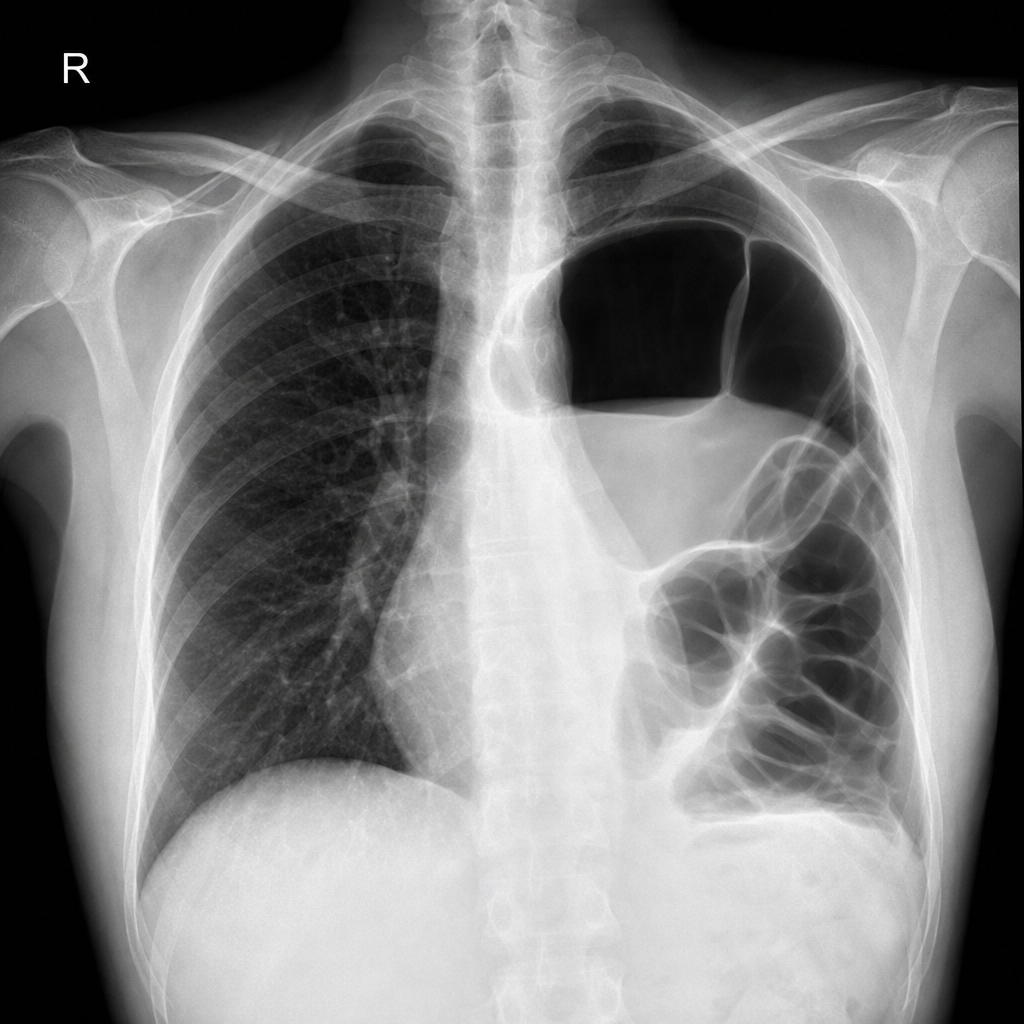
A 3-year-old child presents with respiratory distress and a history of recurrent respiratory infections. Based on the provided imaging, what is the most likely diagnosis?
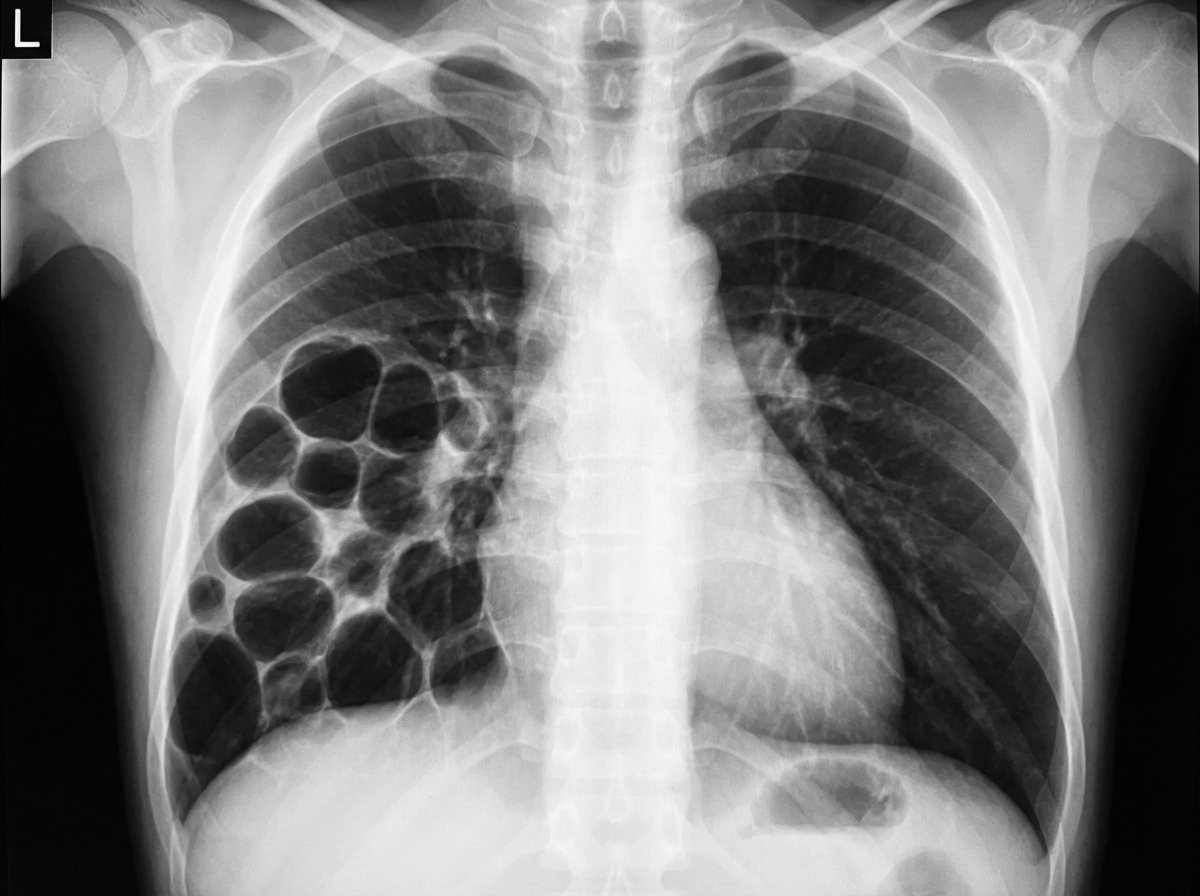
A 6-month-old child presents with an umbilical hernia measuring 3 cm in diameter. What is the management protocol?
A young child presents with mild intermittent upper abdominal discomfort. The chest radiograph shows smooth elevation of the left hemidiaphragm, with abdominal bowel loops remaining beneath an intact diaphragmatic contour. What is the most likely diagnosis?
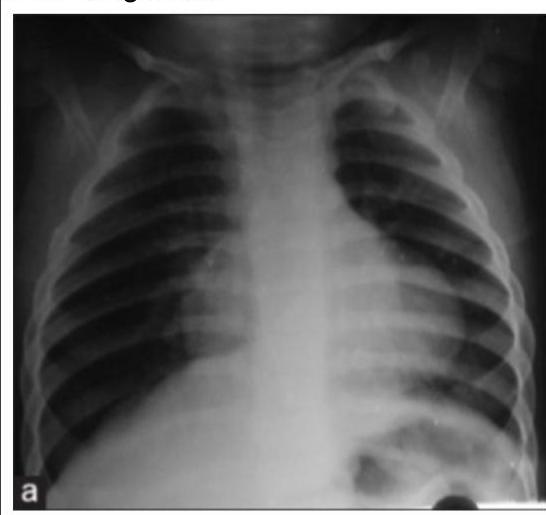
Which one of the following life-threatening congenital anomalies in the newborn presents with polyhydramnios, aspiration pneumonia, excessive salivation and difficulty in passing a nasogastric tube?
True about congenital diaphragmatic hernia (CDH) except:
A newborn male child presenting with severe respiratory distress, absent respiratory breath sounds, and a scaphoid abdomen is suffering from.
Which of the following are correct for herniation via foramen of Morgagni? 1. It occurs posteriorly in chest. 2. Transverse colon is the commonest content. 3. Defect is between sternal and costal attachments. 4. It is a type of congenital hernia. Select the answer using the code given below.
In Congenital Diaphragmatic Hernia (CDH), the most commonly associated anomaly affects the
Want unlimited practice?
Get full access to all questions, explanations, and performance tracking.
Scan to download app