
Bone Tumors — MCQs

Ganga Ram, a 19-year-old male with a short history of pain in the right groin that worsens at night time and has a small circumscribed sclerotic swelling over diaphysis of femur. Likely diagnosis is:
Which of the following is not true about osteosarcoma?
A 18-year-old boy presents with tenderness, warmth over the bone, and fever, ESR and CRP levels. The radiograph is shown below. What is the most likely diagnosis?
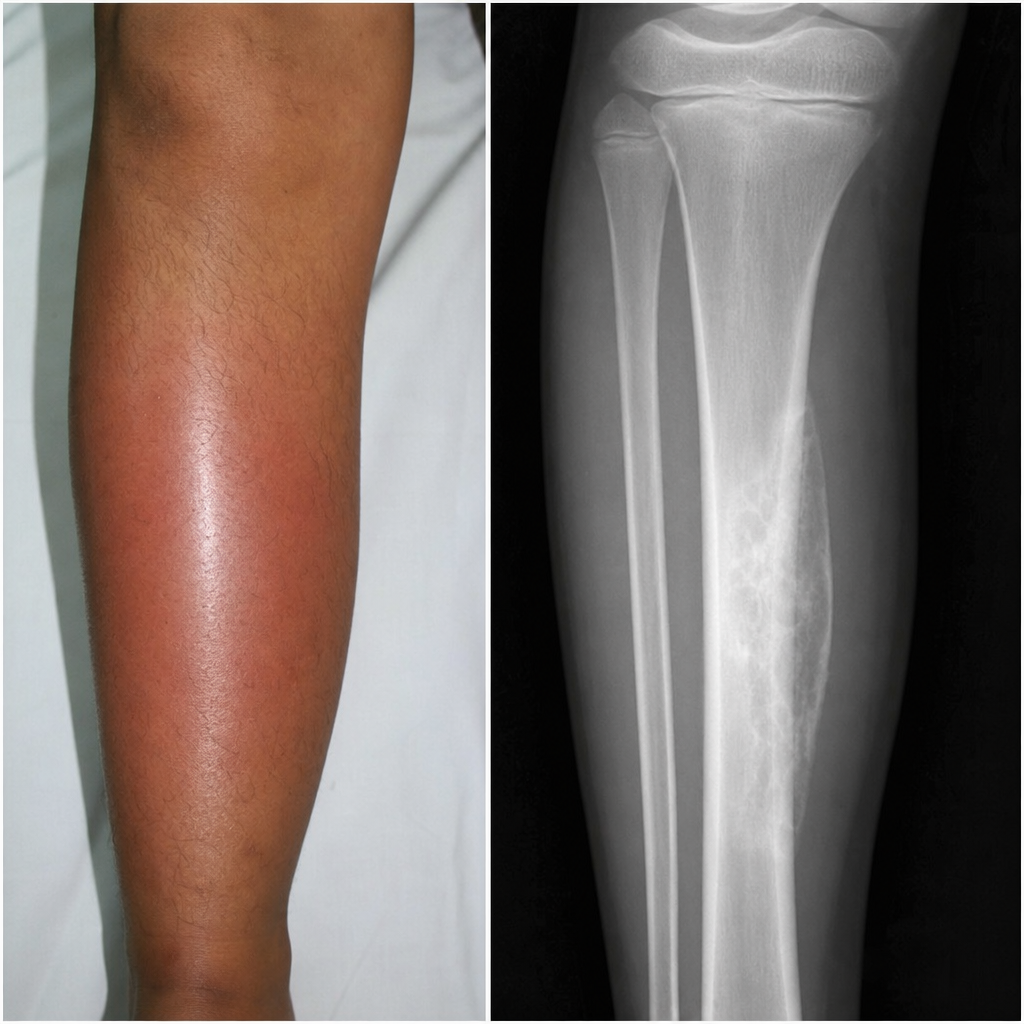
A 13-year-old boy, previously healthy, presents with a 1-month history of right leg pain, without trauma or recent illness. Physical examination reveals warmth, tenderness, and increased circumference of the right thigh compared to the left. His temperature is 39°C. A radiograph shows a 6-cm expansile mass in the diaphyseal region of the right lower femur, extending into soft tissue and covered by reactive bone. Microscopic examination of the mass biopsy reveals sheets of primitive cells with small, uniform nuclei and scant cytoplasm. Karyotypic analysis shows a t(11;22) translocation. What is the most likely diagnosis?
Which statement is incorrect about the pathology of the bone tumor?
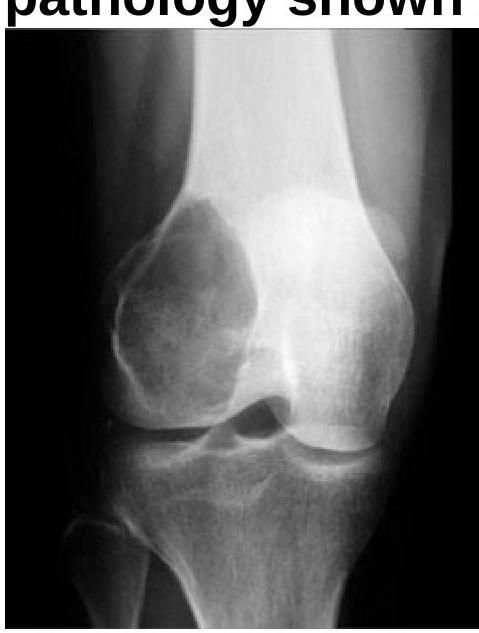
Most common benign tumor of bone?
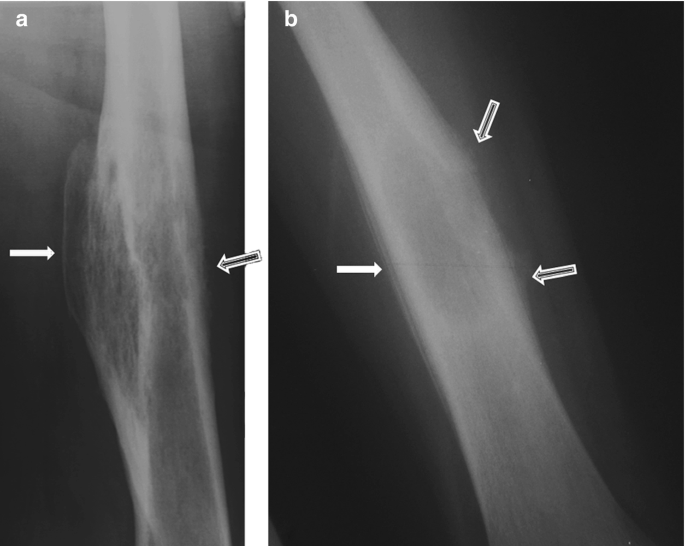
A 12-year-old Caucasian male presents with his mother to the pediatrician’s office complaining of right thigh pain. He reports that he has noticed slowly progressive pain and swelling over the distal aspect of his right thigh over the past two months. He denies any recent trauma to the area and his temperature is 100.9°F (38.3°C). On exam, there is swelling and tenderness overlying the distal right femoral diaphysis. Laboratory evaluation is notable for an elevated white blood cell (WBC) count and elevated erythrocyte sedimentation rate (ESR). A radiograph of the patient’s right leg is shown. Biopsy of the lesion demonstrates sheets of monotonous small round blue cells with minimal cytoplasm. Which of the following genetic mutations is most likely associated with this patient’s condition?
Amount of ORS to be given in the first 4 hours to a child with some dehydration is
A 1-year-old child presented with a swelling in the left flank with episodes of flushing, diarrhea, sweating and bone pain. The diagnosis is -
A 6 year old child presents with an abdominal mass, fever, bone pain and IVC thrombosis, the diagnosis could be -
Want unlimited practice?
Get full access to all questions, explanations, and performance tracking.
Scan to download app