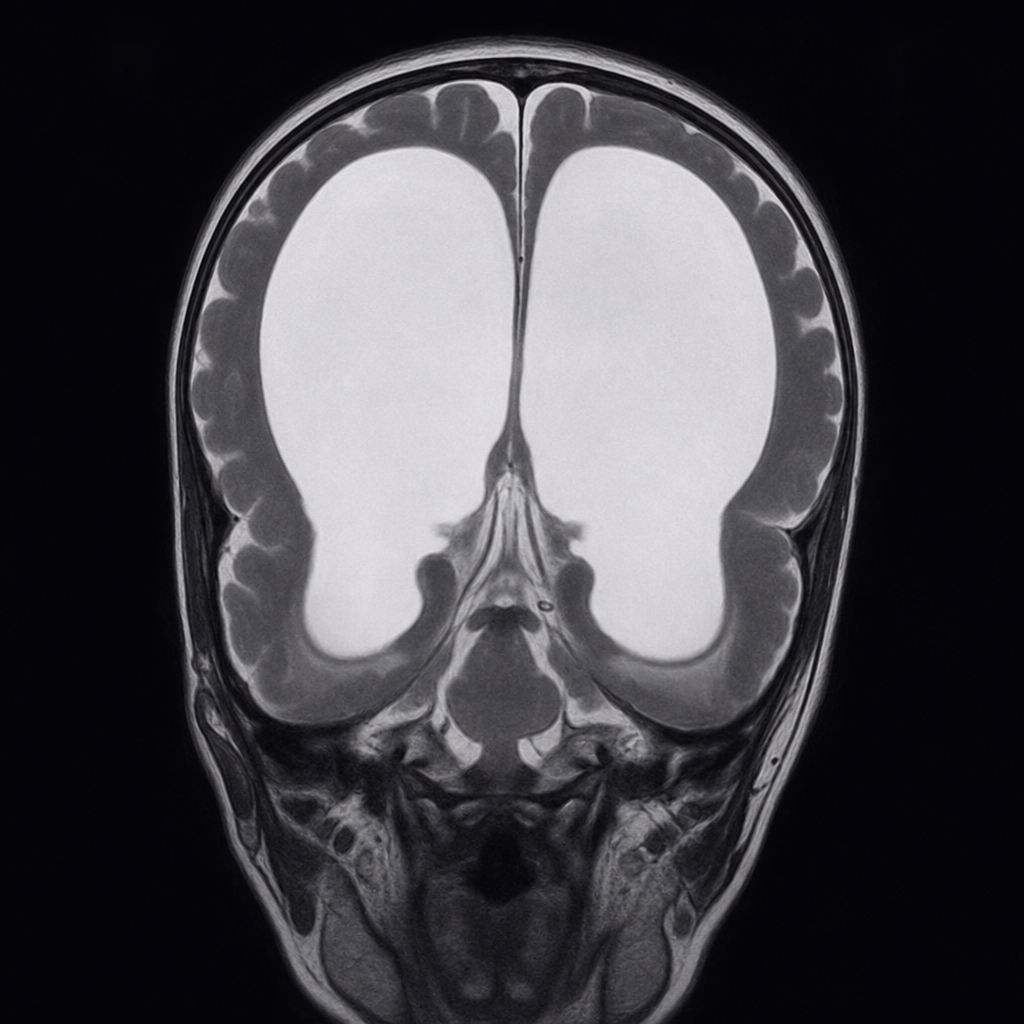
Which genetic mutation is most commonly associated with congenital central hypoventilation syndrome?
A typical febrile seizure is characterized by all EXCEPT which of the following?
Which of the following types of cerebral palsy is most common in low-birth weight infants?
What is the most common cause of seizures in children with diarrhea?
What is the recommended treatment for Guillain-Barré Syndrome (GBS) in a child?
Rett's syndrome is characterized by all of the following except:
Which of the following are signs of increased intracranial tension?
Agenesis of corpus callosum with retinal colobomas and intellectual disability is seen in which condition?
A boy presents with weakness in the lower limbs, calf hypertrophy, a positive Gower's sign, and an elevated CPK value of 10,000. What is the most likely diagnosis?
Gower's sign is seen in:
Explanation: **Explanation:** **Congenital Central Hypoventilation Syndrome (CCHS)**, historically known as "Ondine’s Curse," is a rare disorder characterized by the failure of autonomic control of breathing. **1. Why Option B is Correct:** The hallmark of CCHS is a mutation in the **PHOX2B (Paired-like homeobox 2B) gene** located on chromosome 4p12. This gene is crucial for the development of the autonomic nervous system. Most cases (approx. 90%) involve **polyalanine repeat expansion mutations (PARMs)**. The severity of the hypoventilation, especially during sleep, is often correlated with the length of these repeats. **2. Why Other Options are Incorrect:** * **Option A:** Mutations in the sodium channel alpha 1 subunit (**SCN1A**) are associated with **Dravet Syndrome** (Severe Myoclonic Epilepsy of Infancy), not respiratory control disorders. * **Option C:** Mutations in the **outer dynein arm** (e.g., DNAH5, DNAI1) result in **Primary Ciliary Dyskinesia (PCD)** or Kartagener Syndrome, leading to chronic respiratory infections and situs inversus, but not central apnea. **3. High-Yield Clinical Pearls for NEET-PG:** * **Clinical Presentation:** Newborns typically present with cyanosis and hypercapnia during sleep (shallow breathing) but may breathe normally while awake. * **Associated Conditions:** CCHS is frequently associated with other disorders of neural crest derivation, most notably **Hirschsprung disease** (15-20% of cases) and **neuroblastoma**. This triad is sometimes referred to as **Haddad Syndrome**. * **Diagnosis:** Gold standard is genetic testing for the *PHOX2B* mutation. * **Management:** Lifelong ventilatory support (CPAP/BiPAP or mechanical ventilation) is required, as the hypercapnic ventilatory response is absent.
Explanation: **Explanation:** The question asks for the exception regarding typical febrile seizures. While typical (simple) febrile seizures are indeed generalized, the phrasing of the options in this specific question format often hinges on the **definition of "typical" vs. "atypical"** and the clinical management protocols. 1. **Why Option C is the "Correct" Exception:** In many standard pediatric textbooks (like Nelson or Ghai), a **Simple (Typical) Febrile Seizure** is defined as a generalized tonic-clonic seizure. However, in the context of this specific MCQ, Option C is often marked as the answer because typical febrile seizures are **brief** (usually <15 minutes) and do not recur within 24 hours. If a seizure is focal, it is classified as **Atypical (Complex)**. Note: In some exam versions, this option is considered "true," but if the question implies that *all* febrile seizures must be generalized to be "typical," it remains the standard definition. (If this is a "Select the False Statement" question, Option C is technically a true characteristic, making the question potentially controversial; however, in NEET-PG patterns, focus on the management aspect). 2. **Analysis of Other Options:** * **Option A:** True. There is a slight male preponderance in febrile seizures. * **Option B:** True. The seizure usually occurs during the rapid rise of the temperature curve, often as the first sign of illness. * **Option D:** True. Phenobarbitone (and Sodium Valproate) are effective for **prophylaxis** to prevent further attacks, though they are rarely used now due to side effects. **NEET-PG High-Yield Pearls:** * **Simple (Typical) Febrile Seizure:** Generalized, <15 mins, occurs once in 24 hours, no neurological deficit. * **Complex (Atypical) Febrile Seizure:** Focal, >15 mins, or recurs within 24 hours. * **Management:** Acute episodes are managed with **Diazepam** (0.3 mg/kg IV or 0.5 mg/kg Rectal). * **Prophylaxis:** Continuous prophylaxis is discouraged. **Intermittent prophylaxis** with oral Diazepam during fever is the preferred strategy if needed. * **Risk of Epilepsy:** ~1% in the general population; ~2% after a simple febrile seizure; ~10% after complex febrile seizures.
Explanation: **Explanation:** **Spastic diplegia** is the most common form of cerebral palsy (CP) observed in low-birth-weight (LBW) and preterm infants. The underlying pathophysiology is **Periventricular Leukomalacia (PVL)**. In preterm infants, the watershed area near the lateral ventricles is highly susceptible to ischemia and oxidative stress. This area contains the descending pyramidal tracts; specifically, the fibers subserving the lower extremities are located closest to the ventricles. Damage here results in spasticity that affects the legs more significantly than the arms. **Analysis of Incorrect Options:** * **Spastic Quadriplegia:** This is the most severe form and is typically associated with global hypoxic-ischemic encephalopathy (HIE), severe brain malformations, or multicystic encephalomalacia. It involves all four limbs and is often seen in term infants with severe perinatal asphyxia. * **Choreoathetoid (Dyskinetic) CP:** This type is classically associated with **bilirubin encephalopathy (Kernicterus)** or profound asphyxia affecting the basal ganglia. It is less common now due to effective management of neonatal jaundice. * **Hemiplegia:** This usually results from focal vascular insults, such as a neonatal stroke (middle cerebral artery territory), and is more commonly seen in term infants rather than as a direct consequence of LBW/prematurity. **High-Yield Clinical Pearls for NEET-PG:** * **Most common overall type of CP:** Spastic CP (specifically Spastic Diplegia in preterms). * **Scissor Gait:** A classic clinical sign of spastic diplegia due to increased tone in hip adductors. * **Imaging of choice:** MRI Brain is the gold standard for evaluating the extent of brain injury in CP. * **Key Risk Factor:** Prematurity is the single most important risk factor for the development of CP.
Explanation: **Explanation:** In the context of pediatric diarrhea, electrolyte imbalances are the primary triggers for neurological complications. **Hyponatremia (Option C)** is the most common cause of seizures in these patients. This occurs due to the loss of sodium in stools, often exacerbated by the intake of hypotonic fluids (like plain water or diluted formula) which leads to dilutional hyponatremia. The resulting low extracellular osmolality causes water to move into brain cells (cerebral edema), triggering neuronal irritability and seizures. **Analysis of Incorrect Options:** * **Hypernatremia (Option D):** While hypernatremic dehydration is a serious complication of diarrhea (often due to high insensible water loss), it is less common than hyponatremia. Seizures in hypernatremia typically occur during **rapid rehydration** (leading to cerebral edema) rather than as a direct result of the high sodium level itself. * **Hypokalemia (Option A):** Common in diarrhea due to significant potassium loss in stool. However, it primarily manifests as muscle weakness, paralytic ileus, and ECG changes (U waves, flattened T waves), not seizures. * **Hyperkalemia (Option B):** Usually seen in the context of associated acute kidney injury (renal failure). It presents with life-threatening cardiac arrhythmias (peaked T waves) rather than seizures. **High-Yield Clinical Pearls for NEET-PG:** * **Most common electrolyte abnormality in diarrhea:** Hyponatremia. * **Most common cause of death in diarrhea:** Dehydration. * **Management Tip:** To prevent seizures during the correction of hypernatremia, the serum sodium should not be lowered faster than **0.5 mEq/L/hour** to avoid iatrogenic cerebral edema. * **Drug of Choice:** For acute seizure control in this setting, IV Benzodiazepines (Lorazepam/Diazepam) are used, followed by the correction of the underlying electrolyte deficit.
Explanation: **Explanation:** Guillain-Barré Syndrome (GBS) is an acute, immune-mediated demyelinating polyradiculoneuropathy characterized by ascending symmetrical paralysis. The management of GBS is multifaceted, focusing on both **immunotherapy** and **supportive care**. 1. **Immunotherapy (IVIG and Plasma Exchange):** Both IVIG (Option A) and Plasma Exchange (Option C) are equally effective first-line treatments. In pediatric practice, **IVIG** is often preferred due to its ease of administration and fewer complications compared to plasmapheresis. These therapies work by neutralizing or removing pathogenic autoantibodies. 2. **Supportive Care (Mechanical Ventilation):** Respiratory failure due to diaphragmatic weakness is the most serious complication. Approximately 20-30% of patients require **Mechanical Ventilation** (Option B). Monitoring the "forced vital capacity" and "negative inspiratory force" is crucial to determine the need for ICU admission. Since the management involves a combination of life-saving supportive measures and definitive immunotherapy, **Option D (All of the above)** is the correct choice. **Clinical Pearls for NEET-PG:** * **Most common trigger:** *Campylobacter jejuni* infection (associated with a poorer prognosis). * **CSF Finding:** **Albuminocytologic dissociation** (elevated protein with a normal cell count), usually seen after the first week. * **Miller-Fisher Variant:** A triad of Ataxia, Areflexia, and Ophthalmoplegia (associated with anti-GQ1b antibodies). * **Contraindication:** **Corticosteroids** are NOT recommended and have no proven benefit in GBS. * **Prognosis:** Most children have an excellent recovery, but the presence of axonal degeneration on EMG indicates a slower recovery.
Explanation: **Explanation:** Rett Syndrome is an X-linked dominant neurodevelopmental disorder caused by a mutation in the **MECP2 gene**. It primarily affects females, as it is typically lethal in hemizygous males. **Why Macrocephaly is the correct answer:** Rett syndrome is characterized by **acquired microcephaly**, not macrocephaly. While head circumference is often normal at birth, there is a deceleration of head growth (postnatal microcephaly) starting between 5 months and 4 years of age. This is a hallmark clinical feature used for diagnosis. **Analysis of other options:** * **Regression of acquired skills:** This is the defining feature of the "Destructive Stage." After a period of normal development (6–18 months), children lose previously acquired purposeful hand skills and spoken language. * **Breath-holding spells:** Autonomic dysfunction is common. Patients frequently exhibit respiratory irregularities, including hyperventilation, apnea, and breath-holding spells while awake. * **Autistic behavior:** During the early stages, children often show social withdrawal, loss of eye contact, and diminished interest in their surroundings, mimicking Autism Spectrum Disorder. **NEET-PG High-Yield Pearls:** * **Hand Stereotypies:** The most characteristic sign is repetitive, purposeless hand movements (e.g., **hand-wringing**, clapping, or washing). * **Genetics:** MECP2 gene mutation on the X chromosome. * **Gender:** Almost exclusively seen in **females**. * **Stages:** It progresses through four stages: Early onset stagnation, Rapid destruction (regression), Pseudo-stationary, and Late motor deterioration.
Explanation: **Explanation:** Increased Intracranial Tension (ICT) occurs when the volume of the intracranial contents (brain parenchyma, blood, or CSF) exceeds the compensatory capacity of the skull. The clinical presentation varies significantly based on whether the cranial sutures are open or closed. **1. Why "All of the Above" is Correct:** * **Increased Head Size (Option A):** In infants and young children with open sutures and fontanelles, the skull can expand to accommodate rising pressure. This manifests as an increasing head circumference (macrocephaly) and bulging fontanelles. * **Unexplained Projectile Vomiting (Option B):** This is a classic sign of raised ICT. It is typically "projectile" (forceful) because it is centrally mediated by direct pressure on the vomiting center in the medulla, often occurring without preceding nausea and frequently seen in the morning. * **Persistent Headache (Option C):** In older children and adults with fused sutures, the rigid skull cannot expand. Pressure on pain-sensitive structures (dura and blood vessels) leads to a persistent headache, which characteristically worsens with coughing, straining (Valsalva), or lying flat. **Clinical Pearls for NEET-PG:** * **Cushing’s Triad:** A late sign of impending brain herniation consisting of **Hypertension** (with widened pulse pressure), **Bradycardia**, and **Irregular respirations**. * **Papilledema:** The hallmark sign of raised ICT on fundoscopy, though it may be absent in infants with open sutures. * **Setting Sun Sign:** Downward deviation of the eyes seen in infants with hydrocephalus/raised ICT. * **Macewen’s Sign (Cracked Pot Sound):** Percussion of the skull yields a resonant sound in children with separated sutures.
Explanation: **Explanation:** **Aicardi Syndrome** is a rare genetic disorder characterized by a classic clinical triad: 1. **Agenesis of the Corpus Callosum** (complete or partial) 2. **Chorioretinal Lacunae** (pathognomonic "punched-out" lesions of the retina/retinal colobomas) 3. **Infantile Spasms** (seizures) It is an **X-linked dominant** condition that is typically **lethal in males**; therefore, it is seen almost exclusively in females. Patients also present with significant intellectual disability and costovertebral defects (e.g., hemivertebrae). **Analysis of Incorrect Options:** * **Alagille Syndrome:** An autosomal dominant disorder caused by *JAG1* mutations. It is characterized by **paucity of interlobular bile ducts** (cholestasis), butterfly vertebrae, peripheral pulmonary artery stenosis, and posterior embryotoxon in the eye. * **Ape Syndrome (Apert Syndrome):** A craniosynostosis syndrome characterized by **mitten-hand syndactyly** (fusion of fingers/toes) and midface hypoplasia. While it may involve CNS anomalies, it lacks the specific retinal lacunae of Aicardi. * **Ataxia Telangiectasia:** An autosomal recessive DNA-repair defect characterized by cerebellar ataxia, **oculocutaneous telangiectasia**, and immunodeficiency. It does not feature agenesis of the corpus callosum. **High-Yield Clinical Pearls for NEET-PG:** * **Aicardi Triad:** Agenesis of corpus callosum + Chorioretinal lacunae + Infantile spasms. * **Genetics:** X-linked Dominant (Male lethal). * **EEG Finding:** Often shows "split-brain" hypsarrhythmia (asynchrony between hemispheres due to lack of corpus callosum). * **Imaging:** MRI is the gold standard to visualize the absent corpus callosum and associated "probst bundles."
Explanation: **Explanation:** The clinical presentation is a classic description of **Duchenne Muscular Dystrophy (DMD)**, an X-linked recessive disorder caused by a mutation in the *Dystrophin* gene. 1. **Why Duchenne Muscular Dystrophy is correct:** * **Calf Hypertrophy:** This is "pseudohypertrophy" where muscle tissue is replaced by fat and connective tissue. * **Gower’s Sign:** Due to proximal muscle weakness (pelvic girdle), the child uses his hands to "climb up" his own body to stand from a sitting position. * **CPK Levels:** Markedly elevated Creatine Phosphokinase (CPK) levels (often >10–50 times the normal limit) are a hallmark of DMD due to ongoing muscle fiber necrosis. 2. **Why other options are incorrect:** * **Spinal Muscular Atrophy (SMA):** This is a lower motor neuron (LMN) disease involving the anterior horn cells. While it presents with weakness, it features **hypotonia, areflexia, and tongue fasciculations** without calf hypertrophy or significantly high CPK. * **Myotonia Congenita:** Characterized by delayed muscle relaxation (myotonia) after contraction (e.g., difficulty releasing a grip), but it does not typically present with progressive weakness or massive CPK elevation. * **Myotonic Dystrophy:** Usually presents in late childhood or adulthood with distal weakness, "hatchet facies," and myotonia. CPK levels are only mildly elevated. **High-Yield Clinical Pearls for NEET-PG:** * **Inheritance:** X-linked Recessive (XLR). * **Diagnosis:** Gold standard is **Genetic testing** (multiplex PCR for deletions); Muscle biopsy shows absent Dystrophin. * **Age of onset:** Usually 3–5 years; non-ambulatory by age 12. * **Common cause of death:** Respiratory failure or Dilated Cardiomyopathy. * **Becker Muscular Dystrophy:** A milder variant where dystrophin is reduced/abnormal rather than absent.
Explanation: **Explanation:** **Gower’s Sign** is a clinical maneuver where a child "climbs up their own body" using their hands to transition from a sitting or prone position to standing. This occurs due to profound **proximal muscle weakness**, specifically involving the gluteus maximus and hip extensors. **1. Why Duchenne Muscular Dystrophy (DMD) is the Correct Answer:** DMD is the most common and classic cause of Gower’s sign. It is an X-linked recessive disorder caused by a deficiency of **dystrophin**, a protein essential for maintaining muscle membrane integrity. The weakness characteristically begins in the pelvic girdle (proximal muscles) before progressing distally. To compensate for weak hip extensors, the child must use their upper extremities to "walk" up their legs to achieve an upright posture. **2. Analysis of Other Options:** * **Congenital Myopathy:** While some myopathies can present with proximal weakness, Gower’s sign is not their hallmark feature. They often present with generalized hypotonia ("floppy infant syndrome") rather than the progressive pelvic girdle weakness seen in DMD. * **Guillain-Barre Syndrome (GBS):** GBS typically presents as an **acute, ascending symmetrical paralysis**. The weakness starts distally (feet/legs) and moves upward. While a child with GBS may struggle to stand, the mechanism and clinical context (acute onset, post-infectious) differ from the chronic, progressive proximal loss seen in DMD. **Clinical Pearls for NEET-PG:** * **Pseudohypertrophy:** In DMD, the calves often appear enlarged due to the replacement of muscle tissue with fat and connective tissue. * **Age of Onset:** DMD typically manifests between ages 3–5 years. * **Laboratory Finding:** Serum **Creatine Kinase (CK)** levels are massively elevated (often >10–20 times normal) even before clinical symptoms appear. * **Other Conditions:** Gower’s sign can also be seen in Becker Muscular Dystrophy (milder) and Spinal Muscular Atrophy (SMA) Type 2/3.
Seizure Disorders and Epilepsy
Practice Questions
Febrile Seizures
Practice Questions
Headache Disorders
Practice Questions
Cerebral Palsy
Practice Questions
Neural Tube Defects
Practice Questions
Neuromuscular Disorders
Practice Questions
Neurodegenerative Disorders
Practice Questions
CNS Infections
Practice Questions
Hydrocephalus
Practice Questions
Movement Disorders
Practice Questions
Traumatic Brain Injury
Practice Questions
Neuroimaging in Pediatrics
Practice Questions
Get full access to all questions, explanations, and performance tracking.
Start For Free