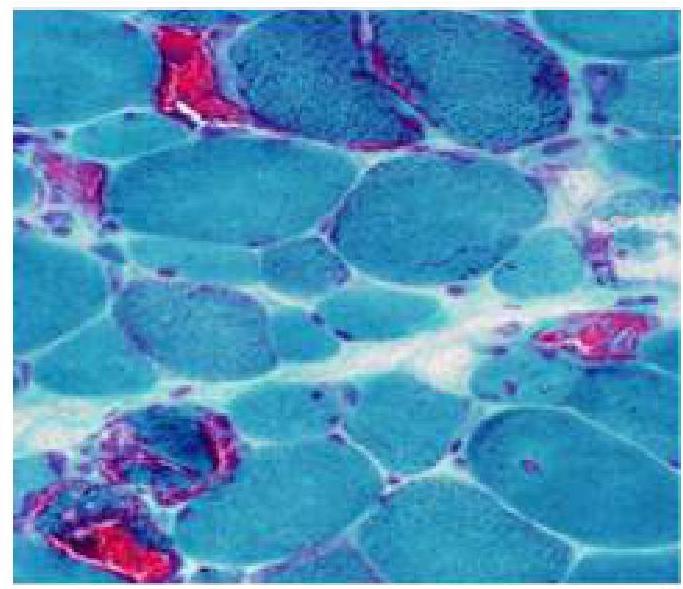
A child presents with myoclonic jerks and decreasing school performance. The child had a history of fever and rash at the age of 1 year. What is the most likely diagnosis?
Adrenocorticotropic hormone is the drug of choice in which of the following conditions?
Which of the following is not typical of Simple Febrile Seizures?
All of the following factors are associated with a substantially greater risk of developing epilepsy after febrile seizures, except:
Moro's reflex persisting for more than 6 months indicates damage to which of the following lobes?
A young child with recurrent bacterial meningitis should be clinically evaluated for the presence of
Which of the following is a FALSE statement regarding Cerebral Palsy?
A child presented to the casualty with seizures. On examination multiple oval hypo-pigmented macules were noted on the trunk, along with sub-normal IQ. Probable diagnosis of the child is:
In a small child diagnosed with H. influenzae meningitis, what investigation must be done before discharging him from the hospital?
First-line acute management of febrile convulsion in hospital setting includes
Explanation: ***Subacute sclerosing panencephalitis (SSPE)*** - SSPE is a **rare, progressive, and fatal neurodegenerative disease** caused by persistent measles virus infection of the central nervous system. - The presentation of **myoclonic jerks** (stage 2 SSPE) and **decreasing school performance** (stage 1 - cognitive decline) in a child with a history of measles (fever and rash) at 1 year of age is **pathognomonic** for SSPE. - SSPE typically manifests **7-10 years after measles infection**, with male predominance (M:F = 2-4:1). - EEG shows characteristic **Radermecker complexes** (periodic high-amplitude slow wave complexes). - CSG findings include elevated measles antibodies with high CSF:serum antibody ratio. *Measles* - While the child had measles in infancy, the current neurological symptoms are **not acute measles** but rather a late complication (SSPE). - Acute measles is a self-limiting illness; these progressive neurological symptoms occurring years later indicate SSPE, not active measles. *Mesial temporal sclerosis* - This is the most common cause of **drug-resistant temporal lobe epilepsy** characterized by hippocampal atrophy. - Presents with **focal seizures with impaired awareness**, not generalized myoclonic jerks. - **No link to prior measles infection** and typically associated with history of febrile seizures or status epilepticus in childhood. - Progressive cognitive decline is not a primary feature. *Polio* - Polio is caused by **poliovirus** affecting anterior horn cells of the spinal cord, causing **acute flaccid paralysis**. - Presents with **asymmetric lower motor neuron weakness**, not myoclonic jerks or cognitive decline. - **No association with measles** or rash in history. - Would not cause the progressive encephalopathy seen in this case.
Explanation: ***West syndrome*** - **Adrenocorticotropic hormone (ACTH)** is considered the drug of choice for West syndrome, also known as infantile spasms, due to its efficacy in reducing spasm frequency and improving neurodevelopmental outcomes. - **Steroid therapy**, including ACTH, is thought to work by modulating cortisol levels and neurotransmitter activity, suppressing the abnormal brain activity characteristic of these seizures. *Juvenile myoclonic epilepsy* - The drug of choice for juvenile myoclonic epilepsy is typically **valproate**, or newer antiepileptic drugs like levetiracetam or lamotrigine, known for their efficacy against myoclonic seizures. - ACTH is not used in this condition, as it is generally effective for specific types of **epileptic encephalopathies** and not generalized idiopathic epilepsies like JME. *Rolandic epilepsy* - **Rolandic epilepsy** (benign epilepsy with centrotemporal spikes) often resolves spontaneously and may not require treatment, but if seizures are frequent, drugs like gabapentin or carbamazepine are used. - ACTH has no established role in the treatment of Rolandic epilepsy, which is a **focal idiopathic epilepsy** with a good prognosis. *Lennox Gastaut syndrome* - While a severe epileptic encephalopathy, the initial management for **Lennox-Gastaut syndrome** (LGS) typically involves a combination of antiepileptic drugs such as valproate, lamotrigine, clobazam, or rufinamide. - ACTH may be considered as an adjunctive treatment in refractory cases of LGS, but it is not the **first-line drug of choice**, unlike in West syndrome where it holds a primary role.
Explanation: ***The seizures are followed by Todd's paralysis*** - **Todd's paralysis** (postictal hemiparesis) is a focal neurological deficit typically seen after a **focal seizure**, rather than a generalized simple febrile seizure. - Simple febrile seizures are **generalized tonic-clonic events** and do not typically involve focal neurological deficits such as Todd's paralysis. *The age of onset is usually between 6 months and 6 years* - This statement accurately describes the characteristic **age range** for simple febrile seizures, which primarily affect young children. - The developing brain's susceptibility to fever-induced seizures is highest during this period. *The seizures are more likely to occur if the body temperature rises rapidly* - A **rapid rise in body temperature** is a recognized trigger for simple febrile seizures, often more so than the absolute temperature itself. - This sudden change is thought to overwhelm the immature thermoregulatory system and neuronal excitability in young children. *The seizures last for less than 15 minutes* - One of the defining characteristics of a **simple febrile seizure** is its short duration, typically lasting **less than 15 minutes**. - Seizures lasting longer or occurring in multiple episodes are classified as **complex febrile seizures**.
Explanation: ***Early age of onset*** - While earlier onset of febrile seizures (e.g., before 12 months) is associated with an increased risk of *recurrence* of febrile seizures, it is **not independently a strong predictor** of developing epilepsy after febrile seizures compared to the other factors listed. - The age range for febrile seizures is typically 6 months to 5 years, and seizures within this range, regardless of earlier or later, carry similar baseline risks for subsequent epilepsy. *Complex Febrile seizures* - **Complex febrile seizures** (defined by duration >15 minutes, focal features, or multiple seizures within 24 hours) are a significant risk factor for developing later **epilepsy**, particularly temporal lobe epilepsy. - These features suggest a more significant underlying neurological predisposition or injury. *Developmental abnormalities* - Pre-existing **developmental abnormalities** or neurological deficits (e.g., cerebral palsy, developmental delay) are strong predictors of developing **epilepsy** after febrile seizures. - This indicates a vulnerable brain that is more susceptible to abnormal electrical activity. *Positive family History of Epilepsy* - A **positive family history of epilepsy** in a first-degree relative substantially increases the risk of an individual with febrile seizures developing later **epilepsy**. - This suggests a genetic predisposition to seizure disorders.
Explanation: ***Frontal*** - Persistence of primitive reflexes such as the **Moro reflex** beyond 6 months suggests **delayed cortical maturation** and failure of cortical inhibition. - The **frontal lobe** and its connections via the **corticospinal tract** play a key role in suppressing brainstem-mediated primitive reflexes as the CNS matures. - While persistence often indicates **generalized CNS dysfunction** (e.g., cerebral palsy, developmental delay), among cortical lobes, the frontal lobe's motor and inhibitory functions make it most relevant to reflex suppression. *Temporal* - The temporal lobe is primarily involved in **auditory processing**, **memory formation**, and **language comprehension**. - Damage typically presents with **aphasia**, **auditory deficits**, or **memory impairment**, not persistent primitive reflexes. *Occipital* - The occipital lobe is responsible for **visual processing** and **visual perception**. - Lesions result in **visual field defects**, **cortical blindness**, or **visual agnosia**, not reflex abnormalities. *Parietal* - The parietal lobe integrates **sensory information** and is involved in **spatial awareness** and **body sensation**. - Damage leads to **sensory deficits**, **neglect syndromes**, or **apraxia**, not persistence of primitive reflexes.
Explanation: ***Spina bifida occulta with a dermal sinus tract*** - A **dermal sinus tract** provides a direct pathway for skin flora to access deeper structures, including the **meninges**, leading to recurrent bacterial meningitis - This condition arises from incomplete closure of the neural tube and is often associated with cutaneous stigmata such as a **dimple, tuft of hair, or hemangioma** in the lumbosacral region - Clinical examination should focus on the **midline back** for these telltale signs - This is the **most common anatomical cause** of recurrent bacterial meningitis in children *Hypoplastic left heart syndrome* - This is a congenital heart defect resulting in an underdeveloped left side of the heart, leading to cyanosis and heart failure - It is not directly associated with an increased risk of recurrent bacterial meningitis - This is a **cardiac anomaly**, not a CNS communication defect *Syringomyelia of the lower cervical cord* - Syringomyelia involves the formation of a fluid-filled cavity (syrinx) within the spinal cord, typically causing neurological deficits related to pain, temperature sensation, and motor weakness - While it is a neurological condition, it does **not disrupt the meningeal barrier** and therefore does not explain recurrent bacterial meningitis - This is an **intramedullary lesion** without external communication *Holoprosencephaly* - This is a severe condition where the forebrain fails to develop into two hemispheres, leading to various craniofacial anomalies and significant neurological impairment - It is a developmental brain abnormality and is **not a cause** of recurrent bacterial meningitis - While severe, it does not create a pathway for bacterial entry into the CNS
Explanation: ***Birth trauma is the most common cause of cerebral palsy*** - While birth trauma can contribute to brain injury, **prematurity** and **intrauterine growth restriction** are actually more frequent risk factors for cerebral palsy. - The majority of cerebral palsy cases originate from prenatal or perinatal events, with **birth asphyxia** being a less common cause than historically believed. *Cerebral palsy occurs due to one time insult to developing fetal brain* - Cerebral palsy is defined by a **non-progressive disturbance** in the developing fetal or infant brain, which is indeed a "one time insult" rather than a degenerative process. - This insult can occur before, during, or shortly after birth, leading to permanent but **non-worsening** motor impairments. *Periventricular leucomalacia causes spastic diplegia* - **Periventricular leucomalacia (PVL)**, a type of white matter brain injury, is strongly associated with **spastic diplegia**, particularly in premature infants. - PVL damages the periventricular white matter that contains descending motor tracts to the lower limbs, hence causing a **diplegic** (legs more affected than arms) presentation. *Persistent cortical thumb after 3 months of age is seen in spastic cerebral palsy* - A **cortical thumb**, where the thumb is held adducted and flexed across the palm, can be a sign of **upper motor neuron lesion** or spasticity. - Its persistence beyond 3 months of age is an indicator of neurological dysfunction and is often observed in infants who develop **spastic cerebral palsy**.
Explanation: ***Tuberous Sclerosis*** - The combination of **seizures**, **hypopigmented macules** (ash-leaf spots), and **subnormal IQ** (intellectual disability) is highly characteristic of tuberous sclerosis. - Tuberous sclerosis is an **autosomal dominant neurocutaneous disorder** causing benign tumor growth in various organs, including the brain, skin, and kidneys. *Neurofibromatosis* - Characterized by **café-au-lait spots**, **neurofibromas**, and **Lisch nodules** (iris hamartomas), not hypopigmented macules. - While seizures can occur, intellectual disability is less common than in tuberous sclerosis, and the distinctive skin lesions differ. *Incontinentia Pigmenti* - Typically presents with **swirling hyperpigmented lesions** (marbled or whorled appearance) that evolve through different stages (vesicular, verrucous, hyperpigmented), not hypopigmented macules. - While it can be associated with seizures and intellectual disability, the skin findings are distinctly different. *Sturge-Weber syndrome* - Characterized by a **port-wine stain** (facial cutaneous angioma) typically involving the ophthalmic division of the trigeminal nerve, ipsilateral leptomeningeal angioma, and ocular abnormalities like glaucoma. - Seizures are common due to brain involvement, but **hypopigmented macules** and subnormal IQ in this configuration are not primary features.
Explanation: ***Hearing assessment*** - **Sensorineural hearing loss** is a significant and common complication of *H. influenzae* meningitis, occurring in up to 30% of children. - Early detection through a **hearing assessment** is crucial for intervention and to minimize long-term developmental impact. *CT scan* - A CT scan is typically performed during the acute phase of meningitis to rule out complications like **hydrocephalus** or **brain abscess**, not routinely before discharge for long-term sequelae. - While it can identify structural abnormalities, it does not directly assess **auditory function**. *X-ray skull* - An X-ray of the skull has very limited utility in the diagnosis or follow-up of meningitis. - It does not provide information about brain pathology or potential **hearing damage**. *MRI* - MRI is a more sensitive imaging modality than CT for detecting subtle brain parenchymal changes and is sometimes used in complicated cases of meningitis. - However, like CT, it is not the primary investigation required to assess for **hearing loss** as a post-meningitis sequela before discharge.
Explanation: ***IV lorazepam administration*** - **Intravenous lorazepam** is a first-line treatment for acute febrile convulsions, especially in a hospital setting, due to its rapid onset and effectiveness in terminating seizures. - As a **benzodiazepine**, it enhances the effect of GABA, leading to CNS depression and seizure cessation. *Immediate IV phenytoin loading* - **Phenytoin** is typically used for long-term seizure control or in refractory status epilepticus, not as a first-line acute agent for febrile convulsions. - Its slower onset of action makes it less suitable for immediate seizure termination compared to benzodiazepines. *Rectal diazepam* - **Rectal diazepam** is often used for acute seizure management in the **pre-hospital setting** or at home when IV access is not readily available. - In a hospital setting, IV administration of benzodiazepines is preferred due to more precise dosing and faster action. *Oral carbamazepine prophylaxis* - **Carbamazepine** is an anti-epileptic drug used for **long-term prevention** of certain types of seizures, but it is not indicated for acute management of febrile convulsions. - It is not routinely recommended for prophylaxis of recurrent febrile seizures.
Seizure Disorders and Epilepsy
Practice Questions
Febrile Seizures
Practice Questions
Headache Disorders
Practice Questions
Cerebral Palsy
Practice Questions
Neural Tube Defects
Practice Questions
Neuromuscular Disorders
Practice Questions
Neurodegenerative Disorders
Practice Questions
CNS Infections
Practice Questions
Hydrocephalus
Practice Questions
Movement Disorders
Practice Questions
Traumatic Brain Injury
Practice Questions
Neuroimaging in Pediatrics
Practice Questions
Get full access to all questions, explanations, and performance tracking.
Start For Free