What is the most common age group for febrile seizures?
Which corticosteroid is effective in children with cerebral edema?
Which of the following statements about Duchenne muscular dystrophy is false?
An 8-year-old boy presents with difficulty in walking. What is the most likely diagnosis?

What is the commonest cause of non-communicating hydrocephalus in children?
Adrenoleukodystrophy is characterized by which mode of inheritance?
A baby is born with a large red, raised discoloration of the face that persists into adulthood. This type of lesion is most likely a component of which of the following syndromes?
The 'sunset sign' is observed in which of the following conditions?
A child with mental retardation and a skin rash on the cheeks undergoes a CT scan. What is the most likely diagnosis?

Which of the following can cause acute flaccid paralysis?
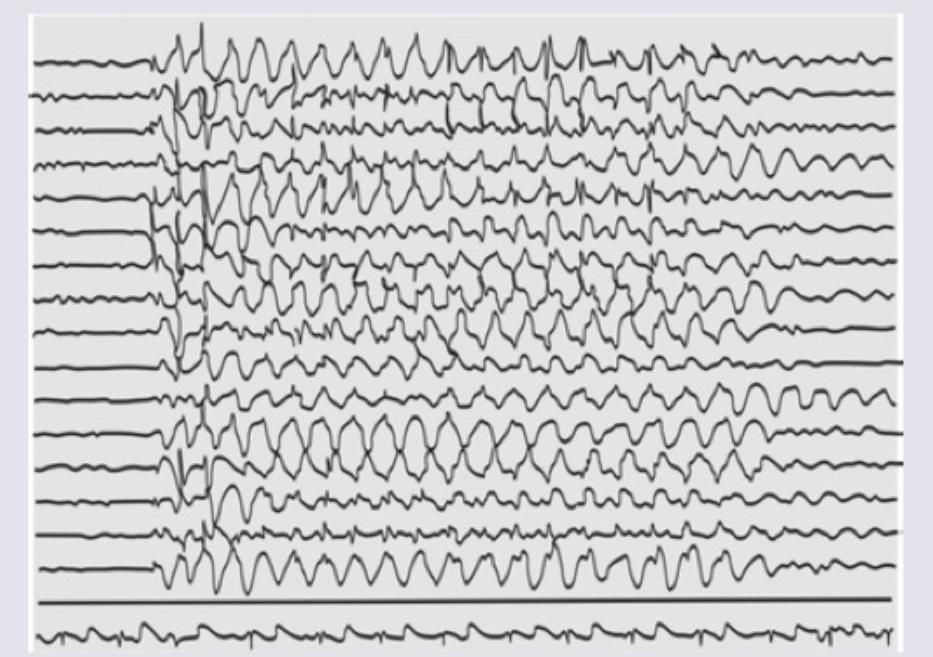
Explanation: **Explanation:** **Febrile seizures** are the most common convulsive disorder in the pediatric population. By definition, they occur in children between **6 months and 5 years (60 months) of age**, associated with a fever (>38°C or 100.4°F) that is not caused by a central nervous system (CNS) infection or metabolic imbalance, and in children without a history of prior afebrile seizures. **Why Option B is Correct:** The peak incidence occurs between **12 to 18 months**. The brain in this age group (6 months to 5 years) is uniquely vulnerable to seizures triggered by a rapid rise in temperature due to an immature thermoregulatory system and developing neuronal excitability. **Analysis of Incorrect Options:** * **Option A & D:** Seizures occurring before 6 months of age are rarely "simple" febrile seizures. In infants younger than 6 months, a seizure with fever mandates a workup for **meningitis or encephalitis**, as the clinical signs of meningeal irritation are often absent in this age group. * **Option C:** While many febrile seizures occur before age 2, the clinical definition and risk period extend up to 5 years. Stopping at 2 years would exclude a significant portion of the affected population. **High-Yield Clinical Pearls for NEET-PG:** * **Simple Febrile Seizure:** Generalized tonic-clonic, lasts <15 minutes, does not recur within 24 hours. * **Complex Febrile Seizure:** Focal onset, lasts >15 minutes, or recurs within 24 hours. * **Risk of Recurrence:** Approximately 30% overall; higher if the first seizure occurs before 1 year of age. * **Management:** Reassurance is key. Long-term anticonvulsants are **not** recommended. For abortive therapy (if seizure lasts >5 mins), **Intranasal/IV Midazolam** or **Rectal Diazepam** is used.
Explanation: **Explanation:** **Dexamethasone** is the corticosteroid of choice for managing cerebral edema, particularly **vasogenic edema** associated with brain tumors, abscesses, or neurosurgical procedures. **Why Dexamethasone is the Correct Choice:** 1. **Minimal Mineralocorticoid Activity:** Unlike other steroids, dexamethasone has negligible salt-retaining (mineralocorticoid) effects. This is crucial because sodium and water retention would worsen cerebral edema and increase intracranial pressure (ICP). 2. **High Potency and Long Half-life:** It is a highly potent glucocorticoid with a long duration of action, allowing for stable therapeutic levels. 3. **Blood-Brain Barrier (BBB) Penetration:** It effectively crosses the BBB and stabilizes the "leaky" capillary endothelium, reducing the leakage of fluid into the extracellular space. **Analysis of Incorrect Options:** * **Hydrocortisone:** It has significant mineralocorticoid activity, leading to fluid retention, which is contraindicated in patients with raised ICP. * **Prednisolone:** While it has intermediate potency, its mineralocorticoid effect is higher than dexamethasone, making it less ideal for neuro-oncology or acute cerebral edema. * **Betamethasone:** Although pharmacologically similar to dexamethasone, it is primarily used in pediatrics/obstetrics for **fetal lung maturity** rather than the management of acute cerebral edema. **High-Yield Clinical Pearls for NEET-PG:** * **Vasogenic vs. Cytotoxic Edema:** Steroids are highly effective in **vasogenic edema** (tumors/abscesses) but have **no proven benefit** in **cytotoxic edema** (e.g., acute ischemic stroke or hypoxic-ischemic encephalopathy). * **Bacterial Meningitis:** Dexamethasone is administered *before or with* the first dose of antibiotics to reduce the risk of sensorineural hearing loss (especially in *H. influenzae* type b meningitis). * **Contraindication:** Steroids are generally **avoided** in traumatic brain injury (TBI) as per the CRASH trial, which showed increased mortality.
Explanation: **Explanation:** **1. Why Option A is the correct (False) statement:** Duchenne Muscular Dystrophy (DMD) is significantly **more severe** than Becker Muscular Dystrophy (BMD). The fundamental difference lies in the **reading frame hypothesis**: * **DMD:** Caused by "out-of-frame" mutations leading to a **complete absence** of the dystrophin protein. This results in early onset (3–5 years) and rapid progression. * **BMD:** Caused by "in-frame" mutations resulting in the production of a **truncated but partially functional** dystrophin protein. This leads to a later onset and a much milder clinical course. **2. Analysis of Incorrect Options (True statements):** * **Option B:** DMD is indeed an **X-linked recessive** disorder, primarily affecting males. The dystrophin gene is the largest known human gene, located on the short arm of the X chromosome (Xp21). * **Option C:** **Dilated cardiomyopathy** is a nearly universal feature of DMD. Since dystrophin is also present in cardiac muscle, its absence leads to fibrosis and heart failure, often becoming the leading cause of death. * **Option D:** **Intellectual impairment** (mean IQ ~85) is frequently observed because specific isoforms of dystrophin are expressed in the cerebral cortex and hippocampus. **High-Yield Clinical Pearls for NEET-PG:** * **Gower’s Sign:** Use of hands to "climb up" one's own body to stand, due to proximal muscle weakness. * **Pseudohypertrophy:** The calves appear large but are actually composed of fat and connective tissue (fatty infiltration). * **Diagnosis:** Gold standard is **Genetic Testing** (MLPA); **Creatine Kinase (CK)** levels are massively elevated (10–100x normal) from birth. * **Management:** Glucocorticoids (Prednisolone/Deflazacort) are the mainstay to prolong ambulation.
Explanation: ***Muscular dystrophy*** - **Duchenne muscular dystrophy** is the most common form in boys, typically presenting between ages 3-5 with progressive difficulty walking and **Gower's sign** (using hands to push up from floor). - The **X-linked recessive** inheritance pattern affects boys predominantly, causing **proximal muscle weakness** and **pseudohypertrophy** of calf muscles. *Neuropathy* - Peripheral neuropathy typically presents with **distal weakness** and **sensory loss** starting in hands and feet, not proximal muscle weakness. - Usually associated with **diabetes**, **vitamin deficiencies**, or **hereditary conditions** like Charcot-Marie-Tooth disease, less common in healthy 8-year-olds. *Guillain-Barré syndrome* - An **acute inflammatory demyelinating** condition that develops over days to weeks following an infection. - Characterized by **ascending paralysis**, **areflexia**, and often **respiratory involvement**, requiring immediate medical attention. *Polymyositis* - An **inflammatory myopathy** that typically affects adults, rarely seen in children under 10 years old. - Associated with **elevated muscle enzymes** (CPK, LDH), **muscle pain**, and often systemic symptoms like fever and rash.
Explanation: **Explanation:** Hydrocephalus is characterized by an imbalance between cerebrospinal fluid (CSF) production and absorption. **Non-communicating (obstructive) hydrocephalus** occurs when there is a physical blockage within the ventricular system, preventing CSF from reaching the subarachnoid space. **1. Why "Congenital Anomaly" is Correct:** Congenital malformations are the most frequent cause of obstructive hydrocephalus in the pediatric population. Among these, **Aqueductal Stenosis** (narrowing of the Aqueduct of Sylvius) is the single most common specific cause. Other congenital triggers include the Dandy-Walker malformation and Chiari malformations. **2. Analysis of Incorrect Options:** * **Perinatal injury:** While intraventricular hemorrhage (IVH) in premature infants is a major cause, it more frequently leads to *communicating* hydrocephalus due to blood products obliterating the arachnoid villi, though post-hemorrhagic clots can occasionally cause acute obstruction. * **Post-inflammatory obstruction:** Conditions like neonatal meningitis can cause adhesions. While significant, these typically result in communicating hydrocephalus due to basal cistern fibrosis. * **Brain tumors:** While a common cause of *acquired* obstructive hydrocephalus (e.g., medulloblastoma blocking the 4th ventricle), they are statistically less common than congenital structural defects in the overall pediatric age group. **NEET-PG High-Yield Pearls:** * **Most common cause overall:** Aqueductal stenosis (Non-communicating). * **Dandy-Walker Malformation:** Characterized by triad of cystic dilation of the 4th ventricle, cerebellar vermis hypoplasia, and enlarged posterior fossa. * **Clinical Sign:** "Setting-sun" eye phenomenon (downward gaze palsy due to pressure on the midbrain tectum). * **Macewen’s Sign:** "Cracked pot" sound on percussion of the skull due to separated sutures.
Explanation: **Explanation:** **Adrenoleukodystrophy (X-ALD)** is a peroxisomal biogenesis disorder caused by a mutation in the **ABCD1 gene** located on the **X chromosome**. This gene encodes the ALD protein, which is responsible for transporting **Very Long Chain Fatty Acids (VLCFAs)** into peroxisomes for beta-oxidation. A deficiency leads to the systemic accumulation of VLCFAs, particularly in the white matter of the brain, the adrenal cortex, and the Leydig cells of the testes. 1. **Why X-linked Recessive is correct:** The ABCD1 gene is located on the X chromosome (Xq28). As an X-linked recessive trait, it primarily affects males, while females are typically asymptomatic carriers (though they may develop milder myelopathy later in life). 2. **Why other options are incorrect:** * **Autosomal Dominant/Recessive:** These would imply the gene is on a non-sex chromosome. While some peroxisomal disorders (like Zellweger Syndrome) are autosomal recessive, X-ALD is specifically linked to the X chromosome. * **X-linked Dominant:** If this were the case, a single copy of the mutation would cause full clinical disease in all females, which is not the typical presentation of ALD. **High-Yield Clinical Pearls for NEET-PG:** * **Clinical Triad:** Progressive cognitive decline/behavioral issues, vision/hearing loss, and **Adrenal Insufficiency** (Addison’s disease). * **Imaging:** MRI shows characteristic symmetrical enhancement of the **posterior white matter** (occipital and parietal lobes) and the splenium of the corpus callosum. * **Diagnosis:** Elevated plasma levels of **VLCFAs** (C26:0). * **Treatment:** Dietary restriction (Lorenzo’s Oil) has limited efficacy; Hematopoietic Stem Cell Transplant (HSCT) is the treatment of choice in early stages.
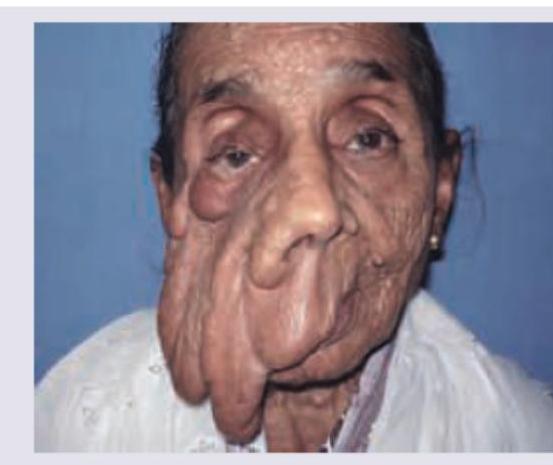
Explanation: ### Explanation **Correct Option: D. Sturge-Weber Disease** The "large red, raised discoloration" described is a **Port-wine stain** (Nevus Flammeus). This is a congenital capillary malformation typically found in the distribution of the trigeminal nerve (V1 and V2 branches). Sturge-Weber Syndrome (SWS), also known as encephalotrigeminal angiomatosis, is a neurocutaneous disorder characterized by the triad of: 1. **Facial Port-wine stain** (most common feature). 2. **Leptomeningeal angiomas** (usually ipsilateral to the skin lesion), which can lead to seizures and hemiparesis. 3. **Glaucoma** or vascular malformations of the eye. **Incorrect Options:** * **A & B (Arnold Chiari & Dandy-Walker):** These are structural posterior fossa malformations involving the cerebellum and ventricles. They do not present with cutaneous vascular markers. * **C (Neurofibromatosis):** While this is a neurocutaneous syndrome, its hallmark skin findings are **Café-au-lait spots**, neurofibromas, and axillary freckling (Lisch nodules in the eye), not port-wine stains. **High-Yield Clinical Pearls for NEET-PG:** * **Genetics:** SWS is sporadic (not inherited) and caused by a somatic mutation in the **GNAQ gene**. * **Radiology:** Skull X-ray or CT may show **"Tram-track" calcifications** (cortical gyriform calcifications) due to underlying leptomeningeal angiomatosis. * **Management:** Port-wine stains are treated with **Pulsed Dye Laser (PDL)**. * **Seizures:** These are often the first neurological symptom, appearing in the first year of life.
Explanation: **Explanation:** The **'Sunset Sign'** (or setting-sun phenomenon) is a classic clinical finding in pediatric neurology, most commonly associated with **Hydrocephalus**. **Why Hydrocephalus is correct:** The sign is characterized by the downward deviation of the eyes, where the sclera is visible above the iris, making the eyes look like a "setting sun." This occurs due to increased intracranial pressure (ICP) causing pressure on the **midbrain tectum** and the **periaqueductal region**. This pressure leads to upward gaze palsy (Parinaud’s syndrome) and lid retraction (Collier’s sign). In infants, it is a critical early indicator of hydrocephalus or shunt malfunction, often appearing before significant head circumference enlargement. **Why the other options are incorrect:** * **Optic neuritis:** Typically presents with sudden vision loss, pain with eye movement, and a relative afferent pupillary defect (RAPD), but does not affect eye positioning. * **Thyroid ophthalmopathy:** While it causes lid retraction (Dalrymple sign) and proptosis, it is an autoimmune inflammatory condition of the extraocular muscles, not related to ICP or the sunset sign. * **Orbital cellulitis:** Presents with proptosis, ophthalmoplegia, and fever due to infection, but lacks the specific downward deviation characteristic of the sunset sign. **High-Yield Clinical Pearls for NEET-PG:** * **Macewen’s Sign (Cracked-pot sign):** Resonant percussion note over the skull, also seen in hydrocephalus. * **Parinaud’s Syndrome:** The triad of upward gaze palsy, convergence-retraction nystagmus, and pupillary light-near dissociation (often due to pineal gland tumors). * **Transillumination test:** Useful in infants to differentiate hydrocephalus from hydranencephaly.
Explanation: ***Tuberous sclerosis*** - The combination of **mental retardation** (intellectual disability) and **skin rash on the cheeks** (adenoma sebaceum) forms part of the classic triad of tuberous sclerosis. - CT scan typically shows **subependymal calcified nodules** (candle-guttering appearance) and **cortical tubers**, which are pathognomonic findings. *Von Hippel-Lindau disease* - Primarily characterized by **retinal angiomas** and **cerebellar hemangioblastomas**, not skin rashes on cheeks. - Associated with **renal cell carcinoma** and **pheochromocytoma**, but intellectual disability is not a typical feature. *Sturge-Weber syndrome* - Features a **port-wine stain** (capillary malformation) typically in the **trigeminal nerve distribution**, not a rash on cheeks. - CT shows **tramtrack calcifications** in the occipital cortex, not subependymal nodules. *Ataxia-telangiectasia* - Characterized by **progressive cerebellar ataxia** and **telangiectasias** on bulbar conjunctiva and skin creases. - Associated with **immunodeficiency** and increased cancer risk, but facial rashes are not typical presentations.
Explanation: **Explanation:** Acute Flaccid Paralysis (AFP) is a clinical syndrome characterized by rapid onset of weakness, typically reaching its peak within 1–10 days, accompanied by loss of muscle tone (flaccidity) and absent or diminished deep tendon reflexes. It is a critical differential diagnosis in pediatric neurology. * **Poliomyelitis:** Caused by the Poliovirus, it involves the destruction of **anterior horn cells** in the spinal cord. It typically presents as asymmetrical paralysis with a prodromal febrile illness. * **Tick Paralysis:** Caused by neurotoxins in the saliva of certain female ticks (e.g., *Dermacentor*), which inhibit acetylcholine release at the neuromuscular junction. It presents as a rapidly ascending paralysis that reverses quickly upon removal of the tick. * **Acute Inflammatory Demyelinating Polyneuropathy (AIDP/GBS):** This is the most common cause of AFP in the post-polio era. It is an immune-mediated demyelination of peripheral nerves, typically presenting as symmetrical, ascending paralysis with albuminocytologic dissociation in CSF. Since all three conditions involve the lower motor neuron (LMN) pathway, they all manifest as acute flaccid paralysis. **Clinical Pearls for NEET-PG:** * **Most common cause of AFP worldwide:** Guillain-Barré Syndrome (AIDP). * **Key Diagnostic:** In GBS, look for **Albuminocytologic dissociation** (high protein, normal cell count) in CSF after the first week. * **Differentiating Feature:** Poliomyelitis is usually **asymmetrical** and associated with fever, whereas GBS is **symmetrical** and usually afebrile at the onset of paralysis. * **Botulism:** Another important cause of AFP, but it presents with **descending** paralysis.
Seizure Disorders and Epilepsy
Practice Questions
Febrile Seizures
Practice Questions
Headache Disorders
Practice Questions
Cerebral Palsy
Practice Questions
Neural Tube Defects
Practice Questions
Neuromuscular Disorders
Practice Questions
Neurodegenerative Disorders
Practice Questions
CNS Infections
Practice Questions
Hydrocephalus
Practice Questions
Movement Disorders
Practice Questions
Traumatic Brain Injury
Practice Questions
Neuroimaging in Pediatrics
Practice Questions
Get full access to all questions, explanations, and performance tracking.
Start For Free