Which of the following is NOT a characteristic of typical febrile seizures?
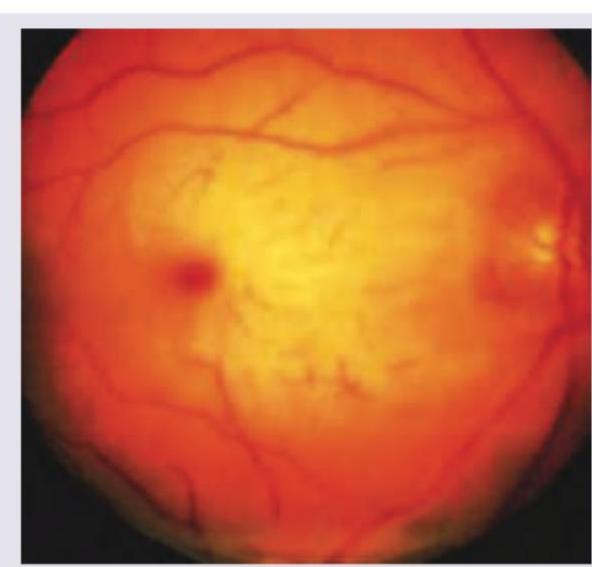
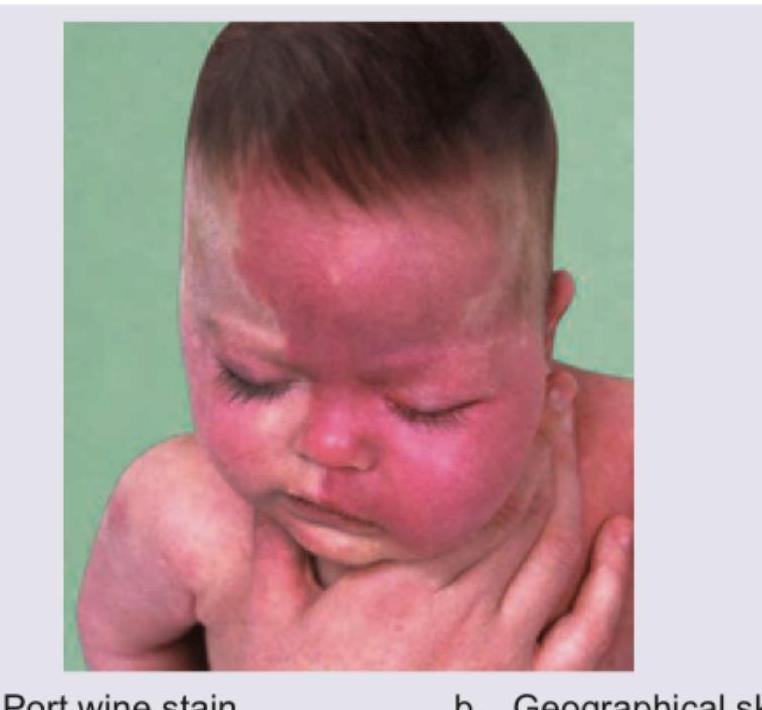
A 6-month-old child presents with multiple episodes of focal seizures, developmental delay, learning difficulties, and ADHD. Examination reveals macrocephaly, hemianopsia, a facial lesion, glaucoma with buphthalmos, and conjunctival and episcleral hemangiomas. Which of the following genes is most likely mutated?
Neurofibromatosis type 2 is associated with which of the following?
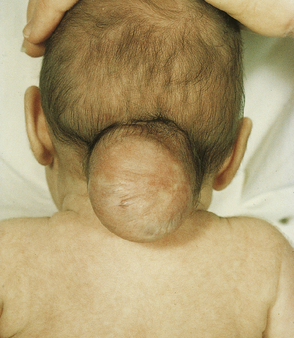
Which one of the following is the most common cause of congenital hydrocephalus?
A 7-year-old boy, who gets easily distracted in class with poor academic performance, experiences a seizure episode after hyperventilation. What is the diagnosis suggested by the EEG findings shown in the image?

Foster's test is used in the diagnosis of which condition?
Which of the following leads to communicating hydrocephalus?
Hypotonia with brisk tendon reflexes is typically seen in which condition?
Which of the following statements about hydrocephalus is true?
A 10-year-old girl develops ataxia and hydrocephalus. A CT scan shows a midline cerebellar mass. Which of the following is the most likely diagnosis?
Explanation: **Explanation:** Febrile seizures are the most common seizure disorder in childhood, typically occurring between **6 months and 5 years** of age, triggered by a rapid rise in body temperature without evidence of intracranial infection or metabolic imbalance. **Why Option C is the correct answer:** In **typical (simple) febrile seizures**, the EEG is usually **normal**. Even if an EEG is performed shortly after the event, any transient slowing observed does not predict the recurrence of seizures or the development of epilepsy. A **persistent abnormality** on an EEG suggests an underlying structural brain lesion or a predisposition to epilepsy, which is characteristic of *atypical* or *complex* febrile seizures, not typical ones. **Analysis of incorrect options:** * **Option A:** Febrile seizures affect 2–5% of children, making them the **most common cause** of seizures in the pediatric age group. * **Option B:** By definition, a simple (typical) febrile seizure is generalized and **brief**, lasting **less than 15 minutes** (usually <5 minutes). * **Option D:** Typical febrile seizures are followed by a short period of drowsiness but **no focal neurological deficits** (like Todd’s palsy). The presence of postictal focal deficits classifies the seizure as "complex." **High-Yield Clinical Pearls for NEET-PG:** * **Simple vs. Complex:** Complex febrile seizures are defined by: Duration **>15 mins**, **focal** features, or **recurrence** within 24 hours. * **Risk of Epilepsy:** After a simple febrile seizure, the risk of developing epilepsy is ~1% (nearly the same as the general population). * **Management:** The primary treatment is **reassurance**. For active seizures lasting >5 mins, **Intravenous/Per-rectal Diazepam** or **Intranasal Midazolam** is used. * **Prophylaxis:** Routine antiepileptic prophylaxis is **not** recommended. Intermittent prophylaxis (oral diazepam during fever) may be considered in frequent recurrences.
Explanation: ### Explanation The clinical presentation described is a classic case of **Sturge-Weber Syndrome (SWS)**, also known as encephalofacial angiomatosis. The hallmark features include a facial capillary malformation (Port-wine stain/Nevus flammeus), leptomeningeal angiomas (leading to seizures, hemianopsia, and developmental delay), and ocular involvement (glaucoma and buphthalmos). **1. Why GNAQ is correct:** Sturge-Weber Syndrome is caused by a **somatic activating mutation** in the **GNAQ gene** (located on chromosome 9q21). This gene encodes the Gαq protein, which is involved in G-protein coupled receptor signaling. The mutation occurs post-zygotically, meaning it is not inherited (sporadic) and results in mosaicism. This leads to abnormal vascular development in the skin, brain, and eyes. **2. Why the other options are incorrect:** * **RAS:** Mutations in the RAS pathway (e.g., *KRAS, HRAS*) are typically associated with "RASopathies" like Noonan syndrome or Costello syndrome, or specific vascular malformations like Schimmelpenning syndrome, but not SWS. * **FGF:** Fibroblast Growth Factor mutations are primarily associated with craniosynostosis syndromes (e.g., Apert or Pfeiffer syndrome) and achondroplasia. * **MYC:** This is a proto-oncogene frequently associated with malignancies like Burkitt lymphoma, not neurocutaneous syndromes. **Clinical Pearls for NEET-PG:** * **Port-wine stain:** Usually follows the distribution of the Trigeminal nerve (V1 and V2 branches). * **Radiology:** Skull X-ray or CT shows **"Tram-track" calcifications** (gyriform calcifications) in the leptomeninges. * **Management:** Seizure control is the priority; glaucoma requires lifelong monitoring. * **Key Association:** SWS is a **Phakomatosis** (neurocutaneous syndrome) that, unlike Neurofibromatosis or Tuberous Sclerosis, is **not inherited**.
Explanation: **Explanation:** Neurofibromatosis Type 2 (NF2), also known as **MISME syndrome** (Multiple Inherited Schwannomas, Meningiomas, and Ependymomas), is an autosomal dominant neurocutaneous disorder. * **Bilateral Acoustic Neuroma (Vestibular Schwannoma):** This is the **hallmark** and most specific clinical feature of NF2. It typically presents with progressive hearing loss, tinnitus, and imbalance in the second or third decade of life. * **Cafe-au-lait spots:** While more characteristic and numerous in NF1, cafe-au-lait spots **do occur** in NF2, though they are usually fewer in number and lighter in color. * **Chromosome 22 deletion:** The NF2 gene is located on the long arm of **chromosome 22 (22q12)**. It encodes the protein **Merlin** (also called Schwannomin), which acts as a tumor suppressor. Mutations or deletions in this gene lead to the development of characteristic tumors. **Why "All of the above" is correct:** NF2 is a multisystem genetic disorder. Since it involves the 22q12 locus, presents with bilateral vestibular schwannomas, and can manifest with cutaneous markers like cafe-au-lait spots, all three individual options are clinically accurate. **High-Yield Clinical Pearls for NEET-PG:** * **Mnemonic for NF2:** "22" — Chromosome **22**, Bilateral (two) acoustic neuromas, and the protein Merlin (2 syllables). * **Ocular Finding:** Juvenile posterior subcapsular lenticular opacities (cataracts) are an early diagnostic sign in NF2. * **NF1 vs. NF2:** NF1 (von Recklinghausen) is on Chromosome **17** and is associated with Lisch nodules and Optic Gliomas; NF2 lacks Lisch nodules and is associated with Meningiomas.
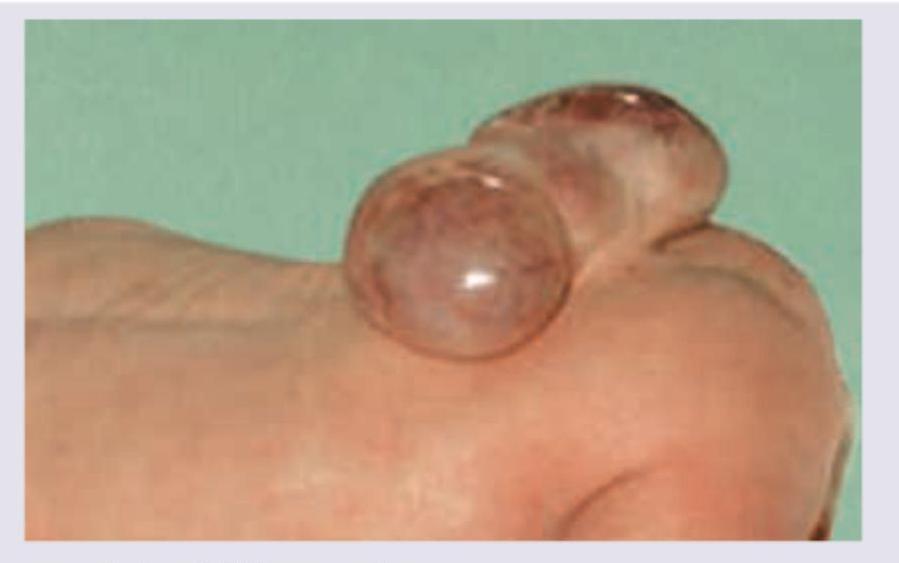
Explanation: **Explanation:** **Aqueductal Stenosis (Option D)** is the most common cause of congenital hydrocephalus, accounting for approximately **43% of cases**. The Aqueduct of Sylvius is the narrowest point in the ventricular system, connecting the third and fourth ventricles. Obstruction here (due to gliosis, forking, or septum formation) leads to **non-communicating (obstructive) hydrocephalus**, characterized by dilation of the lateral and third ventricles with a normal-sized fourth ventricle. **Analysis of Incorrect Options:** * **Malformations of the great vein of Galen (Option A):** While these arteriovenous malformations can cause hydrocephalus due to venous hypertension or direct compression of the aqueduct, they are a rare vascular cause. * **Craniosynostosis (Option B):** This is the premature fusion of cranial sutures. While it can lead to increased intracranial pressure, it is not a primary cause of hydrocephalus; rather, it limits the skull's ability to expand. * **Intrauterine meningitis (Option C):** Infections (like Toxoplasmosis or CMV) can cause hydrocephalus via inflammatory debris blocking the subarachnoid space (communicating) or aqueduct (obstructive), but statistically, idiopathic or genetic aqueductal stenosis remains more frequent. **High-Yield Clinical Pearls for NEET-PG:** * **X-linked Hydrocephalus:** The most common genetic form, caused by mutations in the **L1CAM gene**, often presenting with aqueductal stenosis and thumb adduction (clasped thumb). * **Dandy-Walker Malformation:** Characterized by a triad of cystic dilation of the 4th ventricle, cerebellar vermis hypoplasia, and an enlarged posterior fossa. * **Chiari II Malformation:** Almost always associated with myelomeningocele and is a major cause of hydrocephalus in neonates. * **Clinical Sign:** "Setting-sun" eye phenomenon (downward gaze) due to pressure on the midbrain tectum.
Explanation: ***Absence seizures*** - **Childhood absence epilepsy** typically presents with **inattentiveness** and **poor academic performance** that can mimic ADHD, along with brief episodes of staring and unresponsiveness. - Seizures are characteristically **precipitated by hyperventilation** and show classic **3 Hz generalized spike-and-wave discharges** on EEG. *Myoclonic seizures* - Present with sudden, brief **muscle jerks** affecting arms, legs, or entire body, not the subtle behavioral changes described. - EEG shows **polyspike-and-wave complexes** rather than the typical 3 Hz pattern seen in absence seizures. *Atonic seizures* - Characterized by sudden **loss of muscle tone** causing **drop attacks** where the child falls to the ground. - EEG patterns are different from absence seizures and typically show **slow spike-and-wave** or **polyspike-and-wave** discharges. *Myotonia* - This is **not a seizure disorder** but a **muscle disorder** characterized by delayed muscle relaxation after contraction. - Associated with conditions like **myotonic dystrophy** and does not involve altered consciousness or EEG abnormalities.
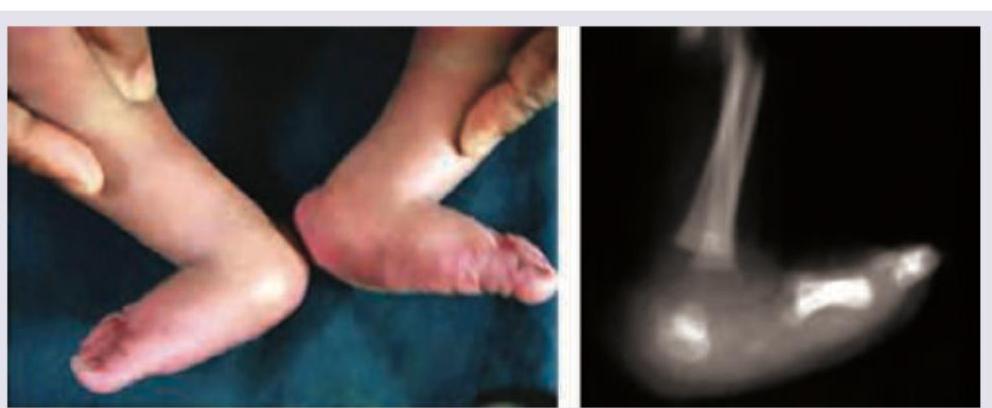
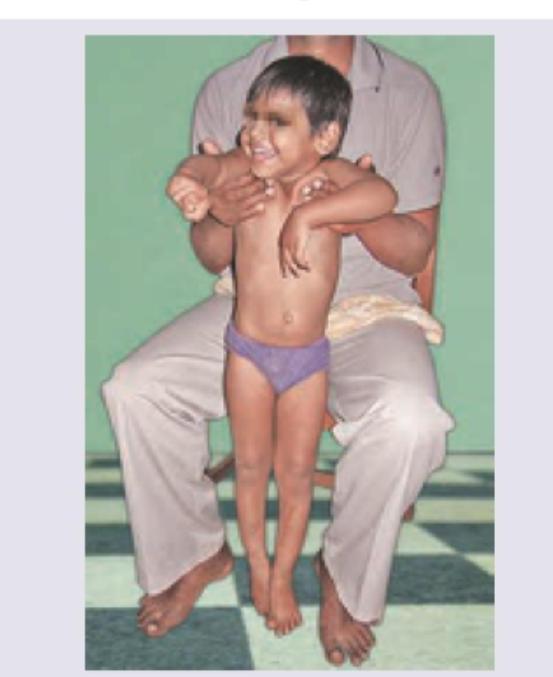
Explanation: **Explanation:** **Foster’s Test** (also known as the Foster’s maneuver) is a clinical assessment used to identify **Spastic Cerebral Palsy (CP)**, specifically to differentiate between true muscle contracture and dynamic spasticity. 1. **Why Option A is Correct:** In spastic CP, there is an upper motor neuron (UMN) lesion leading to hypertonia and increased stretch reflexes. Foster’s test specifically assesses the **Adductor muscles** of the hip. The test is performed by abducting the hips while the knees are flexed and then repeating it with the knees extended. If abduction is significantly limited when the knees are extended (due to the tension on the gracilis muscle), it indicates spasticity or contracture of the two-joint adductor muscles, a hallmark of spastic diplegia or quadriplegia. 2. **Why Other Options are Incorrect:** * **Hypotonic CP (B):** Characterized by generalized "floppiness" and decreased muscle tone. Foster’s test relies on detecting resistance/spasticity, which is absent here. * **Choreoathetotic CP (C):** This is a dyskinetic form of CP involving involuntary movements (basal ganglia involvement). Tone is often fluctuating rather than consistently spastic. * **Myasthenia Gravis (D):** This is a neuromuscular junction disorder characterized by fatiguability. Diagnosis typically involves the Tensilon (Edrophonium) test, Ice pack test, or repetitive nerve stimulation (RNS). **High-Yield Clinical Pearls for NEET-PG:** * **Spastic CP** is the most common clinical type of Cerebral Palsy (approx. 70-80%). * **Scissoring Gait:** A classic feature of spastic diplegia due to overactive hip adductors. * **Other Important Tests in CP:** * **Duncan-Ely Test:** For Rectus Femoris spasticity. * **Silfverskiöld Test:** To differentiate gastrocnemius contracture from soleus contracture. * **Phelps Test:** Specifically for Gracilis muscle spasticity (closely related to Foster's).
Explanation: **Explanation:** Hydrocephalus is classified into two types: **Communicating (Non-obstructive)**, where CSF flows freely between the ventricles and the subarachnoid space, and **Non-communicating (Obstructive)**, where a physical blockage exists within the ventricular system. **Why Option A is Correct:** **Choroid plexus papilloma** is a rare benign tumor that causes communicating hydrocephalus through two mechanisms: 1. **Overproduction of CSF:** The tumor cells secrete CSF at a rate that exceeds the resorptive capacity of the arachnoid villi. 2. **Impaired Resorption:** Chronic minor hemorrhages from the tumor can lead to inflammation and fibrosis of the arachnoid granulations, further hindering drainage. **Why Other Options are Incorrect:** * **B. Arnold-Chiari Malformation (Type II):** This involves the downward displacement of the cerebellar tonsils and medulla through the foramen magnum. It causes **obstructive** hydrocephalus by blocking the flow of CSF at the level of the fourth ventricle or the foramen magnum. * **C. Dandy-Walker Malformation:** This is characterized by agenesis of the cerebellar vermis and cystic dilation of the fourth ventricle. It leads to **obstructive** hydrocephalus due to the atresia of the foramina of Luschka and Magendie. * **D. Vein of Galen Malformation:** This arteriovenous malformation causes hydrocephalus primarily via **obstruction** (compression of the Aqueduct of Sylvius) or high-output heart failure leading to elevated venous pressure. **High-Yield Clinical Pearls for NEET-PG:** * **Most common cause of communicating hydrocephalus:** Post-meningitic or post-hemorrhagic (SAH) fibrosis of arachnoid villi. * **Most common cause of non-communicating hydrocephalus:** Aqueductal stenosis. * **Choroid Plexus Papilloma Location:** Most common in the **lateral ventricles** in children and the **fourth ventricle** in adults. * **Classic Triad (Normal Pressure Hydrocephalus):** Wet (incontinence), Wacky (dementia), and Wobbly (ataxia)—a specific form of communicating hydrocephalus.
Explanation: **Explanation:** The clinical combination of **hypotonia** (low muscle tone) and **brisk tendon reflexes** (hyperreflexia) is a hallmark of an **Upper Motor Neuron (UMN) lesion** during the acute or specific evolutionary phases. 1. **Why Hypotonic Cerebral Palsy (CP) is correct:** Cerebral Palsy is a non-progressive UMN disorder. While most CP cases eventually manifest as spasticity, the **Hypotonic (Atonic) variant** presents with persistent low tone. Because the lesion is in the brain (central), the inhibitory control over the spinal reflex arc is lost, leading to **brisk deep tendon reflexes (DTRs)** and often a positive Babinski sign, despite the floppy muscles. 2. **Why the other options are incorrect:** * **Guillain-Barré Syndrome (GBS):** This is a Lower Motor Neuron (LMN) disorder affecting peripheral nerves. It presents with hypotonia and **absent or diminished reflexes** (areflexia/hyporeflexia). * **Spinal Muscular Atrophy (SMA):** This involves destruction of the anterior horn cells (LMN). It is characterized by profound hypotonia ("floppy infant") and **absent reflexes**. * **Infantile Tremor Syndrome (ITS):** Typically presents with tremors, anemia, and regression of milestones. While hypotonia can occur, it is not classically associated with brisk reflexes in the same diagnostic manner as UMN lesions. **High-Yield Clinical Pearls for NEET-PG:** * **The "Rule of Thumb":** Hypotonia + Brisk Reflexes = Central/Brain pathology (UMN). Hypotonia + Absent Reflexes = Peripheral/Nerve/Muscle pathology (LMN). * **Evolution of CP:** Many infants who later develop spastic CP pass through a transient "hypotonic phase" (Dystonic/Athetoid types). * **Differential for Hypotonic CP:** Always consider Benign Congenital Hypotonia, but reflexes would be normal there, not brisk.
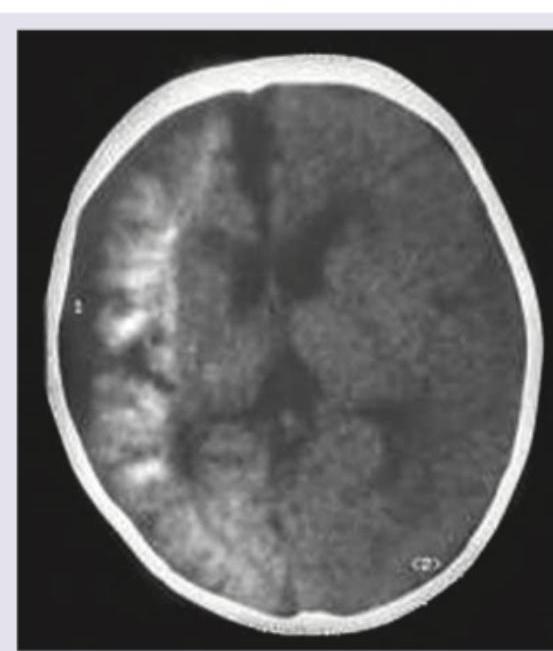
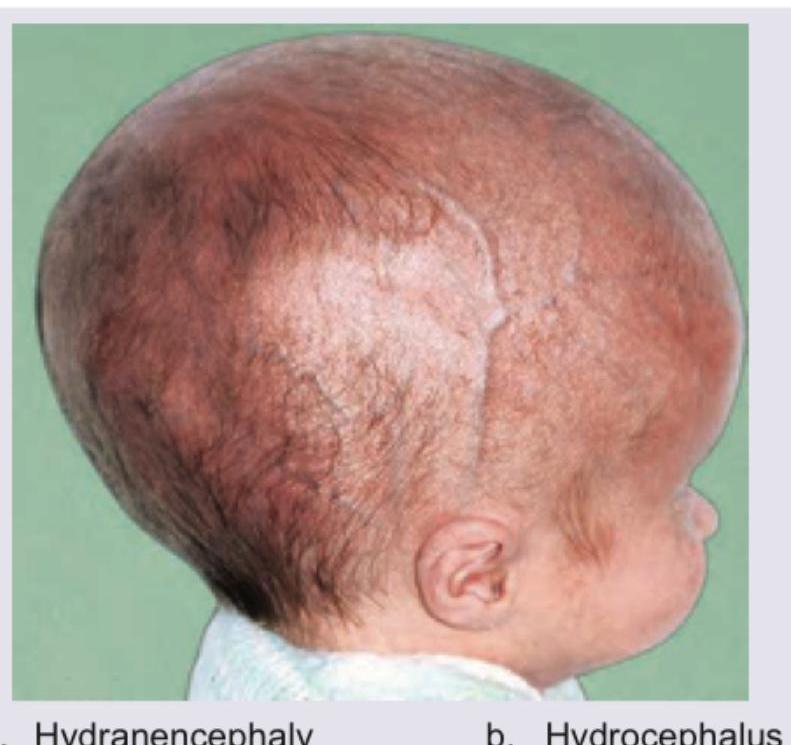
Explanation: **Explanation:** Hydrocephalus in infants is characterized by an abnormal accumulation of cerebrospinal fluid (CSF), leading to increased intracranial pressure (ICP) and macrocephaly. **1. Why Option A is correct:** The **Macewen sign** (also known as the "cracked-pot sign") is a classic clinical finding in infants with hydrocephalus. Due to increased ICP, the cranial sutures separate. When the skull is percussed near the junction of the frontal, temporal, and parietal bones, it produces a resonant, hollow sound similar to a cracked pot. **2. Why the other options are incorrect:** * **Option B:** While the **Sun-setting sign** (downward deviation of the eyes with the sclera visible above the iris) is indeed a classic sign of hydrocephalus, the question structure requires identifying the *most* accurate statement or evaluating if "All of the above" applies. * **Option C:** The most common cause of congenital hydrocephalus is **Aqueductal Stenosis** (stenosis of the Aqueduct of Sylvius), not Dandy-Walker malformation. * **Option D:** Since Option C is factually incorrect, "All of the above" cannot be the answer. **Clinical Pearls for NEET-PG:** * **Transillumination Test:** Often positive in severe hydrocephalus or hydranencephaly. * **Cushing’s Triad:** A late sign of increased ICP consisting of bradycardia, hypertension, and irregular respirations. * **Dandy-Walker Malformation:** Characterized by the triad of cystic dilation of the 4th ventricle, cerebellar vermis hypoplasia, and an enlarged posterior fossa. * **Chiari II Malformation:** Frequently associated with myelomeningocele and obstructive hydrocephalus.
Explanation: ### Explanation **Correct Answer: B. Medulloblastoma** **Why it is correct:** Medulloblastoma is the most common malignant brain tumor in children. It characteristically arises from the **vermis (midline)** of the cerebellum. Because of its location in the roof of the fourth ventricle, it frequently causes obstructive hydrocephalus by compressing the ventricular system, leading to symptoms of increased intracranial pressure (headache, vomiting) and truncal ataxia. On imaging, it typically appears as a solid, enhancing midline mass in the posterior fossa. **Why the other options are incorrect:** * **A. Meningioma:** These are typically slow-growing, extra-axial tumors common in adults, not children. They usually arise from the arachnoid cap cells and are rarely found in the posterior fossa in a pediatric patient. * **C. Neurofibroma:** These are benign nerve sheath tumors associated with Neurofibromatosis Type 1. They typically involve peripheral nerves or the spinal cord, not the cerebellar midline. * **D. Astrocytoma:** While Pilocytic Astrocytoma is the most common pediatric brain tumor overall, it usually arises in the **cerebellar hemispheres** (lateral) rather than the midline and often presents as a cystic lesion with an enhancing mural nodule on imaging. **NEET-PG High-Yield Pearls:** * **Location Rule:** Midline cerebellar tumors (Vermis) → Medulloblastoma (Truncal ataxia). Lateral cerebellar tumors (Hemispheres) → Astrocytoma (Limb ataxia/dysmetria). * **Histology:** Look for **Homer-Wright rosettes** and small round blue cells. * **Drop Metastasis:** Medulloblastoma has a high propensity to spread via CSF; always screen the entire neuraxis (spine) with MRI. * **Genetic Association:** Associated with **Turcot Syndrome** (Type 2) and Gorlin Syndrome.
Seizure Disorders and Epilepsy
Practice Questions
Febrile Seizures
Practice Questions
Headache Disorders
Practice Questions
Cerebral Palsy
Practice Questions
Neural Tube Defects
Practice Questions
Neuromuscular Disorders
Practice Questions
Neurodegenerative Disorders
Practice Questions
CNS Infections
Practice Questions
Hydrocephalus
Practice Questions
Movement Disorders
Practice Questions
Traumatic Brain Injury
Practice Questions
Neuroimaging in Pediatrics
Practice Questions
Get full access to all questions, explanations, and performance tracking.
Start For Free