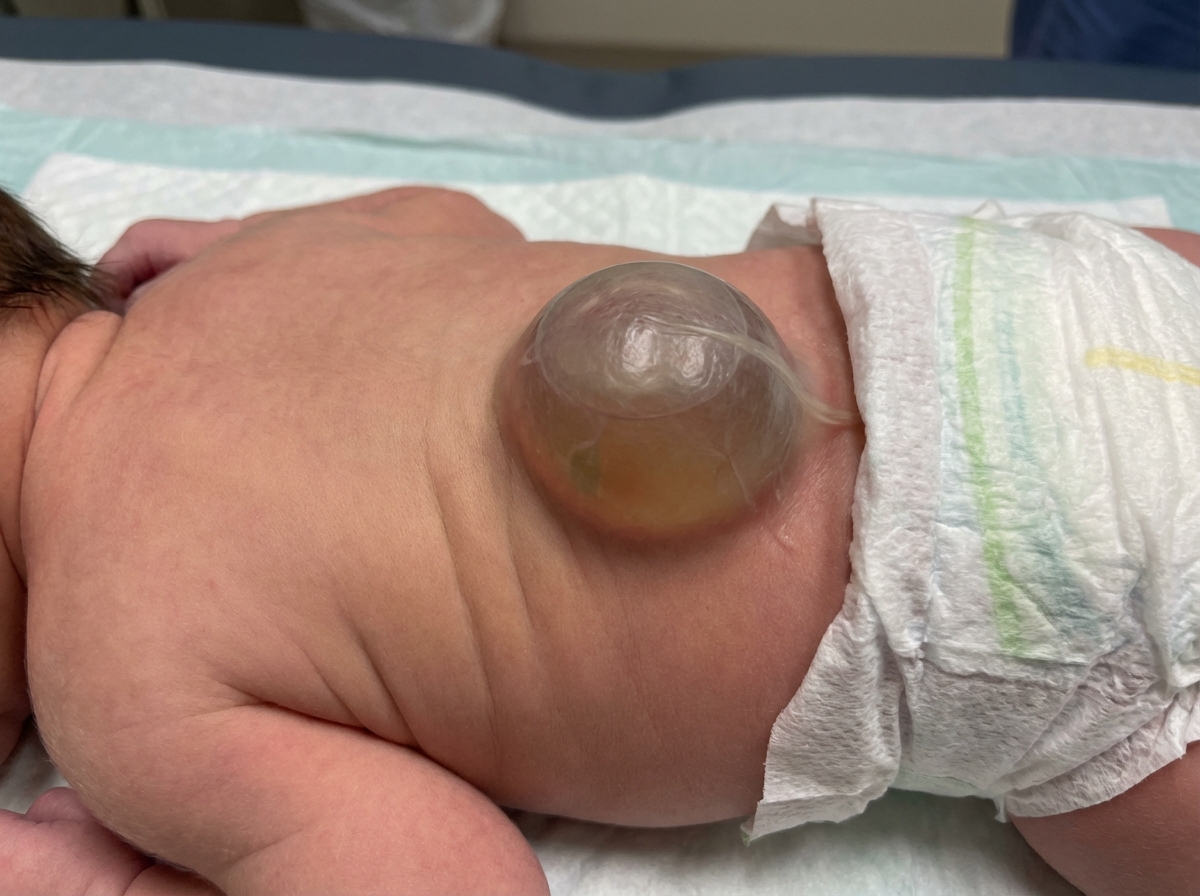
In which of the following conditions is the given appearance of calves typically observed?

A 10-year-old boy, who was apparently normal at birth, had delayed walking and difficulty in walking. As years passed, weakness increased, and he is now wheelchair-bound. What is your diagnosis?
Which of the following is NOT true regarding breath-holding spells?
Rett's disease is caused by an abnormality in which gene?
Neurofibromatosis type 1 is most commonly associated with which of the following tumors?
A 12-year-old boy presents with weakness in his lower extremities that progressed to include his trunk over several days, following a mild upper respiratory infection. Physical examination reveals weakness without muscle atrophy or pain, and absent lower extremity deep tendon reflexes. Spinal fluid studies show elevated protein only. What is the most likely diagnosis in this patient?
What is the commonest type of seizure observed in newborns?
Spike and Dome pattern is seen in:
What is the drug of choice for neonatal seizures?
The given clinical condition may present with?

Explanation: ***Muscular dystrophy*** - **Calf pseudohypertrophy** is the classic hallmark of **Duchenne Muscular Dystrophy (DMD)**, caused by replacement of muscle fibers with **fat and fibrous tissue**. - This creates enlarged but weak calves, typically observed in boys aged 3-5 years with **progressive muscle weakness** and **delayed motor milestones**. *Spinal muscular atrophy* - Presents with **muscle wasting** and **atrophy**, not enlargement of the calves. - Characterized by **hypotonia**, **areflexia**, and **tongue fasciculations** due to anterior horn cell degeneration. *Myopathy* - Generally causes **muscle weakness** without the characteristic **calf enlargement** seen in DMD. - May present with **proximal muscle weakness** but lacks the specific pseudohypertrophic appearance. *Peripheral neuropathy* - Results in **distal muscle wasting** and **sensory loss**, not calf enlargement. - Typically presents with **glove and stocking** distribution of symptoms and **reduced reflexes**.
Explanation: **Explanation:** The clinical presentation of a 10-year-old boy with progressive muscle weakness leading to wheelchair dependency is classic for **Duchenne Muscular Dystrophy (DMD)**. **Why Duchenne Muscular Dystrophy (DMD) is correct:** DMD is an X-linked recessive disorder caused by the absence of the protein **dystrophin**. While patients appear normal at birth, symptoms typically manifest between ages 3–5 with delayed walking, frequent falls, and difficulty climbing stairs. The weakness is progressive and proximal, typically leading to the loss of independent ambulation (wheelchair bound) by age **10–12 years**. **Analysis of Incorrect Options:** * **Congenital Muscular Dystrophy:** Symptoms are present **at birth** or within the first few months of life (hypotonia, "floppy infant"), unlike this patient who was normal at birth. * **Becker Muscular Dystrophy (BMD):** This is a milder form where dystrophin is reduced or truncated rather than absent. Onset is later (usually >7 years), and patients typically remain ambulatory well into their **20s or 30s**. * **Limb-Girdle Muscular Dystrophy (LGMD):** This group of disorders affects the hip and shoulder girdles but lacks the specific X-linked inheritance pattern and rapid progression seen in DMD. It usually presents in late childhood or adolescence. **High-Yield Clinical Pearls for NEET-PG:** * **Gower’s Sign:** The child uses their hands to "climb up" their own legs to stand up (due to proximal muscle weakness). * **Pseudohypertrophy:** The calves appear large but are actually replaced by fat and connective tissue. * **Diagnosis:** Gold standard is **Genetic testing** (deletion of DMD gene). Screening shows massively elevated **Serum Creatine Kinase (CK)**. * **Cause of death:** Usually respiratory failure or dilated cardiomyopathy in the late teens or early 20s.
Explanation: **Explanation:** Breath-holding spells (BHS) are common, non-epileptic paroxysmal events occurring in healthy children. Understanding the distinction between BHS and epilepsy is crucial for NEET-PG. **1. Why Option A is the Correct Answer (The "False" Statement):** Breath-holding spells are **not** a form of epilepsy. They are involuntary physiological responses to triggers like anger, frustration, or pain. Since the underlying mechanism is not abnormal cortical electrical activity, **antiepileptic drugs (AEDs) have no role** in management. The mainstay of treatment is parental reassurance and behavioral modification. **2. Analysis of Other Options:** * **Option B (Atropine):** In severe cases of **pallid** breath-holding spells (associated with bradycardia or asystole), anticholinergics like Atropine may be used to prevent the vagal-mediated cardiac slowing. * **Option C (Cyanosis):** There are two types of BHS: **Cyanotic** (the most common, triggered by anger/upset) and **Pallid** (triggered by sudden pain/fright). Cyanosis occurs due to forced expiration followed by apnea. * **Option D (Age Group):** BHS typically onset between **6 to 18 months** and usually disappear by **5 to 6 years** of age. **Clinical Pearls for NEET-PG:** * **Iron Deficiency Anemia (IDA):** There is a strong clinical association between IDA and BHS. Checking hemoglobin/ferritin levels is a high-yield step; iron supplementation often reduces the frequency of spells. * **Diagnosis:** Diagnosis is clinical. EEG is only indicated if the history is atypical or if seizures are strongly suspected; in BHS, the EEG is **normal**. * **Sequence:** Trigger → Crying → Apnea → Cyanosis/Pallor → Loss of consciousness (brief).
Explanation: ### Explanation **Correct Option: C (MECP2)** Rett syndrome is an X-linked dominant neurodevelopmental disorder that primarily affects females (it is typically lethal in hemizygous males). It is caused by a mutation in the **MECP2 (Methyl-CpG-binding protein 2)** gene located on the X chromosome (Xq28). This gene is crucial for silencing other genes and regulating epigenetic methylation; its dysfunction leads to global developmental arrest and regression. **Analysis of Incorrect Options:** * **A. ATRX:** Mutations in this gene cause ATR-X syndrome (Alpha-thalassemia/mental retardation syndrome), characterized by intellectual disability and microcephaly, but not the specific regression pattern of Rett. * **B. HLA-DRB1:** This is a Major Histocompatibility Complex (MHC) gene associated with autoimmune conditions like Rheumatoid Arthritis and Multiple Sclerosis, not neurodevelopmental disorders. * **D. PTEN:** Mutations in this tumor suppressor gene are associated with Cowden syndrome and certain forms of syndromic Autism Spectrum Disorder (ASD) characterized by macrocephaly, rather than the microcephaly seen in Rett. **Clinical Pearls for NEET-PG:** * **Classic Presentation:** A girl who develops normally until **6–18 months**, followed by a period of **regression** (loss of purposeful hand skills and spoken language). * **Pathognomonic Sign:** **Hand-wringing** or "hand-washing" stereotypies. * **Physical Findings:** Deceleration of head growth leading to **acquired microcephaly**, seizures, and gait ataxia. * **Inheritance:** X-linked dominant; most cases are *de novo* mutations.
Explanation: **Explanation:** **Neurofibromatosis Type 1 (NF1)**, also known as von Recklinghausen disease, is an autosomal dominant neurocutaneous syndrome caused by a mutation in the *NF1* gene on **chromosome 17**. This gene encodes neurofibromin, a tumor suppressor that regulates the Ras signaling pathway. **Why Optic Pathway Glioma (OPG) is correct:** OPGs are the most common central nervous system tumors in children with NF1, occurring in approximately **15–20%** of patients. These are typically low-grade **pilocytic astrocytomas** (WHO Grade I). While often asymptomatic, they can lead to vision loss or precocious puberty (if the hypothalamus is involved). Their strong association makes OPG a formal NIH diagnostic criterion for NF1. **Analysis of Incorrect Options:** * **Brain stem gliomas:** While these occur with increased frequency in NF1 patients compared to the general population, they are significantly less common than optic pathway gliomas. * **Subependymal pilocytic astrocytoma:** This is likely a distractor. **Subependymal Giant Cell Astrocytomas (SEGA)** are classically associated with **Tuberous Sclerosis**, not NF1. * **Glioblastoma multiforme (GBM):** GBM is a high-grade (WHO Grade IV) malignancy. While NF1 patients have a higher lifetime risk of high-grade gliomas, the low-grade optic glioma is the most characteristic and frequent association. **High-Yield Clinical Pearls for NEET-PG:** * **Lisch Nodules:** Iris hamartomas (most common ocular finding in NF1). * **Sphenoid Wing Dysplasia:** A characteristic skeletal finding. * **Plexiform Neurofibroma:** Pathognomonic for NF1; carries a risk of transformation into **Malignant Peripheral Nerve Sheath Tumor (MPNST)**. * **NF2 Association:** Remember that **Bilateral Acoustic Neuromas** (Vestibular Schwannomas) are the hallmark of NF2 (Chromosome 22), not NF1.
Explanation: The clinical presentation described is a classic case of **Guillain-Barré Syndrome (GBS)**, specifically the Acute Inflammatory Demyelinating Polyradiculoneuropathy (AIDP) variant. ### **Why Option C is Correct** GBS is an immune-mediated demyelinating polyneuropathy often triggered by a preceding infection (e.g., *Campylobacter jejuni*, URI). The hallmark features present in this case include: 1. **Symmetrical Ascending Paralysis:** Weakness starting in the lower extremities and progressing cranially. 2. **Areflexia:** Absent deep tendon reflexes due to lower motor neuron involvement. 3. **Albuminocytologic Dissociation:** The CSF finding of **elevated protein with a normal white cell count** is pathognomonic for GBS. ### **Why Other Options are Incorrect** * **A. Bell Palsy:** This is an isolated lower motor neuron palsy of the facial nerve (CN VII). It does not cause limb weakness or CSF changes. * **B. Muscular Dystrophy:** Typically presents with a chronic, slow progression (years, not days) and is characterized by muscle atrophy and pseudohypertrophy (e.g., Duchenne’s), rather than acute ascending paralysis. * **D. Charcot-Marie-Tooth Disease:** A hereditary motor and sensory neuropathy that presents with chronic distal weakness, "stork leg" appearance, and high-arched feet (pes cavus), not acute onset post-infection. ### **NEET-PG High-Yield Pearls** * **Most common trigger:** *Campylobacter jejuni* (associated with a more severe axonal variant). * **Earliest sign:** Loss of deep tendon reflexes (Areflexia). * **Treatment:** Intravenous Immunoglobulin (IVIG) or Plasmapheresis. **Steroids are not effective.** * **Danger Sign:** Monitor **Forced Vital Capacity (FVC)**; respiratory failure is the most serious complication. * **Miller Fisher Variant:** A triad of Ataxia, Areflexia, and Ophthalmoplegia (associated with anti-GQ1b antibodies).
Explanation: **Explanation:** **1. Why Subtle Seizures are the Correct Answer:** Subtle seizures are the most common type of neonatal seizures, accounting for approximately **50%** of all cases. In newborns, the central nervous system is physiologically immature; the cerebral cortex is not yet sufficiently developed to sustain organized, generalized electrical discharges. Consequently, seizures often manifest as fragmentary, "subtle" clinical signs rather than classic motor movements. Common manifestations include horizontal eye deviation, repetitive blinking, sucking/smacking movements, swimming/pedaling limb movements, or brief periods of apnea. **2. Analysis of Incorrect Options:** * **Clonic Seizures (A):** These involve rhythmic jerking of muscle groups. While common in neonates (especially focal clonic), they occur less frequently than subtle seizures. * **Tonic Seizures (B):** Characterized by sustained posturing or stiffening. These are less common and are often associated with structural brain damage or intraventricular hemorrhage in preterm infants. * **Tonic-Clonic Seizures (D):** Generalized tonic-clonic (Grand Mal) seizures are **virtually never seen** in the neonatal period. The lack of axonal myelination and dendritic arborization in a newborn's brain prevents the rapid synchronization and spread of electrical activity required for a generalized tonic-clonic event. **3. High-Yield Clinical Pearls for NEET-PG:** * **Most common cause:** Hypoxic-Ischemic Encephalopathy (HIE) is the #1 cause of neonatal seizures. * **Drug of Choice:** **Phenobarbitone** remains the first-line anticonvulsant for neonatal seizures. * **Metabolic Workup:** Always check for hypoglycemia and hypocalcemia, as these are common, treatable metabolic triggers. * **Jitteriness vs. Seizures:** Unlike seizures, jitteriness is stimulus-induced, can be stopped by gentle passive flexion of the limb, and is not associated with abnormal eye movements.
Explanation: **Explanation:** The **"Spike and Dome"** (also known as Spike and Wave) pattern is the classic electroencephalogram (EEG) hallmark of **Petit mal seizures**, now more commonly referred to as **Absence seizures**. 1. **Why Petit mal is correct:** In Absence seizures, the EEG typically demonstrates a characteristic **3 Hz generalized spike-and-slow-wave discharge**. The "spike" represents the synchronous firing of neurons, while the "dome" (slow wave) represents the subsequent inhibitory phase. These discharges are symmetrical, synchronous, and occur abruptly against a normal background activity. 2. **Why the other options are incorrect:** * **Grand mal (Tonic-Clonic) seizures:** The EEG shows generalized high-amplitude rapid spiking during the tonic phase, followed by bursts of spikes and slow waves during the clonic phase, but not the rhythmic 3 Hz spike-and-dome pattern. * **Clonic seizures:** These are characterized by fast activity and rhythmic spikes/polyspikes, often followed by slow waves, but they lack the specific "dome" morphology of absence seizures. * **Myoclonic seizures:** These typically show **Polyspike-and-wave** discharges (multiple spikes followed by a slow wave), most notably seen in Juvenile Myoclonic Epilepsy (JME). **High-Yield Clinical Pearls for NEET-PG:** * **Clinical Presentation:** Brief loss of consciousness (5–10 seconds) without loss of posture; "staring spells" or eye blinking; no post-ictal confusion. * **Triggers:** Hyperventilation or photic stimulation can often induce an attack and the corresponding EEG pattern. * **Drug of Choice:** **Ethosuximide** is the first-line treatment for isolated absence seizures. Valproate is used if generalized tonic-clonic seizures are also present. * **Contraindication:** Avoid Carbamazepine and Phenytoin, as they can exacerbate absence seizures.
Explanation: **Explanation:** **Phenobarbitone** is the first-line drug of choice for neonatal seizures. The primary reason is its superior efficacy and safety profile in neonates compared to other anticonvulsants. It acts by enhancing GABA-mediated inhibition in the brain. In neonates, the pharmacokinetics of phenobarbitone are well-studied; it has a long half-life and provides stable plasma levels, which is crucial for controlling the immature neonatal brain's tendency toward repetitive electrical discharges. **Why other options are incorrect:** * **Phenytoin (Option A):** Usually considered the second-line agent if phenobarbitone fails. It is difficult to maintain therapeutic levels in neonates due to erratic absorption and saturation kinetics. * **Diazepam (Option C):** Not used as a first-line maintenance therapy because it has a short duration of action in the brain and carries a high risk of respiratory depression and hypotension, especially when used alongside phenobarbitone. It can also displace bilirubin from albumin, increasing the risk of kernicterus. * **Sodium Valproate (Option D):** Generally avoided in neonates due to the high risk of fatal hepatotoxicity (Valproate-induced liver failure) in children under two years of age and its association with metabolic interference. **High-Yield Clinical Pearls for NEET-PG:** * **Loading Dose:** Phenobarbitone is typically started at **20 mg/kg** IV. * **Refractory Seizures:** If seizures persist, Levetiracetam is increasingly used, but Phenobarbitone remains the gold standard in current guidelines (WHO/NRP). * **Most common cause:** Hypoxic-Ischemic Encephalopathy (HIE) is the most common cause of neonatal seizures. * **Drug of choice for Hypocalcemic seizures:** Calcium gluconate (10%). * **Drug of choice for Pyridoxine-dependent seizures:** Intravenous Pyridoxine (Vitamin B6).
Explanation: ***Congestive cardiac failure*** - **Vein of Galen malformation (VOGM)** creates a **high-flow arteriovenous shunt** that significantly increases cardiac output, leading to **congestive heart failure** in neonates. - The large **arteriovenous connection** bypasses normal capillary resistance, causing **volume overload** and **high-output cardiac failure** as the primary presenting feature. *Microcephaly* - **VOGM** typically causes **macrocephaly** due to **hydrocephalus** from venous outflow obstruction, not microcephaly. - The enlarged **vein of Galen aneurysm** and associated **ventricular dilatation** lead to increased head circumference. *Intracranial tumor* - **VOGM** is a **vascular malformation**, not a neoplastic process or tumor. - The angiographic appearance shows **arteriovenous shunting** and **dilated venous structures**, distinct from tumor characteristics. *Cerebral Palsy* - **Cerebral palsy** is not a typical primary presentation of **VOGM** in the neonatal period. - While **developmental delays** may occur later due to **steal phenomenon** or **hydrocephalus**, the acute presentation is dominated by **cardiac symptoms**.
Seizure Disorders and Epilepsy
Practice Questions
Febrile Seizures
Practice Questions
Headache Disorders
Practice Questions
Cerebral Palsy
Practice Questions
Neural Tube Defects
Practice Questions
Neuromuscular Disorders
Practice Questions
Neurodegenerative Disorders
Practice Questions
CNS Infections
Practice Questions
Hydrocephalus
Practice Questions
Movement Disorders
Practice Questions
Traumatic Brain Injury
Practice Questions
Neuroimaging in Pediatrics
Practice Questions
Get full access to all questions, explanations, and performance tracking.
Start For Free