What is the diagnosis in an infant presenting with a large head?
Which of the following is not a feature of Sydenham's chorea?
Which of the following statements is FALSE regarding decerebrate posturing?
A six-month-old baby girl, who was normal at birth, begins to show signs of motor retardation. While she could sit up at 5 months, she can no longer do so. As time goes on, the child continues to deteriorate and eventually becomes unresponsive to visual or auditory stimuli. Funduscopic examination reveals cherry-red macular spots in both eyes. Which of the following genetic abnormalities is most often related to the development of this disease?
A 6-month-old child presents with port wine stain, mental retardation, and recurrent focal seizures. Which of the following is NOT true about the condition?
Pseudohypertrophy of muscles is seen in which of the following conditions?
A 12-year-old boy presents with a history of progressively increasing difficulty in walking and frequent falls. Physical examination reveals an ataxic gait and nystagmus. All deep tendon reflexes are absent, and the plantar response is extensor. What is the most likely diagnosis?
A 6-year-old child presents with acute onset of fever (104°F) and febrile seizures. What prophylactic measure should be recommended to prevent future recurrence of seizures?
The clinical manifestation of Sydenham chorea includes all except?
Which vitamin deficiency is responsible for neonatal seizures?
Explanation: **Explanation:** **Hydranencephaly** is a rare condition where the cerebral hemispheres are absent and replaced by sacs filled with cerebrospinal fluid (CSF). It is typically caused by a vascular insult (bilateral internal carotid artery occlusion) during fetal development. 1. **Why Hydranencephaly is the correct answer:** In these infants, the absence of cerebral tissue leads to a lack of resistance to CSF pressure. This results in progressive expansion of the skull, leading to **macrocephaly** (a large head). A hallmark clinical sign is that the head will **transilluminate** brilliantly due to the fluid-filled cranial cavity. 2. **Why other options are incorrect:** * **Anencephaly:** This is a neural tube defect where the cephalic part of the neural tube fails to close. It results in the absence of a major portion of the brain and **skull cap (calvarium)**, leading to a small, open head, not a large one. * **Hydrocephalus:** While hydrocephalus also presents with a large head due to CSF accumulation, the question specifically points toward the structural replacement of brain parenchyma. In many clinical vignettes, if "large head" is paired with "transillumination," Hydranencephaly is the preferred diagnosis over simple obstructive hydrocephalus. * **Hydrops Fetalis:** This refers to generalized fetal edema (fluid in at least two fetal compartments). While it may cause scalp edema, it does not typically present as an isolated "large head" diagnosis in the context of neuro-structural anomalies. **High-Yield Pearls for NEET-PG:** * **Transillumination Test:** Positive in Hydranencephaly and severe Hydrocephalus. * **Preserved Structures:** In Hydranencephaly, the brainstem, cerebellum, and thalami are usually preserved because they are supplied by the posterior circulation (vertebrobasilar system). * **Clinical Presentation:** Infants may initially appear normal due to intact brainstem reflexes (sucking, swallowing) but will fail to meet developmental milestones.
Explanation: **Explanation:** **Sydenham’s Chorea** (also known as St. Vitus’ Dance) is a major Jones criterion for **Acute Rheumatic Fever (ARF)**. It results from molecular mimicry where antibodies against Group A Streptococcus cross-react with the **basal ganglia** (specifically the caudate and putamen). **Why Seizures is the correct answer:** Seizures are **not** a feature of Sydenham’s Chorea. The pathology is localized to the basal ganglia, affecting motor control and emotional regulation, but it does not involve the cerebral cortex in a way that triggers epileptiform activity. If a patient with suspected ARF presents with seizures, clinicians should investigate alternative diagnoses like systemic lupus erythematosus (SLE) or viral encephalitis. **Analysis of Incorrect Options:** * **Hypotonia:** This is a classic finding. Patients often exhibit "milkmaid’s grip" (rhythmic squeezing) and "pendular knee jerks" due to significant muscle hypotonia. * **Unintelligible speech:** Dysarthria is common. The involuntary movements affect the muscles of phonation and the tongue (often resulting in the "darting tongue" or "harlequin tongue" sign), making speech jerky and difficult to understand. * **Emotional lability:** This is frequently the earliest symptom. Children often exhibit inappropriate crying, laughing, or irritability (pediatric autoimmune neuropsychiatric disorders) before the onset of motor chorea. **NEET-PG High-Yield Pearls:** * **Latent Period:** It has the longest latent period of all ARF features (1–6 months after infection). * **Gender:** More common in females and prepubertal children. * **Clinical Signs:** Look for "Pronator sign" (palms turn outward when arms are raised) and "Milkmaid's grip." * **Treatment:** Usually self-limiting; severe cases are treated with **haloperidol**, valproic acid, or phenobarbital. Corticosteroids may hasten recovery.
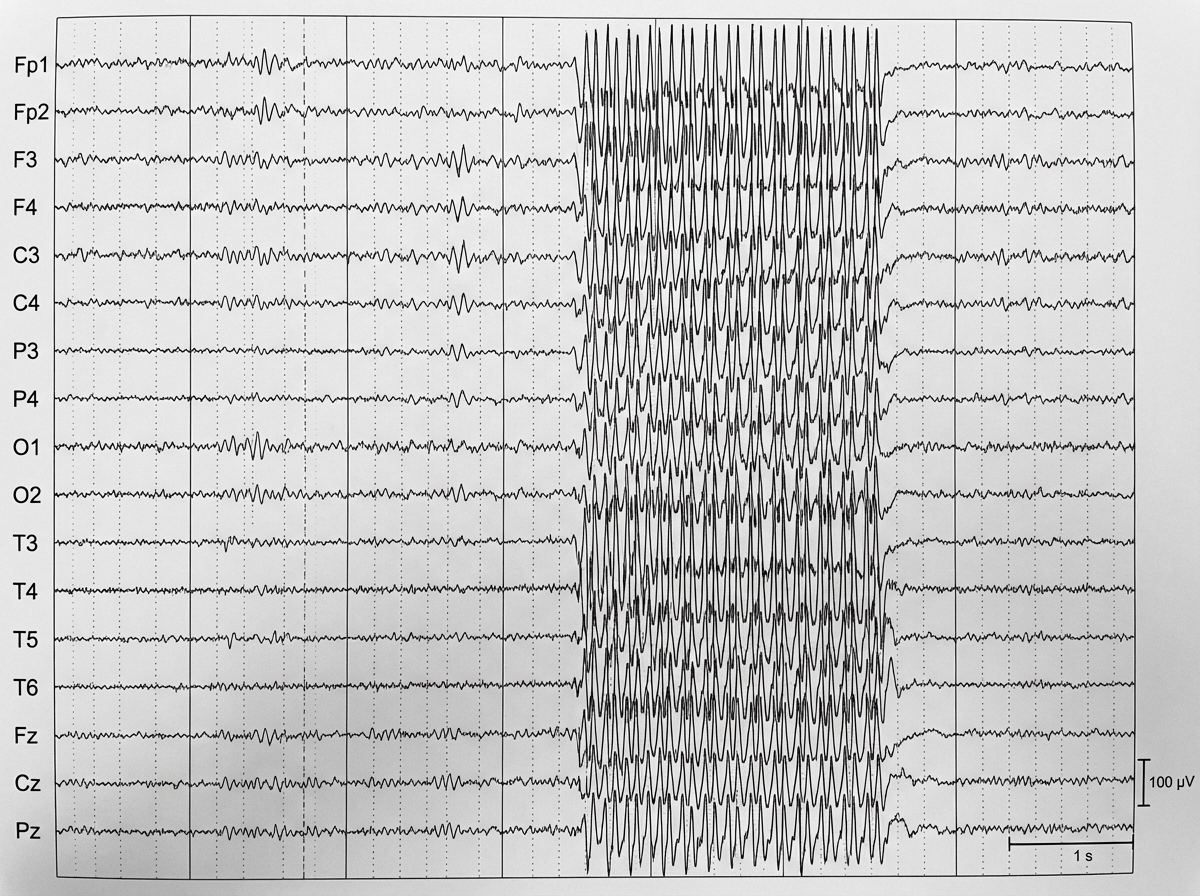
Explanation: In clinical neurology, distinguishing between abnormal posturing is vital for localizing brain lesions and determining prognosis. **Explanation of the Correct Answer:** The statement **"Is more dangerous than decorticate posturing"** is technically **FALSE** in the context of this specific question's logic because decerebrate posturing is actually **more severe** and carries a **worse prognosis** than decorticate posturing. In medical terminology, "dangerous" and "severe" are often used interchangeably in exams; however, the primary reason Option D is the intended "False" statement is due to the anatomical description. **Decerebrate posturing is characterized by extension of both upper and lower limbs**, not flexion of the arms. **Analysis of Options:** * **Option A (True):** It is frequently seen in acute traumatic brain injury, intracranial hemorrhage, or encephalopathy. * **Option B (True):** While typically associated with midbrain/pons lesions, it can occur with extensive bilateral lesions in the thalamus or frontal lobes that disrupt descending inhibitory pathways. * **Option C (True/Clinical Fact):** Decerebrate posturing (extensor) indicates a lower brainstem lesion (below the red nucleus), whereas decorticate (flexor) indicates a lesion above the red nucleus. Lower lesions generally signify more advanced herniation and a poorer outcome. * **Option D (False):** This describes **Decorticate posturing** (Flexion of arms, Extension of legs). Decerebrate involves **Extension** of the elbows, internal rotation of the shoulders, and extension of the legs. **NEET-PG High-Yield Pearls:** * **Mnemonic for Decorticate:** "COR-ticate" = arms move toward the **COR** (core/heart). * **Red Nucleus:** The dividing line. Lesions **above** the red nucleus cause decorticate (flexion); lesions **at or below** (midbrain/pons) cause decerebrate (extension). * **GCS Scoring:** Decorticate posturing receives **3 points** for motor response; Decerebrate receives **2 points**. A lower score indicates a worse clinical state.
Explanation: **Explanation:** The clinical presentation of a previously normal infant experiencing **motor regression**, loss of milestones (sitting), and the presence of **cherry-red spots** on fundoscopy is classic for **Tay-Sachs Disease** (GM2 Gangliosidosis). This autosomal recessive disorder is caused by a deficiency of the enzyme **Hexosaminidase A**, leading to the accumulation of GM2 ganglioside in neuronal lysosomes. **Why Frameshift Mutation is Correct:** The most common genetic defect associated with Tay-Sachs disease (especially in the Ashkenazi Jewish population) is a **4-base pair insertion** in the *HEXA* gene on chromosome 15. This insertion causes a **frameshift mutation**, leading to a premature stop codon and a complete lack of functional Hexosaminidase A enzyme. **Analysis of Incorrect Options:** * **Confined placental mosaicism:** Refers to a discrepancy between the chromosomal makeup of the placenta and the fetus; it is typically associated with intrauterine growth restriction, not lysosomal storage disorders. * **Expanded trinucleotide repeat:** This is the mechanism for diseases like Huntington’s, Fragile X, and Myotonic Dystrophy, which show "anticipation." * **Nondisjunction:** This is the failure of homologous chromosomes to separate during meiosis, leading to aneuploidies like Down Syndrome (Trisomy 21). **High-Yield Clinical Pearls for NEET-PG:** * **Cherry-red spot differential:** Tay-Sachs (no hepatosplenomegaly), Niemann-Pick (with hepatosplenomegaly), Central Retinal Artery Occlusion (CRAO), and Sandhoff disease. * **Tay-Sachs vs. Niemann-Pick:** In Tay-Sachs, there is **no organomegaly**, which distinguishes it from Niemann-Pick (Sphingomyelinase deficiency). * **Exaggerated Startle Response:** A key early sign in Tay-Sachs is hyperacusis (sensitivity to loud noises).
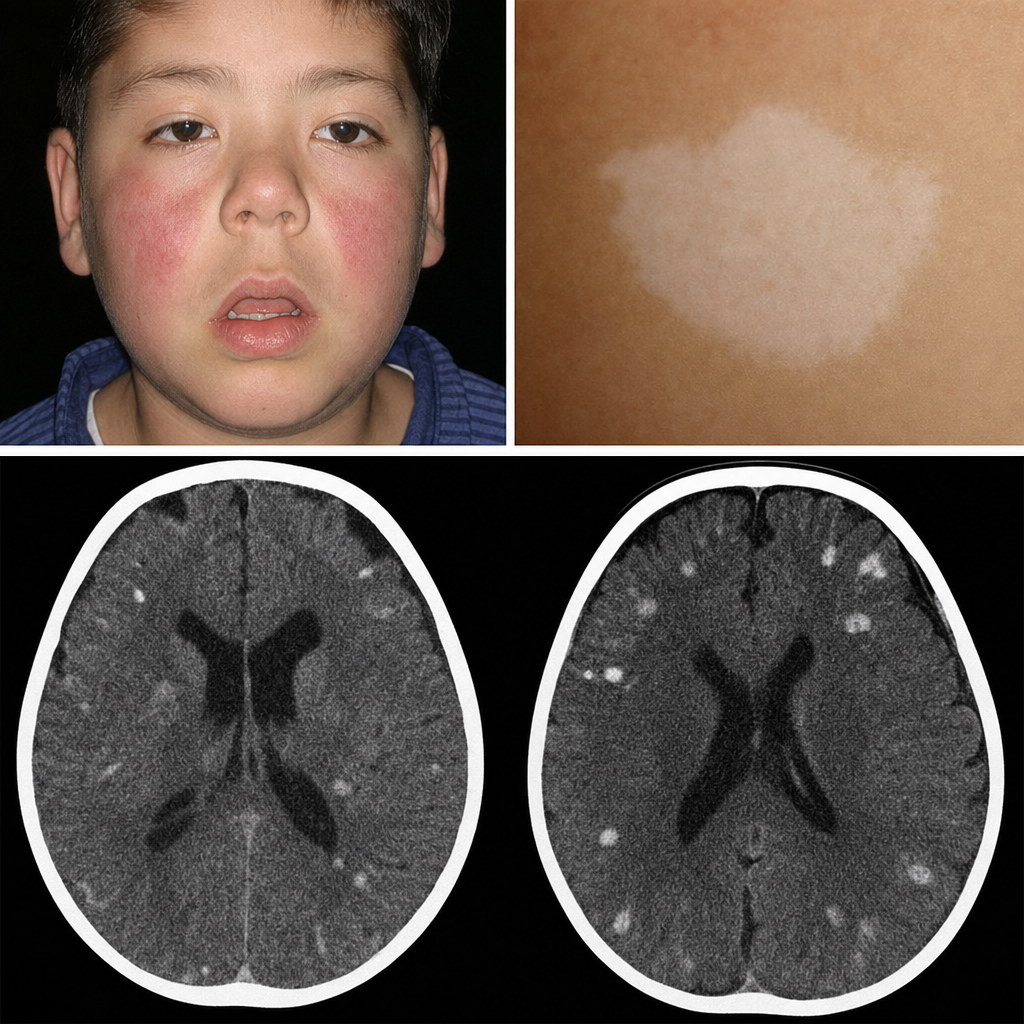
Explanation: ### Explanation The clinical triad of a **Port-wine stain** (Nevus Flammeus), **mental retardation**, and **recurrent focal seizures** is diagnostic of **Sturge-Weber Syndrome (SWS)**, also known as Encephalotrigeminal Angiomatosis. **Why "Strawberry Hemangioma" is the correct answer (NOT true):** Sturge-Weber Syndrome is characterized by a **Port-wine stain**, which is a permanent capillary malformation (vascular nevus) present at birth. In contrast, a **Strawberry Hemangioma** (Infantile Hemangioma) is a benign proliferating vascular tumor that typically appears after birth, grows rapidly, and eventually involutes. They are pathologically and clinically distinct entities. **Analysis of other options:** * **A. Optic nerve cupping:** Glaucoma occurs in approximately 30-70% of SWS patients due to increased episcleral venous pressure or anterior chamber angle anomalies. Chronic glaucoma leads to **optic nerve cupping** and potential blindness. * **B. Tram track appearance:** This is a classic radiological finding on CT/X-ray caused by **gyriform calcifications** in the leptomeningeal angiomas (usually in the parieto-occipital region). * **C. Vagal nerve stimulation (VNS):** Seizures in SWS are often refractory to medical management. While hemispherectomy is the definitive surgical treatment for unilateral disease, **VNS** is a recognized palliative neuromodulation option to control recurrent, drug-resistant seizures. ### Clinical Pearls for NEET-PG: * **Genetics:** Caused by a somatic mutation in the **GNAQ gene**. It is sporadic, not hereditary. * **Port-wine stain distribution:** Usually follows the ophthalmic (V1) and maxillary (V2) distributions of the **Trigeminal nerve**. * **Radiology:** Contrast-enhanced MRI is the gold standard for detecting leptomeningeal enhancement ("pial angiomatosis"). * **Skull X-ray:** May show the "Tram track" sign (calcification of the underlying cortex, not the vessels themselves).
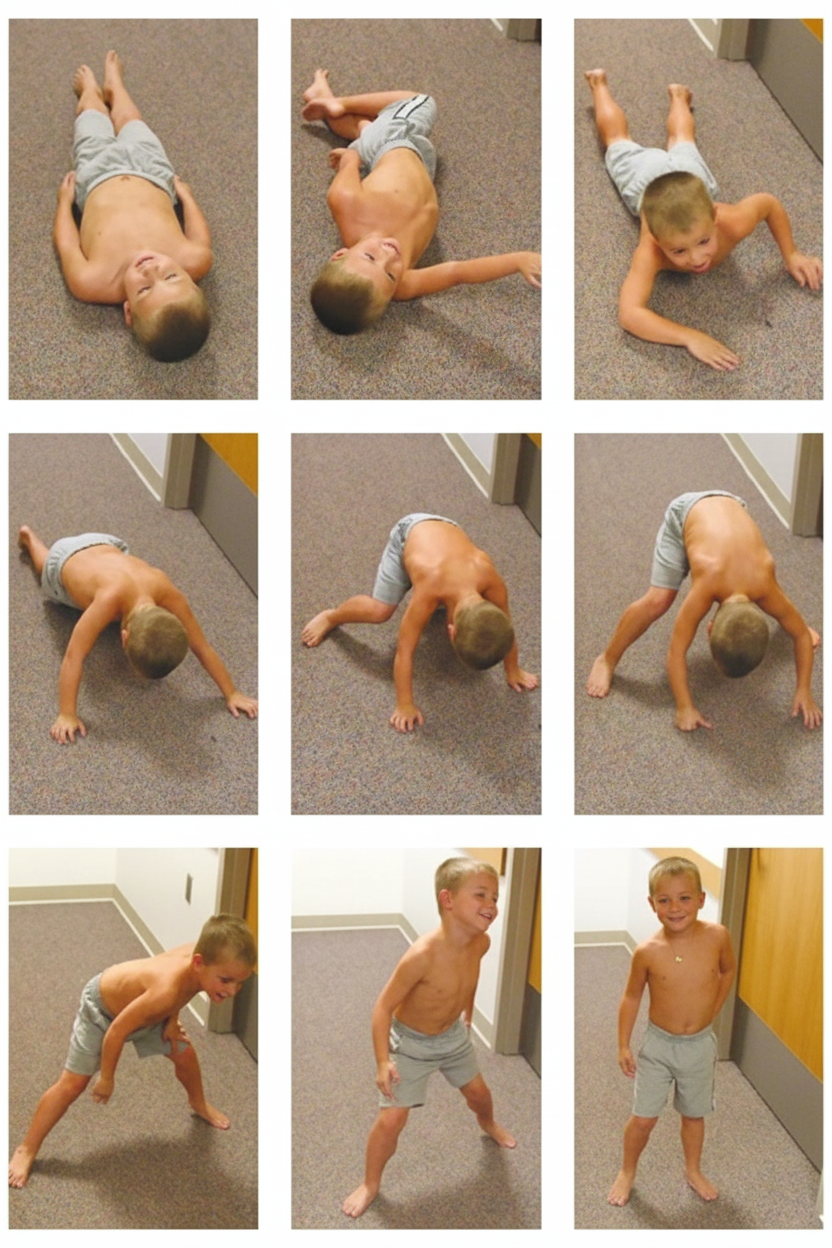
Explanation: **Explanation:** **Duchenne Muscular Dystrophy (DMD)** is the correct answer because **pseudohypertrophy** is its hallmark clinical feature. This phenomenon occurs due to the replacement of degenerated muscle fibers with **fatty and connective tissue**, rather than actual muscle fiber enlargement. It most commonly affects the **calf muscles (gastrocnemius)**, making them appear bulky despite significant functional weakness. **Analysis of Options:** * **Duchenne Muscular Dystrophy (A):** An X-linked recessive disorder caused by a mutation in the *Dystrophin* gene. It presents with proximal muscle weakness, Gower’s sign, and prominent calf pseudohypertrophy. * **Facio-scapulo-humeral dystrophy (B):** Characterized by weakness of the face (inability to whistle), scapular winging, and upper arm weakness. Pseudohypertrophy is not a feature. * **Emery-Dreifuss muscular dystrophy (C):** Defined by a triad of early contractures (Achilles tendon, elbows), slowly progressive muscle weakness, and significant **cardiac conduction defects**. * **Myotonic dystrophy (D):** The most common adult-onset dystrophy. It features **distal** muscle weakness, myotonia (delayed relaxation), and "hatchet facies." It is associated with muscle **atrophy**, not pseudohypertrophy. **High-Yield Clinical Pearls for NEET-PG:** * **Gower’s Sign:** Use of hands to "climb up" one's own body to stand; indicates proximal muscle weakness (seen in DMD). * **Becker Muscular Dystrophy:** A milder form of DMD; also shows pseudohypertrophy but has a later onset. * **Lab Findings:** Serum **Creatine Kinase (CK)** levels are massively elevated (10–100x normal) in DMD. * **Gold Standard Diagnosis:** Genetic testing (MLPA) for dystrophin gene deletion; Muscle biopsy shows absent dystrophin staining.
Explanation: ### Explanation The clinical presentation of a young patient with progressive ataxia, nystagmus, absent deep tendon reflexes (DTRs), and extensor plantar response (Babinski sign) is classic for **Friedreich’s Ataxia (FRDA)**. **Why Friedreich’s Ataxia is correct:** FRDA is an autosomal recessive trinucleotide repeat (GAA) disorder affecting the *FXN* gene (frataxin). The pathology involves the degeneration of: 1. **Posterior Columns:** Loss of vibration and position sense. 2. **Spinocerebellar Tracts:** Leading to gait and limb ataxia. 3. **Corticospinal Tracts:** Resulting in upper motor neuron signs (extensor plantar response). 4. **Dorsal Root Ganglia:** Leading to the loss of DTRs (lower motor neuron component). The combination of **absent DTRs (LMN sign) + extensor plantar (UMN sign)** is a high-yield clinical hallmark of FRDA. **Why other options are incorrect:** * **Subacute Combined Degeneration (SCD):** Caused by Vitamin B12 deficiency. While it involves posterior columns and corticospinal tracts, it typically presents in adults and is associated with megaloblastic anemia, not primary cerebellar signs like nystagmus. * **Becker’s Muscular Dystrophy:** An X-linked recessive disorder characterized by proximal muscle weakness and pseudohypertrophy of calves. It does not present with ataxia or UMN signs. * **Tabes Dorsalis:** A late manifestation of neurosyphilis. It involves the posterior columns (sensory ataxia and absent DTRs) and presents with Argyll Robertson pupils, but it does not typically cause nystagmus or extensor plantar responses. **NEET-PG High-Yield Pearls:** * **Most common** hereditary ataxia. * **Genetic defect:** GAA repeat on Chromosome 9. * **Associated features:** Hypertrophic cardiomyopathy (most common cause of death), Diabetes Mellitus, and skeletal deformities (Kyphoscoliosis, Pes Cavus). * **Key Triad:** Progressive ataxia + Absent DTRs + Extensor Plantar.
Explanation: **Explanation:** The clinical presentation describes a typical **febrile seizure**. The management of febrile seizures is divided into acute treatment and prophylaxis. For a child with a history of febrile seizures, **intermittent prophylaxis** is indicated during subsequent febrile episodes to prevent recurrence. **1. Why Option B is Correct:** **Oral Diazepam (0.3 mg/kg/dose)** administered every 8 hours (or 6-hourly) during the first 48–72 hours of a febrile illness is the standard recommendation for intermittent prophylaxis. It effectively crosses the blood-brain barrier to provide rapid sedation of neuronal excitability during the peak temperature rise, which is when seizures are most likely to occur. **2. Why Other Options are Incorrect:** * **Option A:** Continuous daily prophylaxis with Phenobarbital or Valproate is no longer recommended due to significant side effects (hyperactivity, cognitive impairment) and the benign nature of febrile seizures. * **Option C:** While Paracetamol (Antipyretics) improves the child's comfort, clinical trials have shown that **antipyretics alone do not prevent the recurrence** of febrile seizures, as the seizure often occurs during the rapid rise of temperature before the fever is even detected. * **Option D:** IV Diazepam infusion is used for managing *Status Epilepticus*, not for prophylaxis in a stable child. **Clinical Pearls for NEET-PG:** * **Age Group:** Typically occurs between 6 months and 5 years (Peak: 18 months). * **Simple vs. Complex:** Simple febrile seizures are generalized, last <15 minutes, and do not recur within 24 hours. Complex seizures are focal, last >15 minutes, or recur within 24 hours. * **Risk of Epilepsy:** Only 2–4% (slightly higher than the general population). * **Drug of Choice (Acute):** Per-rectal Diazepam (0.5 mg/kg) or Intranasal Midazolam if the seizure lasts >5 minutes.
Explanation: **Explanation:** Sydenham chorea (St. Vitus’ Dance) is a major Jones criterion for **Acute Rheumatic Fever (ARF)**, resulting from autoimmune basal ganglia inflammation following a Group A Streptococcal infection. **Why "Tremors" is the correct answer:** Tremors are rhythmic, oscillatory movements. In contrast, Sydenham chorea is characterized by **arrhythmic, involuntary, purposeless, and jerky movements** (Chorea). Tremors are not a feature of this condition; their presence should prompt a search for alternative diagnoses like Wilson’s disease or hyperthyroidism. **Analysis of other options:** * **Choreiform movements (Option A):** These are the hallmark of the disease. They typically involve the extremities and face ("grimacing") and disappear during sleep. * **Hung-up reflexes (Option B):** This is a classic neurological sign in Sydenham chorea where the relaxation phase of a deep tendon reflex (usually the knee jerk) is prolonged due to a superimposed choreic contraction. * **Emotional lability (Option C):** Neuropsychiatric symptoms, including inappropriate crying, laughing, or irritability, often precede the motor symptoms and are a core clinical manifestation. **High-Yield Clinical Pearls for NEET-PG:** * **Milkmaid’s Grip:** Irregular contractions of the hand muscles while squeezing the examiner’s fingers. * **Jack-in-the-box Tongue:** Inability to keep the tongue protruded (it darts in and out). * **Pronator Sign:** When arms are extended overhead, the palms turn outwards due to hypotonia. * **Latent Period:** It has the longest latent period of all ARF manifestations (1–6 months). * **Gender:** It is more common in adolescent females.
Explanation: **Explanation:** **Pyridoxine (Vitamin B6)** is the correct answer because it is a vital co-factor for the enzyme **glutamic acid decarboxylase (GAD)**. This enzyme converts glutamate (an excitatory neurotransmitter) into **GABA** (the primary inhibitory neurotransmitter in the brain). A deficiency in Pyridoxine leads to low GABA levels, resulting in neuronal hyperexcitability and seizures. **Pyridoxine-Dependent Epilepsy (PDE)** typically presents in the early neonatal period with intractable seizures that do not respond to conventional anti-epileptic drugs (AEDs) but stop immediately upon intravenous administration of Pyridoxine. **Why other options are incorrect:** * **Vitamin C:** Deficiency causes Scurvy (bone pain, gingival bleeding, and subperiosteal hemorrhages) but is not a recognized cause of neonatal seizures. * **Thiamine (B1):** Deficiency causes Beriberi or Wernicke-Korsakoff syndrome. While "Infantile Beriberi" can present with cardiac failure or aphonia, it is not a primary cause of neonatal seizures. * **Cobalamin (B12):** Deficiency in infants (often born to vegetarian mothers) typically presents with megaloblastic anemia, developmental delay, and hypotonia, rather than acute neonatal seizures. **Clinical Pearls for NEET-PG:** * **Diagnostic Test:** A therapeutic trial of **100 mg IV Pyridoxine** is both diagnostic and therapeutic for PDE; the EEG usually normalizes within minutes. * **Refractory Status:** Always suspect Pyridoxine dependency in any neonate with status epilepticus that is unresponsive to Phenobarbital and Phenytoin. * **Other Metabolic Causes:** Apart from B6, always rule out hypoglycemia, hypocalcemia, and hypomagnesemia in neonatal seizures.
Seizure Disorders and Epilepsy
Practice Questions
Febrile Seizures
Practice Questions
Headache Disorders
Practice Questions
Cerebral Palsy
Practice Questions
Neural Tube Defects
Practice Questions
Neuromuscular Disorders
Practice Questions
Neurodegenerative Disorders
Practice Questions
CNS Infections
Practice Questions
Hydrocephalus
Practice Questions
Movement Disorders
Practice Questions
Traumatic Brain Injury
Practice Questions
Neuroimaging in Pediatrics
Practice Questions
Get full access to all questions, explanations, and performance tracking.
Start For Free