
Neuromuscular Disorders — MCQs

A 25 year old female presents with generalized restriction of eye movement in all direction, intermittent ptosis, proximal muscle weakness and fatigability.Which is the MOST useful test in making the diagnosis?
An infant previously diagnosed with a large muscular VSD comes to the office with complaints from the mother of fatigue and poor feeding over the past month. You note the child has not gained weight since the previous visit 2 months ago. The child is apathetic, tachypneic, and has wheezes and crackles on lung auscultation. What is the most likely cardiac diagnosis based on this patient's presentation?
Duchenne muscular dystrophy is inherited as:
A 2-year- old boy presents with progressive clumsiness and difficulty walking. On physical examination, the child has large calves. He has difficulty walking on his toes and has a waddling gait as shown. Which of the following is the most likely diagnosis?
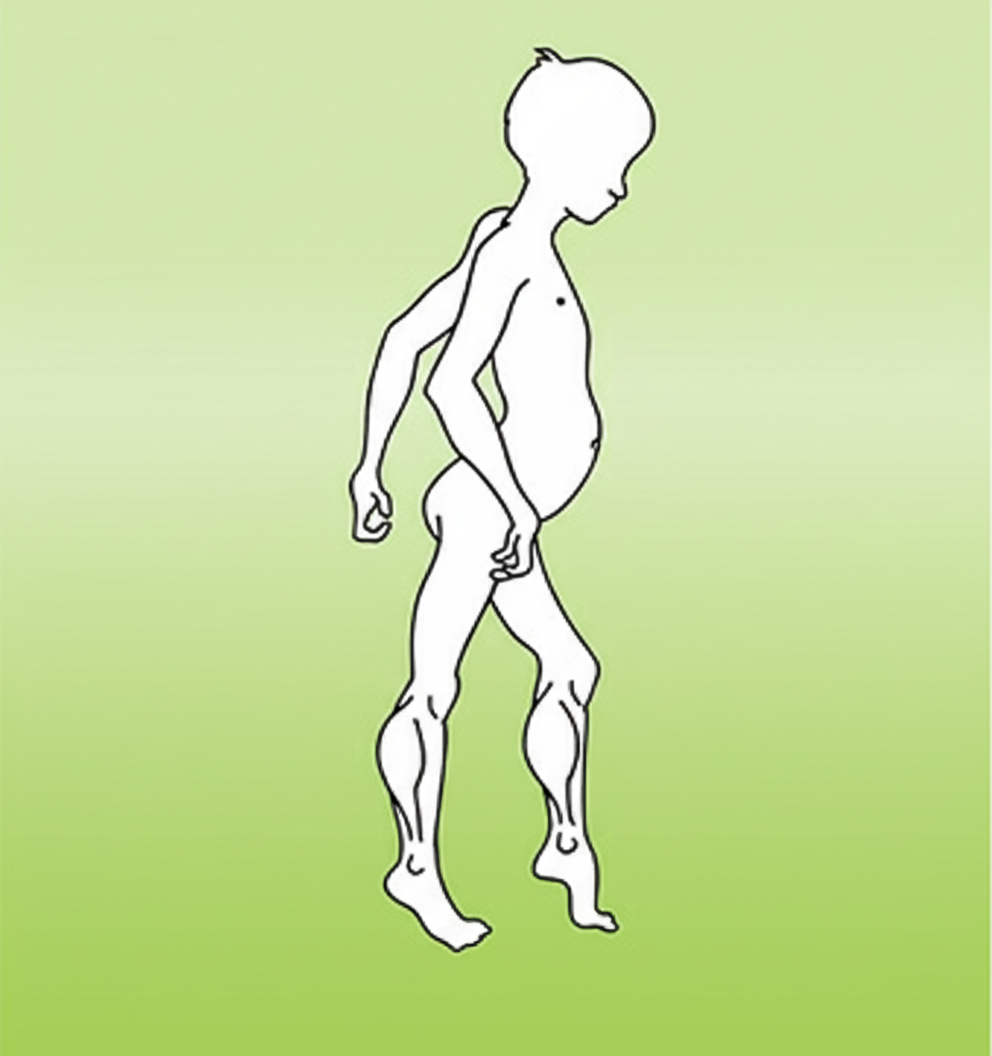
A 4-year-old male child presents with muscle weakness. His mother reports that her child has difficulty in climbing stairs and getting up from the floor. On muscle biopsy, small degenerated muscle fibers and absence of dystrophin were found. What is the diagnosis?
Myasthenia gravis is a disorder of:
Which of the following findings is characteristic of Mallory-Weiss syndrome?
A 45-year-old female presents to the outpatient clinic with symptoms of pain, fatigue, and weakness in both lower limbs. She gives a history of paralysis affecting both lower limbs in childhood, from which she made a good functional recovery. Which of the following is the most likely suspected diagnosis?
Which of the following is not a known cause of neuroregression in children?
What is the significance of the persistence of the asymmetric tonic neck reflex in a 9-month-old infant?
Want unlimited practice?
Get full access to all questions, explanations, and performance tracking.
Scan to download app