
Vesicoureteral Reflux — MCQs

An otherwise asymptomatic child was found to have hypertension. On further evaluation, his urine analysis revealed 2-3 pus cells/HPF and 2-4 RBCs. Which of the following would be the most likely diagnosis?
What is the first-line intervention for acute symptomatic hydroureter with ureteral obstruction requiring urgent decompression?
A 2-year-old boy presents with a history of recurrent urinary tract infections, poor urinary stream, and failure to thrive. A voiding cystourethrogram (VCUG) is performed, and the images provided show dilated posterior urethra and a thickened bladder wall with a keyhole appearance. Based on these findings, the diagnosis of posterior urethral valves (PUV) is made. What is the management for this condition?
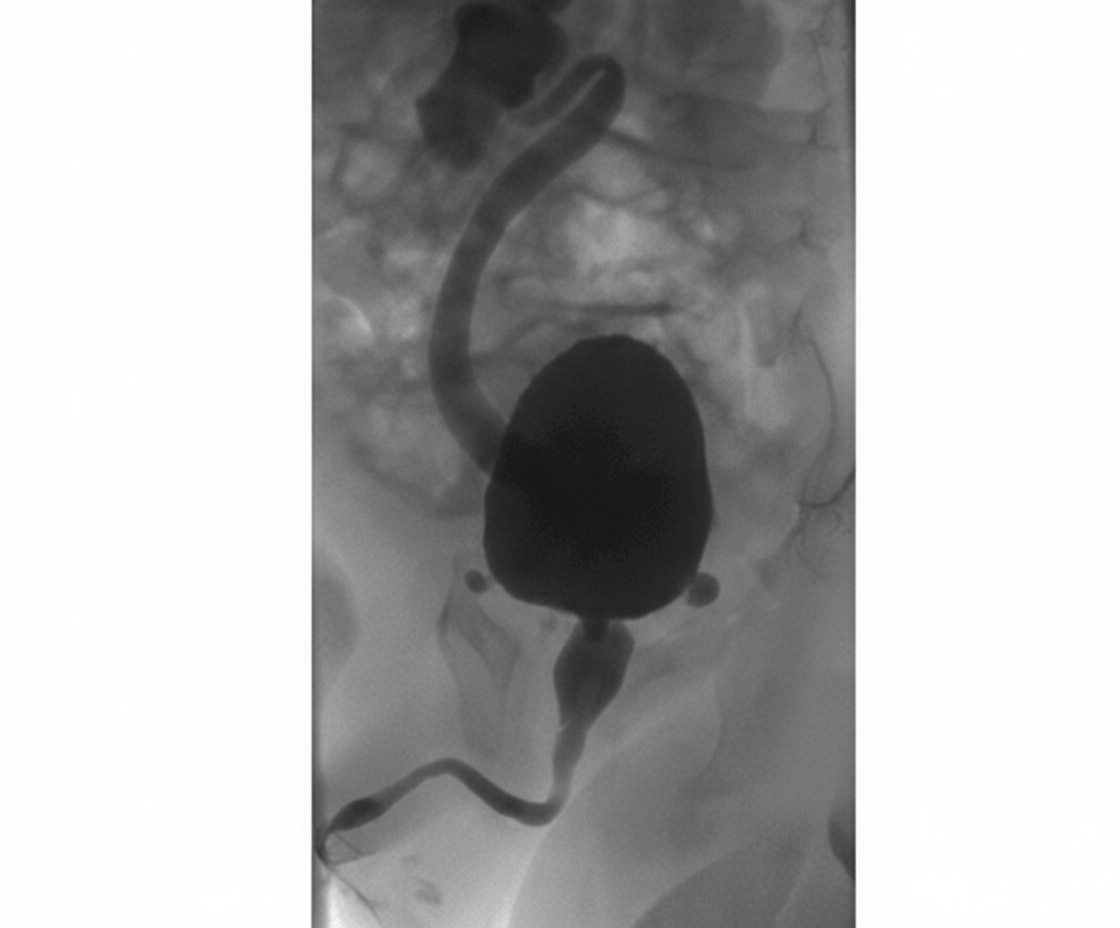
A one-year-old male child presented with a poor urinary stream since birth. The initial investigation of choice for evaluation is:
A 6-year-old boy came with a history of recurrent urinary tract infections. Imaging was done and showed retrograde flow of urine from the bladder into the ureters. What is the most likely diagnosis based on the imaging findings?
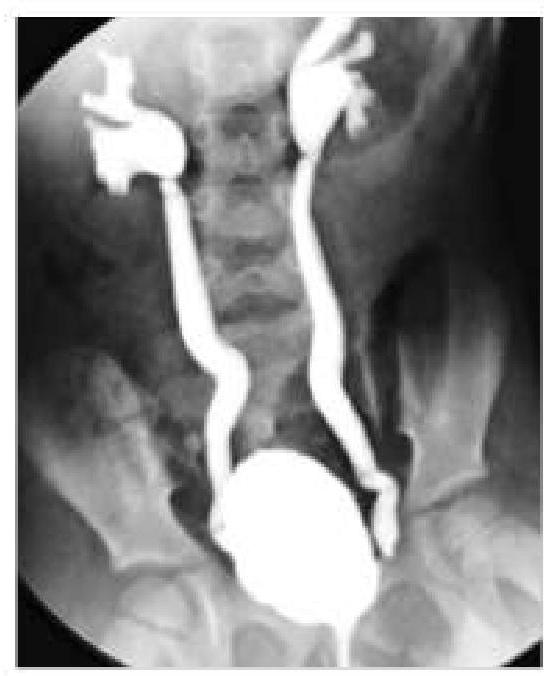
The most common underlying anomaly in a child with recurrent urinary tract infections is:
A 4-year-old girl presented with urinary infection caused by E. coli, pus cells in the urine, dilation of the left ureter with hydroureter, and a micturating cystourethrogram showing a filling defect in the bladder. What is the likely diagnosis?
A 10-year-old boy presents with hypertension. There is no history of urinary tract infections, abdominal pain, or family history of renal disease. Urine analysis reveals microscopic hematuria, proteinuria, and red blood cell casts. What is the most likely diagnosis?
Not true about chronic pyelonephritis in children –
A 5 year old child presented with periorbital swelling and oliguria. Nephrotic syndrome is suspected. Which of the following is the commonest type of nephrotic syndrome in this child?
Want unlimited practice?
Get full access to all questions, explanations, and performance tracking.
Scan to download app