
Parasitic Infections — MCQs

In a rural clinic, a 3-year-old girl child is brought by her mother and is emaciated. Her hemoglobin was 5 g/dL. The girl also has edema over her knees and ankles with discrete rash on her knees, ankles and elbows. The most likely worm infestation causing these manifestations is:
What is the most common route of transmission for Toxoplasma gondii in adults?
A 4 year old child presents with acute watery diarrhea and abdominal cramps. Stool microscopy reveals trophozoites with falling leaf motility. What is the etiological agent?
A patient living with HIV presents with foulsmelling stools. Microscopic examination of the stool reveals no cysts or ova, but a 200-micrometer larva is observed. What is the most likely pathogen?
Cysticercus cellulosae are pathogenic forms of which parasite?
Which of the following symptoms is commonly associated with giardiasis?
Toxoplasma in children causes:
A patient presents with severe abdominal pain and jaundice. Imaging reveals calcified cysts in the liver, and serological testing is positive for Echinococcus. What is a potential complication of this infection?
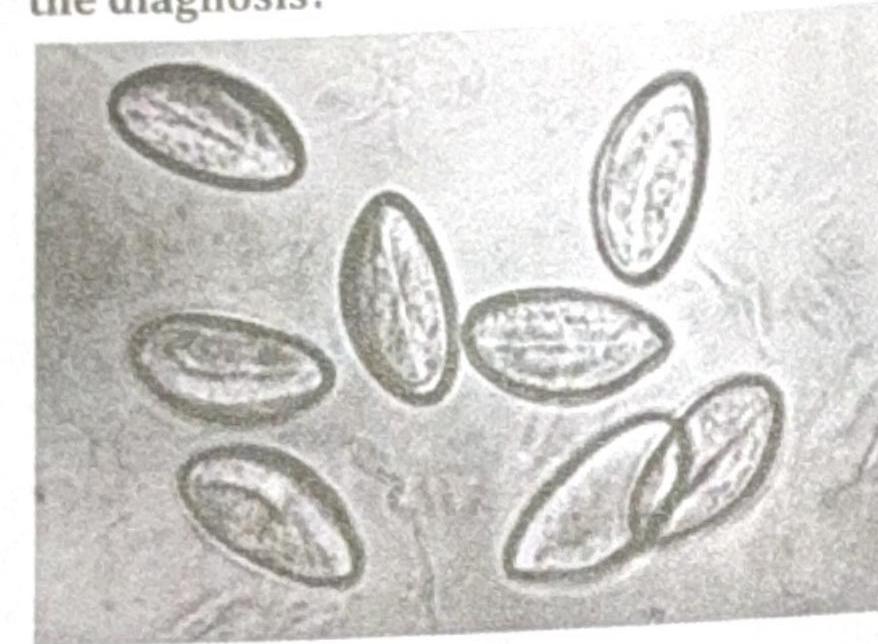
A child presented with perianal itching. The swab specimen is shown in the image. What is the diagnosis?
A child presents with a fever and a rash. Urine examination showed cells with owl's eye appearance. What is the most likely diagnosis?
Want unlimited practice?
Get full access to all questions, explanations, and performance tracking.
Scan to download app