
Bleeding Disorders — MCQs

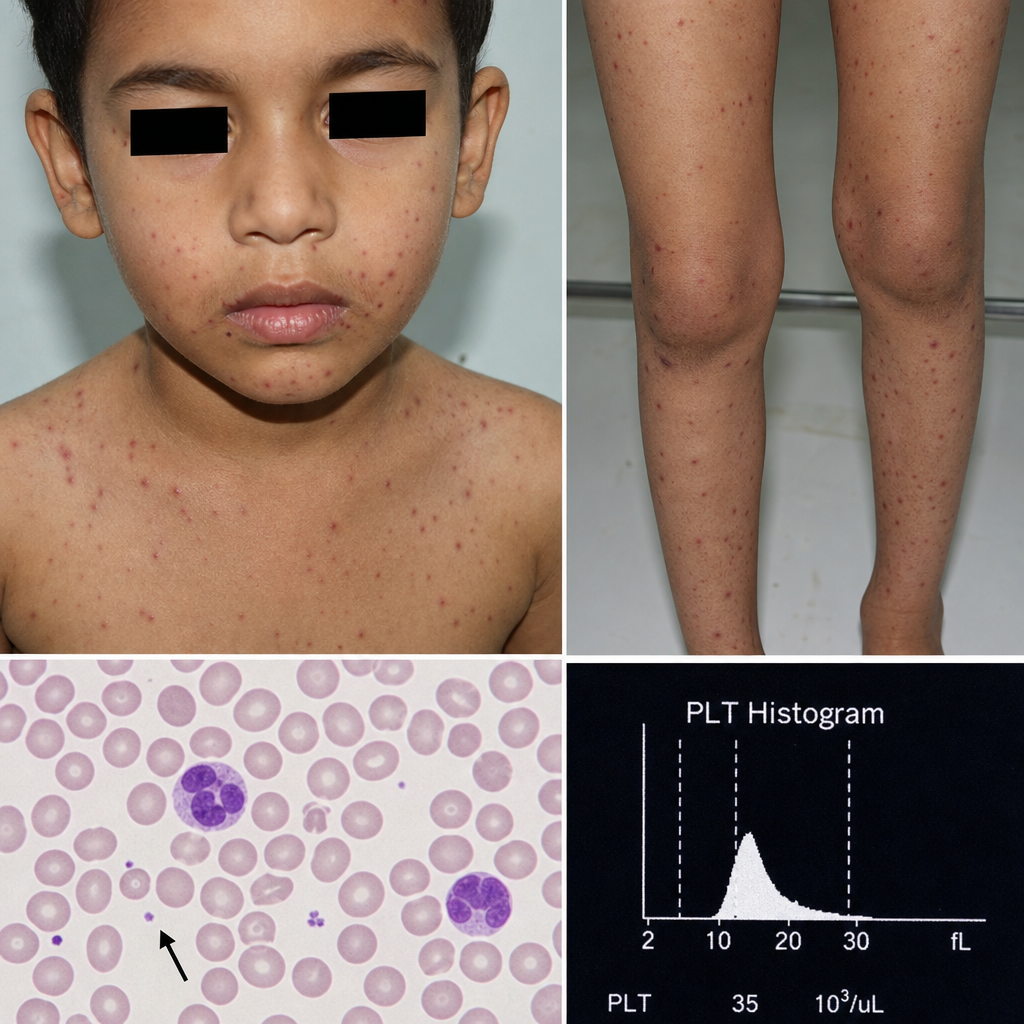
A 5-year-old boy has recurrent infections, low platelet count, and rash as shown below. What is the likely diagnosis?
A 78 year old man who lives alone and prepares his own food is found to have ecchymotic patches over posterior aspect of his lower extremities. He has haemorrhagic areas around hair follicles, hair are fragmented and splinter haemorrhages are present in nail beds and several hematomas are present in the muscles of arms and legs. PT and CT are normal. This clinical syndrome is most likely due to
The most common bleeding manifestation of Hemophilia is
Which of the following is NOT a contraindication for spinal anaesthesia?
Adenoidectomy is contraindicated in:
A 45-year-old lady presents with normal PT and increased aPTT. About 2 years ago, she underwent cholecystectomy and did not have any bleeding episode. What is the next investigation for clinical diagnosis?
Which of the following statements are correct in respect of haemophilia? 1. It is hereditary bleeding disorder. 2. It has a higher incidence among Asians. 3. It affects females occasionally and mildly.
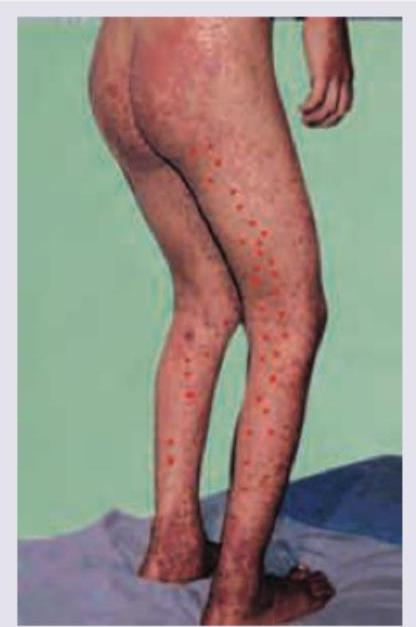
A 6-year-old child with abdominal pain and a rash is shown. Comment on the diagnosis?
Crumpled tissue paper appearance.Patient with hepatosplenomegaly?
The most likely diagnosis is?
Want unlimited practice?
Get full access to all questions, explanations, and performance tracking.
Scan to download app