Which benign tumor is known to show metastasis?
What are the uses of a tumor marker?
Which of the following hormones is elaborated by small cell carcinoma of the lung?
Which of the following tumors is most likely associated with either hyponatremia or diffuse pigmentation of the skin?
Which of the following is an antiapoptotic gene?
A patient's abdomen becomes distended with loculated masses of semi-translucent mucinous material produced by a mucinous cystadenoma. Which of the following are the most likely sites for the primary tumor?
Cell arrest due to DNA damage is mediated by which of the following genes?
Which type of breast cancer is characterized by the single file pattern?
Burkitt's lymphoma arises from which type of cell?
All of the following are paraneoplastic syndromes of bronchogenic carcinoma except?
Explanation: **Explanation:** The correct answer is **Ameloblastoma**. While the definition of a benign tumor typically excludes the ability to metastasize [4], certain tumors are classified as "locally aggressive" or "borderline." **Ameloblastoma** is a classic example of a benign but locally invasive odontogenic tumor [1]. A rare variant known as **Malignant Ameloblastoma** refers specifically to a tumor that maintains a benign histological appearance at both the primary and metastatic sites (most commonly the lungs). This paradox—histological benignity paired with clinical metastasis—is a high-yield concept in pathology [3]. **Analysis of Incorrect Options:** * **Warthin’s Tumor (Papillary Cystadenoma Lymphomatosum):** A strictly benign salivary gland tumor almost exclusively found in the parotid. It does not metastasize. * **Keratoacanthoma:** A rapidly growing skin tumor that histologically resembles squamous cell carcinoma but typically undergoes spontaneous regression. It is considered a benign self-limiting lesion. * **Neurofibroma:** A benign nerve sheath tumor. While it can be associated with Neurofibromatosis Type 1 and has a risk of transforming into a Malignant Peripheral Nerve Sheath Tumor (MPNST), the neurofibroma itself does not metastasize. **NEET-PG High-Yield Pearls:** * **Malignant Ameloblastoma:** Histologically benign, but metastasizes. * **Ameloblastic Carcinoma:** Histologically malignant (cytological atypia) and metastasizes. * **Most common site of metastasis for Ameloblastoma:** Lungs (via aspiration or hematogenous route) [2]. * **Radiological appearance:** "Soap bubble" or "honeycomb" multilocular radiolucency in the mandible. **References:** [1] Kumar V, Abbas AK, et al.. Robbins and Cotran Pathologic Basis of Disease. 9th ed. Head and Neck, p. 741. [2] Kumar V, Abbas AK, et al.. Robbins and Cotran Pathologic Basis of Disease. 9th ed. Neoplasia, p. 282. [3] Kumar V, Abbas AK, et al.. Robbins and Cotran Pathologic Basis of Disease. 9th ed. Neoplasia, p. 276. [4] Kumar V, Abbas AK, et al.. Robbins and Cotran Pathologic Basis of Disease. 9th ed. Neoplasia, p. 280.
Explanation: **Explanation:** Tumor markers are substances (proteins, hormones, or enzymes) produced by cancer cells or by the body in response to cancer [3]. While they provide valuable clinical data, their primary and most effective use is in **monitoring treatment response and detecting recurrence** in patients already diagnosed with malignancy [1]. **1. Why Option B is Correct:** The most significant clinical utility of tumor markers is the **longitudinal follow-up** of a patient [1]. After primary treatment (surgery or chemotherapy), a decline in marker levels indicates successful intervention. A subsequent rise in these levels is often the earliest sign of **recurrence or metastasis**, frequently appearing months before radiological evidence (e.g., rising PSA after prostatectomy or CEA after colon cancer surgery). **2. Why Other Options are Incorrect:** * **Option A (Screening):** Most tumor markers lack the necessary **sensitivity and specificity** for general population screening [2]. They can be elevated in benign conditions (e.g., elevated CA-125 in endometriosis), leading to high false-positive rates [2]. *Exceptions: PSA for prostate cancer and AFP for high-risk HCC patients.* * **Option C (Confirmation):** A diagnosis of cancer is never confirmed by a tumor marker alone. The "Gold Standard" for confirmation remains **Histopathology (Biopsy)**. * **Option D (Monitoring):** While markers are used to monitor treatment, the question asks for the *best* or most characteristic use. In the context of NEET-PG, detecting **recurrence** during follow-up is the classic textbook answer for the primary utility of these markers [1]. **High-Yield Clinical Pearls for NEET-PG:** * **Calcitonin:** Highly specific marker for Medullary Carcinoma of the Thyroid. * **CA-19-9:** Marker for Pancreatic and Cholangiocarcinoma. * **AFP & HCG:** Used together to classify and monitor Germ Cell Tumors [1]. * **S-100:** Marker for Melanoma, Neural tumors, and Langerhans Cell Histiocytosis. **References:** [1] Cross SS. Underwood's Pathology: A Clinical Approach. 6th ed. (Basic Pathology) introduces the student to key general principles of pathology, both as a medical science and as a clinical activity with a vital role in patient care. Part 2 (Disease Mechanisms) provides fundamental knowledge about the cellular and molecular processes involved in diseases, providing the rationale for their treatment. Part 3 (Systematic Pathology) deals in detail with specific diseases, with emphasis on the clinically important aspects., pp. 254-255. [2] Kumar V, Abbas AK, et al.. Robbins and Cotran Pathologic Basis of Disease. 9th ed. Neoplasia, p. 346. [3] Cross SS. Underwood's Pathology: A Clinical Approach. 6th ed. (Basic Pathology) introduces the student to key general principles of pathology, both as a medical science and as a clinical activity with a vital role in patient care. Part 2 (Disease Mechanisms) provides fundamental knowledge about the cellular and molecular processes involved in diseases, providing the rationale for their treatment. Part 3 (Systematic Pathology) deals in detail with specific diseases, with emphasis on the clinically important aspects., pp. 213-214.
Explanation: **Explanation:** Small cell carcinoma (SCLC) of the lung is a high-grade neuroendocrine tumor derived from **Kulchitsky cells**. Because these cells belong to the APUD (Amine Precursor Uptake and Decarboxylation) system, SCLC is notorious for causing **Paraneoplastic Syndromes** through the ectopic secretion of hormones. **Why ACTH is correct:** SCLC is the most common cause of ectopic **ACTH (Adrenocorticotropic hormone)** secretion [1]. This leads to "Ectopic Cushing Syndrome," typically presenting with rapid-onset hypertension, hypokalemia, and metabolic alkalosis, rather than the classic "buffalo hump" seen in pituitary-driven Cushing’s [2]. SCLC also commonly secretes **ADH (Antidiuretic Hormone)**, leading to SIADH. **Analysis of Incorrect Options:** * **A. Parathyroid hormone (PTH):** Specifically, PTH-related peptide (PTHrP) is associated with **Squamous Cell Carcinoma** of the lung, leading to hypercalcemia. (Mnemonic: **S**quamous = **S**tones/Calcium). * **C. Erythropoietin:** Ectopic EPO production is classically associated with Renal Cell Carcinoma (RCC), Hepatocellular Carcinoma (HCC), and Hemangioblastoma. * **D. Noradrenaline:** This is secreted by tumors of the adrenal medulla (Pheochromocytoma) or extra-adrenal paragangliomas, not typically by lung carcinomas. **NEET-PG High-Yield Pearls:** * **SCLC Markers:** Positive for Chromogranin A, Synaptophysin, and CD56. * **Lambert-Eaton Myasthenic Syndrome (LEMS):** Another high-yield paraneoplastic association with SCLC (antibodies against voltage-gated calcium channels). * **Genetics:** Strongly associated with **RB1** and **TP53** mutations and **MYC** amplification. * **Location:** Typically **central/hilar** and strongly associated with smoking. **References:** [1] Kumar V, Abbas AK, et al.. Robbins and Cotran Pathologic Basis of Disease. 9th ed. The Endocrine System, pp. 1134-1135. [2] Kumar V, Abbas AK, et al.. Robbins and Cotran Pathologic Basis of Disease. 9th ed. The Endocrine System, pp. 1082-1083.
Explanation: The correct answer is **Small cell carcinoma of the lung (SCLC)**. This tumor is a neuroendocrine neoplasm derived from Kulchitsky cells, which have the metabolic machinery to produce various ectopic hormones. This phenomenon is known as **Paraneoplastic Syndrome** [1]. * **Hyponatremia:** SCLC is the most common cause of ectopic **SIADH** (Syndrome of Inappropriate Antidiuretic Hormone). Excess ADH leads to free water reabsorption in the kidneys, resulting in dilutional hyponatremia. * **Diffuse Pigmentation:** SCLC can ectopically secrete **ACTH** (Adrenocorticotropic Hormone). High levels of ACTH (or its precursor POMC) stimulate melanocytes, leading to generalized skin hyperpigmentation, similar to Addison’s disease [2]. **Analysis of Incorrect Options:** * **A. Renal Adenocarcinoma (RCC):** Classically associated with paraneoplastic production of Erythropoietin (Polycythemia), PTHrP (Hypercalcemia), and Renin (Hypertension) [3]. * **C. Hepatocellular Carcinoma:** Often associated with hypoglycemia (due to high metabolic demand or IGF secretion) and erythrocytosis. * **D. Squamous Cell Carcinoma (SCC) of the lung:** The classic paraneoplastic association for SCC is **Hypercalcemia** due to the secretion of **PTHrP** (Parathyroid Hormone-related Protein) [3]. **NEET-PG High-Yield Pearls:** * **Small Cell Lung Cancer:** "S" for **S**IADH, **S**eizures (due to hyponatremia), and **S**ubacute cerebellar degeneration. It is also linked to Lambert-Eaton Myasthenic Syndrome. * **Squamous Cell Lung Cancer:** "P" for **P**THrP and **P**earl formation (keratin pearls on histology). * **Rule of Thumb:** If the question mentions neuroendocrine markers (Chromogranin, Synaptophysin) or ectopic ACTH/ADH, always think Small Cell Carcinoma. **References:** [1] Kumar V, Abbas AK, et al.. Robbins and Cotran Pathologic Basis of Disease. 9th ed. The Lung, pp. 725-727. [2] Kumar V, Abbas AK, et al.. Robbins and Cotran Pathologic Basis of Disease. 9th ed. The Endocrine System, pp. 1134-1135. [3] Kumar V, Abbas AK, et al.. Robbins and Cotran Pathologic Basis of Disease. 9th ed. Neoplasia, pp. 338-339.
Explanation: **Explanation:** Apoptosis (programmed cell death) is regulated by the **Bcl-2 family of proteins**, which acts as a rheostat to determine cell survival [3]. This family is divided into two functional groups: pro-apoptotic and anti-apoptotic [1]. **Why Bcl-X is correct:** **Bcl-X (specifically Bcl-XL)** and **Bcl-2** are the primary **anti-apoptotic** members [1]. They reside in the outer mitochondrial membrane and prevent the leakage of Cytochrome C into the cytosol by inhibiting the formation of mitochondrial pores [1]. In many cancers, these genes are overexpressed, allowing tumor cells to evade apoptosis [2]. **Why the other options are incorrect:** * **Bax and Bak:** These are the "pro-apoptotic effectors." When activated, they oligomerize and form pores in the mitochondrial membrane (MOMP), leading to the release of Cytochrome C and subsequent caspase activation [3]. * **Bad and Bim:** These belong to the **"BH3-only"** subset of pro-apoptotic proteins [3]. They act as sensors of cellular stress (like DNA damage) and function by neutralizing anti-apoptotic proteins (Bcl-2/Bcl-X) or directly activating Bax/Bak [3]. **High-Yield NEET-PG Pearls:** * **Anti-apoptotic genes:** Bcl-2, Bcl-XL, Mcl-1 [1]. * **Pro-apoptotic (Effectors):** Bax, Bak [3]. * **Pro-apoptotic (Sensors/BH3-only):** Bim, Bid, Bad, PUMA, NOXA [3]. * **Follicular Lymphoma:** Characterized by **t(14;18)**, which leads to the overexpression of the **Bcl-2** gene, preventing apoptosis in B-cells [2]. * **Mnemonic:** Remember **"Bax/Bak"** as the "Axe" that kills the cell (Pro-apoptotic). **References:** [1] Kumar V, Abbas AK, et al.. Robbins and Cotran Pathologic Basis of Disease. 9th ed. Neoplasia, p. 310. [2] Kumar V, Abbas AK, et al.. Robbins and Cotran Pathologic Basis of Disease. 9th ed. Neoplasia, pp. 310-311. [3] Kumar V, Abbas AK, et al.. Robbins and Cotran Pathologic Basis of Disease. 9th ed. Cellular Responses to Stress and Toxic Insults: Adaptation, Injury, and Death, pp. 64-65.
Explanation: ### Explanation The clinical presentation described—distension of the abdomen with loculated, semi-translucent mucinous material—is the classic definition of **Pseudomyxoma Peritonei (PMP)** [1]. **Why Option D is Correct:** Pseudomyxoma peritonei, often referred to as "Jelly Belly," occurs when a mucin-producing tumor ruptures or spreads to the peritoneal cavity, filling it with gelatinous ascites [1]. * **Appendix:** The most common primary site is a mucinous neoplasm of the appendix (e.g., low-grade appendiceal mucinous neoplasm - LAMN) [1]. * **Ovary:** Historically, the ovary was considered a primary site; however, modern pathology shows that most ovarian mucinous involvements in PMP are actually secondary to an appendiceal primary [1]. Nevertheless, primary mucinous cystadenomas/cystadenocarcinomas of the ovary remain a classic association in medical examinations [2]. **Why Other Options are Incorrect:** * **Option A:** While the colon can produce mucinous adenocarcinoma, the spleen is almost never a primary site for mucinous tumors; it is usually involved only via hematogenous spread or direct extension. * **Option B:** While the pancreas can develop Mucinous Cystic Neoplasms (MCN), it is a much less frequent cause of PMP compared to the appendix. The liver does not typically produce primary mucinous tumors of this nature. * **Option C:** Lung and bladder cancers do not typically present with loculated mucinous ascites (PMP). **NEET-PG High-Yield Pearls:** * **Definition:** PMP is a clinical syndrome, not a histological diagnosis [1]. * **Primary Source:** Always look for the **Appendix** first in clinical vignettes [1]. * **Morphology:** Characterized by "mucin pools" containing sparse neoplastic columnar cells. * **Treatment:** Often involves Cytoreductive Surgery (CRS) combined with Hyperthermic Intraperitoneal Chemotherapy (HIPEC). **References:** [1] Kumar V, Abbas AK, et al.. Robbins and Cotran Pathologic Basis of Disease. 9th ed. The Gastrointestinal Tract, pp. 823-824. [2] Kumar V, Abbas AK, et al.. Robbins and Cotran Pathologic Basis of Disease. 9th ed. The Female Genital Tract, pp. 1030-1032.
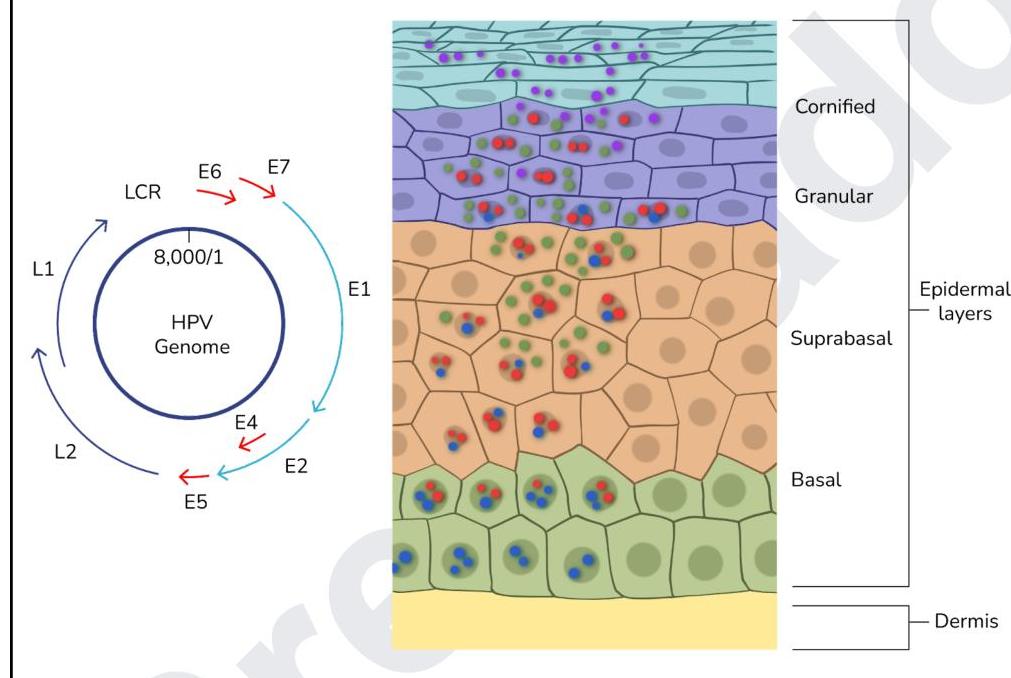
Explanation: **Explanation:** **P53 (The "Guardian of the Genome")** is the correct answer because it acts as the primary molecular sensor for DNA damage [2]. When DNA is damaged (e.g., by radiation or chemicals), p53 levels rise and trigger the transcription of **p21**, a Cyclin-Dependent Kinase inhibitor (CDKi) [1]. p21 inhibits the Cyclin E/CDK2 complex, preventing the phosphorylation of Rb and halting the cell cycle at the **G1-S checkpoint** [1], [5]. This "quiescence" allows time for DNA repair; if repair fails, p53 induces apoptosis via the BAX/BAK pathway [3], [5]. **Analysis of Incorrect Options:** * **Rb (Retinoblastoma Gene):** Known as the "Governor of the Cell Cycle," Rb acts as the final effector gatekeeper [4]. While it physically holds the cell in G1 by sequestering E2F transcription factors, it does not directly "sense" DNA damage; it is the downstream target of the p53-p21 pathway [1]. * **P16 (INK4a):** This is a CDKi that specifically inhibits Cyclin D/CDK4. It plays a major role in cellular senescence and is frequently mutated in melanomas and pancreatic cancers [4], but it is not the primary mediator of DNA damage-induced arrest. * **Notch Signal:** This pathway is primarily involved in cell fate determination, differentiation, and stem cell maintenance. While dysregulated in some leukemias (T-ALL), it is not a mediator of the DNA damage response. **High-Yield Clinical Pearls for NEET-PG:** * **Li-Fraumeni Syndrome:** A germline mutation in *TP53* leading to a 25-fold increased risk of diverse tumors (SBLA syndrome: Sarcoma, Breast, Leukemia, Adrenal). * **MDM2:** The protein that normally degrades p53 via ubiquitination. Overexpression of MDM2 can functionally inactivate p53. * **HPV E6 vs. E7:** In Cervical Cancer, HPV protein **E6** degrades p53, while **E7** inhibits Rb. **References:** [1] Kumar V, Abbas AK, et al.. Robbins and Cotran Pathologic Basis of Disease. 9th ed. Neoplasia, pp. 302-303. [2] Cross SS. Underwood's Pathology: A Clinical Approach. 6th ed. (Basic Pathology) introduces the student to key general principles of pathology, both as a medical science and as a clinical activity with a vital role in patient care. Part 2 (Disease Mechanisms) provides fundamental knowledge about the cellular and molecular processes involved in diseases, providing the rationale for their treatment. Part 3 (Systematic Pathology) deals in detail with specific diseases, with emphasis on the clinically important aspects., pp. 226-227. [3] Kumar V, Abbas AK, et al.. Robbins and Cotran Pathologic Basis of Disease. 9th ed. Neoplasia, pp. 303-304. [4] Kumar V, Abbas AK, et al.. Robbins and Cotran Pathologic Basis of Disease. 9th ed. Neoplasia, pp. 297-298. [5] Cross SS. Underwood's Pathology: A Clinical Approach. 6th ed. (Basic Pathology) introduces the student to key general principles of pathology, both as a medical science and as a clinical activity with a vital role in patient care. Part 2 (Disease Mechanisms) provides fundamental knowledge about the cellular and molecular processes involved in diseases, providing the rationale for their treatment. Part 3 (Systematic Pathology) deals in detail with specific diseases, with emphasis on the clinically important aspects., pp. 227-228.
Explanation: **Explanation:** **Infiltrating Lobular Carcinoma (ILC)** is the correct answer because of its unique molecular pathology. The hallmark of ILC is the **loss of E-cadherin expression** (due to mutations in the *CDH1* gene). E-cadherin is a cell-surface glycoprotein responsible for calcium-dependent cell-to-cell adhesion. Without this "cellular glue," the malignant cells cannot form clusters or tubules. Instead, they migrate through the stroma in a linear, sequential fashion, creating the classic **"single file" (Indian file) pattern** [1]. **Analysis of Options:** * **Option A (Intraductal):** This refers to Ductal Carcinoma In Situ (DCIS). Cells are confined within the basement membrane of the ducts, often forming solid, cribriform, or papillary patterns, but not single files. * **Option C (Infiltrating Ductular):** Also known as Invasive Breast Carcinoma of No Special Type (NST). These cells retain E-cadherin, allowing them to adhere to one another and form cohesive nests, cords, or gland-like structures [1]. * **Option D:** Incorrect, as the single-file pattern is a specific diagnostic feature of the lobular subtype. **High-Yield Clinical Pearls for NEET-PG:** * **Target Lesion:** ILC often lacks a discrete central mass and may present as subtle thickening (difficult to detect on mammography) [1]. * **Bilateralism:** ILC has a higher frequency of being **bilateral and multicentric** compared to ductal carcinoma [1]. * **Metastasis:** It has a unique metastatic profile, often spreading to the **peritoneum, leptomeninges, and ovaries**. * **Staining:** Negative staining for **E-cadherin** is used immunohistochemically to confirm ILC and differentiate it from ductal variants. **References:** [1] Cross SS. Underwood's Pathology: A Clinical Approach. 6th ed. Common Clinical Problems From Liver And Biliary System Disease, pp. 454-455.
Explanation: **Explanation:** Burkitt’s lymphoma is a highly aggressive non-Hodgkin lymphoma (NHL) that originates from **mature B cells** [1]. Specifically, it arises from B cells located in the **germinal center** of lymphoid follicles [1]. This is evidenced by the expression of surface markers such as CD19, CD20, CD10, and BCL6. The hallmark of this malignancy is the translocation **t(8;14)**, which results in the overexpression of the **c-MYC oncogene**, leading to rapid cellular proliferation. **Analysis of Options:** * **Option B (Correct):** It is a mature B-cell neoplasm [1]. Under the microscope, it classically shows a **"Starry Sky" appearance**, where "stars" are tinged-body macrophages and the "sky" consists of malignant B cells. * **Option A (T cell):** Burkitt’s is strictly a B-cell lineage malignancy. T-cell lymphomas (like Mycosis Fungoides) have different clinical presentations and genetic drivers. * **Option C (Pre B cell):** Pre-B cells are immature precursors. Malignancies arising from these are termed B-lymphoblastic leukemia/lymphoma (B-ALL), typically seen in children. Burkitt’s involves *mature* (post-germinal center) B cells [1]. * **Option D (NK cell):** NK cell lymphomas (e.g., Extranodal NK/T-cell lymphoma) are distinct entities often associated with the midline of the face and different immunophenotypes (CD56+). **High-Yield NEET-PG Pearls:** 1. **Variants:** Three types exist—Endemic (African, 100% EBV associated, involves jaw), Sporadic (abdominal mass), and Immunodeficiency-associated (HIV). 2. **Genetics:** t(8;14) is most common; t(2;8) and t(8;22) are variants involving light chains. 3. **Morphology:** High mitotic index and "Starry Sky" pattern. 4. **Tumor Lysis Syndrome:** Due to the extremely high proliferation rate (Ki-67 index ~100%), patients are at high risk for TLS upon starting chemotherapy. **References:** [1] Kumar V, Abbas AK, et al.. Robbins and Cotran Pathologic Basis of Disease. 9th ed. Diseases of White Blood Cells, Lymph Nodes, Spleen, and Thymus, pp. 596-598.
Explanation: **Explanation:** Paraneoplastic syndromes (PNS) are systemic symptoms caused by substances (hormones, cytokines, or antibodies) secreted by tumor cells or as an immune response to the tumor, rather than by direct local effects or metastasis [1]. **Why Myasthenia Gravis (MG) is the correct answer:** While MG is a classic paraneoplastic syndrome, it is specifically associated with **Thymoma**, not bronchogenic carcinoma. In contrast, bronchogenic carcinoma (specifically Small Cell Lung Cancer) is associated with **Lambert-Eaton Myasthenic Syndrome (LEMS)**. While both involve neuromuscular junction dysfunction, LEMS is caused by antibodies against presynaptic voltage-gated calcium channels, whereas MG involves antibodies against postsynaptic acetylcholine receptors. **Analysis of Incorrect Options:** * **A. Hypercalcemia:** A common PNS of **Squamous Cell Carcinoma** of the lung, primarily due to the secretion of Parathyroid Hormone-related Protein (PTHrP) [1]. * **B. SIADH:** Syndrome of Inappropriate Antidiuretic Hormone secretion is a classic PNS associated with **Small Cell Lung Cancer (SCLC)**, leading to hyponatremia. * **C. Acanthosis Nigricans:** This dermatological manifestation (velvety hyperpigmentation in skin folds) is a recognized PNS for various visceral malignancies, including lung and gastric adenocarcinomas [1]. **High-Yield Clinical Pearls for NEET-PG:** * **Small Cell Carcinoma (SCLC):** Most common lung cancer to cause PNS. Associated with **ACTH** (Cushing syndrome), **ADH** (SIADH), and **Lambert-Eaton Syndrome**. * **Squamous Cell Carcinoma (SCC):** Think **"P"** for **P**THrP and **P**araneoplastic Hypercalcemia [1]. * **Hypertrophic Osteoarthropathy (HOA):** Often associated with Adenocarcinoma of the lung; presents with clubbing and periosteal new bone formation [1]. **References:** [1] Kumar V, Abbas AK, et al.. Robbins and Cotran Pathologic Basis of Disease. 9th ed. Neoplasia, pp. 338-340.
Nomenclature and Classification of Tumors
Practice Questions
Characteristics of Benign and Malignant Neoplasms
Practice Questions
Molecular Basis of Cancer
Practice Questions
Carcinogenesis and Carcinogens
Practice Questions
Tumor Progression and Metastasis
Practice Questions
Tumor Markers
Practice Questions
Paraneoplastic Syndromes
Practice Questions
Genetic Basis of Cancer
Practice Questions
Tumor Immunity
Practice Questions
Cancer Epidemiology and Prevention
Practice Questions
Get full access to all questions, explanations, and performance tracking.
Start For Free