
Gunshot and Explosive Injuries — MCQs

In the context of gunshot injuries, which of the following describes the characteristics of a close shot entry wound, including signs such as burning, blackening, tattooing around the wound, and the presence of a dirt collar?
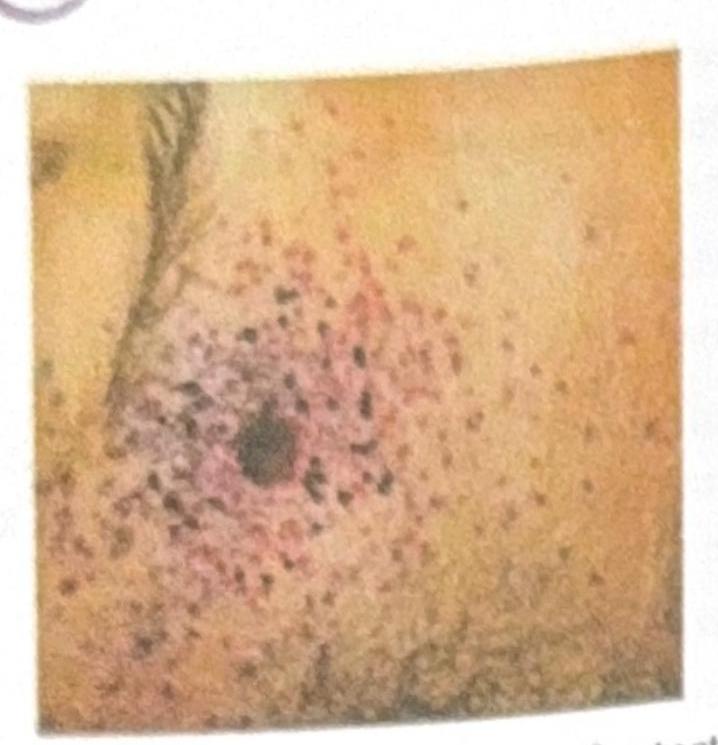
Based on the image provided, identify the range of fire.
Match the following weapons with their corresponding injury types: Weapons: A. Axe B. RTA (Road Traffic Accident) C. Blade D. Lathi Injury Types: 5. Incised wound 6. Tram track bruise 7. Grazed abrasion 8. Chop wound
Which of the following may be seen in an exit wound?
A middle aged lady was found in a robbed room lying in a pool of blood. On forensic examination there was an entry wound of size around 2 x 2 cm on the left temporal region with tattooing and blackening around the wound. There was also an exit wound with beveling at the right temporal region. On further examination two bullet fragments were found inside the brain parenchyma. Which of the following could be used to determine the distance from which the weapon was fired?
In a blast injury, which of the following organs is least involved?
A 19-year-old man is brought into the emergency department with a gunshot wound that occurred 4 hours before admission. At exploratory laparotomy, an injury is noted in the transverse colon with extensive tissue destruction. There is a large amount of fecal contamination. Management of this injury should include which of the following?
All of the following are causes of vasogenic-type cerebral edema except which of the following?
Which enzyme is responsible for converting ethanol to acetaldehyde in alcohol metabolism?
A 20-year-old male was found dead at home. His family claimed the cause of death was sudden myocardial infarction. What is the best test to distinguish an antemortem clot from a post-mortem clot?
Want unlimited practice?
Get full access to all questions, explanations, and performance tracking.
Scan to download app