
Adrenal Medullary Disorders — MCQs

A 3-year-old boy is found to have spontaneous bursts of non-rhythmic conjugate eye movements in various directions, as well as hypotonia and myoclonus. Physical examination also reveals an abdominal mass. A CT scan shows a mass in the adrenal gland. Which of the following statements is false regarding the patient's condition?
In a patient diagnosed with pheochromocytoma, what is the appropriate preoperative pharmacological management to control hypertension before surgery?
Which of the following is best for diagnosis of pheochromocytoma?
Investigation of choice in pheochromocytoma is:
Opsoclonus-myoclonus syndrome is seen in -
Which of the following is false about pheochromocytoma?
The following is a histopathological image of thyroid pathology. What is the diagnosis?
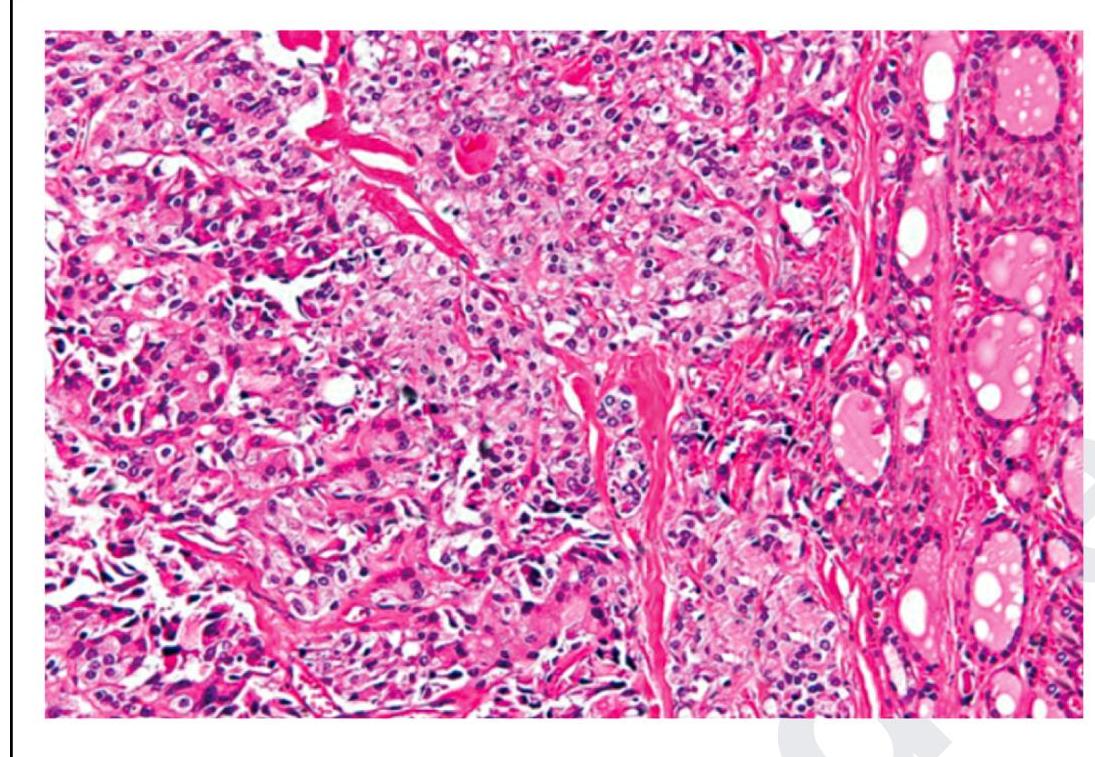
What is the most common thyroid tumor associated with multiple endocrine neoplasia (MEN)?
What is the most common carcinoma of the thyroid?
Which of the following thyroid carcinomas cannot be definitively diagnosed by fine needle aspiration cytology (FNAC)?
Want unlimited practice?
Get full access to all questions, explanations, and performance tracking.
Scan to download app