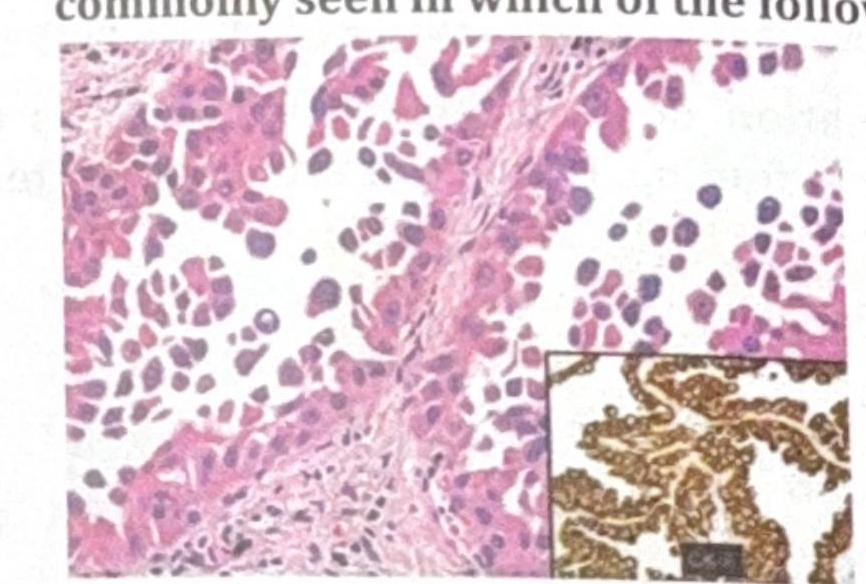
Langerhans cells in skin fall under which category?
Psoriasis has the following features except
Medlar bodies are found in -
Common differential diagnosis of verrucous carcinoma is -
Rhinophyma is associated with-
Acanthosis involves:-
The following statement about keloid is true:
Patient with pigmented skin lesion shows pagetoid spread of atypical melanocytes. Diagnosis?
In which skin disorder is the appearance of basal cells resembling a row of tombstones observed?
Which histological finding is most characteristic of psoriasis?
Explanation: ***Antigen presenting cell*** - **Langerhans cells** are specialized **dendritic cells** found in the epidermis of the skin and play a crucial role in the immune system [1], [3]. - Their primary function is to capture and process antigens from the skin environment and present them to **T lymphocytes**, initiating an immune response [1], [2]. *Keratin synthesising cell* - **Keratinocytes** are the primary cells responsible for synthesizing **keratin**, providing structural integrity to the epidermis [3]. - Langerhans cells originate from bone marrow and are not involved in keratin production. *Sensory neurons* - **Sensory neurons** (e.g., Merkel cells and nerve endings) are responsible for transmitting sensations like touch, pressure, and pain [3]. - Langerhans cells are immune cells and do not have neuronal functions. *Pigment producing cells* - **Melanocytes** are the cells responsible for producing **melanin**, the pigment that gives skin, hair, and eyes their color [3]. - Langerhans cells do not produce pigment; their role is immune surveillance [3]. **References:** [1] Kumar V, Abbas AK, et al.. Robbins and Cotran Pathologic Basis of Disease. 9th ed. Diseases of the Immune System, p. 200. [2] Cross SS. Underwood's Pathology: A Clinical Approach. 6th ed. (Basic Pathology) introduces the student to key general principles of pathology, both as a medical science and as a clinical activity with a vital role in patient care. Part 2 (Disease Mechanisms) provides fundamental knowledge about the cellular and molecular processes involved in diseases, providing the rationale for their treatment. Part 3 (Systematic Pathology) deals in detail with specific diseases, with emphasis on the clinically important aspects., pp. 174-175. [3] Kumar V, Abbas AK, et al.. Robbins and Cotran Pathologic Basis of Disease. 9th ed. The Skin, p. 1144.
Explanation: ***Prominent granular cell layer*** - Psoriatic skin lesions are characterized by a **thinned or absent granular cell layer (stratum granulosum)**, not a prominent one. - This observation is often used histopathologically to differentiate psoriasis from other skin conditions. *Granular cell layer is thinned or almost absent* - This statement accurately describes a key histological feature of psoriasis, where the **stratum granulosum** is significantly reduced or missing. - The absence of this layer is linked to the rapid epidermal turnover seen in psoriatic plaques. *Munro abscesses in the parakeratotic layer* - **Munro microabscesses** are collections of neutrophils found within the **parakeratotic stratum corneum** in psoriatic lesions [1]. - These microabscesses are a characteristic histopathological finding that helps in the diagnosis of psoriasis. *Suprapapillary thinning of epidermis* - There is a characteristic **thinning of the suprapapillary epidermis** (the epidermis directly above the dermal papillae) [1]. - This thinning, combined with dilated capillaries in the dermal papillae, contributes to the **Auspitz sign**, where pinpoint bleeding occurs after scratching the surface of a psoriatic plaque [1]. **References:** [1] Cross SS. Underwood's Pathology: A Clinical Approach. 6th ed. Disorders Involving Inflammatory And Haemopoietic Cells, pp. 636-641.
Explanation: ***Chromoblastomycosis*** - **Medlar bodies**, also known as **sclerotic bodies** or **copper pennies**, are thick-walled, septate, dematiaceous fungal cells characteristic of chromoblastomycosis. - They are typically found within **giant cells** or extracellularly in the dermis during histological examination of infected tissue. *Mycetoma* - Characterized by the presence of **grains** or **granules** composed of aggregated fungal hyphae (eumycetoma) or bacterial filaments (actinomycetoma) within the tissue [2]. - It presents as a chronic, progressive infection involving the skin, subcutaneous tissue, and often underlying bone [2]. *Histoplasmosis* - Caused by **_Histoplasma capsulatum_**, a dimorphic fungus that appears as small, oval, budding yeast cells within **macrophages** in infected tissues [1]. - It primarily affects the lungs but can disseminate to other organs, especially in immunocompromised individuals [1]. *Sporotrichosis* - Caused by **_Sporothrix schenckii_**, which appears as small, cigar-shaped budding yeast forms or asteroid bodies (yeast cells surrounded by an eosinophilic cuticle) in tissue. - It typically presents as **lymphocutaneous lesions** following traumatic inoculation of fungal spores [2]. **References:** [1] Kumar V, Abbas AK, et al.. Robbins and Cotran Pathologic Basis of Disease. 9th ed. The Lung, p. 717. [2] Kumar V, Abbas AK, et al.. Robbins and Cotran Pathologic Basis of Disease. 9th ed. Infectious Diseases, pp. 393-394.
Explanation: ***Condylomata acuminata*** - **Verrucous carcinoma** is a rare, well-differentiated squamous cell carcinoma that often presents as a large, exophytic, warty mass, making it clinically similar to **condylomata acuminata (genital warts)** [1]. - Both conditions can appear as **cauliflower-like lesions** on mucosal surfaces, especially in the anogenital region, necessitating **biopsy** for definitive differentiation [1]. *Adenocarcinoma* - **Adenocarcinoma** typically arises from glandular tissue and presents as a mass or ulcer, but rarely as a **verrucous (warty)** lesion [2]. - Its histological features, characterized by **glandular differentiation**, are distinct from the acanthotic, hyperkeratotic pattern of verrucous carcinoma [2]. *Tuberculosis* - **Tuberculosis** can cause granulomatous lesions, but these are typically **ulcerative** or **nodular**, rather than large, exophytic, warty growths characteristic of verrucous carcinoma. - Diagnosis involves identifying **acid-fast bacilli** and characteristic granulomas with caseous necrosis, which are absent in verrucous carcinoma. *Condylomata lata* - **Condylomata lata** are broad, flat, moist papules associated with **secondary syphilis**, which are distinct from the exophytic, warty appearance of verrucous carcinoma [3]. - These lesions are typically **non-pruritic** and reveal spirochetes on dark-field microscopy, unlike verrucous carcinoma [3]. **References:** [1] Kumar V, Abbas AK, et al.. Robbins and Cotran Pathologic Basis of Disease. 9th ed. The Lower Urinary Tract and Male Genital System, pp. 974-975. [2] Kumar V, Abbas AK, et al.. Robbins and Cotran Pathologic Basis of Disease. 9th ed. The Lower Urinary Tract and Male Genital System, pp. 973-974. [3] Kumar V, Abbas AK, et al.. Robbins and Cotran Pathologic Basis of Disease. 9th ed. The Female Genital Tract, pp. 1000-1002.
Explanation: ***Sebaceous gland hypertrophy*** - **Rhinophyma** is a severe form of rosacea characterized by marked thickening and enlargement of the nose, [1] primarily due to **hypertrophy of the sebaceous glands**. - This glandular overgrowth leads to a bulbous, erythematous, and often disfigured appearance of the nose [1]. *Epithelial cell hyperplasia* - While there may be some secondary **epidermal hyperplasia** in rhinophyma, it is not the primary defining feature of the condition. - The dominant histological change is related to the **sebaceous glands** and connective tissue, not mainly the surface epithelium. *Endothelial cell hyperplasia* - **Vascular changes** and **telangiectasias** are common in rosacea, including rhinophyma, indicating some proliferation of endothelial cells [1]. - However, the most prominent and characteristic pathological feature of rhinophyma is the enlargement of the **sebaceous glands**, not the endothelial cells. *Sweat gland hypertrophy* - **Sweat glands** (eccrine or apocrine) are generally not primarily affected or undergo hypertrophy in rhinophyma. - The pathology is specifically centered on the sebaceous glands, which are distinct from sweat glands. **References:** [1] Kumar V, Abbas AK, et al.. Robbins and Cotran Pathologic Basis of Disease. 9th ed. The Skin, p. 1176.
Explanation: ***Stratum malphigii*** - **Acanthosis** refers to an increase in the thickness of the **stratum spinosum** (also known as the stratum malpighii) of the epidermis [1]. - This thickening is due to an increase in the number of **keratinocytes** in this layer and is a common histological feature in various skin conditions, such as psoriasis [1]. *Stratum lucidum* - The **stratum lucidum** is a thin, clear layer of the epidermis found only in thick skin (palms and soles). - It consists of flat, densely packed keratinocytes and is not typically involved in acanthosis. *Stratum corneum* - The **stratum corneum** is the outermost layer of the epidermis, composed of dead, flattened keratinocytes. - An increase in its thickness is called **hyperkeratosis**, not acanthosis. *Stratum granulosum* - The **stratum granulosum** is characterized by cells containing keratohyalin granules. - Changes in this layer are usually described as **hypergranulosis** (increased thickness) or hypogranulosis (decreased thickness), which are distinct from acanthosis. **References:** [1] Cross SS. Underwood's Pathology: A Clinical Approach. 6th ed. Disorders Involving Inflammatory And Haemopoietic Cells, pp. 640-641.
Explanation: ***It will have more collagen and vascularity*** - Keloid scars are characterized by an **overgrowth of dense, fibrous tissue**, primarily composed of **collagen fibers**, which explains the increased collagen content [1], [2]. - They also exhibit an increased number of **blood vessels (vascularity)** compared to normal skin, contributing to their often reddish or purple appearance. *Extended excision is the treatment of choice* - **Surgical excision alone** is generally **not the treatment of choice** for keloids because it has a **high recurrence rate** (often greater than 50-100%) [1]. - If excision is performed, it must be combined with **adjuvant therapies** such as corticosteroids, cryotherapy, or radiation therapy to reduce the risk of recurrence. *Elevated levels of growth factor is not seen* - Keloids are associated with **elevated levels of various growth factors**, such as **transforming growth factor-beta (TGF-$\beta$)** and ** basic fibroblast growth factor (bFGF)** [3]. - These growth factors play a crucial role in promoting **fibroblast proliferation** and **collagen synthesis**, contributing to the excessive scar formation [3]. *They do not extend beyond the wound* - This statement describes a **hypertrophic scar**, not a keloid. - **Keloids are distinctive** because they characteristically **extend beyond the boundaries of the original wound** or injury, often infiltrating surrounding healthy tissue [1]. **References:** [1] Kumar V, Abbas AK, et al.. Robbins and Cotran Pathologic Basis of Disease. 9th ed. Inflammation and Repair, p. 121. [2] Cross SS. Underwood's Pathology: A Clinical Approach. 6th ed. (Basic Pathology) introduces the student to key general principles of pathology, both as a medical science and as a clinical activity with a vital role in patient care. Part 2 (Disease Mechanisms) provides fundamental knowledge about the cellular and molecular processes involved in diseases, providing the rationale for their treatment. Part 3 (Systematic Pathology) deals in detail with specific diseases, with emphasis on the clinically important aspects., pp. 106-107. [3] Kumar V, Abbas AK, et al.. Robbins and Cotran Pathologic Basis of Disease. 9th ed. Inflammation and Repair, pp. 117-119.
Explanation: ### Superficial spreading melanoma - This is the most common type of melanoma and is characterized by a **radial growth phase** where atypical melanocytes spread along the **dermo-epidermal junction** and into the epidermis (pagetoid spread) [1]. - **Pagetoid spread**, referring to the upward migration of atypical melanocytes into the spinous and granular layers of the epidermis, is a hallmark histological feature. *Lentigo maligna* - This is a melanoma subtype primarily affecting **chronically sun-damaged skin** in older individuals, typically on the face. - While it has a prolonged **radial growth phase**, the atypical melanocytes tend to be confined to the **basal layer** and do not typically exhibit prominent pagetoid spread like superficial spreading melanoma. *Blue nevus* - A blue nevus is a **benign melanocytic lesion** characterized by the presence of dermal melanocytes that produce melanin deep within the dermis, giving it a characteristic blue or blue-gray color [2]. - It does not involve **atypical melanocytes** or **pagetoid spread** (upward migration of cells into the epidermis). *Nodular melanoma* - This is an aggressive subtype of melanoma characterized by a rapid **vertical growth phase** and minimal or absent radial growth phase [1]. - It presents as a **dark, raised nodule** and typically lacks the prominent pagetoid spread seen in the superficial spreading type, as its growth is primarily downward into the dermis. **References:** [1] Kumar V, Abbas AK, et al.. Robbins and Cotran Pathologic Basis of Disease. 9th ed. The Skin, pp. 1151-1152. [2] Kumar V, Abbas AK, et al.. Robbins and Cotran Pathologic Basis of Disease. 9th ed. The Skin, p. 1146.
Explanation: ***Pemphigus vulgaris*** - This autoimmune blistering disease is characterized by **acantholysis** (loss of cell-to-cell adhesion) in the **suprabasal layer** of the epidermis [2]. - The intact basal keratinocytes remain attached to the basement membrane, forming a characteristic "row of **tombstones**" appearance on histology [1]. *Pemphigus foliaceus* - This condition involves acantholysis in the more **superficial granular layer** of the epidermis, above the basal layer [2]. - This leads to subcorneal blistering and **crusted lesions**, but not the tombstone appearance [2]. *Erythema multiforme* - This is a **(type IV hypersensitivity reaction)** characterized by **target lesions** and **vacuolar degeneration** of the basal cell layer. - While it affects the basal layer, it does not involve acantholysis or the "tombstone" pattern. *Bullous pemphigoid* - This is a **subepidermal blistering disease** where autoantibodies target components of the **hemidesmosomes** at the dermoepidermal junction [2]. - The entire epidermis separates from the dermis, resulting in a **tense blister** and no acantholysis or tombstone appearance [2]. **References:** [1] Cross SS. Underwood's Pathology: A Clinical Approach. 6th ed. Disorders Involving Inflammatory And Haemopoietic Cells, pp. 645-646. [2] Kumar V, Abbas AK, et al.. Robbins and Cotran Pathologic Basis of Disease. 9th ed. The Skin, pp. 1170-1172.
Explanation: ***Munro microabscesses*** - **Munro microabscesses** are **collections of neutrophils in the stratum corneum** and are a highly characteristic histological finding of psoriasis [2] - Other key histological features of psoriasis include **parakeratosis** (retention of nuclei in the stratum corneum) [1], **epidermal hyperplasia with elongated rete ridges**, **hypogranulosis** (thinned granular layer), and **dilated capillaries in the dermal papillae** [2] - These histological changes correlate with the clinical features of well-demarcated erythematous plaques with silvery scales [1] *Acantholysis* - **Acantholysis** refers to the loss of cohesion between keratinocytes due to breakdown of desmosomal attachments - This is a characteristic histological feature of **pemphigus vulgaris** and other pemphigus disorders, not psoriasis - Results in intraepidermal blister formation *Granular IgG deposits* - **Granular IgG deposits** at the dermo-epidermal junction are detected by immunofluorescence in **lupus erythematosus** (lupus band test) [3] - Also seen in other autoimmune conditions but not a feature of psoriasis - Psoriasis is primarily a T-cell mediated inflammatory disorder without significant autoantibody deposition *Row of tombstones* - The "row of tombstones" appearance refers to **intact basal cells** remaining attached to the dermal papillae with overlying suprabasilar acantholysis - This histological pattern is highly characteristic of **pemphigus vulgaris**, where suprabasilar blistering occurs - Creates the appearance of basal cells standing upright like tombstones **References:** [1] Cross SS. Underwood's Pathology: A Clinical Approach. 6th ed. Disorders Involving Inflammatory And Haemopoietic Cells, pp. 640-641. [2] Kumar V, Abbas AK, et al.. Robbins and Cotran Pathologic Basis of Disease. 9th ed. The Skin, p. 1168. [3] Cross SS. Underwood's Pathology: A Clinical Approach. 6th ed. Disorders Involving Inflammatory And Haemopoietic Cells, pp. 639-640.
Structure and Function of Skin
Practice Questions
Inflammatory Dermatoses
Practice Questions
Blistering Diseases
Practice Questions
Infectious Diseases of the Skin
Practice Questions
Disorders of Pigmentation
Practice Questions
Benign Skin Tumors
Practice Questions
Malignant Skin Tumors
Practice Questions
Connective Tissue Disorders of the Skin
Practice Questions
Cutaneous Manifestations of Systemic Disease
Practice Questions
Hair and Nail Disorders
Practice Questions
Get full access to all questions, explanations, and performance tracking.
Start For Free