A 25-year-old woman develops extensive pruritic wheals following ingestion of seafood to which she was allergic. While these lesions are usually not biopsied, a biopsy would probably show which of the following features?
A 55-year-old woman complains that the skin of her armpits and groin is progressively darkening. Physical examination demonstrates velvety brown and waxy skin in the axilla and groin. Biopsy of these lesions shows a variably hyperplastic epidermis with many sharp peaks and valleys. Aside from cosmetic considerations, what is the primary medical significance of these lesions?
Which cytokeratin is characteristically expressed in Merkel cell carcinoma?
Which of the following is an epithelioid type of nevus cell?
Histological clefts in Lichen planus are described as:
What is the characteristic CD marker for Langerhans cells?
In Pemphigus vulgaris, autoantibodies are formed against which cell adhesion molecule?
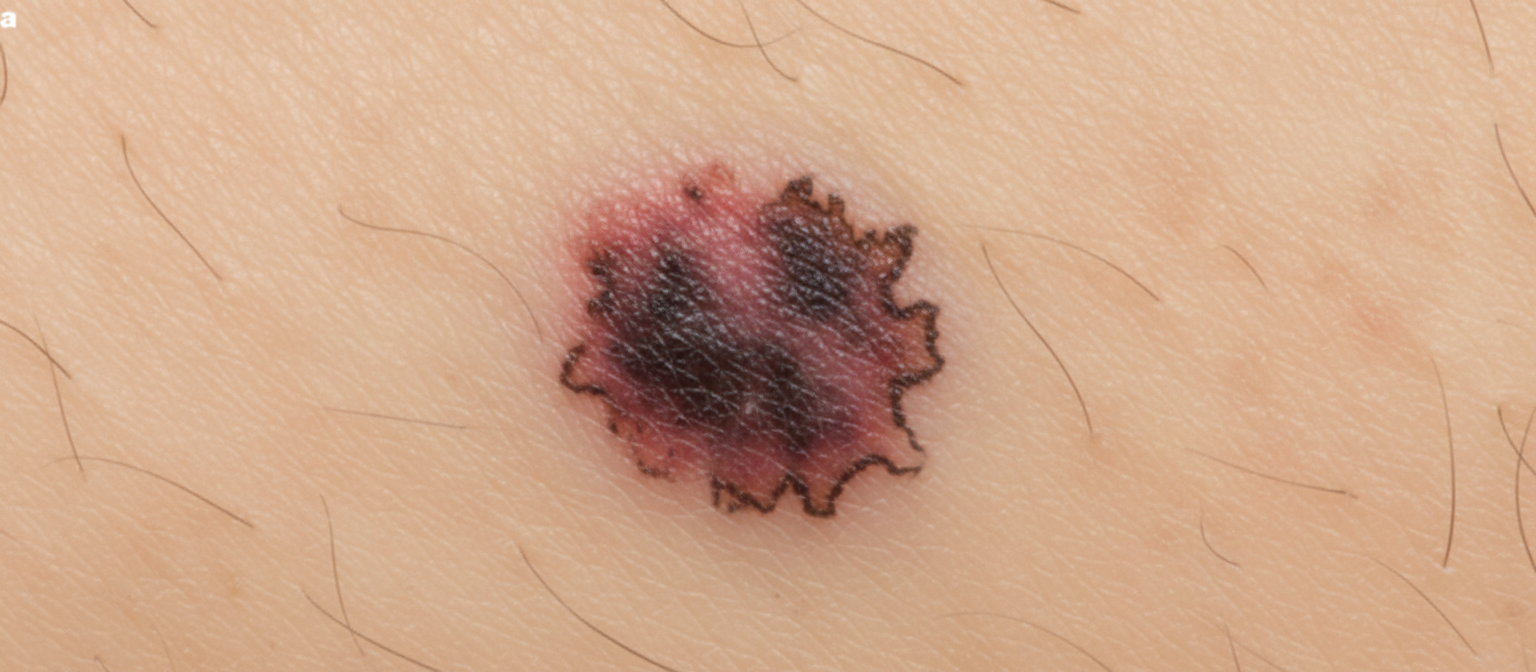
Biopsy from a mole on the foot shows cytologic atypia of melanocytes and diffuse epidermal infiltration by anaplastic cells, which are also present in the papillary and reticular dermis. What is the most likely diagnosis?
An 8-year-old boy presented with a skin tumor on his left cheek. He had always avoided exposure to sunlight because it made his skin blister. His skin had scattered areas of hyperpigmentation. What is the most likely underlying defect?
Intraepithelial vacuolation with formation of a vesicle or bulla intraepithelially above the basal layer is characteristically seen in which of the following conditions?
Explanation: ### Explanation The clinical presentation of pruritic wheals following allergen ingestion (seafood) is diagnostic of **Urticaria** (Hives). **1. Why Option A is Correct:** Urticaria is a Type I hypersensitivity reaction characterized by mast cell degranulation, leading to increased vascular permeability. Pathologically, this results in **dermal edema**, which manifests as **dilated superficial lymphatic channels** (to drain the excess fluid) and widely spaced collagen bundles [1]. There is typically a sparse perivascular infiltrate of lymphocytes, eosinophils, and neutrophils, but the epidermis remains normal [1]. **2. Why the Other Options are Incorrect:** * **Option B (Granular complement/IgG):** This is characteristic of **Systemic Lupus Erythematosus (SLE)** [3] or Bullous Pemphigoid (linear pattern). Urticaria does not involve immune complex deposition at the basement membrane. * **Option C (Microscopic blisters):** This refers to **Spongiosis** (intercellular edema), which is the hallmark of **Eczematous Dermatitis** (Eczema) [1]. In urticaria, the edema is dermal, not epidermal; therefore, no intraepidermal vesicles are formed [2]. * **Option D (Munro microabscesses):** These are collections of neutrophils within the stratum corneum, a pathognomonic feature of **Psoriasis**. **3. NEET-PG High-Yield Pearls:** * **Urticaria vs. Angioedema:** Urticaria involves the superficial dermis; Angioedema involves the deep dermis and subcutaneous fat. * **Hereditary Angioedema:** Caused by **C1 esterase inhibitor deficiency**, leading to excessive bradykinin production. * **Dermatographism:** A form of physical urticaria where wheals appear after stroking the skin. * **Key Histology:** Look for "dermal edema" and "dilated lymphatics" without epidermal changes [1]. **References:** [1] Kumar V, Abbas AK, et al.. Robbins and Cotran Pathologic Basis of Disease. 9th ed. The Skin, pp. 1164-1166. [2] Kumar V, Abbas AK, et al.. Robbins and Cotran Pathologic Basis of Disease. 9th ed. The Skin, p. 1166. [3] Cross SS. Underwood's Pathology: A Clinical Approach. 6th ed. Disorders Involving Inflammatory And Haemopoietic Cells, pp. 639-640.
Explanation: The clinical presentation of velvety, hyperpigmented, and waxy plaques in intertriginous areas (axilla, groin, neck) is classic for **Acanthosis Nigricans** [1], [2]. ### 1. Why Option B is Correct Acanthosis Nigricans is a significant clinical marker. While most commonly associated with **insulin resistance** (Type 2 Diabetes, obesity, PCOS), its sudden onset in an older individual (like this 55-year-old patient) is a classic **paraneoplastic syndrome** [1]. The primary medical significance is its association with **visceral malignancy**, most commonly **Gastric Adenocarcinoma** [1]. The pathogenesis involves the stimulation of epidermal growth factor receptors (EGFR) by high levels of insulin or TGF-α secreted by tumor cells [2]. ### 2. Why Other Options are Incorrect * **Option A:** Immunosuppression is more typically associated with fungal infections (Candidiasis) or viral warts, not the specific histopathology of acanthosis nigricans. * **Option C:** While skin folds are prone to intertrigo, superinfection is a secondary complication and not the "primary medical significance" of the lesion itself. * **Option D:** The lesions themselves are **benign** epidermal hyperplasia. They do not undergo malignant transformation; rather, they serve as a cutaneous signal of an internal malignancy. ### 3. High-Yield Pearls for NEET-PG * **Histopathology:** Characterized by hyperkeratosis, papillomatosis (the "peaks and valleys"), and slight basal layer hyperpigmentation (but *not* melanocyte proliferation) [2]. * **Triad of Malignant Acanthosis Nigricans:** Sudden onset, extensive involvement, and association with **Leser-Trélat sign** (sudden eruption of multiple seborrheic keratoses). * **Most Common Site:** Axilla (intertriginous areas). * **Most Common Internal Malignancy:** Gastric Adenocarcinoma. **References:** [1] Kumar V, Abbas AK, et al.. Robbins and Cotran Pathologic Basis of Disease. 9th ed. Neoplasia, pp. 339-340. [2] Kumar V, Abbas AK, et al.. Robbins and Cotran Pathologic Basis of Disease. 9th ed. The Skin, pp. 1153-1154.
Explanation: **Explanation:** Merkel cell carcinoma (MCC) is a highly aggressive, primary neuroendocrine carcinoma of the skin. The diagnosis relies heavily on immunohistochemistry (IHC). **Why Cytokeratin 20 (CK20) is correct:** CK20 is the most characteristic and diagnostic marker for Merkel cell carcinoma. It typically shows a **perinuclear "dot-like" staining pattern**, which is a classic high-yield finding for NEET-PG. While CK20 is also expressed in intestinal epithelium and adenocarcinomas of the GI tract, its presence in a small blue round cell tumor of the skin is highly specific for MCC. **Analysis of Incorrect Options:** * **Cytokeratin 7 (CK7):** This is typically **negative** in MCC. CK7 is more commonly expressed in adenocarcinomas of the lung, breast, and upper GI tract. The CK20+/CK7- profile helps differentiate MCC from metastatic small cell carcinoma of the lung (which is usually CK20-/CK7- or CK7+). * **Cytokeratin 19:** While CK19 can be expressed in various epithelial tumors, it lacks the diagnostic specificity required for MCC. * **Cytokeratin 18:** CK18 is a low-molecular-weight cytokeratin found in most simple epithelia. While MCC may express it, it is not the "characteristic" or defining marker used for diagnosis in a clinical/exam setting. **High-Yield Clinical Pearls for NEET-PG:** * **Origin:** Derived from mechanoreceptor cells (Merkel cells) in the basal layer of the epidermis. * **Etiology:** Strongly associated with the **Merkel Cell Polyomavirus (MCPyV)** in ~80% of cases. * **IHC Profile:** Positive for **CK20 (dot-like)**, Synaptophysin, and Chromogranin A. It is **Negative for TTF-1** (helps rule out metastatic small cell lung cancer). * **Clinical Presentation:** Often follows the **AEIOU** mnemonic: **A**symptomatic, **E**xpanding rapidly, **I**mmune suppressed, **O**lder than 50, **U**V-exposed skin.
Explanation: **Explanation:** In dermatopathology, melanocytic nevi (moles) undergo a predictable process called **maturation**, where nevus cells change their morphology and arrangement as they migrate from the superficial dermis to the deeper layers [1]. * **Type A Cells (Correct):** These are found in the **superficial/upper dermis**. They are large, cuboidal, or round cells with abundant cytoplasm and distinct cell borders, giving them an **epithelioid** appearance [1]. They often contain visible melanin granules. * **Type B Cells (Incorrect):** Located in the **mid-dermis**, these cells are smaller than Type A cells and have less cytoplasm. They are arranged in cords or clusters and resemble **lymphocytes** (lymphocytoid appearance) [1]. * **Type C Cells (Incorrect):** Found in the **deepest part** of the dermis, these cells become elongated and spindle-shaped. They resemble fibroblasts or Schwann cells, giving them a **fusiform or neurotized** appearance [1]. This transition to Type C is a hallmark of a benign lesion. **High-Yield NEET-PG Pearls:** 1. **Maturation Sequence:** The progression from Type A → B → C as one moves deeper into the dermis is a key diagnostic feature of a **benign nevus** [1]. A lack of this maturation (where deep cells remain large and mitotically active) is highly suggestive of **Melanoma**. 2. **Abtropfung Effect:** This refers to the "dropping off" of nevus cells from the basal layer of the epidermis into the dermis during the formation of a compound nevus [1]. 3. **S100 & HMB-45:** Nevus cells are typically positive for S100. HMB-45 staining is usually positive in superficial (Type A) cells but is lost in deeper (Type C) cells in benign nevi. **References:** [1] Kumar V, Abbas AK, et al.. Robbins and Cotran Pathologic Basis of Disease. 9th ed. The Skin, pp. 1146-1148.
Explanation: **Explanation:** **Lichen Planus (LP)** is a chronic inflammatory dermatosis characterized histologically by a "saw-tooth" appearance of rete ridges and a dense, band-like lymphocytic infiltrate at the dermo-epidermal junction [1]. **Why Max-Joseph Spaces is Correct:** The primary pathology in LP is the immunological destruction of basal keratinocytes (liquefactive degeneration). When this basal cell damage becomes extensive, it leads to a weakening of the dermo-epidermal junction [1]. Small areas of focal separation or "clefts" form between the epidermis and dermis; these histological gaps are known as **Max-Joseph spaces**. **Analysis of Incorrect Options:** * **Civatte bodies:** These are apoptotic, eosinophilic keratinocytes found in the lower epidermis or papillary dermis. While characteristic of LP, they are cellular remnants, not histological clefts. * **Wickham’s striae:** This is a **clinical** finding, not a histological one. It refers to the white, reticulated lines seen on the surface of LP papules, corresponding histologically to focal orthohyperkeratosis and wedge-shaped hypergranulosis. * **Auspitz’s sign:** This is a clinical sign associated with **Psoriasis**, where pinpoint bleeding occurs after the removal of a scale due to thinning of the suprapapillary plate and dilated capillaries. **High-Yield Pearls for NEET-PG:** * **The "6 Ps" of LP:** Planar, Purple, Polygonal, Pruritic, Papules, and Plaques. * **Key Histology:** Hyperkeratosis (without parakeratosis), Wedge-shaped hypergranulosis, Saw-tooth rete ridges, and Band-like infiltrate. * **Koebner Phenomenon:** LP (along with Psoriasis and Vitiligo) shows new lesions at sites of trauma [1]. * **Direct Immunofluorescence (DIF):** Shows characteristic linear globular deposits of **IgM** (Colloid bodies). **References:** [1] Kumar V, Abbas AK, et al.. Robbins and Cotran Pathologic Basis of Disease. 9th ed. The Skin, pp. 1166-1170.
Explanation: **Explanation:** Langerhans cells are specialized dendritic (antigen-presenting) cells primarily located in the stratum spinosum of the epidermis [3]. The characteristic immunohistochemical marker for these cells is **CD1a**. This molecule is structurally related to MHC Class I and is involved in presenting lipid antigens to T-cells. **Why Option A is correct:** CD1 (specifically CD1a) is the most specific surface marker used to identify Langerhans cells in tissue sections. In addition to CD1a, these cells also express **S100** and **Langerin (CD207)** [1]. Langerin is associated with the formation of **Birbeck granules**, the pathognomonic "tennis-racket" shaped organelles seen on electron microscopy [1]. **Why other options are incorrect:** * **CD2:** A glycoprotein found on the surface of T-cells and Natural Killer (NK) cells; it acts as an adhesion molecule (LFA-3 receptor). * **CD4:** A marker for T-helper cells and monocytes/macrophages. While Langerhans cells can express some CD4, it is not their characteristic diagnostic marker. * **CD56:** Also known as Neural Cell Adhesion Molecule (NCAM), it is the primary marker for **NK cells** and certain neuroendocrine tumors. **High-Yield Clinical Pearls for NEET-PG:** * **Langerhans Cell Histiocytosis (LCH):** A clonal proliferation of these cells [2]. Look for "Coffee-bean" nuclei (grooved nuclei) on light microscopy [1]. * **IHC Profile of LCH:** Positive for CD1a, S100, and Langerin (CD207) [1]. * **Electron Microscopy:** Birbeck granules (tennis-racket appearance) are the gold standard for identification [1]. * **Origin:** Unlike other skin cells, Langerhans cells originate from the **bone marrow** (monocyte-macrophage lineage). **References:** [1] Kumar V, Abbas AK, et al.. Robbins and Cotran Pathologic Basis of Disease. 9th ed. Diseases of White Blood Cells, Lymph Nodes, Spleen, and Thymus, p. 630. [2] Kumar V, Abbas AK, et al.. Robbins and Cotran Pathologic Basis of Disease. 9th ed. Diseases of White Blood Cells, Lymph Nodes, Spleen, and Thymus, pp. 629-630. [3] Kumar V, Abbas AK, et al.. Robbins and Cotran Pathologic Basis of Disease. 9th ed. Diseases of the Immune System, p. 200.
Explanation: **Pemphigus vulgaris (PV)** is an autoimmune blistering disease characterized by the loss of intercellular adhesion between keratinocytes, a process known as **acantholysis** [1]. 1. **Why Cadherin is correct:** The primary pathology in PV involves IgG autoantibodies directed against **Desmogleins (Dsg1 and Dsg3)**. Desmogleins are calcium-dependent adhesion molecules belonging to the **Cadherin family**. They are integral components of **desmosomes**, which provide structural integrity by linking the intermediate filaments of adjacent cells. The destruction of these cadherins leads to the characteristic "row of tombstone" appearance on histology and suprabasal blistering [1][2]. 2. **Why other options are incorrect:** * **Selectins (A):** These are involved in the initial "rolling" phase of leukocyte extravasation during inflammation, not cell-to-cell structural adhesion. * **Integrins (C):** These primarily mediate cell-to-matrix adhesion (linking cells to the basement membrane). Antibodies against integrins or hemidesmosomal proteins (like BP180) are seen in **Bullous Pemphigoid**, not PV [1]. * **IgSF CAMs (D):** The Immunoglobulin Superfamily CAMs (e.g., ICAM-1, VCAM-1) are involved in immune cell recognition and firm adhesion during inflammation. **High-Yield Clinical Pearls for NEET-PG:** * **Target Antigens:** Dsg3 (mucosal-dominant) and Dsg1 (mucocutaneous). * **Immunofluorescence:** Shows a characteristic **"fishnet" or "lace-like"** pattern of IgG and C3 deposits in the epidermis [1]. * **Nikolsky Sign:** Positive (bulla spreads with lateral pressure). * **Tzanck Smear:** Shows **Acantholytic cells** (Tzanck cells)—large, round keratinocytes with hyperchromatic nuclei. **References:** [1] Kumar V, Abbas AK, et al.. Robbins and Cotran Pathologic Basis of Disease. 9th ed. The Skin, p. 1172. [2] Kumar V, Abbas AK, et al.. Robbins and Cotran Pathologic Basis of Disease. 9th ed. The Skin, pp. 1170-1172.
Explanation: ### Explanation **1. Why Option A is Correct:** The presence of **cytologic atypia** and **diffuse epidermal infiltration** (pagetoid spread) of anaplastic cells is diagnostic of **Malignant Melanoma** [3]. The staging of melanoma depth is determined by **Clark Levels**, which assess the anatomical layer of the skin involved: * **Clark Level I:** Confined to the epidermis (in situ). * **Clark Level II:** Extension into the papillary dermis. * **Clark Level III:** Fills the papillary dermis and reaches the papillary-reticular dermal interface. * **Clark Level IV:** Extension into the **reticular dermis**. * **Clark Level V:** Extension into the subcutaneous fat. Since the question specifies that cells are present in both the **papillary and reticular dermis**, Clark Level IV is the most accurate diagnosis. **2. Why Other Options are Wrong:** * **Option B (Congenital Nevus):** These are benign lesions present at birth. While they can be large, they lack cytologic atypia and diffuse epidermal infiltration. * **Option C (Dysplastic Nevus):** These show architectural disorder and some atypia but do not show "diffuse infiltration" or deep dermal invasion [3]. They are precursors but not overt malignancies [4]. * **Option D (Clark Level III):** Level III is limited to the papillary dermis. Once the cells penetrate the thick collagen bundles of the **reticular dermis**, it is upgraded to Level IV. **3. High-Yield Clinical Pearls for NEET-PG:** * **Breslow Depth:** Currently the **most important prognostic factor** for melanoma (measured in millimeters from the granular layer to the deepest tumor cell) [5]. * **ABCDE Criteria:** Asymmetry, Border irregularity, Color variegation, Diameter >6mm, Evolving. * **S-100 & HMB-45:** These are the most common immunohistochemical markers for melanoma [1]. * **BRAF Mutation:** The most common genetic mutation in cutaneous melanoma (V600E) [2]. **References:** [1] Kumar V, Abbas AK, et al.. Robbins and Cotran Pathologic Basis of Disease. 9th ed. The Skin, pp. 1151-1152. [2] Kumar V, Abbas AK, et al.. Robbins and Cotran Pathologic Basis of Disease. 9th ed. The Skin, pp. 1152-1153. [3] Kumar V, Abbas AK, et al.. Robbins and Cotran Pathologic Basis of Disease. 9th ed. The Skin, pp. 1148-1150. [4] Kumar V, Abbas AK, et al.. Robbins and Cotran Pathologic Basis of Disease. 9th ed. The Skin, p. 1148. [5] Cross SS. Underwood's Pathology: A Clinical Approach. 6th ed. Disorders Involving Inflammatory And Haemopoietic Cells, pp. 649-650.
Explanation: **Explanation:** The clinical presentation of an 8-year-old boy with extreme photosensitivity (blistering), scattered hyperpigmentation (freckling/lentigines), and early-onset skin tumors is classic for **Xeroderma Pigmentosum (XP)** [1]. **1. Why "Defective DNA repair" is correct:** Xeroderma Pigmentosum is an autosomal recessive disorder characterized by a deficiency in **Nucleotide Excision Repair (NER)** [1]. Normally, UV radiation causes the formation of pyrimidine dimers (specifically thymidine dimers) in the DNA [2]. In healthy individuals, the NER pathway recognizes and excises these dimers [2]. In XP patients, this repair mechanism is defective, leading to the accumulation of mutations in proto-oncogenes and tumor suppressor genes, resulting in a 2,000-fold increased risk of skin cancers (BCC, SCC, and Melanoma) by early childhood [1]. **2. Why other options are incorrect:** * **A. Thymidine dimers:** These are the *result* of UV damage, not the underlying defect itself [1]. While they are present in the DNA of these patients, the pathology lies in the body's inability to repair them. * **B. Trinucleotide repeats:** This is the mechanism for diseases like Huntington’s chorea or Fragile X syndrome, not DNA repair disorders. * **C. Sugar changes:** DNA damage involves the nitrogenous bases or the phosphodiester backbone, not primary "sugar changes." **Clinical Pearls for NEET-PG:** * **Inheritance:** Autosomal Recessive. * **Most common enzyme deficiency:** UV-specific endonuclease (XP-A to XP-G genes) [1]. * **Key Features:** "Children of the Night" (must avoid all sunlight), premature skin aging, and neurological abnormalities in 20-30% of cases (De Sanctis-Cacchione syndrome). * **Diagnostic Test:** Chromosomal breakage study or unscheduled DNA synthesis (UDS) assay. **References:** [1] Kumar V, Abbas AK, et al.. Robbins and Cotran Pathologic Basis of Disease. 9th ed. Neoplasia, pp. 322-323. [2] Kumar V, Abbas AK, et al.. Robbins and Cotran Pathologic Basis of Disease. 9th ed. Neoplasia, pp. 332-333.
Explanation: **Explanation:** The core concept in this question is the level of skin splitting and the mechanism of blister formation. **1. Why Pemphigus is Correct:** Pemphigus (specifically Pemphigus Vulgaris) is characterized by **acantholysis**—the loss of intercellular connections (desmosomes) between keratinocytes [1]. This occurs due to IgG antibodies against **Desmoglein 3** (and 1). Because the basal layer remains attached to the basement membrane via hemidesmosomes (which are not affected), the split occurs just above the basal layer [2]. This creates a characteristic **"row of tombstones"** appearance and an **intraepithelial/suprabasal vesicle** [2]. **2. Why Other Options are Incorrect:** * **Bullous Pemphigoid:** This is a **subepidermal** blistering disease [1]. Antibodies target BP180/230 in the hemidesmosomes, causing the entire epidermis to detach from the dermis [2]. There is no intraepithelial vacuolation. * **Lichen Planus:** This condition features a "saw-tooth" appearance of rete ridges and **interface dermatitis** with a band-like lymphocytic infiltrate. While basal cell degeneration (Max Joseph spaces) can occur, it does not typically present as a primary intraepithelial bulla. * **Candida albicans:** This is a fungal infection typically characterized by neutrophilic microabscesses in the stratum corneum (Munro’s microabscesses) and pseudohyphae; it does not cause suprabasal acantholytic bullae. **High-Yield NEET-PG Pearls:** * **Pemphigus Vulgaris:** Positive Nikolsky sign, Tzanck smear shows **Acantholytic cells (Tzanck cells)**, "Fishnet" pattern on Direct Immunofluorescence (DIF) [1]. * **Bullous Pemphigoid:** Negative Nikolsky sign, tense bullae, "Linear" pattern on DIF at the Dermal-Epidermal junction [1]. * **Mnemonic:** **P**emphigus is **P**erfidiuous (dangerous/deep split), **B**ullous is **B**elow the epidermis. **References:** [1] Kumar V, Abbas AK, et al.. Robbins and Cotran Pathologic Basis of Disease. 9th ed. The Skin, p. 1172. [2] Kumar V, Abbas AK, et al.. Robbins and Cotran Pathologic Basis of Disease. 9th ed. The Skin, pp. 1170-1172.
Structure and Function of Skin
Practice Questions
Inflammatory Dermatoses
Practice Questions
Blistering Diseases
Practice Questions
Infectious Diseases of the Skin
Practice Questions
Disorders of Pigmentation
Practice Questions
Benign Skin Tumors
Practice Questions
Malignant Skin Tumors
Practice Questions
Connective Tissue Disorders of the Skin
Practice Questions
Cutaneous Manifestations of Systemic Disease
Practice Questions
Hair and Nail Disorders
Practice Questions
Get full access to all questions, explanations, and performance tracking.
Start For Free