
Pericardial Disease — MCQs

A patient presents with engorged neck veins, a blood pressure of 80/50 mmHg, and a pulse rate of 100 beats per minute following blunt trauma to the chest. The diagnosis is:
FAST USG focuses on all of the following areas except-
A previously healthy patient presents with dyspnea and low grade fever since 4 months. His lungs are clear. JVP is normal. ECG showed low voltage complexes. What is the possible diagnosis?
Which of the following conditions should not be considered if JVP rises on deep inspiration?
Which of the following is a characteristic hemodynamic finding in pericardial tamponade?
While performing drainage of fluid from the pleural cavity, the needle is introduced through all of the following structures except which one?
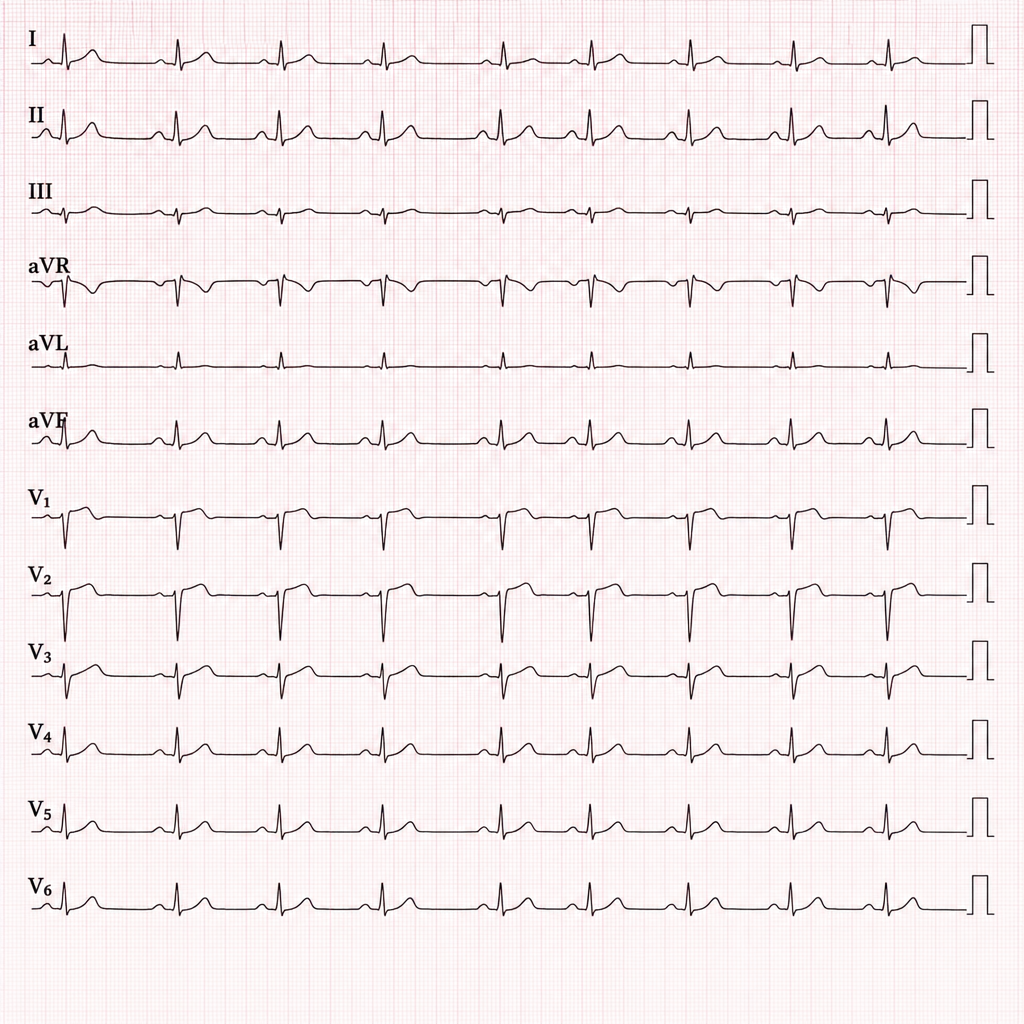
The given ECG shows the following findings:
A patient presents with features of heart failure. On examination, an irregularly irregular pulse is noted, and the patient has a loud diastolic sound. The jugular venous pressure (JVP) shows a rapid Y descent. What is the most likely diagnosis?
A patient presents with shortness of breath. Vitals are HR = 120/min with BP = 90/60 mm Hg. Echocardiography shows diastolic collapse of the ventricles. What is the best management for this patient?
Histopathological examination of cardiac tissue from a post-MI patient shows a predominant neutrophilic infiltrate. This finding corresponds to which post-infarction time window?
Want unlimited practice?
Get full access to all questions, explanations, and performance tracking.
Scan to download app