
Muscular Dystrophies and Myopathies — MCQs

What will be the likely cause of death in a 4-year-old boy who tires easily, exhibits weakness in the pelvic and shoulder girdles, and calf muscle enlargement, with elevated serum creatine kinase levels, and a biopsy showing marked variation in muscle fiber size and shape, muscle fiber necrosis, myophagocytosis, regenerating fibers, and fibrosis?
A 4-year-old boy is brought to the physician by his parents due to frequent falls, inability to jump, and easy fatigue. Physical examination reveals weakness in the pelvic and shoulder girdles, as well as enlargement of the child's calf muscles. The serum level of creatine kinase is elevated. A biopsy of calf muscle reveals marked variation in size and shape of muscle fibers, with foci of muscle fiber necrosis, myophagocytosis, regenerating fibers, and fibrosis. Molecular diagnostic assays performed on muscle biopsy from the patient would show alterations in the length of the primary transcript for which muscle-associated protein?
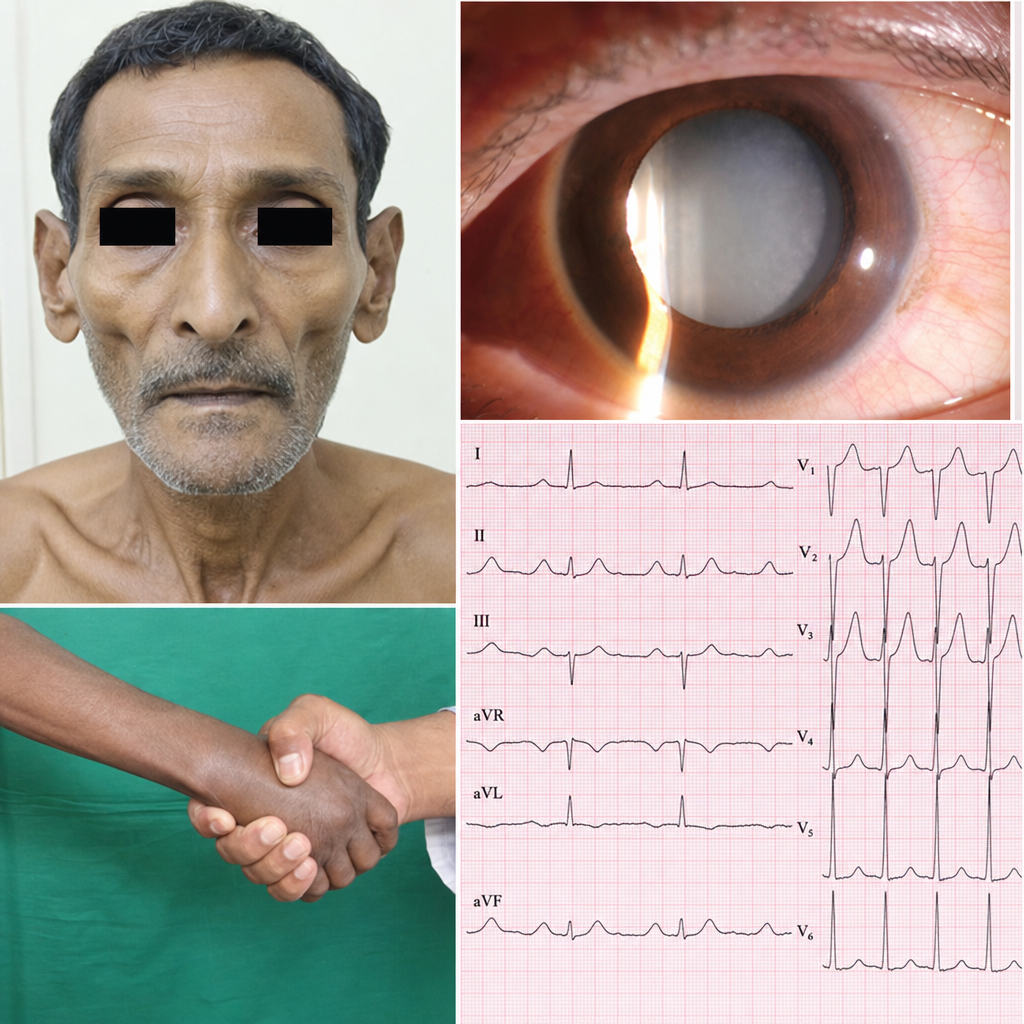
A patient complains of a long history of generalized muscle weakness. On examination, his facial muscles show marked atrophy as shown and when you ask him to shake your hand , he is unable to relax the grip for quite some time. Ophthalmological examination reveals the following finding: ECG showed the following finding: Which of the following given condition is not seen to be associated in above clinical scenario?
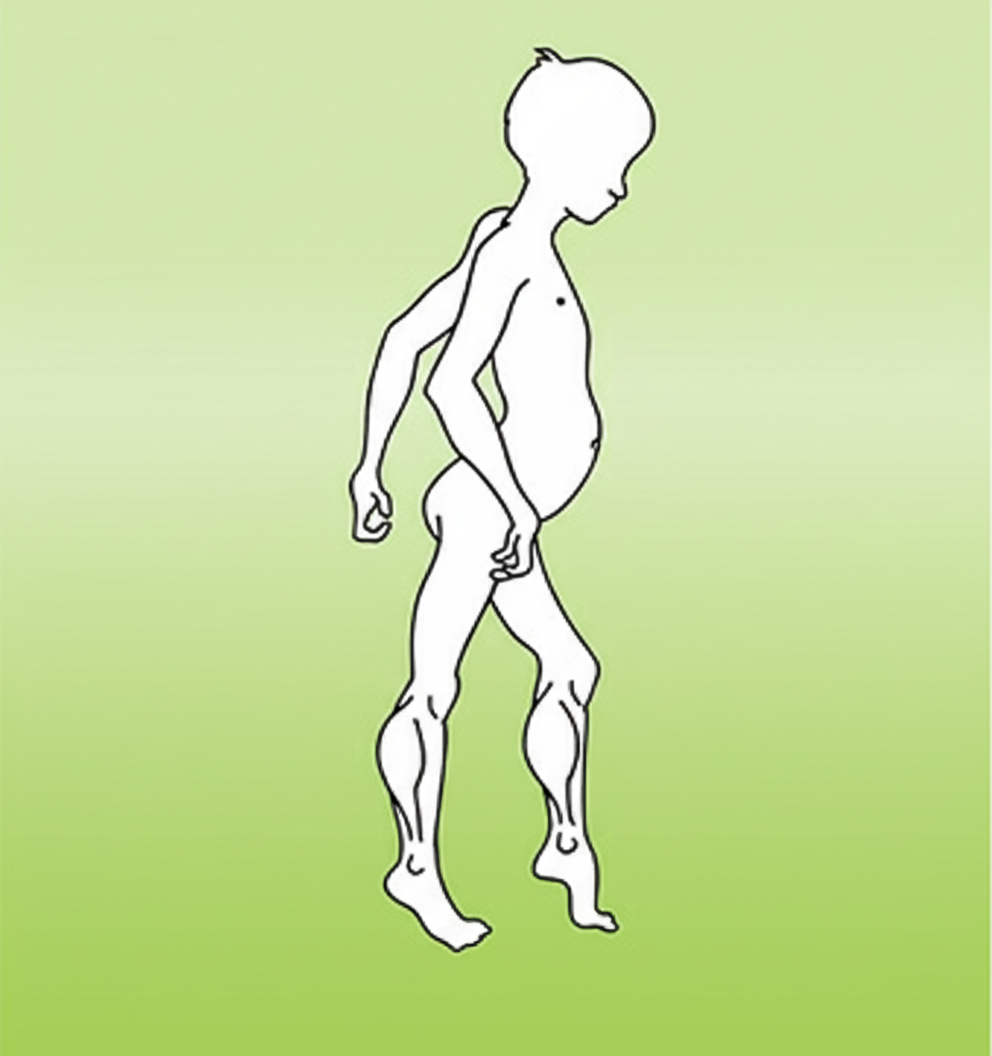
A 2-year- old boy presents with progressive clumsiness and difficulty walking. On physical examination, the child has large calves. He has difficulty walking on his toes and has a waddling gait as shown. Which of the following is the most likely diagnosis?
All are congenital myopathies except
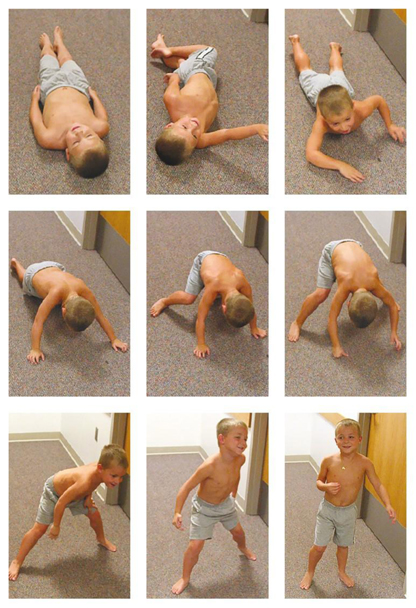
A 7 year old boy with progressive muscle weakness and walking difficulties presented with the following finding. What is the probable diagnosis?
Muscle biopsy shows ragged red fibers on modified Gomori trichrome stain. Which enzyme defect is most likely?
Which is NOT a feature of polymyositis?
Perifascicular atrophy of muscle fibers is seen in?
Variation in size and shape of muscle fibers, combined with degenerative changes and intramysial fibrosis, is typical of
Want unlimited practice?
Get full access to all questions, explanations, and performance tracking.
Scan to download app