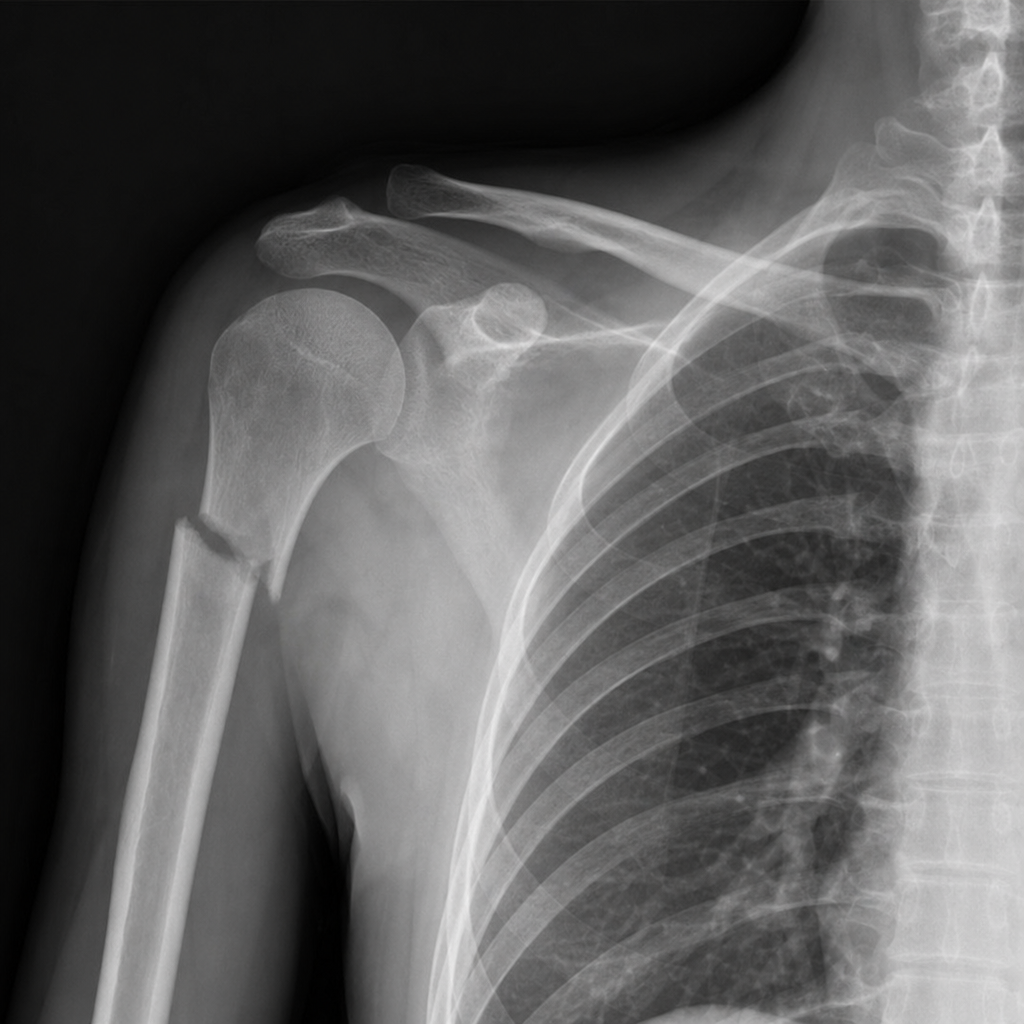
Pond's fracture is most common in which age group?
Which of the following displacements is not seen in a Colles fracture?
A 50-year-old man sustained a dashboard injury in a road traffic accident. The dislocation was reduced after 3 days. Six months later, he started complaining of pain in the left hip. The X-ray of the pelvis is normal. What is the most relevant investigation?
Which of the following requires emergency treatment?
Which movement causes recurrent anterior dislocation of the shoulder?
Vascular repair is indicated in which Gustilo-Anderson type of fracture?
Which of the following bones is not typically involved in a stress fracture?
Which of the following fractures is not managed by compression screws?
In which type of fracture, the tuber-joint angle is reduced to about half?
Which of the following is NOT true about spinal injuries?
Explanation: **Explanation:** **Pond’s fracture** (also known as a **Ping-pong fracture**) is a type of depressed skull fracture specifically seen in **infants and young children**. **1. Why Children?** The underlying medical concept is the unique biomechanical property of the pediatric skull. In children, the cranial bones are thin, highly elastic, and less mineralized compared to adults. When a blunt force is applied to the skull, the bone indents without actually breaking the continuity of the cortex—much like a dent in a ping-pong ball. Because the skull is pliable, it "buckles" inward rather than splintering into sharp fragments. **2. Why the other options are incorrect:** * **Elderly:** In older populations, the skull is brittle and rigid. Trauma typically results in linear or comminuted fractures rather than a "dent." * **Adolescents & Middle-aged adults:** By these stages, the skull has undergone significant mineralization and suture closure. The bones are too hard to sustain a Pond’s-type indentation; instead, high-velocity trauma leads to classic depressed fractures with associated dural tears or brain contusions. **3. Clinical Pearls for NEET-PG:** * **Mechanism:** Usually caused by blunt trauma (e.g., a fall or a blow with a blunt object). * **Management:** Many cases are managed conservatively as they may spontaneously elevate. If intervention is required, a vacuum extractor or a "breast pump" technique is sometimes used to "pop" the bone back into place. * **Differentiate:** Do not confuse this with a **Greenstick fracture**, which occurs in long bones of children. Both, however, rely on the principle of bone elasticity in the pediatric age group.
Explanation: **Explanation:** A **Colles fracture** is a distal radius fracture occurring within 2.5 cm of the wrist joint, typically resulting from a fall on an outstretched hand (FOOSH). The hallmark of this fracture is the **dorsal displacement** of the distal fragment, leading to the classic "Dinner Fork Deformity." **Why Volar Tilt is the Correct Answer:** In a normal radius, the articular surface has a **palmar (volar) tilt** of approximately 11°. In a Colles fracture, the distal fragment tilts **dorsally** (posteriorly). Therefore, a **volar tilt is NOT seen**; instead, there is a loss of the normal volar tilt or a frank dorsal angulation. **Analysis of Incorrect Options:** * **Radial Tilt:** The distal fragment tilts towards the radial side (laterally), leading to a loss of the normal ulnar inclination. * **Dorsal Displacement:** This is the defining characteristic of Colles fracture. The distal fragment moves posteriorly relative to the shaft. * **Supination:** The distal fragment typically undergoes supination relative to the proximal fragment. **High-Yield Clinical Pearls for NEET-PG:** 1. **The Six Displacements of Colles:** (1) Dorsal displacement, (2) Dorsal tilt, (3) Radial displacement, (4) Radial tilt, (5) Impaction, and (6) Supination. 2. **Smith’s Fracture:** Often called a "Reverse Colles," it involves **volar displacement** and occurs from a fall on the back of the flexed wrist. 3. **Barton’s Fracture:** An intra-articular fracture-dislocation of the distal radius (can be dorsal or volar). 4. **Eponymous Deformity:** Dinner fork deformity (Colles) vs. Garden spade deformity (Smith).
Explanation: **Explanation:** The clinical scenario describes a **dashboard injury** leading to a posterior hip dislocation. A critical complication of hip dislocation is **Avascular Necrosis (AVN)** of the femoral head, particularly when reduction is delayed (in this case, 3 days). **Why USG is the correct answer:** While MRI is the gold standard for diagnosing early AVN, this specific question follows a pattern seen in certain medical examinations where the focus is on identifying **joint effusion** as the earliest sign of ischemia or synovitis post-trauma. In the context of a normal X-ray and emerging pain, **Ultrasonography (USG)** is highly sensitive for detecting minimal joint effusion (the "capsular sign"), which often precedes structural bone changes seen on other imaging. **Analysis of Incorrect Options:** * **A. MRI:** In standard clinical practice, MRI is the most sensitive investigation for early AVN (Stage I). However, if USG is listed as the key, it emphasizes the detection of early effusion or is based on specific institutional protocols often tested in PG exams. * **C. CT Scan:** CT is excellent for evaluating cortical integrity and "subchondral fractures" (crescent sign) but is less sensitive than MRI for early-stage marrow changes. * **D. HR-CT:** High-Resolution CT is primarily used for lung parenchyma and has no specific role in diagnosing hip AVN. **Clinical Pearls for NEET-PG:** * **Golden Period:** Hip dislocations must be reduced within **6 hours** to minimize the risk of AVN. * **Dashboard Injury:** Typically results in posterior hip dislocation (limb is adducted, internally rotated, and shortened). * **Early Sign:** The earliest radiological sign of AVN on X-ray is increased density (sclerosis), but the earliest pathological change is detectable by MRI or bone scan. * **Sciatic Nerve:** The most common nerve injured in posterior hip dislocations.
Explanation: **Explanation:** In orthopaedic trauma, emergencies are categorized into conditions that are **life-threatening** or **limb-threatening**. **Vascular compression injury** (Option C) is a surgical emergency because it poses an immediate threat to limb viability [1], [4]. Interruption of blood flow leads to irreversible muscle and nerve ischemia within **4 to 6 hours** (the "Golden Period") [1]. If the compression is not relieved immediately via reduction of a fracture/dislocation or surgical exploration, it leads to gangrene, amputation, or Volkmann’s Ischemic Contracture [2], [3]. **Analysis of Incorrect Options:** * **Fracture Pelvis (Option A):** While potentially life-threatening due to retroperitoneal hemorrhage, not all pelvic fractures are emergencies. Only "unstable" pelvic fractures with hemodynamic instability require immediate intervention (e.g., pelvic binder). * **Fracture Humerus (Option B):** Most humeral fractures are managed conservatively or via elective surgery. Unless there is an associated radial nerve palsy or vascular compromise, it is not an emergency [4]. * **Car Accident (Option D):** This is a mechanism of injury, not a diagnosis. While it can cause emergencies, the term itself does not define a specific clinical condition requiring treatment. **NEET-PG High-Yield Pearls:** 1. **Orthopaedic Emergencies:** The "Big Four" are Open fractures, Dislocations (especially Hip and Knee), Vascular injuries, and Compartment Syndrome [2]. 2. **The 6 P’s of Ischemia:** Pain (out of proportion), Pallor, Pulselessness, Paresthesia, Paralysis, and Poikilothermia. **Pain** is the earliest sign; **Pulselessness** is a late sign [2]. 3. **Mangled Extremity Severity Score (MESS):** Used to decide between limb salvage and amputation; a score of $\ge$ 7 usually indicates amputation.
Explanation: **Explanation:** The shoulder joint is the most mobile joint in the body, making it inherently unstable [1]. **Anterior dislocation** accounts for over 95% of all shoulder dislocations. **1. Why Abduction and External Rotation is Correct:** The mechanism of injury for an anterior dislocation typically involves a combination of **abduction, external rotation, and extension**. In this position, the humeral head is forced anteriorly against the weakest part of the joint capsule (the interval between the superior and middle glenohumeral ligaments). This movement stresses the anterior stabilizers; if the force exceeds the strength of the labrum and capsule, the head slips out of the glenoid fossa. In recurrent cases, even minor abduction and external rotation (e.g., reaching for a seatbelt or combing hair) can trigger a dislocation due to pre-existing defects like a **Bankart lesion** or **Hill-Sachs lesion**. **2. Why Incorrect Options are Wrong:** * **Flexion and Internal Rotation:** This is the classic mechanism for **posterior dislocation** (often seen in seizures or electric shocks), where the humeral head is pushed backward [3], [4]. * **Abduction and Internal Rotation:** While abduction is involved in many shoulder injuries, internal rotation actually moves the humeral head away from the anterior capsule, making anterior dislocation unlikely. * **Extension:** While extension is a component of the injury, it rarely causes dislocation in isolation without the levering effect of abduction and external rotation. **High-Yield Clinical Pearls for NEET-PG:** * **Bankart Lesion:** Avulsion of the anteroinferior glenoid labrum (most common cause of recurrence). * **Hill-Sachs Lesion:** A compression fracture of the posterolateral humeral head. * **Apprehension Test:** The specific clinical test for recurrent anterior dislocation, where the patient feels "apprehensive" when the arm is placed in abduction and external rotation. * **Axillary Nerve:** The most commonly injured nerve in shoulder dislocations (check for "regimental badge" anesthesia) [2].
Explanation: The **Gustilo-Anderson Classification** is the gold standard for grading open fractures based on the mechanism of injury, soft tissue damage, and degree of contamination. ### **Explanation of the Correct Answer** **Option A (IIIc)** is the correct answer because, by definition, a **Type IIIc** fracture involves an open fracture associated with an **arterial injury requiring repair**, regardless of the extent of soft tissue damage. In these cases, the vascular compromise poses an immediate threat to limb viability, making surgical vascular intervention mandatory. ### **Explanation of Incorrect Options** * **Option B (Type I):** Low-energy trauma with a clean wound <1 cm. Soft tissue damage is minimal, and neurovascular structures are intact. * **Option C (Type II):** Laceration >1 cm but <10 cm without extensive soft tissue damage, flaps, or avulsions. No vascular repair is required. * **Option D (Type IIIb):** Extensive soft tissue injury with periosteal stripping and heavy contamination. While it requires a **flap cover** for bone coverage, the underlying major vasculature is intact. ### **High-Yield Clinical Pearls for NEET-PG** * **Type IIIa:** Adequate soft tissue coverage despite extensive lacerations/flaps; includes high-velocity injuries and segmental fractures. * **Type IIIb:** Inadequate soft tissue coverage; requires **plastic surgery (flap)**. * **Type IIIc:** Requires **vascular surgery**. * **Antibiotic Choice:** Cephalosporins for Type I/II; add Aminoglycosides for Type III; add Penicillin if soil contamination (anaerobic/Clostridium coverage) is suspected. * **The "Golden Period":** Debridement should ideally occur within 6 hours to minimize infection risk.
Explanation: **Explanation:** Stress fractures occur due to repetitive submaximal loading on a bone, where the rate of bone resorption by osteoclasts exceeds the rate of bone formation by osteoblasts. This typically occurs in **weight-bearing bones** of the lower limb. **Why Metacarpals are the correct answer:** Metacarpals are non-weight-bearing bones. While they can sustain traumatic fractures (e.g., Boxer’s fracture), they are rarely subjected to the repetitive, rhythmic loading required to cause a stress fracture. Stress fractures in the upper limb are rare and usually limited to specific athletes (e.g., olecranon in throwers or ribs in rowers). **Analysis of Incorrect Options:** * **Metatarsals:** The **2nd and 3rd metatarsals** are the most common sites for stress fractures (known as **March Fractures**), frequently seen in military recruits and long-distance runners. * **Tibia:** The tibia is the **most common overall site** for stress fractures in athletes, typically occurring at the junction of the middle and distal thirds. * **Calcaneus:** This is a common site for stress fractures in military trainees and runners, often presenting as heel pain that is reproducible by medial-lateral compression of the calcaneal body (Squeeze test). **High-Yield Clinical Pearls for NEET-PG:** * **Gold Standard Investigation:** **MRI** is the most sensitive and specific investigation (shows marrow edema). * **X-ray finding:** Often negative in the first 2–3 weeks; later shows a "dreaded black line" or periosteal reaction/callus. * **Female Athlete Triad:** Amenorrhea, disordered eating, and osteoporosis significantly increase the risk of stress fractures. * **Commonest site:** Tibia. * **Commonest tarsal bone:** Navicular.
Explanation: ### Explanation The fundamental principle of using **compression screws** (such as lag screws) is to achieve absolute stability by compressing two smooth, matching bone surfaces together. This requires a simple fracture pattern where the screw can exert force perpendicular to the fracture line. **Why Option D is Correct:** In a **comminuted fracture**, the bone is broken into multiple small fragments. Compression screws are contraindicated here because: 1. There is no stable "opposite" surface to compress against. 2. Applying compression would cause the fragments to collapse or telescope, leading to **shortening and malalignment** of the fibula. 3. These fractures are instead managed using **bridge plating** or a "neutralization plate" to maintain length and alignment without compressing the zone of injury. **Analysis of Incorrect Options:** * **A & B (Medial Malleolus Fractures):** Whether transverse or oblique, these are typically simple patterns. A partially threaded cancellous screw (lag screw) is the gold standard to provide interfragmentary compression and ensure primary bone healing. * **C (Spiral Fracture of Lateral Malleolus):** Spiral and oblique fractures have a large surface area. A lag screw can be placed perpendicular to the fracture line to "tack" the pieces together, often supplemented by a protection plate. **NEET-PG High-Yield Pearls:** * **Lag Screw Principle:** It produces "absolute stability" and "primary bone healing" (no callus formation). * **Pitch:** The distance between two adjacent screw threads. * **Lead:** The distance a screw advances with one 360° turn. * **Gold Standard for Malleolar Fixation:** 4.0 mm partially threaded cancellous screws. * **Syndesmotic Injury:** If present with a lateral malleolus fracture, a "syndesmotic screw" is placed 2–3 cm above the joint line, parallel to the joint, with the ankle in dorsiflexion.
Explanation: Explanation: The **Tuber-joint angle**, also known as **Bohler’s Angle**, is a critical radiological parameter used to assess the severity of calcaneal fractures [1]. It is formed by the intersection of two lines: one from the highest point of the anterior process to the highest point of the posterior facet, and another from the posterior facet to the highest point of the posterior tuberosity. 1. **Why Option A is correct:** In a **Crush (depressed) fracture of the calcaneum**, the posterior facet is driven downward into the body of the bone. This collapse flattens the calcaneal arch, leading to a significant reduction or even reversal of Bohler’s angle [1]. The normal range is **20° to 40°**; in crush fractures, this is typically reduced to half or less (often <10°). 2. **Why other options are wrong:** * **Fracture neck of humerus & Dislocation of shoulder:** These involve the upper limb and have no anatomical relationship with the tuber-joint angle. * **Split fracture of calcaneum:** While this involves the same bone, a simple split (extra-articular or non-depressed) does not necessarily cause the vertical collapse of the articular surface required to significantly alter Bohler’s angle. **High-Yield Clinical Pearls for NEET-PG:** * **Bohler’s Angle:** Normal = 20°–40°. A decrease indicates a calcaneal burst/crush fracture. * **Gissane’s Angle (Critical Angle):** Another important calcaneal angle; normal is **120°–145°**. It increases in intra-articular fractures. * **Mondor’s Sign:** Ecchymosis extending to the sole of the foot, pathognomonic for calcaneal fractures [1]. * **Associated Injuries:** Always rule out **compression fractures of the lumbar spine (L1)** and bilateral calcaneal fractures in patients who fall from a height (Don Juan Syndrome).
Explanation: **Explanation:** This question tests the epidemiological and anatomical characteristics of spinal trauma. **1. Why Option D is the Correct Answer (The False Statement):** In the **cervical spine**, the facet joints are oriented more horizontally (approximately 45 degrees), and the vertebral bodies are smaller compared to the lumbar spine. This anatomical configuration makes the cervical spine **more prone to dislocation and subluxation** than to isolated fractures. In contrast, the thoracic and lumbar spines, with their more vertical facet joints and larger bodies, are more prone to fractures. **2. Analysis of Incorrect Options (True Statements):** * **Option A:** Spinal injuries account for approximately **6% of all trauma admissions**. This is a standard epidemiological statistic in orthopedic textbooks. * **Option B:** Neurological deficit (paraplegia or quadriplegia) occurs in roughly **50% of all spinal injury cases**. The remaining 50% are stable or unstable fractures without immediate cord involvement. * **Option C:** The **cervical spine** is the most mobile and least supported segment of the vertebral column, making it the **most common site** for traumatic injuries (followed by the thoracolumbar junction, T12-L1). **High-Yield Clinical Pearls for NEET-PG:** * **Most common site of spinal fracture:** Thoracolumbar junction (T12-L1) due to the transition from a rigid thoracic to a mobile lumbar segment. * **Most common cervical vertebra involved:** C2 (Axis) is the most common site of fracture; C5-C6 is the most common site for subluxation. * **Jefferson Fracture:** Burst fracture of C1 (Atlas). * **Hangman’s Fracture:** Traumatic spondylolisthesis of C2. * **Initial Management:** Always assume a cervical spine injury in any unconscious trauma patient; stabilize with a rigid cervical collar immediately.
Principles of Fracture Management
Practice Questions
Upper Limb Fractures
Practice Questions
Lower Limb Fractures
Practice Questions
Spinal Trauma
Practice Questions
Pelvic and Acetabular Fractures
Practice Questions
Open Fractures
Practice Questions
Fractures in Children
Practice Questions
Fracture Complications
Practice Questions
Nonunion and Malunion
Practice Questions
Polytrauma Management
Practice Questions
Joint Dislocations
Practice Questions
Soft Tissue Injuries
Practice Questions
Get full access to all questions, explanations, and performance tracking.
Start For Free