
Polytrauma Management — MCQs

A 25-year-old man presents after an abdominal stab wound. Chest radiography and CT obtained after contrast administration through a nasogastric tube are shown. What is the most likely diagnosis?
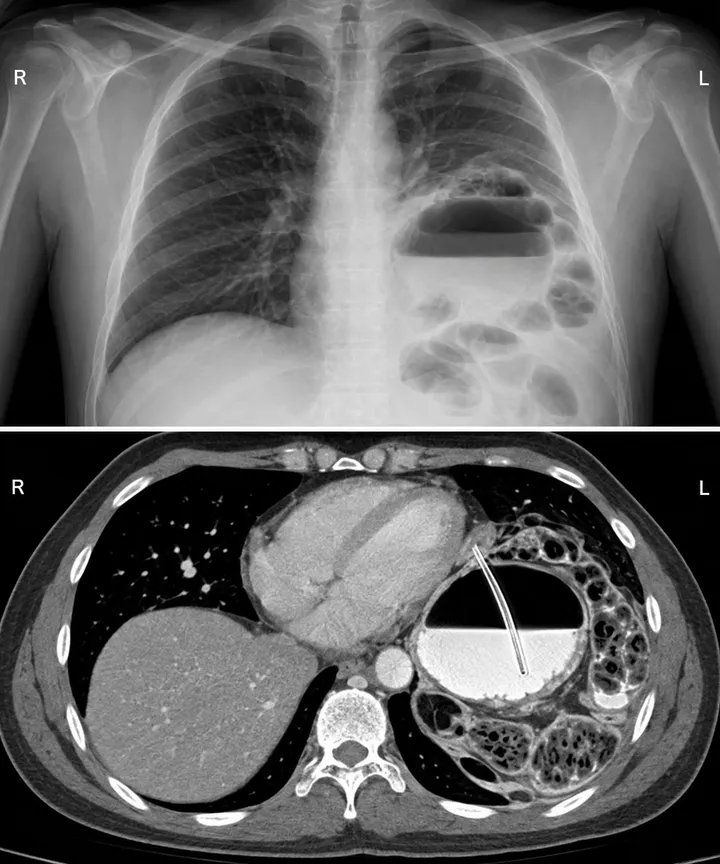
Answer: A. Diaphragm injury
According to the standard Lund–Browder chart, what percentage of total body surface area (TBSA) does the entire head (anterior and posterior, including the face but excluding the neck) represent in a child aged 1 year?
Answer: B. 17%
Which initial investigation screens for blunt cardiac injury after a sternal fracture?
Answer: D. Electrocardiography
Which of the following is NOT an indication for surgical evacuation of a traumatic intracranial haematoma?
Answer: A. Small stable asymptomatic collection
An adult with multiple fractures after an RTA has an obstructed airway despite manual in-line cervical stabilization; no catastrophic external bleeding is present. What is the immediate management priority?
Answer: A. Airway management
A 10-year-old boy sustained a burn injury on his back. What percentage of his Total Body Surface Area (TBSA) does this injury represent?
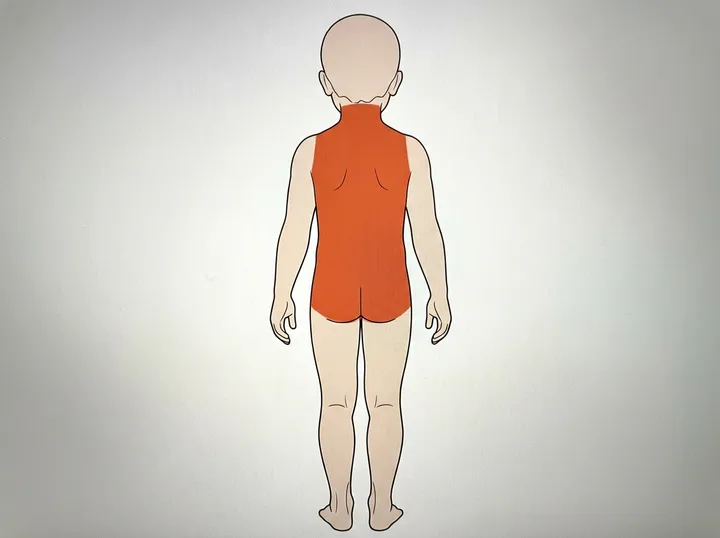
Answer: C. 19%
Which type of Radial Nerve injury recovers with conservative management?
Answer: D. Neuropraxia
What is the appropriate technique for examining the back of a polytrauma patient with suspected spinal injury?
Answer: C. Log roll
A 35-year-old man sustains a closed, simple two-part transverse fracture of the mid-patella, with 4-mm separation and disruption of the extensor mechanism. Bone stock is adequate and the overlying soft tissues are intact. What is the conventional operative treatment of choice?
Answer: C. Tension band wiring
What is the X-ray diagnosis?
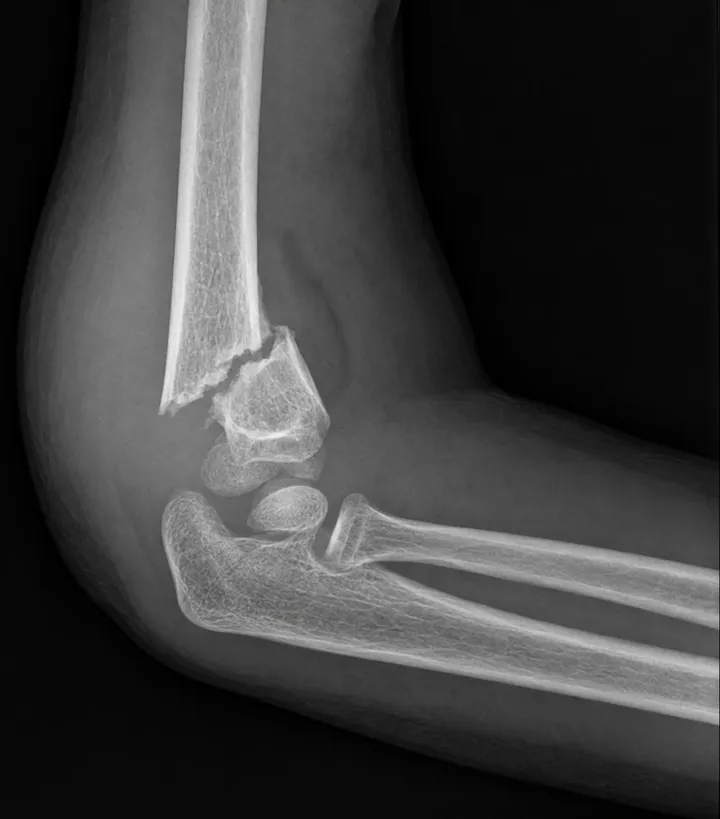
Answer: C. Supracondylar humerus fracture
Want unlimited practice?
Get full access to all questions, explanations, and performance tracking.
Scan to download app