Anterolateral avulsion fracture of the distal tibial physis is known as?
A 50-year-old male patient presented with a fracture as shown in the x-ray. On examination, there was paralysis of most of the intrinsic muscles of the hand and loss of sensation from the medial 1.5 palmar surface of fingers. Which of the following nerves arise from the same cord as the injured nerve, except?

Which of the following arteries is affected in anterior shoulder dislocation?
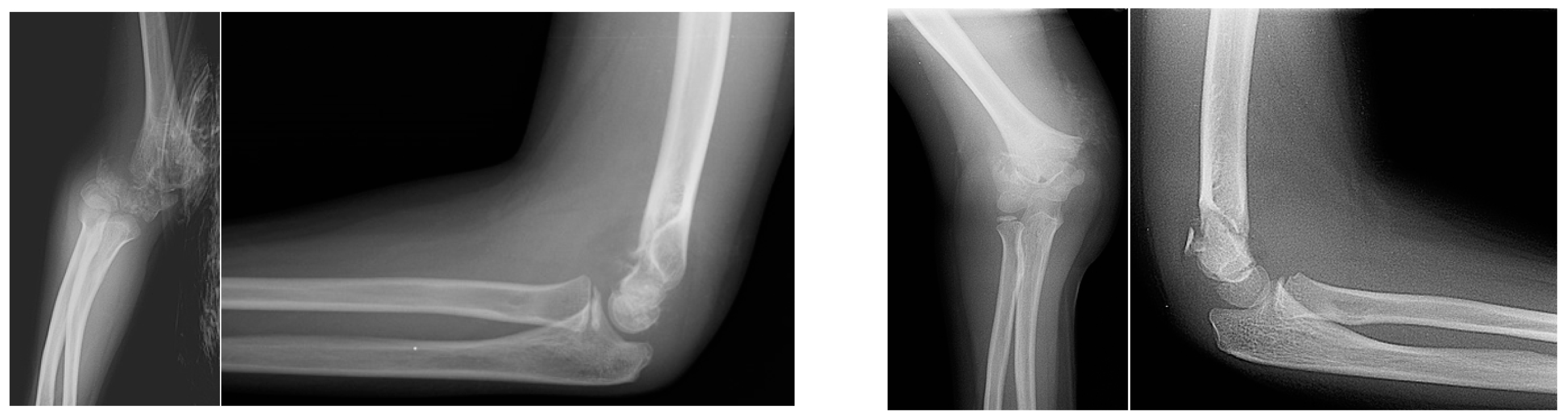
In a supracondylar fracture of the humerus, to which direction is the distal segment most commonly displaced?
Which of the following is NOT a characteristic feature of acute compartment syndrome in the lower leg?
What is the best investigation for the detection of a stress fracture?
What is Mallet finger?
March fracture involves which of the following bones?
In posterior dislocation of the elbow, which bony prominence is most apparent?
Hangman's fracture occurs at which of the following vertebral levels?
Explanation: ### Explanation **Correct Answer: B. Tillaux fracture** The **Tillaux fracture** is a Salter-Harris Type III fracture involving the anterolateral aspect of the distal tibial epiphysis. It occurs typically in adolescents (ages 12–14) during the period when the distal tibial physis is closing. The physis closes from medial to lateral; therefore, the lateral portion remains open and vulnerable. The injury is caused by an **abduction-external rotation** force, where the **anterior inferior tibiofibular ligament (AITFL)** avulses the anterolateral corner of the distal tibia (Chaput’s tubercle). **Why other options are incorrect:** * **Potts fracture:** A general term for fractures involving the malleoli of the ankle, usually caused by outward displacement of the foot. * **Chopart fracture:** A fracture-dislocation involving the midtarsal (Chopart) joint, which separates the hindfoot (talus and calcaneus) from the midfoot (navicular and cuboid). * **Jones fracture:** A transverse fracture at the base of the **fifth metatarsal** (specifically at the junction of the diaphysis and metaphysis, Zone 2). **High-Yield Clinical Pearls for NEET-PG:** * **Mechanism:** External rotation of the foot. * **Triplane Fracture:** A related adolescent injury involving three planes (sagittal, axial, and coronal). It is essentially a Tillaux fracture with an additional posterior metaphyseal spike (Salter-Harris IV). * **Management:** Displacements >2mm usually require Open Reduction and Internal Fixation (ORIF) to ensure joint congruity and prevent early-onset osteoarthritis. * **Radiology:** Often best visualized on an **Internal Rotation (Mortise) view** or CT scan for surgical planning.
Explanation: ***Thoracodorsal nerve*** - Arises from the **posterior cord** (C6-C8), not the medial cord like the injured **ulnar nerve**. - Innervates the **latissimus dorsi muscle** and does not share the same cord origin as the ulnar nerve. *Medial cutaneous nerve of arm* - Arises from the **medial cord** (C8-T1), same as the injured **ulnar nerve**. - Provides **sensory innervation** to the medial aspect of the arm and shares the medial cord origin. *Medial pectoral nerve* - Originates from the **medial cord** (C8-T1), identical to the **ulnar nerve** origin. - Innervates the **pectoralis minor** and part of **pectoralis major**, sharing the same cord as the ulnar nerve. *Medial branch of the median nerve* - The **median nerve** receives contributions from both **medial cord** (C8-T1) and lateral cord. - Its medial component arises from the **medial cord**, same as the **ulnar nerve** that causes the described symptoms.
Explanation: **Explanation:** **Anterior shoulder dislocation** is the most common type of joint dislocation (approx. 95%). The correct answer is **Axillary artery** because of its close anatomical proximity to the glenohumeral joint. 1. **Why Axillary Artery is Correct:** The axillary artery passes directly anterior to the shoulder joint. When the humeral head is displaced anteriorly and inferiorly (subcoracoid or subglenoid), it can compress or stretch the third part of the axillary artery. While vascular injury is less common than nerve injury, it is a critical complication, especially in elderly patients with atherosclerotic vessels. 2. **Why Other Options are Incorrect:** * **Radial, Median, and Ulnar:** These are not arteries; they are **nerves**. Even if the question implied the *nerves* of the same name, the Radial and Ulnar nerves are less commonly involved in shoulder dislocations compared to the Axillary nerve. The Median nerve is located more medially and is rarely affected at this level. **Clinical Pearls for NEET-PG:** * **Most Common Nerve Injured:** The **Axillary Nerve** (Regimental badge anesthesia and deltoid paralysis). * **Most Common Vascular Injury:** The **Axillary Artery** (Look for absent distal pulses or expanding hematoma). * **Hill-Sachs Lesion:** A compression fracture of the posterosuperolateral humeral head (occurs during anterior dislocation). * **Bankart Lesion:** Avulsion of the anterior-inferior glenoid labrum. * **Kocher’s Method:** A classic reduction technique (though no longer preferred due to high complication rates like humeral fractures). **Milch** and **Stimson** are safer alternatives.
Explanation: **Explanation:** Supracondylar fractures of the humerus are the most common elbow fractures in the pediatric population. They are classified into two types based on the mechanism of injury: **Extension type** (95-98%) and **Flexion type** (2-5%). **1. Why "Posteriorly" is correct:** The vast majority of these fractures occur due to a fall on an outstretched hand (FOOSH) with the elbow in extension. In this mechanism, the olecranon is driven into the supratrochlear fossa, acting as a fulcrum that forces the **distal fragment posteriorly**. This is the hallmark of the Extension-type fracture, making posterior displacement the most common clinical presentation. **2. Why other options are incorrect:** * **Anteriorly:** This occurs in the rare **Flexion-type** fracture, caused by a direct blow to the posterior aspect of the flexed elbow. * **Laterally/Medially:** While the distal fragment can shift sideways (often posteromedially or posterolaterally), these are secondary displacements. The primary direction of displacement used for classification and surgical consideration is in the sagittal plane (Anterior vs. Posterior). **3. High-Yield Clinical Pearls for NEET-PG:** * **Gartland Classification:** Used to grade extension-type fractures (Type I: Undisplaced; Type II: Displaced with intact posterior cortex; Type III: Completely displaced). * **Neurovascular Complications:** * **Posteromedial displacement** (most common) often injures the **Radial nerve**. * **Posterolateral displacement** often injures the **Median nerve** (specifically the Anterior Interosseous Nerve - AIN). * The **Brachial artery** is the most commonly injured vessel. * **Radiographic Sign:** Look for the **Anterior Humeral Line**; in a normal elbow, it should bisect the middle third of the capitellum. In posterior displacement, it passes anterior to the capitellum. * **Late Complication:** Malunion leading to **Cubitus Varus** (Gunstock deformity).
Explanation: **Explanation:** Acute Compartment Syndrome (ACS) is a surgical emergency where increased pressure within a closed osteofascial space compromises local circulation and neuromuscular function. **Why "Normal sensation distally" is the correct answer:** In ACS, nerves are highly sensitive to ischemia. **Paresthesia** (altered sensation) or **hypoesthesia** (decreased sensation) in the distribution of the nerves passing through the affected compartment is one of the **earliest** clinical signs. Therefore, finding "normal sensation" is inconsistent with the progression of the syndrome; its absence or alteration is a hallmark feature. **Analysis of Incorrect Options:** * **A. Acute pain on stretch test:** This is the **most sensitive** and earliest clinical sign. Passive stretching of the muscles within the affected compartment (e.g., passive toe extension for the anterior compartment) causes excruciating pain out of proportion to the injury. * **B. Normal pulses:** This is a classic "trap" in exams. In ACS, the intracompartmental pressure rises above capillary perfusion pressure but usually remains **below systolic arterial pressure**. Therefore, distal pulses are typically **present and normal** until the very late, terminal stages. * **D. Venous occlusion:** The pathophysiology of ACS begins with increased pressure causing venous outflow obstruction. This leads to further venous congestion, a further rise in pressure, and a vicious cycle of ischemia. **Clinical Pearls for NEET-PG:** * **The 6 P’s:** Pain (out of proportion), Pallor, Paresthesia, Pulselessness, Paralysis, and Poikilothermia. Remember: **Pain is earliest; Pulselessness is latest.** * **Diagnosis:** Primarily clinical. However, if uncertain, intracompartmental pressure can be measured (Stryker monitor). * **Delta Pressure (ΔP):** Diastolic BP minus Compartmental Pressure. If **ΔP < 30 mmHg**, fasciotomy is indicated. * **Treatment:** Immediate emergency **decompressive fasciotomy**. For the lower leg, a double-incision four-compartment fasciotomy is the standard.
Explanation: **Explanation:** The diagnosis of a stress fracture requires high sensitivity to detect early physiological changes in the bone before structural failure occurs. **Why MRI is the Correct Answer:** MRI is the **most sensitive (99%) and specific** investigation for detecting stress fractures. It can identify "stress reactions" (the precursor to a fracture) by detecting **bone marrow edema** and periosteal inflammation. These changes are visible on MRI within 24–72 hours of symptom onset, long before any cortical changes appear on other imaging modalities. **Analysis of Incorrect Options:** * **X-ray:** This is the initial investigation of choice but has very low sensitivity (15–35%) in the early stages. A stress fracture may not appear on an X-ray for 2–6 weeks, often appearing only when the **callus formation** or a "dreaded black line" becomes visible. * **CT scan:** While excellent for viewing cortical anatomy and identifying a distinct fracture lucency (nidus), it is less sensitive than MRI for early marrow changes and involves significant radiation. It is usually reserved for complex areas like the tarsal navicular. * **Bone Scan (Technetium-99m):** Historically, this was the investigation of choice due to its high sensitivity. However, it has **low specificity**, as it shows increased uptake (hot spots) in cases of infection, tumors, or trauma. It has been superseded by MRI, which offers superior anatomical detail without radiation. **High-Yield Clinical Pearls for NEET-PG:** * **Gold Standard/Best Investigation:** MRI. * **Initial Investigation:** X-ray. * **Most common site:** Tibia (overall), followed by metatarsals (March fracture). * **Female Athlete Triad:** Disordered eating, amenorrhea, and osteoporosis—highly associated with stress fractures. * **Early Sign on MRI:** Bone marrow edema on T2/STIR sequences.
Explanation: **Explanation:** **Mallet Finger** (also known as Baseball finger) is a common sports-related injury characterized by the loss of active extension at the **Distal Interphalangeal (DIP) joint**. 1. **Why Option A is Correct:** The injury occurs due to a sudden, forceful flexion of an extended finger (e.g., a ball hitting the fingertip). This force causes an **avulsion or rupture of the extensor tendon** at its insertion on the base of the terminal phalanx. It can be purely tendinous or involve a small bony fragment (Bony Mallet). The hallmark clinical sign is the "dropped" tip of the finger, where the patient cannot actively straighten the DIP joint. 2. **Why Other Options are Incorrect:** * **Option B:** A comminuted fracture of the terminal phalanx is typically a "crush injury" (Tuft fracture), which involves the bone but does not necessarily disrupt the extensor mechanism. * **Option C:** While a Mallet finger can involve a fracture fragment, it is specifically defined by the disruption of the extensor tendon's continuity, not just any fracture-dislocation of the tip. **High-Yield Clinical Pearls for NEET-PG:** * **Mechanism:** Forced hyperflexion of the DIP joint. * **Clinical Feature:** Flexion deformity at the DIP joint; inability to actively extend the distal phalanx. * **Treatment:** The primary treatment is **continuous splinting of the DIP joint in slight hyperextension** (Mallet splint) for 6–8 weeks. * **Complication:** If left untreated, it may lead to a **Swan-neck deformity** (DIP flexion with PIP hyperextension) due to the proximal migration of the extensor apparatus.
Explanation: **Explanation:** **March fracture** is a classic example of a **stress fracture** (fatigue fracture) occurring in the metatarsal bones. It typically results from repetitive stress or prolonged walking/running in individuals who are not accustomed to such activity (traditionally described in military recruits, hence the name "March" fracture). **Why the 2nd Metatarsal is the Correct Answer:** The **2nd metatarsal** is the most common site for a March fracture. Anatomically, the base of the second metatarsal is firmly wedged between the medial and lateral cuneiforms, making it the most fixed and least mobile part of the forefoot. During the push-off phase of walking, it acts as a rigid lever and bears a disproportionate amount of stress compared to the more mobile adjacent metatarsals, making it highly susceptible to microtrauma and subsequent stress fractures. **Analysis of Incorrect Options:** * **A & C (1st and 2nd Metacarpals):** These are bones of the hand. While stress fractures can occur in the upper limb (e.g., in gymnasts), "March fracture" specifically refers to the weight-bearing bones of the foot. * **B (1st Metatarsal):** The first metatarsal is much thicker and more mobile than the second. It is designed to bear significant weight and rarely suffers from stress fractures unless there is an underlying structural deformity. **High-Yield Clinical Pearls for NEET-PG:** * **Common Site:** 2nd metatarsal (most common) > 3rd metatarsal. * **Clinical Presentation:** Insidious onset of pain in the forefoot, aggravated by activity and relieved by rest, with localized point tenderness. * **Radiology:** Initial X-rays are often **negative** for the first 2–3 weeks. Diagnosis is confirmed later by the appearance of a **periosteal reaction** or "callus" formation. * **Investigation of Choice:** **MRI** is the most sensitive investigation for early detection (shows marrow edema). Bone scans are also sensitive but less specific. * **Management:** Conservative treatment involving rest, activity modification, and occasionally a stiff-soled shoe or walking boot.
Explanation: **Explanation:** In a **posterior dislocation of the elbow** (the most common type), the radius and ulna are displaced posteriorly and superiorly relative to the distal humerus. This occurs typically due to a fall on an outstretched hand with the elbow in slight flexion. **1. Why Olecranon Process is correct:** The **olecranon process** is the proximal-most part of the ulna that articulates with the olecranon fossa of the humerus. When the forearm bones shift posteriorly, the olecranon becomes abnormally prominent behind the humerus. Clinically, this disrupts the **"Three-Point Relationship"** (the isosceles triangle formed by the medial epicondyle, lateral epicondyle, and olecranon in flexion), making the olecranon the most visible and palpable bony landmark. **2. Why other options are incorrect:** * **Coronoid process:** This is located anteriorly on the ulna. In a posterior dislocation, it is often fractured as it strikes the distal humerus, but it is buried deep within the soft tissues and is not prominent. * **Radial head:** While the radial head also moves posteriorly, it is lateral and deeper compared to the massive, subcutaneous olecranon. * **Ulnar styloid process:** This is located at the distal end of the ulna (wrist). It is unaffected by elbow dislocations. **Clinical Pearls for NEET-PG:** * **Most common complication:** Stiffness (Loss of terminal extension). * **Most common nerve injured:** Ulnar nerve (though Median nerve can be involved). * **Associated Fracture:** "Terrible Triad of the Elbow" (Posterior dislocation + Coronoid fracture + Radial head fracture). * **Differential Diagnosis:** Supracondylar fracture of the humerus (where the three-point relationship remains intact).
Explanation: **Explanation:** **Hangman’s Fracture** (Traumatic Spondylolisthesis of the Axis) is a specific injury involving the **pars interarticularis of the C2 vertebra**. It typically occurs due to forceful hyperextension and distraction of the neck. **Why Option D (C1-C2) is the Correct Answer:** The fracture involves a bilateral break through the pedicles or pars interarticularis of the **C2 vertebra (Axis)**. This leads to the anterior displacement of the C2 vertebral body on the C3 vertebra. Therefore, the injury is localized at the **C1-C2/C3 level**. In the context of the options provided, C1-C2 is the anatomical site of the primary bony pathology. **Analysis of Incorrect Options:** * **A. C7-T1:** This is the cervicothoracic junction. While prone to "Clay-shoveler’s fracture" (avulsion of the C7 spinous process), it is not the site of a Hangman’s fracture. * **B. T12-L1:** This is the thoracolumbar junction, the most common site for wedge compression fractures and "Chance fractures" (seatbelt injuries), but unrelated to cervical trauma. * **C. C6-C7:** This is a common site for subluxations and degenerative changes, but it is not associated with the specific mechanism of a Hangman’s fracture. **High-Yield Clinical Pearls for NEET-PG:** * **Mechanism:** Forced hyperextension (e.g., judicial hanging, motor vehicle accidents where the chin hits the dashboard). * **Neurological Status:** Interestingly, patients often remain **neurologically intact** because the fracture actually widens the spinal canal at that level, preventing cord compression. * **Classification:** The **Levine and Edwards classification** is used to grade the severity and stability of this fracture. * **Jefferson Fracture:** Do not confuse this with a Jefferson fracture, which is a burst fracture of the **C1 (Atlas)** ring caused by axial loading.
Principles of Fracture Management
Practice Questions
Upper Limb Fractures
Practice Questions
Lower Limb Fractures
Practice Questions
Spinal Trauma
Practice Questions
Pelvic and Acetabular Fractures
Practice Questions
Open Fractures
Practice Questions
Fractures in Children
Practice Questions
Fracture Complications
Practice Questions
Nonunion and Malunion
Practice Questions
Polytrauma Management
Practice Questions
Joint Dislocations
Practice Questions
Soft Tissue Injuries
Practice Questions
Get full access to all questions, explanations, and performance tracking.
Start For Free