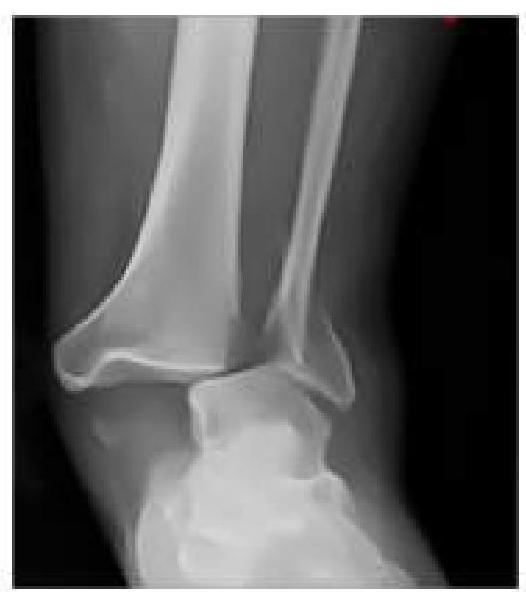
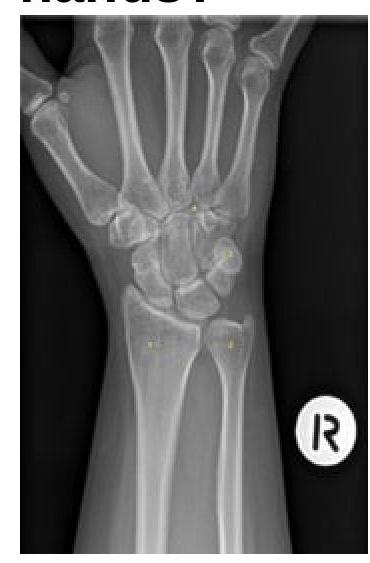
What is a straddle fracture?
Complications of supracondylar fracture of humerus include all of the following except:
Mallet finger is due to avulsion of the extensor tendon of which structure?
Which of the following is a true statement regarding posterior dislocation of the shoulder joint?
What is the consequence of weakness of the Vastus Medialis?
Burst fracture of the cervical spine is typically caused by which mechanism of injury?
What is the most common complication of a scaphoid fracture?
In the management of long bone fractures, which of the following procedures can be performed?
Malunited supracondylar humerus fracture causes which deformity?
Maximum shortening of limbs occurs in which condition?
Explanation: ### Explanation **Correct Answer: C. Pelvis fracture** A **Straddle Fracture** is a specific type of pelvic ring injury characterized by **bilateral fractures of the superior and inferior pubic rami**. It is typically caused by a direct blow to the midline of the bony pelvis (e.g., falling astride a beam or a motorcycle accident). From a biomechanical perspective, it is considered an **unstable** injury because it results in a "floating" anterior segment of the pelvis. The most significant clinical concern in straddle fractures is the high incidence of associated **genitourinary injuries** (up to 20%), particularly ruptures of the posterior urethra or bladder. --- ### Why other options are incorrect: * **A. Shoulder fracture:** Shoulder injuries are classified by specific eponyms like Bankart or Hill-Sachs lesions, but "straddle" refers specifically to the pelvic anatomy. * **B. Wrist fracture:** Common wrist fractures include Colles’, Smith’s, or Barton’s fractures, which involve the distal radius. * **D. Ankle fracture:** Ankle fractures are usually classified by the Lauge-Hansen or Danis-Weber systems based on the mechanism of rotation and fibular involvement. --- ### NEET-PG High-Yield Pearls: * **Mechanism:** Direct vertical impact to the perineum. * **Key Association:** Always rule out **urethral injury** (look for blood at the meatus, high-riding prostate, or inability to void). * **Radiology:** X-ray shows four fractures (bilateral superior and inferior rami). * **Malgaigne Fracture:** Another high-yield pelvic fracture involving vertical shear (fracture through the pubic rami and ipsilateral SI joint/sacrum). * **Open Book Fracture:** Results from Antero-posterior compression (APC), leading to symphysis pubis diastasis.
Explanation: **Explanation:** Supracondylar fracture of the humerus is the most common pediatric elbow fracture. The correct answer is **Nonunion** because this fracture occurs through the metaphyseal region of the distal humerus. Metaphyseal bone is highly vascular and has a robust healing potential; consequently, nonunion is extremely rare in supracondylar fractures. **Analysis of Options:** * **Nonunion (Correct):** As mentioned, the excellent blood supply to the metaphysis ensures rapid healing. If a distal humerus fracture fails to unite, it is more likely a fracture of the **lateral condyle** (which is intra-articular and bathed in synovial fluid). * **Elbow Stiffness:** This is the **most common** complication. It results from prolonged immobilization or soft tissue fibrosis following the trauma. * **Malunion:** Very common, typically resulting in a **Cubitus Varus** (Gunstock deformity) due to inadequate reduction of the medial tilt or rotation. It is primarily a cosmetic deformity rather than a functional one. * **Myositis Ossificans:** This occurs due to heterotopic ossification in the brachialis muscle, often triggered by forceful passive stretching or vigorous massage post-injury. **Clinical Pearls for NEET-PG:** 1. **Most common complication:** Elbow stiffness. 2. **Most common deformity:** Cubitus Varus (Malunion). 3. **Most serious immediate complication:** Volkmann’s Ischemic Contracture (VIC) due to brachial artery injury or Compartment Syndrome. 4. **Most common nerve injured:** Anterior Interosseous Nerve (AIN) in extension type; Ulnar nerve in flexion type.
Explanation: **Explanation:** **Mallet Finger** (also known as baseball finger) is a common hand injury caused by the disruption of the **extensor digitorum tendon** at its insertion point. 1. **Why the Distal Phalanx is correct:** The extensor tendon inserts into the dorsal aspect of the **base of the distal phalanx**. When a sudden forceful flexion occurs at the Distal Interphalangeal (DIP) joint while the finger is extended (e.g., being struck by a ball), the tendon is either ruptured or avulses a small bone fragment from the distal phalanx. This results in an inability to actively extend the DIP joint, leading to a characteristic "droop" of the fingertip. 2. **Why other options are incorrect:** * **Proximal Phalanx:** This is the site of insertion for the primary extensors of the MCP joint; injury here does not cause a mallet deformity. * **Middle Phalanx:** The **central slip** of the extensor expansion inserts here. Rupture of the central slip leads to a **Boutonnière deformity**, not Mallet finger. * **Metacarpals:** These are located in the palm/hand; extensor injuries here affect the MCP joint or wrist extension. **Clinical Pearls for NEET-PG:** * **Clinical Feature:** The patient presents with a flexed DIP joint and an inability to actively straighten the fingertip. * **Management:** Most cases are treated conservatively with a **Mallet splint** (holding the DIP joint in continuous slight hyperextension) for 6–8 weeks. * **Radiology:** An X-ray is essential to rule out a "Bony Mallet" (avulsion fracture). * **Complication:** If left untreated, it may progress to a **Swan-neck deformity** due to dorsal displacement of the lateral bands.
Explanation: ### Explanation **Posterior dislocation of the shoulder** is a classic "missed diagnosis" in orthopaedics, accounting for only 2–5% of all shoulder dislocations. It typically occurs due to forceful muscle contractions during **seizures** or **electric shocks**, which overpower the weaker external rotators. #### Why "Internal Rotation" is Correct: In a posterior dislocation, the humeral head is forced posteriorly and becomes locked against the posterior glenoid rim. This mechanical locking fixes the arm in a position of **adduction and internal rotation**. A hallmark clinical sign is the patient's total inability to externally rotate the arm, even passively. #### Analysis of Incorrect Options: * **A. External rotation:** This is the characteristic position for **Anterior** shoulder dislocations. In posterior cases, external rotation is physically impossible. * **C. Axillary nerve palsy:** While the axillary nerve is the most commonly injured nerve in shoulder trauma, it is significantly more associated with **Anterior** dislocations (due to the stretching of the nerve over the displaced humeral head). * **D. Anterior hollowness:** This is a feature of **Anterior** dislocation (where the space under the acromion is empty). In posterior dislocation, there is **Posterior fullness** and a palpable coracoid process (Anterior flattening). #### High-Yield Clinical Pearls for NEET-PG: * **Mechanism:** Seizures, Electric shock, or Direct trauma (Triple 'E': Epilepsy, Electricity, Ethanol withdrawal). * **X-ray Signs:** * **Light Bulb Sign:** The internally rotated humeral head looks symmetrical/rounded on AP view. * **Rim Sign:** Increased distance (>6mm) between the glenoid rim and humeral head. * **Trough Line Sign:** A vertical line caused by an impaction fracture of the anterior humeral head (Reverse Hill-Sachs lesion). * **Best View for Diagnosis:** Axillary view or Scapular Y-view (Standard AP views often appear normal).
Explanation: ### Explanation **Core Concept: Patellar Stability** The patella is naturally predisposed to lateral displacement due to the **Q-angle** (the angle between the quadriceps force and the patellar tendon). To counteract this lateral pull, the knee relies on static stabilizers (like the Medial Patellofemoral Ligament) and dynamic stabilizers. The **Vastus Medialis Obliquus (VMO)** is the most critical dynamic stabilizer; its fibers are oriented medially and horizontally to pull the patella medially during knee extension. **Why the Correct Answer is Right:** If the Vastus Medialis is weak or atrophied, the lateral pull of the Vastus Lateralis and the Iliotibial band becomes unopposed. This imbalance leads to **Lateral dislocation of the patella**, as there is no longer a sufficient medial force to keep the patella centered within the trochlear groove. **Analysis of Incorrect Options:** * **A. Patellar Clunk Syndrome:** This is a complication typically seen after Total Knee Arthroplasty (TKA) caused by a fibrous nodule at the superior pole of the patella catching in the intercondylar notch during flexion. * **B. Medial dislocation of the patella:** This is extremely rare and usually iatrogenic (following over-zealous lateral release surgery) or traumatic; it is not caused by Vastus Medialis weakness. * **D. Weakness in abduction at the hip:** Hip abduction is primarily the function of the Gluteus Medius and Gluteus Minimus, not the quadriceps. **High-Yield Pearls for NEET-PG:** * **Q-angle:** Normal is 13° in males and 18° in females. An increased Q-angle is a risk factor for lateral patellar instability. * **VMO:** It is the first muscle to atrophy in knee injuries and the last to recover. * **Apprehension Test (Fairbank’s Sign):** The clinical test used to diagnose patellar instability (the patient becomes anxious as the examiner pushes the patella laterally). * **MPFL:** The Medial Patellofemoral Ligament is the primary *static* stabilizer against lateral dislocation.
Explanation: **Explanation:** A **Burst Fracture** of the cervical spine is a specific type of injury characterized by the failure of the vertebral body under high-magnitude **vertical compression (axial loading)**. When a vertical force is applied to the spine (e.g., a heavy object falling on the head or a shallow-water diving accident), the nucleus pulposus of the intervertebral disc is driven into the vertebral body. This causes the body to shatter or "burst" outward. The hallmark of a burst fracture is the involvement of both the **anterior and middle columns** (Denis classification), often resulting in the retropulsion of bone fragments into the spinal canal, which poses a high risk of neurological deficit. **Analysis of Options:** * **Option A:** Hyperextension/Hyperflexion (Whiplash) typically causes soft tissue injuries (sprains) or "Teardrop" fractures, but not the circumferential shattering seen in burst fractures. * **Option B:** While "Axial loading" is the physical mechanism, **Vertical Compression** is the specific clinical term used to describe the force vector leading to a burst fracture in standard orthopedic nomenclature. (Note: In many contexts, these are synonymous, but "Vertical Compression" is the classic textbook description for this injury pattern). * **Option D:** High-energy impacts (car accidents) can cause various fractures (e.g., Chance fractures or dislocations), but the mechanism is usually multi-axial rather than pure vertical compression. **Clinical Pearls for NEET-PG:** * **Jefferson Fracture:** A specific type of burst fracture involving the **C1 (Atlas)** ring, usually caused by axial loading. * **Stable vs. Unstable:** Burst fractures are often unstable if there is significant loss of vertebral height (>50%) or significant canal encroachment. * **Imaging:** CT scan is the gold standard to assess the degree of comminution and canal compromise. * **Neurological Deficit:** Unlike simple compression fractures (which involve only the anterior column), burst fractures frequently involve the middle column, increasing the risk of spinal cord injury.
Explanation: **Explanation:** The scaphoid is the most commonly fractured carpal bone. The correct answer is **Avascular Necrosis (AVN)** due to the bone's unique **retrograde blood supply**. **1. Why Avascular Necrosis is correct:** The blood supply to the scaphoid enters primarily through the distal pole via the radial artery branches and flows proximally. When a fracture occurs—especially at the **proximal pole** or the **waist**—this retrograde flow is interrupted. The proximal fragment is left without a blood supply, leading to AVN in approximately 15-30% of cases. This is a classic "high-yield" anatomical concept in orthopaedics. **2. Why other options are incorrect:** * **Malunion:** While it can occur (leading to a "humpback" deformity), it is less frequent than AVN or non-union. * **Wrist Stiffness:** This is a common *sequela* of prolonged casting or surgery, but it is considered a functional outcome rather than the primary pathological complication of the fracture itself. * **Arthritis:** Specifically, **SNAC (Scaphoid Non-union Advanced Collapse)** is a long-term complication, but it usually occurs secondary to untreated non-union or AVN. **Clinical Pearls for NEET-PG:** * **Most common site:** Scaphoid waist (60-70%). * **Highest risk of AVN:** Proximal pole fractures (nearly 100% risk due to total ischemia). * **Clinical Sign:** Tenderness in the **Anatomical Snuffbox**. * **Radiology:** If initial X-rays are negative but clinical suspicion is high, repeat X-rays in 10-14 days or perform an **MRI** (the most sensitive investigation). * **Management:** Undisplaced fractures are treated with a **Scaphoid cast** (Glass-holding position); displaced fractures require internal fixation with a **Herbert screw**.
Explanation: **Explanation:** The management of long bone fractures (such as the femur, tibia, and humerus) is guided by the fracture personality, the patient’s physiological status, and the condition of the surrounding soft tissues. There is no "one-size-fits-all" approach; rather, surgeons choose from several fixation methods based on specific indications. * **Intramedullary (IM) Nailing:** This is the **gold standard** for most diaphyseal (shaft) fractures of long bones (especially the femur and tibia). It provides internal splintage and allows for early weight-bearing by sharing the load with the bone. * **Plating (Open Reduction and Internal Fixation - ORIF):** This is preferred for fractures involving the **metaphysis or epiphysis** (articular surfaces) where anatomical reduction is crucial. It is also used in the forearm (radius/ulna) to maintain rotational stability. * **External Fixation:** This is the treatment of choice for **Grade III open fractures** with severe soft tissue injury, polytrauma patients (Damage Control Orthopaedics), or when there is active infection. It provides stability without placing bulky hardware in a contaminated or compromised wound. Since all three methods are standard surgical interventions depending on the clinical scenario, **Option D** is the correct answer. **High-Yield Clinical Pearls for NEET-PG:** * **Gold Standard for Femur Shaft:** Antegrade Intramedullary Nailing. * **Forearm Fractures:** Plating is superior to nailing because it preserves the interosseous space and rotational function. * **Damage Control:** External fixation is used to "stabilize and move on" in hemodynamically unstable patients. * **Primary Bone Healing:** Occurs with absolute stability (Plating); **Secondary Bone Healing** (with callus) occurs with relative stability (Nailing/Ex-Fix).
Explanation: **Explanation:** Supracondylar fractures of the humerus are the most common pediatric elbow fractures. The most frequent late complication of a malunited supracondylar fracture (specifically the extension type) is **Cubitus Varus**, also known as **"Gunstock Deformity."** **Why Cubitus Varus is correct:** The deformity occurs due to the malalignment of the distal fragment, primarily caused by **coronal plane tilt (medial tilt)**, often combined with internal rotation and posterior displacement. While it is primarily a cosmetic issue and rarely affects the range of motion or joint function, it is a classic hallmark of poor reduction in these fractures. **Analysis of Incorrect Options:** * **Dinner Fork Deformity:** This is characteristic of a **Colles’ fracture** (distal radius fracture with dorsal displacement), not elbow trauma. * **Cubitus Valgus:** While less common in supracondylar fractures, cubitus valgus is the classic complication of a **Non-union of the Lateral Condyle** of the humerus. Chronic cubitus valgus can lead to tardy ulnar nerve palsy. **High-Yield Clinical Pearls for NEET-PG:** * **Most common complication:** Stiffness (overall); Cubitus varus (most common deformity). * **Most serious complication:** Volkmann’s Ischemic Contracture (VIC) due to injury to the brachial artery or compartment syndrome. * **Nerve Injuries:** The **Anterior Interosseous Nerve (AIN)** is the most commonly injured nerve in extension-type fractures, while the **Ulnar nerve** is most commonly injured in flexion-type fractures or during percutaneous pinning (iatrogenic). * **Treatment of Cubitus Varus:** If cosmetically unacceptable, it is corrected using a **French Osteotomy** (Lateral closed-wedge osteotomy).
Explanation: **Explanation:** The degree of limb shortening in hip injuries depends on the extent of proximal migration of the femoral head or shaft relative to the acetabulum. **1. Why Posterior Dislocation of the Hip is Correct:** In a posterior dislocation, the femoral head is forced out of the acetabulum and driven superiorly and posteriorly onto the ilium. Because the head is completely displaced from its socket and rests significantly higher on the pelvic bone, it results in the **maximum clinical shortening** (typically 2–4 cm). This is classically associated with a "Dashboard injury" and presents with a limb that is **shortened, adducted, and internally rotated.** **2. Analysis of Incorrect Options:** * **Trochanteric Femur Fracture:** While shortening occurs due to the pull of the gluteal and hip flexor muscles, it is generally less than in a posterior dislocation because the capsule and some bony contact often limit the proximal migration. * **Femoral Neck Fracture:** Shortening is a feature (due to muscle spasm), but it is usually **minimal to moderate** (about 1–2 cm). The limb is typically abducted and externally rotated. * **Anterior Dislocation of the Hip:** This condition usually presents with a limb that appears **lengthened** (or of normal length) because the femoral head is displaced inferiorly and anteriorly (obturator type). The limb is classically abducted and externally rotated. **3. Clinical Pearls for NEET-PG:** * **Posterior Dislocation:** Shortened + Adducted + Internally Rotated (Mnemonic: **S**hort **A**nd **I**n). * **Neck of Femur Fracture:** Shortened + Abducted + Externally Rotated (Mnemonic: **S**hort **A**nd **E**x). * **Nerve Injury:** Posterior dislocation is most commonly associated with **Sciatic nerve** palsy (specifically the peroneal component). * **Emergency:** Hip dislocations are orthopedic emergencies due to the high risk of **Avascular Necrosis (AVN)** of the femoral head.
Principles of Fracture Management
Practice Questions
Upper Limb Fractures
Practice Questions
Lower Limb Fractures
Practice Questions
Spinal Trauma
Practice Questions
Pelvic and Acetabular Fractures
Practice Questions
Open Fractures
Practice Questions
Fractures in Children
Practice Questions
Fracture Complications
Practice Questions
Nonunion and Malunion
Practice Questions
Polytrauma Management
Practice Questions
Joint Dislocations
Practice Questions
Soft Tissue Injuries
Practice Questions
Get full access to all questions, explanations, and performance tracking.
Start For Free