A 45-year-old man presents with intense pain in his left calf and ankle after playing tennis. He reports hearing a "snap" during a forward lunge, followed by falling to the ground in severe pain and inability to walk. Examination reveals a tender and indurated left calf with an irregular mass in the posterior mid-calf area. What type of excessive abnormal ankle movement would be present?
Avascular necrosis of bone is most commonly seen in which of the following locations?
What is the most common cause of Volkmann's ischemic contracture in a child?
A March fracture is a fracture of which bone?
What type of osteotomy is performed for a malunited supracondylar fracture?
Compartment syndrome is commonly seen in which of the following fractures?
What is the consolidation period in distraction osteogenesis?
What is defined as a compound fracture?
Torsion of the knee results in injury most commonly to which structure?
In an undisplaced fracture of the neck of the femur, what is the ideal treatment?
Explanation: ### Explanation **Diagnosis: Acute Achilles Tendon Rupture** The clinical presentation of a middle-aged man hearing a "snap" or "pop" during a sudden acceleration (lunge), followed by a palpable gap or mass in the calf and inability to plantarflex, is classic for an **Achilles tendon rupture**. **1. Why Dorsiflexion is the Correct Answer:** The Achilles tendon (formed by the gastrocnemius and soleus muscles) is the primary **plantarflexor** of the ankle and acts as the "posterior restraint" to ankle movement. When this tendon is ruptured, the counter-traction against the anterior leg muscles is lost. Consequently, the ankle can be passively or actively moved into **excessive dorsiflexion** because there is no intact posterior structure to limit the upward movement of the foot. **2. Why the Other Options are Incorrect:** * **Plantar flexion:** This movement is severely **weakened or lost**, not excessive. The patient will be unable to "push off" or stand on their toes. * **Inversion and Eversion:** These movements occur primarily at the subtalar joint and are controlled by the Tibialis posterior and Peroneal muscles, respectively. While they may be painful, their range of motion is not characteristically increased by an Achilles rupture. **3. NEET-PG High-Yield Pearls:** * **Simmonds/Thompson Test:** The most reliable clinical test. With the patient prone, squeezing the calf fails to produce passive plantarflexion of the foot (Positive test). * **Matles Test:** Increased passive dorsiflexion when the patient lies prone with knees flexed to 90°. * **Demographics:** Most common in "weekend warriors" (middle-aged athletes) and associated with **Fluoroquinolone** (e.g., Ciprofloxacin) use or local steroid injections. * **Management:** Usually involves surgical repair in young athletes or functional bracing in sedentary individuals.
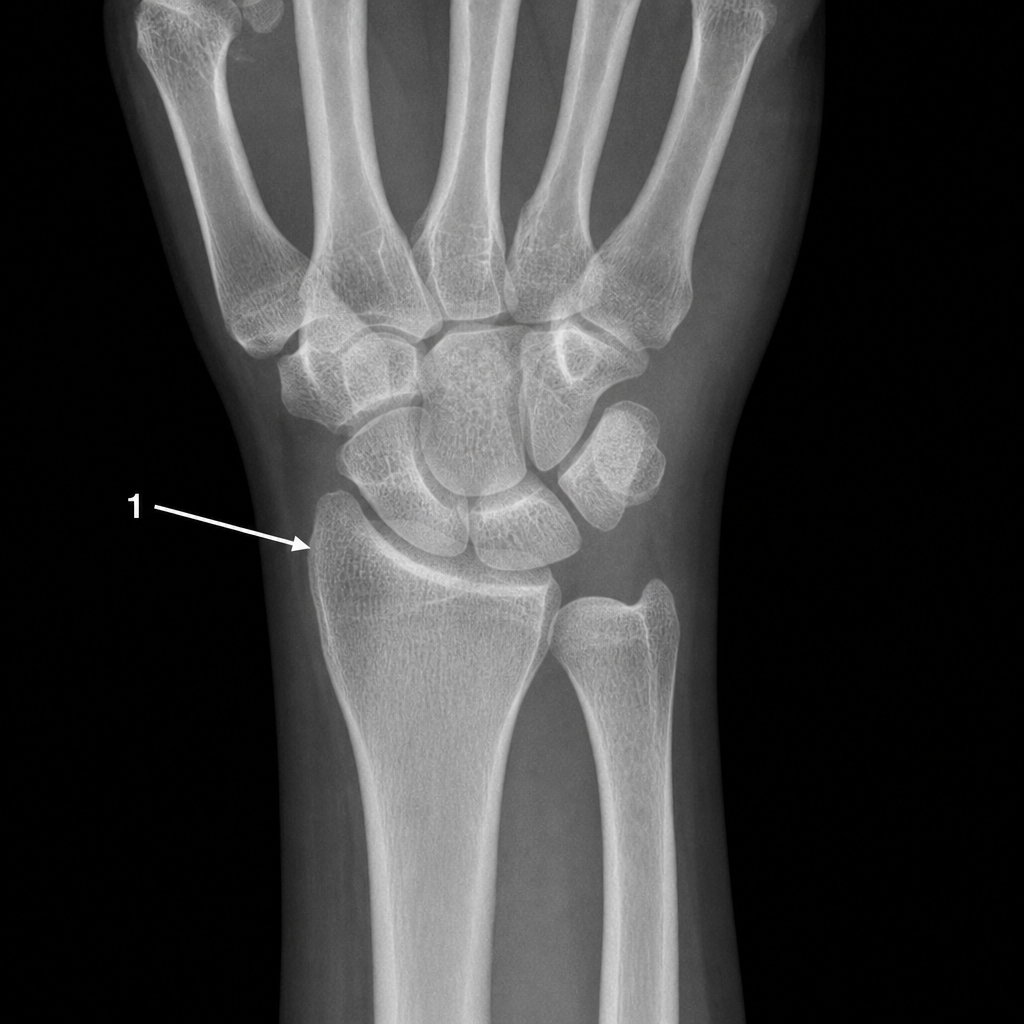
Explanation: **Explanation:** **Avascular Necrosis (AVN)** occurs when the blood supply to a bone is compromised, leading to bone cell death and eventual collapse. The **Scaphoid** (Option C) is one of the most common sites for AVN in the human body due to its unique **retrograde blood supply**. The scaphoid receives its primary blood supply (approx. 80%) from the radial artery via branches entering the **distal pole**. Therefore, a fracture across the waist or proximal pole of the scaphoid interrupts the flow of blood to the proximal fragment, making it highly susceptible to ischemia and subsequent AVN (Preiser’s disease if idiopathic). **Analysis of Incorrect Options:** * **A. Calcaneus:** This is a highly vascular cancellous bone. While it is a common site for stress fractures, AVN is extremely rare. * **B. Cervical Spine:** The vertebrae have a robust, redundant blood supply from multiple segmental arteries. AVN of the vertebral body (Kümmell disease) is rare and usually associated with trauma/steroids in the thoracic or lumbar regions. * **D. Scapula:** The scapula is surrounded by a rich anastomotic network (scapular anastomosis). It is rarely fractured and almost never undergoes AVN. **NEET-PG High-Yield Pearls:** 1. **Common Sites for AVN:** Head of Femur (Most common overall), Scaphoid (Proximal pole), Talus (Neck), and Humeral head. 2. **Vulnerability Factor:** Bones with "precarious" blood supply, often covered largely by articular cartilage with limited entry points for vessels, are most at risk. 3. **Radiological Sign:** The earliest sign of AVN on X-ray is increased bone density (sclerosis); however, **MRI** is the gold standard for early diagnosis.
Explanation: **Explanation:** Volkmann’s Ischemic Contracture (VIC) is the permanent end-stage sequela of untreated **Acute Compartment Syndrome**. It occurs due to irreversible ischemia of the forearm muscles (primarily the deep flexor group), leading to muscle necrosis and subsequent fibrous replacement. **Why Supracondylar Fracture is the Correct Answer:** Supracondylar fractures of the humerus are the most common fractures in children (peaking at ages 5–8). The mechanism involves the sharp proximal bone fragment piercing or compressing the **brachial artery** or causing intense vasospasm. This, combined with significant soft tissue swelling in the tight fascial compartments of the forearm, leads to increased intracompartmental pressure, triggering the ischemic cascade. **Analysis of Incorrect Options:** * **A. Intercondylar fracture:** These are rare in children and more common in adults; while they can cause vascular injury, the incidence is significantly lower than supracondylar fractures. * **B. Fracture of both bones of the forearm:** While these can cause compartment syndrome, they are statistically less likely to result in VIC compared to the high-risk vascular compromise seen in supracondylar fractures. * **C. Fracture of the lateral condyle:** This is a common pediatric fracture but is typically intra-articular and rarely associated with major vascular injury or compartment syndrome. **NEET-PG High-Yield Pearls:** * **Earliest Sign:** Pain out of proportion to the injury and **pain on passive extension** of fingers. * **Most sensitive muscle:** Flexor Digitorum Profundus (FDP). * **Clinical Feature:** The "Volkmann’s Sign" (wrist flexion allows finger extension; wrist extension causes finger clawing). * **Management:** Immediate removal of tight casts/bandages. If no improvement, urgent **fasciotomy** is required.
Explanation: **Explanation:** A **March fracture** is a type of fatigue or stress fracture that occurs due to repeated, prolonged mechanical stress (such as long-distance walking or running) rather than a single traumatic event. It is classically seen in military recruits, athletes, or hikers. **Why the Correct Answer is Right:** The **neck of the 2nd metatarsal** is the most common site for a March fracture. This is because the 2nd metatarsal is the longest, most rigid, and least mobile of the metatarsals. During the "toe-off" phase of the gait cycle, it acts as a fixed fulcrum, bearing a disproportionate amount of stress compared to the more mobile 1st and 3rd metatarsals. **Analysis of Incorrect Options:** * **Option B & C:** While stress fractures can occur in the 3rd and 4th metatarsal shafts, they are statistically less common than the 2nd metatarsal. The term "March fracture" specifically prioritizes the 2nd metatarsal neck in classic descriptions. * **Option D:** The 5th metatarsal is a frequent site of fractures, but these are typically traumatic (Jones fracture at the base or an avulsion fracture of the styloid process) rather than stress-induced "March" fractures at the head. **Clinical Pearls for NEET-PG:** * **Radiology:** Initial X-rays are often **negative** for the first 2–3 weeks. Diagnosis is later confirmed by the appearance of **exuberant callus formation** or a periosteal reaction. * **Gold Standard Investigation:** **MRI** is the most sensitive investigation for early detection (showing bone marrow edema). * **Management:** Most cases are managed conservatively with rest, activity modification, and a stiff-soled shoe or walking boot. * **Differential:** Always differentiate from **Morton’s Neuroma** (nerve compression) and **Freiberg’s Disease** (osteochondritis of the 2nd metatarsal head).
Explanation: **Explanation:** Malunion is the most common complication of a supracondylar fracture of the humerus, typically resulting in a **Cubitus Varus** deformity (Gunstock deformity). **1. Why French Osteotomy is Correct:** The **French Osteotomy** is a **lateral closed-wedge osteotomy** specifically designed to correct cubitus varus. The procedure involves removing a wedge of bone from the lateral side of the distal humerus and fixing it with two screws and a tension-band wire. This restores the normal carrying angle of the elbow. **2. Analysis of Incorrect Options:** * **Shanz’s Osteotomy:** This is a subtrochanteric angulation osteotomy of the **femur**. It is used to treat an unstable hip, such as in cases of neglected congenital dislocation of the hip (CDH) or non-union of the neck of the femur. * **McMurry’s Osteotomy:** This is a displacement osteotomy performed at the **upper end of the femur** (subtrochanteric level). It was historically used to treat non-union of the femoral neck by shifting the weight-bearing axis. * **McAlister Osteotomy:** This is not a standard orthopedic procedure for supracondylar malunion; it is likely a distractor option. **Clinical Pearls for NEET-PG:** * **Cubitus Varus:** Primarily a cosmetic deformity; it rarely affects the range of motion or function. * **Most common cause:** Malreduction (specifically failure to correct the medial tilt/rotation). * **Other Osteotomies for Cubitus Varus:** Apart from French, the **Step-cut osteotomy** and **Dome osteotomy** are also used to provide better stability and cosmetic results. * **High-Yield Fact:** Supracondylar fractures are the most common pediatric elbow fractures; the most common nerve injured is the **Median nerve** (specifically the Anterior Interosseous Nerve), though **Ulnar nerve** injury is common post-operatively if using medial K-wires.
Explanation: **Explanation:** **Compartment syndrome** occurs when increased interstitial pressure within a closed osteofascial compartment compromises local blood circulation and tissue function. It is a surgical emergency. **Why Option A is Correct:** The **proximal tibia** (specifically the tibial plateau and proximal third) is the most common site for compartment syndrome in the lower limb. This is due to the tight, non-compliant fascial compartments of the leg and the high-energy nature of these fractures, which leads to significant soft tissue swelling and hematoma formation. The **anterior compartment** of the leg is most frequently involved. **Analysis of Incorrect Options:** * **B. Fracture of humerus shaft:** While it can occur, it is much less common than in the forearm or leg. The compartments of the arm are more compliant. * **C. Fracture of femur shaft:** The thigh has large, relatively compliant compartments; therefore, it requires massive trauma or systemic coagulopathy to develop compartment syndrome here. * **D. Fracture of distal radius:** While distal radius fractures (like Colles' fracture) are common, compartment syndrome is more typically associated with **supracondylar fractures of the humerus** (leading to Volkmann’s Ischemia) or **both-bone forearm fractures**. **High-Yield Clinical Pearls for NEET-PG:** * **Most common site overall:** Tibial shaft/proximal tibia. * **Most common site in children:** Supracondylar fracture of the humerus. * **Earliest Clinical Sign:** Pain out of proportion to the injury and **pain on passive stretching** of the involved muscles. * **Late Sign:** Pulselessness (Note: Presence of a pulse does *not* rule out compartment syndrome). * **Diagnosis:** Primarily clinical; however, a Delta pressure (Diastolic BP – Intracompartmental pressure) **< 30 mmHg** is diagnostic. * **Treatment:** Immediate **fasciotomy** of all involved compartments.
Explanation: **Explanation:** Distraction Osteogenesis (Ilizarov technique) follows a specific biological sequence to create new bone (callus) by gradual traction. The process is divided into three distinct phases: 1. **Latency Phase:** The period from surgical osteotomy to the onset of traction. This allows for initial inflammatory response and soft tissue healing. 2. **Distraction Phase:** The period where the bone segments are gradually pulled apart (typically at a rate of 1 mm/day). This creates a "tension-stress" effect, stimulating new bone formation in the gap. 3. **Consolidation Phase:** This is the period from the **end of distraction until the newly formed bone is mineralized and strong enough** to allow for the removal of the fixator and full functional loading. **Analysis of Options:** * **Option A is incorrect:** This describes the **Latency Phase** (usually 5–7 days). * **Option B is incorrect:** This describes the **Distraction Phase** itself. * **Option C is incorrect:** This is a vague description of the distraction process, not the biological stabilization period. * **Option D is correct:** It accurately identifies the period required for the "soft" regenerate to mature into solid bone capable of bearing weight. **High-Yield Clinical Pearls for NEET-PG:** * **Ideal Rate of Distraction:** 1 mm per day (usually divided into 0.25 mm four times a day/rhythm). * **Effect of Rate:** If too fast (>1 mm/day), it leads to nerve palsy or non-union; if too slow (<1 mm/day), it leads to premature consolidation. * **Law of Tension-Stress:** The fundamental principle discovered by Ilizarov stating that gradual traction on living tissues stimulates growth and regeneration. * **Consolidation Index:** Usually twice the duration of the distraction phase (e.g., if distraction takes 1 month, consolidation takes 2 months).
Explanation: **Explanation:** A **compound fracture**, also known as an **open fracture**, is defined by a break in the skin and underlying soft tissues that leads directly to the fracture site or its hematoma. The hallmark of this condition is the communication between the bone and the external environment, which significantly increases the risk of bacterial contamination and osteomyelitis. **Analysis of Options:** * **Option D (Correct):** Skin involvement is the defining feature. If the skin is breached, the fracture is "open" or "compound." This requires urgent surgical debridement and antibiotic prophylaxis. * **Option A:** All fractures, by definition, involve bone. This is a redundant description of a simple fracture. * **Option B:** Nerve involvement characterizes a "fracture with neurological deficit" (e.g., Holstein-Lewis fracture involving the radial nerve). While serious, it does not make a fracture "compound." * **Option C:** Most fractures involve some degree of muscle contusion or strain, but this is classified under soft tissue injury, not as a compound fracture. **NEET-PG High-Yield Pearls:** 1. **Gustilo-Anderson Classification:** This is the gold standard for grading open fractures (Type I to IIIC) based on wound size, soft tissue damage, and vascular injury. 2. **Golden Period:** The first **6 to 8 hours** post-injury is the critical window for debridement to prevent established infection. 3. **Management Priority:** "Life before limb." Follow ATLS protocols, then prioritize wound irrigation, splinting, and IV antibiotics (usually cephalosporins). 4. **Tetanus Prophylaxis:** Always mandatory in the management of any compound fracture.
Explanation: **Explanation:** Torsion, or a twisting mechanism of the knee (especially during sudden deceleration or pivoting), is the most common cause of **Anterior Cruciate Ligament (ACL)** injury. While the medial meniscus and collateral ligaments are frequently involved in knee trauma, the ACL is statistically the most common structure to be completely ruptured during a non-contact rotational force. * **Anterior Cruciate Ligament (Correct):** The ACL is the primary stabilizer against anterior tibial translation and rotational stress. During torsion, the femur rotates externally on a fixed tibia (or vice versa), placing maximum strain on the ACL, leading to its failure. * **Medial Meniscus (Incorrect):** While often injured alongside the ACL (as part of O'Donoghue’s Unhappy Triad), isolated meniscal tears usually require a combination of weight-bearing and compression alongside rotation. In pure torsional trauma, the ACL typically yields first. * **Tibial (Medial) Collateral Ligament (Incorrect):** The MCL is primarily injured by **valgus stress** (a blow to the lateral side of the knee). While it can be involved in rotational injuries, it is not the most common structure injured by torsion alone. * **Fibular (Lateral) Collateral Ligament (Incorrect):** The LCL is the least commonly injured of the four major ligaments and usually requires a **varus stress** or high-energy trauma. **NEET-PG High-Yield Pearls:** * **Mechanism:** Non-contact pivoting/deceleration is the classic history for ACL tears. * **Clinical Sign:** Patients often report a **"pop" sound** followed by immediate swelling (hemarthrosis). * **Gold Standard Investigation:** MRI is the investigation of choice. * **Most Sensitive Test:** The **Lachman test** is more sensitive than the Anterior Drawer test for diagnosing ACL deficiency. * **Segond Fracture:** An avulsion fracture of the lateral tibial condyle is pathognomonic for an ACL tear.
Explanation: **Explanation:** The primary goal in managing a fracture of the neck of the femur is to preserve the femoral head and restore function. **1. Why Internal Fixation is Correct:** Fractures of the neck of the femur are **intracapsular**. Even when undisplaced (Garden Stage I or II), they are considered inherently unstable and carry a high risk of secondary displacement due to the shearing forces acting on the fracture line. Furthermore, the blood supply to the femoral head (primarily via the retrograde retinacular vessels) is precarious. **Internal fixation** (typically using Multiple Cannulated Cancellous Screws) is the treatment of choice because it provides compression and stability, promoting primary bone healing while preserving the patient's own femoral head. **2. Why Other Options are Incorrect:** * **Skeletal Traction:** This is only a temporary measure for pain relief or stabilization before surgery. It cannot achieve the compression required for union and leads to complications of prolonged recumbency (DVT, bedsores). * **Femoral Head Prosthesis (Hemiarthroplasty):** This is generally reserved for **displaced** fractures in elderly patients where the risk of Avascular Necrosis (AVN) or non-union is very high. In undisplaced fractures, the native head can be saved. * **Option D:** Results vary significantly; internal fixation has a much higher success rate for undisplaced fractures compared to conservative management or arthroplasty. **Clinical Pearls for NEET-PG:** * **Garden Classification:** Used for femoral neck fractures (Stage I: Incomplete/Impacted; Stage II: Complete Undisplaced; Stage III: Partially Displaced; Stage IV: Completely Displaced). * **Pauwels Classification:** Based on the angle of the fracture line; higher angles indicate greater shear forces and instability. * **Complications:** The two most common complications of neck femur fractures are **Avascular Necrosis (AVN)** and **Non-union**. * **Urgency:** In young adults, this is a surgical emergency to prevent AVN.
Principles of Fracture Management
Practice Questions
Upper Limb Fractures
Practice Questions
Lower Limb Fractures
Practice Questions
Spinal Trauma
Practice Questions
Pelvic and Acetabular Fractures
Practice Questions
Open Fractures
Practice Questions
Fractures in Children
Practice Questions
Fracture Complications
Practice Questions
Nonunion and Malunion
Practice Questions
Polytrauma Management
Practice Questions
Joint Dislocations
Practice Questions
Soft Tissue Injuries
Practice Questions
Get full access to all questions, explanations, and performance tracking.
Start For Free