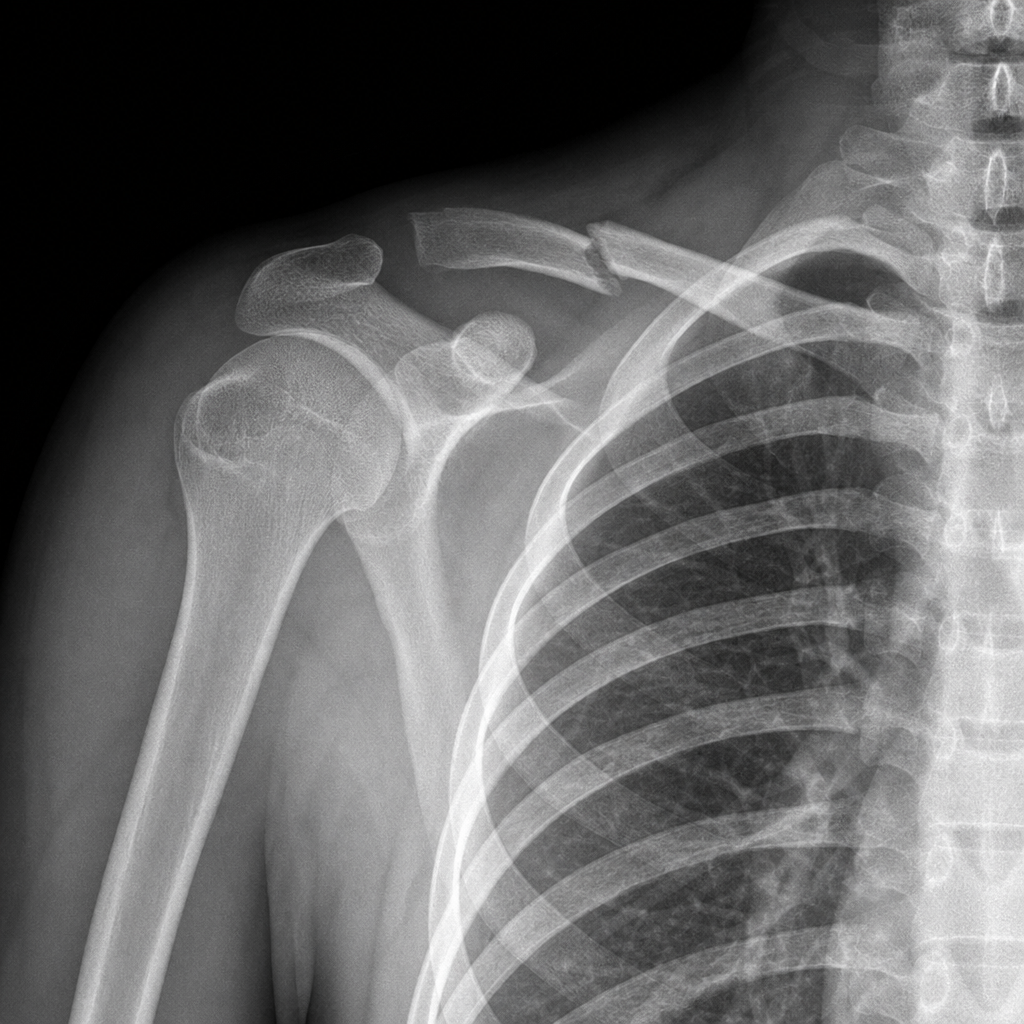
A 45-year-old man has shoulder pain after a motorcycle fall. Radiographs are negative for fracture and dislocation. On examination, a positive lift-off test is noted. What is the most likely diagnosis?
Which of the following is true about fat embolism?
An 80-year-old man presents with severe pain at his right hip and thigh, with difficulty in standing and reduced mobility. He reports a fall 2 days prior and a 3-year history of steroid use. An MRI of the right hip was performed. Which artery is most likely injured, leading to this condition?
In head injury, which structure is typically repaired first?
What is the most commonly dislocated joint in the child's hand?
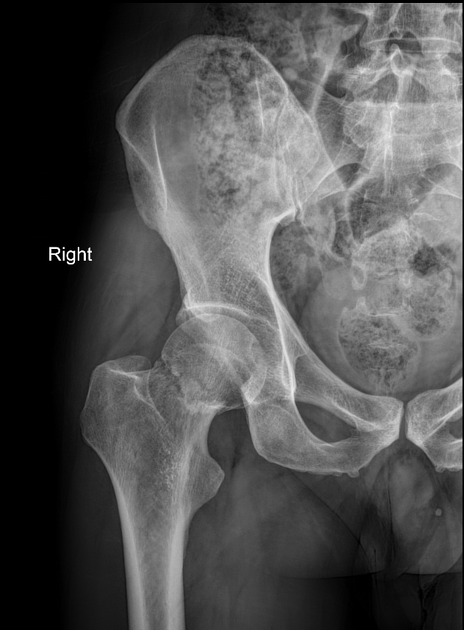
An 80-year-old female, after a fall, developed an inability to walk with an external rotation deformity. On examination, Straight Leg Raise (SLR) is not possible, and there is broadening of the greater trochanter with the lateral border of the foot touching the bed. What is the most probable diagnosis?
Open reduction and internal fixation is done for all of the following fractures except:
Torsion of the knee most commonly results in injury to which structure?
Which of the following statements is incorrect regarding Monteggia fracture-dislocation?
What is the best treatment for a femoral neck fracture sustained three weeks ago in a young adult?
Explanation: **Explanation:** The clinical presentation of shoulder pain following trauma with negative radiographs and a **positive lift-off test** is pathognomonic for a **subscapularis tear**. **1. Why Subscapularis is correct:** The subscapularis is the only rotator cuff muscle responsible for **internal rotation** of the humerus. The **Gerber’s Lift-off Test** specifically isolates this muscle. It is performed by placing the patient's hand behind their back (lumbar region) and asking them to lift the hand away from the back against resistance. Inability to do so indicates a tear or weakness of the subscapularis. **2. Why other options are incorrect:** * **Supraspinatus (B):** The most commonly injured rotator cuff muscle. It is responsible for the first 15° of abduction. Clinical tests include the **Empty Can (Jobe’s) test** and the **Drop Arm test**. * **Infraspinatus (C):** Responsible for **external rotation** with the arm at the side. It is tested using resisted external rotation. * **Teres Minor (D):** Also an external rotator. It is specifically tested using the **Hornblower’s sign** (resisted external rotation with the arm in 90° abduction). **Clinical Pearls for NEET-PG:** * **Rotator Cuff Muscles (SITS):** Supraspinatus, Infraspinatus, Teres minor, and Subscapularis. * **Belly Press Test:** An alternative test for subscapularis if the patient cannot internally rotate enough to place the hand behind the back. * **Imaging Gold Standard:** While X-rays rule out fractures/dislocations, **MRI** is the investigation of choice for soft tissue/rotator cuff tears. * **Subscapularis Insertion:** It is the only SITS muscle that inserts into the **lesser tuberosity** of the humerus; the others insert into the greater tuberosity.
Explanation: **Explanation:** Fat Embolism Syndrome (FES) is a clinical triad of hypoxemia, neurological abnormalities, and petechial rash following the release of fat globules into the systemic circulation, typically after long bone fractures (e.g., Femur). **Why the correct answer is D:** Fat Embolism typically presents within **24 to 72 hours** after the initial trauma. While the options provided in this specific question format suggest "after the first week," it is important to note that in many standard clinical scenarios, FES occurs early. However, in the context of this specific MCQ, it is often used to differentiate it from immediate complications like shock or late complications like pulmonary embolism. *Note: In standard textbooks like Bailey & Love, the peak incidence is 24-48 hours.* **Analysis of Incorrect Options:** * **A. Petechiae in the anterior chest wall:** While petechiae are a hallmark, they are classically found in the **conjunctiva, axilla, and root of the neck**, rather than being primarily localized to the anterior chest wall. * **B. Bradycardia:** FES typically presents with **Tachycardia** (as a response to hypoxia and systemic inflammatory response) and Tachypnea. * **C. Fat globules in urine:** While lipuria can occur, it is **not a diagnostic or pathognomonic feature** of FES. Its presence does not correlate well with the severity of the syndrome. **Clinical Pearls for NEET-PG:** * **Gurd’s Criteria:** Used for diagnosis. Major criteria include axillary/subconjunctival petechiae, hypoxemia (PaO2 <60 mmHg), and CNS depression. * **Snowstorm Appearance:** Classic finding on Chest X-ray (bilateral fluffy infiltrates). * **Treatment:** Primarily supportive (Oxygenation/Ventilation). Early stabilization and **fixation of fractures** is the most effective preventive measure. * **Free Fatty Acids:** The chemical theory suggests that circulating free fatty acids cause direct endothelial damage to lung capillaries.
Explanation: ***Ascending branch of medial circumflex femoral artery*** - This artery provides the **dominant blood supply** to the femoral head in adults through **ascending retinacular branches**, making it most susceptible to injury in **avascular necrosis (AVN)**. - **Steroid use** and **trauma** are major risk factors for AVN, causing interruption of this critical blood supply leading to **femoral head necrosis**. *Foveolar artery* - This artery only supplies a **small central portion** of the femoral head and is **not the dominant blood supply** in adults. - It runs through the **ligamentum teres** and contributes minimally to femoral head perfusion, making it unlikely to cause widespread AVN. *Descending branch of lateral circumflex femoral artery* - This vessel primarily supplies the **vastus lateralis muscle** and contributes to the **trochanteric region**, not the femoral head. - It does **not provide significant blood supply** to the femoral head, making it an unlikely cause of AVN. *Deep circumflex iliac artery* - This artery supplies the **iliac crest** and surrounding muscles, having **no involvement** in femoral head blood supply. - It runs along the **iliac crest** and is completely unrelated to the **hip joint** or femoral head perfusion.
Explanation: ### Explanation In the management of musculoskeletal trauma, the sequence of repair follows a fundamental surgical principle: **"Life before limb, and stability before mobility."** **1. Why Bone is the Correct Answer:** The primary goal in orthopedic trauma is to provide a stable framework. Bone is the structural foundation of the limb. Rigid internal fixation of the **bone** must be performed first because: * It provides a stable "scaffold" for the repair of soft tissues. * It prevents further damage to neurovascular structures caused by mobile bone fragments. * It allows for the correct anatomical tensioning of tendons and muscles during their subsequent repair. **2. Why Other Options are Incorrect:** * **Tendon and Muscle (Options B & C):** These are "soft" structures. If repaired before the bone, any subsequent manipulation of the fracture to achieve alignment would likely rupture the fresh sutures in the muscle or tendon. * **Nerve (Option D):** Nerves are delicate and require a tension-free environment to heal. Repairing a nerve before stabilizing the bone risks stretching or tearing the anastomosis during fracture reduction. **3. Clinical Pearls for NEET-PG:** * **The Standard Sequence of Repair:** Bone → Tendon → Nerve → Vessel (Note: If the limb is ischemic, the **Vessel** repair takes priority, often using a temporary vascular shunt to restore perfusion while the bone is stabilized). * **Debridement:** In open fractures, thorough debridement is always the absolute first step before any repair. * **Rule of Thumb:** Fix the "hard" (bone) before the "soft" (nerves/tendons).
Explanation: **Explanation:** The **Metacarpophalangeal (MCP) joint** is the most commonly dislocated joint in a child's hand, with the **thumb MCP joint** being the specific site of highest frequency. **Why it is the correct answer:** In children, the MCP joint is highly mobile and relies heavily on the integrity of the volar plate and collateral ligaments for stability. During a fall on an outstretched hand (hyperextension injury), the volar plate typically ruptures or becomes entrapped, leading to dorsal dislocation. In pediatric populations, the ligaments are often stronger than the physis, but the unique biomechanical stress at the MCP joint during play and sports makes it more susceptible to dislocation compared to the interphalangeal joints. **Analysis of Incorrect Options:** * **Proximal Interphalangeal (PIP) Joint:** While this is the most common site of dislocation in **adults** (often termed "coach's finger"), it is less common in children. In pediatric patients, trauma to this area more frequently results in a physeal fracture rather than a pure dislocation. * **Distal Interphalangeal (DIP) Joint:** These dislocations are rare in children because the deep flexor and extensor tendons provide significant stability. Injuries here are usually open or involve the nail bed. * **Carpometacarpal (CMC) Joint:** These joints are extremely stable due to strong dorsal, volar, and interosseous ligaments. Dislocation requires high-energy trauma and is rare in the pediatric age group. **High-Yield Clinical Pearls for NEET-PG:** * **Complex Dislocation:** If an MCP dislocation cannot be reduced closed, it is termed a "complex" dislocation, often due to the **volar plate** being interposed in the joint space. * **Radiological Sign:** Look for a "dimple sign" on the volar skin or a sesamoid bone trapped within the joint space on X-ray, indicating a complex dislocation requiring open reduction. * **Adult vs. Child:** Always remember: **PIP joint** = Most common in adults; **MCP joint** = Most common in children.
Explanation: **Explanation:** The clinical presentation of an elderly patient with a fall, inability to walk, and a prominent **external rotation deformity** is classic for a proximal femur fracture. **Why Intertrochanteric (IT) Fracture is correct:** The key clinical differentiator here is the degree of external rotation. In **Intertrochanteric fractures**, the fracture is extracapsular. The distal fragment is pulled by the powerful external rotators (iliopsoas and short rotators) without the restraint of the hip capsule, leading to a **marked external rotation (80-90°)** where the lateral border of the foot touches the bed. Additionally, since the fracture is outside the capsule, significant swelling and **broadening of the greater trochanter** are observed due to hematoma formation. **Why other options are incorrect:** * **Neck of femur fracture:** These are intracapsular. The intact capsule limits the displacement; therefore, the external rotation is typically **mild (30-45°)**. Broadening of the trochanter is usually absent. * **Subtrochanteric fracture:** While these present with significant deformity, the proximal fragment is usually flexed, abducted, and externally rotated, but the "foot touching the bed" and "broadening of the trochanter" are more characteristic of IT fractures. * **Greater trochanteric fracture:** These are usually isolated avulsion injuries. Patients can often still bear some weight, and there is no significant limb shortening or gross external rotation deformity. **NEET-PG High-Yield Pearls:** * **External Rotation:** Mild (30-45°) = Neck of Femur; Severe (80-90°) = Intertrochanteric. * **Ecchymosis:** More common in IT fractures (extracapsular) than neck fractures (intracapsular). * **Shortening:** More pronounced in IT fractures. * **Treatment Gold Standard:** IT fractures are typically managed with a **Dynamic Hip Screw (DHS)** or **Cephalomedullary nail (PFN)**.
Explanation: **Explanation:** The question asks for the fracture where Open Reduction and Internal Fixation (ORIF) is **not** the standard treatment. While the term "ORIF" is often used loosely, in strict orthopedic nomenclature, certain fractures are treated with **Buttress Plating** or **Closed Reduction with Internal Fixation (CRIF)**. **Why Volar Barton’s is the correct answer:** A Volar Barton’s fracture is an intra-articular fracture-dislocation of the distal radius. The primary mechanism of displacement is the pull of the volar carpal ligaments. The gold standard treatment is **Buttress Plating**. Unlike standard ORIF where fragments are compressed or bridged, a buttress plate acts as a mechanical "wall" to prevent the carpus from sliding volarly. In many exam contexts, Barton’s is distinguished by its specific requirement for buttress stabilization rather than simple internal fixation. **Analysis of Incorrect Options:** * **Patella Fracture:** Displaced patellar fractures require **ORIF with Tension Band Wiring (TBW)** to convert distracting forces into compressive forces. * **Olecranon Fracture:** Similar to the patella, displaced olecranon fractures are intra-articular and require **ORIF (usually TBW or plate)** to restore the extensor mechanism. * **Lateral Condyle of Humerus:** This is a "fracture of necessity" in children. Because it is intra-articular and prone to non-union/cubitus valgus, it requires **ORIF** to ensure anatomical reduction. **High-Yield Clinical Pearls for NEET-PG:** * **Barton’s vs. Smith’s:** Barton’s is intra-articular; Smith’s is extra-articular (reverse Colles). * **Absolute Indications for ORIF:** Intra-articular fractures with displacement, "Fractures of Necessity" (e.g., Galeazzi, Monteggia), and failed closed reduction. * **Tension Band Wiring (TBW):** Always used for fractures where muscle pull causes distraction (Patella, Olecranon, Medial Malleolus).
Explanation: **Explanation:** The **Tibial Collateral Ligament (Medial Collateral Ligament - MCL)** is the most frequently injured structure in the knee during torsional (twisting) injuries. This is due to its anatomical position and the common mechanism of injury involving a **valgus stress** combined with external rotation of the tibia. Because the MCL is the primary stabilizer against valgus force, it is the first structure to yield under such tension. **Analysis of Options:** * **Tibial Collateral Ligament (MCL):** (Correct) It is the most common ligamentous injury of the knee. It is often injured in isolation or as the first component of the "Unhappy Triad." * **Medial Meniscus:** While frequently injured, it is less common than MCL tears. It is often injured secondary to MCL tears because the deep fibers of the MCL are firmly attached to the medial meniscus. * **Anterior Cruciate Ligament (ACL):** The ACL is the most common *intra-articular* ligament to be ruptured, but in the overall hierarchy of knee structures, the MCL is injured more frequently. * **Fibular Collateral Ligament (LCL):** This is the least common injury because it requires a varus stress, and the opposite leg usually protects the knee from such forces. **High-Yield Clinical Pearls for NEET-PG:** * **O’Donoghue’s Unhappy Triad:** Consists of injuries to the **MCL, Medial Meniscus, and ACL** (though recent studies suggest the Lateral Meniscus is more commonly involved in acute ACL tears). * **Pellegrini-Stieda Disease:** Post-traumatic calcification at the proximal attachment of the MCL following a chronic or partially healed tear. * **Mechanism:** MCL injuries are tested via the **Valgus Stress Test** at 30° of flexion.
Explanation: **Explanation:** Monteggia fracture-dislocation is defined as a fracture of the proximal third of the ulna associated with a dislocation of the proximal radioulnar joint (radial head). **1. Why Option C is the correct (incorrect statement) answer:** In the **Extension type** (Bado Type I), which is the most common variety, the ulnar fracture angulates **anteriorly** (apex anterior), and the radial head also dislocates **anteriorly**. The direction of the radial head dislocation always follows the direction of the ulnar angulation. Therefore, stating that the ulna angulates posteriorly in an extension type is anatomically incorrect. **2. Analysis of other options:** * **Option A:** This is the standard definition of a Monteggia fracture. * **Option B:** The extension type (Bado Type I) accounts for approximately 60-80% of cases, making it the most common variant. * **Option D:** In adults, Monteggia fractures are notoriously unstable. Conservative management often leads to loss of reduction, resulting in malunion and chronic radial head dislocation, which severely limits forearm rotation. Hence, Open Reduction and Internal Fixation (ORIF) is the gold standard. **Clinical Pearls for NEET-PG:** * **Bado Classification:** * Type I: Anterior dislocation (Extension type - Most common). * Type II: Posterior dislocation (Flexion type). * Type III: Lateral dislocation (Common in children). * Type IV: Fracture of both radius and ulna with anterior dislocation. * **Rule of Thumb:** In the forearm, always check the joint "above and below." If there is a displaced isolated ulnar fracture, always rule out a radial head dislocation (Monteggia). * **Nerve Injury:** The **Posterior Interosseous Nerve (PIN)** is the most commonly injured nerve in Monteggia fractures.
Explanation: **Explanation:** In young adults, the primary goal of treating a femoral neck fracture is **preservation of the natural femoral head**, regardless of the delay in presentation (within a reasonable window like 3 weeks). **1. Why Option D is correct:** The femoral head in young patients has high osteogenic potential and superior functional outcomes if salvaged. Even in "neglected" fractures (typically defined as >3 weeks), the first-line management remains **Anatomical Reduction and Internal Fixation (ARIF)** using Multiple Cannulated Cancellous Screws or a Dynamic Hip Screw (DHS). While the risk of Avascular Necrosis (AVN) and non-union increases with time, every effort is made to avoid arthroplasty in young patients due to the limited lifespan of prostheses. **2. Why other options are incorrect:** * **Options A & C:** Total Hip Replacement (THR) and Hemiarthroplasty (Prosthetic replacement) are the treatments of choice for **elderly patients**. In young adults, these are considered "salvage procedures" only after fixation has failed, as they lead to multiple revisions over the patient's lifetime. * **Option B:** While osteotomies (like McMurray’s or Schanz) are used to treat established **non-union** by converting shear forces into compressive forces, they are generally secondary considerations if primary fixation is still feasible. **Clinical Pearls for NEET-PG:** * **Pauwels’ Classification:** Based on the angle of the fracture line; higher angles (Type III) are more unstable and have higher non-union rates. * **Garden’s Classification:** Based on displacement; Type III and IV have the highest risk of AVN. * **Blood Supply:** The **Medial Circumflex Femoral Artery** is the most important source of blood to the femoral head. * **Urgency:** Femoral neck fractures in the young are considered **orthopaedic emergencies** to minimize the risk of AVN.
Principles of Fracture Management
Practice Questions
Upper Limb Fractures
Practice Questions
Lower Limb Fractures
Practice Questions
Spinal Trauma
Practice Questions
Pelvic and Acetabular Fractures
Practice Questions
Open Fractures
Practice Questions
Fractures in Children
Practice Questions
Fracture Complications
Practice Questions
Nonunion and Malunion
Practice Questions
Polytrauma Management
Practice Questions
Joint Dislocations
Practice Questions
Soft Tissue Injuries
Practice Questions
Get full access to all questions, explanations, and performance tracking.
Start For Free