What is incorrect regarding Gamekeeper's thumb?
Which of the following is the characteristic posture in a posterior dislocation of the hip joint?
Which of the following statements about 'Low' Radial nerve palsy is not true?
What is the treatment for an open fracture?
What is true about fracture of the clavicle?
Cubitus varus deformity results from which of the following?
What is Barton's fracture?
Which type of knee injury causes more damage to the semi-lunar cartilage?
Injury to the popliteal artery in a fracture of the lower end of the femur can be caused by which of the following?
Recurrent dislocation of the shoulder occurs because of which of the following?
Explanation: **Explanation:** **Gamekeeper’s Thumb** (also known as **Skier’s Thumb**) refers to an injury of the **Ulnar Collateral Ligament (UCL)** at the base of the thumb. 1. **Why Option C is the correct answer (Incorrect statement):** The injury is caused by **forced abduction** and **hyperextension** of the thumb, leading to **radial deviation** (not ulnar deviation). This sudden force pulls the thumb away from the index finger, stressing and eventually tearing the UCL. 2. **Analysis of other options:** * **Option A:** The injury specifically involves the **first metacarpophalangeal (MCP) joint**, where the UCL provides medial stability. * **Option B:** The primary pathology is a partial or complete **tear of the ulnar collateral ligament**, often at its distal insertion on the proximal phalanx. * **Option D:** While "Gamekeeper’s thumb" originally referred to chronic attrition (common in Scottish gamekeepers), the acute presentation is widely known as **Skier’s thumb**, typically occurring when a skier falls while holding a ski pole. **High-Yield Clinical Pearls for NEET-PG:** * **Stener Lesion:** A critical complication where the **Adductor Pollicis aponeurosis** becomes interposed between the ruptured UCL and its insertion site. This prevents primary healing and is an absolute indication for **surgical repair**. * **Clinical Sign:** Weakness of "pincer grasp" (pinch grip) due to instability of the thumb. * **Radiology:** Stress X-rays may show joint opening; however, an MRI or high-resolution Ultrasound is the gold standard for diagnosing a Stener lesion. * **Treatment:** Partial tears are managed with a **thumb spica cast**; complete tears or Stener lesions require surgery.
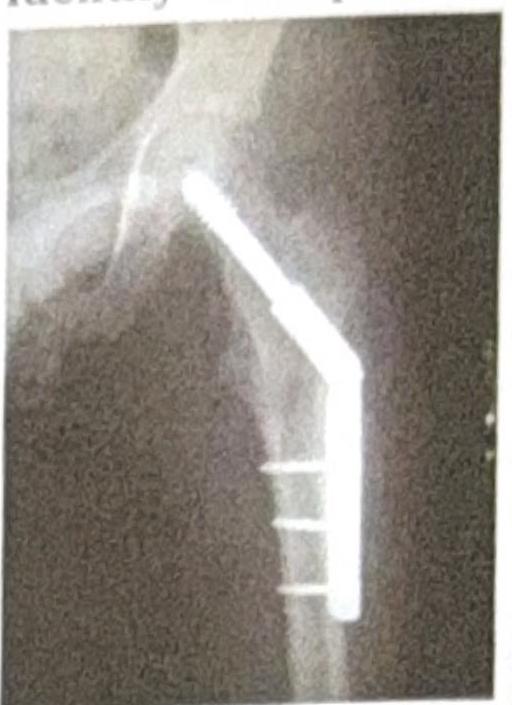
Explanation: ### Explanation **Posterior Dislocation of the Hip Joint** is the most common type of hip dislocation (accounting for ~90% of cases), typically resulting from high-energy trauma like a "dashboard injury." #### 1. Why the Correct Answer is Right The characteristic clinical posture of a posterior hip dislocation is **Flexion, Adduction, and Internal Rotation (FADIR)**. * **Mechanism:** When the femoral head is forced posteriorly out of the acetabulum, the tension of the iliofemoral ligament and the surrounding musculature pulls the limb into this specific position. The affected limb also appears **shortened**. #### 2. Analysis of Incorrect Options * **Anterior Dislocation of Hip Joint:** This presents with the opposite deformity: **Flexion, Abduction, and External Rotation (FABER)**. The limb is held away from the midline, unlike the "crossed-leg" appearance of posterior dislocation. * **Fracture of the Femoral Neck/Shaft:** These fractures typically present with **Shortening and External Rotation**. In a neck of femur fracture, the psoas muscle pulls the distal fragment into external rotation, which is a key clinical differentiator from posterior dislocation. #### 3. Clinical Pearls for NEET-PG * **Most Common Nerve Injury:** The **Sciatic Nerve** (specifically the common peroneal component) is at risk in posterior dislocations. * **Radiology:** On an AP X-ray, the femoral head appears smaller than the contralateral side in posterior dislocation (due to being further from the film) and larger in anterior dislocation. * **Emergency:** Hip dislocation is an orthopedic emergency. Reduction must be performed within **6 hours** to minimize the risk of **Avascular Necrosis (AVN)** of the femoral head. * **Reduction Maneuvers:** Bigelow’s, Stimson’s, and Allis’ maneuvers are commonly used for reduction.
Explanation: To understand **'Low' Radial Nerve Palsy**, one must distinguish between lesions occurring in the axilla/spiral groove (High) and those occurring at or distal to the elbow (Low). ### **Why Option A is the Correct Answer (The "Not True" Statement)** The **Brachioradialis** and the **Extensor Carpi Radialis Longus (ECRL)** are supplied by the Radial nerve proper **above the elbow joint** (proximal to its bifurcation). In a 'Low' radial nerve palsy—typically involving the **Posterior Interosseous Nerve (PIN)**—the lesion occurs distal to the elbow. Therefore, the Brachioradialis remains spared. If Brachioradialis function is lost, the lesion must be 'High'. ### **Analysis of Incorrect Options** * **Option B (ECRB):** The nerve to Extensor Carpi Radialis Brevis (ECRB) often arises from the PIN or at the level of the radial head. In many clinical classifications of low palsy, ECRB involvement is variable but frequently affected if the lesion is at the level of the supinator muscle. * **Option C (EPB):** The Extensor Pollicis Brevis is supplied by the PIN. Since PIN palsy is the hallmark of low radial nerve injury, this muscle will be paralyzed. * **Option D (Sensation):** Low radial nerve palsy can involve both the PIN (motor) and the **Superficial Radial Nerve** (sensory). If the injury occurs at the level of the radial neck before the nerve divides, or involves both branches, sensory loss over the first dorsal web space occurs. ### **Clinical Pearls for NEET-PG** * **Wrist Drop vs. Finger Drop:** High radial nerve palsy causes **Wrist Drop** (loss of ECRL/ECRB). Low radial nerve palsy (PIN palsy) typically causes **Finger Drop**, but the patient can still extend the wrist (with radial deviation) because ECRL is spared. * **The "Rule of Sparing":** In PIN palsy, the **Supinator** and **ECRL** are usually spared. * **Highest branch of Radial Nerve:** Nerve to the long head of Triceps (given off in the axilla). * **Saturday Night Palsy:** A classic "High" palsy involving the spiral groove, leading to loss of Brachioradialis and full wrist drop.
Explanation: **Explanation:** In the emergency management of an open fracture, the **immediate priority** is the stabilization of the patient’s life and limb according to ATLS protocols. The correct answer is **Tourniquet** because it addresses the most critical immediate threat in the pre-hospital or early emergency phase: **exsanguinating hemorrhage.** 1. **Why Tourniquet is Correct:** In the context of trauma, "Life over Limb" is the guiding principle. If an open fracture is associated with massive arterial bleeding, a tourniquet is the first-line intervention to prevent hemorrhagic shock. While debridement is essential for the fracture itself, it cannot be performed if the patient is hemodynamically unstable. 2. **Why Other Options are Incorrect:** * **Debridement:** While this is the "gold standard" for preventing infection (osteomyelitis) and is the definitive surgical step, it is performed in the operating theater *after* the patient is stabilized. * **External Fixation:** This is a method of stabilization used for Gustilo-Anderson Grade III open fractures to allow soft tissue healing, but it follows debridement. * **Internal Fixation:** Generally contraindicated in the initial management of contaminated open fractures due to the high risk of infection, though it may be considered in specific "clean" Grade I cases. **NEET-PG High-Yield Pearls:** * **Gustilo-Anderson Classification:** The most common system used to grade open fractures (I, II, IIIA, IIIB, IIIC). * **Antibiotic Timing:** Prophylactic antibiotics should be administered as soon as possible (ideally within 1 hour of injury). * **The "6-Hour Rule":** Traditionally, debridement was mandated within 6 hours, though modern evidence suggests "as soon as possible" (within 12–24 hours) is acceptable for most cases, provided antibiotics are started early. * **Primary Goal:** The primary goal of open fracture management is to prevent infection; the secondary goal is fracture union.
Explanation: **Explanation:** **1. Why the correct answer is right:** Clavicle fractures are among the most common bony injuries. While they generally heal well with conservative management (like a figure-of-eight bandage or triangular sling), **malunion** is a frequent outcome. This occurs because the sternocleidomastoid muscle pulls the medial fragment upward, while the weight of the arm and the pectoralis major pull the lateral fragment downward and medially. This displacement often leads to healing with a visible bump or shortening, though it is usually clinically asymptomatic and rarely requires surgical correction. **2. Analysis of incorrect options:** * **Option B:** The most common site is the **junction of the medial two-thirds and lateral one-third** (the mid-shaft), accounting for approximately 80% of cases. This is the weakest point of the bone where its curvature changes. * **Option C & D:** While comminuted fractures *can* occur and a fall on an outstretched hand (FOOSH) *is* a mechanism, these are **not the most defining or "true" characteristics** in the context of standard orthopedic teaching for this specific question. Direct trauma to the shoulder is actually the most common mechanism (87%). *Note: In many competitive exams, if multiple options seem factually correct, you must choose the most definitive clinical complication or the specific anatomical fact emphasized in textbooks.* **Clinical Pearls for NEET-PG:** * **Ossification:** The clavicle is the **first bone to ossify** in the fetus (5th–6th week) and the only long bone to ossify in **membrane** (except for its ends). * **Nerve Injury:** The most common nerve injured in clavicle fractures (though rare) is the **Supraclavicular nerve**; however, in cases of severe displacement, the Brachial Plexus may be involved. * **Non-union:** Rare in clavicle fractures; malunion is much more common. * **Indication for Surgery:** Open fractures, neurovascular injury, or "floating shoulder" (ipsilateral clavicle and scapular neck fractures).
Explanation: **Explanation:** **Cubitus Varus (Gunstock Deformity)** is the most common late complication of a **Supracondylar Fracture of the Humerus**, particularly when managed conservatively. 1. **Why Option A is Correct:** The deformity results from **malunion** of the distal fragment, specifically due to **coronal tilt (medial tilt)**, internal rotation, and posterior displacement. While the fracture is extra-articular and does not usually affect longitudinal growth, the mechanical malalignment leads to a decrease in the carrying angle, resulting in the characteristic "Gunstock" appearance. 2. **Why Other Options are Incorrect:** * **Option B (Lateral Condyle Fracture):** Malunion or non-union here typically leads to **Cubitus Valgus** (increased carrying angle) because the lateral growth plate is affected, causing a growth arrest on the lateral side while the medial side continues to grow. This can lead to late-onset Ulnar Nerve Palsy (Tardy Ulnar Nerve Palsy). * **Option C & D:** Fracture-dislocations and capitellum fractures are more likely to result in **stiffness (myositis ossificans)** or loss of range of motion rather than a specific angular varus deformity. **High-Yield Clinical Pearls for NEET-PG:** * **Most common cause of Cubitus Varus:** Malunion (not growth arrest). * **Treatment of choice:** French Osteotomy (Lateral closing wedge osteotomy). * **Supracondylar Fracture Complications:** * *Immediate:* Vascular injury (Brachial artery). * *Early:* Volkmann’s Ischemic Contracture (VIC). * *Late:* Cubitus Varus (most common). * **Nerve Injury:** Most common is the **Median nerve** (specifically AIN), though posterolateral displacement can injure the Radial nerve.
Explanation: **Explanation:** **Barton’s fracture** is defined as an intra-articular fracture of the **distal radius** with associated subluxation or dislocation of the radiocarpal joint. It involves a fracture of the dorsal or volar rim of the distal radius, with the carpus following the fractured fragment. 1. **Why Option B is correct:** The distal radius is the anatomical site for Barton’s fracture. Unlike Colles' or Smith's fractures (which are extra-articular), Barton’s is specifically **intra-articular**, involving the articular surface of the radiocarpal joint. 2. **Why other options are incorrect:** * **Option A:** Fractures of the proximal radius include radial head or neck fractures (often associated with Essex-Lopresti injury). * **Option C:** Isolated ulnar fractures include the "Nightstick fracture" or Monteggia fracture-dislocations. * **Option D:** Humerus fractures are categorized by location (proximal, shaft, or supracondylar) and are anatomically distinct from wrist injuries. **High-Yield Clinical Pearls for NEET-PG:** * **Types:** It can be **Dorsal Barton’s** (more common) or **Volar Barton’s** (Reverse Barton’s). * **Mechanism:** Usually caused by a fall on an outstretched hand (FOOSH) or high-velocity trauma. * **Management:** Because it is intra-articular and inherently unstable, it often requires **Open Reduction and Internal Fixation (ORIF)** with a Buttress plate. * **Differential Diagnosis:** Do not confuse it with **Colles' fracture** (extra-articular, dorsal displacement) or **Smith's fracture** (extra-articular, volar displacement).
Explanation: **Explanation:** The **semi-lunar cartilages (menisci)** are fibrocartilaginous structures that act as shock absorbers and stabilize the knee. The mechanism of a meniscal tear typically involves a **weight-bearing rotational force** applied to a **flexed knee**. **Why Option B is Correct:** When the knee is flexed, the menisci move posteriorly. In this position, the femur exerts maximum pressure on the posterior horns of the menisci. If a sudden **rotational (twisting) force** is applied while the knee is flexed and the foot is fixed to the ground, the meniscus (most commonly the medial meniscus) gets trapped between the femoral condyle and the tibial plateau, leading to a tear. This is the classic mechanism seen in athletes (e.g., footballers) and miners. **Analysis of Incorrect Options:** * **Option A:** Flexion and extension at the ankle have no direct mechanical impact on the intra-articular structures of the knee joint. * **Option C:** In full extension, the knee is in its most stable "locked" position (Screw-home mechanism). The ligaments are taut, and there is minimal rotational freedom, making meniscal entrapment less likely compared to a flexed state. * **Option D:** While squatting increases pressure on the posterior horns, it is the addition of **rotation** that typically causes the structural failure/tear, rather than the static position itself. **Clinical Pearls for NEET-PG:** * **Most Common Meniscus Injured:** Medial Meniscus (it is less mobile because it is attached to the Deep Medial Collateral Ligament). * **Classic Triad (O'Donoghue’s):** Injury to the Anterior Cruciate Ligament (ACL), Medial Collateral Ligament (MCL), and Medial Meniscus. * **Clinical Tests:** McMurray’s test (most specific) and Apley’s Grinding test. * **Gold Standard Diagnosis:** MRI (Investigation of choice); Arthroscopy (Gold standard).
Explanation: **Explanation:** In a supracondylar fracture of the femur (lower end of the femur), the displacement of fragments is dictated by the powerful pull of the surrounding musculature. **1. Why the Distal Fragment is Correct:** The **gastrocnemius muscle** originates from the posterior aspect of the femoral condyles. When a fracture occurs at the lower end, the gastrocnemius pulls the **distal fragment posteriorly (backward)**. Because the popliteal artery is fixed in the popliteal fossa and lies directly behind the femur, this sharp, posteriorly tilted distal fragment can easily impinge upon, lacerate, or cause a spasm of the artery. **2. Analysis of Incorrect Options:** * **A. Proximal fragment:** The proximal fragment is typically displaced anteriorly and medially due to the pull of the quadriceps and adductors. It moves away from the neurovascular bundle. * **B & D. Muscle hematoma and Tissue swelling:** While these can cause secondary compression (Compartment Syndrome), they are not the primary mechanical cause of direct arterial injury in the acute setting of this fracture. **3. Clinical Pearls for NEET-PG:** * **The "Golden Period":** In cases of popliteal artery injury, revascularization must occur within **6 hours** to prevent irreversible limb ischemia. * **Distal Pulse Check:** Always assess the dorsalis pedis and posterior tibial pulses in supracondylar fractures. If pulses are absent, the next step is often an **Angiography** (Gold Standard) or immediate surgical exploration. * **Associated Nerve Injury:** The **peroneal nerve** is the most common nerve at risk in injuries around the knee, though the artery is the priority in supracondylar fractures. * **Hoffa’s Fracture:** A coronal plane fracture of the femoral condyle (usually lateral), often missed on X-rays.
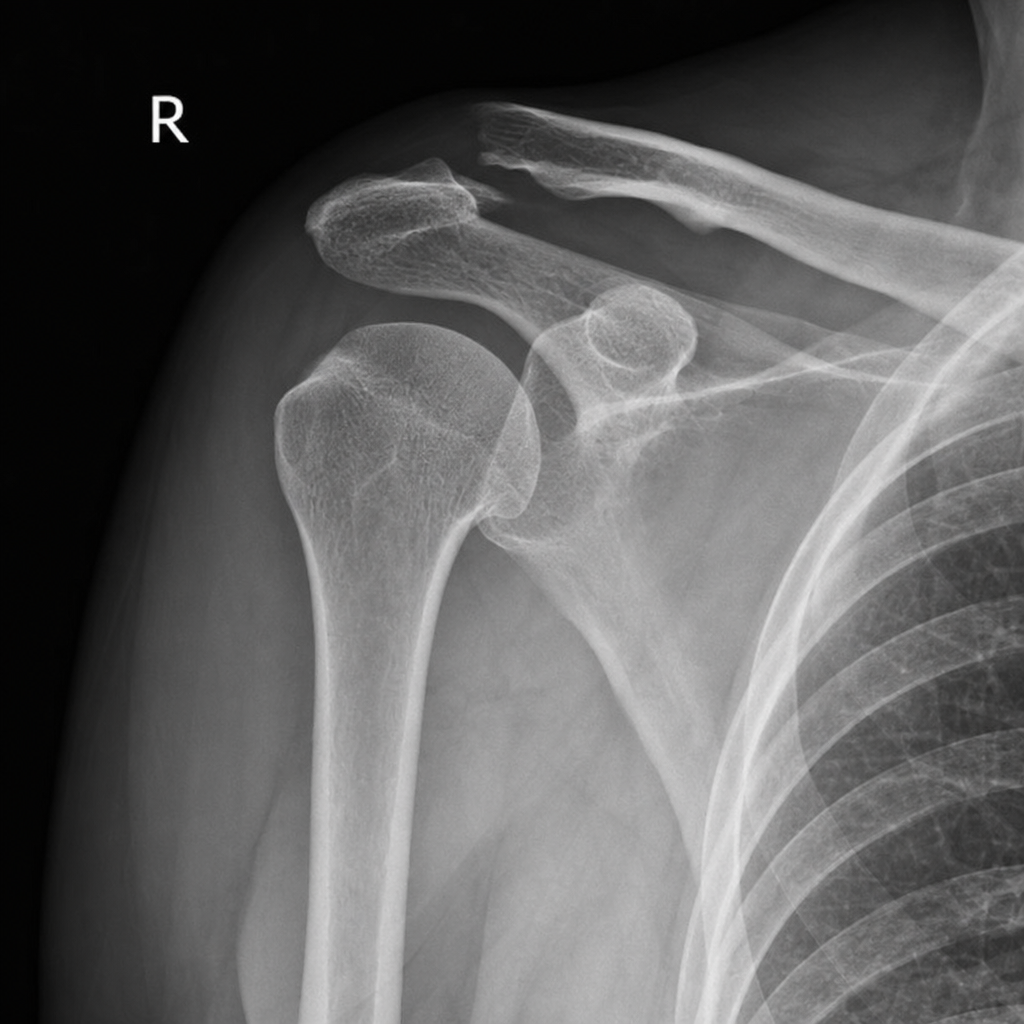
Explanation: The shoulder is the most commonly dislocated joint in the body, and its stability relies heavily on the **glenoid labrum**, a fibrocartilaginous rim that deepens the shallow glenoid fossa. ### **Explanation of the Correct Answer** **C. Crushed glenoidal labrum:** The most common cause of recurrent shoulder dislocation is the **Bankart lesion**. This occurs when the antero-inferior part of the glenoid labrum is avulsed or crushed during the initial traumatic dislocation. This damage destroys the "negative pressure" effect and the mechanical barrier of the joint, allowing the humeral head to slip out repeatedly with minimal force. ### **Analysis of Incorrect Options** * **A. Incomplete labrum:** While anatomical variations exist, an "incomplete" labrum is not a recognized pathological entity causing recurrence; it is the *trauma* to a previously normal labrum that leads to instability. * **B. Superadded secondary infection:** Infection (septic arthritis) leads to joint destruction and stiffness (ankylosis) rather than recurrent instability or dislocation. * **C. Weak posterior capsule:** Posterior capsule weakness would lead to posterior instability. However, 95% of shoulder dislocations are **anterior**. Recurrent dislocation is almost always associated with anterior-inferior capsulolabral defects. ### **Clinical Pearls for NEET-PG** * **Bankart Lesion:** Avulsion of the antero-inferior labrum (Essential lesion for recurrence). * **Hill-Sachs Lesion:** A compression fracture (indentation) on the posterosuperior aspect of the humeral head, caused by impact against the glenoid rim. * **Most common direction:** Anterior-inferior. * **Gold Standard Investigation:** MRI Arthrography (to visualize labral tears). * **Surgical Treatment:** Bankart Repair (reattaching the labrum to the glenoid).
Principles of Fracture Management
Practice Questions
Upper Limb Fractures
Practice Questions
Lower Limb Fractures
Practice Questions
Spinal Trauma
Practice Questions
Pelvic and Acetabular Fractures
Practice Questions
Open Fractures
Practice Questions
Fractures in Children
Practice Questions
Fracture Complications
Practice Questions
Nonunion and Malunion
Practice Questions
Polytrauma Management
Practice Questions
Joint Dislocations
Practice Questions
Soft Tissue Injuries
Practice Questions
Get full access to all questions, explanations, and performance tracking.
Start For Free