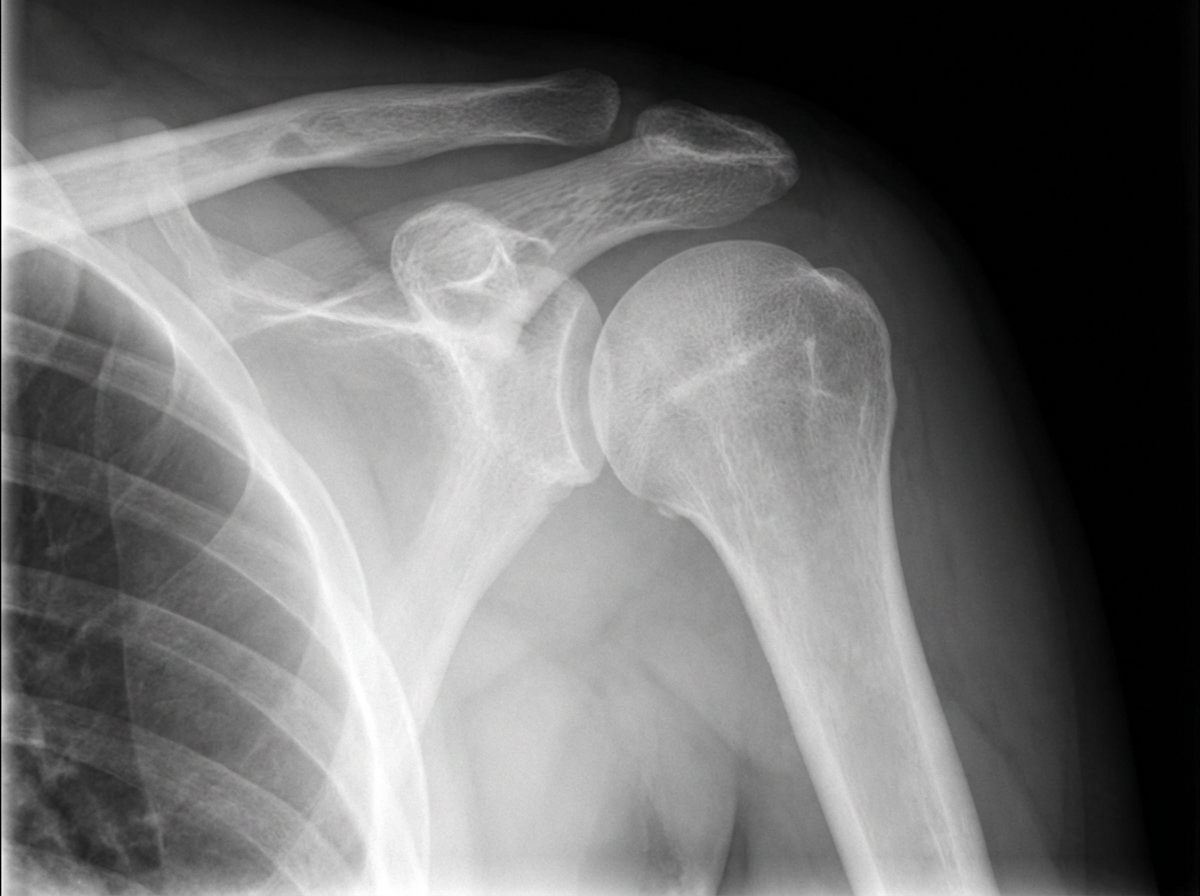
Which of the following is true of fat embolism?
What is the permissible ischemia time for proximal limb amputations?
The femur is fractured at which location?

Three bony point relationship is maintained in which of the following conditions?
All of the following show compression osteosynthesis except:
Which condition presents with the vascular sign of Narath?
For which fracture is a tube (cylinder) cast typically applied?
Which of the following statements is true regarding fat embolism?
A 50-year-old male presented to the orthopedic OPD for regular follow-up, being treated for a forearm injury marked in a specimen. During examination, the doctor elicited a specific sign by tapping distal to the injury site, causing the patient to feel a tingling sensation. What is the rate of growth of the injured structure's stump?

All of the following is true about thoracic outlet syndrome except?
Explanation: **Explanation:** Fat Embolism Syndrome (FES) typically occurs 24–72 hours after long bone fractures (e.g., femur). The pathophysiology involves mechanical obstruction by fat globules and biochemical injury from free fatty acids. **Why Thrombocytopenia is Correct:** Thrombocytopenia (Platelet count <150,000/mm³) is a hallmark of FES and a part of **Gurd’s Minor Criteria**. It occurs because platelets adhere to the circulating fat globules, leading to sequestration and consumption. This process, often accompanied by a drop in hemoglobin, contributes to the characteristic **petechial rash** seen in the conjunctiva, axilla, and neck. **Why the other options are incorrect:** * **Macroglobulinemia:** This refers to an excess of immunoglobulins (as seen in Waldenström's). It is not a feature of FES. While "free fat" is present in the blood, it does not involve macroglobulins. * **Prothrombin Time (PT):** While FES can rarely trigger Disseminated Intravascular Coagulation (DIC) in severe cases, an isolated increase in PT is not a standard diagnostic feature or a primary finding of the syndrome itself. **High-Yield Clinical Pearls for NEET-PG:** * **Gurd’s Major Criteria:** 1. Respiratory insufficiency (Hypoxemia), 2. Cerebral involvement (Confusion/Coma), 3. Petechial rash (Pathognomonic). * **Snowstorm Appearance:** Classic finding on Chest X-ray (diffuse bilateral pulmonary infiltrates). * **Earliest Sign:** Tachycardia. * **Diagnosis:** Primarily clinical. * **Management:** Supportive (Oxygenation is key). Early stabilization/fixation of fractures is the best preventive measure.
Explanation: **Explanation:** The permissible ischemia time for an amputated part is dictated by the amount of muscle mass present. Muscle is highly sensitive to hypoxia; irreversible changes and necrosis begin within a few hours of oxygen deprivation. **1. Why 6 hours is correct:** Proximal limb amputations (e.g., arm, thigh) involve large volumes of skeletal muscle. Under **warm ischemia** (room temperature), the threshold for irreversible muscle necrosis is approximately **6 hours**. Replanting a limb after this window significantly increases the risk of "Reperfusion Injury" and "Crush Syndrome," where the release of myoglobin, potassium, and lactic acid into the systemic circulation can lead to acute renal failure and cardiac arrhythmias. **2. Analysis of Incorrect Options:** * **4 hours (A):** While safe, it is not the maximum permissible limit. * **8 hours (C) & 12 hours (D):** These exceed the safe threshold for warm ischemia in proximal segments. However, these timeframes are relevant for **distal amputations** (fingers/toes) because they contain minimal muscle and can tolerate longer periods of ischemia (up to 8 hours warm and 24+ hours cold). **Clinical Pearls for NEET-PG:** * **Cold Ischemia:** Cooling the amputated part (4°C) doubles the permissible time. For proximal limbs, cold ischemia time is **12 hours**; for distal parts, it can extend to **24 hours**. * **Golden Rule of Transport:** "Wrap in saline-soaked gauze, place in a plastic bag, and immerse the bag in a container of ice water." Never place the part directly on ice (prevents frostbite). * **Sequence of Repair in Replantation:** Bone fixation → Extensor tendons → Flexor tendons → Arteries → Nerves → Veins → Skin. (Mnemonic: **BEF-A-N-V-S**).
Explanation: ***Upper third of shaft*** - The **upper third of the femoral shaft** is anatomically defined as the proximal portion between the **lesser trochanter** and the junction with the middle third. - Fractures here are significant due to **deforming muscle forces** - the **iliopsoas** and **gluteal muscles** cause **flexion and abduction** of the proximal fragment, making reduction challenging. *Middle third of shaft* - This region lies between the upper and lower thirds, roughly at the **mid-diaphysis** of the femur. - While common for femoral shaft fractures, it lacks the specific **anatomical landmarks** and **muscle deformity patterns** characteristic of upper third fractures. *Lower third of shaft* - Located in the **distal diaphysis**, approaching the **supracondylar region** near the knee joint. - Fractures here may involve the **gastrocnemius muscle** causing **posterior angulation** of the distal fragment, different from upper third mechanics. *Neck region* - Refers to the **femoral neck** between the **femoral head** and **intertrochanteric region**, not the shaft. - **Femoral neck fractures** have different classification systems (**Garden classification**) and are typically **intracapsular** with risk of **avascular necrosis**.
Explanation: ### Explanation The **three bony point relationship** refers to the anatomical alignment of the **medial epicondyle, lateral epicondyle, and the tip of the olecranon**. In an extended elbow, these three points lie in a straight horizontal line; in a flexed elbow (90°), they form an equilateral triangle. #### Why Option A is Correct: In a **Supracondylar fracture of the humerus**, the fracture line is proximal to the epicondyles. Since the entire distal fragment (including both epicondyles and the olecranon) moves together, the anatomical relationship between these three points remains **undisturbed**. This is a crucial clinical feature used to differentiate it from elbow dislocation. #### Why Other Options are Incorrect: * **B. Dislocation of elbow:** This involves the displacement of the ulna (olecranon) relative to the humerus (epicondyles). Therefore, the triangle is **distorted**. * **C. Fracture of lateral condyle:** Since one of the three points (the lateral epicondyle) is fractured and displaced, the relationship is **disturbed**. * **D. Intercondylar fracture:** This involves a "T" or "Y" shaped break between the two condyles, leading to a change in the relative position of the epicondyles, thus **distorting** the triangle. #### High-Yield Clinical Pearls for NEET-PG: * **Differentiating Point:** The maintenance of the three-point relationship is the most important clinical sign to distinguish Supracondylar Fracture (maintained) from Elbow Dislocation (disturbed). * **Supracondylar Fracture:** Most common elbow fracture in children. The most common type is the **Extension type** (95%). * **Complications:** Watch for **Volkmann’s Ischemic Contracture (VIC)** due to brachial artery injury and **Gunstock deformity** (Cubitus varus) due to malunion.
Explanation: **Explanation:** The core concept of **Compression Osteosynthesis** is the application of pressure across a fracture site to achieve primary bone healing. This stability minimizes interfragmentary motion and promotes direct cortical remodeling without callus formation. **Why Champy’s Miniplates are the correct answer:** Champy’s miniplates utilize the principle of **Stress Sharing (Semi-rigid fixation)** rather than compression. They are primarily used in mandibular fractures along "lines of tension." Instead of compressing the bone ends together, they neutralize tension forces while allowing the bone to bear the functional compressive load. Because they do not actively squeeze the fracture fragments together, they do not provide compression osteosynthesis. **Analysis of Incorrect Options:** * **Dynamic Compression Plates (DCP):** These achieve horizontal compression through the "spherical gliding principle." The screw head slides down the inclined plane of the plate hole, shifting the bone fragment toward the fracture line. * **Eccentric Compression Plates:** These are a variation of compression plating where screws are placed at the periphery (eccentrically) of the plate holes to exert a compressive force across the fracture. * **Lag Screw:** This is the most fundamental method of achieving **interfragmentary compression**. By engaging threads only in the far cortex, the screw pulls the two fragments together as it is tightened. **High-Yield Clinical Pearls for NEET-PG:** * **Primary Bone Healing:** Occurs with rigid internal fixation (compression) and involves Haversian remodeling (no callus). * **Secondary Bone Healing:** Occurs with relative stability (e.g., intramedullary nails, casts) and involves callus formation. * **Gold Standard for Interfragmentary Compression:** The Lag Screw. * **Champy’s Principle:** Specifically refers to internal fixation of the mandible at the "ideal lines of osteosynthesis."
Explanation: **Explanation:** The **Vascular Sign of Narath** is a clinical finding specifically associated with **congenital or traumatic posterior dislocation of the hip**. **1. Why Dislocation of the Hip is correct:** In a normal hip, the head of the femur lies directly behind the femoral artery in the groin, providing a solid "floor" or resistance. When the femoral head is dislocated (typically posteriorly), this bony support is lost. Consequently, when a clinician palpates the femoral artery in the femoral triangle, the pulsations feel significantly **diminished or hollow** because the artery has "sunken" into the empty acetabular space. This phenomenon is Narath’s sign. **2. Why other options are incorrect:** * **Dislocation of the Knee:** While vascular assessment is critical here (due to potential Popliteal artery injury), it does not involve Narath’s sign, which is specific to the femoral head/acetabulum relationship. * **Dislocation of the Elbow:** Associated with Brachial artery injuries (especially in supracondylar fractures), but not Narath’s sign. * **Dislocation of the Shoulder:** May involve Axillary artery or nerve injuries, but the anatomical "hollow" sign described by Narath is unique to the hip. **3. Clinical Pearls for NEET-PG:** * **Posterior Dislocation (Most Common):** Presents with a limb that is **Shortened, Adducted, and Internally Rotated**. * **Anterior Dislocation:** Presents with a limb that is **Abducted and Externally Rotated**. * **Associated Nerve Injury:** The **Sciatic nerve** (specifically the peroneal division) is most commonly injured in posterior hip dislocations. * **Emergency Status:** Hip dislocation is an orthopedic emergency due to the high risk of **Avascular Necrosis (AVN)** of the femoral head.
Explanation: **Explanation:** A **Tube Cast (Cylinder Cast)** is a specialized orthopedic cast that extends from the upper thigh to just above the malleoli (ankles). Its primary purpose is to immobilize the **knee joint** while allowing the patient to remain mobile and bear weight through the foot. **Why Option D is Correct:** The cylinder cast is specifically designed for injuries where the knee must be kept in extension but the ankle does not require immobilization. It is the treatment of choice for: * **Patellar fractures** (undisplaced or post-fixation). * **Patellar tendon or Quadriceps tendon ruptures** (after surgical repair). * **Reduced knee dislocations** to maintain stability. * **Stable ligamentous injuries** of the knee. **Why Other Options are Incorrect:** * **A. Shoulder:** Injuries here require a U-slab, shoulder spica, or a simple sling/Velpeau bandage. * **B. Hip:** Hip fractures or dislocations require a **Hip Spica** cast, which incorporates the trunk and the affected limb. * **C. Pelvis:** Pelvic fractures are managed with pelvic binders, external fixators, or bed rest; casts are not used due to the anatomy of the pelvic ring. **High-Yield Clinical Pearls for NEET-PG:** * **Position:** A cylinder cast is usually applied with the knee in **0° to 5° of flexion** to prevent stiffness in full extension. * **Prevention of Slippage:** To prevent the cast from sliding down the tapering leg, the padding is often applied over a layer of tincture of benzoin or the cast is molded carefully above the femoral condyles. * **Distinction:** Unlike a "Long Leg Cast," the cylinder cast **excludes the foot and ankle**, allowing for normal ankle range of motion and easier ambulation.
Explanation: ### Explanation **Fat Embolism Syndrome (FES)** is a clinical diagnosis resulting from the systemic release of fat globules into the circulation, most commonly following fractures of long bones (like the femur) or the pelvis. **1. Why Option A is Correct:** Fat globules are released into the bloodstream in nearly **90% of patients** with major long-bone trauma. These globules are filtered by the kidneys and excreted in the urine. Therefore, while **lipuria** (urinary fat globules) is a very common finding in trauma patients, it is a non-specific marker and does not necessarily mean the patient has the clinical "syndrome." **2. Why the Other Options are Incorrect:** * **Option B:** Presence of fat globules in urine or sputum is a sign of fat embolism (the process) but not **Fat Embolism Syndrome** (the clinical disease). Most patients with lipuria remain asymptomatic. * **Option C:** The peak incidence of respiratory insufficiency and clinical symptoms typically occurs **24 to 72 hours** (1–3 days) after the injury, not day 7. * **Option D:** Heparin was historically used to clear lipemia, but it is **no longer recommended** because it increases the fraction of free fatty acids (which are lung-toxic) and increases the risk of bleeding in trauma patients. It does not decrease mortality. **Clinical Pearls for NEET-PG:** * **Gurd’s Criteria:** Used for diagnosis. Major criteria include **axillary/subconjunctival petechiae**, respiratory insufficiency, and cerebral involvement (confusion/coma). * **Snowstorm Appearance:** Classic finding on Chest X-ray (diffuse bilateral pulmonary infiltrates). * **Treatment:** Primarily **supportive** (Oxygenation/Ventilation). Early stabilization and internal fixation of fractures is the best way to **prevent** FES. * **Free Fatty Acids:** The chemical theory suggests that the breakdown of fat into free fatty acids causes direct toxic damage to pneumocytes.
Explanation: ***1-3 mm/day*** - The **Tinel's sign** (tingling sensation when tapping distal to injury site) indicates **peripheral nerve regeneration** at a rate of **1-3 mm/day**. - This rate is crucial for predicting **recovery timeline** and determining when functional improvement might be expected after nerve injury. *10-15 mm/day* - This rate is **significantly higher** than physiological nerve regeneration capacity and would be unrealistic for biological tissue repair. - Such rapid growth would exceed the metabolic capacity of **Schwann cells** and axonal transport mechanisms. *25-30 mm/day* - This rate is **extremely excessive** and incompatible with normal cellular regeneration processes in peripheral nerves. - **Axonal sprouting** and **remyelination** require precise coordination that cannot occur at such accelerated rates. *None of the above* - This option is incorrect as **1-3 mm/day** is the well-established rate for **peripheral nerve regeneration**. - The presence of **Tinel's sign** specifically indicates ongoing nerve repair at this documented physiological rate.
Explanation: **Explanation:** Thoracic Outlet Syndrome (TOS) is a clinical condition resulting from the compression of neurovascular structures (brachial plexus and/or subclavian vessels) as they pass through the superior thoracic aperture. **1. Why Option D is the correct answer (False statement):** In neurogenic TOS, the **lower trunk (C8-T1)** of the brachial plexus is most commonly affected, not the upper trunk. This is because the lower trunk lies directly over the first rib or a cervical rib, making it highly susceptible to mechanical compression or stretching. This typically results in symptoms along the ulnar nerve distribution (medial forearm and hand). **2. Analysis of incorrect options (True statements):** * **Option A:** **Adson’s test** is a classic provocative maneuver where the patient’s arm is abducted, and the head is rotated toward the affected side while taking a deep breath. A disappearance or weakening of the radial pulse suggests TOS. * **Option B:** A **cervical rib** (an accessory rib arising from the C7 vertebra) is a well-known anatomical predisposition that narrows the interscalene triangle, leading to compression. * **Option C:** Sensory symptoms like **pain, numbness, and paresthesia** are the hallmark of neurogenic TOS (the most common type, seen in >90% of cases). **Clinical Pearls for NEET-PG:** * **Most common type:** Neurogenic TOS (95%), followed by Venous (Paget-Schroetter syndrome), and Arterial. * **Gilliatt-Sumner Hand:** Wasting of the thenar and hypothenar muscles (intrinsic hand muscles) due to chronic lower trunk compression. * **Roos Test (Elevated Arm Stress Test):** Considered the most sensitive clinical test for TOS. * **Radiology:** X-ray of the cervical spine is the initial investigation to look for a cervical rib or elongated C7 transverse process.
Principles of Fracture Management
Practice Questions
Upper Limb Fractures
Practice Questions
Lower Limb Fractures
Practice Questions
Spinal Trauma
Practice Questions
Pelvic and Acetabular Fractures
Practice Questions
Open Fractures
Practice Questions
Fractures in Children
Practice Questions
Fracture Complications
Practice Questions
Nonunion and Malunion
Practice Questions
Polytrauma Management
Practice Questions
Joint Dislocations
Practice Questions
Soft Tissue Injuries
Practice Questions
Get full access to all questions, explanations, and performance tracking.
Start For Free