Bohler's angle is used in the assessment of fractures of which bone?
Fat embolism syndrome is characterized by which of the following?
What is the number of plates typically required for the surgical management of a fracture involving the external oblique ridge area?
The lesions associated with recurrent dislocation of the shoulder include all, except?
Nonunion is a very common complication of intracapsular fractures of the neck of femur. Which of the following is not a very important cause for the same?
Jumper's fracture is seen in which bone?
All of the following are indications for open reduction and internal fixation of fractures except?
A 7-year-old boy has a fracture of the lateral condyle of the femur. He developed malunion because the fracture was not reduced anatomically. What would malunion of the lateral condyle of the femur produce?
Diagnosis of thoracic outlet syndrome is made by which one of the following?
Foot drop results due to injury to which nerve?
Explanation: **Explanation:** **Bohler’s Angle** (also known as the Tuber-joint angle) is a crucial radiological parameter used to assess the severity of **Calcaneum (Heel bone)** fractures, particularly intra-articular fractures. 1. **Why Calcaneum is Correct:** Bohler’s angle is formed by the intersection of two lines on a lateral X-ray of the foot: * Line 1: From the highest point of the posterior facet to the highest point of the anterior process. * Line 2: From the highest point of the posterior facet to the highest point of the posterior tuberosity. The **normal range is 20° to 40°**. In calcaneal fractures, the bone is compressed, causing the angle to **decrease** (often becoming less than 20° or even negative). A decreased angle indicates a loss of posterior facet height and helps determine the need for surgical intervention. 2. **Why Other Options are Incorrect:** * **Scaphoid:** Assessment usually involves the scapholunate angle or Gilula’s lines. * **Talus:** Fractures (like Hawkins' classification) are assessed using the **Hawkins sign** (subchondral lucency indicating intact vascularity). * **Navicular:** Fractures here are typically evaluated for dorsal cortical avulsions or stress fractures using standard AP/Lateral views, not Bohler’s angle. **High-Yield Clinical Pearls for NEET-PG:** * **Gissane’s Angle:** Another important angle for calcaneal fractures (Normal: 120°–145°); it **increases** in fractures. * **Mechanism of Injury:** Calcaneal fractures often result from a fall from height (Don Juan Syndrome), frequently associated with **compression fractures of the lumbar spine** (L1). * **Mondor’s Sign:** Ecchymosis extending to the sole of the foot, pathognomonic for calcaneal fracture.
Explanation: **Explanation:** Fat Embolism Syndrome (FES) is a systemic inflammatory response to fat globules released into the circulation, typically following fractures of long bones (e.g., femur, tibia) or pelvic fractures. The diagnosis is primarily clinical, based on **Gurd’s Criteria**. 1. **Hypoxemia (B):** This is the most common early sign and a Major Criterion. Fat globules and free fatty acids cause direct endothelial damage in the pulmonary capillaries, leading to acute respiratory distress and impaired gas exchange. 2. **Tachycardia (A):** This is a Minor Criterion. It occurs as a compensatory response to hypoxia and systemic inflammatory response syndrome (SIRS). 3. **Fat globules in urine (C):** This is also a Minor Criterion (Lipuria). As fat enters the systemic circulation, it can be filtered by the kidneys and detected in the urine. Since all three features are recognized components of the clinical presentation and Gurd’s criteria, **Option D (All of the above)** is the correct answer. **High-Yield Clinical Pearls for NEET-PG:** * **Classic Triad:** Dyspnea (Respiratory distress), Mental confusion (Cerebral involvement), and Petechial rashes (typically over the chest, axilla, and conjunctiva). * **Gurd’s Major Criteria:** Axillary/Subconjunctival petechiae, Hypoxemia ($PaO_2 < 60$ mmHg), CNS depression, and Pulmonary edema. * **Snowstorm Appearance:** The characteristic finding on a Chest X-ray (diffuse bilateral infiltrates). * **Treatment:** Primarily supportive (Oxygenation/Ventilation). Early stabilization and internal fixation of fractures are the best preventive measures. * **Free Fatty Acids:** These are the primary chemical mediators responsible for the lung parenchymal damage.
Explanation: **Explanation:** The surgical management of mandibular fractures is governed by **Champy’s Principle** of functional stable fixation. This principle is based on the concept of "ideal lines of osteosynthesis." **Why Option A is Correct:** In the region of the **external oblique ridge (mandibular angle)**, the biomechanical forces create a tension zone along the superior border. Champy demonstrated that a **single non-compression miniplate** (usually 2.0 mm) placed along this superior border (the external oblique ridge) is sufficient to neutralize the distracting tensile forces. Because the thick cortical bone in this area provides excellent stability and the presence of the masseter and medial pterygoid muscles creates a "muscular sling" that helps approximate the fragments, a second plate is unnecessary and may even interfere with the inferior alveolar nerve. **Why Other Options are Incorrect:** * **Option B (2 Plates):** While two plates are often required for fractures in the **symphysis or parasymphysis** region (to counteract both tension at the top and torsion/compression at the bottom), the angle/external oblique ridge requires only one due to the specific biomechanical environment. * **Option C (3 Plates):** This is never a standard protocol for simple angle fractures and would represent over-treatment, increasing the risk of infection and hardware prominence. * **Option D (None):** Displaced fractures of the external oblique ridge typically require Open Reduction and Internal Fixation (ORIF) to restore occlusion and function. **High-Yield Clinical Pearls for NEET-PG:** * **Champy’s Line:** The ideal line for plate placement at the angle is the superior border/external oblique ridge. * **Symphysis/Parasymphysis:** Requires **two** miniplates (one at the subapical position and one at the lower border) to prevent rotation. * **Most common site of Mandible Fracture:** Condyle (overall), but the **Angle** is the most common site for fractures associated with impacted third molars. * **Nerve at risk:** The Inferior Alveolar Nerve (IAN) runs through this region; monocortical screws are used to avoid damaging it.
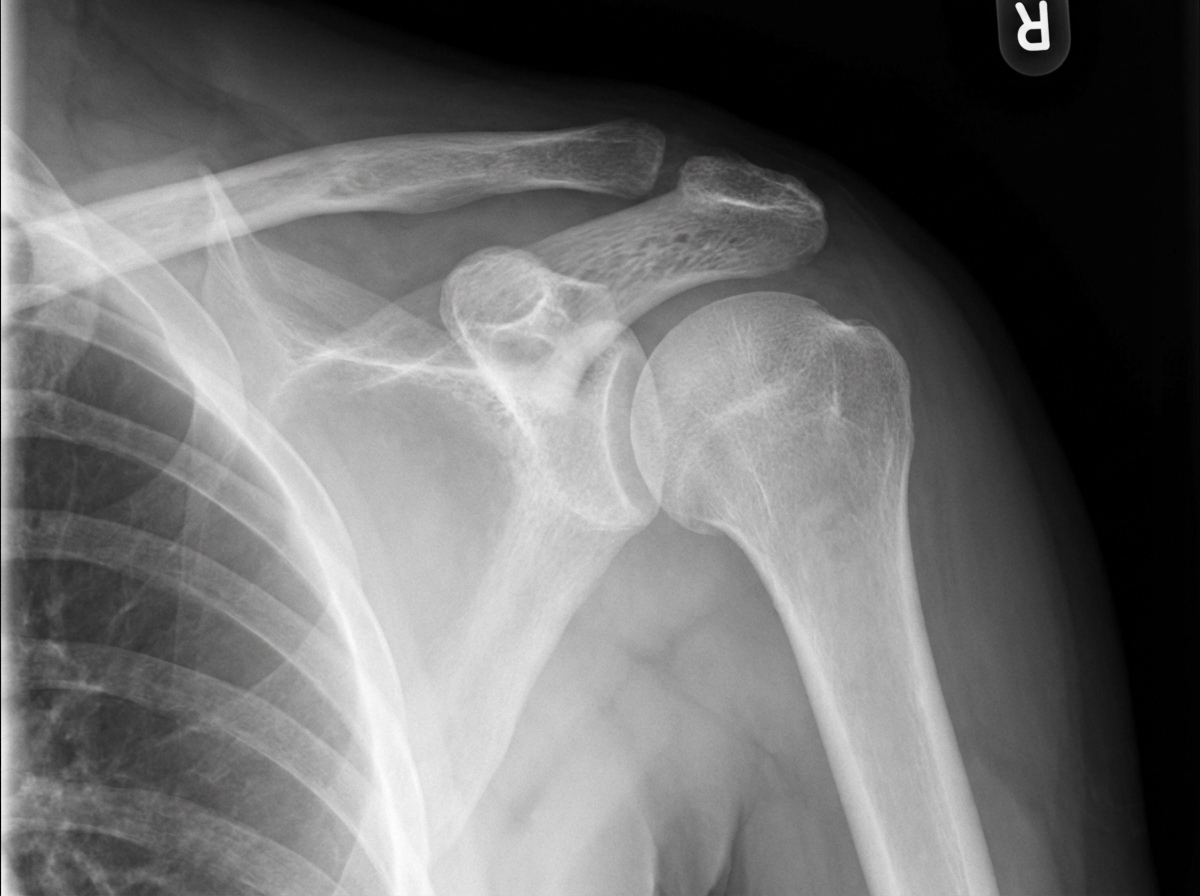
Explanation: **Explanation:** The stability of the glenohumeral joint depends on static stabilizers (labrum, ligaments, capsule) and dynamic stabilizers (rotator cuff muscles). Recurrent shoulder dislocation is most commonly **anterior** and is typically associated with structural damage to the anteroinferior stabilizers. **Why Supraspinatus tear is the correct answer:** A **Supraspinatus tear** is a feature of rotator cuff pathology and is more commonly associated with **acute traumatic dislocations in elderly patients** (due to age-related tendon degeneration). In the context of "recurrent dislocation" (typically seen in younger patients), the primary pathology involves the labrum and capsule rather than a full-thickness rotator cuff tear. **Analysis of incorrect options:** * **Bankart’s lesion:** This is the "essential lesion" of recurrent dislocation. It involves an avulsion of the anteroinferior glenoid labrum along with the anterior capsuloperiosteal sleeve. * **Hill-Sachs lesion:** A compression fracture of the posterolateral aspect of the humeral head, caused by the humeral head striking the sharp anterior glenoid rim during dislocation. It is present in up to 80% of recurrent cases. * **Capsular laxity:** Repeated dislocations lead to stretching and redundancy of the joint capsule (especially the inferior glenohumeral ligament complex), which facilitates further instability. **High-Yield Pearls for NEET-PG:** * **ALPSA Lesion:** Anterior Labral Periosteal Sleeve Avulsion (similar to Bankart but the labrum is displaced medially). * **HAGL Lesion:** Humeral Avulsion of Glenohumeral Ligaments. * **Bony Bankart:** When the anteroinferior glenoid rim itself is fractured. * **Putti-Platt/Magnuson-Stack:** Historical surgeries for recurrent dislocation (now largely replaced by Bankart repair).
Explanation: **Explanation:** Intracapsular fractures of the neck of femur are notorious for high rates of nonunion (up to 30%). This is primarily due to the unique anatomical and biological environment of the hip joint. **Why Option D is the Correct Answer:** While muscle spasms (specifically from the abductors and iliopsoas) can cause displacement of the fracture fragments, they are **not** considered a primary biological or mechanical cause of nonunion in this region. In contrast, the other options represent the classic "triad" of factors that prevent healing in the femoral neck. **Analysis of Other Options:** * **Inadequate Blood Supply (Option B):** This is the most critical factor. The femoral neck is an intracapsular structure. The primary blood supply (retinacular vessels from the medial circumflex femoral artery) is often torn during the fracture, leading to ischemia and poor healing potential. * **Inhibitory Effect of Synovial Fluid (Option C):** The fracture is bathed in synovial fluid, which contains **fibrinolysins**. These enzymes dissolve the initial fracture hematoma (the essential primary scaffold for callus formation), thereby hindering the healing process. * **Inadequate Immobilization (Option A):** The femoral neck lacks a periosteal layer (it only has an endosteum). Healing occurs mainly through internal callus formation, which requires absolute stability. Any shearing force or inadequate fixation easily disrupts this delicate process. **NEET-PG High-Yield Pearls:** 1. **Pauwels’ Classification:** Higher angles (Type III > 50°) indicate increased shearing forces and a higher risk of nonunion. 2. **Garden’s Classification:** Used to assess displacement; Stages III and IV have the highest risk of Avascular Necrosis (AVN) and nonunion. 3. **Ward’s Triangle:** An area of low bone density in the neck of the femur, often the site where fractures initiate. 4. **Management:** In young patients, the goal is "Life is purposeful, save the head" (ORIF); in elderly patients, "Life is precious, replace the head" (Arthroplasty).
Explanation: **Explanation:** **Jumper’s Fracture** refers to a fracture of the **Patella**. The patella is a sesamoid bone embedded within the quadriceps tendon and patellar ligament complex. The mechanism of injury typically involves a sudden, forceful contraction of the quadriceps muscle while the knee is in a flexed position (eccentric loading), commonly seen in athletes or individuals performing repetitive jumping activities. This leads to either a stress fracture or an acute transverse fracture of the patella. **Analysis of Options:** * **Calcaneum (Option A):** Known as **Lover’s Fracture** (Don Juan fracture). It typically occurs after a fall from a height where the patient lands on their heels, often associated with concomitant compression fractures of the lumbar spine. * **Tibia (Option B):** Fractures of the proximal tibia are called Tibial Plateau fractures (e.g., Bumper fracture). Stress fractures of the tibia are common in runners but are not termed "Jumper’s fracture." * **Femoral Neck (Option D):** These are common in the elderly (osteoporotic) or young adults (high-energy trauma). A specific stress fracture here is seen in long-distance runners, but not jumpers. **Clinical Pearls for NEET-PG:** * **Jumper’s Knee:** Distinct from Jumper’s fracture, this refers to **Patellar Tendonitis** (inflammation of the patellar tendon at the inferior pole). * **Bipartite Patella:** A common radiological mimic of a fracture, usually located in the **superolateral** quadrant. * **Management:** Displaced patellar fractures (>2mm displacement or loss of extensor mechanism) are treated with **tension band wiring (TBW)**, which converts distracting forces into compressive forces across the fracture site.
Explanation: ### Explanation The goal of fracture management is to achieve union with optimal functional recovery. While many fractures are managed conservatively, specific indications necessitate **Open Reduction and Internal Fixation (ORIF)**. **Why "Compound Fracture" is the correct answer:** In the context of this question, a **Compound (Open) fracture** is considered a relative contraindication for immediate *Internal* fixation, especially in high-grade injuries (Gustilo-Anderson Grade IIIB or IIIC). The primary concern in open fractures is **contamination and infection**. Placing permanent internal hardware (like plates or nails) in a contaminated field can lead to chronic osteomyelitis. The standard of care is thorough debridement followed by **External Fixation** or delayed internal fixation once the soft tissue envelope is healthy. **Analysis of Incorrect Options:** * **Unsatisfactory closed reduction:** If an acceptable alignment cannot be achieved or maintained by closed methods (e.g., soft tissue interposition), surgery is mandatory to prevent malunion. * **Multiple trauma:** In "polytrauma" patients, early stabilization of long bone fractures (Damage Control Orthopaedics) reduces the risk of Fat Embolism Syndrome and allows for early mobilization, which is life-saving. * **Intra-articular fracture:** These require **anatomical reduction** to restore joint congruity and prevent early-onset secondary osteoarthritis. This precision is rarely achievable without open visualization. **NEET-PG High-Yield Pearls:** * **Absolute Indications for ORIF:** Displaced intra-articular fractures, failed closed reduction, and fractures where the primary treatment is surgery (e.g., Neck of Femur). * **NOF (Neck of Femur):** Always requires internal fixation or replacement because the precarious blood supply makes conservative management impossible. * **Golden Rule:** "Life before limb, limb before wound." In open fractures, the priority is debridement and preventing sepsis.
Explanation: **Explanation:** The lateral condyle of the femur forms the lateral half of the distal femoral articular surface. In a growing child, the distal femoral epiphysis is responsible for significant longitudinal growth. **Why Genu Valgum is Correct:** When a fracture of the lateral condyle undergoes malunion (specifically if it is displaced or results in premature physeal closure/overgrowth), it alters the mechanical alignment of the knee. If the lateral condyle is displaced superiorly or fails to grow at the same rate as the medial side, the lateral support of the joint is compromised. This leads to an outward deviation of the tibia relative to the femur, resulting in a **"knock-knee"** deformity, known as **Genu Valgum**. **Analysis of Incorrect Options:** * **Genu Varum (B):** This "bow-legged" deformity occurs when there is a medial compartment collapse or malunion of the **medial condyle**. * **Genu Recurvatum (C):** This refers to hyperextension of the knee. It typically occurs due to malunion of the proximal tibia or an anterior physeal arrest of the distal femur/proximal tibia, rather than a single condylar injury. * **Dislocation of the knee (D):** While malunion causes joint incongruity and secondary osteoarthritis, it does not typically cause acute or chronic dislocation, which requires high-energy ligamentous disruption. **NEET-PG Clinical Pearls:** * **Lateral Condyle of Humerus:** The most common site for non-union in children (leads to Cubitus Valgus and Tardy Ulnar Nerve Palsy). * **Lateral Condyle of Femur:** Malunion here leads to Genu Valgum. * **Milch Classification:** Used for condylar fractures; anatomical reduction is mandatory to prevent growth arrest and angular deformities. * **Growth Contribution:** The distal femoral epiphysis contributes approximately 70% of the femur's length and 40% of the overall limb length.
Explanation: **Explanation:** Thoracic Outlet Syndrome (TOS) is primarily a **clinical diagnosis**. It refers to the compression of the neurovascular bundle (brachial plexus, subclavian artery, or subclavian vein) as it passes through the thoracic outlet. 1. **Why Clinical Evaluation is Correct:** The diagnosis is established through a detailed history and provocative physical examination maneuvers. Since over 90% of TOS cases are **neurogenic** (involving the brachial plexus), they often do not show structural abnormalities on routine imaging. Clinical tests like **Adson’s test**, **Roos test (Elevated Arm Stress Test)**, and **Wright’s test** are the mainstays for identifying the site of compression. 2. **Why Other Options are Incorrect:** * **CT Scan & MRI:** These are supportive investigations used to rule out differential diagnoses (like cervical disc prolapse) or to identify anatomical predispositions (like a cervical rib or fibrous bands). However, they cannot confirm the functional compression that occurs during movement. * **Angiography:** This is only indicated in **Vascular TOS** (Arterial or Venous), which accounts for less than 5% of cases. It is not the primary diagnostic tool for the most common neurogenic variety. **High-Yield Clinical Pearls for NEET-PG:** * **Most common type:** Neurogenic TOS (95%). * **Most common site of compression:** Interscalene triangle. * **Adson’s Test:** Loss of radial pulse when the patient extends the neck and turns the head *toward* the affected side while taking a deep breath. * **Roos Test:** The most reliable screening test (patient opens/closes hands for 3 minutes with arms abducted). * **Cervical Rib:** The most common bony abnormality associated with TOS.
Explanation: **Explanation:** **Foot drop** is a clinical condition characterized by the inability to dorsiflex the foot at the ankle joint. This occurs due to paralysis of the muscles in the anterior compartment of the leg, which are supplied by the **Common Peroneal Nerve (CPN)**, specifically its deep branch. 1. **Why Common Peroneal Nerve is correct:** The CPN (L4-S2) winds around the neck of the fibula, making it highly susceptible to injury from fractures, tight casts, or compression. It divides into the superficial and deep peroneal nerves. The **Deep Peroneal Nerve** supplies the tibialis anterior, extensor digitorum longus, and extensor hallucis longus. Paralysis of these muscles leads to the loss of dorsiflexion (foot drop) and a characteristic "high-stepping gait." 2. **Why other options are incorrect:** * **Tibial Nerve:** Supplies the posterior compartment (plantar flexors). Injury results in the inability to tip-toe and loss of sensation on the sole. * **Anterior Interosseous Nerve (AIN):** A branch of the Median nerve in the forearm. Injury leads to the inability to make an "O" sign (paralysis of FPL and FDP to index finger). * **Posterior Interosseous Nerve (PIN):** A branch of the Radial nerve. Injury causes "Wrist drop" (or finger drop) but does not affect the lower limb. **High-Yield Clinical Pearls for NEET-PG:** * **Most common site of injury:** Neck of the fibula. * **Gait:** Patients exhibit a **High-stepping gait** to prevent the toes from dragging. * **Sensory loss:** Usually occurs in the first dorsal web space (Deep peroneal) and the lateral aspect of the leg/dorsum of the foot (Superficial peroneal). * **Equinovarus deformity:** May develop due to unopposed action of the Tibial nerve (plantar flexion and inversion).
Principles of Fracture Management
Practice Questions
Upper Limb Fractures
Practice Questions
Lower Limb Fractures
Practice Questions
Spinal Trauma
Practice Questions
Pelvic and Acetabular Fractures
Practice Questions
Open Fractures
Practice Questions
Fractures in Children
Practice Questions
Fracture Complications
Practice Questions
Nonunion and Malunion
Practice Questions
Polytrauma Management
Practice Questions
Joint Dislocations
Practice Questions
Soft Tissue Injuries
Practice Questions
Get full access to all questions, explanations, and performance tracking.
Start For Free