Garden's classification is applicable to which of the following?
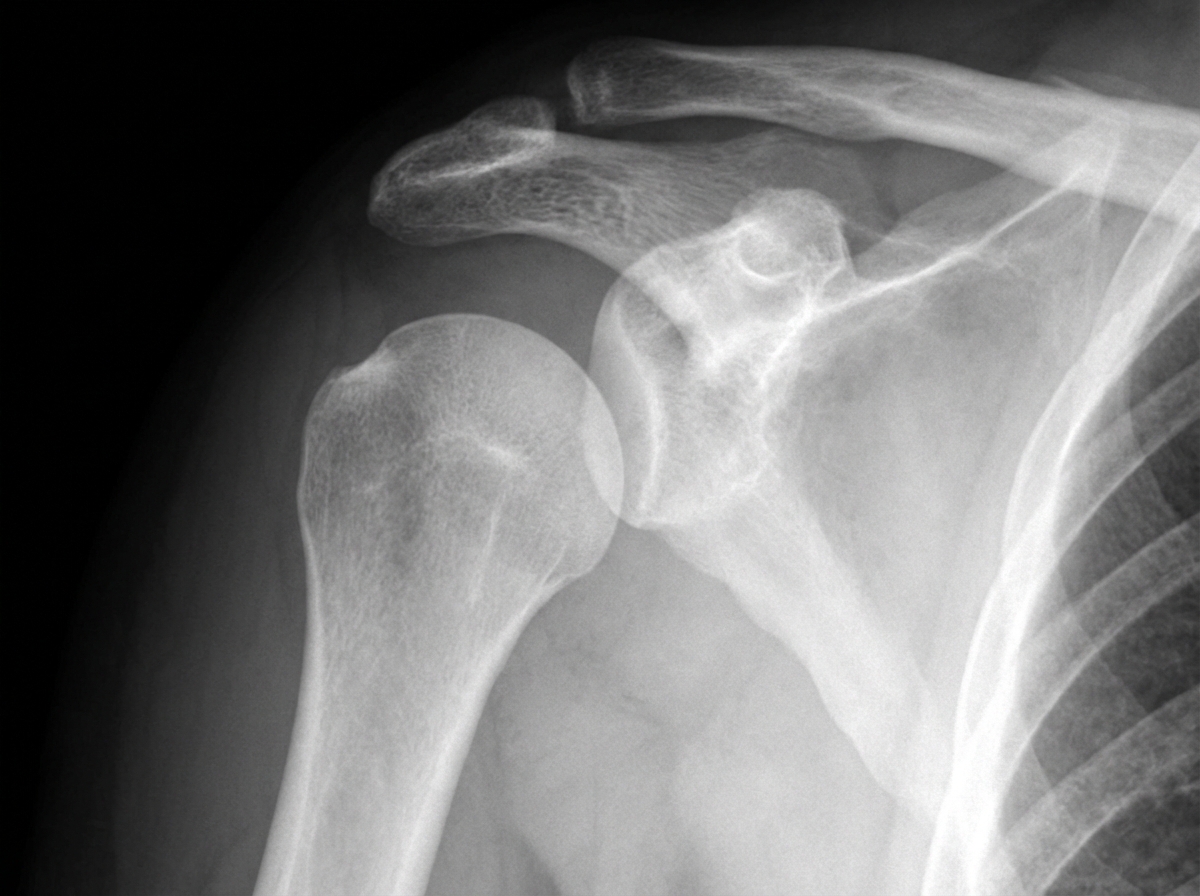
What is the most important physical sign for the diagnosis of anterior instability of the glenohumeral joint?
What is the most common complication of a talar neck fracture?
An 8-year-old boy has a history of a fall from 10 feet with pain in the right ankle. The initial X-ray was normal. Two years later, he developed a calcaneovalgus deformity. What is the likely diagnosis?
Multiple fractures are seen in which of the following conditions?
Gun stock deformity is seen in which of the following conditions?
What is the commonest hip injury in elderly patients?
A man operated for fracture femur developed dyspnea, severe chest pain, streaky hemoptysis, and hypotension on the 4th day. What is the most likely cause?
What is the most common site of a scaphoid fracture?
Fat embolism is commonly seen in:
Explanation: **Garden’s Classification** is the most widely used system for categorizing **subcapital (intracapsular) fractures of the neck of the femur**. It is based on the degree of displacement seen on an anteroposterior (AP) X-ray and is crucial for determining the risk of avascular necrosis (AVN) and the subsequent surgical management. ### Why Option B is Correct: Garden’s classification focuses on the alignment of the **medial trabecular stream** of the femoral neck. It divides fractures into four stages: * **Stage I:** Incomplete or abducted (valgus) impacted fracture. * **Stage II:** Complete fracture but undisplaced. * **Stage III:** Complete fracture with partial displacement (trabeculae are out of line). * **Stage IV:** Complete fracture with total displacement (trabeculae are parallel but shifted). ### Why Other Options are Incorrect: * **A. Intertrochanteric fracture:** These are extracapsular fractures typically classified using the **Boyd and Griffin** or **Evans** classification. * **C. Epiphyseal separation:** In the context of the proximal femur, this refers to Slipped Capital Femoral Epiphysis (SCFE), which uses the **Loder** classification (Stable vs. Unstable). * **D. Posterior dislocation of hip:** This is classified using the **Thompson and Epstein** or **Stewart and Milford** systems. ### High-Yield Clinical Pearls for NEET-PG: 1. **Management Rule:** Stages I & II (Undisplaced) are usually treated with **Internal Fixation** (e.g., Cannulated Cancellous Screws). Stages III & IV (Displaced) in elderly patients are treated with **Arthroplasty** (Hemi or Total Hip) due to the high risk of non-union and AVN. 2. **Pauwels’ Classification:** Another system for neck of femur fractures based on the **angle of the fracture line** (verticality), which indicates shear stress. 3. **Blood Supply:** The main source of blood to the femoral head is the **Medial Circumflex Femoral Artery** (via retinacular vessels), which is frequently disrupted in displaced Garden Stage III and IV fractures.
Explanation: The **Apprehension Test** is the most specific and important clinical sign for diagnosing chronic anterior shoulder instability. ### **Why Apprehension Sign is Correct** Anterior instability usually results from a Bankart lesion (avulsion of the anterior-inferior labrum). When the arm is placed in **abduction and external rotation** (the position of provocation), the humeral head stresses the deficient anterior capsule. The patient experiences a sudden sense of impending dislocation and resists further movement. This subjective feeling of "giving way" or "coming out" is the hallmark of instability. ### **Analysis of Incorrect Options** * **B. Impingement sign (e.g., Neer’s or Hawkins-Kennedy):** These tests are used to diagnose **Rotator Cuff pathology** or subacromial bursitis, where the tendons are pinched under the acromial arch. * **C. Resisted straight arm raising sign (Speed’s Test):** This is used to identify **Bicipital Tendonitis** or SLAP lesions. * **D. Resisted forearm supination sign (Yergason’s Test):** This specifically tests the stability and integrity of the **Long Head of the Biceps** tendon in the bicipital groove. ### **High-Yield Clinical Pearls for NEET-PG** * **Relocation Test (Jobe’s Test):** If a posterior force is applied to the humerus during a positive apprehension test, the pain/apprehension disappears. This confirms the diagnosis of anterior instability. * **Bankart Lesion:** The most common cause of recurrent anterior dislocation (detachment of the anteroinferior labrum). * **Hill-Sachs Lesion:** A compression fracture of the posterolateral humeral head, often seen on X-ray (Stryker notch view). * **Most common type of shoulder dislocation:** Anterior (95%). * **Nerve most commonly injured:** Axillary nerve (Regimental badge sign).
Explanation: **Explanation:** The talus is a unique bone with no muscle attachments and approximately 60% of its surface covered by articular cartilage. Talar neck fractures are high-energy injuries typically classified by the **Hawkins Classification**. **1. Why Option D is Correct:** While Avascular Necrosis (AVN) is the most "famous" complication, **Post-traumatic Osteoarthritis (OA)** is statistically the **most common** complication overall. Specifically, OA of the **subtalar joint** occurs in nearly 50–90% of cases. This is due to the initial cartilage damage at the time of injury and the difficulty in achieving perfect anatomical reduction of the complex subtalar articular surface. **2. Analysis of Incorrect Options:** * **A. Avascular Necrosis:** This is the most *characteristic* and feared complication due to the retrograde blood supply (via the artery of the tarsal canal). However, its incidence varies by Hawkins type (Type I: 0-15%, Type IV: 100%). Across all types, subtalar OA remains more frequent than AVN. * **B. Nonunion:** This is relatively rare in talar neck fractures (approx. 5%) because the bone is mostly cancellous, which generally heals well if stabilized. * **C. Osteoarthritis of the ankle joint:** While common (especially in Hawkins Type III and IV), it occurs less frequently than subtalar joint arthritis. **3. High-Yield Clinical Pearls for NEET-PG:** * **Hawkins Sign:** A subchondral radiolucency seen on AP/Mortise X-rays at 6–8 weeks post-injury. It indicates intact vascularity (active resorption of bone) and rules out AVN. * **Blood Supply:** The main supply is the **Posterior Tibial Artery** (via the artery of the tarsal canal). * **Mechanism:** Usually forced dorsiflexion (e.g., "Aviator’s Astragalus"). * **Management:** Displaced fractures are surgical emergencies requiring ORIF to minimize the risk of AVN.
Explanation: **Explanation:** The correct diagnosis is **Tibial epiphyseal injury**. In pediatric orthopaedics, a "normal" initial X-ray following trauma does not rule out a growth plate injury. This scenario describes a **Salter-Harris Type V injury** (crush injury to the physis), which is notoriously difficult to detect on initial radiographs. The development of a **calcaneovalgus deformity** two years later indicates asymmetrical growth arrest. If the lateral or posterior aspect of the distal tibial physis is damaged while the rest continues to grow, it leads to progressive angular deformities (valgus) and gait changes (calcaneus). **Why other options are incorrect:** * **Fibular fracture:** While common, a simple fibular fracture in a child usually heals well without causing a progressive calcaneovalgus deformity unless the distal fibular physis is involved, which would more likely cause a varus deformity. * **Bimalleolar fracture:** These are overt fractures that would be clearly visible on the initial X-ray. They are rare in 8-year-olds as the physis usually fails before the bone (malleoli). * **Subtalar joint injury:** This involves the talocalcaneal articulation. While it can cause stiffness or pain, it does not typically result in a progressive developmental deformity linked to a "normal" initial X-ray in a growing child. **Clinical Pearls for NEET-PG:** * **Salter-Harris Type V:** Highest risk of growth arrest; initial X-rays are often deceptive/normal. * **Law of Heuter-Volkmann:** Increased pressure on a physis inhibits growth, while decreased pressure accelerates it—explaining how partial arrests lead to progressive deformities. * **Commonest Salter-Harris Type:** Type II is the most common overall. * **Rule of Thumb:** Any persistent pain over a physis in a child with normal X-rays should be treated as a Type I or V injury (immobilization and follow-up).
Explanation: **Explanation:** **Osteogenesis Imperfecta (OI)**, also known as "Brittle Bone Disease," is the correct answer. It is a genetic disorder primarily caused by mutations in the **COL1A1 and COL1A2 genes**, leading to a quantitative or qualitative defect in **Type 1 Collagen**. Since Type 1 collagen is the major structural protein of the bone matrix (osteoid), its deficiency results in extreme bone fragility. Consequently, patients present with multiple fractures even with minimal or no trauma (pathological fractures). **Analysis of Incorrect Options:** * **Rickets:** This is a metabolic bone disease caused by Vitamin D deficiency leading to failure of mineralization of the osteoid. While it causes bony deformities (like bow legs) and "Looser’s zones" (pseudofractures), true multiple cortical fractures are not the primary hallmark as they are in OI. * **Osteomyelitis:** This is an infection of the bone. While it can lead to a pathological fracture in chronic stages due to bone destruction (sequestrum), it is typically a localized process rather than a systemic condition causing multiple fractures. * **Osteoma:** This is a benign, slow-growing tumor of compact bone (most common in the skull). It increases bone density locally and does not cause generalized fragility or multiple fractures. **High-Yield Clinical Pearls for NEET-PG:** * **Triad of OI:** Fragile bones, **Blue Sclera** (due to thinning of collagen allowing uveal tissue to show through), and **Early Otosclerosis** (hearing loss). * **Radiological sign:** "Zebra stripe sign" (seen in patients treated with cyclic bisphosphonates). * **Classification:** Sillence Classification is used to grade the severity (Type II is the most severe/lethal). * **Wormian Bones:** Multiple small bones within the cranial sutures are a characteristic radiological finding in OI.
Explanation: **Explanation:** **Gun stock deformity** (also known as **Cubitus Varus**) is the most common late complication of a **Supracondylar fracture of the humerus**, particularly when the fracture is malunited. 1. **Why Supracondylar Fracture is Correct:** The deformity occurs due to the **malunion** of the distal fragment, specifically characterized by **medial tilt, medial rotation, and posterior displacement**. While the loss of the carrying angle (leading to varus) is the primary cause, the deformity is a three-dimensional malalignment. It is termed "Gun stock" because the inward angulation of the forearm resembles the stock of a rifle. Importantly, this is a cosmetic deformity and rarely affects the range of motion or function. 2. **Why Other Options are Incorrect:** * **Lateral Condyle Fracture:** Malunion here typically leads to **Cubitus Valgus** (increased carrying angle) due to growth arrest or non-union. This can lead to a "Tardy Ulnar Nerve Palsy" years later. * **Radial Head Fracture:** Usually results in restricted forearm rotation (supination/pronation) or chronic lateral elbow pain, but does not cause a varus/valgus angulation of the elbow. * **Ulnar Head Fracture:** Fractures of the distal ulna affect the wrist joint and the distal radioulnar joint (DRUJ), not the elbow alignment. **Clinical Pearls for NEET-PG:** * **Most common cause of Cubitus Varus:** Malunion (specifically medial tilt). * **Treatment of choice:** Modified French Osteotomy (Lateral closed-wedge osteotomy). * **Supracondylar Fracture (Extension type):** The most common type; associated with **Brachial artery** injury and **Median nerve** (specifically Anterior Interosseous Nerve) palsy. * **Baumann’s Angle:** Used radiologically to assess the adequacy of reduction and predict future varus deformity.
Explanation: **Explanation:** Hip fractures in the elderly are a major cause of morbidity and mortality, primarily due to **osteoporosis** and low-energy trauma (falls). **1. Why Extracapsular Fracture is Correct:** In the elderly population, **extracapsular fractures** (specifically **Intertrochanteric fractures**) are the most common type of hip injury. As age increases, the metaphyseal bone in the trochanteric region becomes increasingly porous and weak. Studies indicate that while both intracapsular and extracapsular fractures are common, the incidence of extracapsular fractures rises more steeply with advancing age and declining bone mineral density. **2. Analysis of Incorrect Options:** * **A. Stress fracture:** These are more common in young athletes or military recruits due to repetitive overuse, or in patients with severe metabolic bone disease (insufficiency fractures), but they are not the "commonest" overall injury. * **C. Impacted fracture of the neck of femur:** This is a specific subtype (Garden Stage I) of intracapsular fractures. While common, it represents only a fraction of total hip injuries. * **D. Subcapital fracture of the neck of femur:** This is an **intracapsular** fracture. While very frequent in the elderly, statistically, the extracapsular/intertrochanteric variety occurs with slightly higher frequency in the geriatric population (>75 years). **3. High-Yield Clinical Pearls for NEET-PG:** * **Blood Supply:** Intracapsular fractures (Neck of Femur) risk **Avascular Necrosis (AVN)** because they disrupt the retinacular vessels. Extracapsular fractures have a rich blood supply and rarely lead to AVN. * **Clinical Presentation:** A patient with a displaced hip fracture typically presents with a **shortened and externally rotated limb.** * **Classification:** Intertrochanteric fractures are commonly classified using the **Boyd and Griffin** or **Evans** classification. * **Management:** The gold standard for stable intertrochanteric fractures is the **Dynamic Hip Screw (DHS)**, while unstable patterns often require a **Cephalomedullary nail (PFN).**
Explanation: **Explanation:** The clinical presentation described—dyspnea, chest pain, hemoptysis, and hypotension following a long bone fracture (femur)—is a classic triad of **Fat Embolism Syndrome (FES)**. **1. Why Fat Embolism is Correct:** Fat embolism typically occurs 24–72 hours after a fracture of long bones or pelvic bones. Mechanical trauma releases fat globules from the bone marrow into the systemic circulation, leading to mechanical obstruction and a secondary inflammatory response (chemical pneumonitis) due to free fatty acids. The classic triad includes **respiratory distress, neurological symptoms (confusion/seizures), and a petechial rash** (usually on the chest, axilla, and conjunctiva). **2. Why other options are incorrect:** * **Air Embolism:** Usually occurs acutely during surgery (e.g., neurosurgery in sitting position) or central line insertion, not typically on the 4th postoperative day. * **Pulmonary Embolism (Thromboembolism):** While it presents with similar symptoms, it usually occurs later (typically **1–2 weeks** post-surgery) and is less common on day 4 compared to FES in trauma patients. * **Meningitis:** While FES can cause neurological symptoms, meningitis would present with fever, neck stiffness, and positive Kernig’s sign, without the primary respiratory distress and hemoptysis seen here. **NEET-PG High-Yield Pearls:** * **Gurd’s Criteria:** Used for diagnosis (Major: Petechial rash, Respiratory insufficiency, Cerebral involvement). * **Snowstorm Appearance:** Characteristic finding on Chest X-ray. * **Treatment:** Primarily supportive (Oxygenation/Ventilation). Early stabilization of the fracture is the best preventive measure. * **Investigation of Choice:** Clinical diagnosis is paramount; however, MRI Brain (Starfield pattern) is sensitive for cerebral involvement.
Explanation: **Explanation:** The **scaphoid** is the most commonly fractured carpal bone, typically resulting from a fall on an outstretched hand (FOOSH). **1. Why "Waist" is correct:** The scaphoid is anatomically divided into the distal pole, the waist, and the proximal pole. The **waist** is the narrowest middle portion of the bone and is the most common site of fracture, accounting for approximately **70-80%** of all scaphoid fractures. This area is particularly vulnerable because it acts as a mechanical fulcrum during hyperextension of the wrist. **2. Why other options are incorrect:** * **Distal fragment (Option A):** Fractures of the distal pole or tubercle are less common (approx. 10-15%). These usually have a better prognosis because the blood supply enters the scaphoid distally. * **Tilting of the lunate (Option B):** This is a radiological sign (e.g., DISI or VISI) associated with carpal instability or ligamentous injury, not a site of fracture. * **Proximal fragment (Option D):** Proximal pole fractures occur in about 5-10% of cases. They are clinically significant because the blood supply to the scaphoid is **retrograde** (from distal to proximal); therefore, proximal fractures carry the highest risk of **Avascular Necrosis (AVN)** and non-union. **Clinical Pearls for NEET-PG:** * **Blood Supply:** Derived from the radial artery; enters via the distal pole (retrograde flow). * **Clinical Sign:** Tenderness in the **Anatomical Snuffbox**. * **Radiology:** If initial X-rays are negative but clinical suspicion is high, repeat X-rays in 10-14 days or perform an MRI (most sensitive). * **Complication:** Avascular Necrosis (AVN) is the most dreaded complication, especially in proximal pole fractures.
Explanation: **Explanation:** **Fat Embolism Syndrome (FES)** occurs when fat globules enter the systemic circulation, typically following trauma. The correct answer is **Long bone fractures** (Option B) because the bone marrow of long bones (like the femur and tibia) is rich in adipose tissue. Upon fracture, the disruption of intramedullary blood vessels and an increase in marrow pressure allow fat droplets to enter the venous sinusoids, eventually traveling to the lungs and systemic circulation. **Analysis of Incorrect Options:** * **Head injuries (A):** While often associated with trauma, isolated head injuries do not involve the release of marrow fat into the circulation. * **Drowning (C) and Hanging (D):** These are causes of asphyxial death. While they involve hypoxia, they do not involve the mechanical or biochemical triggers necessary to release fat emboli from bony or soft tissue stores. **High-Yield Clinical Pearls for NEET-PG:** * **Gurd’s Criteria:** Used for diagnosis. Major criteria include **respiratory insufficiency**, **cerebral involvement** (confusion/agitation), and a characteristic **petechial rash** (typically over the chest, axilla, and conjunctiva). * **Classic Triad:** Dyspnea, Confusion, and Petechiae (seen in <50% of cases). * **Timing:** Symptoms typically appear **24–72 hours** after the injury (the "lucid interval"). * **Snowstorm Appearance:** Refers to the characteristic diffuse bilateral infiltrates seen on a Chest X-ray. * **Management:** Primarily **supportive** (Oxygenation/Ventilation). Early stabilization and fixation of the fracture are the most effective preventive measures.
Principles of Fracture Management
Practice Questions
Upper Limb Fractures
Practice Questions
Lower Limb Fractures
Practice Questions
Spinal Trauma
Practice Questions
Pelvic and Acetabular Fractures
Practice Questions
Open Fractures
Practice Questions
Fractures in Children
Practice Questions
Fracture Complications
Practice Questions
Nonunion and Malunion
Practice Questions
Polytrauma Management
Practice Questions
Joint Dislocations
Practice Questions
Soft Tissue Injuries
Practice Questions
Get full access to all questions, explanations, and performance tracking.
Start For Free