Injury to the medial meniscus is most likely when the knee joint does which of the following?
Non-union is a common feature of fracture of which bone?
Arrange the following forces in order to reduce a dislocated shoulder using the Modified Kocher's technique: Traction, External rotation, Internal rotation, Adduction?
Which of the following is NOT a characteristic of an ideal amputation stump?
What is the most common site for a fracture of the mandible?
Fracture of the proximal humerus in an elderly patient is best treated by?
A woman arrived at the emergency a few hours after sustaining a long bone fracture with complaints of breathlessness and petechial rashes over her chest. What is the probable diagnosis?
In posterior compartment syndrome, which passive movement causes pain?
A fracture of the lower one-third of the humerus involves impingement of the radial nerve as it crosses from the posterior to the anterior compartment across the lateral intermuscular septum. What is this fracture called?
Pathologic fracture can occur in all conditions EXCEPT:
Explanation: **Explanation:** The medial meniscus is the most commonly injured fibrocartilage in the knee. The primary mechanism of injury is **rotation** (specifically internal rotation of the femur on a fixed, flexed tibia) while the knee is in a weight-bearing position. **Why Rotation is Correct:** The menisci are designed to distribute weight and act as shock absorbers. During rotation, the femoral condyles exert a "grinding" or shearing force on the menisci. Because the **medial meniscus** is less mobile than the lateral meniscus (due to its firm attachment to the Deep Medial Collateral Ligament), it cannot move out of the way of the rotating femoral condyle. This lack of mobility makes it highly susceptible to being trapped and torn during rotational stress. **Why Other Options are Incorrect:** * **Extension:** Pure extension is a stable movement for the knee. While hyperextension can lead to ACL injuries, it does not typically cause isolated meniscal tears unless accompanied by a rotational component. * **Flexion:** Simple flexion is a physiological movement. However, the meniscus is most vulnerable when the knee is **partially flexed and then rotated**. Flexion alone, without the shearing force of rotation, rarely causes a tear. **NEET-PG High-Yield Pearls:** 1. **McMurray’s Test:** The classic clinical test for meniscal tears; it utilizes rotation to elicit a "click" or pain. 2. **O’Donoghue’s Triad:** A severe injury involving the Medial Meniscus, ACL, and MCL. 3. **Shape:** The medial meniscus is **C-shaped**, while the lateral meniscus is more **circular (O-shaped)** and more mobile. 4. **Blood Supply:** Only the peripheral 1/3 (Red zone) has a good blood supply and can heal; the inner 2/3 (White zone) is avascular and usually requires excision (meniscectomy).
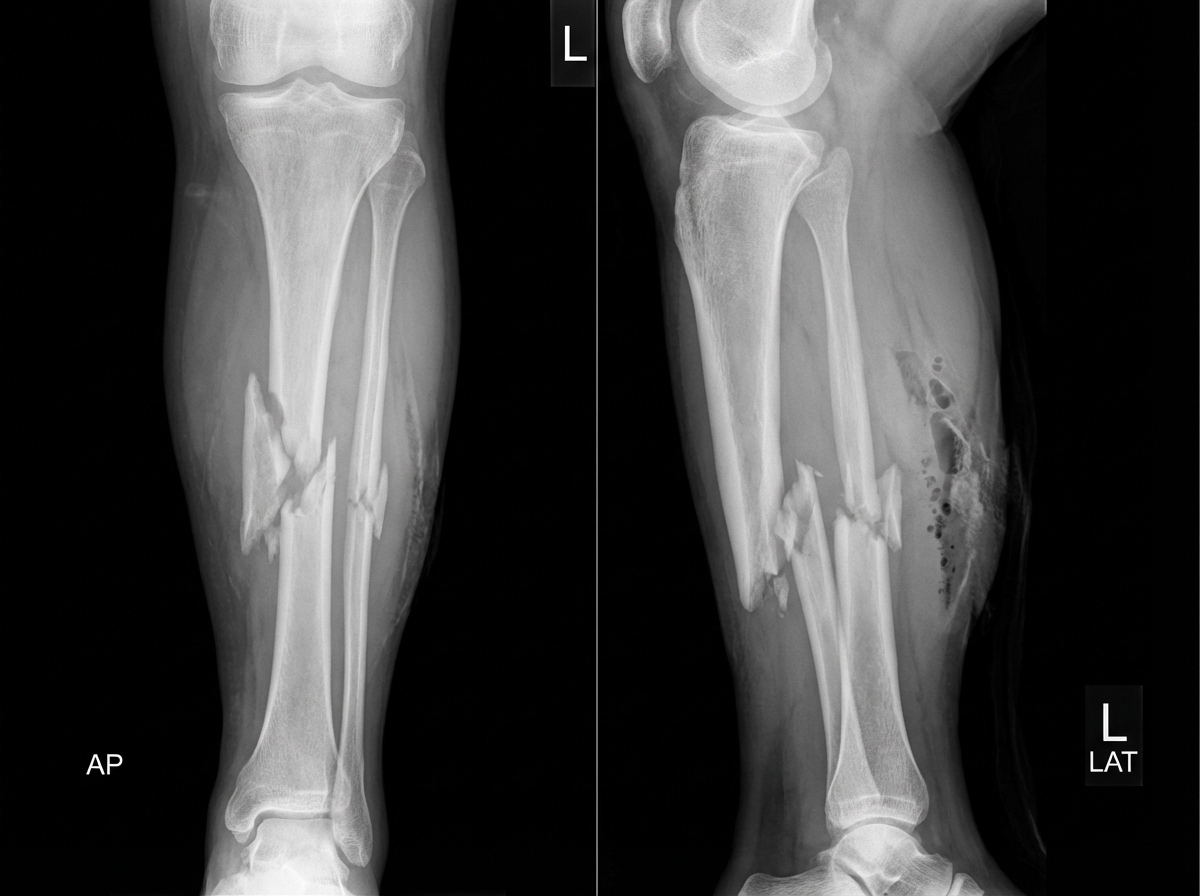
Explanation: **Explanation:** The correct answer is **Lower tibia**. Non-union occurs when a fracture fails to heal within the expected timeframe, and the primary reason for this in the lower third of the tibia is its **precarious blood supply**. **1. Why Lower Tibia is the correct answer:** The tibia is a "subcutaneous bone" with a unique vascular anatomy. The nutrient artery enters the bone at the upper third. In the lower third, the bone is primarily dependent on periosteal vessels. Because the lower third has minimal muscle cover (mostly tendons and skin), the periosteal blood supply is sparse. Fractures in this region often disrupt the nutrient artery and damage the limited periosteal supply, leading to ischemia and a high incidence of non-union or delayed union. **2. Analysis of Incorrect Options:** * **Supracondylar Humerus:** This fracture is notorious for **malunion** (specifically *cubitus varus* or "gunstock deformity") and vascular complications (Volkmann’s Ischemia), but it rarely goes into non-union because the distal humerus has a robust blood supply. * **Clavicle:** The clavicle has an excellent blood supply and thick periosteum. While malunion is common, non-union is rare unless there is significant displacement or surgical intervention. * **Coracoid Process:** This is an uncommon fracture that usually heals well due to the surrounding rich muscular and vascular environment. **Clinical Pearls for NEET-PG:** * **Common sites for Non-union:** Scaphoid (waist), Neck of Femur, Lower 1/3rd of Tibia, and Talus (neck). * **Common site for Malunion:** Supracondylar fracture of the humerus and Colles’ fracture. * **Common site for Avascular Necrosis (AVN):** Head of femur, Scaphoid, and Body of Talus. * **Rule of thumb:** Areas with poor soft tissue cover or intra-articular locations are more prone to non-union.
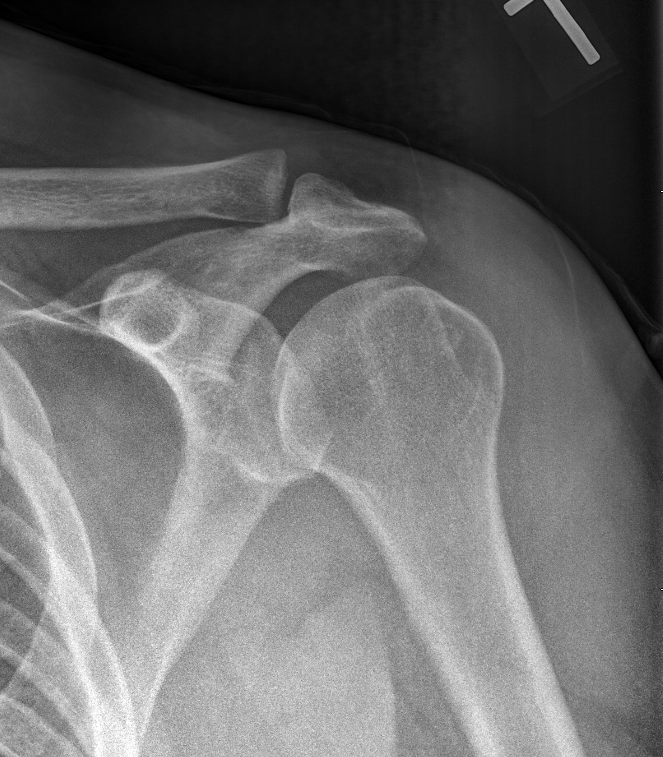
Explanation: ### Explanation The **Kocher’s Technique** is a classic method for reducing an anterior shoulder dislocation. It relies on a specific sequence of maneuvers to overcome muscle spasms (primarily the subscapularis) and leverage the humeral head back into the glenoid fossa. **The Correct Sequence (TEAM):** 1. **Traction:** Applied in the long axis of the humerus to disengage the humeral head from the glenoid rim. 2. **External Rotation:** Performed slowly to overcome the spasm of the internal rotators (subscapularis) and move the head away from the anterior labrum. 3. **Adduction:** The elbow is moved across the chest toward the midline. This uses the humerus as a lever to pivot the head toward the glenoid. 4. **Internal Rotation:** The hand is placed on the opposite shoulder, which finalizes the reduction. **Why the other options are incorrect:** * **Option A & D:** These place **Internal Rotation** before Adduction. Internal rotation is always the final step to "lock" the reduction; performing it earlier fails to leverage the humeral head correctly. * **Option C:** Starting with **External Rotation** without initial **Traction** increases the risk of iatrogenic fractures (especially of the surgical neck of the humerus) and neurovascular injury. **NEET-PG High-Yield Pearls:** * **Complication:** Kocher’s technique has a high risk of **spiral fractures of the humerus** and axillary nerve injury if performed forcefully. * **Most Common Dislocation:** Anterior (95%). The most common type of anterior dislocation is **Subcoracoid**. * **Milch Technique:** An alternative method involving abduction and external rotation (often considered safer/less traumatic). * **Hippocratic Method:** Uses foot-in-axilla for counter-traction (now largely discouraged due to risk of brachial plexus injury).
Explanation: ### Explanation An ideal amputation stump is designed to be functional, pain-free, and capable of efficient weight-bearing within a prosthesis. **Why "Adherent" is the Correct Answer:** An **adherent scar** is a major complication in amputation surgery. If the skin and subcutaneous tissues are fixed (adherent) to the underlying bone, the constant friction and shear forces between the prosthesis and the bone will lead to skin breakdown, chronic ulceration, and pain. An ideal stump must have **mobile, non-adherent skin** with a sufficient cushion of soft tissue (muscle and fat) over the bone end to prevent pressure necrosis. **Analysis of Incorrect Options:** * **Non-tender:** A stump must be non-tender to allow for comfortable weight-bearing. Tenderness often indicates the presence of a **neuroma** (specifically a "terminal neuroma") or underlying infection. * **Healed:** Complete primary healing of the surgical wound is mandatory before prosthetic fitting to prevent infection and dehiscence. * **Non-bullous:** The presence of bullae (blisters) or edema indicates poor vascularity, friction, or an ill-fitting socket, all of which contraindicate successful prosthetic use. **High-Yield Clinical Pearls for NEET-PG:** * **Shape:** The ideal stump shape is **conical** (in adults) or cylindrical to facilitate prosthetic fitting. * **Nerve Management:** Nerves should be pulled distally, cut cleanly, and allowed to retract proximally into soft tissue to prevent symptomatic neuromas. * **Muscle Management:** **Myodesis** (suturing muscle to bone) is generally preferred over myoplasty (suturing muscle to muscle) for better distal stabilization. * **Bone End:** Should be rounded and smooth; in children, overgrowth is a common complication.
Explanation: The mandible is the second most common facial bone to fracture (after the nasal bone). Understanding its fracture patterns is high-yield for NEET-PG. ### **Why the Condyle is the Correct Answer** The **condyle** is the most common site of mandibular fracture, accounting for approximately **25–35%** of cases. This occurs because the condylar neck is the thinnest part of the mandible, acting as a "safety mechanism." In the event of a direct blow to the chin (symphysis), the force is transmitted backward; the condylar neck fractures to prevent the condylar head from being driven through the glenoid fossa into the middle cranial fossa. ### **Analysis of Incorrect Options** * **B. Angle (approx. 25%):** The second most common site. Fractures here are often associated with the presence of impacted third molars (wisdom teeth), which weaken the structural integrity of the bone at the angle. * **C. Body (approx. 20%):** Less common than the condyle or angle. These fractures usually occur between the mental foramen and the distal aspect of the second molar. * **D. Symphysis/Parasymphysis (approx. 15%):** These occur in the midline or the area between the canine teeth. While common in direct frontal trauma, they are statistically less frequent than condylar fractures. ### **Clinical Pearls for NEET-PG** * **"Guardsman Fracture":** A specific pattern where a fall on the chin results in a midline symphysis fracture and bilateral condylar fractures. * **Nerve Injury:** The **Inferior Alveolar Nerve** is the most common nerve injured in mandibular fractures (especially in the body and angle), leading to numbness of the lower lip. * **Muscle Pull:** Displacement of fractures is determined by the pull of the muscles of mastication (e.g., the masseter and medial pterygoid pull the angle upward). * **Rule of Thumb:** If you see one fracture in the mandible, always look for a second one (often on the contralateral side) because the mandible functions like a "circular ring."
Explanation: **Explanation:** **1. Why Open Reduction Internal Fixation (ORIF) is correct:** Proximal humerus fractures in the elderly are common due to osteoporosis. While non-operative management is used for stable, minimally displaced fractures, **ORIF with a locking compression plate (e.g., PHILOS plate)** is the gold standard for displaced or unstable fractures. The underlying medical concept is **early mobilization**. Elderly patients are highly prone to "frozen shoulder" (adhesive capsulitis) and joint stiffness. ORIF provides rigid internal stability, allowing the patient to begin early range-of-motion exercises, which is critical for maintaining functional independence. **2. Why the other options are incorrect:** * **K-wire fixation (A):** This provides insufficient stability in osteoporotic bone. K-wires are prone to migration and do not allow for the early aggressive rehabilitation required in the elderly. * **Cuff and sling only (C):** While used for non-displaced fractures, it is inadequate for displaced fractures. Prolonged immobilization in a sling leads to severe shoulder stiffness and malunion. * **Manual reduction and slab (D):** It is extremely difficult to maintain the reduction of the proximal humerus using a slab due to the distracting forces of the deltoid and pectoralis major muscles. **Clinical Pearls for NEET-PG:** * **PHILOS Plate:** (Proximal Humeral Internal Locking System) is the specific implant of choice for osteoporotic proximal humerus fractures. * **Neer’s Classification:** Based on the 4 anatomical segments (Greater tuberosity, Lesser tuberosity, Shaft, and Articular surface). A segment is "displaced" if there is >1 cm displacement or >45° angulation. * **Hemiarthroplasty:** Indicated in elderly patients with severely comminuted 4-part fractures where the risk of **Avascular Necrosis (AVN)** of the humeral head is very high. * **Nerve Injury:** The **Axillary nerve** is the most commonly injured nerve in proximal humerus fractures.
Explanation: **Explanation:** The clinical presentation of a **long bone fracture** followed by a "lucid interval" of a few hours to days, leading to the triad of **respiratory distress (breathlessness)**, **petechial rashes** (typically over the chest, axilla, and conjunctiva), and **neurological symptoms** is classic for **Fat Embolism Syndrome (FES)**. When a long bone (like the femur or tibia) is fractured, fat globules from the bone marrow are released into the systemic circulation. These globules cause mechanical obstruction of pulmonary capillaries and trigger a chemical inflammatory cascade (free fatty acid toxicity), leading to Acute Respiratory Distress Syndrome (ARDS) and the characteristic petechiae. **Why other options are incorrect:** * **Air Embolism:** Usually occurs due to iatrogenic causes (central line insertion, surgeries) or penetrating chest trauma. It presents with a "mill-wheel murmur" and sudden collapse, not typically associated with petechiae. * **Pulmonary Embolism (Thromboembolism):** Usually occurs 1–2 weeks after surgery or immobilization due to DVT. It does not present with petechial rashes. * **Amniotic Fluid Embolism:** Occurs during labor or immediate postpartum; it is unrelated to long bone fractures. **NEET-PG High-Yield Pearls:** * **Gurd’s Criteria:** Used for diagnosis. Major criteria include petechial rash, respiratory insufficiency, and CNS depression. * **Snowstorm Appearance:** Classic finding on Chest X-ray. * **Treatment:** Primarily supportive (Oxygenation/Ventilation). Early stabilization (fixation) of the fracture is the best preventive measure. * **Most common site of petechiae:** Vestigial distribution (root of neck, axilla, and subconjunctival).
Explanation: ### Explanation The hallmark clinical sign of compartment syndrome is **pain on passive stretching** of the muscles within the affected compartment. This occurs because stretching ischemic muscle fibers exacerbates the pain caused by increased intracompartmental pressure. **1. Why Option A is Correct:** The **posterior compartment** of the leg (specifically the superficial posterior compartment) contains the gastrocnemius and soleus muscles, which are responsible for **plantar flexion**. To passively stretch these muscles, the clinician must move the joint in the opposite direction. Therefore, **passive dorsiflexion of the foot** stretches the calf muscles, eliciting excruciating pain in a patient with posterior compartment syndrome. **2. Why the Other Options are Incorrect:** * **Option B (Inversion):** This movement primarily involves the tibialis anterior and posterior. While the tibialis posterior is in the deep posterior compartment, inversion is not the specific "stretch" test used to isolate the posterior compartment. * **Option C & D (Toe movements):** Passive extension (dorsiflexion) of the great toe is the classic test for **Deep Posterior Compartment Syndrome**, as it stretches the Flexor Hallucis Longus. However, for the general "posterior compartment" (often referring to the superficial group), ankle dorsiflexion is the standard diagnostic maneuver. **Clinical Pearls for NEET-PG:** * **The 6 P’s:** Pain (out of proportion), Pallor, Paresthesia, Pulselessness, Paralysis, and Poikilothermia. **Pain on passive stretch** is the earliest and most reliable clinical sign. * **Deep Posterior Compartment:** Contains the Tibialis posterior, Flexor digitorum longus, and Flexor hallucis longus. Pain here is elicited by passive **extension of the toes**. * **Anterior Compartment:** Most common site for compartment syndrome. Pain is elicited by passive **plantar flexion** of the foot/toes. * **Diagnosis:** Clinical diagnosis is primary, but a **Stryker monitor** showing a Delta pressure (Diastolic BP - Compartment pressure) **< 30 mmHg** is diagnostic. * **Treatment:** Emergency **fasciotomy** (double incision technique in the leg).
Explanation: ### Explanation **Correct Answer: C. Holstein-Lewis fracture** **1. Why it is correct:** A **Holstein-Lewis fracture** is a spiral fracture of the **distal (lower) one-third of the humeral shaft**. At this specific anatomical location, the radial nerve is particularly vulnerable because it pierces the **lateral intermuscular septum** to move from the posterior compartment to the anterior compartment. Because the nerve is tethered at this septum, it lacks mobility and is frequently entrapped or lacerated by the displaced bone fragments. This is the most common humeral shaft fracture associated with primary radial nerve palsy (incidence ~22%). **2. Why the other options are incorrect:** * **A. Essex-Lopresti fracture:** This is a longitudinal injury of the forearm involving a comminuted fracture of the **radial head**, disruption of the distal radioulnar joint (DRUJ), and tearing of the interosseous membrane. * **B. Ulnar fracture:** This is a generic term. Specific eponyms like Monteggia (proximal ulnar fracture with radial head dislocation) involve the ulna, but they do not typically involve radial nerve impingement at the distal humerus. * **C. Thurston Holland sign:** This is a radiological sign, not a fracture type. It refers to the triangular fracture fragment of the metaphysis that remains attached to the epiphysis in **Salter-Harris Type II** physeal injuries. **3. High-Yield Clinical Pearls for NEET-PG:** * **Nerve involved:** Radial nerve (specifically at the spiral groove/lateral septum). * **Clinical Presentation:** **Wrist drop**, loss of extension at MCP joints, and sensory loss over the first dorsal web space. * **Management:** Most radial nerve palsies in humeral fractures are neuropraxias and resolve spontaneously (85% recovery). However, in Holstein-Lewis fractures, if the palsy occurs *after* manipulation (secondary palsy), surgical exploration may be indicated to ensure the nerve isn't trapped in the fracture site. * **Splinting:** Initial management usually involves a **Coaptation splint** or a U-slab.
Explanation: **Explanation:** A **pathologic fracture** is a break in a bone that occurs through an area weakened by a pre-existing disease, often resulting from trivial trauma or normal physiological stress. **Why Osteochondroma is the correct answer:** Osteochondroma is a benign, bone-forming tumor characterized by a cartilage-capped bony outgrowth (exostosis) on the surface of the bone. Unlike lesions that hollow out or replace the internal trabecular structure (like cysts or malignant tumors), an osteochondroma is an **additive lesion**. It grows outward from the cortex and does not weaken the structural integrity of the parent bone. Therefore, it does not typically predispose the bone to a pathologic fracture. **Analysis of other options:** * **Metabolic bone disease:** Conditions like Osteoporosis, Osteomalacia, and Paget’s disease lead to generalized or localized weakening of the bone mineral density and architecture, making them classic causes of pathologic fractures. * **Osteosarcoma:** This is a primary malignant bone tumor that destroys the normal bone matrix (osteolytic or mixed lesions), significantly reducing the bone's load-bearing capacity and frequently leading to fractures. **High-Yield Clinical Pearls for NEET-PG:** * **Most common cause of pathologic fracture:** Osteoporosis (Metabolic). * **Most common bone tumor causing pathologic fracture in children:** Unicameral Bone Cyst (UBC). * **Most common cause of pathologic fracture in elderly:** Metastatic bone disease (Breast, Prostate, Lung, Kidney, Thyroid). * **Osteochondroma Fact:** It is the most common benign bone tumor. While it doesn't cause fractures, its main complications include neurovascular compression or rare malignant transformation into chondrosarcoma (suspect if the cartilage cap is >2cm in adults).
Principles of Fracture Management
Practice Questions
Upper Limb Fractures
Practice Questions
Lower Limb Fractures
Practice Questions
Spinal Trauma
Practice Questions
Pelvic and Acetabular Fractures
Practice Questions
Open Fractures
Practice Questions
Fractures in Children
Practice Questions
Fracture Complications
Practice Questions
Nonunion and Malunion
Practice Questions
Polytrauma Management
Practice Questions
Joint Dislocations
Practice Questions
Soft Tissue Injuries
Practice Questions
Get full access to all questions, explanations, and performance tracking.
Start For Free