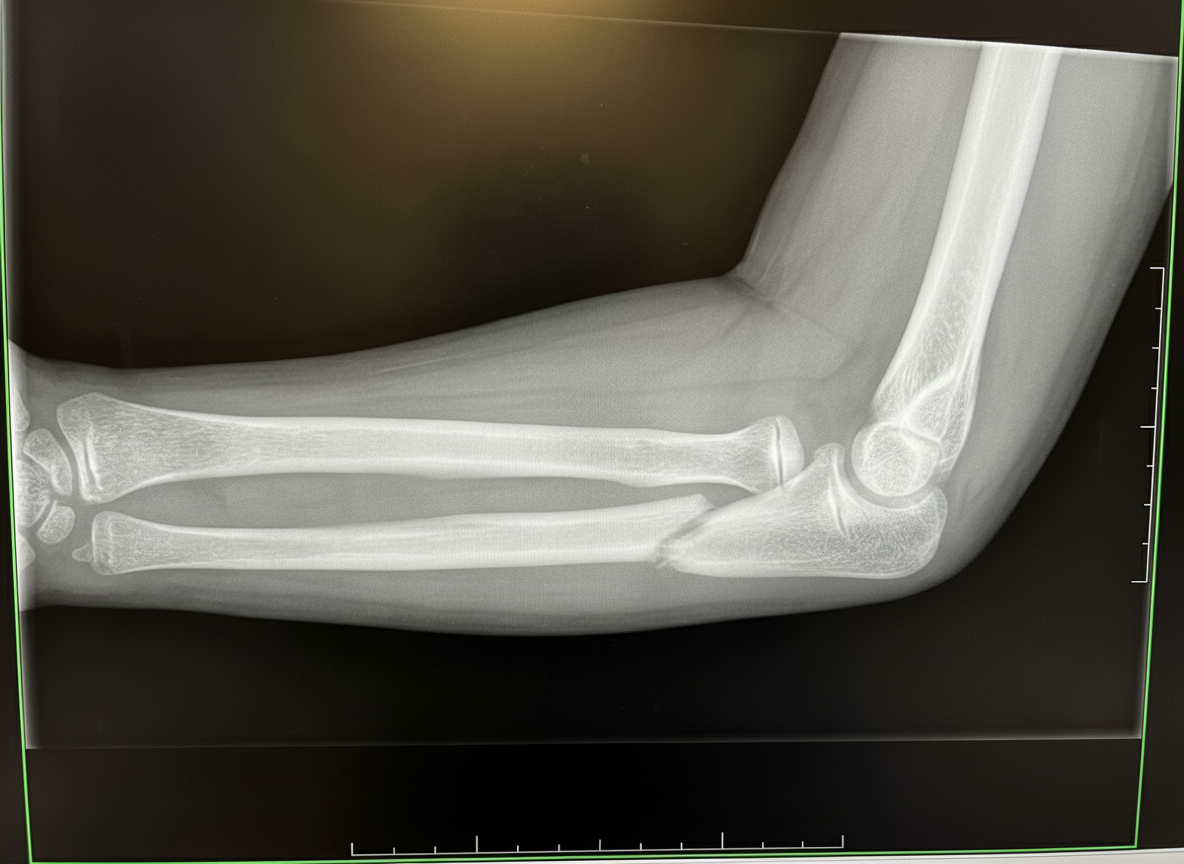
Functional bracing is now the gold standard in the nonoperative management of which fractures?
What is commonly referred to as a Potts fracture?
What is the most common type of spinal cord injury?
A Morel-Lavallee lesion is typically associated with which type of fracture?
Which of the following carries a higher risk of DVT and pulmonary thromboembolism?
Bohler's angle is measured in fractures involving which tarsal bone?
What is a trimalleolar fracture of the ankle commonly referred to as?
What is the treatment of choice to manage a symphyseal fracture in an 8-year-old child?
Which of the following is a feature of the triple deformity of the knee joint?
What is the best treatment for a fracture and dislocation of the lateral clavicle?
Explanation: **Explanation:** **Functional bracing**, popularized by **Augusto Sarmiento**, is based on the principle of **hydrostatic compression**. It allows for controlled motion of adjacent joints while maintaining fracture alignment through the compression of surrounding soft tissues. **Why Option A is Correct:** Fracture of the **shaft of the humerus** is the classic indication for functional bracing. Most humeral shaft fractures (over 90%) heal with nonoperative management. The brace is typically applied 1–2 weeks after the initial injury (once swelling subsides). It allows for early range of motion at the shoulder and elbow, which prevents joint stiffness and promotes osteogenesis through micromotion at the fracture site. **Why Other Options are Incorrect:** * **B. Both bones of the forearm:** These are considered "articular" fractures of the forearm complex. They require anatomical reduction to preserve pronation and supination, making **Open Reduction and Internal Fixation (ORIF)** with plating the gold standard. * **C. Shaft of the tibia:** While Sarmiento originally described bracing for the tibia, the current gold standard for displaced adult tibial shaft fractures is **Intramedullary (IM) Nailing** due to better predictable outcomes and faster weight-bearing. * **D. Shaft of the femur:** Due to the powerful pull of the thigh muscles, nonoperative bracing leads to significant shortening and malunion. **Antegrade or retrograde IM nailing** is the gold standard. **High-Yield Clinical Pearls for NEET-PG:** * **Acceptable Deformity in Humerus:** Up to 20° anterior bowing, 30° varus/valgus, and 3 cm shortening are functionally acceptable. * **Radial Nerve Palsy:** The most common nerve injury in humeral shaft fractures (especially Holstein-Lewis type). Most are neuropraxias and are managed expectantly, even when using a functional brace. * **Contraindications for Bracing:** Massive soft tissue injury, unreliable patient, or an uncooperative patient.
Explanation: **Explanation:** **Potts fracture** (also known as Dupuytren’s fracture) is a classic eponym used to describe a **bimalleolar ankle fracture**. It occurs due to a combination of abduction and external rotation forces at the ankle joint. In this injury, there is typically a fracture of the lateral malleolus (fibula) above the syndesmosis and a fracture of the medial malleolus (tibia) or a tear of the deltoid ligament. This disruption compromises the "ankle mortise," leading to joint instability. **Analysis of Options:** * **Option A (Correct):** Percivall Potts originally described this as a bimalleolar injury. It is the standard definition used in orthopaedic examinations. * **Option B:** A **Trimalleolar fracture** (Cotton’s fracture) involves the medial malleolus, lateral malleolus, and the posterior malleolus (posterior lip of the tibia). * **Option C:** A fracture of the distal end of the radius is most commonly a **Colles’ fracture** (dorsal displacement) or a **Smith’s fracture** (volar displacement). * **Option D:** Pathological fractures in osteomalacia are typically referred to as **Looser’s zones** or Milkman’s fractures (pseudofractures). **High-Yield Clinical Pearls for NEET-PG:** * **Lauge-Hansen Classification:** The most widely used system for ankle fractures based on the foot position and the direction of the deforming force. * **Danis-Weber Classification:** Categorizes ankle fractures based on the level of the fibular fracture relative to the syndesmosis (Type A, B, and C). * **Management:** Stable fractures are treated with a below-knee cast; however, most Potts fractures are unstable and require **Open Reduction and Internal Fixation (ORIF)** to restore the anatomy of the ankle mortise. * **Maisonneuve Fracture:** A high-yield variant involving a proximal fibular fracture associated with a medial malleolar break or deltoid ligament rupture.
Explanation: **Explanation:** The most common mechanism of spinal cord injury (SCI) is **Flexion-rotation**. This injury occurs when the spine is subjected to a combination of forward bending and twisting forces, commonly seen in motor vehicle accidents and falls from heights. **Why Flexion-rotation is correct:** This mechanism is particularly devastating because it disrupts both the bony architecture and the posterior ligamentous complex (PLC). The rotational force causes the facet joints to unlock or fracture, leading to significant spinal instability and a high incidence of neurological deficit. In the cervical spine, this often results in "perched" or "locked" facets. **Analysis of Incorrect Options:** * **Flexion (A):** While common, pure flexion usually results in wedge compression fractures of the vertebral body. Unless there is significant posterior ligamentous disruption, these are often stable and less likely to cause complete cord injury compared to rotational injuries. * **Extension (B):** Extension injuries (e.g., "whiplash" or falls in the elderly with spondylosis) are less frequent overall. They are classically associated with **Central Cord Syndrome**, particularly in patients with pre-existing spinal stenosis. * **Compression (C):** Also known as axial loading, this typically results in **Burst fractures**. While these can cause neurological injury due to retropulsion of bone fragments into the canal, they occur less frequently than flexion-rotation injuries in multi-trauma scenarios. **High-Yield Clinical Pearls for NEET-PG:** * **Most common site of spinal injury:** Thoracolumbar junction (T12-L1), followed by C5-C6. * **Most common cord syndrome:** Central Cord Syndrome (associated with extension injuries). * **Worst prognosis:** Complete cord transection (usually seen in severe flexion-rotation/dislocation). * **Initial Management:** Immobilization with a rigid cervical collar and "Log-roll" technique to prevent secondary injury.
Explanation: **Explanation:** A **Morel-Lavallée lesion (MLL)** is an internal degloving injury caused by high-energy tangential shearing forces. This force causes the skin and subcutaneous fat to be violently separated from the underlying deep fascia, creating a potential space that fills with blood, lymph, and liquefied fat. **Why Acetabular Fracture is Correct:** MLL is most commonly associated with **pelvic and acetabular fractures** (specifically those involving the greater trochanteric region). In the context of acetabular surgery, identifying an MLL is critical because the necrotic fluid collection is highly prone to infection. If an incision is made through an undrained MLL during open reduction and internal fixation (ORIF), the risk of postoperative surgical site infection and osteomyelitis increases significantly. **Analysis of Incorrect Options:** * **Femoral neck fracture:** These are often low-energy injuries in the elderly or axial loading injuries; they lack the high-energy shearing force required to deglove the fascia. * **Lumbar spine fracture:** While associated with high-energy trauma, the anatomy of the back does not typically predispose to the specific "internal degloving" seen in MLL, which favors the thigh and pelvis. * **Proximal tibia fracture:** Though MLL can occur around the knee (pre-patellar), it is statistically much more frequent and classically described in association with the **greater trochanter** and pelvic ring injuries. **High-Yield Clinical Pearls for NEET-PG:** * **Classic Site:** Greater trochanter (most common), followed by the knee and lumbosacral region. * **Clinical Sign:** A soft, fluctuant area over the hip with "skin hypermobility." * **MRI Appearance:** A well-circumscribed fluid collection between the subcutaneous tissue and deep fascia (the "gold standard" for diagnosis). * **Management:** Small lesions can be aspirated; larger or chronic lesions require surgical debridement and drainage to prevent skin necrosis and infection.
Explanation: **Explanation:** The risk of Deep Vein Thrombosis (DVT) and Pulmonary Embolism (PE) is governed by **Virchow’s Triad**: endothelial injury, stasis, and hypercoagulability. **Hip surgeries** (such as Total Hip Arthroplasty or Hip Fracture surgery) carry one of the highest risks for venous thromboembolism (VTE) in surgical practice. This is due to several factors: 1. **Extensive Tissue Trauma:** Major orthopedic procedures release significant amounts of thromboplastin, inducing a hypercoagulable state. 2. **Venous Stasis:** Post-operative immobilization and the use of tourniquets or intraoperative positioning lead to blood pooling. 3. **Direct Vessel Injury:** Manipulation of the femur can cause direct thermal or mechanical injury to the femoral vein. **Analysis of Incorrect Options:** * **Hand and Breast Surgery:** These are generally considered "low-risk" procedures. They involve shorter operative times, minimal blood loss, and allow for early mobilization, which prevents stasis. * **Obesity:** While obesity is a significant **patient-related risk factor** for DVT, the question asks which option carries a *higher* risk. Major orthopedic surgery (a procedure-related factor) is a much stronger independent trigger for acute VTE than obesity alone. **Clinical Pearls for NEET-PG:** * **Highest Risk Procedures:** Hip arthroplasty, Knee arthroplasty, and Pelvic fractures. * **Prophylaxis:** Low Molecular Weight Heparin (LMWH), Fondaparinux, or Rivaroxaban are standard. Mechanical prophylaxis (IPC pumps) is used as an adjunct. * **Gold Standard Diagnosis:** Contrast Venography (historically), but **Duplex Ultrasonography** is the investigation of choice in clinical practice. * **Fatal PE:** This is the most common cause of sudden death following major orthopedic surgery.
Explanation: **Explanation:** **Bohler’s Angle** (also known as the Tuber-joint angle) is a crucial radiological parameter used in the assessment of **Calcaneum fractures**. It is formed by the intersection of two lines: 1. A line drawn from the highest point of the anterior process to the highest point of the posterior facet. 2. A line drawn from the highest point of the posterior facet to the highest point of the calcaneal tuberosity. The **normal range is 25° to 40°**. In intra-articular calcaneal fractures (the most common tarsal bone fracture), the angle **decreases** or may even become negative, signifying a collapse of the posterior facet and loss of calcaneal height. **Analysis of Incorrect Options:** * **Talus:** Fractures here are assessed using Hawkins’ classification. The key radiological sign is "Hawkins’ Sign" (subchondral lucency indicating intact vascularity). * **Navicular:** Fractures are often stress-related or part of midfoot injuries (Kohler’s disease in children). Bohler’s angle does not involve this bone. * **Cuboid:** Fractures (like "Nutcracker fractures") are rare and evaluated for lateral column shortening, not by Bohler’s angle. **NEET-PG High-Yield Pearls:** * **Gissane’s Angle:** Also called the "Critical Angle," it is the other major angle measured in calcaneal fractures (Normal: 120°–145°). It *increases* in fractures. * **Mondor’s Sign:** Ecchymosis extending to the sole of the foot, pathognomonic for calcaneal fracture. * **Associated Injuries:** Always rule out **compression fractures of the Lumbar spine (L1)** in patients with calcaneal fractures (Don Juan Syndrome/Lover's High Leap fracture) due to axial loading. * **Gold Standard Investigation:** CT scan (Broden’s views are the specific X-ray views).
Explanation: **Explanation:** **Cotton’s fracture** is the eponymous name for a **trimalleolar fracture** of the ankle. It involves fractures of three components: 1. **Medial malleolus** (Tibia) 2. **Lateral malleolus** (Fibula) 3. **Posterior malleolus** (the posterior lip of the distal tibia) This injury typically results from high-energy trauma involving external rotation and abduction forces. It is inherently unstable because the bony constraints of the ankle mortise are disrupted in three planes, often requiring open reduction and internal fixation (ORIF). **Analysis of Incorrect Options:** * **B. Barton fracture:** An intra-articular fracture of the distal radius with associated dislocation/subluxation of the radiocarpal joint. It can be Volar (more common) or Dorsal. * **C. Malgaigne fracture:** A vertical shear injury of the pelvis involving a double break in the pelvic ring (typically through the pubic rami anteriorly and the SI joint or ilium posteriorly). * **D. Smith's fracture:** A fracture of the distal radius with **volar** (palmar) displacement of the distal fragment, often called a "Reverse Colles" fracture. **High-Yield Clinical Pearls for NEET-PG:** * **Pott’s Fracture:** A general term for bimalleolar ankle fractures. * **Lauge-Hansen Classification:** The most common system used to describe ankle fractures based on the position of the foot and the direction of the deforming force. * **Maisonneuve Fracture:** A high fibular fracture associated with a medial malleolus fracture or deltoid ligament tear; always palpate the proximal fibula in ankle injuries. * **Radiographic Sign:** On a lateral X-ray, the posterior malleolus fracture is best visualized; if it involves >25-30% of the articular surface, surgical fixation is usually mandatory.
Explanation: ### Explanation The management of mandibular fractures in children differs significantly from adults due to the presence of developing tooth buds and the rapid rate of bone healing. **Why Option B is Correct:** In an 8-year-old child, the mandible is in the **mixed dentition phase**. The use of a **Cap splint with circumferential wiring** is the treatment of choice for symphyseal and parasymphyseal fractures because: 1. **Stability:** It provides excellent stabilization of the fracture fragments. 2. **Safety:** It avoids the risk of damaging permanent tooth buds, which are situated deep within the alveolar bone. 3. **Growth:** It does not interfere with the transverse growth of the mandible. **Why Other Options are Incorrect:** * **Option A (Intermaxillary Fixation - IMF):** IMF is difficult in children because primary teeth have shallow roots and may be exfoliated under tension. Furthermore, prolonged immobilization can lead to temporomandibular joint (TMJ) ankylosis in children. * **Option C (Open Reduction):** Open reduction with internal fixation (ORIF) using plates and screws is generally avoided in children unless the fracture is severely displaced. The risk of injuring developing permanent tooth buds and disrupting growth centers is too high. * **Option D (No treatment):** Symphyseal fractures are unstable due to the pull of the digastric and mylohyoid muscles; leaving them untreated leads to malocclusion and non-union. ### High-Yield Clinical Pearls for NEET-PG: * **Most common site** of mandibular fracture in children: **Condyle** (often managed conservatively). * **Healing time:** Pediatric mandibular fractures heal rapidly (usually within 2–3 weeks) due to high osteogenic potential. * **The "Rule of Thumb":** In pediatric trauma, "Minimal manipulation and maximal preservation" is the goal to prevent future growth disturbances. * **Gunning Splint:** Used for edentulous patients (adults) or sometimes in children with insufficient teeth for retention.
Explanation: The **Triple Deformity of the Knee** is a classic clinical presentation typically seen in advanced cases of **Tuberculosis (TB) of the knee joint** or chronic untreated arthritis. It occurs due to the powerful pull of the hamstring muscles overcoming the weakened joint structures. ### **Explanation of the Correct Option** The "Triple Deformity" consists of three specific anatomical displacements of the tibia relative to the femur: 1. **Flexion:** Due to the predominant action of the hamstrings. 2. **Posterior Subluxation of the Tibia:** The hamstrings pull the proximal tibia backward behind the femoral condyles. 3. **External Rotation of the Tibia:** The biceps femoris (the lateral hamstring) is stronger than the medial hamstrings, causing the tibia to rotate laterally. Therefore, **Posterior subluxation of the tibia** is a hallmark feature of this triad. ### **Explanation of Incorrect Options** * **B. Internal rotation of tibia:** Incorrect. The tibia undergoes **external rotation** because the biceps femoris exerts a stronger rotational pull than the semimembranosus/semitendinosus. * **C. Medial angulation of tibia:** Incorrect. While some valgus (lateral angulation) may occur, medial angulation (varus) is not a standard component of the classic triple deformity description. * **D. Recurvatum:** Incorrect. Recurvatum refers to hyperextension. The triple deformity is characterized by fixed **flexion**, not extension. ### **High-Yield Clinical Pearls for NEET-PG** * **Most common cause:** Tuberculosis of the knee (Stage of Destruction). * **Muscle Dynamics:** The deformity occurs because the knee flexors (hamstrings) are stronger than the extensors (quadriceps). * **Management:** Early stages require traction and splinting; advanced stages with triple deformity often require surgical intervention like arthrodesis (joint fusion) to provide a stable, painless limb.
Explanation: **Explanation:** Fractures of the lateral (distal) third of the clavicle are classified using the **Neer Classification**. When a fracture is associated with a dislocation or instability (specifically Neer Type II), it indicates that the coracoclavicular (CC) ligaments are detached from the proximal fragment. **1. Why Surgical Repair is Correct:** In lateral clavicle fractures with dislocation, the weight of the arm pulls the distal fragment downward, while the sternocleidomastoid muscle pulls the proximal fragment upward. This significant displacement and the loss of ligamentous stability lead to a **high rate of non-union (up to 30-40%)** if treated conservatively. Therefore, **Surgical Repair** (using techniques like hook plates, tension band wiring, or CC ligament reconstruction) is the treatment of choice to ensure anatomical reduction and bone healing. **2. Why Incorrect Options are Wrong:** * **A & C (Figure of 8 splint / Normal sling):** These are conservative management options. While appropriate for undisplaced mid-shaft fractures (Neer Type I or III), they cannot counteract the strong deforming forces in unstable lateral fractures, leading to malunion or persistent non-union. * **B (Open reduction):** While open reduction is a *step* in the procedure, "Surgical repair" is the more comprehensive term that includes both reduction and the necessary internal fixation/ligamentous stabilization required for this specific injury. **Clinical Pearls for NEET-PG:** * **Neer Type II** is the most common lateral clavicle fracture requiring surgery. * **Most common site of clavicle fracture:** Middle third (80%), usually treated conservatively with a U-slab or triangular sling. * **Allman Classification:** Group I (Mid-shaft), Group II (Lateral), Group III (Medial). * **Complication:** The most common complication of clavicle fractures is **malunion**, but for lateral Type II fractures, it is **non-union**.
Principles of Fracture Management
Practice Questions
Upper Limb Fractures
Practice Questions
Lower Limb Fractures
Practice Questions
Spinal Trauma
Practice Questions
Pelvic and Acetabular Fractures
Practice Questions
Open Fractures
Practice Questions
Fractures in Children
Practice Questions
Fracture Complications
Practice Questions
Nonunion and Malunion
Practice Questions
Polytrauma Management
Practice Questions
Joint Dislocations
Practice Questions
Soft Tissue Injuries
Practice Questions
Get full access to all questions, explanations, and performance tracking.
Start For Free