What is the radiographic appearance of dead bone on an X-ray?
Which of the following statements regarding dislocation of the shoulder is FALSE?
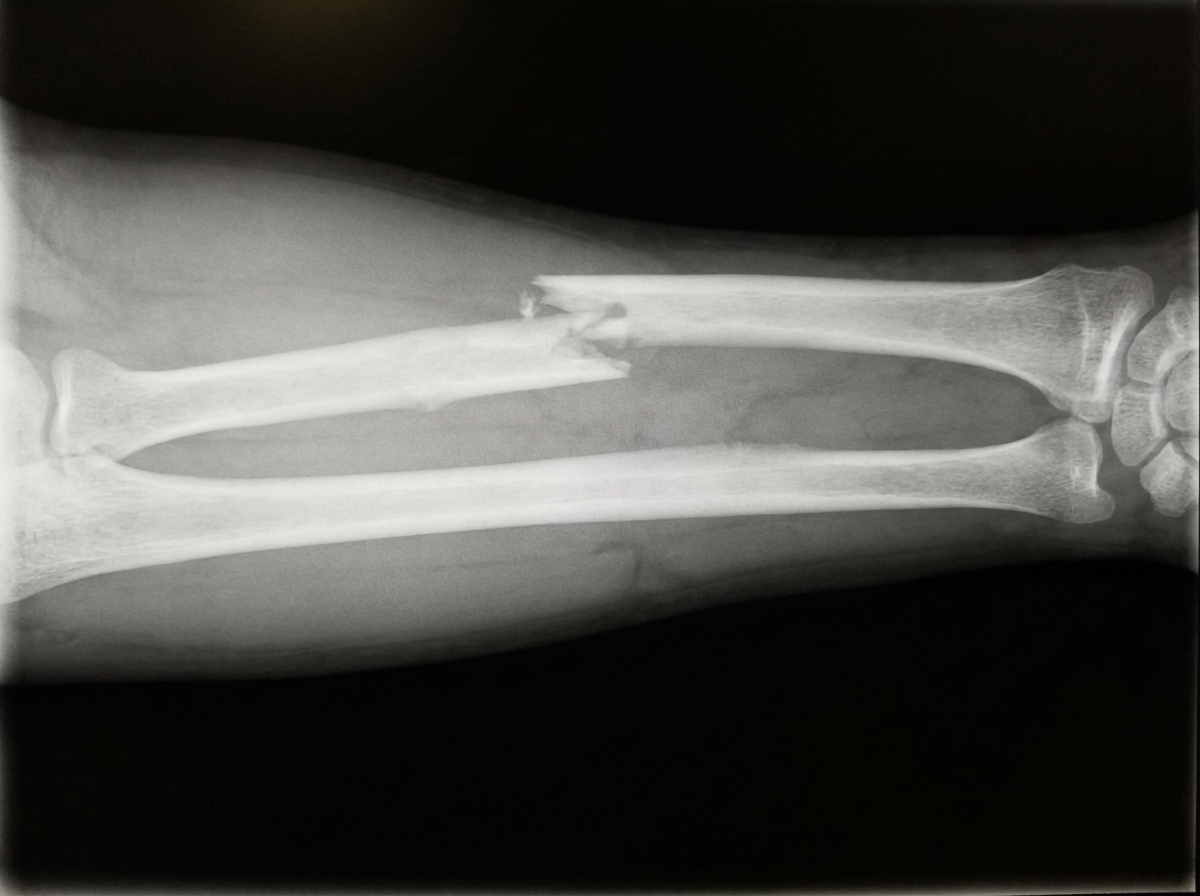
What type of Monteggia fracture is commonly associated with nerve injuries?
What does the Anterior Cruciate Ligament (ACL) primarily prevent?
Traumatic avascular necrosis occurs in which of the following fractures?
In rubber band extraction, the extraction of the tooth occurs because of which of the following mechanisms?
Which of the following is NOT relevant in the management of compartment syndrome?
At what age can distraction osteogenesis be performed?
What is the most important step in the primary management of a patient with a fractured vertebral column?
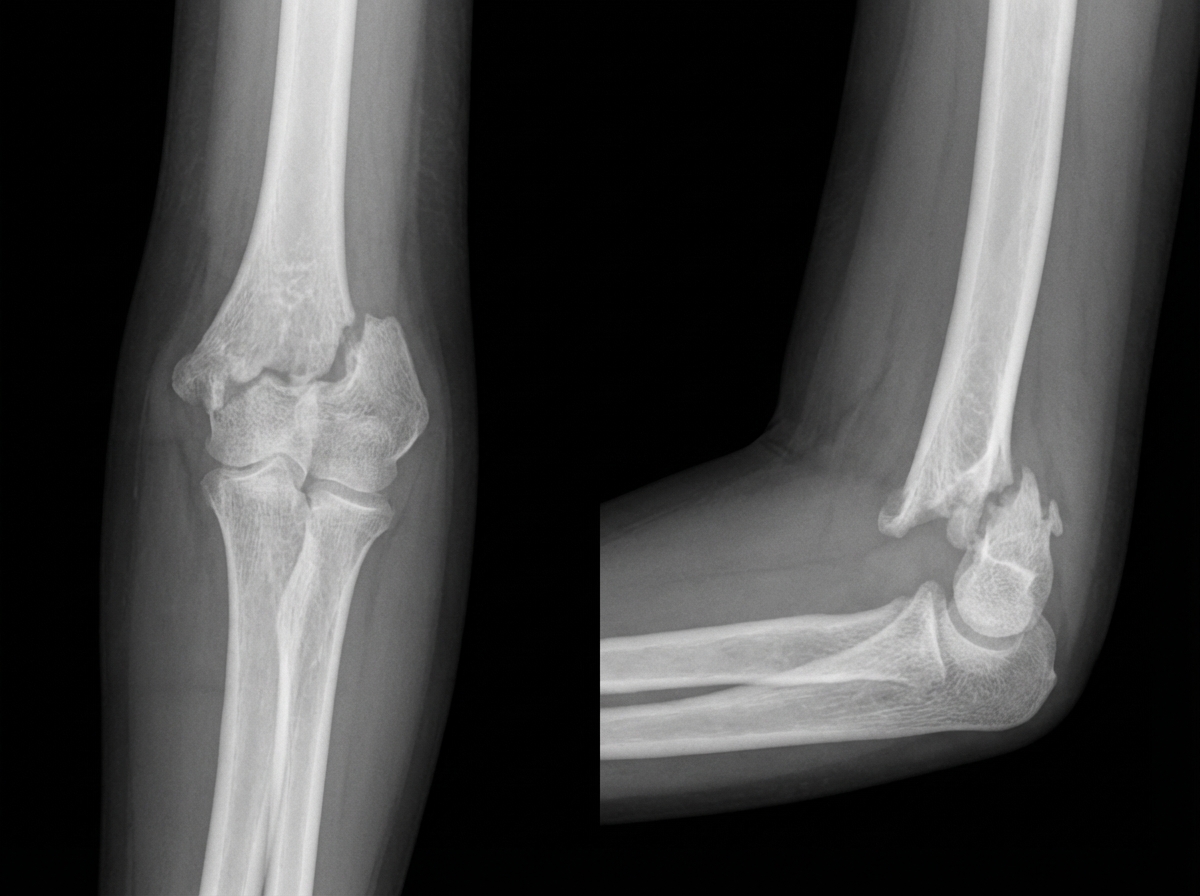
A 10-year-old girl sustained an upper limb injury two years ago. She now presents with a valgus deformity of the elbow and paresthesias over the medial aspect of her hand. What is the most likely diagnosis?
Explanation: **Explanation:** The correct answer is **A. More radio-opaque**. **Why it is correct:** In orthopaedics, dead bone (known as a **sequestrum**) appears more radio-opaque (whiter) than the surrounding living bone on an X-ray. This phenomenon occurs due to two primary reasons: 1. **Lack of Resorption:** Dead bone has no blood supply (avascular). Therefore, osteoclasts cannot reach the bone to resorb it. 2. **Relative Sclerosis:** In response to infection or injury, the surrounding living bone undergoes hyperemia (increased blood flow), leading to **disuse osteoporosis** (decalcification). Because the dead bone cannot lose calcium, it remains dense while the surrounding bone becomes more radiolucent, making the dead bone appear "whiter" by comparison. **Why the other options are incorrect:** * **B & C (Radiolucent/Less radio-opaque):** These terms describe bone that has lost mineral density (e.g., osteoporosis, osteolysis, or infection). Dead bone retains its original mineral content and often gains density through the precipitation of calcium salts from pus. * **D (Not seen at all):** Dead bone is clearly visible on X-rays and is a hallmark sign of chronic osteomyelitis. **High-Yield NEET-PG Pearls:** * **Sequestrum:** A piece of dead bone that has become separated during the process of necrosis (appears radio-opaque). * **Involucrum:** A layer of new living bone formed around the sequestrum (the "sheath"). * **Cloaca:** An opening in the involucrum through which pus and sequestra may emerge. * **Timmerman’s Sign:** The "ringing" sound produced when a sequestrum is tapped during surgery, indicating its dense, brittle nature.
Explanation: **Explanation:** The shoulder is the most commonly dislocated large joint in the body due to the shallow glenoid cavity. **1. Why Option C is the correct (False) statement:** In **posterior dislocation**, the clinical appearance of the shoulder often appears deceptively **normal** on initial inspection. Unlike anterior dislocations, where there is a prominent "squared-off" appearance (flattening of the deltoid), posterior dislocations are notorious for being missed (up to 50% of cases). The arm is held in internal rotation and adduction, and while there may be a palpable posterior fullness, the classic deformity seen in anterior dislocations is absent. **2. Why other options are incorrect (True statements):** * **Option A:** Approximately **95%** of shoulder dislocations are **Anterior**. The humeral head moves forward and rests in a subcoracoid or subglenoid position. * **Option B:** The classic mechanism for an anterior dislocation is **abduction, external rotation, and extension**. This force levers the humeral head out of the glenoid labrum. **Clinical Pearls for NEET-PG:** * **Posterior Dislocation:** Classically associated with **seizures** or **electric shocks** (due to the strength of internal rotators). * **Radiology:** Look for the **"Light Bulb Sign"** on AP view (humeral head is internally rotated) and the **"Rim Sign"** (increased space between the glenoid and humeral head). The **Axillary view** is the gold standard for diagnosis. * **Hill-Sachs Lesion:** A compression fracture of the posterosuperior humeral head (seen in anterior dislocations). * **Bankart Lesion:** Avulsion of the anteroinferior glenoid labrum.
Explanation: **Explanation:** The **Monteggia fracture-dislocation** is classified using the **Bado Classification**, which is based on the direction of the radial head dislocation. **Why Type II is correct:** Bado Type II involves a fracture of the ulnar shaft with **posterior or posterolateral dislocation** of the radial head. This specific subtype is most commonly associated with nerve injuries, specifically the **Posterior Interosseous Nerve (PIN)**, a branch of the radial nerve. The mechanism involves the radial head being displaced posteriorly, where it directly compresses or stretches the PIN as it passes through the supinator muscle (Arcade of Frohse). This is particularly common in adults. **Analysis of Incorrect Options:** * **Type I (Anterior):** The most common type overall (especially in children). The radial head dislocates anteriorly. While nerve injuries can occur, they are statistically less frequent than in Type II. * **Type III (Lateral):** Involves ulnar metaphyseal fractures with lateral radial head dislocation. This is more common in the pediatric population and is less frequently associated with nerve palsy compared to Type II. * **Type IV:** Involves fractures of both the radius and ulnar shafts with anterior dislocation of the radial head. It is rare and complex, but Type II remains the classic association for nerve injury in exams. **Clinical Pearls for NEET-PG:** * **Nerve involved:** Posterior Interosseous Nerve (PIN). Note that PIN injury causes **finger drop** (loss of MCP extension) but **no sensory loss**. * **Management:** Most PIN injuries are neuropraxias; hence, observation for 2–3 months is usually recommended before considering exploration. * **Mnemonic (MUGR):** **M**onteggia: **U**lna fracture; **G**aleazzi: **R**adius fracture.
Explanation: ### Explanation The **Anterior Cruciate Ligament (ACL)** is the primary intra-articular stabilizer of the knee. Its fundamental biomechanical role is to resist **anterior translation (dislocation) of the tibia** relative to the femur. It also acts as a secondary stabilizer against internal rotation and valgus/varus stress. #### Why the Correct Answer is Right: * **Anterior dislocation of the tibia (Option D):** The ACL originates from the medial aspect of the lateral femoral condyle and inserts onto the anterior intercondylar area of the tibia. Because of this orientation, it tightens during knee extension to prevent the tibia from sliding forward underneath the femur. #### Why Other Options are Incorrect: * **Anterior dislocation of the femur (Option A):** This is functionally equivalent to *posterior* dislocation of the tibia, which is prevented by the **Posterior Cruciate Ligament (PCL)**. * **Posterior dislocation of the tibia (Option B):** This is the primary function of the **PCL**, which prevents the tibia from sliding backward relative to the femur. * **Lateral dislocation of the tibia (Option C):** Medial and lateral stability are primarily maintained by the **Collateral Ligaments** (MCL and LCL). #### NEET-PG High-Yield Clinical Pearls: * **Mechanism of Injury:** Most commonly occurs during non-contact deceleration, "pivoting," or sudden change in direction with a planted foot. * **Clinical Tests:** The **Lachman Test** is the most sensitive clinical test for ACL deficiency. Other tests include the **Anterior Drawer Test** and the **Pivot Shift Test** (most specific). * **Segond Fracture:** An avulsion fracture of the lateral tibial plateau; it is considered pathognomonic for an ACL tear. * **Unhappy Triad (O'Donoghue):** Simultaneous injury to the ACL, Medial Collateral Ligament (MCL), and Medial Meniscus (though recent studies suggest the Lateral Meniscus is more commonly injured in acute settings).
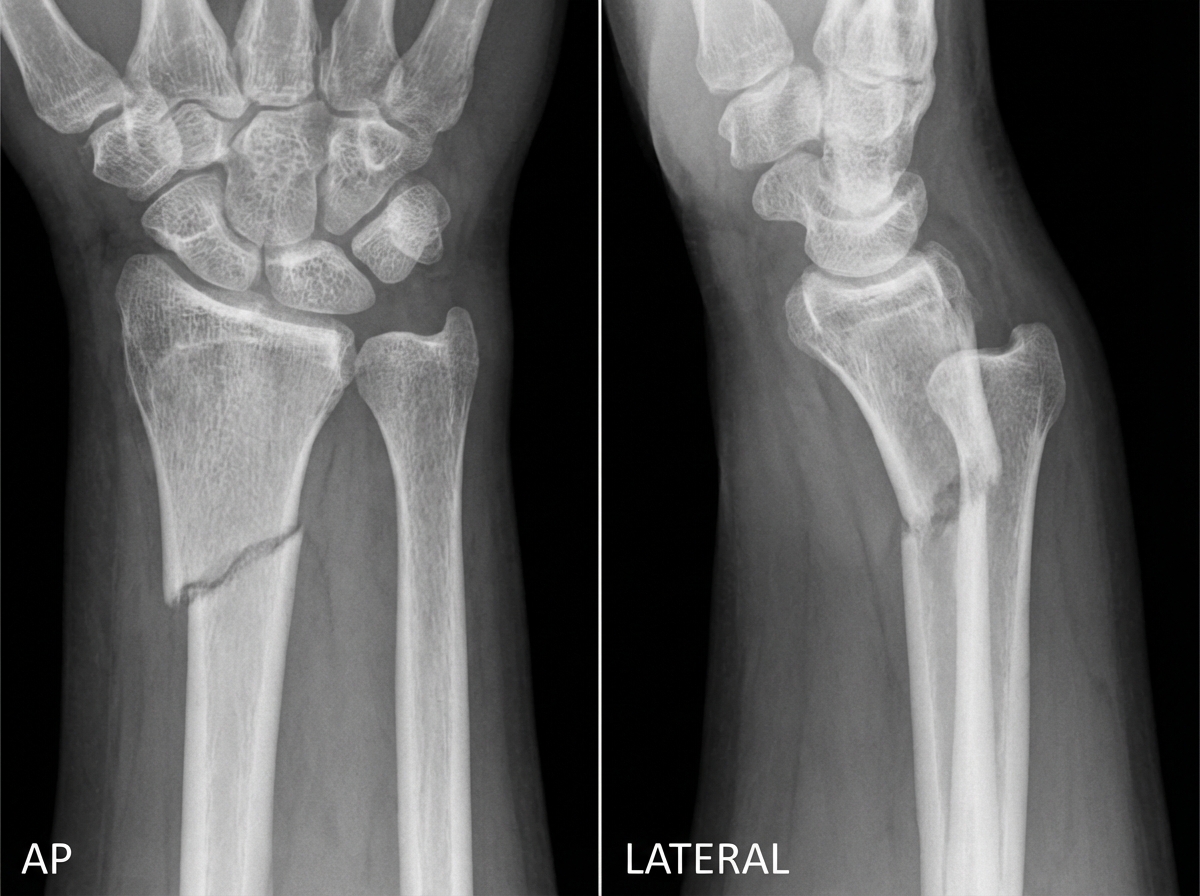
Explanation: **Explanation:** The correct answer is **A: Neck of femur, Talus, Scaphoid.** The underlying medical concept for traumatic avascular necrosis (AVN) in these specific bones is their **retrograde blood supply** and **lack of muscular attachments**. These bones are largely covered by articular cartilage, meaning blood vessels must enter through small non-articular areas, often at the distal end, and flow proximally. A fracture across the "waist" or "neck" of these bones mechanically disrupts these vulnerable nutrient vessels, leaving the proximal fragment ischemic. * **Neck of Femur:** The primary supply is via the retinacular vessels (from the medial circumflex femoral artery). Intracapsular fractures frequently tear these vessels, leading to AVN of the femoral head. * **Scaphoid:** Blood enters the distal pole and flows retrogradely to the proximal pole. Fractures at the waist often result in AVN of the proximal fragment. * **Talus:** The blood supply enters through the tarsal canal and sinus tarsi. Fractures of the talar neck (Hawkins classification) frequently disrupt this supply, leading to AVN of the body. **Why other options are incorrect:** * **Options C & D:** The **Surgical neck of the humerus** is not a classic site for AVN. Unlike the anatomical neck (which can undergo AVN), the surgical neck is distal to the insertion of the joint capsule and has a robust collateral blood supply from the anterior and posterior circumflex humeral arteries. **High-Yield Clinical Pearls for NEET-PG:** 1. **Hawkins Sign:** A subchondral radiolucency in the talar body seen 6–8 weeks post-fracture; it indicates intact vascularity (the bone is being resorbed, so it cannot be necrotic). 2. **Preiser’s Disease:** Idiopathic (non-traumatic) AVN of the scaphoid. 3. **Other sites for AVN:** Lunate (Kienbock’s disease), Head of second metatarsal (Freiberg’s disease), and Body of Navicular (Kohler’s disease).
Explanation: ### Explanation The correct answer is **B. Necrosis of the periodontal ligament (PDL).** **Mechanism of Action:** Rubber band extraction (also known as elastic band-induced exfoliation) is a phenomenon where an elastic band placed around the neck of a tooth (often accidentally or as a misguided attempt at orthodontic movement) migrates apically along the tapering root. Because the periodontal ligament (PDL) is a highly vascularized connective tissue, the constant, circumferential pressure exerted by the elastic band causes **ischemic necrosis**. As the band moves deeper into the periodontium, it destroys the attachment apparatus, leading to rapid bone loss and eventual exfoliation of the tooth. **Analysis of Options:** * **A. Tearing of the PDL:** This is incorrect. Tearing implies an acute mechanical trauma (like an extraction with forceps or an avulsion injury). Rubber band extraction is a chronic, progressive process driven by pressure-induced ischemia, not sudden mechanical force. * **C. Both tearing and necrosis:** This is incorrect because the primary pathological process is biological (necrosis) rather than mechanical (tearing). * **D. None of the above:** Incorrect, as necrosis is the established mechanism. **High-Yield Clinical Pearls for NEET-PG:** * **Clinical Presentation:** It often presents as sudden, unexplained tooth mobility with deep periodontal pockets in an otherwise healthy mouth. * **Common Scenario:** This is frequently seen in children when a "gap" between the upper central incisors (diastema) is attempted to be closed using a simple rubber band without orthodontic supervision. * **Radiographic Sign:** Look for generalized horizontal bone loss localized to the affected tooth, often with the band not being visible on X-rays (as they are radiolucent). * **Management:** If detected early, the band must be removed immediately, and the area debrided; however, the prognosis for tooth retention is often poor due to the extent of PDL necrosis.
Explanation: **Explanation:** Compartment syndrome is a surgical emergency characterized by increased pressure within a closed osteofascial space, leading to impaired local circulation and potential tissue necrosis. **Why Exercise is NOT relevant:** **Exercise** is contraindicated in the acute phase of compartment syndrome. Physical activity increases metabolic demand and blood flow to the muscles, which further elevates intracompartmental pressure and exacerbates ischemia. Management focuses on **reducing** pressure, not increasing muscle activity. **Analysis of other options:** * **Fasciotomy:** This is the definitive surgical treatment. It involves incising the fascia to decompress the compartment and restore distal perfusion. * **Splitting of a tight cast:** This is the immediate first step in management. Removing or "bivalving" a restrictive cast/dressing can reduce intracompartmental pressure by up to 30–65%. * **Reexploration:** After a fasciotomy, the wound is left open and requires reexploration (usually within 48–72 hours) for debridement of necrotic tissue and eventual closure or skin grafting. **Clinical Pearls for NEET-PG:** * **Earliest Sign:** Pain out of proportion to the injury and pain on passive stretching of muscles. * **Late Sign:** Pulselessness (indicates irreversible damage; do not wait for this to diagnose). * **Pressure Threshold:** A Delta pressure ($\Delta P$) of **$\leq$ 30 mmHg** (Diastolic BP minus Compartment Pressure) is often used as an indication for fasciotomy. * **Positioning:** Keep the limb at the **level of the heart**. Elevating the limb above the heart reduces arterial inflow and worsens ischemia.
Explanation: **Explanation:** **Distraction Osteogenesis (DO)**, also known as the Ilizarov technique, is a biological process of regenerating new bone between two bone segments that are gradually separated by controlled mechanical traction. **Why 2 years is the correct answer:** The biological principles of distraction osteogenesis can be applied as soon as the bone is structurally capable of holding the fixator pins and the patient’s metabolic activity is sufficient for rapid bone formation. In clinical practice, especially for congenital conditions like **hemifacial microsomia** (mandibular distraction) or severe **congenital limb length discrepancies**, distraction can be safely and effectively initiated as early as **2 years of age**. At this age, the bone has sufficient cortical thickness to provide stability for the pins, and the osteogenic potential (periosteal activity) is at its peak, allowing for rapid callus formation. **Analysis of Incorrect Options:** * **4, 6, and 8 years of age:** While distraction osteogenesis is frequently performed at these ages, they are not the *earliest* possible age. Waiting until these ages for severe deformities may lead to secondary soft tissue contractures or psychological delays in development. **High-Yield Clinical Pearls for NEET-PG:** * **The Ilizarov Principle:** Based on the "Law of Tension-Stress," which states that gradual traction on living tissues creates a proliferative response. * **The Four Phases of DO:** 1. **Osteotomy:** The bone is surgically cut. 2. **Latency Period:** (5–7 days) Time allowed for initial callus formation. 3. **Distraction Phase:** Bone is pulled apart, typically at a rate of **1 mm/day** (divided into 0.25 mm four times a day to minimize soft tissue trauma). 4. **Consolidation Phase:** The new bone (regenerate) mineralizes and hardens. * **Common Complication:** Pin tract infection is the most frequent complication of this procedure.
Explanation: **Explanation:** The management of a patient with a suspected vertebral column fracture follows the standard **ATLS (Advanced Trauma Life Support)** protocol. In any trauma scenario, the priority always follows the **ABCDE** sequence: Airway, Breathing, Circulation, Disability, and Exposure. **Why "Maintenance of the Airway" is the correct answer:** Regardless of the orthopedic injury, the most immediate threat to life is airway obstruction. In spinal injuries, particularly those involving the cervical spine, the patient may have a compromised airway due to direct trauma, secretions, or paralysis of respiratory muscles (C3-C5 involvement). Therefore, securing the airway (while maintaining neutral cervical spine immobilization) is the absolute first priority in primary management. **Analysis of Incorrect Options:** * **A. Careful transportation:** While critical to prevent secondary spinal cord injury (using a log-roll technique and hard cervical collar), it falls under "Disability" or "Pre-hospital care." It is secondary to ensuring the patient is physiologically stable (Airway/Breathing). * **C. Treatment of shock:** This falls under "Circulation" (C). In spinal trauma, a patient may develop **Neurogenic Shock** (hypotension with bradycardia). While vital, it is addressed only after the Airway (A) and Breathing (B) have been stabilized. **High-Yield Clinical Pearls for NEET-PG:** * **The Golden Rule:** In a trauma patient, always assume a cervical spine injury exists until proven otherwise. * **Airway Maneuver:** Use the **Jaw Thrust** maneuver instead of Head-Tilt/Chin-Lift to avoid aggravating a potential cervical spine fracture. * **Neurogenic vs. Spinal Shock:** Remember that Neurogenic shock is a hemodynamic phenomenon (loss of sympathetic tone), while Spinal shock is a clinical state of transient reflex loss. * **Level of Injury:** Injuries at or above **C3, C4, C5** "keep the diaphragm alive"; injuries above this level result in immediate respiratory arrest.
Explanation: **Explanation:** The clinical presentation of a **valgus deformity** (cubitus valgus) following an old elbow injury in a child, associated with **tardy ulnar nerve palsy** (paresthesias over the medial hand), is a classic complication of a **Lateral Condyle Fracture of the Humerus**. **Why it is correct:** Lateral condyle fractures are "fractures of necessity" (requiring ORIF) because they are intra-articular and prone to non-union. If left untreated or if union fails, the lateral growth plate is disrupted while the medial side continues to grow. This asymmetrical growth leads to a progressive **cubitus valgus** deformity. As the valgus angle increases, the ulnar nerve is stretched around the medial epicondyle, leading to delayed-onset ulnar neuropathy, known as **Tardy Ulnar Nerve Palsy**. **Why other options are incorrect:** * **Supracondylar fracture:** The most common complication is **cubitus varus** (Gunstock deformity). While it can cause immediate nerve injuries (Median/AIBN), it rarely causes tardy ulnar nerve palsy. * **Medial condyle fracture:** This is rare in children and would typically lead to a varus deformity, not valgus. * **Fracture of the proximal ulna:** Isolated ulna fractures do not typically result in progressive elbow valgus or delayed ulnar nerve symptoms. **High-Yield Pearls for NEET-PG:** * **Lateral Condyle Fracture:** Second most common elbow fracture in children; known as the **"Fracture of Wise Men"** (because it is easy to miss but difficult to treat). * **Milch Classification:** Used to categorize these fractures based on the fracture line relative to the trochlear groove. * **Tardy Ulnar Nerve Palsy:** Most commonly associated with non-union of the lateral condyle. Treatment involves ulnar nerve transposition. * **Cubitus Varus:** Most common deformity after supracondylar fractures; primarily a cosmetic issue rather than a functional one.
Principles of Fracture Management
Practice Questions
Upper Limb Fractures
Practice Questions
Lower Limb Fractures
Practice Questions
Spinal Trauma
Practice Questions
Pelvic and Acetabular Fractures
Practice Questions
Open Fractures
Practice Questions
Fractures in Children
Practice Questions
Fracture Complications
Practice Questions
Nonunion and Malunion
Practice Questions
Polytrauma Management
Practice Questions
Joint Dislocations
Practice Questions
Soft Tissue Injuries
Practice Questions
Get full access to all questions, explanations, and performance tracking.
Start For Free