All of the following are true about direct trauma, except which of the following?
Which clinical sign is consistently present in all bone fractures?
Which of the following attitudes will be seen in a patient with posterior dislocation of the hip?
Which of the following statements regarding fractures of the lateral condyle of the humerus is false?
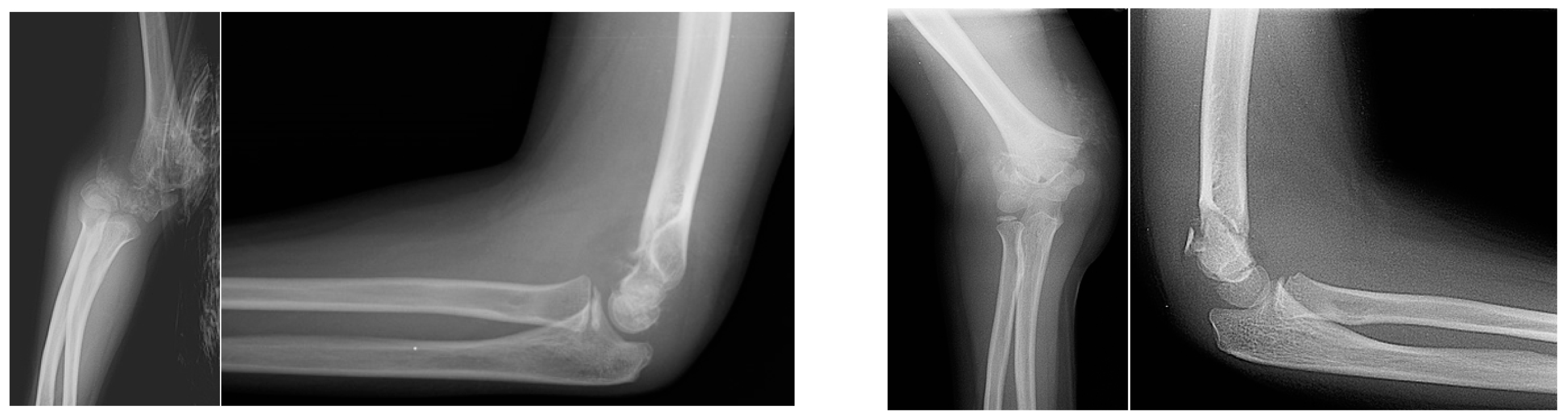
Which of the following classifications is used to assess the fracture shown in the provided image?
Which of the following statements is false regarding Colles' fracture?
Which of the following is characteristic of a motorcyclist's fracture?
A 42-year-old man is brought to the trauma center after a fall from a ladder. Physical examination reveals a slightly deformed left lower extremity with a 0.5 cm soft tissue defect over the anterolateral aspect of his leg. The wound appears relatively clean with no gross contaminants present. Radiographs depict a short oblique proximal one-third diaphyseal tibia fracture. What is his Gustilo open fracture classification grade?
What is the first sign of Volkmann's ischemia?
What is the most appropriate management option for an intra-articular fracture?
Explanation: ***This type of trauma favors crown or crown root fractures in the premolar or molar region; also possibility of jaw fractures*** - **Direct trauma** typically affects the **anterior teeth**, leading to crown and root fractures, rather than the premolar or molar regions. - Fractures in the **premolar or molar region** are more characteristic of **indirect trauma**, which often involves the jaw closing suddenly against an object. *An example of direct trauma is a tooth being struck by a baseball bat.* - This is a classic example of **direct trauma**, where an external object directly impacts the tooth. - The force from the impact is directly applied to the tooth surface, causing injury. *This usually involves anterior dentition* - **Anterior teeth** (incisors and canines) are most commonly exposed and susceptible to direct impact. - Their position in the front of the mouth makes them vulnerable to various forms of direct contact. *When the tooth itself is struck against a surface or when an object strikes a tooth or teeth* - This accurately describes the mechanism of **direct trauma**. - It involves a direct collision between the tooth and an object or another surface.
Explanation: ***None of the options*** - No single clinical sign is **consistently present** in all bone fractures, as presentations vary depending on the bone, fracture type, and patient factors. - While many signs are common, some fractures can be **subtle or atypical**, making a single universal sign an impossibility. *Crepitus* - **Crepitus** (a grating or crackling sound/sensation) occurs when fractured bone ends rub against each other. - It is not always present, especially in **impacted fractures** or when displacement is minimal, and often indicates significant instability. *Tenderness* - While localized **tenderness** is a very common sign of fracture, it is not universally present in all cases. - For example, in **stress fractures** or some pathological fractures, pain may be diffuse or less acutely localized. *Abnormal mobility* - **Abnormal mobility** at a site not normally a joint is a strong indication of a complete fracture and significant displacement. - However, it is absent in **incomplete fractures** (e.g., greenstick, hairline), impacted fractures, or when the fracture is well-stabilized.
Explanation: ***Flexion, Adduction, Internal rotation*** - In a posterior hip dislocation, the femoral head is forced posteriorly and superiorly, causing the limb to assume a characteristic position of **flexion**, **adduction**, and **internal rotation**. - This position is due to the **unresisted pull of hip adductors and internal rotators** when the femoral head is out of the acetabulum posteriorly. *Flexion, Adduction, External rotation* - While **flexion** and **adduction** can be present, **external rotation** is characteristic of an **anterior hip dislocation**, where the femoral head dislocates anteriorly and inferiorly. - This attitude is also commonly seen in patients with an **acetabular fracture** since the muscles that externally rotate the hip are unopposed. *Flexion, Abduction, Internal rotation* - **Flexion** and **internal rotation** can be seen in posterior dislocations, but **abduction** is typically not present; instead, the hip is adducted. - **Abduction** would indicate that the limb is moved away from the midline, which is contrary to the typical posture in posterior dislocation. *Flexion, Abduction, External rotation* - This combination is characteristic of an **anterior hip dislocation**, where the femoral head dislocates anteriorly and is often associated with the limb being in **flexion**, **abduction**, and **external rotation**. - The patient's leg is held away from the body (abduction) and turned outwards (external rotation), which is not consistent with a posterior dislocation.
Explanation: ***Cubitus varus occur more commonly than valgus*** - This statement is **false**. Fractures of the lateral condyle of the humerus typically lead to **cubitus valgus** deformity, not cubitus varus, due to growth disturbances at the lateral physis. - The fragment displaces laterally and distally, leading to a loss of the normal valgus angle of the elbow. *Salter Harris type IV injury* - Fractures of the lateral condyle of the humerus are indeed classified as **Salter-Harris Type IV injuries** because the fracture line extends through the epiphysis, crosses the physis, and exits through the metaphysis. - This classification indicates involvement of the **growth plate**, which carries a higher risk of growth disturbances and deformity. *Tardy ulnar nerve palsy occurs* - **Tardy ulnar nerve palsy** is a known long-term complication of lateral condyle fractures, particularly when a cubitus valgus deformity develops. - The valgus deformity can stretch the ulnar nerve behind the medial epicondyle, leading to delayed onset nerve symptoms and dysfunction. *Most common complication of surgically treated cases is cubitus valgus deformity* - Even with surgical treatment, **cubitus valgus deformity** remains a significant and common complication due to potential growth arrest at the lateral physis or incomplete reduction and fixation. - Inadequate reduction or fixation can lead to continued growth disturbance and subsequent angular deformity.
Explanation: ***Garden classification*** - The Garden classification is specifically used to classify **femoral neck fractures** based on displacement, which is a common and important fracture type to categorize. - While the provided image depicts an **elbow fracture**, the question asks to identify a classification system for fractures in general. Among the given options, Garden classification is correctly associated with a specific type of fracture (femoral neck) and is a well-known system. The image is a distracter on its own and isn't relevant to the question. *Gustilo classification* - The Gustilo-Anderson classification is used for **open fractures** to assess the severity of soft tissue damage and contamination. - It does not apply to the type of fracture shown in the image, nor is it a general classification for all fractures. *Weber classification* - The Weber classification is used for **ankle fractures**, specifically evaluating the level of the fibular fracture in relation to the syndesmosis. - This classification is not applicable to fractures at other anatomical sites, such as the elbow or femoral neck. *Salter and Harris classification* - The Salter-Harris classification is used for **growth plate (physeal) fractures** in children. - It is crucial for predicting growth disturbances but is not relevant for adult fractures or the specific fracture shown in the image.
Explanation: ***Not associated with dorsal angulation of the wrist*** - This statement is **false** because a Colles' fracture is classically defined by **dorsal displacement** and **dorsal angulation** of the distal radial fragment, often leading to a "dinner fork" deformity. - The fracture typically occurs with the hand in **forced dorsiflexion**, causing the distal fragment to tip dorsally. *In old age* - Colles' fractures are common in **older individuals**, particularly postmenopausal women, due to **osteoporosis** which weakens bone density. - The reduced bone strength makes the distal radius susceptible to fracture during falls onto an outstretched hand. *Dorsal shift* - A key characteristic of a Colles' fracture is the **dorsal displacement** of the distal radial fragment. - This posterior shift contributes to the classic "dinner fork" deformity seen clinically. *At cortico-cancellous junction* - The fracture usually occurs approximately **2.5 cm proximal to the radiocarpal joint** in the distal radius. - This region is where the denser cortical bone transitions to the more porous cancellous bone, making it a common site for fracture.
Explanation: ***Fracture base of skull into anterior & posterior halves*** - A **motorcyclist's fracture** is a specific type of **basilar skull fracture** that divides the skull base into anterior and posterior halves. - This fracture pattern typically occurs due to a forceful impact, such as hitting the chin on the ground or handlebars during a motorcycle accident, resulting in a **hinge fracture** of the skull base. *Ring fracture* - A **ring fracture** typically occurs around the **foramen magnum** and is associated with falls directly onto the head or feet, or impacts that transmit force through the spine to the skull base. - It usually does not involve a complete splitting of the skull base into anterior and posterior halves, as seen in motorcyclist's fractures. *Sutural separation* - **Sutural separation**, also known as **diastatic fracture**, involves the widening of cranial sutures. - This type of injury is more common in infants and young children whose sutures are not yet fully fused, and it does not typically describe a complete fracture of the skull base in adults. *Comminuted fracture of vault of skull* - A **comminuted fracture of the skull vault** involves multiple bone fragments in the top or sides of the skull, often from direct blunt force trauma. - While it is a severe type of skull fracture, it does not specifically refer to the characteristic division of the skull base seen in a motorcyclist's fracture.
Explanation: ***I*** - A **Gustilo Grade I** open fracture is characterized by a wound size of less than 1 cm, with minimal soft tissue damage and a relatively clean wound. - The description of a **0.5 cm soft tissue defect**, a "relatively clean" wound, and a "short oblique" fracture fits these criteria. *II* - A **Gustilo Grade II** open fracture involves a wound greater than 1 cm but less than 10 cm, with moderate soft tissue damage and contamination. - This patient's wound is only **0.5 cm**, indicating less extensive soft tissue involvement than a Grade II injury. *IIIa* - **Gustilo Grade IIIa** fractures involve extensive soft tissue damage, a wound greater than 10 cm, and significant contamination, but with adequate soft tissue coverage of the bone. - The patient's **small, clean wound** and lack of extensive damage rule out Grade IIIa. *IIIb* - **Gustilo Grade IIIb** fractures are characterized by massive soft tissue damage, significant contamination, and periosteal stripping, typically requiring reconstructive procedures. - This definition clearly deviates from the presented case, which describes a **minimal wound** and no significant soft tissue loss.
Explanation: ***Pain*** - **Severe pain** disproportionate to the injury is often the **first and most reliable sign** of impending Volkmann's ischemia (compartment syndrome). - This pain is typically **unrelieved by analgesics** and exacerbated by passive stretching of the affected muscles. *Pallor* - **Pallor (pale skin)** indicates **reduced blood flow** but is generally a later sign of severe ischemia, not the initial presentation. - While concerning, it suggests significant vascular compromise and is usually preceded by pain. *Paralysis* - **Paralysis or significant weakness** is a late and ominous sign, indicating **nerve ischemia** and muscle death due to prolonged lack of oxygen. - This symptom suggests irreversible damage if not addressed promptly. *Pulselessness* - **Pulselessness** is a very late and serious sign, indicating **complete arterial occlusion** or severe vascular compromise. - The presence of a palpable pulse does **not rule out compartment syndrome**, as compartment pressures can exceed capillary perfusion pressure long before arterial flow is completely obstructed.
Explanation: ***Plating*** - Plating offers **stable fixation** for intra-articular fractures, allowing for early mobilization and preserving joint function. - It provides **anatomic reduction**, which is crucial for restoring the smooth articular surface and preventing post-traumatic arthritis. *Arthrodesis* - Arthrodesis, or joint fusion, is typically reserved for **severe joint destruction** or failed previous treatments, as it sacrifices joint motion. - It is not the primary approach for acute intra-articular fractures where the goal is to **restore joint function**. *Plaster of Paris* - Plaster of Paris casts often provide **insufficient stability** for complex intra-articular fractures, risking malunion or nonunion. - While it offers immobilization, it can lead to **joint stiffness** and does not allow for early range of motion, which is vital for articular cartilage healing. *External Fixation* - External fixation is usually preferred for **open fractures** with significant soft tissue injury or as a temporary measure in polytrauma patients. - It carries a risk of **pin site infections** and can be cumbersome for the patient, generally not being the definitive treatment for closed intra-articular fractures.
Principles of Fracture Management
Practice Questions
Upper Limb Fractures
Practice Questions
Lower Limb Fractures
Practice Questions
Spinal Trauma
Practice Questions
Pelvic and Acetabular Fractures
Practice Questions
Open Fractures
Practice Questions
Fractures in Children
Practice Questions
Fracture Complications
Practice Questions
Nonunion and Malunion
Practice Questions
Polytrauma Management
Practice Questions
Joint Dislocations
Practice Questions
Soft Tissue Injuries
Practice Questions
Get full access to all questions, explanations, and performance tracking.
Start For Free