In hemophilic arthropathy, which of the following abnormalities is not seen?
All of the following are red flag signs of back pain except?
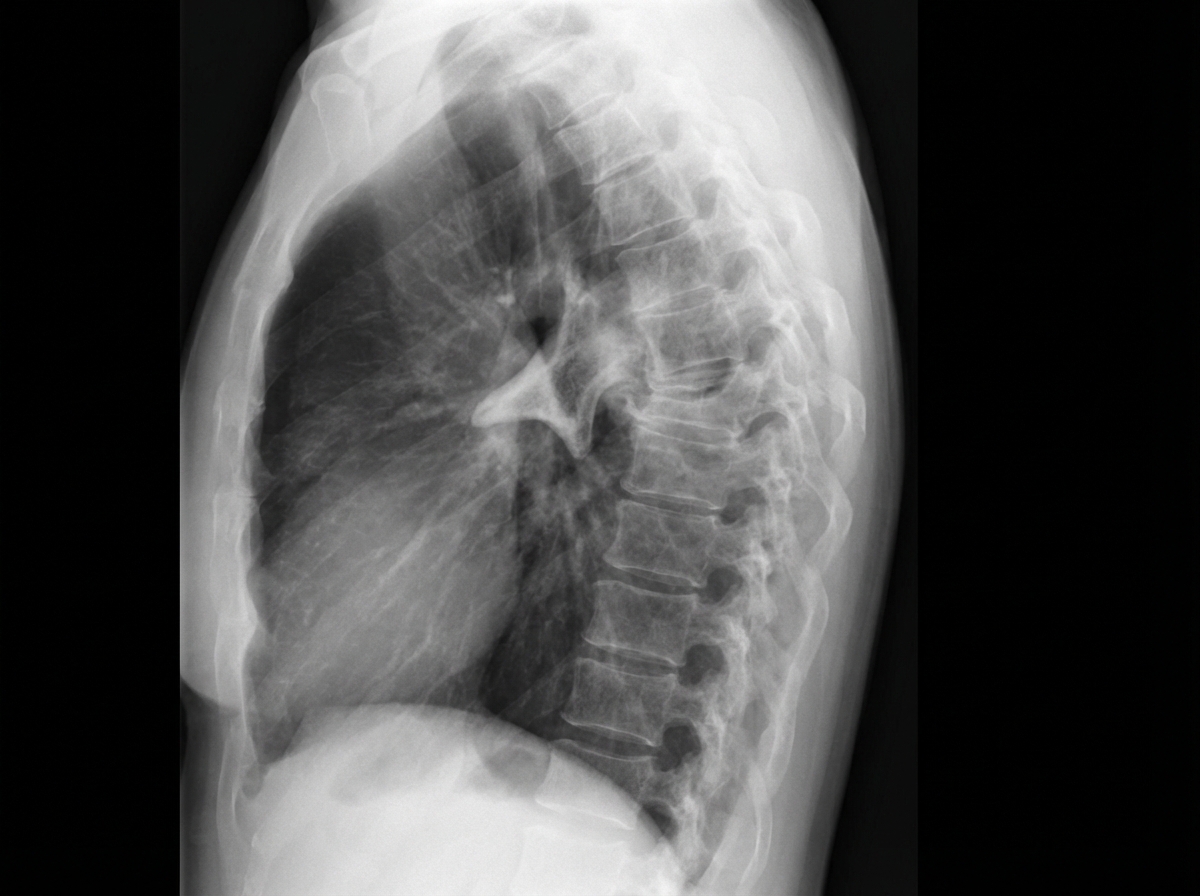
In cervical spondylosis, which intervertebral disc space narrowing is most commonly evident on X-ray?
A middle-aged female with rheumatoid arthritis on treatment develops upper motor neuron signs in her limbs. What is the investigation required to evaluate her further?
Syndesmophytes are typically seen in which of the following conditions?
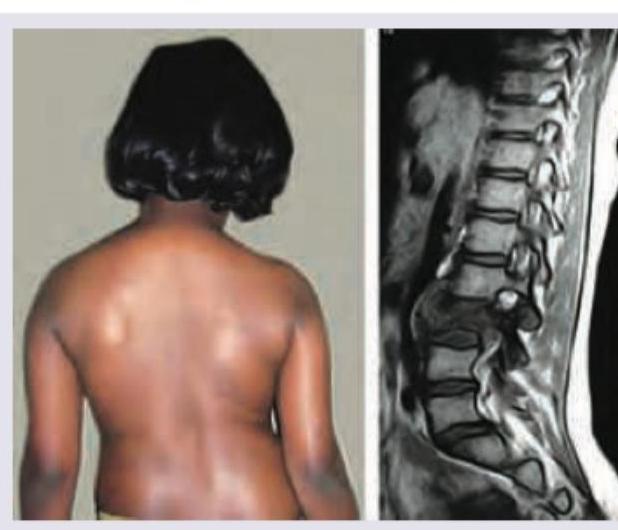
What is the investigation of choice for spinal tuberculosis?
Nodular masses have developed in the periarticular tissue of the proximal and distal interphalangeal joints of the right hand of a 58-year-old man with a 10-year history of gout. Which of the following best describes the characteristics of these masses?
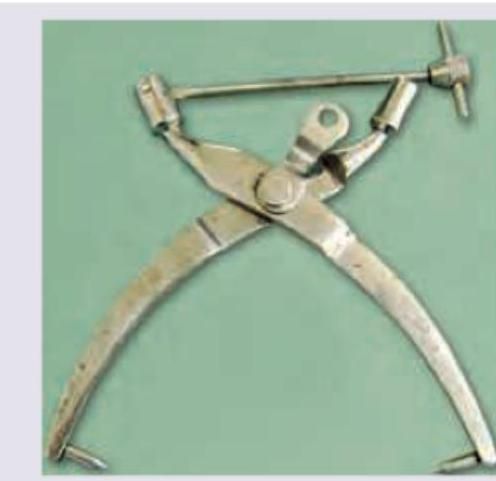
Vertebral rotation in scoliosis is checked in which position?
Which of the following is not recommended in the treatment of chronic low back pain?
Bamboo-spine is seen in which condition?
Explanation: **Explanation:** Hemophilic arthropathy is a chronic joint deformity resulting from recurrent hemarthrosis (bleeding into the joint). The pathophysiology is driven by the deposition of **hemosiderin**, which causes synovial hypertrophy and the release of lysosomal enzymes. These enzymes lead to the destruction of articular cartilage and subchondral bone. **Why Juxta-articular osteosclerosis is NOT seen:** In hemophilic arthropathy, the chronic inflammatory state and hyperemia (increased blood flow) to the joint lead to **juxta-articular osteoporosis** (decreased bone density), not osteosclerosis (increased bone density). Osteosclerosis is typically a feature of primary osteoarthritis, whereas hemophilia mimics an aggressive, inflammatory erosive process. **Analysis of other options:** * **Subchondral bone cyst formation:** Recurrent intraosseous hemorrhage and pressure from synovial hypertrophy lead to the formation of large subchondral cysts (Geodes). * **Increase in intercondylar distance:** In the knee (the most commonly affected joint), hyperemia causes overgrowth of the distal femoral epiphysis. This leads to a characteristic **widening of the intercondylar notch**. * **Subchondral thinning:** The enzymatic destruction of cartilage and pressure from the hypertrophied synovium result in the thinning and eventual loss of the subchondral bone plate. **NEET-PG High-Yield Pearls:** * **Most common joint involved:** Knee > Elbow > Ankle. * **Radiological Hallmark:** Squaring of the inferior pole of the patella (**Jordan’s Sign**) and widening of the intercondylar notch. * **Classification:** The **Arnold-Hilgartner classification** is used to stage the radiographic progression of the disease. * **Management:** Prophylactic factor replacement is the gold standard; radiosynovectomy is used for chronic synovitis.
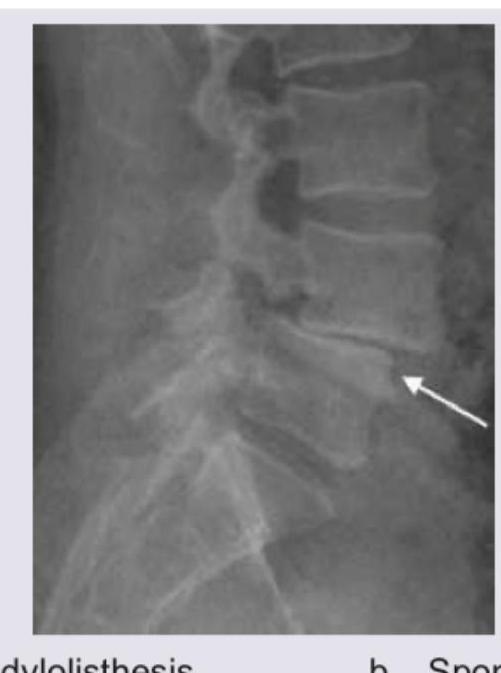
Explanation: **Explanation:** In clinical orthopaedics, **"Red Flags"** are specific clinical indicators that suggest back pain may be caused by a serious underlying pathology (such as malignancy, infection, or cauda equina syndrome) rather than simple mechanical strain. **Why Option D is the Correct Answer:** Age between **35–50 years** is considered the "safe zone" for mechanical back pain. Red flags regarding age typically include patients **younger than 20 years** (suggesting congenital issues or spondylolisthesis) or **older than 50–55 years** (suggesting malignancy or osteoporotic fractures). Therefore, being in the 35–50 age bracket is not a red flag. **Analysis of Incorrect Options (Red Flags):** * **A. Previous history of malignancy:** This is a major red flag for **spinal metastasis**, especially if the pain is non-mechanical (worse at rest/night). * **B. Previous history of steroid use:** Long-term corticosteroid use leads to secondary osteoporosis, significantly increasing the risk of **vertebral compression fractures**, even with minimal trauma. * **C. Saddle anaesthesia:** This refers to sensory loss in the perineal region and is a pathognomonic sign of **Cauda Equina Syndrome**, a surgical emergency. **Clinical Pearls for NEET-PG:** * **TUNA FISH Mnemonic for Red Flags:** **T**rauma, **U**nexplained weight loss, **N**eurological deficits, **A**ge (>50 or <20), **F**ever, **I**ntravenous drug use, **S**teroid use, **H**istory of cancer. * **Night Pain:** Pain that prevents sleep is a classic indicator of spinal tumors or infections (like Pott’s disease). * **Bladder/Bowel Dysfunction:** Urinary retention or fecal incontinence in a back pain patient requires immediate MRI to rule out cord compression.
Explanation: **Explanation:** Cervical spondylosis is a degenerative condition of the cervical spine characterized by disc space narrowing, osteophyte formation, and facet joint arthropathy. The correct answer is **C5-C6** because this level represents the point of maximum mechanical stress and greatest range of motion (flexion and extension) in the cervical spine. * **C5-C6 (Correct):** This is the most common site for degenerative changes and disc herniation. The biomechanical stress is highest here, leading to early attrition of the intervertebral disc and subsequent radiographic narrowing. * **C6-C7 (Incorrect):** This is the **second most common** level involved. While frequently affected, it statistically follows C5-C6 in frequency of radiographic evidence. * **C4-C5 (Incorrect):** This level is involved less frequently than the lower cervical segments (C5-C7), as it bears less load and has slightly less mobility. * **C3-C4 (Incorrect):** Degenerative changes at this level are relatively uncommon compared to the mid-to-lower cervical spine. **High-Yield Clinical Pearls for NEET-PG:** 1. **Most common level for Disc Prolapse:** C5-C6 (followed by C6-C7). 2. **Most common nerve root involved:** C6 (at C5-C6 level) or C7 (at C6-C7 level). 3. **Radiographic Hallmarks:** Osteophytes (especially posterior), disc space narrowing, and subchondral sclerosis. 4. **Best Initial View:** Lateral X-ray is best for visualizing disc space narrowing. 5. **Oblique Views:** These are specifically used to visualize **neural foraminal stenosis** caused by osteophytes.
Explanation: ### Explanation **Correct Answer: A. Spine lateral view flexion and extension views** **Clinical Reasoning:** Rheumatoid Arthritis (RA) frequently involves the cervical spine, most commonly causing **Atlanto-axial Subluxation (AAS)**. This occurs due to inflammatory destruction of the transverse ligament of the atlas, leading to instability. When a patient with RA develops **Upper Motor Neuron (UMN) signs** (e.g., hyperreflexia, spasticity, Babinski sign), it indicates cervical myelopathy due to spinal cord compression. To diagnose instability, **dynamic radiographs** (Lateral view in flexion and extension) are the gold standard. In flexion, the **Atlantodental Interval (ADI)** increases; an ADI >3 mm in adults is diagnostic of subluxation. These views are essential to assess the degree of translation and stability before considering surgical intervention. **Analysis of Incorrect Options:** * **B. Open mouth view:** This view is used to visualize the odontoid process (dens) and the lateral masses of C1. While it can show lateral subluxation, it is static and cannot assess the dynamic instability characteristic of AAS. * **C. Swimmer’s view:** This is used to visualize the **Cervicothoracic junction (C7-T1)** when the shoulders obscure the lateral view. It is not relevant for atlanto-axial pathology. * **D. Broden’s view:** This is a specialized orthopedic view used to evaluate the **subtalar joint** (calcaneal fractures), not the spine. **High-Yield Pearls for NEET-PG:** * **Most common cervical site in RA:** Atlanto-axial joint (C1-C2), followed by subaxial subluxation. * **ADI Limits:** Normal is <3 mm in adults and <5 mm in children. * **Surgical Indicator:** A Posterior Atlantodental Interval (PADI) <14 mm is a strong predictor of neurologic deficit and often indicates the need for surgery. * **Pre-operative Caution:** All RA patients undergoing elective surgery require cervical spine X-rays to rule out instability, as intubation can cause fatal cord compression.
Explanation: **Explanation:** The term **syndesmophyte** refers to a bony outgrowth originating from inside a ligament, specifically the longitudinal ligaments of the spine. While classically associated with Ankylosing Spondylitis, syndesmophytes can occur in various spinal pathologies, making "All of the above" the correct answer. 1. **Ankylosing Spondylitis (AS):** This is the classic association. In AS, inflammation at the entheses (enthesitis) leads to the formation of **marginal syndesmophytes**. These are thin, vertical bony bridges that connect the edges of adjacent vertebral bodies, eventually leading to the "Bamboo Spine" appearance. 2. **Rheumatoid Arthritis (RA):** While RA primarily affects the cervical spine (atlantoaxial subluxation), chronic inflammation of the spinal ligaments can occasionally result in syndesmophyte formation, though they are less common than in seronegative spondyloarthropathies. 3. **Osteoarthritis (OA):** In the spine (Spondylosis Deformans), degenerative changes lead to the formation of **osteophytes**. While osteophytes are typically horizontal and thicker, advanced degenerative processes can involve the ligaments, resulting in syndesmophyte-like bridges. **High-Yield Clinical Pearls for NEET-PG:** * **Marginal Syndesmophytes:** Thin, vertical, and symmetrical. Characteristic of **Ankylosing Spondylitis**. * **Non-Marginal Syndesmophytes:** Thick, asymmetrical, and "comma-shaped." Characteristic of **Psoriatic Arthritis** and **Reactive Arthritis**. * **Osteophytes:** Horizontal outgrowths from the vertebral body margins, seen in **Osteoarthritis**. * **DISH (Forestier’s Disease):** Characterized by flowing calcification of the Anterior Longitudinal Ligament (ALL) over at least four contiguous vertebrae, mimicking massive syndesmophytes.
Explanation: **Explanation:** **MRI (Magnetic Resonance Imaging)** is the investigation of choice for spinal tuberculosis (Pott’s disease) because of its superior soft-tissue contrast. It is highly sensitive in detecting early marrow edema, disc space narrowing, and the characteristic "pre-vertebral, para-vertebral, and psoas abscesses." Crucially, MRI is the best modality to visualize the spinal cord and nerve root compression, helping to assess the risk of Pott’s paraplegia. **Analysis of Incorrect Options:** * **X-ray:** Often the first investigation performed, but it is insensitive for early diagnosis. Bone destruction is only visible on plain radiographs after 30–50% of mineral content is lost. * **CT-Scan:** Excellent for visualizing bony destruction, sequestrum formation (e.g., "sand-like" sequestra), and guiding fine-needle aspiration. However, it is inferior to MRI for evaluating neural structures and early inflammatory changes. * **Open Biopsy:** While it provides a definitive histopathological diagnosis (the "Gold Standard" for confirmation), it is an invasive procedure and not the primary investigation of choice for initial evaluation. **High-Yield Clinical Pearls for NEET-PG:** * **Earliest sign on X-ray:** Reduction in disc space (due to destruction of the subchondral bone). * **Most common site:** Lower Thoracic and Upper Lumbar vertebrae. * **Paradiscal involvement:** The most common pattern where the infection starts in the vertebral body near the disc. * **Cold Abscess:** Named so because it lacks the typical signs of acute inflammation (heat, redness). * **Gibbus Deformity:** A sharp kyphotic angulation resulting from the collapse of anterior vertebral bodies.
Explanation: **Explanation:** The clinical presentation describes **Tophi**, which are the hallmark of **Chronic Tophaceous Gout**. These are nodular deposits of monosodium urate (MSU) crystals in the soft tissues, synovial membranes, or periarticular structures. **1. Why Option A is correct:** Tophi are considered the **pathognomonic lesion** of chronic gout. They typically develop after approximately 10 years of untreated or poorly controlled hyperuricemia. A tophus consists of a central core of MSU crystals surrounded by a chronic inflammatory granulomatous reaction (macrophages, lymphocytes, and multinucleated giant cells). **2. Why the other options are incorrect:** * **Option B:** While both involve granulomatous inflammation, a **Rheumatoid Nodule** has a distinct histological appearance characterized by a central zone of **fibrinoid necrosis** surrounded by palisading macrophages. Tophi contain crystalline urate deposits rather than necrotic collagen. * **Option C:** MSU crystals in gout are **strongly negatively birefringent** (needle-shaped). Weakly positive birefringence is characteristic of Calcium Pyrophosphate Deposition Disease (CPPD/Pseudogout), which features rhomboid-shaped crystals. * **Option D:** Fibrinoid necrosis is a feature of Rheumatoid nodules and certain vasculitides, not gouty tophi. **Clinical Pearls for NEET-PG:** * **Gold Standard Diagnosis:** Polarized light microscopy showing needle-shaped, negatively birefringent crystals (Yellow when parallel to the slow axis of the compensator). * **Common Sites for Tophi:** Helix of the ear (classic), Olecranon bursa, Achilles tendon, and small joints of hands/feet. * **Radiology:** "Punched-out" erosions with overhanging edges (**Martel’s sign**) are characteristic of chronic gouty arthritis. * **Drug of Choice:** Acute Gout = NSAIDs (first-line); Chronic Gout = Allopurinol (Xanthine oxidase inhibitor).
Explanation: **Explanation:** The correct answer is **A. Forward bending (Adam's forward bend test)**. **Why it is correct:** Scoliosis is a three-dimensional deformity involving lateral curvature and **axial rotation** of the vertebrae. Because the ribs are attached to the thoracic vertebrae, vertebral rotation causes the ribs on the convex side of the curve to project posteriorly. This creates a **"rib hump."** The Adam’s forward bend test is the standard clinical screening tool because bending forward accentuates this asymmetry, making the rotational component (the rib hump or lumbar prominence) visible to the examiner. **Why other options are incorrect:** * **B & C (Backward/Sideways bending):** These positions do not highlight the rotational deformity. In fact, lateral bending is used to assess the **flexibility** of the curve (distinguishing between structural and functional scoliosis) rather than checking for rotation. * **D (Without bending):** While a lateral shift or shoulder tilt may be visible while standing, the rotational component is often masked by overlying soft tissue and musculature. Forward flexion is required to bring the rib hump into clear view. **High-Yield Clinical Pearls for NEET-PG:** * **Scoliometer:** Used during the Adam’s test to measure the **Angle of Trunk Rotation (ATR)**. An ATR ≥ 7° usually warrants radiological evaluation. * **Cobb’s Angle:** The gold standard for measuring the severity of scoliosis on an X-ray. * **Nash-Moe Classification:** Used to grade vertebral rotation based on the position of the **pedicles** on an AP radiograph. * **Risser’s Sign:** Used to assess skeletal maturity via the ossification of the iliac apophysis, which helps predict the risk of curve progression.
Explanation: In the management of chronic low back pain (LBP), the primary goal is to maintain activity and prevent disability. **Why "Bed rest for 3 months" is the correct answer:** Prolonged bed rest is strictly contraindicated in both acute and chronic low back pain. Evidence shows that bed rest for more than 2–3 days leads to muscle atrophy (deconditioning), joint stiffness, bone mineral loss, and increased risk of thromboembolism. In chronic cases, it promotes "sick role" behavior and psychological distress. Current guidelines emphasize **early mobilization** and "staying active" to improve functional outcomes. **Analysis of other options:** * **NSAIDs:** These are the first-line pharmacological treatment for symptomatic relief of pain and inflammation in chronic LBP. * **Exercises:** Core strengthening, McKenzie exercises, and aerobic conditioning are the cornerstones of chronic LBP management. They improve spinal stability and reduce recurrence. * **Epidural steroid injections:** These are indicated for patients with radiculopathy (sciatica) or spinal stenosis who have failed conservative management, helping to reduce nerve root inflammation. **NEET-PG High-Yield Pearls:** * **Acute LBP:** Bed rest should not exceed **48 hours**. * **Red Flags for LBP:** Weight loss, night pain, saddle anesthesia, and bladder/bowel dysfunction (suggests malignancy or Cauda Equina Syndrome). * **Most common cause of LBP:** Lumbar spondylosis (degenerative changes). * **Gold Standard Imaging:** MRI is the investigation of choice for disc herniation and spinal canal stenosis.
Explanation: **Explanation:** **Ankylosing Spondylitis (AS)** is the correct answer. It is a chronic inflammatory seronegative spondyloarthropathy primarily affecting the sacroiliac joints and the axial skeleton. The "Bamboo Spine" appearance is a classic radiographic hallmark caused by the formation of **marginal syndesmophytes**. These are thin, vertical bony bridges that form due to ossification of the outer fibers of the annulus fibrosus and the longitudinal ligaments, connecting adjacent vertebral bodies and leading to complete spinal fusion. **Why other options are incorrect:** * **Rheumatoid Arthritis:** Typically involves the cervical spine (atlantoaxial subluxation) and small joints of the hands. It is characterized by erosions and joint space narrowing rather than the extensive vertical ossification seen in AS. * **Paget’s Disease:** Characterized by abnormal bone remodeling leading to thickened, disorganized bone. Radiographic features include "Picture Frame" vertebrae or "Ivory" vertebrae, not syndesmophyte-driven fusion. **High-Yield Clinical Pearls for NEET-PG:** * **HLA-B27 Association:** Strongly associated with AS (>90% of cases). * **Earliest Sign:** Sacroiliitis (usually bilateral and symmetrical) is the earliest radiographic change. * **Dagger Sign:** A single central radiodense line on X-ray due to ossification of the supraspinous and interspinous ligaments. * **Trolley Track Sign:** Three vertical lines on X-ray due to ossification of the ligaments and facet joint capsules. * **Clinical Test:** Modified Schober’s test is used to assess restricted spinal flexion. * **Extra-articular manifestation:** Acute anterior uveitis is the most common.
Cervical Spine Disorders
Practice Questions
Thoracic Spine Disorders
Practice Questions
Lumbar Spine Disorders
Practice Questions
Intervertebral Disc Disease
Practice Questions
Spinal Stenosis
Practice Questions
Spondylolisthesis
Practice Questions
Spinal Deformities
Practice Questions
Spinal Infections
Practice Questions
Spinal Tumors
Practice Questions
Spinal Cord Injuries
Practice Questions
Minimally Invasive Spine Surgery
Practice Questions
Rehabilitation of Spine Conditions
Practice Questions
Get full access to all questions, explanations, and performance tracking.
Start For Free