What is the most common location of spinal tumors?
What condition is characterized by a "wind-swept deformity"?
All of the following are included as yellow flag signs of low back pain, except?
The Milwalkee brace is used in the treatment of which spinal condition?
Heberden's nodes are seen in which of the following conditions?
What is the first symptom of spinal tuberculosis?
The talocalcaneonavicular joint is a type of which joint?
A patient develops myelopathy post-trauma. What is the recommended initial dose of methylprednisolone?
What is the most common malignancy that metastasizes to the spine in females?
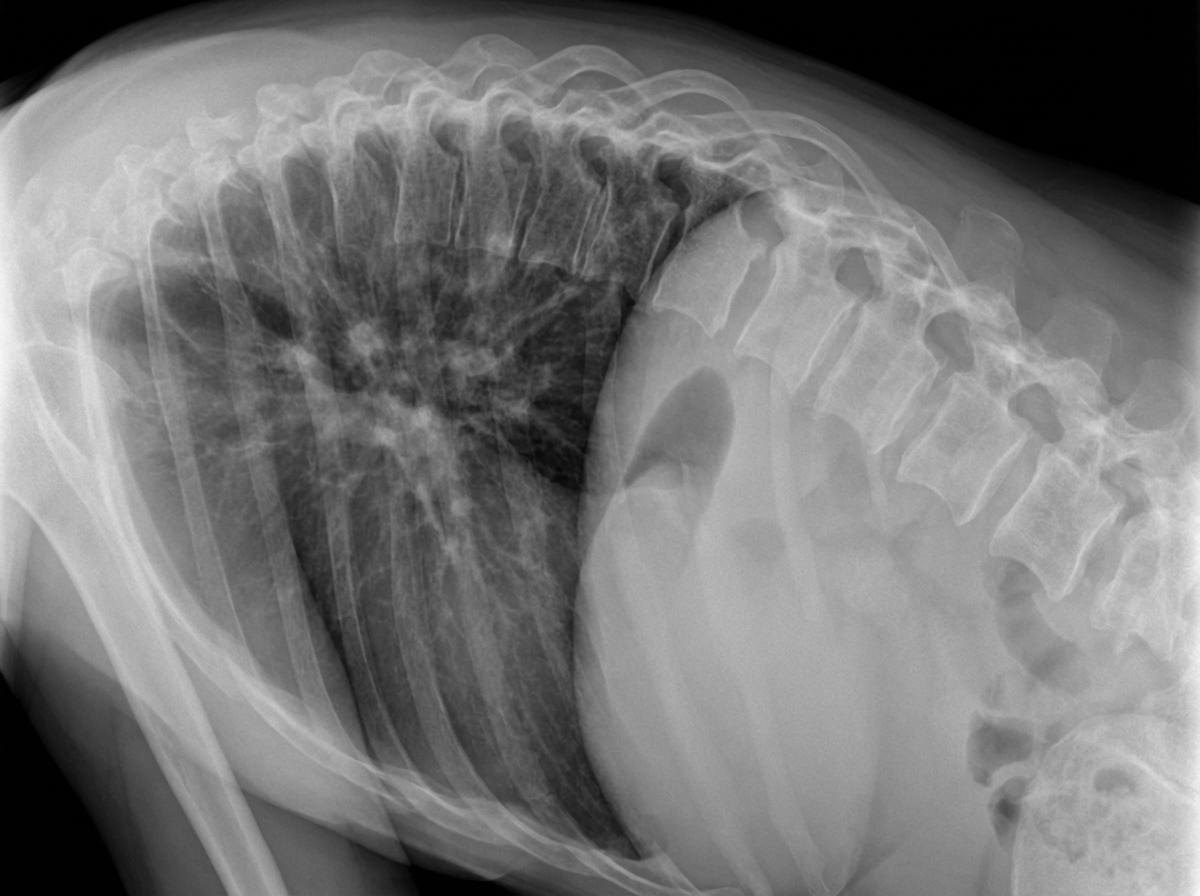
What is the commonest cause of the given condition in a young person?
Explanation: **Explanation:** Spinal tumors are anatomically classified based on their relationship to the spinal cord and the dura mater. **1. Why Extradural is correct:** Extradural tumors are the **most common** type of spinal tumors, accounting for approximately **55-60%** of all spinal neoplasms. The primary reason for this high prevalence is that this space includes the vertebral column. Most extradural tumors are **metastatic** (secondary) lesions, commonly originating from primary cancers of the breast, lung, prostate, or kidney. Among primary extradural tumors, chordomas and osteosarcomas are notable examples. **2. Why other options are incorrect:** * **Intradural Extramedullary (Option B):** These occur within the dura but outside the spinal cord. They account for about **30-35%** of spinal tumors. The most common types are nerve sheath tumors (Schwannomas, Neurofibromas) and Meningiomas. * **Intramedullary (Option A):** These are the **least common** (~5-10%) and occur within the substance of the spinal cord itself. The most common types in adults are Ependymomas, followed by Astrocytomas. * **Equally Distributed (Option D):** This is incorrect as there is a clear hierarchical frequency: Extradural > Intradural Extramedullary > Intramedullary. **Clinical Pearls for NEET-PG:** * **Most common primary spinal tumor:** Nerve sheath tumors (Schwannoma). * **Most common intramedullary tumor in adults:** Ependymoma. * **Most common intramedullary tumor in children:** Astrocytoma. * **Red Flag:** New-onset back pain in an elderly patient with a history of malignancy should always be investigated for extradural metastasis. * **Imaging Gold Standard:** MRI with contrast is the investigation of choice for all spinal tumors.
Explanation: **Explanation:** **Rickets** is the correct answer because it is a metabolic bone disease characterized by deficient mineralization of the osteoid matrix, typically due to Vitamin D deficiency. In a growing child, the softened bones are unable to withstand the mechanical stress of weight-bearing. The **"wind-swept deformity"** occurs when there is a combination of **genu valgum** (knock-knee) in one leg and **genu varum** (bow-leg) in the other, making it appear as if the knees have been blown to one side by the wind. **Analysis of Incorrect Options:** * **Ankylosing Spondylitis:** Characterized by "Bamboo spine" and "Question mark posture" due to progressive spinal fusion and kyphosis, not limb angulation. * **Scurvy:** Presents with subperiosteal hemorrhages and specific radiological signs like the "Wimberger ring" and "Pelkan spur," but does not cause wind-swept limbs. * **Rheumatoid Arthritis:** Typically leads to joint erosions and deformities like "Swan neck" or "Boutonniere" in the hands, rather than the classic wind-swept appearance of the lower limbs seen in metabolic bone disease. **Clinical Pearls for NEET-PG:** * **Radiological signs of Rickets:** Cupping, fraying, and splaying of the metaphysis (most prominent at the distal radius and ulna). * **Harrison’s Sulcus:** A horizontal groove along the lower border of the thorax corresponding to the diaphragmatic attachment, seen in Rickets. * **Rachitic Rosary:** Palpable enlargement of the costochondral junctions. * **Craniotabes:** Softening of the skull bones (earliest sign of Rickets).
Explanation: In the clinical evaluation of low back pain, "Flags" are used to categorize risk factors. The distinction between **Red Flags** and **Yellow Flags** is a high-yield topic for NEET-PG. ### 1. Why "History of systemic steroid use" is the correct answer: **History of systemic steroid use** is a **Red Flag**, not a yellow flag. Red flags indicate serious underlying structural or systemic pathology that requires urgent investigation. Chronic steroid use is a major risk factor for **osteoporotic vertebral compression fractures** and increased susceptibility to spinal infections (e.g., Pott’s disease). ### 2. Analysis of Incorrect Options (Yellow Flags): Yellow flags are **psychosocial factors** that increase the risk of developing chronic pain and long-term disability. * **Reliance on passive treatment (Option B):** Patients who prefer passive modalities (massage, bed rest) over active rehabilitation (exercise) have a poorer prognosis. * **Social isolation (Option C):** Withdrawal from social activities and lack of support systems are strong predictors of chronicity. * **Belief that back pain is severely disabling (Option D):** This is known as **Catastrophizing**. Patients who believe pain is harmful or permanently disabling are less likely to return to work. ### 3. Clinical Pearls for NEET-PG: * **Red Flags (Physical/Structural):** Age >50 or <20, history of malignancy, unexplained weight loss, night pain, saddle anesthesia, bowel/bladder dysfunction (Cauda Equina Syndrome), and fever. * **Yellow Flags (Psychosocial):** Depression, anxiety, fear-avoidance behavior, and job dissatisfaction. * **Blue Flags:** Perceptions about the relationship between work and health (e.g., belief that the job is too demanding). * **Black Flags:** Systemic/Contextual factors (e.g., insurance claims, litigation, or restrictive sick-pay policies).
Explanation: **Explanation:** The **Milwaukee brace** (also known as a Cervico-Thoraco-Lumbo-Sacral Orthosis or CTLSO) is a corrective orthosis primarily used in the management of **Scoliosis**. It is a dynamic brace designed to provide longitudinal traction and lateral pressure to correct lateral curvature of the spine. It is most effective for curves with an apex above T8. **Why the correct answer is right:** * **Scoliosis:** The brace works on the principle of three-point pressure and active correction (the patient pulls away from the pads). It is indicated for adolescent idiopathic scoliosis with a Cobb’s angle between 20° and 40° in a skeletally immature child (Risser sign 0-II). **Analysis of Incorrect Options:** * **Kyphosis:** While the Milwaukee brace can be modified for Scheuermann’s kyphosis, it is classically associated with scoliosis in exams. However, for pure thoracic kyphosis, specific extension braces are more common. * **Cubitus varus:** This is a coronal plane deformity of the elbow (Gunstock deformity), usually a late complication of supracondylar fractures of the humerus. It is treated with a French osteotomy, not a spinal brace. * **Genu varum:** This refers to "bow legs" (knee deformity). Treatment involves Vitamin D (if rachitic) or corrective osteotomies/guided growth, not spinal orthotics. **High-Yield Clinical Pearls for NEET-PG:** * **Boston Brace:** A Thoraco-Lumbo-Sacral Orthosis (TLSO) that is "low-profile" (no neck ring), used for curves with an apex below T8. * **Charleston Bending Brace:** A nocturnal (night-time) brace used for scoliosis. * **Rule of Thumb:** Bracing is generally indicated for Cobb's angles of **20°–40°**. If the angle exceeds **40°–45°**, surgical intervention (e.g., spinal fusion with pedicle screws) is usually required.
Explanation: **Explanation:** **Heberden's nodes** are a hallmark clinical sign of **Osteoarthritis (OA)**. They represent bony overgrowths (osteophytes) that develop at the **Distal Interphalangeal (DIP) joints**. These nodes are more common in women and often have a strong genetic predisposition. * **Option A (Correct):** Heberden's nodes specifically involve the DIP joints in OA. Pathologically, they result from repeated mechanical stress leading to cartilage loss and reactive bone formation (osteophytes) at the joint margins. * **Option B (Incorrect):** Bony enlargements at the **Proximal Interphalangeal (PIP) joints** in Osteoarthritis are known as **Bouchard's nodes**. * **Option C (Incorrect):** While the 1st Carpometacarpal (CMC) joint is a very common site for OA (leading to a "squared hand" appearance), it is not the site for Heberden's nodes. Rheumatoid Arthritis (RA) typically spares the 1st CMC and focuses on the MCP joints. * **Option D (Incorrect):** A classic teaching point in orthopaedics is that **Rheumatoid Arthritis typically spares the DIP joints**. If a patient has DIP involvement with inflammatory features, one should consider Psoriatic Arthritis instead. **High-Yield Clinical Pearls for NEET-PG:** 1. **Mnemonic:** **H**eberden’s = **H**igh (Distal), **B**ouchard’s = **B**elow (Proximal). 2. **OA vs. RA:** OA involves DIP and PIP joints; RA involves MCP and PIP joints but **spares the DIP**. 3. **Radiological Hallmarks of OA:** Joint space narrowing, subchondral sclerosis, subchondral cysts, and **osteophytes**. 4. **Erosive OA:** A subset of OA that can show a "Gull-wing" appearance on X-ray, primarily affecting the DIP and PIP joints.
Explanation: **Explanation:** **Spinal Tuberculosis (Pott’s Disease)** is the most common form of skeletal tuberculosis. The disease typically begins in the anterior part of the vertebral body, leading to bone destruction and disc collapse. **Why Pain is the Correct Answer:** **Pain** is the earliest and most consistent symptom of spinal tuberculosis. It is typically localized to the site of involvement and is "cold" in nature (not associated with acute inflammation). The pain is often worse at night and is aggravated by movement or weight-bearing. This occurs due to the irritation of sensory nerve endings by the inflammatory process and the resulting muscle spasms that attempt to splint the affected segment. **Analysis of Incorrect Options:** * **Decreased Sensation & Decreased Motor Power:** These are neurological deficits that occur much later in the disease progression. They result from the compression of the spinal cord or nerve roots by a "cold abscess," sequestra, or spinal deformity (kyphosis). * **Increased Deep Tendon Reflexes:** This is a sign of Upper Motor Neuron (UMN) involvement due to spinal cord compression (Pott’s paraplegia). Like motor and sensory loss, this is a late complication, not an early symptom. **Clinical Pearls for NEET-PG:** * **Earliest Sign:** The earliest clinical *sign* is **stiffness** (muscle spasm) of the affected segment. * **Most Common Site:** The **Lower Thoracic and Upper Lumbar** vertebrae (Thoracolumbar junction) are most frequently affected. * **Radiology:** The first radiographic sign is often **narrowing of the disc space** and blurring of the vertebral endplates. * **Paradoxical Breathing:** In cervical Pott's, the patient may present with a "stiff neck" or "Night Cries" (sudden pain when muscles relax during sleep).
Explanation: ### Explanation The **talocalcaneonavicular (TCN) joint** is a complex, multiaxial joint that functions morphologically and functionally as a **ball and socket joint**. **Why it is correct:** In this joint, the "ball" is formed by the **head of the talus**. The "socket" (often referred to as the *acetabulum pedis*) is a deep, concave receiving surface formed by: 1. The posterior surface of the **navicular** bone. 2. The anterior and middle facets of the **calcaneus**. 3. The **plantar calcaneonavicular (spring) ligament**, which supports the head of the talus and completes the socket inferiorly. This configuration allows for gliding and rotatory movements essential for inversion and eversion of the foot. **Why the other options are incorrect:** * **Saddle joint:** Characterized by opposing surfaces that are reciprocally concavo-convex (e.g., first carpometacarpal joint). The TCN joint has a distinct spherical head fitting into a cup. * **Hinge joint (Ginglymus):** Allows movement in only one plane (e.g., ankle joint/talocrural joint). The TCN joint allows multiaxial movement. * **Plane joint:** Involves flat surfaces that allow only gliding (e.g., intermetatarsal joints). The TCN joint has significant curvature and depth. **High-Yield Clinical Pearls for NEET-PG:** * **Spring Ligament:** The most important static stabilizer of the medial longitudinal arch; it forms the "floor" of the TCN joint. * **Subtalar Joint vs. TCN Joint:** While often discussed together, the anatomical subtalar joint is a plane joint (talus and calcaneus only), whereas the TCN joint is a ball and socket joint. * **Triple Arthrodesis:** Involves the fusion of the subtalar, calcaneocuboid, and talonavicular joints to treat severe hindfoot deformity.
Explanation: ### Explanation **Correct Answer: A. 30 mg/kg within 3 hours** The management of acute traumatic spinal cord injury (SCI) often involves the **NASCIS (National Acute Spinal Cord Injury Studies)** protocols. The underlying medical concept is that high-dose methylprednisolone acts as a neuroprotective agent by reducing lipid peroxidation, decreasing inflammation, and preventing secondary cord ischemia. According to the **NASCIS II** trial: * If the patient presents **within 3 hours** of injury: An initial bolus dose of **30 mg/kg** is administered intravenously over 15 minutes, followed by a maintenance infusion of 5.4 mg/kg/hour for the next 23 hours. * If the patient presents **between 3 to 8 hours**: The maintenance infusion is extended to 48 hours. **Why the other options are incorrect:** * **Options B, C, and D:** These doses (45, 60, 75 mg/kg) are significantly higher than the established protocol. Excessive doses of steroids increase the risk of severe complications such as gastrointestinal bleeding, sepsis, and delayed wound healing without providing additional neurological benefit. Furthermore, the therapeutic window for initiating treatment closes after **8 hours**; starting steroids beyond this timeframe is generally not recommended as the risks outweigh the benefits. **High-Yield Clinical Pearls for NEET-PG:** * **The "Golden Period":** For maximum efficacy, the bolus must be started within 8 hours of injury. * **Contraindications:** Steroids are typically avoided in penetrating spinal injuries (e.g., gunshot wounds) as they increase infection risk without improving outcomes. * **Current Trends:** While NASCIS II is a classic exam topic, many modern guidelines (like AOSpine) now consider high-dose steroids as an "option" rather than a "standard of care" due to the high side-effect profile. However, for MCQ purposes, the 30 mg/kg bolus remains the standard answer.
Explanation: **Explanation:** The spine is the most common site for skeletal metastasis due to its high vascularity and the presence of the **Batson venous plexus** (a valveless system allowing retrograde spread of tumor cells). **Why Breast is Correct:** In females, **Breast cancer** is the most common primary malignancy that metastasizes to the spine. It typically presents as **osteolytic** lesions (though it can be mixed or osteoblastic). The spread often occurs via the hematogenous route or direct extension. Statistically, approximately 70% of patients with advanced breast cancer will develop bone metastases, with the thoracic spine being the most frequently involved segment. **Analysis of Incorrect Options:** * **Thyroid:** While thyroid cancer frequently metastasizes to bone (often presenting as highly vascular, expansile lytic lesions), it is significantly less common than breast cancer in the general female population. * **Prostate:** This is the most common primary tumor causing spinal metastasis in **males**. It characteristically produces **osteoblastic** (sclerotic) lesions. * **Lung:** This is the second most common cause in both genders. Lung cancer is known for rapid progression and is the most common source of "drop metastases" to the spinal canal. **NEET-PG High-Yield Pearls:** * **Overall Most Common:** Breast (Females), Prostate (Males), Lung (Both combined/Second most common). * **Most Common Site:** Thoracic spine > Lumbar > Cervical. * **Pediatric Age Group:** Neuroblastoma is the most common primary to metastasize to the spine. * **Radiology Sign:** The **"Winking Owl Sign"** on AP X-ray indicates destruction of the pedicle (an early sign of spinal metastasis). * **Batson’s Plexus:** The key anatomical structure facilitating spread from pelvic organs to the spine without passing through the lungs.
Explanation: ***Trauma*** - **Trauma** is the most common cause of **spinal cord injury** and **acute paraplegia** in young people, particularly from motor vehicle accidents, falls, and sports injuries. - Young individuals are more prone to **high-energy trauma** which can cause **vertebral fractures**, **spinal cord compression**, and subsequent **kyphotic deformity**. *Tuberculosis* - **TB spine (Pott's disease)** is the commonest **pathological cause** of kyphosis/gibbous deformity but less frequent than trauma overall in young people. - More common in **developing countries** and **immunocompromised patients**, causing **vertebral body destruction** and **cold abscesses**. *Syphilis* - **Tertiary syphilis** can cause **Charcot spine** through **tabes dorsalis**, leading to **neuropathic arthropathy** of the spine. - This is a **rare cause** in modern medicine due to effective treatment of early syphilis and occurs in **older patients** with untreated disease. *Gonococcal* - **Gonococcal arthritis** rarely involves the **spine** and typically affects **peripheral joints** like knees, ankles, and wrists. - When spinal involvement occurs, it usually affects **sacroiliac joints** rather than causing **vertebral destruction** or **kyphotic deformity**.
Cervical Spine Disorders
Practice Questions
Thoracic Spine Disorders
Practice Questions
Lumbar Spine Disorders
Practice Questions
Intervertebral Disc Disease
Practice Questions
Spinal Stenosis
Practice Questions
Spondylolisthesis
Practice Questions
Spinal Deformities
Practice Questions
Spinal Infections
Practice Questions
Spinal Tumors
Practice Questions
Spinal Cord Injuries
Practice Questions
Minimally Invasive Spine Surgery
Practice Questions
Rehabilitation of Spine Conditions
Practice Questions
Get full access to all questions, explanations, and performance tracking.
Start For Free