
Hand Anatomy and Biomechanics — MCQs

A patient presents with loss of sensation on the lateral 3½ fingers and thenar atrophy. Which nerve is most likely involved?
The image shows a highlighted region on the dorsal aspect of the hand (anatomical snuffbox). Which of the following anatomical structures form the boundaries or floor of this region?
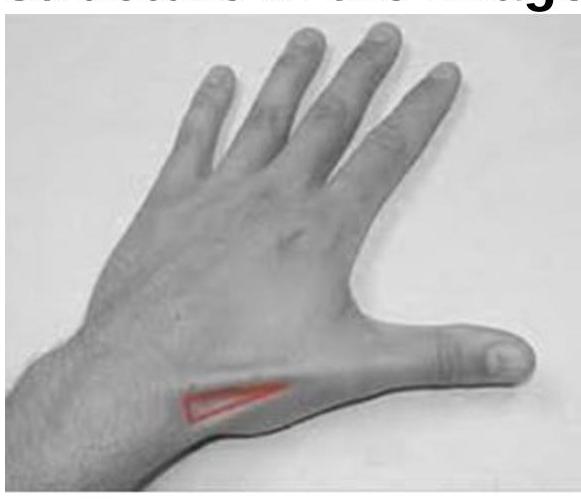
Which muscle is not part of the superficial anterior compartment of the forearm?
Which carpal bone does not articulate with the radius?
Ulnar nerve injury results in:
Median nerve injury at the wrist is commonly tested by.
A patient came with history of fall and on examination there was tenderness between the extensor pollicis longus and brevis. The likely lesion is
A 50-year-old female presents with wrist drop. Which nerve is most likely involved?
A 54-year-old female marathon runner presents with pain in her right wrist that resulted from a fall onto her outstretched hand. Radiographic studies indicate an anterior dislocation of a carpal bone. Which of the following bones is most likely dislocated?
A 22-year-old male medical student was seen in the emergency department with a complaint of pain in his hand. He confessed that he had hit a vending machine in the hospital when he did not receive his soft drink after inserting money twice. The medial side of the dorsum of the hand was quite swollen, and one of his knuckles could not be seen when he "made a fist." The physician made a diagnosis of a "boxer's fracture." What was the nature of the impatient student's injury?
Want unlimited practice?
Get full access to all questions, explanations, and performance tracking.
Scan to download app