What is true about Tuberculosis of the knee?
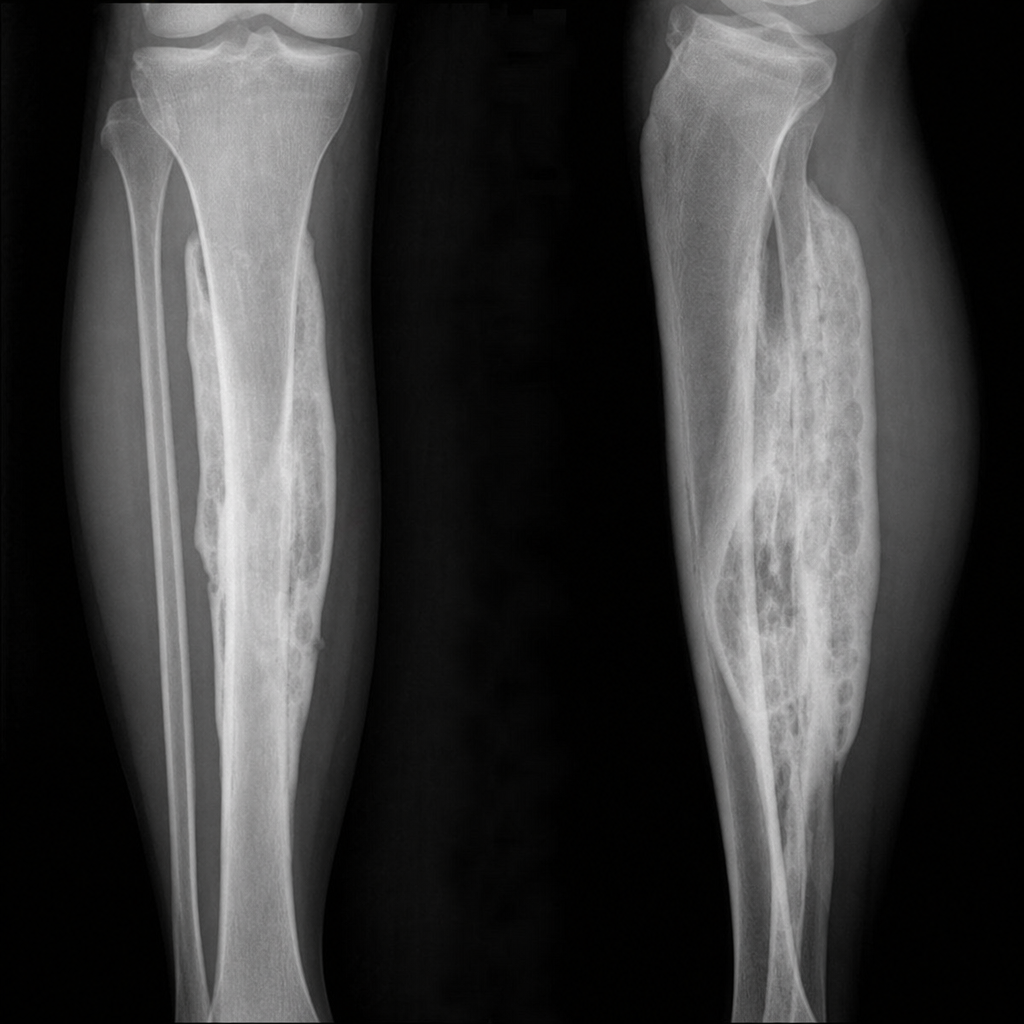
Brodie's abscess is a terminology for:
Fibrous ankylosis is caused by which of the following?
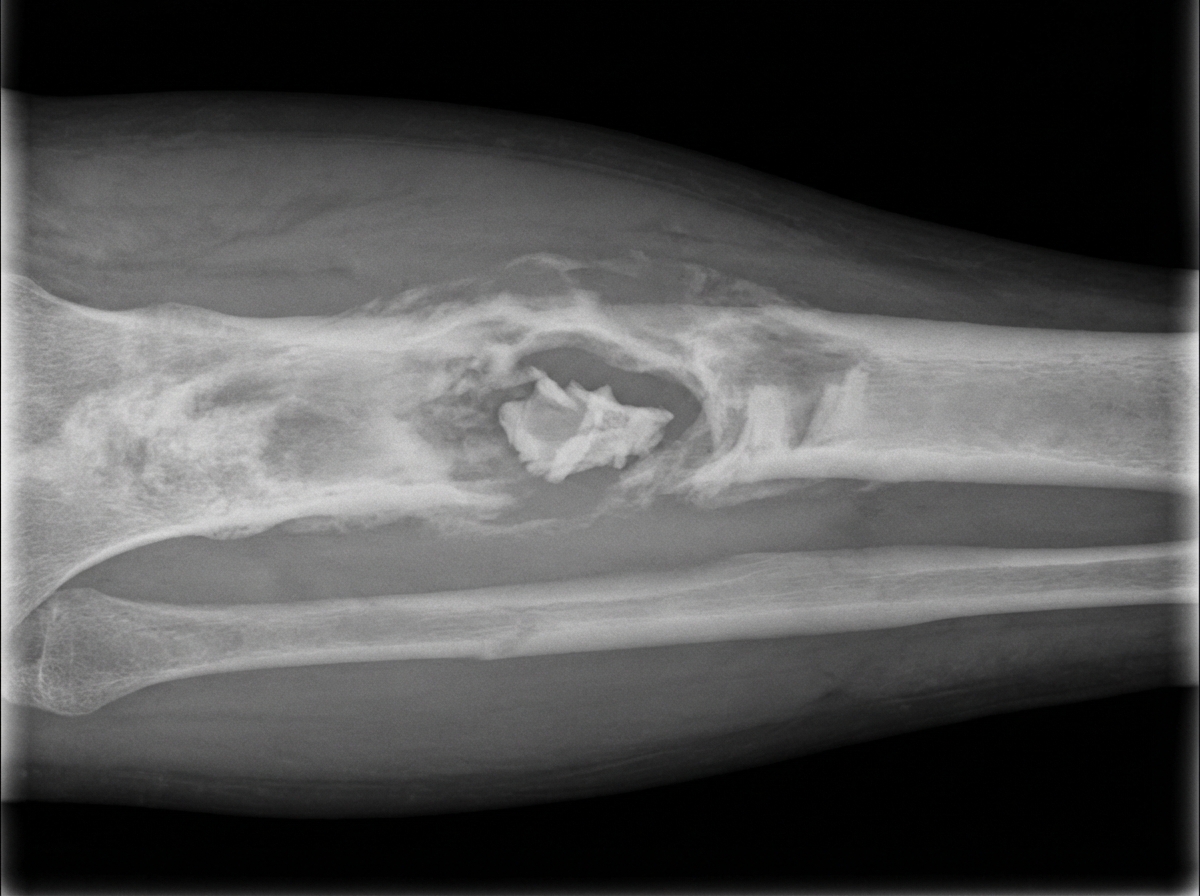
What is the radiographic appearance of dead bone on an X-ray?
What is the most common cause of osteomyelitis in children under 4 years of age?
Which condition is associated with Martel's sign?
Brodie's abscess is the terminology for:
Enthesopathy is commonly found in which of the following conditions?
Periosteal reaction is not common in which of the following conditions?
What is the earliest site of bone involvement in hematogenous osteomyelitis?
Explanation: **Explanation:** Tuberculosis (TB) of the knee is the third most common site of osteoarticular TB. Understanding its synovial fluid characteristics and clinical progression is vital for NEET-PG. **1. Why Option A is correct:** In TB arthritis, the synovial fluid is typically turbid with increased protein and decreased glucose. A hallmark finding is a **poor mucin clot formation** (reduced mucin). This occurs because the inflammatory process and bacterial enzymes cause the degradation of hyaluronic acid, leading to low viscosity and a friable mucin clot. **2. Why the other options are incorrect:** * **Option B:** In the late stages of knee TB (Stage of Arthritis), the classical deformity is **Triple Displacement**. This consists of posterior subluxation of the tibia, flexion, and **External Rotation** of the tibia (not internal), caused by the dominant pull of the biceps femoris. * **Option C:** Synovial fluid in TB shows an **increased leucocyte count** (typically 10,000–20,000 cells/mm³), with a predominance of lymphocytes, reflecting an active inflammatory response. * **Option D:** TB of the joints typically leads to **fibrous ankylosis**. Bony ankylosis is rare in TB unless there is secondary pyogenic infection or surgical intervention (arthrodesis). In contrast, pyogenic/septic arthritis characteristically leads to bony ankylosis. **Clinical Pearls for NEET-PG:** * **Phemister’s Triad (Radiology):** Juxta-articular osteopenia, peripheral osseous erosions, and gradual narrowing of the joint space. * **Rice Bodies:** These are small, fibrin-rich masses found in the synovial fluid of TB joints, resembling grains of rice. * **Treatment:** Multi-drug ATT is the mainstay; surgery is reserved for complications or non-responsive cases.
Explanation: **Explanation:** **Brodie’s abscess** is a localized form of **subacute osteomyelitis**. It occurs when the host's immune response is strong enough to contain a pyogenic infection, preventing it from progressing to acute osteomyelitis, but insufficient to eradicate the pathogen entirely. It is characterized by a collection of pus surrounded by a dense wall of fibrous tissue and sclerotic bone. * **Why Option B is Correct:** Brodie’s abscess is the classic presentation of subacute pyogenic osteomyelitis. It most commonly affects the **metaphysis** of long bones (typically the distal femur or proximal tibia) in children and young adults. The most common causative organism is *Staphylococcus aureus*. * **Why Other Options are Incorrect:** * **Option A (Subungual infection):** This refers to infections under the nail bed, such as a subungual abscess or paronychia, unrelated to bone pathology. * **Option C (Web space infection):** This is a soft tissue infection of the hand or foot (e.g., collar-stud abscess) involving the subcutaneous spaces between digits. * **Option D (Infected hematoma):** While a hematoma can become infected (leading to an abscess), it does not involve the specific intraosseous sequestration and sclerotic lining characteristic of Brodie’s abscess. **High-Yield Clinical Pearls for NEET-PG:** * **Radiological Sign:** Appears as a well-defined radiolucent (lytic) lesion in the metaphysis with a surrounding zone of **reactive sclerosis**. * **Pathognomonic Sign:** The **"Cloaca"** is an opening in the bone through which pus escapes, but in Brodie's, the infection is typically contained. * **Differential Diagnosis:** Often mimics Osteoid Osteoma; however, Brodie’s abscess is usually larger (>1.5 cm) and lacks the central nidus. * **Treatment:** Surgical curettage and antibiotics.
Explanation: **Explanation:** The type of ankylosis (joint stiffness/fusion) depends on the nature of the inflammatory process and the extent of articular cartilage destruction. **1. Why TB Arthritis is correct:** Tuberculosis of the joint typically results in **Fibrous Ankylosis**. In TB arthritis, the formation of "cold abscesses" and the lack of proteolytic enzymes in the tuberculous exudate lead to the preservation of some cartilage or the formation of dense fibrous tissue between the joint surfaces. Because the bone ends are not completely denuded and fused by bone, the result is a stiff joint held by fibrous bands. **2. Analysis of Incorrect Options:** * **Septic Arthritis:** This typically leads to **Bony Ankylosis**. Pyogenic organisms (like *Staphylococcus aureus*) produce proteolytic enzymes that rapidly destroy the articular cartilage, exposing the subchondral bone. This leads to the fusion of bone to bone. * **Behcet’s Disease:** This is a multi-system inflammatory disorder. While it can cause recurrent synovitis, it rarely leads to permanent joint destruction or ankylosis. * **Psoriatic Arthritis:** This is a seronegative spondyloarthropathy. While it can cause joint fusion in advanced stages (especially in the DIP joints or spine), it is more classically associated with **Bony Ankylosis** (similar to Ankylosing Spondylitis). **Clinical Pearls for NEET-PG:** * **Bony Ankylosis:** Seen in Septic arthritis, Ankylosing spondylitis, and Rheumatoid arthritis (specifically in the carpal/tarsal bones). * **Fibrous Ankylosis:** Classically seen in Tuberculous arthritis. * **Triple Deformity of Knee:** A common outcome of TB of the knee, consisting of flexion, posterior subluxation, and external rotation. * **Phemister’s Triad (Radiology of TB Joint):** Juxta-articular osteopenia, peripheral osseous erosions, and gradual narrowing of the joint space.
Explanation: **Explanation:** The radiographic appearance of dead bone (known as a **Sequestrum**) is characterized by increased density, making it appear **more radiopaque** (whiter) than the surrounding living bone. **Why the correct answer is right:** The increased radiopacity of dead bone is primarily a **relative phenomenon**. In conditions like chronic osteomyelitis, the surrounding living bone undergoes hyperemia (increased blood flow), leading to inflammatory osteoporosis and bone resorption (decalcification). Since the dead bone (sequestrum) has no blood supply, it cannot undergo resorption and retains its original calcium content. Additionally, new bone formation (involucrum) around the dead bone and the possible deposition of calcium salts from pus onto the dead fragment further enhance its opaque appearance. **Why the incorrect options are wrong:** * **B. More radiolucent:** Radiolucency indicates bone loss or decreased density. Dead bone does not lose its mineral content because it lacks the vascularity required for osteoclastic activity. * **C. Same as normal bone:** While the absolute density may initially be similar, the surrounding bone becomes osteopenic, making the dead bone stand out as denser. * **D. Variable:** While the shape and size vary, the hallmark radiographic feature of a sequestrum is consistently increased opacity. **High-Yield NEET-PG Pearls:** * **Sequestrum:** A piece of dead bone separated from the living bone. * **Involucrum:** A layer of new living bone formed around the sequestrum. * **Cloaca:** An opening in the involucrum through which pus and sequestra may emerge. * **Gold Standard for Sequestrum:** While X-rays show opacity, **CT scan** is the most sensitive imaging modality to identify a sequestrum in chronic osteomyelitis.
Explanation: ### Explanation The correct answer is **H. influenzae**. **1. Why H. influenzae is correct:** In children between the ages of **6 months and 4 years**, *Haemophilus influenzae* type b (Hib) was historically the most common cause of pyogenic infections, including osteomyelitis and septic arthritis. This is due to the "immunity gap"—the period where maternal antibodies have waned, and the child’s own immune system has not yet developed sufficient antibodies against the polysaccharide capsule of the bacterium. *Note for NEET-PG:* While the incidence has significantly decreased in regions with universal Hib vaccination (making *S. aureus* the most common overall), for exam purposes, *H. influenzae* remains the classic answer for this specific age bracket unless "Staphylococcus aureus" is provided as a competing option and the context implies a post-vaccine era. **2. Why the other options are incorrect:** * **Pneumococcus (S. pneumoniae):** While it causes respiratory infections and meningitis in children, it is a less frequent cause of primary bone infections compared to *H. influenzae* or *S. aureus*. * **E. coli:** This is a common cause of osteomyelitis in **neonates** (less than 1 month old) due to exposure in the birth canal, but its incidence drops significantly after the neonatal period. * **Salmonella:** This is the most common cause of osteomyelitis specifically in patients with **Sickle Cell Anemia**, but it is not the leading cause in the general pediatric population. **3. Clinical Pearls for NEET-PG:** * **Overall Most Common:** *Staphylococcus aureus* is the #1 cause of osteomyelitis across all age groups combined. * **Neonates (<1 month):** *S. aureus*, *E. coli*, and Group B Streptococcus. * **Sickle Cell Disease:** *Salmonella* (High-yield association). * **IV Drug Users:** *Pseudomonas aeruginosa* (often involving the spine or sacroiliac joints). * **Puncture wound through footwear:** *Pseudomonas aeruginosa*. * **Route of Spread:** In children, the most common route is **hematogenous**, usually affecting the **metaphysis** of long bones due to sluggish blood flow in hair-pin capillary loops.
Explanation: **Explanation:** **Martel’s sign** (also known as the **Gouty Overhanging Edge** sign) is a classic radiographic feature of chronic tophaceous **Gout**. It refers to a thin, bony shelf-like protrusion that overhangs a "punched-out" erosive lesion. This occurs because the urate crystal deposition (tophus) causes eccentric bone erosion while simultaneously stimulating the periosteum to form new bone at the margins, creating the characteristic overhanging edge. **Analysis of Options:** * **Gout (Correct):** Martel’s sign is pathognomonic. The erosions are typically "punched-out," periarticular, and have sclerotic borders, distinguishing them from the marginal erosions seen in Rheumatoid Arthritis. * **SLE:** Radiographic findings in SLE are usually non-erosive. While Jaccoud’s arthropathy (reducible deformities) can occur, bone destruction and overhanging edges are not features. * **Takayasu Arteritis:** This is a large-vessel vasculitis (Pulseless disease) affecting the aorta and its branches. It presents with vascular symptoms (claudication, absent pulses) rather than erosive joint disease. * **Kawasaki Disease:** A medium-vessel vasculitis primarily affecting children. Its most critical complication is coronary artery aneurysms; it does not cause chronic erosive arthritis or Martel’s sign. **High-Yield Pearls for NEET-PG:** * **Joint involved:** Most common site is the 1st Metatarsophalangeal (MTP) joint (**Podagra**). * **Synovial Fluid:** Negatively birefringent, needle-shaped crystals. * **Radiology:** Joint space is usually preserved until late stages (unlike RA). * **Associated Sign:** "Rat-bite" erosions.
Explanation: **Explanation:** **Brodie’s abscess** is a localized form of **Chronic Osteomyelitis**. It represents a subacute or chronic pyogenic infection of the bone where the body’s immune response has successfully contained the pathogen (most commonly *Staphylococcus aureus*) within a fibrous or granulation tissue wall. * **Why Option B is correct:** It is characterized by a well-circumscribed, intraosseous abscess, typically located in the **metaphysis** of long bones (most commonly the proximal or distal tibia). On X-ray, it appears as a radiolucent nidus surrounded by a rim of reactive sclerosis. Unlike acute osteomyelitis, systemic symptoms like fever are often absent. * **Why other options are incorrect:** * **Option A (Subungual infection):** This refers to infections under the nail bed, such as a subungual abscess or paronychia, which involve soft tissue rather than deep bone. * **Option C (Web space infection):** This is a soft tissue infection (cellulitis or abscess) located in the spaces between fingers or toes, often seen in the hand (Collar-button abscess). * **Option D (Infected hematoma):** While a hematoma can become infected (leading to an abscess), it is a soft tissue or intramuscular collection and does not define the specific bone pathology of Brodie’s abscess. **High-Yield Clinical Pearls for NEET-PG:** * **Most common site:** Metaphysis of the Tibia. * **Most common organism:** *Staphylococcus aureus*. * **Classic X-ray finding:** A radiolucent area with a **sclerotic rim**. * **Differential Diagnosis:** Osteoid Osteoma (distinguished by the fact that pain in Osteoid Osteoma is characteristically relieved by Aspirin). * **Treatment:** Surgical curettage and evacuation under antibiotic cover.
Explanation: **Explanation:** **1. Why Ankylosing Spondylitis (AS) is correct:** Enthesopathy (or enthesitis) is the hallmark pathological feature of **Seronegative Spondyloarthropathies**, of which Ankylosing Spondylitis is the prototype. An **enthesis** is the site where a tendon, ligament, or joint capsule attaches to the bone. In AS, the primary site of inflammation is the enthesis rather than the synovium. This inflammation leads to "bony erosions" followed by "syndesmophyte formation" (ossification), eventually causing the characteristic "Bamboo Spine." Common clinical sites include the Achilles tendon insertion and the plantar fascia. **2. Why the other options are incorrect:** * **Rheumatoid Arthritis (A):** The primary pathology is **Synovitis** (inflammation of the synovial membrane). While it can involve ligaments secondarily, it is not characterized by enthesopathy. * **Rheumatic Fever (B):** This is characterized by a migratory polyarthritis that primarily affects large joints without causing structural entheseal damage. * **Osteoarthritis (D):** This is a degenerative joint disease characterized by **articular cartilage depletion** and subchondral bone changes (osteophytes), not primary entheseal inflammation. **3. NEET-PG High-Yield Pearls:** * **HLA-B27 Association:** Strongly linked with AS (90% of cases). * **Radiological Signs:** Look for "Dagger sign," "Bamboo spine," and "Shiny corner sign" (Romanus lesion). * **Clinical Test:** **Schober’s Test** is used to assess restricted lumbar flexion. * **Commonest site of Enthesitis in AS:** The insertion of the Achilles tendon onto the calcaneum. * **Other Seronegative conditions with Enthesitis:** Psoriatic arthritis, Reactive arthritis (Reiter’s), and Inflammatory Bowel Disease (IBD) associated arthritis.
Explanation: **Explanation:** The **periosteal reaction** is a non-specific radiographic finding representing the formation of new bone in response to injury or irritation of the periosteum. It is typically seen in inflammatory, infectious, or neoplastic processes that involve the bone cortex. **Why Gout is the correct answer:** Gout is a metabolic arthropathy caused by the deposition of monosodium urate crystals. Radiographically, it is characterized by **"punched-out" erosions** with overhanging edges (Martel’s sign). Because gout primarily affects the joint space and subchondral bone rather than the periosteum of the shaft, **periosteal reaction is characteristically absent**. **Analysis of Incorrect Options:** * **Syphilis:** Both congenital and acquired syphilis are notorious for causing marked periosteal reactions. In congenital syphilis, it presents as "Wimberger’s sign," while in late syphilis, it causes "saber shin" due to chronic periosteal thickening. * **Osteomyelitis:** Pyogenic infection of the bone is the classic cause of periosteal reaction. As pus lifts the periosteum, new bone is laid down (involucrum), which is a hallmark of the disease. * **Tuberculous Dactylitis:** Also known as *Spina Ventosa*, this condition involves the small bones of the hands and feet. It causes significant expansion of the bone with a prominent laminated periosteal reaction, giving it a "wind-filled" appearance. **NEET-PG High-Yield Pearls:** 1. **Codman’s Triangle & Sunburst Pattern:** Aggressive periosteal reactions seen in Osteosarcoma. 2. **Onion-skin appearance:** Characteristic of Ewing’s Sarcoma. 3. **Hypertrophic Osteoarthropathy:** Bilateral symmetrical periosteal reaction, often associated with lung carcinoma. 4. **Gout Radiology:** Look for "Punched-out" lesions and preservation of joint space until late stages (unlike Rheumatoid Arthritis).
Explanation: **Explanation:** The **metaphysis** is the earliest and most common site of involvement in acute hematogenous osteomyelitis, particularly in children. This is due to the unique vascular anatomy of the region: 1. **Hairpin Loops:** The nutrient artery ends in non-anastomotic, sharp "hairpin" capillary loops at the growth plate. These loops lead into large venous sinusoids. 2. **Sluggish Blood Flow:** The transition from narrow capillaries to wide sinusoids causes blood flow to slow down significantly, allowing circulating bacteria (most commonly *Staphylococcus aureus*) to settle and proliferate. 3. **Deficient Phagocytosis:** The capillary loops lack an effective lining of phagocytic cells (reticuloendothelial system), making the area an ideal "nidus" for infection. **Analysis of Incorrect Options:** * **Diaphysis:** While infection can spread to the diaphysis via the medullary canal or subperiosteal space, it is rarely the primary site (except in specific cases like *Salmonella* osteomyelitis in Sickle Cell disease). * **Epiphysis:** In children, the physis (growth plate) acts as a mechanical barrier, protecting the epiphysis. Epiphyseal involvement usually occurs only in infants (where trans-physeal vessels exist) or via secondary spread into the joint. * **Point of entry of the nutrient artery:** While the nutrient artery carries the bacteria, the high velocity of flow at the entry point prevents bacterial seeding; colonization only occurs where the flow slows down (the metaphysis). **High-Yield NEET-PG Pearls:** * **Most common organism:** *Staphylococcus aureus* (overall). * **Sickle Cell Anemia:** High association with *Salmonella*. * **Earliest Sign on X-ray:** Soft tissue swelling (bone destruction takes 7–14 days to appear). * **Investigation of Choice:** MRI (most sensitive for early detection). * **In infants (<1 year):** Infection can cross the physis, leading to frequent **septic arthritis**.
Septic Arthritis
Practice Questions
Osteomyelitis
Practice Questions
Tuberculosis of Bones and Joints
Practice Questions
Fungal and Parasitic Infections
Practice Questions
Diabetic Foot Infections
Practice Questions
Prosthetic Joint Infections
Practice Questions
Reactive Arthritis
Practice Questions
Management of Joint Infections
Practice Questions
Prevention of Orthopaedic Infections
Practice Questions
Biofilms in Orthopaedic Infections
Practice Questions
Antibiotic Prophylaxis
Practice Questions
Implant-Related Infections
Practice Questions
Get full access to all questions, explanations, and performance tracking.
Start For Free