Which of the following is true about bony ankylosis?
Tom Smith's arthritis is due to what?
A Baker's cyst is a type of:
Osteomyelitis begins as an inflammation of which part of the bone?
Which of the following conditions is commonly referred to as 'Housemaid's knee'?
Triple deformity of the knee is a complication of which of the following conditions?
What condition is characterized by a 'snowstorm appearance' of the knee joint with multiple loose bodies?
What is the most common organism causing chronic osteomyelitis in drug abusers?
In the earlier stage of chronic osteomyelitis, what is the expected radiographic appearance?
What is the hallmark feature of osteomyelitis?
Explanation: **Explanation:** **Bony ankylosis** refers to the complete fusion of a joint due to the formation of a bridge of bone across the joint space, resulting in total loss of movement. **Why Option C is correct:** Septic arthritis is characterized by a pyogenic infection (usually *Staphylococcus aureus*) that triggers a massive release of proteolytic enzymes from polymorphonuclear leukocytes. These enzymes rapidly destroy the articular cartilage. Once the protective cartilage is lost, the underlying subchondral bones come into contact and fuse during the healing process, leading to **bony ankylosis**. **Why other options are incorrect:** * **Option A:** Bony ankylosis is typically **painless** because the joint is completely immobilized. Pain in a stiff joint usually suggests "fibrous ankylosis," where micro-movements still occur. * **Option B:** Tubercular (TB) arthritis typically results in **fibrous ankylosis**. This is because *Mycobacterium tuberculosis* lacks the aggressive proteolytic enzymes found in pyogenic bacteria, leaving some cartilage remnants that prevent complete bony fusion. * **Option D:** While Spine TB (Pott’s spine) is a common cause of spinal deformity, it is an exception in the TB family—it is one of the few sites where TB *can* cause bony fusion (syndesmophytes/block vertebrae). However, it is not the "leading cause" of bony ankylosis globally compared to pyogenic infections. **High-Yield Clinical Pearls for NEET-PG:** 1. **Pyogenic Infection/Septic Arthritis** → Bony Ankylosis (Strong, stable, painless). 2. **Tubercular Infection** → Fibrous Ankylosis (Weak, unstable, potentially painful). 3. **Ankylosing Spondylitis** → A classic non-infectious cause of bony ankylosis (Bamboo spine). 4. **Triple Deformity** of the knee is a common sequel of fibrous ankylosis in TB (Flexion, Posterior subluxation, and External rotation).
Explanation: ***Pyogenic infection in infancy*** - **Tom Smith's arthritis** is an eponym specifically referring to **septic arthritis of the hip** occurring in neonates and infants. - It results from **pyogenic bacteria** (commonly *Staphylococcus aureus*) causing rapid destruction of the **hip joint** and **proximal femoral epiphysis**. *Tuberculosis* - **Tuberculous arthritis** typically has a more **chronic, indolent course** with gradual joint destruction over months. - Tom Smith's arthritis specifically refers to **acute pyogenic infection**, not chronic tuberculous infection. *Rheumatoid arthritis* - **Rheumatoid arthritis** is an **autoimmune condition** that rarely affects neonates and infants. - It typically involves **multiple joints symmetrically** and has a chronic inflammatory pattern, unlike the acute septic process in Tom Smith's arthritis. *Osteoarthritis* - **Osteoarthritis** is a **degenerative joint disease** that occurs due to wear and tear over many years. - It does not occur in infancy and is not associated with the **acute infectious process** that defines Tom Smith's arthritis.
Explanation: **Explanation:** A **Baker’s cyst** (also known as a popliteal cyst) is not a true cyst but rather a **pulsion diverticulum** of the synovial membrane of the knee joint. It occurs when intra-articular pressure increases (usually due to underlying pathology like osteoarthritis or a meniscus tear), causing the synovial fluid to be pushed through a weak point in the posterior joint capsule. This protrusion typically occurs between the **medial head of the gastrocnemius** and the **semimembranosus** tendons. **Analysis of Options:** * **A (Correct):** It is a pulsion diverticulum because it represents a herniation of the synovium through the fibrous capsule, often maintaining a "one-way valve" communication with the joint space. * **B (Incorrect):** A retention cyst is formed by the obstruction of a gland's duct (e.g., a sebaceous cyst). Baker’s cysts are formed by pressure and herniation, not ductal blockage. * **C (Incorrect):** While it involves the gastrocnemius-semimembranosus bursa, it is specifically a herniation/communication with the joint rather than simple primary inflammation of a bursa (bursitis). * **D (Incorrect):** It is a reactive/mechanical fluid collection, not a neoplastic growth (tumor). **High-Yield Clinical Pearls for NEET-PG:** * **Location:** Always found in the **popliteal fossa**, specifically on the medial side. * **Associated Conditions:** In adults, it is almost always secondary to **Osteoarthritis (most common)** or Rheumatoid Arthritis. In children, it is often primary and idiopathic. * **Foucher’s Sign:** The cyst becomes firm on knee extension and soft on flexion (due to compression by muscles). * **Complication:** A **ruptured Baker’s cyst** can mimic Deep Vein Thrombosis (DVT), presenting with sudden calf pain and a positive Homan’s sign (Pseudothrombophlebitis syndrome).
Explanation: **Explanation:** **Why Medullary Bone is Correct:** Osteomyelitis, specifically the acute hematogenous variety most common in children, begins in the **medullary bone**. The infection typically starts in the **metaphysis** of long bones. This is due to the unique vascular anatomy of the region: the nutrient artery ends in non-anastomosing "hairpin loops" that empty into large venous sinusoids. This results in **sluggish blood flow** and a relatively low oxygen tension, creating an ideal environment for circulating bacteria (most commonly *Staphylococcus aureus*) to settle, proliferate, and initiate an inflammatory response within the marrow space. **Analysis of Incorrect Options:** * **A. Cortical Bone:** The cortex is dense and lacks the rich, slow-flowing vascular beds found in the medulla. It is usually involved secondarily as the infection spreads from the medulla through the Volkmann canals. * **B. Periosteum:** The periosteum is involved later in the disease process. As pus accumulates in the medulla, it increases intraosseous pressure, forcing the infection through the cortex to form a **subperiosteal abscess**. * **D. Periosteum and inner cortex:** These are involved as the disease progresses. The elevation of the periosteum strips the bone of its blood supply, leading to the formation of **sequestrum** (dead bone), but this is a consequence, not the site of origin. **High-Yield Clinical Pearls for NEET-PG:** * **Most common site:** Metaphysis of long bones (e.g., distal femur, proximal tibia). * **Most common organism:** *Staphylococcus aureus* (overall); *Salmonella* (in Sickle Cell Anemia patients). * **Earliest X-ray sign:** Soft tissue swelling (takes 7–14 days for bony changes like periosteal reaction to appear). * **Investigation of choice:** **MRI** is the most sensitive early diagnostic tool. * **Sequestrum:** Dead bone (radiodense); **Involucrum:** New bone formed under the periosteum (radiopaque).
Explanation: **Explanation:** **Prepatellar bursitis** is the inflammation of the bursa located superficial to the patella, between the skin and the bone. It is classically called **'Housemaid’s knee'** because it is caused by repetitive friction or pressure from frequent kneeling on hard surfaces (historically associated with scrubbing floors). This leads to fluid accumulation, swelling, and pain in the anterior aspect of the knee. **Analysis of Options:** * **Infrapatellar bursitis (Clergyman’s knee):** This involves the bursa located below the patella (superficial or deep to the patellar tendon). It is associated with kneeling in a more upright position, which places pressure on the tibial tuberosity rather than the patella itself. * **Plica syndrome:** This occurs when a remnant of fetal synovial tissue (the plica) becomes irritated or pinched during knee movement. It typically presents with a "clicking" sensation or medial knee pain, not superficial bursal swelling. * **Chondromalacia patellae (Runner’s knee):** This involves the softening and degeneration of the articular cartilage on the undersurface of the patella. It presents as retro-patellar pain, especially when climbing stairs or sitting for long periods (Theater sign). **High-Yield Clinical Pearls for NEET-PG:** * **Student’s Elbow:** Inflammation of the **Olecranon bursa** due to leaning on elbows while studying. * **Weaver’s Bottom:** Inflammation of the **Ischial bursa** from prolonged sitting on hard surfaces. * **Treatment:** Most cases are managed conservatively with rest, ice, and NSAIDs. If infection is suspected (Septic Bursitis), aspiration and antibiotics are required.
Explanation: **Explanation:** **Triple Deformity of the Knee** is a classic late-stage complication of **Tuberculosis (TB) of the knee joint**. It occurs due to the progressive destruction of the joint surfaces and the weakening of the supporting ligaments (especially the Cruciates), combined with the powerful pull of the hamstring muscles. The deformity is called "Triple" because it consists of three distinct components: 1. **Flexion:** Due to the dominant pull of the hamstrings. 2. **Posterior Subluxation of the Tibia:** Caused by the destruction of the Cruciate ligaments, allowing the tibia to slide backward on the femur. 3. **External Rotation of the Tibia:** Due to the pull of the Biceps Femoris muscle. **Why other options are incorrect:** * **Osteoarthritis:** Typically presents with a **Varus (bow-leg)** deformity due to medial compartment wear. It does not involve the ligamentous laxity required for posterior subluxation. * **Septic Arthritis:** While it causes rapid joint destruction, it usually leads to **bony ankylosis** in a simple flexed position rather than the specific triad of triple deformity. **Clinical Pearls for NEET-PG:** * **Position of Ease:** In early TB knee, the joint is held in slight flexion (to increase joint capacity and reduce pain). * **Bony vs. Fibrous Ankylosis:** TB of the knee typically results in **fibrous ankylosis**, whereas pyogenic/septic arthritis results in **bony ankylosis**. * **Radiological Sign:** Look for **Phemister’s Triad** in TB joints: Juxta-articular osteopenia, peripheral osseous erosions, and gradual narrowing of the joint space.
Explanation: **Explanation:** **Synovial Chondromatosis** (also known as Reichel’s syndrome) is a benign metaplastic condition where the synovium undergoes transformation into cartilaginous nodules. These nodules can pedunculate and eventually break free into the joint space, becoming "loose bodies." On an X-ray or arthroscopy, the presence of multiple, small, calcified, and uniform-sized loose bodies creates the classic **"snowstorm appearance."** The knee is the most commonly affected joint. **Analysis of Incorrect Options:** * **Chondromalacia patellae:** This involves softening and degeneration of the articular cartilage under the patella. It presents with anterior knee pain (the "movie theater sign") but does not produce multiple calcified loose bodies. * **Ewing’s sarcoma:** This is a highly malignant primary bone tumor, typically seen in the diaphysis of long bones. It is characterized by an "onion-skin" periosteal reaction, not intra-articular loose bodies. * **Fracture involving an articular surface:** While a fracture can lead to a single osteochondral fragment (loose body), it does not result in the numerous, diffuse, and uniform nodules required to create a "snowstorm" effect. **High-Yield Pearls for NEET-PG:** * **Pathophysiology:** Synovial metaplasia → Cartilaginous foci → Loose bodies (may ossify, termed synovial osteochondromatosis). * **Clinical Feature:** Progressive joint pain, swelling, and "locking" of the joint. * **Radiology:** Multiple "rice grain" or "popcorn" calcifications. * **Treatment:** Arthroscopic or open synovectomy with removal of loose bodies. * **Key Differentiator:** Unlike Osteoarthritis (which has few, irregular loose bodies), Synovial Chondromatosis has **multiple, similar-sized** bodies.
Explanation: ### Explanation The correct answer is **Pseudomonas (Option B)**. **Why Pseudomonas is correct:** While *Staphylococcus aureus* is the most common cause of osteomyelitis in the general population, **Intravenous Drug Users (IVDUs)** represent a specific high-risk group with a unique microbial profile. In these individuals, there is a significantly increased incidence of infections caused by Gram-negative organisms, specifically **Pseudomonas aeruginosa**. This is often attributed to the use of contaminated water or paraphernalia during drug preparation. These infections characteristically involve the "S" joints: Sternoclavicular, Sacroiliac, and the Spine (Spondylodiscitis). **Analysis of Incorrect Options:** * **Option A: Staphylococcus aureus:** This is the most common cause of both acute and chronic osteomyelitis in the **general population** and in children. However, when the question specifies "drug abusers," *Pseudomonas* becomes the high-yield discriminator. * **Option C: Granulomatous:** This refers to a histological pattern (seen in Tuberculosis or Fungal infections) rather than a specific organism. While TB can cause chronic osteomyelitis, it is not the primary association for IVDUs. * **Option D: Klebsiella:** While a Gram-negative organism, it is a more common cause of pneumonia or urinary tract infections and is not the classic association for osteomyelitis in drug abusers. **Clinical Pearls for NEET-PG:** * **Sickle Cell Disease:** The most common organism is *Staphylococcus aureus*, but there is a unique, high-yield association with **Salmonella**. * **Puncture wounds through footwear:** Highly associated with **Pseudomonas** (due to the moist environment of the foam/rubber sole). * **Most common site of Osteomyelitis in adults:** Vertebrae (Thoracolumbar junction). * **Most common site in children:** Metaphysis of long bones (due to sluggish blood flow in hair-pin loops of vessels).
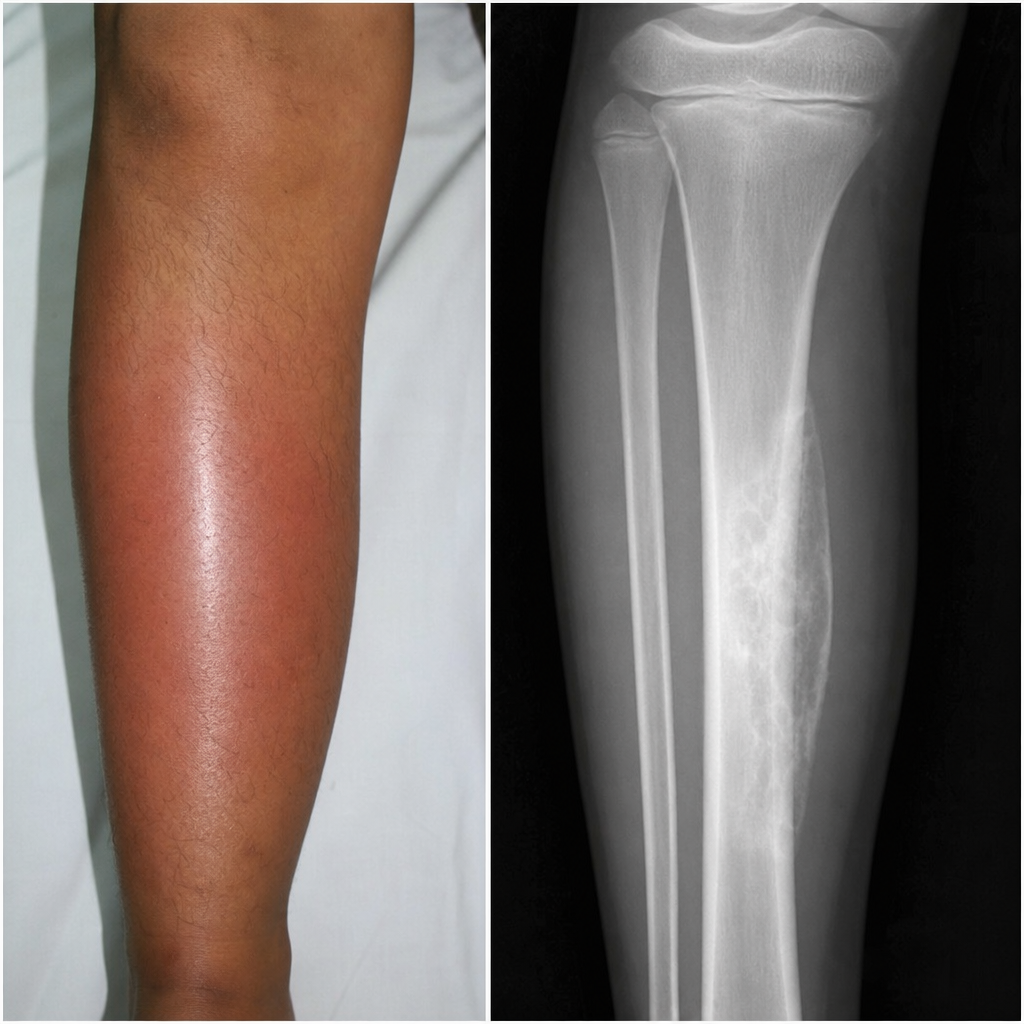
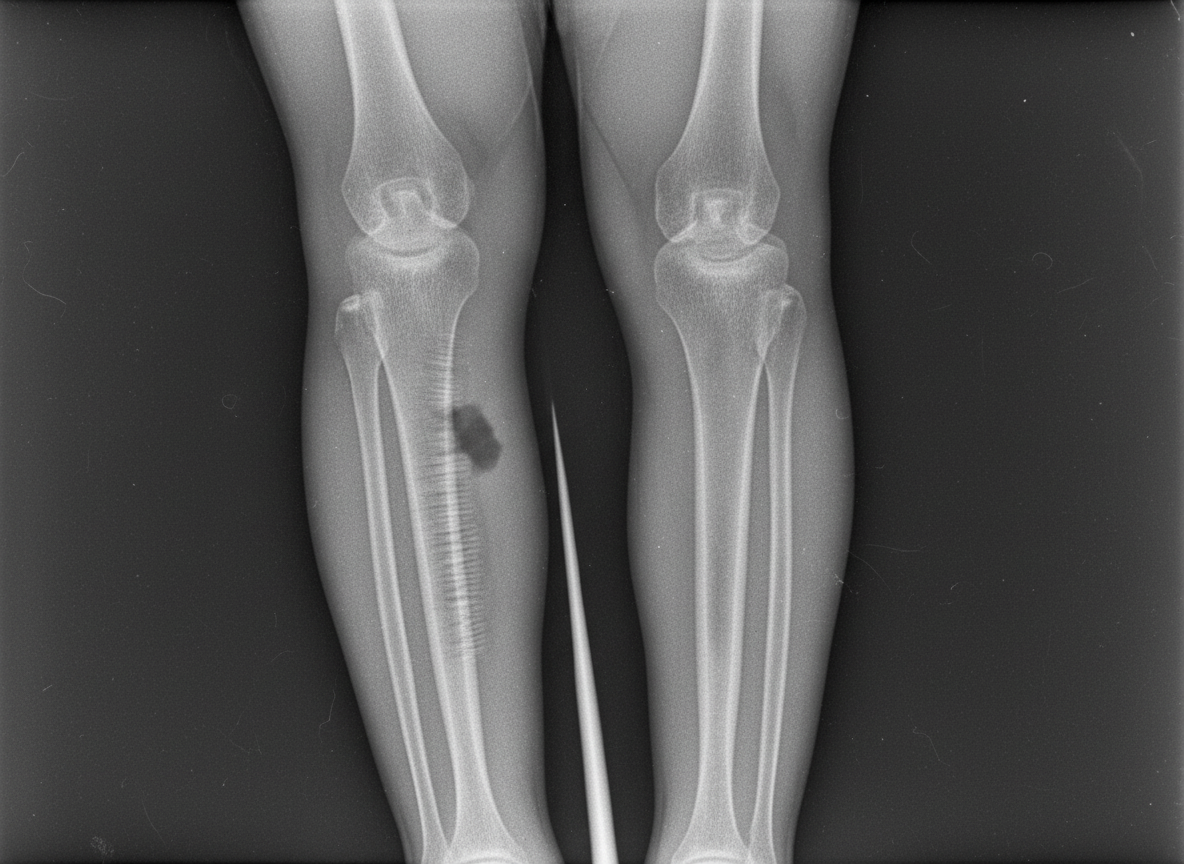
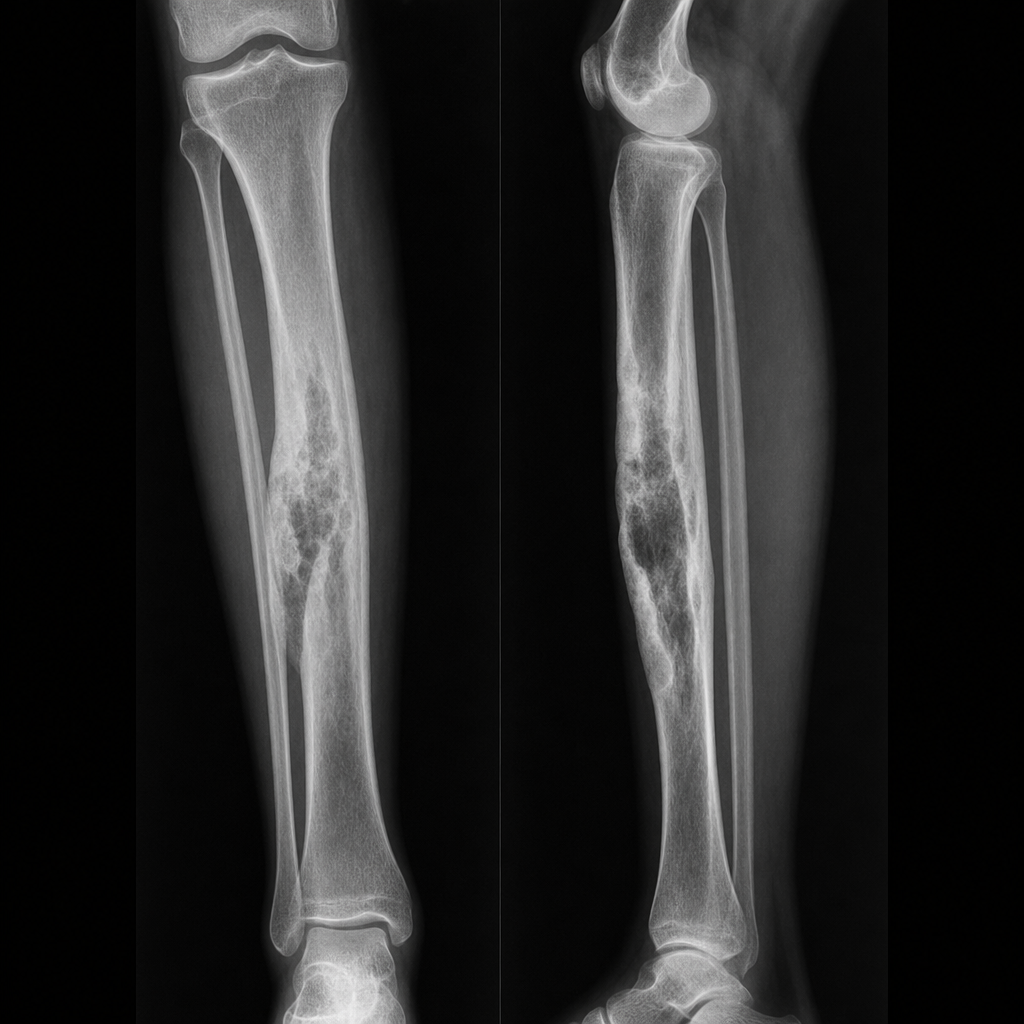
Explanation: In chronic osteomyelitis, the hallmark of the disease is the presence of infected, necrotic bone known as a **sequestrum**. In the earlier stages of chronicity, the radiographic hallmark is a **mottled appearance**. ### Why "Mottled Appearance" is Correct This appearance is caused by the coexistence of two pathological processes: 1. **Bone Destruction:** Areas of radiolucency representing abscess formation and bone resorption. 2. **New Bone Formation:** Areas of radiodensity representing the **involucrum** (new bone sheath) and reactive sclerosis around the sequestrum. The interplay between these dark (lucent) and bright (sclerotic) areas creates the characteristic "mottled" or "irregularly patchy" look on X-ray. ### Analysis of Incorrect Options * **A. No radiographic features:** This is characteristic of **Acute Osteomyelitis** in its first 7–10 days. Chronic osteomyelitis, by definition, involves established bony changes visible on imaging. * **C. Moth-eaten appearance:** This refers to small, ragged holes in the bone, typically seen in aggressive processes like **Acute Hematogenous Osteomyelitis** or malignant tumors (e.g., Ewing’s sarcoma). It represents rapid destruction rather than the mixed pattern of chronic infection. * **D. Ground glass appearance:** This is the classic radiographic description for **Fibrous Dysplasia**, where normal bone is replaced by fibrous tissue and poorly mineralized trabeculae. ### High-Yield Clinical Pearls for NEET-PG * **Sequestrum:** Dead bone (radiodense) due to loss of blood supply. * **Involucrum:** Layer of living new bone formed around the sequestrum. * **Cloaca:** An opening in the involucrum through which pus and debris escape. * **Brodie’s Abscess:** A localized form of subacute/chronic osteomyelitis, typically seen as a lucent lesion with a sclerotic rim in the metaphysis. * **Gold Standard Investigation:** MRI is the most sensitive for early detection, but X-ray remains the initial screening tool.
Explanation: **Explanation:** The hallmark feature of osteomyelitis is the **identification of a sequestrum**. In the context of bone pathology, a sequestrum is a piece of dead bone that has become detached from the healthy bone during the process of necrosis. **Why it is the correct answer:** Osteomyelitis is an infection of the bone marrow that leads to increased intraosseous pressure. This pressure compromises the blood supply (periosteal and endosteal), leading to bone ischemia and necrosis. The resulting piece of devitalized, infected bone is the **sequestrum**. Its presence is pathognomonic for chronic osteomyelitis because it acts as a nidus for persistent infection, as antibiotics and immune cells cannot penetrate the avascular dead bone. **Why other options are incorrect:** * **Pain and Swelling:** While these are the most common presenting symptoms of acute osteomyelitis, they are **non-specific**. Pain and swelling are cardinal signs of inflammation seen in various conditions such as cellulitis, bone tumors (e.g., Ewing’s sarcoma), and trauma. They do not confirm the diagnosis of bone infection specifically. **High-Yield NEET-PG Pearls:** * **Involucrum:** This is the layer of new, living bone formed by the periosteum around the sequestrum. * **Cloaca:** An opening in the involucrum through which pus and small sequestra may drain. * **Gold Standard Diagnosis:** Bone biopsy and culture remain the gold standard. * **Imaging:** X-rays may not show changes for 10–14 days. **MRI** is the most sensitive early imaging modality. * **Brodie’s Abscess:** A form of subacute osteomyelitis characterized by a radiolucent lesion surrounded by reactive sclerosis.
Septic Arthritis
Practice Questions
Osteomyelitis
Practice Questions
Tuberculosis of Bones and Joints
Practice Questions
Fungal and Parasitic Infections
Practice Questions
Diabetic Foot Infections
Practice Questions
Prosthetic Joint Infections
Practice Questions
Reactive Arthritis
Practice Questions
Management of Joint Infections
Practice Questions
Prevention of Orthopaedic Infections
Practice Questions
Biofilms in Orthopaedic Infections
Practice Questions
Antibiotic Prophylaxis
Practice Questions
Implant-Related Infections
Practice Questions
Get full access to all questions, explanations, and performance tracking.
Start For Free