
Vitreoretinal Surgeries — MCQs

What is the most common cause of vitreous hemorrhage in diabetic retinopathy?
Which of the following treatments is not suitable for advanced proliferative diabetic retinopathy with extensive vitreoretinal fibrosis and tractional retinal detachment?
Pneumoretinopexy is an outpatient procedure in which retinal detachment is sealed with air insufflation. Which of the following gases is used in pneumoretinopexy?
On measuring 3.5 to 4 mm posterior to the limbus in a phakic eye and plunging a 30 gauge needle perpendicular to sclera, you pass through
A 44-year-old woman presents with sudden painless loss of vision with a history of previous similar episodes. Fundoscopy shows no glow. What could be the possible diagnosis?
Which of the following accurately describes management of Grade 3 pelvic organ prolapse in an elderly woman who is a poor surgical candidate?
What is the immediate management approach for severe vitreous hemorrhage in the eye?
A 56-year-old patient presents after 3 days of cataract surgery with a history of increasing pain and diminished vision after an initial improvement. The most likely cause would be –
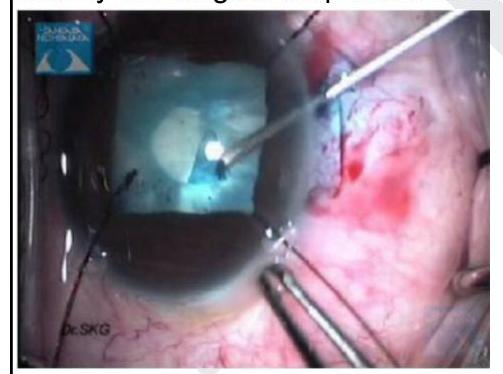
Identify the surgical step shown in the image given below
Expulsive hemorrhage in cataract surgery is from?
Want unlimited practice?
Get full access to all questions, explanations, and performance tracking.
Scan to download app