
Blepharospasm and Hemifacial Spasm — MCQs

Most common cause of facial nerve palsy:
A patient with Bell's palsy comes on day 3. Treatment given to him would be:
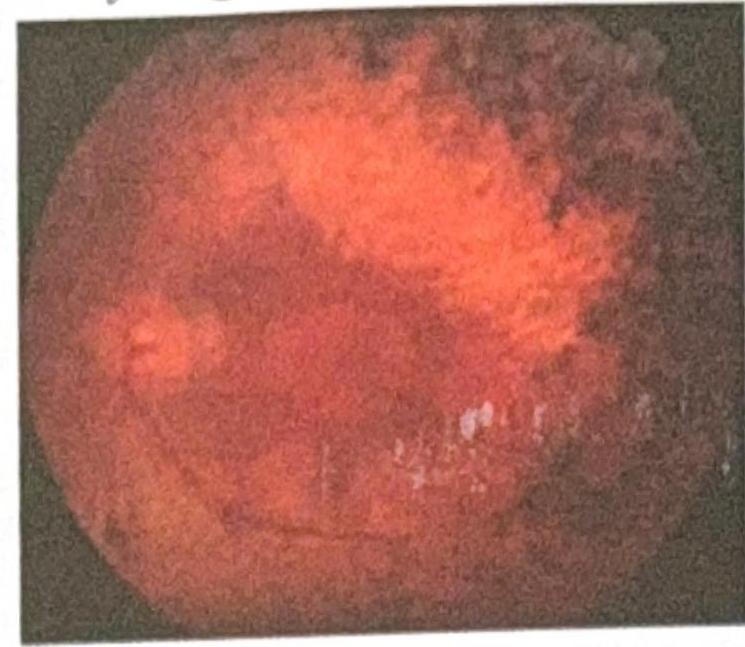
A patient presented with gradual loss in night vision and peripheral vision. Based on the fundoscopic image provided, what is the most likely diagnosis?
Bilateral facial nerve palsy is seen in
Match the following: A) Glossopharyngeal nerve B) Spinal accessory nerve C) Facial nerve D) Mandibular nerve 1) Shrugging of shoulder 2) Touch sensation from the posterior one-third of the tongue 3) Chewing 4) Taste from the anterior two-thirds of the tongue
All of the following are true regarding Bell's palsy except:
What is the term for the fusion of the palpebral and bulbar conjunctiva?
Which of the following constitutes the classic triad of Meigs' syndrome?
Identify the lesion.
What is the most common causative organism of canaliculitis?
Want unlimited practice?
Get full access to all questions, explanations, and performance tracking.
Scan to download app