
Intrauterine Growth Restriction — MCQs

A woman with an obstetric score of G2P1 comes to the clinic at 14 weeks of gestation for her antenatal checkup. A uterine artery doppler was suggested by the doctor. What would it detect?
Which of the following is NOT a cause of oligohydramnios?
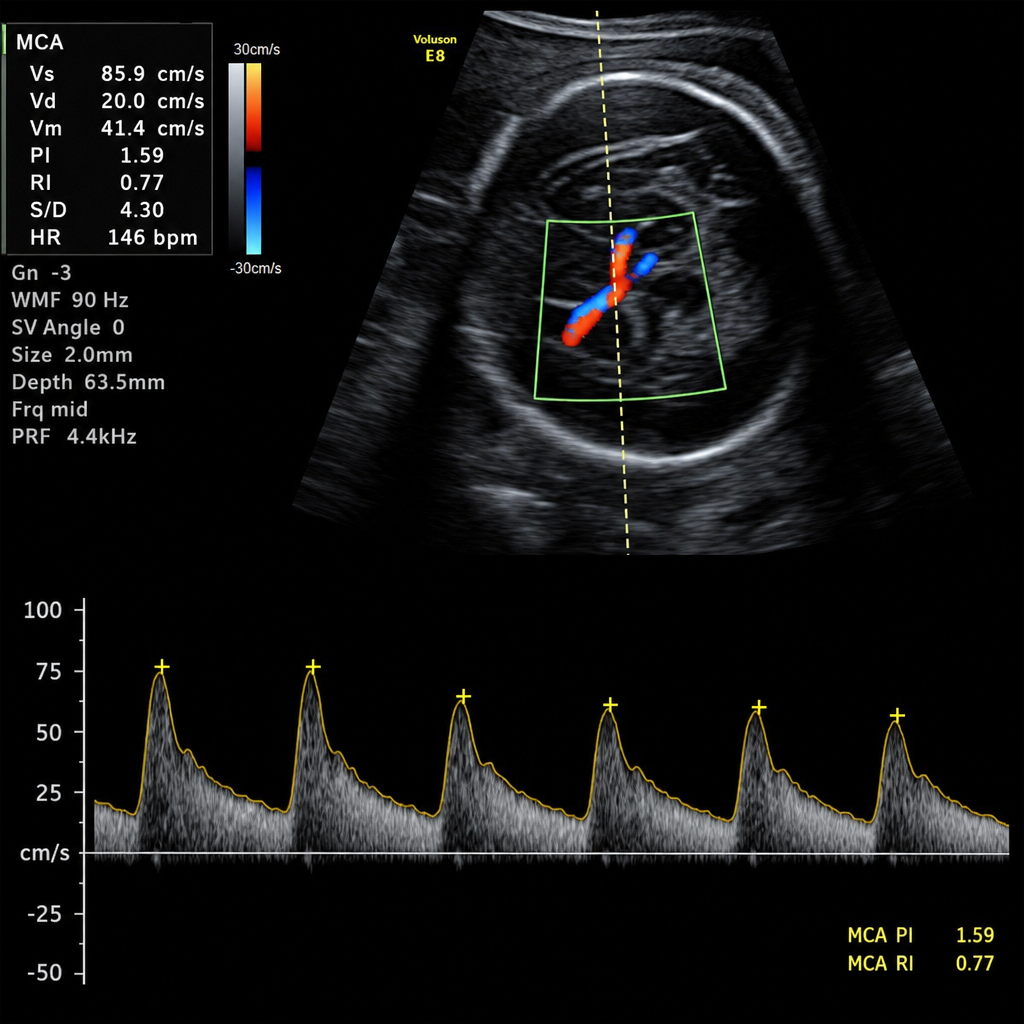
A 28-week pregnant female presents with fetal distress on examination, and the MCA Doppler study is as follows. What should be the next step in management?
What is the primary maternal cause of fetal macrosomia (large birth weight) in newborns?
Placenta grade 3, 35+3 weeks pregnancy, and absent end diastolic flow Doppler; next management is:
Full-term, small-for-date babies are at high risk of:
A 28-year-old primigravida at 32 weeks of gestation presents for a routine prenatal visit. She has no significant past medical history. During the ultrasound examination, various parameters are assessed to evaluate fetal growth and well-being. Which of the following is NOT a criterion used to diagnose Intrauterine Growth Restriction (IUGR)?
Uterine height is greater than gestational age of the patient in a case of all except -
Cause of Fetal growth restriction may be: 1. Chromosomal abnormality 2. Congenital abnormality 3. Abnormal cord insertion Which of the statements given above is/are correct?
Which drug is known to cause placental abruption?
Want unlimited practice?
Get full access to all questions, explanations, and performance tracking.
Scan to download app