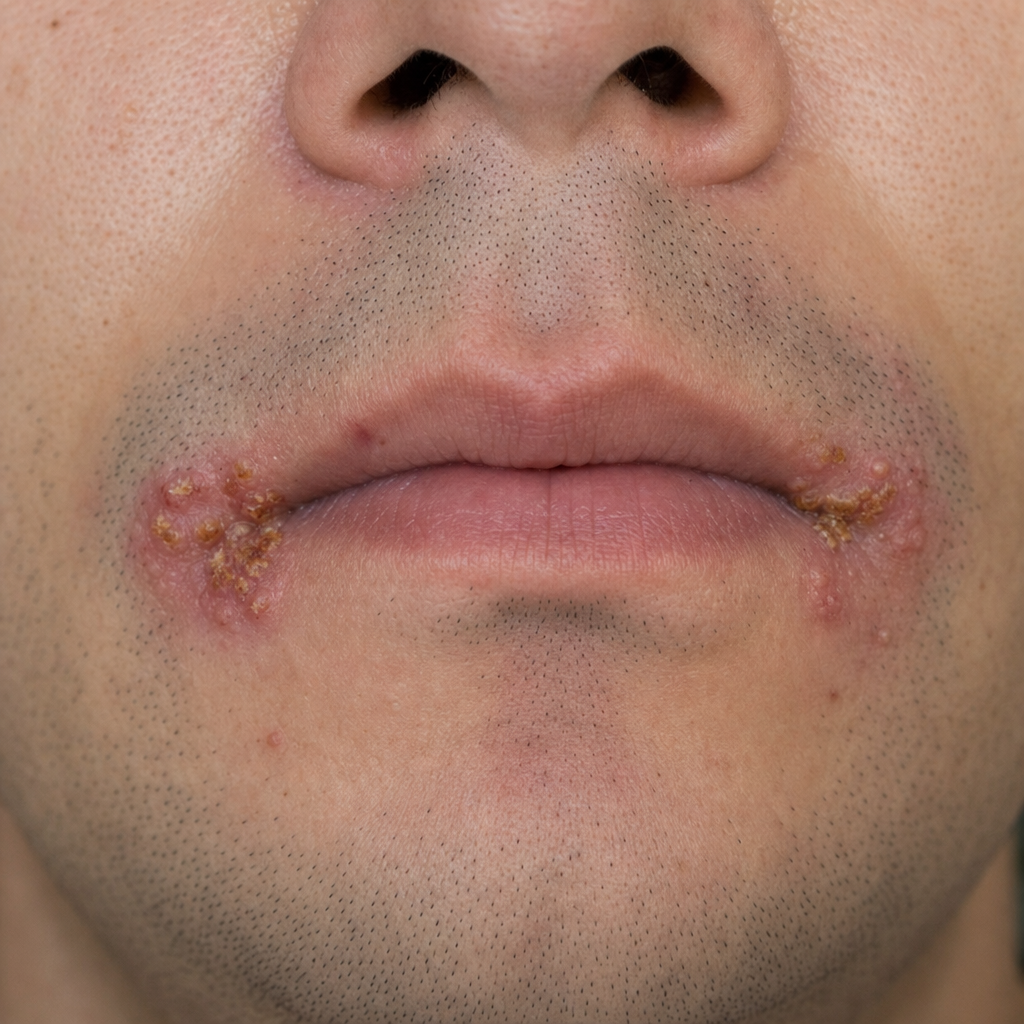
Which of the following is NOT included in the picornavirus group?
What is the first virological marker following acute Hepatitis B infection?
Malaise and fatigue with increased "atypical" lymphocytes and a reactive heterophil antibody test is most commonly caused by?
Antigenic drift and antigenic shift are characteristic features of which virus?
Which of the following conditions is associated with Epstein-Barr Virus (EBV)?
Which statement is incorrect regarding the hepatitis B virus?
A 48-year-old male with HIV presents with laboratory findings of low albumin, massive proteinuria, and a renal ultrasound showing large, echogenic kidneys. His blood pressure is normal. Which of the following is the most likely cause?
Hep-2 cells are a type of:
Which of the following is not caused by a virus?
Which of the following Hepatitis B virus antigens/antibodies does NOT circulate in the blood?
Explanation: **Explanation:** The **Picornaviridae** family consists of small (pico), non-enveloped, positive-sense single-stranded RNA viruses. **Why Hepatitis E Virus (HEV) is the correct answer:** Hepatitis E virus was previously classified under Picornaviridae due to its similar morphology. However, it is now classified in its own family, **Hepeviridae** (Genus: *Orthohepevirus*). Unlike picornaviruses, HEV has a unique genomic organization and is the only major hepatitis virus that is "quasi-enveloped" in the blood but non-enveloped in feces. **Analysis of Incorrect Options:** * **Poliovirus:** A classic member of the *Enterovirus* genus within the Picornaviridae family. It is the causative agent of paralytic poliomyelitis. * **Foot and Mouth Disease Virus (FMDV):** Belonging to the *Aphthovirus* genus, it is a highly infectious picornavirus affecting cloven-hoofed animals; it is historically significant as the first animal virus discovered. * **Encephalomyocarditis Virus (EMCV):** A member of the *Cardiovirus* genus within Picornaviridae, known for causing encephalitis and myocarditis in a wide range of mammalian hosts. **High-Yield Clinical Pearls for NEET-PG:** * **Picornavirus Mnemonic (PERCH):** **P**olio, **E**cho, **R**hino, **C**oxsackie, and **H**epatitis A. * **Hepatitis E Key Fact:** It is the most common cause of acute viral hepatitis worldwide and carries a high mortality rate (up to 20%) in **pregnant women** due to fulminant hepatic failure. * **Rhinovirus:** The only picornavirus that is **acid-labile** (destroyed by stomach acid), which is why it causes respiratory infections rather than GI disease.
Explanation: **Explanation:** **Hepatitis B Surface Antigen (HBsAg)** is the correct answer because it is the **first detectable virological marker** in the serum following an acute infection. It typically appears 2 to 8 weeks before the onset of clinical symptoms (jaundice) and biochemical evidence of liver damage (elevated ALT). Its presence indicates that the individual is infectious. **Analysis of Incorrect Options:** * **IgM Anti-HBc (Option A):** This is the first **antibody** to appear. It is crucial for diagnosing acute infection during the "window period" (when HBsAg has disappeared but Anti-HBs hasn't appeared yet). However, it appears after HBsAg. * **Anti-HBs (Option C):** This antibody appears during the recovery phase after HBsAg disappears. It signifies immunity (either from past infection or vaccination). * **Anti-HBe (Option D):** This antibody appears after the disappearance of HBeAg. It indicates a transition from high infectivity to a low-replicative state. **High-Yield Clinical Pearls for NEET-PG:** * **First marker to appear:** HBsAg. * **First antibody to appear:** IgM Anti-HBc. * **Marker of Infectivity:** HBeAg (indicates active viral replication). * **Window Period Marker:** IgM Anti-HBc is the only positive marker. * **Marker of Vaccination:** Only Anti-HBs is positive (HBsAg and Anti-HBc will be negative). * **Chronic Infection:** Defined by the persistence of HBsAg for >6 months.
Explanation: **Explanation:** The clinical presentation of malaise, fatigue, and fever, combined with the presence of **atypical lymphocytes** (Downey cells) and a **positive heterophil antibody test** (Monospot test), is the classic triad for **Infectious Mononucleosis (IM)**, most commonly caused by the **Epstein-Barr Virus (EBV)**. 1. **Why EBV is correct:** EBV infects B-lymphocytes via the CD21 receptor. In response, the body produces cytotoxic T-cells (CD8+) to control the infection; these activated T-cells appear as "atypical lymphocytes" on a peripheral smear. The virus also induces polyclonal B-cell activation, leading to the production of **heterophil antibodies** (antibodies that agglutinate sheep or horse RBCs), which is the diagnostic hallmark of EBV-induced IM. 2. **Why other options are incorrect:** * **Toxoplasma:** Can cause a mononucleosis-like syndrome but is **heterophil-negative**. * **Borrelia burgdorferi:** The causative agent of Lyme disease, typically presenting with erythema migrans (bull’s eye rash), arthritis, or neurological symptoms, not heterophil-positive IM. * **Parvovirus (B19):** Causes Erythema Infectiosum (Fifth disease) characterized by a "slapped-cheek" rash or aplastic crisis in patients with hemolytic anemia. **High-Yield NEET-PG Pearls:** * **Paul-Bunnell Test:** The specific heterophil antibody test used for EBV diagnosis. * **CMV:** The most common cause of **heterophil-negative** mononucleosis. * **Ampicillin Rash:** Patients with EBV-IM who are mistakenly treated with Ampicillin or Amoxicillin often develop a characteristic maculopapular rash. * **Atypical Lymphocytes:** These are NOT infected B-cells; they are **reactive T-cells** (CD8+).
Explanation: **Explanation:** The correct answer is **Influenza A virus**. This virus belongs to the Orthomyxoviridae family and possesses a **segmented RNA genome** (8 segments), which is the structural basis for its unique genetic variations: 1. **Antigenic Drift:** These are **point mutations** in the genes coding for Hemagglutinin (HA) and Neuraminidase (NA). This occurs in both Influenza A and B, leading to seasonal epidemics and necessitating the annual update of the flu vaccine. 2. **Antigenic Shift:** This is a major change involving **genetic reassortment** between different strains (e.g., human and avian) infecting the same cell. This only occurs in **Influenza A** because it infects multiple species (birds, pigs, humans). This results in a new subtype, leading to **pandemics**. **Analysis of Incorrect Options:** * **Swine flu virus (H1N1):** While H1N1 undergoes these processes, it is a specific *subtype* of Influenza A. In medical exams, the broader category "Influenza A" is the standard answer as it encompasses all subtypes capable of shifting. * **Rotavirus:** Although it has a segmented genome (11 segments) and can undergo reassortment, the specific terms "antigenic drift/shift" are classically reserved for Influenza nomenclature in clinical virology. * **Herpes virus:** This is a DNA virus. DNA viruses have proofreading mechanisms and do not undergo rapid antigenic variation or reassortment like segmented RNA viruses. **High-Yield Clinical Pearls for NEET-PG:** * **Pandemics** are caused by **Shift**; **Epidemics** are caused by **Drift**. * Influenza **B** only undergoes **Drift** (no animal reservoir). * The site of Influenza virus replication is unique: it is an RNA virus that replicates in the **nucleus**. * **Amantadine** inhibits the M2 ion channel; **Oseltamivir** inhibits Neuraminidase.
Explanation: **Explanation:** **Epstein-Barr Virus (EBV)**, also known as Human Herpesvirus 4 (HHV-4), is a potent oncogenic virus with a strong tropism for B-lymphocytes and epithelial cells. **Nasopharyngeal Carcinoma (NPC)** is the correct answer because EBV is etiologically linked to the undifferentiated type of NPC (Type 3). The virus establishes latency in the nasopharyngeal epithelium, where viral proteins like **LMP-1** (Latent Membrane Protein 1) act as oncogenes by mimicking CD40 signaling, leading to uncontrolled cell proliferation and inhibition of apoptosis. **Analysis of Incorrect Options:** * **B. Intestinal Carcinoma:** Most colorectal cancers are associated with genetic mutations (APC gene) or inflammatory conditions, not EBV. (Note: A small subset of gastric cancers is EBV-linked, but not typical intestinal carcinoma). * **C. Endometrial Carcinoma:** This is primarily driven by hyperestrogenism, obesity, and PTEN mutations. * **D. Cervical Carcinoma:** This is classically associated with **High-risk Human Papillomavirus (HPV)** types 16 and 18, not EBV. **High-Yield Clinical Pearls for NEET-PG:** * **Associated Malignancies:** Burkitt Lymphoma (starry-sky appearance, t(8;14)), Hodgkin Lymphoma (Mixed cellularity), and Primary CNS Lymphoma (in AIDS patients). * **Non-Malignant Conditions:** Infectious Mononucleosis (Glandular fever) and Oral Hairy Leukoplakia. * **Diagnostic Markers:** Heterophile antibodies (Monospot test) and atypical lymphocytes (Downey cells) on peripheral smear. * **Receptor:** EBV binds to the **CD21** receptor (CR2) on B-cells.
Explanation: ### Explanation **1. Why Option B is the correct (incorrect statement):** Hepatitis B Virus (HBV) is **not** transmitted via the fecal-oral route. It is primarily transmitted through parenteral routes (blood transfusion, contaminated needles), sexual contact, and vertical transmission (mother to child). Fecal-oral transmission is characteristic of **Hepatitis A and E** ("The vowels hit the bowels"). **2. Analysis of other options:** * **Option A (DNA Virus):** HBV is a member of the *Hepadnaviridae* family. It is the only DNA virus among the major hepatitis viruses (A, B, C, D, and E are all RNA viruses). * **Option C (Perinatal transmission):** This is a major route of transmission, especially in endemic areas. If a mother is HBeAg positive, the risk of transmission to the neonate is as high as 90%. * **Option D (Reverse Transcriptase):** HBV has a unique replication cycle. Its genome is partially double-stranded DNA (dsDNA). It uses an enzyme called **RNA-dependent DNA polymerase (Reverse Transcriptase)** to transcribe its genomic DNA from an intermediate RNA template (pre-genome). **3. High-Yield Clinical Pearls for NEET-PG:** * **Structure:** HBV is a 42 nm particle known as the **Dane particle**. * **Serology Marker of Infectivity:** The presence of **HBeAg** indicates high viral replication and high infectivity. * **Window Period:** The interval when HBsAg has disappeared but Anti-HBs has not yet appeared. During this time, **Anti-HBc IgM** is the only diagnostic marker. * **Ground Glass Hepatocytes:** The characteristic histopathological finding in chronic Hepatitis B due to the accumulation of HBsAg in the endoplasmic reticulum.
Explanation: ### **Explanation** The clinical presentation of massive proteinuria, hypoalbuminemia (Nephrotic syndrome), and large echogenic kidneys in an HIV-positive patient is classic for **HIV-Associated Nephropathy (HIVAN)**. **1. Why Focal Segmental Glomerulosclerosis (FSGS) is correct:** HIVAN is a specific variant of **Collapsing FSGS**. It is characterized by the collapse of the glomerular tuft and hyperplasia of overlying visceral epithelial cells (podocytes). * **Pathogenesis:** Direct infection of renal tubular and glomerular cells by the HIV virus (mediated by *vpr* and *nef* genes). * **Key Diagnostic Clues:** Unlike most chronic kidney diseases where kidneys shrink, HIVAN typically presents with **normal to large-sized, highly echogenic kidneys** on ultrasound. Patients are often normotensive despite significant renal impairment. **2. Why other options are incorrect:** * **Minimal Change Disease (MCD):** While it causes nephrotic syndrome, it is not specifically associated with HIV and typically shows normal kidney size/echogenicity. It is more common in children. * **IgA Nephropathy:** This presents with nephritic features (hematuria) rather than massive nephrotic-range proteinuria. It is the most common primary glomerulonephritis worldwide but lacks the specific association with HIV-induced "collapsing" morphology. * **Membranoproliferative Glomerulonephritis (MPGN):** Usually associated with Hepatitis C infection. It presents with a "tram-track" appearance on biopsy and a nephritic-nephrotic mix, not the specific collapsing FSGS pattern seen in HIV. **3. High-Yield Clinical Pearls for NEET-PG:** * **Most common renal disease in HIV:** FSGS (Collapsing variant). * **Risk Factor:** Strongly associated with the **APOL1 gene** (common in patients of African descent). * **Ultrasound Finding:** Large echogenic kidneys (a "high-yield" differentiator from other causes of ESRD). * **Treatment:** Initiation of HAART (Highly Active Antiretroviral Therapy) can slow progression. ACE inhibitors are used for proteinuria.
Explanation: **Explanation:** The correct answer is **C. Continuous cell lines**. In virology, cell cultures are classified based on their origin and the number of times they can be subcultured. **Continuous cell lines** (also known as permanent or immortalized cell lines) are derived from cancer cells or by transforming normal cells. They are capable of indefinite subculture (infinite life span) and are genetically diverse (heteroploid). **HEp-2 (Human Epithelioma type 2)** was originally thought to be derived from a human laryngeal carcinoma, though it is now known to be contaminated with HeLa cells. Regardless, it remains a classic example of a continuous cell line used extensively for respiratory virus isolation (like RSV) and ANA (Antinuclear Antibody) testing. **Why other options are incorrect:** * **Primary cell cultures:** These are derived directly from animal or human tissue (e.g., Monkey Kidney cells). They can be subcultured only once or twice and are the most sensitive for primary virus isolation. * **Diploid cell strain:** These are derived from embryonic tissues (e.g., WI-38, MRC-5). They maintain a diploid chromosome number and can be subcultured up to 50 times before undergoing senescence. They are widely used for vaccine production. * **Explant culture:** This involves growing small fragments of tissue (explants) in a medium where cells migrate out from the tissue. It is rarely used for routine viral diagnostic work. **High-Yield Clinical Pearls for NEET-PG:** * **Common Continuous Cell Lines:** HeLa (Cervical cancer), HEp-2 (Laryngeal/HeLa), Vero (Vervet monkey kidney), BHK-21 (Baby Hamster Kidney). * **Common Diploid Cell Strains:** WI-38, MRC-5 (Used for Rubella and Rabies vaccines). * **Primary Cell Culture Examples:** Rhesus monkey kidney cells (best for Myxoviruses). * **Cytopathic Effect (CPE):** The characteristic morphological change in these cell lines used to identify specific viruses (e.g., "Grapes" for Adenovirus, "Syncytia" for RSV).
Explanation: **Explanation:** The correct answer is **Rocky Mountain spotted fever (RMSF)** because it is caused by **_Rickettsia rickettsii_**, which is an obligate intracellular **bacterium**, not a virus. It is transmitted to humans through the bite of infected ticks (e.g., *Dermacentor variabilis*). **Analysis of Options:** * **Kyasanur Forest Disease (KFD):** This is caused by the KFD virus, a member of the family **Flaviviridae**. It is a tick-borne viral hemorrhagic fever endemic to Karnataka, India. * **Dengue:** Caused by the Dengue virus (DENV 1-4), a **Flavivirus** transmitted by the *Aedes aegypti* mosquito. * **Yellow Fever:** Caused by the Yellow fever virus, also a **Flavivirus** transmitted primarily by *Aedes* and *Haemagogus* mosquitoes. **High-Yield Clinical Pearls for NEET-PG:** 1. **Flaviviridae Family:** Remember that Dengue, Yellow Fever, KFD, West Nile, and Zika are all Flaviviruses (ssRNA, enveloped). 2. **Rickettsial Triad:** RMSF typically presents with the clinical triad of fever, headache, and a characteristic petechial rash that begins on the **wrists and ankles** before spreading centrally. 3. **Treatment:** The drug of choice for RMSF (and most Rickettsial infections) is **Doxycycline**, regardless of the patient's age, because it targets the bacterial protein synthesis. 4. **KFD (Monkey Fever):** In the Indian context, remember that KFD is associated with "monkey deaths" as an early warning sign in forest areas.
Explanation: **Explanation:** The correct answer is **HBcAg (Hepatitis B core antigen)**. **Why HBcAg is the correct answer:** HBcAg is the internal nucleocapsid protein of the Hepatitis B virus. In the bloodstream, the core antigen is entirely sequestered within the outer lipid envelope (HBsAg). Because it is "hidden" inside the complete virion (Dane particle), it does not circulate freely in the serum and cannot be detected by standard diagnostic assays. To visualize HBcAg, one would typically need to perform an immunohistochemical stain on a liver biopsy specimen, where it is found within the nuclei of infected hepatocytes. **Analysis of Incorrect Options:** * **HBsAg (Option D):** This is the surface envelope protein. It is produced in massive excess by hepatocytes and circulates freely in the blood as spherical or tubular particles. It is the first marker to appear in acute infection. * **HBeAg (Option C):** This is a soluble protein secreted by infected cells. It circulates in the blood and serves as a marker of high viral replication and infectivity. * **Anti-HBc (Option B):** These are antibodies (IgM or IgG) produced by the host against the core antigen. They circulate in the blood and are crucial for diagnosis (e.g., IgM anti-HBc is the only marker positive during the "window period"). **High-Yield Clinical Pearls for NEET-PG:** * **Window Period:** The interval between the disappearance of HBsAg and the appearance of Anti-HBs. During this time, **IgM Anti-HBc** is the most reliable diagnostic marker. * **HBeAg vs. Anti-HBe:** Presence of HBeAg indicates high infectivity; seroconversion to Anti-HBe indicates lower infectivity. * **Pre-core Mutants:** These are HBV strains that do not produce HBeAg despite high viral loads (HBV DNA positive).
Virus Structure and Classification
Practice Questions
Viral Replication
Practice Questions
Pathogenesis of Viral Infections
Practice Questions
DNA Viruses: Herpesviruses
Practice Questions
DNA Viruses: Poxviruses and Adenoviruses
Practice Questions
Hepatitis Viruses
Practice Questions
RNA Viruses: Orthomyxoviruses
Practice Questions
RNA Viruses: Paramyxoviruses
Practice Questions
Enteroviruses and Rhinoviruses
Practice Questions
Arboviruses
Practice Questions
HIV and Retroviruses
Practice Questions
Oncogenic Viruses
Practice Questions
Get full access to all questions, explanations, and performance tracking.
Start For Free