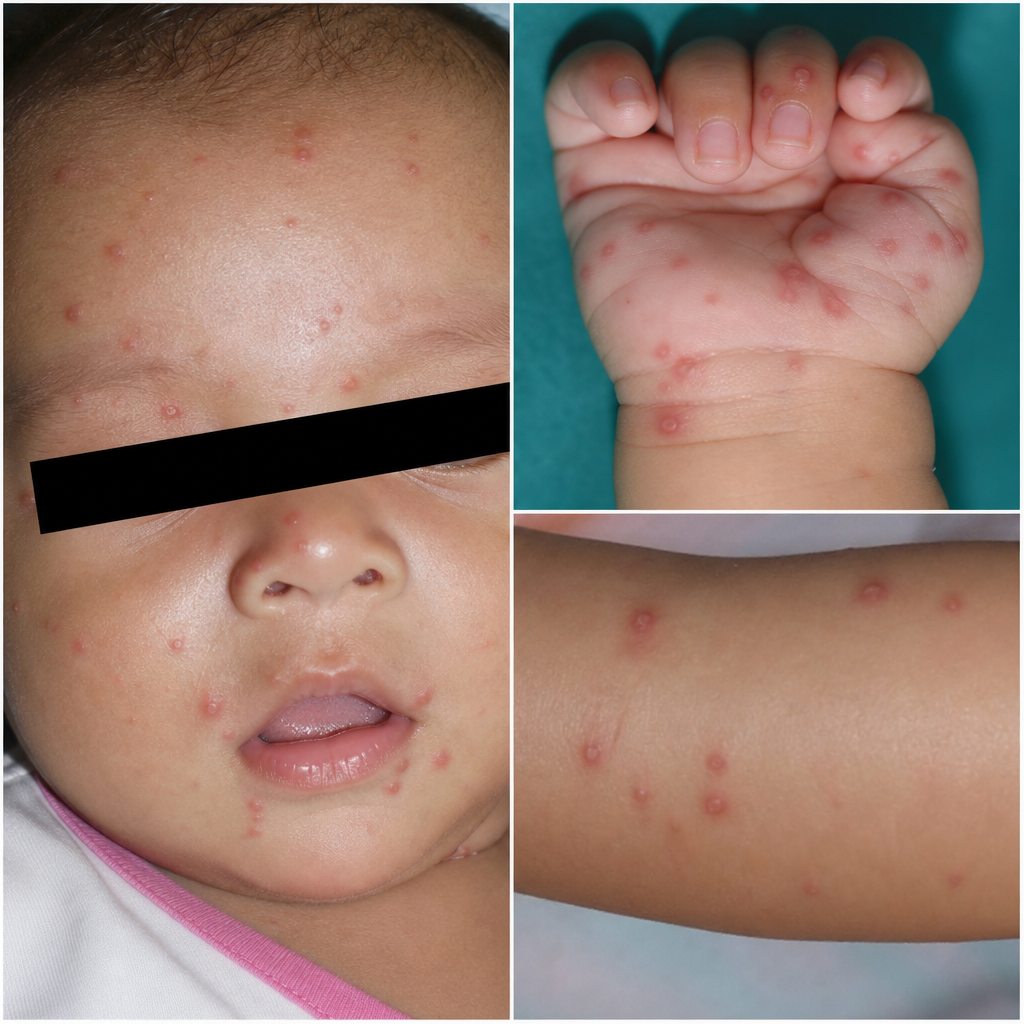
What is the most common disease caused by Cytomegalovirus (CMV) in post bone-marrow transplant patients?
During which week of a genital herpes infection is the Herpes simplex virus typically shed?
All of the following statements about bacteriophages are true except:
In what year was the Human Immunodeficiency Virus (HIV) discovered?
Regarding HIV, which of the following statements is not true?
A 30-year-old patient presented with a 10-day history of jaundice. Liver function tests showed a bilirubin of 10 mg/dL, SGOT/SGPT of 1100/1450 IU/L, and serum alkaline phosphatase of 240 IU/L. The patient tested positive for HbsAg. What is the confirmatory test to establish acute hepatitis B infection?
Which of the following is true about the Oral Poliovirus Vaccine (OPV) strains?
A 5-year-old boy presents with headache, fever, and vomiting. On examination, multiple small vesicles are present on the posterior pharyngeal wall. He is diagnosed with herpangina. What is herpangina caused by?
Which of the following statements regarding Hepatitis E Virus (HEV) and Hepatitis D Virus (HDV) is FALSE?
A 28-year-old primi presented with true labor pain. Examination reveals multiple painful, tiny vesicular ulcers over the vulva and vaginal walls, along with painful, enlarged lymph nodes. Microscopic examination shows multinucleated giant cells. What is the best step in the management of delivery in this patient?
Explanation: **Explanation:** Cytomegalovirus (CMV) is a member of the *Betaherpesvirinae* subfamily and is the most significant viral pathogen in hematopoietic stem cell transplant (HSCT) or bone marrow transplant recipients. **Why Pneumonia is correct:** In post-bone marrow transplant patients, **Interstitial Pneumonia** is the most common and most serious clinical manifestation of CMV infection. It typically occurs between 30 to 100 days post-transplant (the "early post-engraftment" phase). The pathogenesis involves both direct viral cytopathic effects and a significant host immune response. It carries a high mortality rate (up to 50-80%) if not treated promptly with Ganciclovir. **Analysis of Incorrect Options:** * **Pyelonephritis (A):** While CMV is shed in the urine (viruria), it rarely causes clinical pyelonephritis. Bacterial pathogens (like *E. coli*) are the standard causes of pyelonephritis. * **Meningitis (B):** CMV is an uncommon cause of meningitis. In immunocompromised patients, it is more likely to cause encephalitis or polyradiculopathy, but these are far less frequent than pulmonary involvement. * **Gastrointestinal ulceration (D):** CMV esophagitis and colitis are common in **HIV/AIDS patients** (often when CD4 <50). While they can occur in transplant recipients, pneumonia remains the more frequent and characteristic complication in the bone marrow transplant population. **High-Yield Clinical Pearls for NEET-PG:** * **Histology:** Look for **"Owl’s eye" intranuclear inclusion bodies** (large cells with clear halos). * **Drug of Choice:** **Ganciclovir** is the first-line treatment; Foscarnet is used for resistant cases. * **Diagnosis:** **pp65 antigenemia assay** or **Quantitative PCR** are used for rapid diagnosis and monitoring. * **Transplant Specifics:** In solid organ transplants (like kidney), CMV most commonly causes a febrile syndrome or organ-specific disease (e.g., hepatitis), but in bone marrow transplants, **Pneumonitis** is the classic board-exam answer.
Explanation: **Explanation:** The correct answer is **Option A: First week.** **Medical Concept:** In a primary genital herpes infection (typically caused by HSV-2, though HSV-1 is increasing in prevalence), viral shedding is most intense during the initial stage of the illness. Viral shedding refers to the period when the virus is active on the skin or mucous membranes and can be transmitted to others. In a primary episode, shedding typically begins with the appearance of vesicles and lasts for an average of **7 to 12 days**. Therefore, the peak and majority of shedding occur within the **first week** of the clinical presentation. **Analysis of Incorrect Options:** * **Option B (Second week):** While shedding can occasionally extend into the early part of the second week in severe primary cases, the viral titer drops significantly after the first 7 days as the host's immune response (IgM and early IgG) begins to control local replication. * **Options C & D (Third and Fourth weeks):** By this stage, lesions have usually crusted over and re-epithelialized. In immunocompetent individuals, active viral shedding from the initial site has ceased by the third week, and the virus has migrated to the sacral ganglia to establish latency. **High-Yield Clinical Pearls for NEET-PG:** * **Gold Standard Diagnosis:** Viral PCR is now the preferred test (more sensitive than viral culture). * **Tzanck Smear:** Look for **multinucleated giant cells** and **Cowdry Type A** intranuclear inclusion bodies (characteristic but not specific to HSV). * **Asymptomatic Shedding:** Most transmissions occur during "asymptomatic shedding," where the virus is present without visible lesions. * **Latency:** HSV-2 remains latent in the **sacral ganglia**, whereas HSV-1 remains latent in the **trigeminal ganglia**. * **Treatment:** Acyclovir, Valacyclovir, or Famciclovir are the drugs of choice to reduce shedding duration and symptom severity.
Explanation: **Explanation:** Bacteriophages are viruses that infect bacteria and play a crucial role in horizontal gene transfer. The correct answer is **D** because bacteriophages do not transfer *only* chromosomal genes; they can also transfer **plasmids and transposons**. **1. Why Option D is the correct answer (The Exception):** In the process of **transduction**, bacteriophages package genetic material from a donor bacterium and inject it into a recipient. This material can include chromosomal DNA, but it frequently includes extra-chromosomal elements like **plasmids** (e.g., antibiotic resistance genes) or **transposons**. Therefore, the statement that they transfer *only* chromosomal genes is factually incorrect. **2. Analysis of Incorrect Options:** * **Option A:** This is the basic definition of a bacteriophage (literally "bacteria eater"). * **Option B:** Transduction is the process by which DNA is transferred from one bacterium to another by a virus. It is divided into *Generalized* (any gene) and *Specialized* (specific genes near the prophage site) transduction. * **Option C:** Through **Lysogenic Conversion**, a temperate phage integrates its DNA into the bacterial chromosome, imparting new phenotypic traits like toxigenicity. **Clinical Pearls & High-Yield Facts:** * **Lysogenic Conversion Examples:** Several major bacterial toxins are encoded by bacteriophages (Mnemonic: **ABCD'S**). * **A:** Group A *Streptococcus* (Pyrogenic exotoxin/Scarlet fever) * **B:** *Botulinum* toxin * **C:** *Cholera* toxin * **D:** *Diphtheria* toxin * **S:** *Shiga* toxin * **Phage Typing:** Used in epidemiology to differentiate bacterial strains (e.g., *S. aureus*, *S. typhi*). * **T4 Phage:** The most commonly studied phage infecting *E. coli*.
Explanation: **Explanation:** The Human Immunodeficiency Virus (HIV) was first isolated and identified in **1983** by a team led by **Luc Montagnier** at the Pasteur Institute in France. They initially named the virus Lymphadenopathy-Associated Virus (LAV). Shortly after, in 1984, Robert Gallo’s team in the USA confirmed the discovery, calling it HTLV-III. The name was standardized to HIV in 1986. **Analysis of Options:** * **1983 (Correct):** The definitive year for the isolation of the virus from a patient with lymphadenopathy, marking the beginning of modern HIV research. * **1976 (Incorrect):** This year is significant for the first recognized outbreak of the **Ebola virus** in Zaire and Sudan. * **1969 (Incorrect):** While retrospective studies suggest HIV may have been present in humans earlier, there was no scientific discovery or clinical recognition of the virus in this year. * **1992 (Incorrect):** By this time, HIV was well-established globally, and the first multi-drug antiretroviral therapies were beginning to be developed. **High-Yield Clinical Pearls for NEET-PG:** * **Family:** Retroviridae; **Genus:** Lentivirus. * **First Clinical Report:** The first cases of what we now call AIDS were reported by the CDC in **1981** (Pneumocystis pneumonia in MSM). * **Target Cells:** HIV primarily infects **CD4+ T lymphocytes** by binding to the CD4 receptor and co-receptors **CCR5** (macrophage-tropic) or **CXCR4** (T-cell-tropic). * **Screening Test:** ELISA (Highly sensitive). * **Confirmatory Test:** Western Blot (though now replaced by the HIV-1/2 antigen/antibody combination immunoassay in many protocols).
Explanation: ### Explanation **1. Why Option A is the correct (False) statement:** HIV (Human Immunodeficiency Virus) is an **RNA virus**, not a DNA virus. Specifically, it belongs to the family *Retroviridae* and the genus *Lentivirus*. It contains two identical copies of single-stranded, positive-sense RNA (+ssRNA). While it produces a DNA intermediate during its life cycle, the virion itself carries RNA as its genetic material. **2. Analysis of other options:** * **Option B (True):** HIV contains the enzyme **Reverse Transcriptase** (RNA-dependent DNA polymerase). This enzyme is crucial for transcribing the viral RNA into complementary DNA (cDNA), which then integrates into the host genome. * **Option C (True):** While CD4+ T helper cells are the primary targets, HIV also infects other cells expressing the CD4 receptor and coreceptors (CCR5/CXCR4). These include **monocytes, macrophages, dendritic cells, and microglial cells** in the brain. * **Option D (True):** A hallmark of HIV progression to AIDS is the progressive depletion of CD4+ T cells. This occurs through direct viral lysis, syncytia formation, and apoptosis, leading to profound immunodeficiency at the late stage of the disease. ### NEET-PG High-Yield Pearls * **Structure:** HIV is an enveloped, icosahedral virus. The envelope contains spikes of **gp120** (for attachment) and **gp41** (for fusion). * **Key Genes:** * *gag*: Codes for structural proteins (p24 - the major capsid antigen used in early diagnosis). * *pol*: Codes for enzymes (Reverse Transcriptase, Integrase, Protease). * *env*: Codes for envelope glycoproteins (gp160, cleaved into gp120 and gp41). * **Screening vs. Confirmation:** ELISA is the standard screening test (high sensitivity), while **Western Blot** was traditionally the confirmatory test (high specificity), though current protocols often use 4th generation p24/antibody combination assays followed by nucleic acid testing (NAT).
Explanation: ### **Explanation** The clinical presentation of jaundice with significantly elevated transaminases (SGOT/SGPT >1000 IU/L) and positive HBsAg indicates a diagnosis of Hepatitis B. However, HBsAg alone cannot distinguish between a **new acute infection** and a **chronic carrier state** experiencing a flare. **1. Why IgM Anti-HBc is the Correct Answer:** The **IgM antibody to Hepatitis B core antigen (IgM anti-HBc)** is the specific marker for **acute infection**. It appears shortly after HBsAg and remains positive for approximately 6 months. Crucially, it is the only marker present during the **"Window Period"** (the gap between the disappearance of HBsAg and the appearance of Anti-HBs). Its presence confirms that the infection was acquired recently. **2. Analysis of Incorrect Options:** * **HBeAg (Option B):** This is a marker of **active viral replication and high infectivity**. While often present in acute phases, it can also be positive in chronic hepatitis; it does not specifically define the "acute" stage. * **HBV DNA by PCR (Option C):** This measures viral load. While highly sensitive for diagnosing infection and monitoring treatment, it does not differentiate between acute and chronic phases. * **Anti-HBc antibody (Option D):** This refers to "Total" Anti-HBc (IgM + IgG). Since IgG persists for life, a total antibody test cannot distinguish between a current acute infection and a past/chronic infection. **3. NEET-PG High-Yield Pearls:** * **HBsAg:** First marker to appear in blood (1–12 weeks after exposure). * **Window Period Marker:** IgM Anti-HBc is the diagnostic marker of choice when HBsAg has cleared but Anti-HBs hasn't appeared yet. * **Chronic Infection:** Defined by the persistence of HBsAg for **>6 months**. * **Recovery/Immunity:** Marked by the appearance of **Anti-HBs** (also the only marker positive after vaccination).
Explanation: The **Oral Poliovirus Vaccine (OPV)**, also known as the Sabin vaccine, consists of live-attenuated strains of Poliovirus (Types 1, 2, and 3). Attenuation is achieved by repeatedly passing the virus through non-human cells, which results in the loss of neurovirulence and specific growth characteristics known as **"Marker Characters."** ### Why Option D is Correct The attenuated Sabin strains exhibit **poor growth in stable cell lines** (like the Vero cell line or HeLa cells) compared to wild-type strains. This is a key laboratory marker used to differentiate them. Wild strains are highly adapted to grow in various primate cell cultures, whereas the attenuation process reduces the vaccine strain's efficiency in these specific environments. ### Why Other Options are Incorrect * **Option A:** OPV strains are **temperature-sensitive**. They grow poorly at higher temperatures (40°C) and grow best at lower temperatures (33–36°C). This is called the **"rct marker"** (reproductive capacity at temperature). * **Option B:** OPV strains grow poorly at **low concentrations of bicarbonate** (acidic pH). This is known as the **"d-marker"** (delayed growth). Wild strains grow well regardless of bicarbonate concentration. * **Option C:** While nucleotide sequencing *can* distinguish strains, the question asks for the classic biological properties (markers) of the vaccine strains. In the context of standard microbiology examinations, the biological growth characteristics (like the d-marker and rct-marker) are the primary focus. ### High-Yield Clinical Pearls for NEET-PG * **Markers of Attenuation:** 1. **d-marker:** Poor growth under acidic agar (low bicarbonate). 2. **rct-marker:** Poor growth at 40°C. * **VAPP & VDPV:** OPV can rarely cause Vaccine-Associated Paralytic Poliomyelitis (VAPP) or mutate into Vaccine-Derived Polioviruses (VDPV) due to its ability to replicate in the gut and spread in the community. * **Herd Immunity:** OPV provides both systemic (IgG) and local mucosal (IgA) immunity, making it superior for inducing herd immunity compared to the Inactivated Polio Vaccine (IPV).
Explanation: **Explanation:** **Correct Answer: B. Enterovirus** Herpangina is a common childhood infection primarily caused by **Coxsackievirus Group A** (a genus within the **Enterovirus** family, Picornaviridae). The clinical hallmark is the sudden onset of fever, sore throat, and the appearance of small (1–2 mm) vesicular or ulcerative lesions specifically on the **posterior pharyngeal wall**, tonsils, and soft palate. Unlike gingivostomatitis (HSV-1), herpangina typically spares the buccal mucosa and gingiva. **Analysis of Incorrect Options:** * **A. Myxovirus:** This group includes Orthomyxoviruses (Influenza) and Paramyxoviruses (Measles, Mumps). These typically present with respiratory symptoms or parotitis, not posterior pharyngeal vesicles. * **C. Rhabdovirus:** The most notable member is the Rabies virus, which causes fatal encephalitis and hydrophobia, not localized vesicular pharyngitis. * **D. Rhinovirus:** While also a Picornavirus, Rhinoviruses are the primary cause of the common cold (upper respiratory tract infections) and do not typically cause vesicular eruptions. **High-Yield Clinical Pearls for NEET-PG:** * **Causative Agent:** Most commonly **Coxsackie A** (A1–A10, A16, A22). * **Hand-Foot-Mouth Disease (HFMD):** Also caused by Enteroviruses (Coxsackie A16 and Enterovirus 71). It differs from herpangina by the presence of a maculopapular or vesicular rash on the palms, soles, and buttocks. * **Seasonality:** Infections peak during summer and autumn months. * **Transmission:** Fecal-oral route and respiratory droplets. * **Management:** Treatment is purely supportive (hydration and analgesics) as the condition is self-limiting.
Explanation: ### Explanation **1. Why Option D is the Correct (False) Statement:** The fundamental classification of Hepatitis viruses is a high-yield NEET-PG topic. **Hepatitis E Virus (HEV)** and **Hepatitis D Virus (HDV)** are both **RNA viruses**. Specifically, HEV is a non-enveloped, single-stranded RNA virus (Hepeviridae), and HDV is a defective, single-stranded circular RNA virus (Deltavirus). In the mnemonic "Vowels are Bowels" (A and E), both are RNA viruses transmitted via the feco-oral route. Only Hepatitis B (HBV) is a DNA virus. **2. Analysis of Other Options:** * **Option A:** It is clinically possible for a patient to have multiple viral infections simultaneously, especially in high-risk groups (e.g., IV drug users or endemic areas), though they have different transmission routes (HEV is feco-oral; HDV is parenteral). * **Option B:** HDV infection occurs in two patterns: **Co-infection** (simultaneous with HBV) and **Superinfection** (HDV infecting a chronic HBV carrier). Superinfection is significantly more serious, often leading to rapid progression to cirrhosis or fulminant hepatic failure. * **Option C:** HDV is a **defective virus**. It requires the Hepatitis B Surface Antigen (HBsAg) to provide its outer envelope for assembly and transmission. Without an underlying HBV infection, HDV cannot propagate. **3. High-Yield Clinical Pearls for NEET-PG:** * **HEV & Pregnancy:** HEV carries a high mortality rate (up to 20%) in pregnant women, particularly in the third trimester, due to fulminant hepatic failure. * **HEV Genotypes:** Genotypes 1 and 2 are human-only (epidemic); Genotypes 3 and 4 are zoonotic (pork/deer meat). * **HDV Diagnosis:** The presence of **Anti-HDV IgM** indicates acute infection, while **HDV RNA** is the gold standard for active replication. * **Prevention:** The HBV vaccine indirectly prevents HDV infection because HDV cannot exist without HBV.
Explanation: **Explanation:** The clinical presentation of painful vesicular ulcers, tender lymphadenopathy, and the presence of **multinucleated giant cells** (Tzanck smear finding) is pathognomonic for **Genital Herpes (HSV-2)**. **Why Cesarean Section is the correct answer:** In a pregnant patient with **active genital lesions** (primary or recurrent) at the time of labor, the risk of vertical transmission to the neonate during vaginal delivery is high. Neonatal Herpes can lead to severe disseminated infection, encephalitis, or permanent neurological sequelae. To bypass the infected birth canal and minimize this risk, a **Cesarean section** is mandatory if lesions or prodromal symptoms are present at the onset of labor. **Analysis of Incorrect Options:** * **A. Vaginal delivery:** Contraindicated due to the high risk of neonatal transmission from direct contact with active viral shedding. * **B. Local application of antibiotic:** Ineffective because the causative agent is a virus (HSV), not bacteria. Furthermore, topical treatment does not prevent vertical transmission. * **C. Give tocolytics and treat the infection:** The patient is in "true labor," meaning delivery is imminent. Tocolysis is generally not indicated at term to treat an infection that can be bypassed surgically. **High-Yield Clinical Pearls for NEET-PG:** * **Tzanck Smear:** Shows multinucleated giant cells with **Cowdry Type A** intranuclear inclusion bodies. * **Gold Standard Diagnosis:** PCR (most sensitive) or Viral Culture. * **Management:** If a patient has a history of HSV, prophylactic **Acyclovir** is started at 36 weeks gestation to prevent outbreaks at term. * **Transmission Risk:** Highest (30-50%) during a primary episode at delivery; lower (<3%) during a recurrent episode.
Virus Structure and Classification
Practice Questions
Viral Replication
Practice Questions
Pathogenesis of Viral Infections
Practice Questions
DNA Viruses: Herpesviruses
Practice Questions
DNA Viruses: Poxviruses and Adenoviruses
Practice Questions
Hepatitis Viruses
Practice Questions
RNA Viruses: Orthomyxoviruses
Practice Questions
RNA Viruses: Paramyxoviruses
Practice Questions
Enteroviruses and Rhinoviruses
Practice Questions
Arboviruses
Practice Questions
HIV and Retroviruses
Practice Questions
Oncogenic Viruses
Practice Questions
Get full access to all questions, explanations, and performance tracking.
Start For Free